About Solid Powder
Powders can flow like liquids within pipelines. Common industrial conveying methods include dilute-phase pneumatic conveying (blowing through pipes), gravity discharge via chutes, and transport using belt or screw conveyors.
Different conveying methods require corresponding powder flow measurement techniques. Common online measurement technologies for solid powder flow include electrostatic sensing, microwave sensing, impact plates, and belt scales. Our company primarily supplies electrostatic powder flow meters; these are designed for installation in flanged pipe sections with diameters ranging from 10 to 600 mm, are capable of measuring particles sized 0.1 to 2,000 µm, and offer a measurement accuracy of ±5% of full scale.
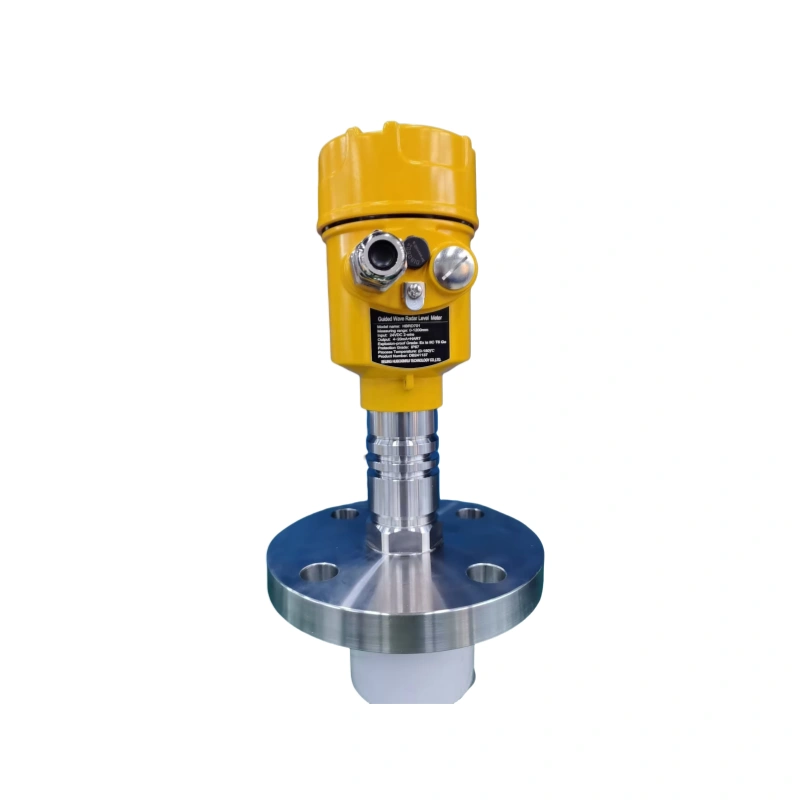
Powders can flow like fluids, but they do not deform continuously under shear stress. Powders tend to stick together when flowing. Radar and ultrasonic level instruments can be used to measure solid powder levels. Environmental factors such as temperature and humidity can affect the properties of solid powders.
What is powder flow meter?
A powder flow meter is a device that measures the flow rate of powders, granules or particles. It shows how fast material is moving through a pipe or conveying system. Typical users are chemical, pharmaceutical, power and cement plants.
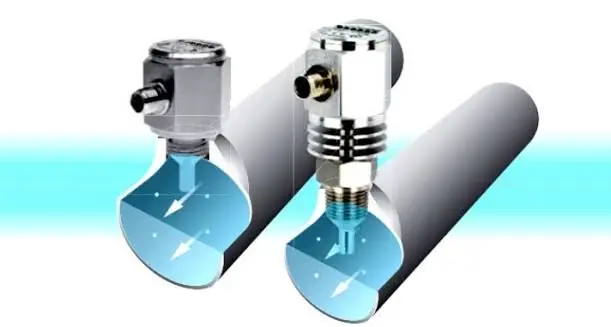
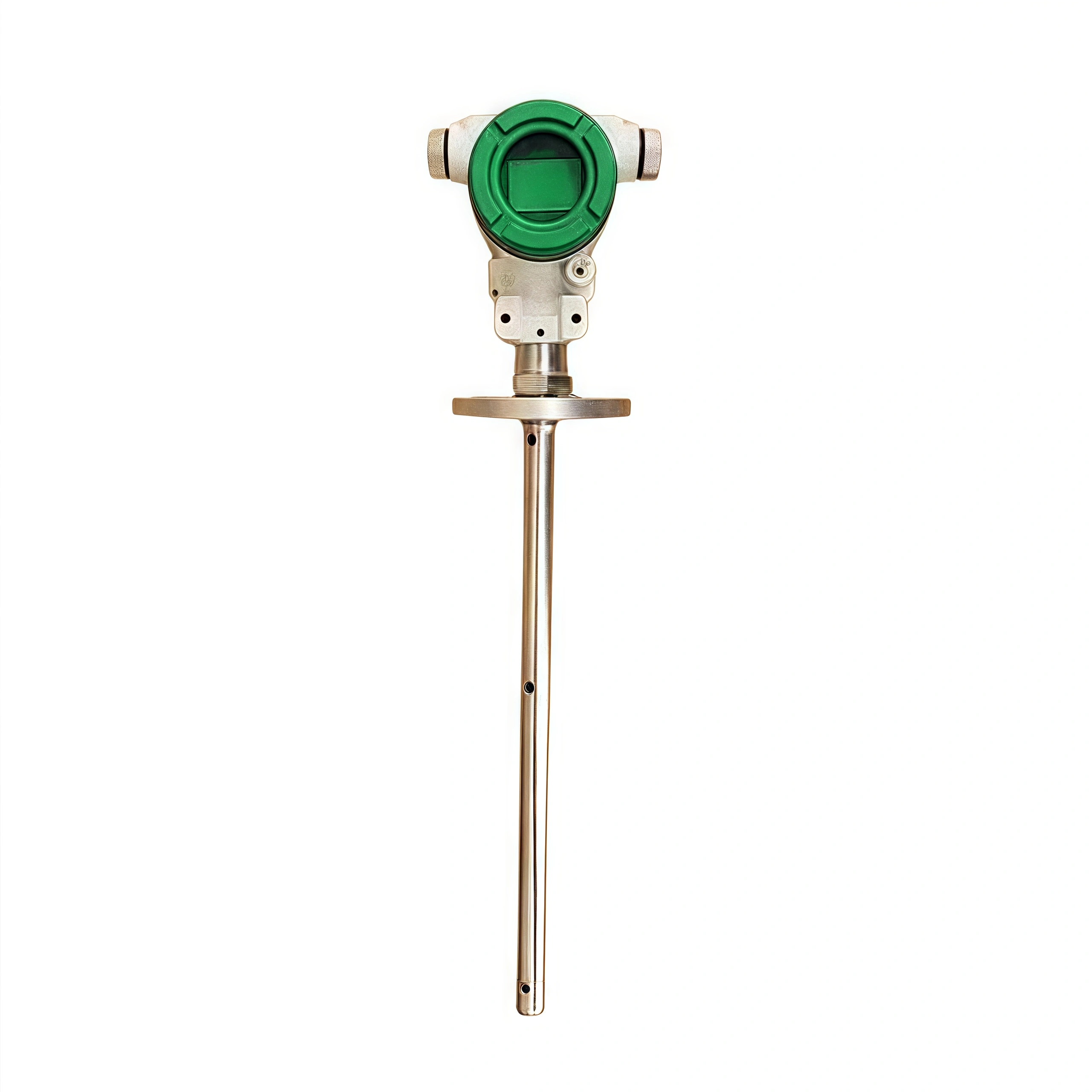
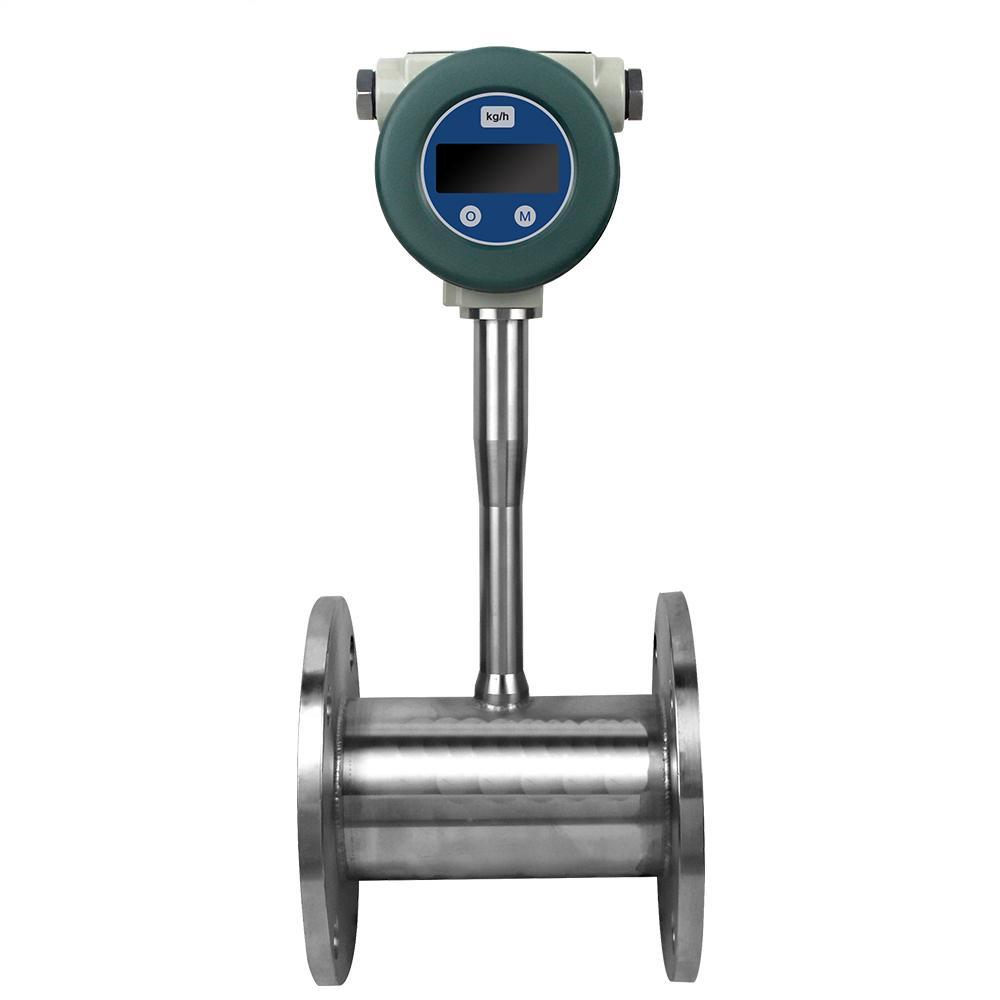
Solid (powder) flow meters are tools for online measurement of various gas-transmitted powder flow rates. With the meter installed online, the powder mass flow rate in the pipeline can be monitored in real time.
The applicable powder mass flow measurement range of our Sino-Inst flow meter is: 0-20kg/100kg/500kg/20t/100t/h; the applicable particle size range is 0.1–2,000 µm. Custom ranges are available.

Working principle of powder flow meter
In the production process of modern industry, due to process requirements, the application of powder flow meter is becoming more and more extensive, and the performance requirements are becoming higher and higher.
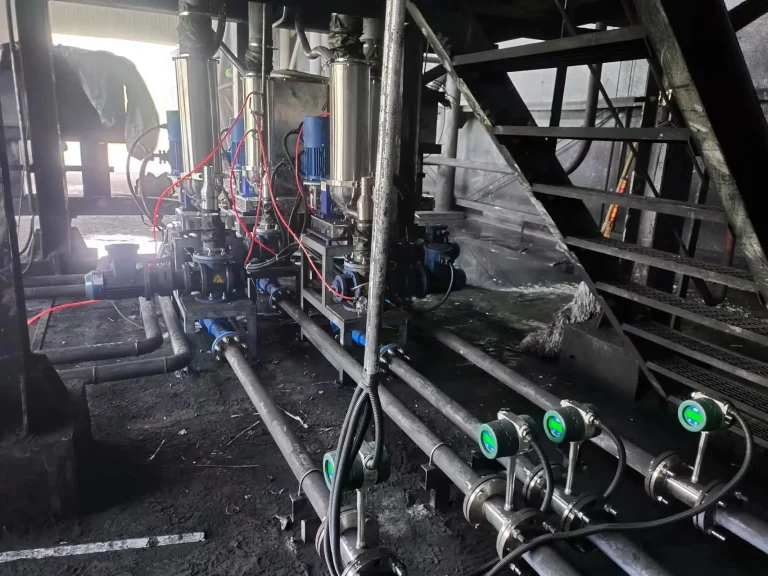
The powder flow meter adopts high temperature and high-pressure resistance design, which is suitable for various industrial production environments. The integrated, two-wire structure makes installation and use extremely simple, and can be easily connected to the user’s automation management system. Real-time monitoring of the working conditions of its upstream equipment can play a role in the energy-saving and efficiency improvement process implemented by the enterprise.
The powder flow meter uses the most reliable electrostatic measurement technology. When the airflow containing dust particles in the pipeline passes through a fixed sensor, the weak current generated by the dust particles in motion is collected by the sensor and transmitted to the transmitter. After being filtered, amplified, and processed by the transmitter, it becomes a standard output value that is linearly related to the dust flow.
Characteristics of powder flow meter
- An integrated structure consisting of a sensor unit and a transmitter unit;
- The dedicated sensor is a passive type without electronic circuits. High sensitivity, not affected by vibration, no dust contamination, high reliability, long life;
- The current signal output by the transmitter is electrically isolated from the sensor unit to achieve interference-free transmission of the output current signal;
- Two-wire (4-20mA) current signal output, strong anti-interference ability, easy to transmit over long distances, no special requirements for transmission wires. The output current is proportional to the solids mass flow at a stable conveying velocity, which makes PLC processing simple;
- Modular design, the sensor unit and transmitter unit can be replaced separately;
- Long life design, full metal shell and connectors.
How to measure dry solid flow?
To measure the “powder” with a powder flow meter, you measure its flow rate, which is the amount of powder flowing through the flow meter per unit time, usually expressed in grams per minute (g/min) or kilograms per hour (kg/h) and is determined by the specific design of the flow meter.
Methods such as measuring the change in weight at set time intervals or utilizing sensors to detect the mass flow of the powder as it passes through the meter are often used.

Flow measurement methods:
- Electrostatic powder flow meter: Powder picks up electric charge from contact and friction during pneumatic conveying or free fall. Our meter uses an annular sensor to pick up the signal from each charged particle passing through it. The signal is amplified, shaped and filtered, then processed by a high-speed processor into a standard current output that is linear with powder flow rate.
- Microwave solid flow meter: The sensor emits a 24 GHz, 0.01 W microwave signal into the pipe. Moving particles reflect it, and the Doppler shift between the transmitted and reflected frequencies gives the material flow and its velocity. It is designed for metal pipes.
- Impact plate flow meter: Works on the momentum principle. Free-falling material hits an inclined detection plate, and a differential transformer or strain gauge converts the horizontal impact force into an electrical signal. The meter shows instantaneous flow and the running total. Main parts are the detection plate, a pivoted beam and the signal converter, in a fully sealed housing that keeps dust in.
- Belt scale and loss-in-weight feeder: A belt scale weighs the material on a section of belt with load cells while a speed sensor reads belt speed; mass flow = load per metre × belt speed. A loss-in-weight feeder weighs the whole hopper and calculates flow from the weight drop over time.
Factors affecting powder flow measurement:
- Particle size and distribution: Particle size changes how much charge each particle carries and how evenly it spreads across the pipe, so the meter must be set up for the actual material.
- Moisture content: Moisture changes flowability and the charge level. Condensation inside the line must be avoided.
- Powder density: For the same volume, higher density powders will have a greater mass flow rate.
Key points about measuring solid flow rate:
- Conveying velocity:
Electrostatic and microwave meters respond to moving particles, so a steady air velocity gives a steady reading. Our meter works at 1–30 m/s.
- Particle size and shape:
The size and shape of the particles can affect the accuracy of the measurement, especially in velocity or impact based methods.
- Material density:
Knowing the density of the material is important for converting flow rate measurements to mass flow.
- Conveying regime:
Dilute-phase conveying, with particles suspended in air, suits electrostatic and microwave meters. Dense-phase plugs and free fall in chutes do not give a stable reading; use an impact plate or a weighing method there.
Field Case: Wood Flour in a 6-inch Pneumatic Conveying Pipeline
A Brazilian system integrator required in-line mass flow measurement for a DN150 pneumatic conveying pipeline transporting wood flour. The material had a particle size of less than 2 mm, a moisture content of 3.2%, and a bulk density of approximately 180 kg/m³. The conveying air velocity was about 5 m/s, with a flow rate range of 1,250–7,550 kg/h. We supplied a factory-calibrated DN150 flanged electrostatic solids flow meter with an accuracy of ±5% of full scale. During the selection process, we verified that the material moisture was sufficiently low to prevent condensation within the pipe and cross-checked the process pressure against the instrument’s rated pressure. Once commissioned, routine maintenance required only wiping the ring sensor during scheduled shutdowns.
Applications of powder flow meter
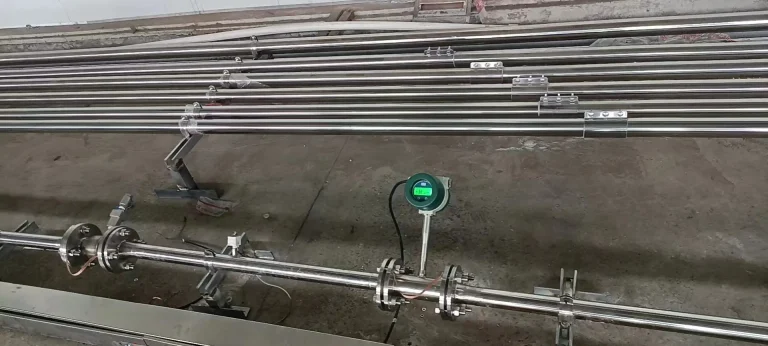
Powder flow meters can be widely used in various industrial applications, such as ironmaking, power generation, pharmaceutical machinery, chemical industry, building materials processing, cement manufacturing and other industries.
Typical uses include:
- Coal injection pipeline for ironmaking blast furnace
- Coal injection pipeline for thermal power generation boiler
- Total amount of process delivery monitoring
- Various fuel boilers and other production powder flow monitoring.
- Recovery of powdered materials, monitoring of powder delivery process
User Case: Activated Carbon Injection at a Waste-to-Energy Plant
A waste incineration plant in Belgium injected powdered activated carbon into the flue gas stream. The material had a particle size of less than 1.1 mm, a density of approximately 0.45 g/cm³, and an injection rate of 0–14 kg/h. The activated carbon was conveyed using dry air (dew point of −20°C or lower) through a DN40 pipeline at a velocity of approximately 5 m/s and a pressure of 30 mbar(g). This low-flow application was best suited for an in-line spool-piece solids flow meter rather than an insertion-style probe.
In modern industrial production, solid flow meters are increasingly used and their performance requirements are increasing due to process requirements. Powder solid flow meters are reliable in harsh industrial environments and can optimize production processes by precisely controlling ingredient addition; making them a valuable tool for industries that handle bulk solids such as powders, cement and plastic granules.
Our Sino-Inst powder flow meters are designed to withstand high temperatures and pressures and are suitable for a variety of industrial production environments. The integrated, two-wire structure can be easily connected to the user’s automated management system.
If you need to purchase a solid flow meter or have technical questions about powder mass flow measurement, please feel free to contact us!