Hydrostatic pressure transmitters operate on the principle of hydrostatics. This implies that they are capable of detecting the pressure generated by the profundity of a liquid. They can then turn this physical quantity into an electrical signal. Thanks to their simple design and high stability, they are widely used in applications such as hydrological monitoring, industrial storage tanks and water treatment for level and pressure measurement.
What is hydrostatic pressure?
Hydrostatic pressure is the pressure exerted by a stationary fluid due to the effect of gravity. It increases with the depth of the fluid.
Hydrostatic pressure is widely used in engineering. Especially when designing structures that will be subjected to liquid loads. For example, the design of pipes within a house or other building needs to take hydrostatic pressure into account. This is to ensure that the pipes can safely withstand the liquid load. If the pipes cannot withstand the liquid load, it may burst.
Characteristics of hydrostatic pressure include:
Perpendicular direction of action: Hydrostatic pressure always acts perpendicular to the surface of the object under pressure, remaining orthogonal to the contact surface, and does not generate any tangential forces along the surface.
Equal pressure at the same horizontal level: In a stationary liquid, the magnitude of hydrostatic pressure is exactly the same at all points on the same horizontal plane; in a communicating system of stationary liquids, the same horizontal plane constitutes an isobaric surface.
Pressure increases linearly with depth: The more water there is, the more pressure there is. The pressure increases in a straight line with the amount of water you put in, and for every increase in depth, the pressure goes up at a set rate.
Independent of container shape: The only things that affect hydrostatic pressure are how dense the liquid is and how deep it’s submerged. The size, form or volume of the container doesn’t matter. The bins can be different shapes, as long as they’re all the same depth.
It exhibits transmissibility: in a sealed, stationary liquid, pressure applied at any point is transmitted in all directions and to all locations without any change in magnitude.
It resists compression but not tension: If the liquid isn’t moving, it can only be squished. It can’t be pulled or stretched. This simple part makes sure that the pressure is spread out properly.t
What is a hydrostatic pressure sensor?
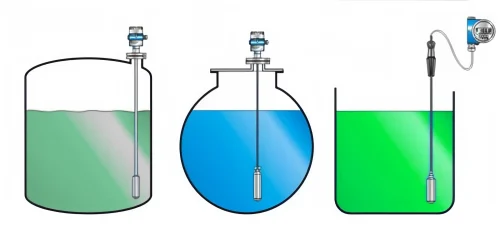
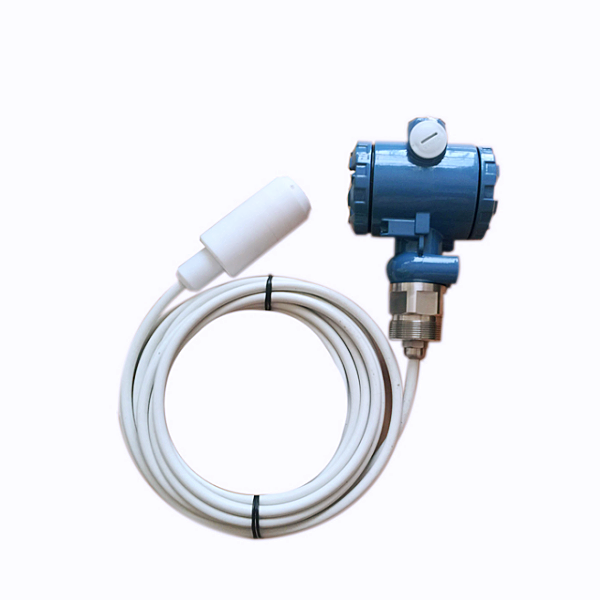
Hydrostatic pressure sensors are specially designed to directly measure the pressure of liquid at a certain depth. Using the principle of hydrostatic pressure, the depth of liquid can be measured indirectly.
A hydrostatic pressure sensor measurement can be made with a submersible-mounted probe. Or the pressure sensor can be installed as close to the bottom of the tank as possible. It is widely used in many industries such as measuring the pressure of liquids in tanks or reservoirs, food, water, and wastewater.
Key points about hydrostatic pressure sensors:
Function: They measure the static pressure of a column of liquid. This static pressure is proportional to the liquid level.
Design: Usually a submersible pressure transmitter. Its diaphragm is exposed to the liquid. The pressure difference across the diaphragm is converted into an electrical signal.
Key principle: Hydrostatic pressure is directly related to the density of the liquid and the depth of the sensor.
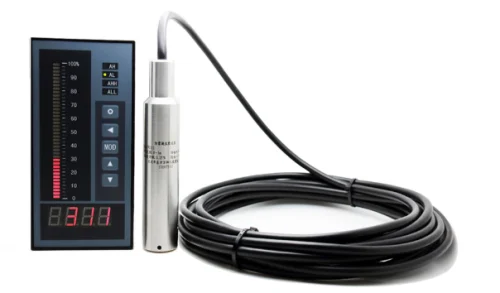
Working principle of hydrostatic pressure sensor
The working principle of the hydrostatic pressure sensor is to measure the pressure exerted by a liquid column at a given depth. The pressure is proportional to the height of the liquid column. The liquid level is calculated based on the principle that the pressure increases with the depth of the liquid due to weight and gravity. By sensing the change in the static pressure of the liquid, it is converted into an electrical signal. After temperature compensation and linear correction, it finally outputs a standard electrical signal (usually 4~20mA or 1~5VDC).
The basic principle of a hydrostatic pressure sensor is based on the principle of hydrostatic pressure measurement:
This principle is based on Pascal’s law. This law states that pressure applied to a confined fluid is transmitted evenly in all directions throughout the fluid. The pressure exerted by a stationary fluid at a certain point is proportional to the depth of the liquid column above that point. It is calculated based on the density of the fluid, the acceleration due to gravity, and the depth. The deeper you are in the fluid, the greater the pressure exerted due to the weight of the fluid above.
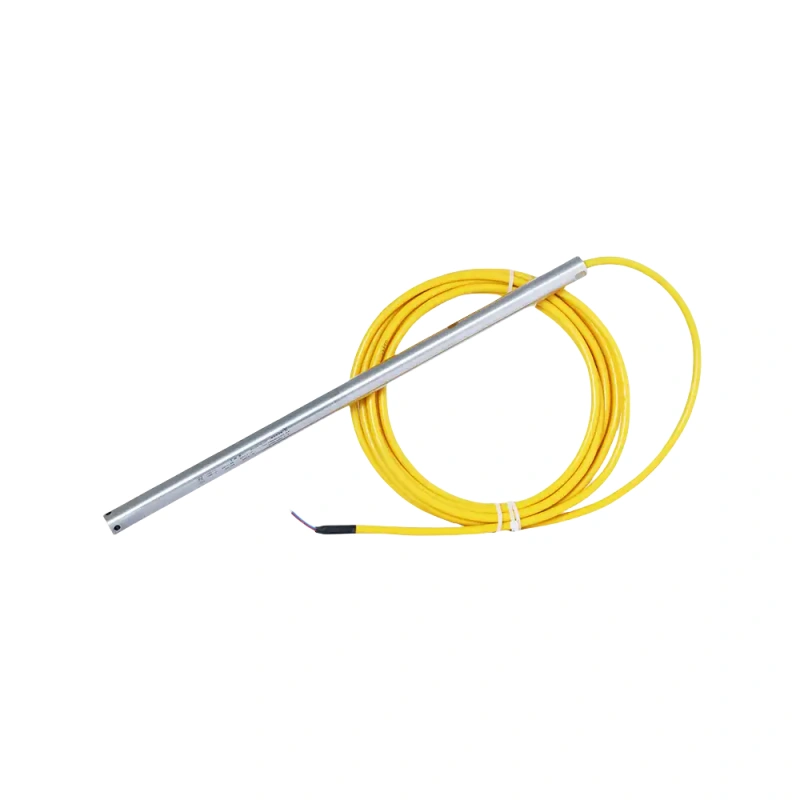
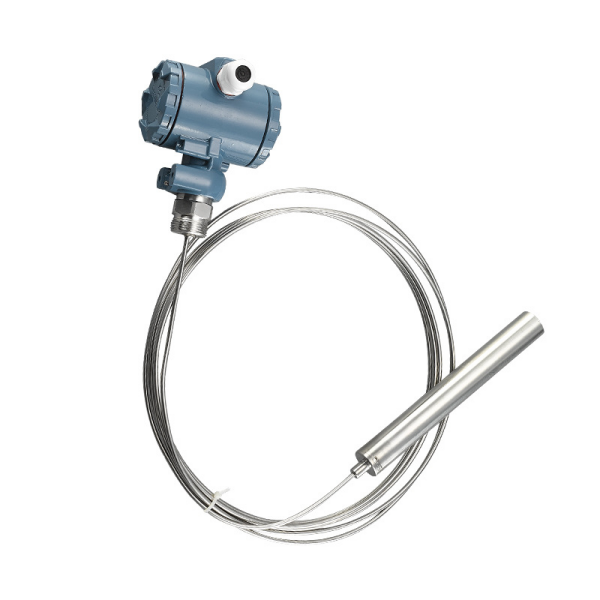
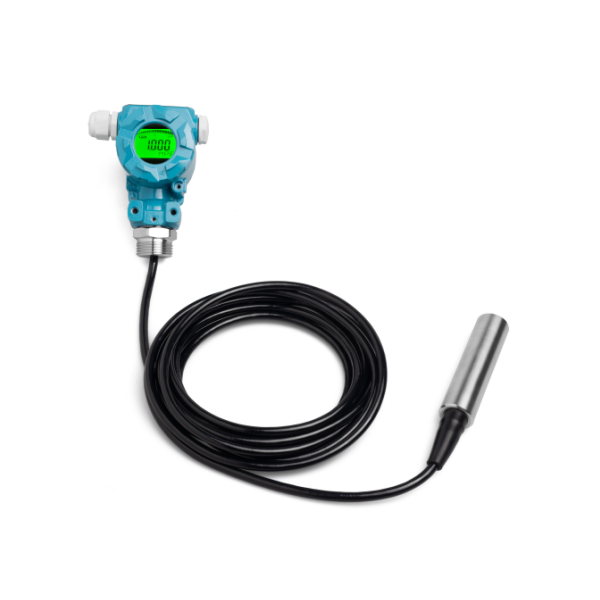
Hydrostatic Pressure Formula
The measurement formula of hydrostatic pressure is: P = ρ*g*d,
where:
- P represents hydrostatic pressure, in Pascal (Pa);
- ρ represents the density of the fluid, in kilograms per cubic meter (kg/m³);
- g represents the acceleration due to gravity, usually 9.8 m/s²;
- h represents the height of the fluid, in meters (m).
Example Calculation
We can demonstrate this with an example. Suppose we have a swimming pool that is 10 meters deep and filled with water (ρ = 1000 kg/m³). Let’s calculate the pressure at the bottom of the pool. Using the hydrostatic pressure formula:
- ρ = 1000 kg/m³
- g = 9.81 m/s² (standard value of gravity)
- h = 10 m
Substituting these values into the formula we get:
P = ρgh • P = (1000 kg/m³) * (9.81 m/s²) * (10 m) • P = 98,100 Pa (Pascals)
So, the pressure at the bottom of the swimming pool is 98,100 Pascals (Pa).
Application of hydrostatic pressure sensors
Hydrostatic pressure sensors have a wide range of applications in a variety of fields. They are able to measure pressure which is directly related to the depth of the liquid.
Main applications of hydrostatic pressure sensors:
Water Resources and Hydropower Sector: These things are used in places like rivers, lakes, and electricity plants. All the time, they check the water level and depth. It is used to check for safety at dams, stop storms, and control the flow of water. This keeps storms from happening and makes sure water projects work well.
Hydrological Monitoring Sector: It can be used to monitor rivers, lakes and groundwater. It measures hydrostatic pressure at different depths to calculate water depth data. This helps hydrological stations to carry out water resource surveys and collect data on water quality.
Marine and maritime sector: Used for ship draught measurement, seabed topography surveying, marine environmental monitoring, and pressure feedback for diving equipment and underwater robots, ensuring safe navigation and precise, controllable underwater operations.
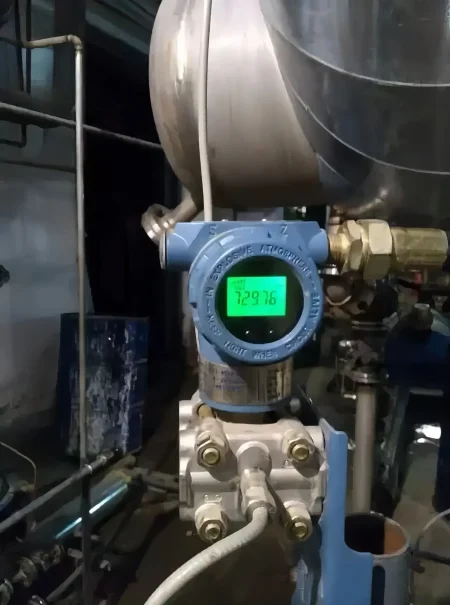
Industrial Production Sector: This is used in places like holding tanks, reactors, and industrial water tanks. Making sure the level is always right and checking the pressure inside the tanks is helpful. It can also let people know if there is a leak. This makes sure that the way things are made always stays the same and that too much or too little fluids never poses a safety risk.
Municipal and Environmental Protection Sector: It can be used in urban water supply and wastewater treatment systems to check pressure and how full the water supply pipes and sewage tanks are. This makes sure there is enough water, prevents pipes bursting and sewage overflow, and helps municipal facilities to work more efficiently.
Research and Laboratory Applications: In scientific research and experiments in hydrology, geology and environmental science, these sensors accurately measure hydrostatic pressure. This provides reliable baseline data for experimental analysis and data modelling. This means that research findings can be used in practical ways.
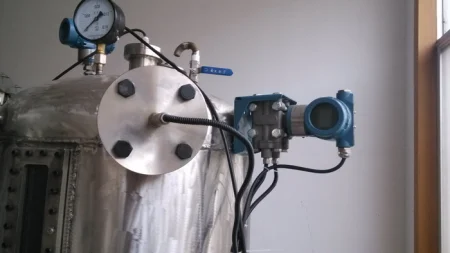
Advantages of hydrostatic pressure sensor
Hydrostatic pressure sensors have many advantages, including high reliability, accurate level measurement, insensitivity to foam and viscosity, and easy installation. They can work properly even in turbulent or contaminated liquids. They are very suitable for applications such as tank level monitoring in harsh environments.
Main advantages of hydrostatic pressure sensors:
High accuracy: Hydrostatic pressure sensors are usually highly accurate. They can accurately measure small pressure changes.
Insensitive to foam and turbulence: Unlike other liquid level sensors. Hydrostatic pressure sensors are not significantly affected by foam or agitation in the liquid.
Stability: High-quality hydrostatic pressure sensors are not affected by factors such as temperature and humidity.
Durability: Hydrostatic pressure sensors are made of corrosion-resistant materials. They can work for a long time in harsh industrial environments without damage.
Easy to integrate: Hydrostatic pressure sensors can be easily integrated into various systems. Such as automated control systems, monitoring systems, etc., to provide real-time data.
Low energy consumption: Many hydrostatic pressure sensors are designed with low energy consumption. Suitable for long-term continuous operation and reduce energy consumption.
Environmental adaptability: Hydrostatic pressure sensors can be designed to be suitable for different media and environments. Including high temperature, high pressure, corrosive environment, etc.
Easy to maintain: Due to its simple structure, hydrostatic pressure sensors are usually easy to maintain and replace. Reduce long-term operating costs.
More pressure and level measurement solutions
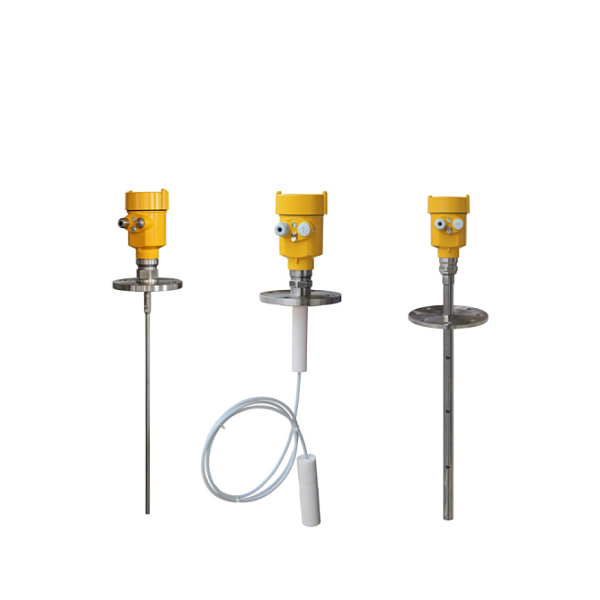
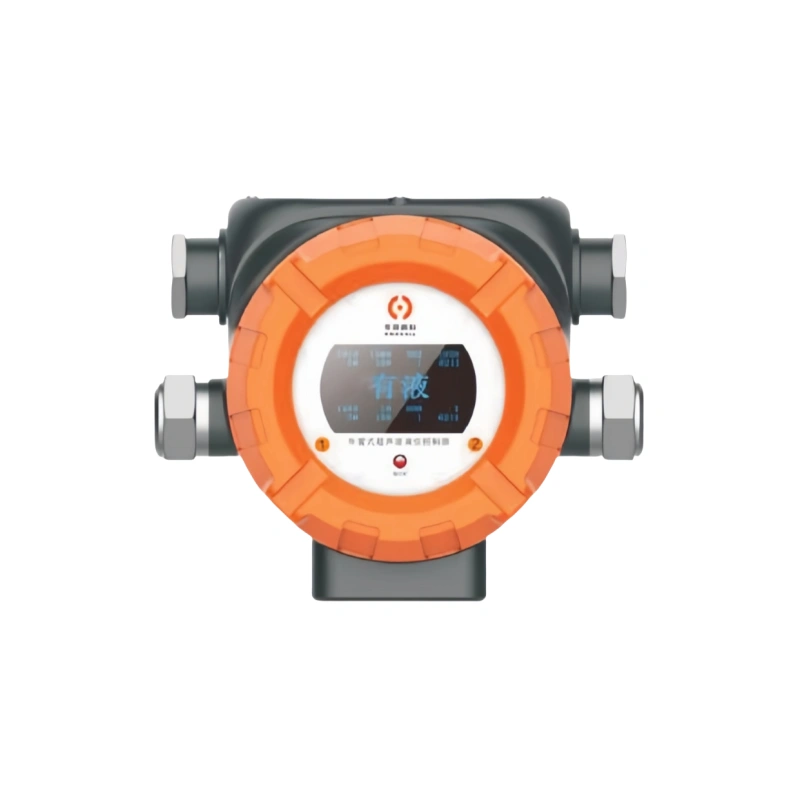
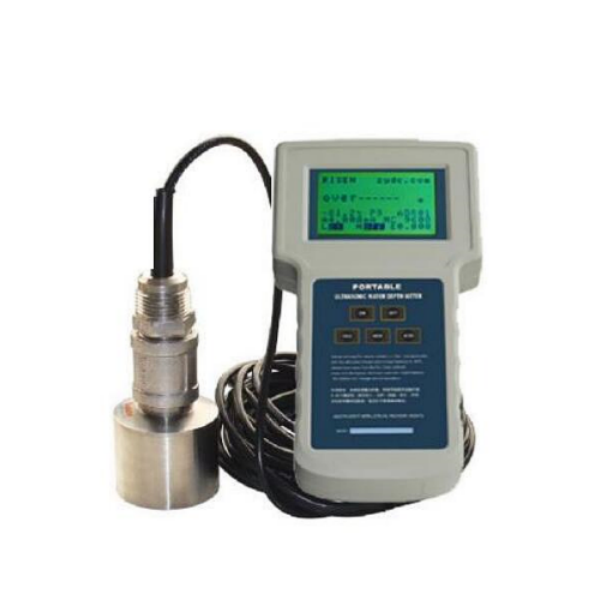
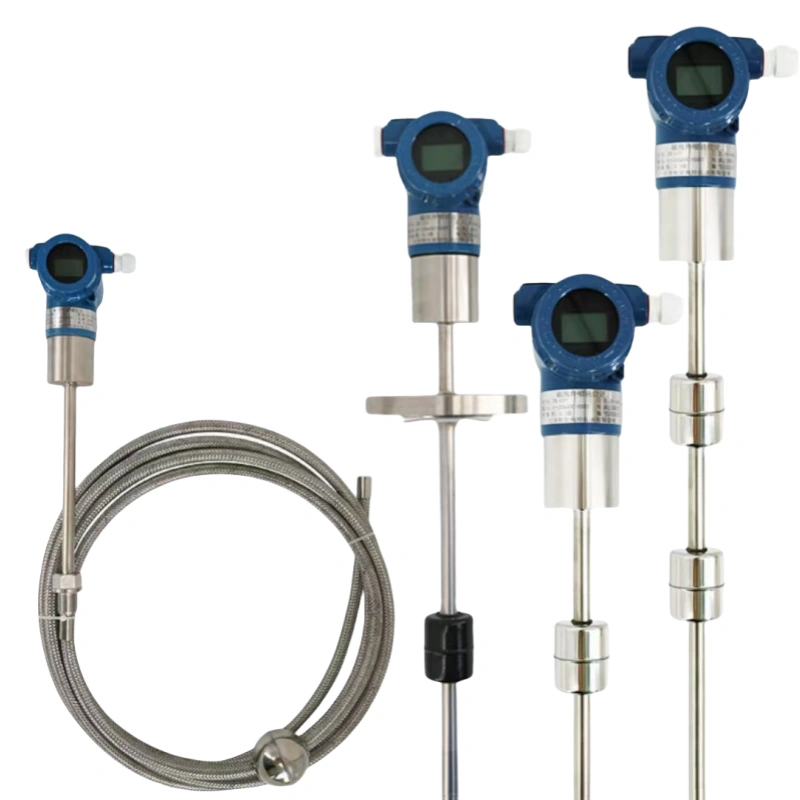
Each solution offers unique capabilities for different applications and environments based on factors such as pressure range, temperature, fluid type, and required accuracy.
Specific examples of advanced pressure and level measurement solutions:
- Guided wave radar: For high-pressure applications, including liquids with high dielectric constants.
- Ultrasonic level sensors: Can measure the level of open tanks or those with large vapor spaces.
- Magnetostrictive level transmitters: Offer high accuracy and are often used in tanks with agitators.
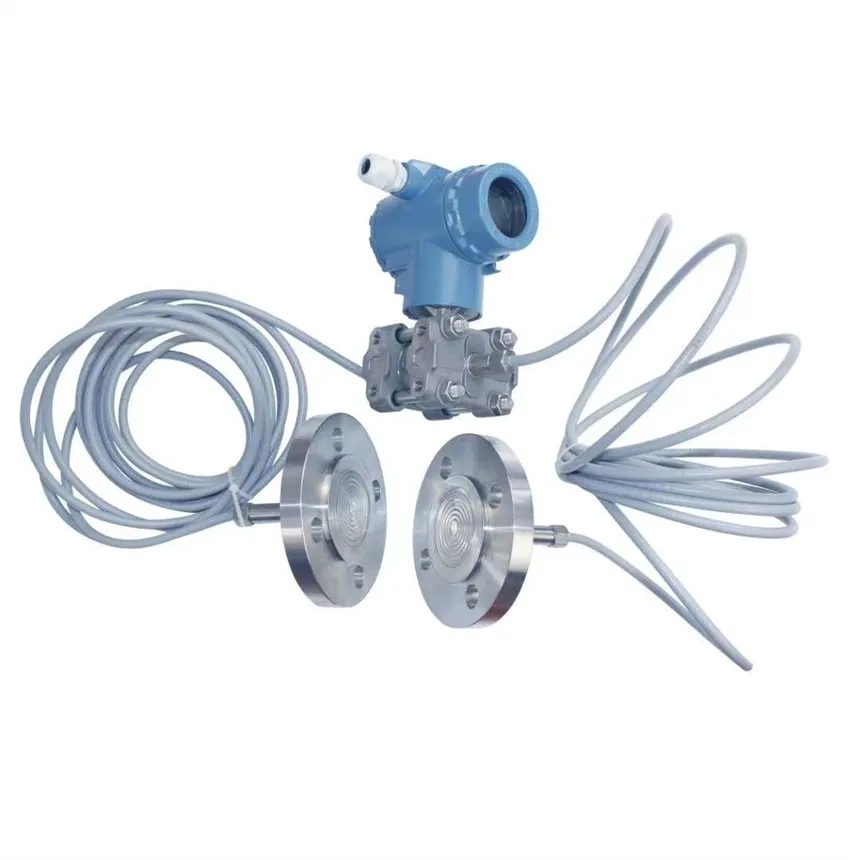
- Differential pressure transmitters with diaphragm seals: Ideal for measuring the level of corrosive or viscous fluids.
- Capacitive level sensors: Used to monitor the interface level between different liquids.
- Weighing systems: Provide high-accuracy level measurement when combined with tanks or containers.
FAQ
How to install a hydrostatic pressure transducer
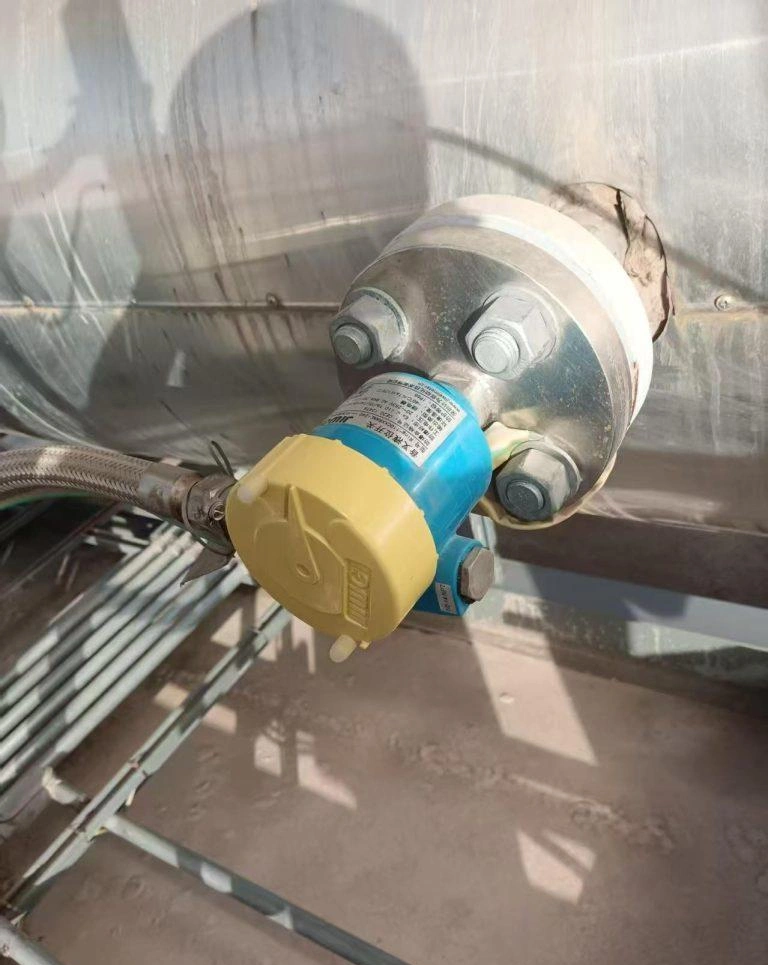
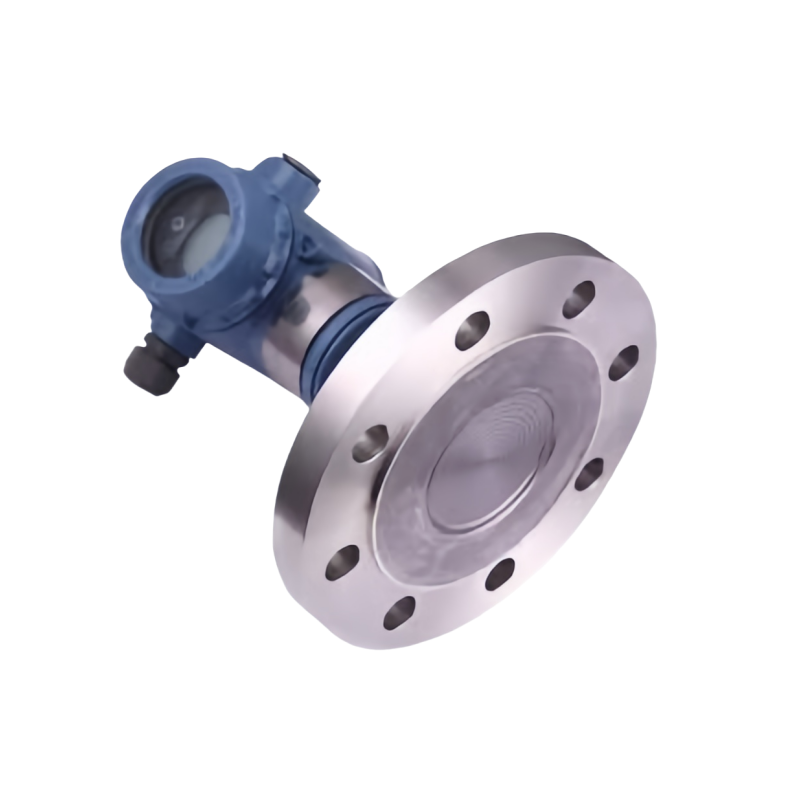
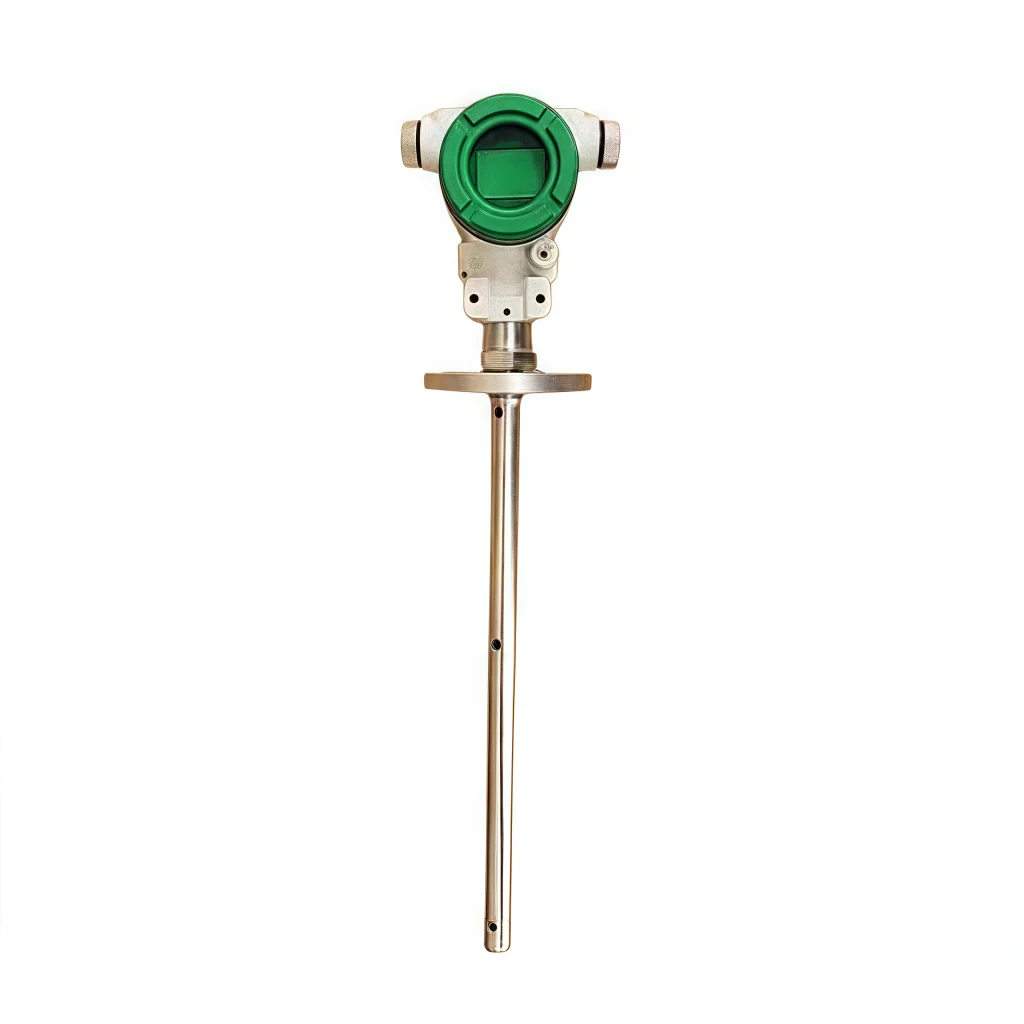
There are two main convenient installation methods for hydrostatic pressure transducers: submersible installation, where the transducer is simply lowered to the bottom of the liquid being measured—ensuring it is positioned vertically and the probe is in contact with the liquid—suitable for open water bodies such as deep wells and rivers; and side-wall flange installation, where the sensor is secured to the side wall of a container via a flange, eliminating the need to drill holes or construct a well, making it suitable for sealed containers and offering a simple, cost-effective installation.
What Precautions Should Be Taken During Installation and Use?
The probe must be suspended to avoid contact with the tank bottom or pipe walls, preventing wear that could lead to measurement errors. Do not let hard objects hit the sensing diaphragm, as this important part of the device can be damaged if you do. This will affect how well the device works, or even stop the device from working at all. Make sure the cable can handle water and doesn’t break easily, with connectors that are tightly sealed. Make sure you keep the device away from equipment that emits strong electromagnetic waves. This will stop the data from being unstable.
What is the difference between a hydrostatic pressure transducer and a standard liquid level transducer?
This device is much better than standard liquid level sensors because you don’t need to drill or install a float mechanism. The submersible design means you can measure the level directly, which makes it much easier to use. It’s perfect for deep wells, reservoirs and other deep open water bodies, and it’s really resistant to interference and the effects of water fluctuations, which makes for more stable measurement accuracy. It also works with sealed containers, making it more versatile.
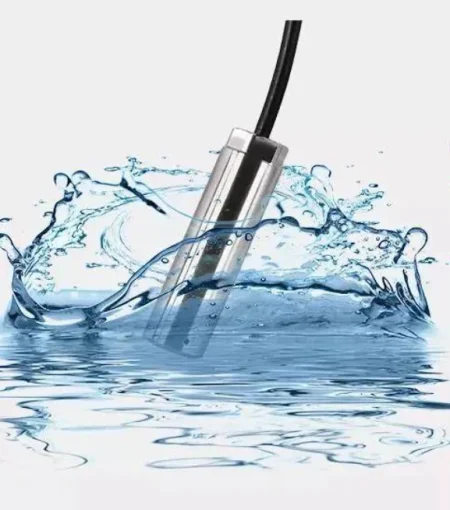
Hydrostatic pressure transmitters measure the pressure of a stationary liquid. And use this measurement to determine the height of the liquid. They are used in a variety of applications. Including water tanks, pump wells and sewage treatment plants. When choosing a hydrostatic pressure transmitter, there are many factors to consider: pressure range, accuracy, media compatibility, etc.
Compared with other level measurement technologies, whether it is a submersible hydrostatic level transmitter or a pressure or differential pressure level transmitter. The cost of hydrostatic level measurement is relatively low.
We are a professional hydrostatic level sensor manufacturer at Sino-Inst. We also provide a variety of customized pressure sensors, level gauges, etc. If you need hydrostatic level measurement or related technical information, please feel free to contact us.