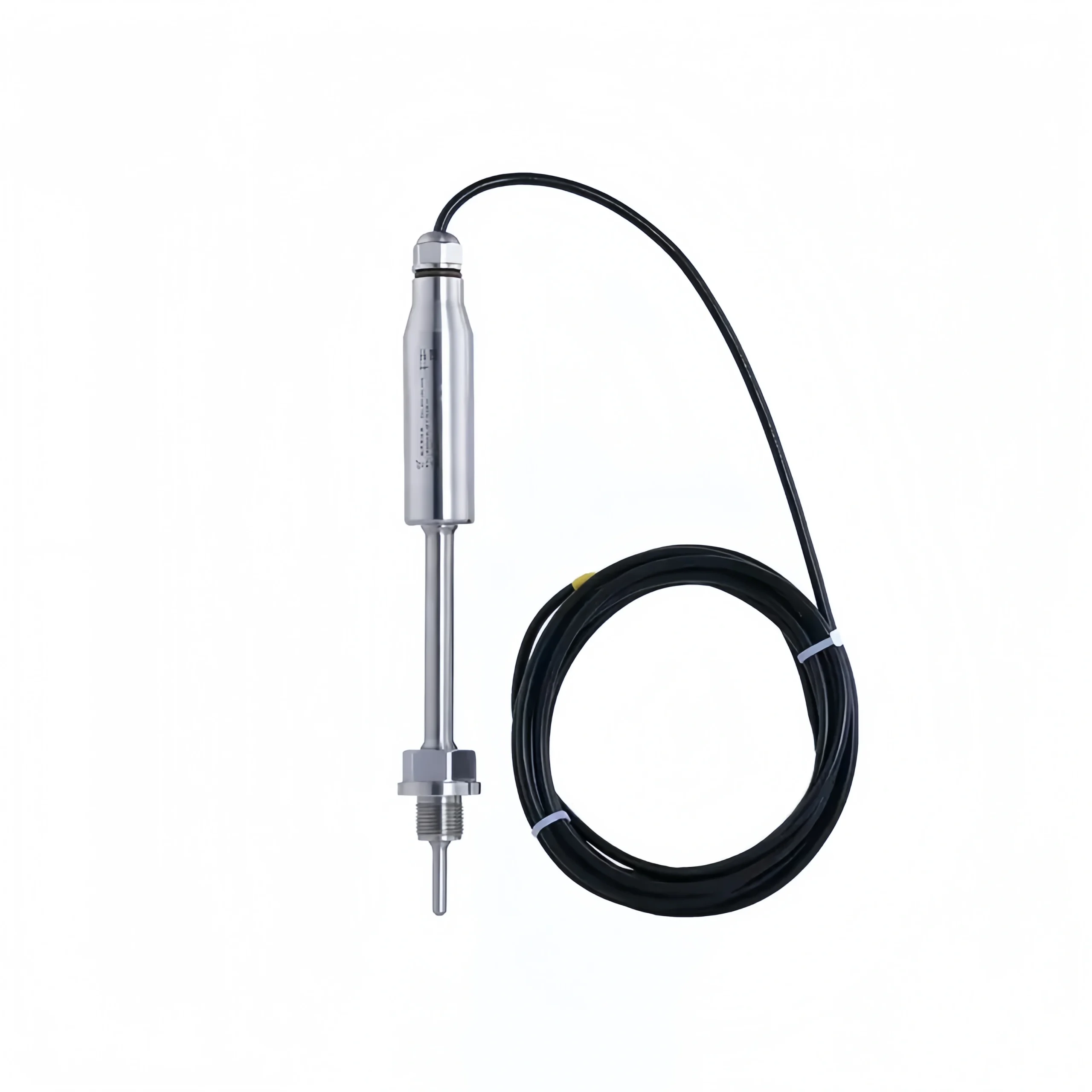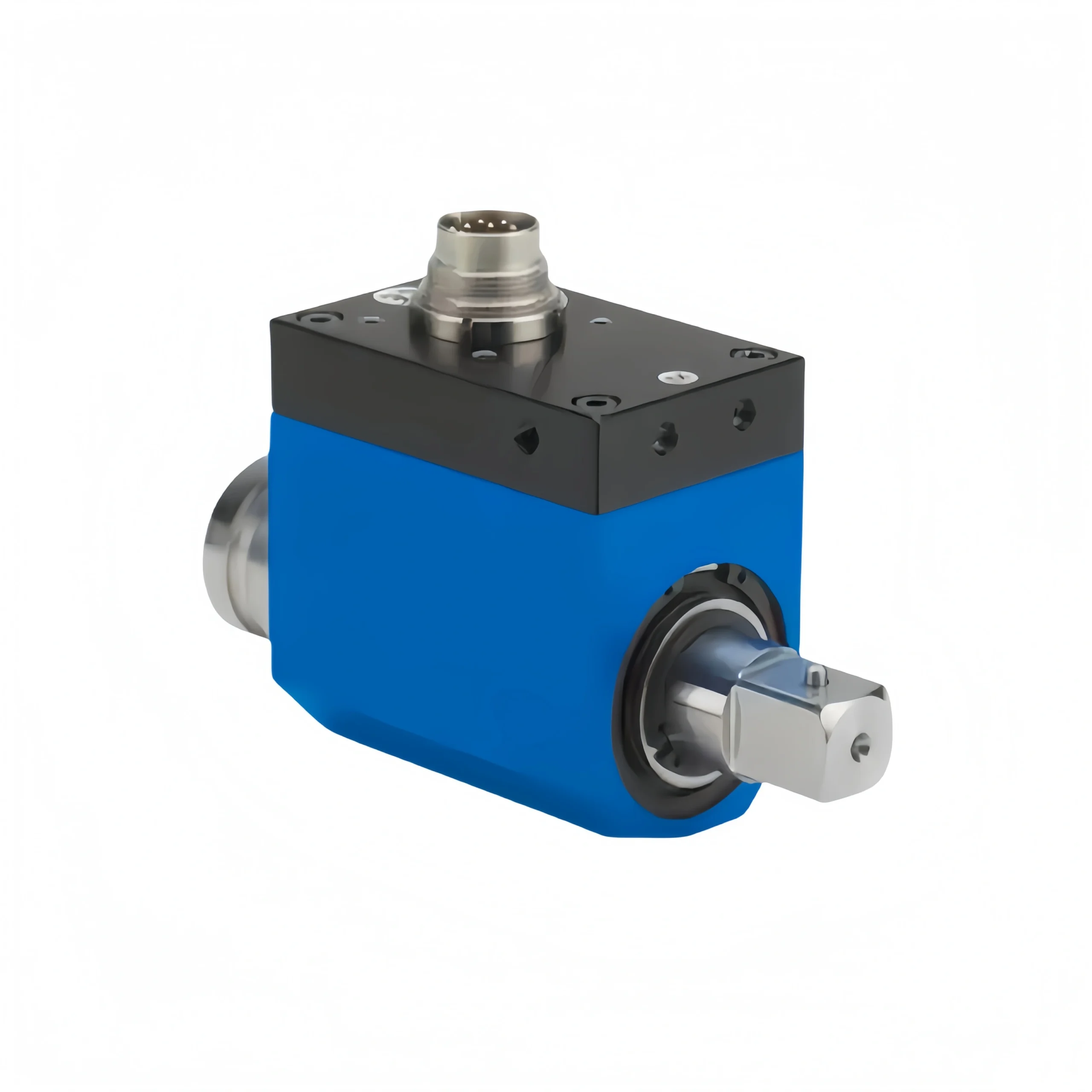
What Is a Differential Pressure Sensor

Table of Contents

Differential pressure sensors are widely used in industrial measurement and control systems to detect pressure differences between two distinct locations. Thanks to their high precision and stable operation, they serve as key components in fluid regulation, liquid level monitoring, pneumatic machinery and various industrial automation applications.
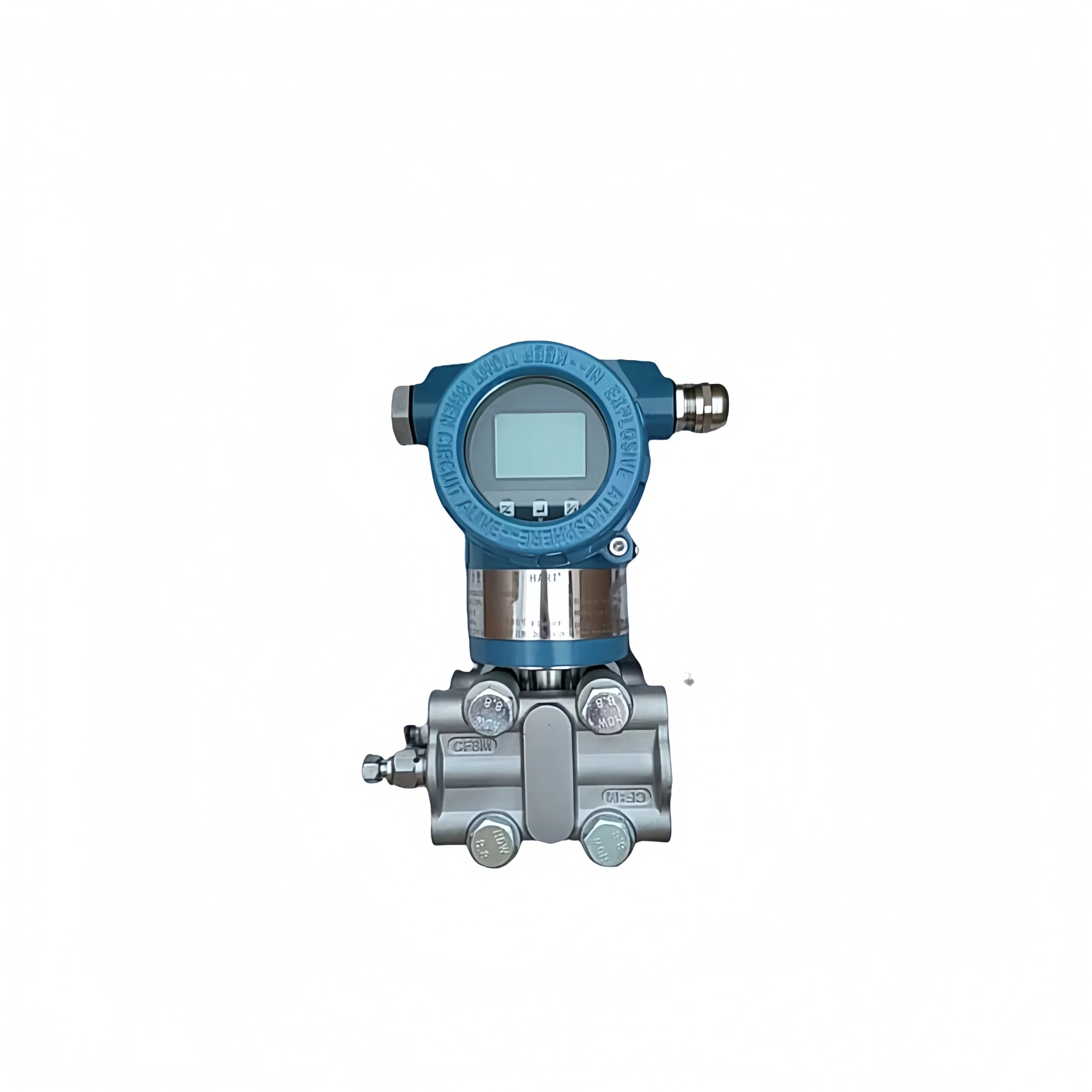
Differential Pressure Sensor

What is Differential Pressure?

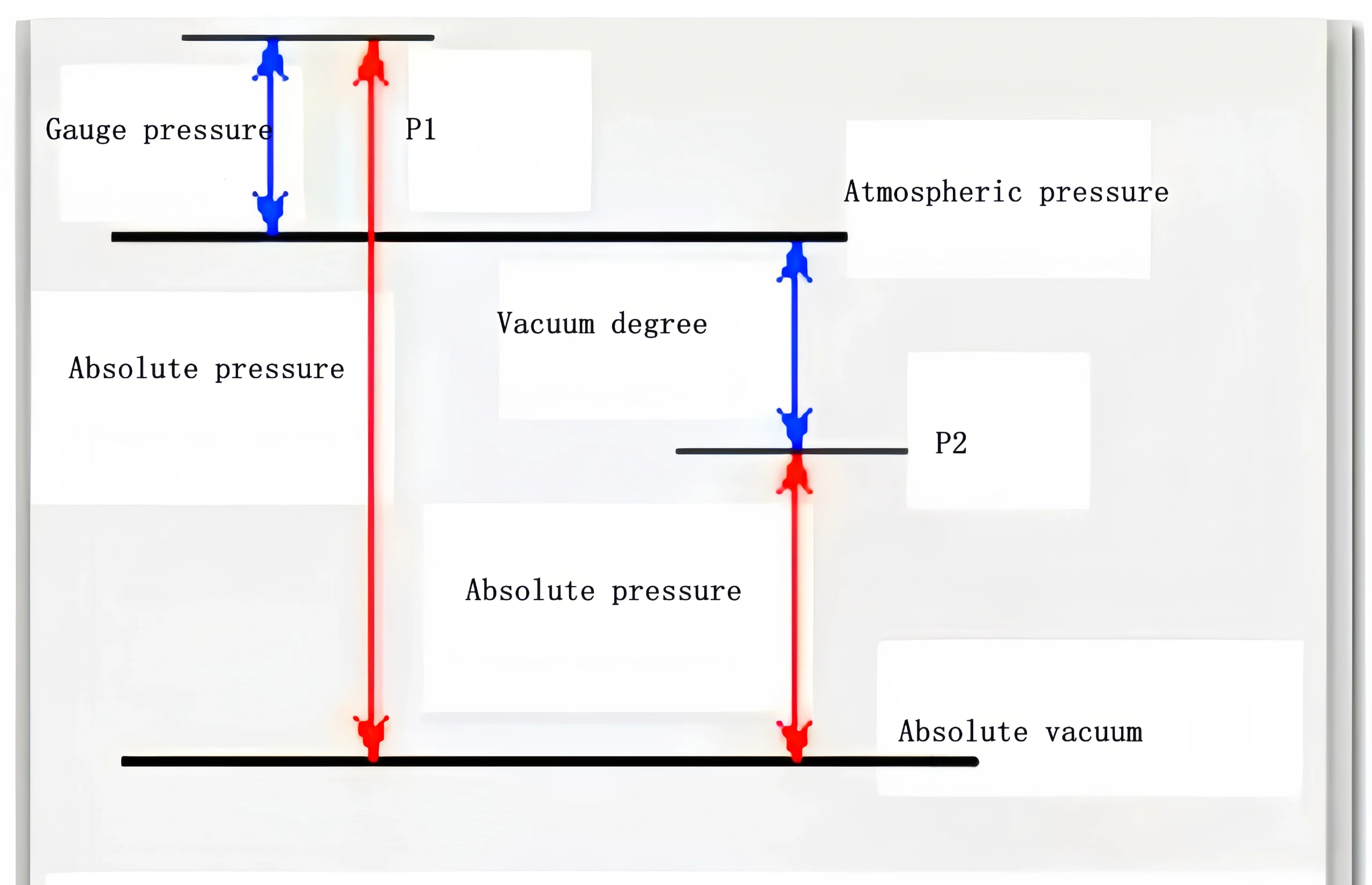
Differential pressure is a core parameter in industrial measurement. Differential pressure (Δp) is calculated by the relative difference between two pressure points:

(Δp=P₁-P₂).

We often use differential pressure gauges to measure the positive pressure end and the negative pressure end. In industrial fields such as petroleum, chemical industry, and metallurgy.Differential Pressure
What Is a Differential Pressure Sensor

Differential pressure sensors measure the pressure difference between two connection ports. They generate an electrical output, usually in the form of voltage or current, whose value changes proportionally with the detected pressure gap.

Structure:

Sensitive element: Most commonly a diaphragm, bellows or elastic component. It bends and shifts under varying pressure.

Transducer: Turns the physical movement of the sensitive element into an electrical signal. Common types include resistance strain gauges, capacitive plates and piezoelectric crystals.

Signal processing circuit: Boosts, filters and calibrates the raw electrical signal to ensure steady and reliable output.

Principle of Operation

Pressure Transmission: Gases or liquids entering the two pressure ports of a differential pressure sensor flow along internal pathways and make contact with the built-in sensing element.

Deformation Generation: Uneven pressure acting on the sensing element causes physical distortion. It will bend, stretch or compress in response to the applied pressure load.

Electrical Signal Conversion: Such physical changes modify the transducer’s inherent characteristics including resistance, capacitance or electric charge, and translate mechanical motion into usable electrical signals.

Signal Processing: The onboard circuit processes incoming electrical signals by amplifying, filtering and correcting linearity. This ensures the final output corresponds accurately to the actual pressure difference.

Output Signal: The refined signal is transmitted via standard formats such as 0–5 V, 0–10 V or 4–20 mA, and fed to subsequent control units and display devices.

Differential Pressure Sensor

Categories of Differential Pressure Sensors

Differential pressure sensors are mainly divided into three main types: MEMS sensors, piezoresistive sensors and capacitive sensors.

Capacitive sensors feature a simple build, low manufacturing costs and minimal power draw. They also offer excellent resolution and strong sensitivity to pressure changes.

Piezoresistive sensors are typically made from silicon. They detect pressure differences by measuring shifts in resistance under applied load. These units boast wide bandwidth, fine resolution and solid performance for high-pressure work, yet their production costs are relatively higher.

As compact differential pressure devices, MEMS sensors excel across key metrics including measurement accuracy, compact size, fast response and low energy use.

Differential Pressure Transmitter
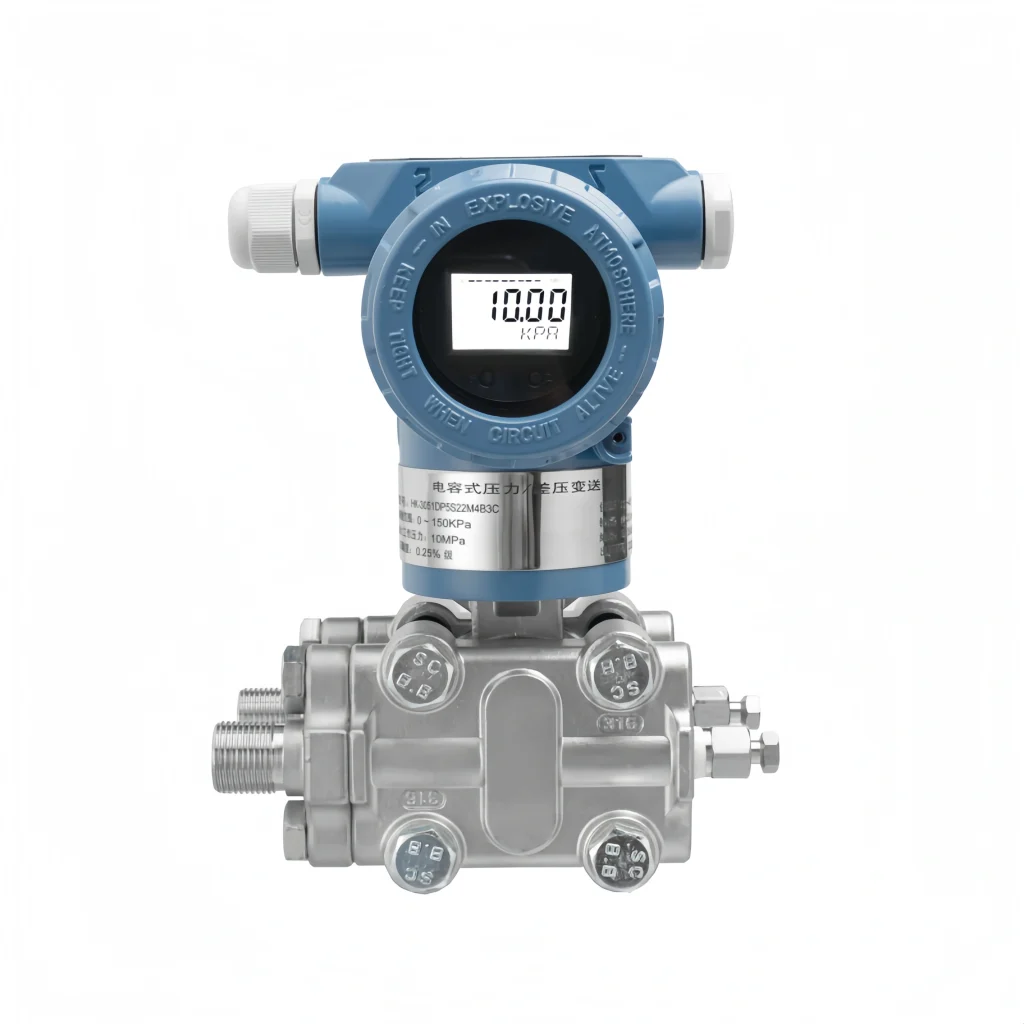
SMT3151 Capacitive Differential Pressure Transmitter
SI-8051DG Monocrystalline Silicon High Accuracy Differential Pressure Transducer
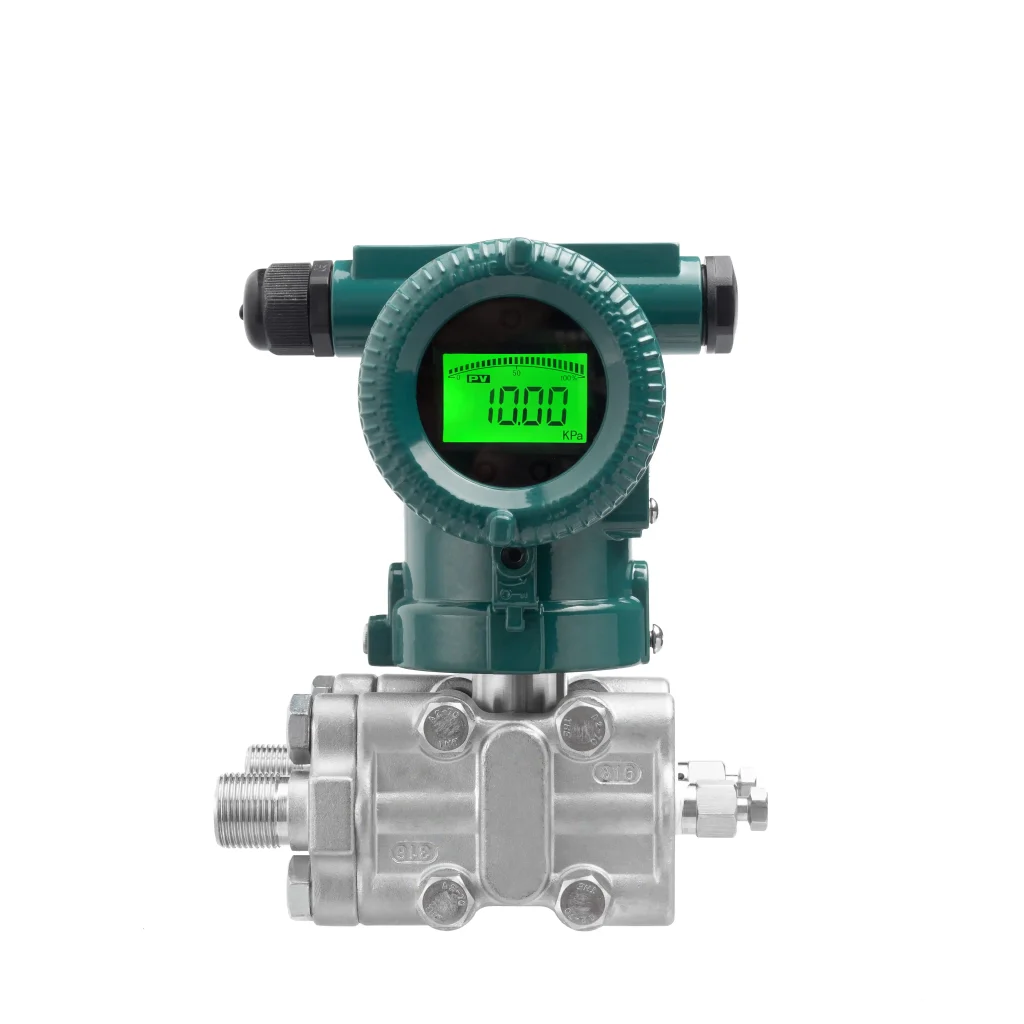
Smart Differential Pressure Transmitter – High Static Pressure – High Accuracy
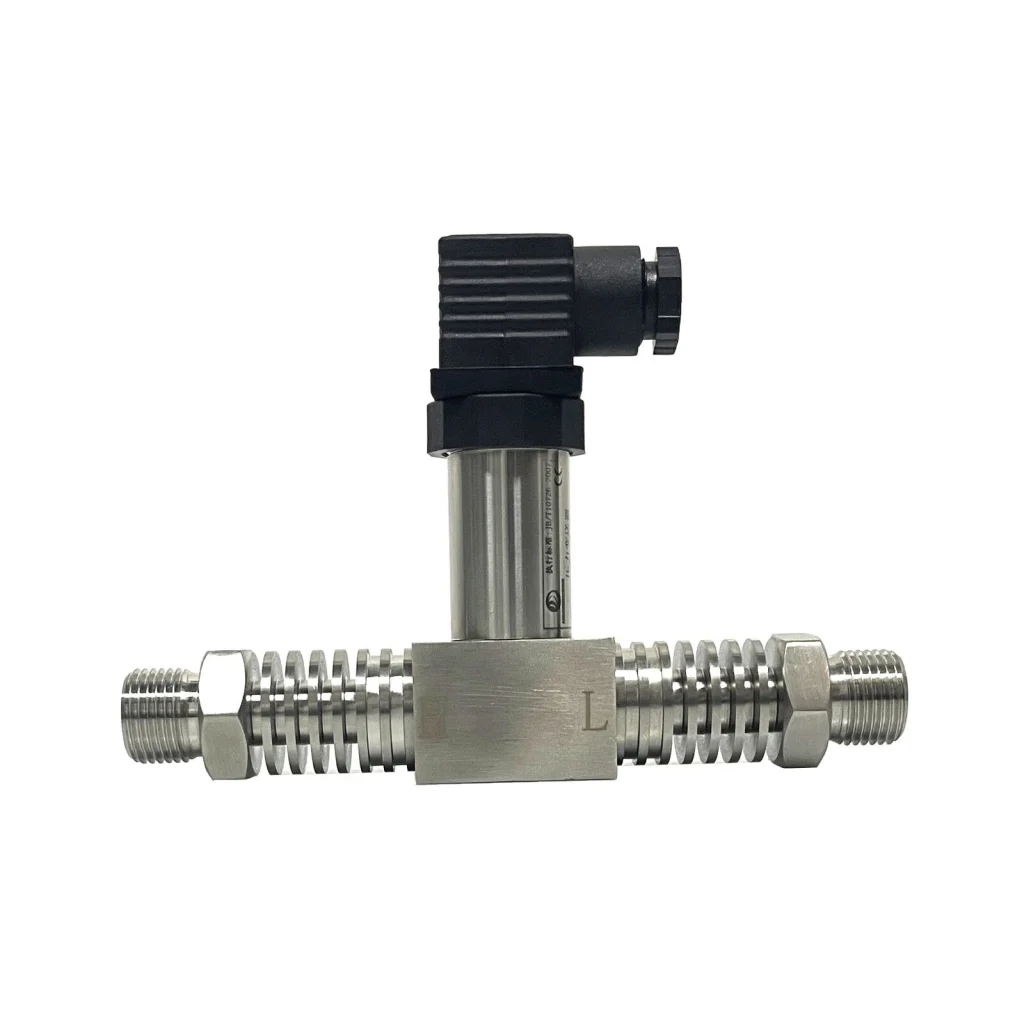
Compact Differential Pressure Transmitter High Temperature Type
SI-804DP Compact Differential Pressure Transmitter
Differential-Pressure-Level-Transmitter
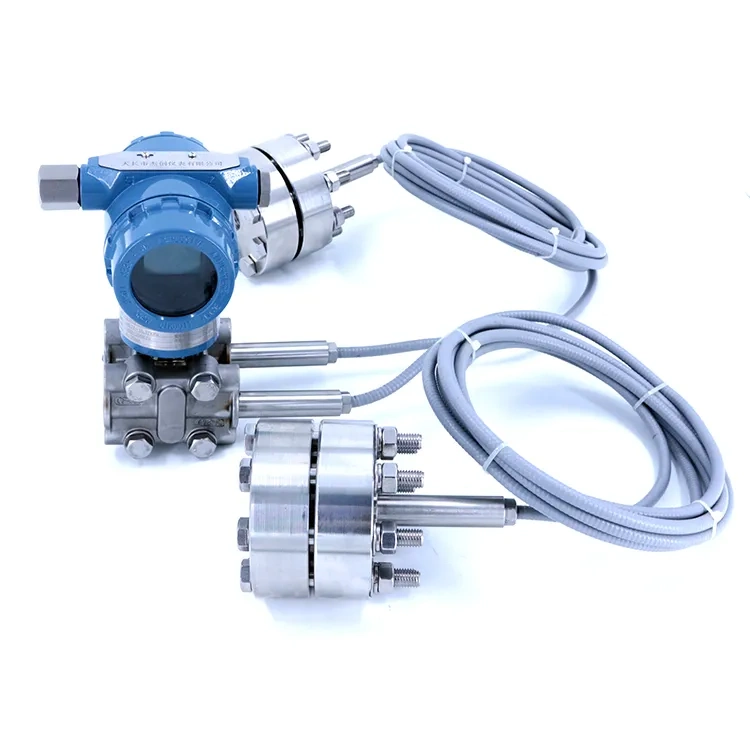
Differential Pressure Level Transmitter with Single/Double Flange-SMT3151LT
Air-Differential-Pressure-Transmitter-
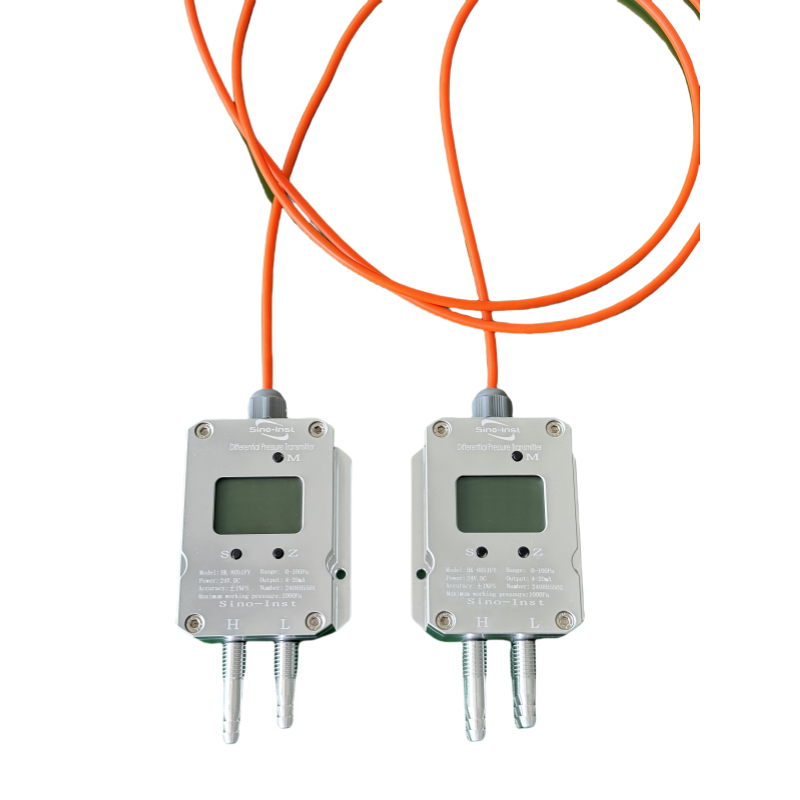
Micro Range Air Differential Pressure Transmitter-HK-8051FY
Differential Pressure Gauge
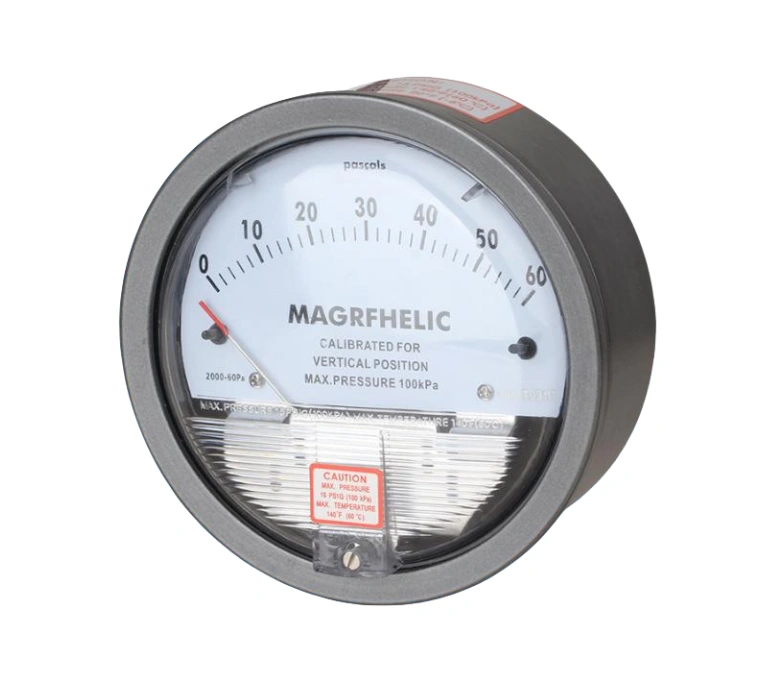
Differential Pressure Gauge-SI-D2000

The Function of a Differential Pressure Sensor

Differential pressure sensors can be used to measure differential pressure/liquid level/density/ and flow.

Differential pressure sensors:

It measures differential pressure by detecting changes in capacitance. Its core structure consists of a stainless steel base, a corrugated isolation diaphragm, a glass layer, and a measuring diaphragm.

The metal film at the edge of the glass layer forms a capacitive structure with the central elastic diaphragm. The silicone oil medium transmits the pressure to the measuring diaphragm. The deformation of the diaphragm under the action of differential pressure causes a capacitance difference.

The sensor consists of a symmetrical structure with two chambers filled with silicone oil, which can transmit the differential pressure to the measuring diaphragm. It has high accuracy and reliability in the field of industrial measurement.

Differential pressure flow meter:

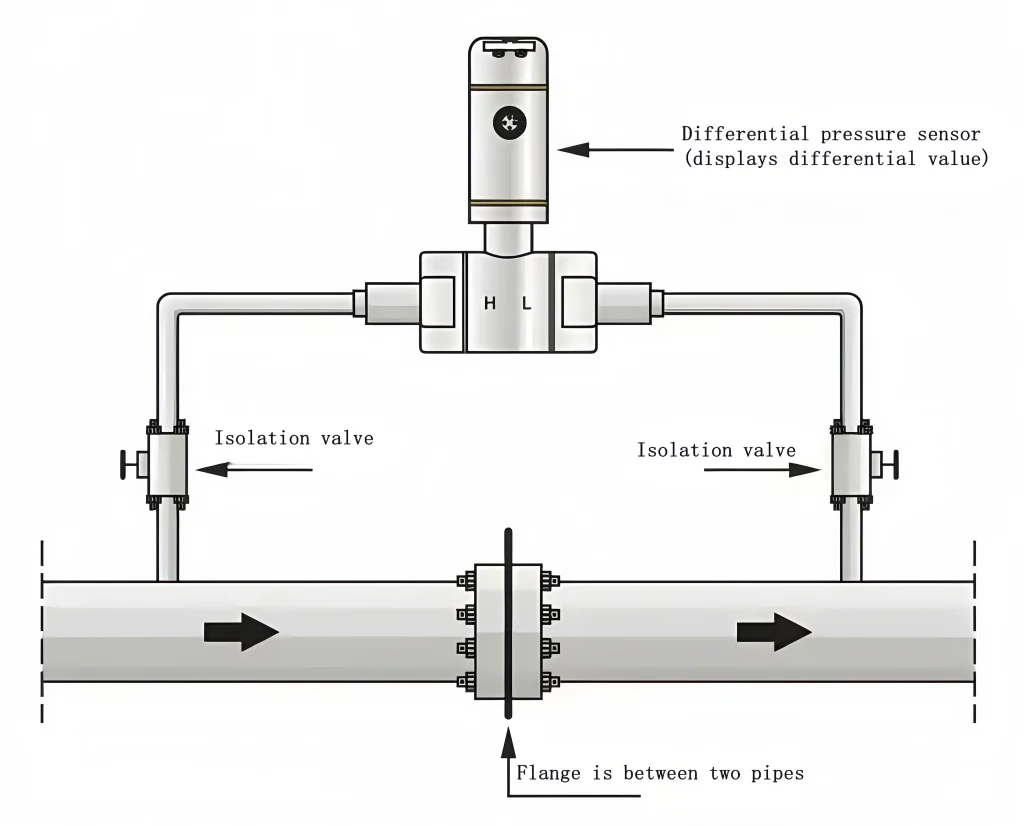
Differential pressure sensors use the Bernoulli principle to measure flow. It calculates the flow rate of the fluid by measuring the flow pressure difference in the pipeline. Thereby inferring the flow rate. Common devices include orifice plates, nozzles, venturi tubes, etc.

Differential level transmeter:

The principle of the differential pressure sensor measuring liquid level:

The pressure at different heights inside the liquid is different. And the pressure per unit area = liquid level height × liquid specific gravity. By measuring the pressure at a certain height inside the liquid. The height from this point to the liquid surface can be obtained.

Since the upper part of the container (liquid surface) itself may also have pressure. The upper pressure will affect the measurement results. Therefore, a differential pressure transmitter is needed to simultaneously measure the pressure. The pressure is above and below the liquid surface and offset (measure the differential pressure). To obtain the liquid surface height.

 Differential Pressure Density Meter

Differential pressure sensors can also be used to measure density. Differential pressure measurement principle: The differential pressure density meter uses the gravity difference △P=ρgh generated by the liquid column. When h is constant, the differential pressure value measured by the differential pressure transmitter is divided by the gravity acceleration and length to obtain the density value.
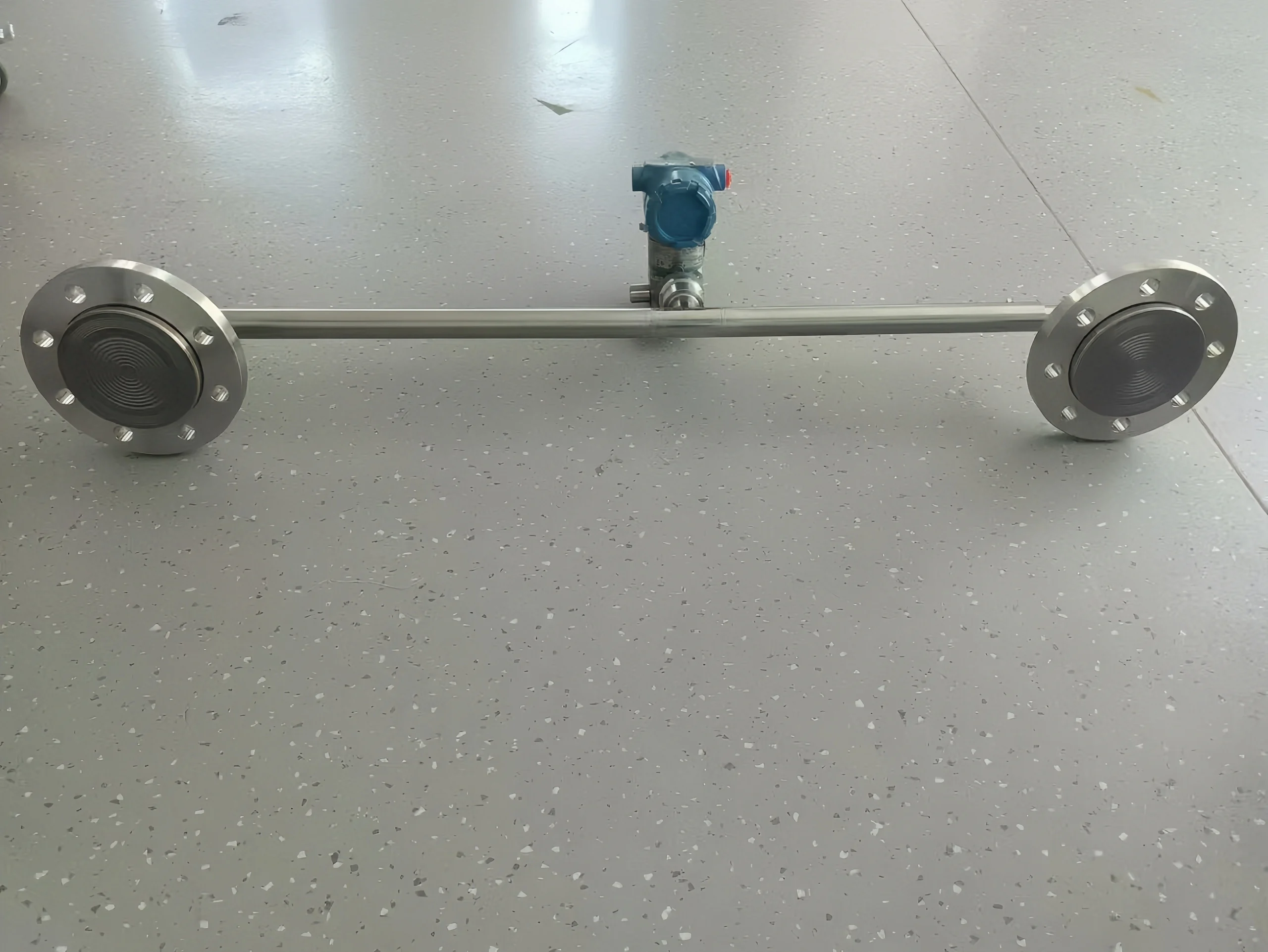
Differential Pressure Sensor

Sino-Inst can supply various measuring instruments. Our products can measure level, temperature, flow and pressure. If you have any needs, please contact us.


What does a Differential Pressure Sensor do?

Differential pressure sensors can be used to measure liquid level and flow. Differential pressure sensors can be used in the following industries:

Chemical Industry

Differential pressure sensors are widely used to monitor and control pipeline pressure differences. By measuring the pressure difference between two pipelines, the flow state of the fluid can be understood in real time. This enables accurate control of chemical equipment.

Differential pressure sensors are also used to monitor the blockage of filters, pressure changes in reactors, etc.

It provides important safety guarantees for chemical production.

Automotive Industry

Differential pressure sensors are used to measure the exhaust pressure difference between the front and rear channels of the engine exhaust particulate filter (DPF).

Medical Equipment Field

Differential pressure sensors are used to monitor air pressure changes in ventilators, pressure control of hemodialysis machines, etc.

Meteorological Monitoring

Differential pressure sensors are used to measure the atmospheric pressure difference at different altitudes. thereby calculating meteorological parameters such as wind speed and direction. This is of great significance to fields such as weather forecasting and aviation safety.
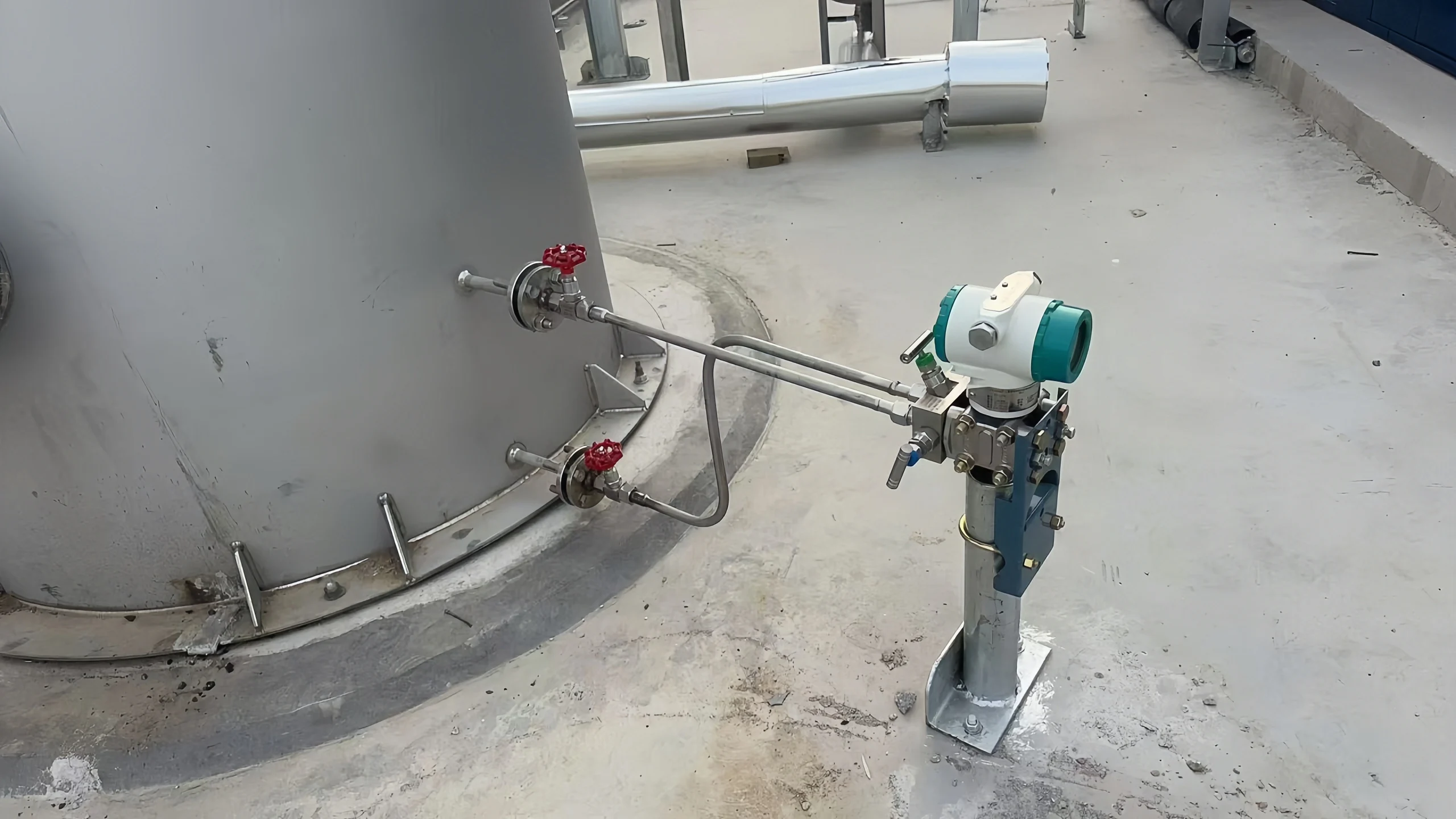
Differential Pressure Sensor

Differences Between Differential Pressure Sensors and Pressure Sensors

Different Measurement Objects: 

Both gauge and absolute pressure sensors function by detecting pressure values at a single measuring point, referenced against ambient atmospheric pressure or a vacuum environment.

By contrast, differential pressure sensors calculate and output the numerical difference in pressure between two distinct testing points.

Different Interface Structures:

Standard pressure sensors are typically equipped with only one pressure inlet port. Differential pressure sensors feature a dual-port design, consisting of a high-pressure end and a low-pressure end.

It derives measurement results by comparing the pressure acting on both sides of its internal sensing diaphragm.

Different Application Scenarios:

General pressure sensors are widely used for single-point pressure monitoring tasks, such as tank liquid level detection, pipeline pressure inspection and barometric pressure measurement.

Differential pressure sensors are applied in scenarios requiring dual-point pressure comparison, including flow rate computation via throttling components like orifice plates and Venturi tubes, filter blockage monitoring, cleanroom pressure regulation, and liquid level testing for sealed vessels.

Differences in Measurement Range and Accuracy:

Differential pressure sensors typically work across a narrower span, from tens of pascals up to several megapascals, but they need rock-solid zero points and compensation for static pressure effects.

Pressure sensors cover a much wider range, from vacuum to ultra-high pressure, though they don’t handle differential measurements well.

Differences in Signal Processing Complexity:

Differential pressure sensors have to handle two pressure signals at once and run differential calculations, so the compensation algorithms get more involved—especially for temperature drift and static pressure errors.

Pressure sensor signal conditioning is simpler by comparison; usually you’re just linearizing and compensating for temperature on a single signal.

How to Calibrate a Differential Pressure Sensor?

Due to the interference of various factors, the zero point of the differential pressure sensor may sometimes be offset. Therefore, it is very necessary to calibrate the zero point of the differential pressure sensor regularly.

Methods for zero point calibration of a differential pressure sensor

1. Using atmospheric pressure

The zero point of the differential pressure sensor can be calibrated by using atmospheric pressure. The specific operation method is as follows:

(1) Connect the differential pressure sensor to the measurement system without any pressure.

(2) Expose the two ports of the differential pressure sensor to the atmosphere at the same time. Wait for a while until the output of the differential pressure sensor stabilizes.

(3) Record the output value of the differential pressure sensor at this time, which is the zero point value.

2. Manual zero adjustment

Manual zero adjustment means to calibrate by manually adjusting the zero point value of the differential pressure sensor. The specific operation method is as follows:

(1) Connect the differential pressure sensor to the measurement system and preheat it.

(2) Record the output value of the differential pressure sensor without any pressure. This value is the current zero point value.

(3) According to actual needs, manually adjust the zero value of the differential pressure sensor until the output value is zero.

(4) Connect the differential pressure sensor to the measurement system. Perform actual measurement.
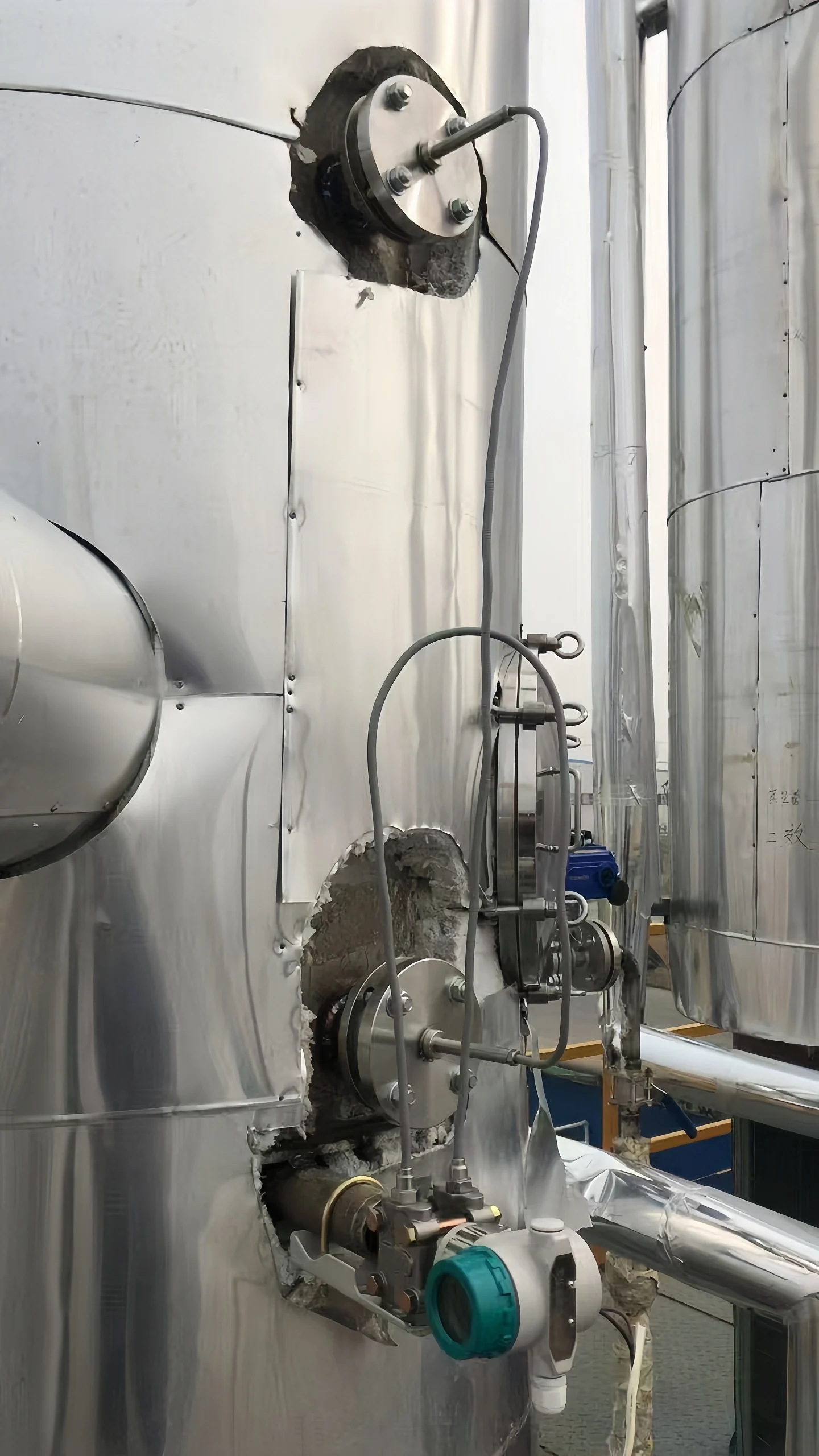

3. Automatic zeroing

Automatic zeroing refers to calibration by using the automatic zeroing function of the instrument. The specific operation method is as follows:

(1) Connect the differential pressure sensor to the instrument and preheat it.

(2) Start the automatic zeroing function of the instrument without any pressure.

(3) Wait for a while until the instrument completes automatic zeroing.

(4) Connect the differential pressure sensor to the measurement system. Perform actual measurement.
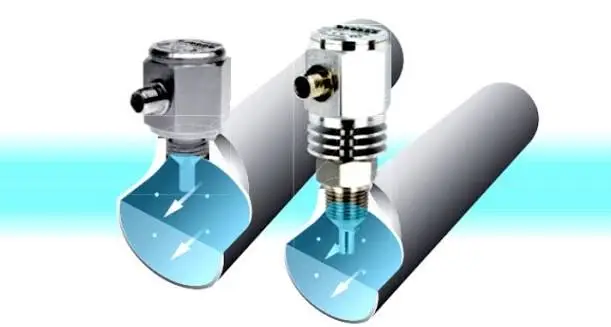
Differential Pressure Sensor

How to Select the Right Differential Pressure Transmitter

 1. Identify the Measurement Medium and Operating Conditions

Figure out whether you’re dealing with gases, liquids, viscous fluids, or media with impurities—this affects your choice of diaphragm material and design. Check the temperature and corrosiveness too; if the medium is corrosive, go with stainless steel or Hastelloy.

2. Determine the Measurement Range and Accuracy

Pick a range that covers your actual differential pressure. Ideally, keep the operating value between 30% and 80% of full scale for stable readings. For accuracy, match the grade to the job—high-precision units work well in labs and testing, while standard grades handle most industrial settings fine.

3. Match the Pressure Type and Installation Method

Figure out whether you need gauge pressure, absolute pressure, vacuum, or bidirectional differential pressure, then pick the right type from there. Look at your space and piping layout to settle on the mounting style—threaded, flanged, or clamp-on—and balance how easy it is to install against how well it actually seals.

4. Consider Output Signals and Power Supply

Common outputs are 4–20 mA analog, RS485 digital, or voltage signals. Make sure whatever you pick talks to your downstream instruments and control systems. Double-check the power supply voltage range so you’ve got stable, compatible power on site.

5. Evaluate Environmental Protection and Explosion-Proof Requirements

For outdoor, humid, or dusty conditions, lean toward products with solid protection ratings. If you’re in a hazardous area with flammable gases or dust, choose a sensor with the right explosion-proof certification to keep things safe.

6. Consider Response Speed and Load Capacity

For dynamic or rapidly changing pressure, pick a model with a fast response time. If you’re running long cables, check the sensor’s load capacity so signal attenuation doesn’t mess with your data.

Sino-Inst is a supplier from China. We have many years of experience in instrument measurement.

Sino-Inst supplies various types of sensors. Our differential pressure sensors come with a one-year warranty. We offer international express delivery. We support a variety of custom solutions. Our measuring instruments are used in a variety of industries. We have many successful cases. If you have measurement problems, please contact us now!

Welcome To Share This Page:
Product Categories
Latest News
Get A Free Quote Now !
Contact Form Demo (#3)

Related Products

Related News

There are many things to note when installing flow switches and flow sensors. Proper installation of flow switches and flow

Sino-Inst is a professional supplier of flow switches. Based on experience, this article will introduce: What is a flow switch?

Liquefied petroleum gas (LPG) flow measurement is a critical component of energy trade settlement and process control. However, its two-phase

As a non-intrusive flow measurement technology, clamp-on ultrasonic flowmeters enable online monitoring of fluid flow by clamping transducers onto the

As key perception components in industrial measurement and control systems, pressure sensors are widely used in various working conditions. Types

Hydrostatic pressure transmitters operate on the principle of hydrostatics. This implies that they are capable of detecting the pressure generated

As oil and gas extraction extends into extreme environments such as deep formations and the deep sea, pressure—as a core

As an inert gas, nitrogen plays an irreplaceable role in numerous fields, including chemical synthesis, electronics manufacturing and laboratory analysis;

Industrial Gas Flow Meters are instruments used to measure the flow rate, volume or mass of gas in pipelines. There

Scroll to Top

Get A Free Quote Now !

Contact Form Demo (#3)