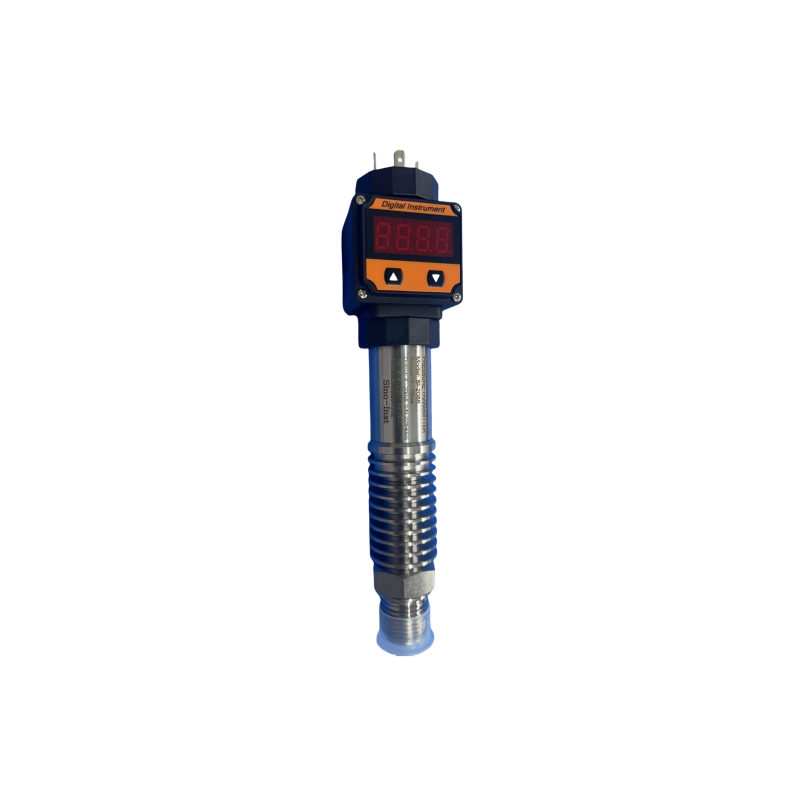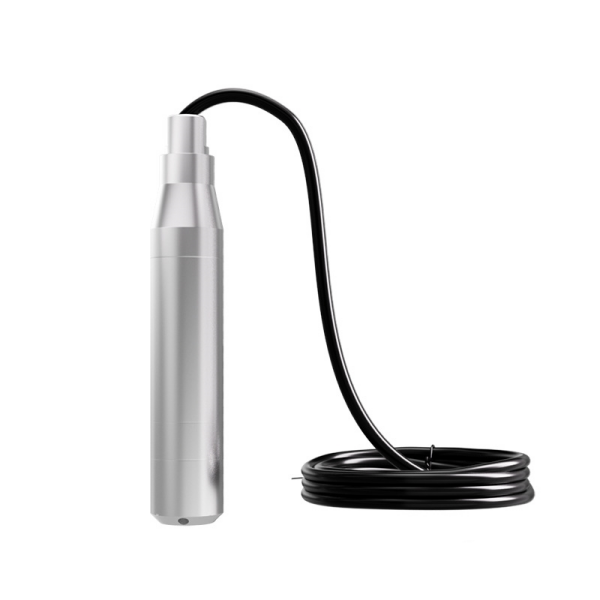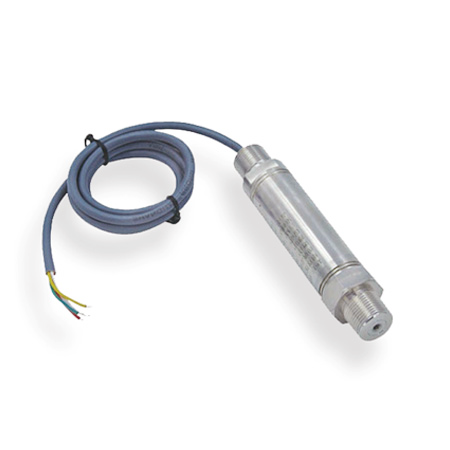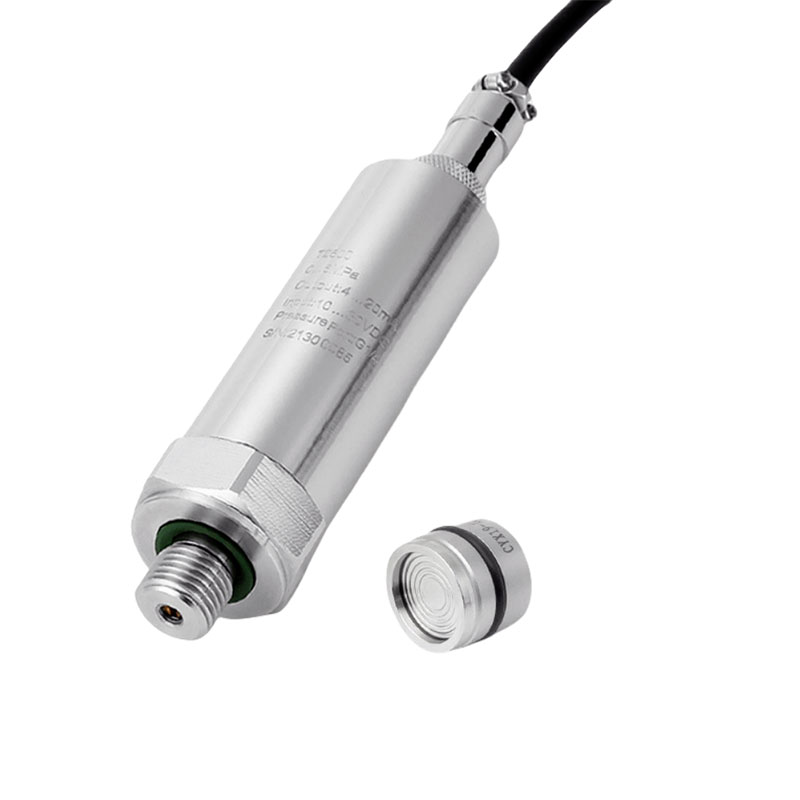
A submersible level transmitter is a level gauge that requires the probe to be immersed in liquid to measure the liquid level. In most cases, it uses the principle of hydrostatic pressure for measurement. Therefore, it is also called a hydrostatic pressure level transmitter. The IP68 sealing design allows the transmitter to be fully immersed in water or other liquids without affecting its functionality.
Submersible level transmitters can accurately detect and transmit pressure readings from underwater applications. This allows operators to know the amount of water at a specific time. Submersible pressure sensors have a high safety rating. They are equipped with a rugged and sealed stainless steel housing. They can be used to monitor water levels in outdoor applications. They are suitable for applications that are considered hazardous locations.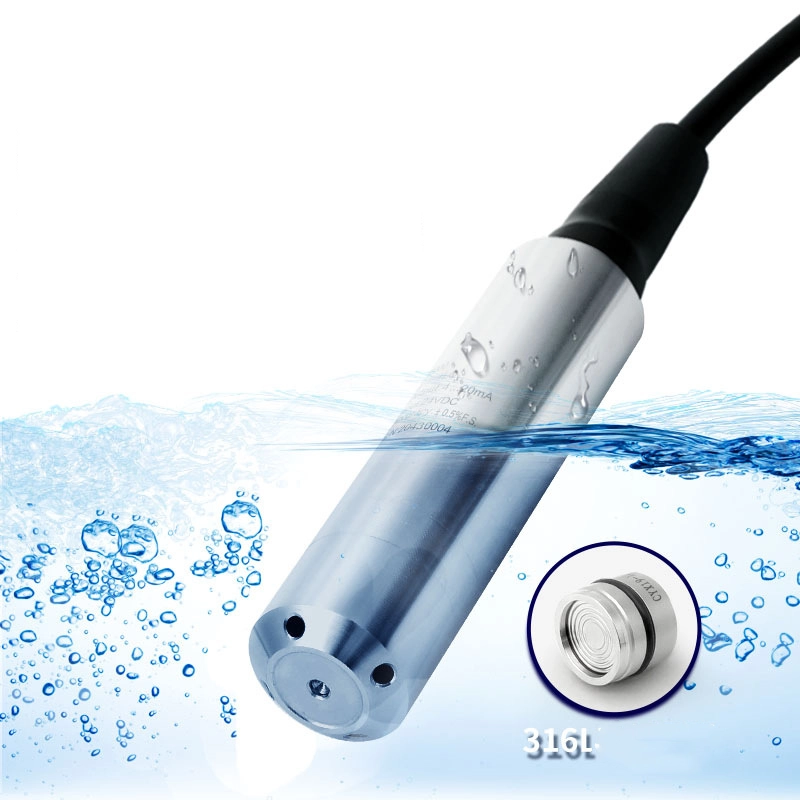
Submersible pressure transmitters are based on the hydrostatic pressure principle. They measure the hydrostatic pressure exerted by a liquid on a sensor. The transmitter converts the pressure reading into an electrical signal (e.g., a 4-20 mA current signal). This signal is then transmitted to a control system or monitoring device. This pressure is directly proportional to the height of the liquid.
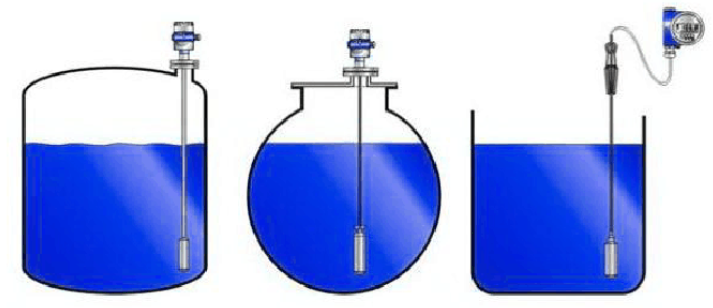
When the level transmitter is immersed in the liquid to be measured to a certain depth, the formula for measuring the liquid level using the submersible pressure transmitter is: P = ρgh. Where:
P is the pressure.
ρ is the density of the liquid.
g is the acceleration due to gravity.
h is the height (or depth) of the liquid column.
This formula calculates the hydrostatic pressure and adds the atmospheric pressure to find the total pressure experienced by the transmitter.
When the level transmitter is immersed in the liquid to be measured to a certain depth, the formula for measuring pressure using a submersible pressure transmitter is:
P = ρgh + P₀, where:
- P is the total pressure at the depth of the transmitter.
- ρ is the density of the fluid.
- g is the acceleration due to gravity.
- h is the depth of the transmitter below the surface of the fluid.
- P₀ is the atmospheric pressure at the surface of the fluid.
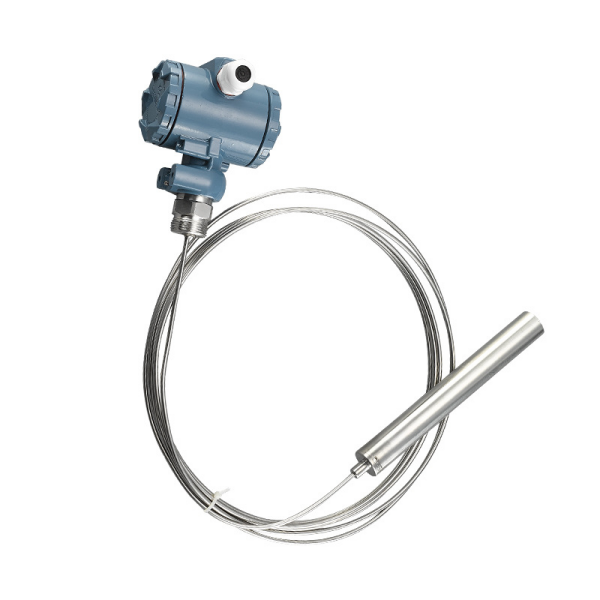
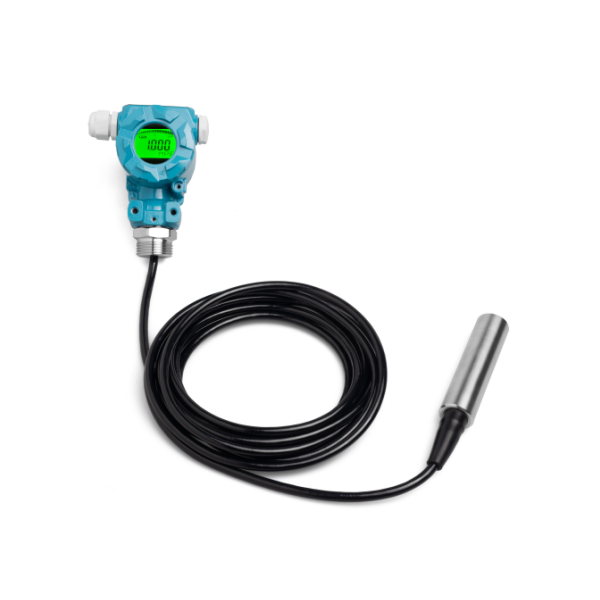
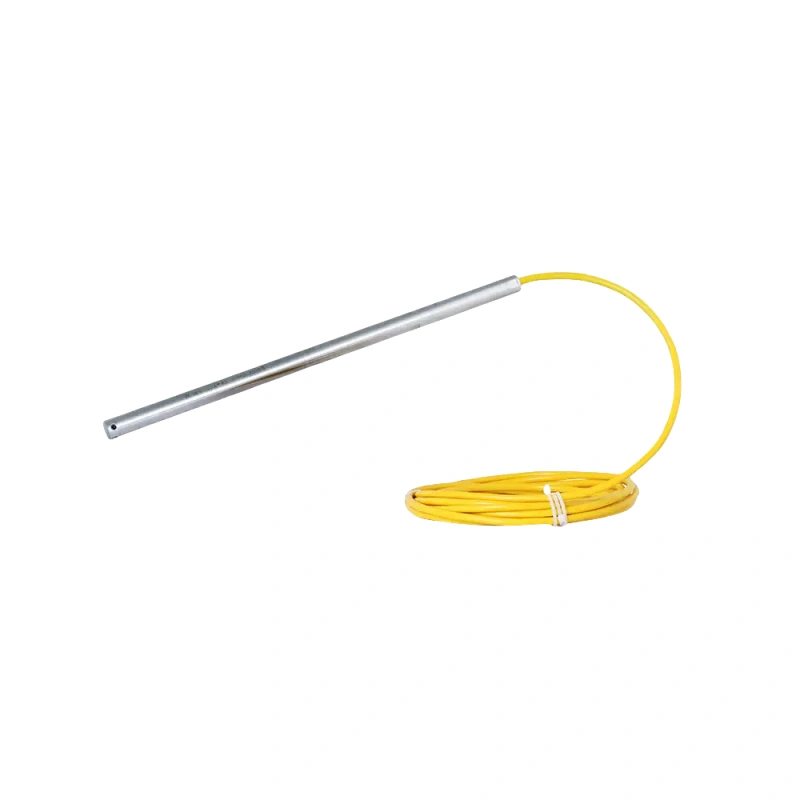
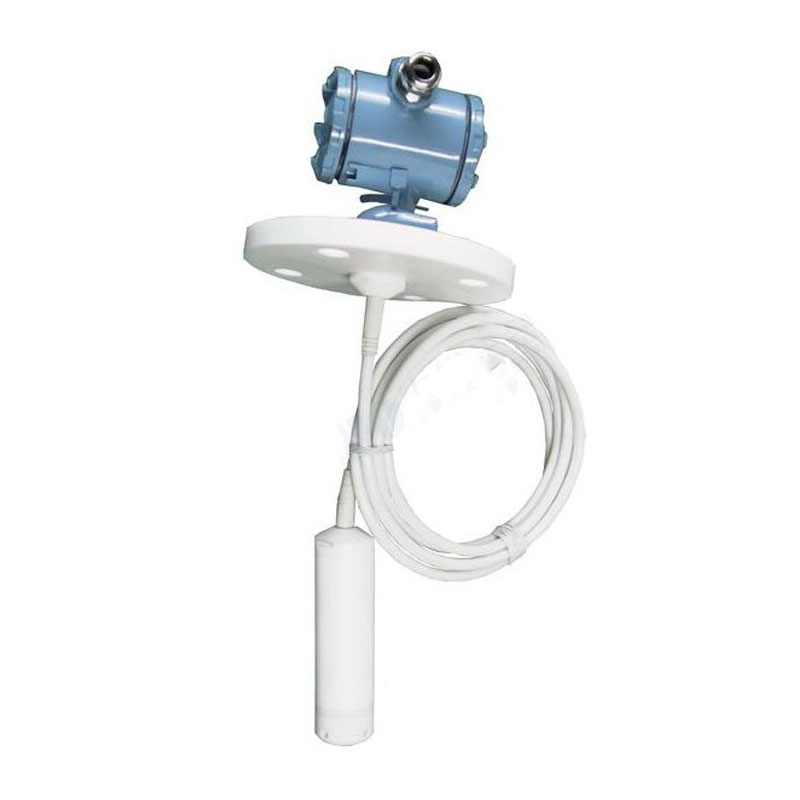
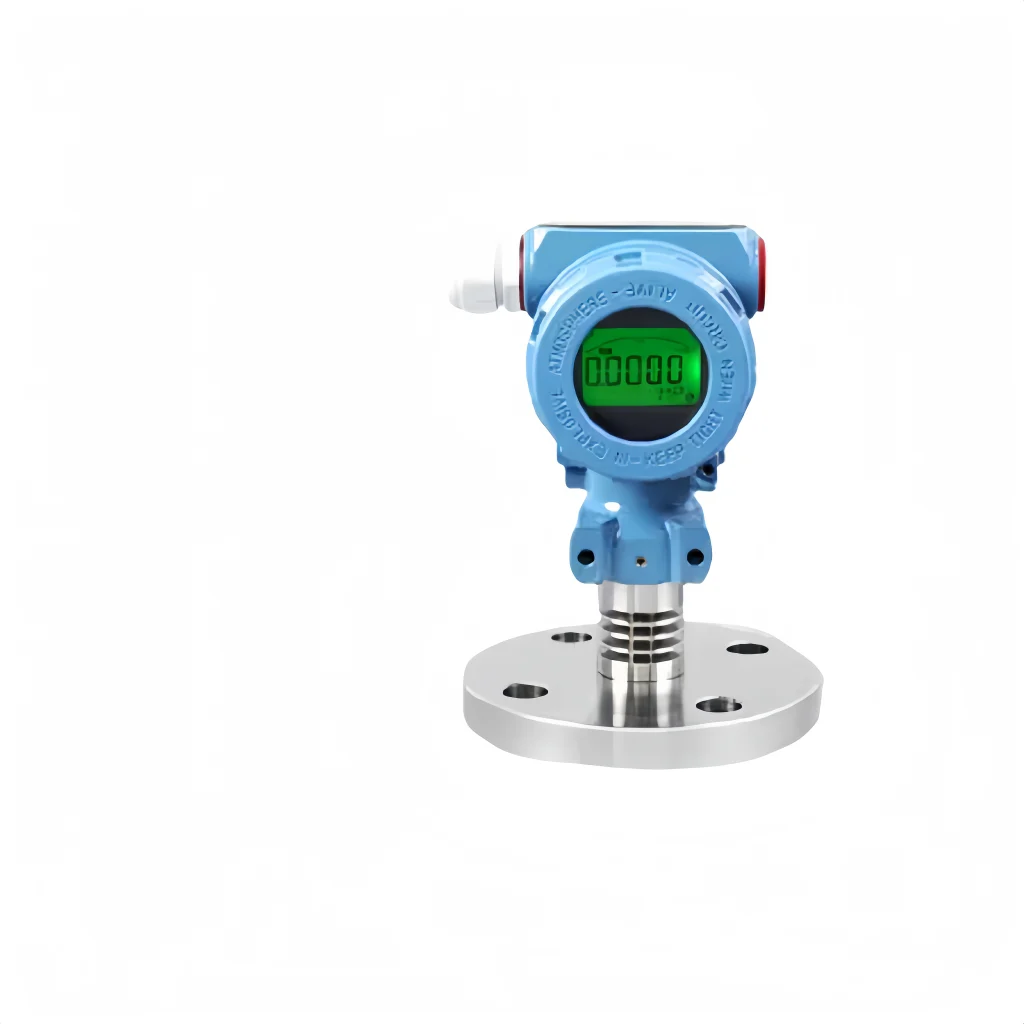
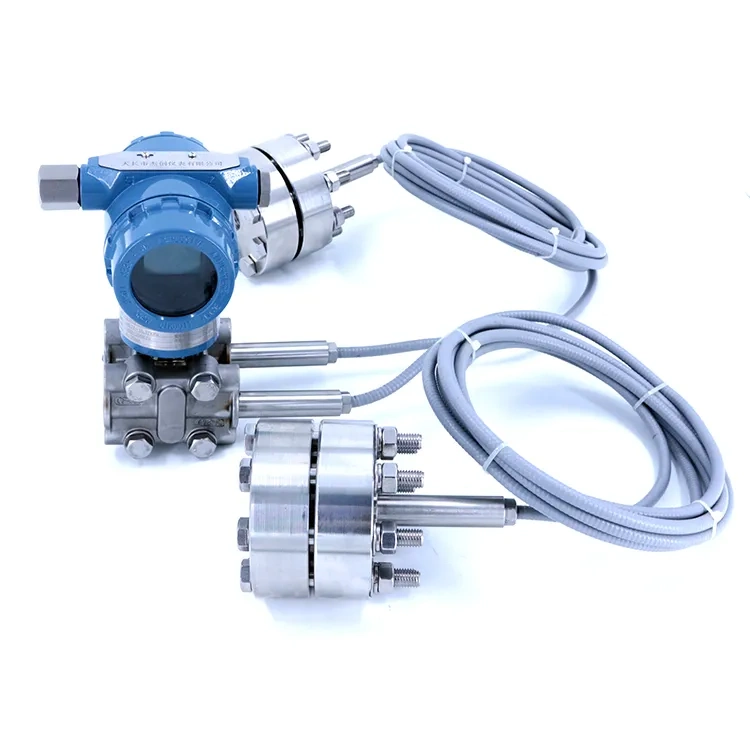
Submersible pressure sensors are commonly used in the water and wastewater industry. Submersible pressure transmitters measure water level by converting the hydrostatic pressure at a fixed depth into an electrical signal. This allows for a reliable and accurate determination of water level.
This is a simple way to measure the liquid level. This allows for accurate water level monitoring in a variety of applications such as tanks, wells and rivers.
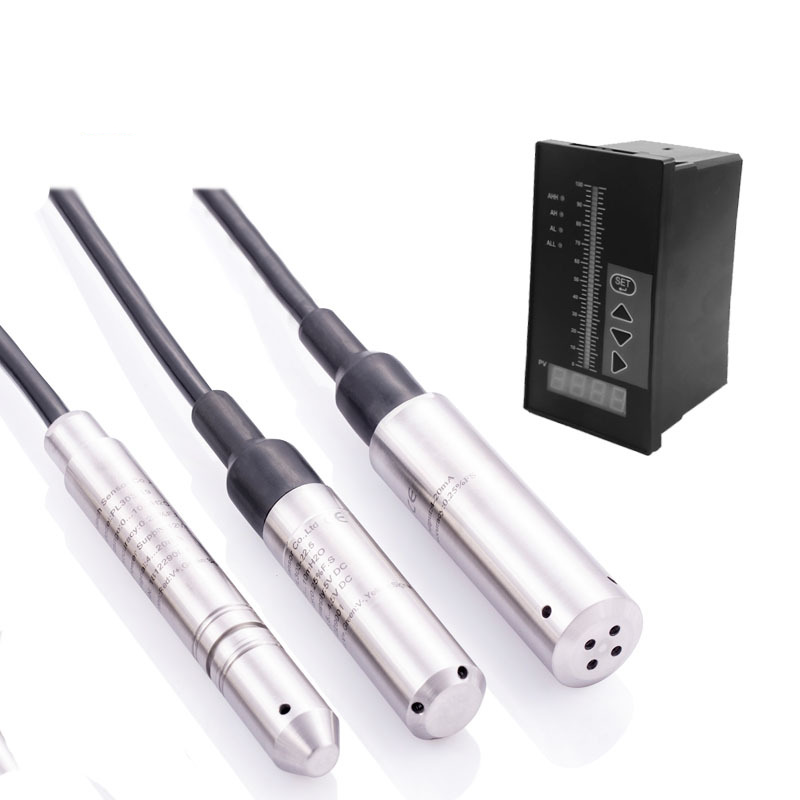
Key features and benefits:
1. Installation is straightforward; there is no need to construct complex support structures, as the device can be placed directly into the medium and used immediately, making both installation and subsequent dismantling and maintenance very labour-efficient.
2. Measurement stability is high, with minimal impact from fluctuations in the liquid level within the container or medium flow, enabling long-term, continuous and accurate monitoring of liquid level data.
3。 The scope of application is broad, accommodating a variety of media such as clean water, wastewater and mildly corrosive liquids, and can also be used in various operating conditions, including open-top and large storage tanks.
4. The structure is simple and durable, with excellent overall sealing that prevents water ingress and leakage. It offers outstanding resistance to interference, a low failure rate and a long service life.
5. It offers significant cost advantages, with low investment costs for both the equipment itself and installation. The overall operating and maintenance costs are far lower than those of many similar level measurement devices.
6. Signal transmission is convenient, with standard electrical signals output that can be directly connected to instruments and control systems, facilitating remote monitoring and automated control.
Submersible pressure transmitters can be customized with full PTFE material. They can withstand harsh chemical environments. They are very suitable for measuring corrosive liquids. They are designed to be directly immersed in the liquid. They can provide accurate and real-time level measurement.
Submersible pressure transmitters adopt a completely sealed structure. They can prevent leakage and ensure the integrity of internal components even in harsh environments. They are placed directly in the liquid. They provide more accurate measurements than non-contact methods such as radar or ultrasonic.
The diaphragm and other wetted parts of the submersible pressure transmitter are made of corrosion-resistant materials. Mainly including corrosion-resistant materials such as PVC, PP, and PVDF. The internal full potting process ensures that the product has a long service life. It is widely used in many occasions such as the chemical industry, environmental protection, water treatment, industrial process control, etc.
Liquids suitable for measurement
1. Various strong acid solutions, including hydrochloric acid, sulphuric acid, nitric acid, hydrofluoric acid and other acidic media
2. Various strong alkali solutions, including sodium hydroxide, potassium hydroxide, ammonia water and other alkaline media
3. Corrosive water bodies such as municipal sewage, industrial effluent, electroplating effluent, textile dyeing effluent and pharmaceutical effluent
4. Organic solvents such as alcohols, ketones, esters and benzene derivatives, as well as oil-based media such as diesel, fuel oil and hydraulic oil
5. Neutral and saline water bodies such as tap water, pure water, softened water, seawater, brine and salt water
6. Food and pharmaceutical liquids such as fruit juices, beverages, medicinal solutions, fermentation broths and food slurries
7. Strongly oxidising liquids such as sodium hypochlorite and hydrogen peroxide, as well as mineral slurries and mineral processing effluents containing suspended solids
Water treatment industry
Widely used in water treatment plants and sewage treatment works to monitor liquid levels in sedimentation tanks, equalisation tanks, sewage wells and collection wells; suitable for media such as sewage and clean water, and capable of long-term submersion.
Water Resources and Water Services
Used in reservoirs, rivers, canals, pumping stations and stormwater networks to collect real-time water level data, supporting hydrological monitoring, flood control operations and water resource management.
Industrial Storage Tanks and Vessels
Suitable for atmospheric pressure storage tanks in the chemical, food, pharmaceutical and grain and oil industries. Measures the liquid levels of various raw materials and finished products. Easy to install and compatible with a wide range of neutral and mildly corrosive media.
Municipal Engineering
Used for liquid level monitoring in underground pipe networks, underground car park sump pits and municipal manhole chambers, providing early warnings of water accumulation and flooding risks to ensure the normal operation of municipal facilities.
Metallurgy and Mining Industry
Monitors liquid levels in ore dressing tanks, cooling water tanks and slurry tanks; withstands on-site dust and humid environments, meeting the operational requirements of harsh industrial and mining conditions.
Power Industry
Used in circulating water tanks, cooling water tanks and storage reservoirs at thermal power stations and hydroelectric power stations to ensure stable liquid levels in unit water supply systems and support the safe operation of auxiliary equipment.
Building and Construction
Responsible for liquid level detection in building basements, fire water tanks and domestic water tanks, integrating with water supply, drainage and fire protection systems to achieve automated control and management.
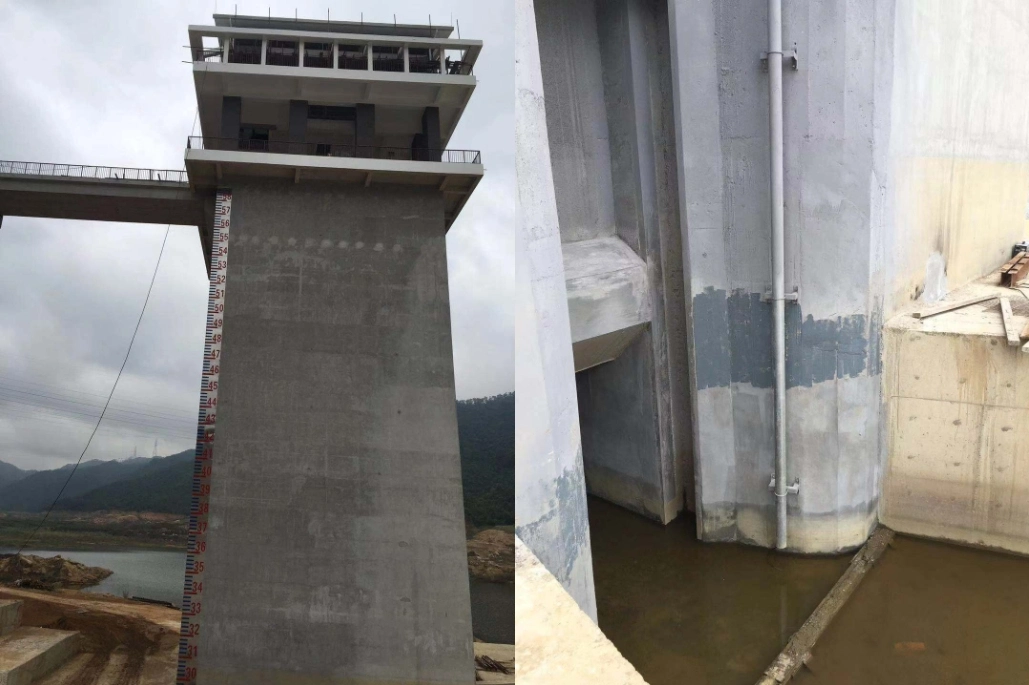
The submersible pressure sensor is a device used to measure the pressure at a specific depth in a liquid. It is designed for pressure monitoring in outdoor open pipes and submersible pipes. The fully sealed structure of the submersible pressure transmitter enables it to work stably underwater. It is not affected by harsh environmental conditions or rapid changes in pressure values.
Submersible pressure sensors have the characteristics of high accuracy, reliability, and corrosion resistance. They are commonly used in applications such as water and wastewater treatment, chemical storage, fuel tanks, and well monitoring. They can provide accurate and continuous level measurement. They can measure underwater pressure, water level, or the level of other liquids.
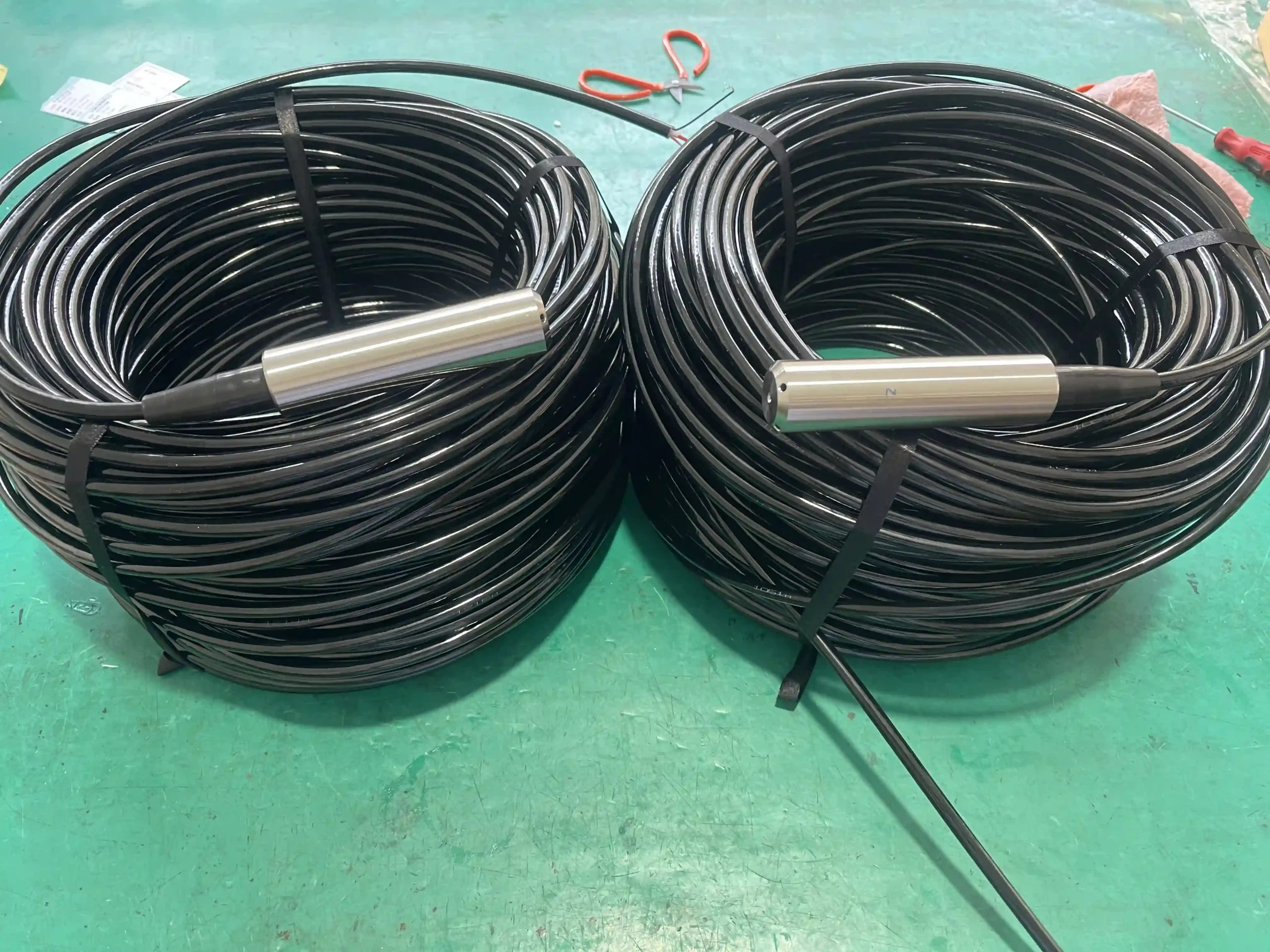
Sino-Inst produces and provides various types of submersible pressure sensors and supports customization. If you need to measure underwater pressure or level, please contact our engineers!