Standard level sensors fail fast in chemical waste liquids and acid wash tanks. A PTFE submersible level transmitter drops a polytetrafluoroethylene (PTFE) probe directly into the corrosive fluid and reads level via immersed hydrostatic pressure, giving you continuous, reliable online monitoring that won’t break down in aggressive chemical environments.
What Is PTFE
PTFE, or polytetrafluoroethylene, is a corrosion-resistant fluoroplastic that performs exceptionally well across industrial settings.
Chemically, it is remarkably stable — it stands up to just about any corrosive medium, whether strong acids, aggressive alkalis, salt solutions, or organic solvents. Its surface is extremely slippery, so buildup and scaling don’t easily adhere to it. It also resists aging and continues to perform in low-temperature conditions.
In corrosion-resistant level sensors, PTFE typically forms the diaphragms, housings, protective sleeves, and sealing structures. It creates a complete barrier between the corrosive liquid and the sensor’s internal components.
This solves the twin problems of corrosion and measurement drift that plague standard metal sensors, which is why PTFE has become the go-to material for level measurement in aggressively corrosive environments.
PTFE Submersible Level Transmitter
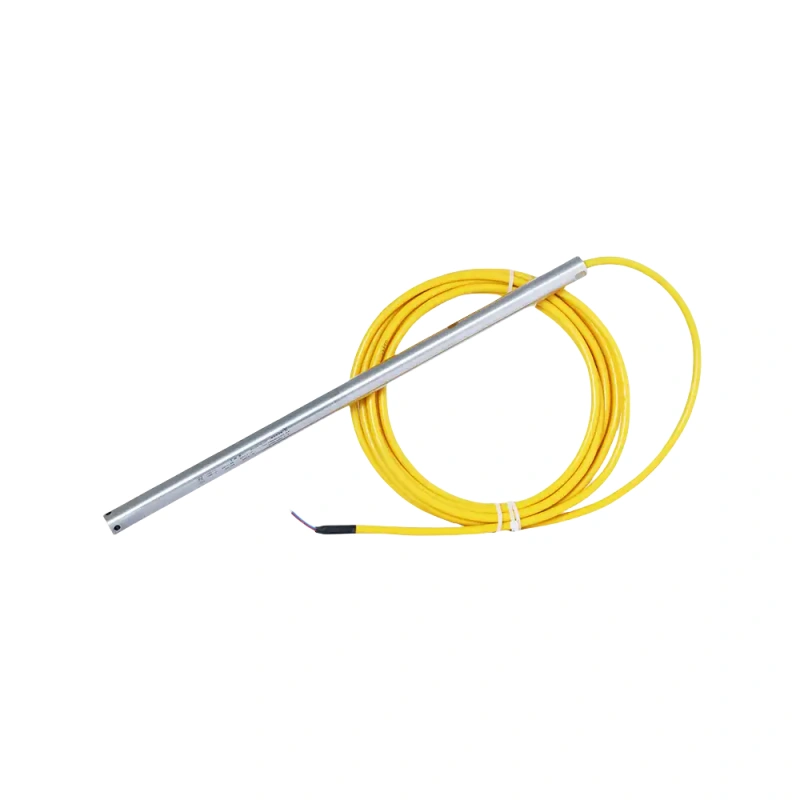
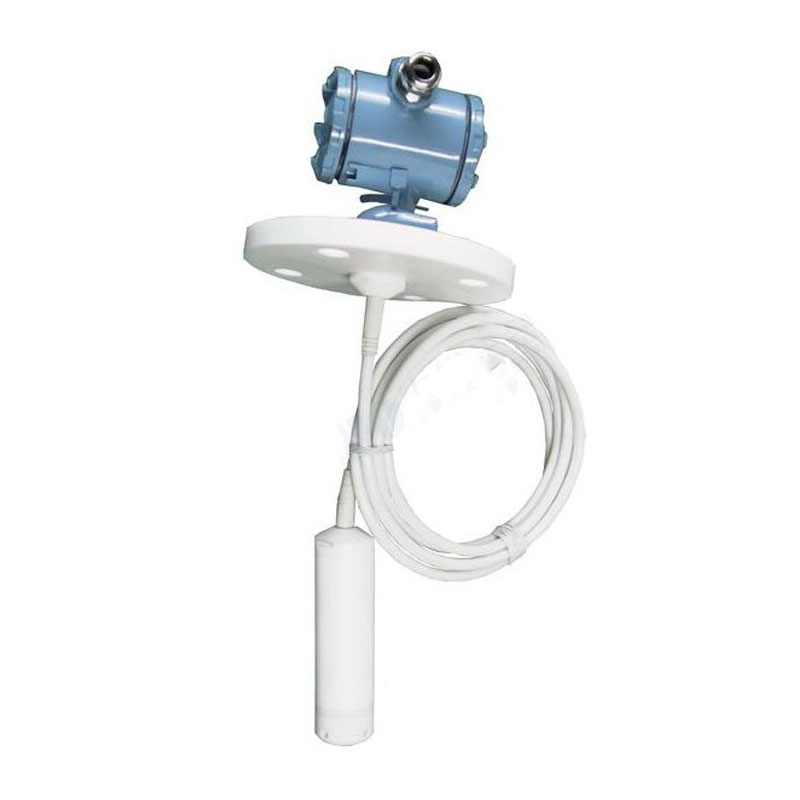
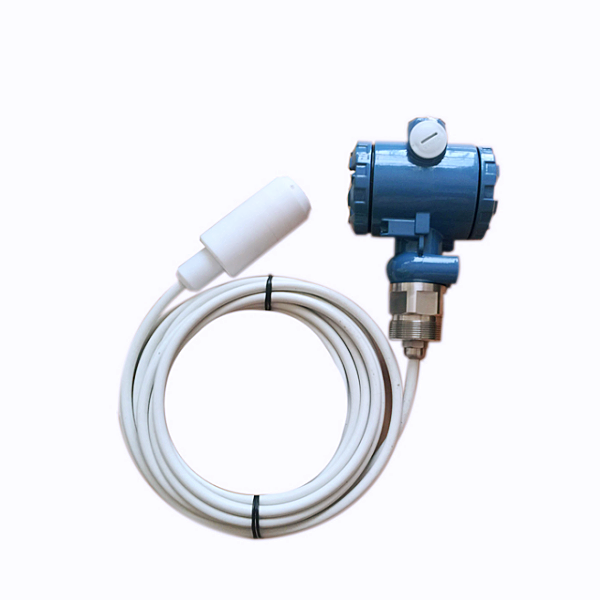
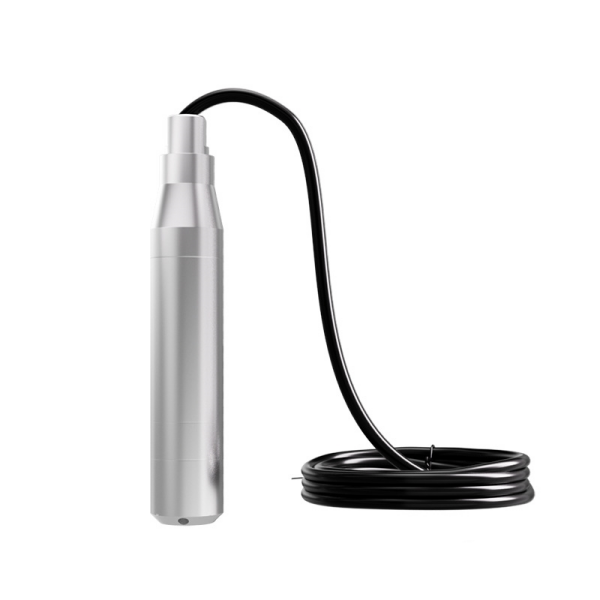
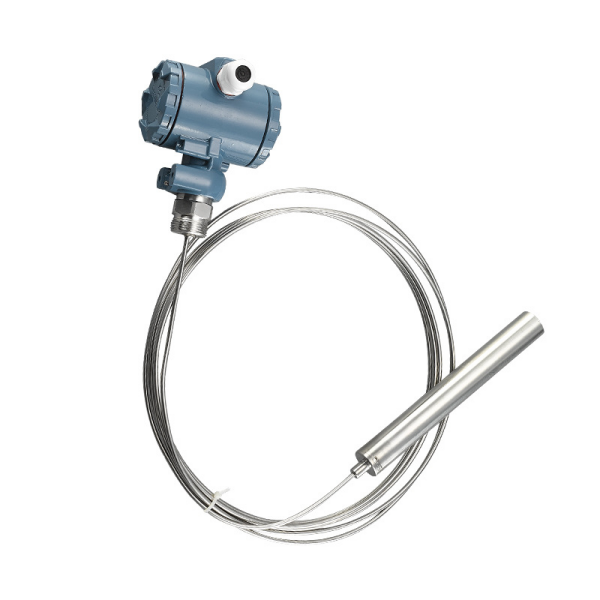
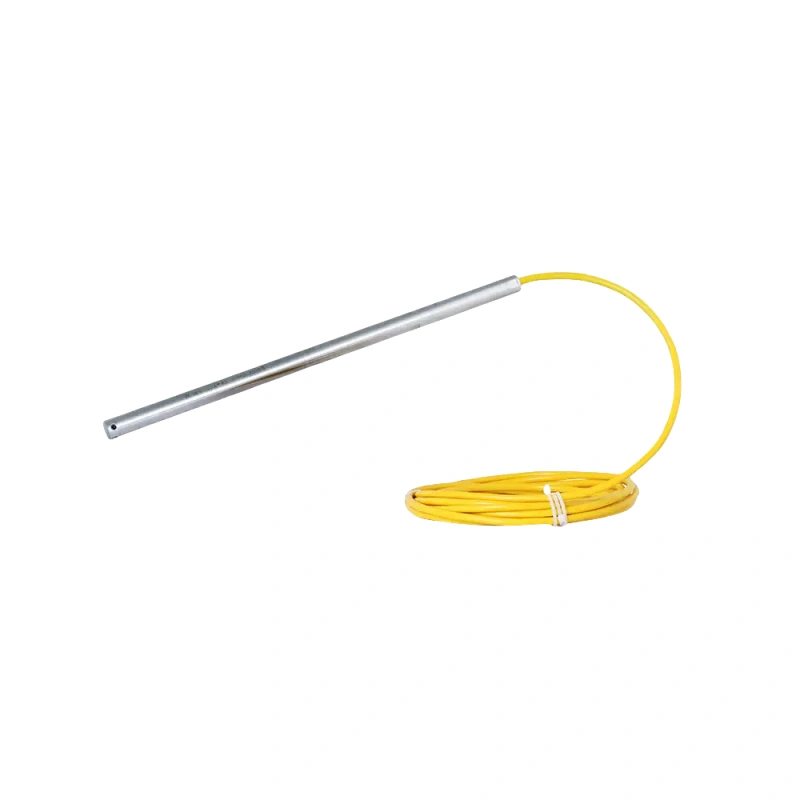
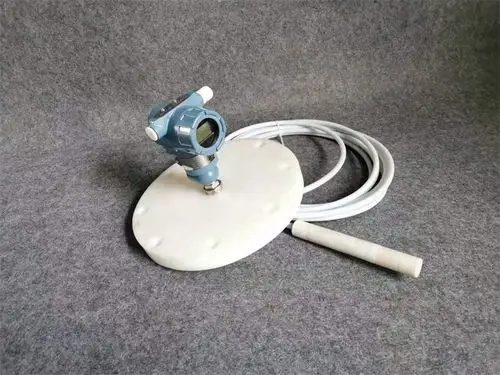
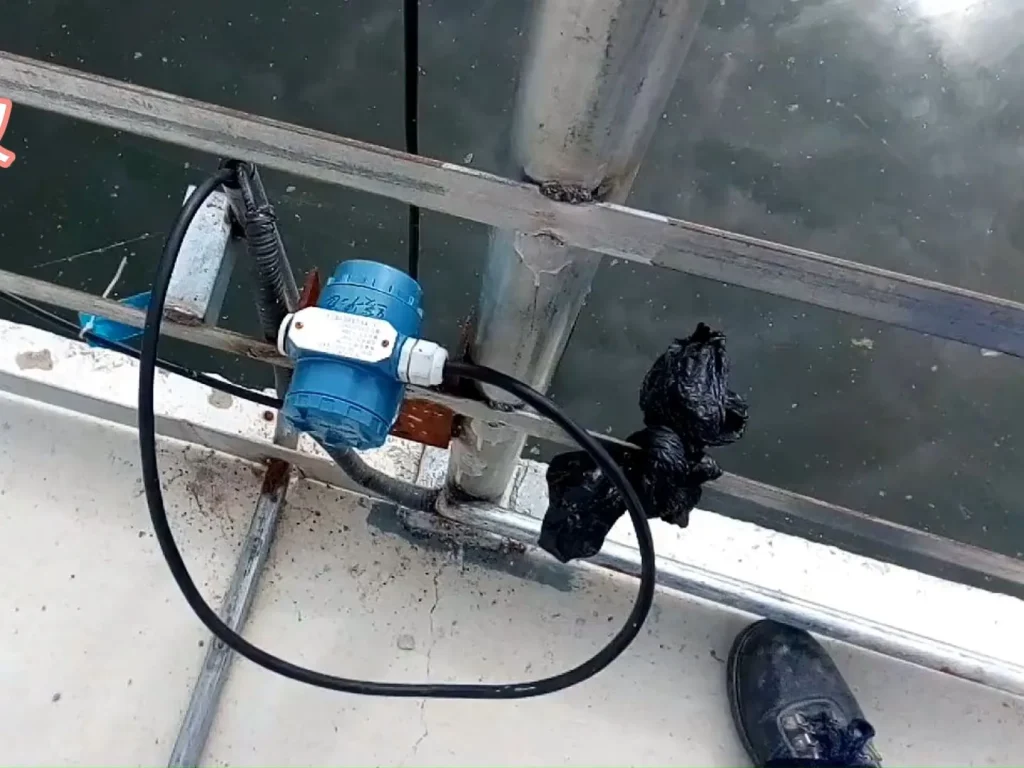
A PTFE submersible level transmitter sits directly in the liquid it measures. The whole unit goes into the tank and is built to handle corrosive fluids while delivering continuous level data.
Every surface that contacts the medium — the diaphragm, the housing sheath, and the cable protective layer — is molded from PTFE. Leveraging PTFE’s excellent chemical corrosion resistance, this transmitter is suitable for conditions involving strong acids, strong alkalis, and organic solvents—environments where standard stainless steel transmitters cannot be used.
Working Principle
This transmitter works on hydrostatic pressure. The whole unit is built from PTFE, so it handles corrosive media without issue. Once submerged, the liquid column presses against the sensing diaphragm, and the internal element turns that pressure into a small electrical signal.
Onboard conditioning circuitry processes it into a standard 4–20 mA output. Because liquid level scales directly with static pressure, continuous pressure tracking gives you an accurate real-time level reading.
PTFE also resists acids, alkalis, and sticking, so media doesn’t cake onto the sensor and throw off readings — keeping measurements stable over the long haul, even in punishing conditions.
Structural Features
The PTFE submersible level transmitter is built as one solid submersible piece. Every wetted part is PTFE, so it takes on acids, alkalis, and organic solvents without the electrochemical corrosion risk that comes with metal contacting the fluid.
The unit houses a pressure sensor core, and a PTFE isolation diaphragm keeps the sensitive element fully separated from corrosive liquids. That protects the core from erosion and cuts down on adhesion from viscous or crystalline substances.
The transmitter has a PTFE flow-guiding protective housing that softens the blow from solid particles against the diaphragm without blocking pressure transmission. A multi-layered waterproof seal at the cable exit keeps moisture out of the housing, so the unit runs reliably underwater over the long term.
PTFE’s smooth surface won’t scale or accumulate material, which makes future cleaning and maintenance much easier. The material’s moderate density also keeps the structure from warping during extended immersion, so level readings stay accurate. You install it by simply dropping it into the liquid — no complex brackets required, making on-site setup straightforward and flexible.
Common Corrosive Media
1. Strong inorganic acids: hydrochloric acid, sulfuric acid (both dilute and concentrated), nitric acid, hydrofluoric acid, phosphoric acid, and chromic acid. These are seriously corrosive, and hydrofluoric acid will actually attack ordinary metals.
2. Strong inorganic bases: sodium hydroxide, potassium hydroxide, and ammonia water. Stainless steel left soaking in concentrated alkaline solution for extended periods will eventually corrode.
3. Oxidizing salt solutions: sodium hypochlorite, bleach, dichromate salts, and potassium permanganate solutions. These easily set off electrochemical corrosion in metals.
4. Various salt solutions: chloride, sulfate, and fluoride brines. High-concentration saline environments often cause pitting corrosion.
5. Organic acids: acetic acid, oxalic acid, citric acid, and formic acid. At medium to high concentrations, these steadily corrode common metals.
6. Halide media: aqueous chlorine, bromine, and fluoride waste liquids. These are highly corrosive, so conventional sensors struggle to last long-term.
7. Certain organic solvents: halogenated hydrocarbons such as chloroform and dichloromethane break down rubber seals, while PTFE handles these solvents well.
Advantages and Disadvantages
Advantages
1. Exceptional Corrosion Resistance:Built entirely from PTFE, this transmitter handles strong acids, caustic alkalis, salt solutions, and aggressive chemicals without breaking down. It works reliably in chemical processing, electroplating, and wastewater treatment — environments where standard sensors corrode and fail. The compatibility range is exceptionally broad.
2. Anti-adhesion and Anti-scaling: PTFE doesn’t stick. Its surface is slick enough that sewage, thick slurries, and contaminated liquids slide right off the diaphragm and housing. That keeps scaling and buildup from throwing off readings or causing failures, so the sensor stays accurate with less downtime.
3. Accurate and Stable Measurement:Level measurement works through hydrostatic pressure, which the sensor converts to a clean, linear electrical signal. The output stays steady and standard, with good resistance to interference. Ripples on the surface and small debris in the liquid won’t disturb the reading, so accuracy holds up over long runs.
4. Easy Installation and Use:The submersible design is all one piece — no brackets to mount, no holes to drill, no elaborate setup. Just drop it in the liquid and it starts reading. Installing, removing, and maintaining it is straightforward, whether the application is a pool, storage tank, or reactor.
5. Long Service Life:PTFE holds up against aging, oxidation, and wear. The transmitter can remain submerged indefinitely without breaking down. It outlasts ordinary stainless steel units by a wide margin, which translates to fewer replacements and lower maintenance costs down the road.
6. High Safety and Durability:The housing seals tightly against water, moisture, and leaks, so it can run underwater indefinitely without issue. It also handles both high and low temperatures, adjusting to different thermal conditions while remaining safe and reliable.
Disadvantages
1. Insufficient Mechanical Properties:
PTFE creeps under sustained load and doesn’t hold up well to impact or abrasion. Hard particles in the fluid will scratch the diaphragm housing. When temperatures cycle up and down, PTFE and the internal metal parts expand at different rates, which can loosen the seals and cause leaks. That rules it out for long-term high-temperature service.
2. Complex and Costly Sealing Manufacturing:
PTFE bonds poorly, so sealing the leads and housing seams takes considerable skill and expense. Substandard sealing lets water in during extended immersion, destroying the sensor. Between the material costs and the manufacturing complexity, you’ll pay noticeably more than for a stainless steel transmitter.
3. Limitations on Media Compatibility:
It resists corrosion from most acids and alkalis, but molten alkali metals and chlorine trifluoride will attack it directly. Prolonged contact with concentrated polar organic solvents can cause swelling. The entire system also cannot be used in hydrofluoric acid applications.
4. Inherent Measurement and Operating Conditions Limitations:
Because it relies on hydrostatic pressure, readings drift with changes in liquid density, air bubbles, and surface foam. The pressure ports are also prone to silting and blockage. It works only in open, atmospheric-pressure vessels; pressurized tanks and vacuum environments are out of the question. In turbulent water or slurry, you’ll need additional protective structures around the sensor.
Practical Applications
1. Fine Chemicals Industry:
This transmitter handles continuous level monitoring in storage tanks and reaction vessels filled with acids, alkalis, organic solvents, and oxidizing solutions. PTFE stands up to just about any corrosive chemical you throw at it, so it replaces stainless steel units that would eventually fail — giving you stable readings over the long haul.
2. Wastewater Treatment Industry:
You’ll find these in collection and equalization tanks for industrial acid/alkali waste, fluoride-laden effluent, and electroplating discharge. The sensor shrugs off acidic, caustic, and saline conditions alike, keeping measurement going in some of the nastiest wastewater environments out there.
3. Surface Treatment Industry:
Pickling tanks, phosphating lines, and electroplating baths in steel and metal processing all need reliable level detection. Because every wetted surface is PTFE, you don’t have to worry about process chemicals eating through metal parts, and the sensor keeps pace with continuous production lines without missing a beat.
4. Pharmaceutical and Fine Chemical Industries:
For storage tanks and reactors holding pharmaceutical intermediates, organic acids, or clean corrosive solutions, this transmitter gets the job done without leaching metal ions into the fluid. That means no contamination of the product, which is exactly what clean production standards demand.
5. Metallurgy and Chlor-Alkali Industries:
Wet metallurgy electrolytes, chlor-alkali brine, and sodium hypochlorite storage all involve strongly oxidizing, highly saline media that destroy ordinary sensors. PTFE blocks electrochemical corrosion entirely, so the equipment lasts far longer in these aggressive environments.
6. Environmental Protection and Hazardous Waste Industry:
Temporary storage and collection tanks for corrosive hazardous waste need tight level control. Tie this transmitter into your automated control system and you get high/low-level interlock alarms that stop overflows and leaks before they happen — raising the safety bar for the whole facility.
FAQ
Can PTFE submersible level transmitters only be used in open tanks?
Yes — they rely on hydrostatic pressure measurement, so they’re built for open, atmospheric-pressure containers only. That covers waste liquid tanks, chemical tanks, sewage equalization tanks, and open storage tanks.
They won’t work properly in sealed, pressurized, or vacuum environments. Any extra pressure in the vessel throws off the linearity and the readings go bad.
What is the main difference between a PTFE submersible level transmitter and a standard stainless steel submersible transmitter?
The main difference is the wetted material and its corrosion resistance. Standard stainless steel transmitters can’t take strong acids, caustic alkalis, organic solvents, or high-salt electrolytes — they corrode and fail; the PTFE submersible level transmitter, on the other hand, uses PTFE for every part that contacts the liquid, so no metal ever touches the medium.
It handles the tough conditions in chemical processing, electroplating, acid washing, and wastewater treatment, and it resists scaling and buildup, making it the right instrument for level measurement in harsh, corrosive environments.
What other level sensors can measure corrosive media?
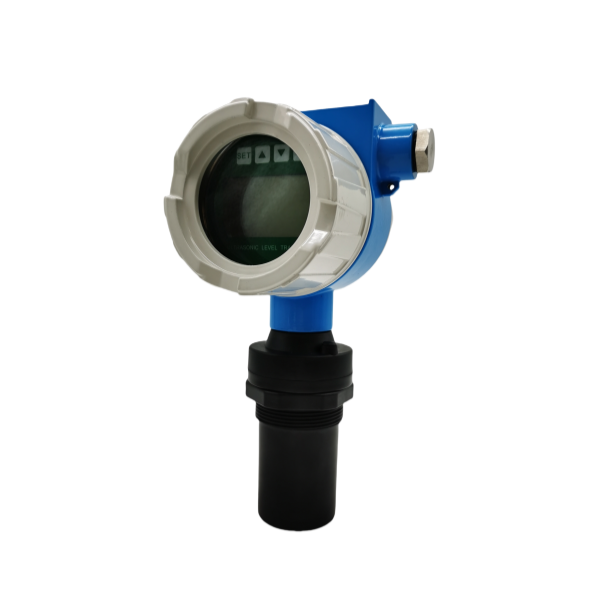
Ultrasonic level transmitters: The probe housing uses PVDF or PTFE. Because it measures from above without ever touching the liquid, it works well in highly corrosive wastewater and chemical waste tanks. That said, it struggles with highly volatile liquids or heavy surface foam.
Radar level transmitters: The antenna is PTFE or PVDF. Non-contact measurement means acids and alkalis don’t eat away at anything, so these units reliably monitor levels in storage tanks and reaction vessels.
Sion-Inst provides practical selection support based on real operating conditions — medium composition, temperature, and impurity content — and can adjust product parameters when necessary.
We’ve built instruments for years, and our products integrate with automation systems across chemicals, electroplating, wastewater treatment, and pharmaceuticals.
New production line, retrofit, or replacing old level equipment — we’ll assess your site and recommend what actually fits.If you have questions about process conditions or installation, just contact us. We’re here to help you keep corrosive media level monitoring stable over the long run.