Vortex and ultrasonic flow meters are commonly used velocity-type flow meters in industrial processes. They operate on different measurement principles and exhibit significant differences in pressure loss, media compatibility, installation, and immunity to interference, leading to different trade-offs during process selection.
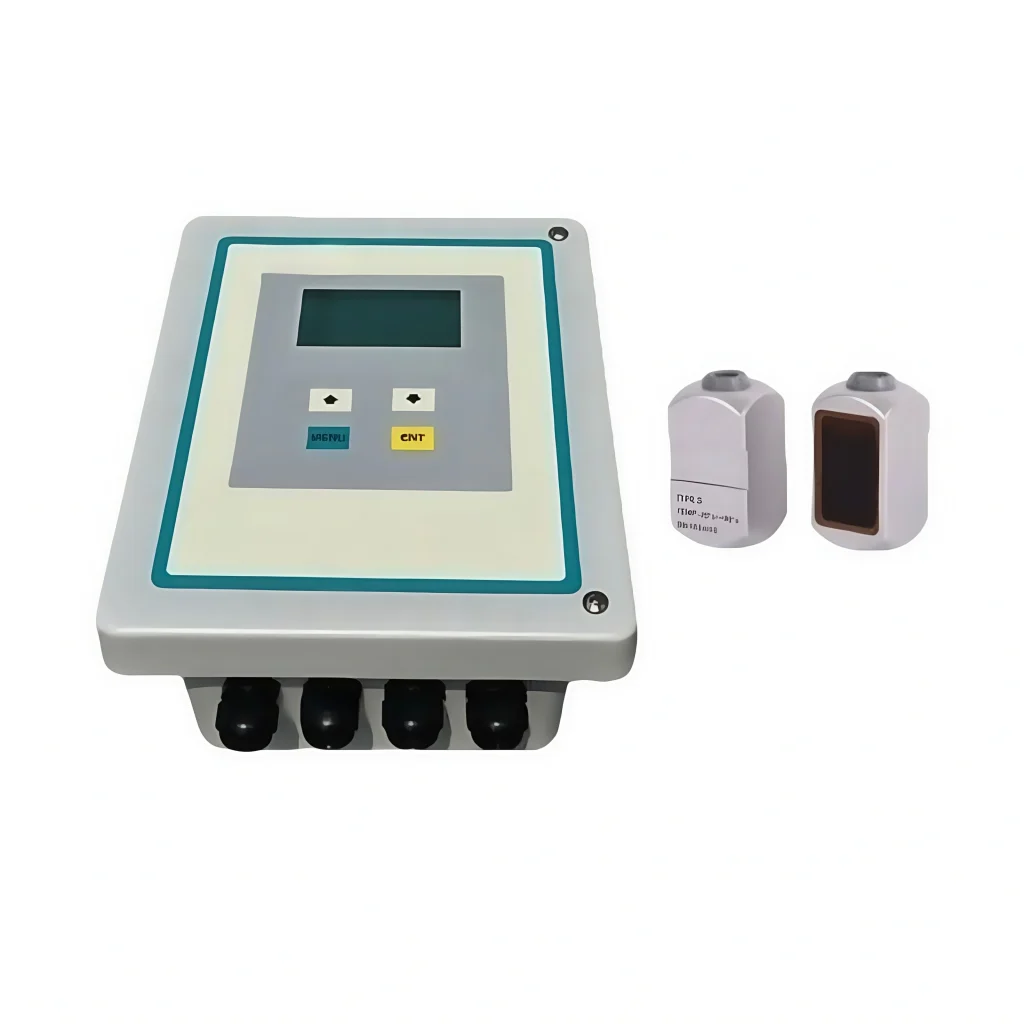
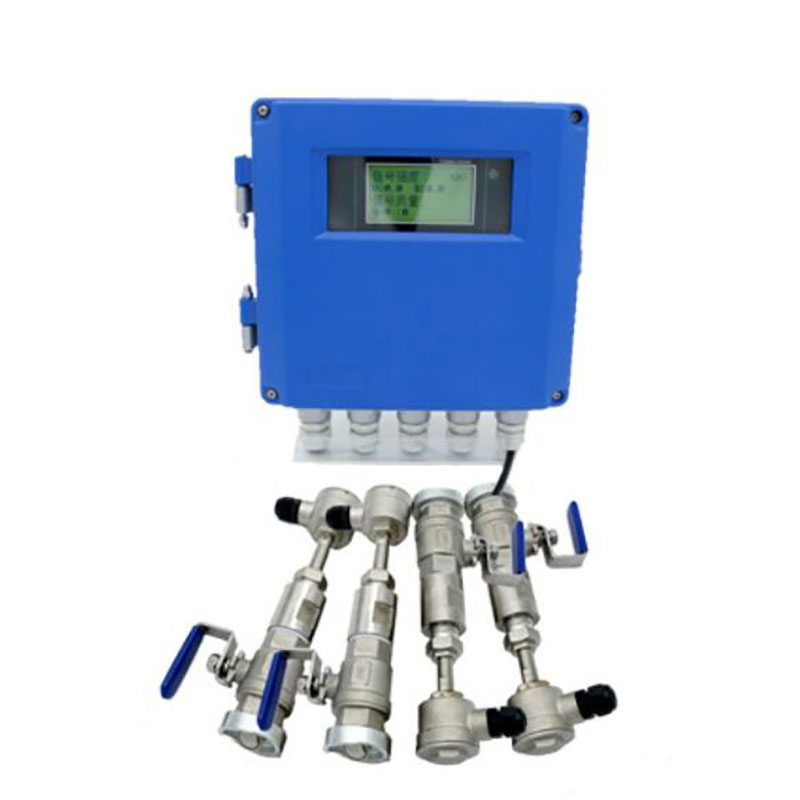
Ultrasonic Flow Meter
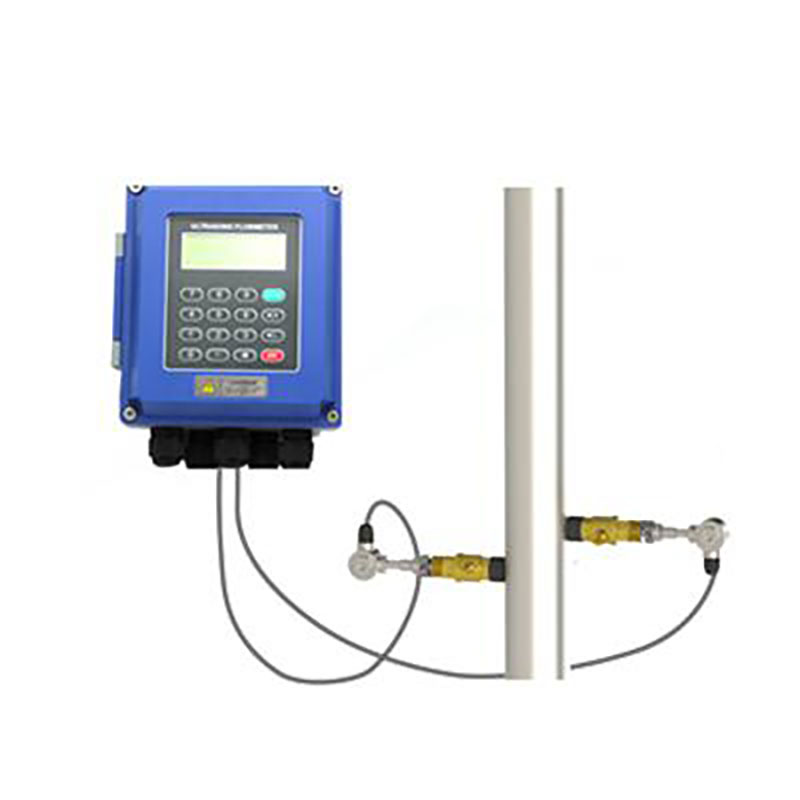
The flow is measured by ultrasonic flow meters based on the propagation characteristics of ultrasonic waves in fluids. The transducers emit ultrasonic signals and measure the time difference between the signals traveling upstream and downstream . This is used to compute the flow velocity , which is then combined with the pipe cross-sectional area to compute the volumetric flow rate .
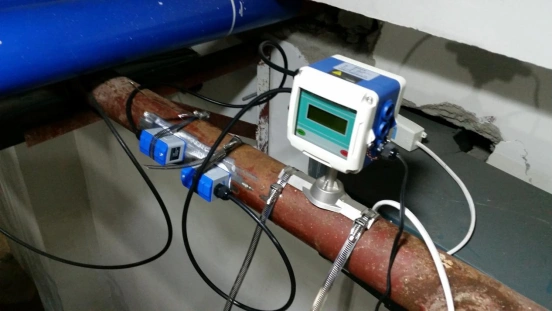
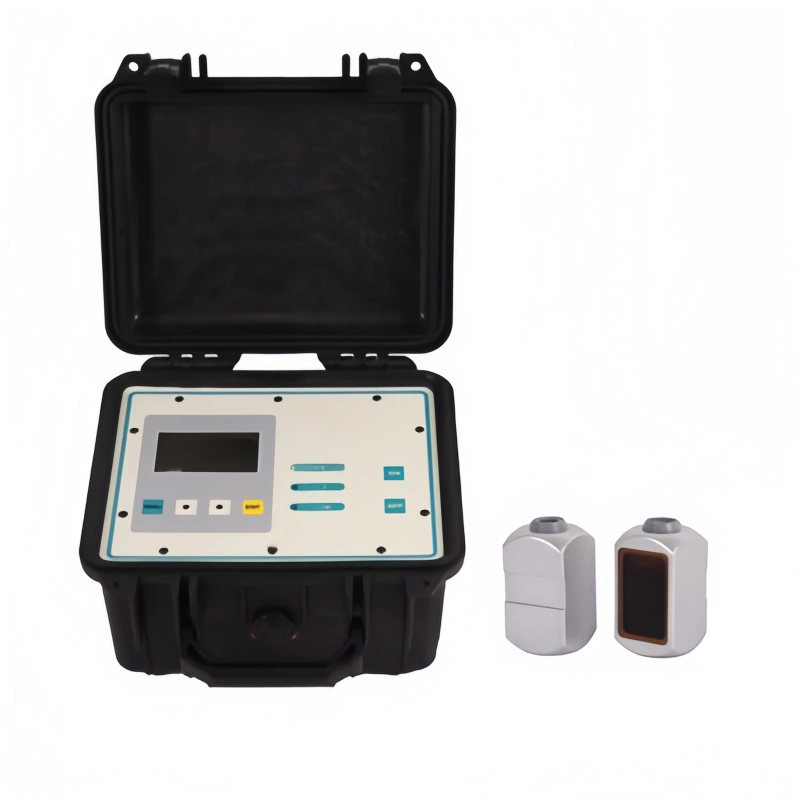
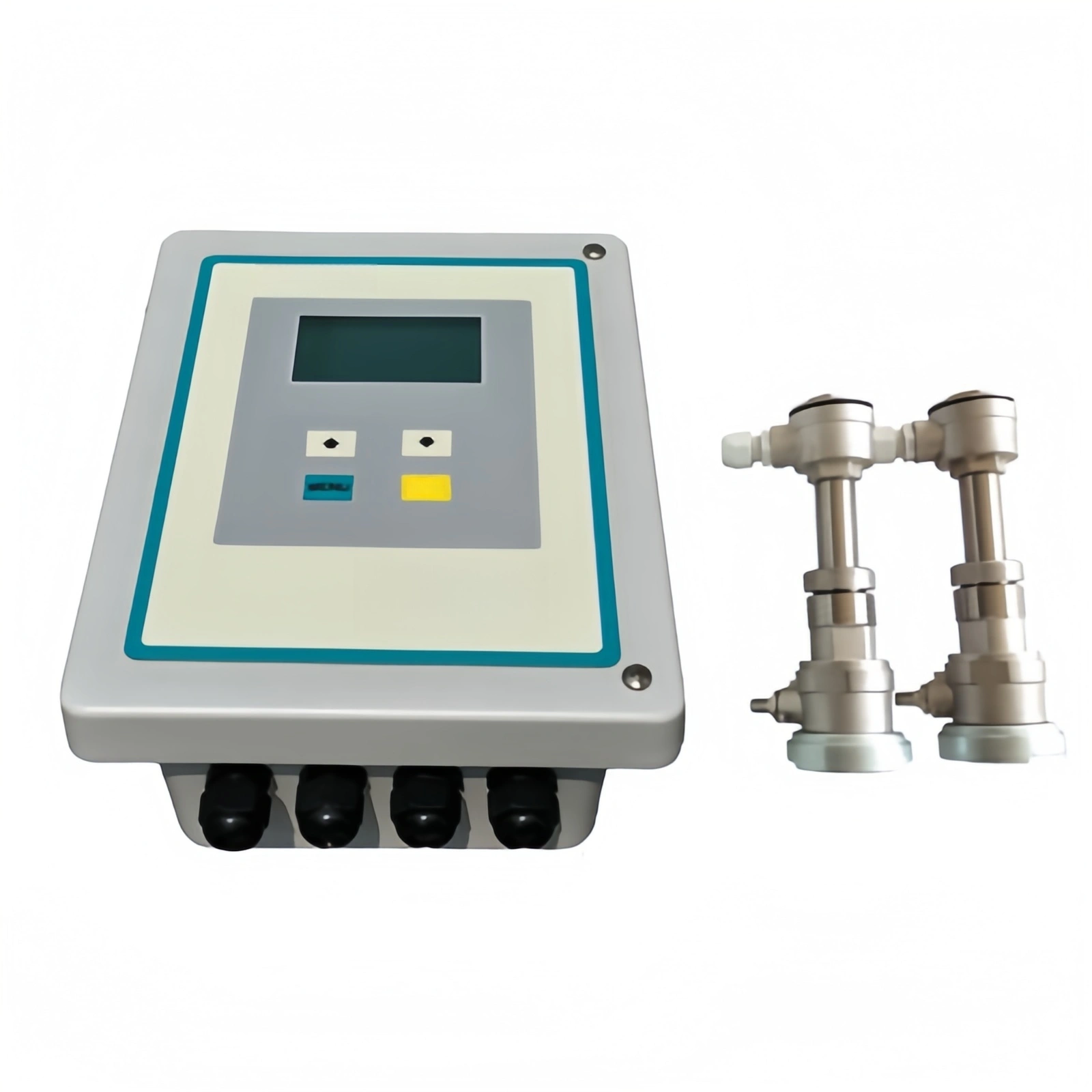
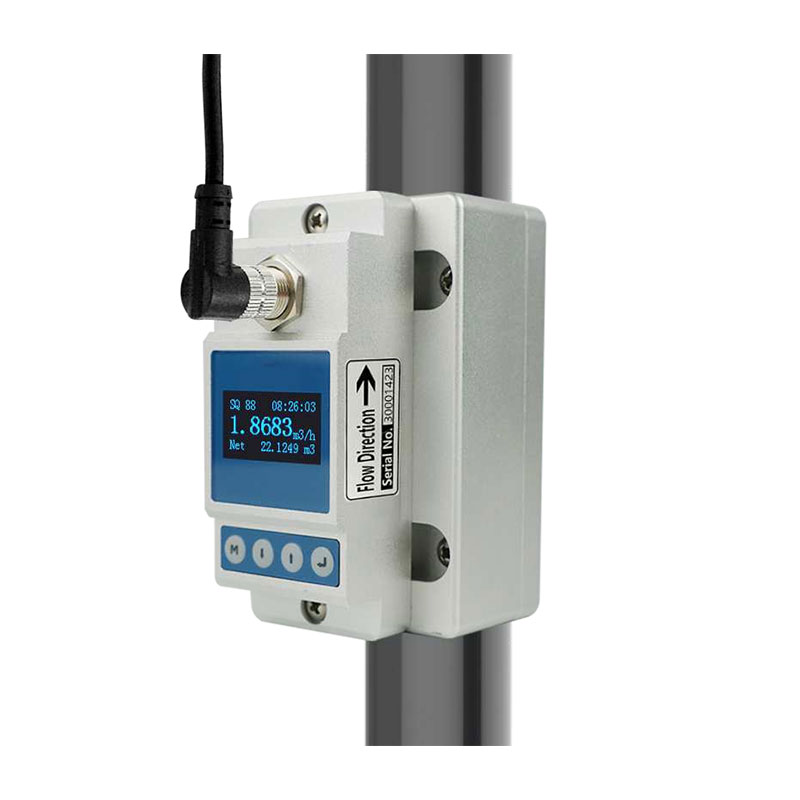
They primarily consist of a main unit, transducers, signal cables, and mounting clamps. The main unit handles signal transmission and reception, timing calculations, and data output; the transducers convert electrical signals into ultrasonic waves and vice versa, and come in clamp-on, in-line, and insertion types; the cables transmit signals, and the mounting brackets secure the transducers.
Clamp-on models are most common; they do not obstruct the flow, cause no pressure loss, and can measure media such as water and oils. With no moving parts, they are easy to maintain and are widely used in water supply, drainage, and chemical engineering applications. However, their measurement accuracy is susceptible to bubbles, scaling, and flow field disturbances.
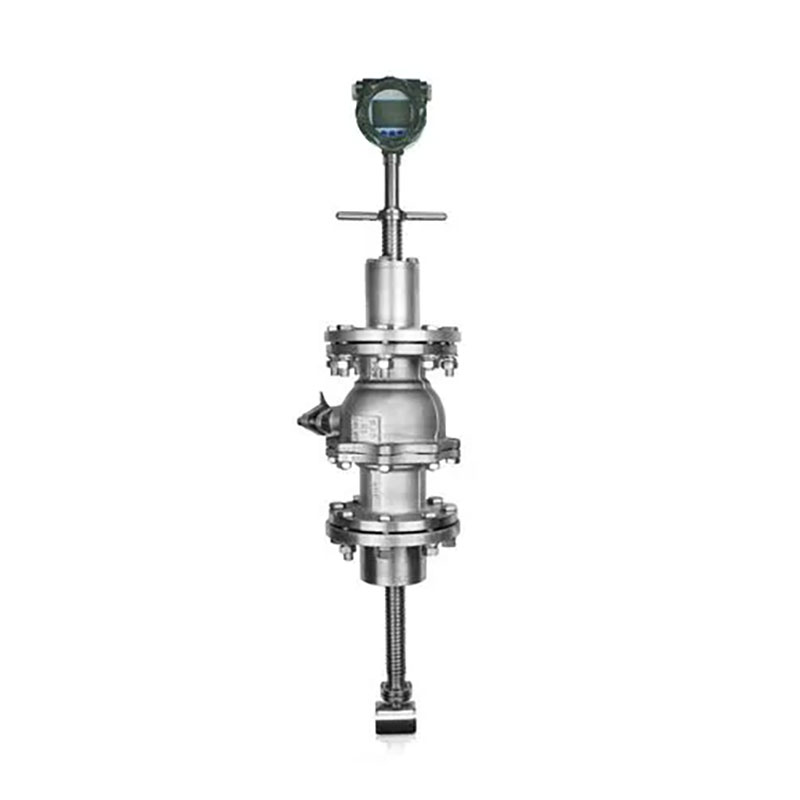
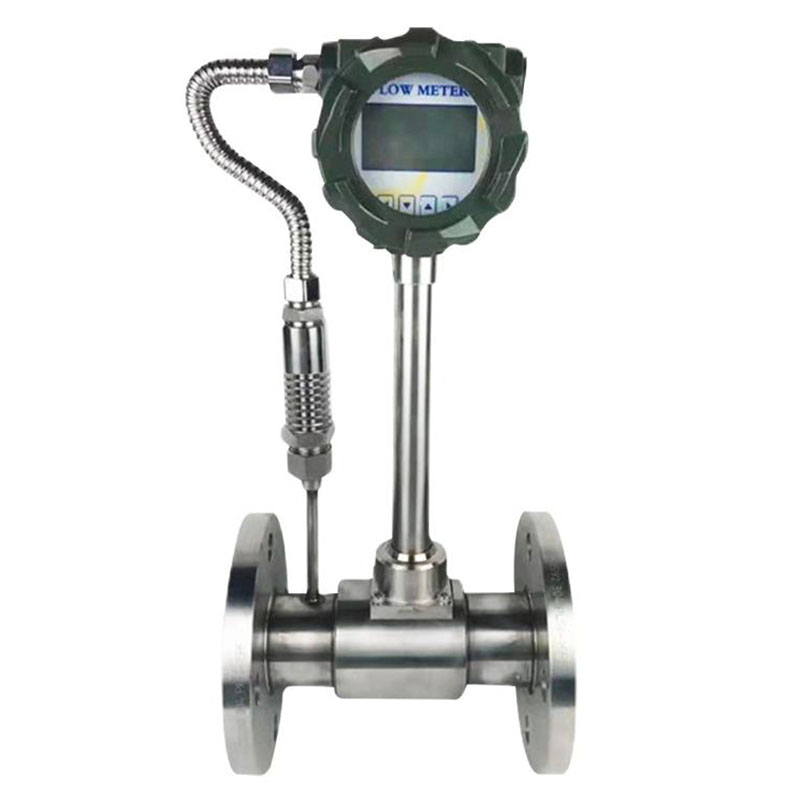
Vortex Flow meter
A vortex flow meter is a flow measurement instrument that operates on the principle of Karman vortex street. When a fluid flows past a vortex generator inside a pipe, it produces vortices alternately; the frequency of vortex shedding is proportional to the flow velocity. This frequency signal can be detected to determine the flow rate.
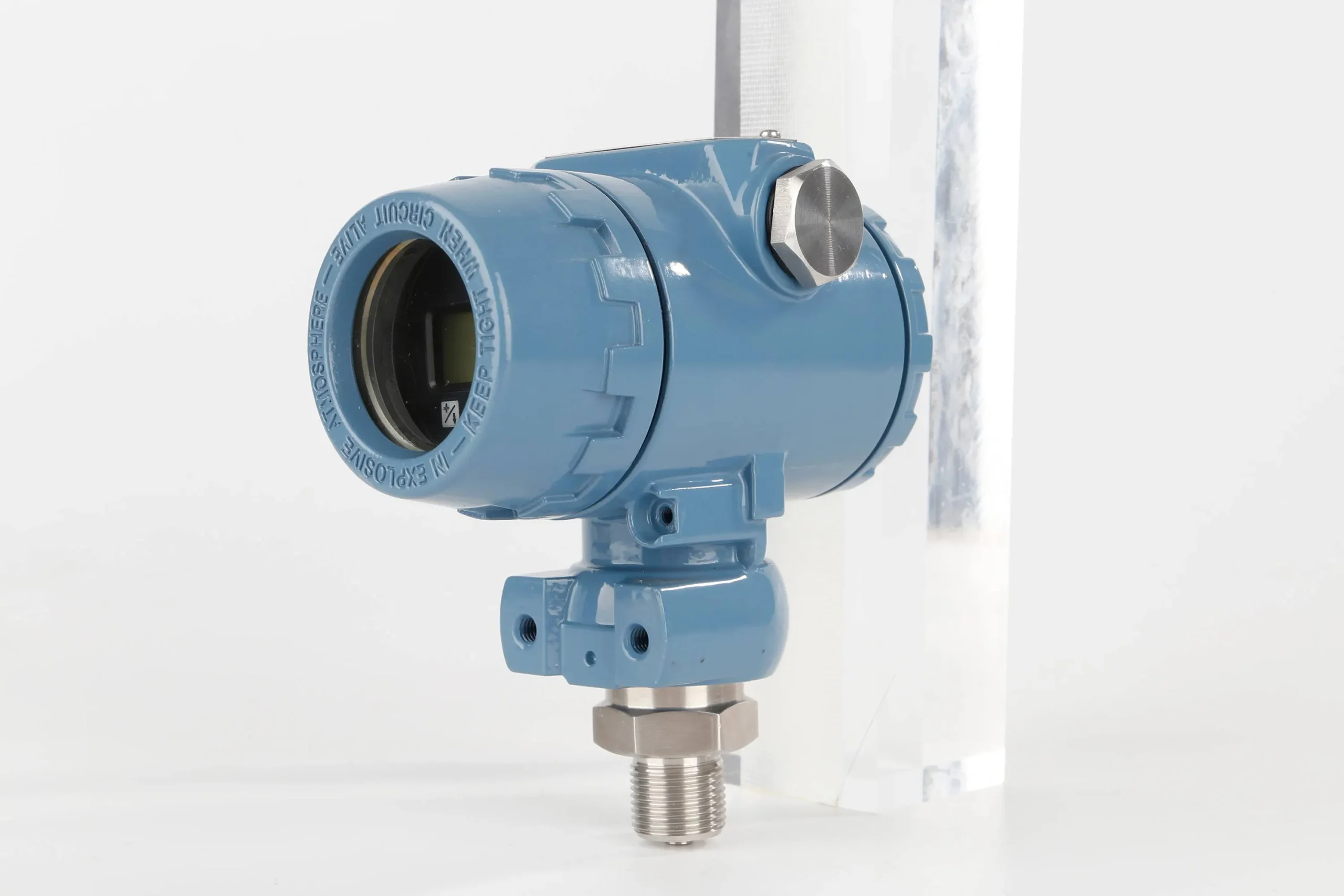
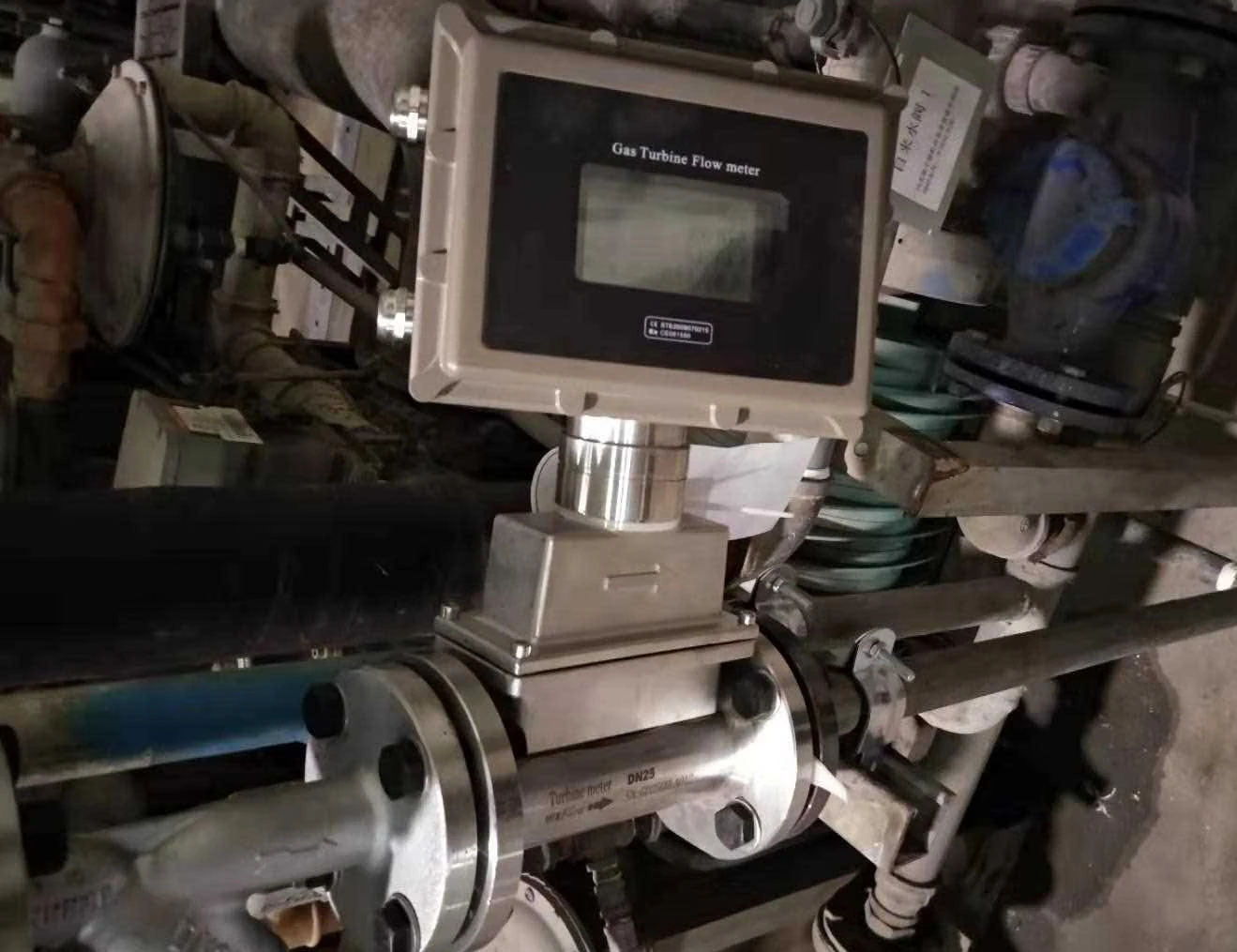
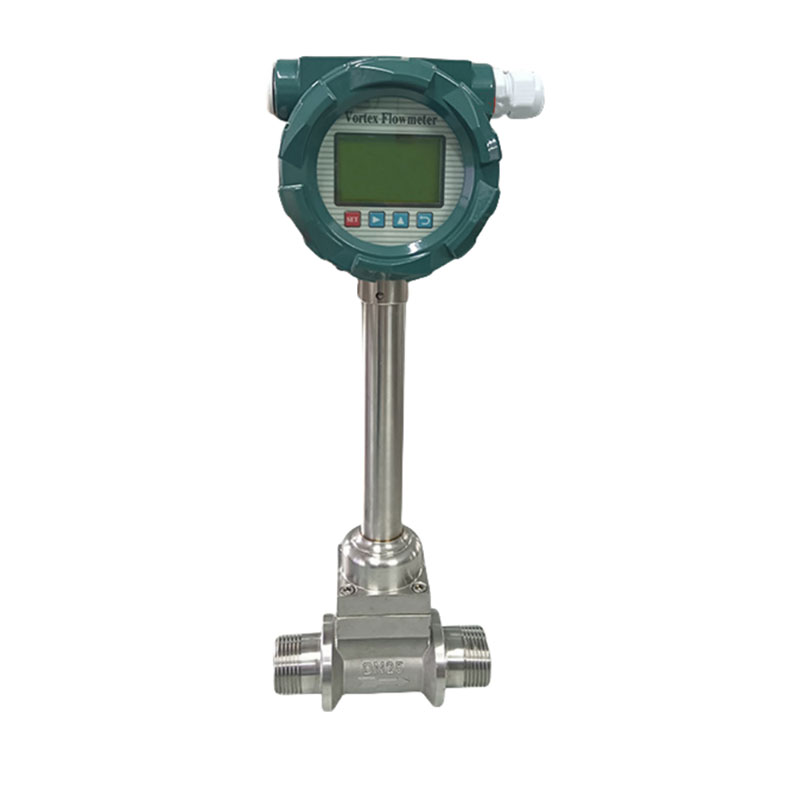
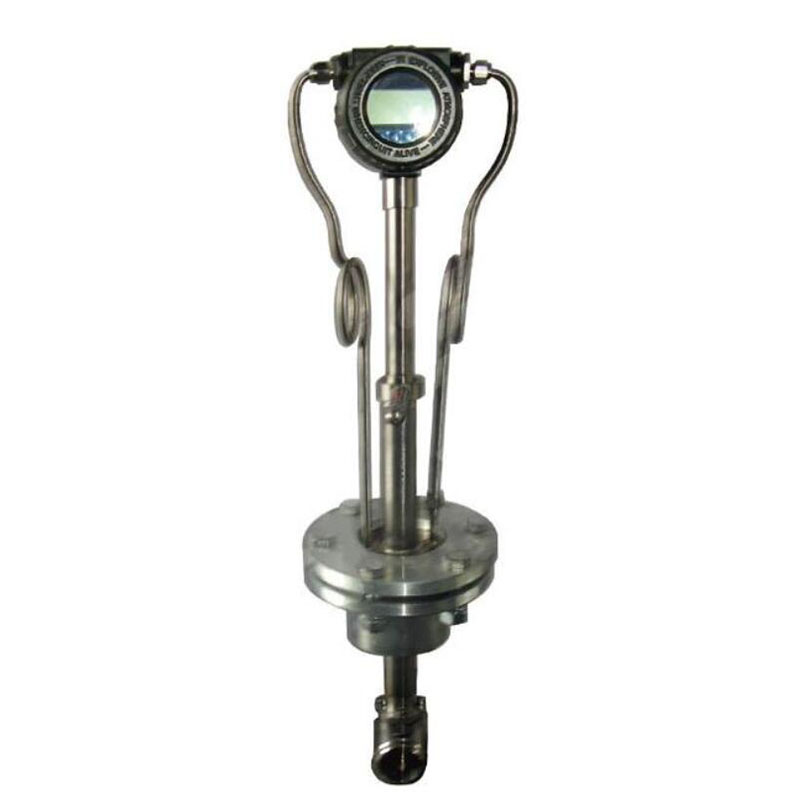
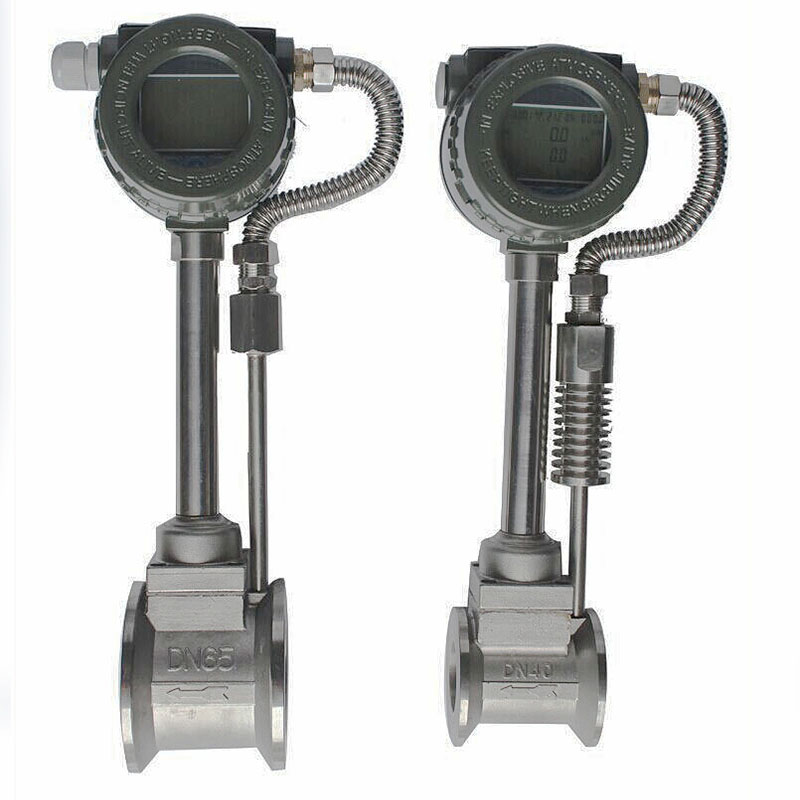
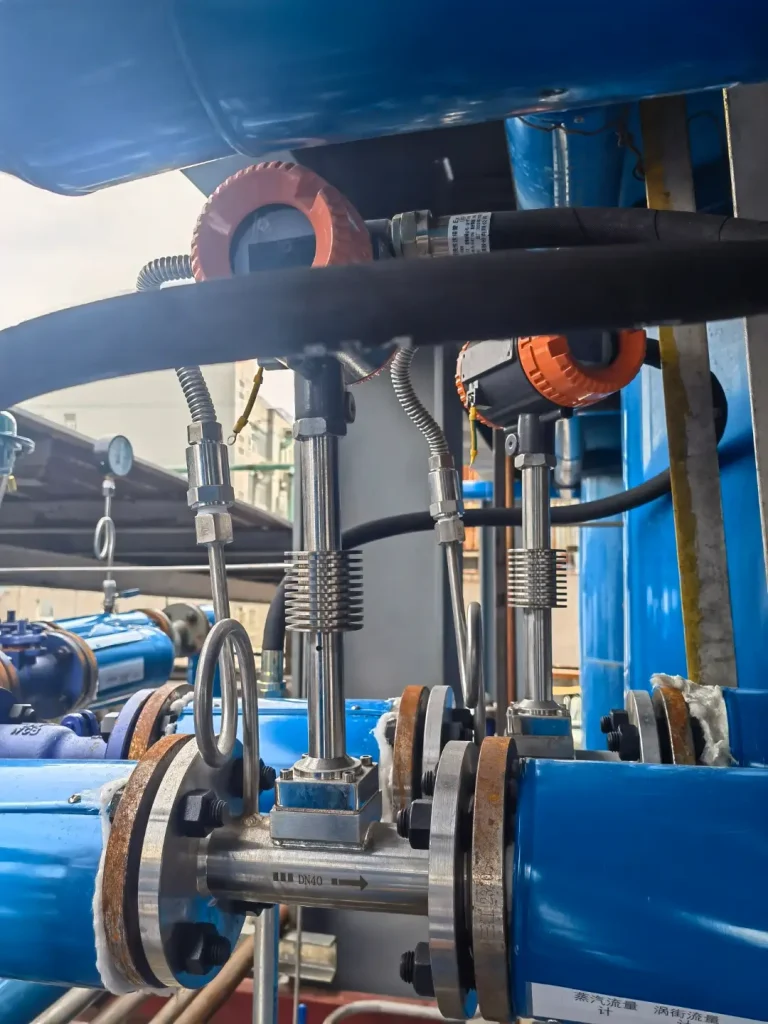
It is mainly composed of a sensor body, a vortex generator, a detection probe and a signal converter. Where the body is the measuring pipe section, the vortex generator is to generate vortices, the probe is to pick up the vortex pulsation signal, and the converter is to process signal amplification, calculation, display and signal output.
It features a simple structure with no moving parts and low pressure loss. It is suitable for gases, liquids, and steam and is commonly used in heating and chemical processing applications; however, its measurement accuracy is susceptible to interference from pipeline vibrations and unstable flow fields.
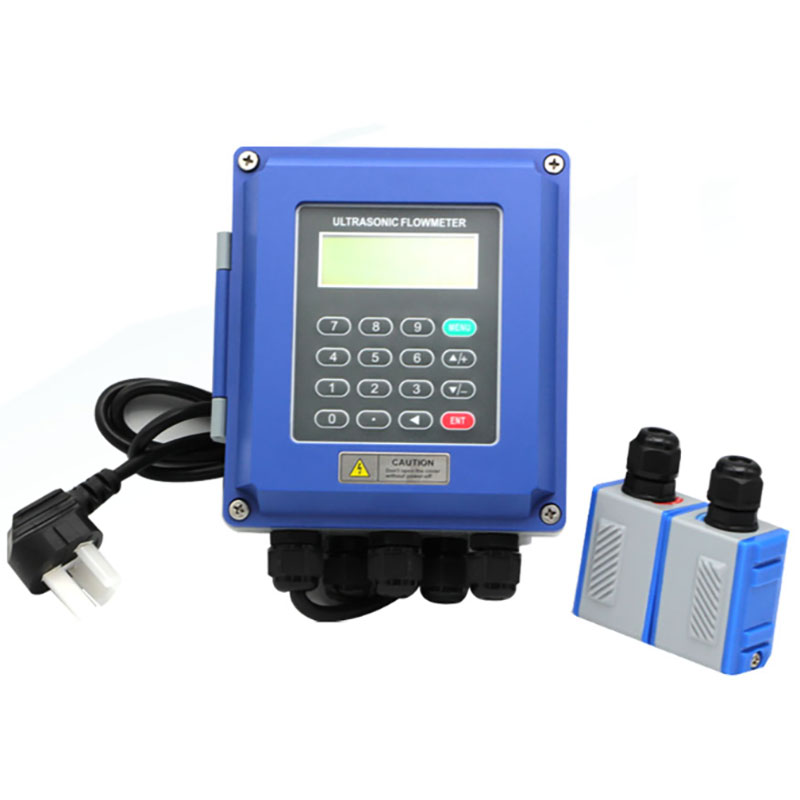
Ultrasonic Flow Meter & Vortex Flow Meter
Principles of measurement:
Vortex flow meters are based on the Karman vortex street effect. The fluid flows past an internal vortex generator and the flow rate is calculated by measuring the frequency of the vortex shedding.
Ultrasonic flow meters are mainly of the time-of-flight type, measuring the flow velocity by time differences of the travel of ultrasonic waves in the downstream and upstream directions, and the Doppler type meters measure the velocity by reflected ultrasonic waves from suspended particles.
Media Supported:
Vortex flow meters can be used to measure liquids, gasses, saturated steam and superheated steam. They are often used for steam metering. But they are not effective for high viscosity media or fluids with large amounts of bubbles or impurities.
Time of flight ultrasonic flow meters are better suited for clean liquids. Clamp on models are typically not suitable for steam. Doppler models can handle wastewater containing small amounts of particles, but cannot measure media with severe sound attenuation.
Installation Methods:
Vortex flow meters are intrusive in nature and hence require the pipeline to be shut down for installation. They are typically flanged. They have specific requirements for straight pipe sections. Generally they require 10D to 20D of straight pipe upstream .
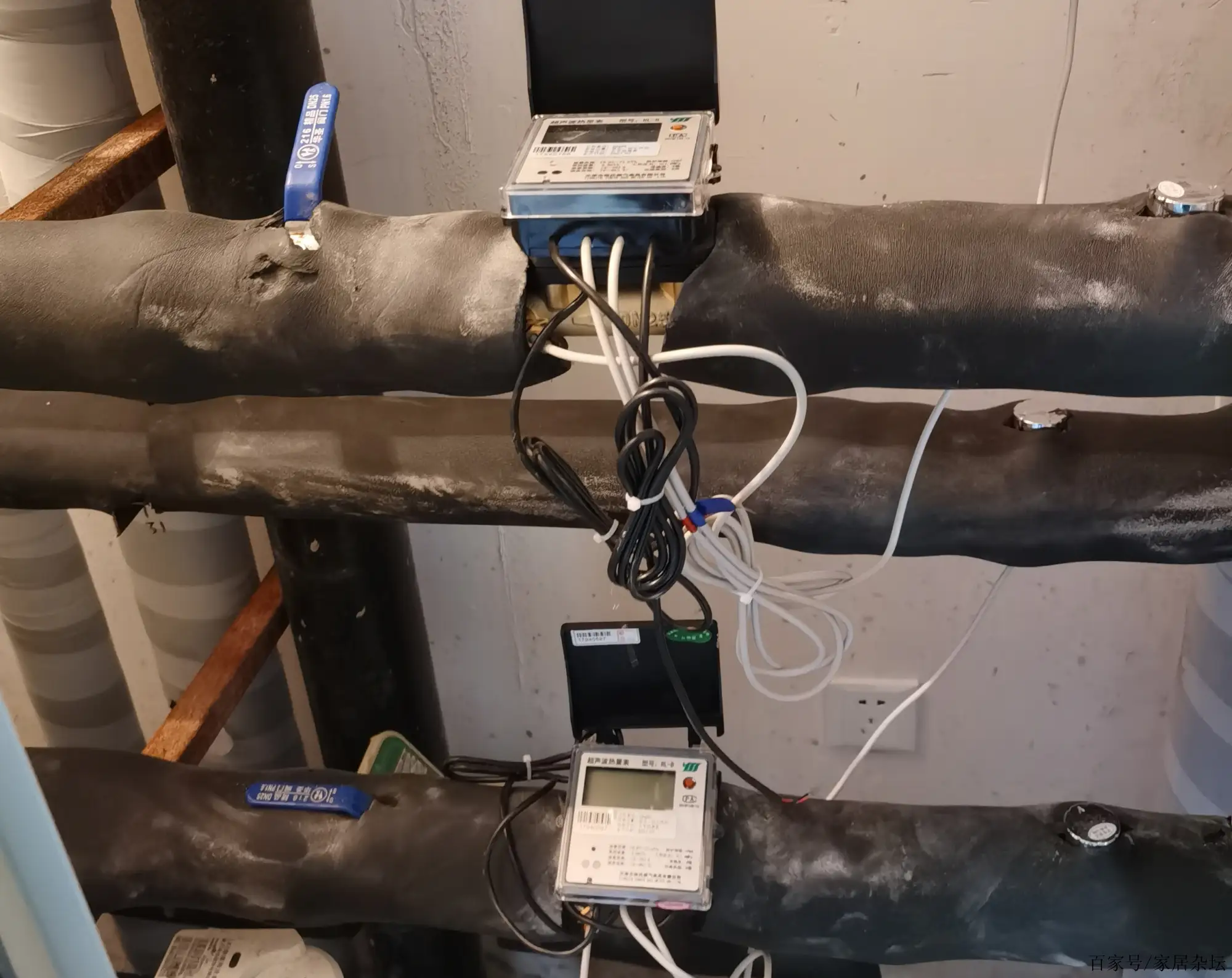
Ultrasonic flow meters are available in clamp-on, insertion and in-line configurations. Clamp-on versions are suitable for retrofit projects as they do not need pipeline shutdown or production interruption, but they do require straight pipe sections and are sensitive to pipe wall material, internal lining and scale thickness.
Pressure Loss:
Vortex flow meters have a flow generator inside, which causes some pressure loss;
Clamp-on ultrasonic flow meters have no components which enter the pipeline and thus virtually no pressure loss. They have less energy consumption for long-term operation. They are suitable for long-term measurement in large-diameter pipelines.
Interference immunity:
Vortex flow meters are very sensitive to pipeline vibration and the signal is easily misinterpreted. The signal is weak at low flow rates and the accuracy decreases.
Ultrasonic flow meters are greatly affected by bubbles, pipe wall scaling, lining and suspended solids in the medium, but they are relatively less affected by vibration interference.
Range Performance Measurement:
Typical turndown ratio of conventional vortex flow meters is around 1:10 to 1:30 with relatively high lower limit in the low-flow range.
Time-of-flight ultrasonic flow meters have wider turndown ratio, up to 1:100 . The time-of-flight ultrasonic flow meters are suitable for operating conditions with wide range of flow variations.
Maintenance and Cost:
Vortex flow meters for small and medium pipe diameters are relatively inexpensive to purchase. Their construction is simple and they have no moving parts. Routine maintenance is minimal and is primarily periodic cleaning of deposits from the vortex generators.
Clamp-on ultrasonic flow meters are very cost effective for large diameter applications but small diameter models are typically more expensive. The maintenance focuses on the inspection of the probe coupling and pipe wall scaling. Portable ultrasonic flow meters can also be used to compare the flow rates during routine inspections.
Typical Applications:
Vortex flow meters are primarily used for measuring steam, compressed air, clean circulating water, and process gases in small- to medium-diameter pipelines;
Ultrasonic flow meters are primarily used for large-diameter water supply, heating hot water, corrosive liquids, pipelines where shutdown for retrofitting is not feasible, as well as water balance testing and flow verification in pipeline networks.
Accuracy Characteristics:
Vortex flow meters maintain stable accuracy under steady flow velocities and with single-phase, clean media;
Time-of-flight ultrasonic meters provide good accuracy under clean, fully filled liquid conditions, but errors rise rapidly if the medium contains gas or scale; Doppler models inherently have a lower accuracy grade.
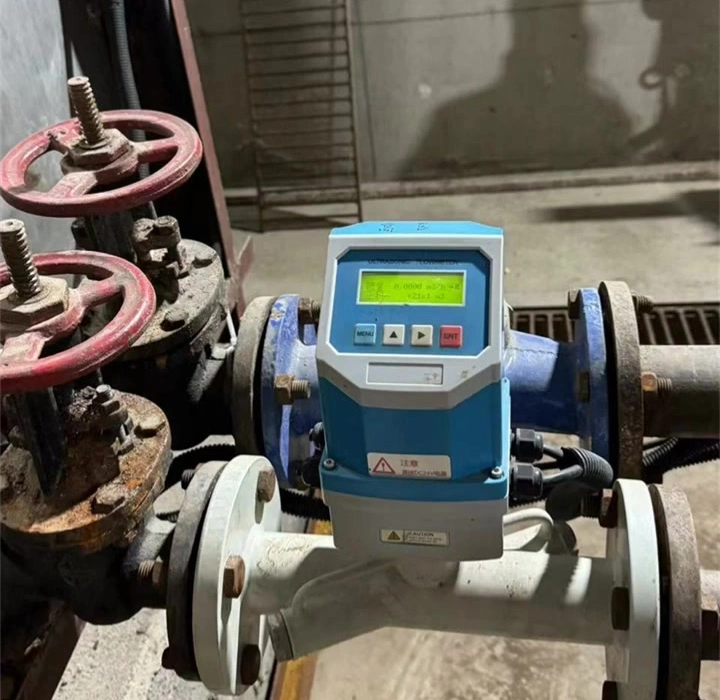
Advantages of Ultrasonic Flow Meters
1. No pressure loss,there are no components that can obstruct the pipeline. Therefore, the flow pattern of the fluid remains unchanged. This prevents any further loss of pressure and no additional pump energy is required during operation, resulting in a large saving of energy.
2. Large measurement range, applicable to large diameter pipelines, from small diameter to several meters in diameter pipelines. The range of flow velocity measurement is also large, it can detect both high and low flow velocities.
3.Non-contact measurement, clamp-on ultrasonic flowmeters do not need to cut the pipe, which can be installed and maintained without interrupting production. This makes the clamp-on ultrasonic flowmeter suitable for flammable and explosive environments, highly corrosive conditions, applications with strict hygiene requirements and applications where the pipeline cannot be shut down.
4. Wide adaptability to media,the fluid to be measured can be clean water, wastewater, crude oil, and various slurries, and the medium can be conductive or not, as long as the fluid satisfies certain acoustic transmission conditions.
5. Low maintenance requirements, the sensors have no moving parts, eliminating issues such as wear or clogging. They offer excellent long-term operational stability and low long-term maintenance costs.
6. Flexible installation, it offers multiple installation choices including clamp-on, insertion, and in-line arrangements, which facilitate retrofitting onto existing pipelines. The retrofitting work is simple and the installation cycle is short.
7. Bidirectional measurement capability, can simultaneously detect both forward and reverse flow, making it suitable for pipeline systems where backflow occurs.
8. Fast measurement response, fast signal acquisition and updating, real-time output of flow data, convenient for integration into automatic control system for flow monitoring and metering.
Benefits of Vortex Flow Meters
1.Simple and robust structure with no internal moving parts, therefore resistant to wear and tear. They guaranty a stable and reliable longtime operation, low maintenance requirements and long service life.
2. It features a wide measurement range and a high turndown ratio, making it suitable for operating conditions with significant flow fluctuations; it can measure gases, steam, and liquids.
3. It is a low pressure loss, energy efficient flow meter that does not create excessive energy burden on the piping system.
4. The output signal is a pulse frequency signal, which has strong anti-interference ability and is convenient for long-distance transmission and secondary instruments and control systems.
5. It offers good measurement accuracy and is not directly affected by changes in medium parameters such as temperature, pressure, or density, making it suitable for most clean, single-phase fluids.
6. Flexible installation, the meter can be put into service once the required straight pipe sections are in place. Some models feature integrated temperature and pressure compensation, simplifying steam measurement.
7. It has a wide range of applicable temperatures and can be used with a variety of industrial media, including high temperature steam, liquids and gasses at ambient temperatures.
Selection Guide
Prioritize determining the medium type:
For steam, compressed air, and process gases, prioritize vortex flow meters; for clean water, hot water, corrosive liquids, and liquid lines where medium ingress into the pipeline is not permitted, prioritize time-of-flight ultrasonic flow meters;
For media containing large amounts of suspended solids or wastewater, Doppler ultrasonic flow meters may be selected. Neither is suitable for high-viscosity or high-gas-content conditions where full-pipe flow cannot be guaranteed.
Assessment of Pipeline Retrofit Conditions:
If production shutdowns, pipeline cuts, and flange installation are permitted—particularly for small- to medium-diameter pipelines—vortex flow meters are preferred;
If on-site shutdowns are not possible, pipelines cannot be cut, retrofitting existing pipelines is required, or temporary flow verification is needed, clamp-on ultrasonic flow meters are preferred.
Pressure Loss Requirements:
For pipeline networks sensitive to pressure drop, situations requiring control of pump energy consumption, and large-diameter long-distance pipelines, ultrasonic flowmeters are preferred; where there is ample pressure drop margin and a small amount of pressure loss is acceptable, vortex flowmeters may be selected.
On-site Vibration Environment:
Vortex flow meters should not be used near pipeline pumps or in areas of high vibration. Ultrasonic flow meters are better for high vibration, but should be kept away from areas of high electromagnetic interference.
Flow range variation:
If you have large variations in flow and need a wide measurement span, choose time of flight ultrasonic. Vortex flow meters are just fine for steady and little varying flow.
Pipe Diameter:
For large diameters of DN300 and above, ultrasonic flow meters offer a clear overall cost advantage; for small to medium diameters of DN15 to DN200, vortex flow meters have lower procurement costs.
Media Cleanliness:
If the medium is clean, free of excessive bubbles, and without heavy scaling, either type of instrument can be selected; if the pipe inner walls are prone to scaling or the medium frequently contains bubbles, ultrasonic flowmeters are not recommended; if the medium tends to accumulate contaminants, vortex flowmeters require periodic cleaning of the vortex generators.
Maintenance and Budget:
If you have a limited budget, a long-term stable medium, and do not want to frequently calibrate the probe, choose a vortex flowmeter; if you have a sufficient budget and require disassembly and reassembly without production downtime, as well as pipeline network verification, choose an ultrasonic flowmeter.
Additional Special Restrictions:
Clamp-on ultrasonic flowmeters cannot measure steam; vortex flowmeters are not suitable for low-flow-velocity conditions; both types of instruments require the pipeline to be fully filled and must meet straight pipe section requirements; otherwise, accuracy will deteriorate.
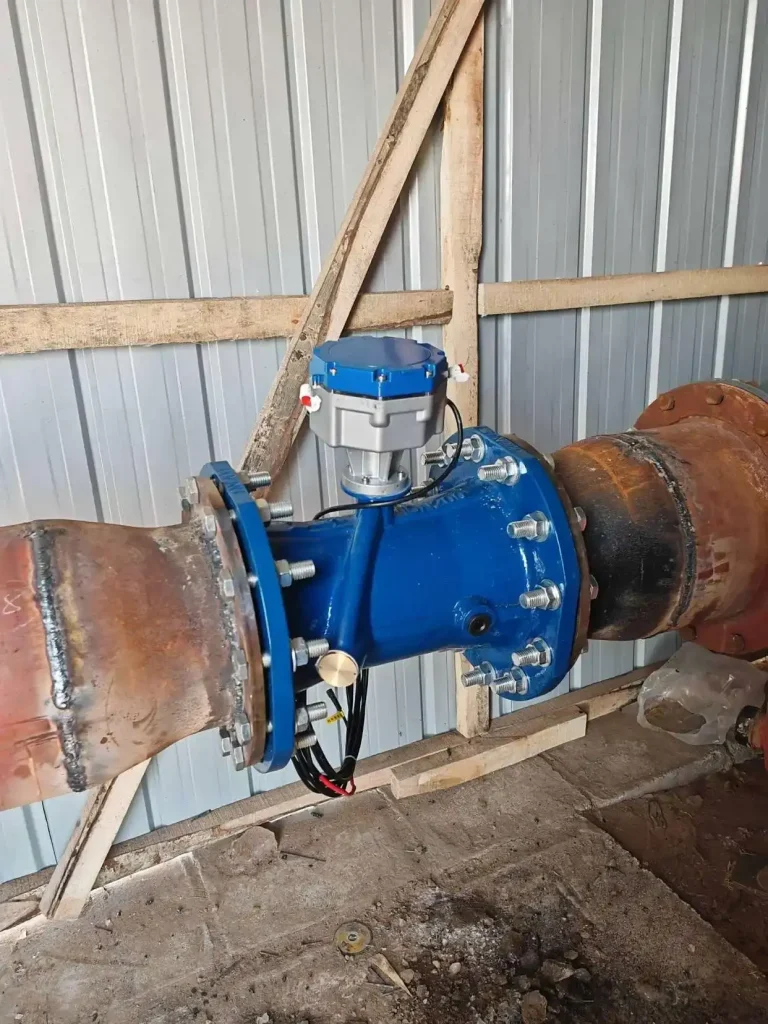
Choose the right vortex or ultrasonic flow meters to accurately meet a wide range of process measurement needs.
Sion-Inst’s full product portfolio of level transmitters, flow meters and pressure transmitters allows for customized selection solutions based on the medium, piping and vibration for the on-site conditions, and offers comprehensive technical support. We help you reach stable measurements, lower costs and greater efficiency. For more information, please feel free to contact us.