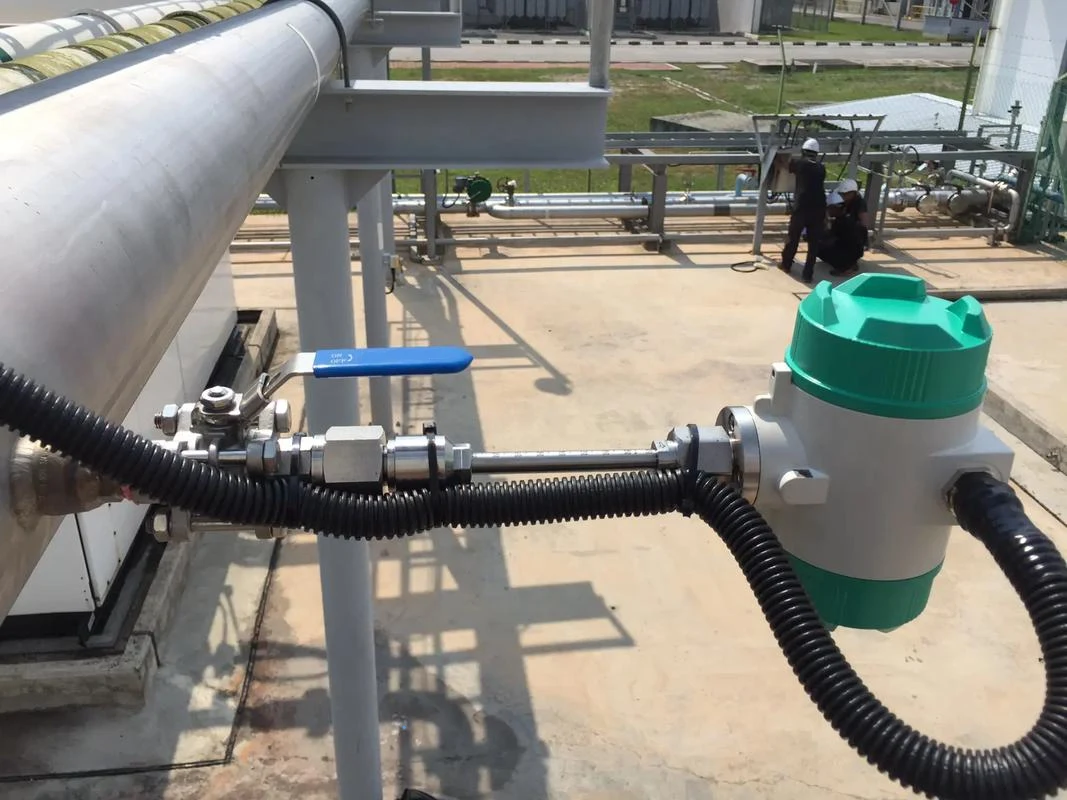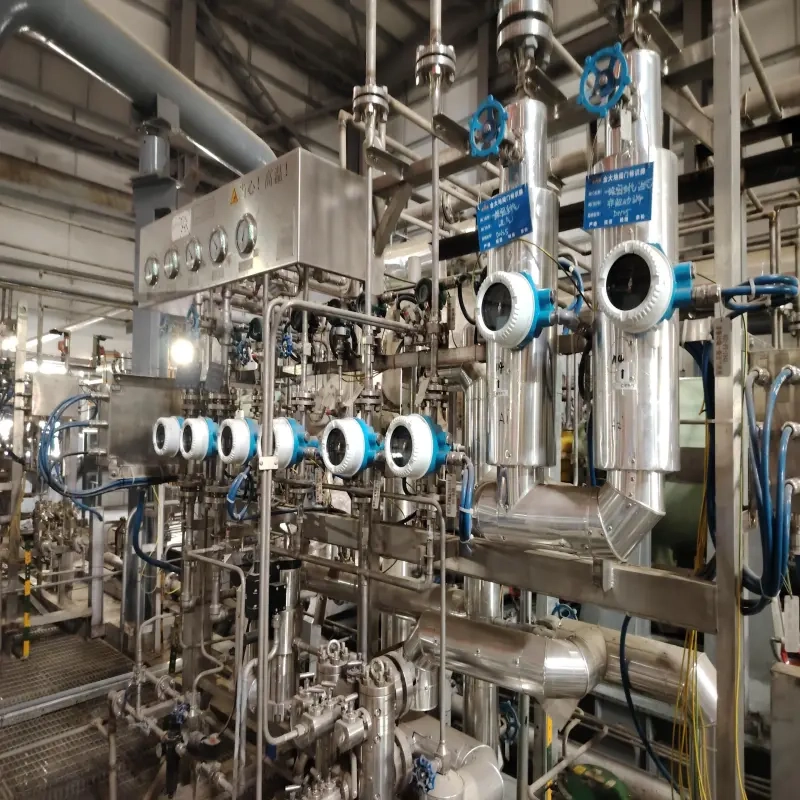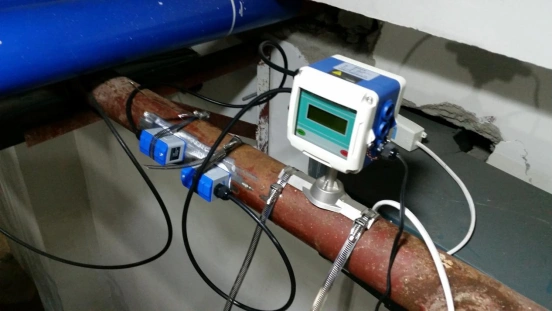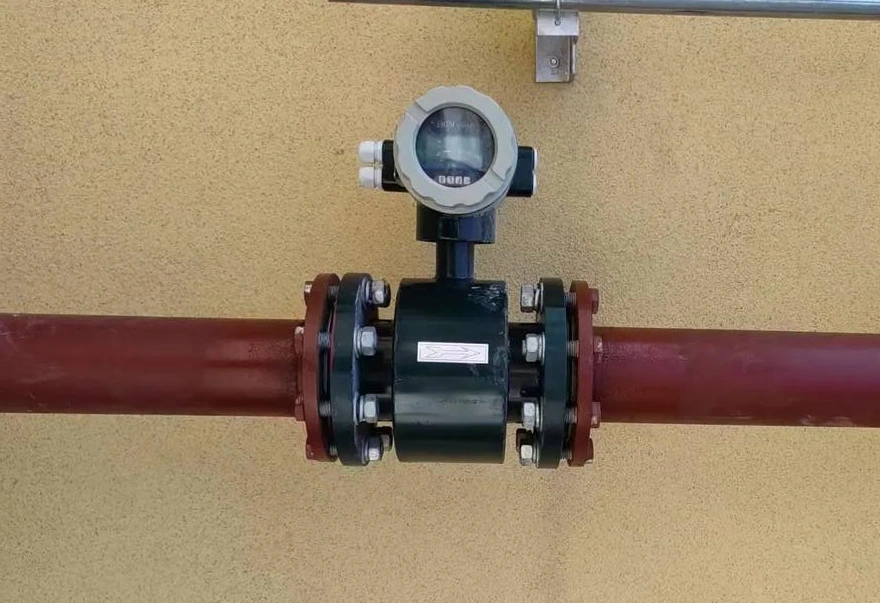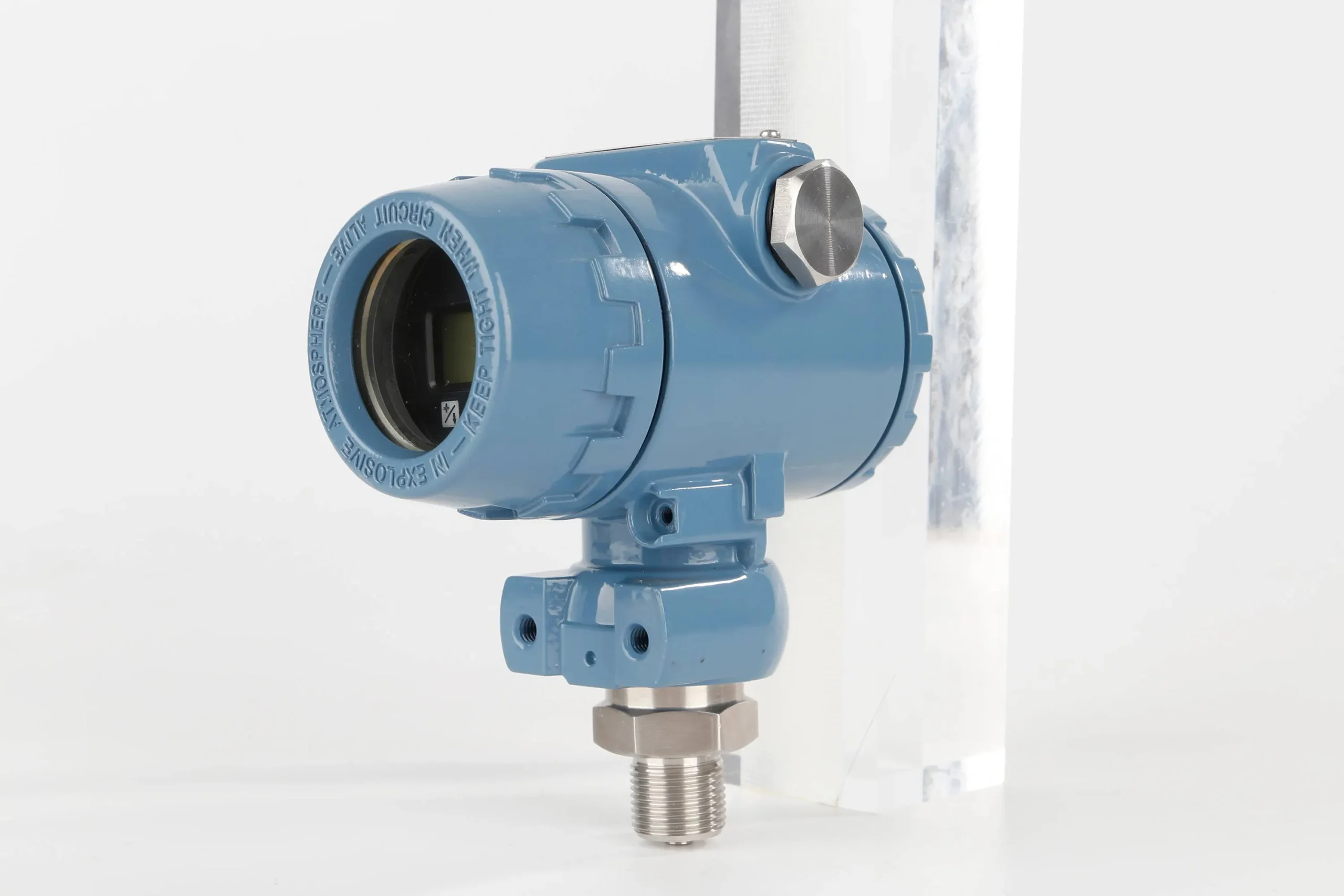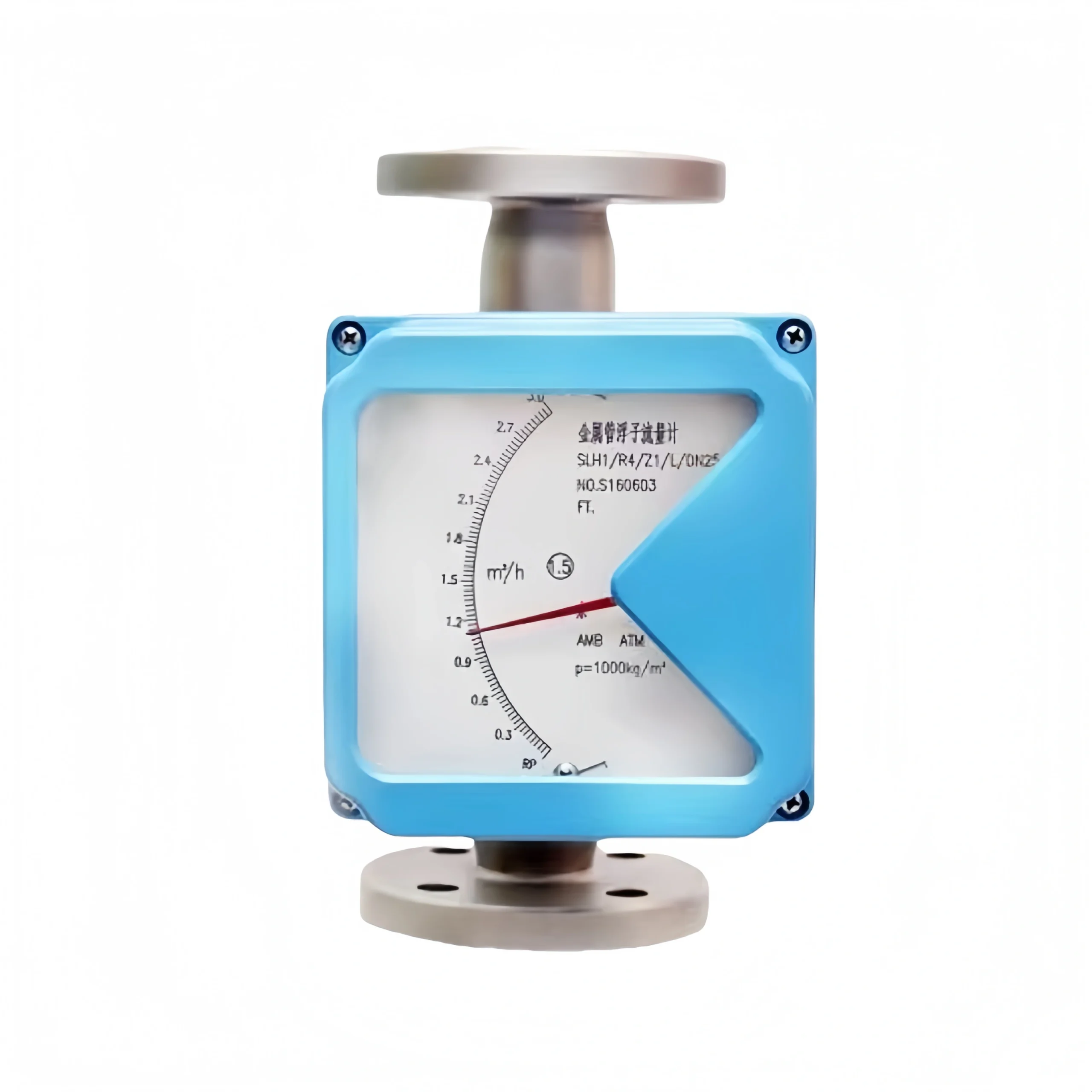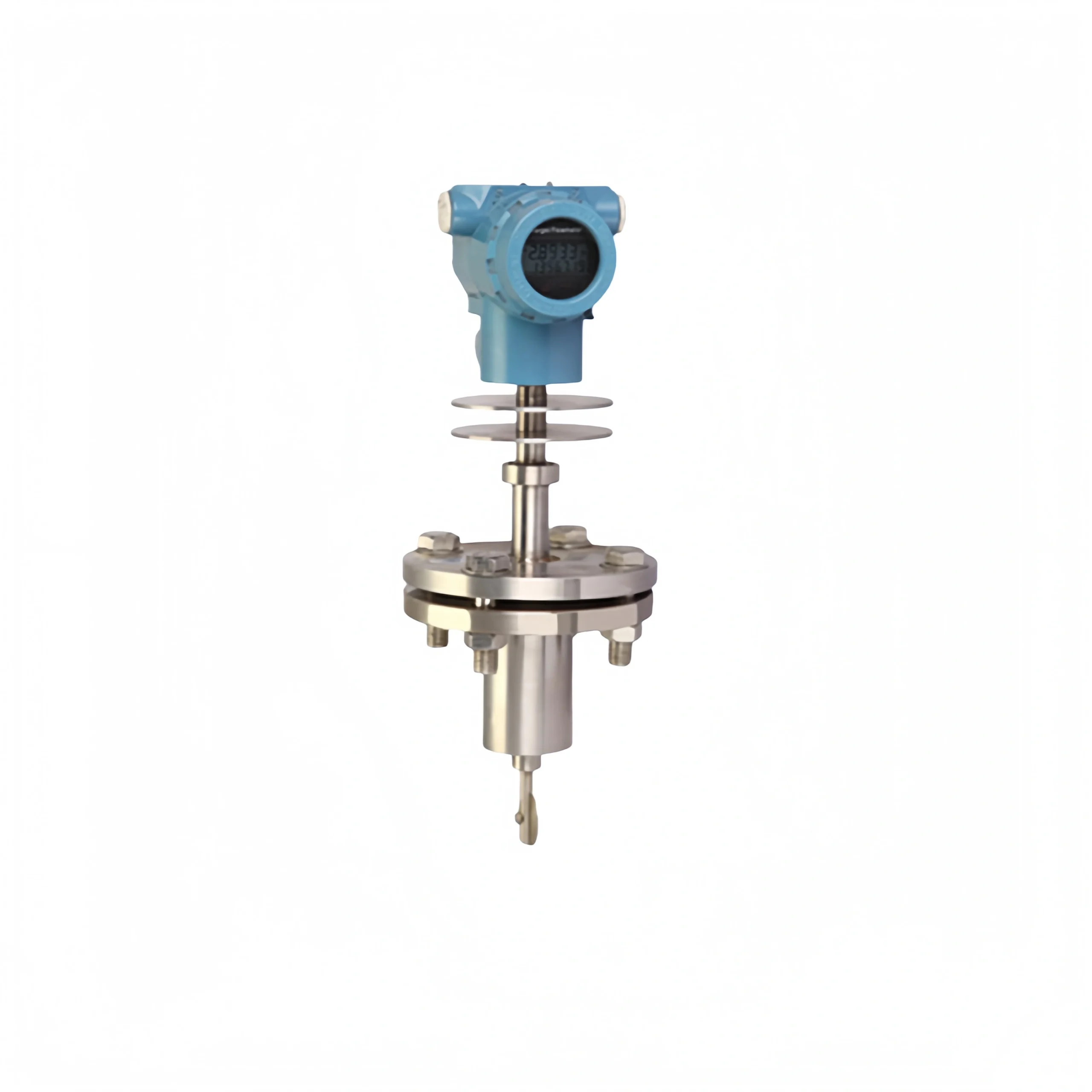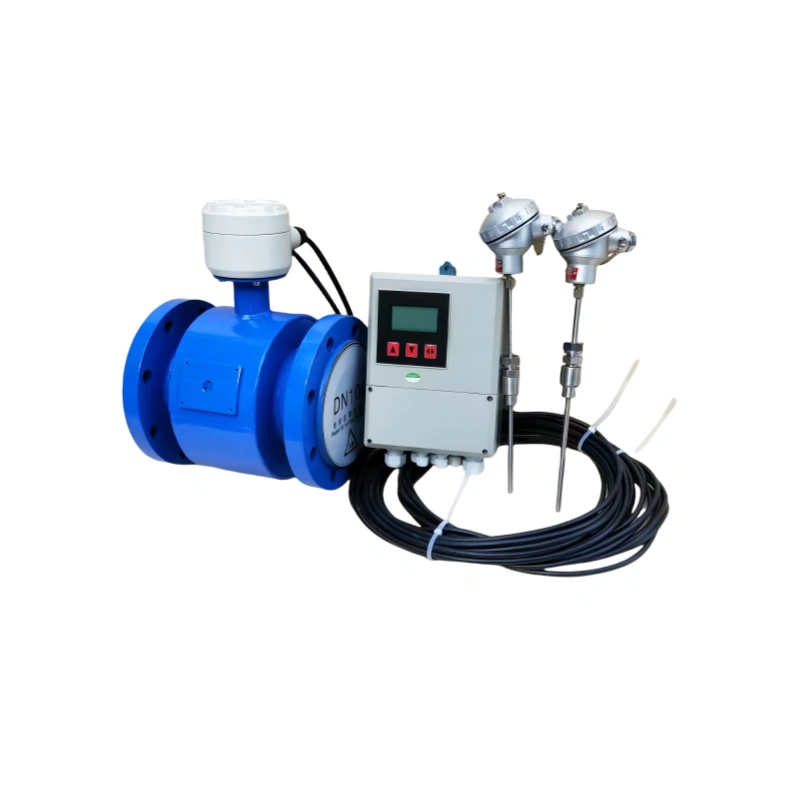
Hydrogen is a medium characterized by low density and high permeability, making flow measurement a technically challenging task. Hydrogen flow meters are core measurement and control devices in hydrogen energy processes, providing stable and safe flow measurement solutions for hydrogen production, transmission, distribution, and refueling applications.
What Is Hydrogen?
Hydrogen is the lightest combustible gas found in nature; it consists of two hydrogen atoms.
It is a clean secondary energy carrier and is widely used in industrial applications such as hydrogen production, hydrogen refueling stations, chemical synthesis, and fuel cells where accurate flow measurement and secure sealing are critical requirements.
Characteristics of Hydrogen
1. It has an extremely low density; it is significantly lighter than air and diffuses upwards with ease under identical operating conditions.
2. Leaks are probable due to the high permeability and small molecular radius.
3. It is susceptible to combustion or explosion when exposed to ignition sources, and it exhibits a broad spectrum of flammability and explosibility.
4. The selection of flow meters is significantly influenced by the low viscosity and unique flow characteristics.
5. It is non-corrosive but places hydrogen embrittlement requirements on sealing materials
Precautions for Hydrogen Measurement
1. Due to hydrogen’s very low density, the signal is weak and the signal-to-noise ratio is poor, making low-flow measurement difficult; high flow rates can also easily exceed the instrument’s measurement range.
2. Hydrogen molecules are highly permeable, making leaks likely; there is also a risk of hydrogen embrittlement, which imposes high demands on seals and materials.
3. Hydrogen has a high speed of sound; using standard ultrasonic flowmeters directly can result in significant measurement errors.
4. Under high pressure, hydrogen deviates from ideal gas behavior, making temperature and pressure compensation complex and mass flow conversion difficult.
5. Operating conditions involve large flow fluctuations and a wide turndown ratio; conventional flowmeters often exceed accuracy limits in both high- and low-flow ranges.
6. Electrolyzed hydrogen contains water vapor and alkaline mist, which can easily contaminate the sensors and cause zero-point drift.
7. Hydrogen has a wide explosive range, resulting in stringent explosion-proof requirements for the instrument and limiting selection and installation options.
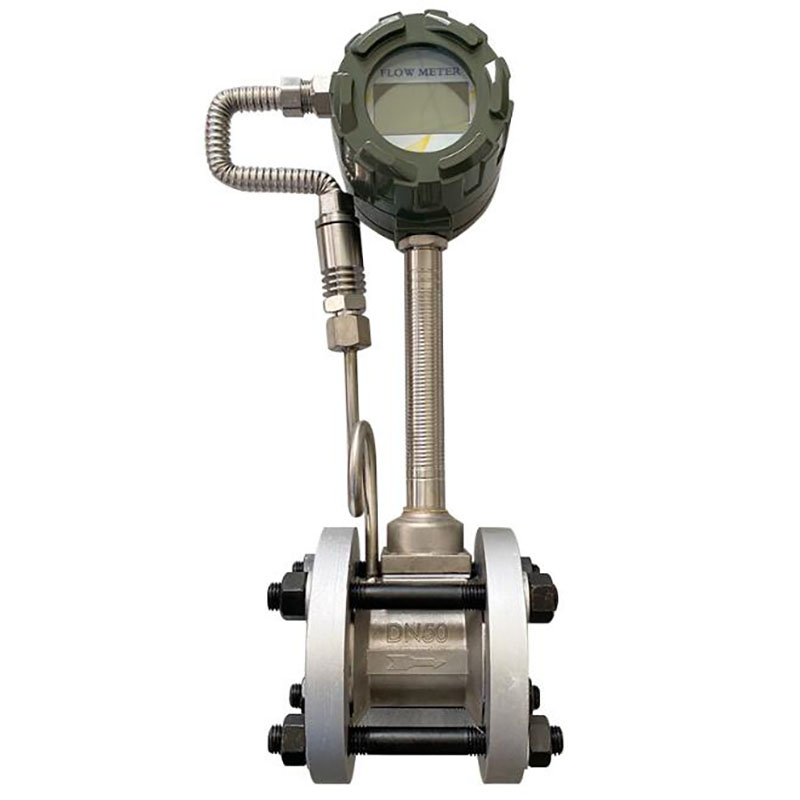
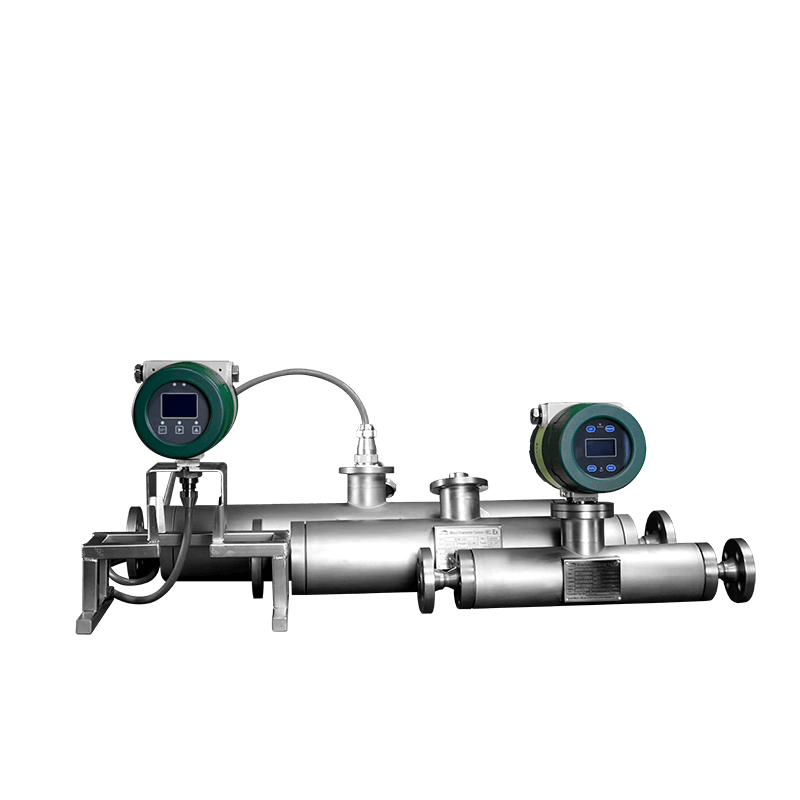
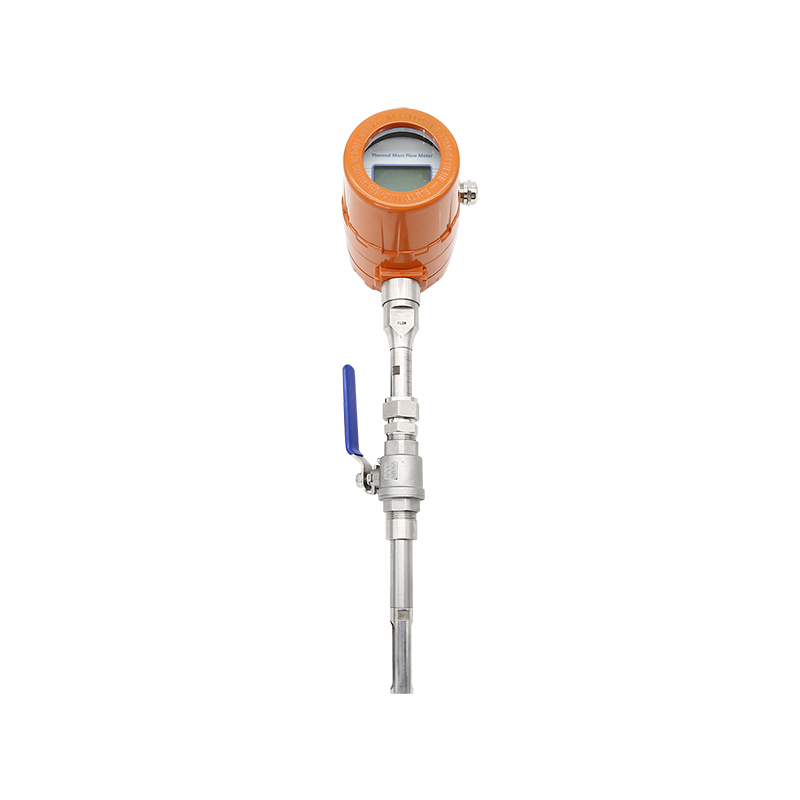
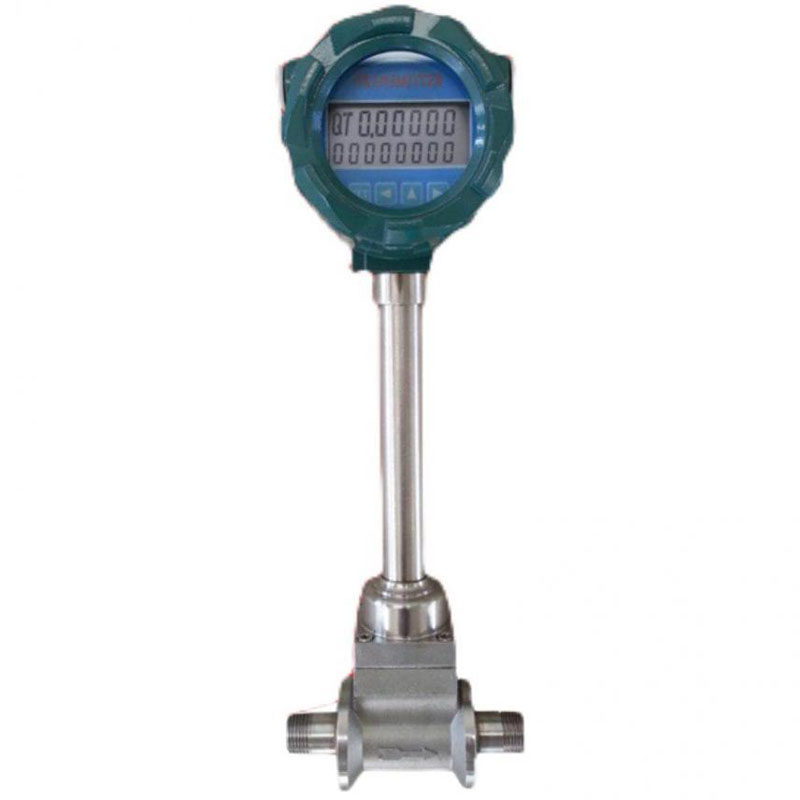

Hydrogen Flow Meters
Thermal Flow Meters
Principle of Operation
Thermal hydrogen flow meters are based on the principle of thermal diffusion. The probe contains two built-in temperature sensors: one is heated, and the other measures the temperature of the medium;
As hydrogen flows through the probe, it carries away heat; the greater the mass flow rate of the gas, the stronger the heat dissipation effect, causing the temperature difference between the two sensors to change accordingly.
By detecting the correlation between this temperature difference and the heating power, the instrument directly outputs the mass flow rate of hydrogen without requiring additional temperature or pressure compensation.
Advantages
1. Direct measurement of mass flow rate, suitable for low-density gases such as hydrogen
2. Wide turndown ratio with outstanding capability for measuring minute flow rates
3. Minimal pressure drop, with virtually no impact on pipeline operating conditions
4. No moving parts, simple structure, and low maintenance requirements
5. Suitable for low-pressure, low-flow hydrogen applications
Disadvantages
1. Sensitive to gas composition; gas impurities and water vapor can easily contaminate the probe, affecting accuracy
2. The probe is prone to wear in high-flow, dust-laden hydrogen environments
3. Susceptible to fluctuations in ambient temperature, requiring temperature compensation
4. Cannot be used for liquid hydrogen measurement
5. Requires a certain length of straight pipe for installation; flow field disturbances can introduce errors
Applications
Suitable for dry, low-pressure, low-flow hydrogen with stable composition. Commonly used in fuel cell hydrogen supply, trace hydrogen monitoring in hydrogen production plant exhaust, laboratory hydrogen blending, hydrogen leak detection calibration loops, and low-flow purge lines at the front end of hydrogen refueling stations.
Not suitable for main hydrogen pipelines containing liquid, high levels of impurities, or subject to severe flow rate fluctuations.
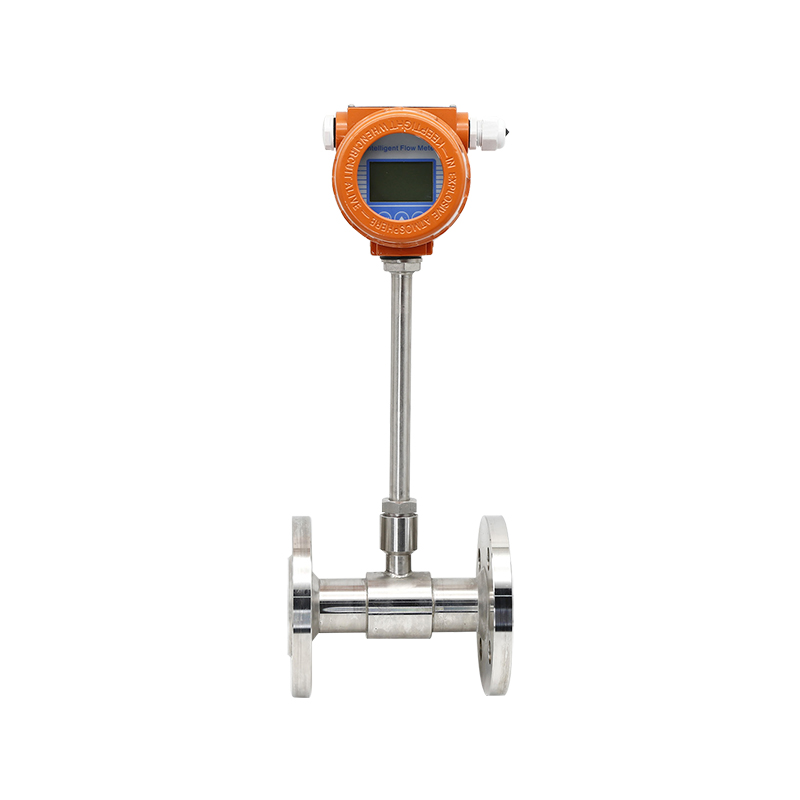
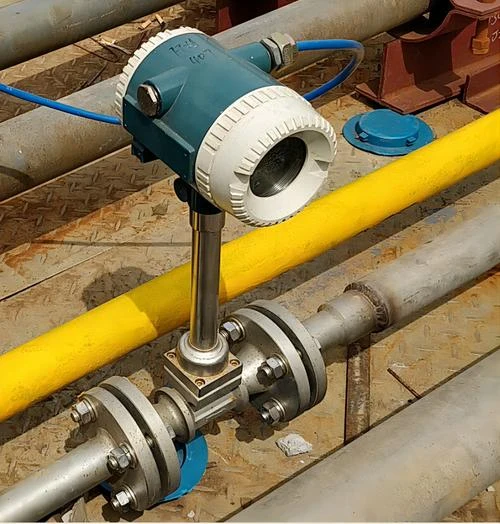
Vortex Flow Meter
Principle of Operation
A vortex flow meter relies on vortices generated by the fluid as it flows around an orifice. The frequency at which these vortices are released is proportional to the hydrogen flow velocity.
The probe captures the pressure fluctuation signals generated by the vortices, converts them into volumetric flow rate, and then performs compensation calculations using temperature and pressure transmitters to obtain the hydrogen flow rate under standard conditions.
Advantages
1. Robust construction; the sensor has no moving parts, ensuring excellent durability
2. Moderate price; wide range of nominal diameters available
3. The signal is frequency-based, offering good resistance to electromagnetic interference
4. A single meter can cover a wide flow range
5. High media adaptability; stable long-term operation with dry hydrogen
Disadvantages
1. Measures volumetric flow rate; temperature and pressure compensation is required for hydrogen
2. Weak signal at low flow rates; high lower limit for low-flow measurement
3. Sensitive to vibration; strong pipeline vibrations can cause measurement errors
4. Moderate pressure drop; high-flow, high-pressure conditions result in pressure loss
5. Wet hydrogen containing liquid or impurities can cause impact damage to the sensing element
Applications
Primarily used in medium- to high-flow hydrogen pipelines with stable flow rates, minimal vibration, and dry, clean conditions, such as the main hydrogen outlet of water electrolysis hydrogen production units, hydrogen transmission mains, and hydrogen combustion supply pipelines for boilers.
Suitable for industrial hydrogen metering in stable operating conditions where temperature and pressure data acquisition modules are already in place. Not suitable for ultra-low flow rates, environments with severe vibration, or wet hydrogen containing liquid.
Coriolis (Mass) Flow Meter
Principle of Operation
A Coriolis flow meter contains a vibrating measuring tube. When a hydrogen flow passes through the vibrating tube, the fluid generates a Coriolis force, causing a phase shift in the measuring tube; the magnitude of this phase difference is directly proportional to the mass flow rate of the fluid.
The instrument directly outputs the mass flow rate and density of the hydrogen, without the need for temperature or pressure compensation.
Advantages
1. Highest measurement accuracy class; direct measurement of mass flow rate
2. Unaffected by changes in temperature, pressure or density; highly adaptable to fluctuations in hydrogen operating conditions
3. Capable of simultaneously outputting multiple parameters, including flow rate and density
4. Insensitive to flow field disturbances; requires only a short straight pipe section
5. Suitable for the metering of high-pressure, high-purity hydrogen; the preferred choice for trade settlement applications
Disadvantages
1. High equipment cost; large-bore models are particularly expensive
2. Some pressure drop occurs; this is more pronounced in small-bore models
3. Relatively sensitive to pipeline vibrations; requires effective vibration-damping supports
4. As the measuring tube is a vibrating component, selection is limited for ultra-high-pressure and high-flow-rate applications
5. Measurement performance deteriorates at extremely low flow rates when hydrogen density is low
Applications
Preferably used in scenarios with stringent metrological accuracy requirements, such as hydrogen trade handover, high-precision blending, hydrogen refuelling at hydrogen refuelling stations, precision gas distribution for scientific research, and precision dosing of high-purity hydrogen.
Suitable for medium flow rates of clean, dry hydrogen and operating conditions where anti-vibration bases can be installed on site; generally not used for low-pressure, ultra-low-flow or ultra-large-diameter transmission pipelines.
Selection Guide
Define the application:
When used solely for process monitoring, priority should be given to value for money, keeping project costs under control whilst meeting basic accuracy requirements;
However, for applications requiring legal metrological validity—such as hydrogen trade handover, precision blending and refuelling metering—Coriolis mass flow metres should be prioritised, as they meet metrological verification requirements and ensure the credibility of measurement data.
Flow Range:
Thermal flowmeters are the preferred choice for ultra-low and low-flow hydrogen applications; vortex flowmeters are suitable for medium-flow applications with stable flow rates; for applications with high requirements for both measurement range and accuracy, coriolis mass flowmeters are recommended.
State of the Medium:
Thermal flowmeters are sensitive to the status of the medium, and are not applicable to wet hydrogen, hydrogen with varying composition or hydrogen with impurities; vortex flowmeters are also sensitive to the interference of water vapor and dust, resulting in signal attenuation and measurement errors.
Coriolis flowmeters have a relatively better tolerance to medium status, but a large amount of solid impurities can cause erosion and damage to the measuring tube.
When selecting a model, it’s important to verify the pressure rating and explosion-proof rating of the instrument to satisfy the hydrogen hazardous area requirements.
Pressure Drop Limits:
For low-pressure circuits, ultrasonic and thermal flowmeters should be prioritised, as both have lower pressure drops;
Coriolis flowmeters have a relatively high pressure drop, whilst vortex flowmeters incorporate flow-restricting elements.
In low-pressure conditions, the pressure drop across the pipework must be calculated in advance to avoid affecting normal process flow.
On-site installation:
Where pipework is subject to severe vibration, vortex flowmeters should be avoided where possible; both vortex and ultrasonic flowmeters are sensitive to flow field conditions and require sufficient straight pipe runs; the instrument’s explosion-proof rating must comply with regulations for hydrogen hazardous areas.
Compensation Requirements:
Thermal flowmeters and Coriolis flowmeters can directly output mass flow rate and do not need to be equipped with additional temperature and pressure compensation systems;
Vortex flowmeters measure volumetric flow rate and need to be equipped with temperature and pressure transmitters to make compensation calculations and convert the reading to standard-state flow.
Budget and Upkeep:
Vortex flowmetres are the preferred choice for monitoring small to medium flow rates in routine processes as there are significant cost advantages.
Thermal flowmetre probes are subject to fouling by water vapor and impurities and require regular cleaning and maintenance.
Coriolis flowmetres provide the highest quality measurement accuracy but have a higher purchase cost.
Other gas flowmetres
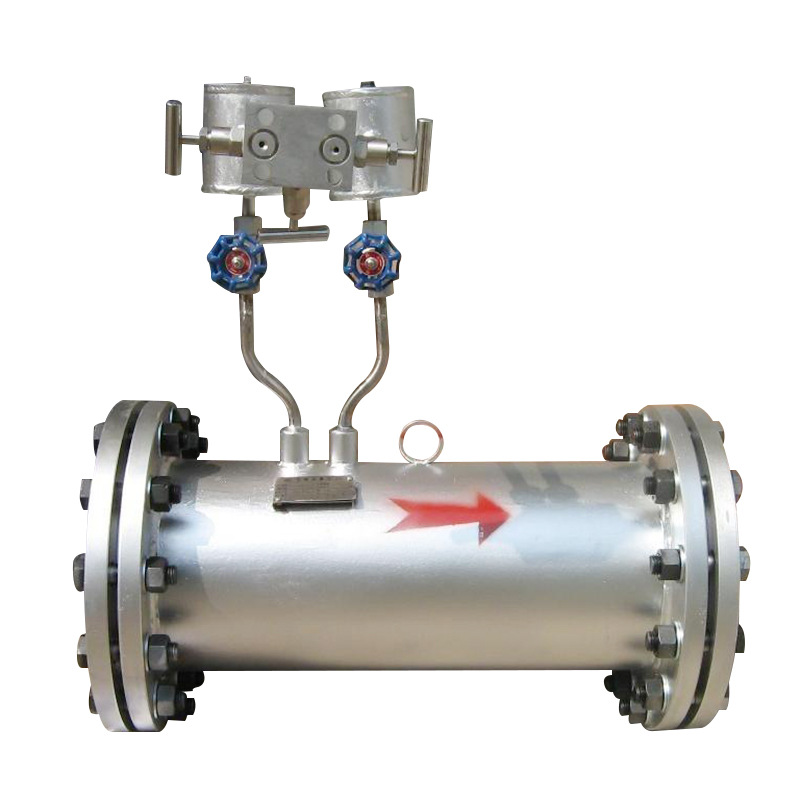
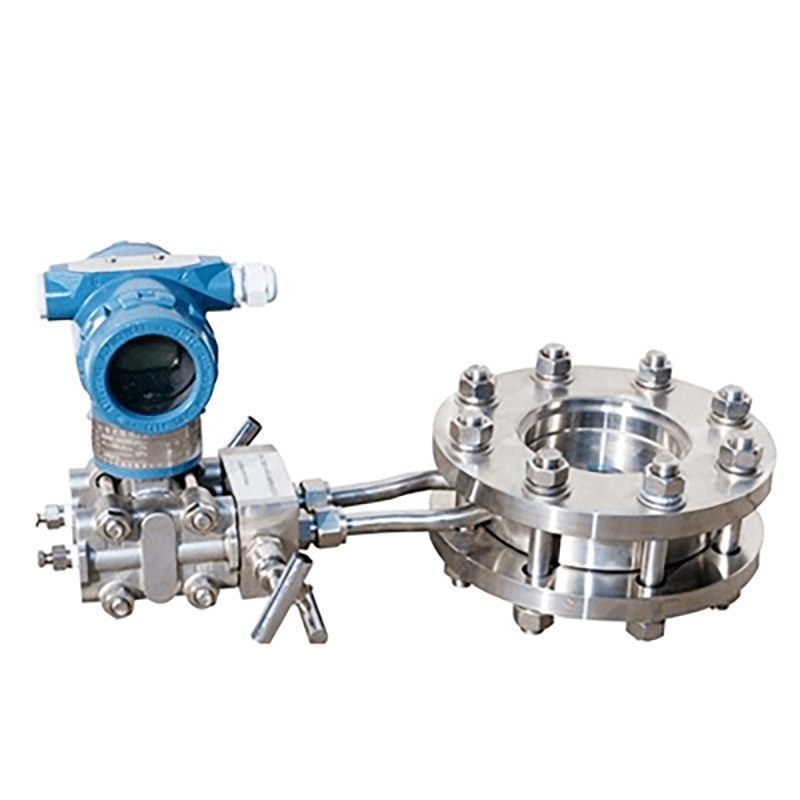
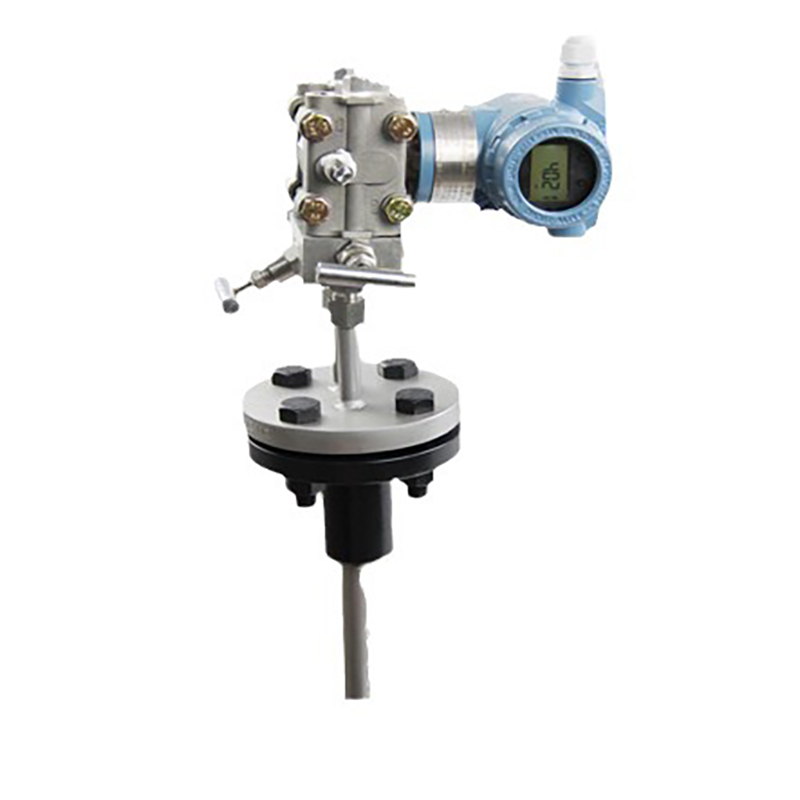
Differential pressure gas flowmetres: These include orifice plates and Venturi tubes; whilst the technology is mature and costs are low, they suffer from high pressure drop and a narrow measurement range, and are primarily used for routine gas monitoring.
Vortex gas flowmeters: Based on the Karman vortex street principle, they have no moving parts and are suitable for compressed air and steam; however, they are susceptible to vibration and low flow rates.
Gas turbine flowmeters: Offering high accuracy and fast response times, they are used for natural gas trade metering; the medium must be clean, and regular maintenance is required.
Rotary lobe (Roots) flowmeters: Positive displacement type; good for low flow rates; often used for gas metering; liable to jamming if medium contains impurities.
Swirl flowmeters: Compact structure, suitable for small and medium pipe diameters for natural gas, relatively high pressure drop, rarely used in large diameter pipelines.
Float flowmeters: They are easy and cheap to build , offer a visual intuitive indication on site , and have moderate accuracy . They are primarily used in small diameter pipes and laboratory applications .
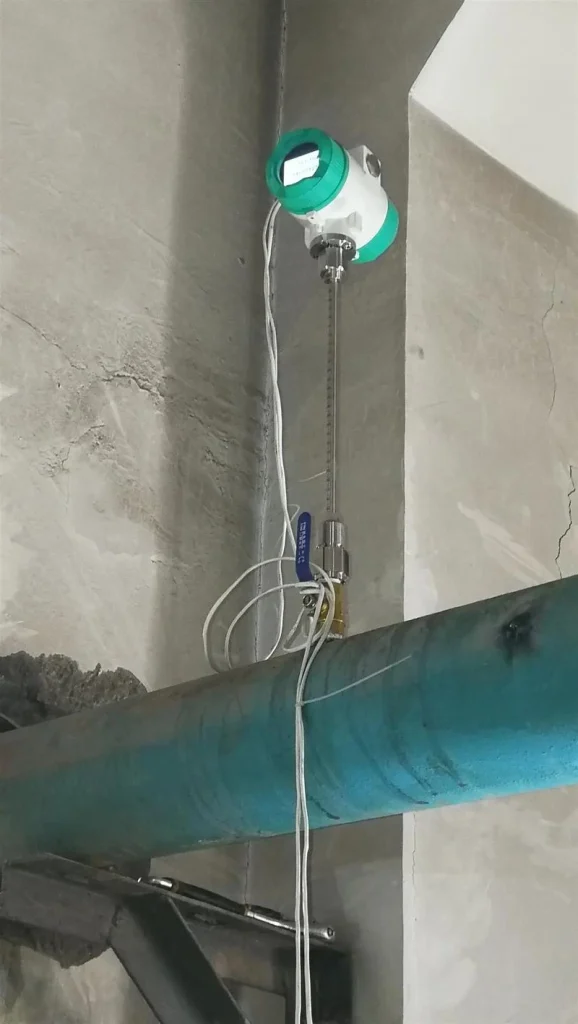
Accurate hydrogen flow measurement is crucial for the safe and stable operation of the entire hydrogen value chain, from production and transmission to distribution and refueling.
Sion-Inst can create a suitable selection plan for you based on on-site flow ranges, process conditions, accuracy requirements and budgetary constraints with our wide range of flowmetres for hydrogen.
We offer a complete solution, including instrument supply, technical support, after-sales maintenance and operations to help ensure the efficient, compliant and safe implementation of your hydrogen project.