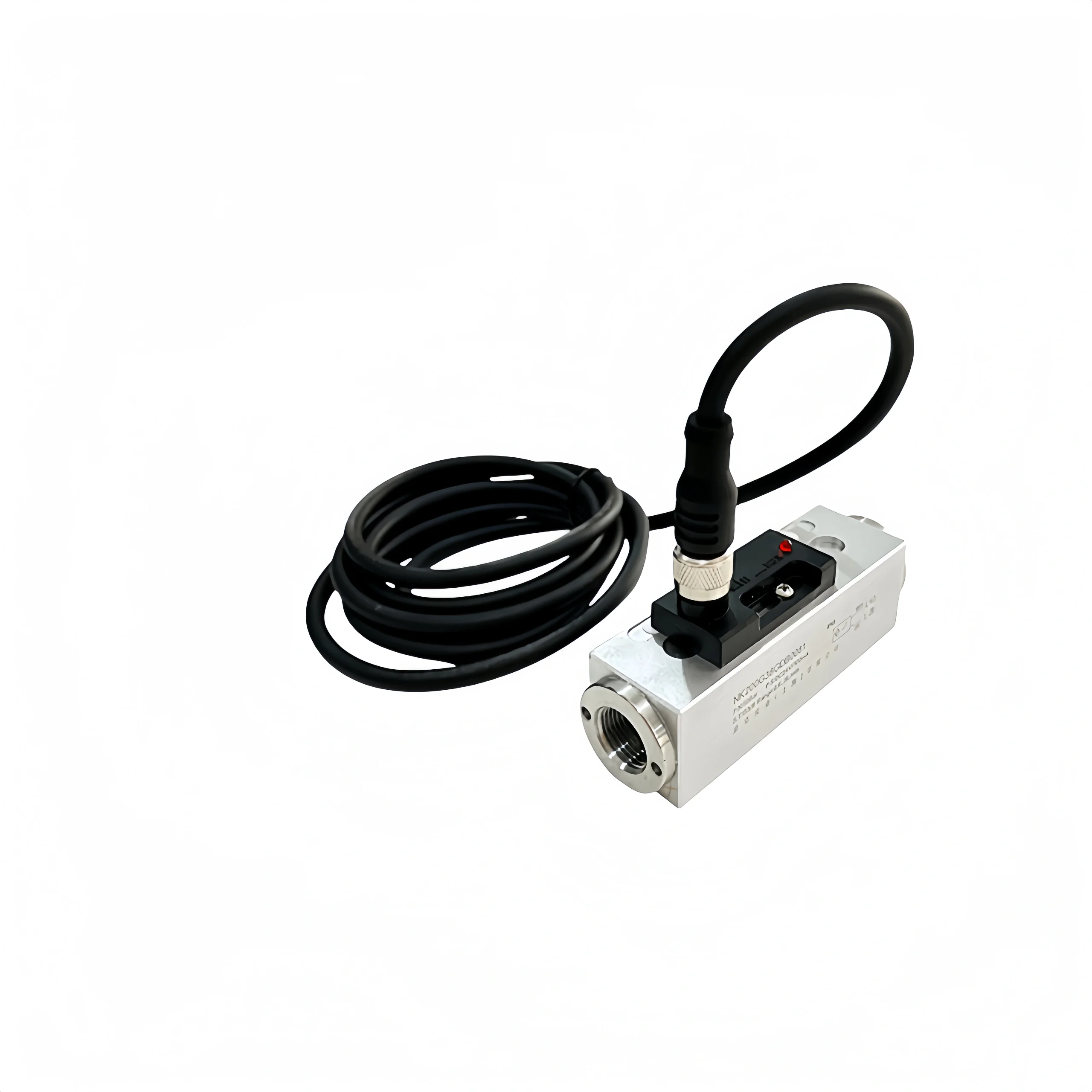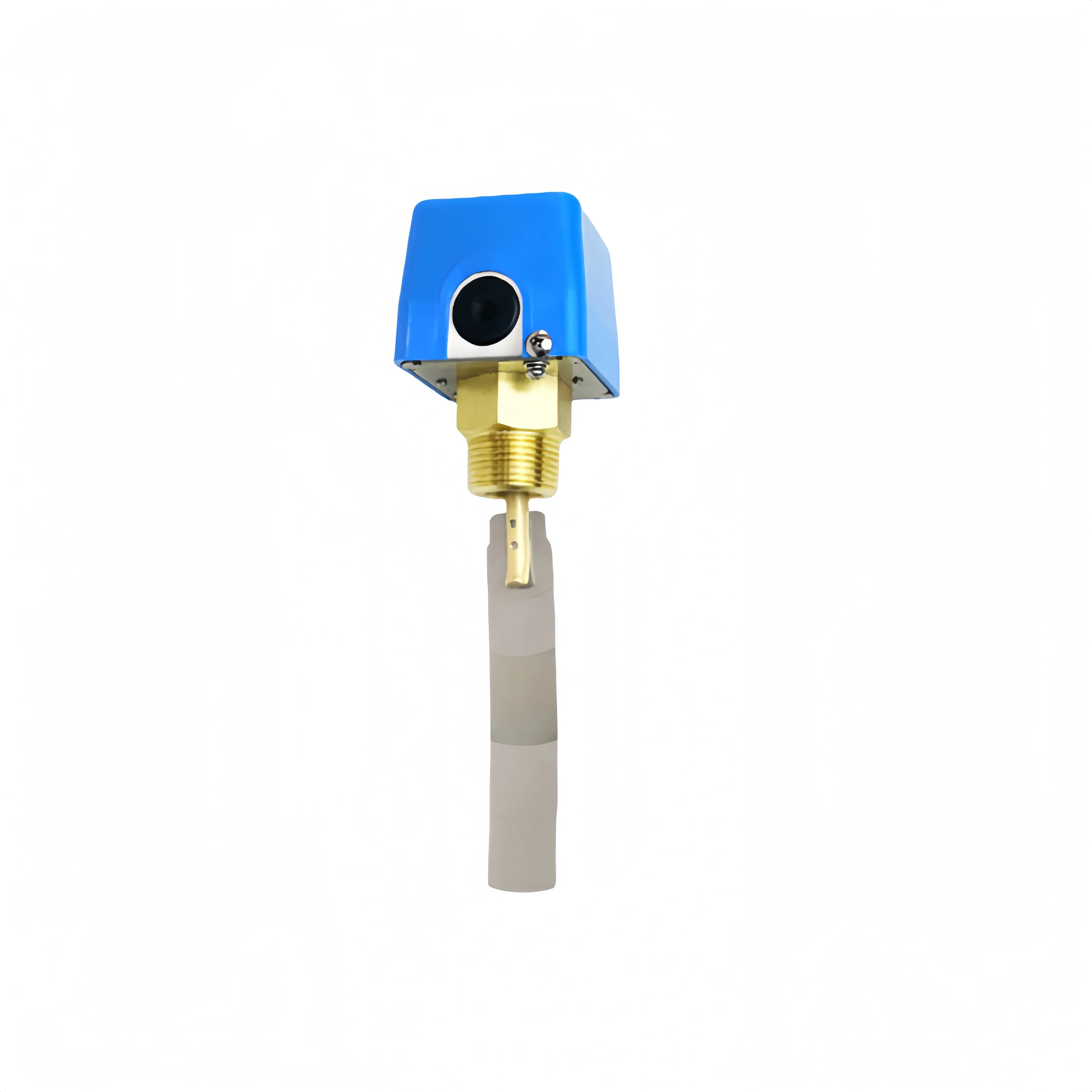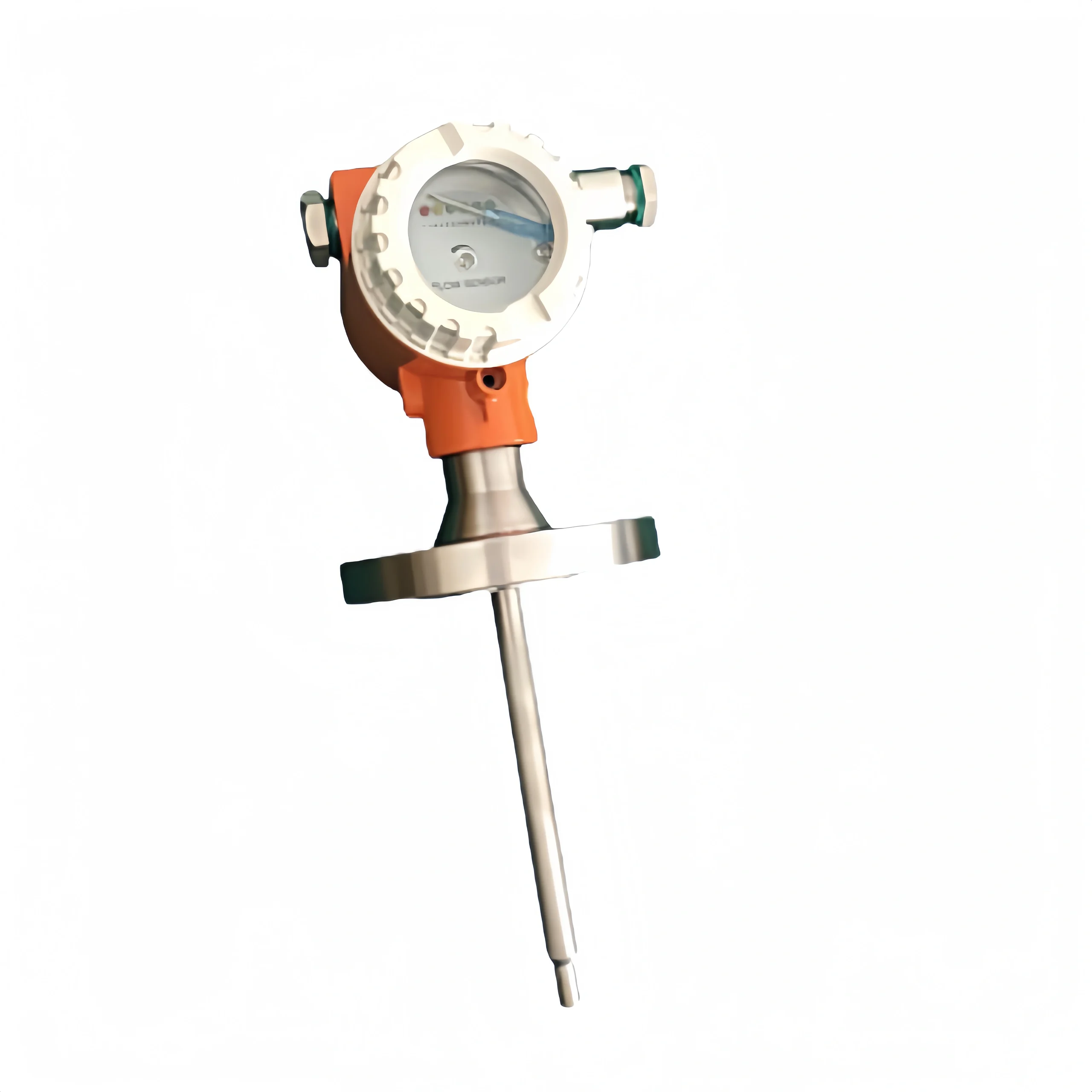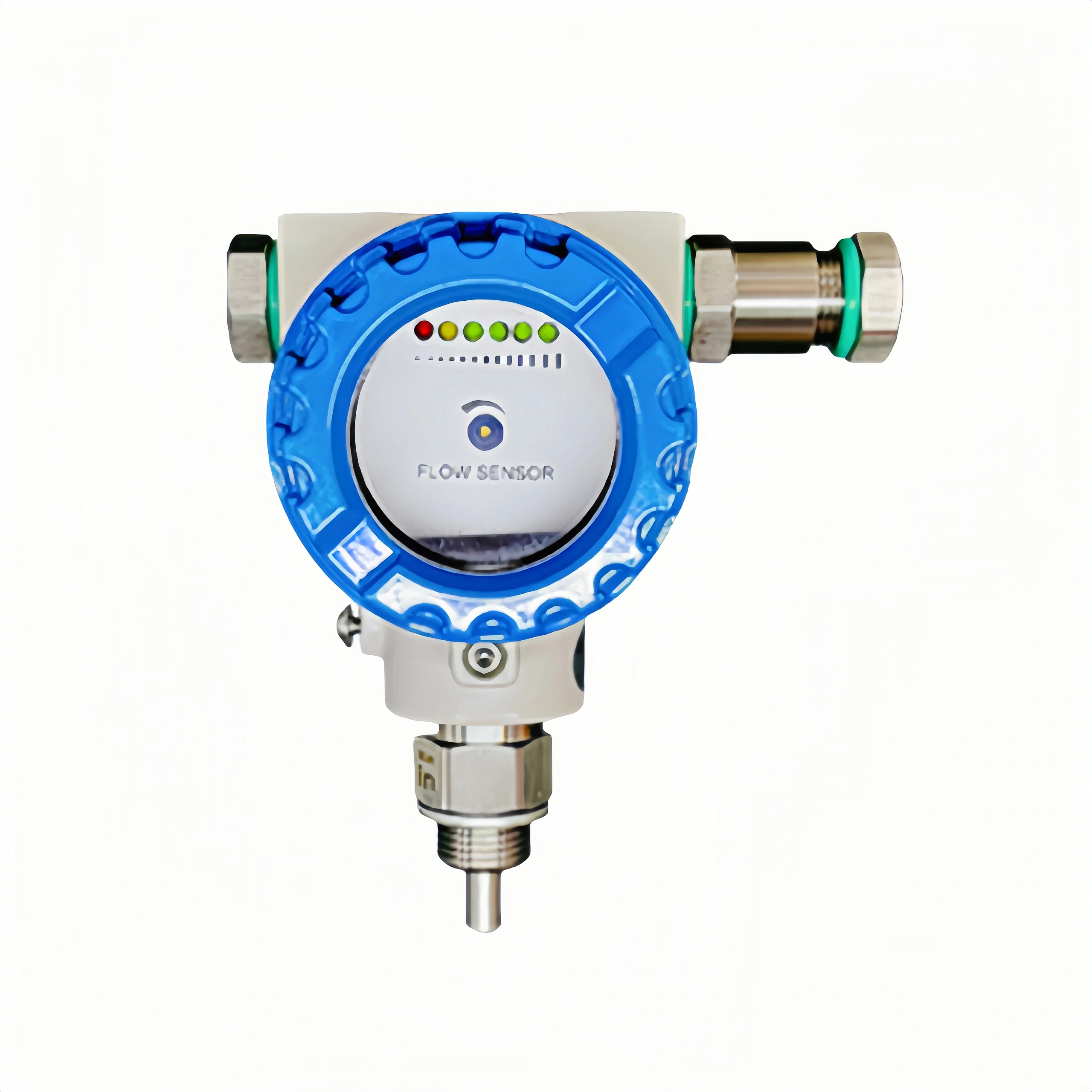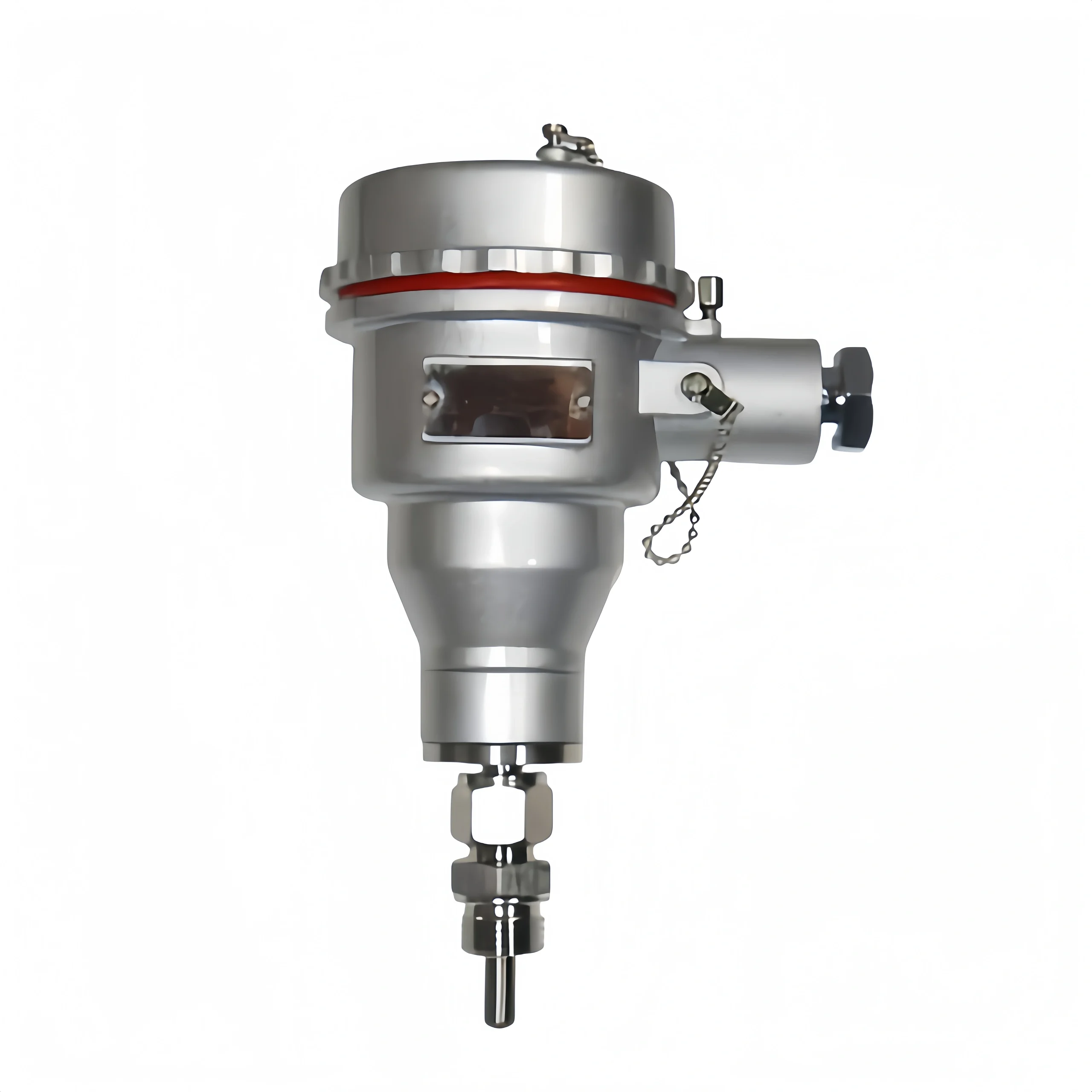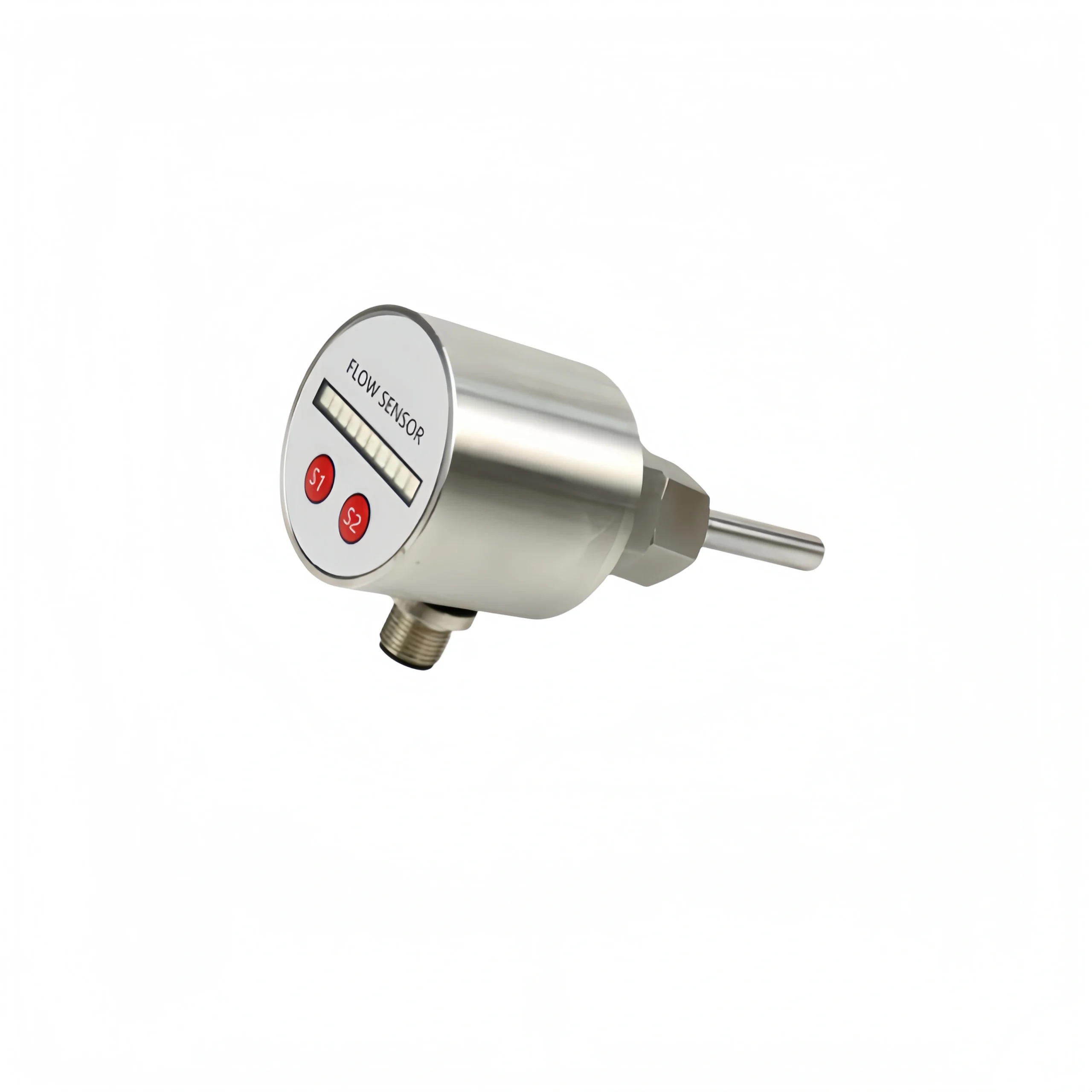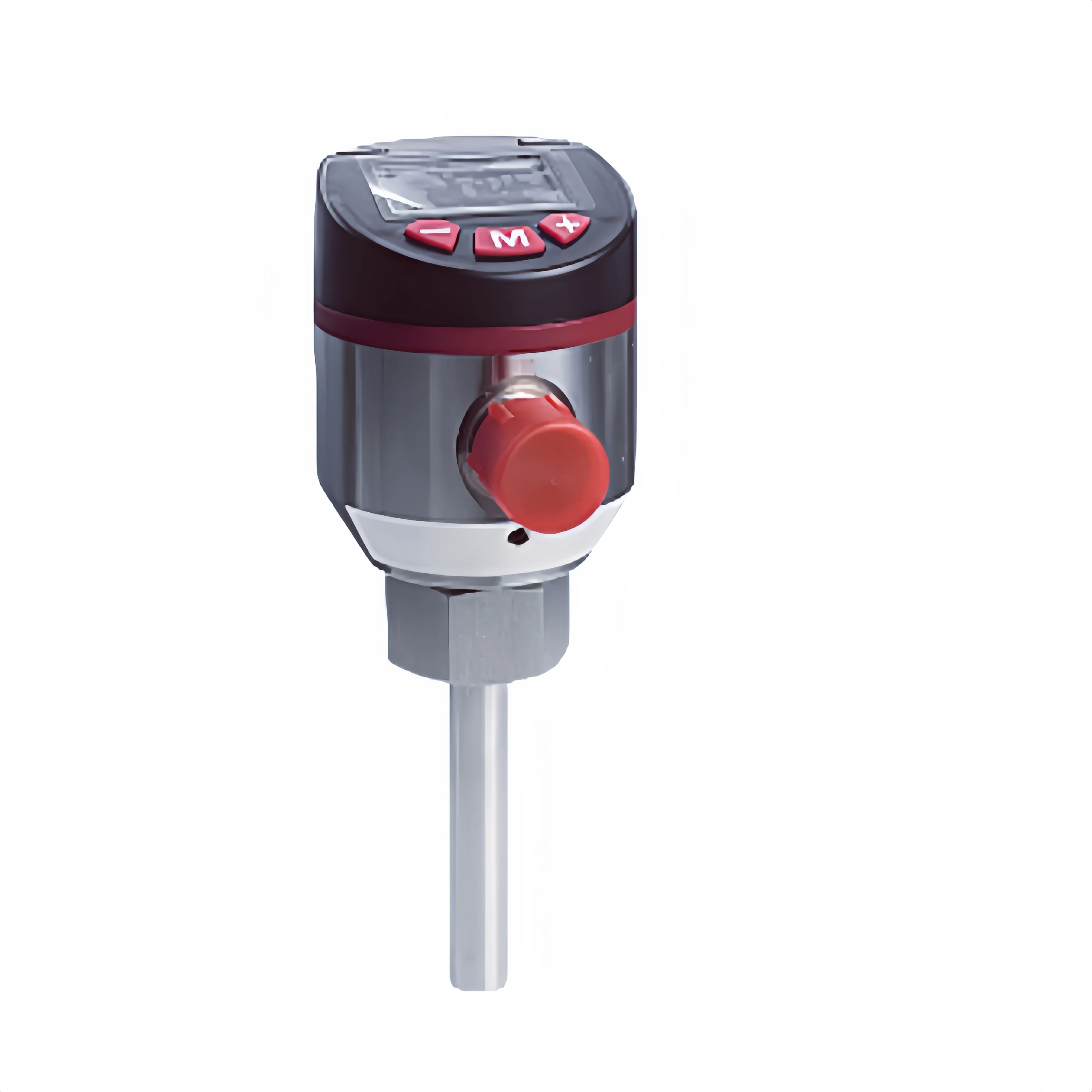
What is a Gas Mass Flow Meter?
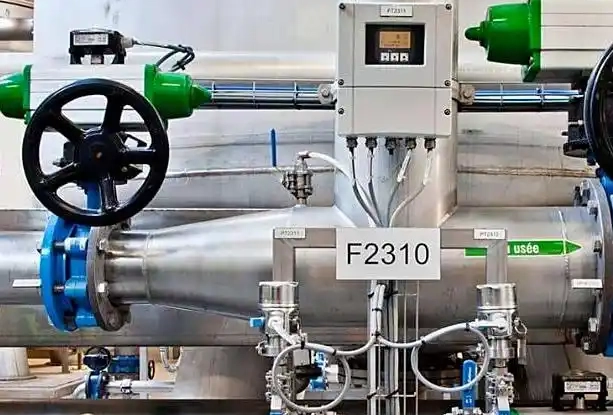
A gas mass flow meter is a device that measures gas flow by determining the mass of gas flowing through a specific point per unit time. Essentially, the flow is calculated based on the weight of the gas rather than the volume. For example, the most commonly used gas thermal mass flow meter is usually achieved by measuring the heat transfer of a heating element in the gas flow. This measurement is independent of the pressure and temperature changes of the gas.
Unlike standard volumetric flow meters, gas mass flow meters directly measure the mass of gas flowing past a point per unit time. This makes them very useful in applications where the gas density may vary.
Common gases measured using mass flow meters
Inert shielding gases: nitrogen, argon and helium, the most commonly used in industry.
Combustion/oxidising gases: oxygen, air and compressed air.
Flammable reducing gases: hydrogen, methane, propane and carbon monoxide.
Specialty process gases: carbon dioxide, ammonia, nitrous oxide, acetylene.
High-purity gases for the semiconductor industry: silane, phosphine, fluorinated gases and other corrosive/specialty high-purity gases.
Mixed gases: nitrogen-oxygen mixtures, argon-hydrogen mixtures and other gases with stable component ratios.
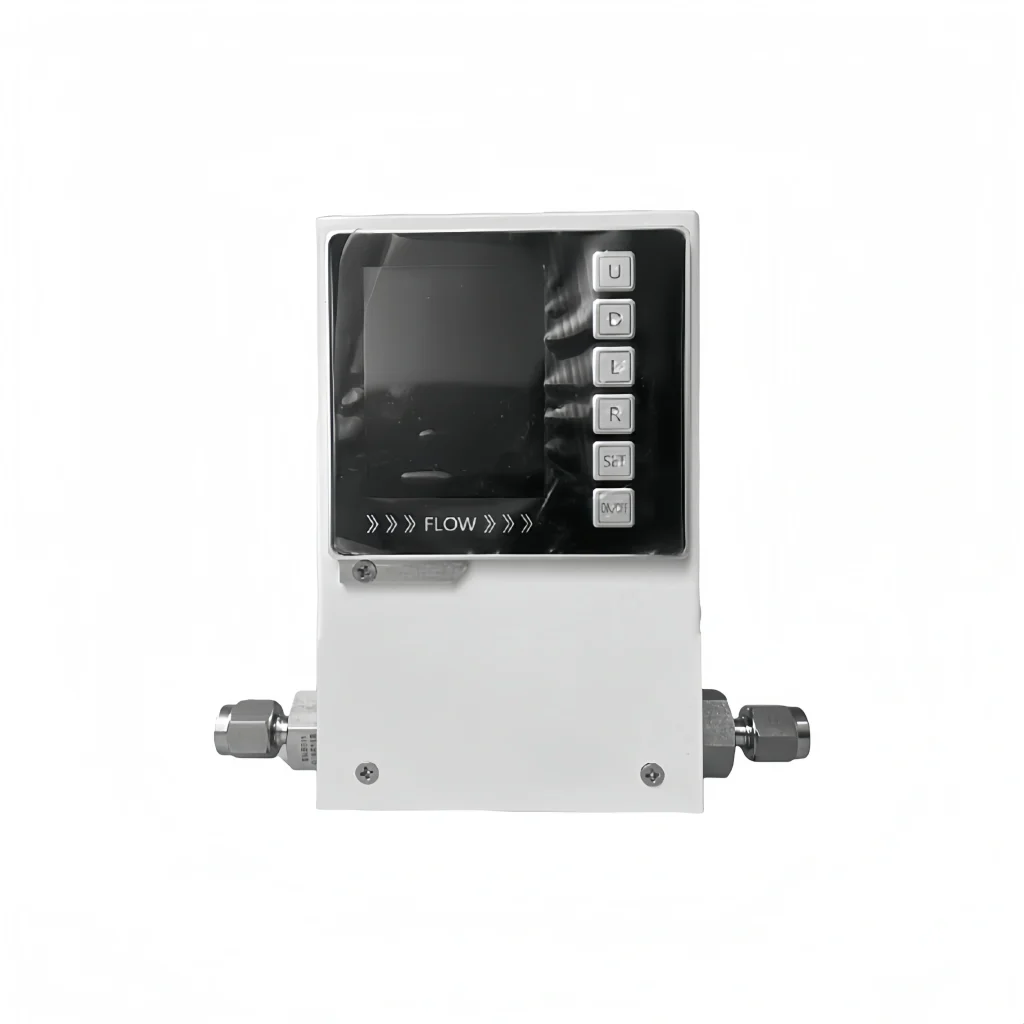
Types and Features of Gas Mass Flow Meters
Thermal Gas Flow Meters
Principle of Operation
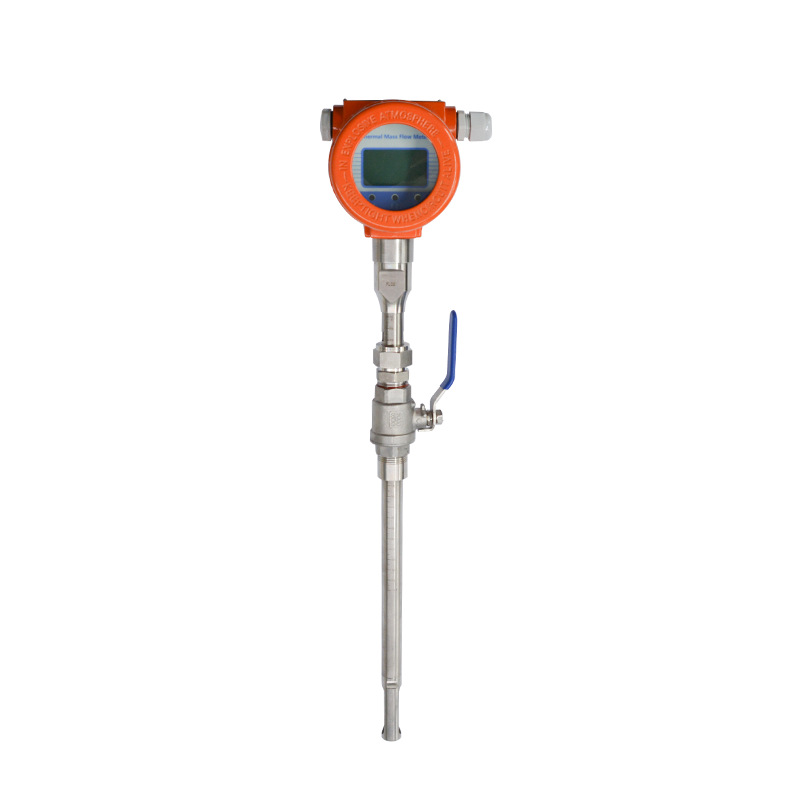
Thermal mass flow meters work on the principle of thermal diffusion. The probe has a temperature sensor and a heating element, which keep a steady temperature difference between the two.
As gas flows through the probe, it carries away heat; the greater the gas mass flow rate, the more heat is dissipated. By measuring changes in the heating power, the instrument can directly determine the gas mass flow rate.
Advantages
1. It can measure the amount of gas flowing directly, without needing to adjust for temperature or pressure. This makes it useful for a variety of applications involving gases at standard pressures.
2. It has an extensive turndown ratio. It also boasts exceptional low-flow detection capabilities. These features enable precise measurement of minute gas flow rates.
3. Its simple design has no moving parts, so it won’t get worn out or blocked. This means it will always work well and won’t cost much to maintain.
4. The pressure drop is very small and has almost no effect on the internal pipeline conditions. This makes it suitable for low-pressure and vacuum gas transmission applications.
5. It is easy to install and does not require long straight sections of pipe upstream or downstream. It is also easy to retrofit on site.
6. This device is specially designed to measure different types of gas, such as air, nitrogen, natural gas, and industrial gas mixtures.
7. It responds quickly, which helps to keep up with changes in the flow of the liquid.
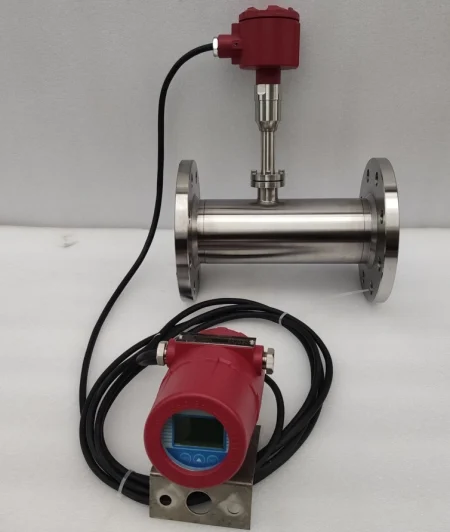
Coriolis Flow Meter
Working Principle
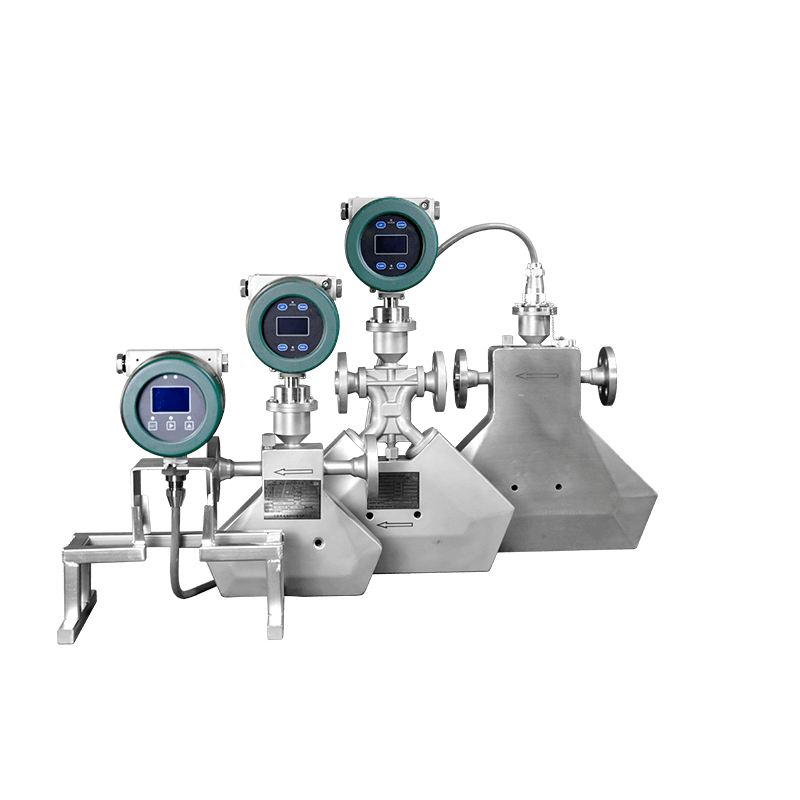
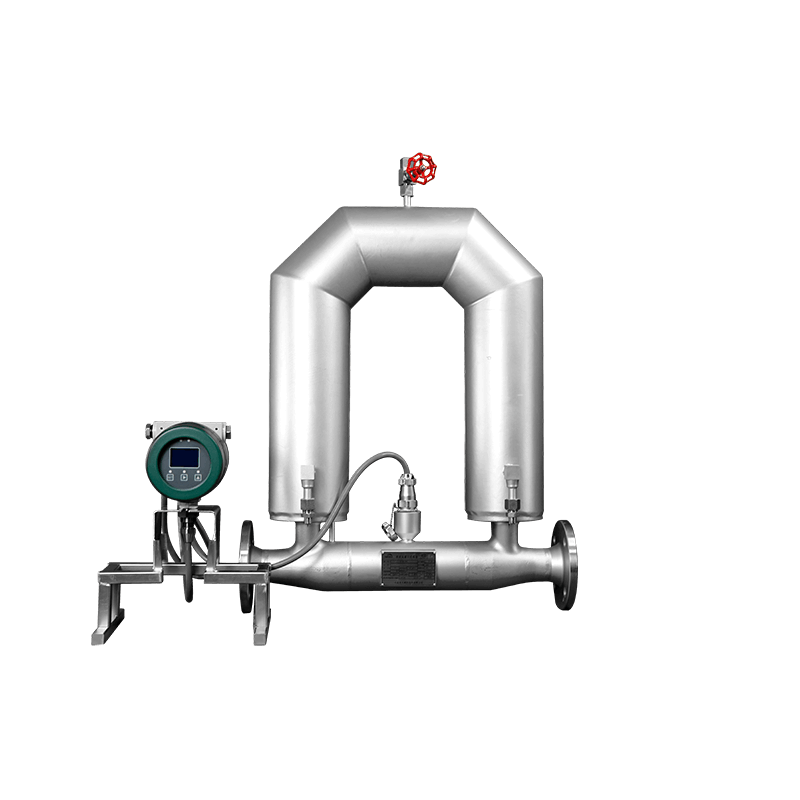
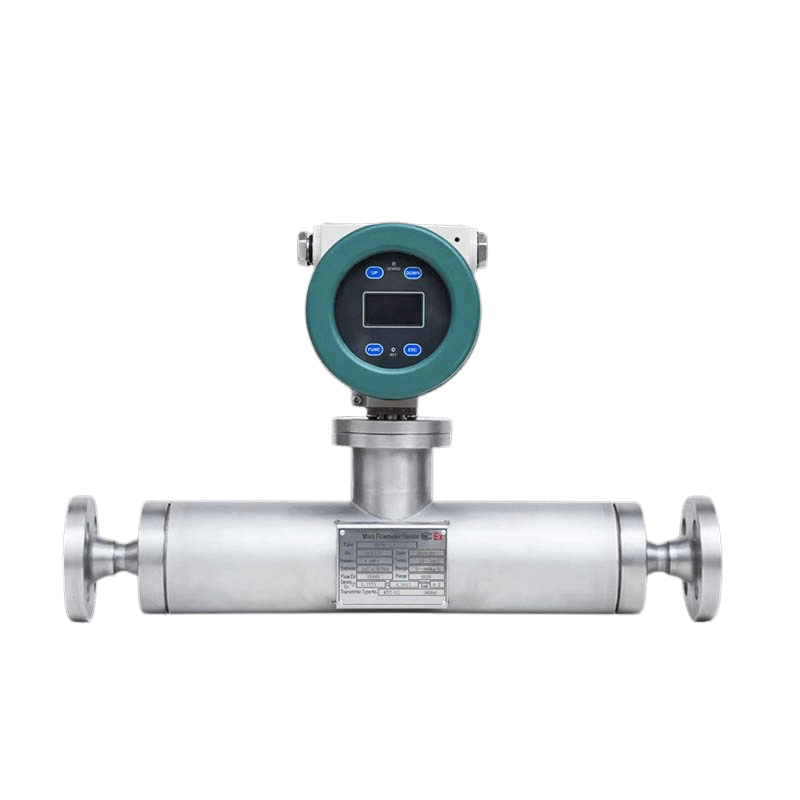
The Coriolis mass flow meter works on the principle of Coriolis force. The measuring tube vibrates continuously at a high frequency because of the electromagnetic drive. When liquid flows through the tube, it creates a force called Coriolis force because of the fluid’s inertia.
This causes a slight difference in phase and a twisting of the tube at the inlet and outlet. This phase difference is directly linked to the mass flow rate of the medium. The instrument can calculate the mass flow rate and density of the medium by capturing the vibration signals and combining them with data such as frequency and temperature.
Advantages
1. It can measure gas mass flow rates directly, so you don’t need to mess around with extra temperature or pressure compensation devices. This means less conversion error and more accurate, stable data.
2. And the measurements won’t be affected by changes in gas pressure, density or viscosity, making it perfect for situations where the operating conditions are all over the place.
3. It’s highly accurate and consistent, making it perfect for gas blending, energy consumption metering and trade settlement.
4. It’s got no moving parts inside, so it’ll last for ages and won’t break down.
5. The installation requirements are flexible as no straight pipe sections are needed either upstream or downstream. This makes the installation process straightforward and enables the system to be easily adapted to complex pipeline layouts.
6. Thanks to its built-in measuring functions, you can get different measurements, like gas density and temperature, at the same time. This makes it easier to check and study what is happening.
7. It can measure a wide range of flows, so it’s good for different industrial gases that have low pressure and low density.
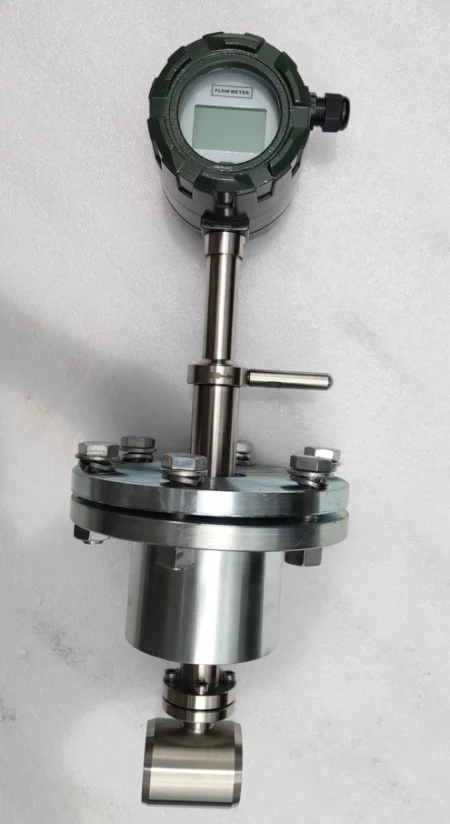
Limitations of Gas Mass Flow Meters
Limited compatibility with media: Primarily suited to single, pure gases; gases containing impurities such as dust, water vapour or oil can easily cause blockages or contaminate the sensor, reducing accuracy and shortening service life.
Poor adaptability to operating conditions: Low tolerance to temperature and pressure fluctuations; customisation is required for special high-temperature, high-pressure, or highly corrosive environments, significantly increasing costs.
Stringent installation requirements: Strict requirements regarding straight pipe runs, installation angles, pipe vibration and gas flow conditions; stable measurement is difficult to achieve in complex field environments.
Sensitivity to gas composition: Changes in gas composition or parameters can cause measurement errors; errors are exacerbated when the proportions of mixed gases fluctuate.
Limitations in flow coverage: Measurement blind spots are common at low flow rates, whilst equipment for high-flow applications tends to be bulky, expensive and difficult to maintain.
High operational and calibration costs: Zero-point drift is common during long-term use, requiring regular calibration and cleaning; repairs are complex and spare parts are costly, impacting production continuity.
Poor resistance to interference: Electromagnetic and air pressure interference in industrial environments can cause data fluctuations and inaccurate readings, necessitating the installation of additional protective measures.
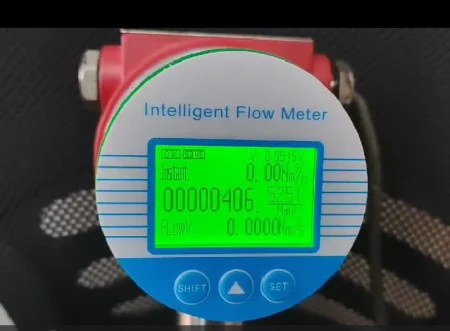
Practical Applications of Gas Mass Flow Meters
Chemical and Petrochemical Industries
I used to measure things like process feed gases, mixed gases, flare gas and other media. It doesn’t need any temperature or pressure adjustments, and it’s perfect for places where there could be an explosion or things could be corrosive. This makes sure the ratios of the materials are spot on, and it makes it easy to measure gas and keep things safe.
Metallurgy and Power Generation
Measures the flow of blast furnace gas, boiler fuel gas, combustion air and hydrogen, optimising combustion efficiency. Suitable for harsh conditions such as dusty and low-pressure environments, thereby reducing energy consumption.
Environmental Monitoring
Used for the detection of flue gas emissions, biogas and aeration gas in wastewater treatment, supporting exhaust gas control and carbon emissions statistics, and meeting environmental compliance monitoring requirements.
Precision Manufacturing
In semiconductor and precision machining applications, it accurately measures high-purity specialty gases and trace process gases, stabilising production processes and improving product yield.
Food and Pharmaceuticals
Monitors the flow of compressed air, fermentation gases and inert protective gases, meeting clean and sterile production standards and ensuring a safe and hygienic production environment.
Utilities
It measures gas consumption in pipeline networks, like natural gas and compressed air, tracks energy consumption and detects pipeline leaks. This makes it easier for businesses to keep track of their costs and make energy-saving upgrades.
Research and Experimentation
Suitable for various physical and chemical experiments, gas mixing, combustion testing and similar scenarios, it accurately measures low-flow gases to provide reliable data for experimental research and development.
New Energy and Water Treatment
Controls the air intake for sewage aeration, whilst also being applied to the metering of new energy gases such as biogas and hydrogen, catering to emerging measurement needs across multiple industries.
Gas Flow Meters vs Gas Flow Controllers
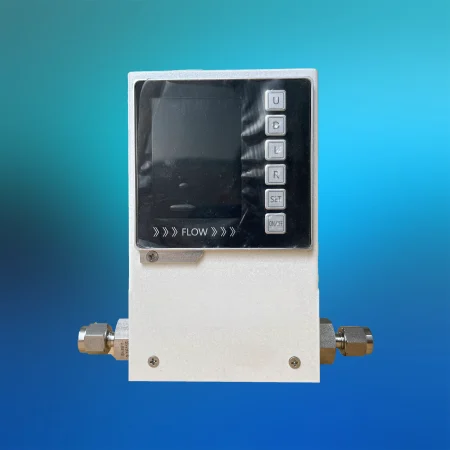
What is a Gas Flow Controller?
A gas flow controller is a precision instrument capable of accurately measuring and automatically controlling the mass flow rate of gas. Its core function is to maintain the gas flow rate at a user-defined setpoint, unaffected by fluctuations in ambient temperature or system pressure. Essentially, it is an intelligent device that combines measurement and flow stabilisation functions.
Advantages of Gas Flow Controllers
High accuracy: Precisely measures and controls gas flow, unaffected by temperature and pressure fluctuations.
Integrated Design: Combines measurement and control in a single unit, featuring a simple structure and convenient installation.
Fast Response: Closed-loop real-time regulation ensures sensitive and stable flow control.
Versatility: Suitable for a wide range of standard and specialised process gases.
Ease of Automation: It’s great for remote signal control and works perfectly with industrial systems.
Excellent Stability: It’s reliable and you can count on it, and it won’t waste gas.
Wide Range: It can deal with different levels of water flow, from low to medium to high.
Application Industry:
Vacuum coating equipment, semiconductor process equipment
Chemical and chemical experimental equipment, food science and engineering equipment
Energy and environmental protection equipment, various analytical instruments and equipment
Surface treatment, vacuum metallurgy and material technology
Laboratory equipment of universities and research institutes
Of course, can we combine these two devices? For example, digital thermal gas mass flow controller/flow meter is mainly used for the measurement and control of gas flow with a range from 5SCCM to 50SLM. The maximum pressure resistance of the product can reach 5Mpa, and it adopts a new sensor manufacturing process.
Sino-Inst has a wide selection of gas mass flow meters to suit numerous applications and price ranges. These meters assist in industrial gas flow management and departmental consumption allocation; experimentation and research. Integrated flow management functionality supports unit gas consumption control. Applications include: Air, Nitrogen, Oxygen, Argon, Carbon Dioxide, City Gas 13A (45/46MJ), Methane, Propane, and Butane.
The gas mass flow meter can also be used for some gases not listed. Please contact Sino-Inst’s sales engineer for more details!