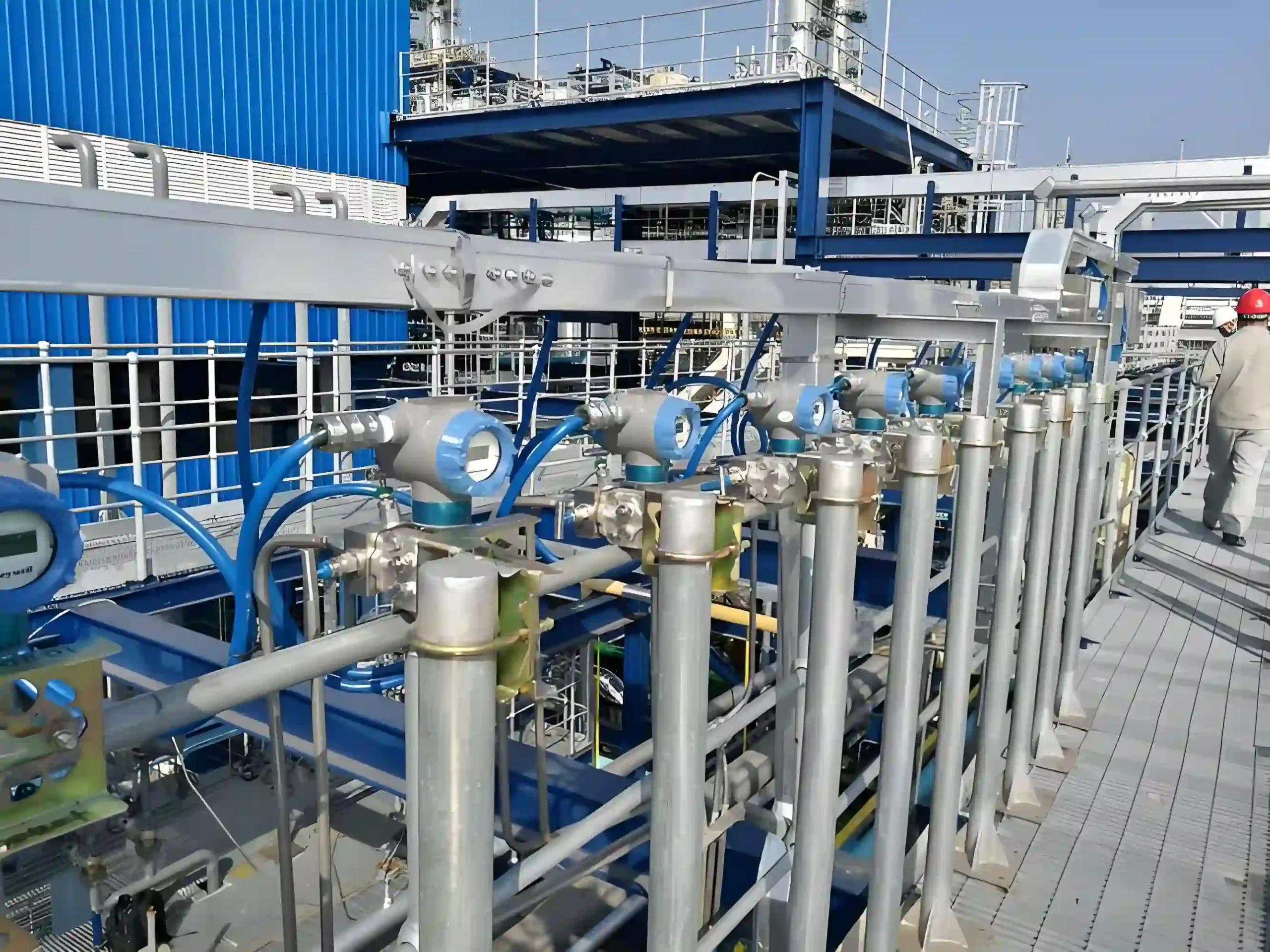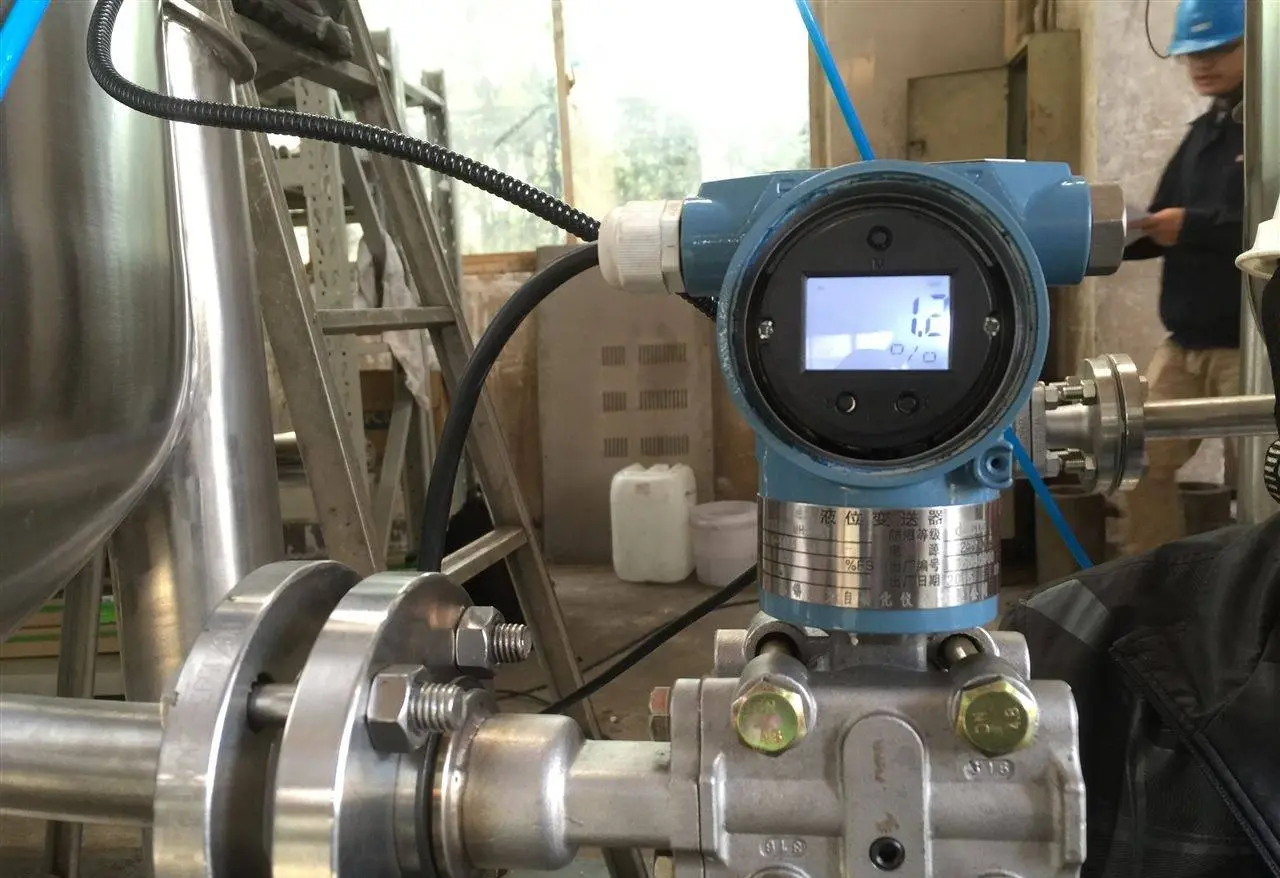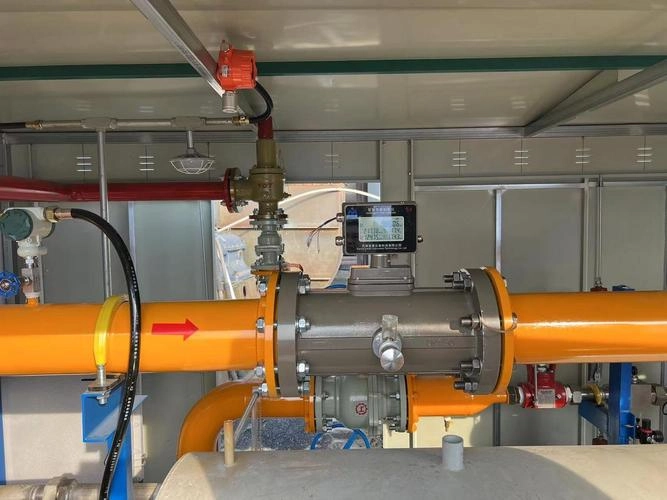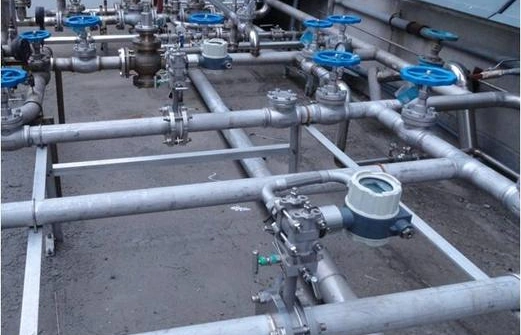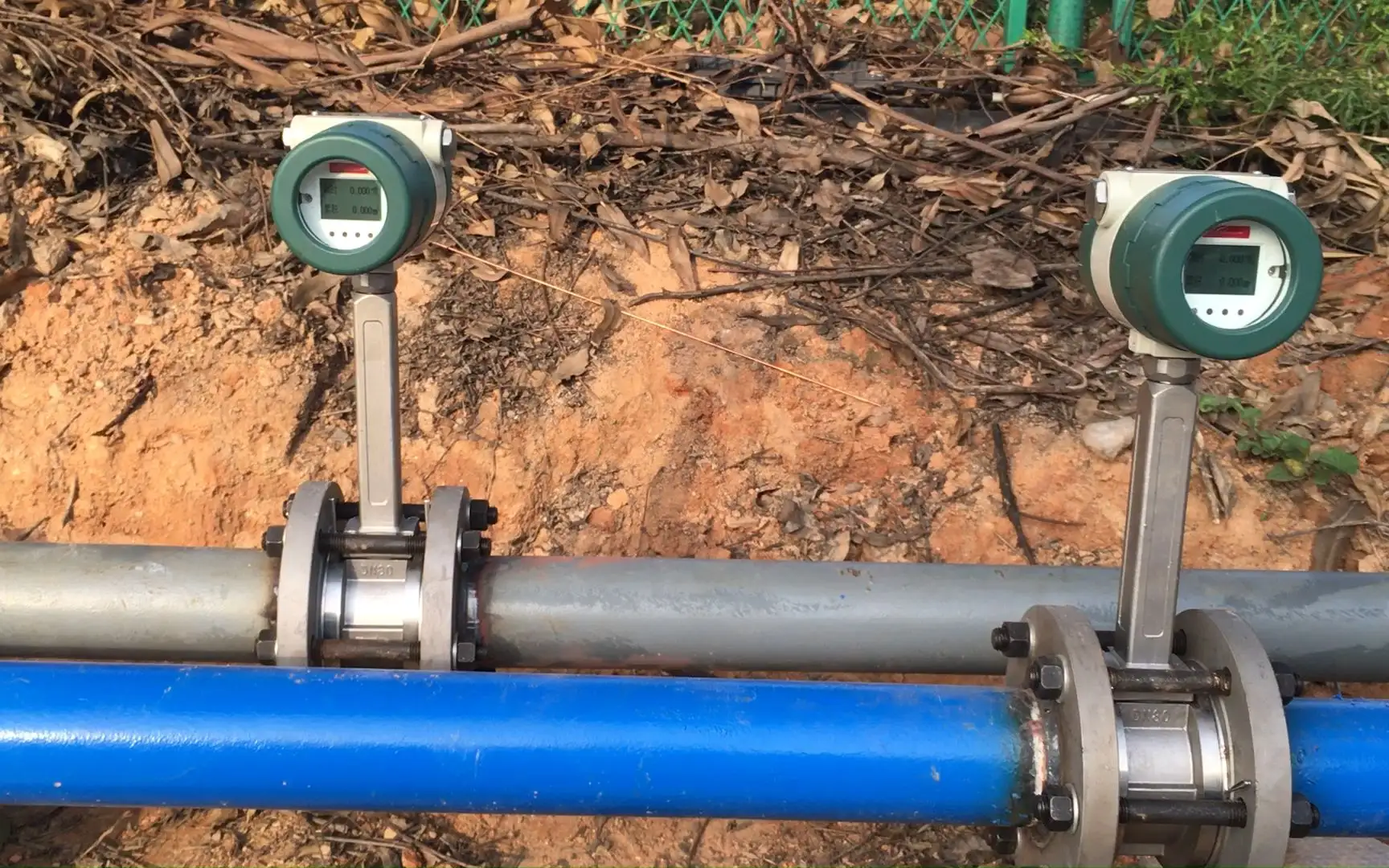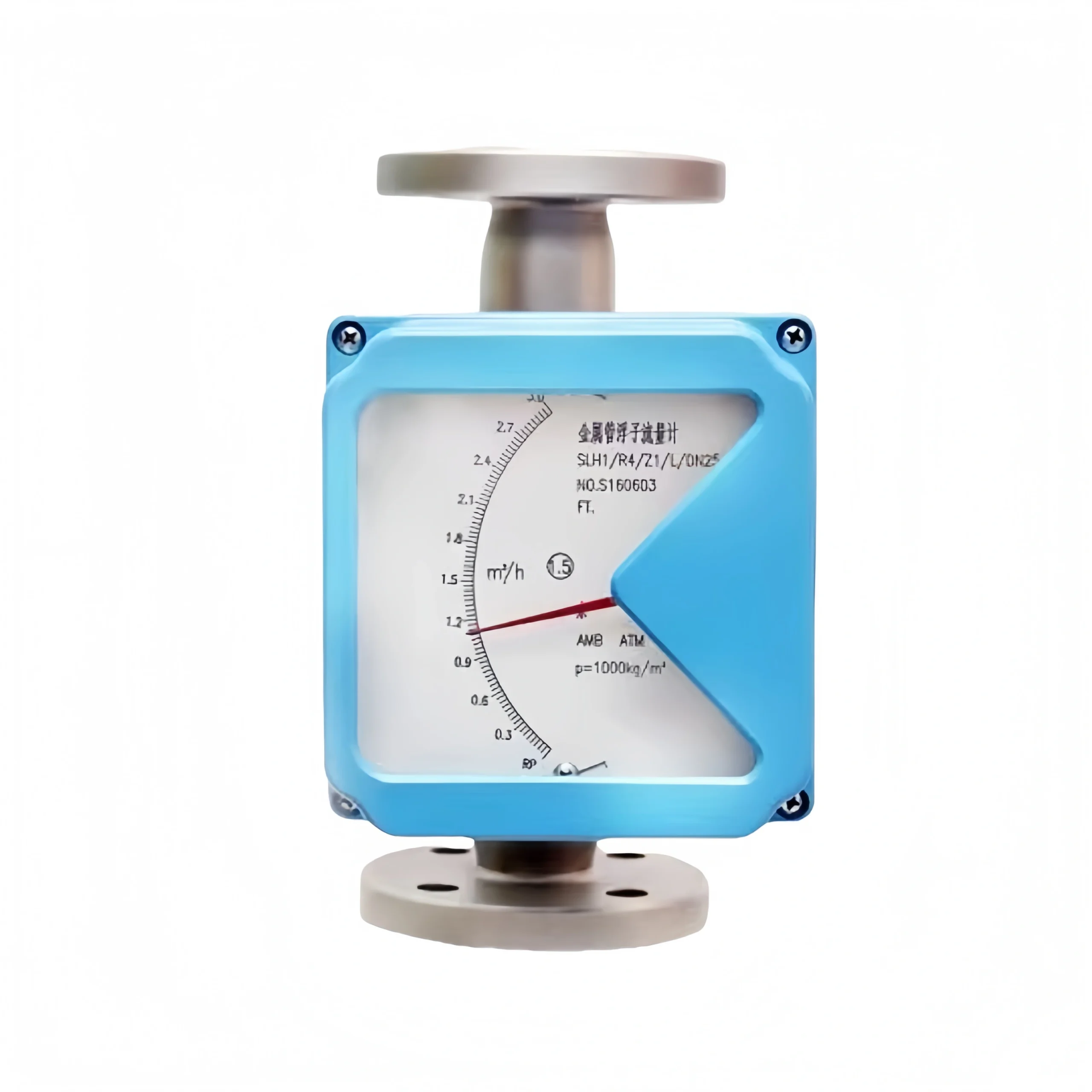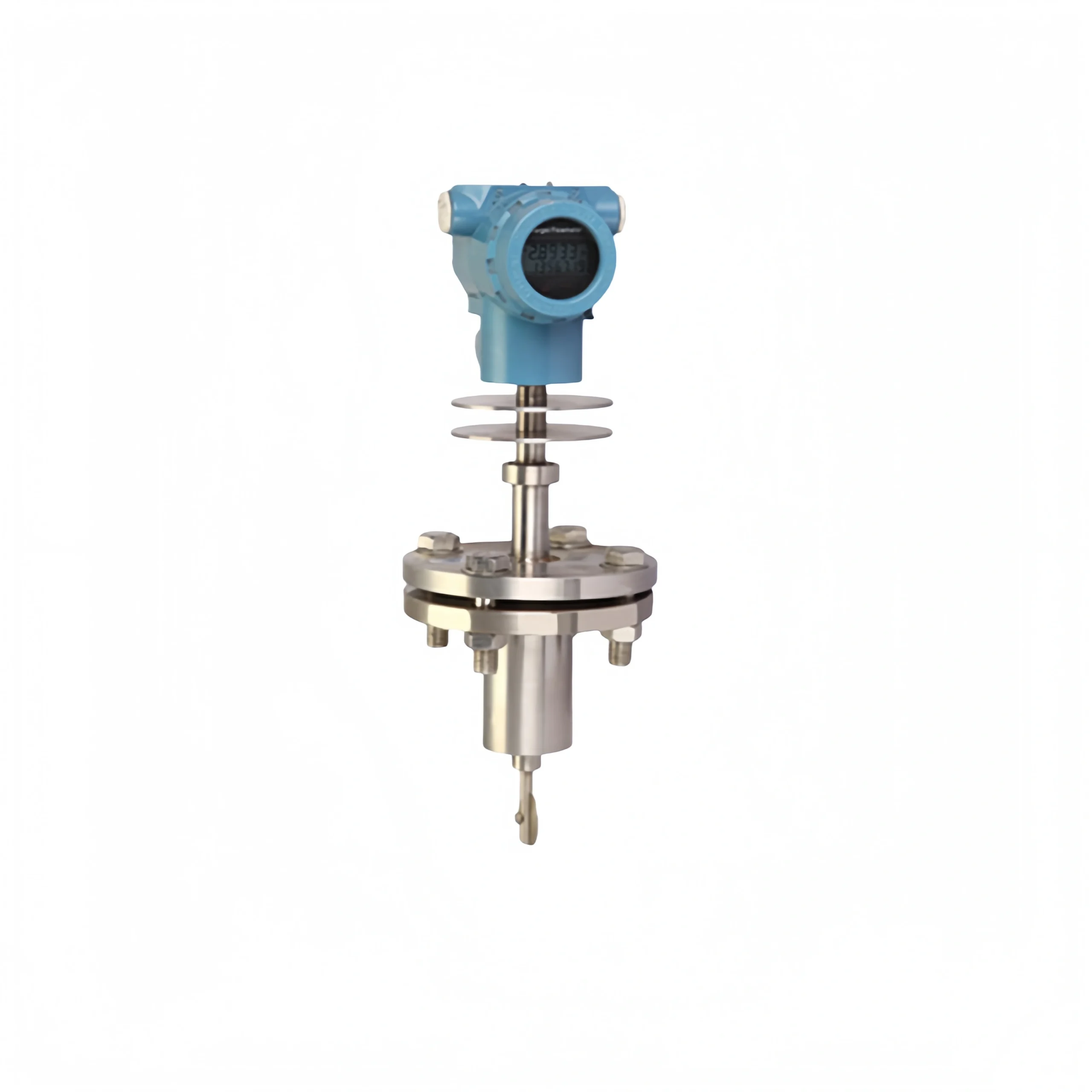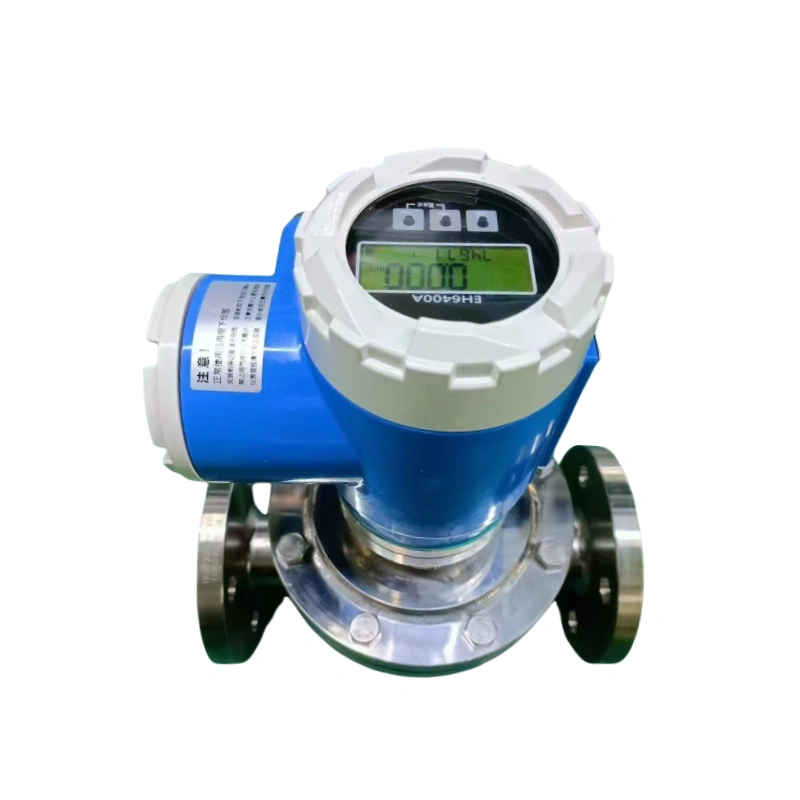
Both orifice plate flow meters and V-cone flow meters are mainstream industrial differential pressure throttling flow instruments. There are significant differences between the two in terms of structural characteristics, straight pipe run requirements, interference resistance and suitability for operating conditions.
Each has its own strengths and weaknesses in measurement performance. The following section provides a multi-dimensional comparative analysis to offer technical guidance for on-site instrument selection.
Orifice Plate Flow Meter
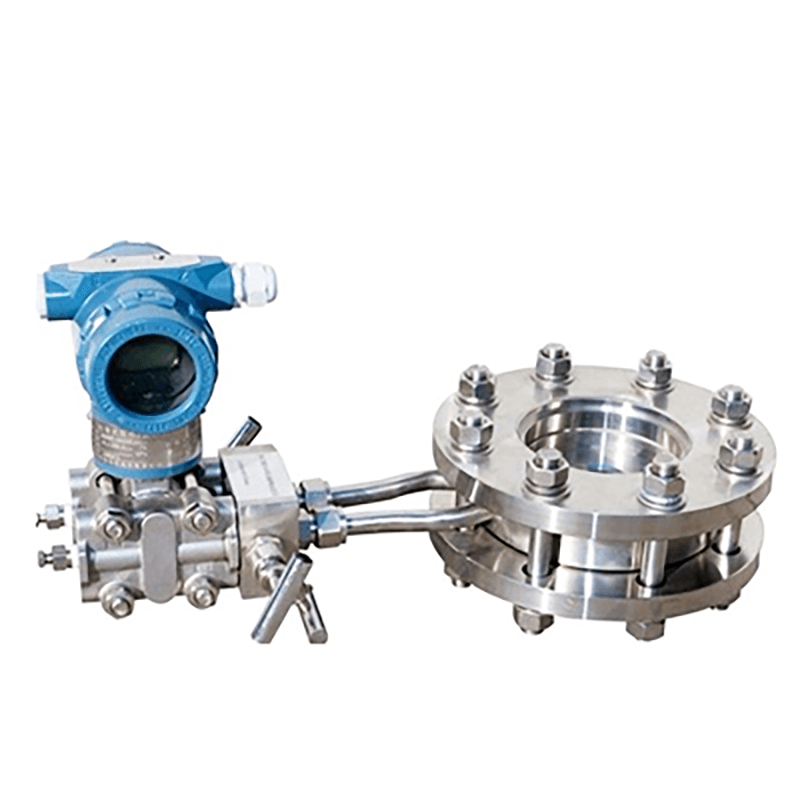
The orifice plate flow meter is a commonly used differential pressure throttling flow meter. Its main working parts are a throttling orifice plate, pressure tapping assembly and differential pressure measurement unit, and together they measure liquid, gas and steam flow through pipelines.
The design is structurally simple, the price is reasonable and it handles a wide variety of operating conditions, so it has become a common sight in chemical processing, power generation and water treatment.
Working Principle of the Orifice Plate Flow Meter
It works on fluid throttling and Bernoulli’s equation. As fluid passes through the orifice plate, the restricted opening speeds up the flow and drops the static pressure, and a stable differential pressure appears across the plate.
The greater the fluid flow rate, the greater the differential pressure on both sides; by collecting the differential pressure signal and combining it with the medium parameters and instrument specifications, the device can accurately calculate the actual flow rate of the fluid within the pipeline.
Read more about: Differential Pressure Orifice Flow Meters: Principles,Advantages And Disadvantages, IndustrialApplications, And Comparison With All Types OfFlow Meters
V-Cone Flow Meter
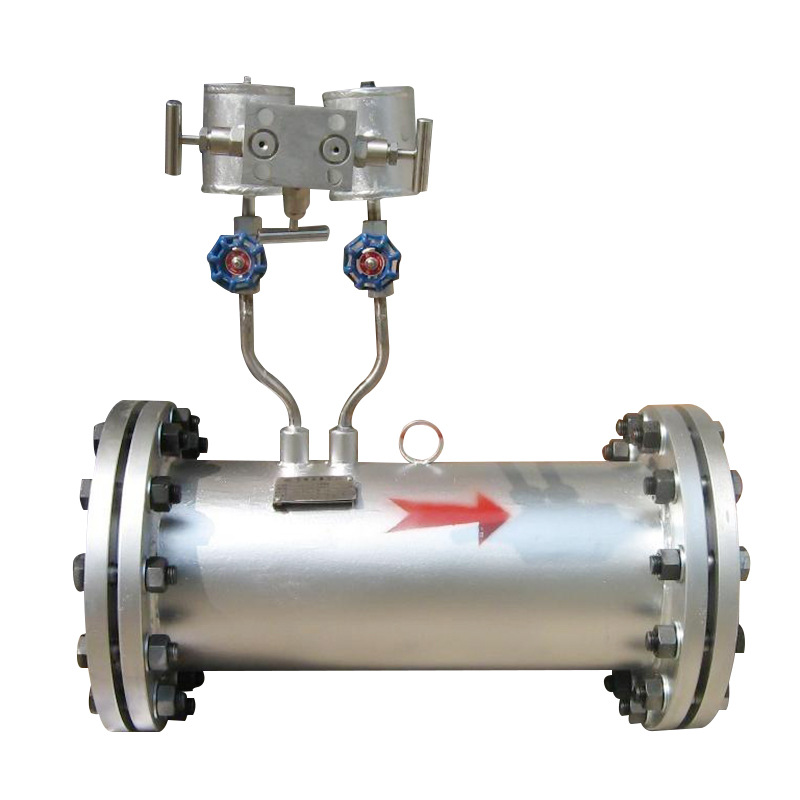
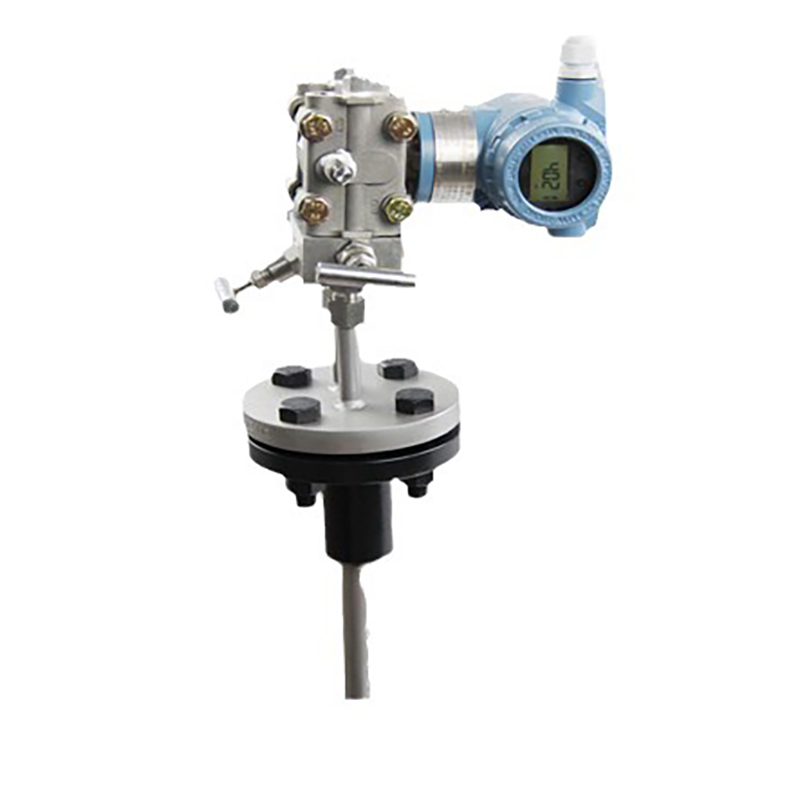
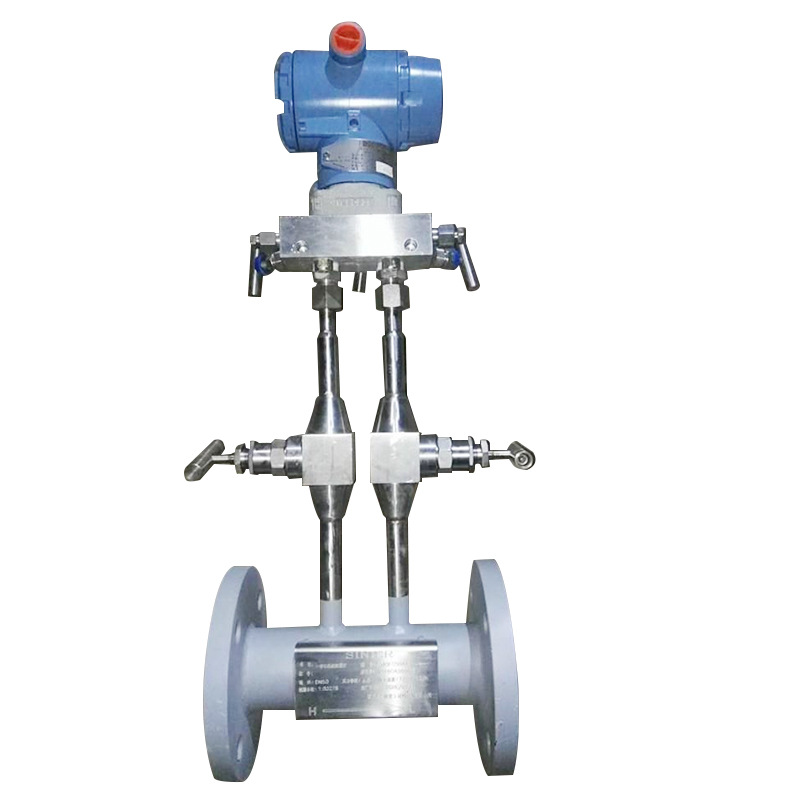
The V-cone flowmeter is a differential pressure-type throttling flowmeter. The throttling element is a V-shaped cone installed at the centre of the pipeline.
It comprises the V-cone throttling element, a pressure tapping structure and a differential pressure measurement unit, and is capable of measuring the flow of liquids, gases and steam.
This device is resistant to fouling and requires only a short straight pipe section; it is widely used in complex industrial applications such as the chemical, oil and gas, and heating sectors.
Principle of Operation of the V-cone Flowmeter
As the fluid flows through the pipe and encounters the central V-cone element, the flow passage is constricted, causing the fluid velocity to increase. This results in a change in static pressure, creating a differential pressure across the V-cone. The greater the flow rate of the medium, the higher the differential pressure generated.
A differential pressure transmitter captures this signal and, by combining the medium’s characteristics with the geometric parameters of the pipe and the V-cone, calculates the actual flow rate of the medium within the pipe using Bernoulli’s equation.
Read more about: An Overview Of The Structural Principles,Performance Characteristics, And IndustrialApplications Of V Cone Flow Meters
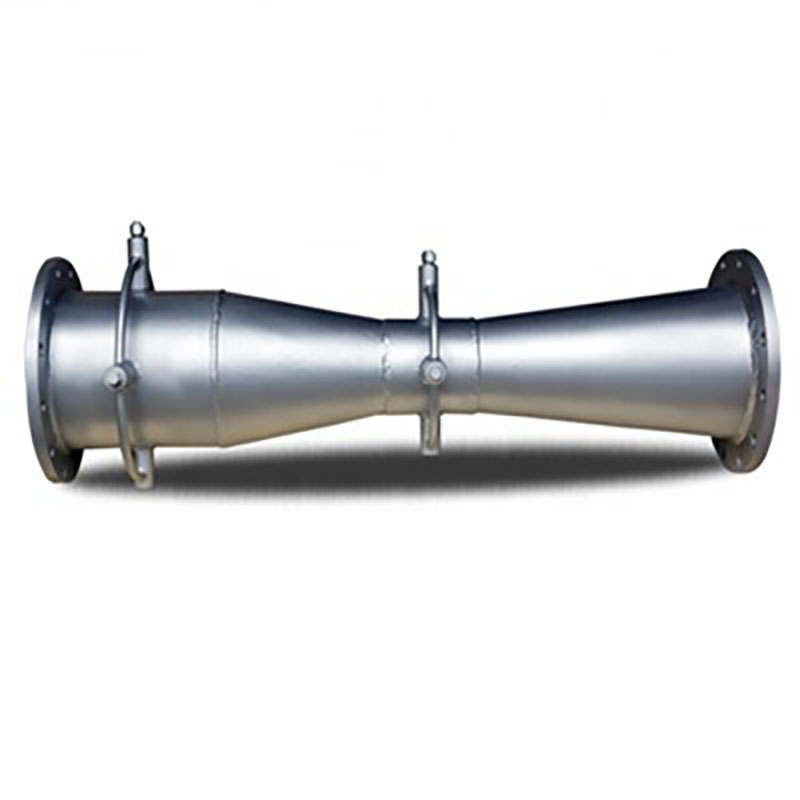
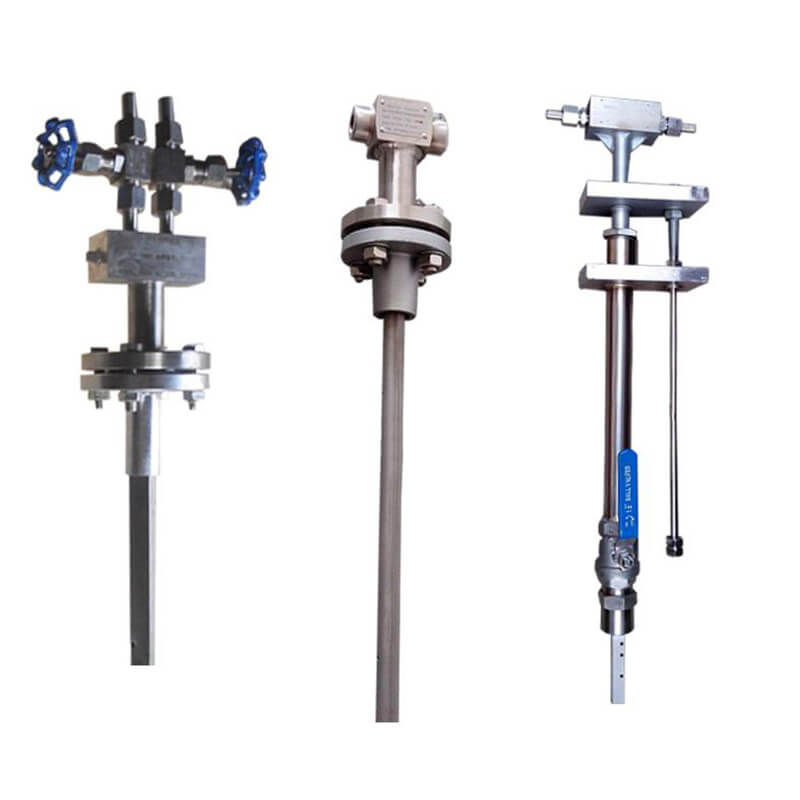

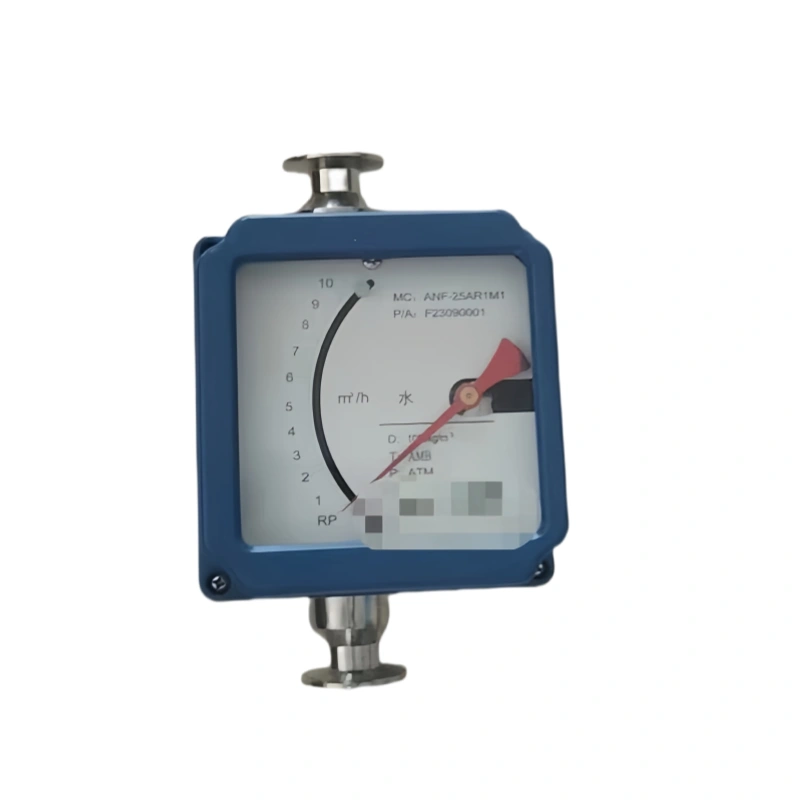
Structural Comparison
1. Form of the throttling element:The orifice plate consists of a thin, flat plate with a central circular hole; the V-cone is a V-shaped cone that throttles the flow via the annular gap between the cone and the pipe wall.
2. Installation method of the throttling element: The orifice plate is clamped between flanges, perpendicular to the pipe axis; the V-cone is suspended and fixed at the centre of the pipe via an internal connecting rod.
3. Pressure tap arrangement: The orifice plate uses corner or flange taps, with the connections sitting on the pipe wall at the flanges upstream and downstream of the plate; the V-cone has its high- and low-pressure taps on the pipe wall upstream and downstream of the cone, respectively.
4. Pipeline fitting:The orifice plate is just a separate thin disc, so fitting or removing it means pulling the flanges apart; the V-cone is a complete measuring spool with the cone built into a short pipe section that connects directly into the line.
5. Flow path:In the orifice plate, the fluid jets through a small central hole; in the V-cone, the fluid is turned aside by the cone and flows through the annular gap around it.
6. Support structure:The orifice plate is clamped and positioned by flanges and contains no internal rods; the V-cone is equipped with internal support rods, resulting in obstructing components within the pipe.
7. Surface profile of the throttling element: The orifice plate features a sharp, right-angled edge; the V-cone has a smooth conical surface with no sharp edges.
Orifice Plate Flow Meter vs. V-Cone Flow Meter
1. Differences in pressure loss
Orifice plate flow meters incur significant pressure loss; the thin throttling plate generates strong vortices, resulting in high energy loss;
V-cone flowmeters exhibit relatively lower pressure loss; the annular flow channel structure ensures a smooth transition in the flow field, resulting in lower system energy consumption.
2. Requirements for the fluid flow field
Orifice plate flowmeters impose stringent requirements on the upstream and downstream straight pipe sections; a long upstream straight pipe run is required, and flow field distortion can directly affect measurement accuracy;
V-cone flowmeters are more resistant to flow field disturbances, require shorter straight pipe sections, and are suitable for piping configurations containing bends and valves.
3. Suitability for Contaminated Media
The small bore of an orifice plate tends to trap impurities and particles on its walls, so it clogs easily and is not a good fit for dirty or scaling fluids.
The V-cone faces the oncoming flow directly, so deposits do not settle on it as readily; it can therefore handle fluids that carry some amount of impurities or contaminants.
4. Measurement Range Ratio
Orifice plate meters usually have a fairly narrow turndown, typically 3:1 to 4:1, which means the error becomes large once the flow drops to the low end.
V-cone meters offer a much wider turndown, up to 10:1, and still perform well across both high and low flow conditions.
5. Accuracy and Repeatability
Orifice plate meters repeat well enough at full scale, but their accuracy falls off quickly once they are operating away from it.
V-cone meters keep steady repeatability overall and continue to give reasonably reliable readings even when the flow rate is low.
6. Installation and Maintenance Characteristics
Orifice plates are simple to install and remove, and the thin-plate components are low-cost; however, the inlet edge of the orifice plate is prone to wear, and accuracy deteriorates significantly once worn, necessitating regular disassembly, inspection and replacement;
The V-cone offers better resistance to erosion and wear than orifice plates, but the internal cone assembly is complex to install and remove, resulting in a greater workload for maintenance and disassembly.
7. Focus on Applicable Operating Conditions
Orifice plates are predominantly used for clean media such as clean gases and clean water, and represent a conventional standard differential pressure flow measurement solution;
V-cone flowmeters are better suited to complex operating conditions such as high temperatures, high pressures, media containing trace impurities, high viscosity fluids and steam.
8. Cost
For the same nominal diameter, orifice plate flowmeters have a lower purchase cost;
V-cone flowmeters involve complex manufacturing processes, resulting in a higher overall unit cost than orifice plate flowmeters.
9. Differences in the Impact of Fouling and Wear
Orifice plates rely on a sharp inlet edge to generate differential pressure; even slight wear or fouling of this edge can compromise the measurement;
V-cone throttling utilises an annular gap, meaning that minor fouling or wear has a lesser impact on measurement results.
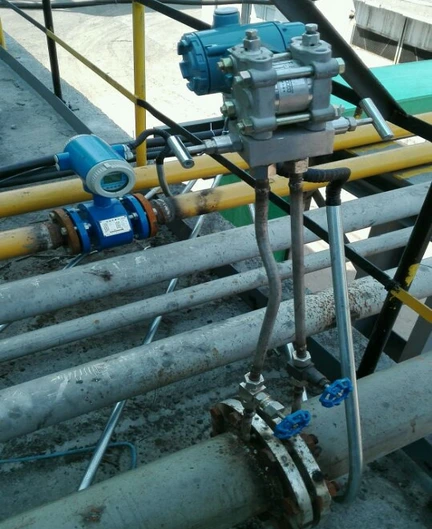
Advantages of Orifice Plate Flow Meters
1. The structure is simple and tough, there are very few mechanical parts and no moving pieces, so the meter body stays reliable even under the kind of harsh conditions common in industry.
2. Manufacturing costs are fairly low and the size range is broad; you can have them built for different pipe diameters and measurement ranges, which keeps the initial purchase cost manageable.
3. They have been in use for a long time, the calculation and selection standards are thorough, and there is plenty of industry experience around them, so technicians generally find them easy to commission and calibrate.
4. It works fine at high temperatures and pressures, and can measure the flow of all kinds of media—gases, liquids and steam.
5. Installation and upkeep are fairly simple; the body is easy to take apart and reassemble, and the meter itself usually doesn’t need frequent attention.
6. It can be matched with a differential pressure transmitter to give a standard signal output, which makes it easy to integrate into DCS or PLC systems for data collection.
Advantages of V-cone Flowmeters
1. Accurate and stable readings:The cone-shaped restriction smooths out the flow pattern, so the readings stay steady with very little zero drift; you can expect accuracy between ±0.5% and ±1.0%, which is good enough for most precision industrial jobs.
2. Handles many kinds of media:It works with gases, liquids and steam; it copes with hot and cold, high and low pressure, and fluids that carry a bit of dirt or debris, so it fits a broad range of industrial uses.
3. Needs little straight pipe: It straightens the flow well enough that you only need three pipe diameters upstream and one downstream; this makes it practical for tight or awkward spots on site.
4. Won’t clog or wear out easily: The design is self-flushing and resists blockage, so it can handle fluids with particles or sticky material; there are no moving parts, so it stands up to wear and corrosion and doesn’t break down often.
5. Low pressure drop:The flow meets little resistance, so the pressure loss is small; this takes the strain off pumps and compressors and cuts energy use, saving money on running costs in the long run.
6. Easy to run and look after:The design is solid and has no fragile parts, it hardly needs maintenance, and it uses standard components, so day-to-day running and upkeep costs stay low.
7. Wide turndown:It covers anywhere from 10:1 up to 30:1, so it measures accurately at both high and low flow; this makes it a good choice when the flow rate swings up and down a lot during production.
Selection Guide
1. Select based on medium characteristics:
For clean liquids, gases and steam with no particulates, an orifice plate is usually the better buy because it costs less.
If the fluid carries dust, fine particles or tends to scale, go with a V-cone; the annular passage doesn’t clog as easily and holds up better in dirty service.
2. Select based on flow rate and range:
An orifice plate only gives you about a 3:1 turndown, so it works best when the flow stays fairly steady.
A V-cone gives you up to 10:1, which is why it is the usual pick when the flow swings around a lot or the line starts and stops frequently.
3. Selection based on pressure loss requirements:
Orifice plates create a large pressure drop and use more energy, so they are fine in systems where pipeline pressure loss is not a major concern.
V-cone meters lose very little pressure and run more efficiently; they fit better in low-pressure systems, closed-loop lines and anywhere you need to keep energy consumption down.
4. Selection based on straight pipe run requirements:
Orifice plates are fussy about installation and need a good stretch of straight pipe—10 diameters upstream and 5 downstream.
The V-cone is far less bothered by upstream disturbances and needs almost no straight run at all, so it is the practical choice when space is tight and there are plenty of bends and valves nearby.
5. Selection based on accuracy and maintenance requirements:
Orifice plate technology is well proven, the accuracy is steady and the unit comes apart easily for maintenance; the catch is that the sharp edge wears and you have to recalibrate it regularly.
V-cones stay accurate for a long time, wear slowly and do not drift much; the downside is that they are harder to service, so they suit unmanned sites or places where you want as little maintenance as possible.
6. Selection based on budget and cost:
Orifice plates are simple, cheap and the spare parts are interchangeable, so they are the go-to option when money is tight and the conditions are standard.
V-cones need precise machining and cost more, so they make sense in mid- to high-end applications where you really need the measurement to stay stable and the meter to last.
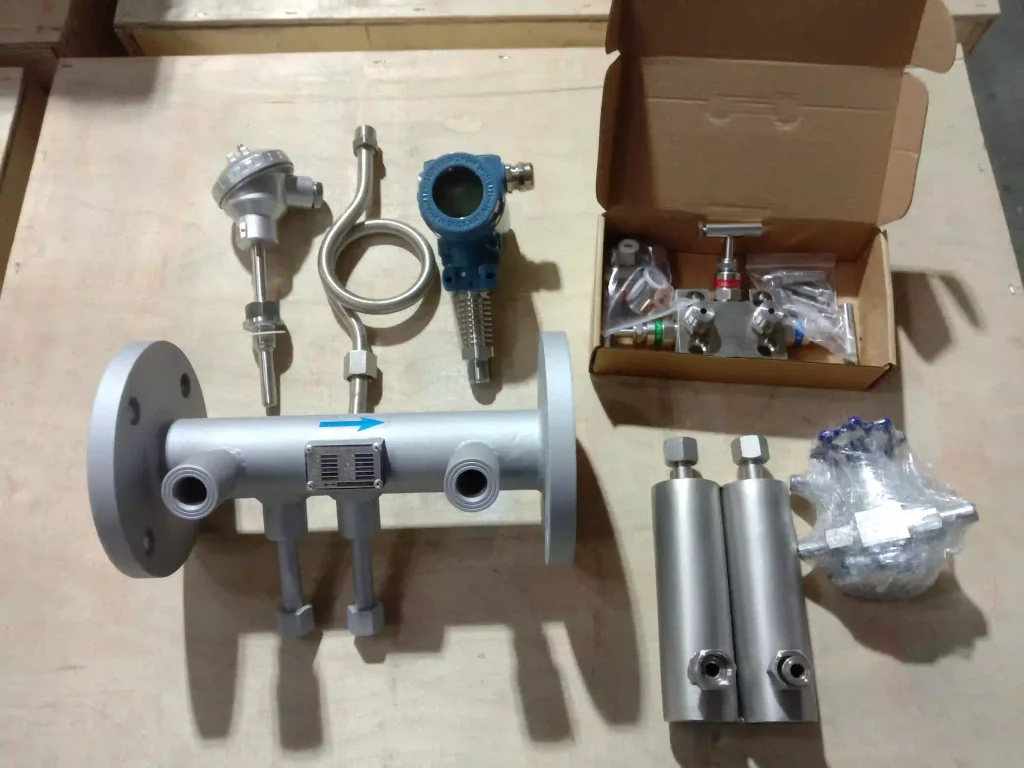
To sum up, orifice plates and V-cone flow meters each have their strong points and suit different industrial jobs. Sion-Inst works in differential pressure flow measurement; alongside orifice plates and V-cones, we carry a complete range including Venturi, target and rotor types, covering all sorts of demanding conditions.
We can provide custom selection and end-to-end service tailored to what you need, tackling any flow measurement headache and helping you improve quality while cutting costs. Drop us a line if you want to explore working together.