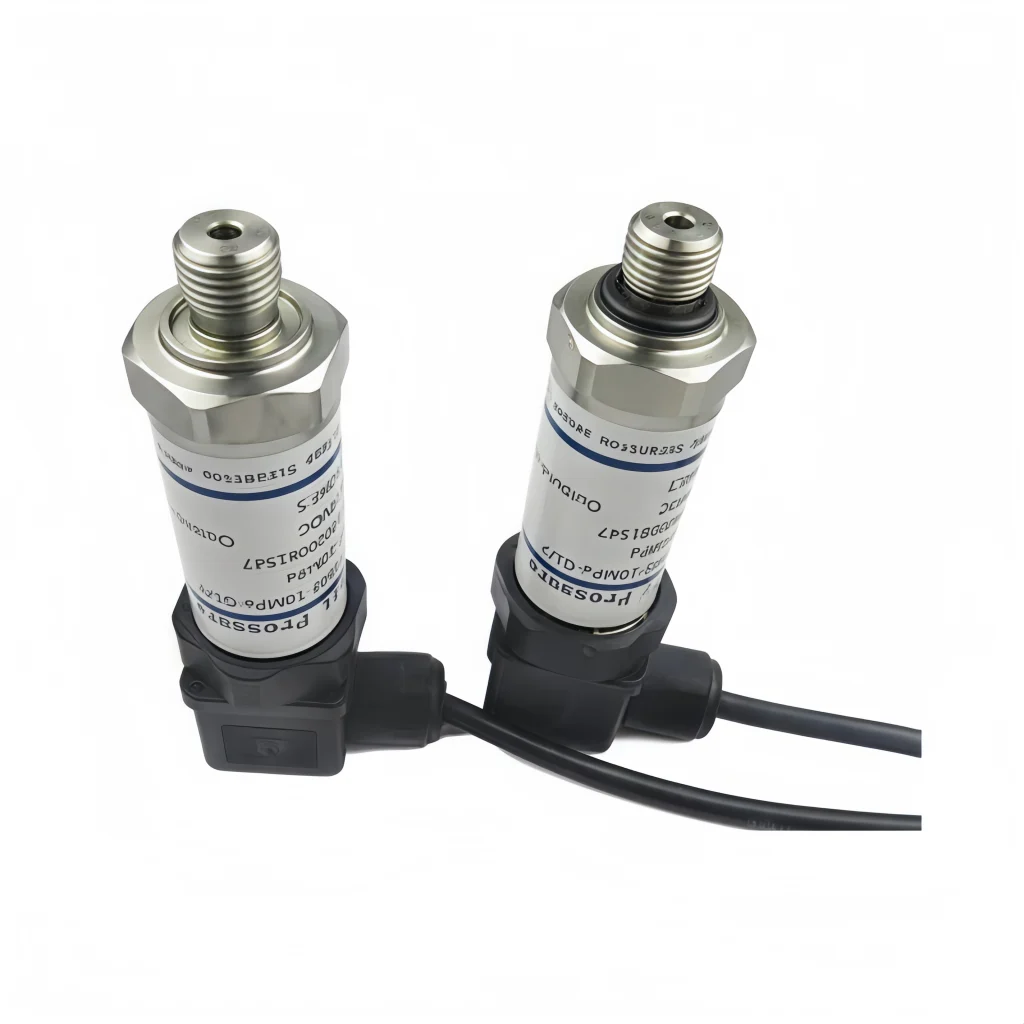
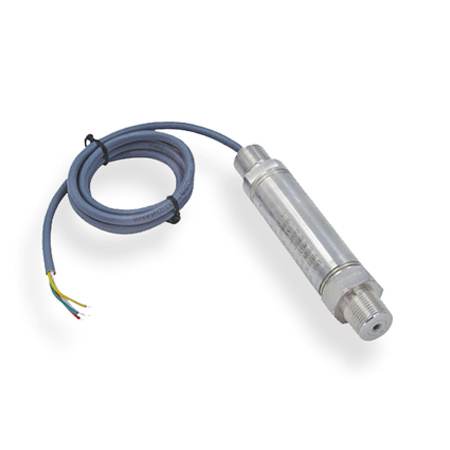
Pressure switches and pressure sensors are among the most commonly used instruments for industrial process pressure measurement and control. A pressure switch detects pressure and opens or closes electrical contacts when the pressure reaches a set point. A pressure sensor, on the other hand, continuously measures pressure and outputs a signal that is linearly proportional to the pressure value, such as 4–20 mA, 0–5 V, or RS485.
Simply put, if you only need a simple on/off operation, a pressure switch is sufficient. Examples include starting a water pump or triggering a low-pressure warning light. If you need to continuously read pressure values, choose a pressure sensor or a pressure transmitter.
Many users have inquired about these devices and often confuse the two during the purchasing process; therefore, this article explains the differences between pressure switches and pressure sensors.
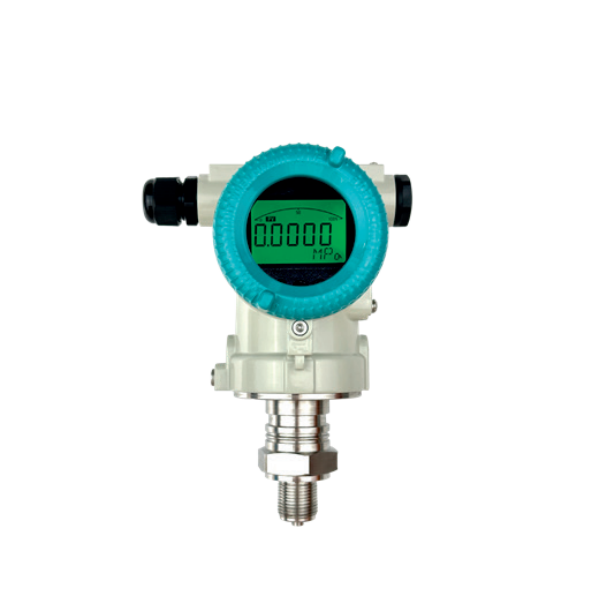
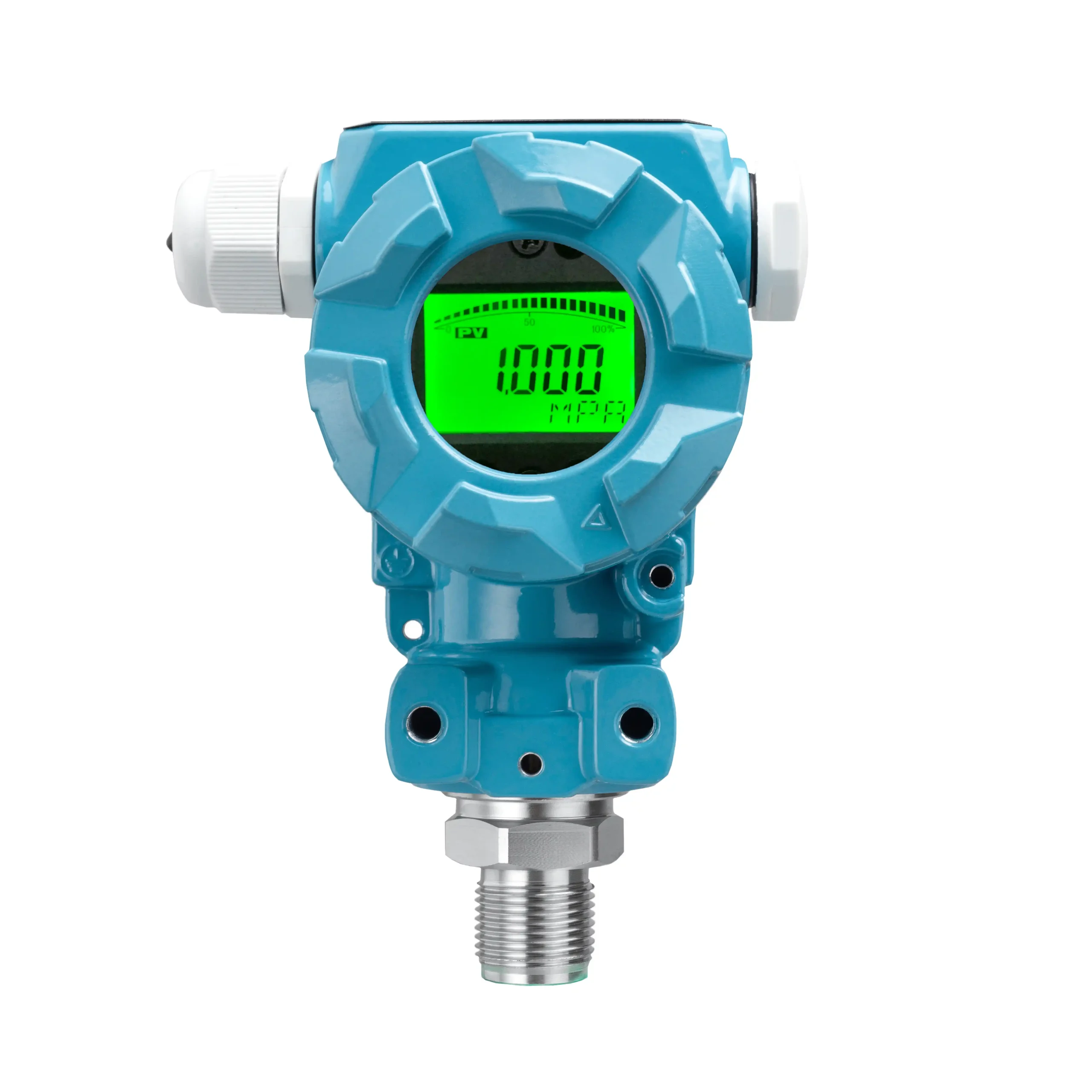
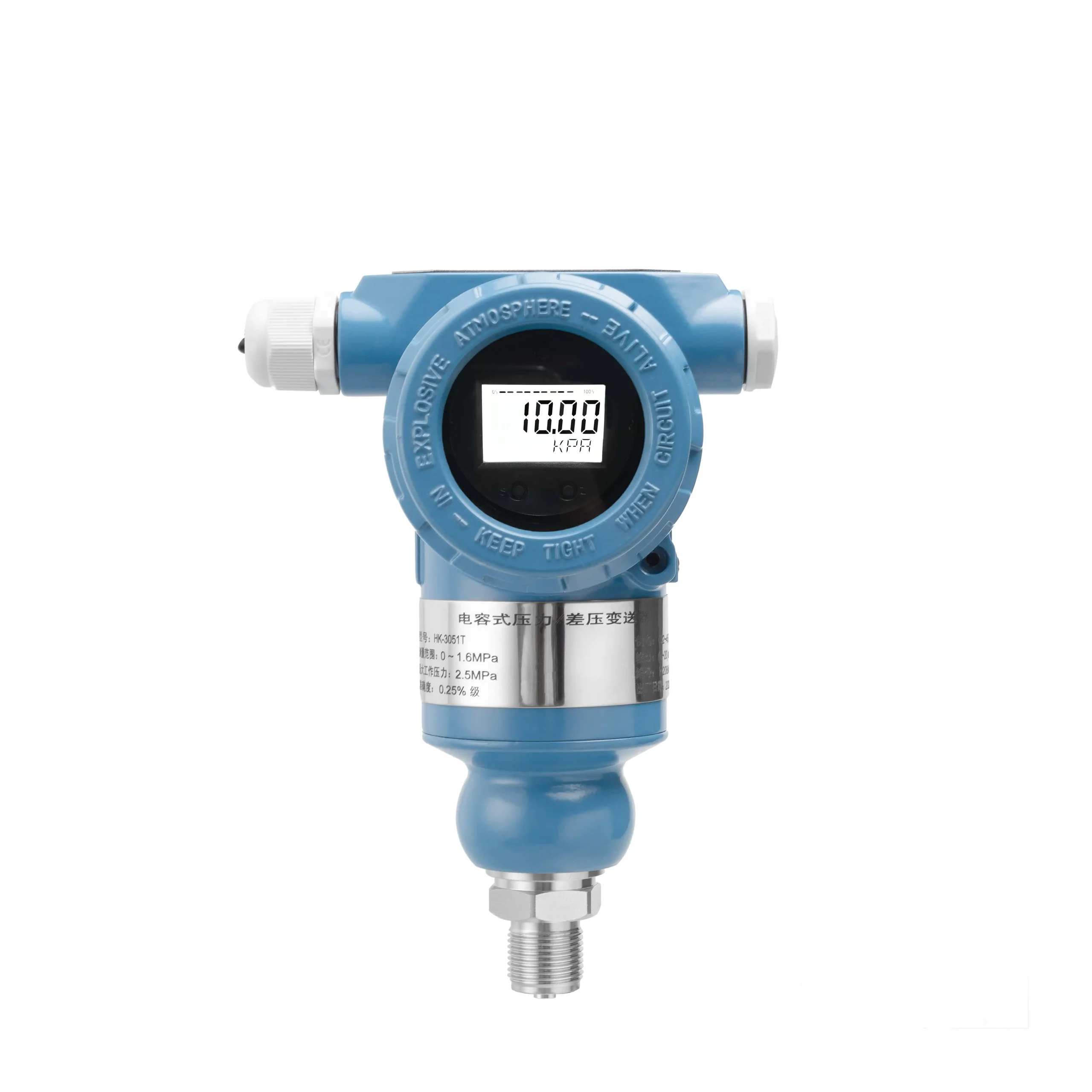
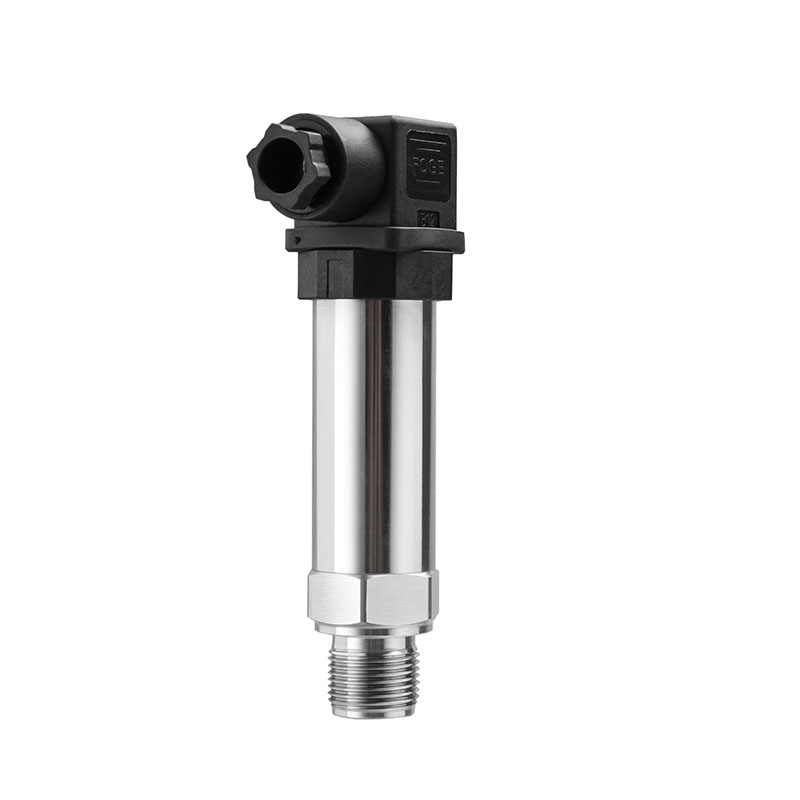
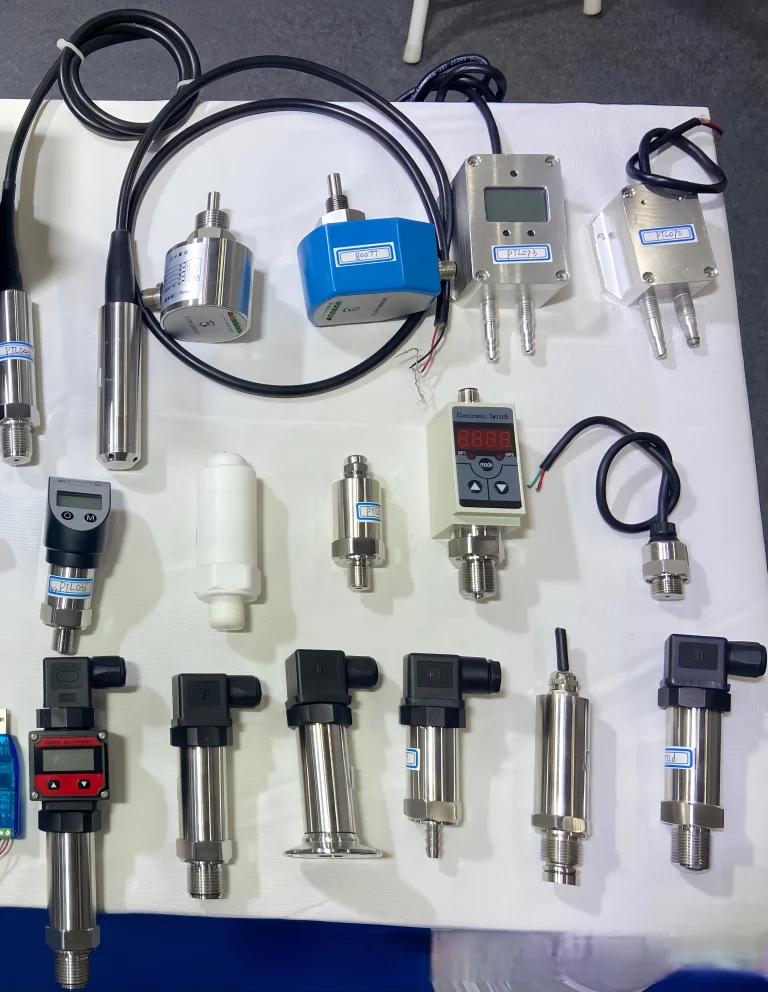
Sino-Inst Featured Product
Different Definition
What is a Pressure Sensor?
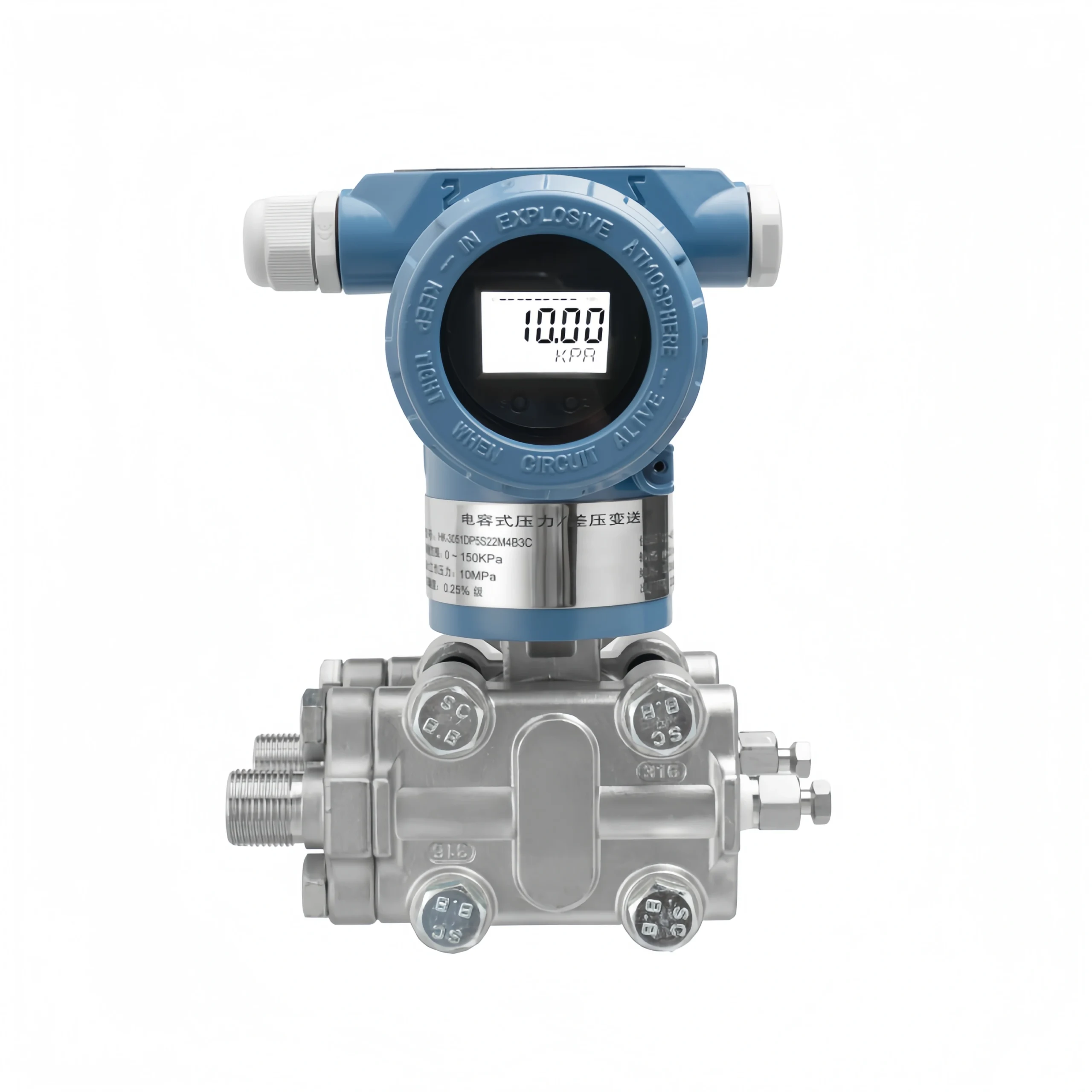
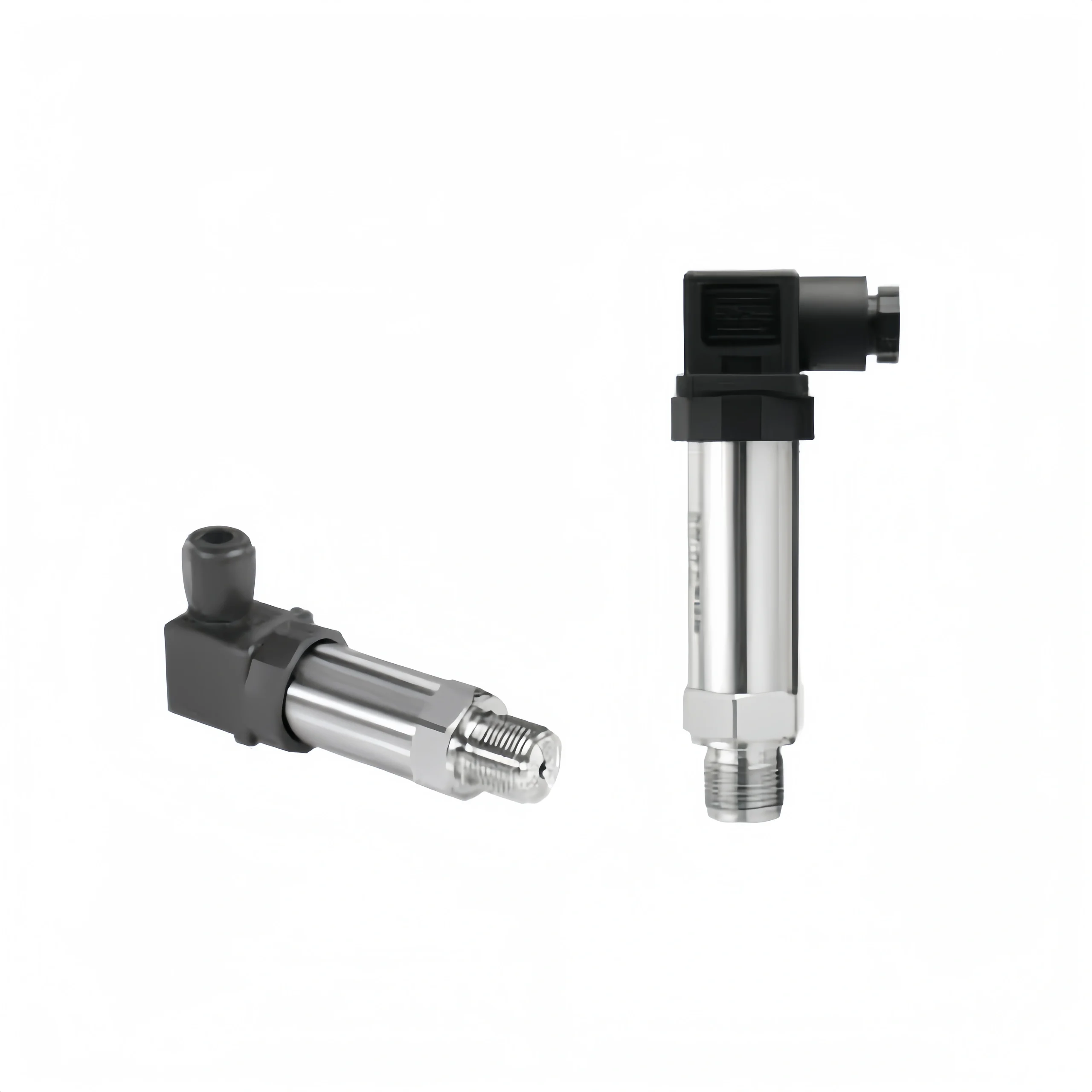
A pressure sensor is a device used to continuously measure the pressure of a liquid or gas. It usually consists of a sensing element, a signal processing circuit and an output interface. The sensing element can be piezoresistive, piezoelectric, capacitive, etc. It is used to convert pressure into an electrical signal.
What is a Pressure Switch?
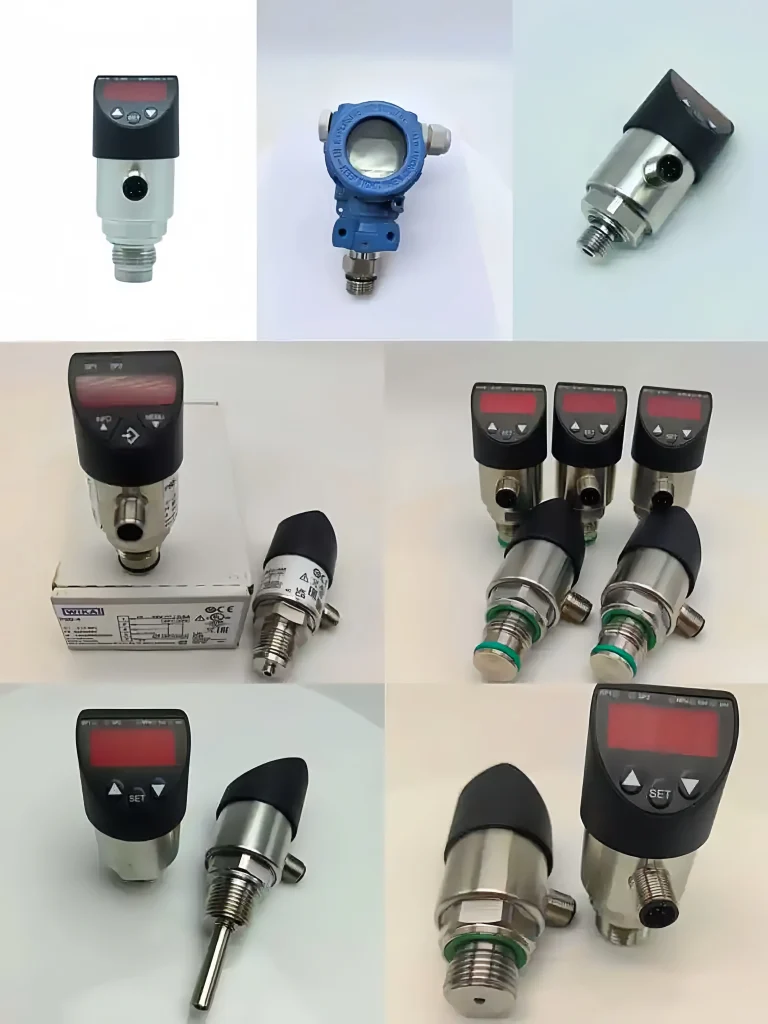
A pressure switch is a device that opens or closes an electrical circuit when the pressure of a liquid or gas reaches a set value. A mechanical pressure switch usually consists of a sensing element, an adjustable spring and a microswitch. When the pressure of the measured medium exceeds or falls below a set threshold, the pressure switch triggers the switch action, thus realizing the control of pressure.
Different Working Principle
How does a Pressure Sensor Work?
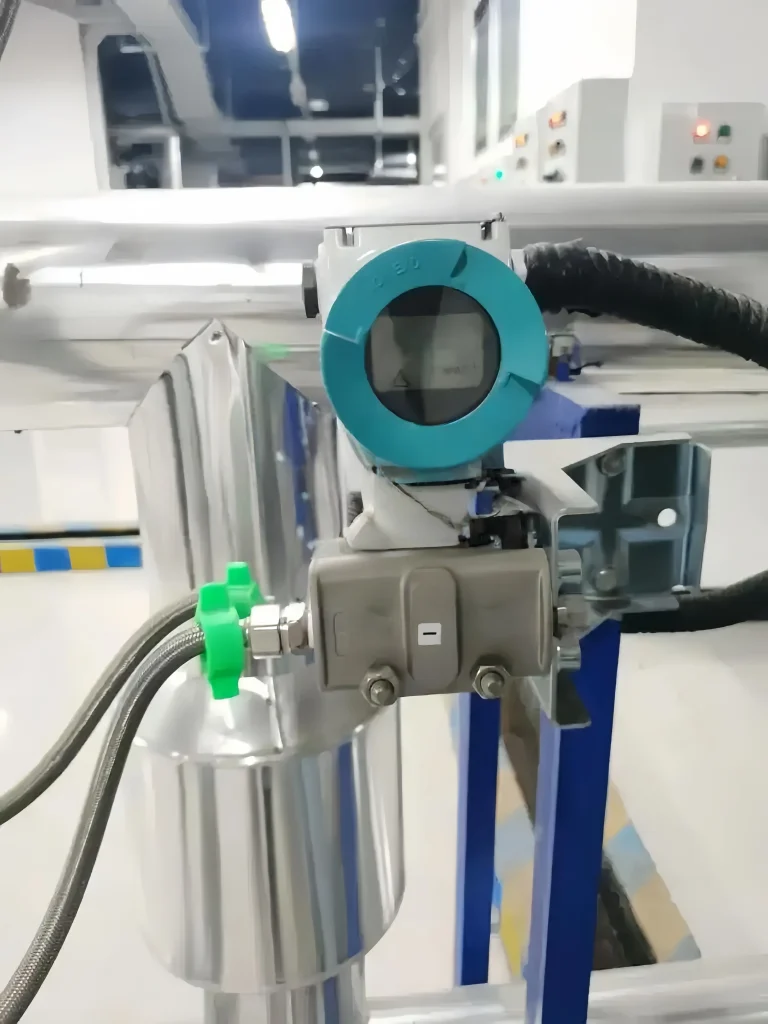
Pressure sensors are composed of a pressure-sensitive element and a conversion circuit, and utilize the pressure of the measured medium to generate a small change in current or voltage output on the pressure-sensitive element.
A bare sensor needs an external amplifier circuit. A pressure transmitter has this circuit built in and gives a 4–20 mA or similar output. As the pressure sensor is a primary component, its signal is sent to the control system for display, storage and control.
Pressure sensor output is voltage, current, an analog signal, or a communication protocol.
Read More about: 7 Types of Pressure Sensors: Different Types, Working Principles, and Definitions
How does a Pressure Switch Work?
A pressure switch is a device that triggers a switch action at a specific set pressure. Pressure switches provide a discrete switching output rather than a continuous pressure reading. The pressure switch output is a simple on/off signal.
There are two main types of pressure switches, mechanical and electronic.
The mechanical pressure switch switching principle is:
When the measured pressure exceeds the set value, the free end of the elastic element moves and pushes the switching element. The contacts change from on to off, or from off to on.
A common type is the “electric contact pressure gauge”. It is an ordinary Bourdon tube pressure gauge with two sets of electric contacts. It can be connected to a fairly high and low pressure of the electric contact, so that the pressure control is in the upper and lower limits. This type of electrical contact has a small capacity and can only switch the control coil of the contactor, and the control position on the pressure switch can be adjusted. Its main function is to perform simple control functions by switching the circuit on or off when a predetermined pressure threshold is reached.
Mechanical pressure switches Features:
- Inexpensive
- Simple to use
- Lower accuracy
- Contacts wear over time
- Troublesome to set control points
The principle of the electronic pressure switch:
A pressure sensor measures the medium pressure. A built-in circuit compares the reading with the upper and lower set points. When the pressure reaches a set point, the output switches and drives a relay, a contactor or other controllable devices.
Features of electronic pressure switches:
- With temperature compensation
- Can be used in a variety of applications
- A variety of installation methods
- High cost
Different Application
Since pressure switches output binary signals, they are suitable for controlling and protecting some simple equipment or systems. Pressure sensors, on the other hand, are used in high-precision control systems that require continuous pressure monitoring and regulation. For example, pressure sensors are used in automotive electronic control systems, hydraulic control systems, etc. to ensure system stability.
What does a Pressure Sensor do?
Pressure sensors are one of the most commonly used types of sensors and are widely used in various industrial automation environments, involving water conservancy and hydropower, railroad and transportation, intelligent buildings, production automation, aerospace, military, petrochemical, oil wells, electric power, ships, machine tools, pipelines, and many other industries.
For example:
A pressure sensor can be used in liquid nitrogen storage tanks to monitor the pressure of cryogenic media.
In the petrochemical industry, pressure sensors are used to monitor the pressure of pipelines and vessels to prevent explosions and leakage accidents.
In intake manifolds in engines, pressure sensors are used to measure intake pressure, optimize fuel injection and ignition timing, and improve engine efficiency and emission performance.
Water supply and wastewater treatment processes rely on the use of pressure sensors to provide an important means of monitoring for system protection and quality assurance. Water treatment mainly includes water level monitoring of rivers and water conservancy dams, sewage treatment and drinking water treatment, constant pressure water supply systems and other aspects.
What does a Pressure Switch do?
Pressure switches are widely used in various automation control systems.
In industrial production, it ensures the safe operation of equipment within the set pressure range and prevents damage caused by over or under pressure. Pressure switches play a role in liquid and gas water supply systems by controlling equipment start/stop or making adjustments accordingly to protect the safe operation of the equipment.
In an air conditioning and refrigeration system, it can control the compressor to ensure the balance of cooling and pressure in the system.
In hydraulic and pneumatic systems, it stops the pump or unloads the compressor when the pressure reaches the limit.
In water treatment, it can automatically control the pump starting and stopping according to the change of the water pressure to ensure the stability of the water supply.
Choose a Pressure Sensor or a Pressure Switch
Pressure switches and pressure sensors both respond to the pressure of various media, but only a sensor measures the value. But choosing a pressure switch or a pressure sensor can be difficult.
Pressure switch, pressure sensor, or transmitter with a PLC alarm?
| Pressure switch | Pressure sensor / transmitter | Transmitter + PLC alarm | |
|---|---|---|---|
| Output | Contact (NO/NC or SPDT) or PNP/NPN transistor | 4–20 mA, 0–5 V, 0.5–4.5 V, RS485 | Analog signal; the alarm is a PLC set point |
| What you know | Above or below the set point only | The actual pressure, continuously | Actual pressure + any number of alarm levels |
| Set point and deadband | Set on the switch; deadband fixed or adjustable | None | Set in software, easy to change |
| Accuracy | Set-point repeatability per maker’s data sheet | e.g. 0.2 / 0.3 / 0.5 %FS (diffused silicon), 0.5–1.0 %FS (ceramic) | Same as the transmitter |
| Needs power and a controller | Mechanical: no. Electronic: supply only | Supply + receiver | Supply + PLC/DCS |
| Typical use | Pump start/stop, compressor cut-out, low-pressure trip | Process control, data logging, remote monitoring | Plants that already have a PLC and want trend data |
Four questions settle most cases:
- Do you need the value, or only a trip? If someone asks for “a pressure switch with RS485”, ask again — RS485 is a continuous-measurement output.
- What does the receiving end accept? A contactor coil or an old relay panel wants a dry contact; a PLC analog card wants 4–20 mA.
- How much deadband can the process live with? Too small and the switch chatters around the set point; too large and the pressure swings too far before it resets.
- Is it a hazardous area? Check what certificate the site accepts before choosing the switch type. (Sino-Inst explosion-proof instruments carry the China Ex certificate.)
For how a transmitter differs from a transducer and a sensor, see pressure sensor vs pressure transducer vs pressure transmitter.
If you simply need to control pressure and do not require a high degree of accuracy, I suggest you choose a pressure switch. If you need to monitor and record pressure data over a long period and require a high degree of accuracy, I recommend a pressure sensor.
Pressure switches cost less than pressure sensors. You need to determine which pressure measurement device is the most suitable for you based on various parameters such as your working conditions, measurement medium, accuracy requirements and budget,etc.
Field examples from our inquiries
- Nitrogen tank top-up (equipment builder). Tank pressure up to 150 psi, a pressure switch drives the fill valve. The spec that mattered was deadband, not accuracy: set point 120 psi, deadband 15 psi, 1/4″ NPT.
- Brake-oil line, 0–2000 psi. The request was “an explosion-proof pressure switch with RS485”. We asked first whether they needed a continuous reading or a fixed trip point, a local display, gauge or absolute pressure, and the fluid temperature — RS485 belongs to continuous measurement.
- Diesel differential pressure, Philippines. 0–10 bar DP at 100 psi static, 50 °C. The buyer first asked for a relay output; our double-flange DP transmitter offers 4–20 mA, RS485 or HART only, so the loop went to 4–20 mA into the control system.
- Low-pressure switch on liquid hydrocarbon. Set point 2 psig, design 5.5 psig, 150–200 °F, 316SS wetted parts. A digital pressure controller was turned down because the end user’s panel would not accept it. Ask what the receiving end takes before choosing the switch type.
Sino-Inst has been deeply involved in pressure measurement for more than two decades, and our proven experience can provide you with the perfect measurement solution. If you are in a dilemma of choosing a pressure sensor or a pressure switch, please contact us. We are always available online and can recommend a suitable model free of charge.
What are two types of pressure switches?
Electronic pressure switches and mechanical pressure switches.
Please refer to the above introduction for more details.
What happens if a pressure switch goes bad?
Sino-Inst has organized the common failure phenomena, failure causes and treatment methods of pressure switches based on the actual situation of pressure switches applied in the field for instrumentation workers to refer to and learn from.
| Pressure switch malfunction | Causes of Pressure Switch Failure | Pressure switch troubleshooting |
No output signal from the pressure switch | Damaged microswitch | Replace the microswitch |
| The switch pressure value is set too high | Adjust to the appropriate setting value | |
| Wires connected to the microswitch are not properly connected | Reconnect to make reliable contact | |
| Poor assembly of the pressure-sensing element, causing jamming | Reassemble for sensitive operation | |
Poor sensitivity of the pressure switch | Excessive friction in the transmission mechanism such as the top lever or plunger | Reassemble for sensitive operation |
| The microswitch contact stroke is too long | Adjust the travel of the microswitch | |
| Improperly adjusted adjustment of the adjusting screw, top lever, etc. | Adjust the position of the screws and the top bar | |
| Uneven mounting and tilted mounting | Change to vertical or horizontal mounting | |
The pressure switch sends a signal too fast | The inlet damping hole is too large | Change the damping hole to a smaller size or add a damper to the measuring line |
| Shattered isolation diaphragm | Replace the isolation diaphragm | |
| Too large a fluctuation or shock in the system pressure | Add a damper to the measuring line |
What is the lifespan of a pressure sensor?
The lifespan of a pressure sensor is affected by a variety of factors and there is no fixed uniform standard. Long-term drift is a better guide: our diffused silicon pressure transmitters are rated at ±0.2%FS per year. In harsh environments, such as high temperatures, high pressures, corrosive environments, etc., the lifespan may be shortened.
Under more ideal conditions of use, the life expectancy can be 5 to 10 years, or even more than 10 years. However, the accuracy may deteriorate after long-term use, and periodic calibration is required.
Can a pressure transmitter replace a pressure switch?
A pressure transmitter cannot directly replace a pressure switch; it requires customization or additional functionality. For example, you can request that we configure the pressure transmitter to output a 4–20 mA signal plus relay switch signals. Alternatively, you can use a secondary instrument to read the signal from the pressure transmitter, and then set the alarm thresholds within the secondary instrument or in software. If protective actions still need to be triggered without a controller (such as preventing a pump from running dry or implementing overpressure shutdown), a standalone pressure switch must be retained.
What is deadband (hysteresis) on a pressure switch?
The deadband of a pressure switch refers to the range during operation where measurement is not possible; it is also known as hysteresis or the insensitive zone. It can also be understood as the difference between the pressure value at which the pressure switch actuates (triggers) and the pressure value at which it resets (returns to normal). When the equipment pressure reaches the setpoint, the pressure switch operates normally. However, when the system pressure changes in the opposite direction, the switch does not operate as soon as it reaches the setpoint; instead, it must pass through a certain range before operating.
For example, consider a pressure switch with a set point of 120 psi and a deadband of 15 psi: When the pressure rises, the switch triggers at 120 psi; when the pressure drops to approximately 105 psi, the switch resets. If the deadband is set too small, it can cause frequent contact chattering.
How do you test a pressure switch?
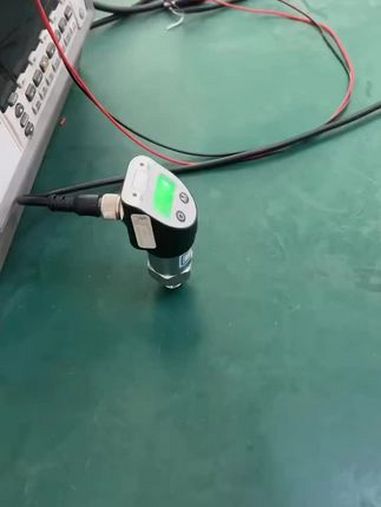
The most common and effective method for determining whether a two-wire pressure switch is functioning properly is to use a multimeter set to the resistance or buzzer mode to check for continuity. The measurement must be performed under specific pressure conditions; for example, an automotive air conditioning pressure switch should be tested at normal pressure or at the trigger pressure. At the same time, a preliminary diagnosis can be made quickly by checking the switch for physical damage and observing for abnormal behavior in the controlled system (such as whether the compressor fails to start). To test whether it operates normally, you can simulate its trigger conditions.

You can choose the right pressure sensor or pressure switch for you according to your actual needs.
Sino-Inst supplies many types of pressure switches and pressure sensors, and there must be one that can meet your needs. If you need to purchase pressure switches and pressure sensors, please feel free to contact us. Our many years of experience in pressure measurement are sure to help you with your measurement process.