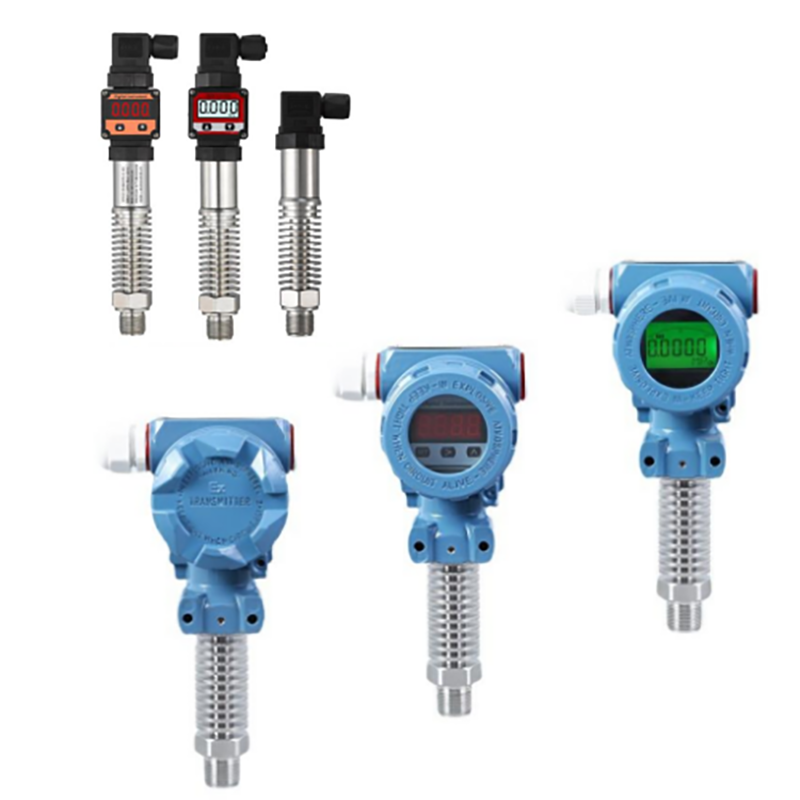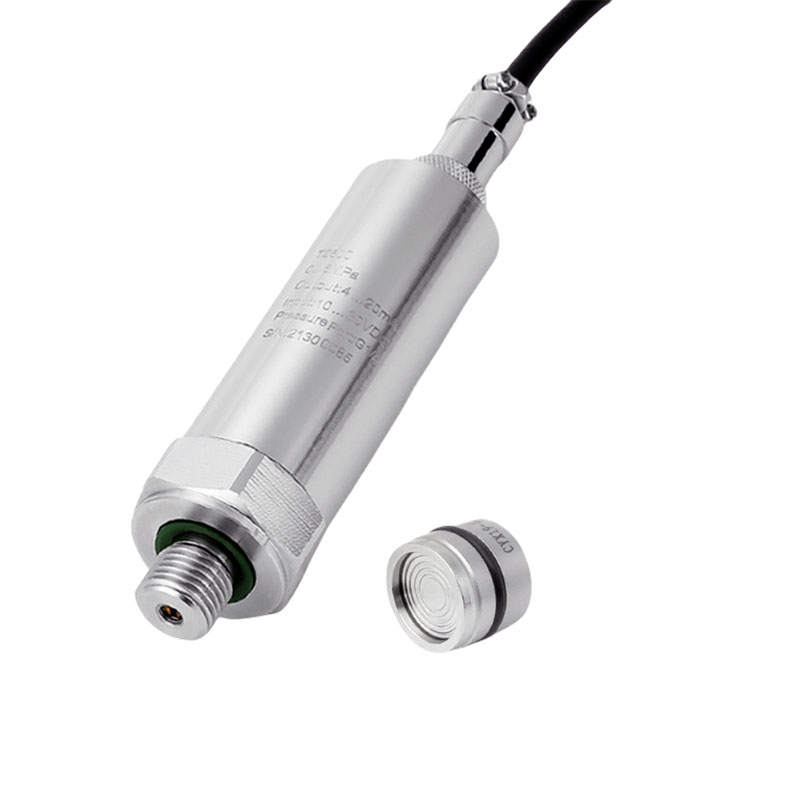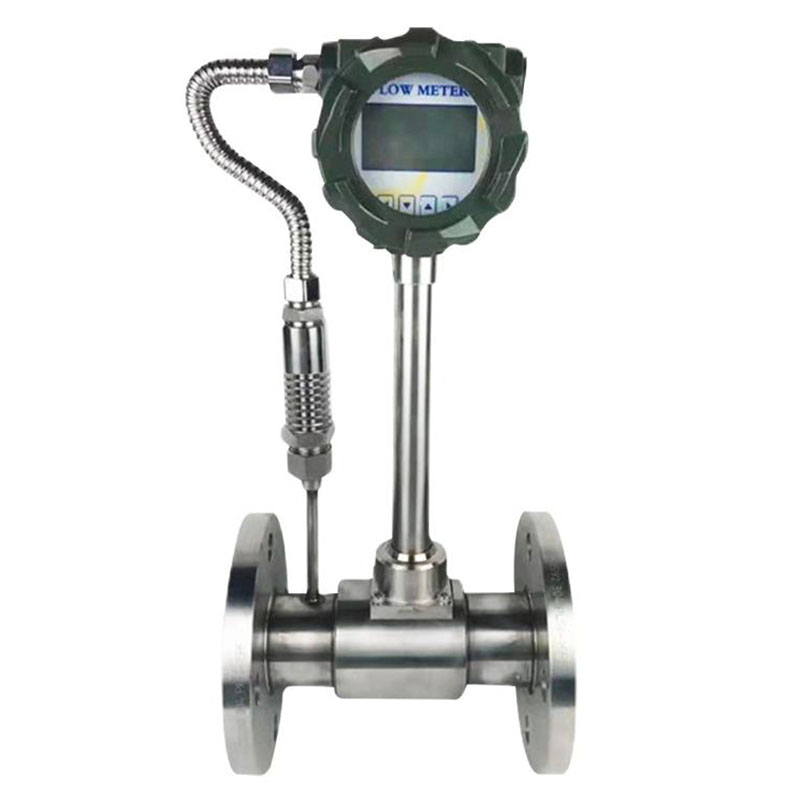
Steam pressure is the force per unit area that steam exerts on the walls of a pipe or vessel. For example, the force that pushes up a valve when a pressure cooker sputters. The more steam there is in a closed container and the higher the temperature, the higher the pressure.
Steam pressure generally refers to gauge pressure, which is pressure data measured at atmospheric pressure, although in practice, atmospheric pressure is related to climate and altitude, and the value of atmospheric pressure that we usually use is: 1.01325 bar a (1 atm), which is an average pressure at sea level on Earth.
A pressure higher than atmospheric pressure is a positive gauge pressure; on the contrary, a vacuum or negative pressure indicates a pressure lower than atmospheric pressure, about −1.013 bar g (0 bar a) is a perfect vacuum. It can be seen that the difference between the gauge pressure and the absolute pressure of steam is the atmospheric pressure, i.e., gauge pressure = absolute pressure – atmospheric pressure. For saturated steam, pressure and temperature go together: know one and you know the other (see the table below).
Steam pressure is essentially pressure. In the calculation of the steam container force analysis, the force generated by the steam is determined by the product of the pressure of the steam and the area of the force, which must be paid attention to.
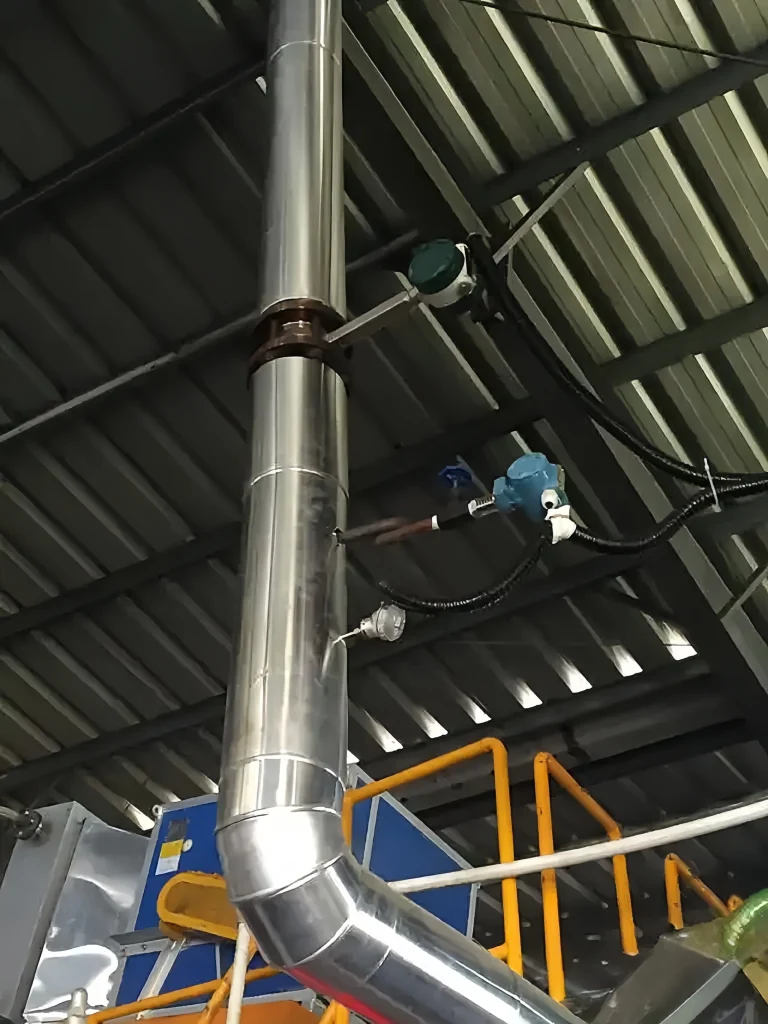
Steam is commonly used in both life and industrial processes, and it is primarily used in the following applications:
In the boiler of a power plant, steam pressure is needed to drive the turbine to generate electricity, so the measurement of steam pressure is crucial for power production.
In the chemical and pharmaceutical industries, the steam pressure inside the reactor will directly affect the reaction efficiency and product quality, and excessive pressure may lead to equipment damage or even safety accidents.
In food processing, steam is used for sterilization and cooking, and its pressure control is related to the taste and safety of food. Therefore, accurate measurement of steam pressure is a crucial link in ensuring production safety and improving process quality.
Autoclaves use saturated steam at high temperatures and pressures to sterilize medical devices, dressings, labware and more.
In centralized heating systems, steam pressure is needed to propel steam to the various places that need to be heated.
Steam turbines may be used for propulsion and auxiliary power systems on large ships.
In short, as long as there is steam generation, delivery or use of the place. It is inseparable from the measurement of steam pressure. It is an important factor in ensuring safety, improving efficiency, quality assurance and realizing automatic control.
Measuring steam flow as well? Tell us the line size and flow range, and we can quote the pressure transmitter and the flowmeter together.
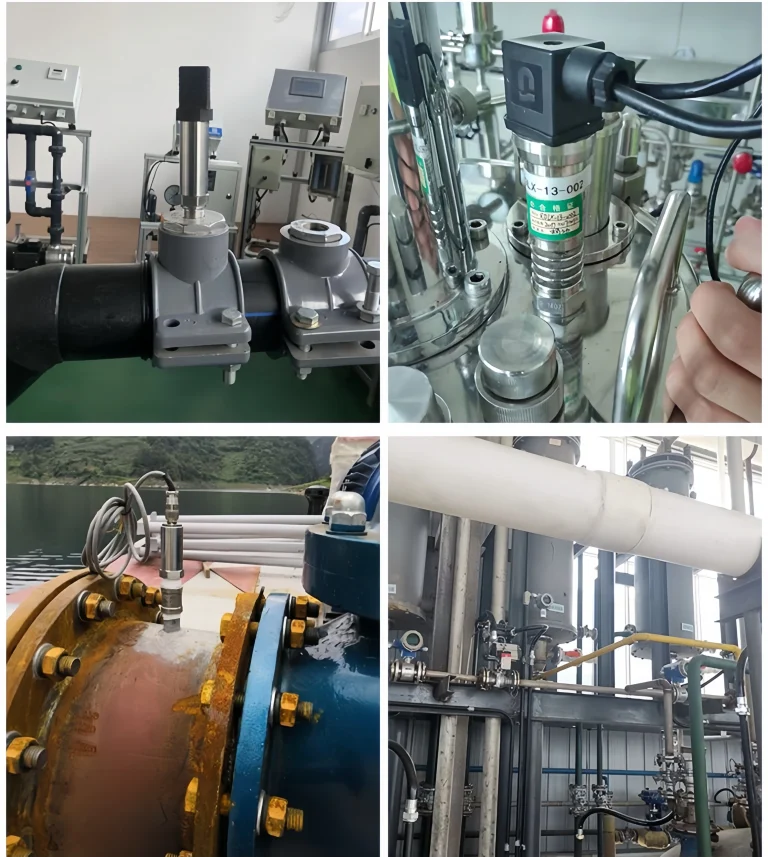
Steam has many limitations in measurement due to its high temperature and gaseous properties. Some steam is corrosive, which also makes steam measurement difficult.
1. The high temperature of steam can cause damage and deformation to ordinary sensors. A siphon or condensate loop keeps the sensor below its 85 °C media limit. Where that is not possible, use high-temperature steam pressure sensors.
2. In some places where there are valves, the sudden closing of the valve can have a tremendous impact on the sensor. Fit a pressure snubber and choose a range with enough overload margin. Water hammer is a pressure spike; material alone does not stop it.
3. Hot steam condenses in the impulse line. This water is normal and protects the sensor. The error comes from the water column: if the transmitter sits 1 m below the tap, it reads about 0.1 bar (9.8 kPa) high. Zero it with the line full of water.
4. Some steam contains corrosive chemicals. They can pit or crack 316L stainless steel diaphragms. At this time, we can choose Hastelloy, Monel and other corrosion-resistant material pressure sensors.
5. The location of the installed steam pressure sensor will also affect the accuracy of the measured pressure. Take the tap from the top or upper side of the pipe. Avoid the bottom, where condensate and scale collect.
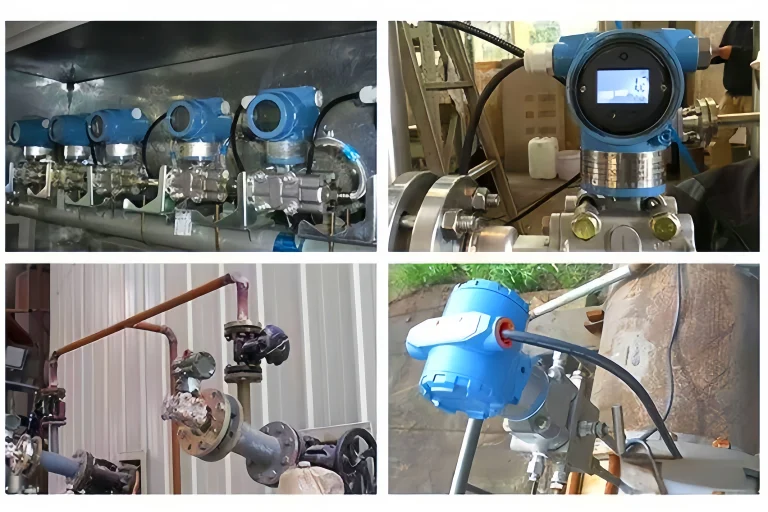
There are many ways to measure steam pressure. The most common method is to select a steam pressure sensor that is suitable for your application.
Steam pressure sensors typically use the piezoresistive principle, where an internal core element senses the pressure and a circuit converts it to a standard output such as 4–20 mA, 0–10 V or RS485.
The following are the specific steps for using a steam pressure sensor
1. Select a steam pressure sensor that is suitable for the operating conditions. If the steam pressure is very high, then select a high-pressure type steam pressure sensor. If the steam contains corrosive chemicals, select a sensor with a Hastelloy C or Monel diaphragm.
2. If the steam temperature is very high, fit a siphon, a finned cooling element or a capillary with a remote seal in front of the sensor. This brings the temperature at the sensor down to its rating.
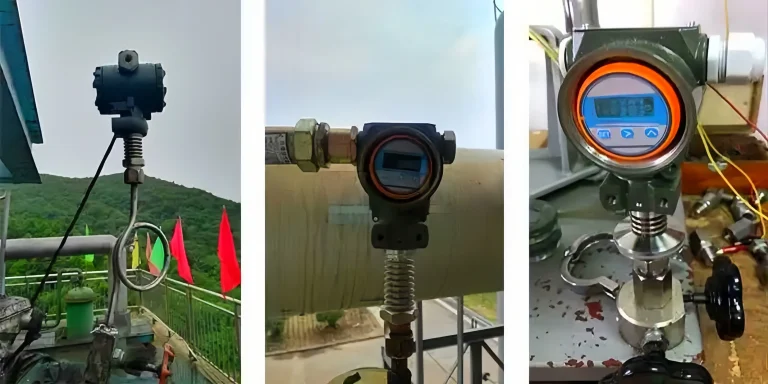
3. Ensure that the steam pressure sensor is properly installed. Take the tap from the upper side of the vessel or pipe. Avoid the bottom, where dirt and condensate collect. Mount the transmitter below the siphon, connection pointing down, so the line stays full of water.
4. Fit a pressure snubber where valves close fast or water hammer is likely.
5. The pressure sensor should be maintained regularly and calibrated periodically to prevent measurement errors. Clean the sensor port regularly to prevent clogging.
6. If the pressure sensor has a problem that cannot be solved, you should consult a professional at this time.
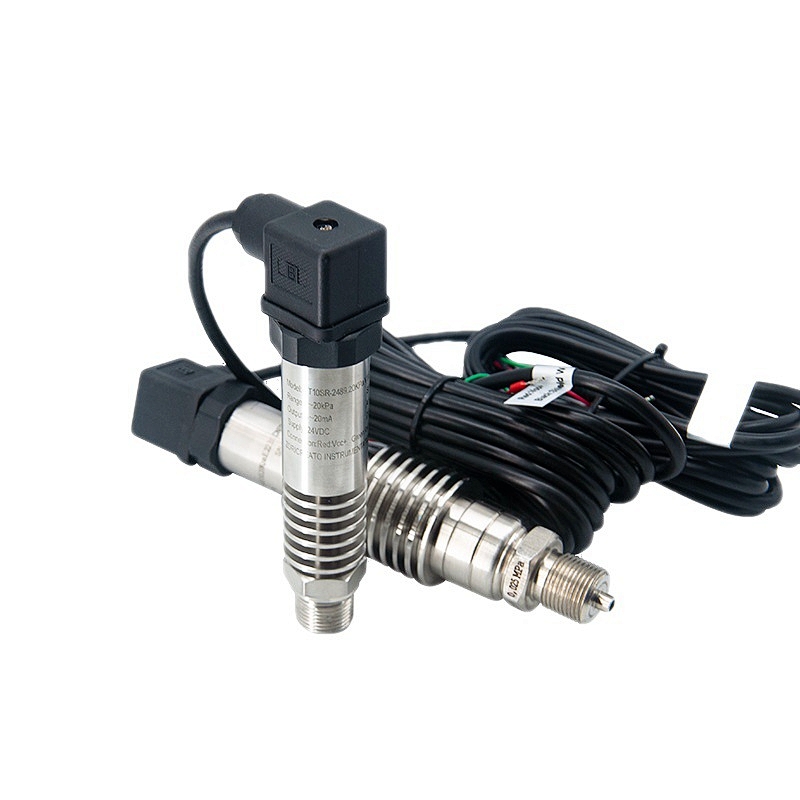
to 160 MPa · media to 350 °C

0–100 MPa · media to 800 °C · P + T output

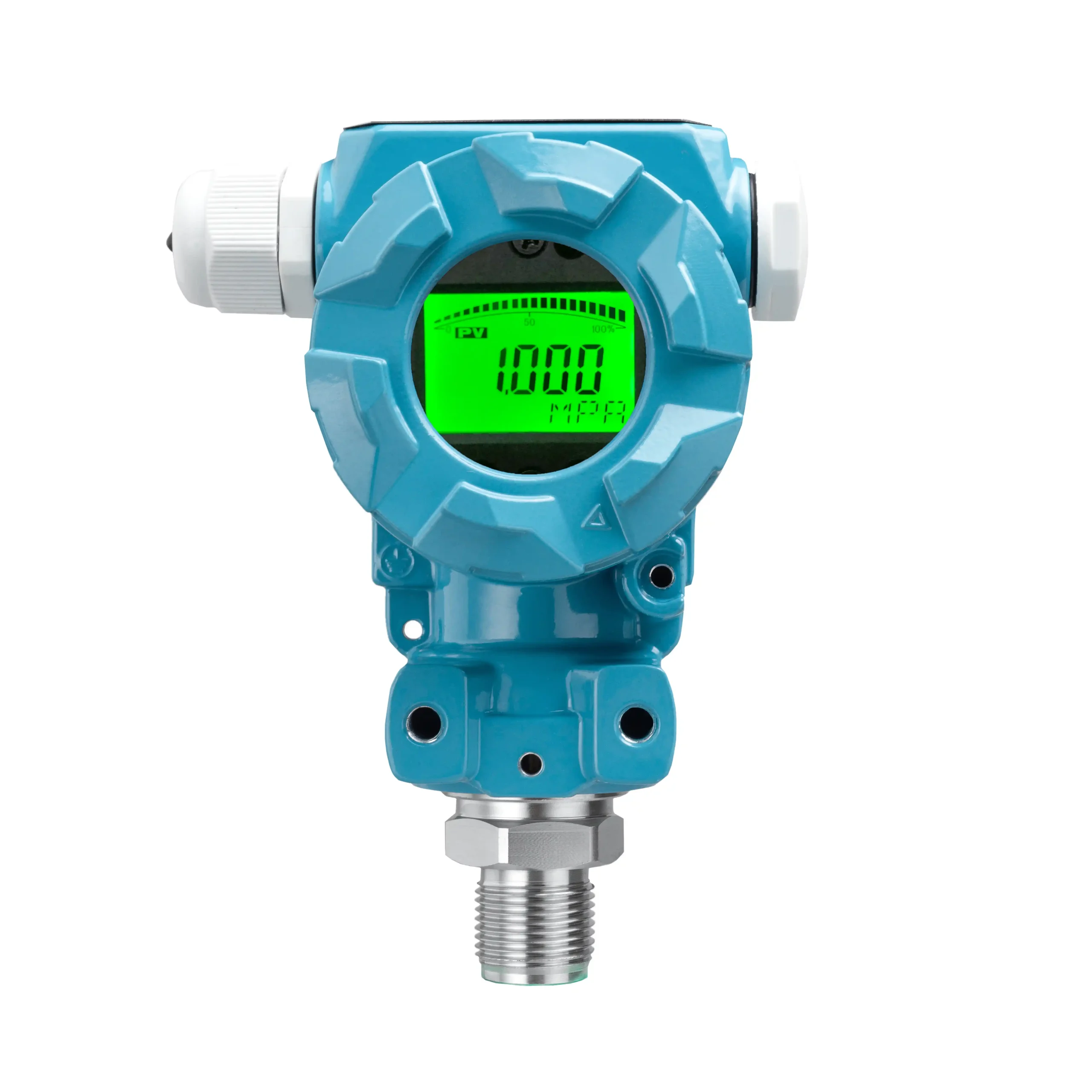
0.1–100 MPa · local display · use with a siphon
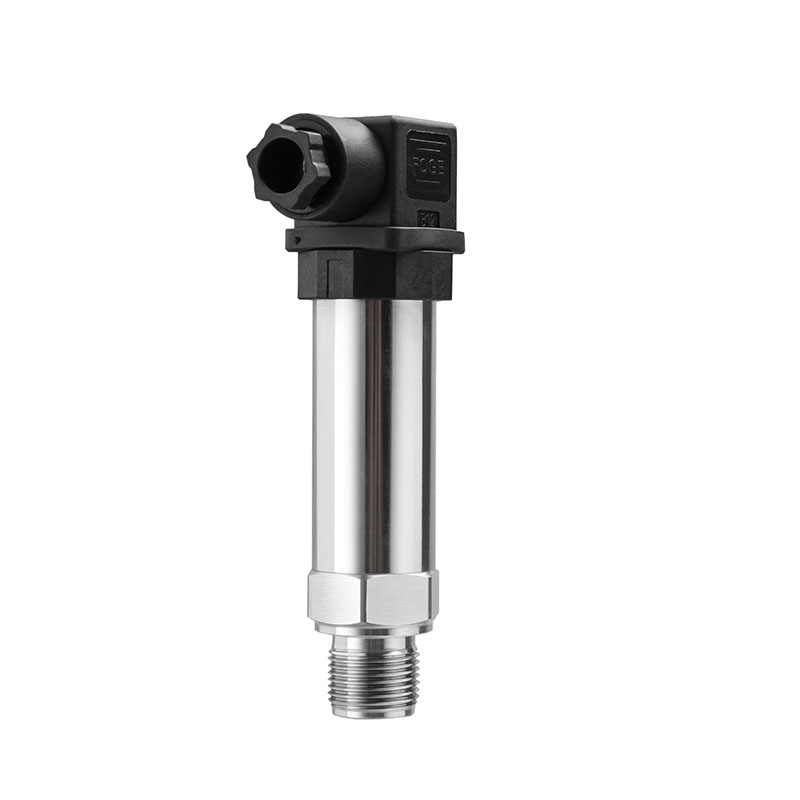
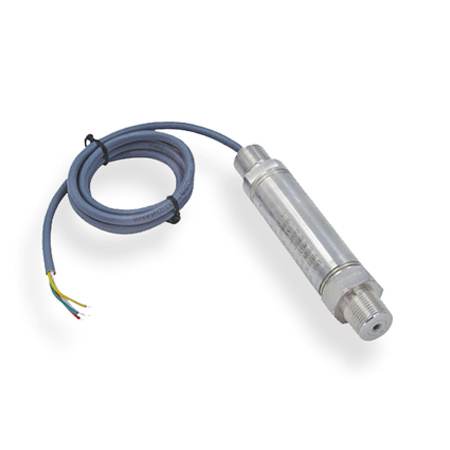
0.1–100 MPa · 0.2% FS · use with a siphon
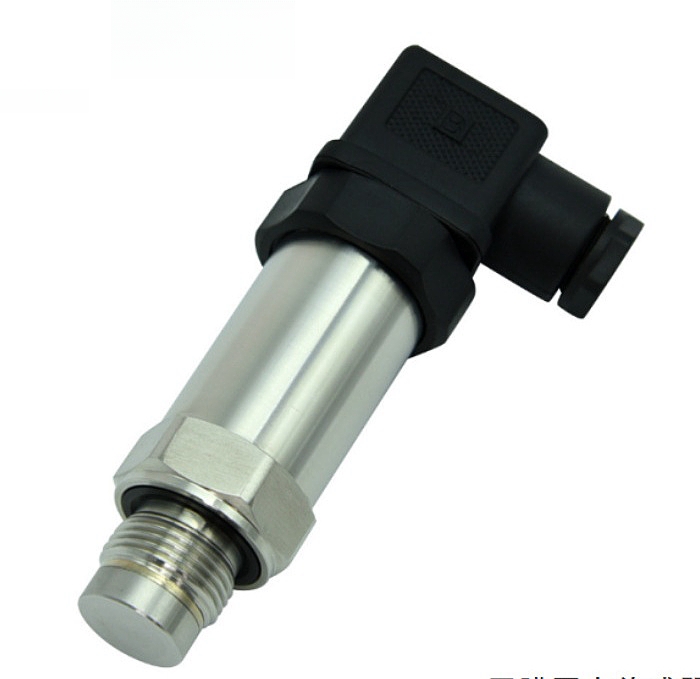
0.6–200 MPa · no dead cavity
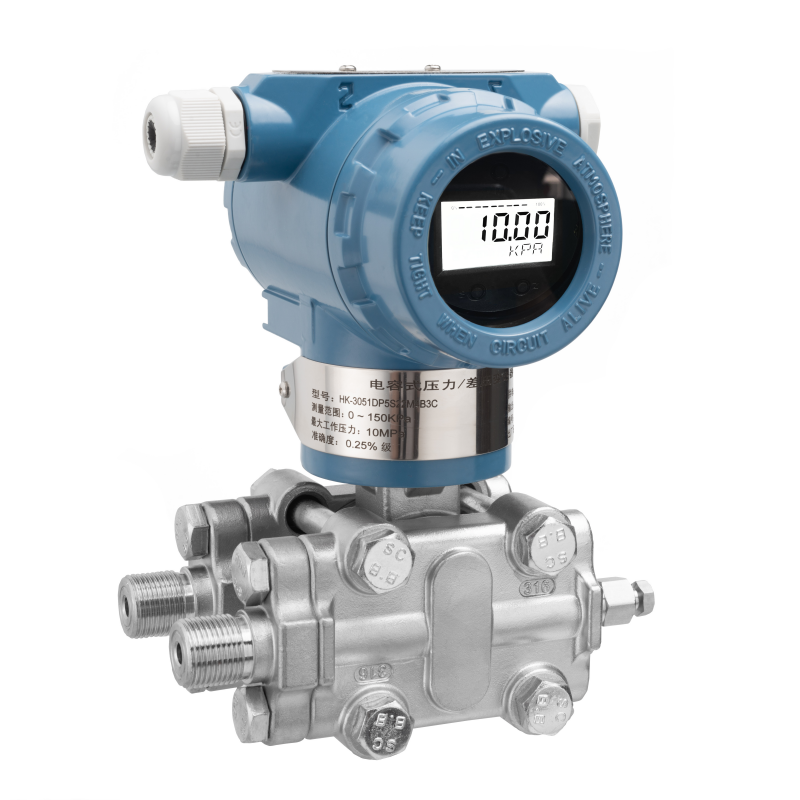
0.1% accuracy class · for flow compensation
When selecting a pressure measuring instrument for a steam system, there are three key elements to focus on: operating characteristics, accuracy requirements, and long-term cost. Once these three points are grasped, the selection will be less prone to deviation.
Saturation temperatures from IAPWS-IF97; superheated steam is hotter at the same pressure, so size the cooling for the actual line temperature.
| Steam pressure (bar g) | psi g | Saturation temp. (°C) | What to fit |
|---|---|---|---|
| 0.5 | 7 | 112 | Siphon + standard transmitter (85 °C media), or SI-2088 160 °C version direct |
| 1 | 15 | 120 | |
| 3 | 44 | 144 | |
| 6 | 87 | 165 | Siphon + standard transmitter, or SI-2088 350 °C version |
| 10 | 145 | 184 | |
| 16 | 232 | 204 | |
| 25 | 363 | 226 | |
| 40 | 580 | 252 | |
| Superheated, 350–850 °C | — | — | SI-2088 custom high-temperature version with cooling components (media to 850 °C); combined P+T sensor (media to 800 °C) if temperature is also needed |
Case Study 1 | USA
A valve maker needed to measure superheated steam on a test line: 649 °C at 6,000 psi. Their first request was a sensor that sits directly in the steam. At that temperature, a direct-contact sensor is limited to about 0.5% accuracy and costs more. We suggested a 300 °C-rated pressure sensor behind a cooling siphon instead. The siphon brings the temperature at the diaphragm down to the sensor rating, and accuracy improves to ±0.25%, with a 4–20 mA output.
Case Study 2 | UK
A fuel-cell test rig needed 0–10 kPa on a 12 mm OD line carrying dry steam mixed with hydrogen, at up to 250 °C. The SI-2088 was ruled out: its center port leaves a small cavity where steam condenses and shifts the reading. A flush-diaphragm sensor has no cavity, but a flanged one will not fit a 12 mm tube. We proposed two options: a tee with a condensate loop and a G1/2 flush-diaphragm sensor, or a short enlarged section of line to take a G1/2 port.
Case Study 3 | Russia
A wood-processing plant measures organic heat-transfer vapor at up to 280 °C, 0.1–10 bar absolute, with 60 °C ambient. We proposed the SI-2088 high-temperature transmitter with a local display and 4–20 mA output. A flat gasket at the bottom of the mounting port is needed to seal it properly.
Not sure whether you need a siphon or a high-temperature sensor? Send us the steam pressure, the temperature at the tap and the output you need, and we will suggest a setup.
The following details the specific considerations.
First, look at the working environment
steam temperature and corrosivity is the first pass. A standard transmitter is rated for −20 to 85 °C media, and even 1 bar g saturated steam is 120 °C. So every steam line needs a cooling device, such as a siphon (pigtail), a cooling element or a capillary with a remote seal. Their function is to reduce the temperature of the medium that the sensor is actually in contact with to a suitable range; otherwise, the sensor is prone to drift or even damage due to the high temperature.
If the steam contains corrosive components such as chlorine ions and acids, such as in pharmaceutical sterilization or chemical reaction processes, you have to choose an instrument with a special construction. An all-welded diffused-silicon sensor with a Hastelloy C diaphragm is recommended. With no O-ring, there is no seal to corrode or leak.
There are also scenarios with strong vibrations, such as boiler outlets, where you should fit a snubber and support the impulse line. A chamberless flat membrane design helps in a different way: it leaves no dead space where condensate or dirt can collect.
Second, the accuracy and range to match the actual needs
The selection of accuracy depends on the specific scene, safety monitoring and costing requirements are not the same.
For boiler monitoring and safety interlocks, 0.5% full scale (FS) is usually enough. If the pressure feeds steam flow compensation for billing, use 0.1–0.2% FS. The flowmeter usually sets the total error: a steam vortex meter is typically ±1.0–1.5%.
Keep the normal working pressure at about 1/2 to 2/3 of the range. For 0.6 MPa working pressure, 0–1.0 MPa is a common choice. The safety valve set pressure should also be inside the range.
Third, the hidden cost of installation and maintenance can not be ignored
The installation method has a great impact on the long-term stability of the instrument. If the impulse line is only partly full of condensate, the water column changes and the zero drifts. Take the tap on the upper side of the pipe, fit a siphon or condensate pot, and put a drain valve at the lowest point of the impulse line.
Signal transmission is also a good idea. Use shielded twisted-pair cable for separate wiring in areas prone to interference, and avoid running in parallel with motor cables.
Maintenance costs are often underestimated. Check the zero at every shutdown, with the impulse line full of water. Set the calibration interval by your plant’s QA rules.