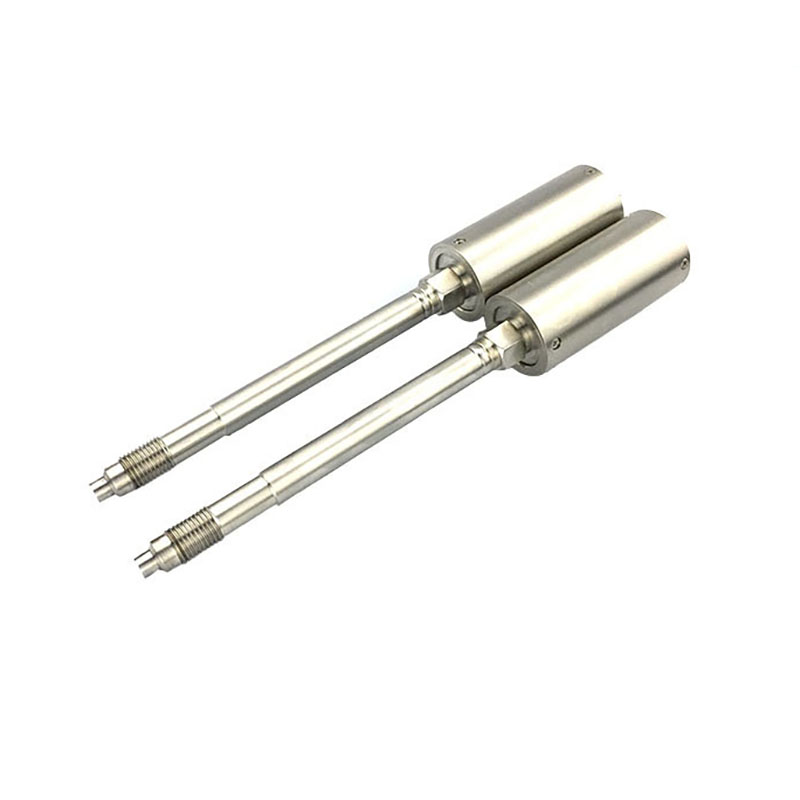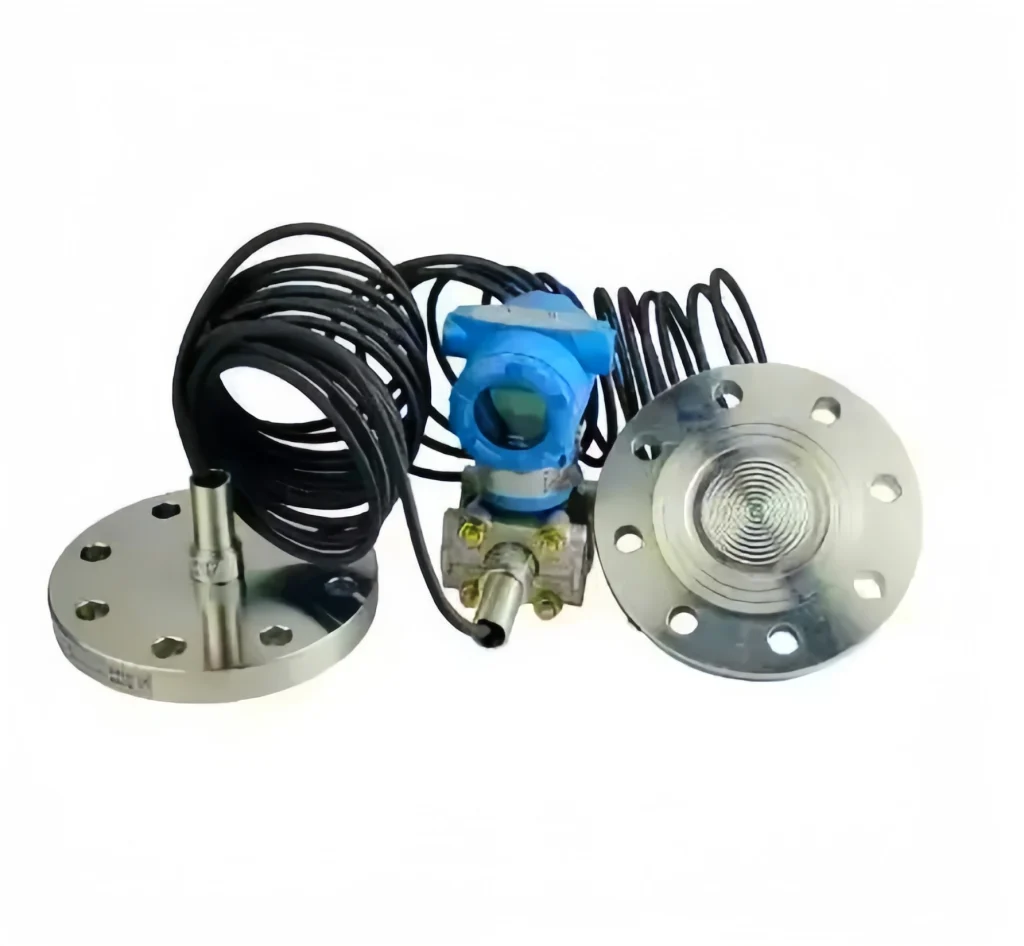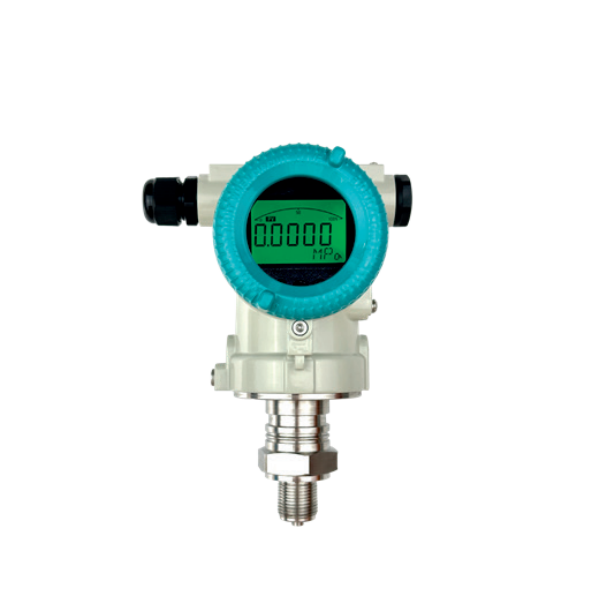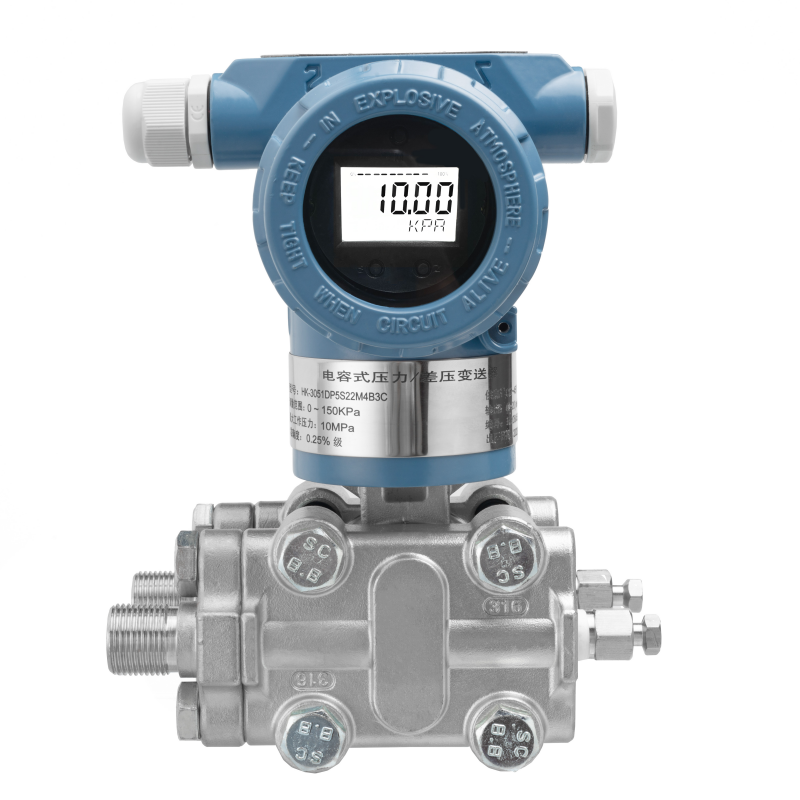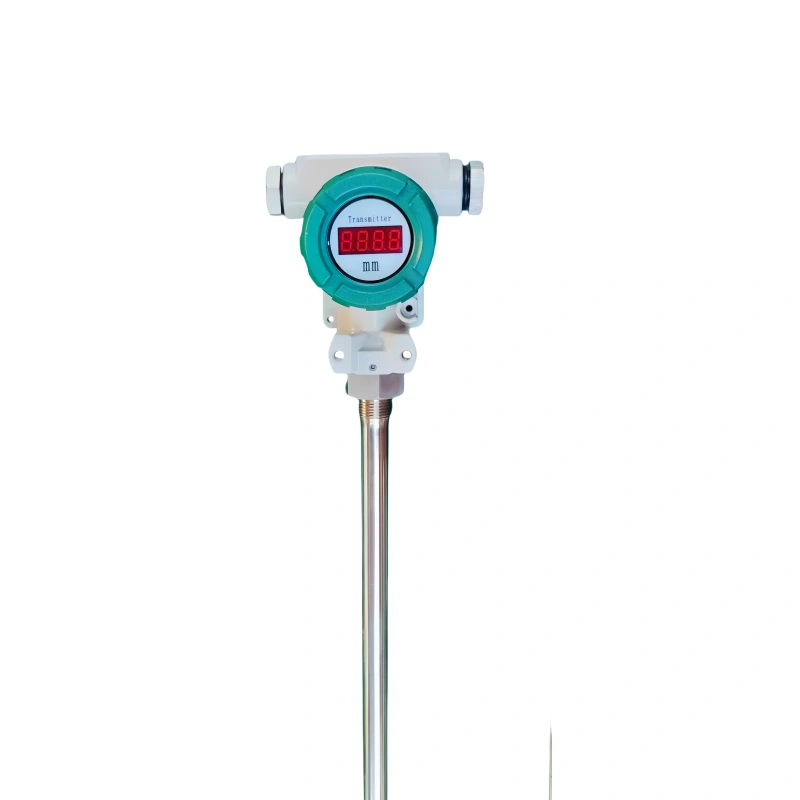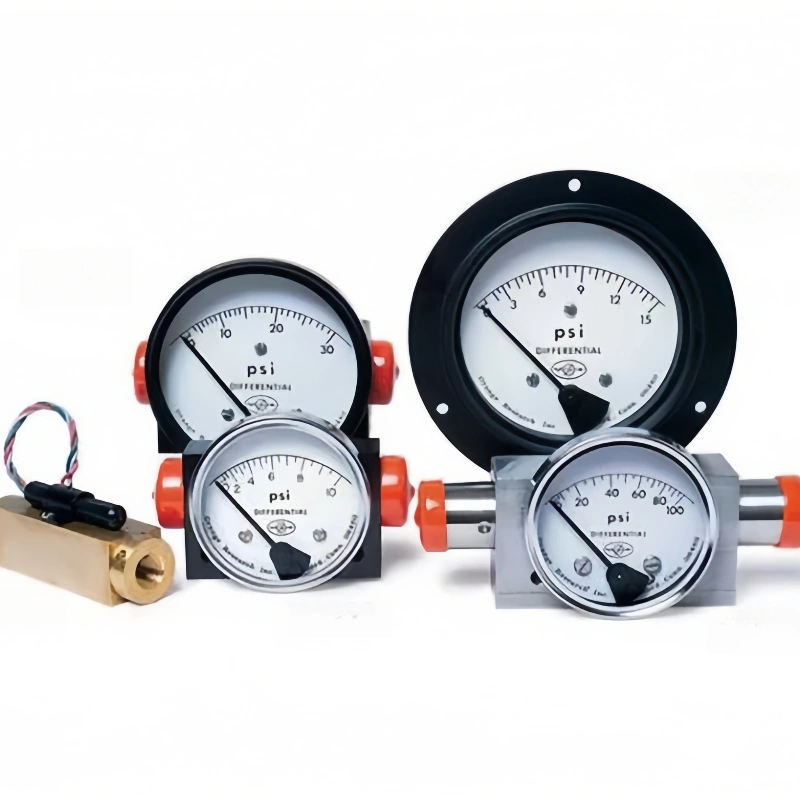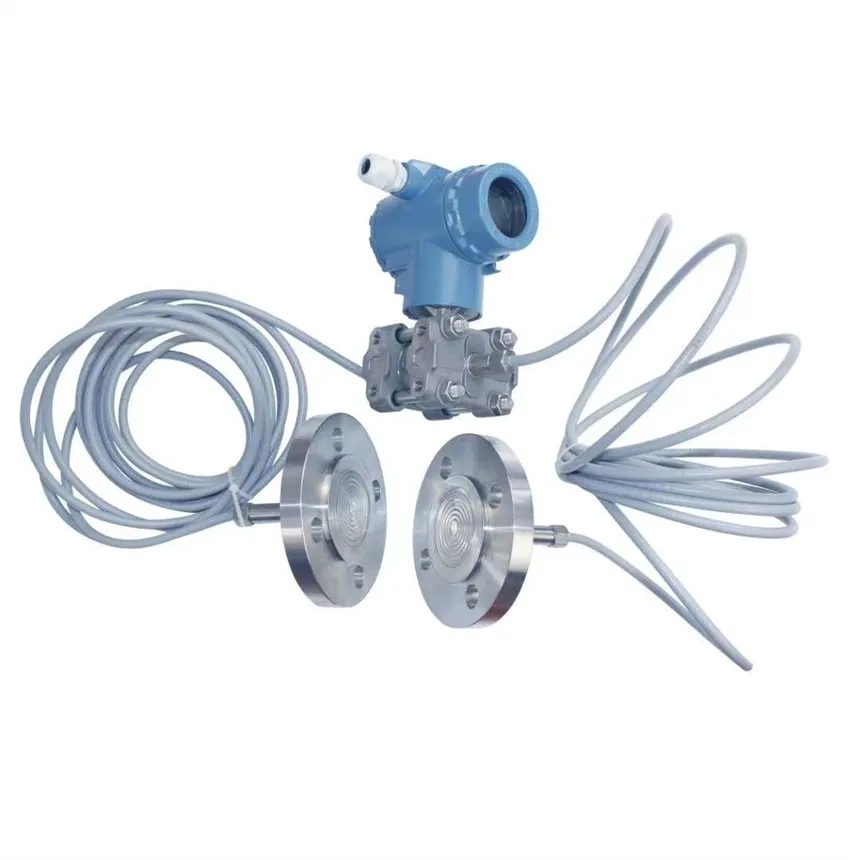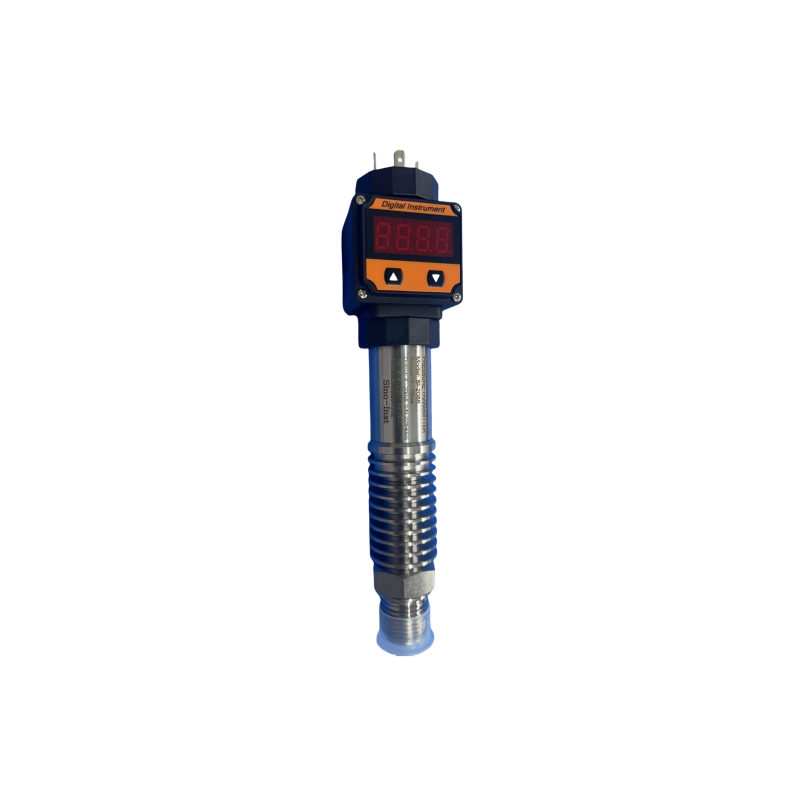
Many people struggle to distinguish between pressure sensors, pressure transducers, and pressure transmitters. However, these terms are often used interchangeably in the market. So, their differences are frequently overlooked.
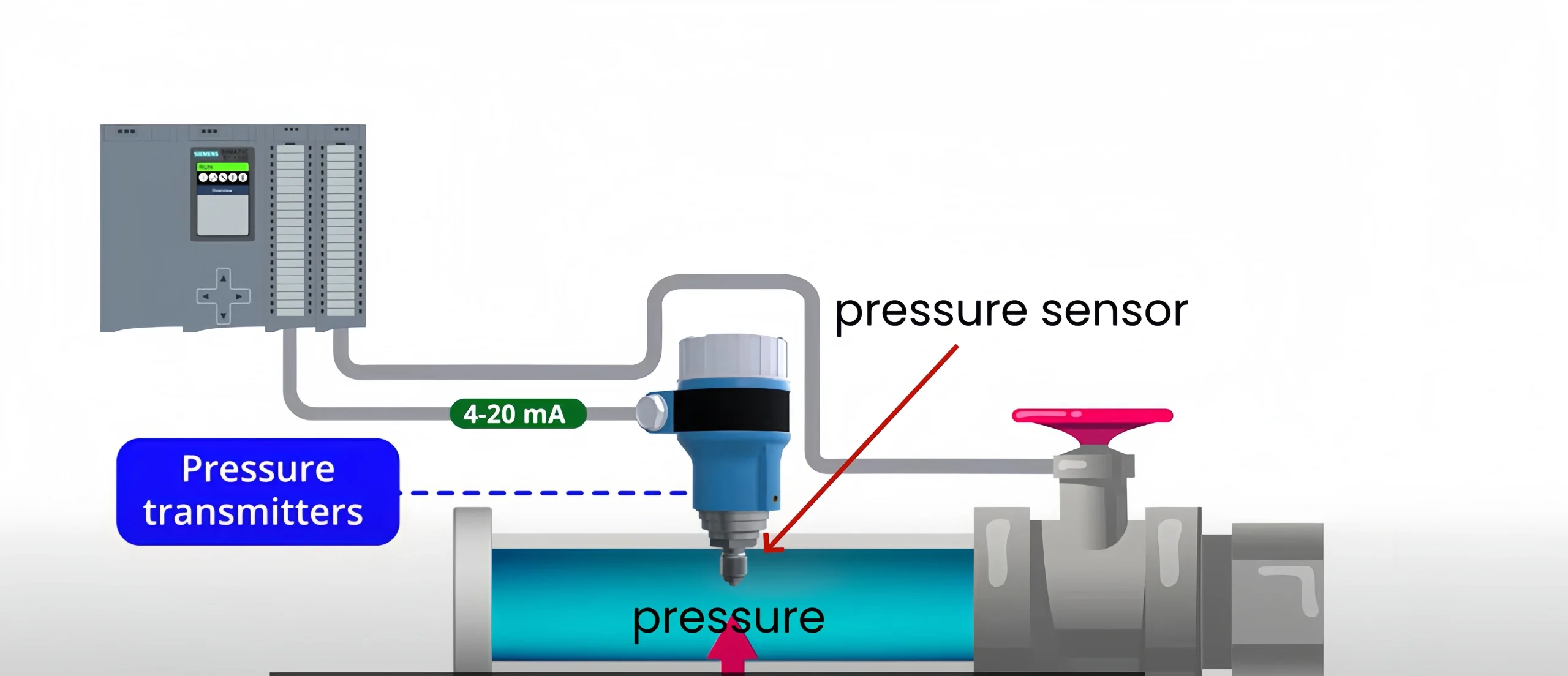
The most significant distinction lies in their output signals. A sensor converts a physical quantity being measured into an electrical signal that can be read and processed. A transmitter converts the primary electrical signal from the sensor into a standard electrical signal. such as current signals (4-20mA) or voltage signals (0–10V, 1–5V). Most modern pressure sensors now output standard signals directly. So, pressure sensors and pressure transmitters may be combined into the same device.
Read More about: Pressure Transmitter Output Signal You Should Know
Both a pressure transducer and a pressure transmitter can be referred to as a pressure sensor. However, a pressure sensor cannot be called a pressure transmitter or a pressure transducer. We generally classify pressure transducers and pressure transmitters into the same classification. The main difference is that pressure transmitters have longer transmission distances and more complex structures. Their other basic functions are similar.
This article will primarily introduce the differences between pressure sensors and pressure transmitters.
Different Definition
What is a pressure sensor?
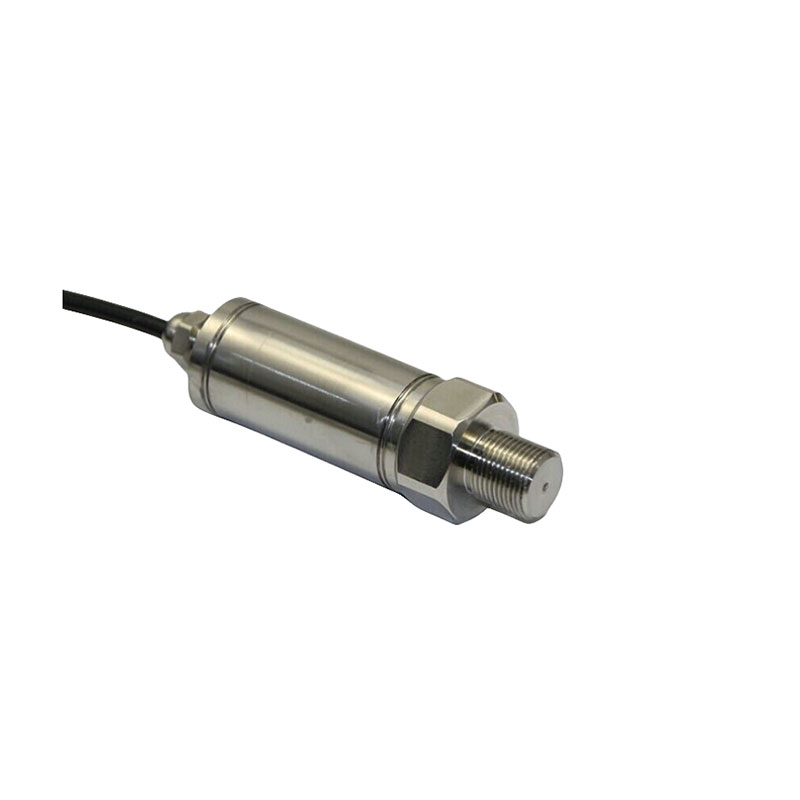
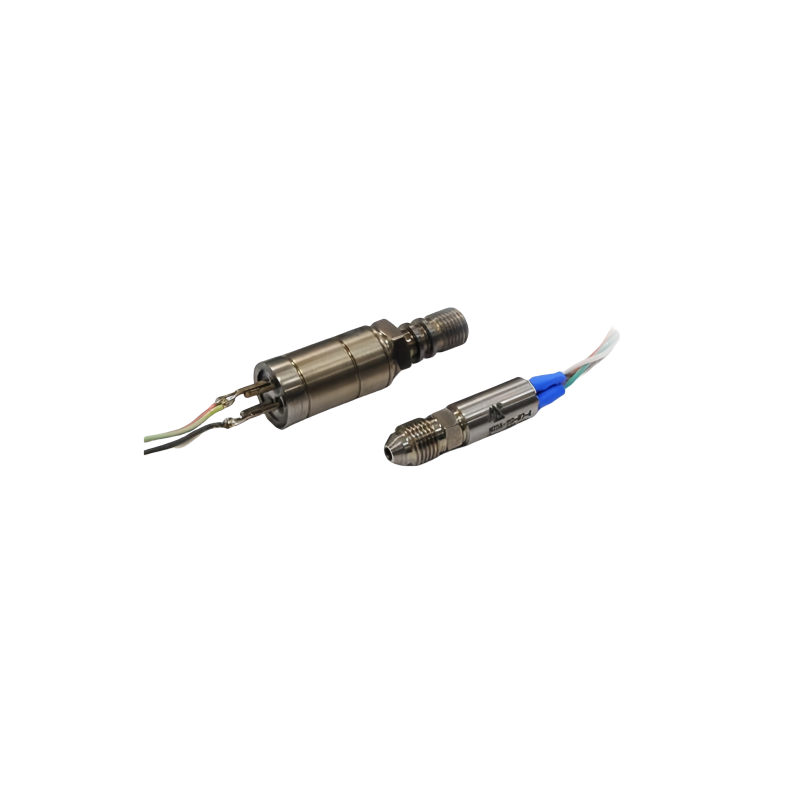
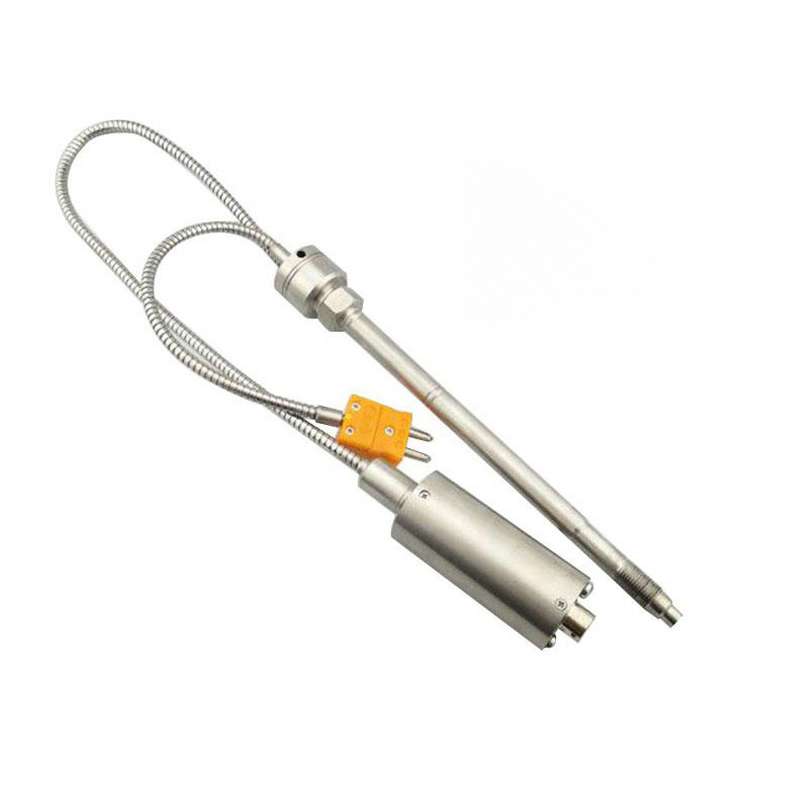
A pressure sensor is a device that detects pressure and converts the pressure signal into a usable electrical signal output. Typically, a pressure sensor refers to a component-level product with a non-standard mV signal output. It serves as the core component of a pressure transmitter. Due to the non-standard nature of the signal, users must perform pressure calibration and use dedicated signal processing circuits when applying the product. Since the sensor signal is weak, an amplifier is often required for long-distance transmission.
What is a pressure transmitter?
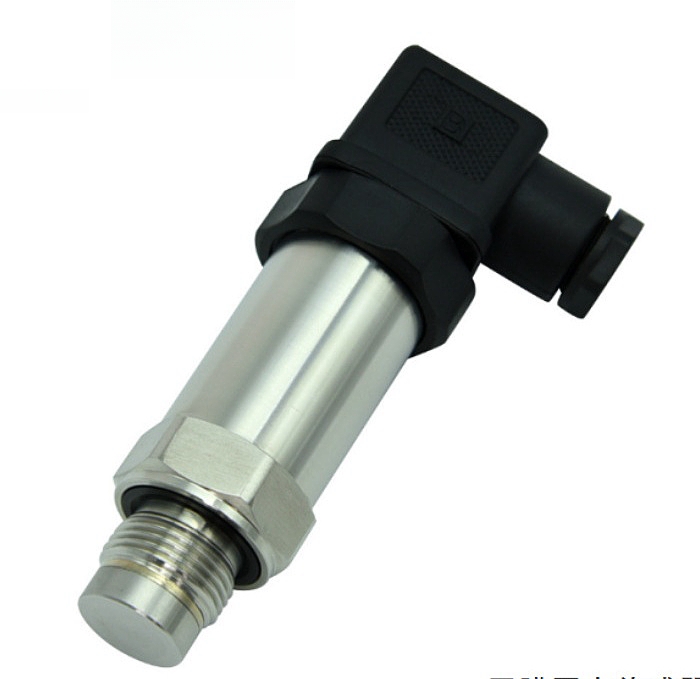
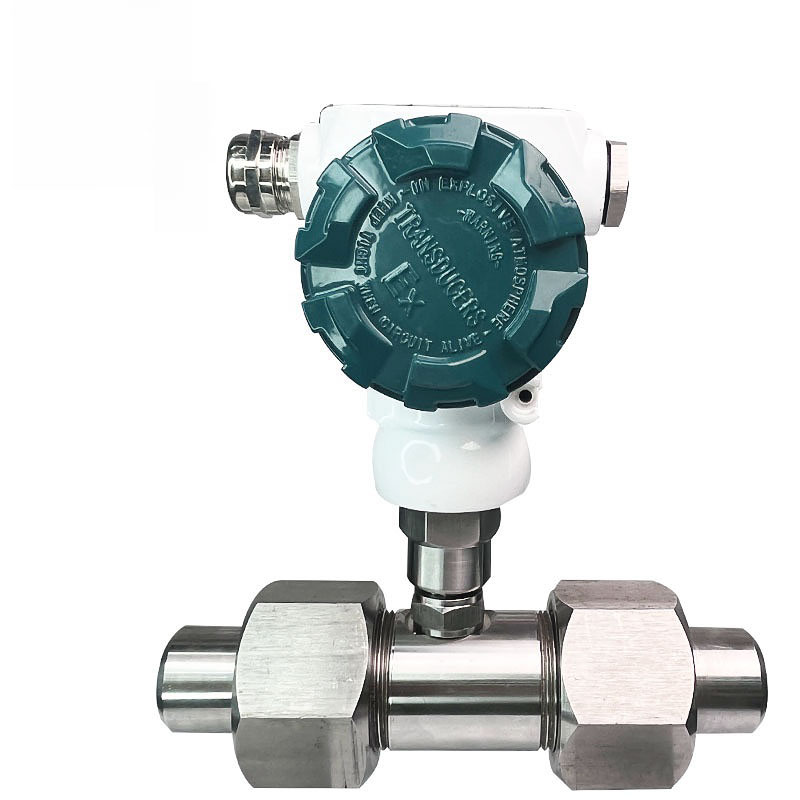
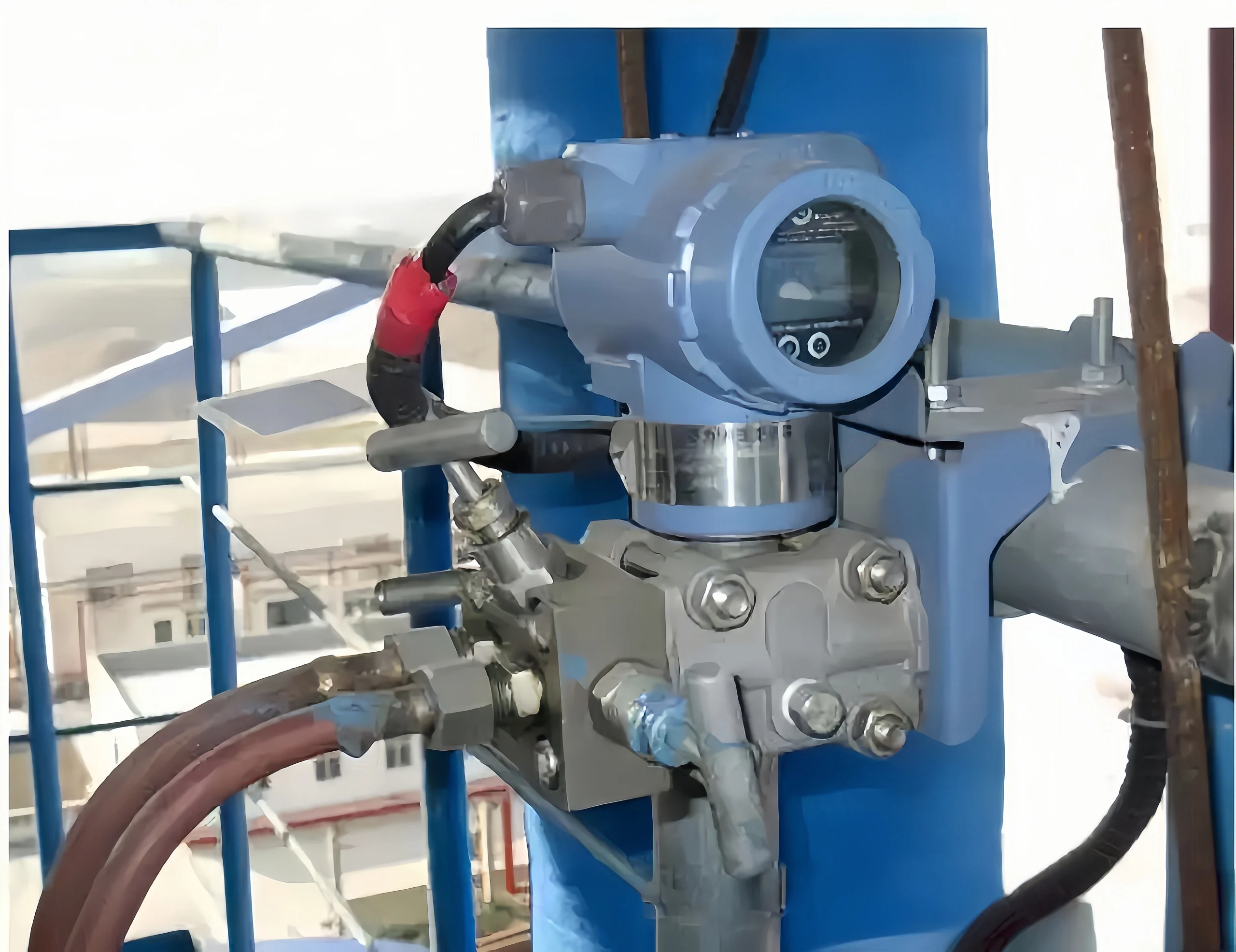
A pressure transmitter is a device that measures the pressure of liquids, gases, or steam. Generally, a pressure transmitter primarily consists of three parts: a pressure sensor, a measurement circuit, and a process connection. A Pressure Transmitter converts the physical pressure parameters sensed by the pressure-measuring element sensor into standard electronic signals. The standard electrical signal is supplied to secondary instruments. such as indicating alarms, recorders, and controllers. The secondary instrument then processes, analyzes and records the signal.
Different Working Principle
How Does a Pressure Transmitter Work?
The working principle of a pressure transmitter can be divided into the following steps: The pressure sensor detects the pressure signal and converts it into an electrical signal. The signal processing circuit amplifies, filters, and linearizes the electrical signal. An A/D converter converts the analog signal into a digital signal. The output circuit converts the digital signal into a standardized signal. (e.g., 4-20mA, 0-10V) for long-distance transmission and reception.
How Does a Pressure Sensor Work?
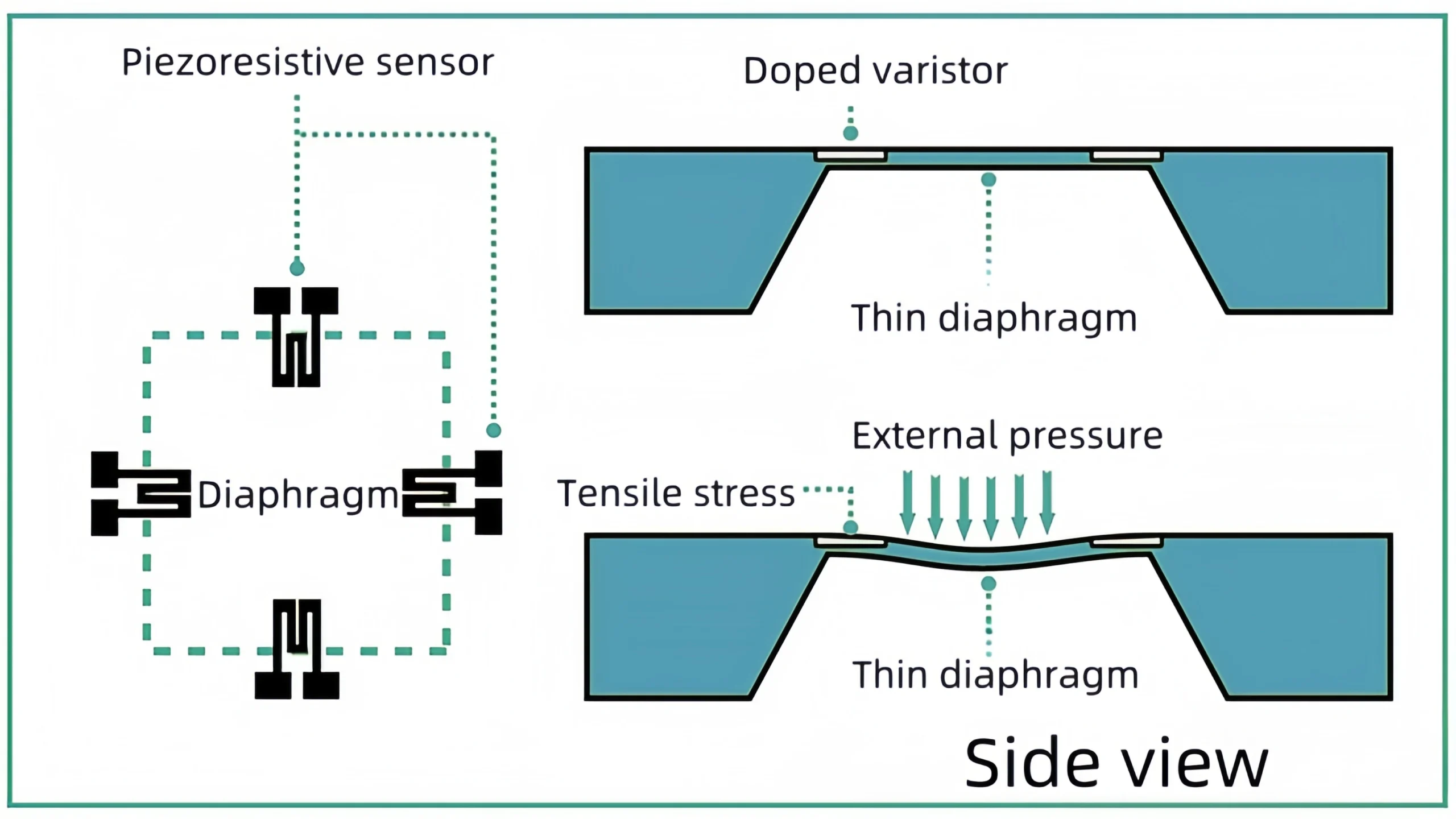
The working principle of a pressure sensor is based on the conversion of physical quantities. When the measured pressure acts upon the sensing element, pressure causes the element to deform. The element deformation induces changes in the physical properties of the conversion element, such as resistance, capacitance, or inductance. These changes are then converted into electrical signal outputs via signal processing circuits. Pressure sensors are typically constructed from specialized materials: metals, crystals or ceramics.
Read More about: 7 Types of Pressure Sensors: Different Types, Working Principles, and Definitions
Different output signal types
Pressure sensors typically output weak analogue signals in the millivolt range, such as mV voltage signals; these signals are susceptible to line losses and electromagnetic interference, and have a very short transmission range.
Pressure transmitters uniformly output industrial standard signals, commonly 4–20 mA current signals or 0–10 V voltage signals; some also feature digital RS485/HART signals. They offer strong resistance to interference and can be transmitted over long distances via cable.
Different Installation Requirements
Pressure sensors cannot be connected directly to industrial control equipment such as PLCs or instruments; they must be used in conjunction with additional components such as amplifier boards, power conversion modules and data acquisition cards, resulting in complex wiring and commissioning procedures.
Pressure transmitters are factory-calibrated; they require only a standard external power supply, and their output terminals can be connected directly to display instruments, controllers and data acquisition systems. On-site installation and wiring are straightforward, with no need for additional signal processing components.
Different Protection Structures and Suitable Operating Conditions
Most pressure sensors feature exposed chips and simple enclosures, with low protection ratings; they are not resistant to humidity, dust or vibration, and are primarily used in laboratories or small, clean indoor equipment.
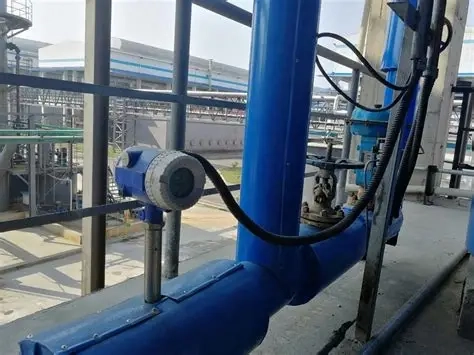
Pressure transmitters utilise an integrated sealed housing, typically with a protection rating of IP65 or higher, and feature explosion-proof, waterproof and vibration-resistant designs, making them suitable for harsh industrial environments such as chemical processing, hydraulics, pipework and outdoor applications.
Different Accuracy, Stability and Compensation Capabilities
Standard pressure sensors lack compensation circuits for temperature and zero-point drift; they exhibit significant measurement deviations when ambient temperatures fluctuate, and the zero point is prone to drift over prolonged use, resulting in a lower accuracy grade.
Pressure transmitters incorporate built-in hardware and software compensation algorithms, featuring temperature compensation, zero-point calibration and linearity correction functions. They provide stable measurements under both high and low temperature conditions and are precisely calibrated at the factory, resulting in higher overall measurement accuracy.
Applications of Pressure Sensors and Pressure Transmitters
Because pressure sensors are susceptible to electromagnetic interference and have relatively low cost and integration, they are typically used in applications where signal transmission distances are short.
Pressure transmitters, on the other hand, are less susceptible to electromagnetic interference and are therefore typically used in applications where signal transmission distances are longer.
Pressure sensors are widely used in industries: hydraulics, pneumatics, automotive, HVAC, aerospace, and laboratory equipment. They can measure the pressure of many media such as liquids, gases, solids, and steam.
Pressure transmitters are based on pressure sensors but offer broader functionality and more comprehensive performance. They are primarily used in many industrial automation controls. It is typically used for pressure monitoring in manufacturing processes. They measure and regulate pressure within many industrial systems. A pressure transmitter can interface with systems like a PLC for more extensive data processing.
Sino-Inst Featured Pressure Measurement Device
How to Select the Perfect Pressure Measurement Equipment?
Based on our years of pressure measurement experience, we have summarized the key considerations for selecting pressure measurement instruments. By taking the following factors into account, your pressure measurement equipment will ensure long-term stable working.
Operating Environment
Determine the required pressure measurement range. And ensure the selected pressure sensor’s measurement range covers this range. Simultaneously, consider the ambient temperature range and choose a pressure sensor capable of reliable operation under these conditions. Select corresponding high-temperature or cryogenic pressure sensors. Identify the measured medium—liquid, gas, or corrosive substances. Select corrosion-resistant, waterproof pressure sensors to ensure long-term and stable working.
Technical Parameters
Determine the required measurement accuracy based on actual needs. And choose a pressure sensor with the appropriate accuracy class. Select a pressure sensor with a response speed. It is necessary to choose a suitable device for your application scenario. However, different applications may require different response times. Generally, faster response times are preferable, but this must align with your specific usage requirements.
Determine the most suitable signal output. Common signals include current signals, voltage signals and analog signals. The specific signal type depends on your actual data processing regulations.
Structure Types
Pressure sensors can be categorized by operating principle into capacitive, resistive, piezoresistive, and other types. Select the operating principle that best aligns with your application needs.
Additionally, choose the right mounting method based on your measurement vessel. Common mounting methods include threaded connections, flange connections, and insertion types.
Price and Cost-Effectiveness
Choose the most cost-effective pressure sensor based on your budget. Balance performance, quality, and cost-effectiveness comprehensively.
Brand and Quality
Select pressure sensor brands with a solid reputation and reliable quality. Avoid unnecessary complications caused by quality issues. Sino-Inst is a premium supplier highly regarded by customers. You can choose us without doubt.
After-Sales Service and Support
Select manufacturers or suppliers offering robust after-sales support. Ensure timely access to technical assistance and maintenance during product use. Understand the technical support provided by the manufacturer or supplier to guarantee prompt issue resolution when needed. We offer a one-year warranty, supporting returns or replacements for product issues within this period.
Calibration and Validation
Calibrate the sensor before installation and use to ensure measurement accuracy. Most suppliers calibrate sensors prior to shipment. Discuss specific details with your supplier. Regular sensor validation is critical for maintaining long-term stable operation. Selecting sensors with straightforward calibration and validation procedures is also a key consideration.
FAQ
Differential Pressure Transmitters and Pressure Transmitters
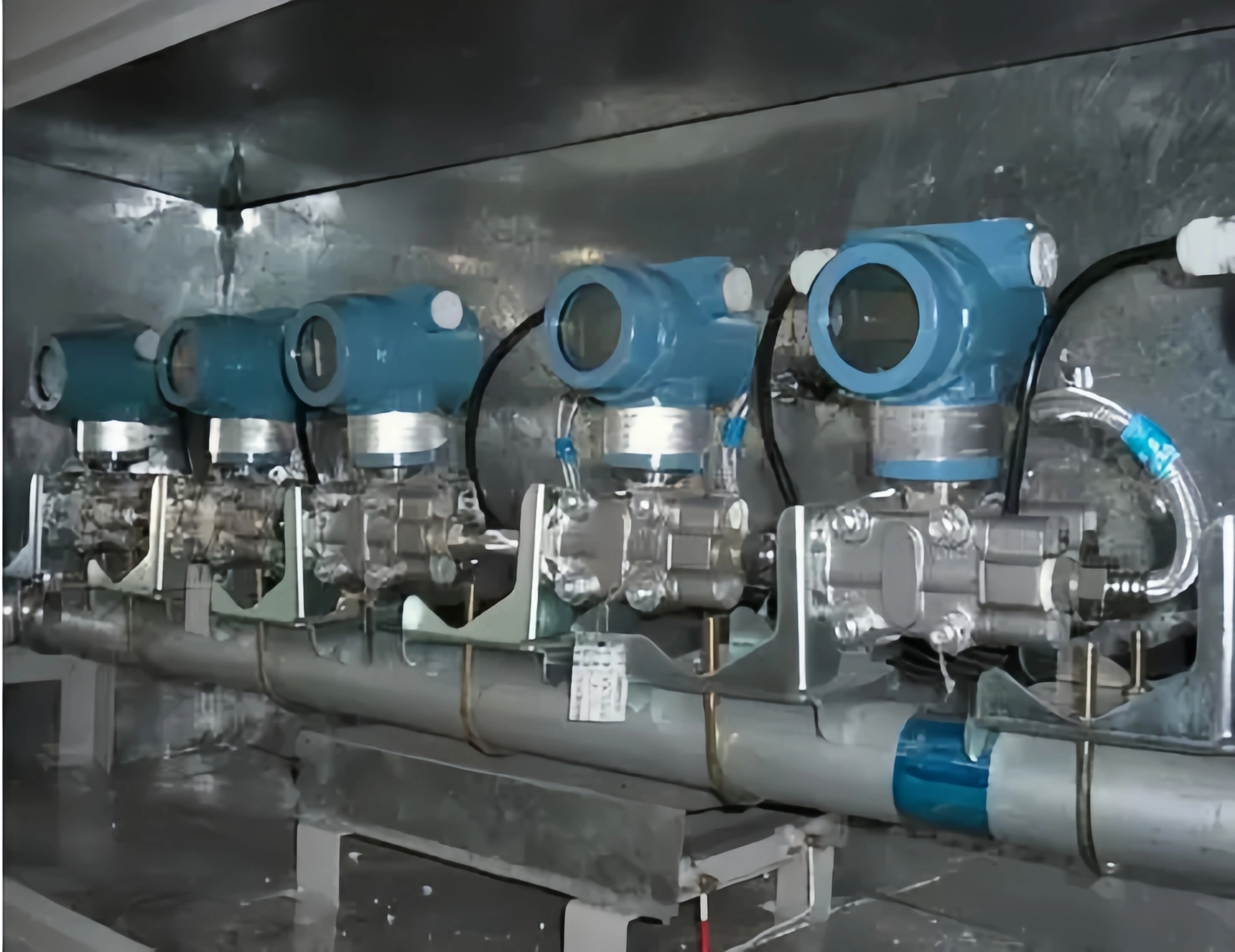
Pressure transmitters measure only the absolute or gauge pressure at a single point in the medium, detecting the pressure value at that single point; differential pressure transmitters measure the pressure difference between two points and are primarily used for level, flow and pressure differential applications.
Whilst the sensing structures of both are similar—and both can output a standard 4–20 mA signal—their measurement logic differs. Pressure transmitters should be selected for measuring static pressure in pipelines or atmospheric pressure in tanks; whilst differential pressure transmitters are required for measuring orifice plate flow, liquid levels in sealed vessels, and pressure differentials across filter screens.
Differential pressure transmitters are equipped with high- and low-pressure side ports, enabling them to withstand pressure differentials between the two sides; they are suitable for scenarios involving pressure differentials, with their measurement range adapted to the differential pressure interval.
Pressure transmitters have only a single pressure tap, with their measurement range corresponding to the actual pressure of the medium; they feature a simpler structure and lower cost, and are frequently used for routine pressure monitoring.
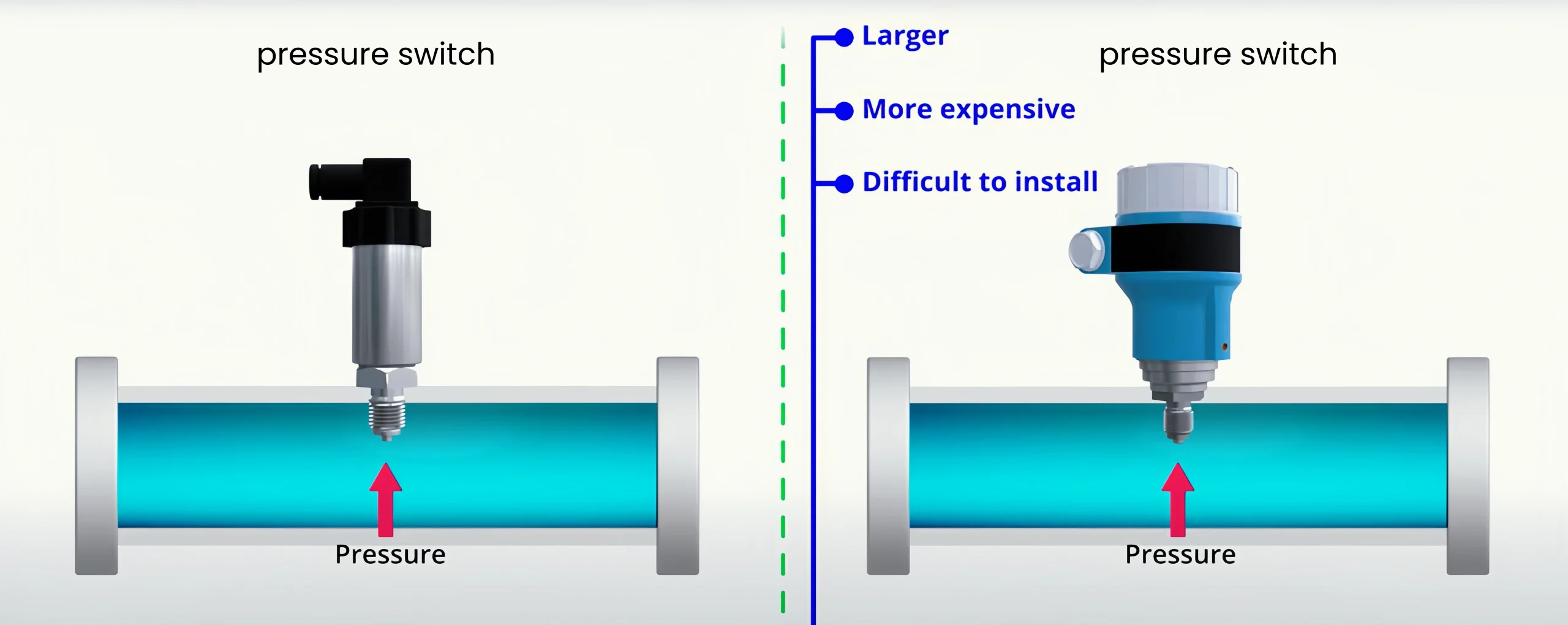
What is the difference between a pressure transmitter and a pressure switch?
A pressure transmitter converts pressure signals into analog or digital signals for use with amplification circuits. It enables the implementation of processes from pressure detection to control and display.
A pressure switch is a functional switch that automatically connects or disconnects when the pressure reaches a preset value.
Read More: Difference between a Pressure Switch and a Pressure Sensor

What is the main purpose of a transmitter?
A transmitter is a device that converts an input current signal into a standard electrical signal (e.g., 4-20mA, 0-5V). It enables rapid and precise measurement of parameters such as temperature and pressure. These measurements are isolated and converted into standard analog signal outputs.
Sensors and Transmitters
The sensor is the core sensing element, responsible for direct contact with the medium and for converting physical quantities such as temperature, pressure and differential pressure into weak electrical signals.
It merely performs signal detection and conversion and lacks the capability for standardised remote transmission. Transmitters are often integrated with sensors; they receive the weak raw signals from the sensor, amplify, calibrate and convert them, and output industrial standard signals such as 4–20 mA, which are compatible with remote instruments and control systems.
Put simply, sensors are responsible only for acquiring raw physical signals, whilst transmitters handle signal conditioning and long-distance transmission. In industrial applications, the two are often integrated into a single unit, collectively referred to as a transmitter. A sensor on its own cannot be directly connected to a central control system; it must be paired with a transmitter to process the signal.
How to connect a transmitter to a PLC?
1. If pressure display is unnecessary, connect a digital output transmitter (amplifier) to the PLC. Communication interfaces can be RS232 or RS485.
2. If pressure values need to be displayed, use a display controller with a communication interface connected to the PLC. The communication interface can be RS-232, RS-485, or an Ethernet port.
Connecting to the PLC via digital signals provides higher measurement accuracy. Although the sampling rate of serial ports is limited, the cost is relatively low compared to analog signal connections. This is particularly advantageous when a single device uses multiple pressure sensors, as one serial port can connect to multiple pressure sensors.
Most suppliers provide corresponding wiring diagrams. If you require specific connection methods, please contact your supplier.
In summary, the conversion from a pressure sensor to a transmitter involves transforming raw signals into standardized outputs. Pressure sensors and transmitters need not be strictly distinguished; simply select different pressure sensors based on your specific operating conditions.
If you require pressure measurement but face selection problems, contact us immediately. Our professional engineers will provide the most cost-effective measurement solutions. With years of expertise in pressure measurement, Sino-Inst boasts numerous successful pressure measurement case studies.