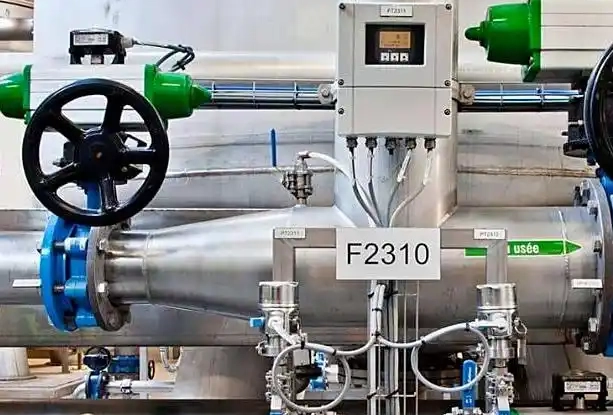
Biogas composition shifts noticeably from moment to moment, and the gas inevitably carries water vapor and contaminants — which is why nailing down an accurate flow rate remains one of the persistent headaches in digester operation and maintenance.
This article reviews the operating conditions that suit different biogas flow meter types, digs into the usual sources of measurement error, and sets out selection and application criteria grounded in how biogas actually behaves, with the goal of giving project teams practical guidance on flow measurement in the field.
Biogas
Biogas is a flammable gas mixture produced mainly through anaerobic fermentation of organic waste—crop straw, livestock and poultry manure, sludge, food waste, decaying weeds, and similar material—by microorganisms working in sealed, oxygen-free conditions.
It is generated in settings such as livestock farms, wastewater treatment plants, food waste processing stations, and centralized rural fermentation pits, and is treated as a renewable biomass gas.
Characteristics of digester
1. Composition Characteristics:
Biogas is a multicomponent flammable gas mixture. Methane makes up the lion’s share—roughly 50% to 70% by volume—and acts as the primary combustible component.
Carbon dioxide usually falls between 25% and 40%. You’ll also find trace amounts of hydrogen sulfide, water vapor, nitrogen, and hydrogen in there.
2. Physical and Chemical Characteristics:
Raw biogas is colorless and odorless before it gets purified. The rotten-egg stench everyone notices comes from hydrogen sulfide mixed in there—actually useful because it gives you an early heads-up when something’s leaking.
The gas weighs slightly less than air, so any escape drifts upward and pools at the top of enclosed spaces. That’s how you end up with localized high-concentration pockets inside buildings or sealed digesters.
3. Flammability and Explosivity Characteristics:
Biogas and air form an explosive mixture within a specific concentration window. Once the mix hits 5% to 15% by volume, anything from an open flame to a static spark or hot surface can set off a deflagration.
4. Corrosion and Toxicity Characteristics:
Hydrogen sulfide is a double problem: it’s toxic on its own, and it chews through metal pipelines and gas-handling equipment.
5. Pipeline Storage and Transportation Characteristics:
Biogas won’t liquefy under normal temperature and pressure, so low-pressure sealed tanks are the standard for storage. Before it can move through pipelines over long distances, dehydration and desulfurization have to be sorted out first.
Condensed water vapor can pool and clog lines, while hydrogen sulfide lingering in the stream will steadily corrode metal pipes and equipment, ratcheting up operating and maintenance costs.
Precautions for Measuring Biogas Flow
1. Start with proper biogas pretreatment. The raw gas carries water vapor, hydrogen sulfide, and dust, so fit vapor-liquid separators, filters, and desulfurization units right at the pipeline inlet. Drain and clean out sludge on a regular schedule to stop corrosion, scaling, and sensor clogging, and keep the gas stream clean.
2. Stick to standard practice when laying pipe and mounting instruments.Respect the straight-run requirements upstream and downstream of the meter; pitch the pipe downward and fit a drain port; steer clear of spots where airflow gets disrupted by fans or elbows, so liquid doesn’t pool around the probe and turbulence doesn’t throw off the readings.
3. Apply temperature and pressure compensation to get standard-condition flow. Because biogas is compressible, swings in temperature and pressure will shift the volume reading noticeably. The meter needs built-in T&P compensation, and the pipe should be insulated and freeze-protected through the winter months.
4. Strictly adhere to explosion-proof safety requirements.Methane is flammable and explosive; therefore, all meters and wiring components must be explosion-proof rated. Piping and meters must be reliably grounded; open flames are prohibited in the measurement area; and digester must be vented and purged from the pipes before maintenance.
5. Go with corrosion-resistant materials and keep up with inspections.Hydrogen sulfide eats through metal fast, so any part that touches the gas should be 316 stainless steel or PTFE-lined. Take the unit apart now and then to clear out sulfide buildup, and if the system sits idle for a stretch, blow it through with dry gas to keep the interior clean.
6. Stick to a routine of inspections, leak checks, and calibrations. Check flanges and valves for leaks once a week, and calibrate the flowmeter every six months. When the readings go off, look at three things first: clogged filters, fouled sensors, and leaks in the pipeline itself.
Biogas Flow meter
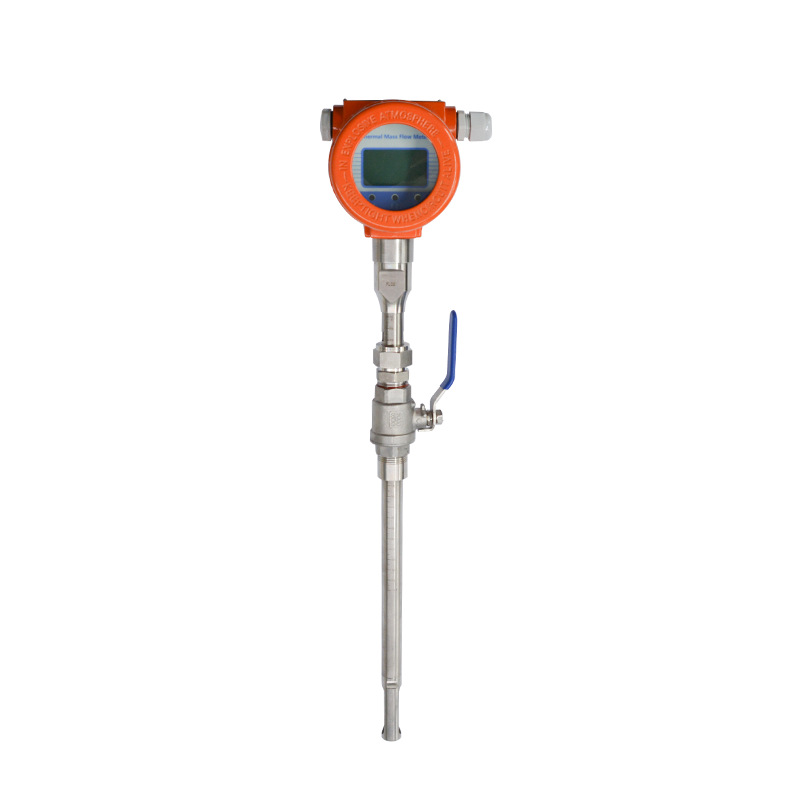
Thermal Mass Flow meter
Working Principle
Based on the principle of thermal diffusion cooling, the sensor contains two sets of platinum resistance temperature probes: one set provides constant-power heating, and the other measures the temperature of the medium.
As the gas flow passes over the probes, it carries away heat; the greater the number of gas molecules, the faster the heat dissipation. The circuit calculates the mass flow rate based on the temperature difference between the two sets of probes and can directly output standard volumetric flow rate without requiring additional temperature or pressure compensation.
Advantages
1. It measures mass flow directly and comes with built-in temperature and pressure compensation, so swings in biogas pressure or temperature won’t throw off the accuracy.
2. The lower measurement limit is extremely low, which means it can pick up even tiny amounts of gas coming off the digester and still perform well at low flow rates.
3. There are no moving parts to wear out or seize up, so it handles biogas streams with low dust content without trouble.
4. Installation only needs a short straight run of pipe, making it easier to fit into existing setups or retrofit on site.
6. Pressure drop is minimal, so it won’t choke the pipeline or waste gas power during normal operation.
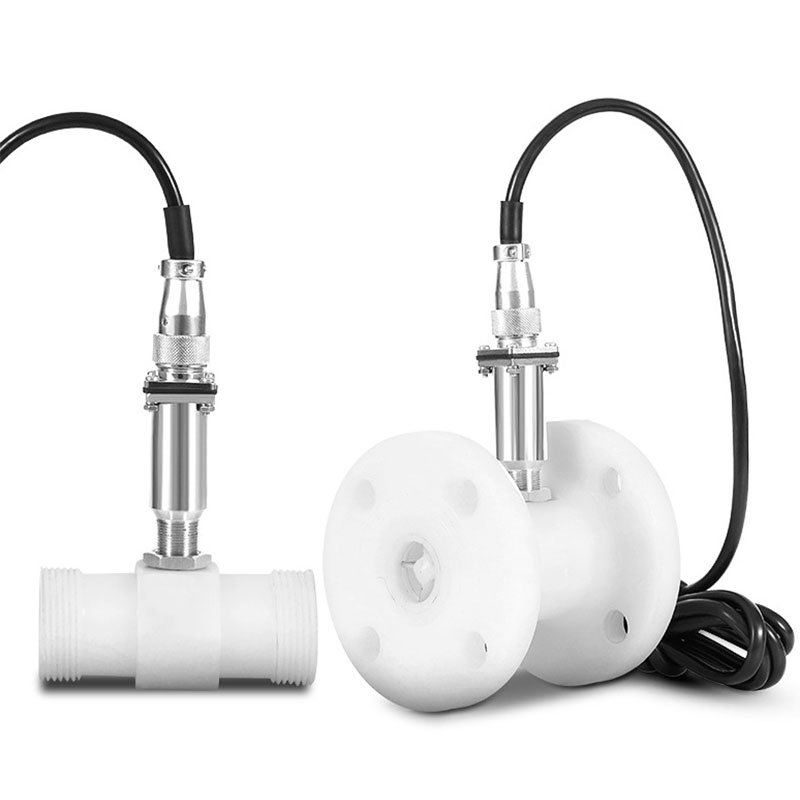
Turbine Gas Flow Meter
Principle of Operation
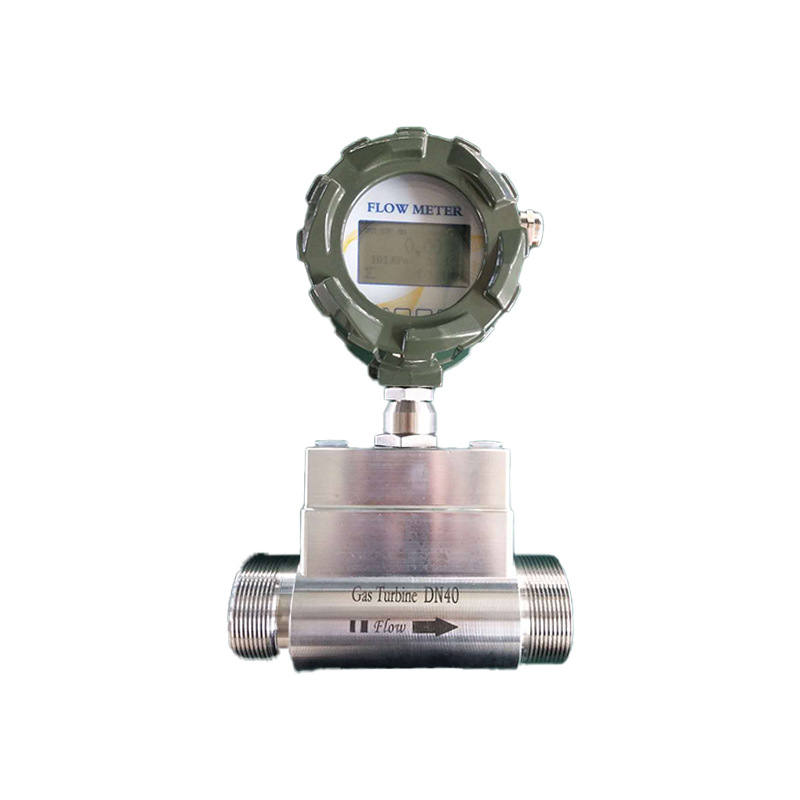
A bladed turbine sits inside the pipeline. Gas flowing through strikes the blades and spins the rotor—the faster the gas moves, the faster the turbine turns. A magnetic pickup mounted in the body picks up pulses from the rotating blades, and the pulse frequency gives you both the instantaneous and cumulative volume.
Advantages
1. Accuracy is solid in the mid-range with little error, so measurements stay reliable when gas output is steady.
2. The design is simple, the signal output stays stable, and the secondary display instruments to go with it are inexpensive.
3. Response time is quick enough to catch sudden changes in flow rate as they happen.
Ultrasonic Gas Flow Meter
Working Principle
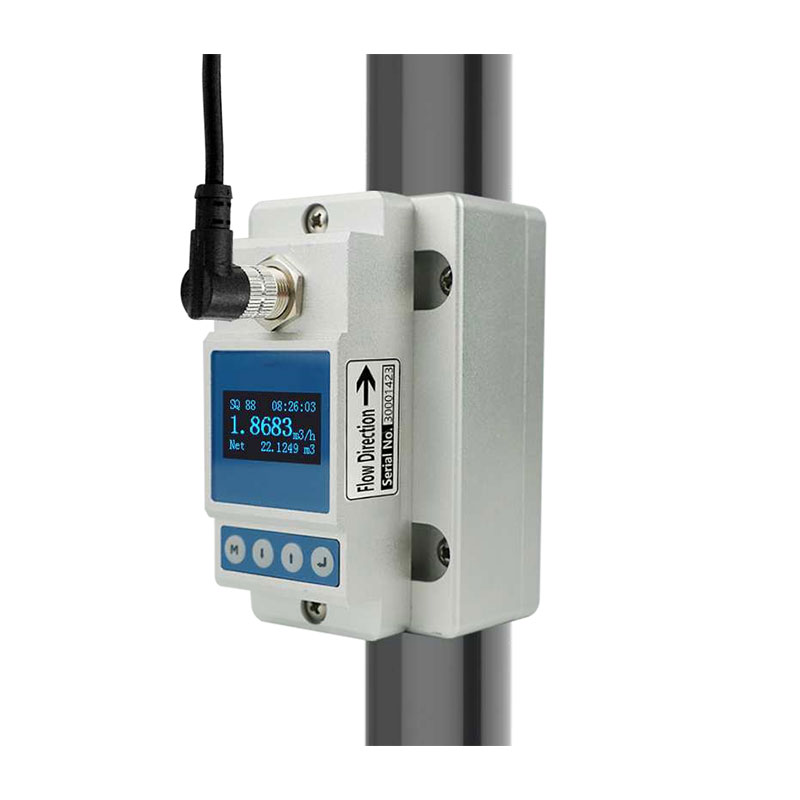
Transmitter and receiver pairs mount on opposite sides of the pipe. They take turns sending sound waves downstream and upstream. Moving gas changes the transit-time difference between the two directions—the faster the gas moves, the larger the gap between upstream and downstream arrival times.
The meter works out the average velocity across the pipe from that time difference, then multiplies it by the pipe’s cross-sectional area to get the volumetric flow rate.
Advantages
1. No internal obstructing components, no pressure loss, and no hindrance to gas transmission.
2. Non-contact measurement; dust and small amounts of impurities in the medium will not damage the sensing elements.
3. Corrosion-resistant and wear-free; no need to replace internal components during long-term use, ensuring a long service life.
4. Can be disassembled, maintained, and reinstalled under pressure without interrupting production; no need to shut off the biogas supply, making operation and maintenance convenient.
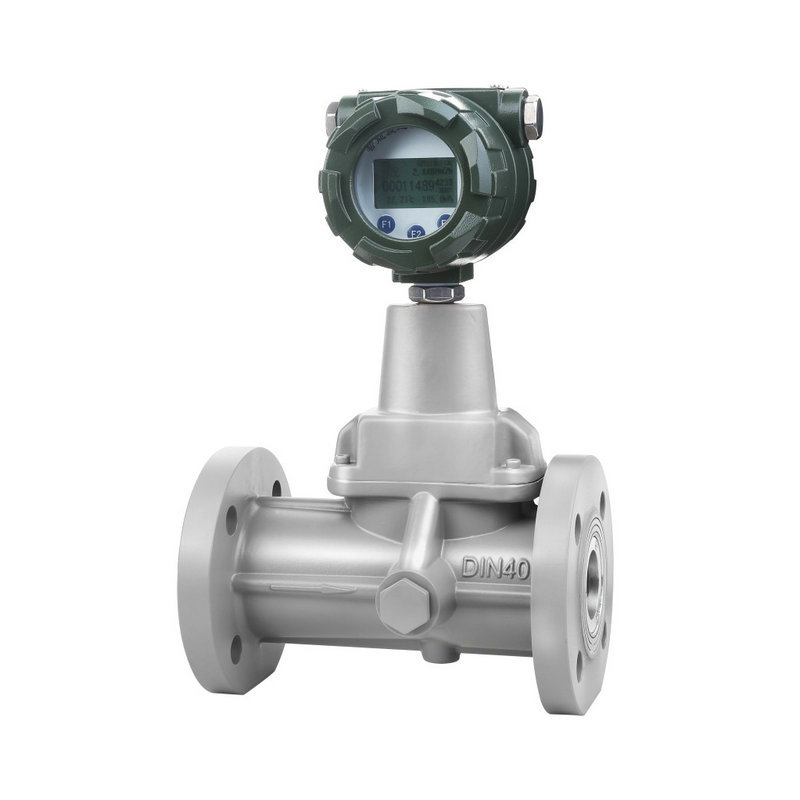
Vortex Flow Meter
Working Principle
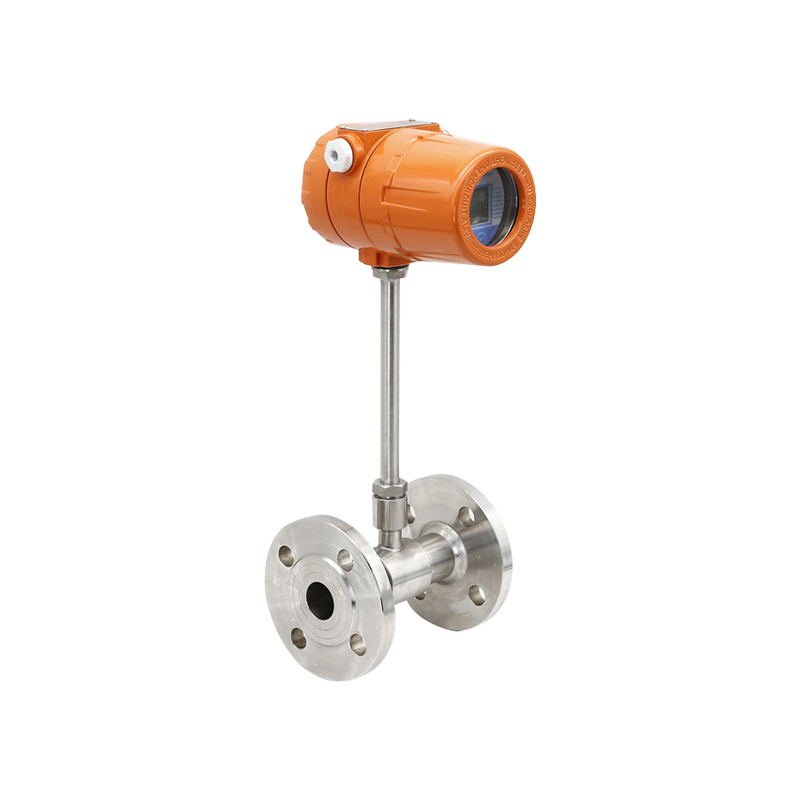
Gas entering the instrument’s interior is first forced to form a vortex flow by the guide vanes. As the vortex flow passes through the sensing zone, it generates a vortex oscillation; the higher the flow velocity, the higher the oscillation frequency.
The sensor captures the vortex oscillation frequency signal, which is then processed by the circuitry and converted into a gas volumetric flow rate value.
Advantages
1. Temperature and pressure compensation are built into the unit, so it outputs standard-condition flow directly without stacking up auxiliary devices.
2. The turndown ratio is wide, meaning it stays steady whether the digester is pushing out high volumes or barely producing.
3. Internals are rugged enough to take the hit from gas flow and cope with minor turbulence in the line.
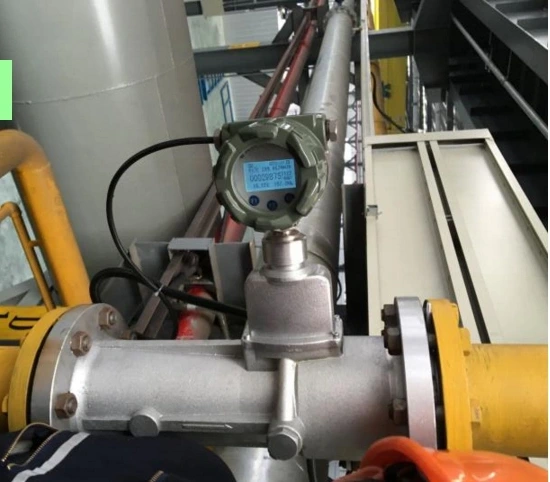
Practical Applications of Digester Flow Meters
1. Digester Production Measurement in Digester Projects
This suits biogas projects running anaerobic digestion on livestock manure, crop straw, or food waste. Mount it on the digester’s main outlet and it tracks both instantaneous and cumulative gas output accurately.
The data helps you troubleshoot fermentation, tweak feedstock ratios, and gauge microbial activity, while the stored production logs become central to day-to-day operation and maintenance.
2. Energy Consumption Metering
Fit meters to the intake lines of generators, boilers, and flares to monitor each unit’s biogas draw separately. Cross-check those readings against power output and heat production figures and you can work out conversion efficiency, tweak operating conditions to cut energy costs, and keep the site’s energy books straight.
3. Gas Supply Billing Applications
Mainly aimed at rural centralized supply schemes and industrial park distribution networks. Putting meters on household and commercial lines gives you precise, meter-by-meter readings that back up billing and trade settlements, while also cutting down on wasted gas and arguments over usage.
4. Digester Purification Process
Used in biomethane and CNG upgrading plants. Place meters at the raw biogas inlet and the treated gas outlet, then compare the two volumes to figure out process losses and recovery rates. That lets operators refine the process and keep a lid on production costs.
5. Environmental Protection and Carbon Asset Accounting
On large-scale plants, flow records act as hard evidence during environmental acceptance checks, emissions audits, and resource-recovery reviews. The same data feeds into carbon-reduction calculations, green-energy subsidy claims, and environmental reports, ticking the boxes for compliance audits and policy applications.
6. Pipeline Network Operation, Maintenance, and Leak Detection
Space meters along main and branch lines throughout the network. When upstream and downstream readings don’t match, operators can spot leaks or valve trouble fast.
7. Industrial Safety Interlock Monitoring
Explosion-proof meters can tie straight into the plant’s automation system for real-time pipeline monitoring. If flow suddenly spikes, drops, or cuts out altogether, the system sounds an alarm and kicks in protective measures—shutting valves or tripping equipment—to head off ruptures, overpressure, and other hazards so production stays safe.
Selection Guide
1. Determine the Medium Parameters
First, pin down what the gas actually contains—hydrogen sulfide, water vapor, dust levels, and so on. Figure out whether you are dealing with raw biogas, desulfurized gas, or biomethane.
That tells you what corrosion-resistant materials the meter needs, and lets you rule out any flowmeter types that can’t handle the chemistry or would clog up quickly.
2. Collect Operating Condition Data
Gather the hard numbers: pipe diameter, operating pressure, temperature, and whether the line runs under positive or negative pressure. Work out the minimum, typical, and peak flow rates. At the same time, check the surroundings for vibration and whether the meter will sit outdoors in the rain.
3. Define Measurement Accuracy Requirements
First, figure out how accurate the readings actually need to be. High-accuracy units are worth the investment when the data feeds into trade settlement or carbon verification.
For routine monitoring and leak detection, medium accuracy generally covers it. If you only need basic process checks, a cheaper instrument with a lower accuracy grade will get the job done.
4. Verify Installation Conditions
Check the straight pipe runs upstream and downstream of the meter locati0n, and watch out for elbows or reducers nearby that could throw off the flow profile. Then pick a flowmeter that fits both the pipe size and the physical space you have.、
5. Match Explosion-Proof and Communication Configurations
Biogas is flammable, so safety ratings matter. Indoor meters need to be intrinsically safe; outdoor ones should carry at least an IP65 rating. On the communications side, choose 4–20 mA or Modbus depending on how the meter needs to talk to the plant’s control and alarm systems.
6. Select the Appropriate Flowmeter Type
Narrow the field based on what the gas is like and how it is running. If the biogas is wet and dirty, ultrasonic or vortex meters tend to hold up better. If the gas is already clean and dry, vortex or thermal meters are worth considering.
7. Evaluate Total Cost of Ownership
Look beyond the sticker price. Factor in how often parts need replacing, how regularly the meter needs cleaning and calibration, and what that costs over time. In high-sulfur, high-humidity service, meters with no moving parts and minimal upkeep usually pay for themselves.
8. Install Supporting Pretreatment Equipment
Install vapor-liquid separators and filters in raw biogas pipelines; add desulfurization equipment for high-sulfur conditions; confirm that the instrument has built-in temperature and pressure compensation functions.
9. Finalize the Selection Plan
Integrate all parameters to determine the instrument model, material, explosion-proof rating, and communication specifications; compile a parameter table to finalize the selection.
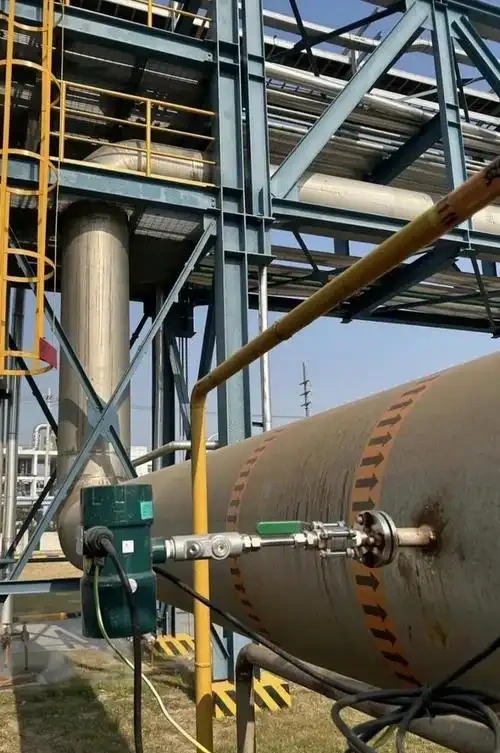
The Sion-Inst line covers gas flow meters built for tough industrial service. These units run high-precision measurement algorithms and pack corrosion-resistant, explosion-proof construction into one housing. They work across a range of setups—municipal gas distribution, industrial furnaces, biomass energy plants, and similar applications.
The series brings together stable performance, low upkeep costs, full parameter compensation, and compliance with safety standards. That combination covers everything from process monitoring and energy tracking to trade settlement. With an established range of products and tailored selection support, Sion-Inst backs up new energy and industrial gas projects with the technical groundwork needed for smooth, safe, compliant day-to-day operation.