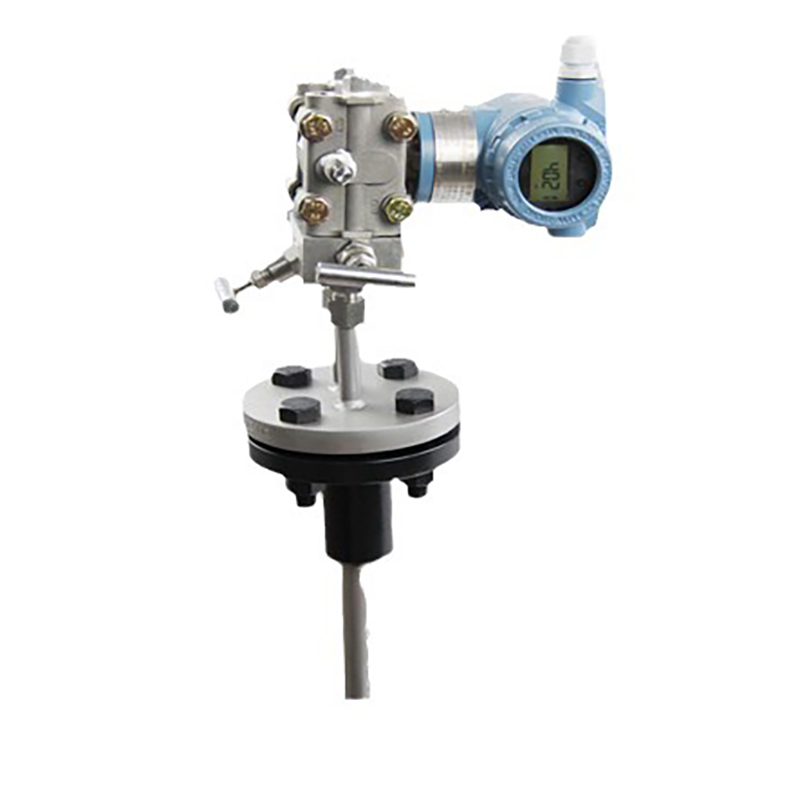
A temperature sensor is a sensor that senses temperature and converts it into a usable output signal. Two common types of temperature sensors are thermocouples or RTDs. Once a temperature sensor senses a temperature change, the thermocouple or RTD will change accordingly. This change is then converted into a weak electrical signal.
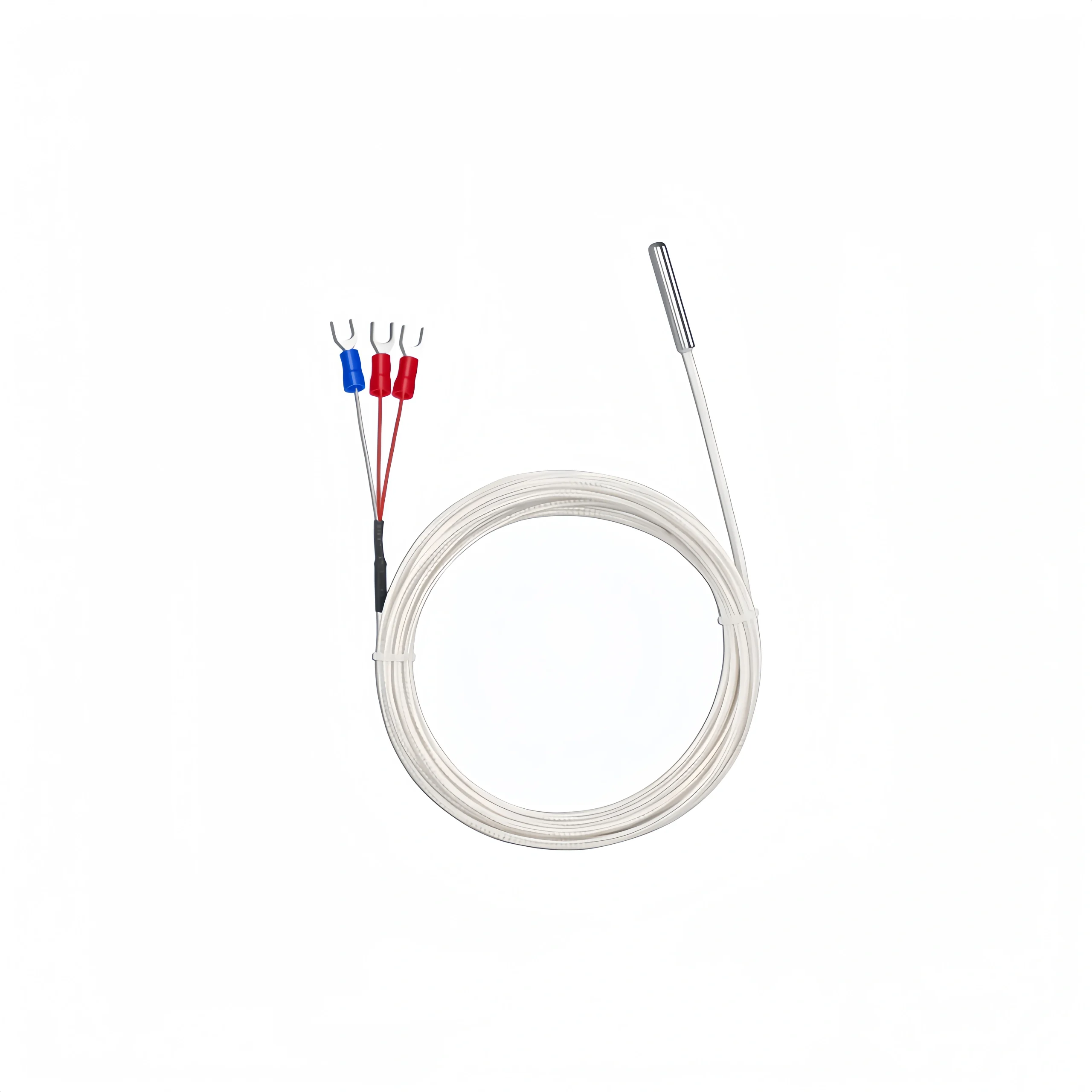
Temperature sensors are the core part of temperature measuring instruments and come in a wide variety. According to the measurement method, it can be divided into contact and non-contact. According to the sensor’s electronic component characteristics, Temperature sensors are divided into RTD and thermocouple.
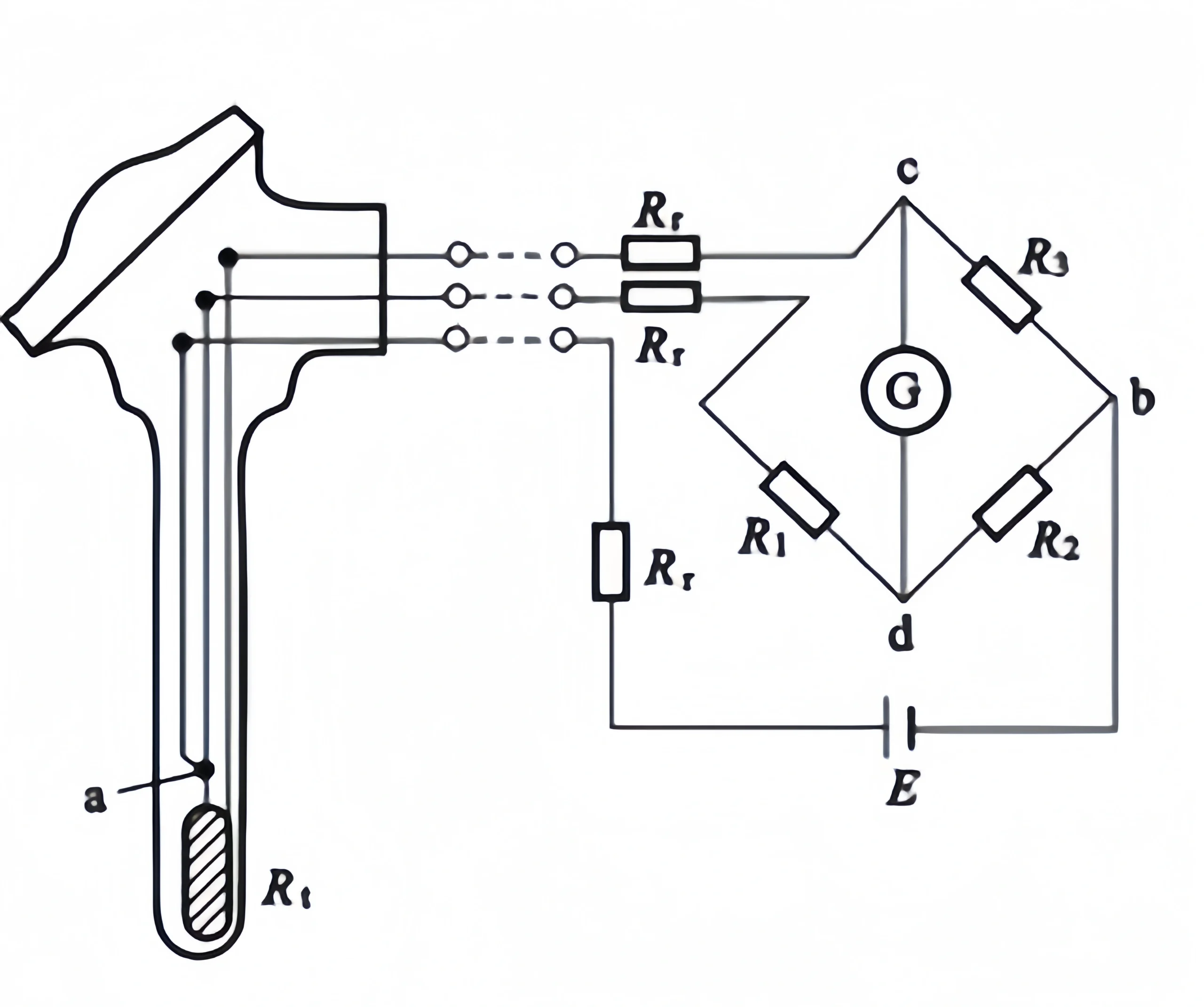
An RTD temperature sensor utilizes the nature of an object’s resistance to change with temperature to measure temperature. The resistance value of the RTD shows a linear relationship with the temperature. The material of RTD is generally metal, such as copper, nickel, iron, and so on. It also has some platinum, gold, and other heavy metal materials.
RTD temperature sensor has the advantages of a wide measuring range, high precision, good stability, and strong anti-interference ability. But its response speed is slower, and the measurement error is larger. And need to compensate for the wire. In the selection of RTD temperature sensors, it is necessary to make comprehensive consideration according to the specific measurement needs and environmental conditions in order to achieve the best measurement results.
Thermocouple temperature sensors are the most commonly used temperature sensors for temperature measurement. Its main benefits are a wide temperature range and adaptability to various atmospheric conditions. It is also sturdy, inexpensive, requires no power supply, and is the cheapest. Thermocouple temperature sensors are not suitable for high-precision applications.
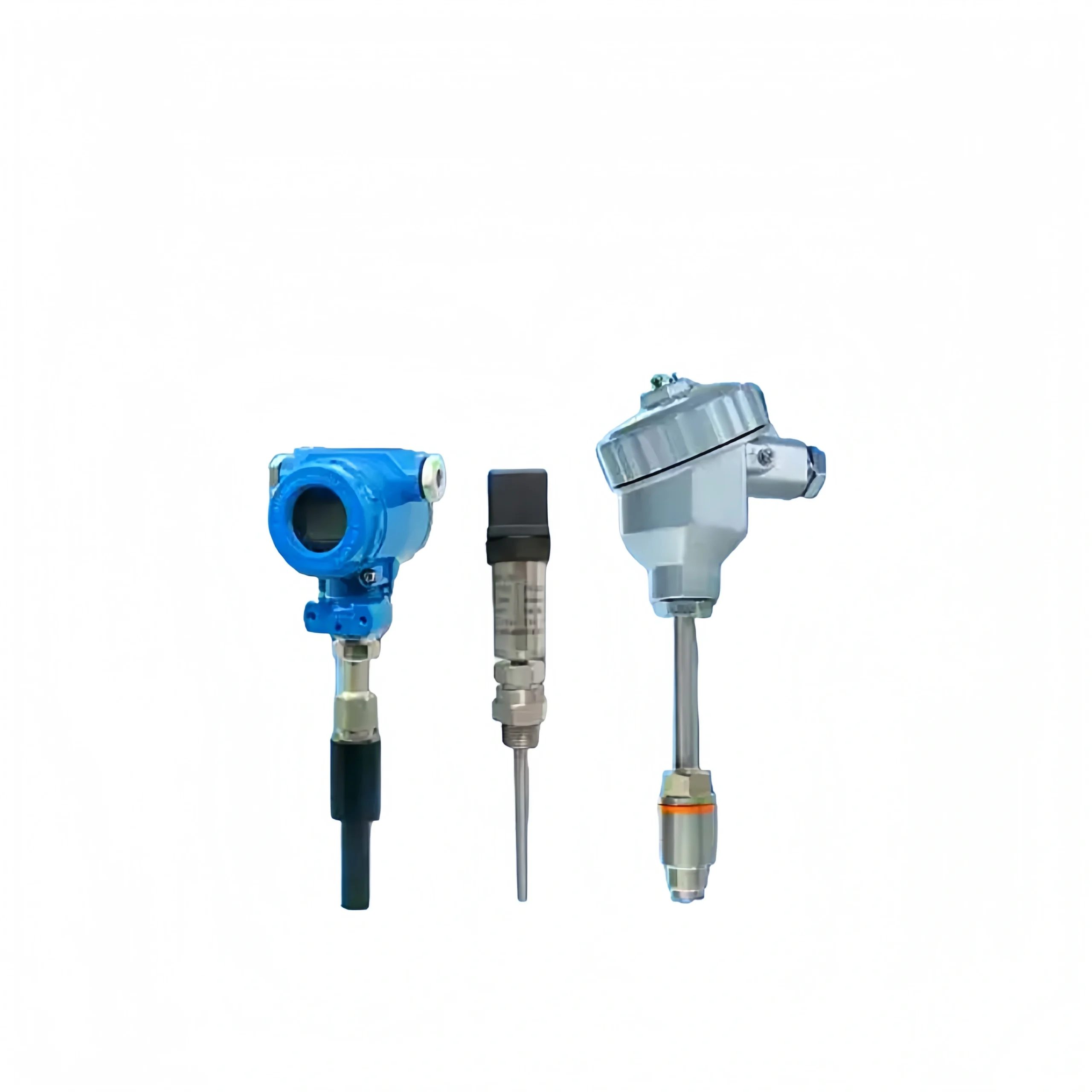
Thermocouple Temperature Sensors
The basic principle of thermocouple temperature measurement is that two conductors of different compositions form a closed loop. When there is a temperature gradient between the two ends of the loop, a current will flow through the loop. At this time there is an electric potential between the two ends – thermal electromotive force, which is known as the Seebeck effect.
Two homogeneous conductors of different compositions are used as thermal electrodes, with the higher temperature end being the working end and the lower temperature end being the free end. The free end is usually at some constant temperature. A thermocouple scale is made from the thermoelectric potential as a function of temperature.
When a third metal is connected to the thermocouple circuit, the thermal potential generated by the thermocouple will remain unchanged as long as the temperature of the two contacts of the material is the same. That is, it is not affected by the third metal access circuit.
Therefore, in the thermocouple temperature measurement, as long as there is access to the measuring instrument, after measuring the thermal potential, the temperature of the medium can be measured.
RTD Temperature Sensors
The principle of operation of an RTD temperature sensor is very simple.The sensor consists of a resistor made of metal wire or film. When a current is passed through the RTD sensor, the current heats up the wire, thus raising the temperature of the wire. Based on the relationship between resistance and temperature, temperature changes can be indirectly measured by measuring changes in resistance.
The operating principle of resistance temperature sensors relies on the linear relationship between wire resistance and temperature. According to Ohm’s law, there is a relationship between resistance and current, and voltage.
Ohm’s law formula: R=V/I,
where R is resistance, V is voltage and I is current.
And according to the effect of temperature on resistance, a linear relationship between temperature and resistance can be obtained.
R=R0(1+α(T-T0)),
where R0 is the resistance value at the reference temperature T0,
α is the thermal sensitivity coefficient,
T is the current temperature.
By measuring the change in resistance, the temperature change can be calculated. To improve the accuracy of the measurement, a bridge circuit or other correction method is often used to eliminate the non-linear effect of temperature on the resistance measurement.
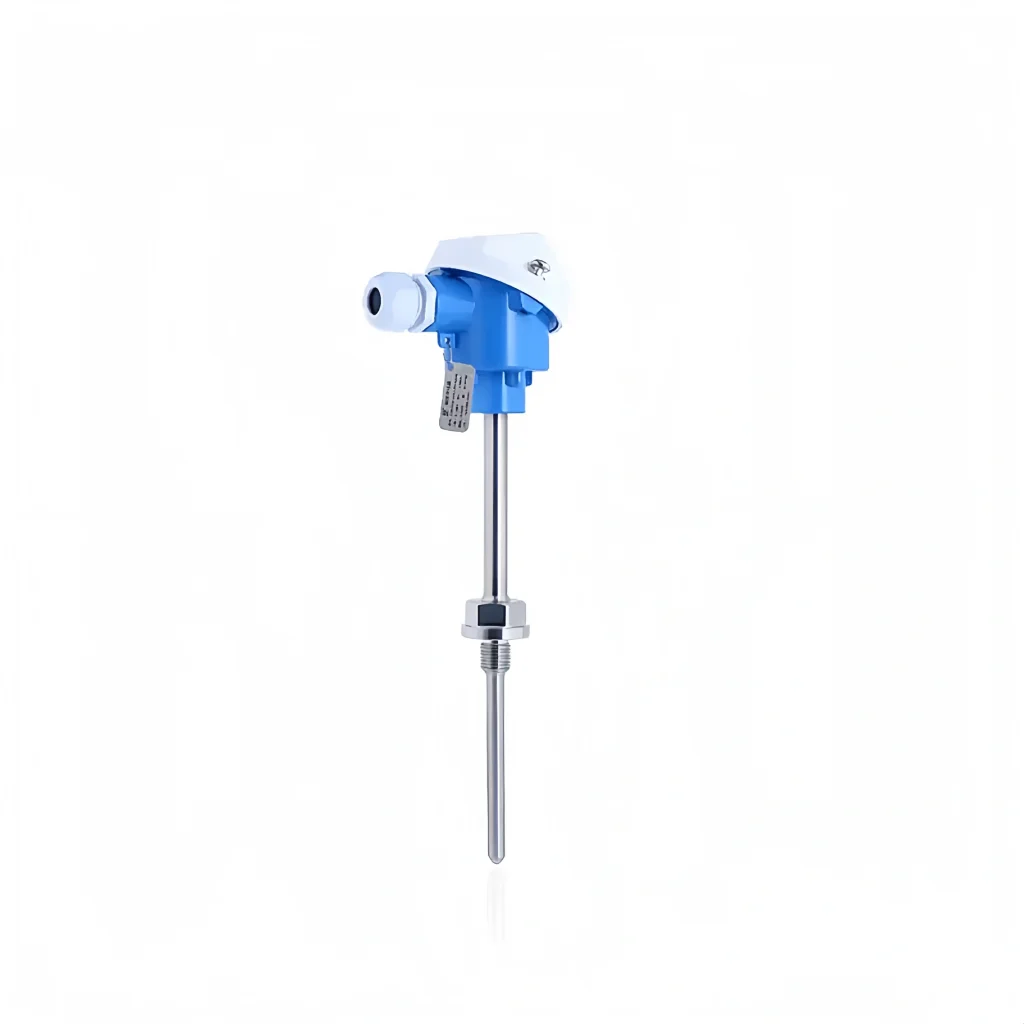
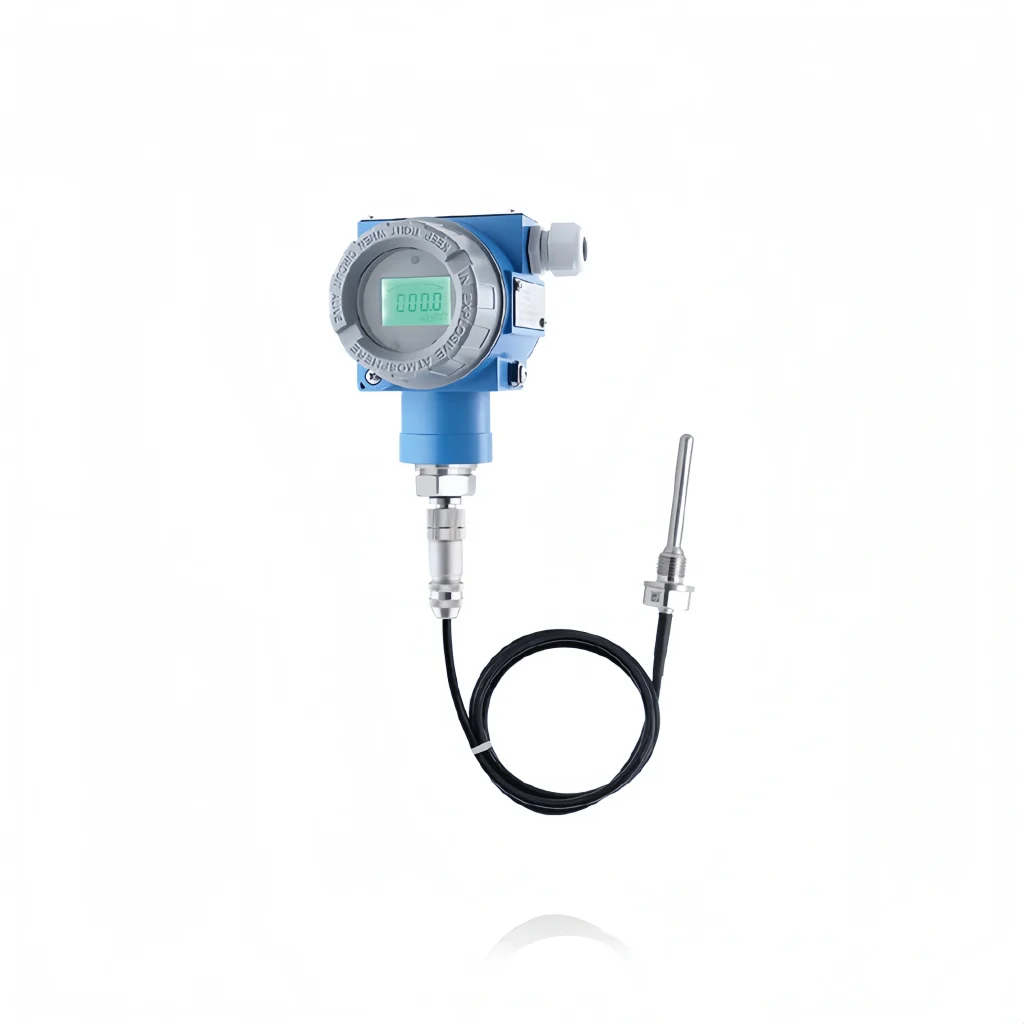
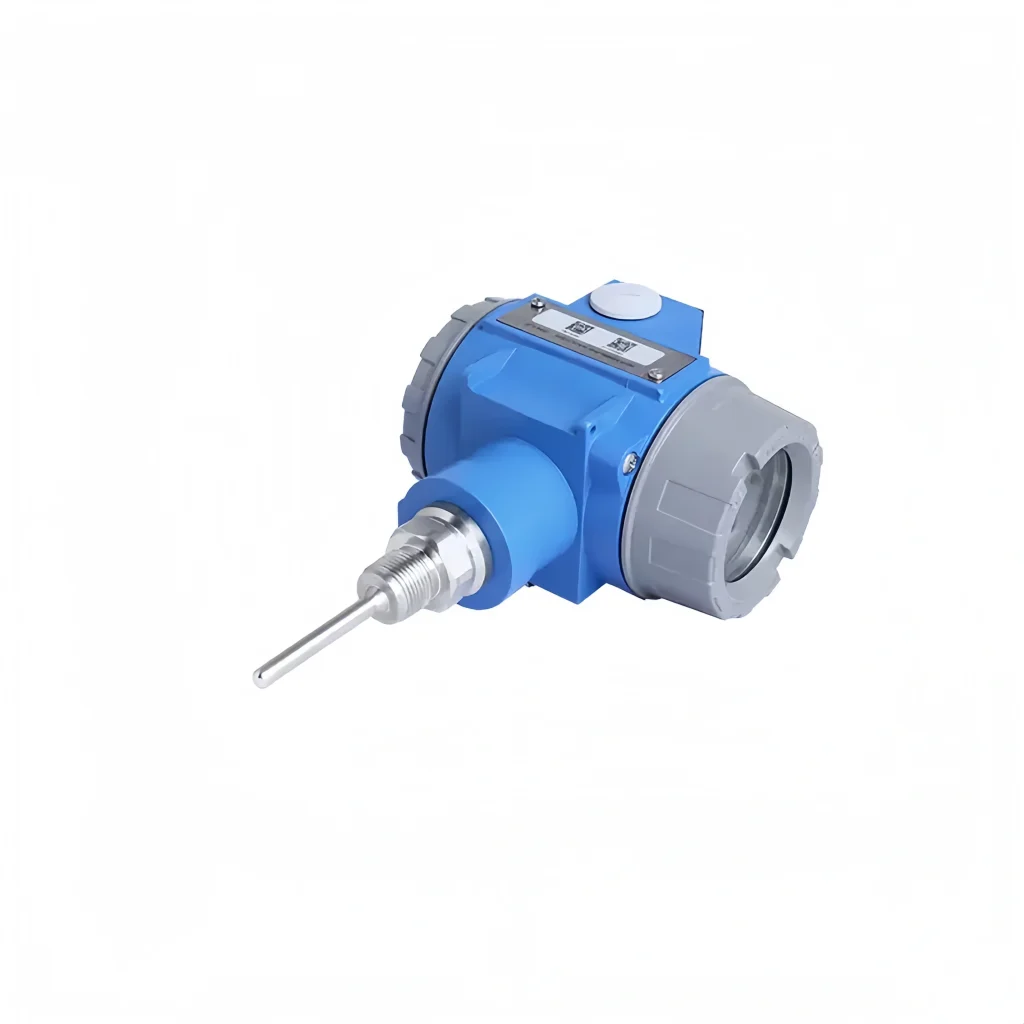
1. Differences in core definitions and functions
A temperature sensor is a sensing element that directly detects temperature and outputs a raw, weak signal; it is solely responsible for acquiring the physical quantity of temperature and does not perform any signal processing.
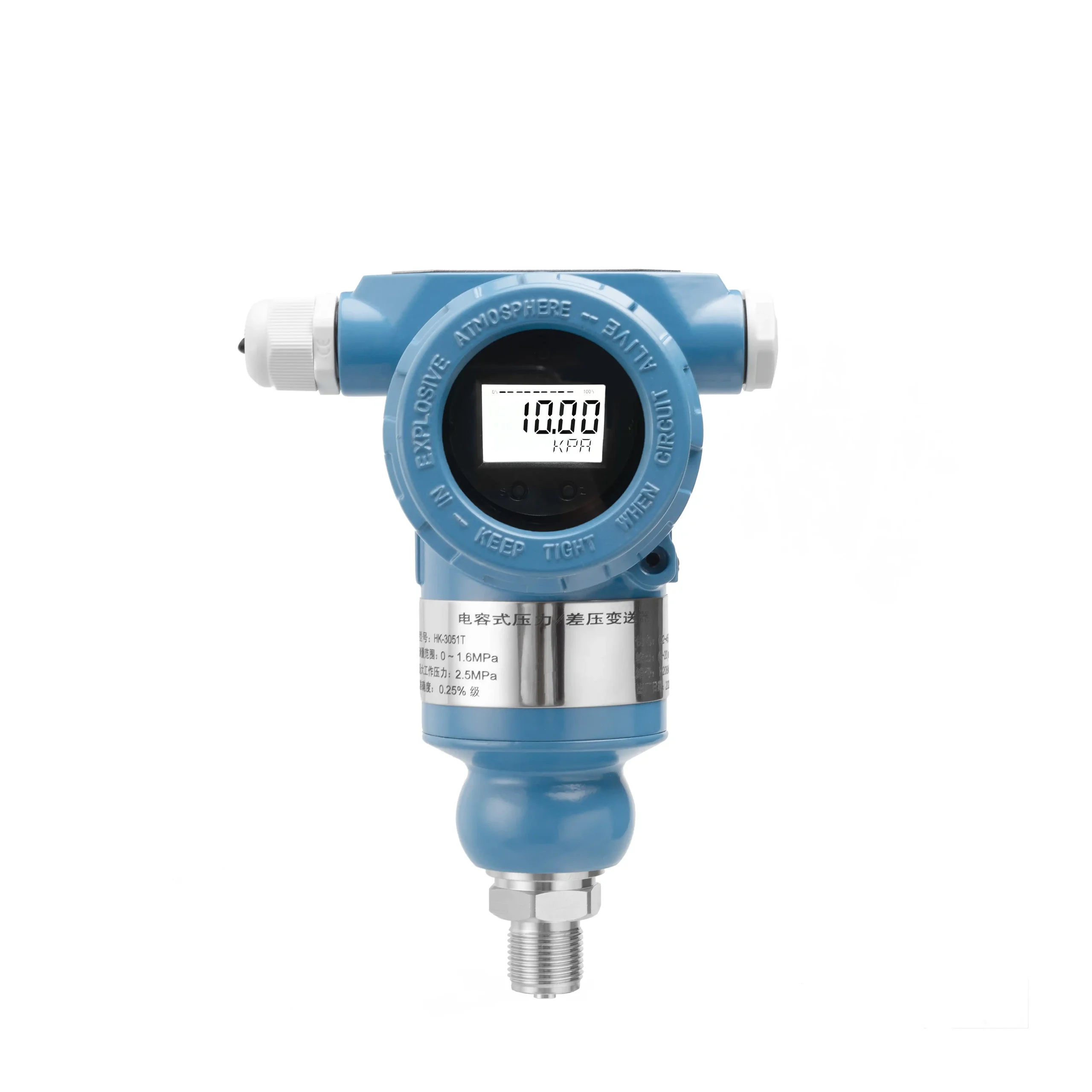
A temperature transmitter is a secondary conversion device that receives the raw signal from the sensor, amplifies it, performs linear calibration and isolation conversion, and outputs a standardised industrial signal.
2. Differences in Output Signal Types
Temperature sensors output weak, non-standard signals: thermocouples output millivolt-level voltage signals, whilst resistance temperature detectors (RTDs, such as PT100 and Cu50) output resistance values that vary with temperature.
Temperature transmitters uniformly output industrial standard signals, commonly 4–20 mA current, 0–10 V voltage or RS485 digital signals, which suffer minimal signal loss during long-distance transmission.
3. Differences in transmission distance and immunity to interference
As the raw signals from sensors are weak, long-distance transmission is prone to interference from cable resistance and electromagnetic interference, limiting their use to short distances.
Transmitters perform signal conditioning, and standardised current signals offer strong immunity to interference, enabling cabling over distances of several hundred metres and adapting to complex electrical environments in industrial settings.
4. Distinct Differences in Power Supply Requirements
Passive temperature sensors, such as thermocouples and standard resistance temperature detectors (RTDs), require no external power supply, as they rely on temperature differentials to generate an electromotive force or changes in resistance.
Temperature transmitters, however, are active devices and must be connected to an external 24 V DC power supply to perform signal conversion and output.
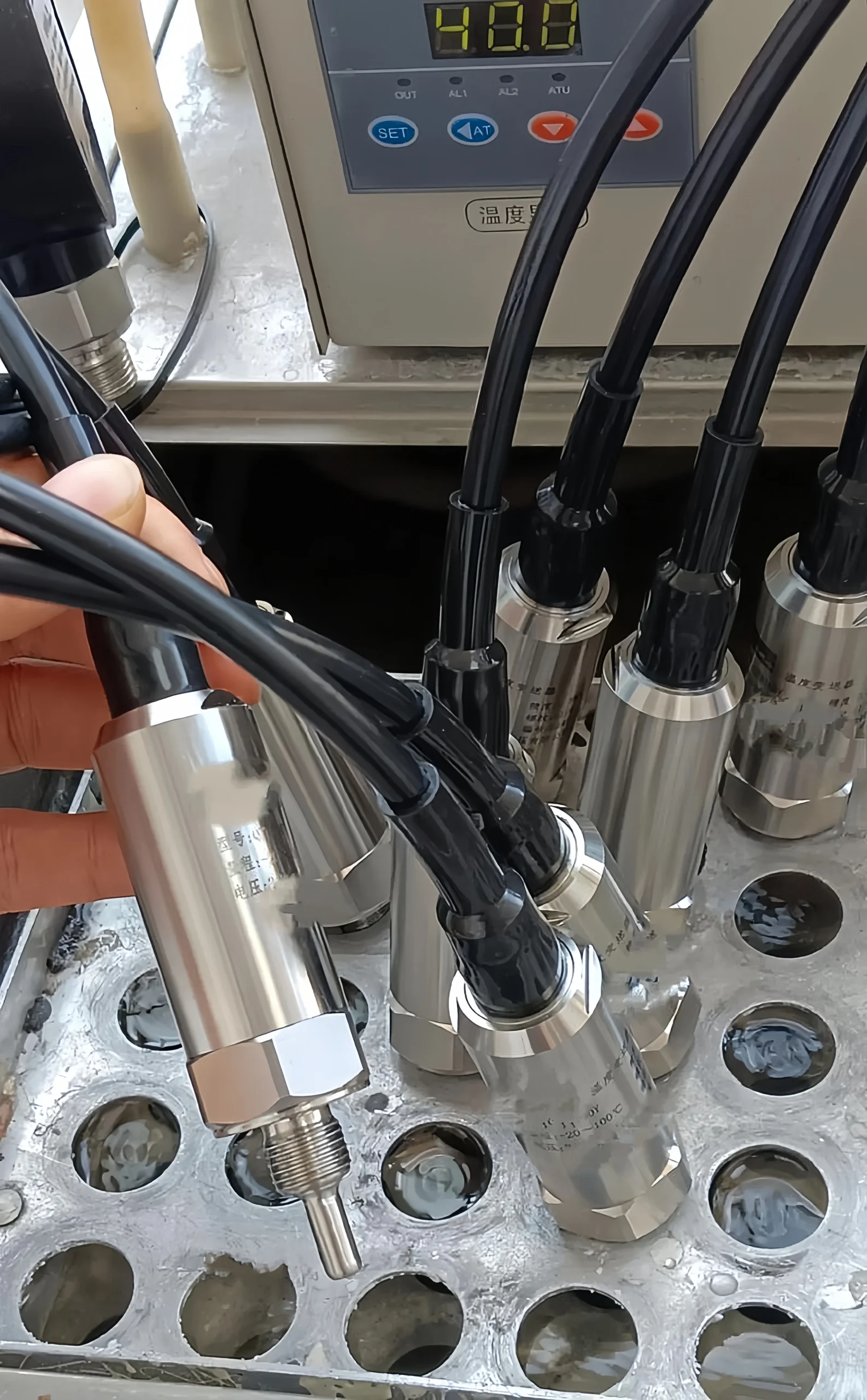
5. Differences in Measurement Linearity and Compensation Capabilities
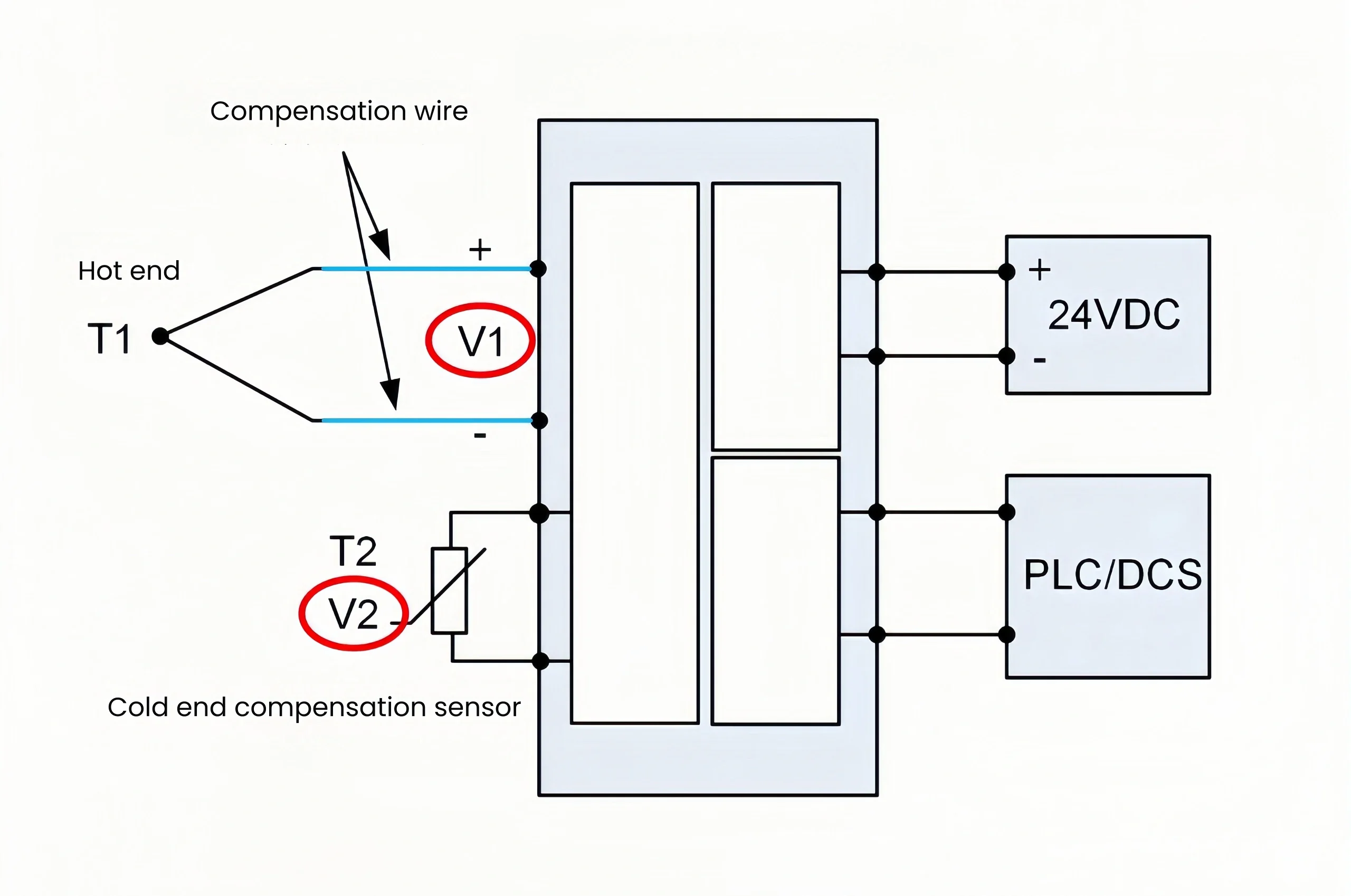
Sensors inherently exhibit non-linear errors; thermocouples also require cold-junction compensation, and when used alone, measurement accuracy can be significantly compromised.
Transmitters incorporate internal compensation circuits and linearisation algorithms that automatically correct the sensor’s inherent errors, with integrated cold-junction and resistance compensation, resulting in more stable measurement accuracy.
6. Field Application Scenarios and Integration Methods
Sensors are predominantly used in laboratories, for simple short-range temperature measurement, and in small embedded devices, often paired with dedicated display instruments.
Transmitters are predominantly used in industrial automation control systems and can interface directly with PLCs, DCSs and recorders, serving as standard components in complete factory temperature measurement systems.
7. Differences in Structural Integration
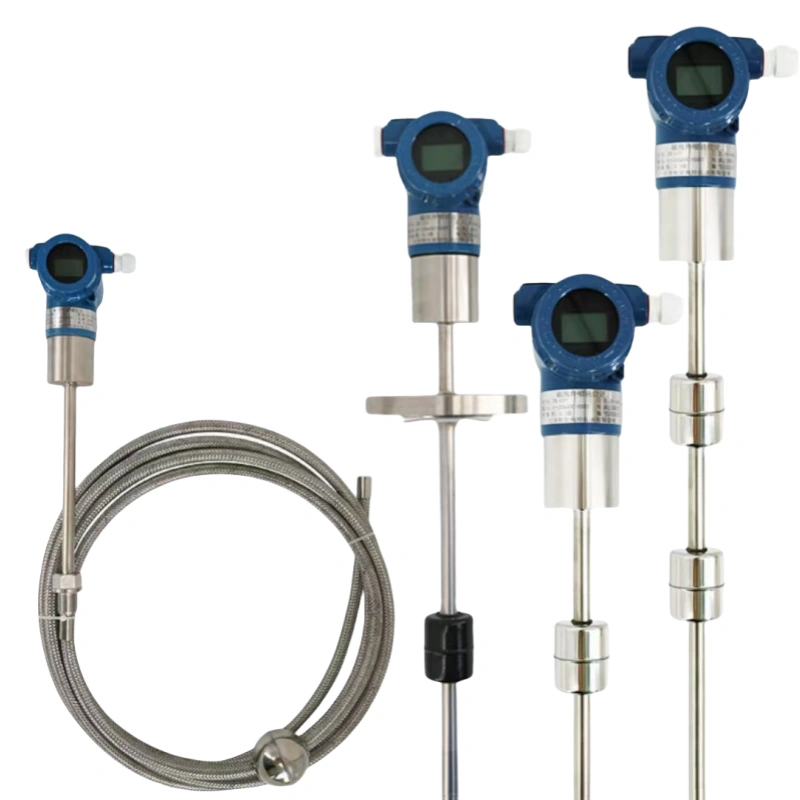
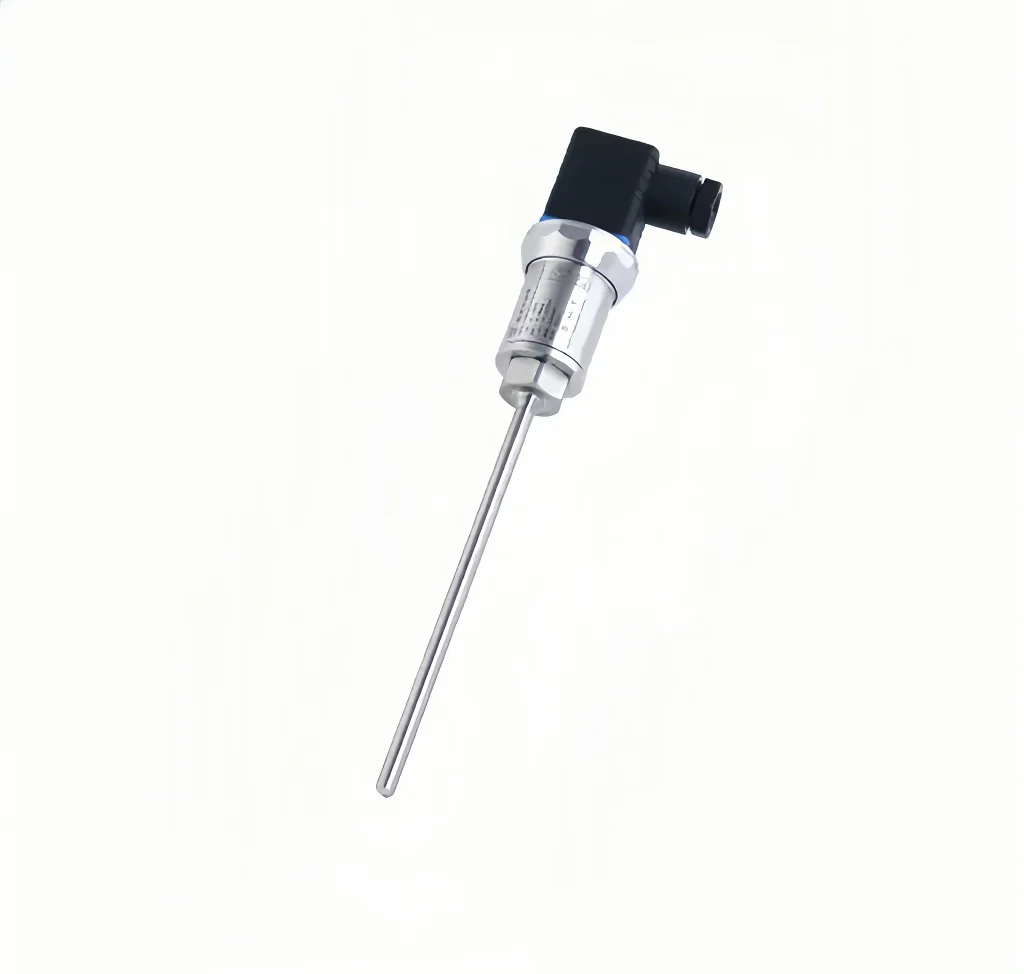
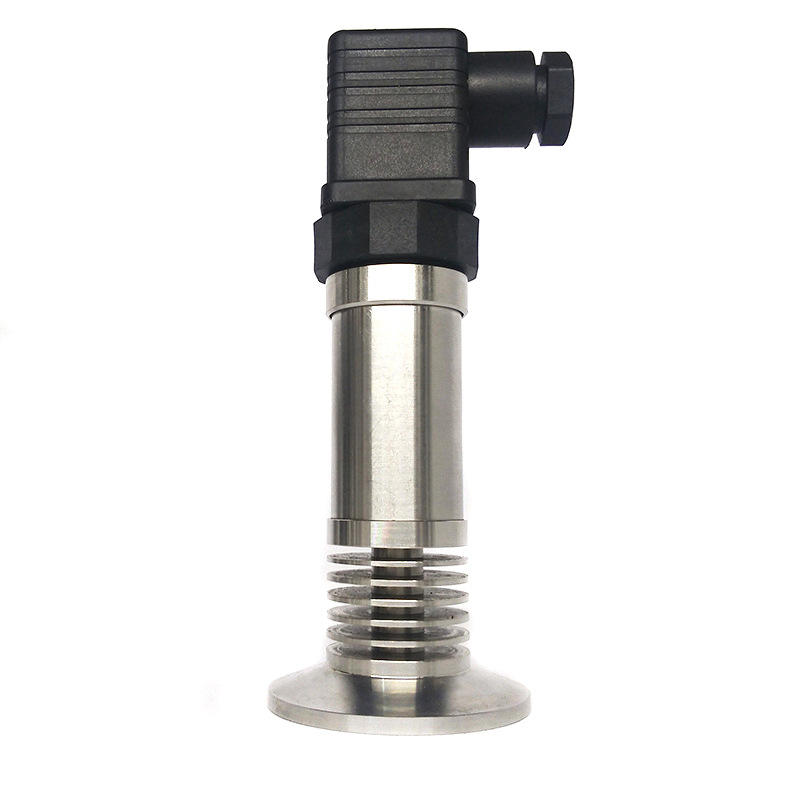
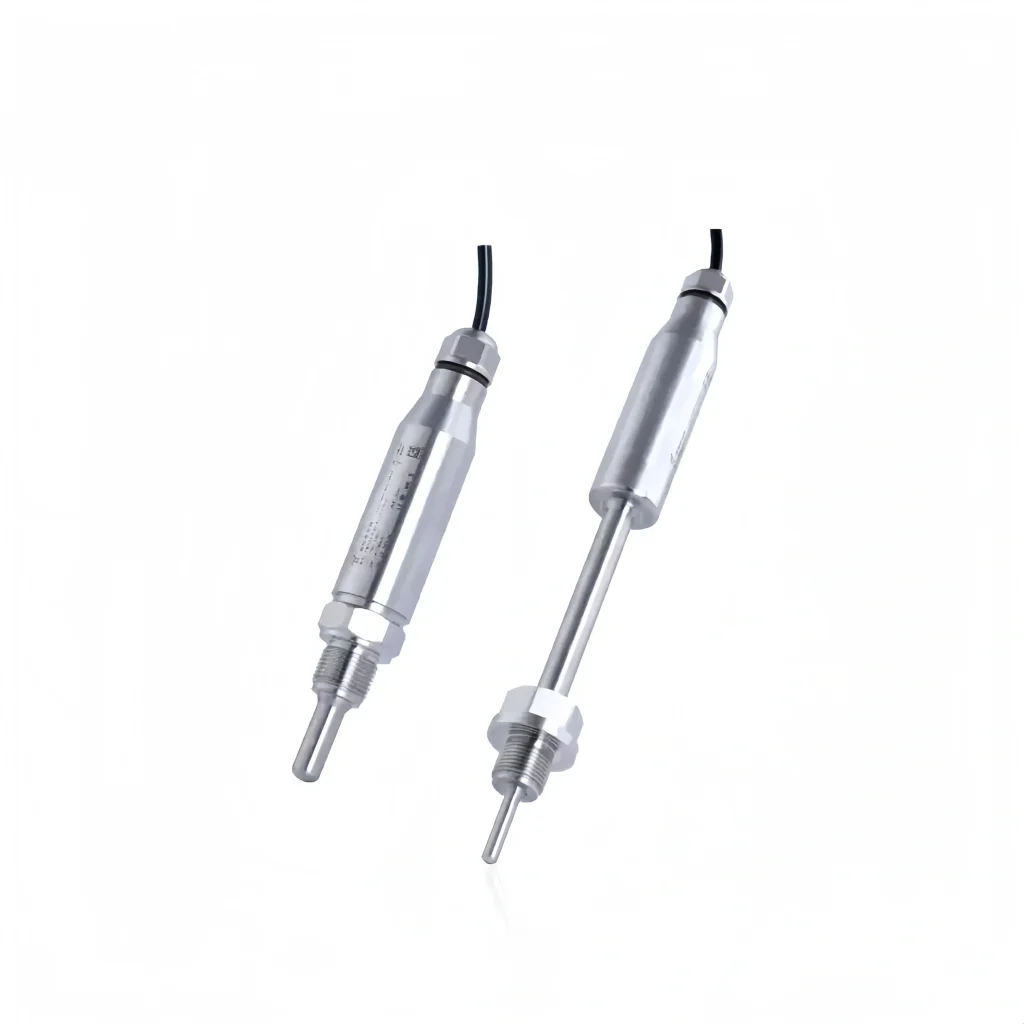
Sensors typically consist of a single probe element, featuring a simple structure and compact size; transmitters are available in split-type and integrated designs.
Integrated transmitters encapsulate the conversion circuitry within the probe’s terminal box, allowing for a single-unit installation without the need for additional conversion modules.
8. Differences in Cost and Usage Thresholds
Pure sensors have a low unit price, but require additional compensation leads and dedicated data acquisition modules for use; transmitters have a higher overall cost but can output a standard signal straight out of the box, eliminating the need for additional signal conversion components and making on-site installation and commissioning simpler.