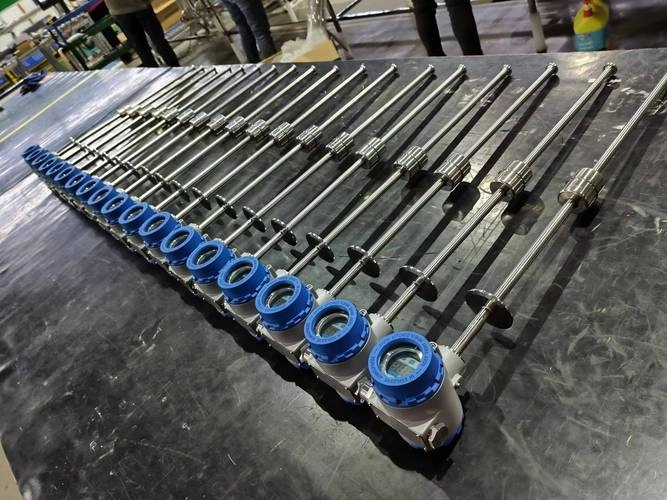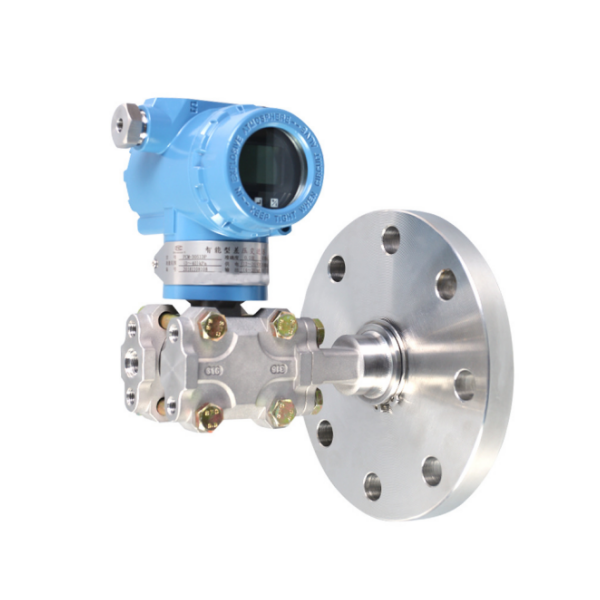
In industrial process measurement and control systems, liquid level probes serve as the core front-end components for detecting the state of the medium; their material composition, structure and compatibility directly determine the reliability of the entire liquid level data acquisition system.
When faced with complex operating conditions such as corrosion, viscous media and high levels of disturbance, the selection of the appropriate probe becomes a critical factor in ensuring the stable output of liquid level data.
What is a Liquid Level Probe?
A liquid level probe is the front-end detection unit of a liquid level sensor that comes into direct contact with or faces the medium being measured to acquire signals; it serves as the core component for converting liquid level signals.
Depending on the measurement principle, probes are categorised into two types: immersive and non-contact. They convert changes in liquid level into electrical signals that are transmitted to a transmitter module, thereby enabling the acquisition of liquid level data.
The material, structure and performance of the probe directly determine the on-site measurement stability of the entire liquid level measurement system.
Functions of a Level Probe
1. Detecting and acquiring level signals: Acting as the front-end of the equipment, it picks up changes in liquid level and turns the physical quantity into raw signals ready for processing—this gives subsequent measurements something to work with.
2. Adapting to on-site conditions to perform detection: Depending on the medium and environment, it works through contact or non-contact methods, holding up against media corrosion and interference from impurities so the signal acquisition keeps running properly.
3. Transmitting measurement signals to the back-end module: It sends the captured signals to the transmitter, which processes them into standard outputs that the control system can read, display, and monitor.
4. Determining the overall measurement quality of the system: The probe’s material structure and quality directly shape how accurately you can measure liquid level, how fast it responds, and how reliably the whole system performs over the long haul.
Types of Liquid Level Probes
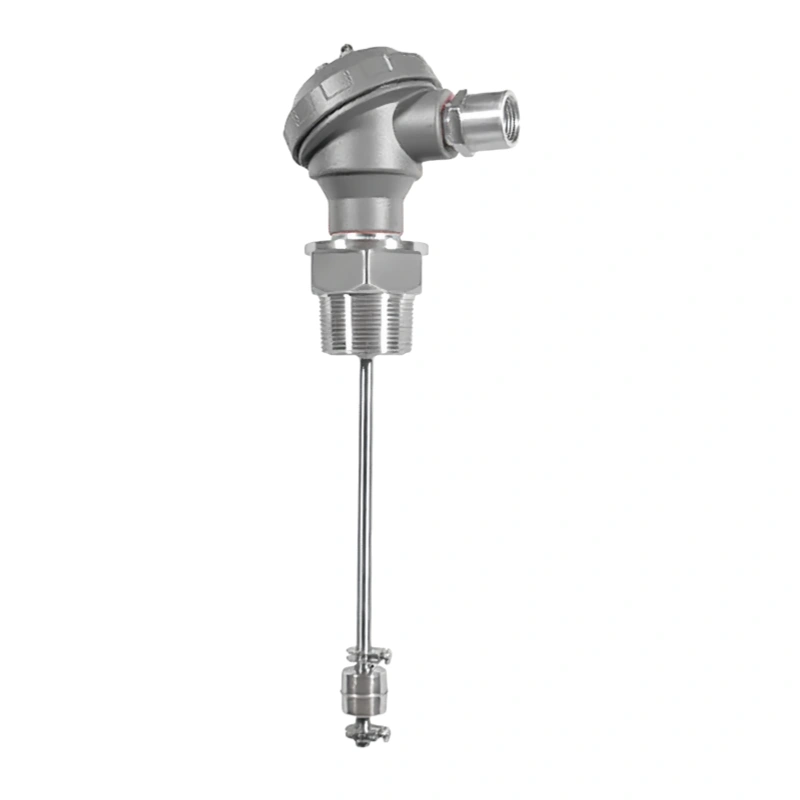
1. Floate liquid level probe
Float level probes use a float that rises and falls with the liquid surface. A magnet inside the float trips a reed switch in the probe body, turning changes in liquid height into a digital or continuous analog signal that feeds back the actual liquid level in the vessel.
Advantages
1. Simple structure, high overall reliability; not easily affected by minor moisture or foam interference
2. Convenient installation and commissioning; no complex calibration required; easy to operate on-site
3. Suitable for a wide range of conventional media, including clean water, wastewater and ordinary oils
4. Cost-effective equipment with low expenditure on maintenance and spare parts replacement
5. Capable of providing both multi-point level switch alarms and continuous level signals
Disadvantages
1. In viscous media or those prone to scaling and fouling, the float may become stuck, leading to measurement failure
2. Contains mechanical moving parts; long-term, high-frequency reciprocating motion carries a risk of wear and failure
3. Not suitable for operating conditions involving high-speed agitation or violent liquid surface turbulence
2. Capacitive Level Probes
In a capacitive level probe, the probe rod and the vessel wall form the two electrodes of a capacitor. When the level of the medium changes, the dielectric constant between the electrodes changes accordingly, causing a simultaneous change in capacitance.
The circuit converts this change in capacitance into the corresponding liquid level height and outputs a measurement signal.
Advantages
1. No moving mechanical parts; long overall service life and excellent vibration resistance
2. The probe body has a compact design, making it suitable for confined tanks and small reactors
3. Capable of measuring liquid levels as well as certain powdered and granular materials; wide range of compatible media
4. Fast response speed; level changes are rapidly reflected in the output signal
5. Capable of level detection under high-temperature and high-pressure conditions
6. Customised long probes are available to meet measurement requirements for taller tanks
Disadvantages
Media build-up and probe scaling can directly cause measurement drift errors
Measurement accuracy decreases significantly in mixed media with large variations in dielectric constant
Requires specific media conductivity; measurement performance is poor for certain media with extremely low dielectric constants
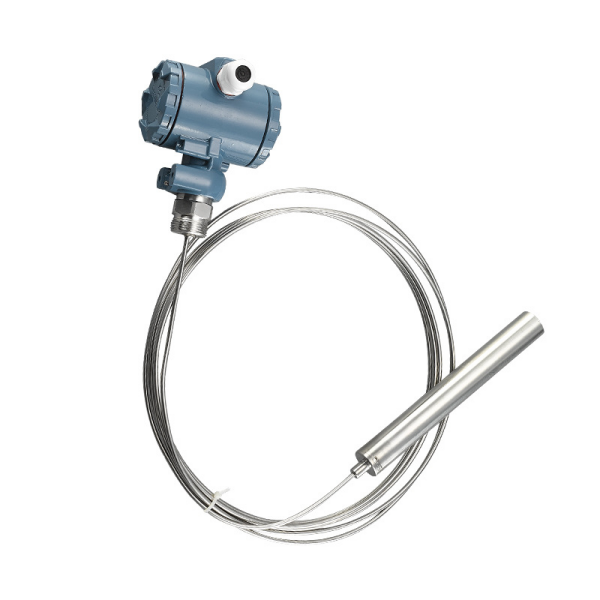
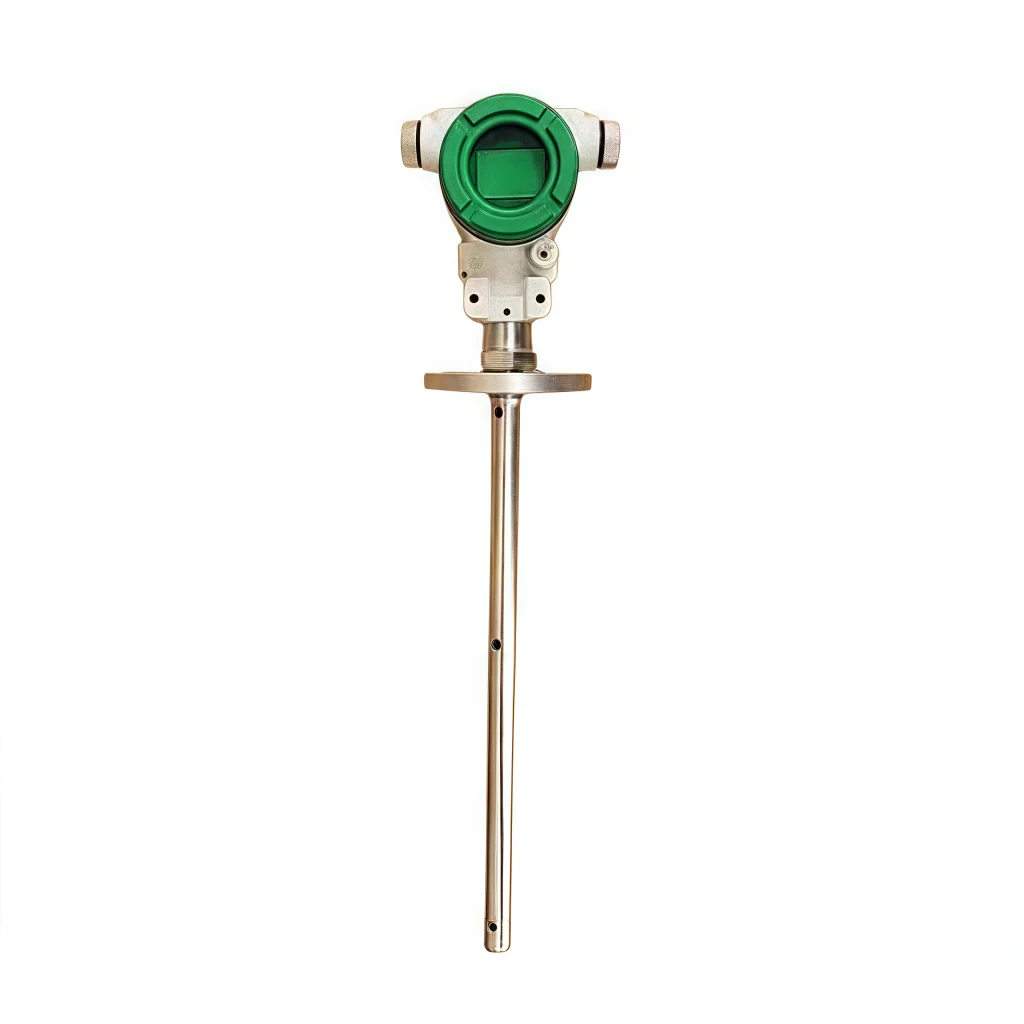
3. Hydrostatic Level Probe (Submersible Level Probe)
The hydrostatic level probe is submerged at the bottom of the liquid; the hydrostatic pressure generated by the liquid acts on the pressure-sensitive element inside the probe.
As liquid pressure is directly proportional to liquid level height, the sensor captures the pressure signal, calculates the liquid depth, and then converts this into a standard electrical signal for transmission.
Advantages
1. Measures continuous liquid levels with a stable signal, suitable for the vast majority of storage tank and reservoir applications
2. Simple installation; can be immersed directly into the tank bottom without the need for complex modifications such as cutting openings in the tank wall
3. Available in corrosion-resistant materials, suitable for corrosive acids and alkalis
4. Flexible range selection; suitable for both shallow and deep reservoirs, as well as underground water tanks
5. Good resistance to external electromagnetic interference and strong adaptability to on-site conditions
6. The product is well-established, spare parts are readily available, and on-site operation and maintenance requirements are minimal.
Disadvantages
1. Media containing silt or suspended solids can easily block the probe’s pressure-transmitting diaphragm, resulting in inaccurate readings.
2. Not suitable for tank environments subject to severe pressure surges or negative pressure.
3. Temperature compensation is required during significant temperature fluctuations; otherwise, measurement errors may occur.
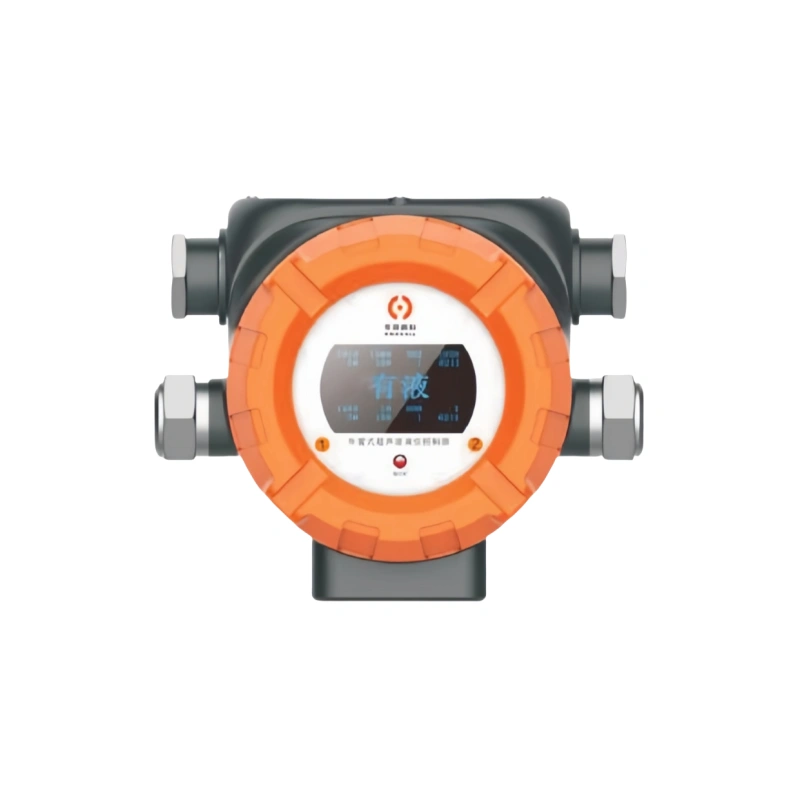
4. Ultrasonic Level Probe
The ultrasonic level probe sits above the liquid surface. It fires out ultrasonic pulses that strike the liquid surface and echo back to the transducer. The instrument clocks the round-trip time and figures out the distance from the transducer to the liquid surface based on the speed of sound, giving the liquid level indirectly.
Advantages
1. Non-contact measurement: the transducer sits clear of the liquid, so corrosion and viscosity simply don’t matter;
2. With no submerged parts, there’s no mechanical wear and upkeep stays minimal;
3. Setup is straightforward — parameters can be configured without ever touching the medium;
4. It handles everything from sewage and chemical effluent to ordinary storage tanks;
5. You get continuous level data, and high or low alarms can be added as required;
6. Because the probe never meets the fluid, leakage poses no contamination risk.
Disadvantages
1. Thick foam on the liquid surface or large amounts of vapour and mist can absorb the ultrasonic waves, causing signal loss
2. Heavy dust inside the tank may interfere with sound wave propagation, reducing measurement reliability
3. The speed of sound is affected by ambient temperature; compensation is required for temperature variations
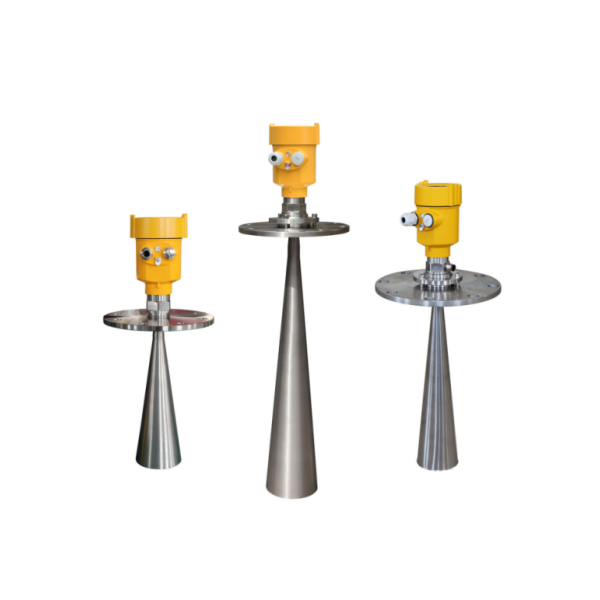
5. Radar Level Transmitter
A radar level transmitter sends high-frequency microwaves toward the liquid surface; the waves reflect back on contact, and the transmitter catches the echo. It then uses the signal’s travel time and phase difference to work out how far away the surface is, giving you the actual liquid level in the vessel.
Advantages
1. Non-contact measurement; unaffected by the viscosity or corrosiveness of the medium
2. Virtually unaffected by operating conditions such as vapour, temperature fluctuations or pressure changes
3. High measurement accuracy; sensitive response to both high and low liquid levels; wide measurement range
4. Capable of handling complex tank conditions such as foaming and agitation
5. No moving parts; virtually no wear; excellent long-term operational stability
6. Suitable for high-temperature, high-pressure and explosion-proof environments; highly adaptable to industrial settings
7. Can measure liquids and is also suitable for detecting the level of certain solids
Disadvantages
1. Higher equipment procurement costs compared to other level probes
2. False echoes may occur when there are strong interfering obstacles inside the tank, requiring echo processing
3. For media with extremely low dielectric constants, the echo signal is weak, limiting measurement effectiveness
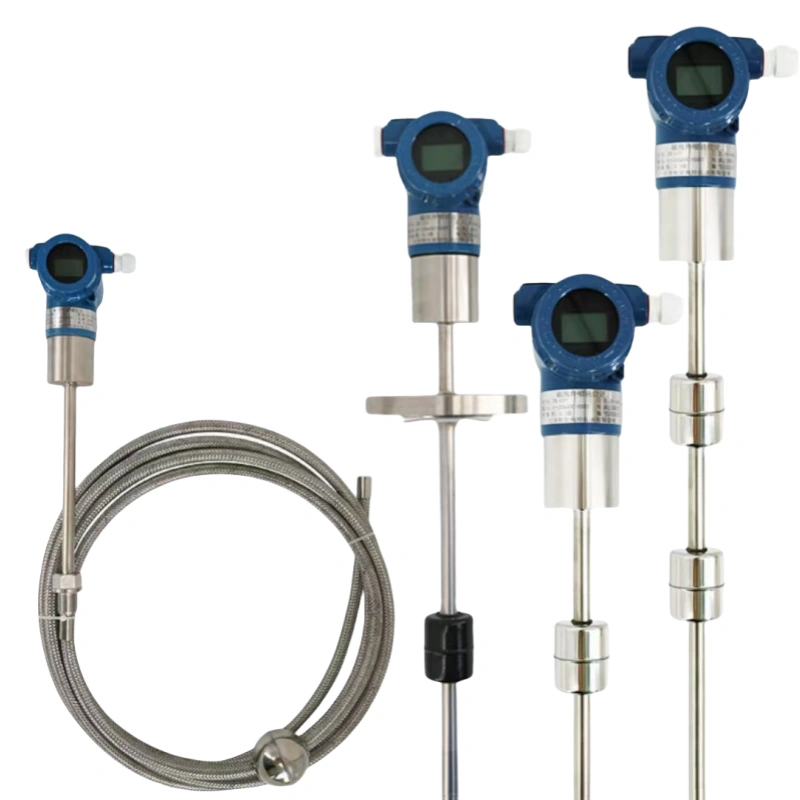
6. Magnetostrictive Level Probe
A magnetostrictive level probe consists of a probe rod, a magnetic float and a waveguide wire.
The circuit emits current pulses, generating a magnetic field along the waveguide wire; when this field encounters the magnetic field from the permanent magnet inside the float, it produces a magnetostrictive torque, forming a mechanical wave.
The instrument measures the propagation time of this mechanical wave to calculate the position of the float and thereby determine the liquid level.
Advantages
1. High measurement accuracy, low repeatability error, and stable, reliable level readings
2. Capable of simultaneously measuring both the liquid level and the interface layer, making it suitable for stratified media
3. Outputs a continuous signal with good linearity, facilitating reading by downstream data acquisition systems
4. Excellent vibration resistance, suitable for agitated tank conditions
5. A comprehensive range of explosion-proof versions ensures high safety in chemical storage tanks
6. Long service life, low failure rate and low long-term operational and maintenance costs
7. Supports multiple signal outputs and is compatible with a wide range of industrial control systems
Disadvantages
1. Severe scaling of the medium may affect the float’s movement, causing measurement anomalies
2. As the probe is a rigid rod, care must be taken during transport and installation in long-range applications to prevent bending or damage
3. Not suitable for highly viscous media that are prone to coating the float
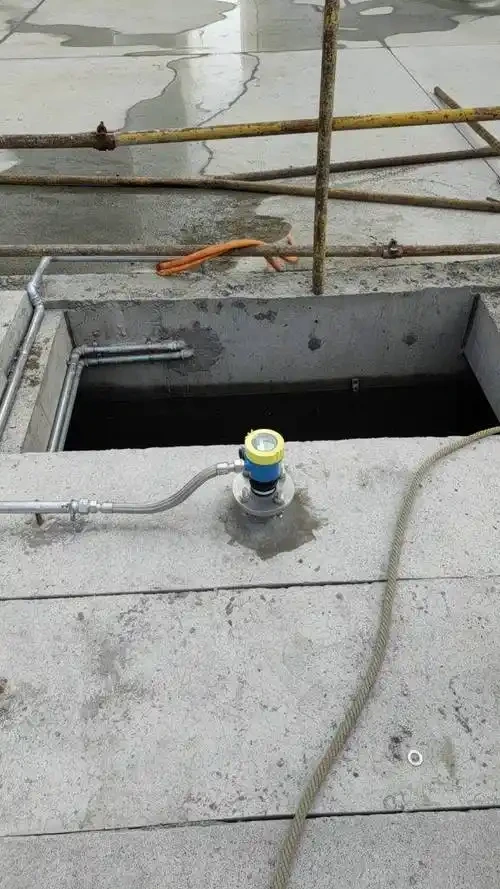
Common materials for liquid level probes
304 stainless steel: Highly versatile, with high mechanical strength; resistant to general moisture and mild corrosion; easy to machine and form; moderately priced; commonly used for clean water, ordinary industrial water and media without strong acids or alkalis.
316L stainless steel: Offers superior corrosion resistance to 304 stainless steel and enhanced resistance to chloride ions; suitable for sewage, mildly acidic or alkaline solutions and general food-grade media; the most commonly used material for industrial level probes.
PTFE (Polytetrafluoroethylene): Resistant to strong acids, alkalis and solvents; virtually unaffected by most chemical media; highly chemically inert; low coefficient of friction prevents material build-up; suitable for corrosive chemical media. Its drawbacks include relatively low mechanical hardness and susceptibility to damage from sharp impacts.
PP (Polypropylene): Lightweight, resistant to weak acids and alkalis, and low-cost, it offers decent corrosion protection. You’ll find it in ambient-temperature sewage and municipal water systems, though it won’t hold up in high heat or where strong solvents are present.
Hastelloy: It stands up to severe corrosion, handles strong acids and chlorine-bearing chemicals with ease, and takes high temperatures in its stride. It doesn’t come cheap, so it’s mainly reserved for specialised chemical applications in harsh operating conditions.
Selection Guide
1. Physicochemical Properties of the Medium
For corrosive media, select PTFE or PVDF corrosion-resistant materials; for viscous or particulate-laden media, avoid submersible probes that are prone to blockage. Verify the medium’s temperature and density, as excessive temperature accelerates ageing, whilst density may interfere with static pressure probe measurements.
2. Operating Conditions and Installation Requirements
Ensure the probe is compatible with the pressure rating of the pressure vessel; select compact probes for confined spaces. Where liquid levels fluctuate, install a protective sleeve to prevent sloshing; ensure that the probe’s threaded and flanged connections are compatible with the on-site fittings.
3. Measurement Range and Accuracy Requirements
Maintain the working liquid level within 20%–80% of the measurement range to avoid operating at the limits. Standard accuracy is sufficient for general water treatment, whilst high accuracy is required for chemical metering; do not rely solely on the nominal accuracy.
4. Selection Based on Measurement Principle
Static pressure submersible probes are suitable for open tanks but are not suitable for applications with significant density fluctuations; float switches are primarily used for on/off switching and alarms; ultrasonic probes should be avoided in environments with foam or vapour; radar probes are suitable for harsh conditions but are relatively expensive; capacitive probes are used for viscous materials and are affected by the dielectric constant.
5. Signals and Electrical Environment
4–20 mA, RS485 and HART outputs must be compatible with the downstream instrumentation. In explosion-proof environments, select probes of the appropriate rating; for outdoor and underwater applications, verify the IP protection rating.
6. Maintenance and Stability
In applications prone to scaling, prioritise probes that are easy to dismantle and clean. Immersed probes are prone to drift and require regular calibration, whilst non-contact probes require less maintenance; select the type based on on-site operational and maintenance conditions.
7. Cost and Accessories
Prioritise meeting process requirements; standard water treatment does not require high-end radar, whilst material standards must not be compromised in chemical environments. Ensure that cables and flange fittings are complete.
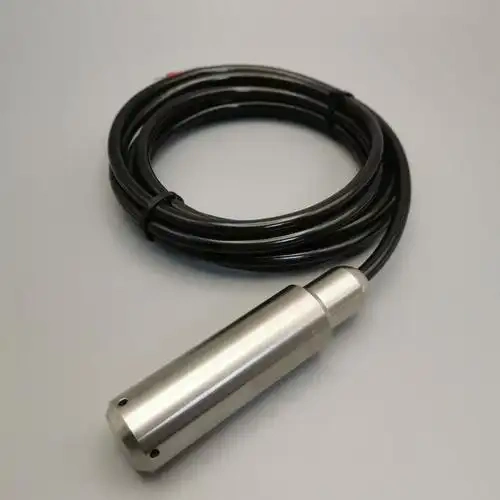
A suitable level probe is the foundation for stable level measurement operation; incorrect selection can easily lead to on-site issues such as data drift and frequent equipment failures.
Sino-Inst carries a full lineup of level probes — float, hydrostatic, radar, capacitive and magnetostrictive — built to handle tough conditions like corrosive media, high temperatures and foaming.
We help you pick the right fit based on your process fluid, installation setup and budget, with full technical support behind it so your project gets level monitoring you can count on.