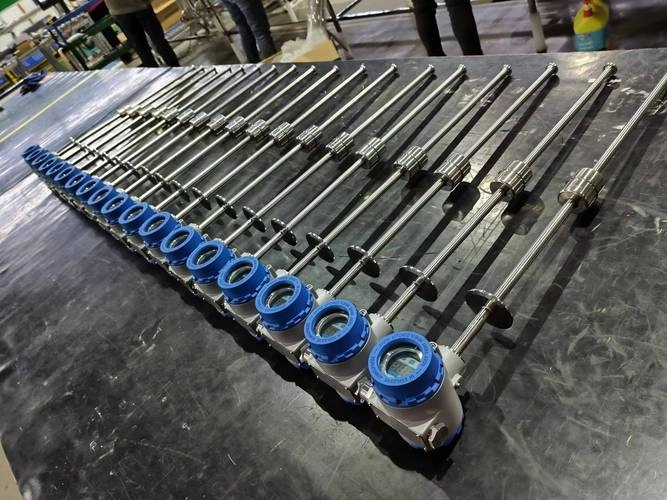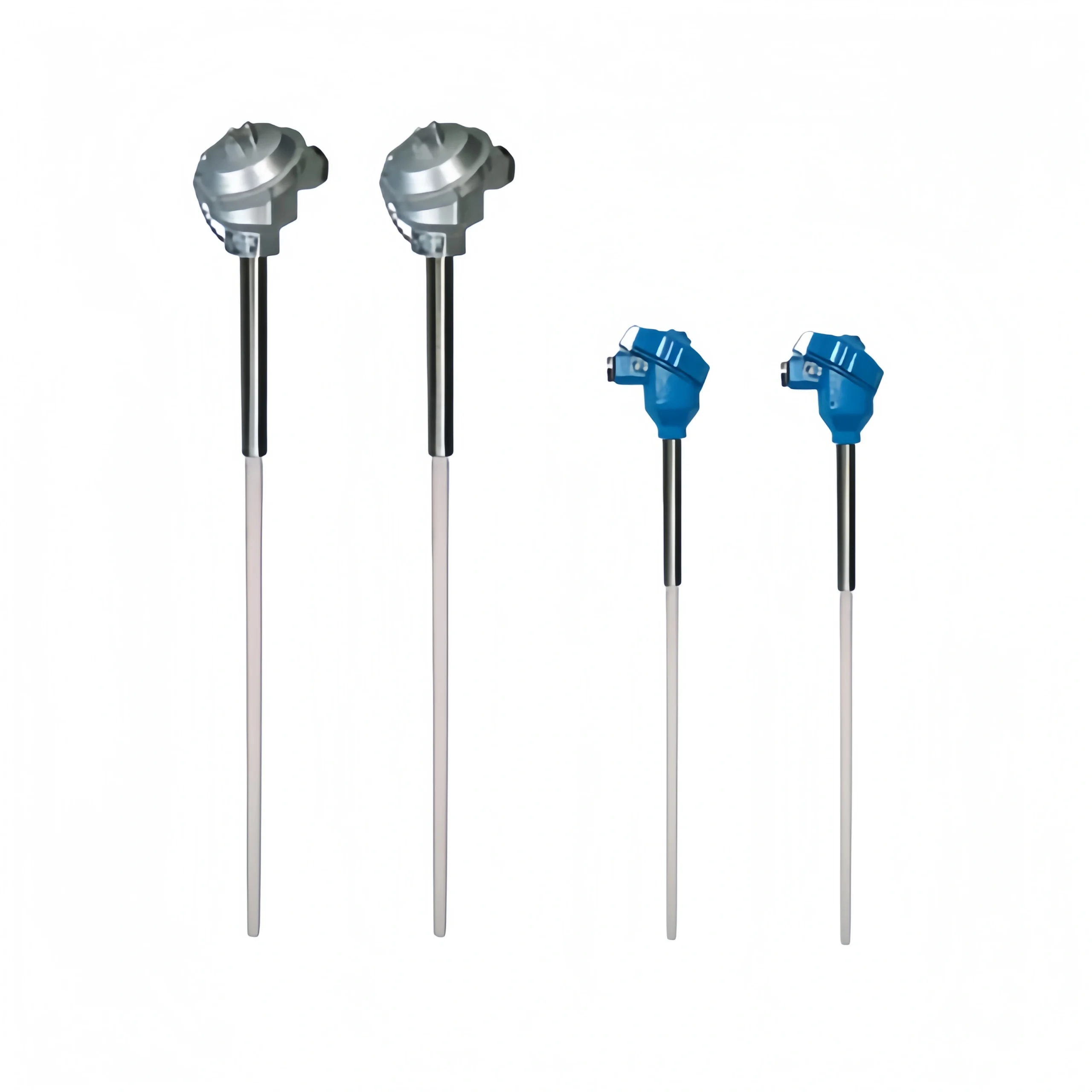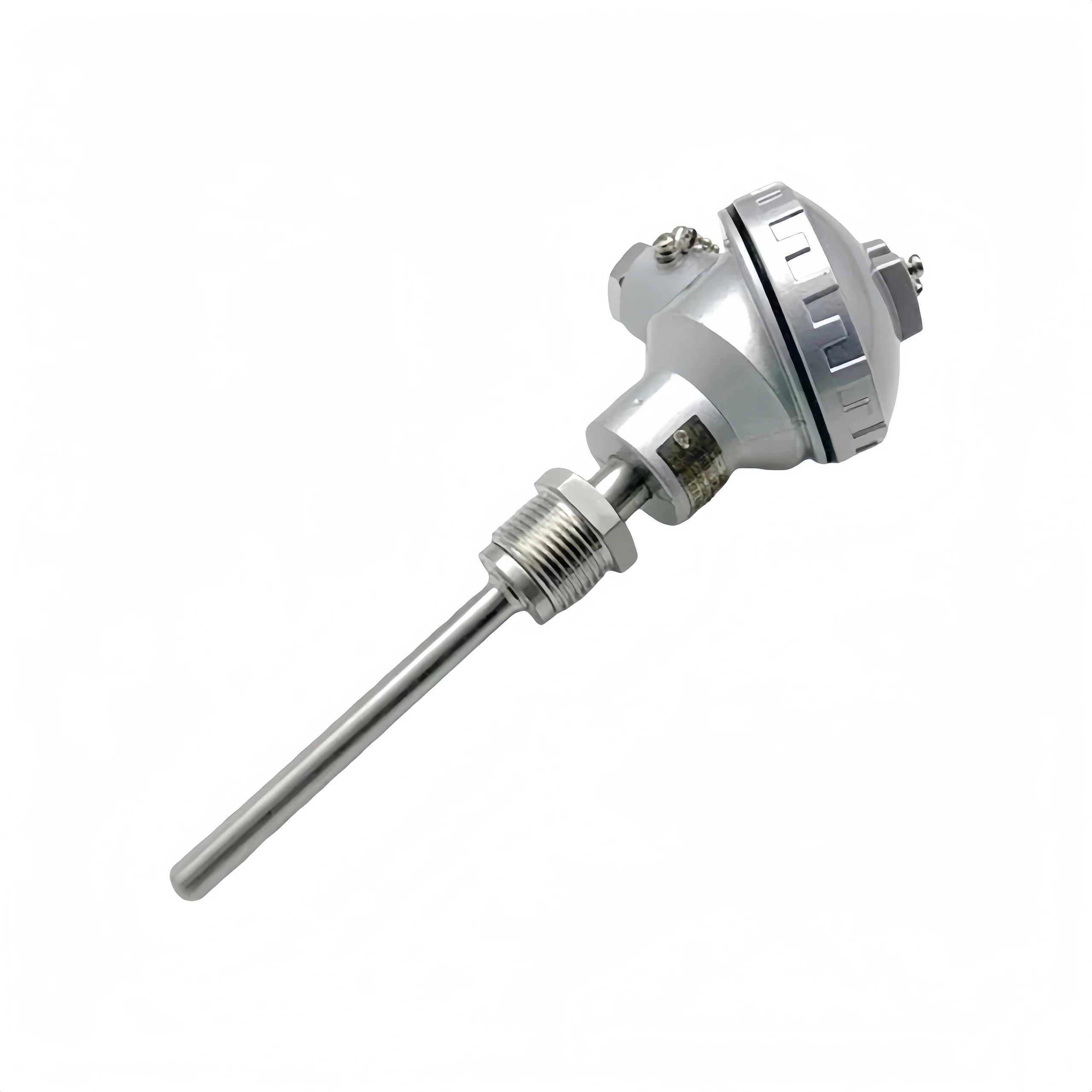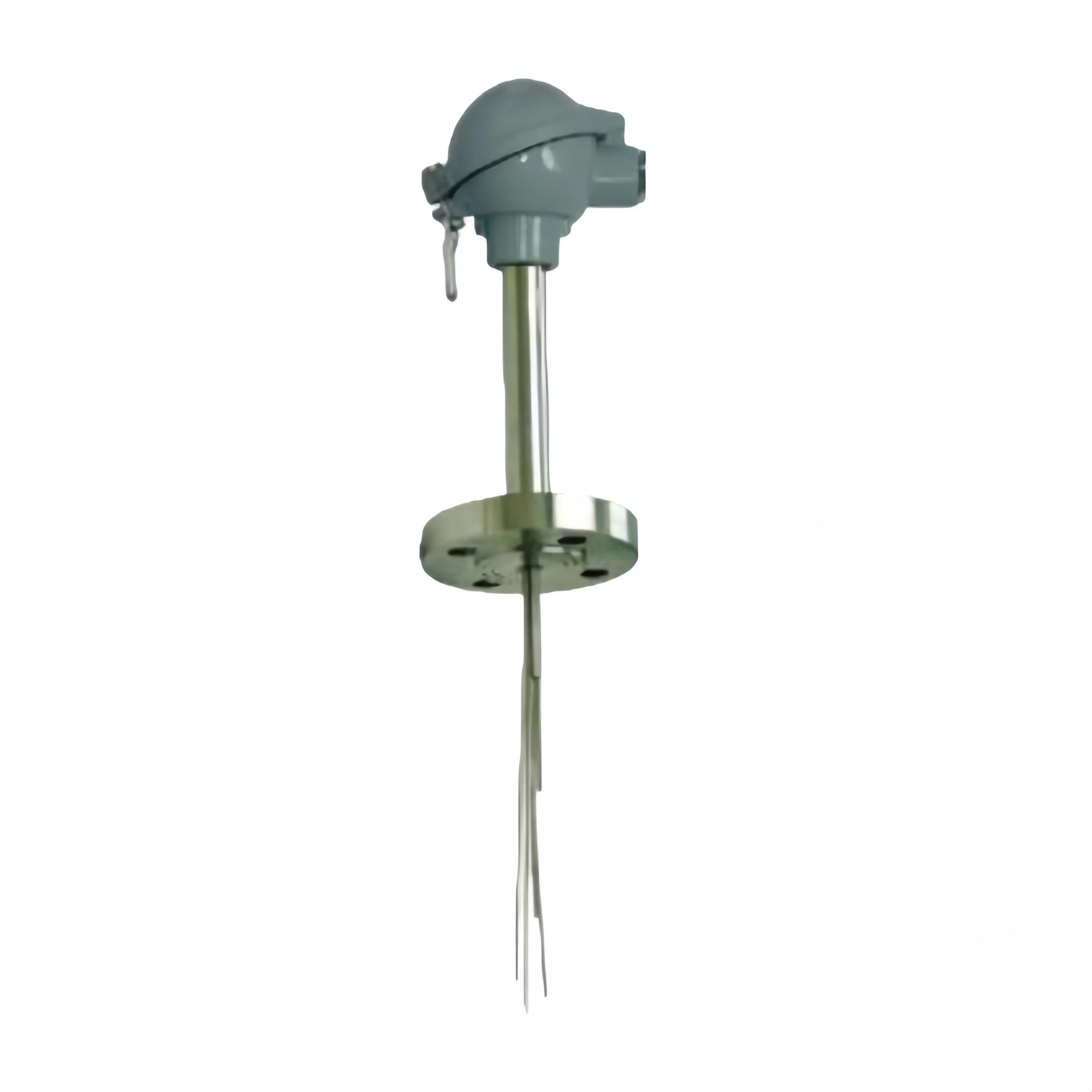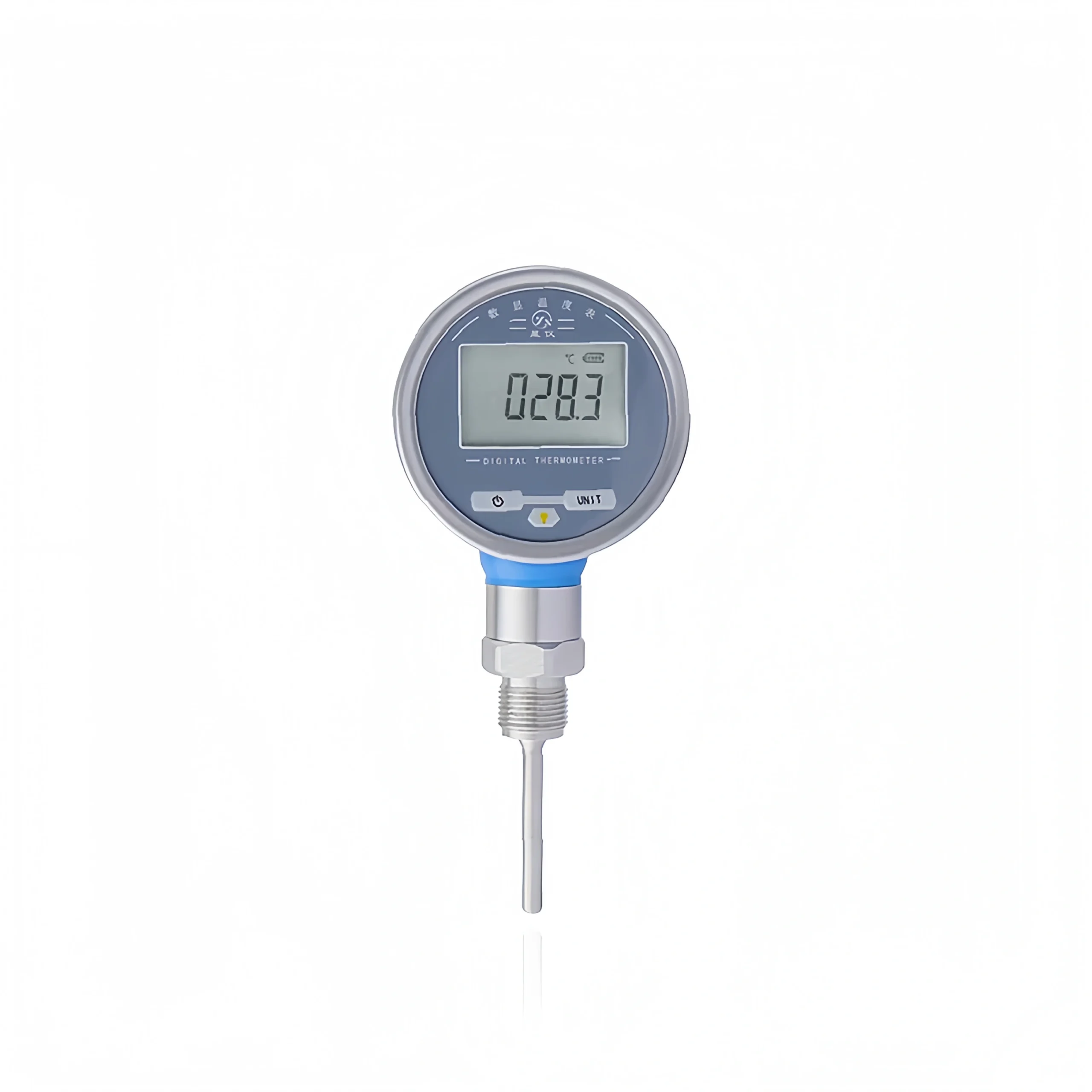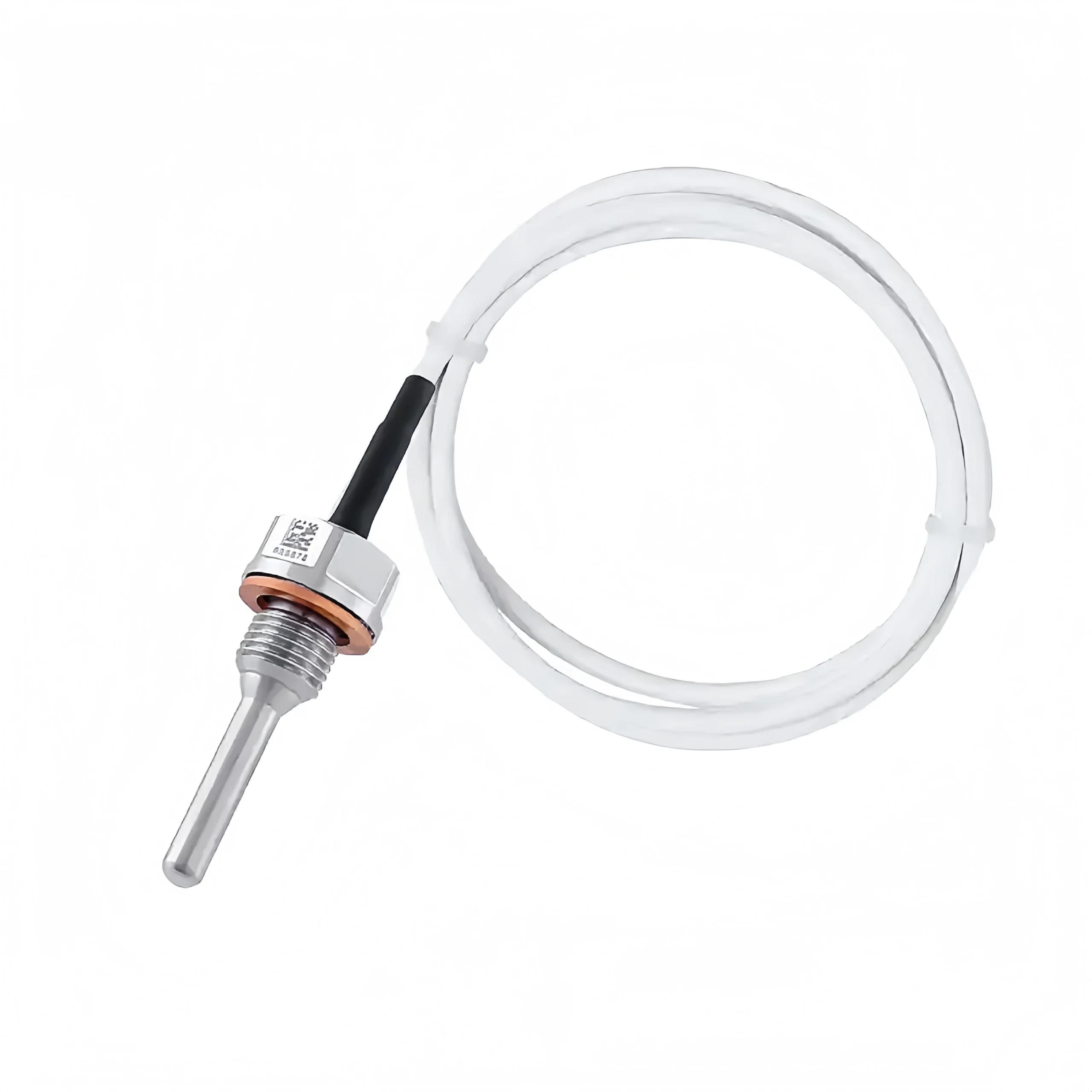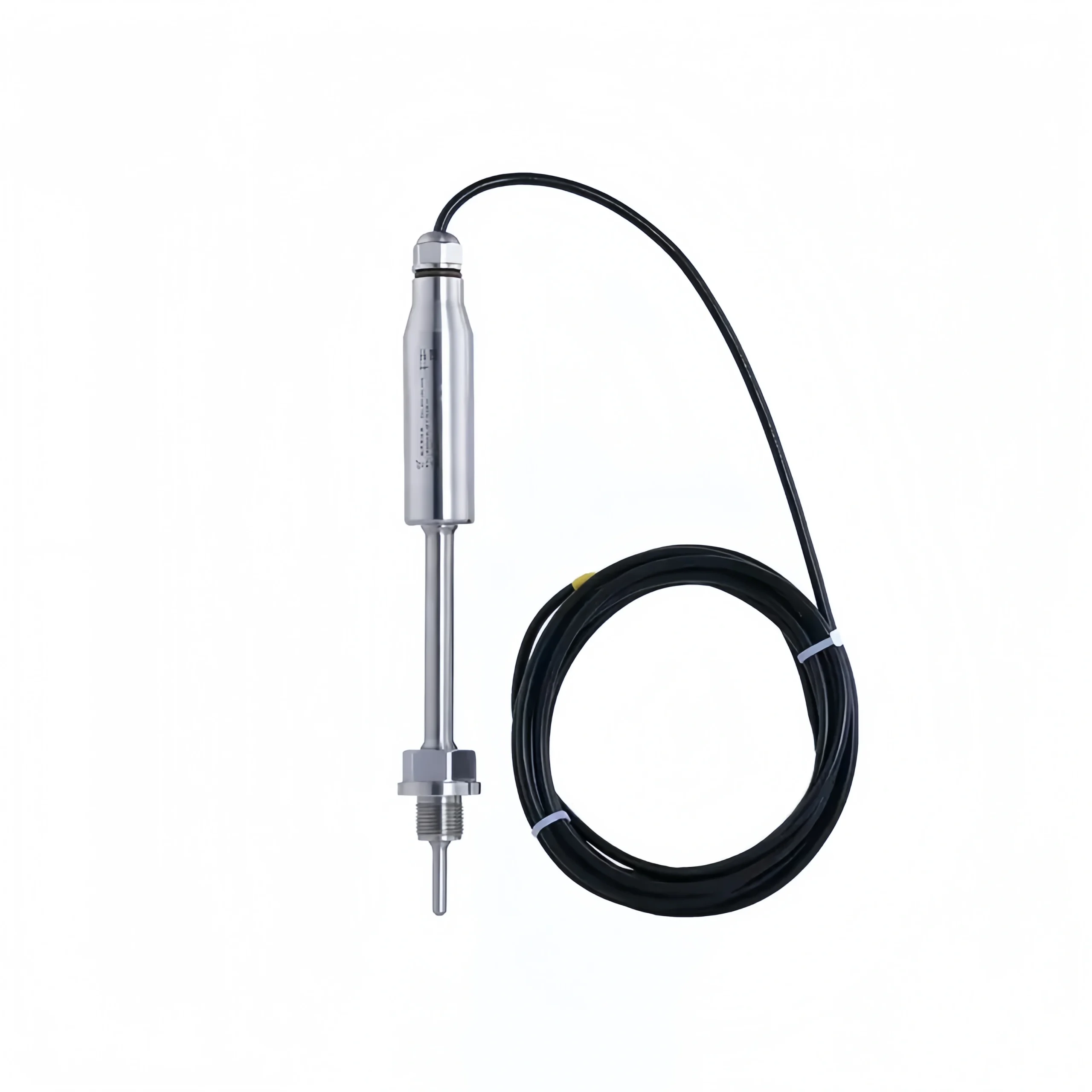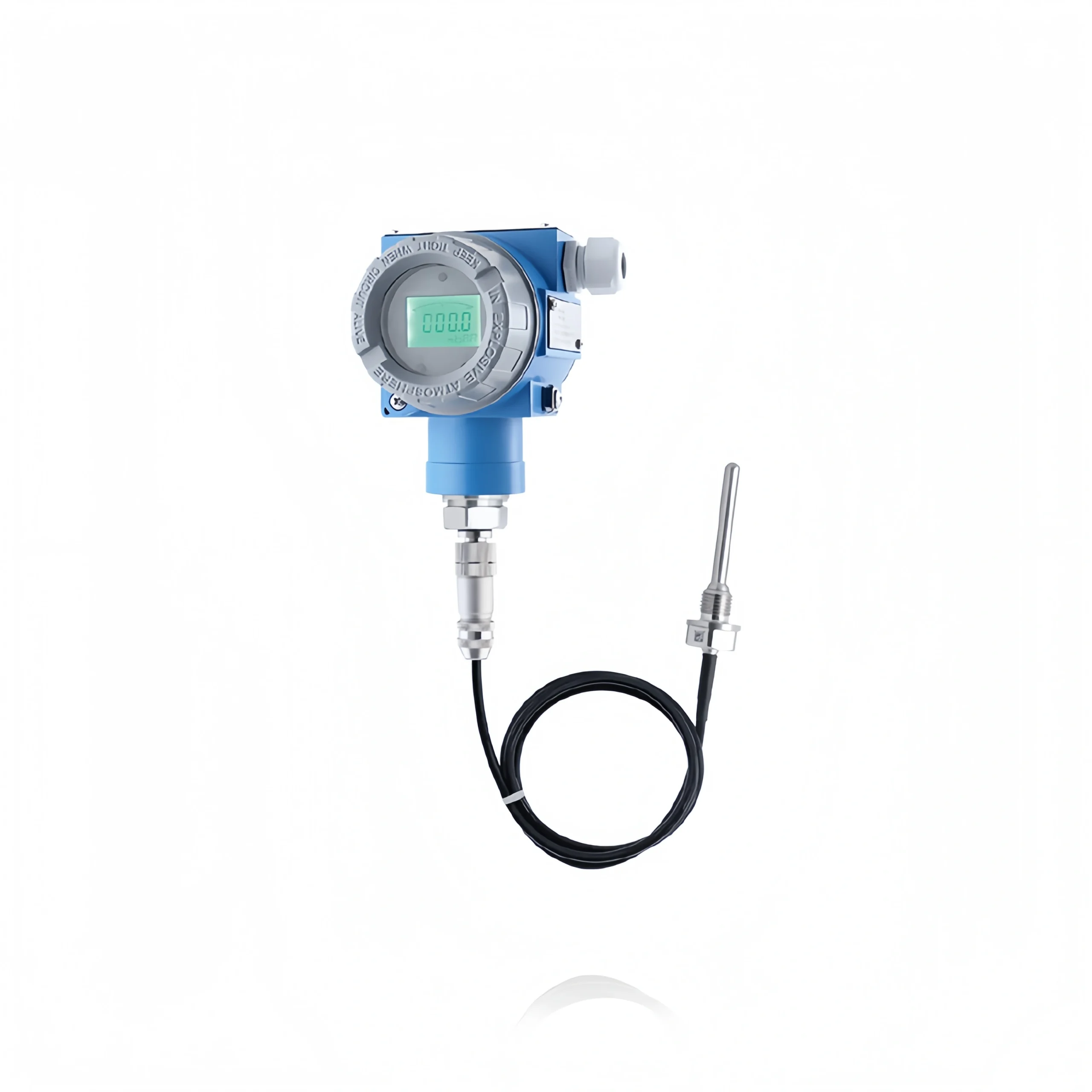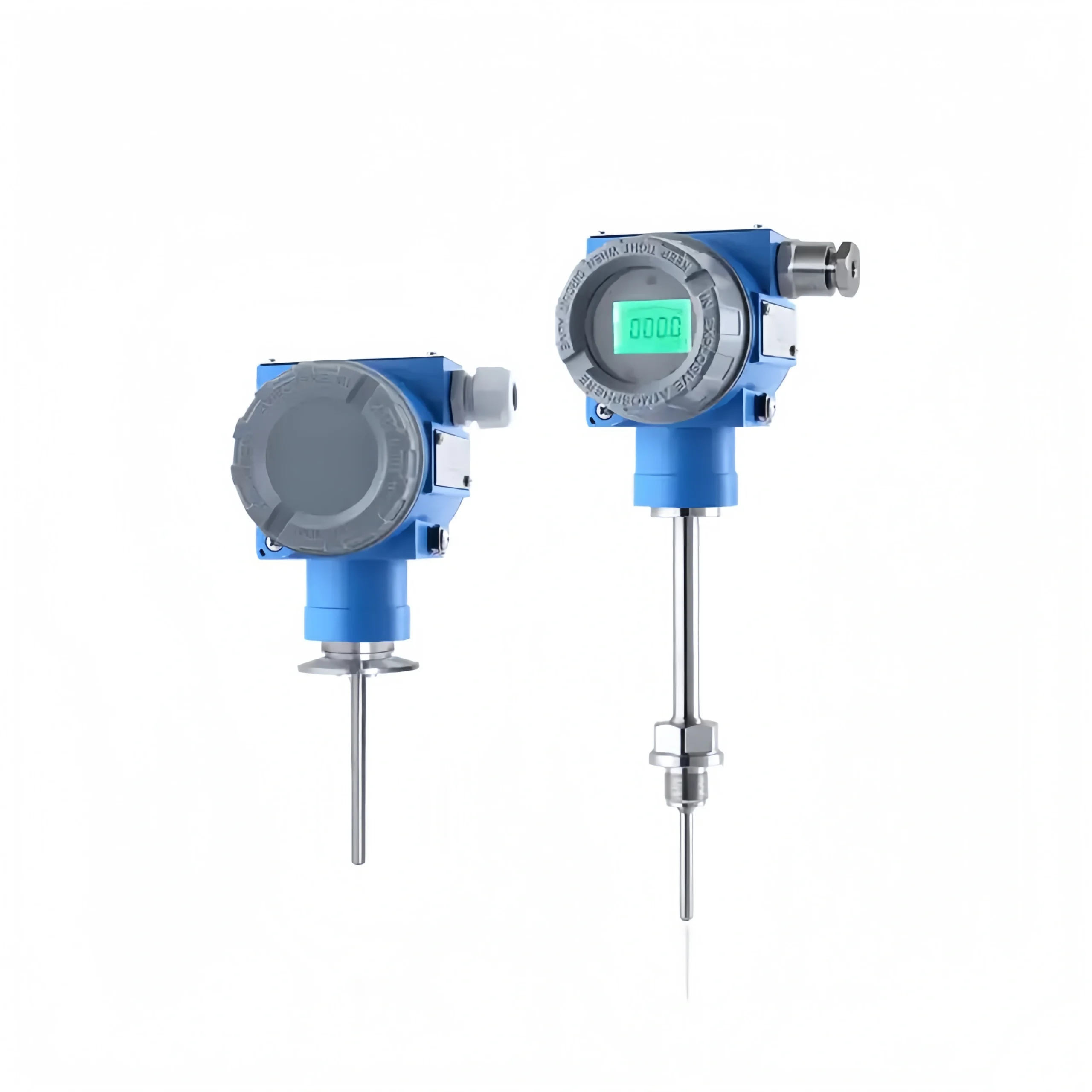
In industrial temperature measurement, sensors placed far from the control room often struggle with signal loss and unreliable cable connections. Remote temperature transducers that use resistive signal acquisition solve this by capturing accurate temperature data on-site and sending it reliably over long distances. This provides the stable baseline data needed for equipment monitoring and process control.
Principle of Operation
Remote temperature sensors measure temperature using platinum resistance temperature sensors, converting temperature changes into analogue electrical signals in the form of resistance or voltage.
The analogue signal is amplified and filtered by a signal conditioning circuit, then converted into a digital signal by an analogue-to-digital converter to minimise transmission interference.
The digital signal is transmitted over long distances via wired communication protocols such as RS485 to a gateway, PLC or cloud platform.
The receiving device parses the data packets to reconstruct the actual temperature, enabling data display, storage, alarms and remote monitoring with integrated control. The device is powered by a bus or battery; wireless versions are optimised for power consumption to ensure long-term temperature measurement operation.
Structural Features
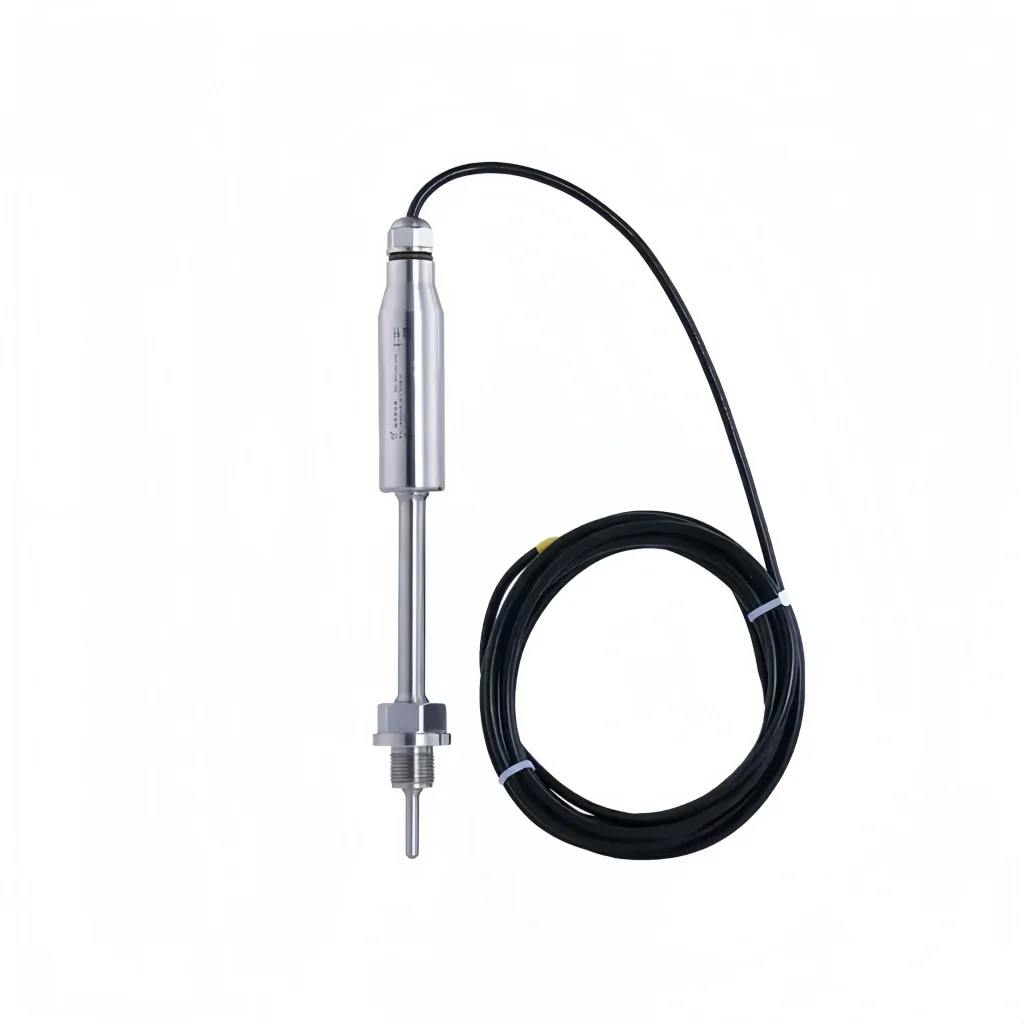
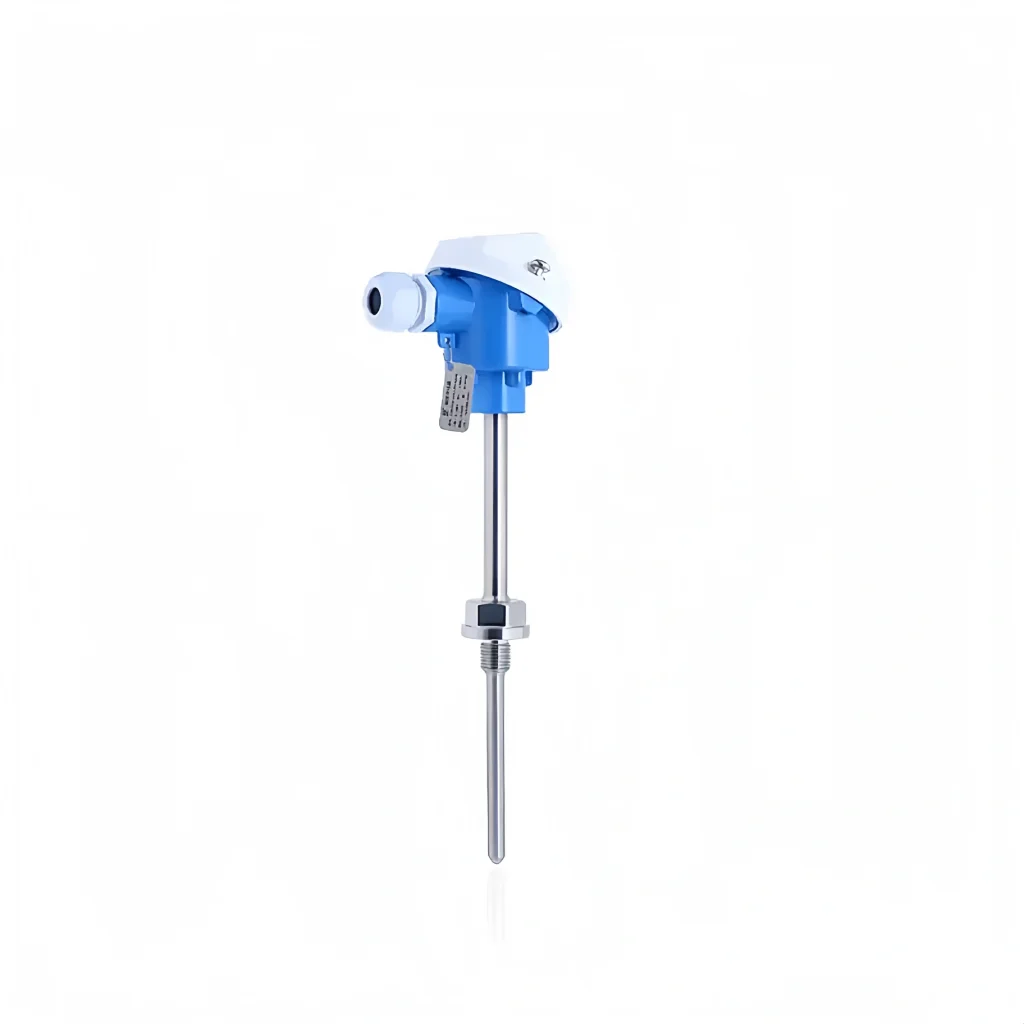
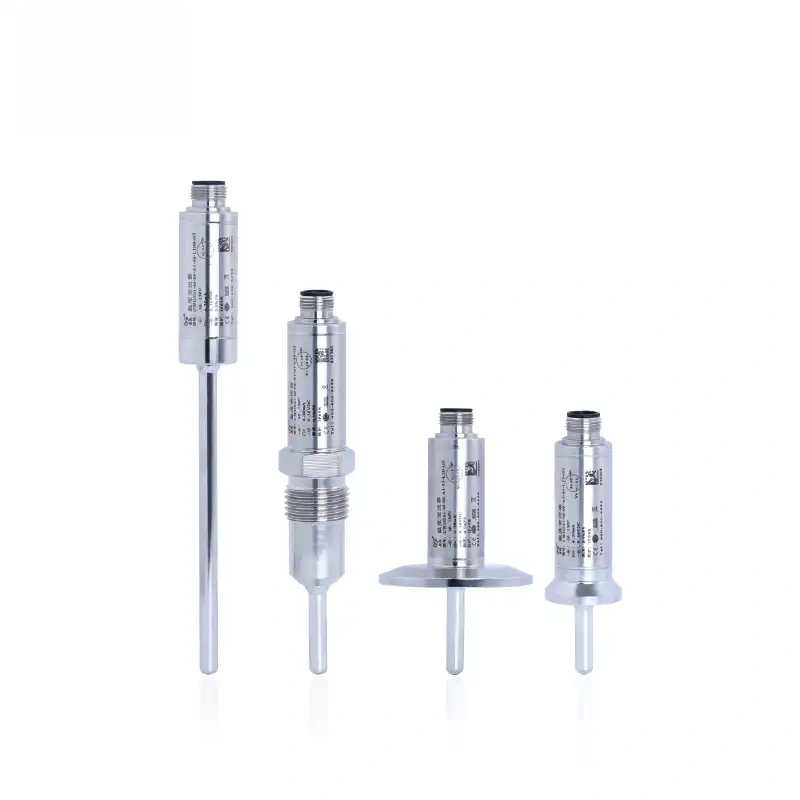
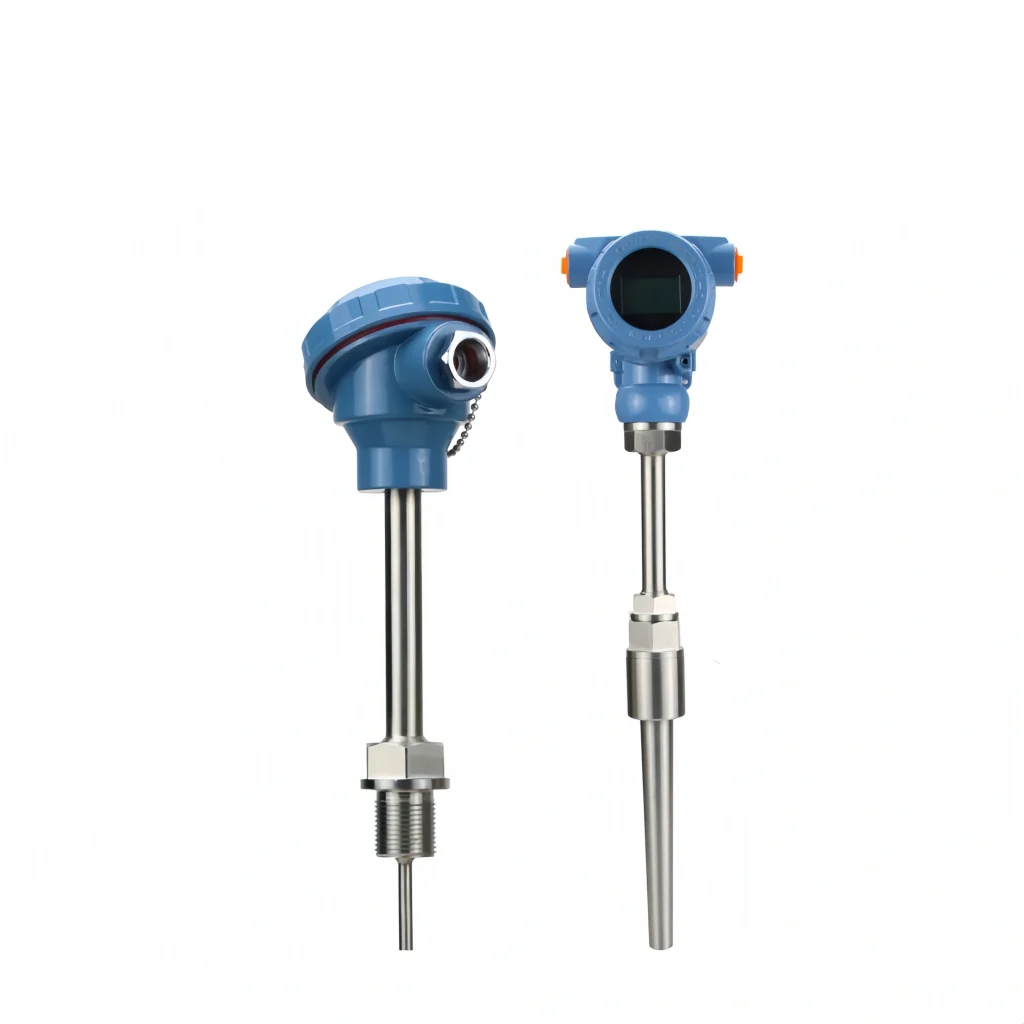
1. Temperature sensor probe: The probe contains a platinum resistance sensor that touches the medium directly to pick up temperature readings and output an analogue signal. It comes in different styles, such as insertion and threaded mounting options.
2. Signal processing unit:This section handles signal conditioning and analogue-to-digital conversion. It boosts and filters the probe signal before turning the analogue reading into a digital one.
3. Communication module:Wired models use an RS485 circuit to send temperature data out to external systems.
4. Main control unit: A microcontroller manages signal acquisition and data packaging, while keeping all the modules running properly.
5. Power supply unit: A regulated supply circuit that works with either bus power or a battery, delivering steady power to the whole device.
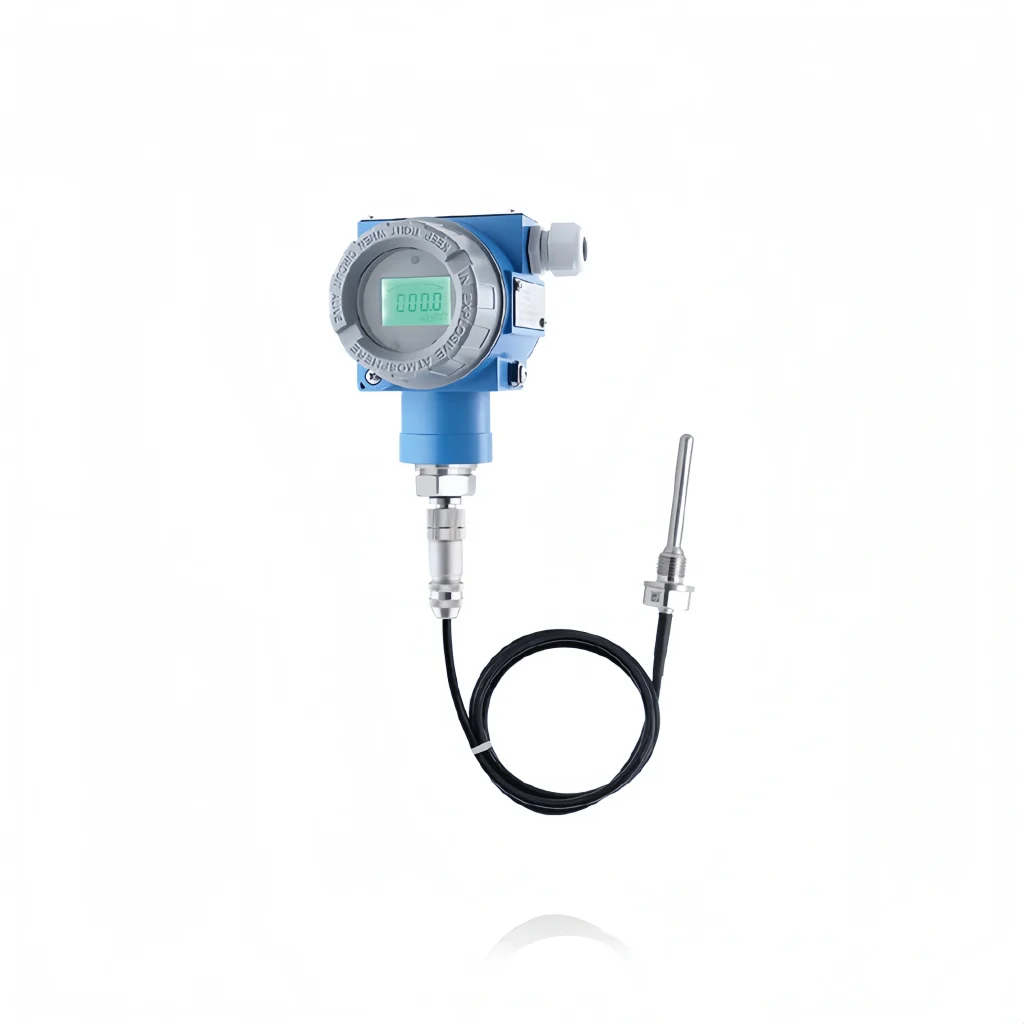
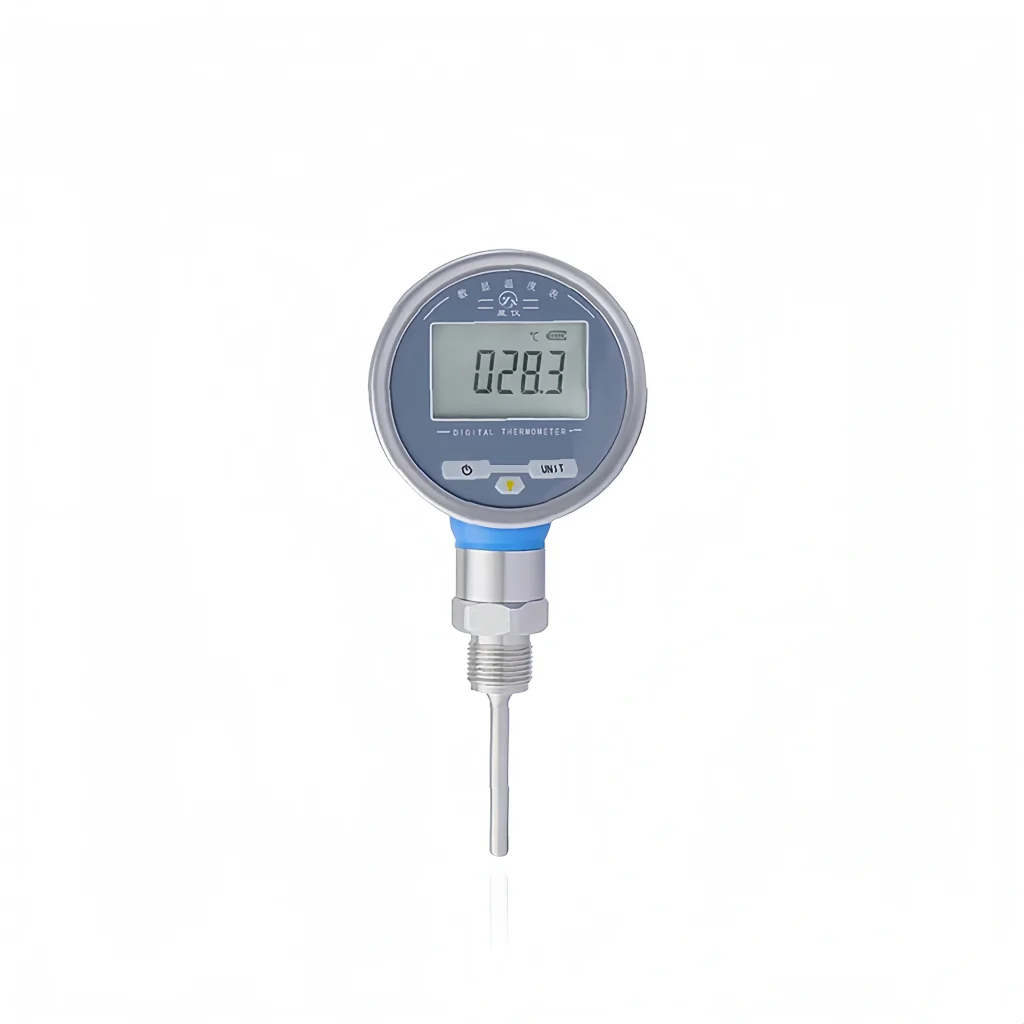
6. Housing:A metal or plastic case that protects the electronics inside; some versions also include a local display screen.
Advantages of Remote Temperature Sensors
1. Stable transmission and strong interference resistance
Wired transmission keeps the signal solid regardless of weather or electromagnetic noise on the factory floor. The data stays steady without drift, so the device holds up well in tough industrial environments.
2. Rapid response
Because it runs on a physical cable, latency is minimal. Temperature shifts are picked up and sent to the monitoring system almost instantly, allowing operators to react quickly.
3. Line-powered operation
It draws power straight from the line, so there are no batteries to swap out or maintain. The unit runs round the clock, which keeps both downtime and running costs down.
4. Loss-free long-distance transmission
As long as the cabling follows the spec, you can run the sensor a long way from the control room without worrying about signal drop, cut-outs or the packet loss you get with wireless setups. The reading stays clean and dependable over distance.
5. Comprehensive signal support
It speaks several standard outputs—4–20 mA, 0–5 V, 0–10 V and RS485—with HART as an optional extra. That means it drops straight into most PLC and control system setups without much fuss.
6. Split-Type Design
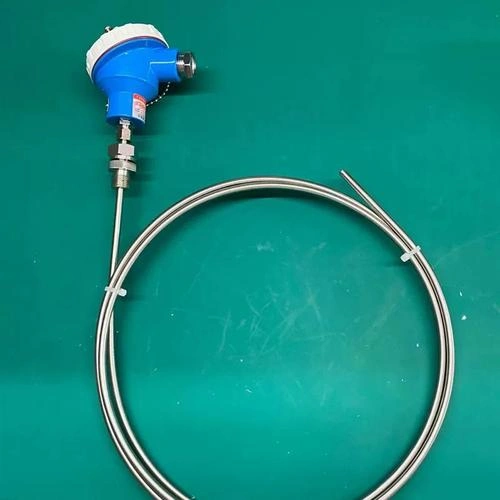
The probe and electronics are housed separately, so you are not locked into a specific probe size or cable length. The head swivels on its own, and you can fix it to a wall, panel or DIN rail depending on what the site demands.
7. Explosion-proof safety, suitable for high-risk environments
It carries an explosion-proof rating, so it is safe to deploy around flammable gases or chemicals in oil, gas and chemical plants. Temperature readings remain accurate even in hazardous areas.
Disadvantages of remote temperature sensors
1. High cabling costs:You need separate signal and power cables. When the run is long, the amount of cable adds up fast, pushing both material and labour costs well above what you’d expect with a wireless setup.
2. Complex installation procedures: The probe and transmitter are two separate pieces, so you have to mount each one and wire them together with several cable sections. That stretches out the whole install and commissioning job on site.
3. Signal attenuation and interference: Analogue signals pick up noise over long cable runs, which throws the readings off. To keep things accurate you usually end up adding shielding or switching to a 4–20 mA loop.
4. Difficulties in maintenance and troubleshooting:Cable ageing, loose terminals and corrosion tend to hide from plain sight. Tracking down the exact fault and fixing it eats up a lot of time and effort.
5. Limited environmental adaptability: Cables do not hold up well in corrosive, extremely hot or heavily vibrating surroundings. Over the long haul, that puts a real dent in reliability.
Application Scenarios for Remote Temperature Sensors
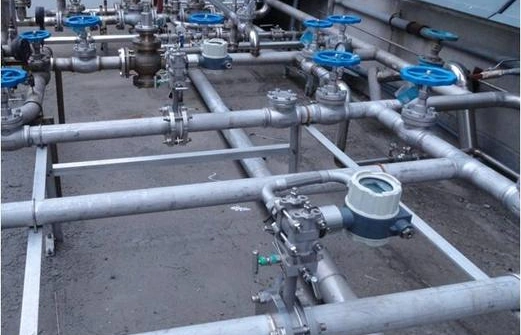
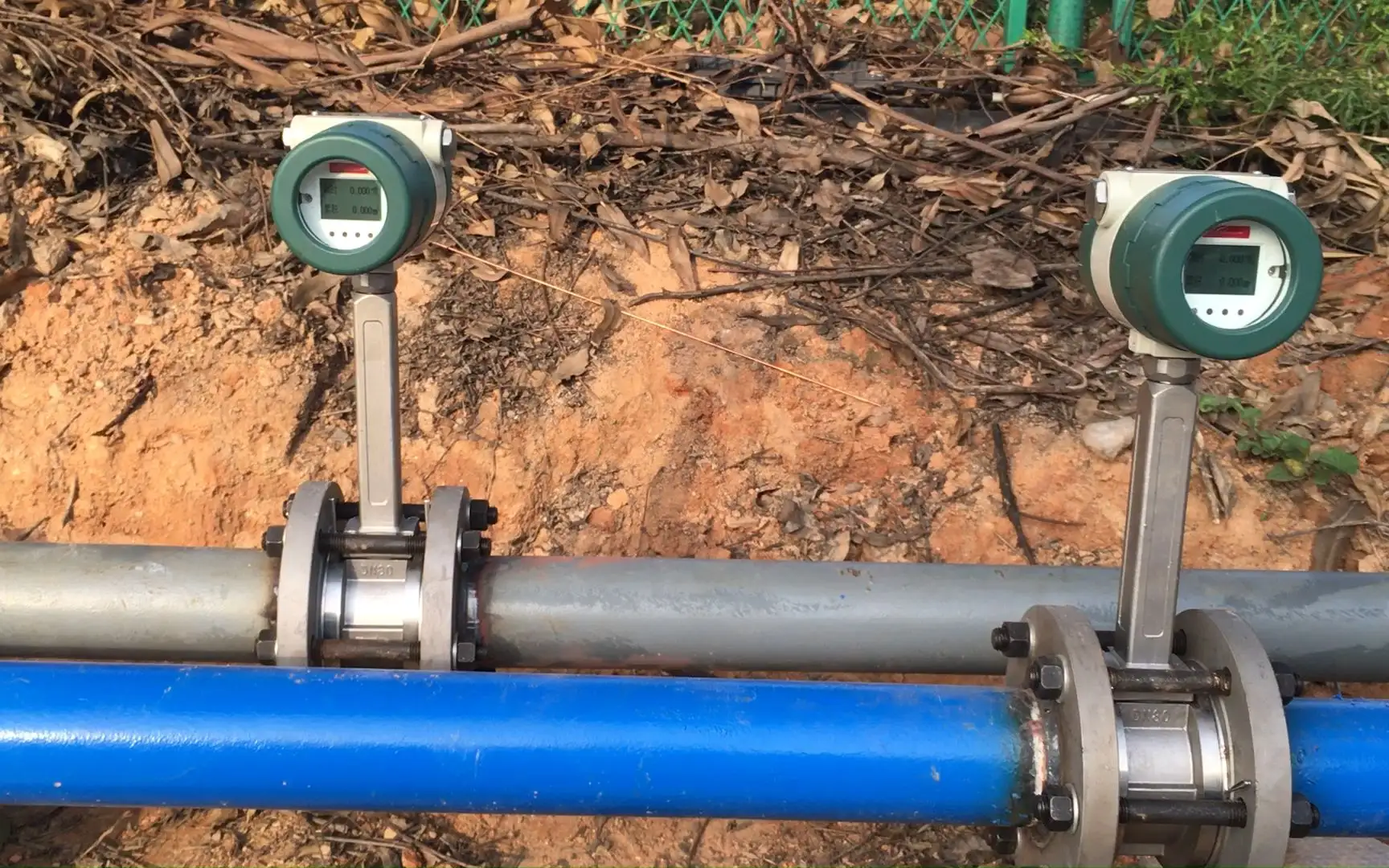
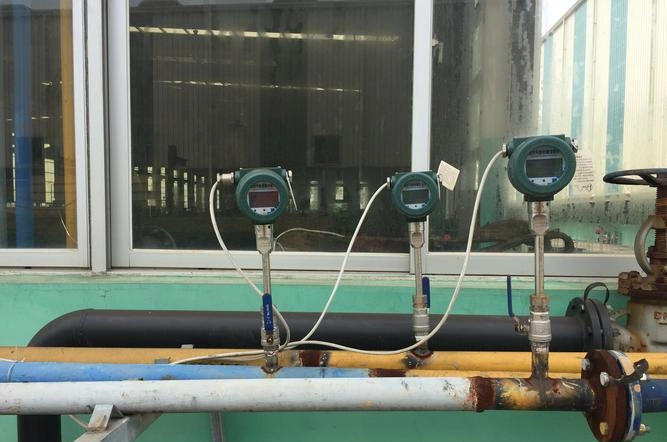
1. Temperature Measurement in Industrial Pipelines
This type of sensor is commonly found on industrial pipelines carrying water, steam, oil, gas and various chemicals. Because the design allows for hot-swapping, you can repair or replace the unit without stopping the flow or shutting the line down.
That makes it especially useful in processes that must run around the clock and simply cannot afford any downtime, helping keep production steady and uninterrupted.
2. Monitoring in Harsh Operating Conditions
Designed for industrial environments characterised by high temperatures and severe equipment vibration—such as metallurgy, heat treatment, boiler equipment and large-scale power generation units—these sensors, with their split-type, independent structure and resistance to vibration and high temperatures, can reliably measure equipment and medium temperatures.
This avoids the issues of damage and measurement inaccuracy commonly associated with integrated sensors.
3. Temperature Measurement in Confined and Enclosed Spaces
It works well in tight spots where wireless signals simply cannot get through—think control cabinets, sealed tanks, metal housings and underground cable tunnels.
Because the probe size and cable length are flexible, and the head can swivel and tilt on its own, you can squeeze it into cramped, awkward spaces without much trouble.
4. Temperature Measurement in High-Risk Industries
The explosion-proof rating means it is safe to use around flammable gases, chemicals, dust and other hazards common in oil, gas, chemical and pharmaceutical plants. You can leave it monitoring equipment, tanks and process media for the long haul without worrying about safety violations.
5. Temperature Measurement for Multiple Media
It handles gases, liquids and solids alike, so one sensor covers everything from chemical reactors and storage tanks to air ducts and machine surfaces. That flexibility means it fits most temperature-monitoring jobs you will find on a typical factory floor.
6. Integration with Automation Systems
It outputs 4–20 mA, 0–5 V, 0–10 V or RS485, with HART as an option, so it plugs straight into PLCs, SCADA hosts and standard data-acquisition systems. You will see it in factory temperature loops, building HVAC setups and equipment interlock controls, feeding live data back for automatic adjustment.
7. Long-Distance Site Monitoring
Wired transmission means the signal does not drop out, drift or pick up noise, even across a large plant or down a long pipeline. That makes it ideal for sprawling factory sites, industrial parks and remote pipeline runs where you need readings you can trust month after month.
Installation of Remote Temperature Sensors
Remote temperature transmitters can be installed in several ways depending on the plant layout, cabinet design and how easy you need access for upkeep. The three main options are wall-mounted, panel-mounted and DIN-rail mounted.
Wall-mounted installation:
You bolt the transmitter straight onto a flat, solid surface—a wall, the side of a machine or the outside of a cabinet—using the bracket that comes in the box. There is no need to cut into the cabinet itself, so it goes up and comes down quickly.
That easy access makes it a popular choice when the unit sits outside the control cabinet and you want it where you can see it on the floor.
Panel-mounted installation:
This requires drilling mounting holes of the appropriate size in the control cabinet panel; the transmitter body is then fitted into these holes to secure it in place, with the display and control interface exposed on the front of the panel.
This allows staff to read temperature data and configure parameters directly from outside the cabinet and is commonly used in control cabinets requiring centralised human-machine interaction.
DIN-rail mounting:
Utilising the device’s built-in clip mechanism, the transmitter is clipped directly onto a standard DIN electrical rail inside the control cabinet. It can be arranged alongside components such as relays and PLC modules within the cabinet, ensuring neat and compact wiring whilst saving installation space; this is suitable for integrated installation scenarios within control cabinets.
Differences between remote temperature sensors and temperature sensors
Differences in signal transmission:
Most ordinary temperature sensors put out raw analogue signals—just resistance or a few millivolts. Those signals do not travel far before they start picking up noise from nearby equipment.
Remote temperature sensors, on the other hand, turn the temperature reading into a digital signal right at the probe. That lets you run the cable a long way and keep the sensor itself well away from the display or control room.
Differences in signal immunity to interference:
Standard sensors send out a weak raw signal. The longer the cable run, the more likely it is to pick up electrical noise from variable-frequency drives, motors and other heavy plant gear. That noise shows up as drift or outright errors in your temperature reading.
Remote sensors have conversion and conditioning electronics built in at the sensor head. The signal is cleaned up and converted before it ever hits the cable, so it can shrug off the kind of electromagnetic clutter you find on a busy factory floor.
Differences in installation flexibility:
With a standard sensor, the probe and the receiving instrument have to sit close together because the raw signal dies off quickly over cable length. That often means squeezing the display or controller in right next to the process, which is not always convenient.
A remote sensor splits the job: the probe stays at the measurement point while the transmitter sits wherever it makes sense. You can run cable back to a control room hundreds of metres away, which is handy when your measurement points are scattered across a large site or stuck out in hard-to-reach spots.
Differences in output interface types:
A conventional sensor is basically just the sensing element—an RTD or thermocouple—with no built-in interface. It does not speak any standard fieldbus language. Remote transmitters include conditioning electronics and give you more options.
Besides the usual 4–20 mA loop, many also support HART or Modbus. That makes it straightforward to hook them into a PLC or DCS and build a proper networked monitoring system with multiple points.
Differences in system costs and cabling:
Running a standard sensor over any real distance means buying specialised compensation cable, and the bill climbs steeply as the metres add up. Remote transmitters do not need that.
Ordinary shielded cable works fine for the long haul. When you have a lot of points spread out over a large area, the savings on cable alone can be substantial.
Differences in Functionality:
A standard sensor does one thing: it senses temperature. Anything else—filtering, alarm limits, scaling—has to be handled by whatever instrument is wired to it. Remote sensors carry their own smarts.
They can filter noise, set engineering ranges and flag sensor faults right at the head. Some even have a local display so a technician can walk up and read the temperature directly without needing a handheld or a screen in the control room.
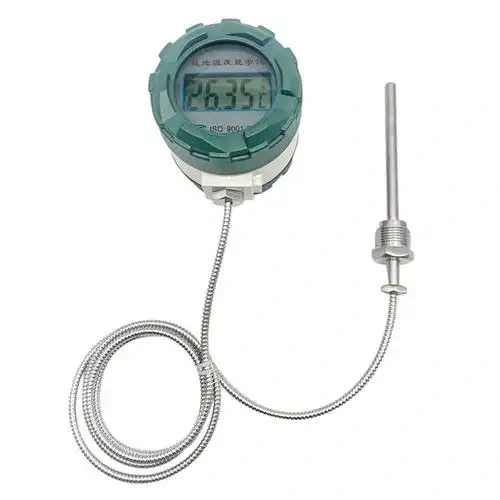
Sion-Inst works in industrial temperature measurement and carries a broad line of products. Besides this remote sensor, the lineup includes temperature transmitters in several styles—waterproof, sanitary, digital and all-in-one units.
Everything in the range is built for accuracy and stays stable over time, so the gear fits into all kinds of industrial settings. Sion-Inst supplies both off-the-shelf equipment and custom temperature measurement setups to customers across different industries, helping them tighten up their processes and run a smarter, more efficient operation.