V cone flow meters represent a new generation of differential-pressure throttling devices. Instead of a conventional orifice plate, they use a distinctive annular throttling geometry that reconditions the flow field through basic fluid-dynamics principles, producing results that older designs simply cannot match.
The practical upside is a package of real-world advantages: the meters accept short upstream straight runs, resist contamination that would foul standard sensors, and hold their accuracy steady over long service intervals. That combination makes them a solid choice for tough industrial fluid-measurement applications where installation space is limited and process media are far from ideal.
What Is a V Cone Flow Meter?
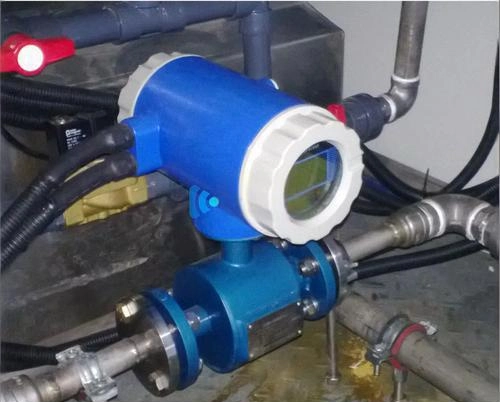
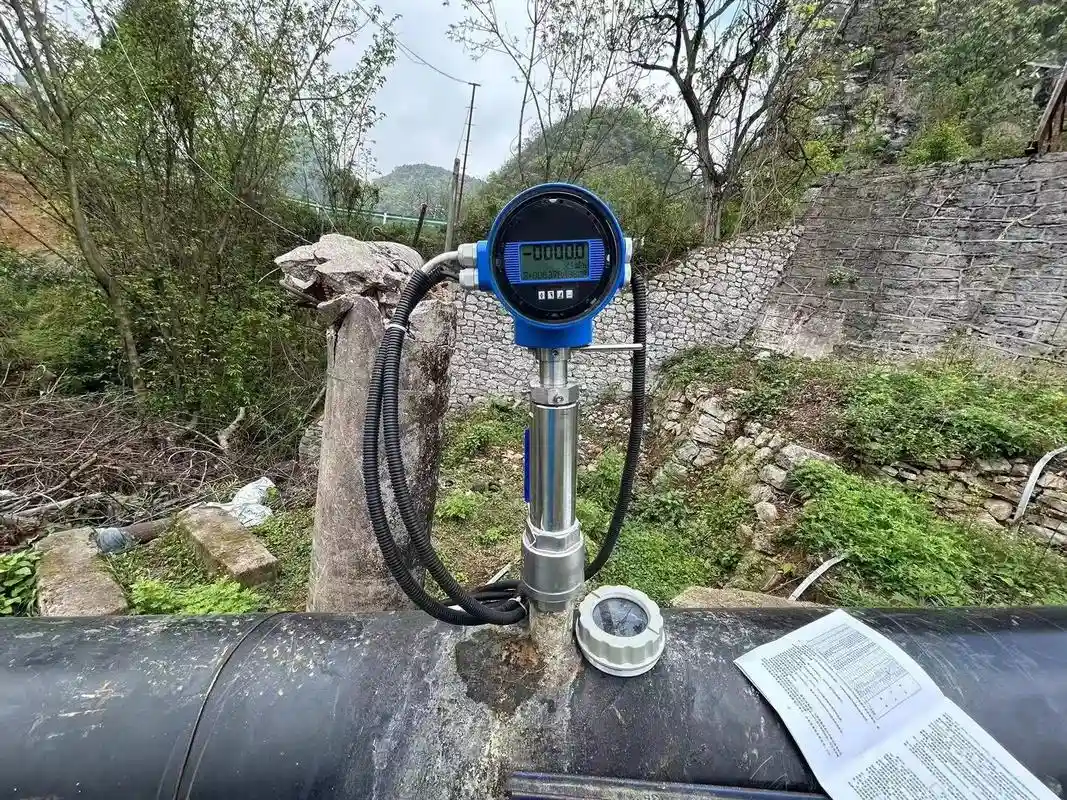
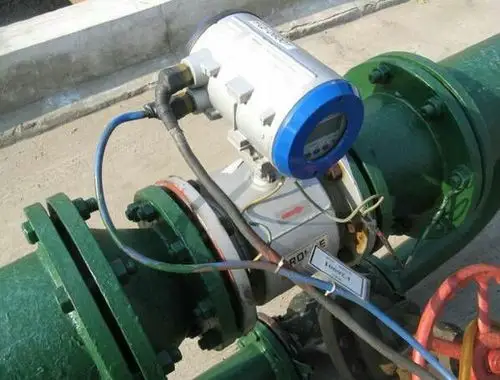
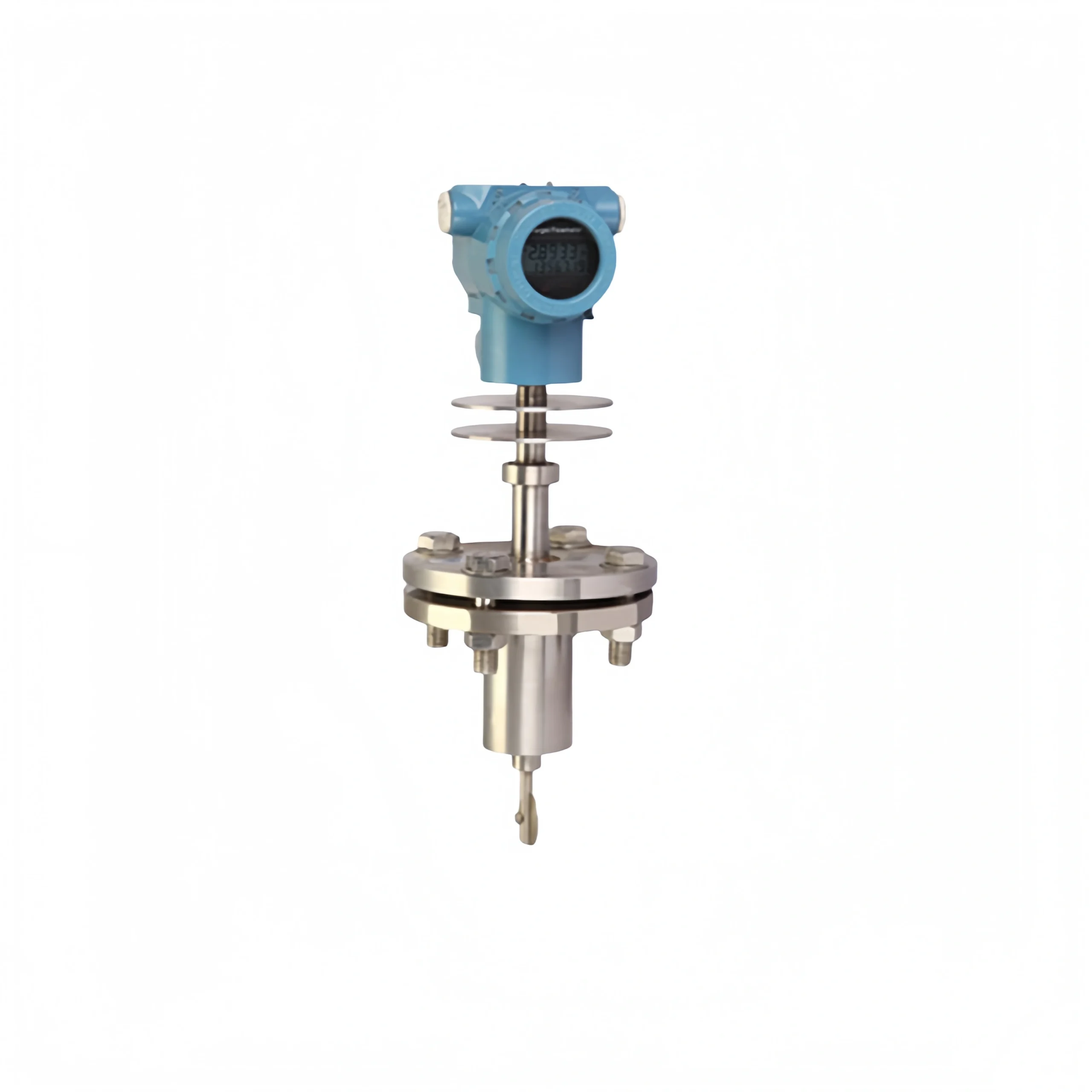
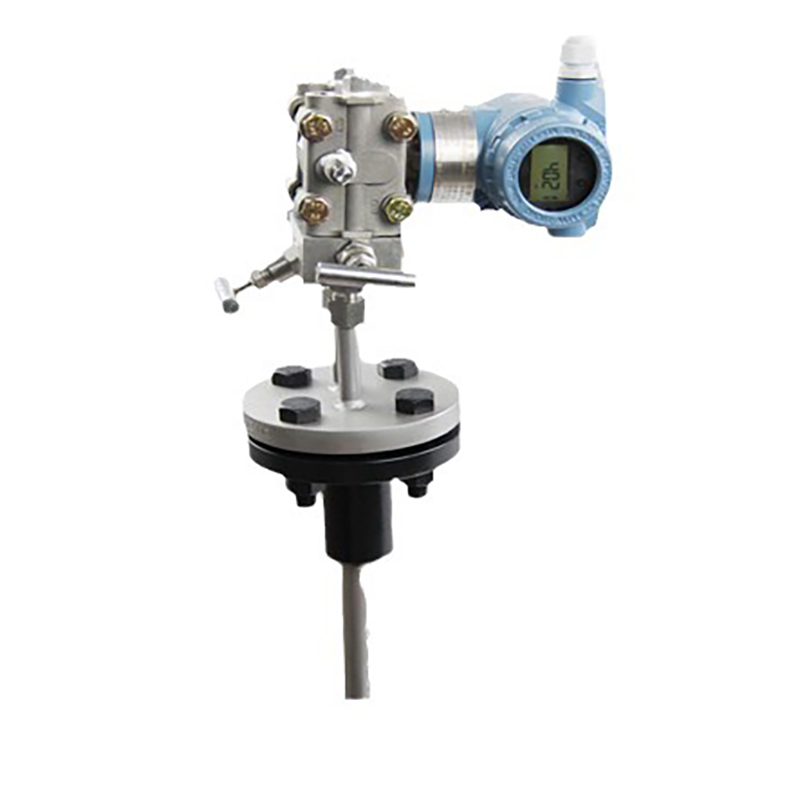
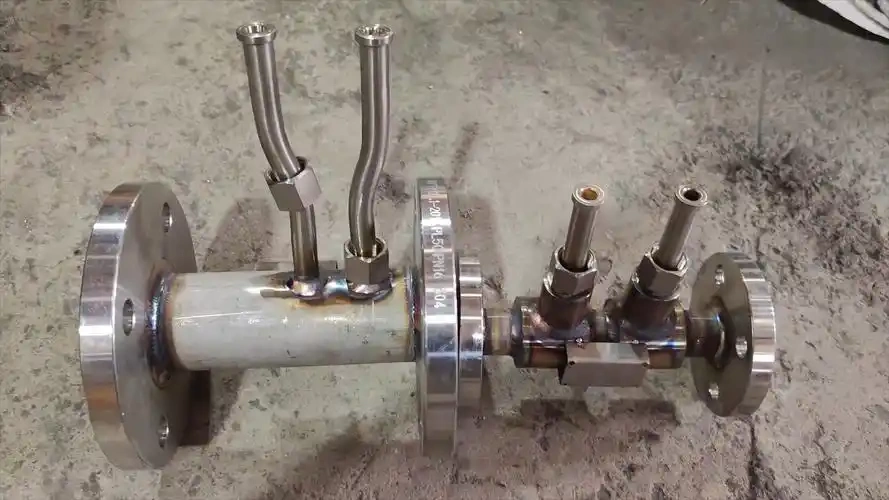
V-cone flow meters—often called internal cone flow meters—are a relatively recent entry in the differential-pressure flow measurement category. They come in integrated and split-body designs alike, each built around a conical throttling element fixed inside the measuring tube and a differential pressure transmitter.
These devices tolerate liquids, gases, and steam equally well, and they see routine service in flow monitoring and metering across the petroleum, chemical, power generation, metallurgy, heating, and environmental protection industries.
Structural Features of the V Cone Flow Meter
Unique annular throttling structure: Traditional differential-pressure flow meters work with a circular flow cross-section, but the V-cone meter hangs a V-shaped cone element coaxially inside the pipe, leaving an annular gap for the fluid to pass through. That simple geometry change sidesteps the structural constraints of conventional throttling devices and is the main reason the meter performs so differently.
Smooth fluid flow conditions: Because the cone tapers gradually, the fluid never faces a sharp contraction. Pressure drops off slowly and evenly, so the differential pressure transmitter picks up a steady signal. The payoff is better accuracy across the board, and the meter stays precise even when flow rates drop to the low end of the scale.
Built-in self-cleaning and anti-clogging design: The cone is suspended along the pipe axis, and its shape forces fluid to move slowly through the center while speeding up near the walls. That wall-hugging high-velocity stream scours the cone surface and the pipe interior, carrying away contaminants before they can stick or build up.
Structural advantages for medium compatibility: That self-cleaning annular design means the meter can take on media that would choke a standard differential-pressure device. It handles liquid with entrained gas, wet gas, and slurries carrying solids and other contaminants—covering a much broader operating envelope than traditional DP flow meters ever could.
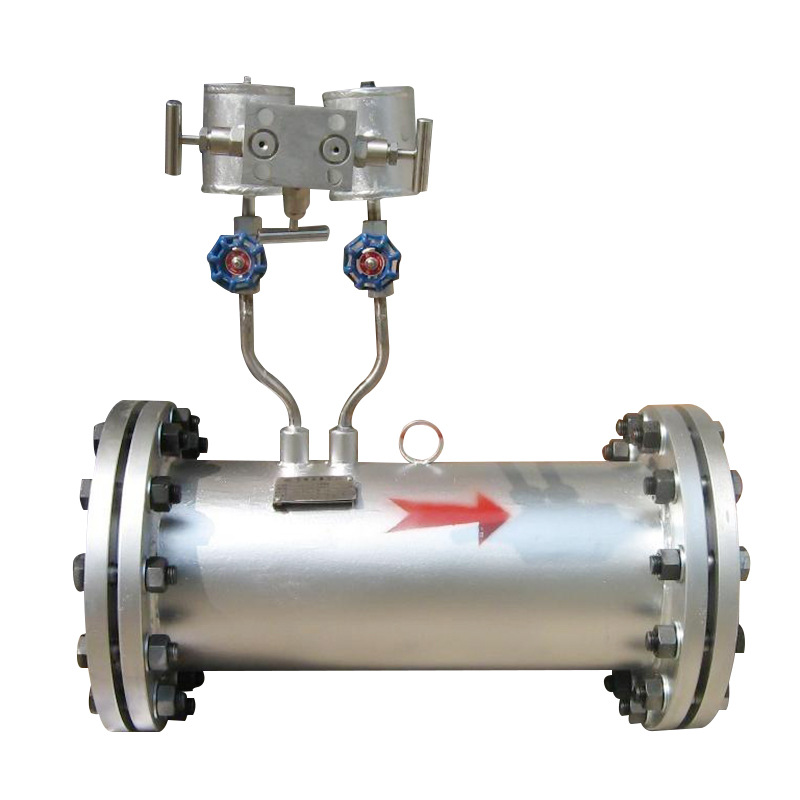
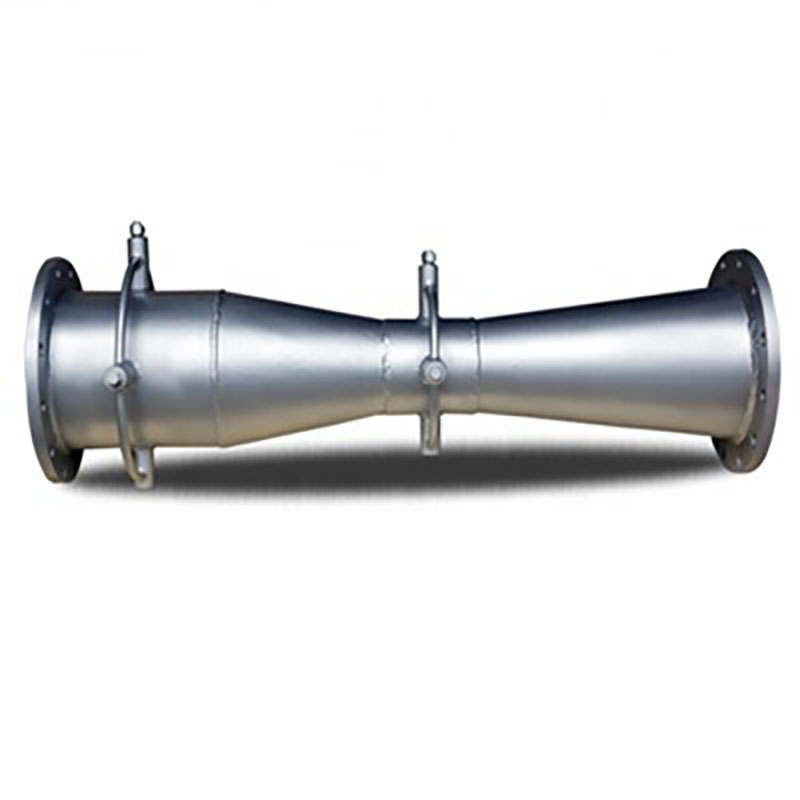
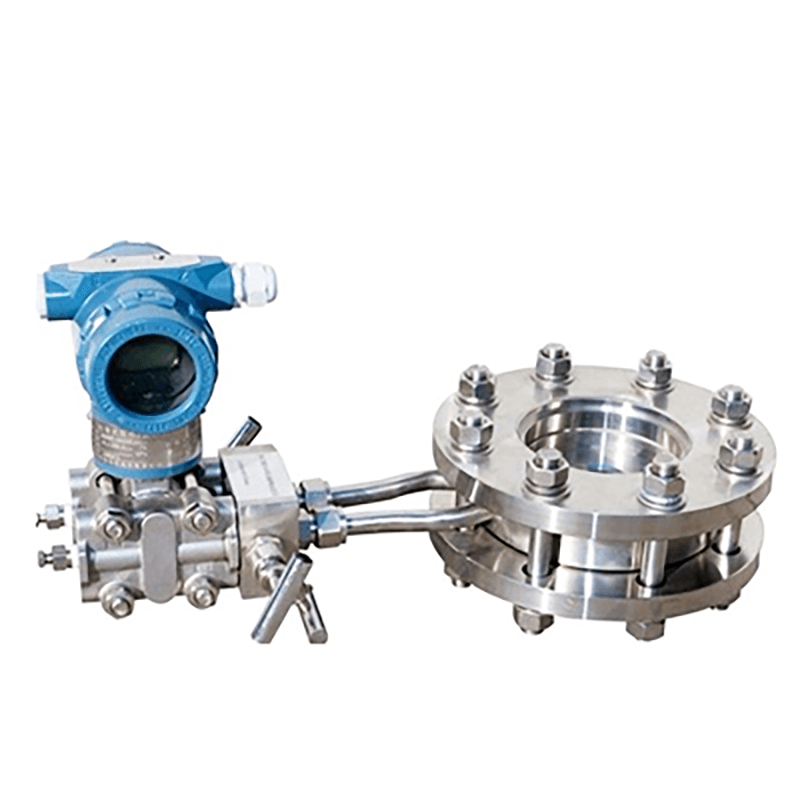
Working Principle of the V Cone Flowmeter
The V-cone meter belongs to the differential-pressure family of flow meters. Its active element is a V-shaped cone that sits in the middle of the pipe. When fluid passes through, the cone obstructs the stream, squeezing the flow into a narrower annular gap.
That constriction accelerates the fluid and changes its pressure, producing a stable differential pressure between the upstream and downstream sides of the cone.
Pressure taps on either side of the cone—one upstream, one downstream—pick up the high and low pressures and feed them to a differential-pressure transmitter, which reads the exact pressure difference.
Bernoulli’s equation shows that, with pipe size, cone geometry, and fluid conditions held constant, flow rate is proportional to the square root of the differential pressure. The transmitter converts that DP into a standard 4–20 mA signal and passes it along to the secondary instrument.
The secondary instrument applies compensation using the cone diameter ratio, fluid temperature, and line pressure, then calculates the true instantaneous flow rate. It shows the live reading on a display and keeps a running total for cumulative metering.
Advantages and Disadvantages of the V Cone Flowmeter
Advantages
1. The V cone flowmeter has requirements for medium cleanliness; large particles and fibrous impurities are prone to accumulation and fouling, which can alter the throttling structure and cause measurement accuracy deviations.
2. Although the required straight pipe section is shorter than that of an orifice plate, installation requirements for the straight pipe section must still be met; disturbances such as pipe elbows and valves can still interfere with measurements.
3. As an insertable throttling component, it causes pressure loss, which is greater under high-velocity flow conditions, thereby increasing the system’s operational energy consumption.
4. It is not suitable for media prone to scaling or crystallization; scale buildup on the cone alters the flow cross-sectional area, causing measurement errors, and cleaning and maintenance are relatively cumbersome.
5. Manufacturing small-bore units is tricky. The cone and the pressure tapping holes both demand tight tolerances, so you end up paying more than you would for a standard orifice plate.
6. The turndown ratio beats that of an orifice plate, but it is still held back by the differential pressure transmitter. At very low flows the DP signal gets too weak to read reliably, and measurement error grows quickly.
7. Fast-moving or corrosive fluids will chew away at the cone over time, changing the throttling profile. That means periodic calibration is necessary, and if wear gets bad enough you have to swap the cone out entirely.
8. With dirty process fluids, the impulse lines tend to plug up. Sites often have to add purge systems to keep them clear, which adds extra hardware in the field and more maintenance work.
Disadvantages
1. Scale and sediment do collect on V-cone meters. Once grime sticks to the cone, the flow passage changes shape and the readings drift. If the fluid is dirty, you have to schedule regular cleanings or the accuracy suffers.
2. The cone itself eats up a fair amount of pressure permanently. That makes these meters a poor fit for low-pressure lines or any system that does not have enough head to spare.
3. They also struggle when flow drops off. At low velocity the differential pressure becomes tiny and easily swamped by noise, so the bottom end of the range is cramped and accuracy falls off noticeably.
4. High machining precision is required, resulting in relatively high manufacturing costs; replacement costs for cone components are also high should they become damaged.
5. Although the required straight pipe sections are shorter than those for orifice plates, upstream and downstream straight pipe sections are still necessary, and it is impossible to avoid flow disturbances caused by pipework and fittings.
6. When used with highly corrosive or highly abrasive media, the cone is prone to erosion and corrosion; changes in its geometric dimensions can cause the instrument coefficient to drift, resulting in reduced measurement accuracy.
7. It requires a differential pressure transmitter and pressure-taking lines; these lines are prone to blockages and leaks, resulting in a significant amount of on-site maintenance work.
Practical Applications
1. Oil and gas sector: These meters see heavy use at wellheads for produced fluids, injection water, associated gas, wet natural gas and LNG lines. They hold up well in tough conditions—sandy flows, gas-liquid mixtures and high-pressure service. Because they need only short straight runs upstream, they fit nicely where pipe routing is tight. Once properly calibrated, they can even handle custody transfer or internal allocation metering.
2. Chemical production:The meters tackle all sorts of chemical liquids, corrosive streams, slurries and mixed process gases. They work in lines where temperature and pressure swing widely, or where the fluid tends to crystallize or carries trace contaminants. The self-cleaning action keeps pressure taps from plugging, which matters for both process control and closing material balances.
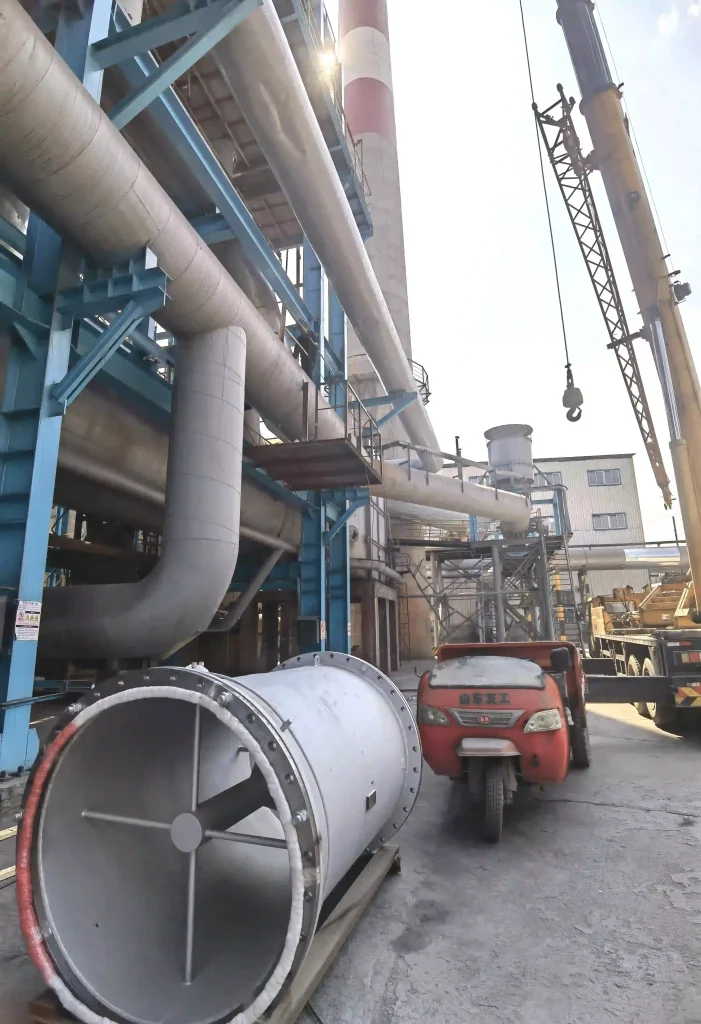
3. Metallurgical operations:Blast furnaces, coke ovens and converters all produce dirty, dust-laden gas loaded with condensate. V-cone meters measure these streams under low-pressure, low-flow conditions that would choke conventional throttling devices. They avoid the constant blockage and erratic data that plague older designs, giving reliable flow monitoring and energy-consumption figures for gas lines.
4. Power generation and district heating: Boiler steam, feedwater, circulating water and heating mains are all within range. The meters are designed for sites packed with bends and short on straight pipe. That makes them practical for cramped boiler rooms and heating networks where space is at a premium, while still delivering steady readings for energy tracking and billing data.
5. Water treatment and environmental protection:These meters track industrial raw water, raw sewage with suspended solids, and various slurries. They also work on biogas, flare gas and process vent streams. The flow data they produce feeds into environmental compliance tracking, carbon-emission calculations and gas-recovery accounting.
6. Paper and mining industries: In paper mills they measure fibre-laden streams like pulp and black liquor. In mines they handle slurry lines and equipment cooling water. The hardware stands up well to solid-particle abrasion, so it does not need maintenance nearly as often as conventional designs.
Installation of the V Cone Flow Meter
Selection of installation location:
Pick a straight run of pipe long enough to give a clean flow profile, and stay clear of bends, valves or anything else that stirs up the stream.
For liquid service, mount the meter at a low spot so air does not collect inside it; for gas, put it high enough that condensate drains away rather than pooling in the transmitter; for steam, do not place it at the very top of the line where condensate can hammer the sensor.
Keep the unit out of heavy vibration, direct sun and strong electromagnetic fields, and leave enough room around it so technicians can reach it for service.
Straight pipe section requirements:
Maintain a straight pipe section of 3–5 pipe diameters downstream; upstream, ensure the required straight pipe length is maintained based on upstream fittings, extending it appropriately where multiple resistance elements are present; if conditions are insufficient, install a flow straightener to prevent flow field distortion and reduce measurement errors.
Flow direction verification:
The direction of the medium flow must match the arrow on the body; reverse installation is prohibited; prior to installation, verify that the diameter, medium and operating conditions match the site requirements.
Flange Alignment:
Do not pull on the pressure taps or the transmitter during handling. Align the flanges; gaskets must not protrude into the pipe. Tighten the bolts diagonally and evenly. Weld a protective cone to prevent welding slag from scratching the orifice plate.
Pressure Tap Installation:
Keep impulse lines short and give them a clear slope. For liquids, pitch the taps downward so trapped air can vent; for gas, pitch them upward so condensate drains out. Steam service needs a condensate pot at the same elevation as the taps.
Install a three-valve manifold, and add insulation and trace heating wherever necessary to prevent plugging.
Transmitter installation:
On liquid applications, mount the transmitter below the pressure taps; on gas, above them; on steam, below the condensate pot. Tighten all fittings so the pressure measurement loop does not leak.
Ventilation and condensate drainage:
Install a vent at the highest point of the pipeline and a condensate drain at the lowest point. Before commissioning, purge all air bubbles from the pressure-taking lines to avoid signal fluctuations or spiking.
Differences between V Cone flowmeters and orifice plate flowmeters
Both V cone and orifice plate flowmeters are differential pressure throttling flowmeters.
The key differences are as follows: the V cone throttling element consists of a central cone; it requires a short straight pipe run, has low pressure loss, a wide measurement range, and is resistant to fouling and wear, making it suitable for media containing impurities, but it is relatively expensive;
Orifice plates utilise a thin-plate circular orifice structure and are inexpensive; however, they suffer from high pressure loss, a narrow measurement range and stringent requirements for straight pipe runs, whilst the orifice opening is prone to wear and blockage. They are therefore primarily used for measuring clean media.
Differences between V-cone and Venturi flowmeters
Both the V cone and Venturi flowmeters are differential pressure-type throttling flowmeters.
The V cone utilises a centrally suspended conical body for throttling; it requires shorter straight pipe sections, offers good resistance to fouling, has a wide turndown ratio, and is suitable for contaminated media;
Venturi flowmeters rely on throttling via the contraction and expansion sections of the pipe; they have lower pressure loss but require a longer straight pipe run, are prone to the accumulation of impurities, are more suitable for clean media, and generally have a higher overall cost.
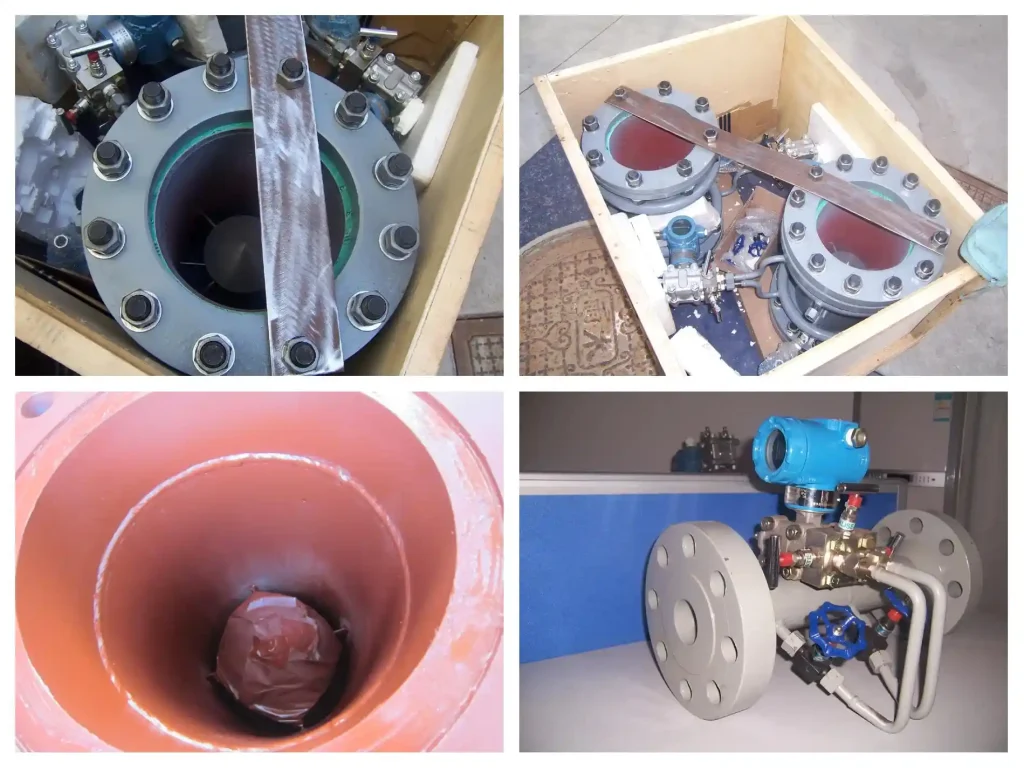
In summary, the V-cone flowmeter, with its unique annular throttling structure, possesses excellent self-cleaning and anti-blocking capabilities and is highly adaptable to a wide range of installation conditions.
It effectively addresses industry pain points associated with traditional throttling instruments such as orifice plates and Venturi tubes, including susceptibility to blockages, fluctuations in accuracy and restrictions on straight pipe runs.
This instrument can reliably measure liquids, gases, steam and fluids containing impurities, offering superior overall performance and service life, whilst effectively reducing operational and maintenance costs as well as system energy consumption.
Sion-Inst provides professional selection guidance based on medium characteristics, temperature and pressure parameters, and pipeline layout. We supply the instrument body, differential pressure transmitters and a full set of installation accessories, whilst covering operating condition assessment, product customisation, on-site guidance and after-sales technical support.
This ensures the long-term stable operation of the equipment and provides reliable metering data to support enterprises in production control, cost reduction and efficiency improvement.