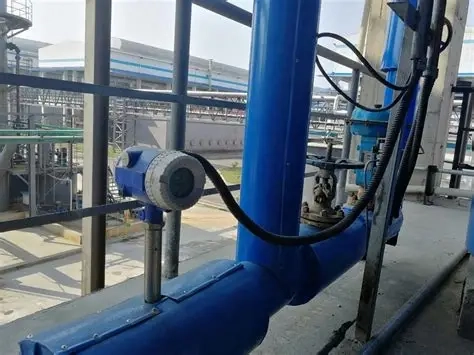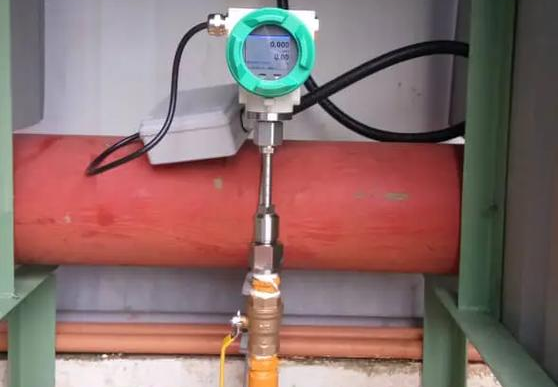
Insertion ultrasonic flow meters achieve high-precision, in-contact measurement of fluid flow by inserting sensors directly into the pipe.
They are easy to install and require no pipe cutting, making them particularly suitable for large-diameter pipes and the retrofitting of existing pipeline networks. They are widely used in water supply, heating and industrial process monitoring.
Working principle of insertion ultrasonic flow meters
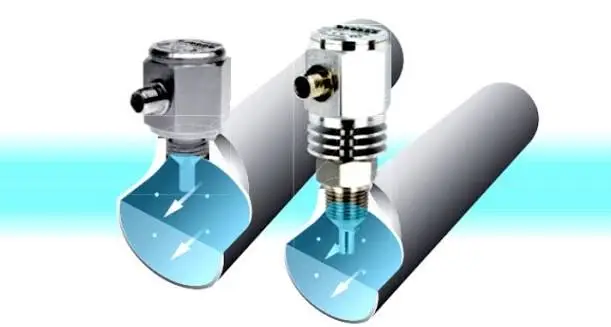
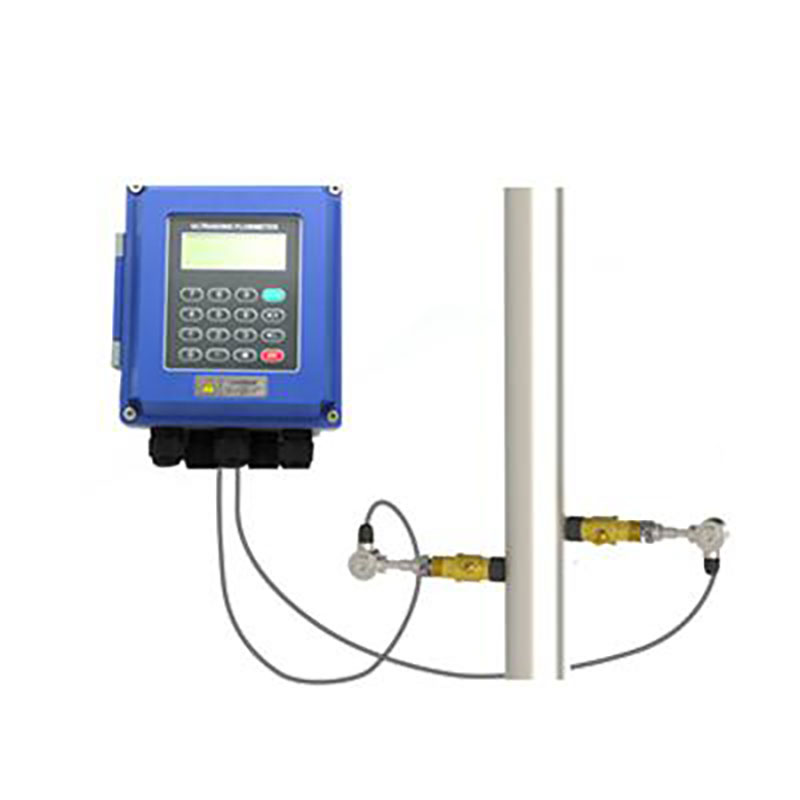
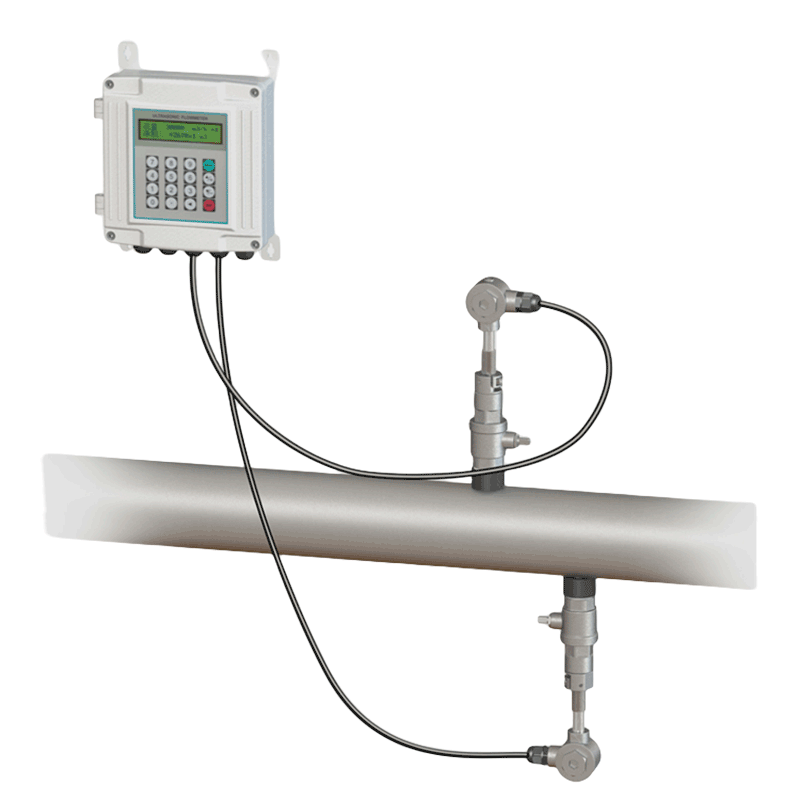
Insertion ultrasonic flow meters utilise the time-of-flight principle to measure flow. The device mounts ultrasonic transducers on the outer wall of the pipe; two sets of transducers alternately transmit and receive ultrasonic waves, which pass obliquely through the pipe wall and the fluid inside, propagating in both the downstream and upstream directions.
The flow of the fluid affects the speed of sound propagation; when travelling with the flow, the sound travels faster and takes less time, whilst when travelling against the flow, propagation is impeded and takes longer.
The instrument precisely calculates the time difference between these two propagation states and, by combining this with parameters such as the pipe diameter and the angle of sound emission, derives the actual fluid velocity.
Based on the pipe cross-sectional area, further calculations are performed to determine the instantaneous volumetric flow rate and cumulative flow rate. As this instrument measures the medium non-contact, installation and maintenance do not require pipeline shutdown or pressure relief; there is no pressure loss, and it is not susceptible to corrosion by the medium.
It is widely applicable in large-scale pipeline scenarios such as water supply and drainage, and industrial fluid conveyance, and is suitable for flow monitoring of various homogeneous fluids.
Structure of the Insertion Ultrasonic Flow Meter
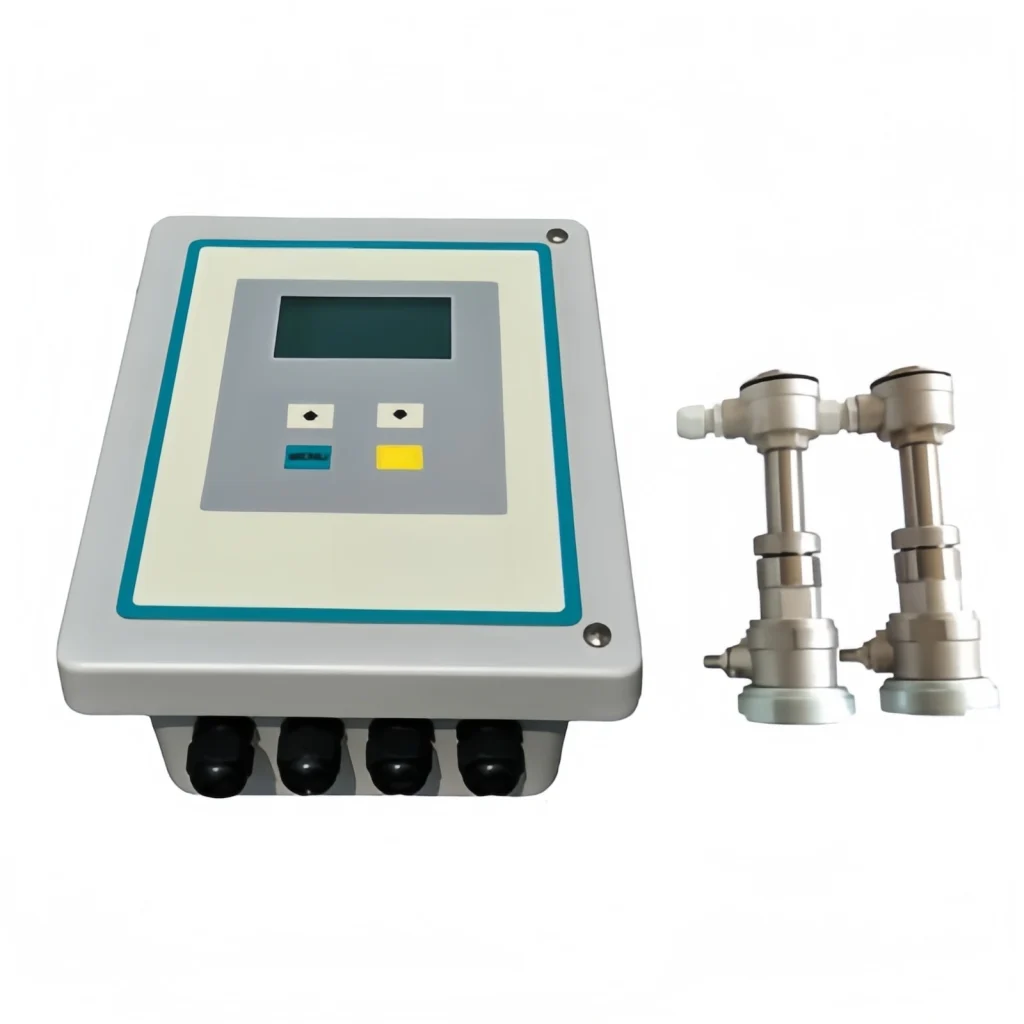
Ultrasonic Sensors
These are the core components, typically a pair, installed upstream and downstream of the pipeline respectively. They are inserted into the fluid at a specific angle and alternately function as ultrasonic transmitters and receivers. The transducer heads are in direct contact with the fluid and are responsible for the conversion between electrical and acoustic signals.
Insertion Mechanism and Sealing Components
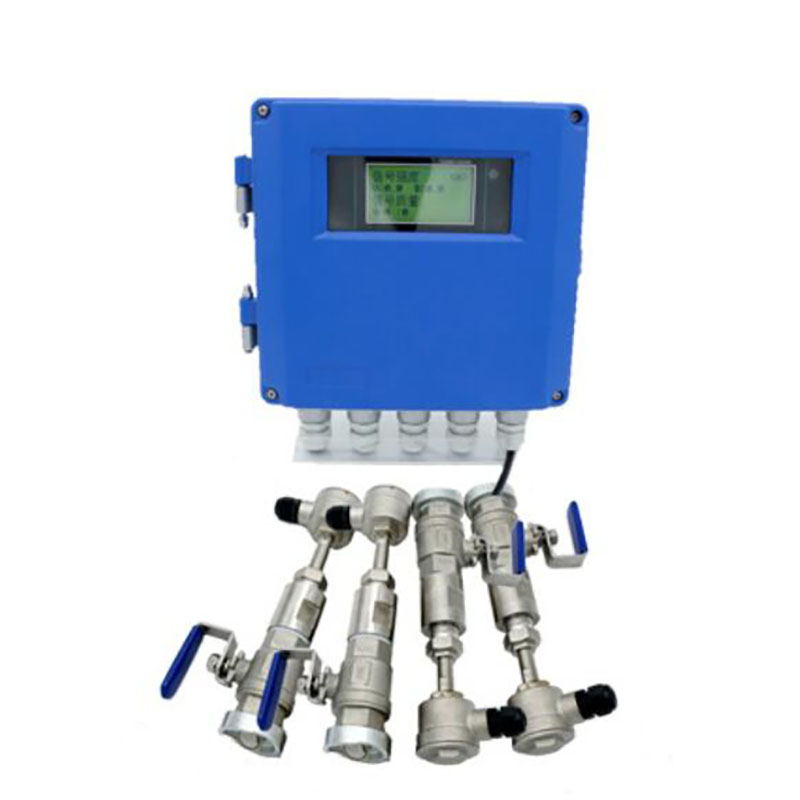
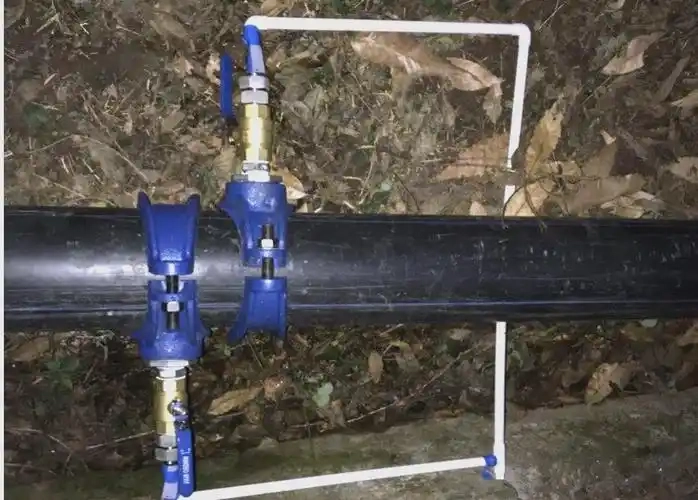
These include a ball valve, mounting base, locking mechanism and seals. The ball valve allows the transducers to be inserted or removed whilst the system is under pressure without interrupting the process; the locking mechanism ensures the transducers remain fixed in position during measurement; and the seals prevent leakage at the insertion point.
Signal Processing Unit
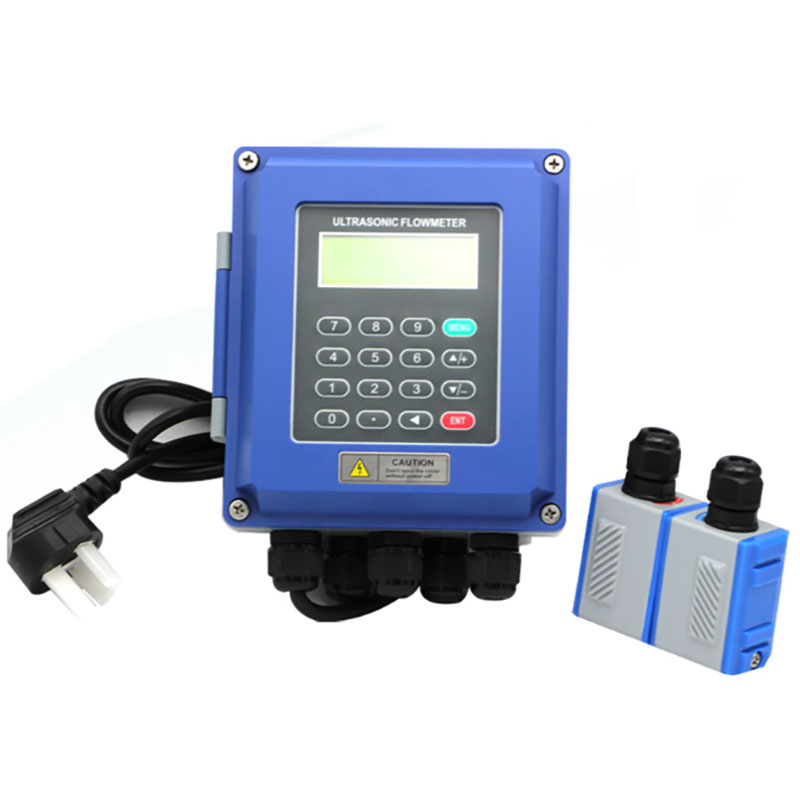
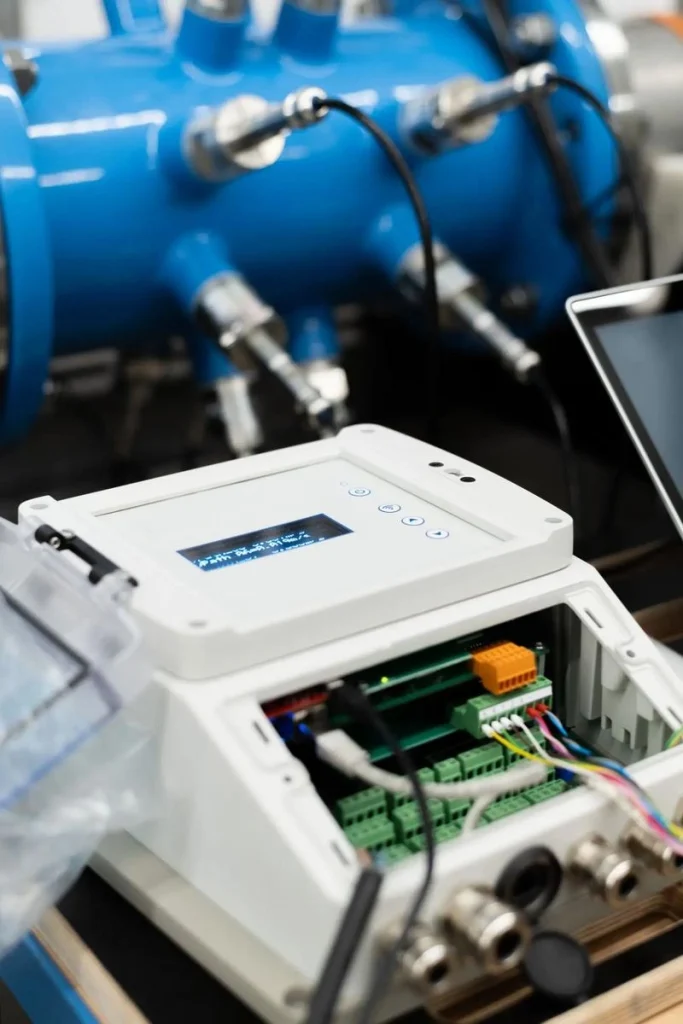
This comprises transmission and reception circuits, a high-precision time measurement module or phase detection circuit, and a microprocessor. This unit controls the transmission and reception of ultrasonic waves, precisely measures the time difference in propagation between the upstream and downstream directions, and converts the raw signals into flow velocity and flow rate data.
Display and output module: Provides a local display screen, as well as a 4–20 mA analogue signal, pulse output or digital communication interfaces, such as RS485 and HART protocols, to facilitate integration with control systems for remote monitoring and data acquisition.
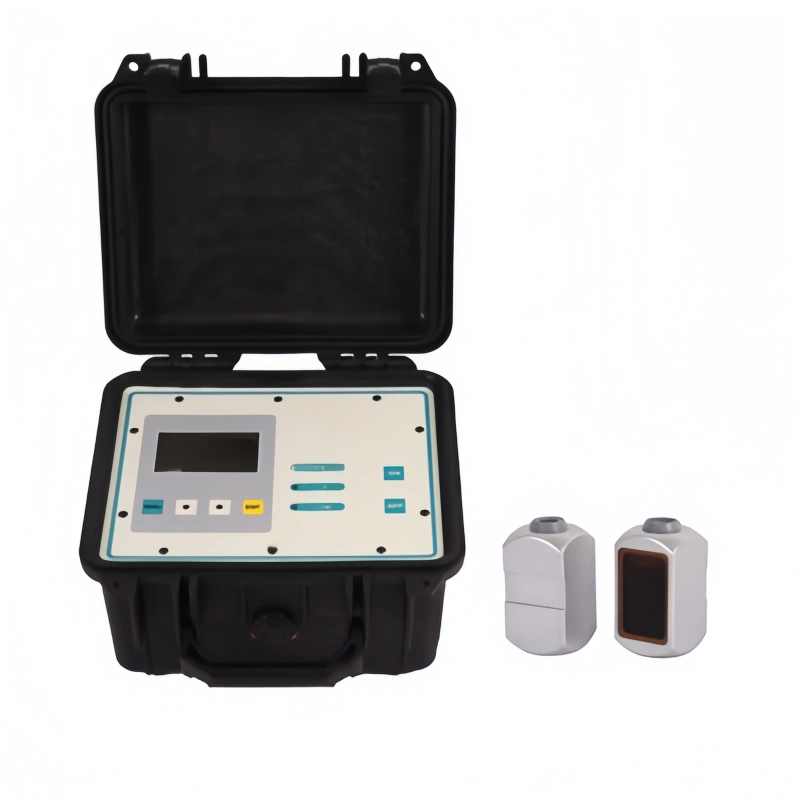
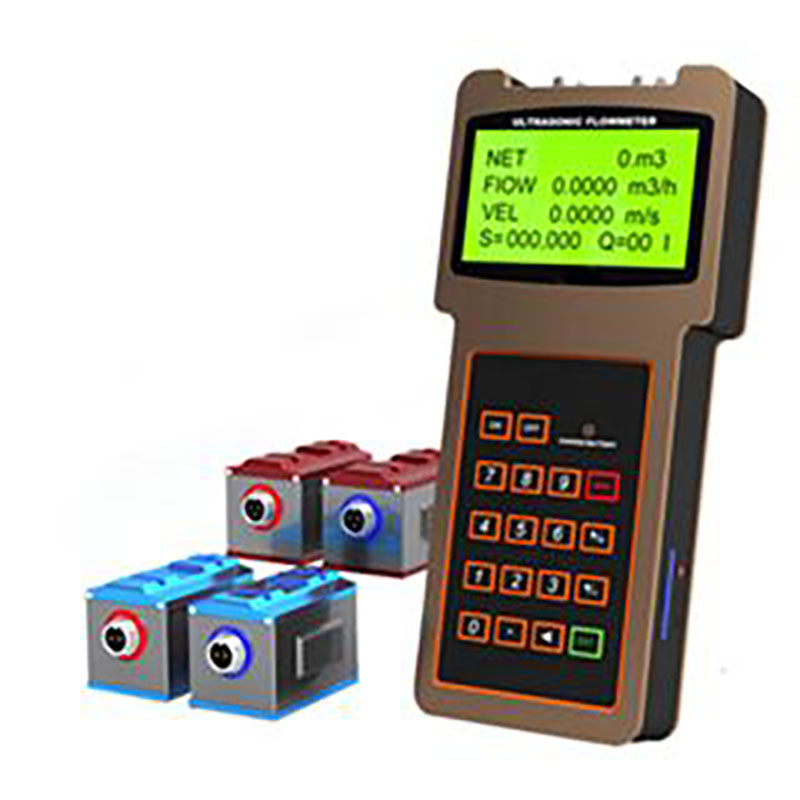
What is the sound path of an ultrasonic flowmeter?
Make sure there are no obstructions in the device’s measuring area. Just make sure you keep the unit away from high-power motors and variable frequency drives to avoid electromagnetic interference. Keep an eye on the liquid level regularly, and get any odd readings fixed or recalibrated straight away.A single pair of sensor probes constitutes a single-channel system; two pairs form a dual-channel system, and so on.
Comparison of Single-Channel, Dual-Channel and Quad-Channel Systems
Single-channel: Features a single set of transmitter and receiver probes, with a single acoustic path. It has a simple structure, is low-cost and easy to install. Suitable for conditions with uniform flow fields, sufficient straight pipe runs and clean media. It has poor resistance to interference, and errors tend to be significant under abnormal flow conditions, resulting in average accuracy.
Dual-channel: Two probe sets create two separate acoustic paths, helping to reduce errors caused by uneven flow and delivering solid measurement accuracy and stability. It is effective for most industrial pipelines, handling short straight runs and small flow disturbances without issue, and offers the best value for money overall.
Four-channel: With four probe sets pulling data from multiple points, this setup does a much better job of fixing problems such as flow skew, swirling and velocity layers, so you get the highest possible accuracy and stability.
This setup is ideal for large pipes, challenging flow conditions, confined spaces, and situations where top-tier precision is required. The downside is that it is more expensive and time-consuming to install.
Advantages of Insertion Ultrasonic Flow Meters
Easy installation: You can install it while the pipeline is still pressurized—no need to cut the pipe, drain the fluid, or tear down existing piping. The process is quick and simple, so you avoid the revenue hit from downtime. It works equally well on active industrial lines and when upgrading older networks.
Lower operating costs: It costs less to buy and install than in-line or electromagnetic flowmeters, and you don’t need extra fittings like flanges or reducers. There are hardly any parts that wear out, so maintenance stays cheap and the long-term value is hard to beat.
No pressure loss: Since only a small probe tip sits inside the pipe, it doesn’t block the flow at all—pressure drop is basically zero. Compared to restrictive devices like orifice plates and turbine meters, it eases the burden on pumps and cuts energy use.
Highly adaptable with a wide range of applications: Compatible with various pipe materials including carbon steel, PVC and concrete pipes, and suitable for pipelines ranging from DN50 to extra-large diameters. It can measure clean water, wastewater, oils and mildly corrosive liquids, covering numerous industries such as water supply and drainage, chemicals and heating.
No contamination of the medium: The measuring probes are made of corrosion-resistant stainless steel with stable chemical properties; they do not react with the medium during measurement, thus preventing secondary contamination, making them suitable for the conveyance of clean media in water supply, food and medical applications.
Convenient operation and maintenance: Regular cleaning of the probes to remove impurities and scale is sufficient to maintain accuracy; thanks to a specialised valve design, probes can be removed and replaced without shutting down the system or draining the medium, ensuring low maintenance complexity and suitability for unmanned operations.
High interference resistance and excellent stability: Utilising the ultrasonic time-of-flight method, the device contains no internal moving mechanical parts, eliminating issues such as wear and blockages. It can withstand trace amounts of suspended solids and silt in the medium, ensuring stable operation and minimal measurement error.
High level of intelligence: It can collect data such as instantaneous and cumulative flow rates and velocity, and supports RS-485, Modbus and wireless remote transmission modes. You can hook it up straight to PLCs and IoT platforms, which makes remote monitoring and control a breeze. It’s perfect for automated and intelligent control systems.
Disadvantages of Insertion Ultrasonic Flow Meters
Susceptible to medium conditions: Bubbles, heavy suspended solids and other impurities in the fluid can interfere with the transmission of the ultrasonic signal and distort your readings. Therefore, it is not suitable for fluids containing gas or thick, high-concentration slurries.
Pipeline requirements: Scale buildup, rust, or lining coming loose on the pipe interior can weaken the signal and hurt accuracy. The same goes for pipes that are too small in diameter or have overly thick walls.
Installation locati0n constraints: You need a decent length of straight pipe. Bends, valves or reducers upstream or downstream will disrupt the flow and affect the accuracy of the measurement.
Limitations in low- and high-temperature conditions: The probes and sensing elements can only handle so much temperature-wise. They won’t hold up for long in extremely hot or deep-freeze environments.
Protection required for outdoor use: When mounted outside, the probe and cables take a beating from wind, rain, sun, and frost. You’ll need to add extra protection against water, UV exposure, and freezing.
Applications of Insertion Ultrasonic Flow Meters
Municipal water supply and drainage: Suitable for urban water supply networks, sewage networks and pumping station pipelines; can be installed or retrofitted without interrupting service; suitable for flow monitoring in large-diameter, long-distance pipelines.
Industrial Water Treatment: Suitable for industrial circulating water, reclaimed water reuse and wastewater discharge pipelines. Capable of withstanding small amounts of suspended solids in the medium, meeting the requirements for continuous production monitoring.
District Heating: Suitable for district heating networks and hot water transmission pipelines in heat exchange stations. Installation can be carried out whilst the system is under pressure, without affecting the normal operation of the heating system.
Petrochemicals: Suitable for process cooling water, oil products and pipelines conveying mildly corrosive fluids within plant premises. Compatible with a variety of pipe materials and moderately complex media.
Water Engineering: Large-diameter water conveyance facilities such as reservoirs, canals and main water supply pipelines, used for water volume statistics, flow control and data metering.
Retrofit of Legacy Pipelines: Existing industrial and municipal pipelines currently in operation; installation requires no dismantling or modification of the pipeline, significantly reducing downtime losses during retrofitting.
Accuracy of Insertion Ultrasonic Flow Meters
The standard measurement accuracy of insertion ultrasonic flow meters is generally within ±1.0% to ±2.0%.
Their accuracy is susceptible to on-site operating conditions; measurement errors increase when the medium contains bubbles or a large amount of impurities, when there is pipe scaling, when the flow pattern is turbulent, or when flow velocities are low.
The overall accuracy of this type of instrument is lower than that of inline ultrasonic flowmeters and is comparable to that of clamp-on models; it is more suitable for applications requiring moderate accuracy, such as process monitoring and flow statistics.
Insertion vs. Clamp-On vs. Inline
Installation Methods
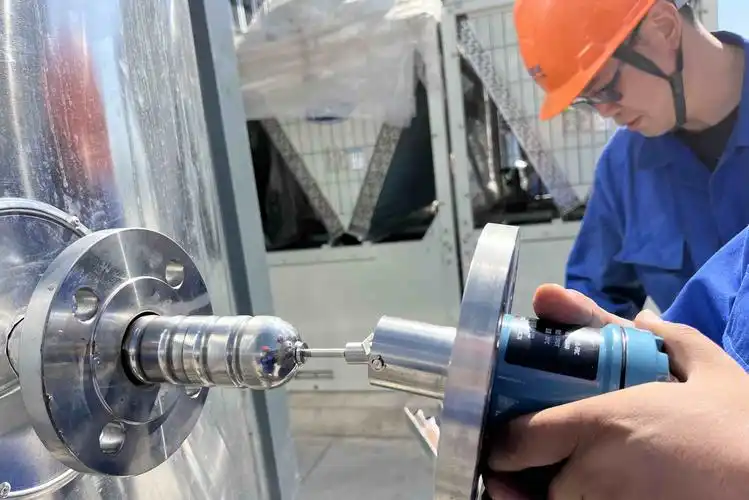
In the insertion method, a hole is drilled under pressure and the probe extends into the pipe. This method allows for installation without cutting the pipe.
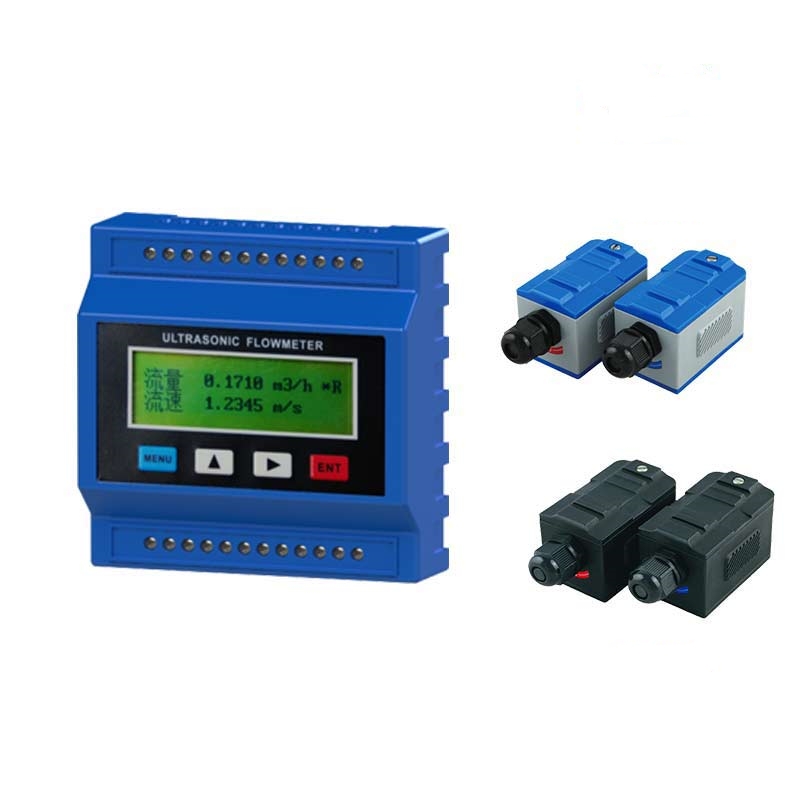
In the clamp-on type, the probe is fixed to the outer wall of the pipe using an external mounting method, and the pipe remains undamaged throughout the process.
The inline type has an integrated structure and requires the pipe to be cut and connected with flanges for installation as a single unit. Operations must be suspended during installation.
Pressure Loss
The insertion type involves only a small portion of the probe entering the pipe, resulting in minimal pressure loss.
The clamp-on type does not come into contact with the medium, resulting in absolutely no pressure loss.
The inline type is integrated into the pipeline, which generates some flow resistance and pressure loss.
Suitable Pipelines
The insertion type is primarily suited to large-diameter pipelines and can be used with all types of pipe materials.
The clamp-on type has requirements regarding pipe wall thickness and material uniformity; it is not suitable for thin-walled or porous pipes.
Inline models are primarily used for small to medium-sized pipes; they have fixed specifications and are suitable for standard metal and plastic pipes.
Media Compatibility
Insertion-type models can measure media containing small amounts of impurities and suspended solids; however, excessive bubbles may affect accuracy.
Clamp-on models require high media purity; bubbles and thick deposits will interfere with the signal.
Inline models have a wide range of media compatibility and offer relatively better stability.
Maintenance
Insertion-type models allow the probe to be removed and installed without stopping the system, making cleaning and maintenance convenient.
Clamp-on models require no contact with the pipeline for servicing; only the external probe and wiring need to be inspected.
Inline models require pipeline shutdown and disconnection for servicing or replacement, resulting in a complex operational and maintenance process.
Cost
Insertion-type models offer good value for money in large-diameter applications, with low costs for installation materials.
Clamp-on models have moderate overall costs and the lowest installation costs.
Inline models have higher equipment and installation costs, with costs increasing significantly as pipe diameter increases.
Measurement Accuracy
Insertion-type models offer moderate accuracy and are significantly affected by flow patterns and the state of the medium.
Clamp-on models generally provide average accuracy, with signals prone to interference from pipe wall conditions.
Inline models benefit from stable flow patterns, offering the highest overall measurement accuracy and excellent repeatability.
How to Select the Appropriate Ultrasonic Flow Meter
Selection Based on Piping and Pipe Diameter
For small-diameter pipelines, in-line ultrasonic flow meters are the preferred choice, as they provide more stable measurement accuracy. For medium- to large-diameter pipelines where on-site pipeline shutdown for retrofitting is not feasible, choose the insertion type. Where the pipe wall is intact, the pipe material is uniform, and pipeline disruption is not permitted, select the clamp-on type.
Selection based on medium conditions
If the medium contains a small amount of suspended solids or silt, the insertion type is preferred. If the medium is clean and free from large amounts of bubbles or impurities, the clamp-on type may be selected.
For complex medium compositions and highly fluctuating operating conditions, the in-line type is recommended. Ultrasonic flowmeters are not recommended for media containing large amounts of bubbles or high-concentration slurry.
Selection based on installation conditions
If the site permits shutdown and pipe disconnection, the in-line type may be considered. If production cannot be interrupted and installation must be carried out under pressure, select the insertion type.
If drilling holes in the pipeline is not permitted and installation space is limited, select the clamp-on type. Ensure that sufficient straight pipe runs are reserved at the installation locati0n and avoid fittings such as elbows, valves and reducers.
Selection based on pressure loss requirements
Where there are strict requirements regarding pipeline pressure drop and energy consumption, prioritise the clamp-on type, followed by the insertion type. If a certain amount of pressure loss is acceptable, the in-line type may be selected.
Selection based on operation, maintenance and cost
If low cost and simple installation are prioritised, opt for clamp-on type. For long-term operation with frequent maintenance where downtime is to be avoided, choose the insertion type. If the budget is sufficient and long-term high accuracy and stability are required, select the in-line type.
Selection based on environment and temperature
For special operating conditions such as high or low temperatures, verify the probe’s temperature resistance parameters in advance. For outdoor installation, protective accessories must be provided; all three types are suitable, with particular attention to waterproofing, UV protection and frost protection.
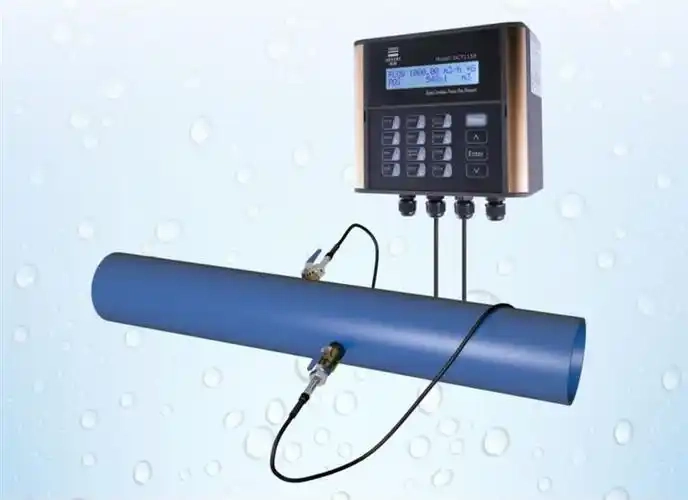
Drawing on extensive experience in the fluid measurement and control industry, Sino-Inst can comprehensively meet the diverse measurement and control needs of various sectors. Our product portfolio covers a full range of ultrasonic flowmeters, including the three mainstream types: insertion, clamp-on and in-line.
We also stock a variety of other mainstream flow measurement devices, such as electromagnetic flowmeters, vortex flowmeters and turbine flowmeters, to fully accommodate flow measurement tasks across different pipe diameters, media and operating conditions.
In addition, we supply complementary measurement and control products such as pressure transducers, industrial thermometers and smart level gauges, providing a one-stop solution to enterprises’ multi-dimensional monitoring challenges regarding flow, pressure, temperature and liquid level.