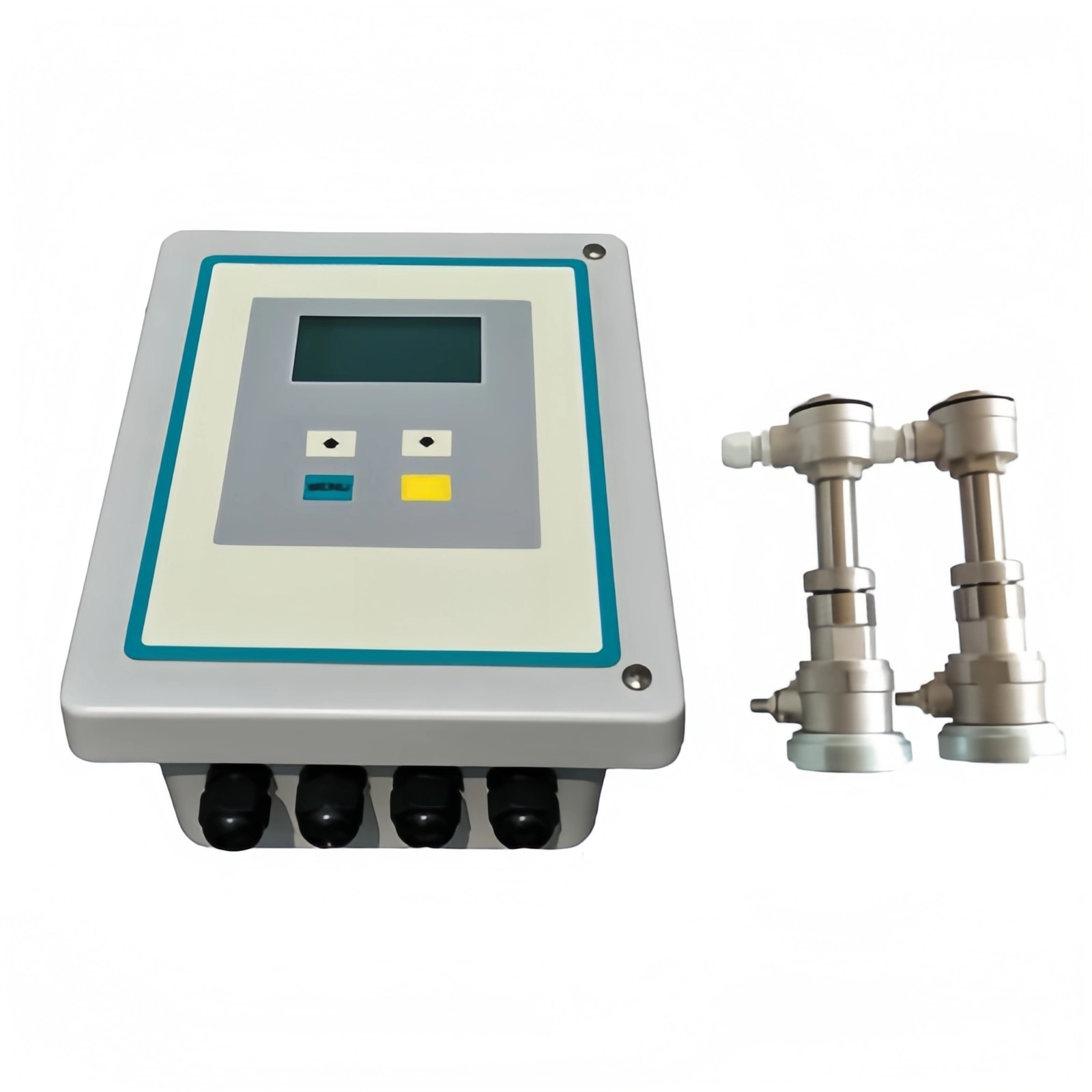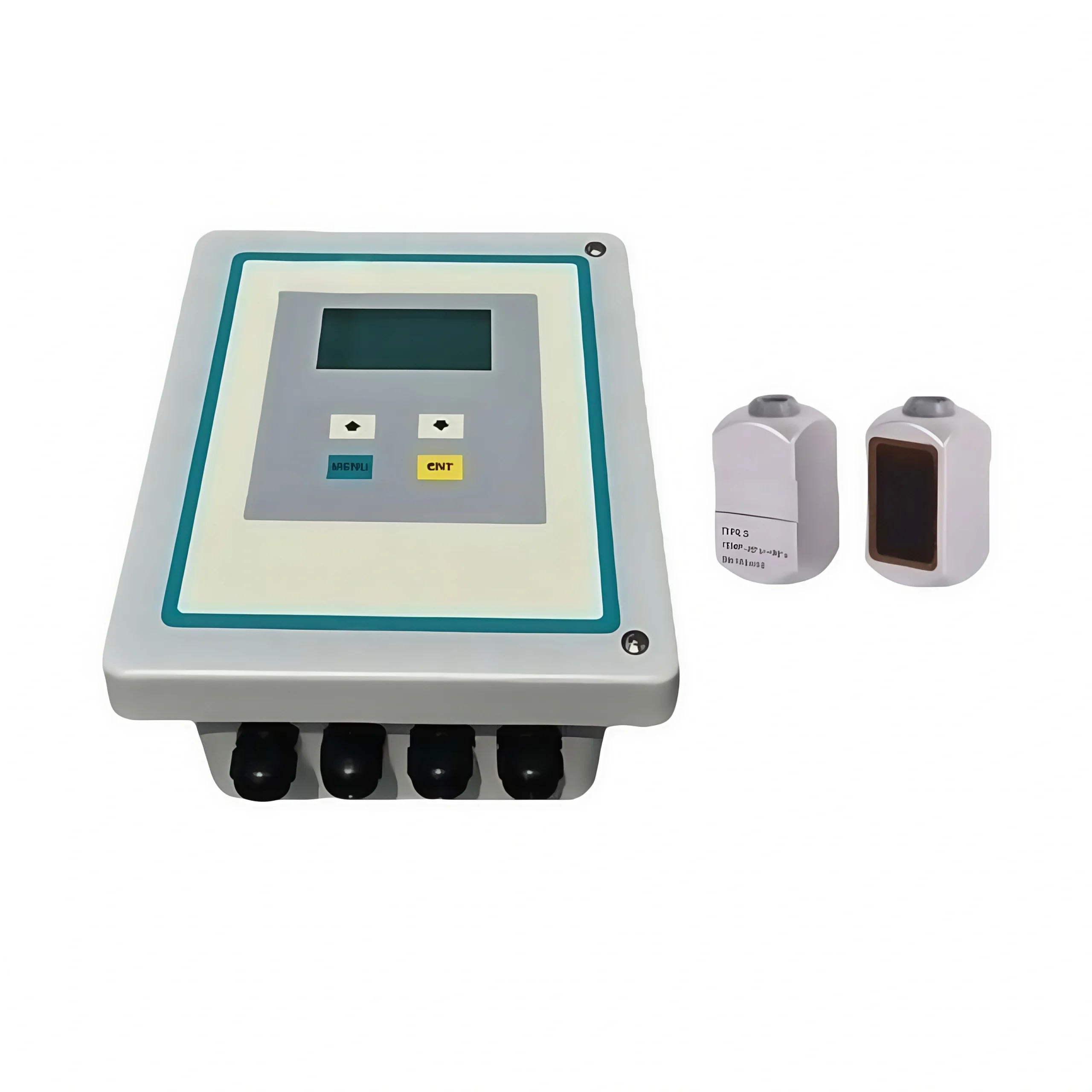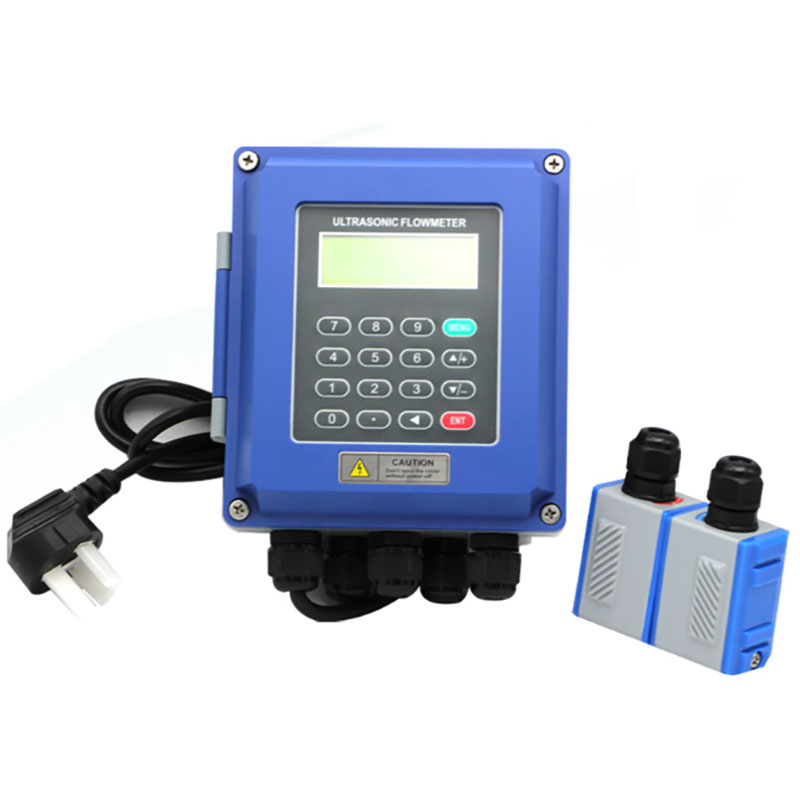
Ultrasonic heat meters use sound waves sent through the water to determine the speed of the water . Temperature sensors measure the difference in temperature between the hot supply line and the colder return line.
Then a built-in processor analyzes the statistics to calculate exactly how much heating or cooling energy has been transported. These meters don’t have any moving parts inside, so they don’t become blocked up with debris, they last a long time, and the readings stay dependable.
You’ll find them in all sorts of setups where you need to track heating and cooling usage—residential heating systems, underfloor heating, central air conditioning, and heat exchange stations, to name a few.
What Is an Ultrasonic Heat Meter?
An ultrasonic heat meter is essentially a smart device built for one job: measuring how much heat gets exchanged as hot water or another thermal medium flows through pipes. It sees heavy use in district heating networks, central AC systems, combined heating and cooling plants, and industrial heat exchange setups where you need a solid read on total energy consumption or release.
The whole setup breaks down into three main pieces:
the flow sensor, the temperature sensors, and the unit that adds everything up and shows you the results. It reads flow speed and the temperatures on both the supply and return sides, then automatically works out and logs the cumulative heat energy. On the display, you can check live figures like the current flow rate, the temperature gap between supply and return, and the running total of heat energy used.
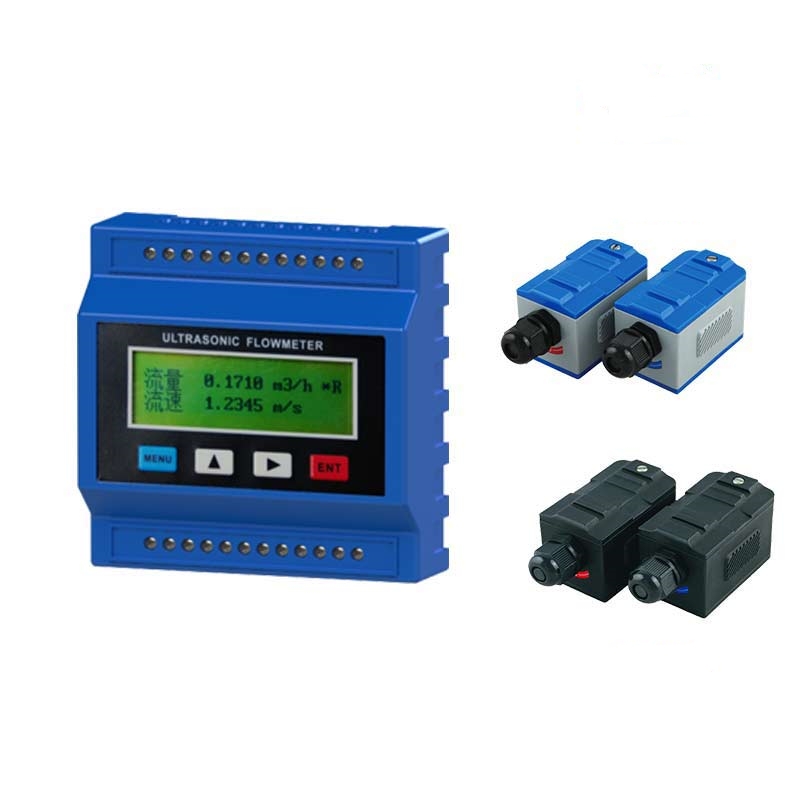
Working Principle of Ultrasonic Heat Meters
Ultrasonic heat meters mainly measure flow rate via the ultrasonic time-of-flight technique. The heat calculation module uses temperature sensors to detect the temperature of the supply and return water. It transforms the readings to estimate the heat emitted or absorbed by the medium.
Pairs of ultrasonic transducers sit upstream and downstream of the device. The two sets take turns sending and receiving ultrasonic pulses. When sound waves travel with the water flow, they pick up speed and arrive faster; when they travel against it, they slow down and take longer to get there.
The control system tracks the time gap between forward and reverse propagation periods with precision. From there, it works out the instantaneous volumetric flow rate inside the pipe using the pipe’s inner diameter and the sound speed of the medium.
At the same time, high-precision platinum resistance temperature sensors are fitted at the supply and return ends of the heating pipeline to grab live water temperature readings from both lines and figure out the temperature difference.
The primary metering board picks up the flow signal and the temperature-difference signal simultaneously. It keeps running the totals non-stop, factoring in things like the medium’s density and specific heat capacity, and ends up giving you the instantaneous thermal power and the cumulative heat value.
That makes for precise heat metering in water systems like central air conditioning and heating, working off standard thermodynamic heat calculation formulas.

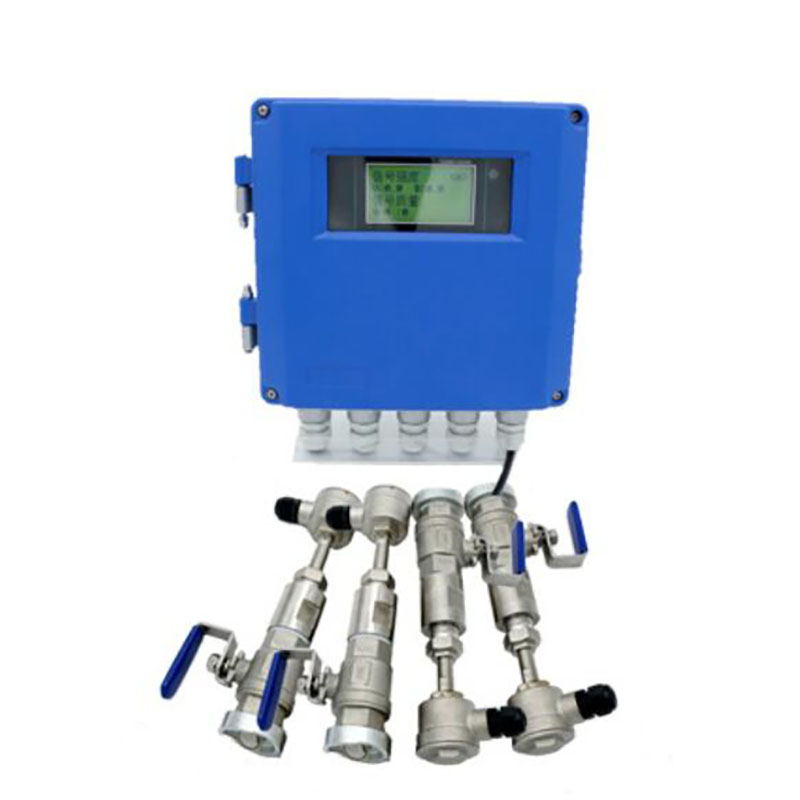
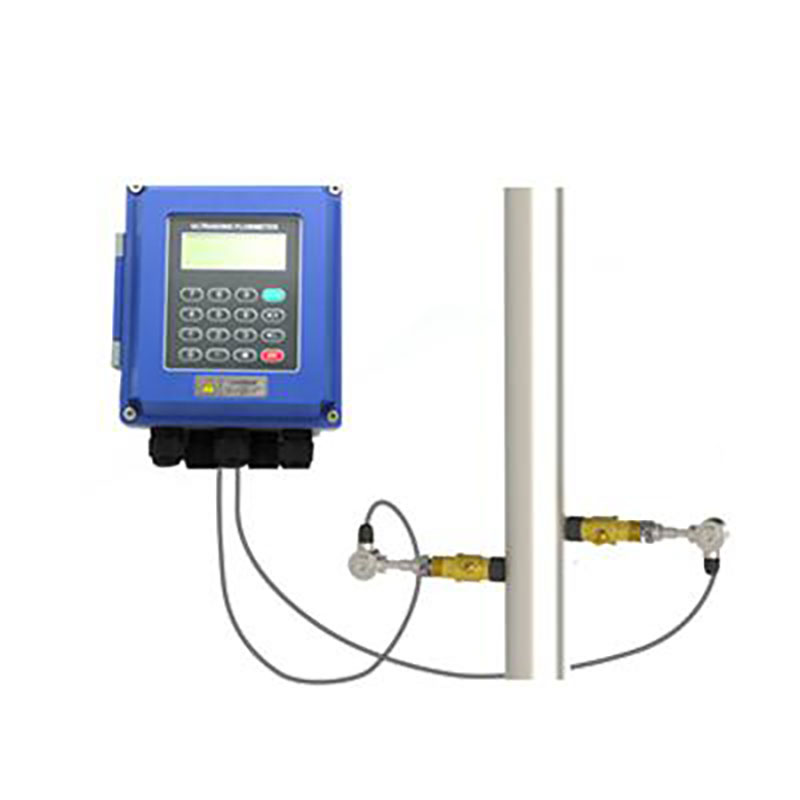
Basic Structure of an Ultrasonic Heat Meter
Flow Measurement Unit: This comprises the measuring tube and one or two pairs of ultrasonic transducers. The transducers are installed upstream and downstream of the pipe to transmit and receive ultrasonic signals, respectively, while the tube functions as the flow channel for the medium. The primary component for the acquisition of water flow data is this unit.
Temperature Sensing Assembly: Two high-precision platinum resistance temperature sensors—one fitted in the supply pipe, the other in the return pipe—pick up live temperature readings from both streams and work out the difference between the hot and cold media.
Mainboard for Signal Processing: This is the brain of the heat meter. It takes in temperature readings from the sensors and time-of-flight data from the transducers, then crunches the numbers on the fly using the medium’s density compensation and specific heat capacity, with built-in algorithms handling the heat and flow conversions.
Power Supply and Communication Components: These run off either an external power supply or a built-in battery. The unit also comes with communication ports—M-Bus, RS-485, and pulse output—which let you send metering data remotely to the building’s district heating network monitoring system for remote reading.
Housing: This enclosure shields the electronic components and internal circuit boards. The heat meter is kept safe from pipe moisture and outside environmental interference thanks to its waterproof, dustproof, and moisture-resistant design, which keeps it running reliably over the long term.
Features of Ultrasonic Heat Meters
1. The absence of mechanical moving parts eliminates the possibility of impellers becoming obstructed, worn out, or jammed. The meter remains consistently operational, regardless of the presence of dirt or sediment in the water. Consequently, it requires minimal maintenance and has a longer lifespan.
2. The pressure drop is barely discernible. Due to the absence of throttling structures within the pipe, the water circulation in heating systems will not be subjected to additional resistance, thereby reducing the workload of pumps. This renders it an ideal choice for heating networks with a large diameter that operate continuously.
3. The readings stay accurate over the long haul. It uses the time-of-flight ultrasonic method, which gives you a wide turndown ratio and keeps measuring reliably even when flow drops right down. That comes in handy for heating systems where demand swings a lot between day and night.
4. It handles all sorts of water without a problem. The meter measures just fine whether the water is pure or diluted. Minor viscosity changes don’t throw off the readings, and scale buildup isn’t enough to make them drift.
5. Remote transmission and data storage are built right in. The communication interface lets you upload cumulative heat, instantaneous flow, temperature, and other readings straight to a central system, which makes batch meter reading and smart network management a lot simpler.
6. Easy to install, with multiple mounting options such as in-line and clamp-on styles. Retrofits can be completed without cutting the existing piping, resulting in lower installation costs and reduced downtime.
7. Low operating noise; no mechanical friction-induced noise, so it does not cause noise interference in equipment rooms or residents’ indoor environments.
8. Strong interference resistance,the circuitry features moisture-proof and electromagnetic shielding designs, enabling it to adapt to humid and electromagnetically complex on-site conditions such as heat exchange stations and underground pipe shafts.
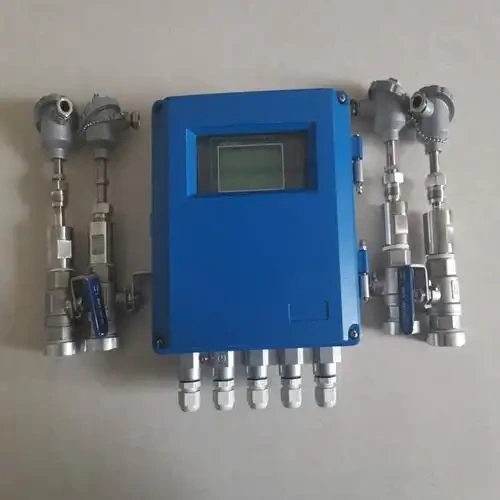
Types of Ultrasonic Heat Meters
Classified by Installation Method
Clamp-on Ultrasonic Heat Meter: The sensor clamps straight onto the outside of the pipe wall, so there’s no need to cut into or damage the pipeline. It’s easy to fit and can be added on later if needed. The downside is that scale on the pipe and the wall thickness itself can throw off the accuracy; these units are mostly used for temporary monitoring and retrofitting older pipe networks.
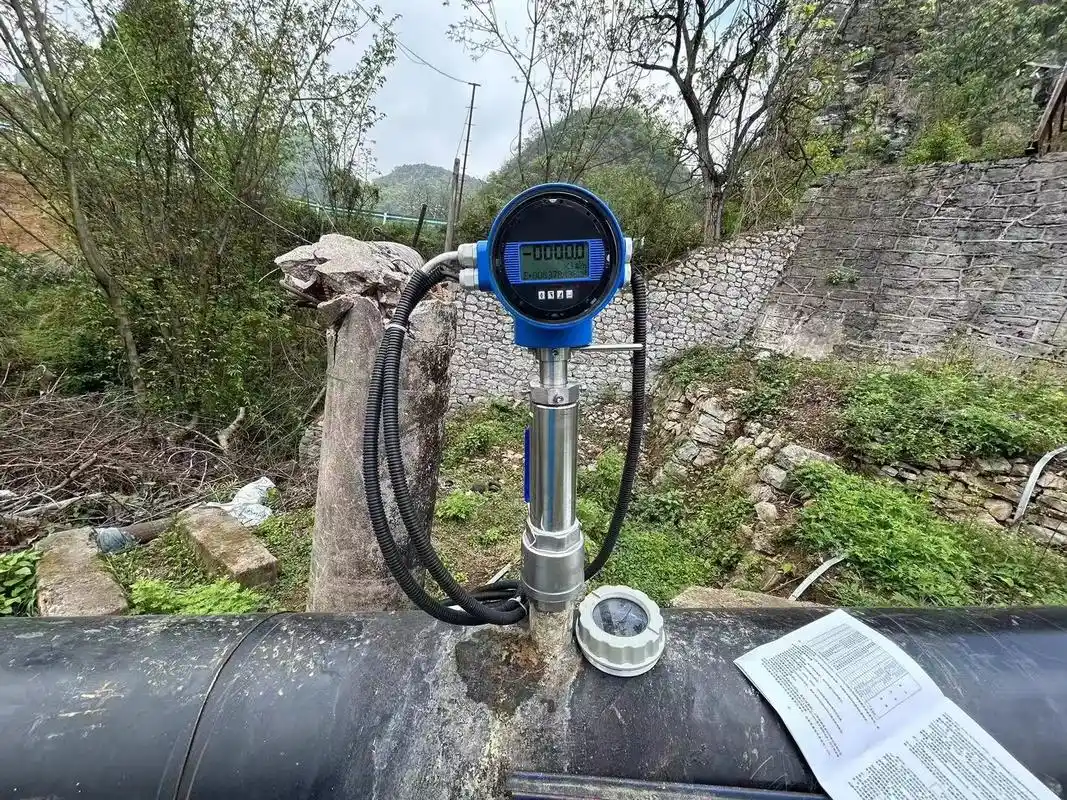
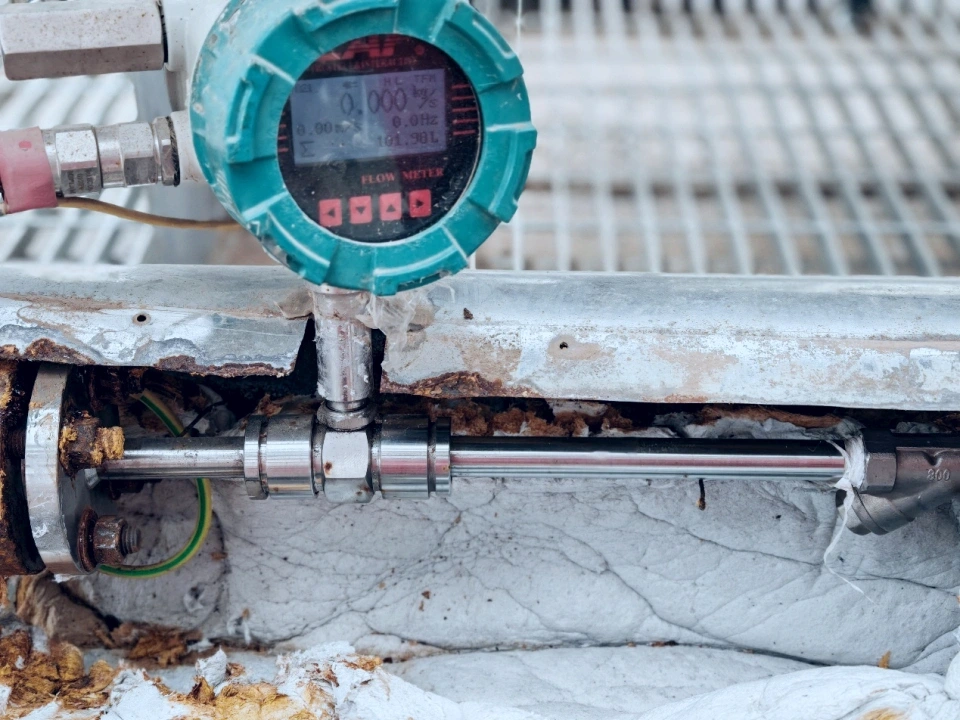
Insertion-Type Ultrasonic Heat Meters: These require drilling a hole in the pipe wall to insert the probe into the fluid for measurement. Ultrasonic signal transmission is stable, with minimal interference from scale on the pipe wall, and measurement accuracy is superior to that of clamp-on types. They are suitable for long-term metering in medium- to large-scale heating pipelines.
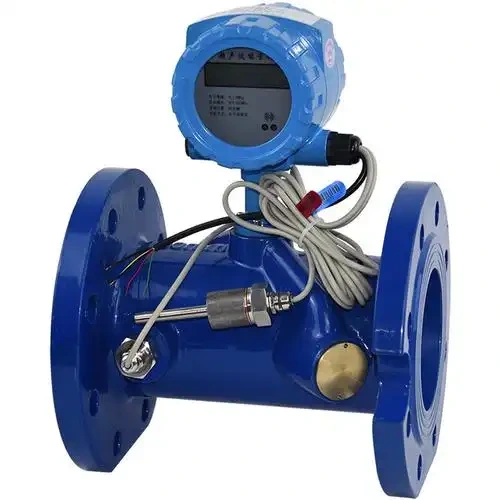
In-line ultrasonic heat meters: The transducers are pre-integrated into specialized standard measurement pipe sections, forming a complete, integrated piping assembly. They provide stable flow field measurement and high metering accuracy, making them the mainstream choice for individual-unit heating and district heating networks. Installation requires disconnecting the original pipeline and connecting the measurement section.
Classification by Overall Structure
Portable ultrasonic heat meters: The overall unit is lightweight and portable. The transducers are often of the clamp-on kind and function with a hand-held main unit. It does not have to be permanently mounted therefore it is suitable for spot checks, temporary flow and heat measurements on pipelines and field calibration of equipment.”
Integrated Ultrasonic Heat Meter: Flow sensor, calculating unit and display are integrated in one. It is small, does not need a lot of wiring and does not take up a lot of room. These are usually seen on modest domestic heating pipes.
Ultrasonic Heat Meters Split Type: The flow probe, temperature sensors and heat totalizer display are distinct units coupled by cables. The display may be mounted wherever it is most convenient to view and control, which is excellent for hot temperatures, tight places or keeping an eye on things from afar.
Application Scenarios
Centralized Heating Metering:
You can find these meters in many places, like living areas, business buildings, and industrial parks. Instead of going by floor area like the old way, you can now bill based on how much heat is actually used per home or building.
They also help spot where heat is leaking out of the pipes—whether the insulation is shot or the water isn’t circulating evenly. That means less energy going to waste.
Air Conditioning Heating and Cooling Metering:
This is mostly used in shopping malls, hotels, and other commercial buildings running water-cooled central air conditioning. It keeps tabs on how much energy goes into heating and cooling through the winter and summer months.
That way, costs can be split fairly between leased shops and individual floors, so no one ends up paying more than their share. The data also comes in handy for tweaking unit settings and getting the equipment to run more efficiently.
Measurement and Control of Industrial Process Thermal Energy:
These meters work well for tracking thermal energy in production equipment—coolers, heat exchangers, preheaters, that sort of thing—across metallurgy, food processing, and chemical plants.
They let you monitor heat exchange efficiency as it happens, keep production temperatures steady, and keep tabs on how waste heat recovery gear is performing.That gives you the core data you need for improving processes, planning energy-saving upgrades, and tracking energy efficiency.
Public Buildings and New Energy Projects:
Built for managing energy use in schools, hospitals, and other public buildings, meeting the requirements for energy audits and data reporting. They also hook up with heat pumps and solar thermal systems to measure how much waste heat and solar heat you’re actually getting, so you can figure out real equipment efficiency and how much energy you’re saving.
Municipal Pipeline Network Operation and Maintenance:
Installed on urban district heating mains, these meters pull real-time data on heat, flow, and temperature differences and send it back remotely. They can flag pipeline leaks and unusual heat loss quickly, help balance heating dispatch across the whole network, and cut down on wasted municipal heating resources.
The Difference Between Ultrasonic Flow Meters and Ultrasonic Heat Meters
Ultrasonic flow meters are used solely to measure the instantaneous and cumulative flow rates of fluids in pipelines; they collect only data related to flow velocity and are not equipped with temperature sensors, so they cannot calculate heat consumption.
With ultrasonic heat meters, there are two temperature sensors and the flow measurement capability, so that the difference between the temperature of the supply and return water can be measured at the same time. They use internal algorithms to determine the heat or cooling energy delivered by the medium, based on the flow rate and the temperature differential.
Both are based on the idea of ultrasonic velocity measurement, but the measuring objects, supporting components and suitable circumstances are completely different. Flow meters are used for basic flow monitoring, whereas heat meters are specialized instruments used for metering and invoicing of heating and cooling energy usage in heating and air-conditioning systems.
Ultrasonic heat meters have become a go-to piece of equipment for modern heat metering and energy management, mainly because they don’t wear out mechanically, measure accurately, cause barely any pressure drop, and can transmit data remotely.
Sion-Inst carries a full lineup of these meters with consistent performance, and we can match the right model and installation approach to whatever conditions you’re dealing with.
We also handle the whole process from start to finish—site surveys before you buy, hands-on help during installation, and ongoing maintenance and calibration afterward. With solid hardware and full backing from our team, we help customers keep a tight grip on their energy use and bring down heating operating costs.