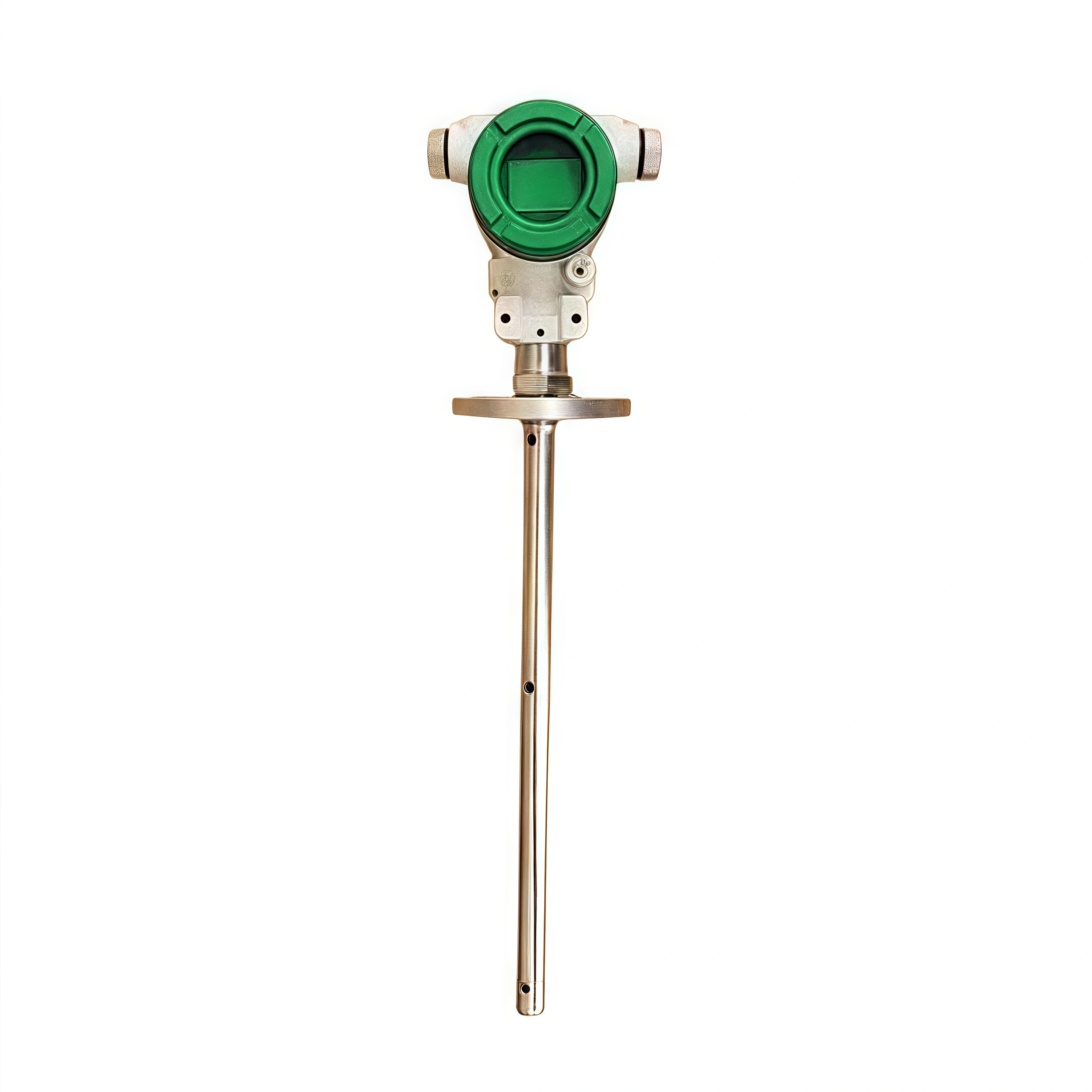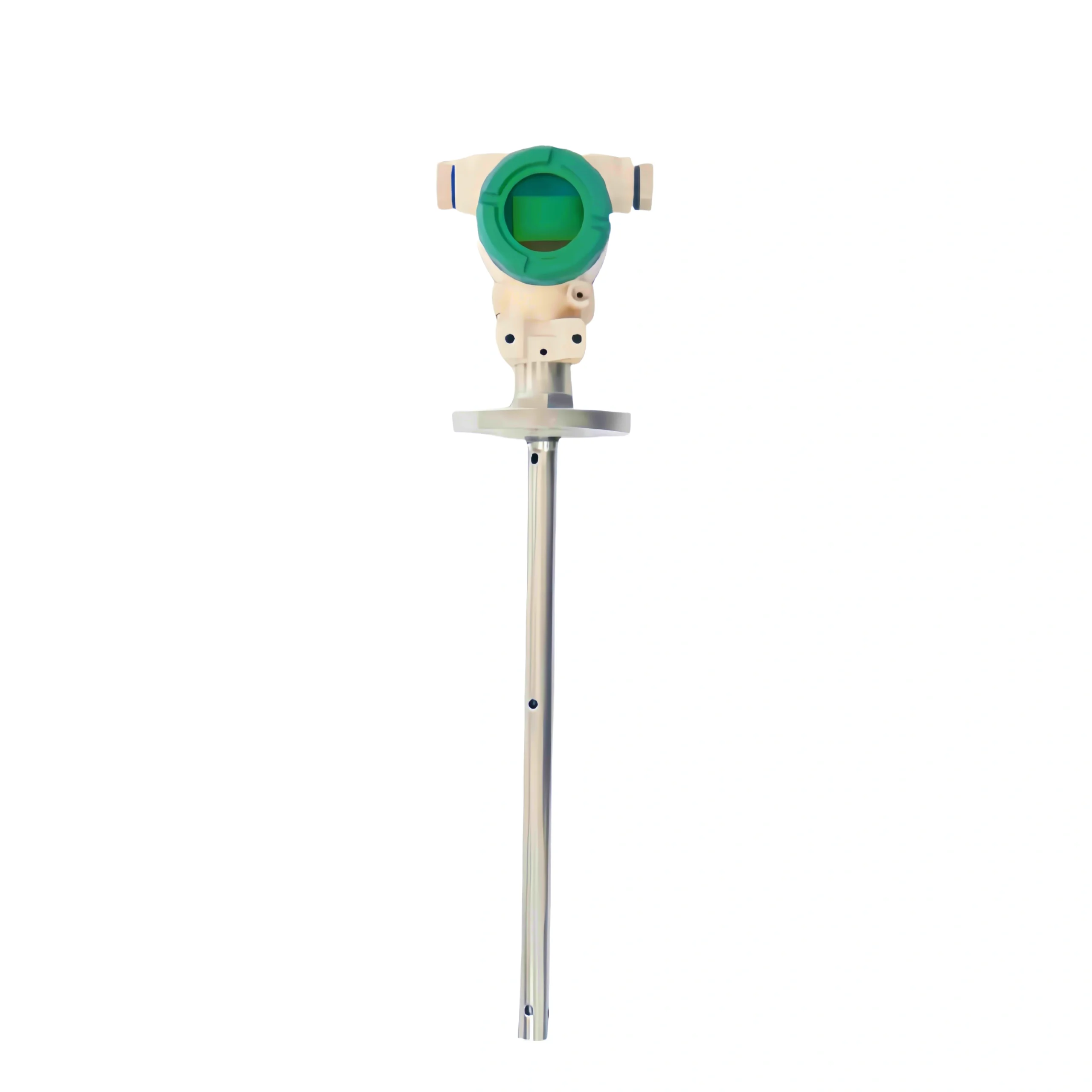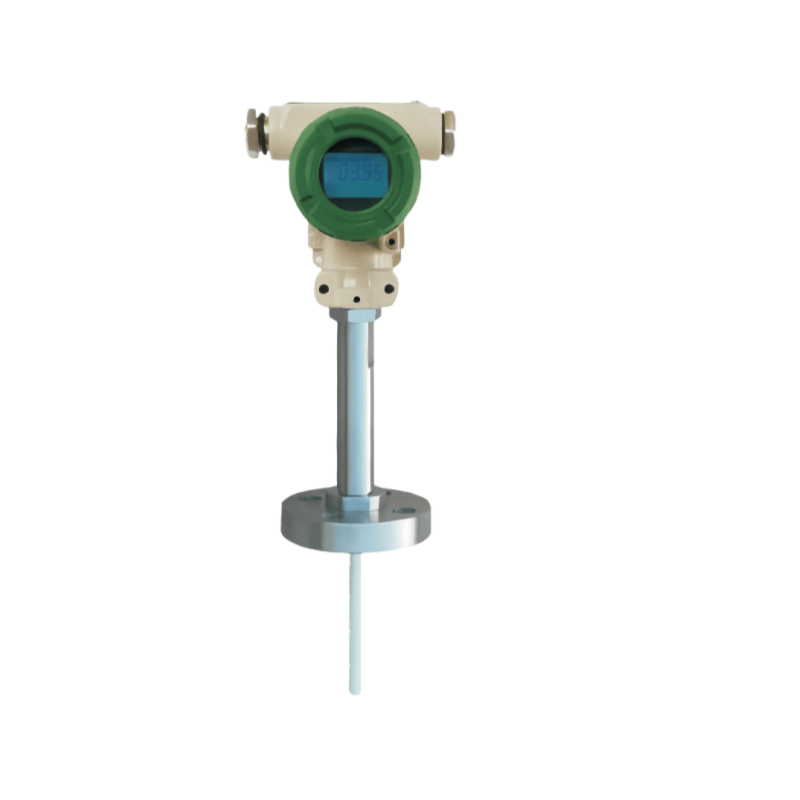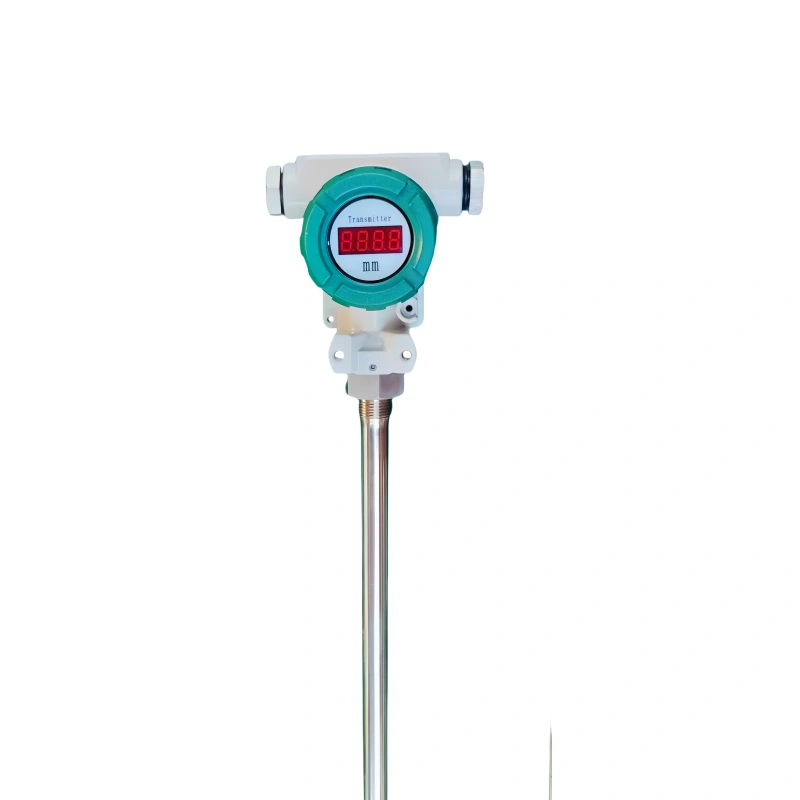
With the continued development of the cryogenic energy and fine chemicals industries, the number of scenarios involving the storage and transport of cryogenic media such as liquid nitrogen and LNG is constantly increasing, making level monitoring a critical aspect of process safety management.
Ordinary sensing equipment is prone to measurement inaccuracies due to cryogenic contraction and media vapourisation; specialised industrial cryogenic level sensors, however, are capable of withstanding extreme cryogenic operating conditions.
Common Cryogenic Liquids
1. Liquefied Natural Gas (LNG):Kept at roughly –162°C, it’s commonly monitored in cryogenic tanks, refuelling stations and marine transport vessels, and remains the go-to medium for industrial cryogeniclevel gauging.
2. Liquid nitrogen:At atmospheric pressure it boils at –196°C; level detection matters in containers used for cooling, metal cryo-treatment and preserving biological specimens.
3. Liquid oxygen: Boiling point sits at –183°C, so you’ll see it in air separation units and aerospace tanks, where explosion-proof cryogenic level sensors are a must.
4. Liquid argon:Boiling at –186°C, it shows up in cryogenictanks for metallurgy and specialty welding; being inert, it won’t eat away at the sensors.
5. Liquid carbon dioxide: Stored and shipped between about –20°C and –40°C; level measurement is most often needed in food processing and dry ice manufacturing tanks.
6. Liquid hydrogen: Boiling point –253 °C; it is widely used in hydrogen energy storage and transport, as well as in the aerospace sector, and places extremely high demands on the cryogenicsealing and insulation performance of sensors.
7. Liquid ethylene: Stored at a low temperature of –104°C in cryogenic storage tanks within petrochemical cracking units; this is a flammable and explosive cryogenic medium.
Challenges in Cryogenic Level Measurement
1. Poor compatibility of materials with cryogenic conditions. Cryogenic media can cause ordinary metals and seals to become cold-brittle, crack or deform; conventional level gauges are highly susceptible to damage and leakage, so specialised cryogenic-resistant materials must be selected.
2. Severe interference from gas-liquid two-phase flow.Cryogenic liquids are prone to volatilisation and vapourisation; the presence of numerous bubbles and gas pockets within pipelines and tanks can easily cause false level readings and value fluctuations, interfering with signal acquisition by various instruments.
3. Frost and ice formation affect measurement.Frost and ice readily form on equipment surfaces, obscuring antennas, probes and observation windows; simultaneously, they can jam float balls and floats, leading to measurement failure and data deviations.
4. Temperature and pressure swings throw off readings. Cryogenic media density shifts dramatically with even minor changes in temperature or pressure. Tanks tend to develop temperature layers inside; if you don’t compensate in real time, the conversion errors in differential pressure level readings just keep creeping up.
5. Thermal shrinkage warps your measurement baseline.Tanks, instruments and piping all contract differently in the cold, so structures can shift out of alignment and parts can deform. That knocks your measurement references off-kilter and can mess with the signal.
6. Restrictions on insulation installation. The thick insulation layers on storage tanks limit the space available for instrument installation; drilling holes for installation can easily damage the insulation structure, leading to cold loss and persistent frost formation, whilst making subsequent maintenance and disassembly difficult.
7. High difficulty in safety management.Media such as LNG and liquid hydrogen are flammable and explosive after vapourisation. The risk of seal failure is high under cryogenic conditions, and even minor leaks can pose safety hazards, necessitating stringent requirements for explosion-proof seals.
Cryogenic Level Sensors
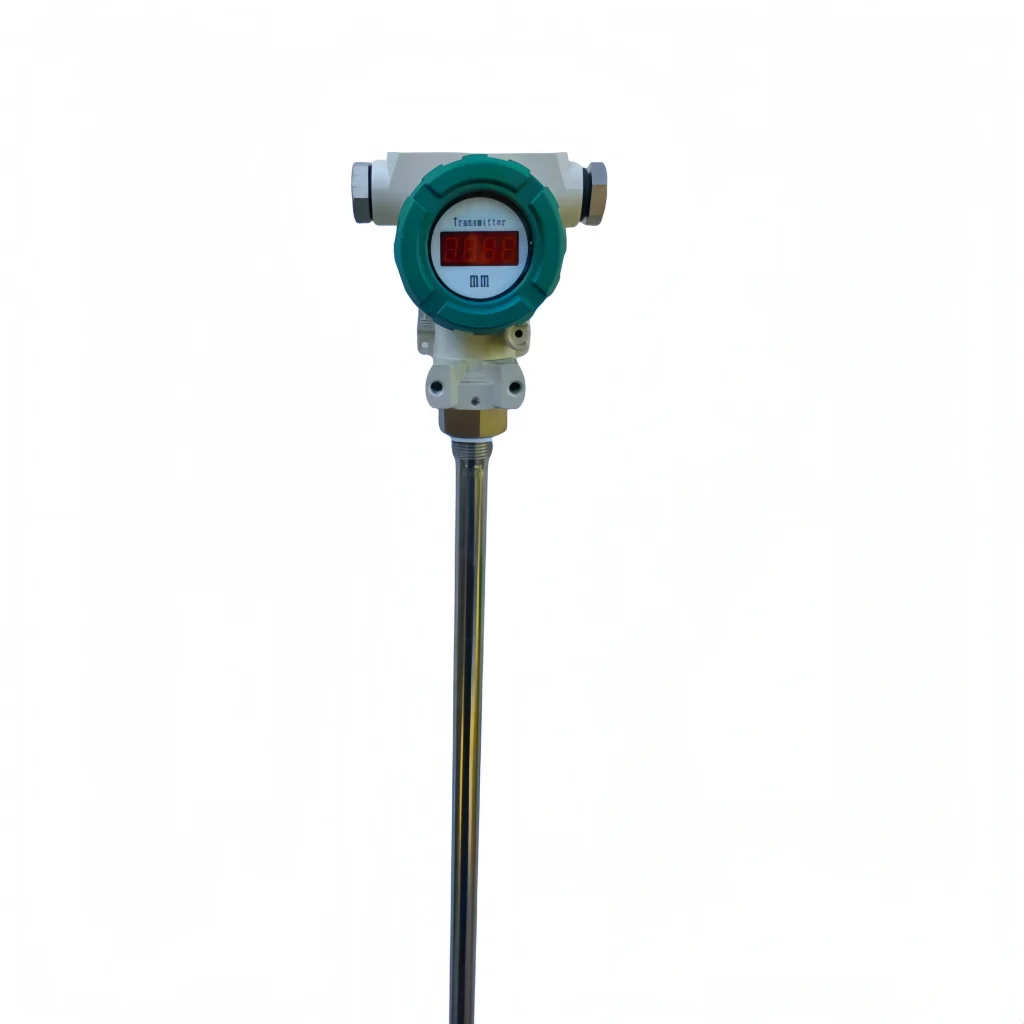
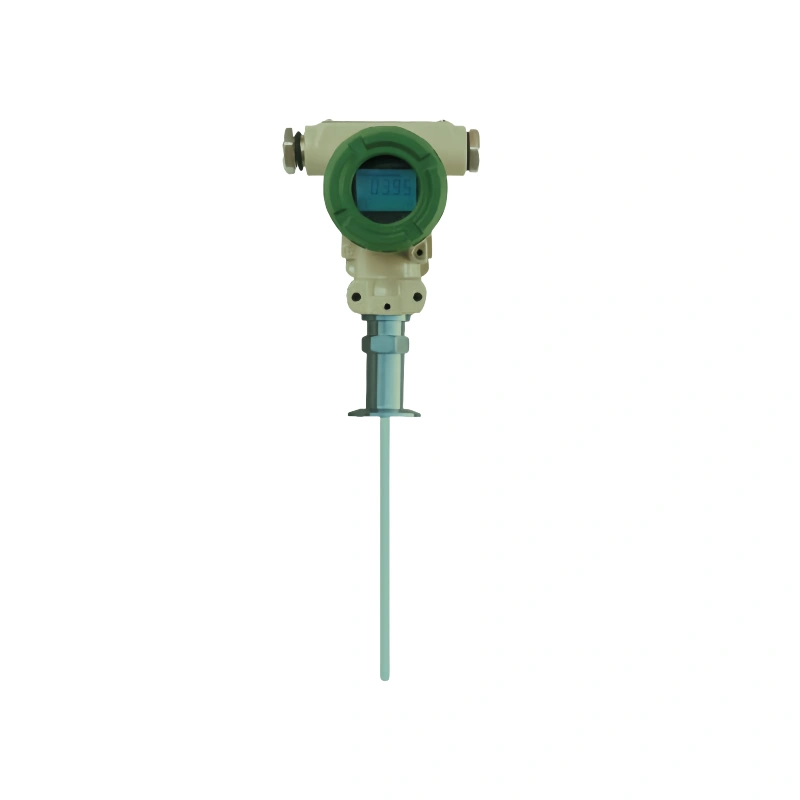
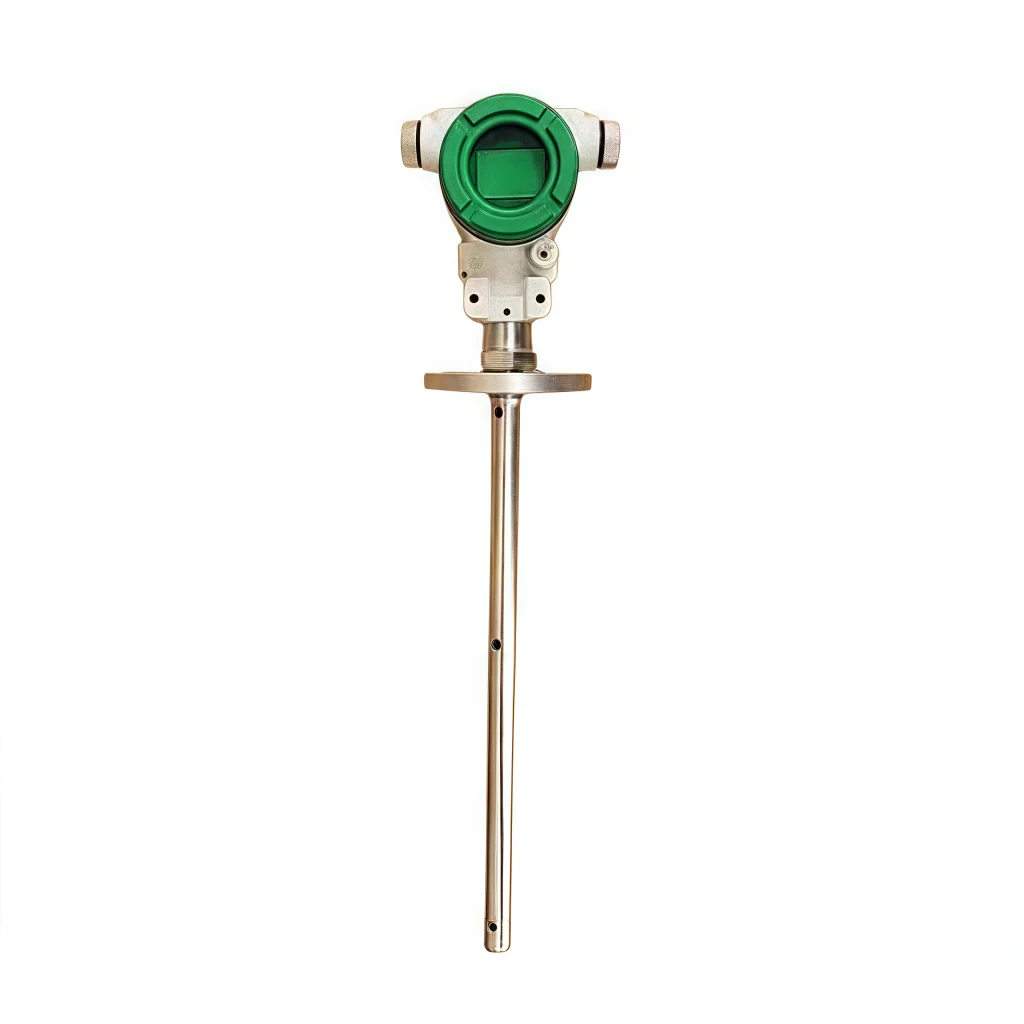
Capacitive Cryogenic Level Sensors
Principle of Operation
Capacitive cryogenic level sensors work like a parallel-plate capacitor. The probe and the metal tank wall act as the two plates, with cryogenic liquid or vapour filling the gap between them.
At these low temperatures, the medium’s dielectric constant stays pretty steady; as the level moves up or down, it changes how much of that gap is liquid versus gas, and the capacitance shifts in a straight-line relationship.
The sensor’s onboard circuit picks up that capacitance change, turns it into a standard electrical signal, and works out exactly how high the cryogenic liquid sits. It is suitable for level detection in various types of cryogenic liquid media.
Advantages and Disadvantages
Advantages
1. Simple structure and high reliability; the sensor has no moving mechanical parts, so faults such as component jamming, wear or freezing blockages do not occur in cryogenicenvironments. It offers strong resistance to vibration and impact, making it suitable for the complex operating conditions of cryogenicstorage tanks and mobile cryogenic storage vessels.
2. Excellent cryogenicadaptability; the probe, built with cold-resistant materials, holds up fine at –196°C. Phase changes in the medium and a bit of frost build-up won’t throw off the readings, and you don’t get the zero-point drift headaches that pressure sensors run into at these temperatures.
3. The accuracy is solid and the response is quick, so you get live feedback on level shifts. Small changes in density or viscosity don’t bother it, which means it handles continuous level measurement across a range of pure cryogenic liquids without fuss.
4. Fitting and upkeep are simple—top-mount or side-mount depending on your tank layout. No need to drill holes or run piping, and nothing wears out and needs swapping while it’s running, so day-to-day costs stay minimal.
Disadvantages
1. There are certain requirements regarding the purity of the medium. If impurities or ice crystals in the cryogenicmedium adhere to the probe surface, this will alter the probe’s dielectric parameters, leading to measurement errors. It is therefore unsuitable for cryogenicmedia containing solids or prone to scaling.
2. It is difficult to distinguish between media with extremely similar dielectric constants. If the dielectric constant of the medium in the storage tank is close to that of the vapour phase, the sensitivity of the level detection will be significantly reduced.
3. Standard models have limited resistance to interference; strong electromagnetic interference around the storage tank may affect signal stability. Explosion-proof and anti-interference customised versions must be selected for industrial applications.
Application Scenarios
Primarily used for continuous level detection of ultra-cryogenic pure liquid media, it is widely applied in level monitoring for cryogenic storage tanks, cryogenic storage vats and cryogenic reactors containing liquid nitrogen, liquid oxygen, liquid argon, liquid carbon dioxide and liquid hydrogen;
It is suitable for applications such as medical cryogenic storage, laboratory cryogenic equipment, new energy cryogenic storage and transport, and industrial gas cryogenic storage, whilst also being suitable for precise level measurement in sealed, unpressurised and low-pressure cryogenic vessels.
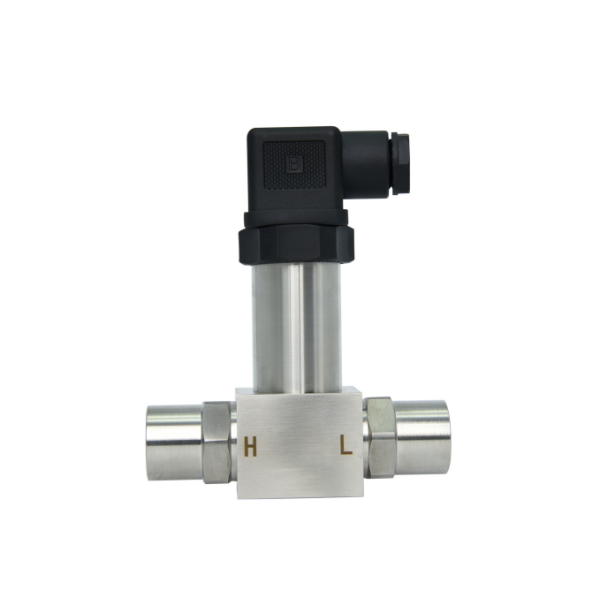
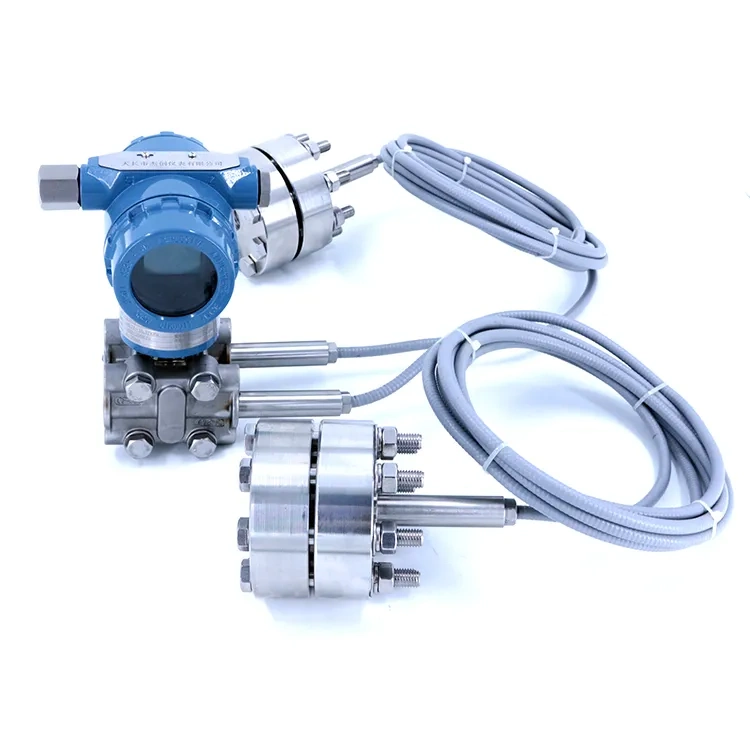
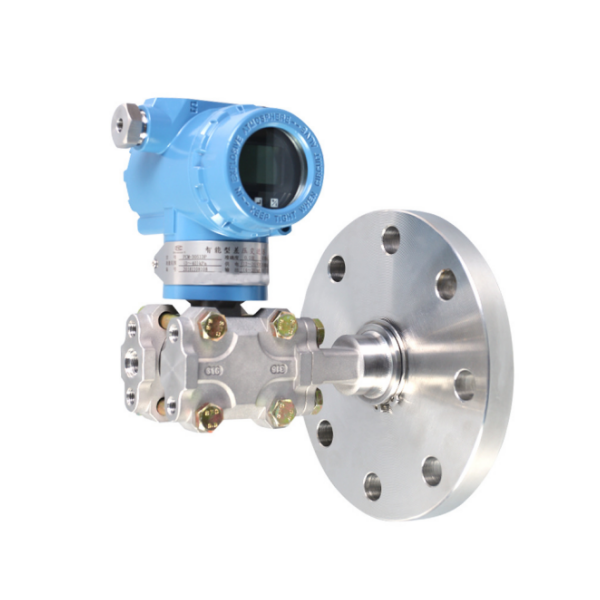
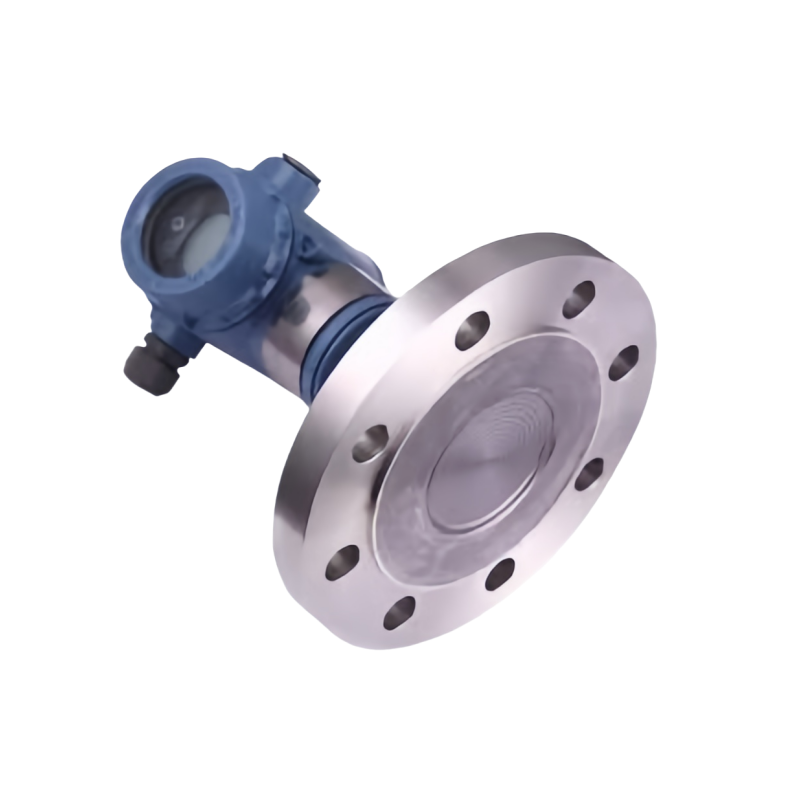
Differential Pressure Cryogenic Level Sensor
Principle of Operation
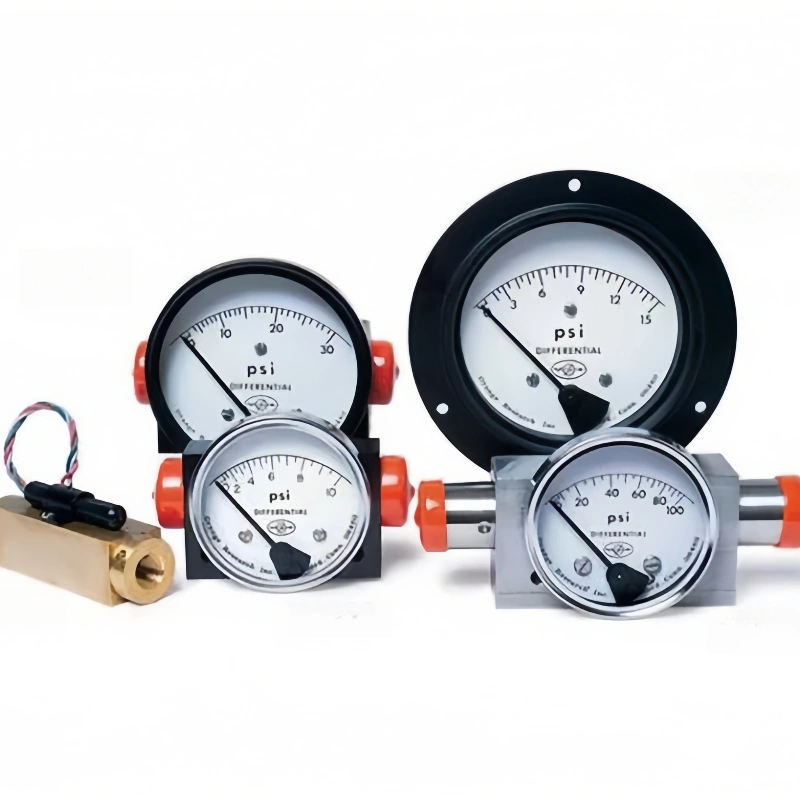
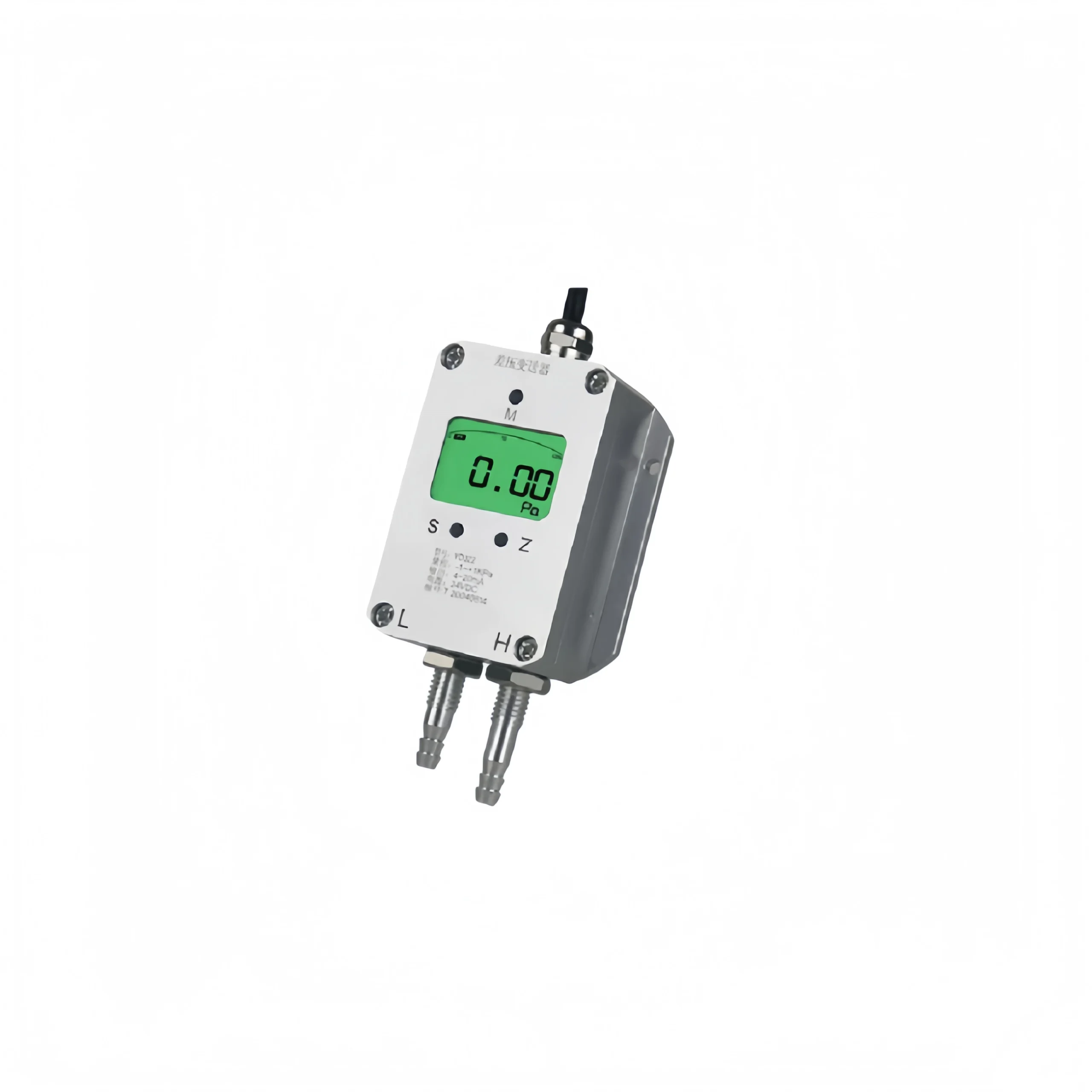
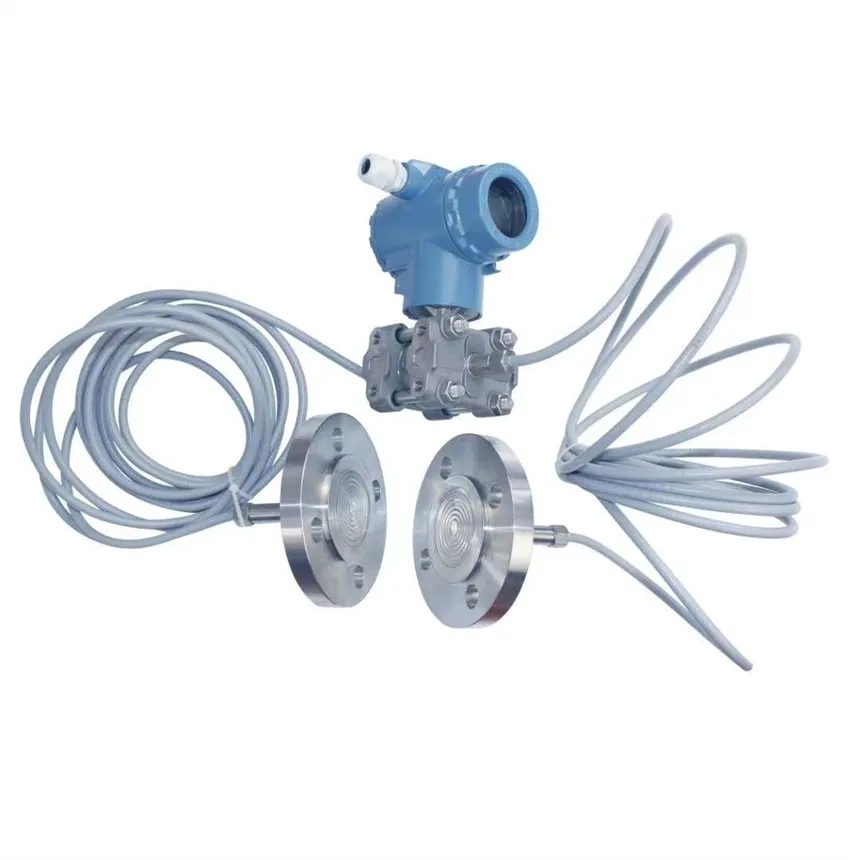
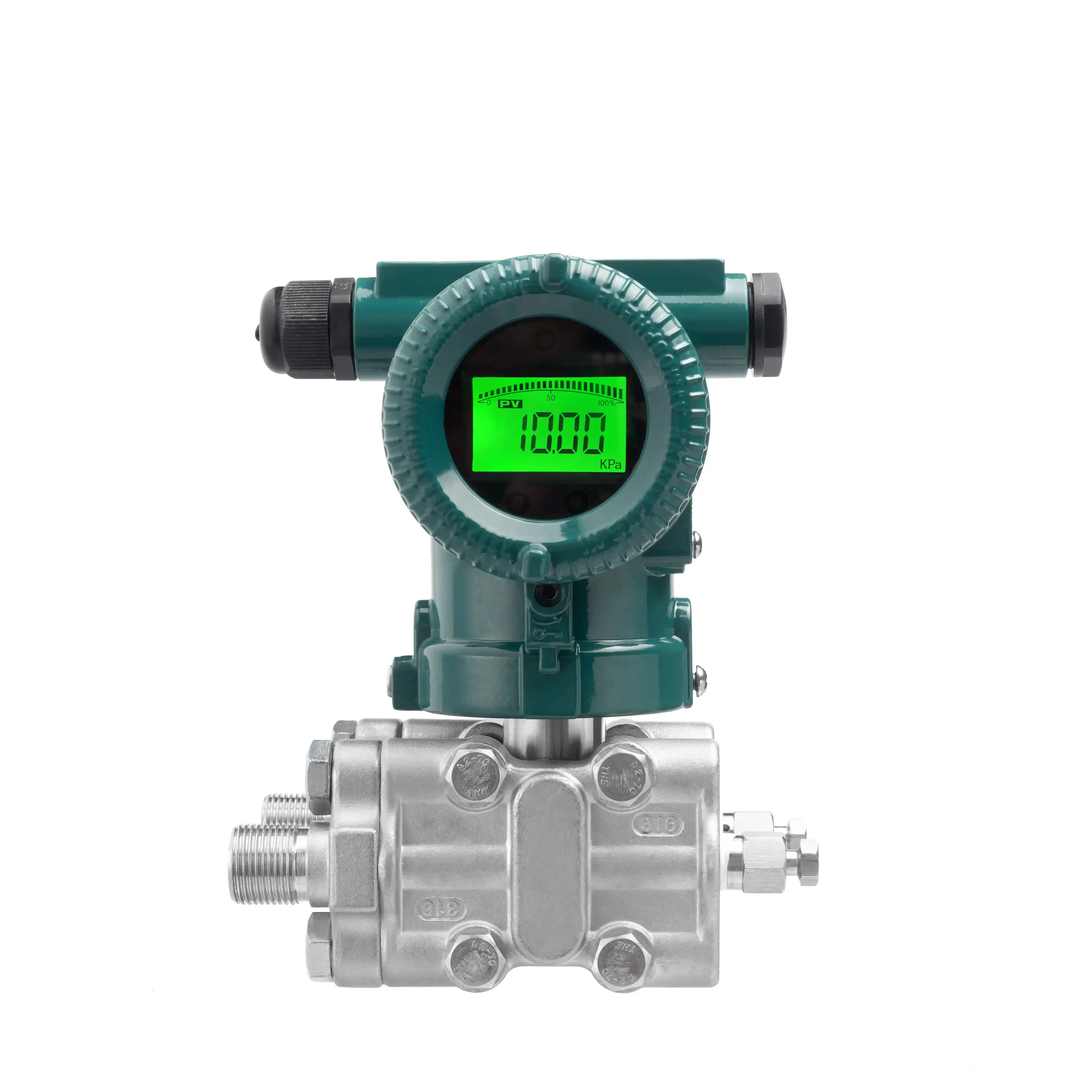
The differential pressure cryogenic level sensor operates on the principle of hydrostatics. The high-pressure end of the sensor is connected to the liquid phase at the bottom of the storage tank, whilst the low-pressure end is connected to the vapour phase at the top of the tank, detecting the liquid static pressure and the vapour pressure within the tank respectively.
The pressure difference between the two is linearly proportional to the liquid level height and the density of the medium. The sensor diaphragm detects changes in this pressure difference and converts them into an electrical signal.
Combined with cryogenic density and temperature compensation algorithms, this corrects for measurement errors caused by the cryogenic environment, enabling the precise calculation of the real-time liquid level height.
Advantages and Disadvantages
Advantages
1. Wide adaptability; not restricted by the dielectric constant of the medium, it can measure various types of cryogenic liquid media, including those with slight impurities or higher viscosity, offering far greater versatility than capacitive sensors.
2. Suitable for pressurised cryogenic storage tanks; it handles both atmospheric-pressure vessels and medium- to high-pressure sealed tanks, covering level and pressure detection in one go and fitting a broad range of industrial setups.
3. The measurement span is wide enough for both high and low levels in large cryogenic tanks and industrial vessels. It stays stable too—accuracy doesn’t drop off noticeably over long stretches of continuous use.
4. Built-in temperature and pressure compensation knocks out the errors you’d normally pick up from the cold environment and shifting medium temperatures, so the readings hold steady even when conditions get rough.
Disadvantages
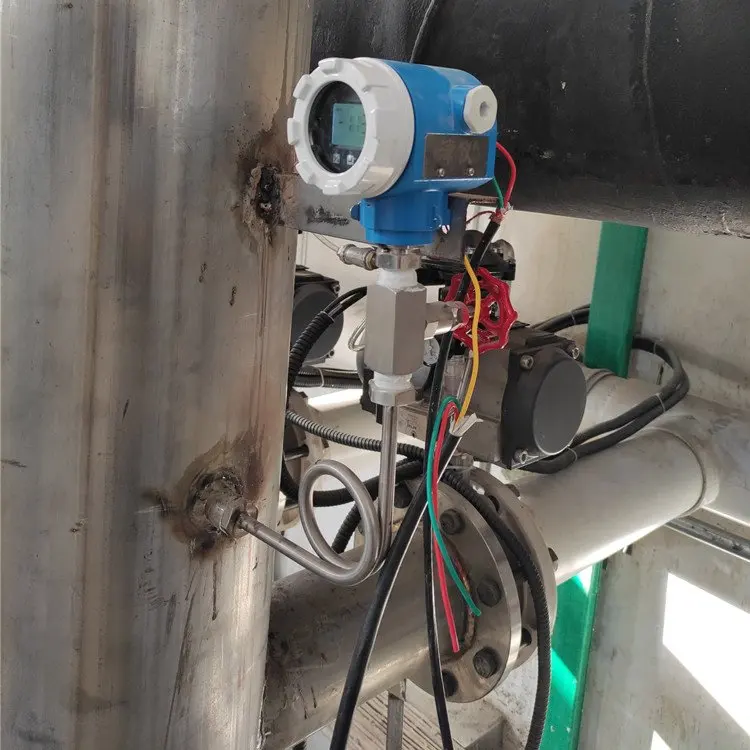
1. Freezing and blockage are a real concern; residual cryogenicmedium tends to linger in impulse lines and sensing ports, forming ice and clogging things up when temperatures shift, which can kill the signal entirely. That means you need trace heating and insulation, so the setup ends up more complicated.
2. Accuracy takes a hit from medium density shifts; when temperature swings change the density of the cryogenic liquid, you’ll see sizeable level errors unless the compensation gets recalibrated promptly.
3. Installation and upkeep are trickier, since you need two tapping points—one high, one low. The piping runs get involved, and over time you’re likely to deal with leaks and diaphragm ageing in the cold, so maintenance costs run higher.
4. Dynamic response lags a bit; compared with capacitive sensors, there’s a slight delay in signal feedback when levels move quickly, so it’s not the best fit for high-precision, fast-response dynamic applications.
Application Scenarios
Primarily used in large-scale industrial pressurised cryogenic storage, transport and process systems, these sensors are widely employed for level monitoring in petrochemical cryogenic liquefied gas storage tanks, LNG cryogenic storage tanks, and large-scale industrial liquid oxygen and liquid nitrogen storage tanks.
They are suitable for industrial scenarios involving high pressure, wide measurement ranges and complex operating conditions, such as cryogenic chemical reaction processes, cryogenic gas storage and transport, and aerospace cryogenic fuel storage. They are also suitable for level detection of cryogenic liquids with low purity and similar dielectric constants.
Cryogenic Level Sensors versus Ambient-Temperature Level Sensors
Applicable Medium Temperature Range
Ambient-temperature level sensors:
Typically suitable for ordinary water, oils and chemical solutions within the range of 0–80 °C. They are not designed to withstand ultra-low temperatures; their internal electronic components, seals and probe materials are only suitable for standard room-temperature environments and cannot withstand sub-zero temperatures.
Cryogenic level sensors:
Specifically designed for cryogenic media such as liquid nitrogen, liquid oxygen, LNG and liquid hydrogen at temperatures ranging from –196 °C to 0 °C. Core components utilise special cryogenic-resistant stainless steel and cryogenic-modified PTFE materials, enabling long-term, stable operation in cryogenic conditions.
Differences in Materials and Structure
Room-temperature level sensors:
The housing, electrodes and sealing O-rings are made of ordinary carbon steel, standard rubber and conventional plastics. The sealing structure is simple, with no thermal insulation or anti-cold-brittleness design; at low temperatures, the rubber hardens and cracks, whilst the metal is prone to cold-brittle fracture.
Cryogenic level sensors:
The probe and pressure-transmitting tubing are made of 316L/304 cryogenic-resistant stainless steel, whilst the seals utilise cryogenic-grade PTFE and fluororubber; differential pressure models feature vacuum-insulated pressure-transmitting tubing, and capacitive models incorporate thermal insulation for the electrodes to prevent cryogenic thermal conduction from damaging the circuit board.
Differences in Signal and Stability
Room-temperature level sensors:
Ambient temperatures stay fairly steady, so signal drift isn’t much of an issue. There’s no need for elaborate compensation circuitry, and electromagnetic interference resistance is good enough for typical factory conditions.
Cryogenic level sensors:
The sharp temperature gap between inside and outside the tank means condensation and frost are almost guaranteed, so the circuitry includes drift compensation.
Since the medium tends to vapourise at these low temperatures, the signal filtering gets tuned to smooth out level jitter caused by vapour-phase changes. Explosion-proof ratings are generally stepped up too, which matters when you’re storing hazardous chemicals in the cold.
How to Select the Appropriate Cryogenic Storage Tank Level Sensor
1. Select the model based on the medium’s temperature and characteristics. Match the sensor’s temperature rating to the lowest temperature of the medium in the storage tank; for conventional liquid nitrogen and liquid oxygen, select the -196°C cryogenictype, whilst ultra-cryogenicmedia such as liquid hydrogen require customised ultra-cryogenic models.
Clean, impurity-free and ice-crystal-free cryogenic liquids are suitable for capacitive sensors, whilst media containing trace impurities or in conditions prone to vapourisation are better suited to differential pressure sensors. Flammable and explosive media must use explosion-proof models.
2. Pick the model based on tank pressure and the span you need to cover. For small, atmospheric or low-pressure cryogenic tanks, capacitive level sensors are the natural fit—they’re straightforward, won’t freeze or block, and respond quickly.
Differential pressure sensors make more sense for wide-span jobs like large pressurised tanks and LNG storage; they handle high pressure fine, and if you pair them with temperature and density compensation, the accuracy holds up.
3. Let installation and site realities guide the choice. Go with capacitive sensors when the tank has limited openings, needs a top-mount, sees a lot of vibration, or ices up regularly—they’re pretty low-maintenance. If you’ve got upper and lower pressure taps already and can run insulated trace-heated lines, differential pressure sensors are worth considering.
4. Match the sensor to your accuracy and operational needs. Capacitive is the way to go when you need tight accuracy and fast dynamic tracking. Differential pressure fits industrial settings where you want long-term stability across a wide span plus pressure readouts. Either way, both need to output a standard 4–20 mA signal that plays nicely with your system.
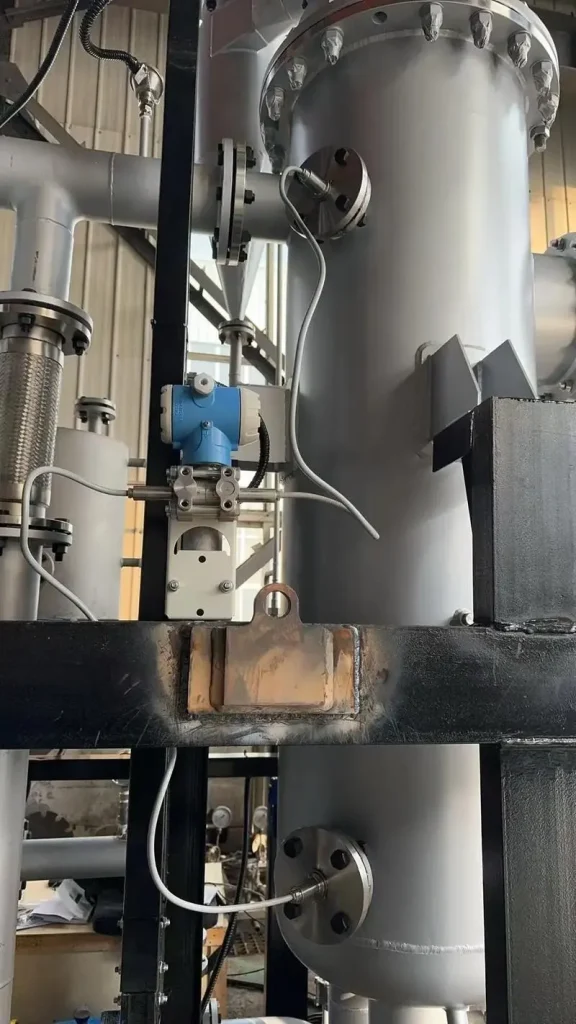
Sion-Inst offers a comprehensive range of cryogenic measurement instrumentation solutions. In addition to capacitive and differential pressure cryogenic level sensors, we also supply various cryogenic flowmeters and pressure sensors, providing a one-stop solution for cryogenic storage, transportation and chemical process applications involving LNG, liquid oxygen, liquid nitrogen and liquid hydrogen.
All instruments are constructed from specialised cryogenic-resistant materials and incorporate temperature and pressure compensation algorithms. They support customised explosion-proof designs and standard 4–20 mA/HART signal outputs.
We provide on-site selection guidance, installation and commissioning, as well as long-term after-sales calibration services, delivering stable and reliable integrated measurement solutions for all types of cryogenic tanks and complete cryogenic equipment systems.