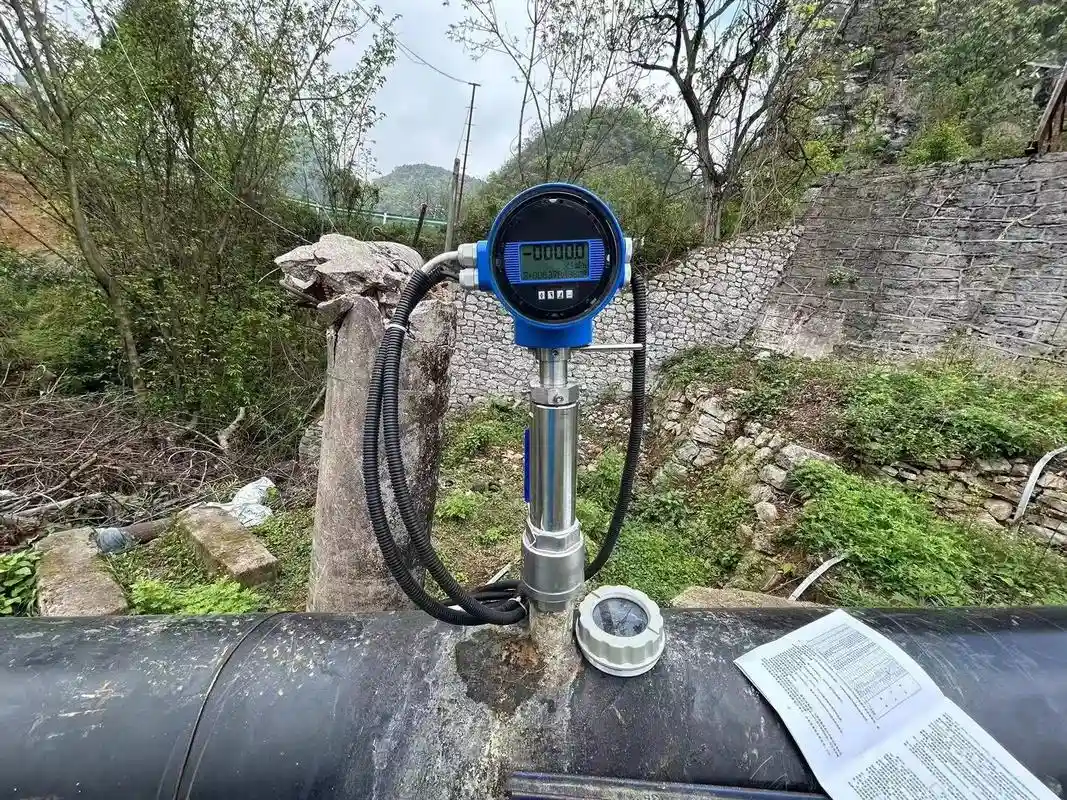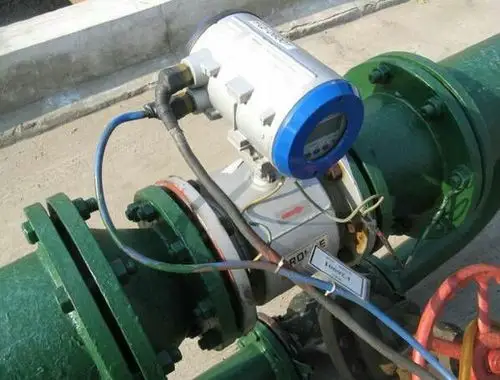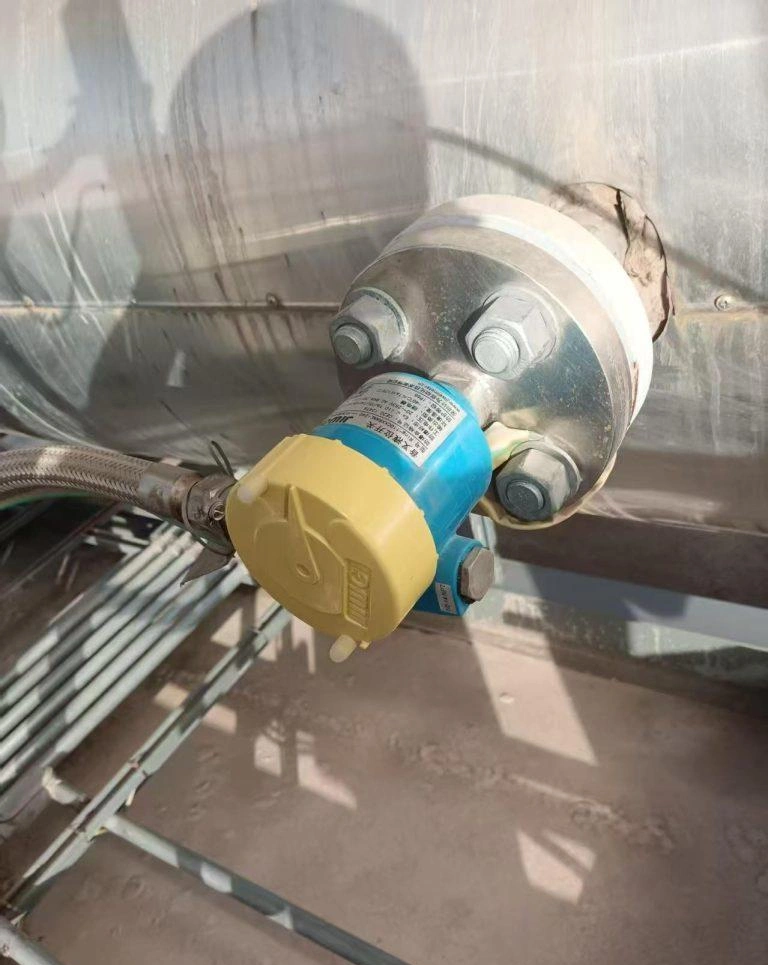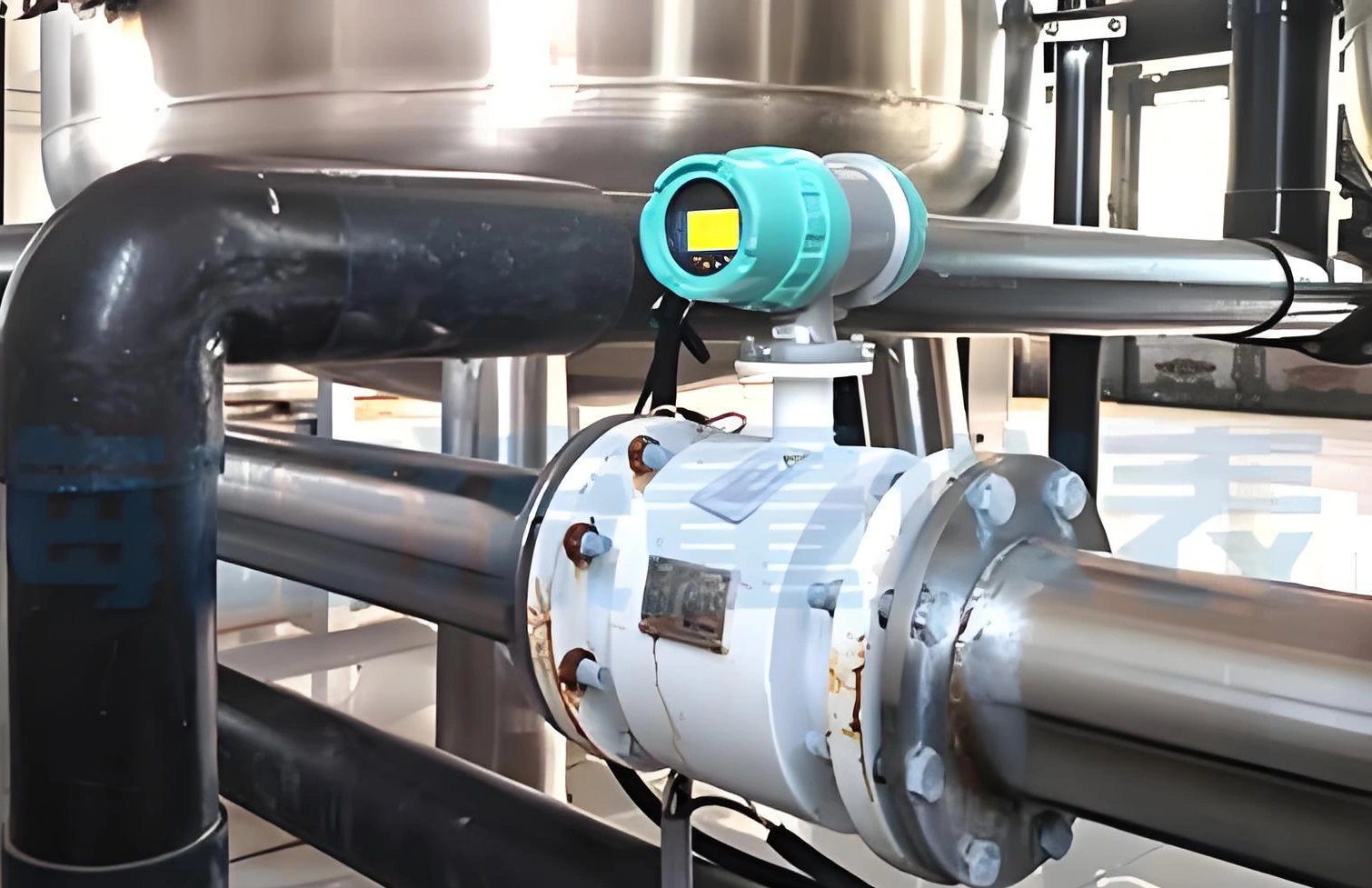
Propane tank level sensors are the core monitoring devices in liquefied propane storage systems. They provide real-time feedback on the level of the medium within the tank, effectively preventing the risks of overfilling and leakage.
By selecting and adapting the appropriate sensor to account for propane’s tendency to vapourise, it is possible to significantly optimise on-site safety and operational efficiency.
Propane
Propane is a clean energy source widely used in industrial, commercial and domestic applications, primarily as a fuel and a chemical feedstock.
Within the industry, propane is generally stored in a liquid state in sealed tanks; its specific physicochemical properties form the basis for storage management and safe operation and maintenance.
This article provides a brief overview of the definition and key characteristics of liquid propane.
Liquid Propane
Propane (C₃H₈) is gaseous at standard temperature and pressure; liquid propane is a liquid medium obtained through pressurisation or cryogenic liquefaction, and is also the primary component of liquefied petroleum gas (LPG).
Liquefaction significantly reduces its volume, facilitating sealed storage and transport, and is currently the mainstream storage form in the industry.
Properties of Liquefied Propane
1. Prone to Vaporisation
Liquefied propane has a boiling point of –42.1 °C at standard atmospheric pressure and cannot be stored stably in liquid form under normal temperature and pressure conditions.
Once depressurised and exposed to the atmosphere, it rapidly vaporises and expands; one volume of liquefied propane can expand to approximately 270 times its volume as gaseous propane. Consequently, it must be stored in a sealed, pressurised container.
2. Significant difference in density between liquid and gas
Liquid propane weighs in at roughly 0.58 kg/L, a good deal lighter than water, so any leaked liquid naturally floats on the surface.
The vapor, though, is slightly heavier than air and settles into low-lying areas, trenches, and enclosed underground spaces, where it tends to linger rather than drift away, which makes dangerous gas pockets fairly easy to form.
3. Flammable and explosive
Liquid propane does not burn directly; however, when vaporised and mixed with air, it forms a flammable gas with an explosive limit of 2.1%–9.5%. It is highly susceptible to combustion and deflagration when exposed to open flames, high temperatures or electrostatic sparks, imposing extremely stringent fire prevention and temperature control requirements on the storage environment.
4. Risk of frostbite at low temperatures
The vapourisation of propane rapidly absorbs heat, causing localised sudden cooling. Direct skin contact with leaked liquid propane can cause severe frostbite; therefore, professional protective measures must be taken during on-site operations, and direct contact with the substance is strictly prohibited.
5. Good Stability
Liquid propane is chemically stable at room temperature; it is virtually insoluble in water, contains few impurities and is of high purity. It is miscible with hydrocarbon-based organic solvents and is suitable for the vast majority of industrial and energy applications, with minimal tendency to deteriorate or form precipitates.
6. High Temperature Sensitivity
Liquid propane is pretty sensitive to temperature; if the surrounding heat rises, pressure inside sealed containers can shoot up quickly, and that’s when overpressure becomes a real danger.
During storage, keep it away from direct sunlight and any serious heat source, and do your best to keep the ambient temperature steady so the whole setup stays safe.
7. Non-corrosive
Under normal temperature conditions, liquid propane is non-corrosive and does not corrode common storage materials such as carbon steel or stainless steel, resulting in minimal equipment wear and low operation and maintenance costs.
Chemical reactions only occur under extreme high temperatures or upon contact with strong oxidising agents.
Challenges in Level Measurement for Propane Tanks
1. For starters, liquid propane boils at a pretty low temperature, so it vaporises easily under normal ambient conditions. With both gas and liquid sitting inside the tank together, you tend to get issues like foaming in the gas phase and flash vapourisation. That messes with the level signal, giving you readings that jump around and just won’t settle.
2. Then there’s the gas–liquid interface problem.Because propane is so volatile, you’ve got saturated vapour sitting right above the liquid. The boundary isn’t a clean, sharp line—there’s a fuzzy transition layer in between. That makes life difficult for direct-contact gauges trying to pin down exactly where the liquid surface actually is.
3. Pressure inside the tank is another headache. These are pressurised vessels, so anything from a shift in outside temperature to loading and unloading operations can push the internal pressure up or down. When that happens, the density of the propane changes too, which throws off any level measurement that relies on density calculations.
4. Finally, the stuff isn’t perfectly clean.Propane carries trace amounts of impurities like sulphides, and over time these will eat away at the measuring elements. Plus, analysis shows that re-condensates and other contaminants in the medium love to stick to the sensor probe, building up layers and slowly drifting the measurement off target.
5. Safety and explosion protection: Propane is a flammable and explosive hazardous medium, and the tank farm is classified as an explosion-hazardous area. The entire liquid level measurement instrument must comply with explosion-proof rating requirements; there are strict restrictions on instrument selection, cabling and installation, and certain instruments based on specific measurement principles cannot be used.
6. Tank operating disturbances: Feeding, discharging and recirculation operations can cause agitation and waves within the tank, resulting in false liquid levels and causing momentary measurement distortions; the instrument must therefore be equipped with signal filtering capabilities.
7. Temperature-dependent density: The density of liquid propane is significantly affected by temperature; changes in temperature alter the density of the medium. Differential pressure-type level transmitters require real-time temperature compensation; failure to apply such compensation will result in significant errors in liquid level calculations.
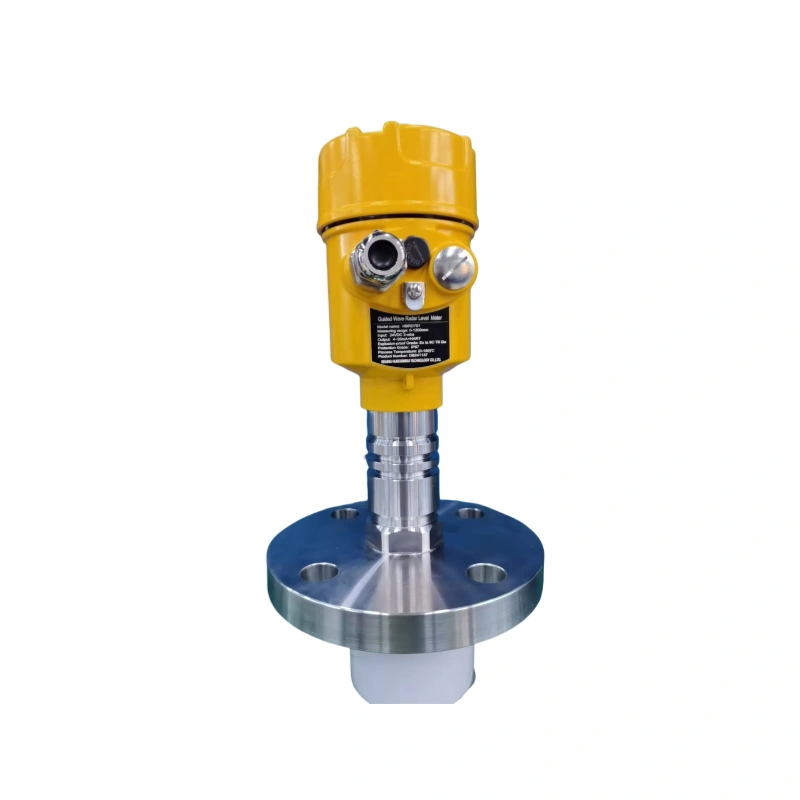
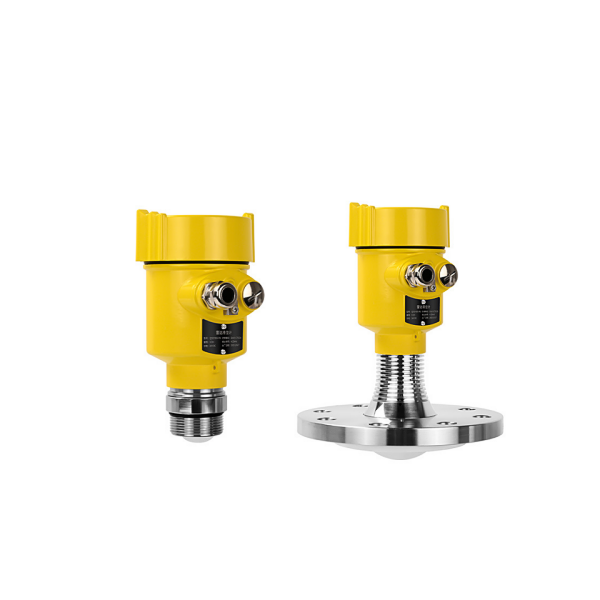
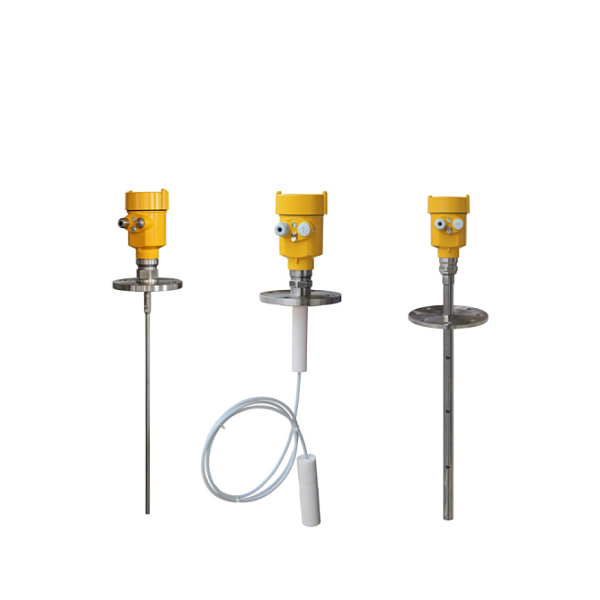
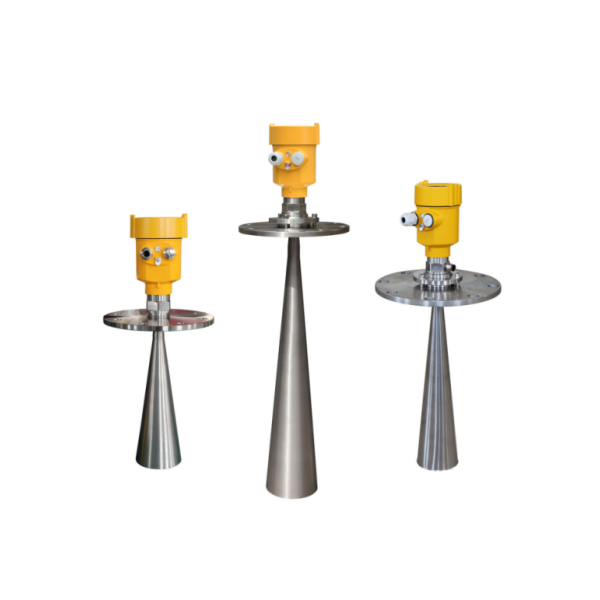
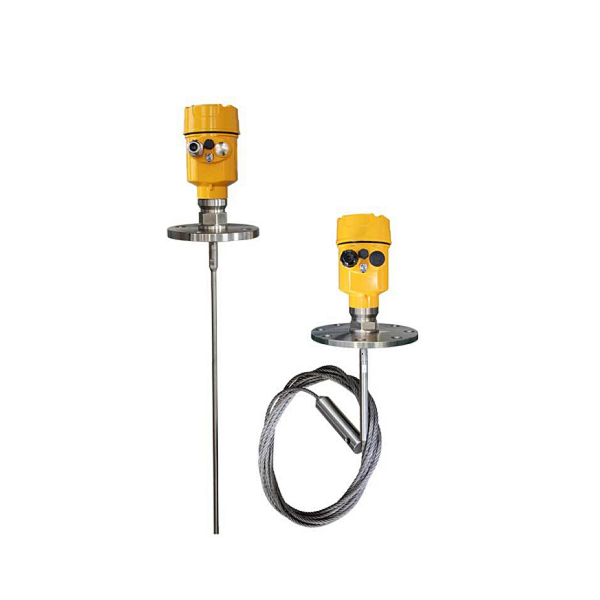
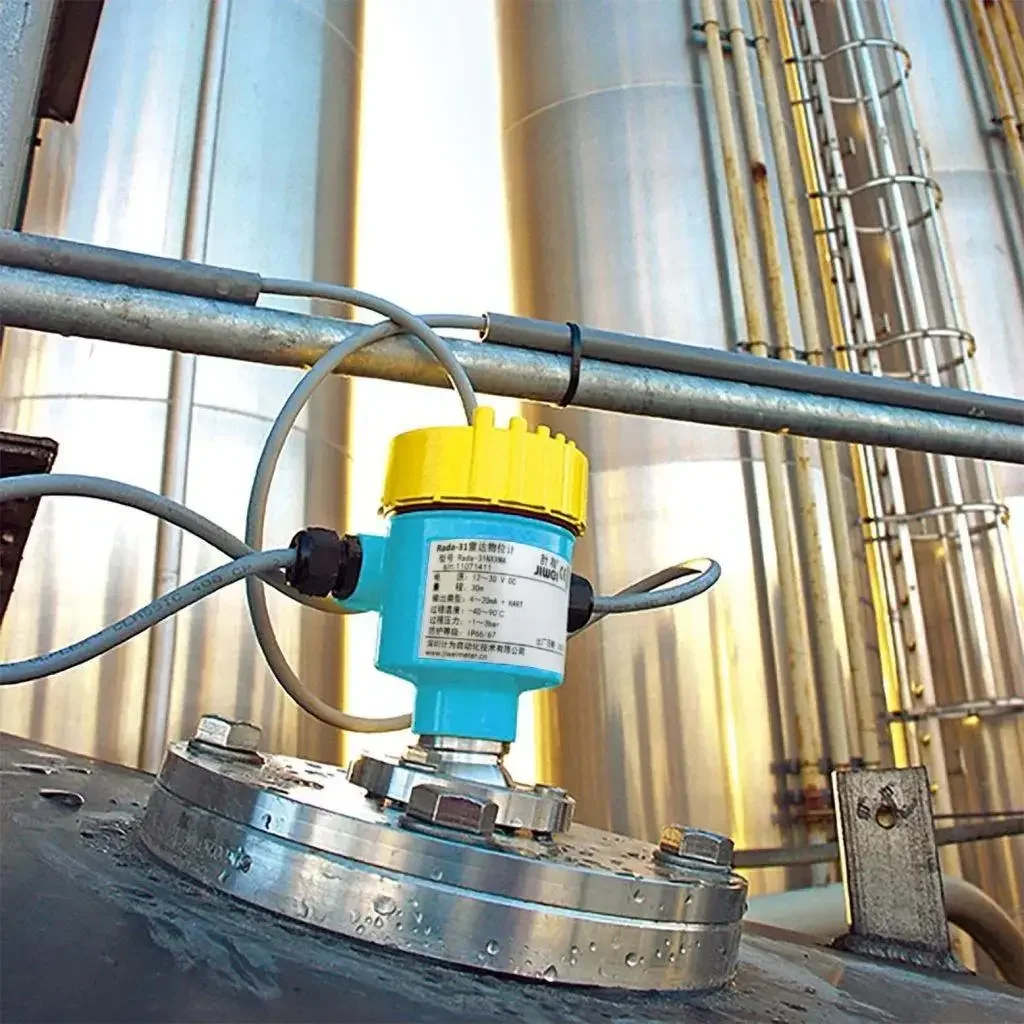
Common propane tank level sensors Radar level sensors
Principle of operation:
High-frequency microwave pulses are emitted; when the microwaves strike the liquid surface inside the propane tank, they are reflected back to the antenna. The instrument calculates the liquid level height based on the round-trip time of the pulses. This is a non-contact measurement method suitable for pressure-sealed storage tanks.
Advantages
- Minimally affected by fluctuations in medium temperature and pressure; capable of withstanding the complex operating conditions of propane storage tanks, including flash vapourisation and gas-liquid coexistence
- Completely non-contact measurement; the sensor does not come into contact with the propane medium, thereby avoiding the risks of material build-up on the probe and damage caused by medium corrosion
- High resistance to minor liquid level disturbances and high measurement accuracy, meeting the requirements for continuous metering and monitoring of storage tanks
- Suitable for pressurised, sealed tanks; eliminates the need for complex pressure-tapping piping within the tank, thereby reducing the risk of leakage
- Compatible with explosion-proof models to meet safety requirements for use in flammable and explosive propane tank farms
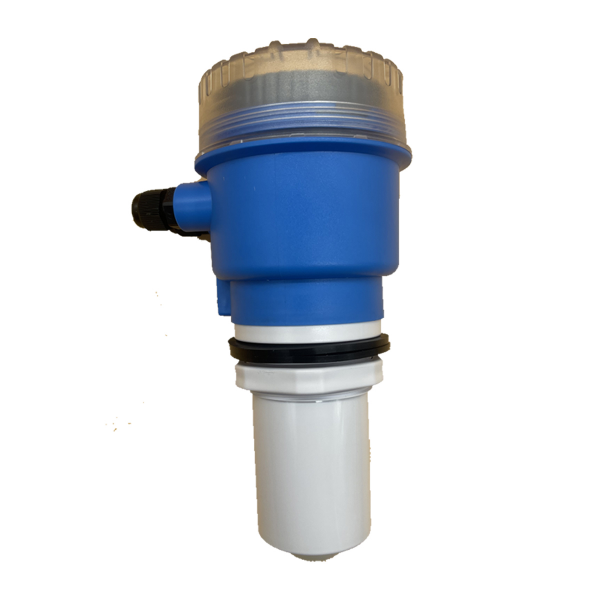
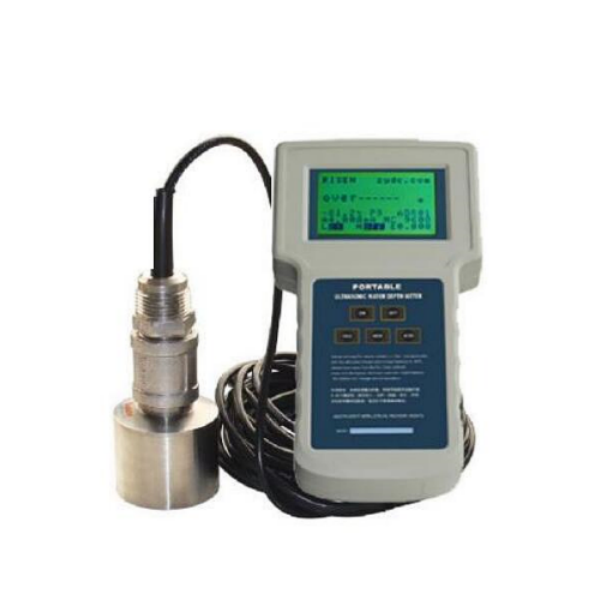
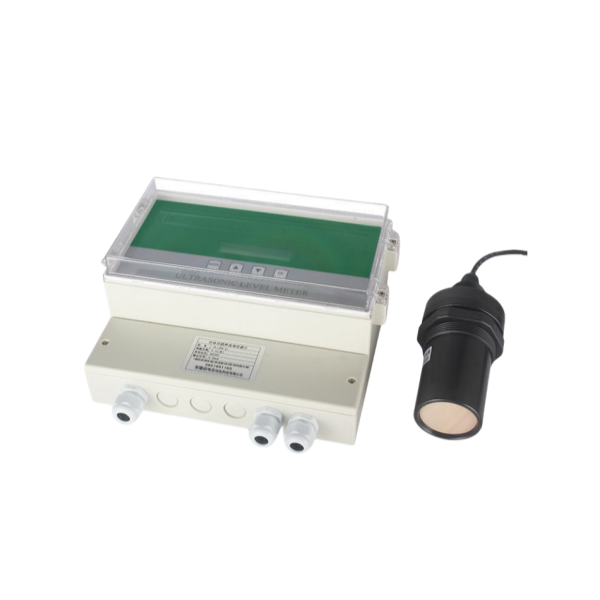
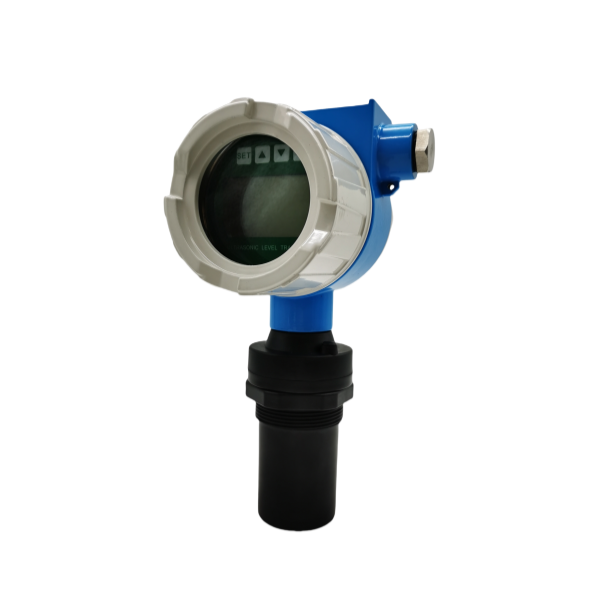
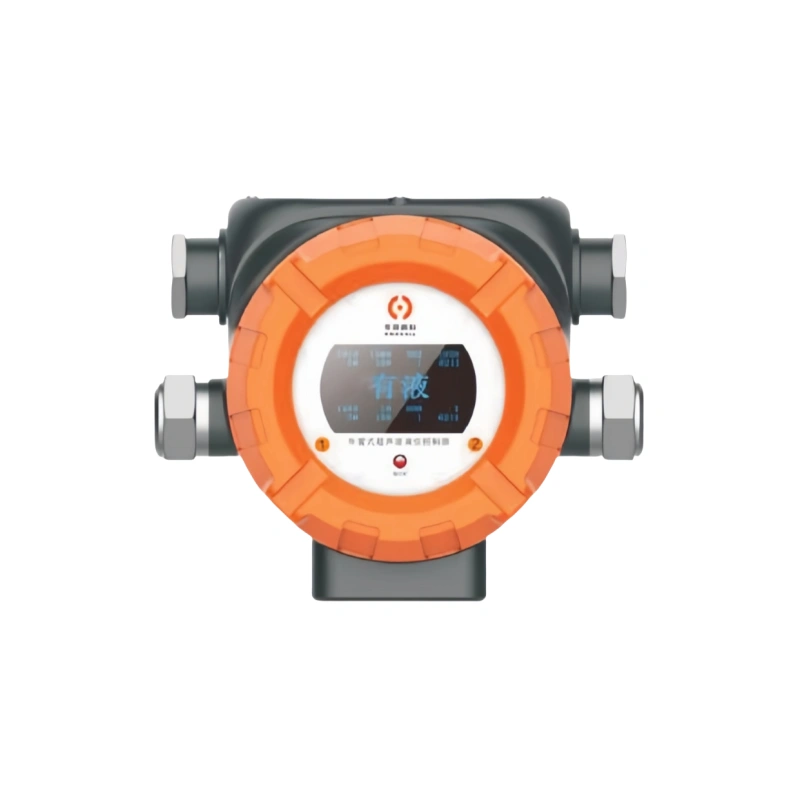
Ultrasonic Level Sensor
Principle of Operation:
The sensor emits ultrasonic waves, which are reflected upon hitting the liquid surface and then received. The liquid level is calculated based on the time taken for the sound to travel, utilising air as the transmission medium to detect the liquid level.
Advantages
- Installation and setup are pretty straightforward, and the equipment doesn’t cost a fortune to procure, so it won’t blow the project budget.
- It’s a non-contact design, meaning nothing actually touches the propane itself, so the parts don’t get worn down by the medium.
- Taking it apart and keeping it running isn’t difficult; if something goes wrong, you can usually fix it on-site without too much hassle.
- The output signals are standard, so you can hook them straight into regular PLC and DCS systems without any fuss.
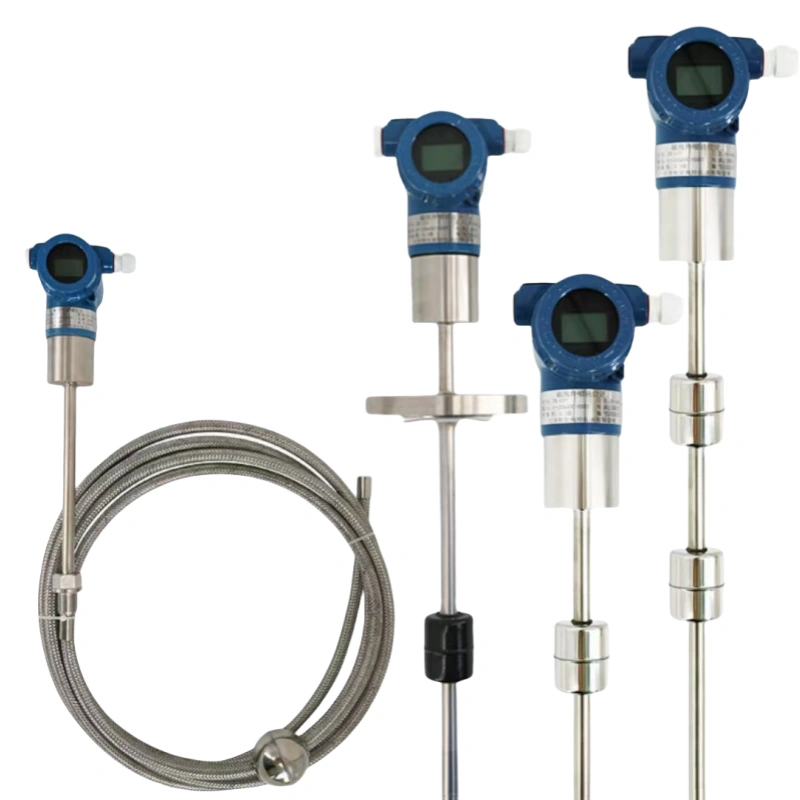
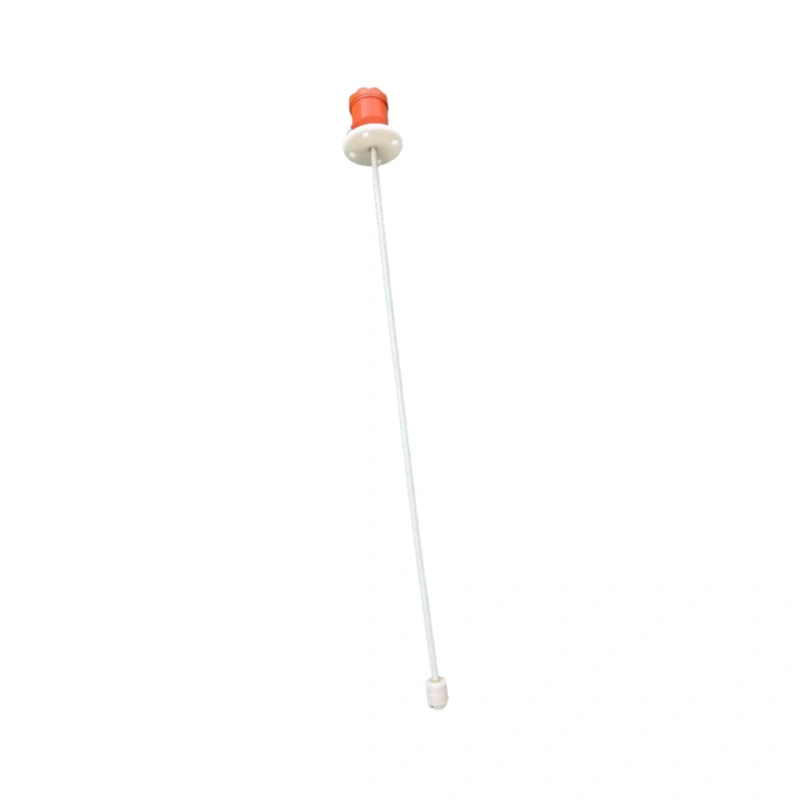
Float Level Sensors
Principle of Operation:
The float rises and falls in tandem with the propane liquid surface; its displacement is converted into a liquid level signal via a connecting rod and magnetic coupling mechanism. This constitutes a contact-type measurement method.
Advantages
- The operating principle is straightforward and easy to understand; some models feature a local visual indicator, enabling on-site personnel to assess the liquid level intuitively
- The technology is mature and reliable; fault symptoms are obvious, making on-site troubleshooting relatively straightforward
- In addition to continuous liquid level output, high and low liquid level switch alarms can be easily implemented for interlock protection
- Power supply requirements are not stringent; certain models can be adapted to intrinsically safe explosion-proof standards to meet the conditions of hazardous chemical tank farms
Magnetostrictive Liquid Level Sensor
Principle of Operation:
A stress wave is generated within the probe rod by the interaction between the magnetostrictive waveguide wire and the magnetic field of the float. The position of the float is determined by calculating the propagation time of the stress wave, and a continuous level signal is output.
Advantages
- High measurement accuracy and excellent resolution, suitable for precise metering applications in propane storage tanks
- A single instrument can simultaneously measure both liquid level and interface level, offering a high degree of functional integration
- Stable output signal with strong interference resistance; supports the standard 4–20 mA industrial signal and is compatible with DCS systems
- Stable structure with minimal long-term drift, suitable for long-term continuous monitoring of pressurised storage tanks
- Fast response speed, enabling rapid tracking of actual liquid level changes during feed-in and discharge operations
- A comprehensive range of intrinsically safe versions is available, allowing direct use in the measurement of storage tanks containing hazardous media such as propane
Practical Applications
Industrial storage tank monitoring: Used in large propane pressure storage tanks at chemical plants and gasification stations to collect liquid level data in real time and continuously upload it to automated control systems, replacing manual inspections. It enables high and low liquid level alarm thresholds, eliminating safety hazards such as overpressure due to full tanks or air ingress during emptying, whilst mitigating the risks of leaks and working at height associated with manual operations.
Commercial Centralised Gas Supply Scenarios: Suitable for catering establishments and factory propane gasification supply stations, providing real-time monitoring of remaining tank capacity. This helps operations and maintenance personnel predict stock levels and plan refilling in advance, thereby avoiding supply interruptions. It also triggers valve interlocks to prevent overfilling during unloading, ensuring the stable operation of the gas supply system.
Transport and Mobile Storage Tanks: Mounted on propane tankers and mobile storage units to keep track of liquid levels during transit. This helps the crew manage loading and unloading, keeps fill volumes within safe limits, and flags up any tank irregularities quickly, so operations stay in line with hazardous chemical transport safety rules.
Explosion-Proof Safety Interlock Protection: The sensors are explosion-proof and rated for hazardous areas, with level signals feeding straight into the interlock system. When levels climb too high, it shuts off the feed automatically; when they drop too low, it protects the vaporiser from dry-burn damage. It can also tie in with leak detection equipment to strengthen the overall safety setup on site.
Energy Consumption and Cost Control: Liquid level data is used to calculate propane stock levels and consumption, enabling precise measurement of gas consumption. This facilitates the investigation of pipeline leaks and abnormal losses, quantifies gas usage costs, replaces traditional manual meter reading methods, and improves the efficiency of energy consumption management.
Selection Guide
Identify the operating conditions and medium
Propane is highly volatile, flammable and explosive. Determine the pressure and temperature of the storage tank, distinguish between above-ground and underground tanks, and assess the corrosive effect of the medium on sensor components.
Determine the measurement range and installation method
Base the measurement range on the tank’s effective height, leaving a safety margin at both the top and bottom; check the thread and flange specs, and decide whether to mount the sensor on the top, the side wall, or go with a non-contact setup.
Selecting the Measurement Principle
Float-type sensors are suitable for small to medium-sized tanks, but be mindful of the risk of sticking; ultrasonic sensors are susceptible to interference from vapour inside the tank; radar sensors are resistant to vapour and are suitable for large pressure vessels, though they tend to be more expensive.
Meeting Explosion-Proof Requirements
As propane is a hazardous medium, the sensor must possess the relevant explosion-proof certification and be fitted with explosion-proof connectors; the use of standard, non-explosion-proof models is strictly prohibited.
The entire Sion-Inst range of explosion-proof level transmitters holds compliant explosion-proof certification and meets the regulations for use in hazardous chemical areas.
Determine the Output Signal
For industrial remote monitoring, prioritise 4–20 mA; for simple high/low alarms, select digital outputs; for long-distance transmission, avoid digital signal attenuation issues where possible.
Select the Correct Material of Contact
Prioritise 316L stainless steel for parts in contact with the medium; where necessary, use PTFE coating to prevent swelling and damage caused by liquefied propane.
Define Monitoring Requirements
If crews need to read levels right there on the tank, pick a model with a local display; if the control room is handling everything, pair it with signal and alarm modules; for underground tanks, go with something that’s easy to get at when maintenance is due.
Balance Cost and Maintenance
For small tanks, keep costs down and stick with float-type sensors; for large industrial tanks, invest in radar or high-precision hydrostatic sensors, thinking about long-term reliability instead of just looking at the upfront price.
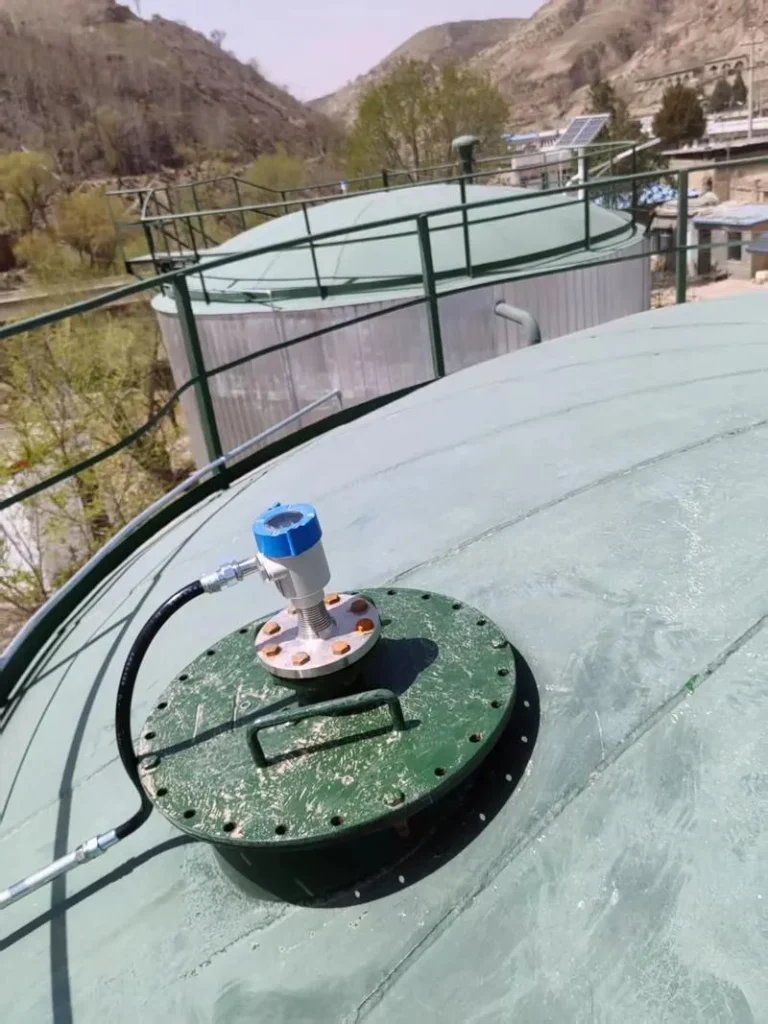
Choosing the right level sensors gives you steady, reliable readings, letting you set up overfill and low-level interlocks, cutting the risk of leaks and other safety incidents, making manual inspections less of a hassle, and improving overall tank automation. Sino-Inst carries a full line of level measurement products—radar, magnetostrictive, and float-type sensors included—delivering reliable, integrated measurement solutions for all kinds of propane storage tanks.