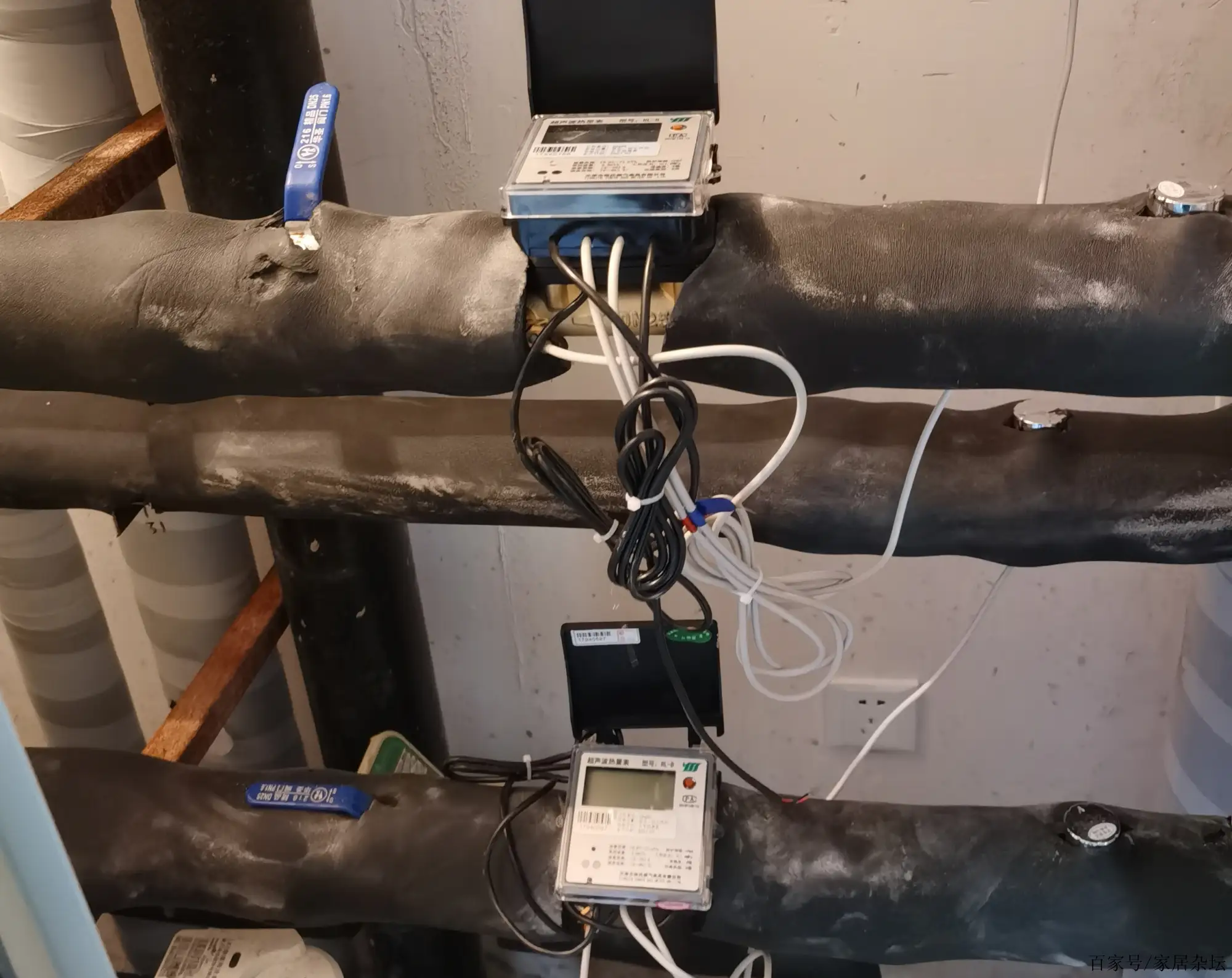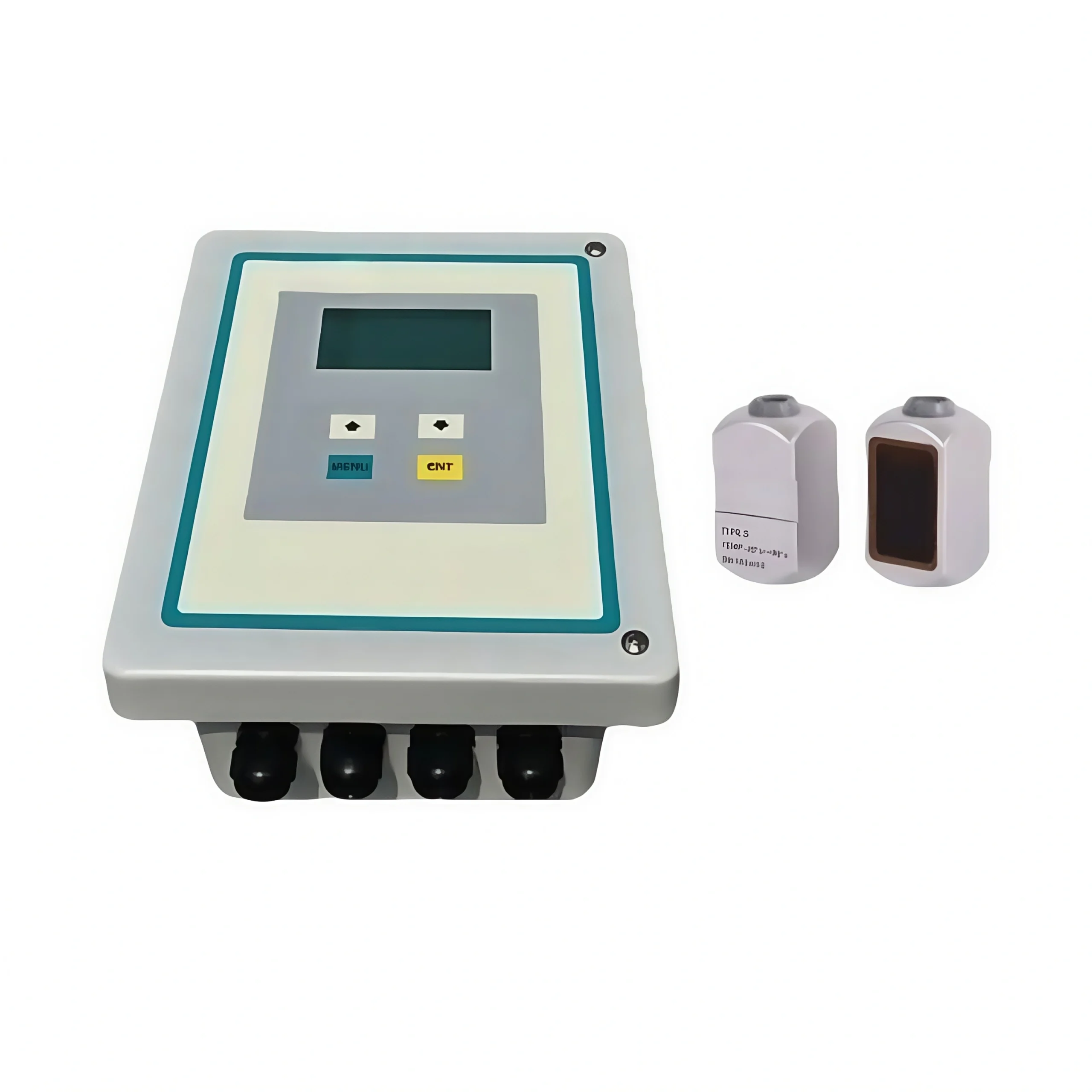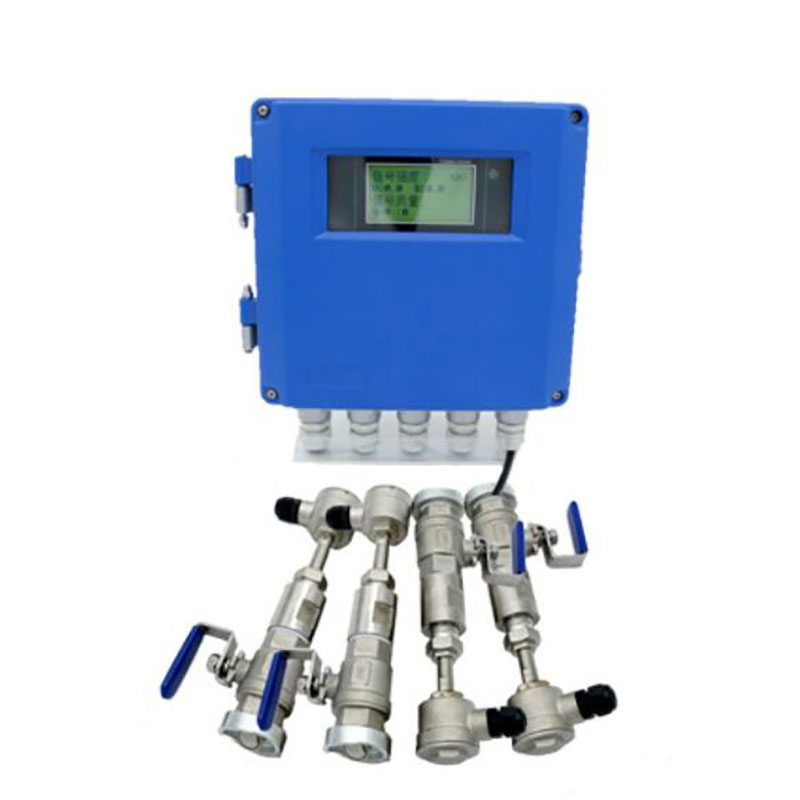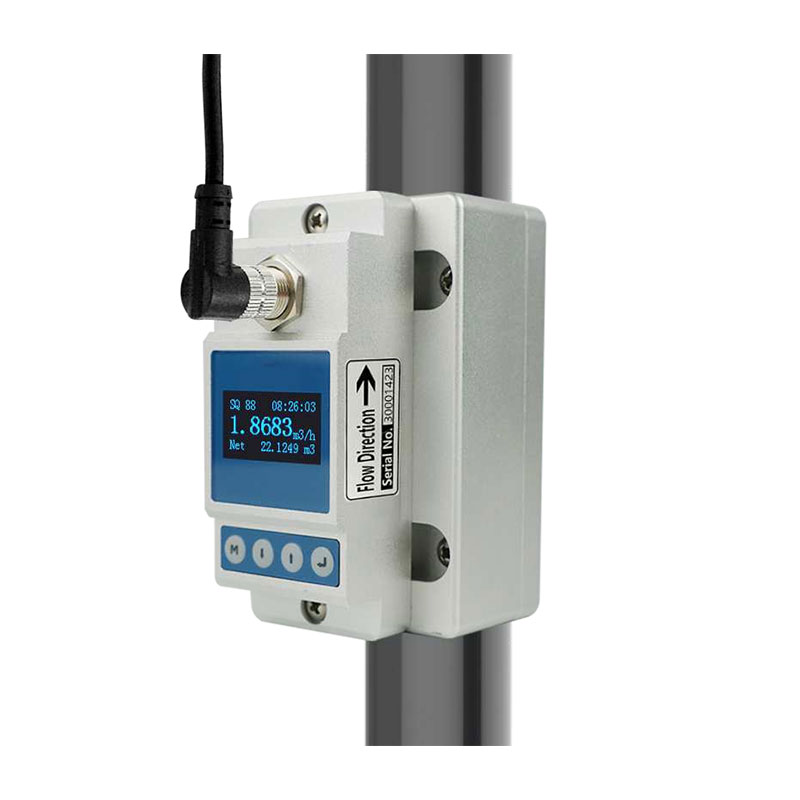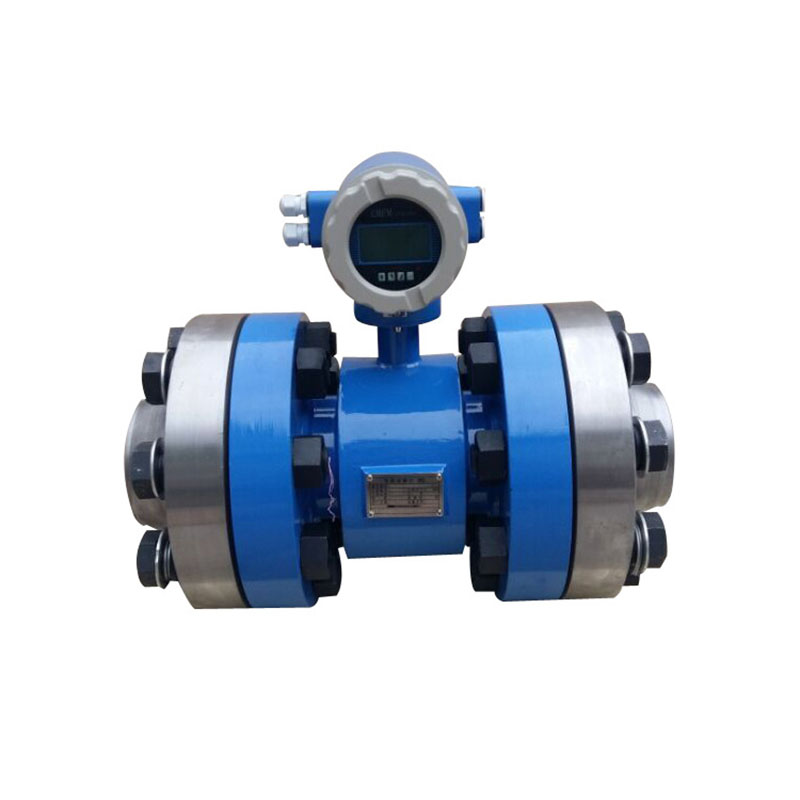
Electromagnetic and ultrasonic heat meters are the two most popular types of heat meters for measurement in industrial heating and cooling fluids metering installations. The heat consumption is calculated according to different sensing principles.
But there are obvious shortcomings in the adaptability to the site conditions and the reliability of the measurement. This article compares and analyzes their technical characteristics.
What Is a Heat Meter?
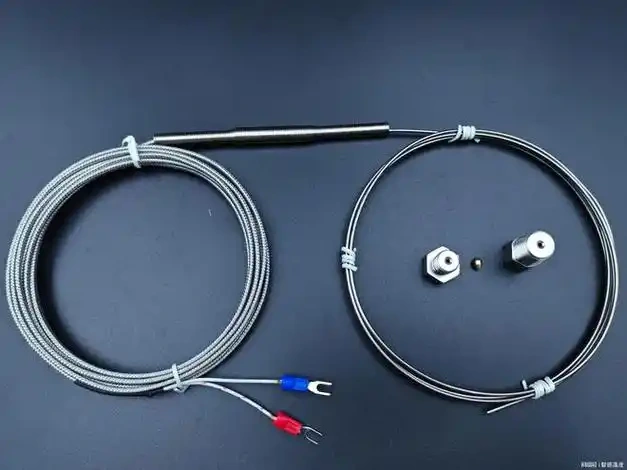
A heat meter is a device that tracks thermal energy carried by fluids inside heating and cooling pipelines. It is made up of a flow sensor, temperature probes, and a computing module.
It captures the fluid’s flow speed alongside the temperature gap between supply and return lines, then works out how much heat the medium gives off or takes in. Readings are usually given in kilowatt-hours (kWh) or gigajoules (GJ).
These meters are widely deployed for separate heating and cooling metering in district heating and central air-conditioning systems, supporting heat settlement and charge calculation.
Electromagnetic Heat Meters
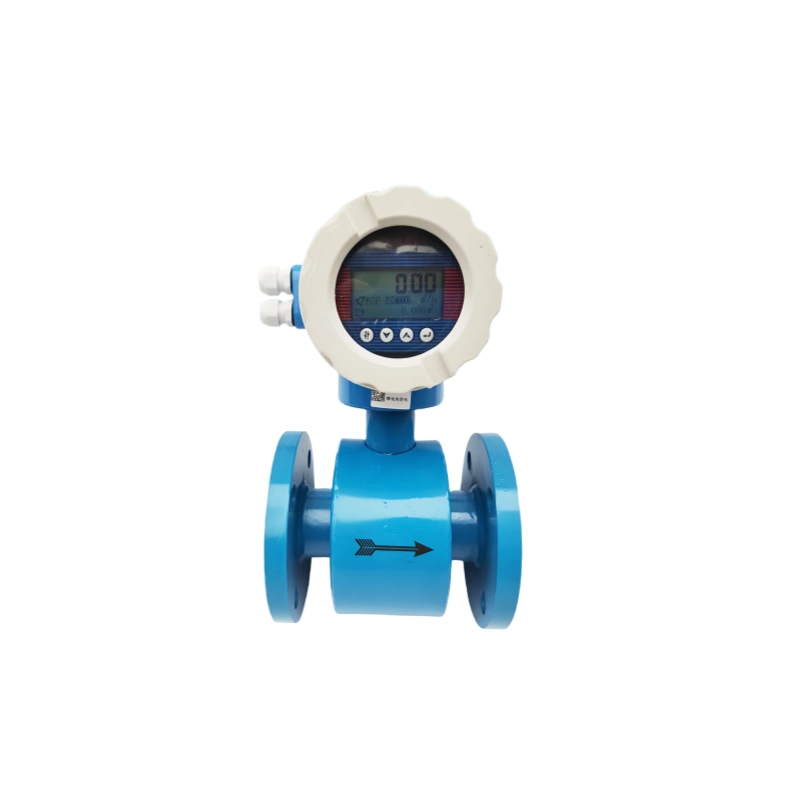
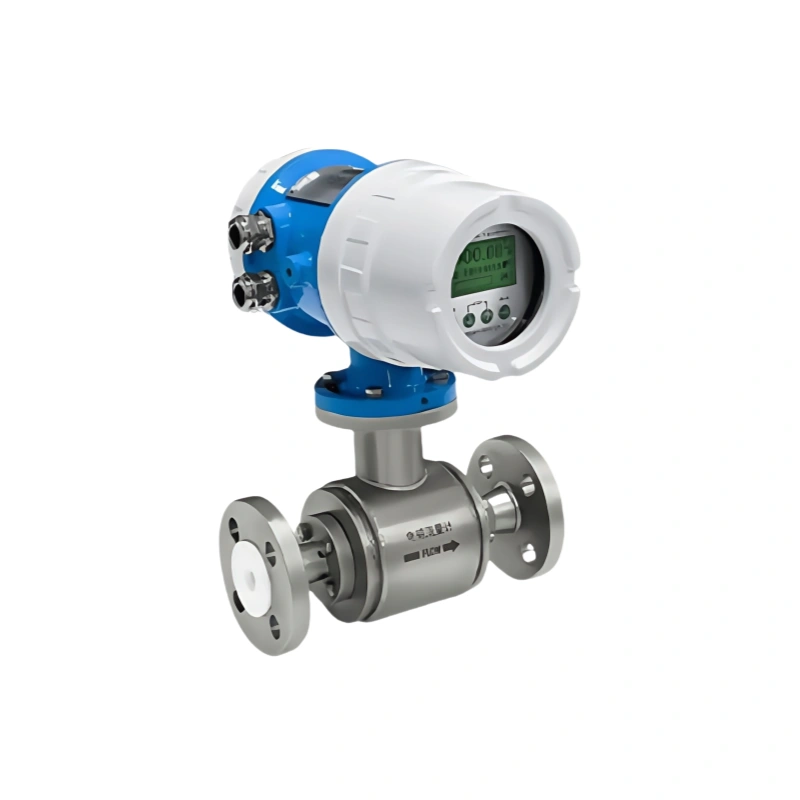
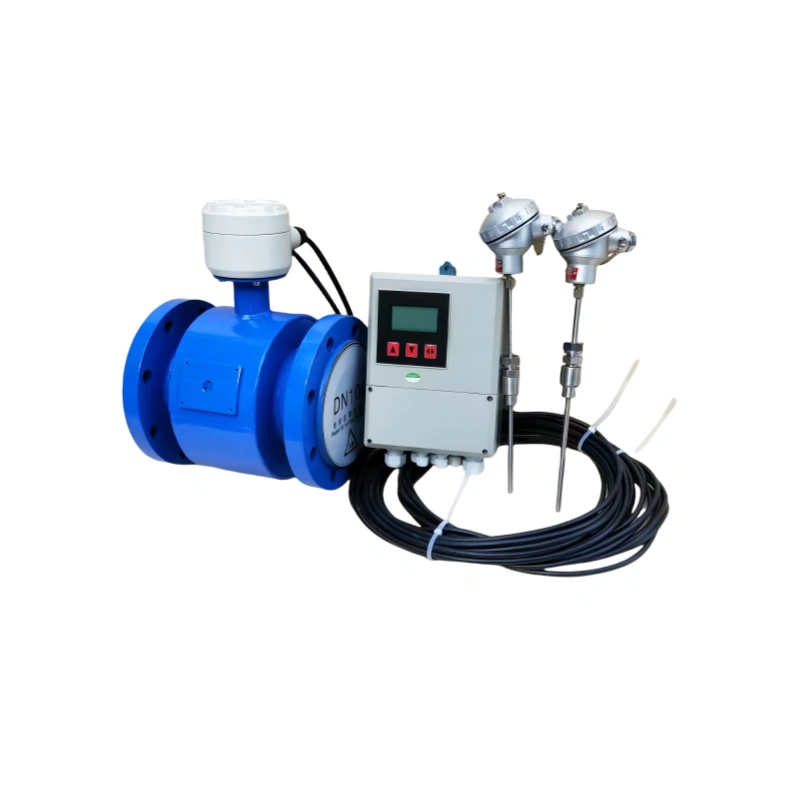
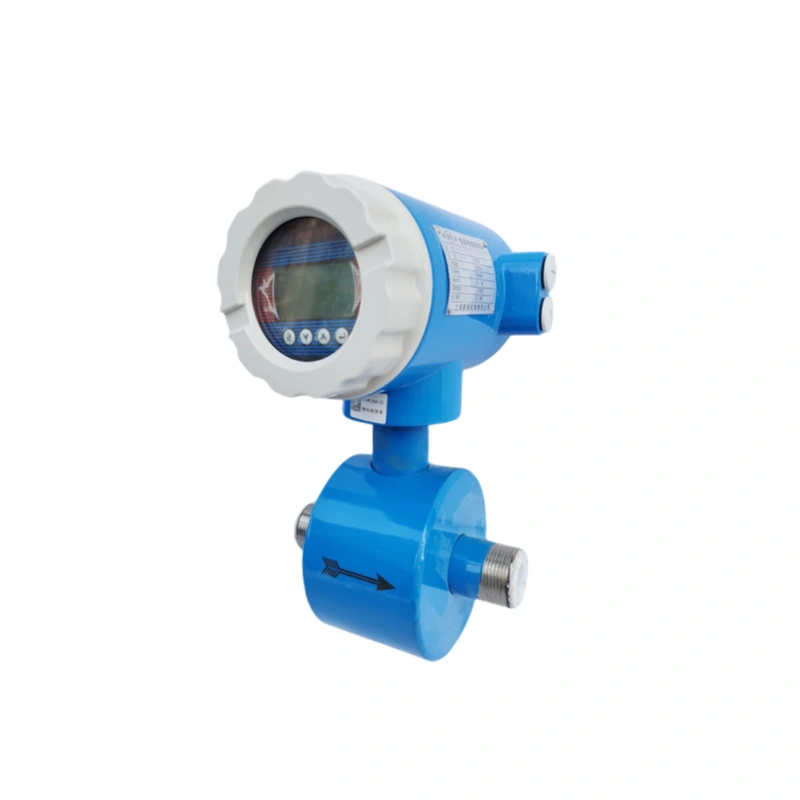
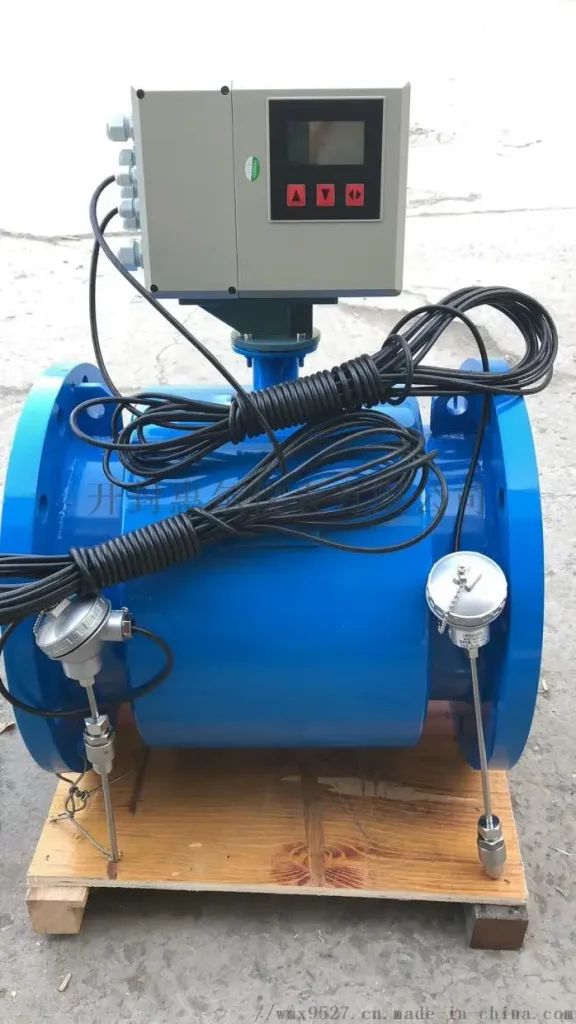
An electromagnetic heat meter measures thermal energy from heat transfer fluids. It sees regular use in heating networks, central air conditioning and industrial heat exchange processes, and can reliably gauge how much heat the medium releases or absorbs across a heat exchange loop.
It usually comes with three core parts: an electromagnetic flow sensor, a matched set of temperature sensors, and a heat calculator. It delivers solid measurement precision, brings little pressure drop, and maintains steady performance.
Principle of Operation
Electromagnetic heat meters take advantage of Faraday’s law of electromagnetic induction for flow detection. As conductive fluid passes and cuts across magnetic flux lines, an induced electromotive force (EMF) forms; its value varies proportionally with flow speed. This signal feeds into the heat totalizer to work out volumetric flow.
A matched pair of temperature sensors picks up supply and return water temperatures. Using this temperature spread, fluid density, specific heat capacity and flow data, the totalizer runs the heat calculation formula to continuously compute and log cumulative heat exchange, and outputs the final total heat value.
Ultrasonic Heat Meter
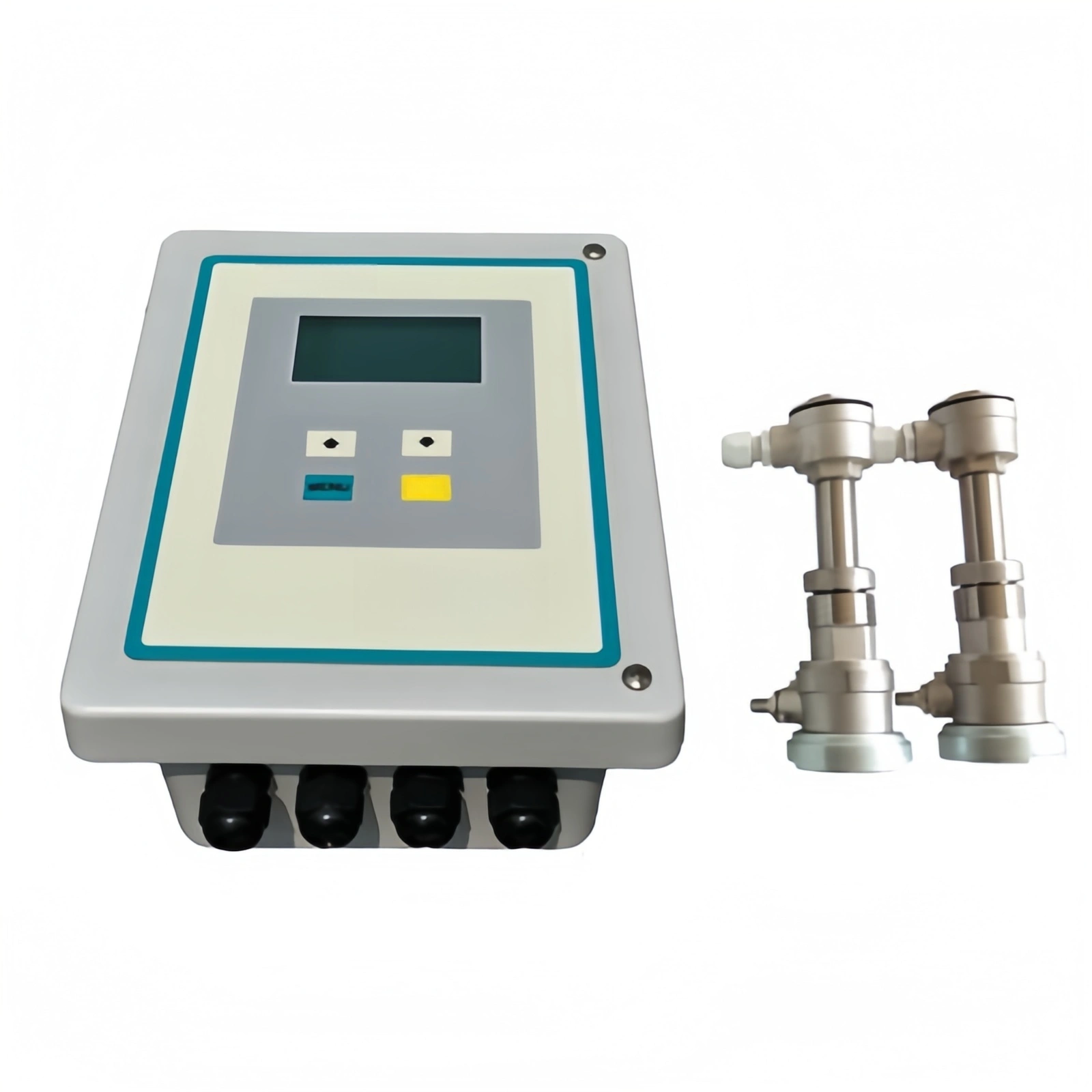
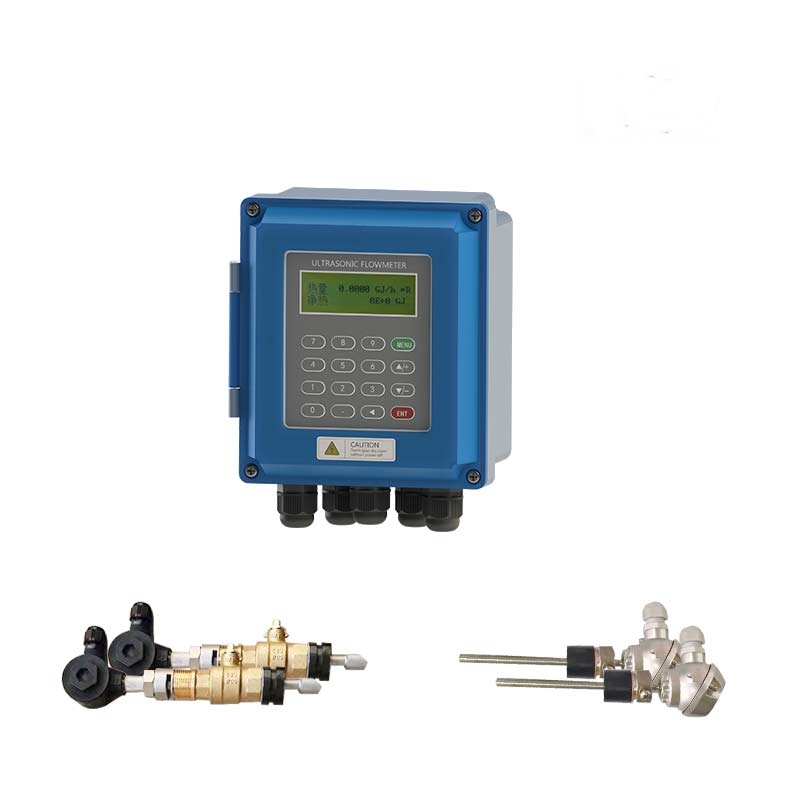
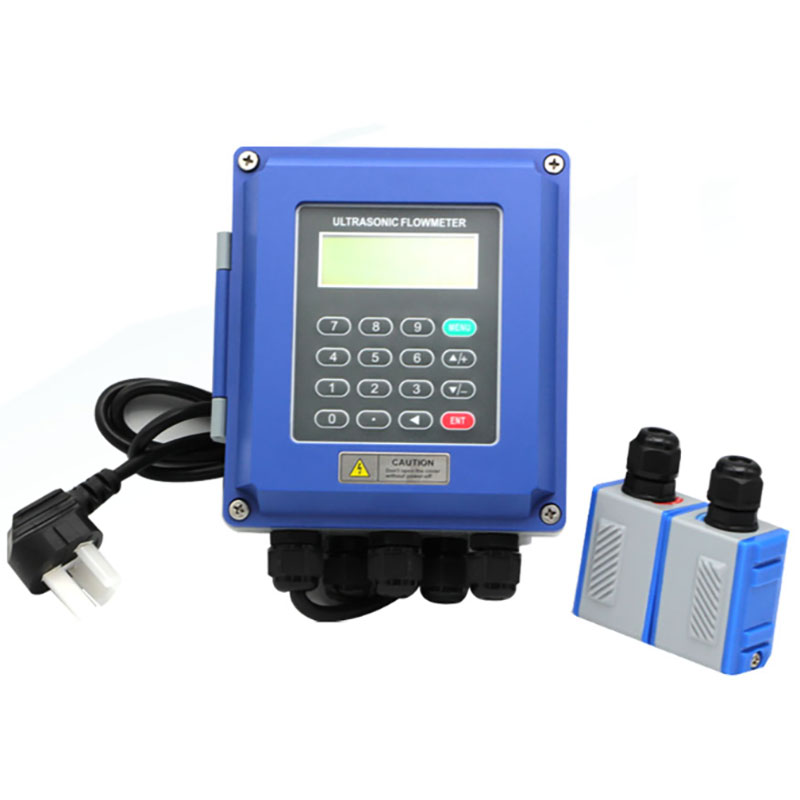
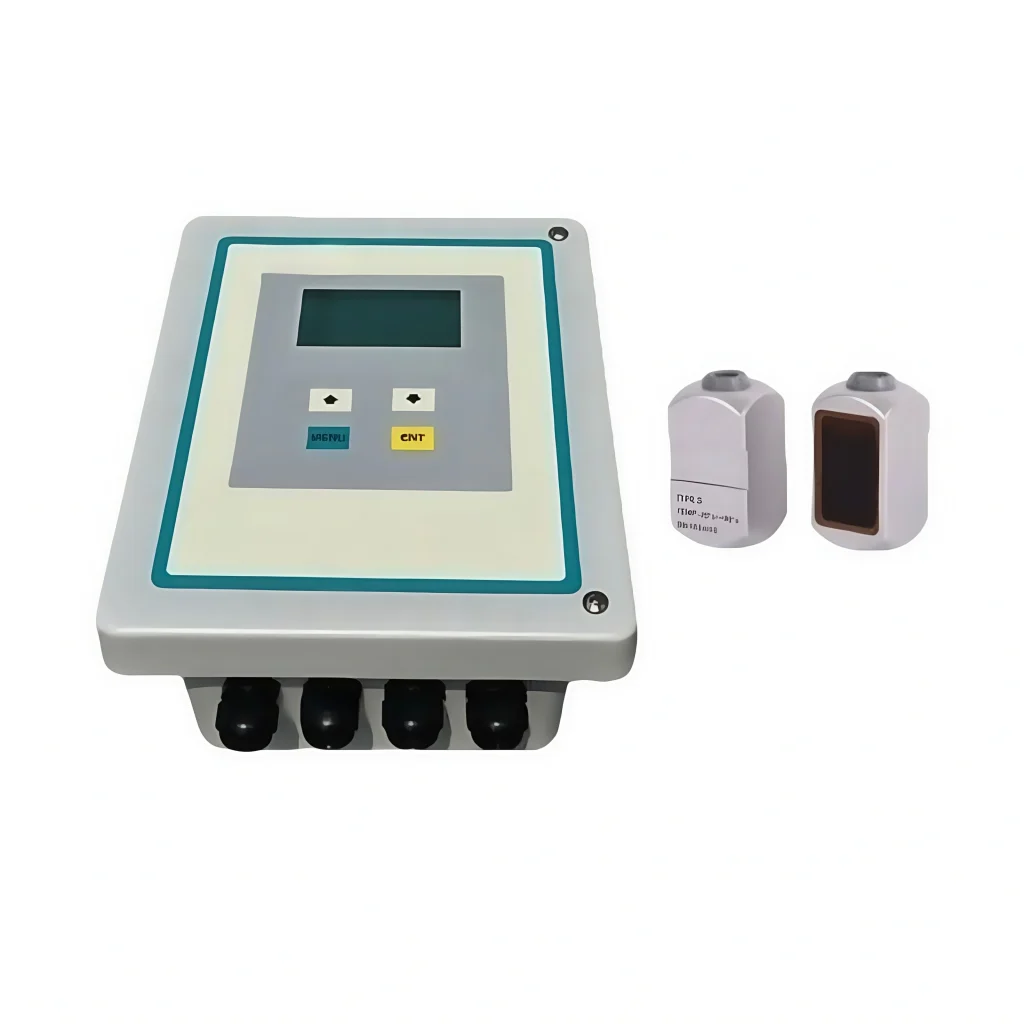
An ultrasonic heat meter tracks heat carried by heat transfer media. It is widely applied in district heating, central air conditioning, industrial heat exchange and similar systems to work out how much heat the medium absorbs or gives off.
Its main components include an ultrasonic flow sensor, two matched temperature probes, and a heat computing unit. It creates minimal pressure loss and is not prone to blockage, which makes it well suited for large-bore pipelines and fluids that contain little solid debris.
Principle of Operation
Ultrasonic heat meters rely on the ultrasonic time-of-flight method for flow measurement. Ultrasonic transducers emit sound waves in both the downstream and upstream directions.
The flow of the fluid causes a time difference between the propagation of the downstream and upstream waves; this time difference is related to the fluid velocity, and the totalizer calculates the volumetric flow rate based on this.
At the same time, temperature sensors measure the supply and return water temperatures. The totalizer combines the temperature difference, the specific heat capacity, and the density of the medium with the flow signal to continuously calculate and accumulate the total heat exchanged.
Advantages of Electromagnetic Heat Meters
1. Delivers reliable measuring precision; barely disturbed by minor temperature and pressure shifts, and offers consistent heat readings with strong repeatability.
2. Contains no moving mechanical components, so there is no risk of impeller abrasion or blockage; it comes with a long working lifespan and needs little routine upkeep.
3. Unlike mechanical heat meters, it can handle tiny amounts of impurities more easily and fits the actual working conditions of heating networks better.
4. Small pressure drop eases the burden on circulating pumps and cuts down the power use of the whole heating system.
5. Compatible with pulse, 4–20 mA, HART and other signal types, which simplifies remote data collection and system connection.
6. A wide rangeability keeps measurement trustworthy even under low flow when heat loads swing greatly.
7. Built sturdy, with optional anti-corrosion and explosion-proof versions available; it works well for municipal and industrial heating scenarios.
Advantages of Ultrasonic Heat Meters
1. It is non-contact flow sensing and has no internal moving parts, therefore free from wear and blockage problems . It is easy to maintain and has long service life .
2. It creates nearly negligible pressure loss, adding almost no extra resistance to piping networks. This helps cut power draw for circulation pumps and brings down running costs.
3. Its wide rangeability allows it to handle both high and low flow conditions well, giving reliable readings when heating loads change or flow is low.
4. It is very well suited for hot water service where minor impurities carried in the fluid will not affect the measurement performance.
5. It comes with diverse communication ports and supports multiple protocols, making it easy to link up with remote reading and heating monitoring platforms.
6. Installation is flexible, and it only demands a short straight pipe section. It can be deployed across many heating and industrial heat exchange sites.
7. It reacts fast to changing situations and records flow and temperature data in real time to maintain stable heat metering.
Electromagnetic Energy Meters vs. Ultrasonic Energy Meters
Measurement Principles:
Electromagnetic heat meters work following Faraday’s law of electromagnetic induction. They work out flow rate by picking up the induced electromotive force produced as conductive fluid passes through a magnetic field; Ultrasonic heat meters adopt the transit-time approach.
They convert the time difference of ultrasonic signals between upstream and downstream into flow speed and flow volume. Temperature sensors are installed on both types of meters to measure energy consumption for heating or cooling.
Media Requirements:
Electromagnetic heat meters only work with conductive liquids that meet a minimum conductivity threshold. They fit regular heating water and HVAC circulating water, yet cannot handle pure water, oil, or ethylene glycol mixes with low conductivity.
Ultrasonic heat meters have no conductivity restriction. They can measure conductive and non-conductive liquids alike, and suit pure water, selected ethylene glycol coolant and similar working fluids.
Water Quality Tolerance:
Electromagnetic heat meters cope fairly well with rust and minor suspended solids in water and are not easily disrupted by impurities. The main concern for them is dry-pipe running conditions.
Ultrasonic heat meters are rather sensitive to air bubbles, heavy suspended solids and thick scale coating on pipe inner walls. Abundant bubbles weaken ultrasonic signals and trigger obvious measurement deviation.
Installation Types:
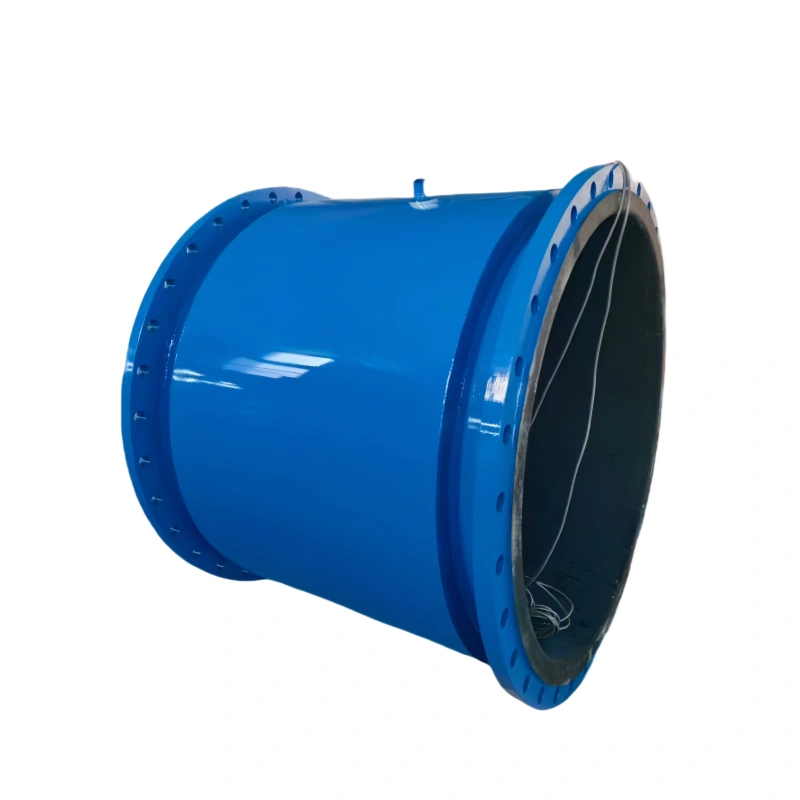
Electromagnetic flow meters are mostly flange inline units. Fitting them means cutting the pipe and stopping the water supply, plus they demand adequate upstream and downstream straight pipe lengths.
Ultrasonic flow meters offer multiple styles. Inline versions still need pipe cutting, but clamp-on and insertion types can be fitted on existing lines without cutting pipes or halting operation, which makes them ideal for old pipeline upgrades.
Power source:
Electromagnetic flow meters need more power and usually use an external 220 V AC or 24 V DC power. When the power goes off they stop measuring flow.
Ultrasonic flow meters require very little power. For buildings small and medium diameter units may be powered by on-board batteries. Large inline units may also be connected to external power.
Accuracy & Stability:
Electromagnetic flow meters provide Class 0.5 accuracy. They are well suited for billing applications where the water quality is consistent and there are no strong electromagnetic disturbances, and they provide reliable long-term measurements.
Ultrasonic flowmeters typically have Class 1.0 flow accuracy. Multi-path versions deliver better precision, but their readings tend to drift more easily when fluid conditions shift.
Interference Factors:
Electromagnetic heat meters are vulnerable to strong outside magnetic fields from frequency converters, power cables, motors and other equipment. They need to be mounted far away from high-voltage gear.
Ultrasonic heat meters are immune to electromagnetic noise. Their main limiting factors are air bubbles, pipe-wall scale and pipe material.
Applications:
Electromagnetic heat meters are widely deployed on heat station trunk pipes, main runs of large central air conditioning systems, large-bore custody transfer loops, and circulating water systems with higher impurity levels.
Ultrasonic heat meters are frequently used for separate metering inside buildings, retrofit works, pipelines where water shutdown is not feasible, and loops filled with non-conductive cooling fluids.
Cost and Maintenance:
Electromagnetic heat meters come with a higher upfront purchase price. Their electrodes can build up scale after long runtime and require periodic checks;
Ultrasonic heat meters cost less at the purchase stage. Their non-contact transducers barely wear out so upkeep workload is lighter. Clamp-on variants can be serviced without cutting off the water circuit.
Practical Applications
1. Within district heating networks, heat meters handle metering for buildings and individual households. They make heat billing possible and help heating operators keep tabs on heat loss across the whole network.
2. Central air conditioning systems rely on heat meters to log both heating and cooling usage. This allows venues including malls, office blocks and hotels to split energy expenses, and aids daily system upkeep.
3. For industrial heat exchange workflows, heat meters track heat transfer conditions. The collected data supports energy consumption records and efficiency upgrade work in chemical, food and pharmaceutical sectors.
4. For renewable setups like ground-source heat pumps and solar heating systems, heat meters record heat output to assess how well these heating units perform.
5. Heat meters fitted on the primary and secondary sides of heat exchange stations work out heat transfer efficiency. They guide valve tuning and assist in fixing hydraulic imbalance issues in piping networks.
6. Heat meters integrate with smart energy consumption platforms to meet requirements for energy audits, green building certification, and energy consumption regulatory reporting.
Selection Guide
Determine the medium’s electrical conductivity: For heating and air conditioning systems using conductive circulating water, either type is suitable; for non-conductive media such as pure water or high-concentration ethylene glycol, only ultrasonic heat meters may be used.
Check water quality for impurities and entrained gas: If the water carries plenty of bubbles or sediment, go with electromagnetic heat meters first. Ultrasonic meters work well for clean water with minimal bubbles, and you should take extra care when fitting ultrasonic units on pipes that tend to build scale.
Evaluate installation constraints: Both meter types fit new build projects where pipe cutting is allowed. For retrofits on existing pipelines that cannot stop water flow, clamp-on ultrasonic meters are the preferred pick, and you still need to check whether enough straight pipe sections are on hand.
Select based on usage purpose: Pick Class 0.5 electromagnetic meters for heating and cooling custody transfer billing. Ultrasonic meters are adequate for internal energy tracking and household metering.
Check the site EM environment: The pump rooms are full of frequency converters and motors so there is a lot of electromagnetic noise. Ultrasonic meters are a better choice for this reason. Electromagnetic meters are good in low interference areas.
Confirm power supply availability: Electromagnetic meters work best where steady 220V or 24V power can be provided. If running cables is troublesome or no external power is accessible, battery-operated ultrasonic meters should be your first choice.
Match flow capacity with the right pipe size: Electromagnetic meters are generally preferred for large diameter main pipelines. Multi-path ultrasonic meters are suited for small and medium-sized branch pipes with large flow swings.
Look at the upfront expenses and the maintenance costs: If you can afford it and you care about long term dependability, electromagnetic meters are a good choice. They are ideal for ultrasonic meters because of their low cost and ease of maintenance.
Verify operating conditions and certifications: Neither meter generates a significant pressure drop. In commercial billing applications, make sure that the meter has a valid type approval certificate. Choose an explosion-proof version, if the area is an explosion hazard.
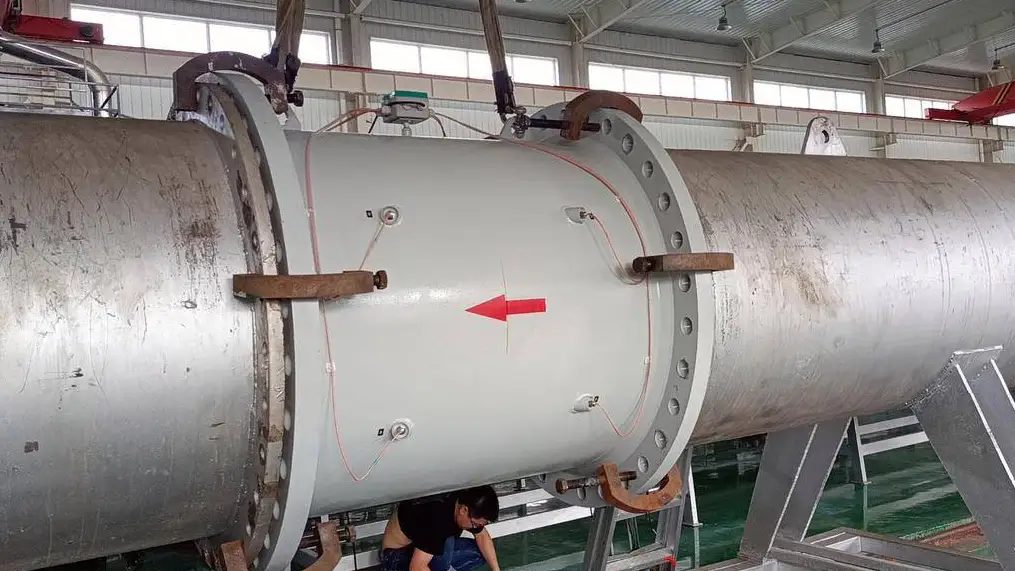
Sino-Inst supplies Electromagnetic Heat Meters and Ultrasonic Heat Meters. Sino-Inst also offers a complete range of Flow Meters and Temperature Instruments, including electromagnetic flow meters, ultrasonic flow meters, differential pressure flow meters and positive displacement flow meters.
These flow meters are designed to satisfy the complicated operating conditions of district heating, central air conditioning and industrial heat exchange. We provide accurate on-demand product selection based on proven instrumentation solutions and technical services to ensure reliable and stable heating and cooling metering to support refined energy consumption management, compliant billing and integration with smart energy management platforms.