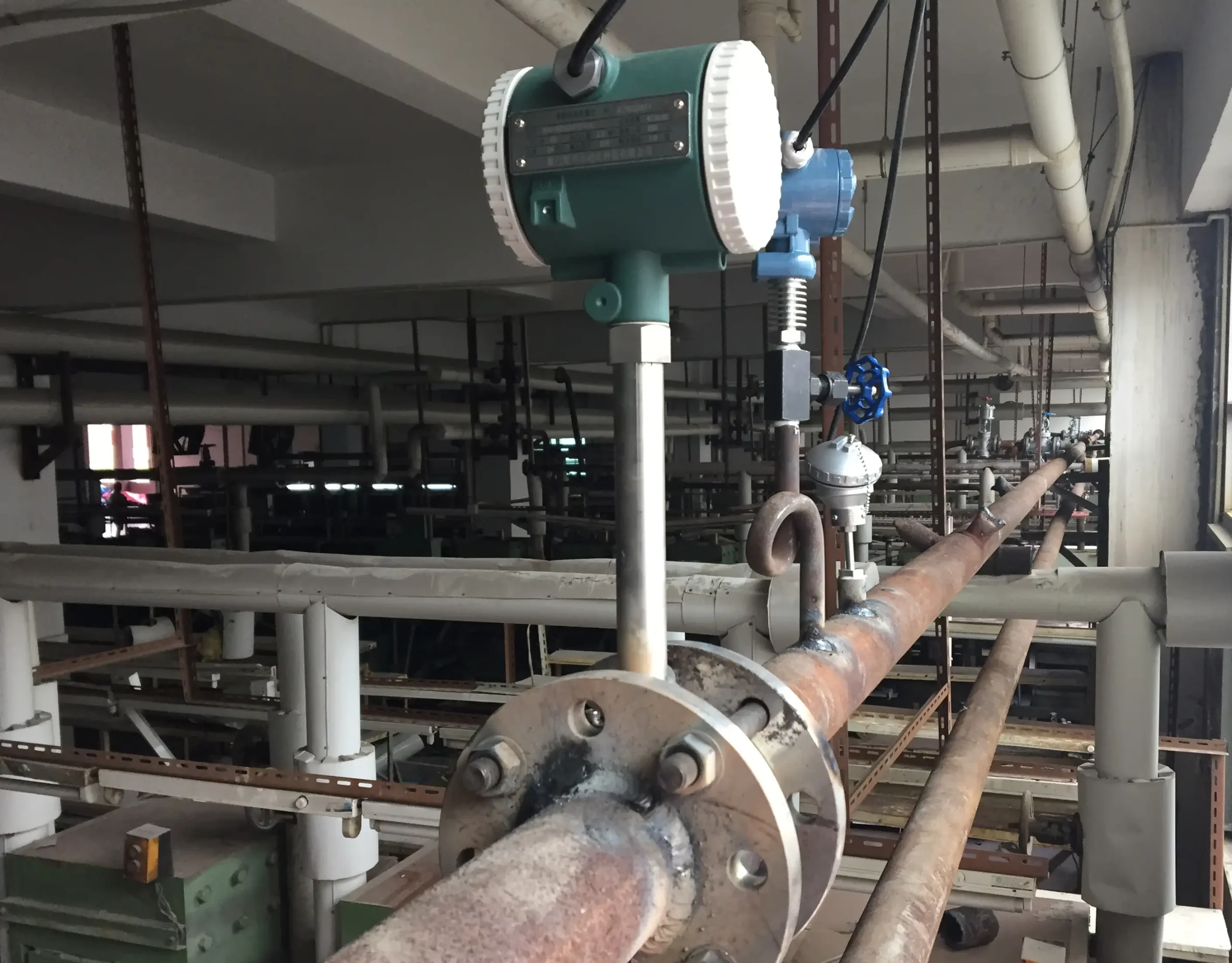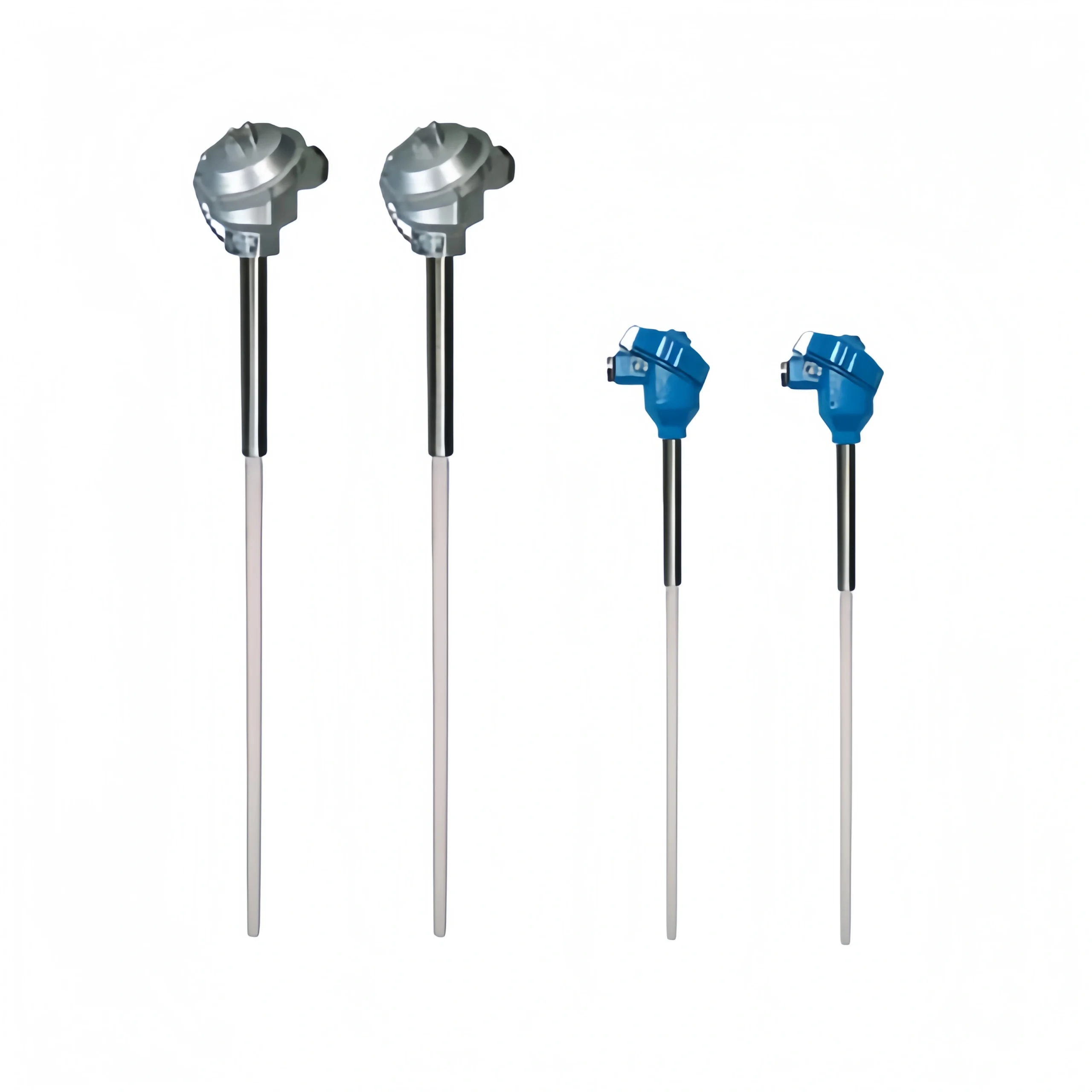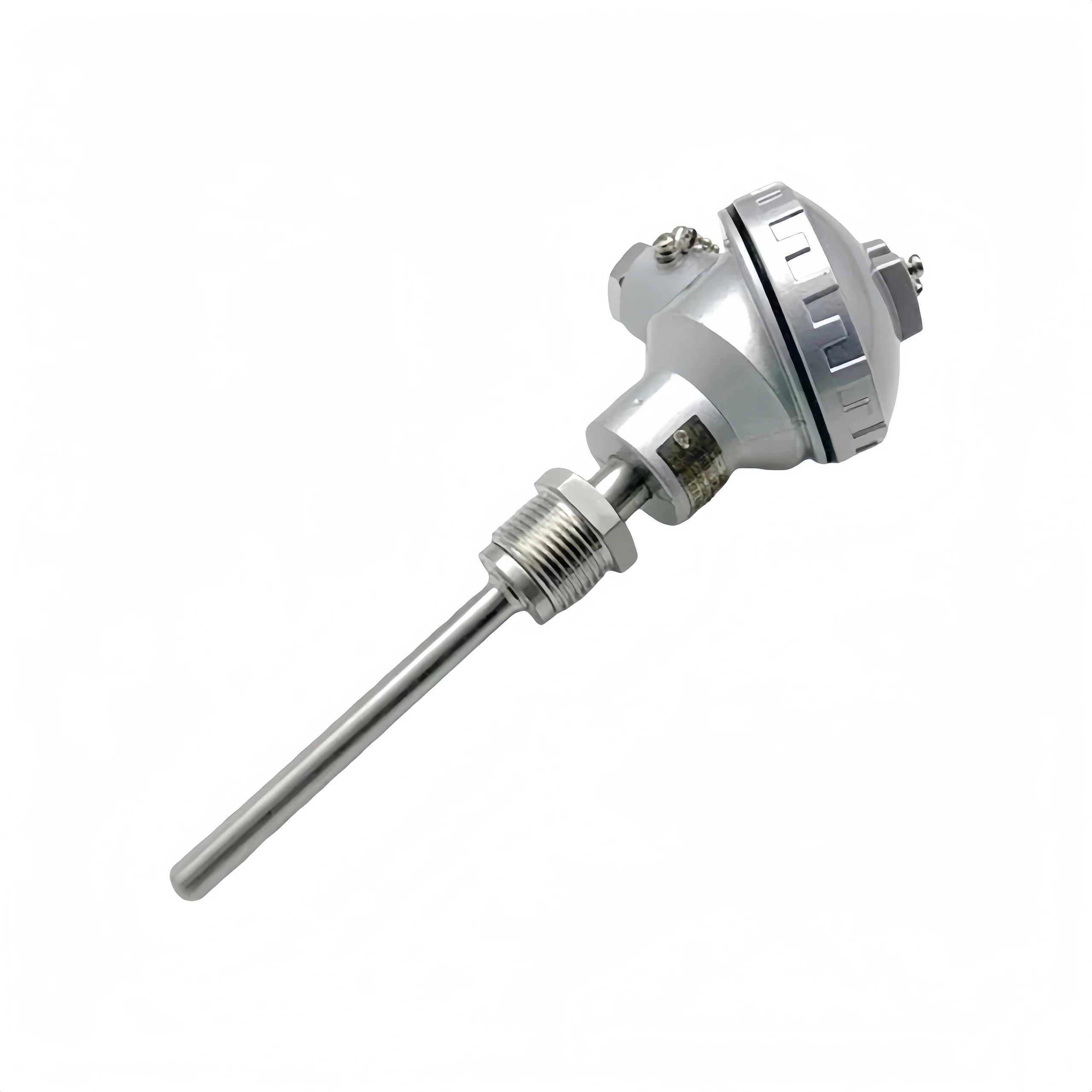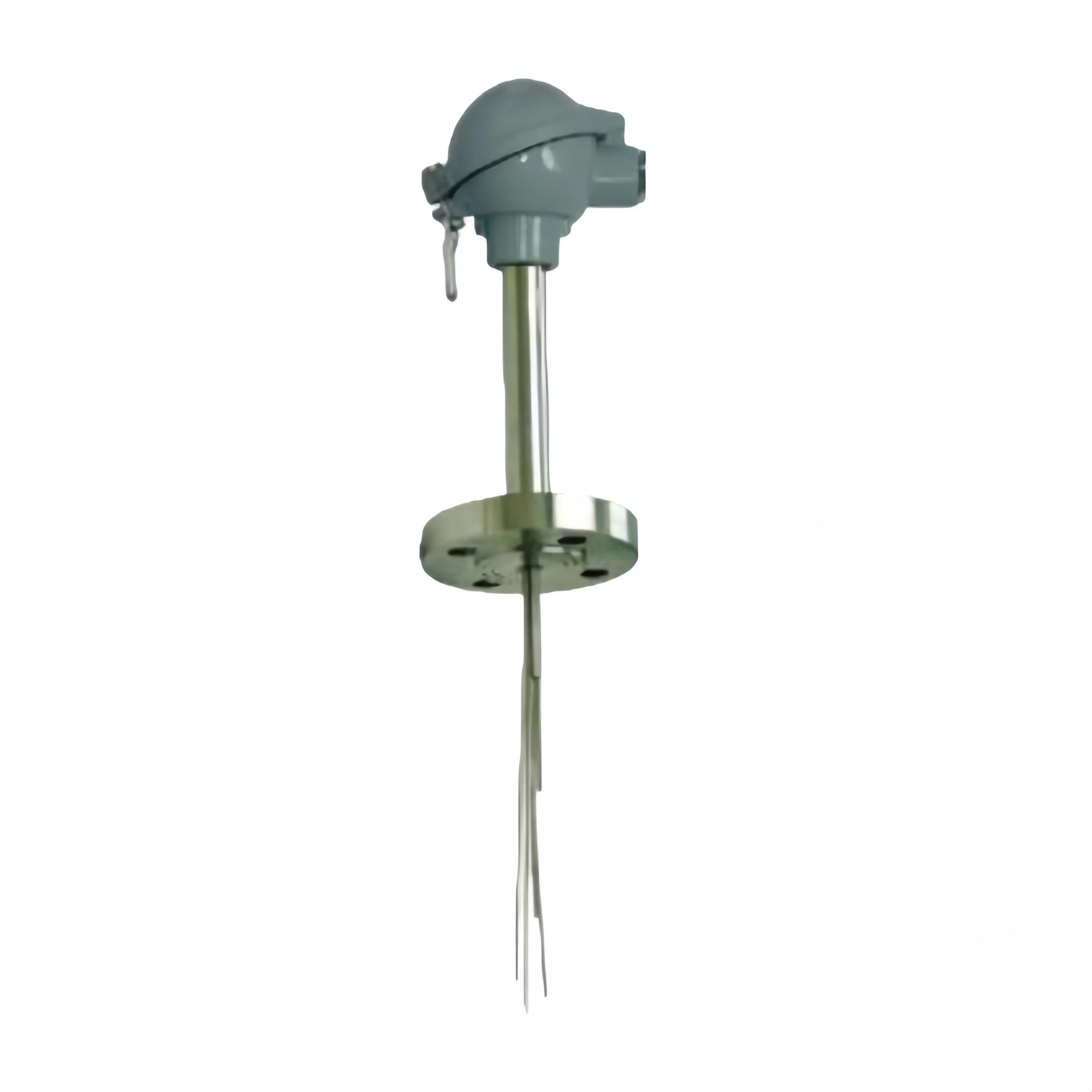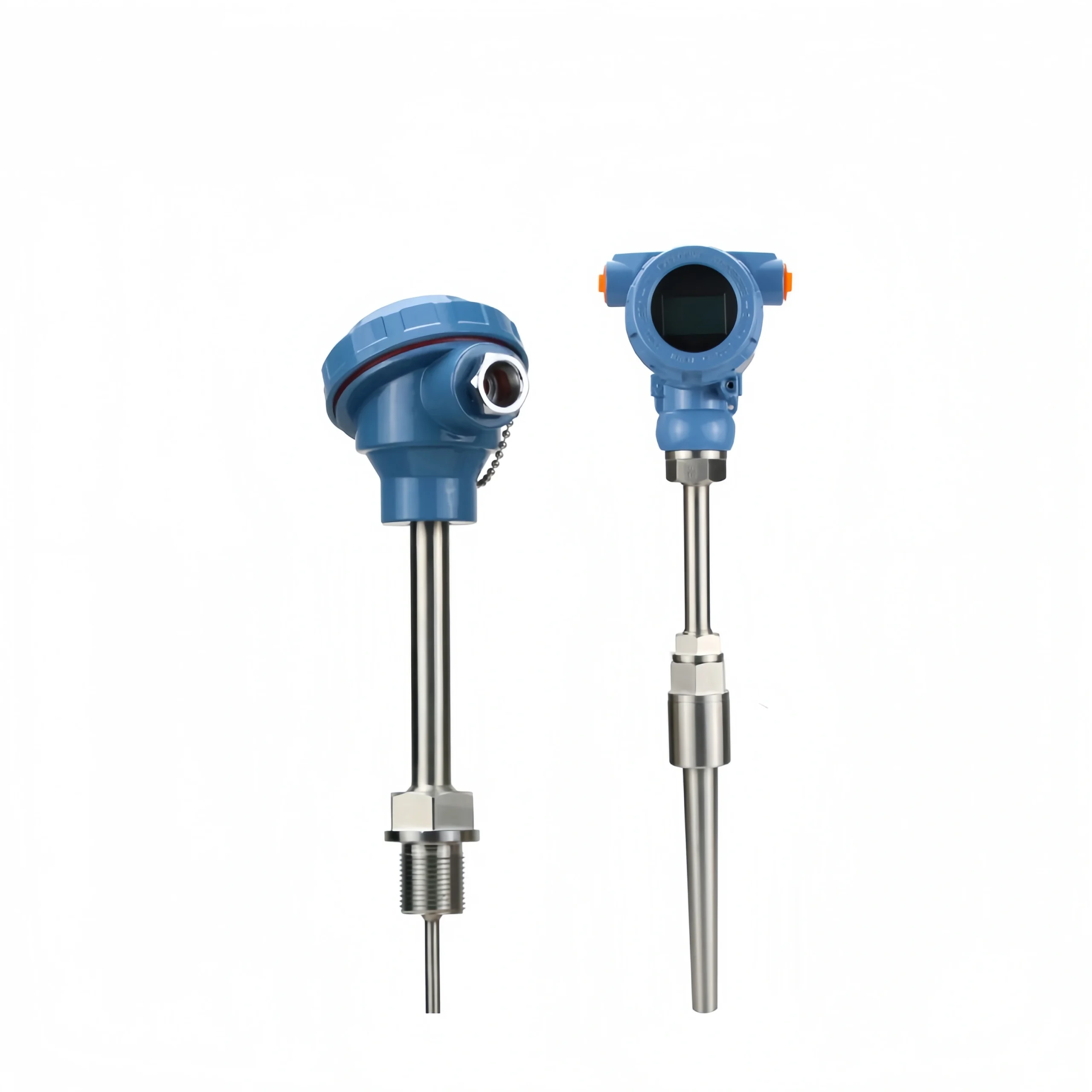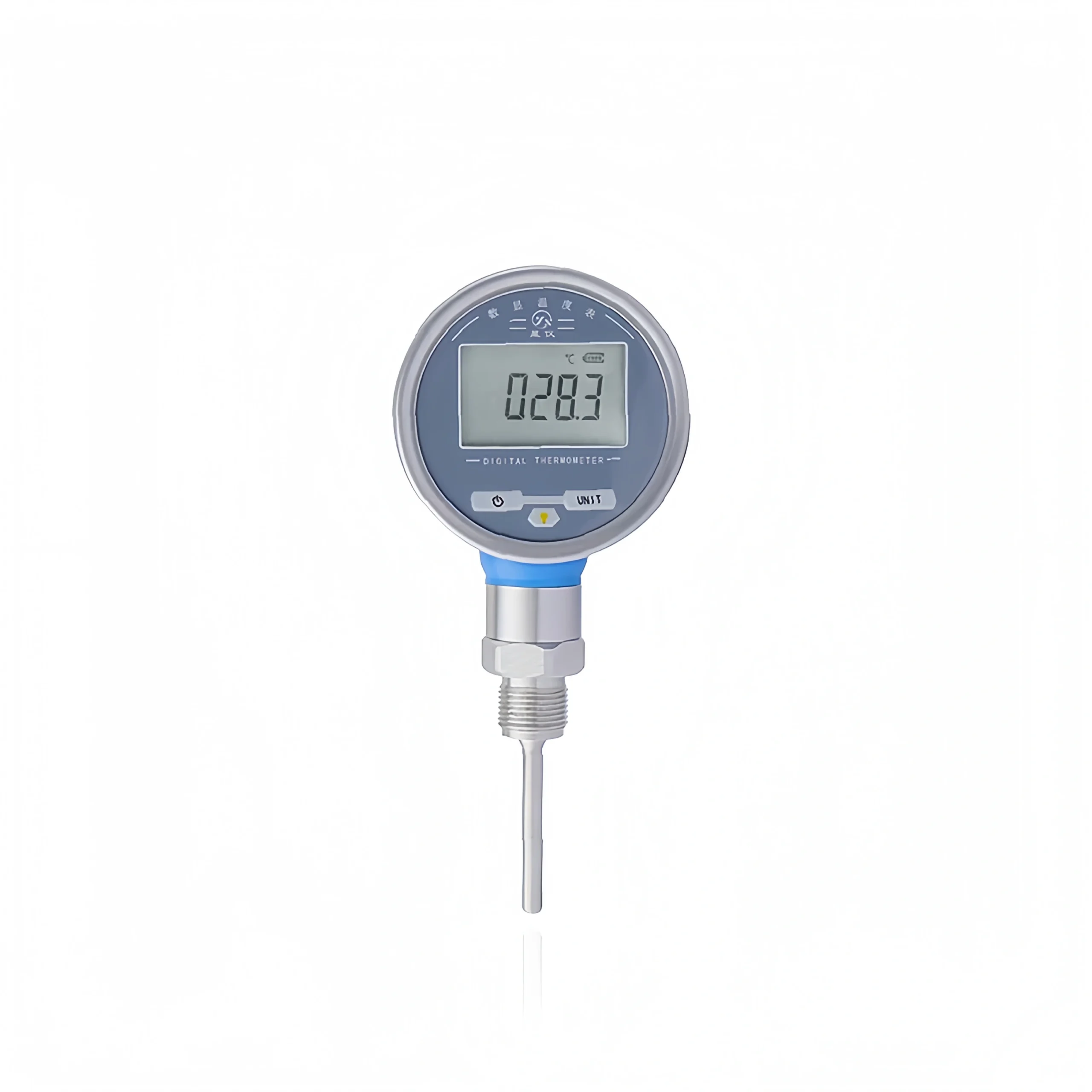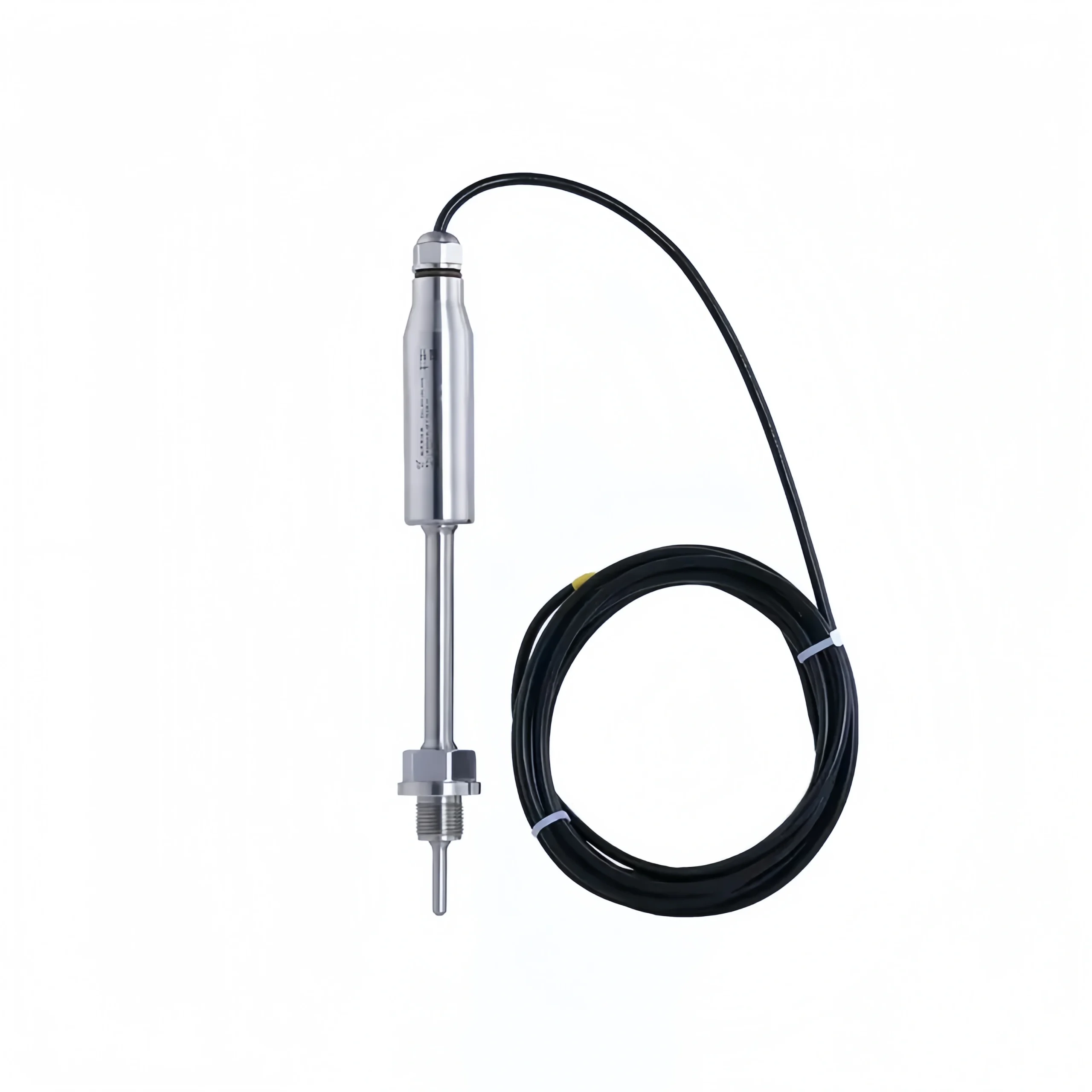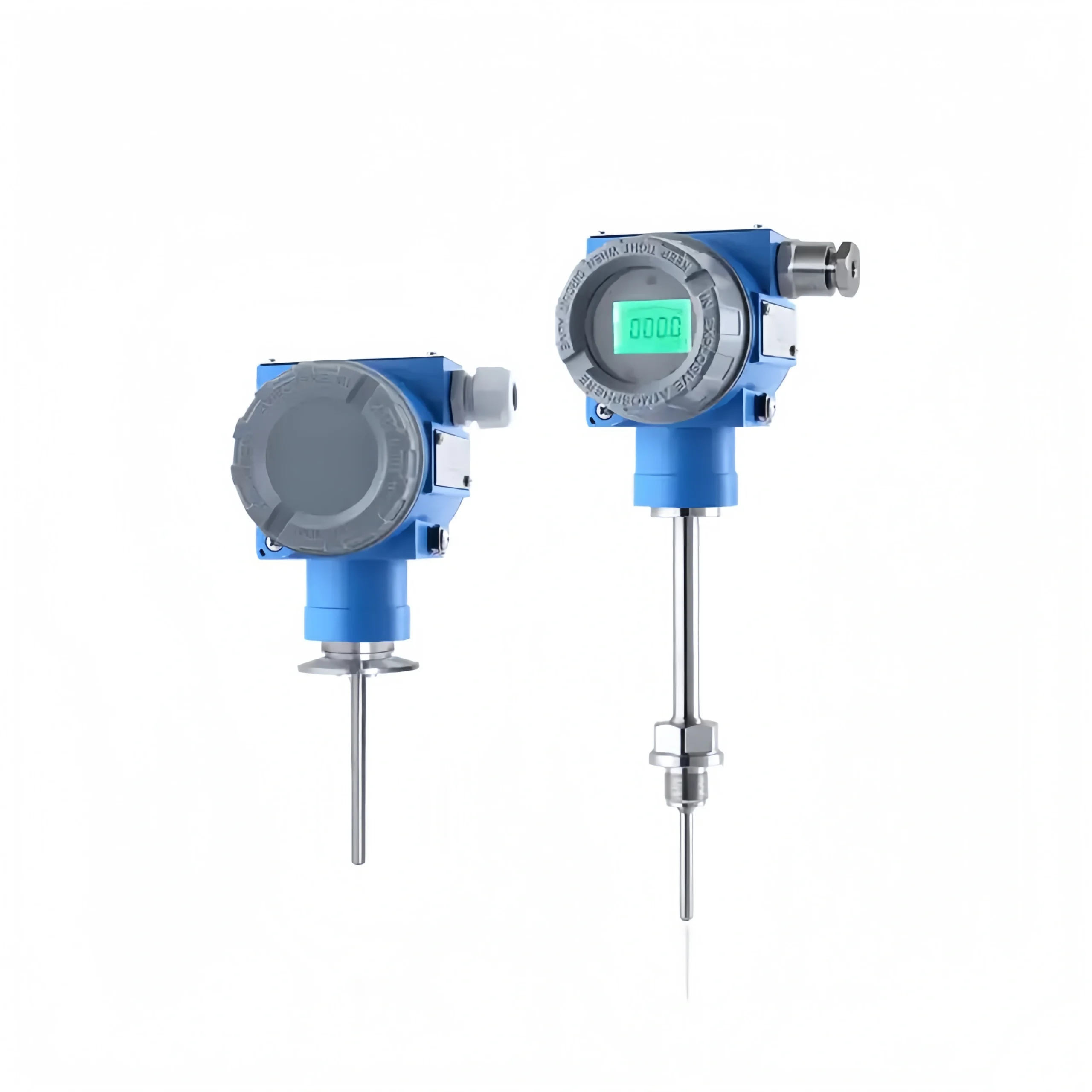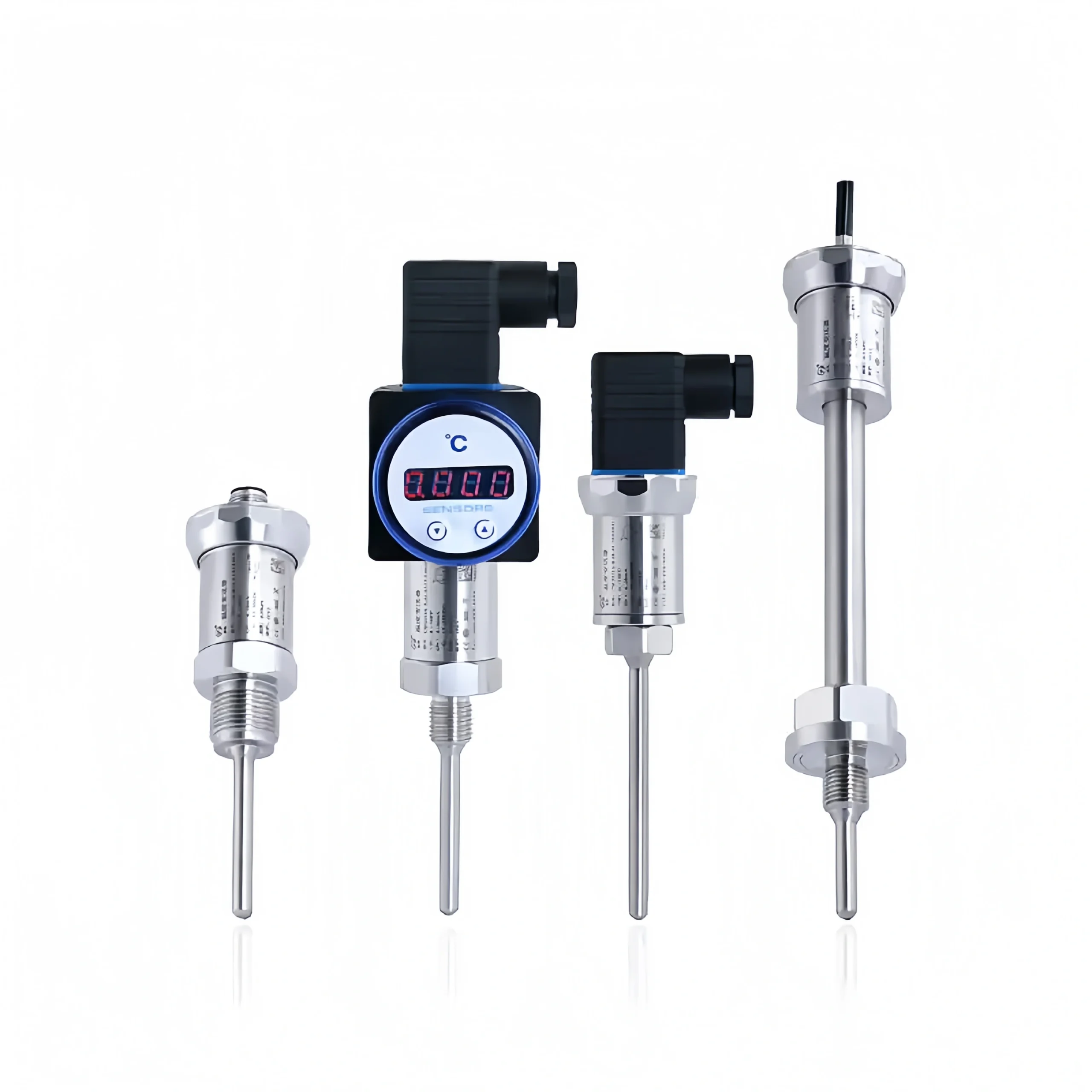
As core components for contact temperature measurement in industry, K type and T type thermocouples are the two most widely used base-metal thermocouples.
Their distinct alloy compositions give rise to marked differences in measurable temperature span, precision levels, and how well they hold up under various environmental stresses.
This article lays out the key distinctions between these two sensor types, offering a practical framework for choosing the right temperature probe based on actual working conditions.
What Is a Type K Thermocouple?
A Type K thermocouple consists of a nickel-chromium alloy as the positive electrode and a nickel-silicon alloy as the negative electrode; it is a temperature-measuring element widely used in industry.
It features a wide temperature measurement range, excellent linearity in its thermoelectric characteristics and low procurement costs. Suitable for use in oxidising atmospheres, it is frequently employed for temperature monitoring in high-temperature conditions across various types of equipment.
This thermocouple is not suitable for long-term operation in reducing atmospheres or vacuum environments. In practical applications, cold-junction compensation is usually required to ensure the accuracy of temperature measurements.
Principle of Operation
The operating principle of a Type K thermocouple is based on the Seebeck effect. Two metal conductors of different materials are connected to form a closed circuit; one end is welded together to form the measuring junction in contact with the object being measured, whilst the other end serves as the reference junction.
When there is a temperature difference between the measuring end and the reference end, a thermoelectric potential is generated in the circuit; the magnitude of this potential has a fixed relationship with the temperature difference between the two ends.
The measuring device records this thermoelectric potential and, after conversion, determines the temperature at the measured locati0n.
What is a Type T Thermocouple?
The Type T thermocouple consists of a positive electrode made of pure copper and a negative electrode made of a copper-nickel alloy; it is a commonly used low-temperature thermocouple.
This thermocouple offers the advantages of high measurement accuracy and good stability. It is suitable for use in oxidising and inert environments and performs exceptionally well in low-temperature measurements.
It is frequently used in low-temperature experiments, refrigeration equipment and for precision temperature detection within the ambient temperature range; however, as the copper positive electrode is prone to oxidation, it is not suitable for long-term use in high-temperature conditions.
Principle of Operation
The operating principle of a Type T thermocouple is based on the Seebeck effect. It consists of a closed circuit formed by two different conductors: pure copper and a copper-nickel alloy.
The welded end serves as the measuring junction, coming into contact with the medium being measured, whilst the other end acts as the reference junction. When a temperature difference arises between the measuring junction and the reference junction, a thermoelectric potential is generated within the circuit.
The value of this thermoelectric potential has a definite correspondence with the temperature difference; the signal acquisition device detects this thermoelectric potential and converts it to determine the actual temperature at the measurement point.
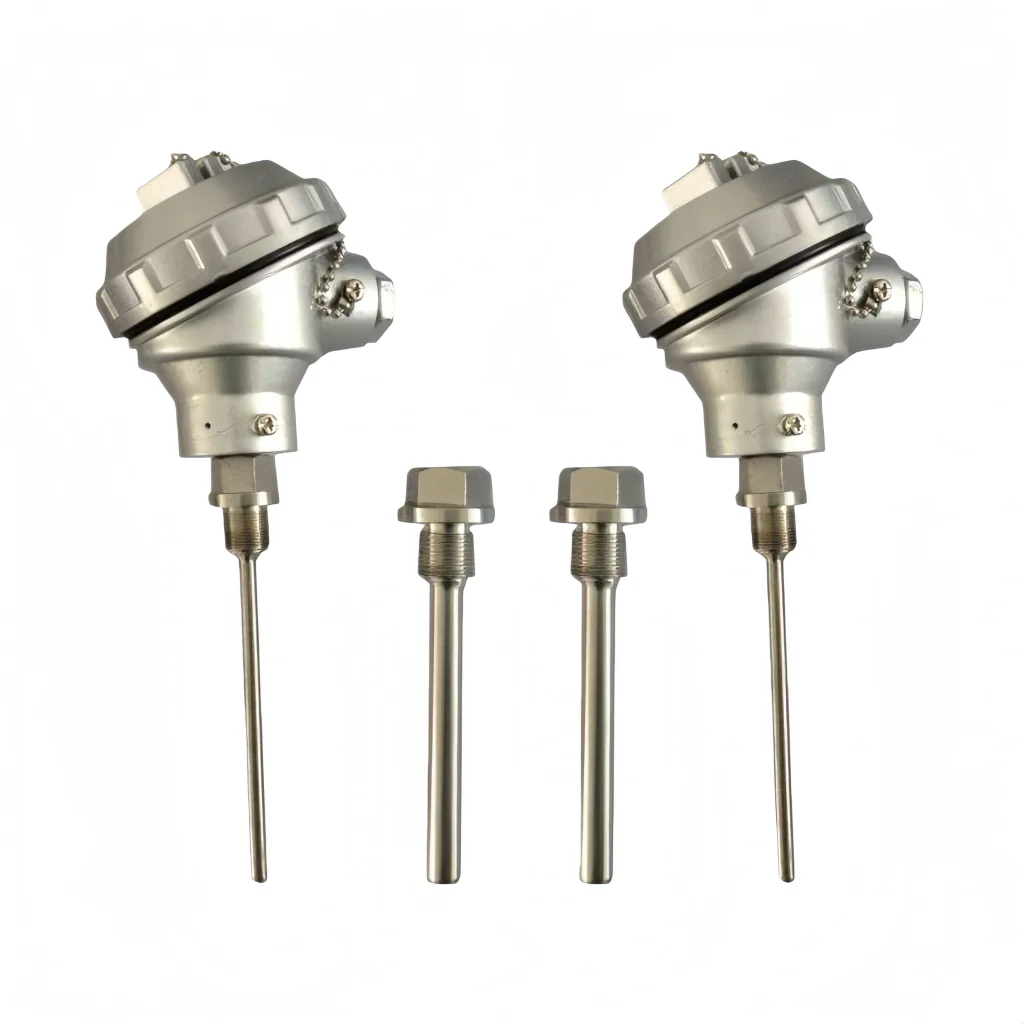
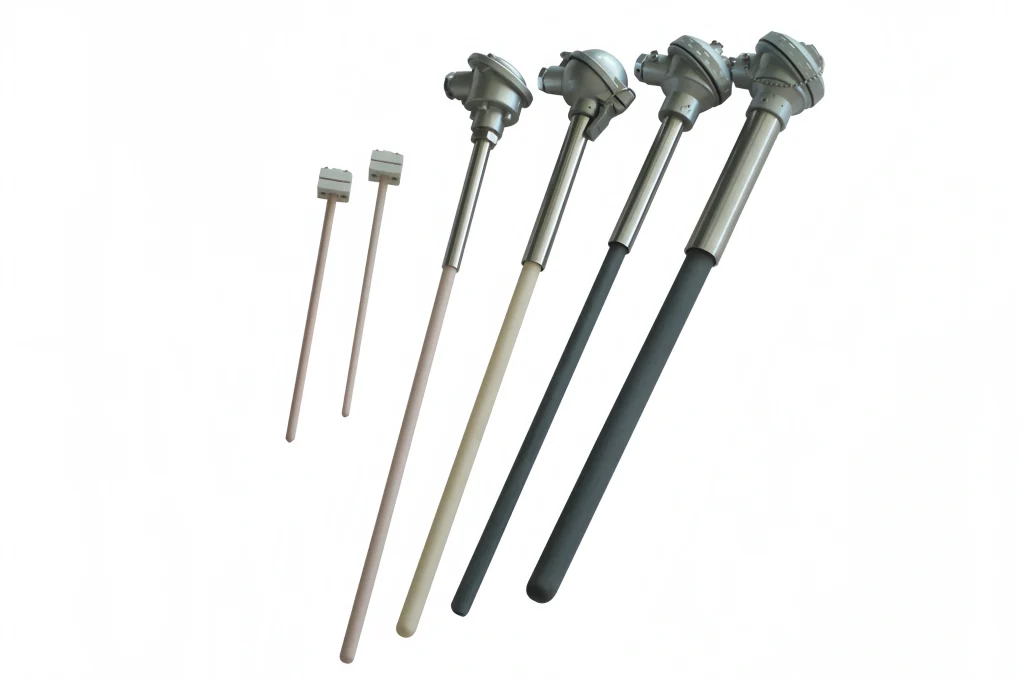
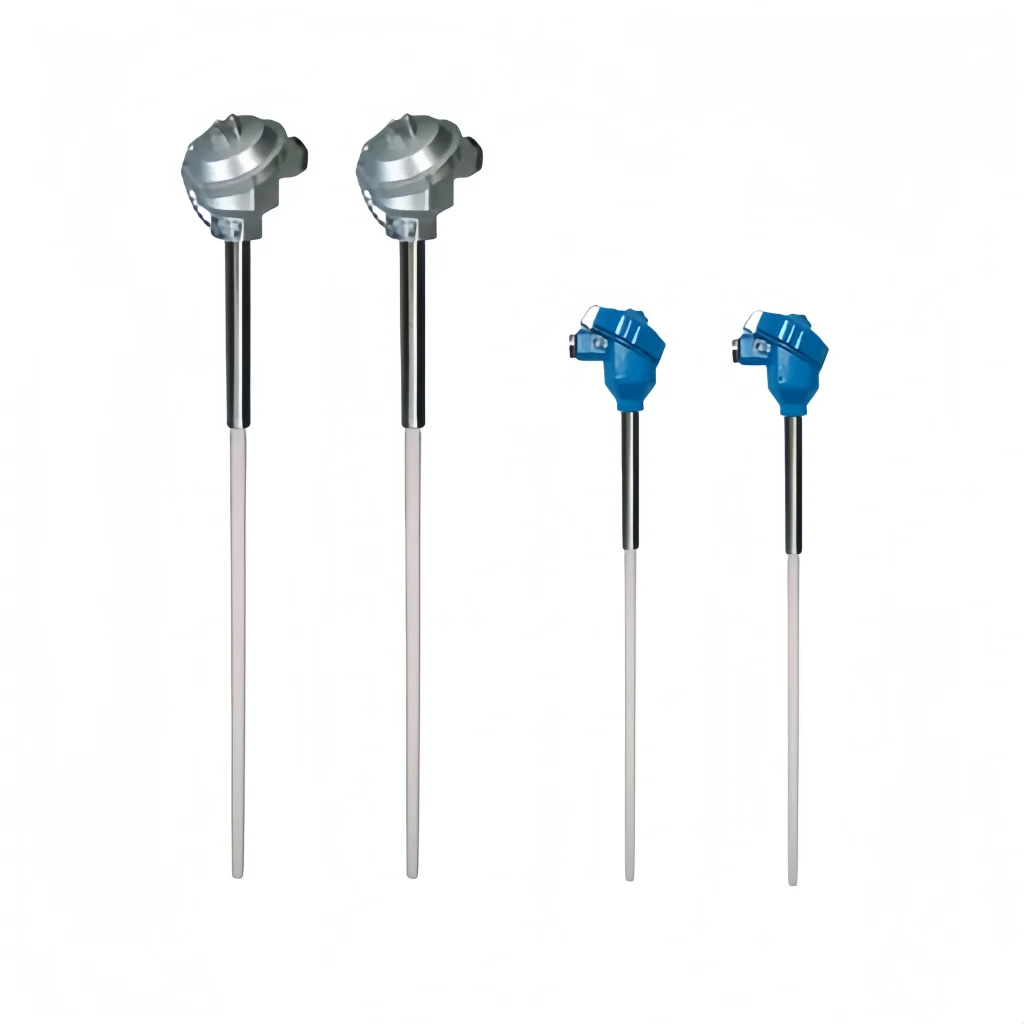
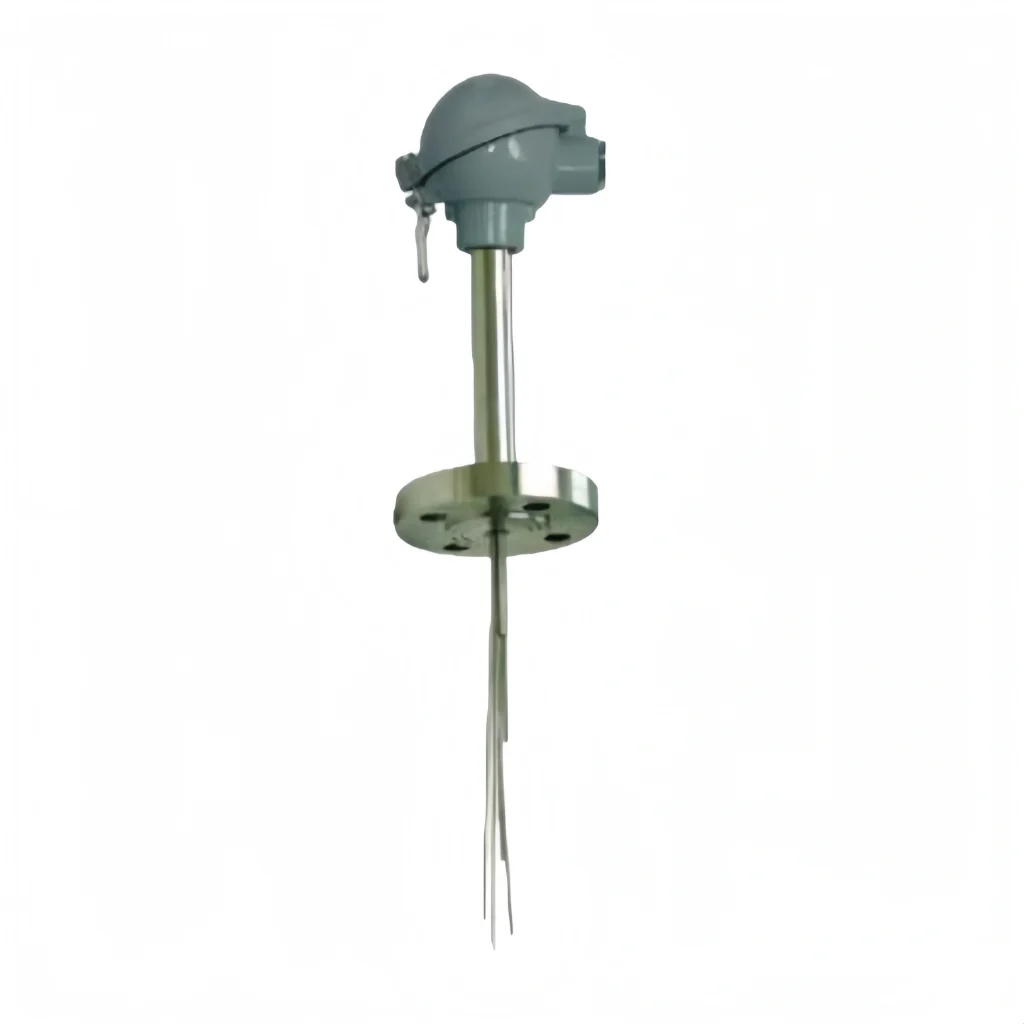
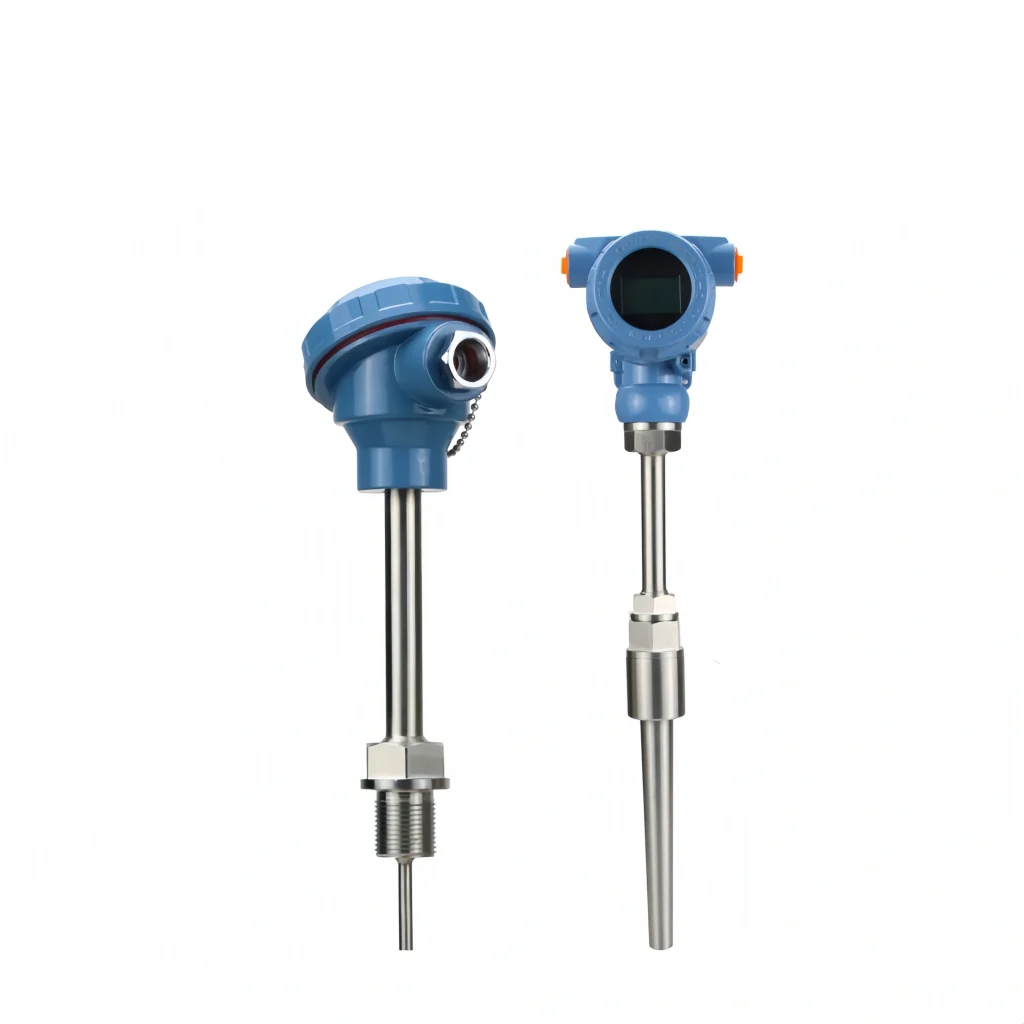
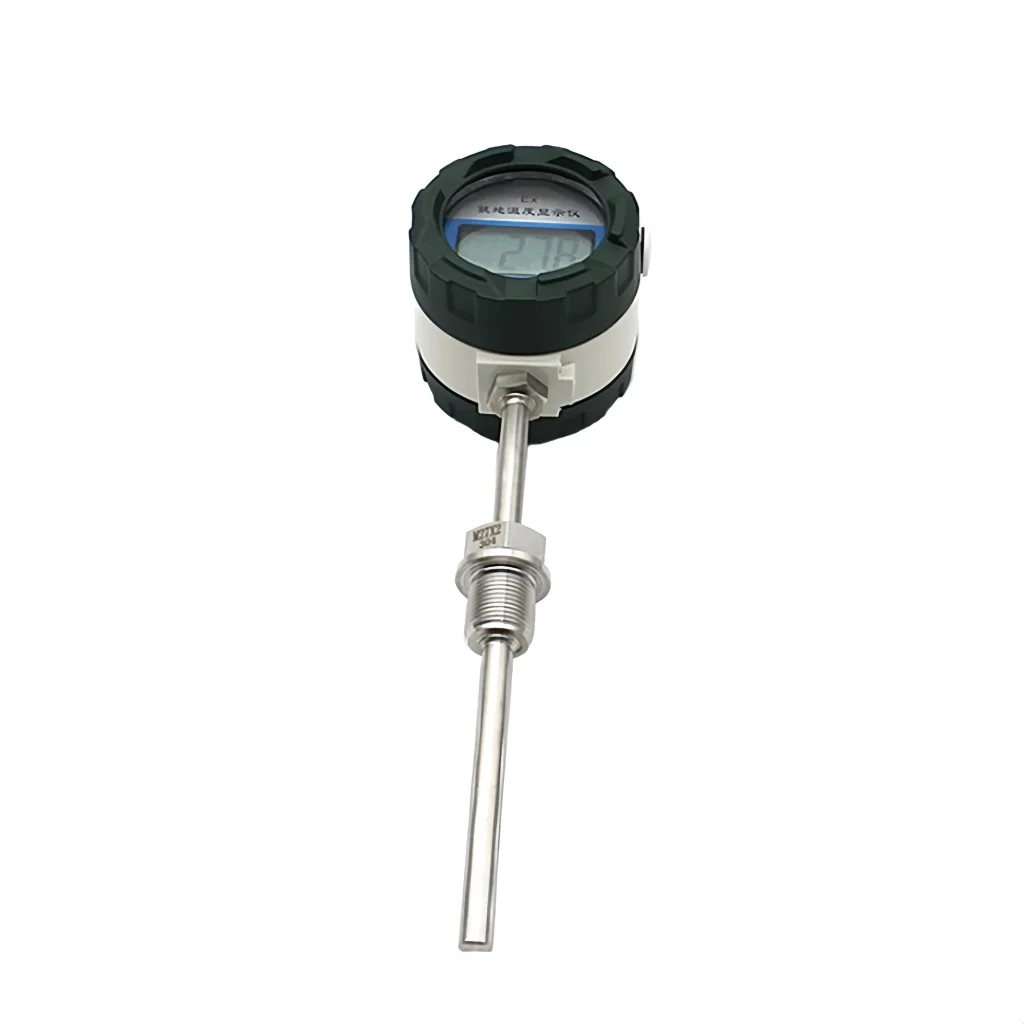
Differences between Type K and Type T Thermocouples
1. Differences in Material Composition
Type K thermocouples consist of a nickel-chromium–nickel-silicon alloy pair; the entire assembly is made of a nickel-based alloy.
This material offers high strength, good toughness, high-temperature resistance and resistance to oxidation and failure, with mechanical properties better suited to harsh industrial environments.
Type T thermocouples pair pure copper with constantan, a copper–nickel alloy. The positive leg is high-purity copper, which conducts electricity well and gives a clean, consistent thermoelectric signal.
The catch is that copper does not hold up well at elevated temperatures, and it is softer and mechanically weaker than the alloys used in Type K.
2. Differences in Temperature Measurement Range
Type K thermocouples have an extremely wide temperature measurement range, from –200 °C to 1,300 °C, with a long-term stable operating temperature of up to 1,000 °C.
They are the most commonly used high-temperature thermocouples in industry, suitable for low-temperature, ambient-temperature and high-temperature applications.
Type T thermocouples are limited to the low-temperature range, from –200 °C to 350 °C; for routine long-term use, a temperature of ≤300 °C is recommended.
Excessively high temperatures will cause rapid oxidation of the copper electrodes, drift in thermoelectric characteristics and complete failure; they are entirely unsuitable for high-temperature measurements.
3. Measurement Accuracy and Stability
The Type T thermocouple is a high-precision low-temperature thermocouple.
It exhibits excellent linearity of thermoelectric potential at low, cryogenic and ambient temperatures, with minimal temperature drift, high repeatability and extremely low error, making it the standard model for low-temperature precision temperature measurement.
Type K exhibits excellent stability at medium and high temperatures, but its accuracy at low temperatures is poor, with significantly larger errors in the sub-zero range.
Furthermore, it has an inherent non-linear inflection point around 250 °C, which introduces a fixed additional error, making it unsuitable for precision temperature measurement.
4. Oxidation Resistance and Environmental Adaptability
Type K exhibits strong resistance to oxidation and performs stably in oxidising atmospheres and high-temperature air environments; it is resistant to thermal ageing and has a long service life, making it suitable for industrial high-temperature furnaces, baking and heating equipment.
Its disadvantage is that it is not resistant to strongly reducing or sulphurised atmospheres.
Type T is only suitable for ambient, low-temperature and clean, dry environments; it is highly susceptible to oxidation and damage at temperatures exceeding 350 °C.
It has relatively poor corrosion resistance and cannot be used in harsh atmospheres such as high temperatures, oil fumes, sulphur-containing environments or industrial flue gases.
5. Magnetisation Resistance and Interference Immunity
Type K nickel-based alloys can be magnetised. Place them near electric motors, variable-frequency drives, or anything kicking out a strong magnetic field and you risk magnetisation errors creeping into your temperature readings.
Type T copper/constantan is non-magnetic through and through. It plays nicer with electromagnetic noise and stays steadier in low-temperature electrical control setups.
6. Linearity Performance
The T-type stays straight and true across its whole range. The curve is smooth, you do not need fancy compensation, and the numbers you get are easy to read and trust.
The K-type is decent but not perfect. It drifts off the straight line at the high and low ends, so in practice you usually need your instrument to run some correction algorithms.
7. Applications and Cost
Type K: Cheap, adaptable, hard to beat on value. It is the go-to for medium-to-high temperature work in industry—boilers, heat treatment equipment, kilns, drying ovens, you name it.
Type T: Costs a bit more but gives you tighter accuracy. It is built for precision low-temperature jobs—labs, cold chains, refrigeration units, cryogenic piping, environmental chambers, and keeping tabs on sensitive equipment.
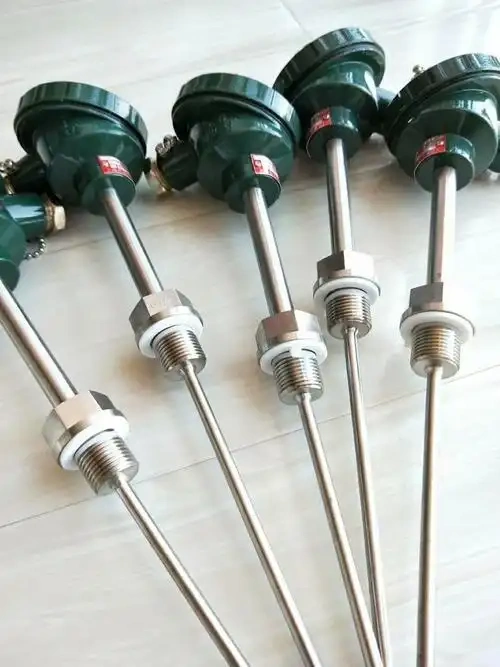
Advantages of Type K Thermocouples
1. Covers a wide span from -200°C up to 1300°C, with a stable long-term ceiling around 1000°C. That means it handles everything from deep cold right through to serious heat, so you are rarely caught out by the temperature range.
2. The materials are plentiful and the manufacturing is well sorted, so you pay less for the same spec and get solid bang for your buck. Spare parts are everywhere because it is the workhorse of industrial thermocouples.
3. The nickel-chromium–nickel-silicon alloy is tough and springy enough to take some vibration and bending. You can run it along pipelines, strap it to furnace bodies, or fit it on moving gear without it giving up.
4. Holds up well against oxidation in normal air. In hot, dry conditions it does not fall apart from rusting, which is why you see it all the time in ovens, heat treatment furnaces, and kilns.
5. The voltage signal it puts out sits in a comfortable middle ground, and pretty much every temperature controller or data logger on the market already knows how to read Type K. No headaches with compatibility.
6. Comes in whatever shape you need—bare wire, armoured cable, or ready-made probes. Pick the form that fits your space and how fast you need it to react.
7. Can ride out short bursts above its normal limit and shrug off sudden temperature swings. That makes it a good fit if your process keeps heating and cooling in cycles.
Advantages of Type T Thermocouples
1. Shines at low temperatures. From -200°C up to 0°C the signal stays steady and the errors stay small, which is why labs and refrigeration setups reach for a Type T when they need precision in the cold.
2. The voltage output tracks temperature in a nice straight line across its useful range. There is little drift and you get the same reading twice if you check the same spot again. That repeatability matters when you are after tight tolerance measurements.
3. The metals are non-magnetic, so plant them next to motors, drives, or anything throwing off magnetic noise and they will not pick up stray magnetisation that throws your numbers off.
4. They resist oxidation well at room temperature and below, and the material does not degrade easily. You can leave them running for long stretches on ambient or cryogenic lines and in cold chain gear without them falling apart.
5. The signal output is punchy for its size. Even tiny temperature shifts give you a clear enough voltage bump that your instruments catch the wobble.
6. The stuff bends and draws well, so you can spin it into very fine wire. That means micro-probes that react fast and fit into cramped spots or where you only have a sliver of surface to touch.
7. The calibration holds steady over time and the upkeep is straightforward. That is why metrology labs and research benches use it so heavily when they need readings they can trust.
FAQ
Types of Resistance Thermometers
1. Type S thermocouple (platinum-rhodium 10–platinum):A precious metal with high-temperature resistance and good stability, measuring temperatures from 0 to 1600°C. Suitable for high-temperature oxidising environments but not for reducing atmospheres.
2. Type R thermocouple (platinum-rhodium 10–platinum):This is another precious metal thermocouple, and it actually offers slightly better accuracy than the Type S. It handles temperatures from 0 up to 1600°C, so you’ll often find it in labs or industrial settings where precision at high temperatures really matters.
3. Type B thermocouple (platinum-rhodium 30–platinum-rhodium 6): Another precious metal option, but this one can take the heat—literally—up to about 1800°C. It stays pretty stable when things get really hot, though fair warning: it tends to be a bit less reliable around room temperature.
4. Type K thermocouple (nickel-chromium–nickel-silicon): This is probably the most widely used base metal thermocouple out there, and for good reason. It doesn’t cost a fortune, holds up well against oxidation, and covers a solid range from –200 to 1300°C. For most everyday high-temperature jobs, this one gets the job done.
5. Type N thermocouple:Also a base metal type, but it edges out the Type K when it comes to staying stable at higher temperatures and resisting aging over time. Same general range as the K type: –200 to 1300°C.
6. Type E thermocouple (nickel-chromium–copper-nickel): If you’re working with lower temperatures, this one stands out. It’s got high sensitivity and performs well in the cold, with a range of –200 to 900°C. Good pick for medium- or low-temperature work.
7. Type J thermocouple (iron–copper-nickel): An economical, low-cost alloy; measures temperatures from –210 to 750 °C; not suitable for high-temperature oxidising environments.
8. Type T thermocouple (copper–copper-nickel): Excellent accuracy at low temperatures; measures temperatures from –270 to 400 °C; commonly used for low- and ultra-low-temperature measurements.
Differences between Pt100 and Type K thermocouples
1. Different measurement principles:Pt100 works as a resistance thermometer—it picks up temperature changes by tracking how the electrical resistance of platinum shifts. Type K thermocouples, on the other hand, rely on the thermoelectric voltage produced when two dissimilar metals are joined, so they measure temperature through that generated potential.
2. Different temperature measurement ranges:Pt100 typically covers –200 to 600 °C. Type K thermocouples stretch a lot further, from –200 up to 1300 °C, which makes them the go-to choice when you’re dealing with serious heat.
3. Different signal types: Pt100 gives you a resistance signal, which is pretty straightforward. Type K outputs a small millivolt signal, and honestly, that can be a pain because it’s easily thrown off by electrical noise along the cable run.
4. Differences in measurement accuracy: Pt100 tends to win on accuracy in the low-to-medium temperature band. But once things get really hot, Pt100 starts to struggle, and that’s where Type K really shines.
5. Different cable requirements: Pt100 can run on standard three-wire or four-wire setups—nothing fancy needed. Type K thermocouples, though, need dedicated compensation cables matched to the thermocouple type, or you’ll get measurement errors.
6. Cold-junction requirements: With thermocouples, you always have to account for cold-junction compensation; it’s just part of the deal. Pt100 doesn’t have that headache—it works without any cold-junction correction.
7. Applicable operating conditions:You’ll mostly find Pt100 in HVAC systems, food processing lines, and chemical plants where temperatures stay in the low-to-moderate range. Type K is the workhorse for heavy industrial high-temperature jobs—think heat treatment furnaces, kilns, and similar setups.
Differences between Resistance Thermometers and Thermocouples
Resistance thermometers pick up temperature by tracking how the electrical resistance of their sensing element changes as things heat up or cool down. They work best in the low-to-medium range, roughly -200 to 600 °C, and put out a resistance signal that’s easy to work with.
Accuracy is solid at lower temperatures, and you don’t have to mess around with cold-junction compensation. Wiring is straightforward—standard cables do the job. The downside is that the sensing element tends to be on the larger side, and they don’t hold up quite as well against heavy vibration.
Thermocouples work on a completely different principle: the thermoelectric effect. They can handle a much wider span, from -200 all the way up to 1800 °C, so they’re your pick when you need to measure really high temperatures.
The output is a small millivolt signal, which means you need cold-junction compensation to keep readings accurate, and you have to run dedicated compensation leads rather than ordinary cable.
On the plus side, the probes are small, respond quickly to temperature changes, and take vibration and shock much better than resistance thermometers.
In practice, resistance temperature detectors are the usual choice for medium- and low-temperature jobs—think HVAC systems, food processing, and chemical plants. Thermocouples, meanwhile, are the standard go-to for high-temperature environments like kilns, furnaces, and heat treatment operations.
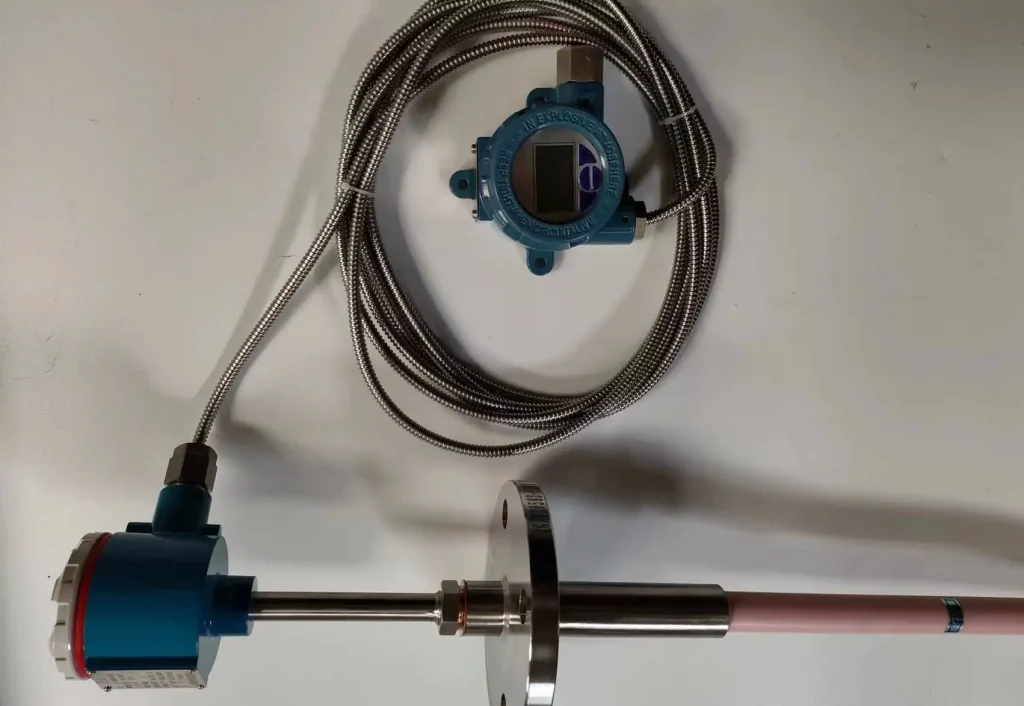
We can help you find the right models for your specific operating conditions and put together a complete temperature measurement package—whether that’s armoured probes, pre-assembled sensing elements, or the matching compensation cables you need.
Thanks to our established supply chain, we can turn around standard products quickly. But if you need something custom—different dimensions, a modified mounting structure, whatever it might be—we can handle that too. We’ve worked with everything from precision lab testing setups and cold chain monitoring to heat treatment furnaces and pipeline systems.
If you need a hand with planning your temperature measurement setup, testing out samples, or placing a bulk order, just reach out. We’ll get you the technical support you need and make sure the supply stays reliable.