Steam sits at the heart of thermal energy transfer across industry. It runs hot, runs under pressure, compresses easily, and shifts phase without much prompting.
Getting the flow measurement right matters for keeping energy costs in check, holding process parameters steady, and settling trade accounts fairly. Because operating conditions move around and the medium itself keeps changing state, measuring steam flow accurately is technically demanding work. This article analyzes and discusses technologies related to steam flow meters.
Steam
Steam is a gaseous fluid formed by the vaporization of liquid water through heating. With excellent thermal conductivity, stable heat transfer performance, and ease of transport, it has become the dominant heat transfer medium in industries such as chemicals, power generation, metallurgy, and heating.
It finds wide application in heat exchange, equipment drive, process heating, and energy metering and settlement, playing a key role in industrial production systems.
Based on physical form and thermodynamic state, steam falls mainly into three categories. The unique properties of each type have a major impact on the accuracy of flow measurement.
Saturated Steam
Formed when water vaporizes upon reaching its boiling point at a given pressure, at which point the water and vapor phases are in dynamic equilibrium.
This type of steam offers outstanding heat transfer efficiency and high thermal energy utilization, but is highly susceptible to condensation during actual transport due to ambient temperature fluctuations.
The medium’s state changes synchronously with pressure and temperature, and humidity fluctuations can interfere with measurement accuracy; it is a relatively common medium type in on-site metering.
Superheated Steam
This is produced by further heating saturated steam, with the temperature far exceeding the critical temperature corresponding to the same pressure.
The medium is pure overall, containing no liquid water droplets, and its fluid state is uniform and stable. It exhibits stronger compressibility; even slight fluctuations in pressure or temperature alter the medium’s density parameters, thereby significantly affecting flow measurement results.
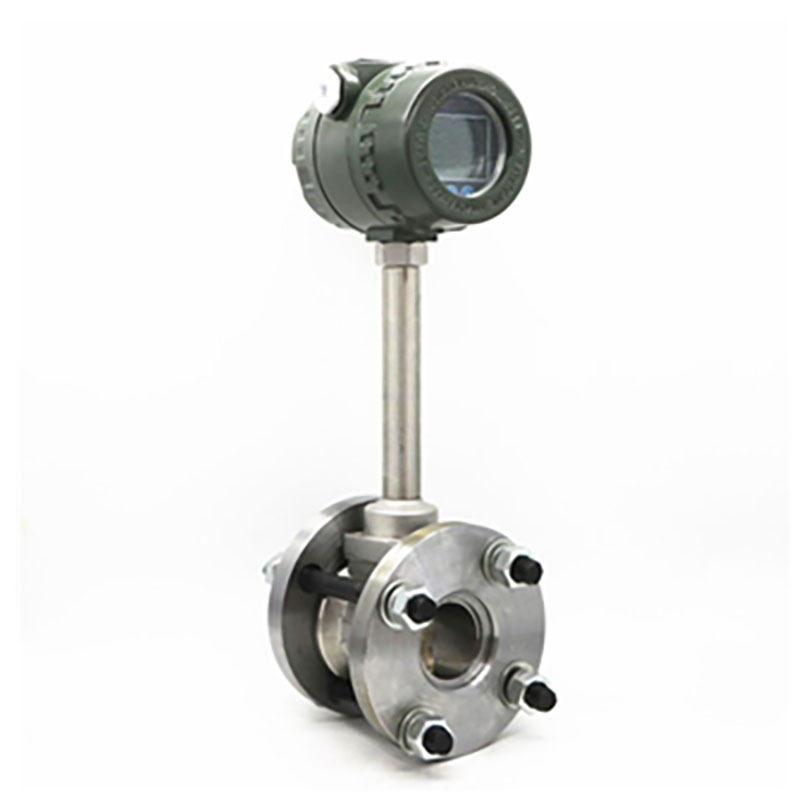
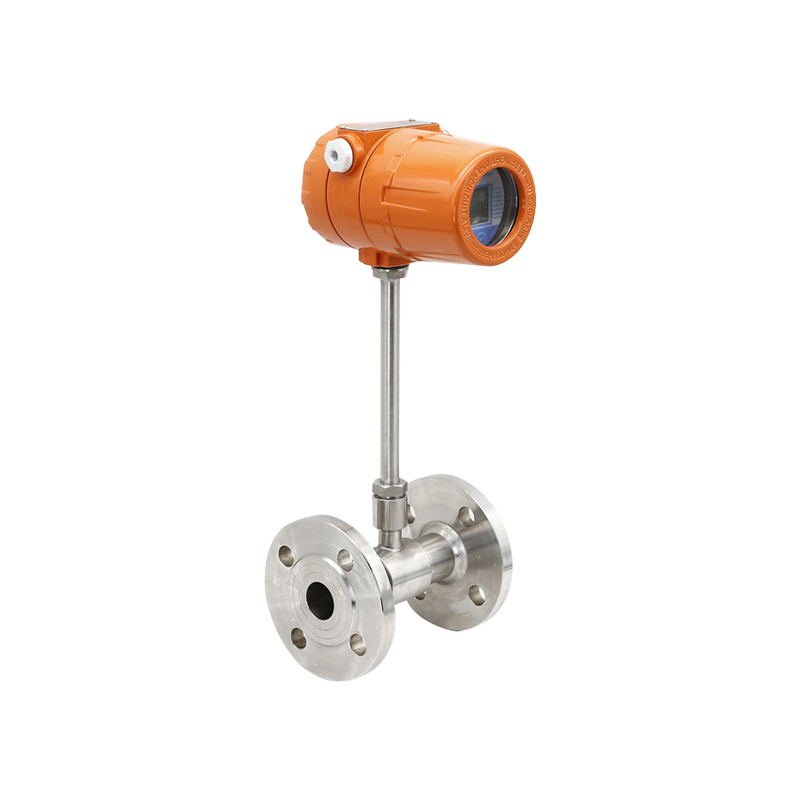
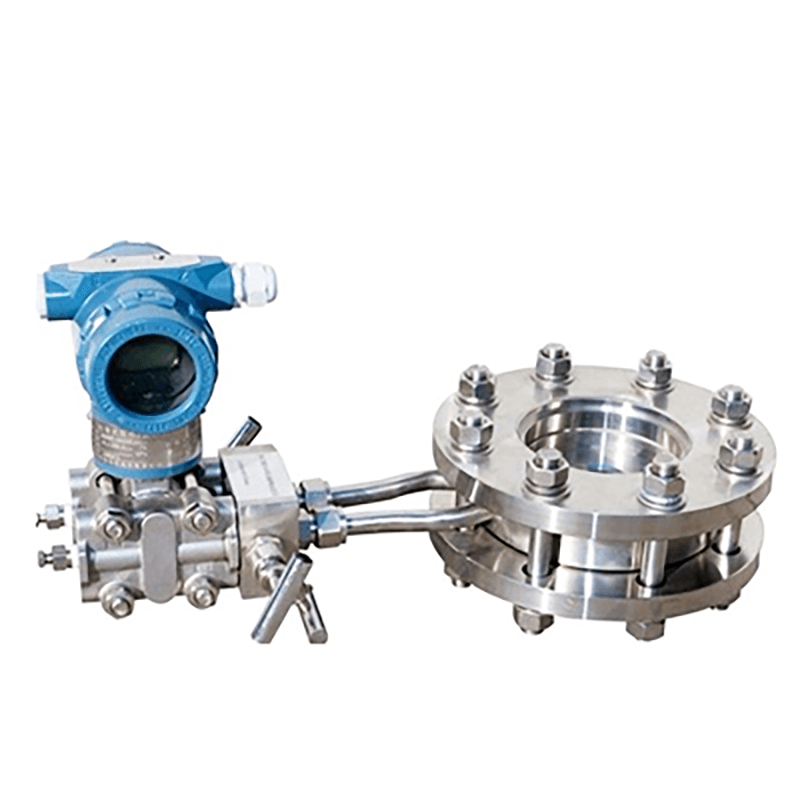
Steam Flow Meter
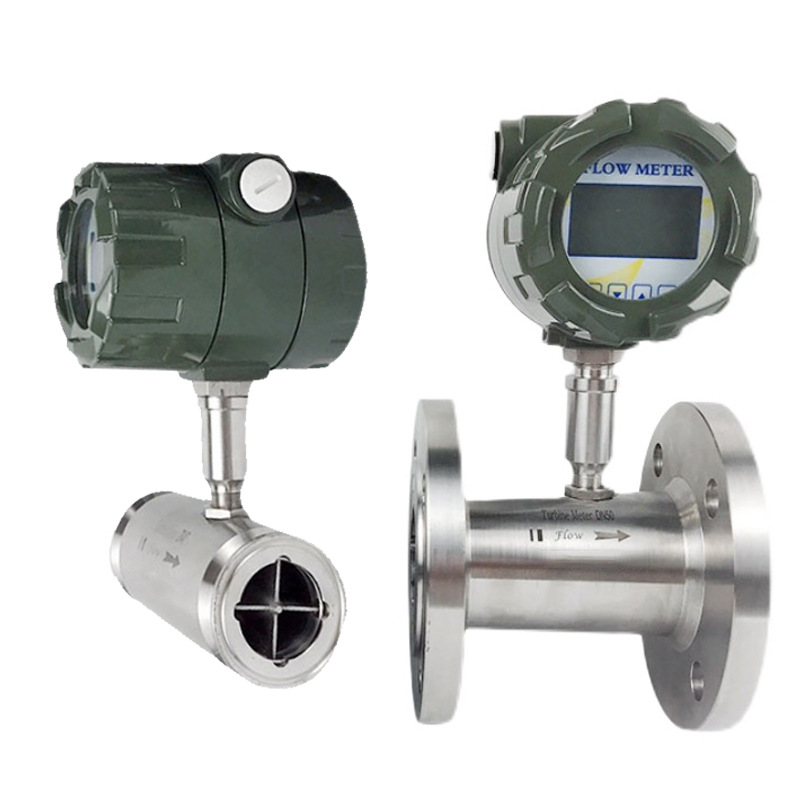
Turbine Flow Meter
Principle of Operation
When steam flows through the pipe, it strikes the precision turbine impeller inside the pipe, using the fluid’s kinetic energy to drive the impeller to rotate at a constant speed. The impeller spins faster or slower in direct proportion to how fast the fluid is moving and how much of it is passing through.
The sensor keeps picking up the electrical pulse signals produced by each rotation. A secondary instrument converts and crunches these pulses, factors in the current operating conditions, and then puts out the actual instantaneous and totalized steam flow readings.
Advantages
1. Measurement accuracy is high, repeatability is good, and error is small, so it works well for steam metering where precision matters.
2. Response is quick, it can catch flow changes as they happen, and dynamic performance is solid.
3. The structure is compact and the unit is small, installation is straightforward, pressure drop is fairly low, and energy efficiency is decent.
4. It puts out a digital pulse signal that resists interference well, so remote transmission and hooking into automated metering systems are fairly easy.
Disadvantages
1. The medium has to be very clean; if the steam carries condensate or contaminants, the impeller can wear down or the turbine can stall, and accuracy takes a serious hit.
2. Temperature and pressure tolerance are limited, so it is not a fit for ultra-high-temperature or ultra-high-pressure industrial steam.
3. Performance at low flow is weak; there is a minimum flow cutoff, so low-flow steam simply cannot be measured accurately.
4. It is a mechanical rotating device, parts wear and age over time, service life is constrained, and regular maintenance and calibration are necessary.
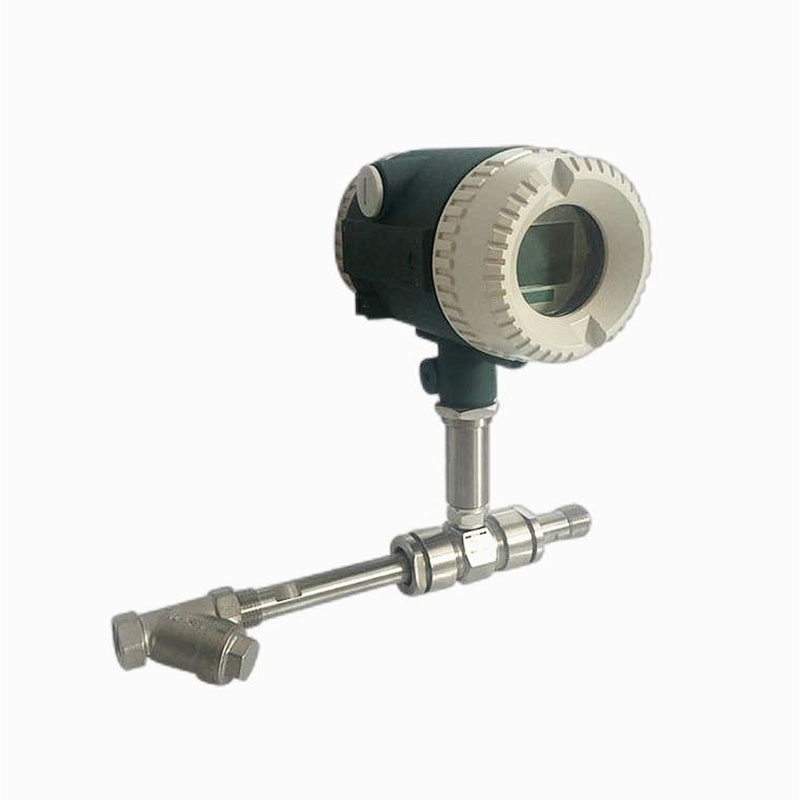
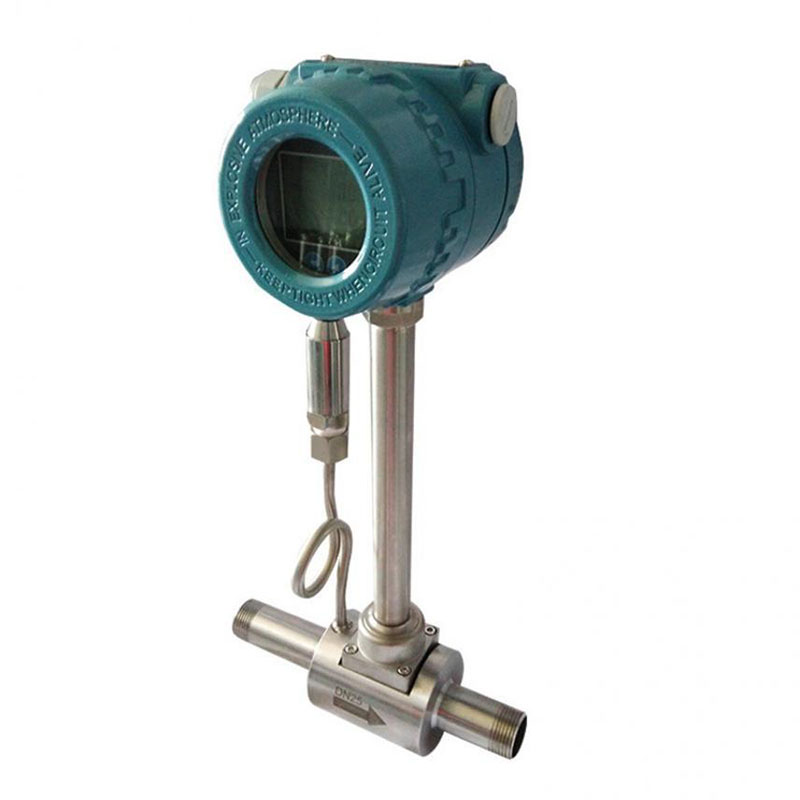
Vortex Flow Meter
Working Principle
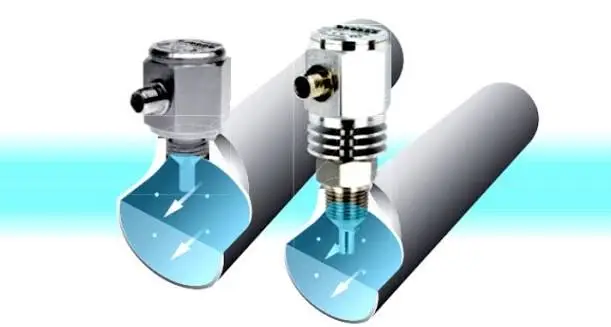
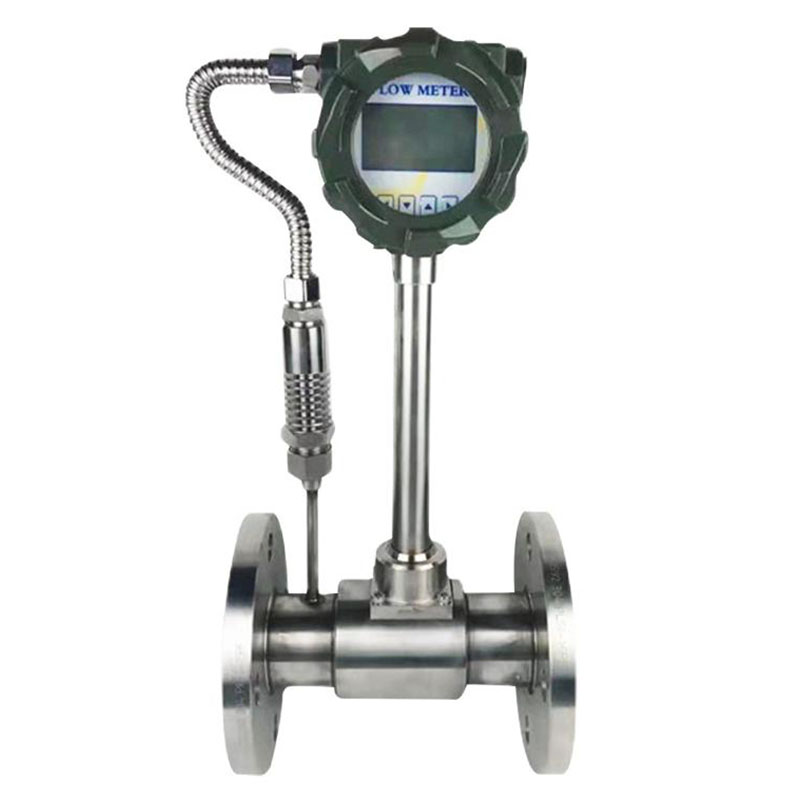
Based on the Karman vortex street principle, a triangular vortex generator is fixed inside the pipeline. As the steam flow passes through the generator, a regular series of vortices is alternately generated on both sides.
The vortex shedding frequency is linearly proportional to the steam velocity and volumetric flow rate. The probe detects the vortex frequency signal, which is then processed and converted by the instrument. Combined with temperature and pressure compensation, this yields the standard steam flow rate.
Advantages
1. Simple structure with no moving mechanical parts; resistant to wear and jamming, low failure rate, and high long-term operational stability.
2. Covers a wide measurement span with a high turndown ratio, so it handles steam applications where the flow rate swings considerably.
3. Adapts broadly; it can measure high-temperature saturated steam, medium- and high-pressure saturated steam, and superheated steam, coping well with a variety of operating conditions.
4. Pressure loss is low, no extra power is needed, energy savings are good, and installation and upkeep are fairly straightforward.
Disadvantages
1. Demands a stable flow field in the pipe; disturbances from vibration, elbows, or valves can make the readings jump around and push error higher.
2. Does not cope well with two-phase flow; when the steam carries a lot of condensate or contaminants, vortex formation gets disrupted and accuracy suffers.
3. At low flow rates the vortex signal becomes unstable, so measurement accuracy drops off noticeably on the low end.
4. Must be used with a temperature and pressure compensation module; otherwise, precise conversion to standard volume or mass flow cannot be achieved.
Differential Pressure Flowmeter
Working Principle
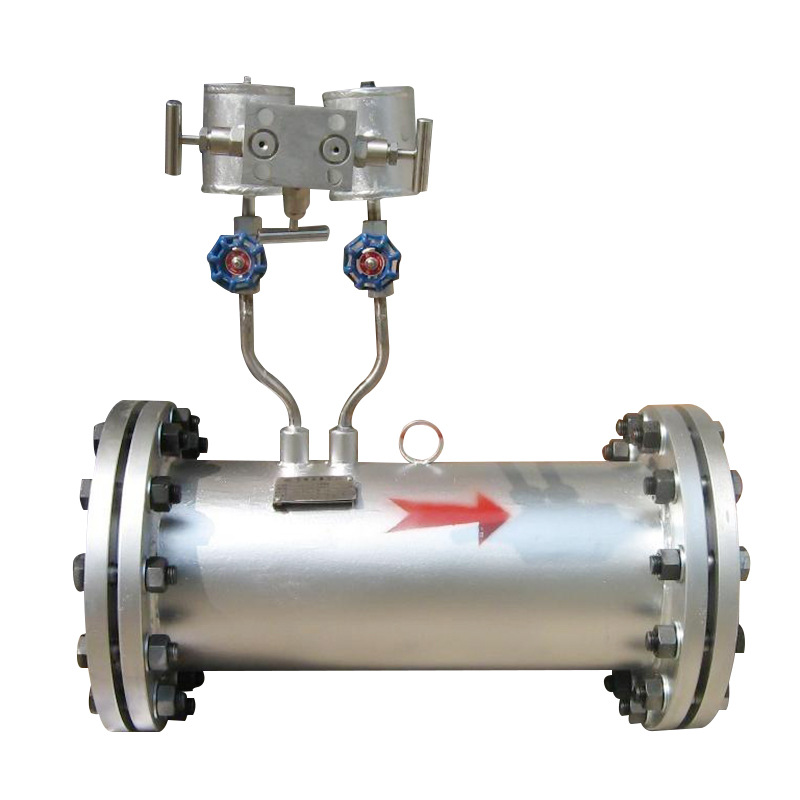
By installing a throttling device (orifice plate, nozzle, Venturi tube, etc.) in the pipeline, the flow cross-section is reduced as the steam fluid passes through the throttling element, increasing flow velocity and decreasing pressure, thereby creating a stable pressure difference before and after the throttling element.
The magnitude of the pressure difference is proportional to the square of the steam flow rate. A differential pressure transmitter captures the pressure difference signal, and after applying formula calculations and temperature, pressure, and density compensation, it calculates the instantaneous and cumulative steam flow rates.
Advantages
1. Mature technology with extremely high stability; widely used in industrial applications and suitable for various harsh high-temperature, high-pressure steam conditions.
2. The structure is rugged and holds up well, with no delicate precision parts inside. It resists vibration and interference effectively, so the service life is long.
3. Specifications cover a wide range, so it can handle large-diameter, high-flow steam lines and meet the needs of large-scale industrial setups.
4. Measurement standards are consistent and traceability is good, so it fits formal applications like trade settlement and industrial accounting.
Disadvantages
1. Pressure loss is high; the throttling element wastes energy in the line, so running costs stack up over time.
2, The turndown ratio is narrow; at low flow the differential pressure signal is too weak, accuracy drops off, and it struggles to keep up with load swings.
3. Straight-run requirements are strict; if upstream and downstream pipe lengths are short, measurement error will blow past acceptable limits.
4. The orifice tends to foul and wear; after extended use the opening dimensions can shift, so periodic calibration and upkeep are needed.
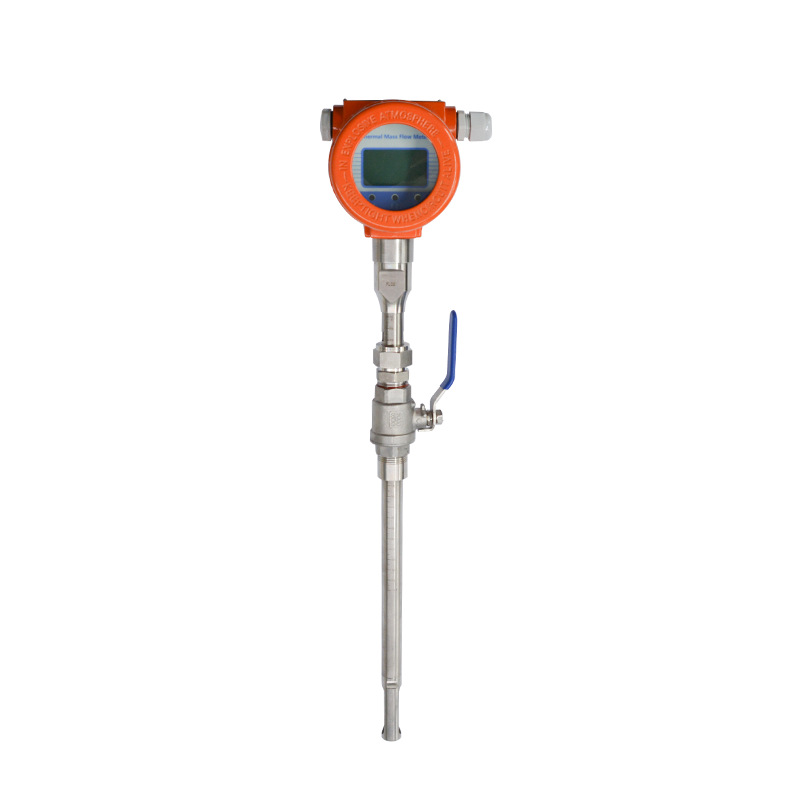
Thermal Mass Flow Meter
Principle of Operation
Based on the principle of thermal diffusion, the flow meter is equipped with a temperature sensor and a heating element, maintaining a constant temperature difference between the two during operation.
As the steam flows over the sensor surface, it carries away heat from the heating element; the higher the flow rate, the more heat is carried away. By detecting heat loss and power changes, the instrument accurately calculates the mass flow rate of the steam without the need for additional density conversion.
Advantages
1. Measures mass flow directly, so no temperature or pressure compensation is needed. This keeps the metering system simple and the response quick.
2. Still measures accurately at very low flow rates, with an exceptionally wide turndown ratio, so it works for low-flow steam and applications where flow swings a lot.
3. Pressure loss is minimal, pipeline resistance is practically zero, and energy savings are strong.
4. The structure is simple, there are no moving mechanical parts, breakdowns are rare, and routine maintenance is light.
Disadvantages
1. Does not tolerate water vapor or impurities well; condensate or oil in the steam can coat the sensor probe and cause the measurement to fail.
2. Upper temperature and pressure limits are low, so it is not a fit for ultra-high-temperature or ultra-high-pressure superheated steam.
3. Easily thrown off by shifts in ambient temperature or medium composition, so recalibration is needed periodically over long runs.
4. Not meant for large-diameter, high-flow, high-pressure steam mains; it is mainly used on small branch lines and low-pressure steam measurement.
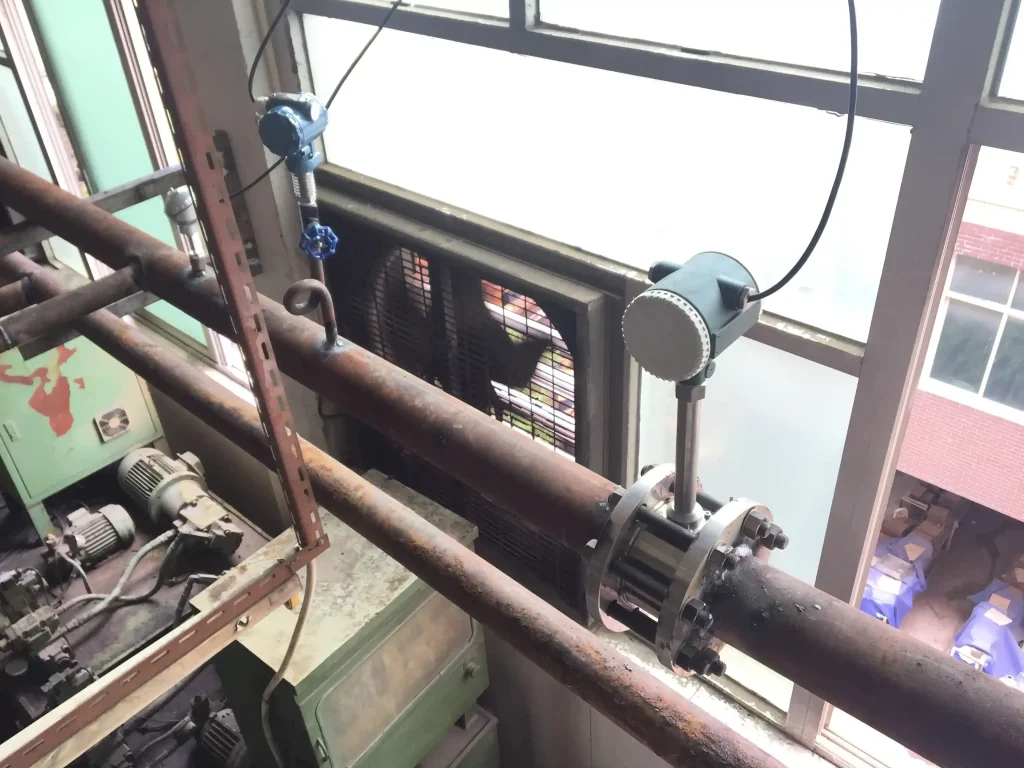
Turbine vs. Vortex vs. Differential Pressure vs. Thermal Steam Flow Meters
1. Measurement Accuracy and Range:
Turbine flow meters deliver the best basic accuracy and repeatability, but their turndown ratio is fairly tight. They lose accuracy at low flow and are really only workable for steady medium-to-high flow conditions.
Vortex flow meters cover a broad turndown ratio and perform more evenly across high and low flows. Accuracy holds up under normal running conditions, though it falls off noticeably at low velocities or in disturbed flow.
Differential pressure flow meters have the tightest turndown ratio. At low flow the pressure signal is faint and error-prone, so they are limited to fairly steady-rate applications.
Thermal flow meters span an exceptionally wide turndown ratio and handle ultra-low and low flows well; among the four, they are the best fit for low-flow duty.
2. Suitability for Operating Conditions and Media:
Differential pressure flow meters are built tough and tolerate the highest temperatures and pressures, so they hold up in harsh industrial steam environments; they are the most broadly applicable.
Vortex flow meters have no moving mechanical parts, so they suit ordinary saturated and superheated steam service and cope reasonably well with process upsets.
Turbine flow meters demand very clean steam; moisture or contaminants can wreck the internals, so they are restricted to dry, clean steam only.
Thermal flow meters are the weakest on temperature and pressure limits, and condensation or fouling throws them off; they are limited to low-pressure, dry, clean steam on branch lines.
3. Pressure Loss and Energy Consumption:
Differential pressure flow meters need a throttling device, so they create the highest pressure loss and running costs add up over long pipeline operation.
Turbine and vortex flow meters impose lower pressure loss and less line resistance, so they save energy comparatively well.
Thermal flow meters have no throttling element or obstruction, so pressure loss is essentially nil; they are the most energy-efficient of the group.
4. Structural Stability and Maintenance Costs:
Turbine flow meters rely on a mechanical rotor; impellers wear and can seize, service life is short, and frequent calibration and upkeep are needed, so they are the costliest to maintain.
Differential pressure flow meters have throttling elements that scale and wear, so calibration is needed from time to time; still, the overall structure is rugged and breakdowns are rare.
Vortex flow meters have no moving parts, the design is simple and stable, breakdowns are uncommon, and little maintenance is required.
Thermal flow meters have no fragile parts and the structure is dependable; the only routine task is occasional probe cleaning, so day-to-day upkeep is the lightest.
5. Comparison of Signal and Compensation Requirements:
Turbine, vortex, and differential pressure flow meters all read volumetric flow, so they need temperature and pressure compensation modules to work out the actual steam mass flow. This makes the system setup more involved. Thermal flow meters read mass flow directly, so no temperature or pressure compensation is needed; the system stays simpler and responds faster.
6. Comparison of Applicable Scenarios:
Differential pressure flow meters fit large pipelines, high-temperature and high-pressure environments, and industrial mains where trade settlement demands high precision and steady performance.
Vortex flow meters cover the broadest range of uses and suit the vast majority of ordinary industrial steam metering situations.
Turbine flow meters are meant for specialized cases where the flow is clean and steady and measurement accuracy needs to be tight.
Thermal flow meters are mainly used for steam branch metering in low-pressure, low-flow, and mild operating conditions.
Selection Recommendations
For high-temperature, high-pressure, large-diameter main pipelines, differential pressure flow meters are the practical choice. They take harsh conditions in stride, keep performing reliably over time, and handle the metering demands of both production tracking and trade settlement.
For everyday operating conditions and steam lines where flow moves around quite a bit, vortex flow meters are a sound pick. They serve a wide variety of setups, have no rotating parts to wear out, give decent value for the money, and do not demand much upkeep.
When the medium is clean, flow stays fairly constant, and measurement accuracy needs to be spot-on, turbine flow meters are the way to go. They read precisely and react fast, so they work well where tight metering and process control matter.
For low-pressure, low-flow branch lines and low-velocity situations, thermal flow meters are the logical fit. They measure mass flow straight out without temperature or pressure compensation, and pressure loss is barely worth mentioning. They measure mass flow directly with no need for temperature or pressure compensation, and pressure loss is almost negligible.
If the steam carries water or a lot of contaminants, steer clear of turbine and thermal types; go with vortex or differential pressure meters instead to limit damage to internals and keep measurement error in check.
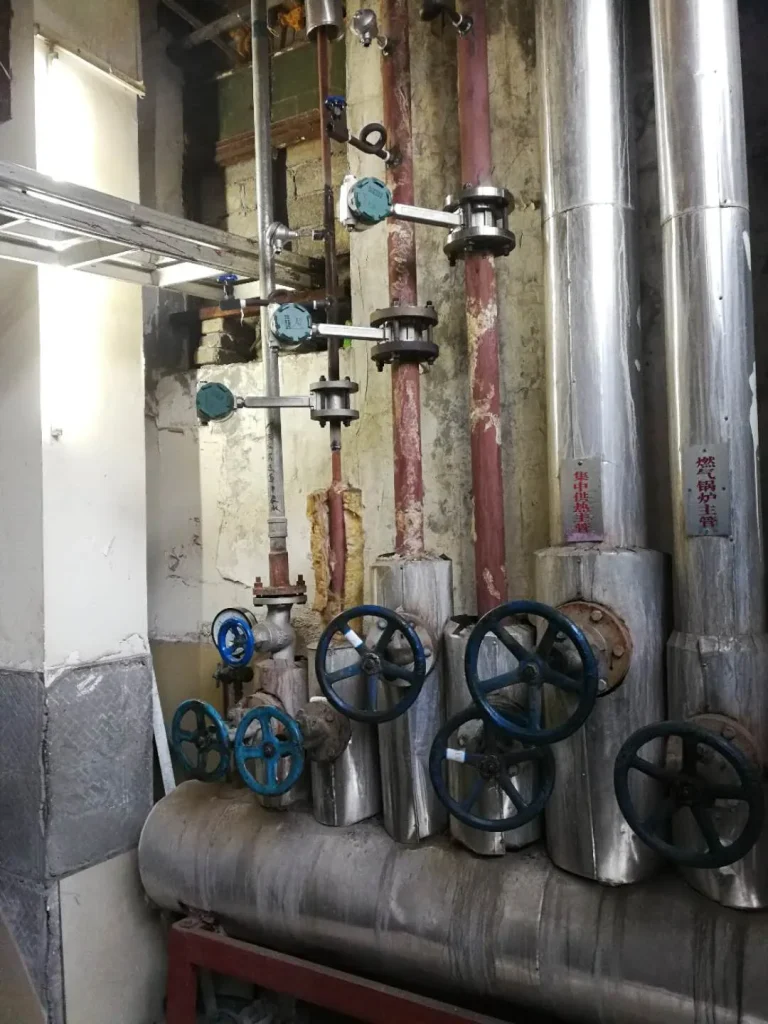
Sino-Inst focuses on industrial process measurement and control. We supply a full lineup of steam flow meters—turbine, vortex, differential pressure, and thermal—plus a complete range of industrial measurement and control gear including level transmitters, pressure sensors, and temperature sensors.
We offer a one-stop solution that covers enterprises’ multi-dimensional monitoring needs for flow, pressure, temperature, and level. Our products are built to handle a variety of tough industrial conditions, with strong stability, dependable accuracy, and easy upkeep.
We help enterprises put together comprehensive, systematic measurement and control systems that raise production quality and efficiency, tighten energy consumption management, and keep operations safe and stable. We provide reliable equipment backing and technical support for the move toward smarter, digital production.