Radar vs Ultrasonic Level Transmitter: Differences and How to Choose

Table of Contents

Radar and ultrasonic level transmitters are the primary choices for non-contact level measurement. Both can be installed at the top of a tank or above a waterway to monitor liquid levels. Their main difference lies in the type of signal emitted, which results in differing measurement performance; for instance, radar transmitters emit microwaves that can penetrate steam and dust, whereas ultrasonic level meters offer the advantage of lower costs.

Therefore, when selecting equipment, a comprehensive assessment based on actual operating conditions, accuracy requirements, budget constraints, and long-term operation and maintenance costs is essential to achieve the best balance of cost-effectiveness and system stability.

Which type should you choose?

Selection should be based on the operating parameters of the storage tank rather than just the instrument itself. Drawing on our years of experience in level measurement, we have summarized the following selection guidelines for quick reference:

  1. For large measurement ranges exceeding 15m, radar level meters are the preferred choice.
  2. For smaller measurement ranges within 15m, ultrasonic level meters are preferred.
  3. For common liquids—such as water, sewage, or river water—ultrasonic level meters are a suitable first choice.
  4. For water level monitoring in open channels or rivers, either radar or ultrasonic level meters can be used.
  5. For pressurized tanks with pressures exceeding 1.6 MPa, select a radar level meter.
  6. Radar level meters are recommended for high-temperature liquids, steam, asphalt, and heated reaction vessels. Standard ultrasonic sensors typically have a maximum temperature limit of 80°C, whereas radar level meters can be customized for temperatures up to 1000°C.
  7. Radar level meters are recommended for material silos; 3D radar scanners are also available as a modern alternative.
  8. In operating environments with steam or dust, radar level meters are the preferred choice.
  9. For corrosive liquids: if volatility is low, a corrosion-resistant ultrasonic level meter is a suitable choice; if volatility is high, select a radar level meter.
  10. When high accuracy is required, choose a radar level meter; 80GHz radar level meters can achieve an accuracy of ±1mm.

Differences Between Radar and Ultrasonic Level Transmitters

ParameterRadar (80 GHz FMCW)Ultrasonic
SignalMicrowave, 76–81 GHzSound pulse
MediaLiquids, slurries, powders, granulesLiquids and slurries; solids only in short, clean bins
Range30 m standard, 150 m long-range models15 m integral, 20 m split type
Accuracy±2 mm typical, ±1 mm best, ±5 mm on solids0.3–0.5% of range (±15–25 mm on 5 m); ≤1% integral models
Blind zone0.08–0.3 m0.3–0.6 m
Beam angle3°–14°6°–10°
Process temperature-40 to 280 °C standard, up to 1000 °C custom-20 to 80 °C
Process pressure-0.1 to 2.5 MPaAtmospheric only, no vacuum
Signal lossLow. Passes steam, vapor, dustHigh. Drops with distance, vapor, dust, foam
ResponseFastSlower
UpsetsThick foam, heavy antenna buildupTemperature gradients, condensation, dust, wind, foam
MountingNarrow beam, can sit closer to the wall; aiming flange for silosSquare to the surface; keep walls, ladders and inlets out of the beam
CostHigherLower

Field examples

Case 1 · Calcite Powder Silo in Turkey (Radar Selection)

A building materials plant in Turkey required continuous level measurement for a calcite powder silo. The silo stands approximately 10–15 meters tall and contains high levels of dust. We supplied the FMW21 80 GHz radar level transmitter, equipped with a 76 mm PTFE lens antenna, a DN80 304 stainless steel flange, and a purge connection. Compressed air periodically purges the lens to prevent dust accumulation. The measuring range was set to 30 meters, with a 4–20 mA output.

Case 2 · Fish Oil Storage Tank in Chile (Ultrasonic Selection)

A fish oil producer in Chile needed to measure the liquid level in a 10-meter-high storage tank located in an explosion-proof zone. We supplied three explosion-proof ultrasonic level transmitters featuring a 0–10 meter range, 24 VDC power supply, two-wire 4–20 mA output, and a local display. As the tank height fell within the ultrasonic sensor’s measuring range, radar technology was not required.

What is a Radar Level Transmitter?

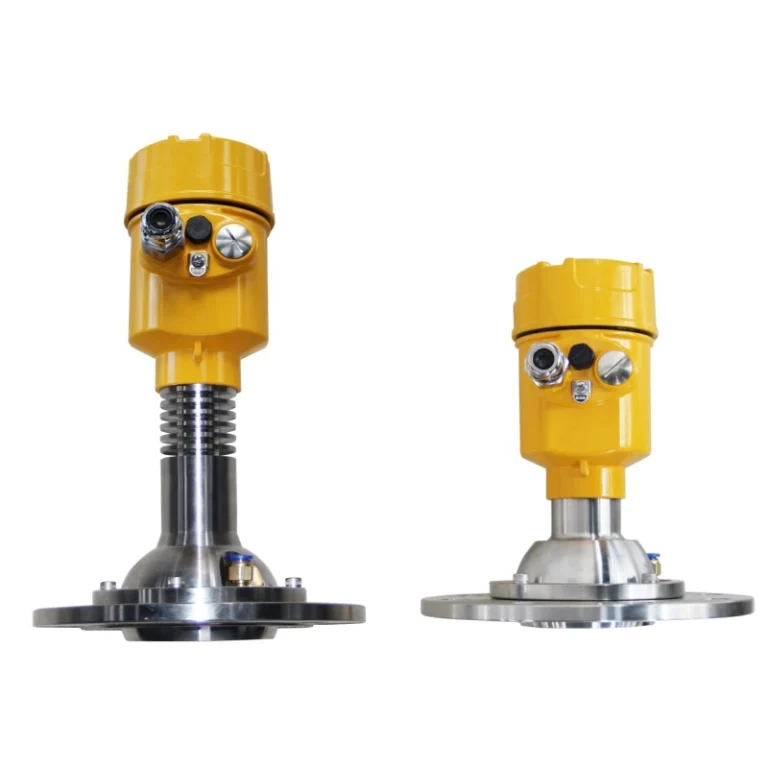
A radar level transmitter is an instrument that uses radar technology to measure the liquid level in a tank or container. It is a continuous level measurement device.

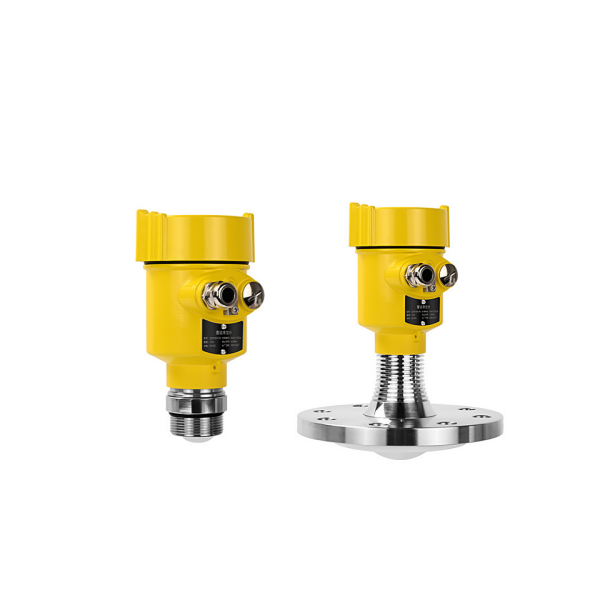
It determines the distance between the liquid surface and the radar level meter by emitting radar waves and measuring the return time of the waves.FMW21 80 GHz radar level transmitter with lens antenna
How Radar Level Transmitters Work?

Radar level transmitters work by sending out a radar signal and measuring the time it takes for the signal to reflect back from the liquid surface. This is known as the time of flight principle. Radar level transmitters typically use an antenna to send and receive the radar signal.
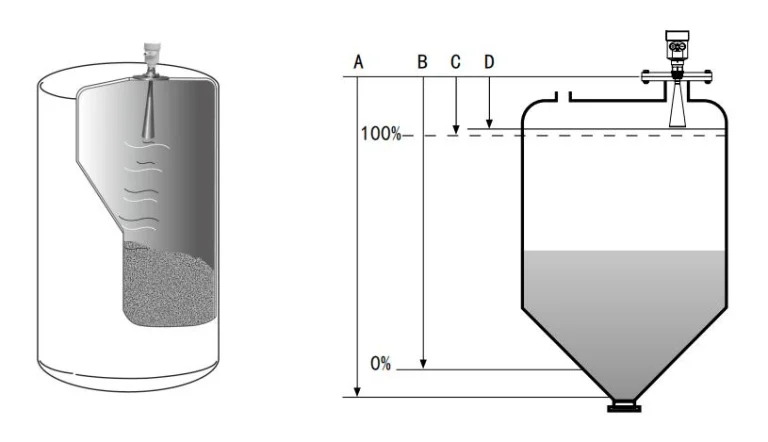
Radar level measurement principle

Common Applications of Radar Level Transmitters

Level measurement:

Radar level transmitters are widely used to measure the liquid level in various tanks and containers.

Industrial applications:

They are used in chemical processing, food and beverage, and energy production industries. To monitor the liquid level in tanks, reactors, and pipelines.

Refining and petrochemical:

Radar level transmitters are used for level measurement of various process vessels and tanks in refineries and petrochemical plants.

Water and wastewater treatment:

Radar level transmitters are used in water and wastewater treatment plants. To monitor sump, sedimentation tanks, and water tanks.

Energy production:

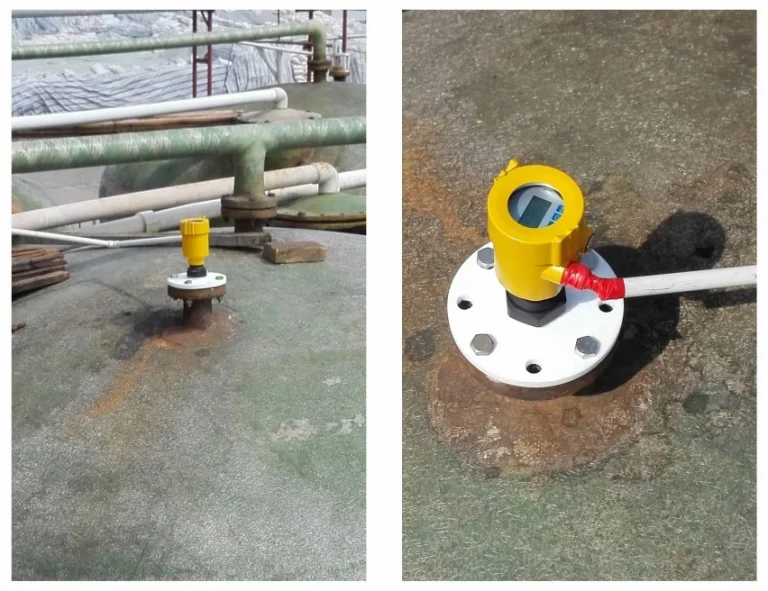
Radar level transmitters are also used in energy production plants. To monitor the liquid level of fuel tanks and cooling pools.Non-contact radar level sensor on a sulfuric acid tank
Advantages of Radar Level Transmitters

  • Non-contact measurement: No physical contact with the liquid is required. Reduces wear and minimizes maintenance.
  • High accuracy and precision: 80 GHz FMCW radars reach ±1 mm to ±5 mm, depending on model and range.
  • Immune to media influence: Radar passes through steam and solvent vapor, and is not affected by density or conductivity. Thick foam is still a problem (see Limitations).
  • Anti-interference: Compared with ultrasonic sensors, radar signals are less affected by interference from tank walls, internal structures or other obstacles.
  • Wide range of applications: Radar sensors can measure liquid and solid levels.
  • Low maintenance cost: Non-contact design and wear resistance help minimize maintenance needs.Low-cost 80 GHz radar level sensor

Limitations of Radar Level Transmitters

  • Weather effects: Outdoors, a water film, ice or condensation on the antenna weakens the signal. A lens antenna with a sunshade, or an air purge, handles most cases.
  • Dielectric constant: Materials with a lower dielectric constant may not provide enough reflection for accurate measurement. This is especially true when using free-space radar.
  • Foam, agitation, and steam: These factors can create false echoes or interfere with radar signals. This results in inaccurate measurements.
  • Installation and maintenance: Radar transmitters typically require professional installation and maintenance. You also need to consider where you want to install the radar level meter.
  • Cost: Radar level meters are generally more expensive than other level measurement technologies.

What Is An Ultrasonic Level Transmitter?

An ultrasonic level transmitter is a device that uses ultrasonic sound waves to measure the level of liquid or solid materials. It emits ultrasonic pulses. And measures the time it takes for these pulses to propagate to the surface of the material and return.

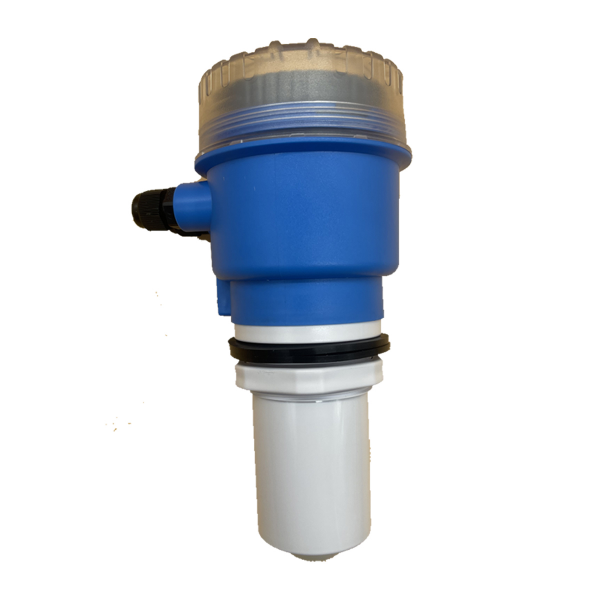
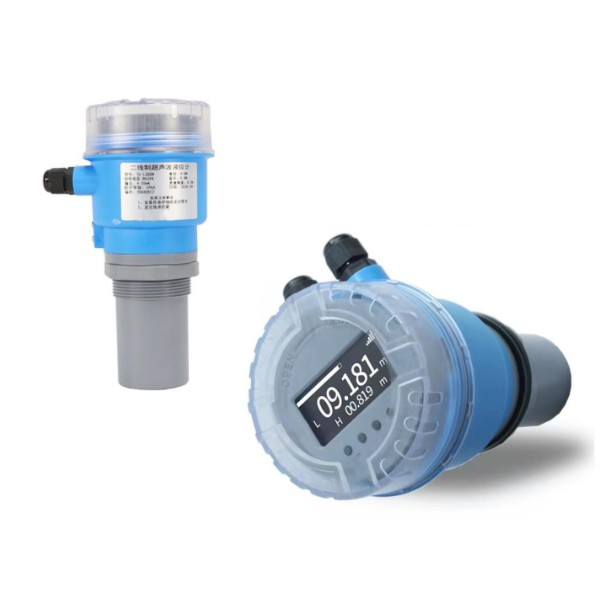
Ultrasonic level transmitter adopts non-contact level measurement technology.Universal ultrasonic level sensor, 0–15 m
How Ultrasonic Level Transmitters Work?

Ultrasonic level transmitters work by sending out ultrasonic pulses. The time it takes for these pulses to travel to the surface of the material and back is measured. The distance representing the level is then calculated.
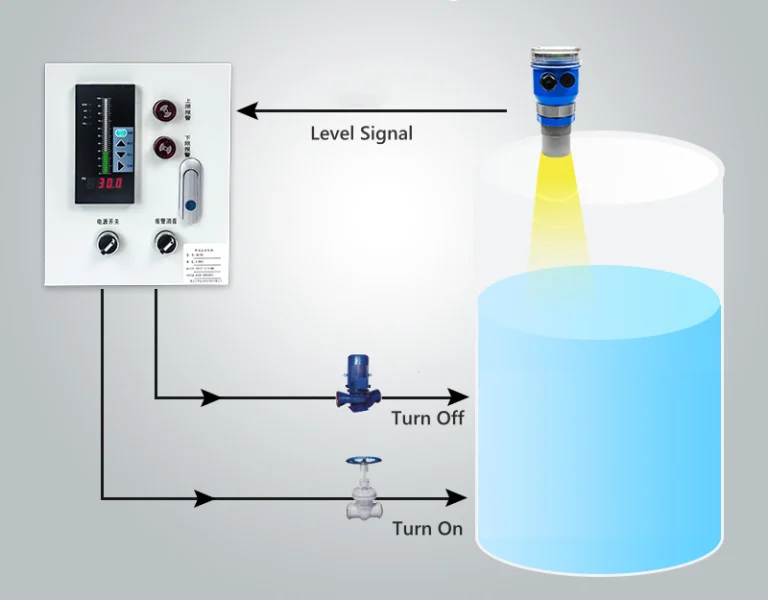
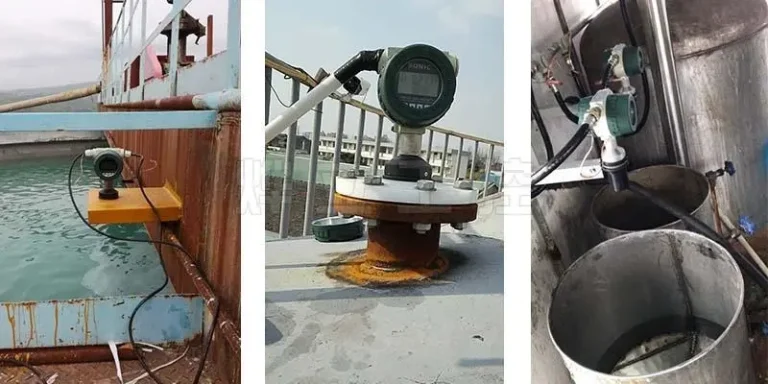
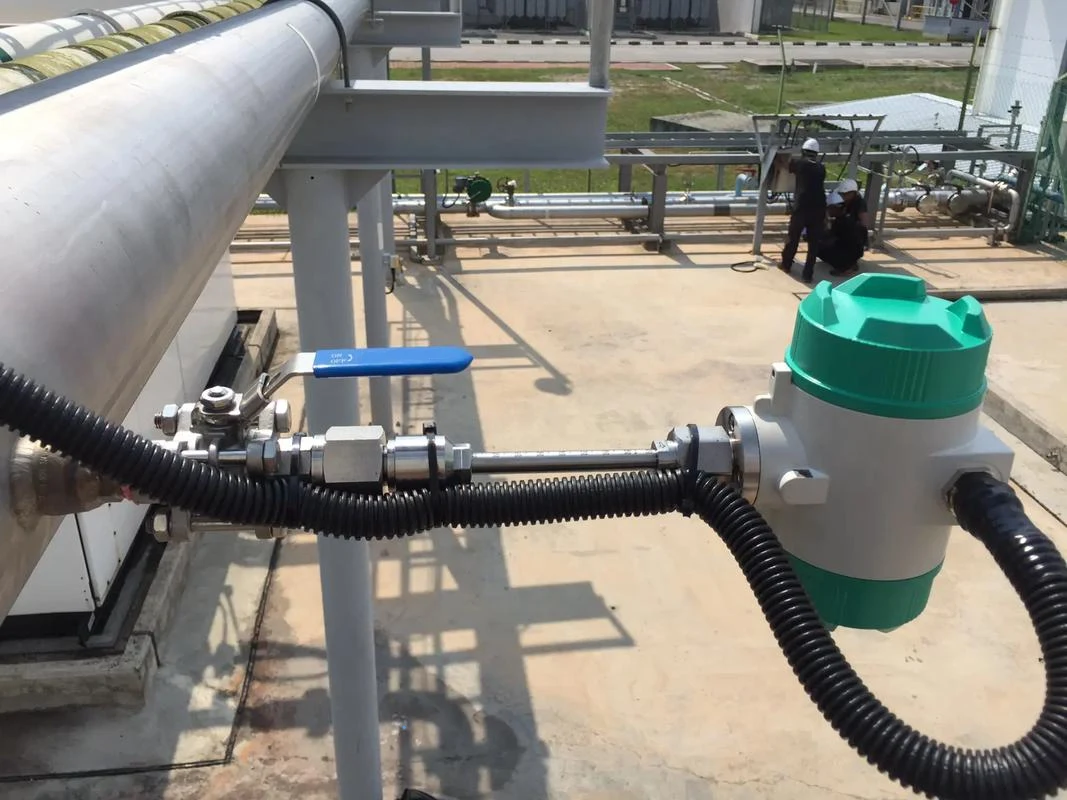
Ultrasonic level sensor on a water tank with pump control

Common Applications of Ultrasonic Level Transmitters

  • Water and wastewater treatment: used to monitor water levels in reservoirs, dams, canals and other water bodies. To understand real-time water level changes.
  • Wastewater treatment plants: measure the sludge blanket level in clarifiers and the liquid level in tanks and sumps.
  • Chemical industry: measure liquid levels in chemical tanks, process vessels and storage facilities.
  • Oil and gas: monitor liquid levels in tanks and pipelines used for oil and gas processing.
  • Open channels and rivers: monitor flow and water level changes in rivers, irrigation channels and other open channels.Explosion-proof ultrasonic level meter on a storage tank

Advantages of Ultrasonic Level Transmitters

  • Non-contact measurement: Ultrasonic sensors measure liquid level without physical contact. Making them suitable for a wide range of materials and applications.
  • Versatile: Ultrasonic sensors can measure more than just liquid level. They can also measure distance and volume.
  • Wide applicability: They can be used in a variety of environments and can measure a wide range of materials. Including liquids, solids, and even slurries.
  • Reliable: Ultrasonic technology is mature and provides accurate level measurement.
  • Low maintenance cost: The non-contact design minimizes wear and the need for frequent calibration.
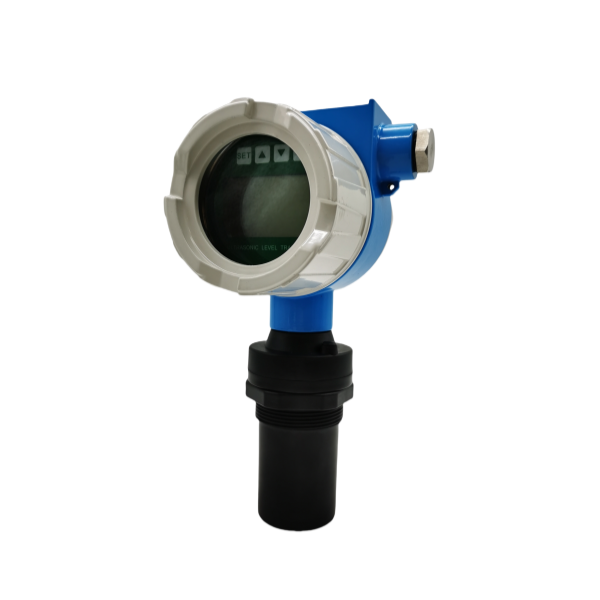
  • Real-time monitoring and control: Ultrasonic transmitters provide real-time level information. Liquid levels can be continuously monitored and controlled.Explosion-proof ultrasonic level meter

Limitations of Ultrasonic Level Transmitters

1. Susceptible to the medium: Ultrasonic waves are sensitive to the gas above the liquid. Solvent vapor or CO₂ in the headspace changes the speed of sound.

2. Surface coating: The coating on the surface of the container will interfere with the reflection of ultrasonic waves. Especially when it is multi-layered or firmly adhered.

3. Vacuum: Ultrasonic sensors cannot work in a vacuum. Because they rely on the medium to transmit sound waves.

4. Bubbles and steam: Bubbles or steam will interfere with the reflection of ultrasonic waves. Leading to inaccurate readings. Thus reducing the measurement accuracy.

5. High temperature: High temperature may cause changes in the propagation speed of ultrasonic waves, and the performance may be reduced or even damaged.

6. Vibration and fluctuations: Vibration or fluctuations in the container will also affect the accuracy of the measurement.

FAQ

Can a radar level transmitter measure through foam?

Radar level transmitters can measure the level by penetrating the foam layer; however, measurement accuracy is affected by the foam’s thickness, density, and the radar frequency used.

If the foam layer inside the tank is thick, it is recommended to switch to a guided wave radar level transmitter.

Radar or ultrasonic for an agitated tank?

Generally, a radar level transmitter is recommended. Agitation causes surface turbulence and can even generate vapors; these factors interfere more severely with ultrasonic signals than with radar echoes.

However, installing a radar level transmitter on an agitated tank requires careful planning. A stilling well (wave guide) can be installed to isolate the sensor from the agitator blades.

Does temperature affect an ultrasonic level transmitter?

Yes, temperature affects ultrasonic level transmitters. As temperature rises, air molecules move faster, increasing the speed of sound; conversely, as temperature drops, the speed of sound decreases. This variation directly affects the ultrasonic time-of-flight, thereby impacting measurement accuracy.

Sino-Inst ultrasonic level transmitters feature temperature compensation. By correcting for changes in the speed of sound, we ensure measurement accuracy, especially in environments with significant temperature fluctuations.

Can I replace an ultrasonic sensor with a radar on the same nozzle?

Usually, yes. Our 80 GHz radar units offer G¾ / ¾” NPT or G1½ / 1½” NPT threaded connections, as well as DN25 or DN40 flange connections (depending on the model), and utilize the same two-wire 4–20 mA output.

Of course, before proceeding with the replacement, you must verify that the antenna extends beyond the end of the nozzle (or that the nozzle meets the “short and wide” requirement) and that the measurement range is reconfigured for the new device.

Ultrasonic level sensors and radar level sensors each have their own advantages and disadvantages. Suitable for different application scenarios. Both can be used well for level measurement. However, when choosing a sensor, we should consider factors,such as cost, accuracy, and environmental conditions. And make an informed decision based on specific needs.

Sino-Inst is a professional supplier in the water treatment industry. Focusing on technological innovation and expertise. Providing a variety of water level measurement equipment. We specialize in flow meters, pressure measurement, temperature measurement and other fields. If you have any questions or need about our products. Please contact us.

Welcome To Share This Page:
Product Categories
Latest News
Get A Free Quote Now !
Contact Form Demo (#3)

Related Products

Related News

Ultrasonic level transmitters work as non-contact level measurement devices, and they’re pretty common across petrochemical, water treatment, food, and pharmaceutical

Radar level transmitters are the mainstream equipment for industrial level measurement and control, and can be divided into two categories:

As a non-contact liquid level measuring device, the ultrasonic level transmitter applies ultrasonic wave propagation properties for level detection. It

Ultrasonic level transmitters serve as a core sensing tool in industrial automation. They measure without touching the medium, handle tough

The measurement accuracy of radar level transmitters is closely tied to the dielectric constant (εᵣ) of the medium. This constant

In the chemical, petrochemical, food processing and other industrial sectors with high safety requirements, level measurement is a core component

In today’s industrial processes, accurate and reliable liquid level measurement is crucial. Radar level sensors offer a reasonable solution for

A radar level transmitter—also referred to as a radar level meter or radar level gauge—is one of the most widely

Scroll to Top

Get A Free Quote Now !

Contact Form Demo (#3)