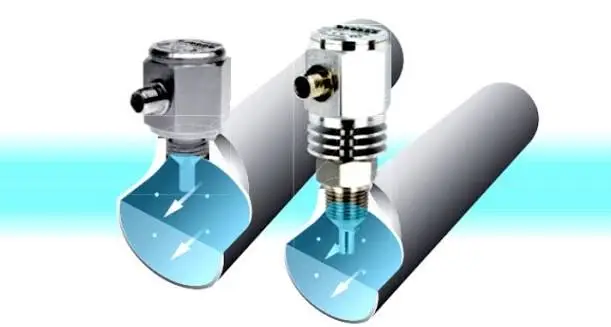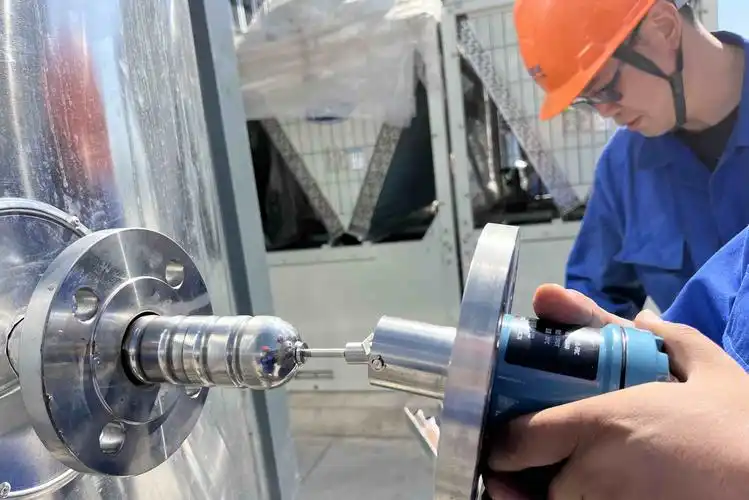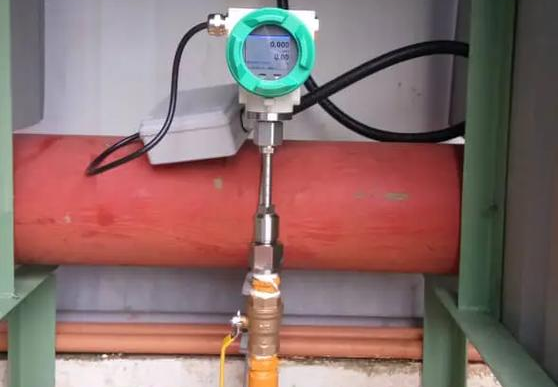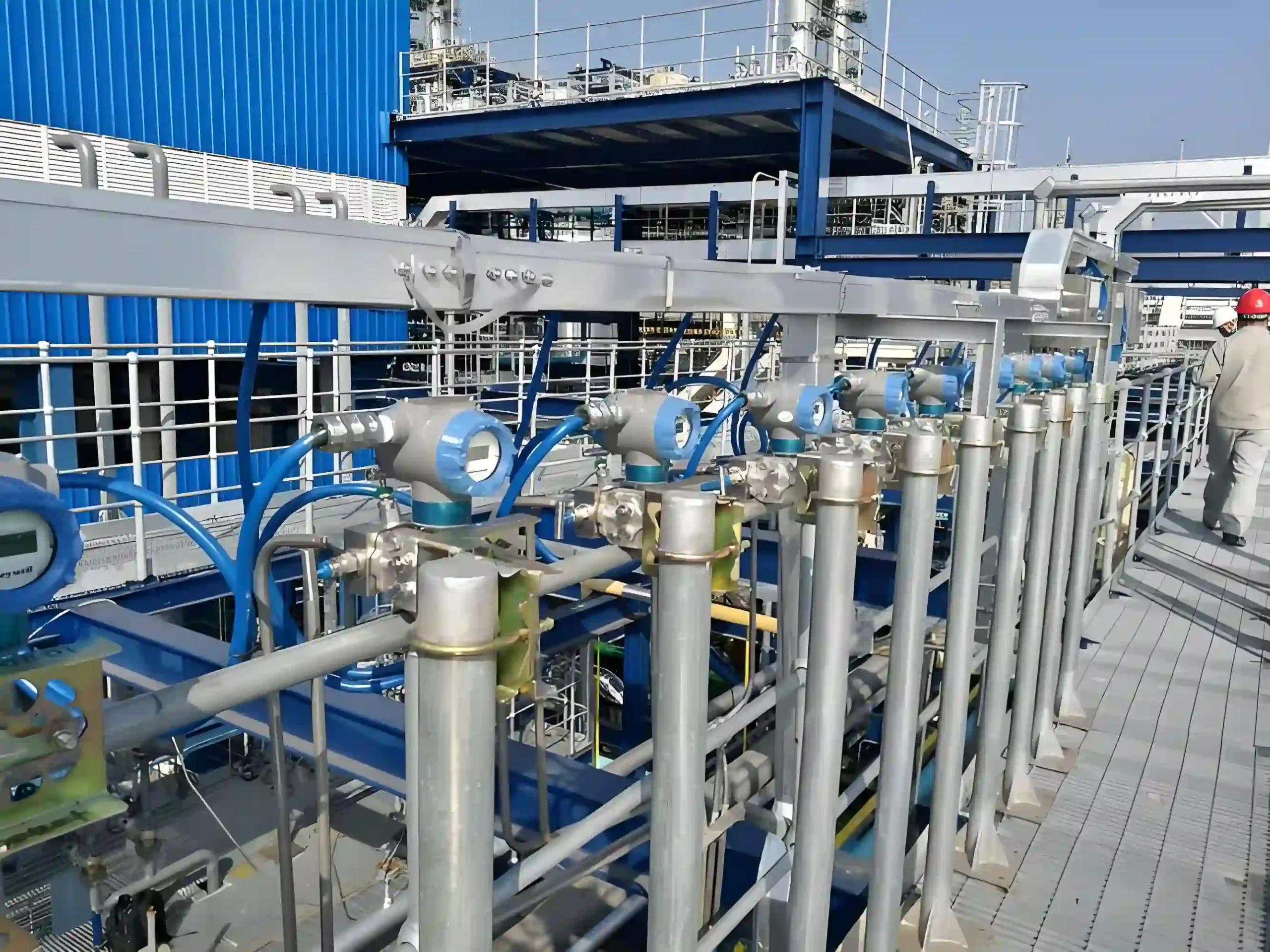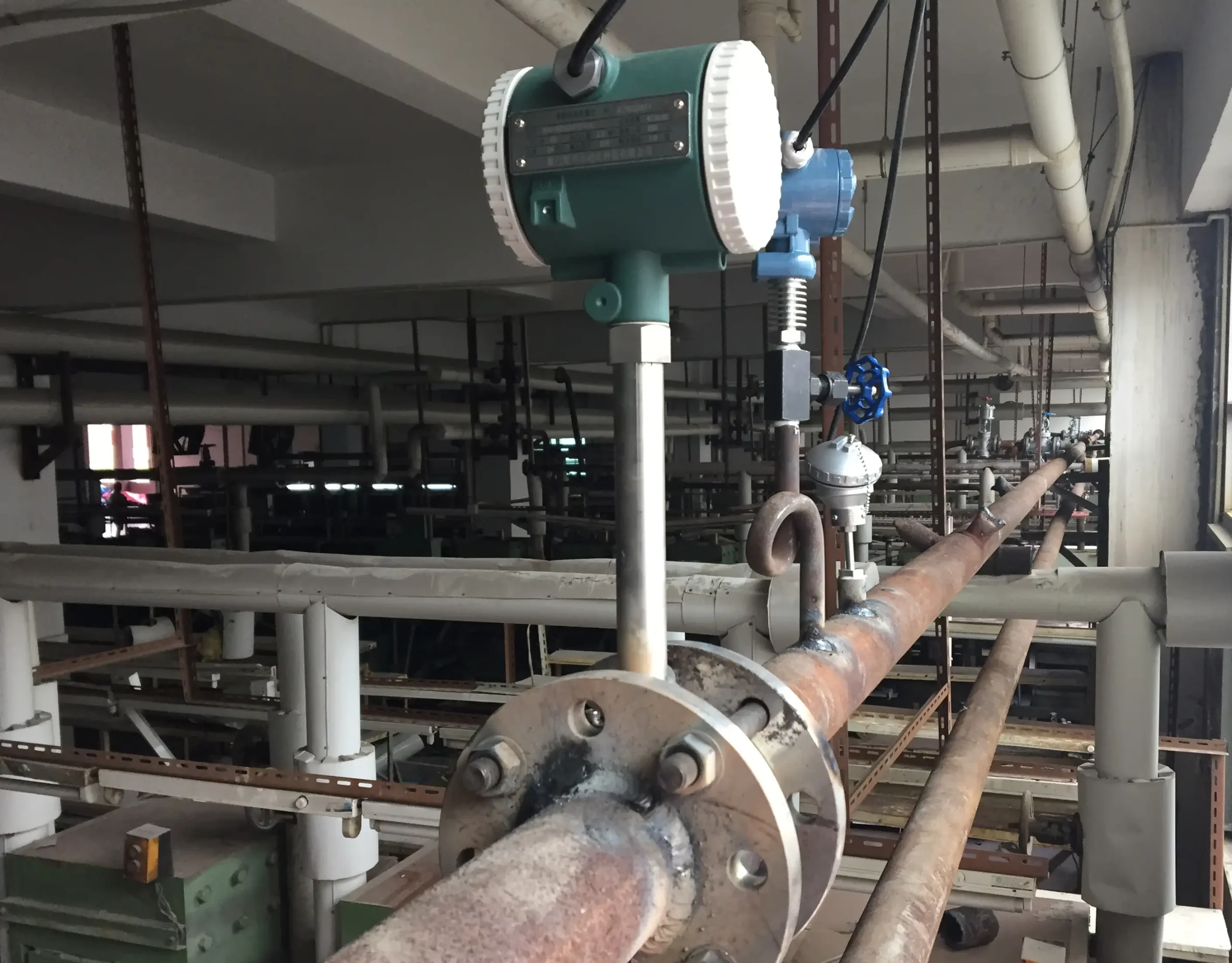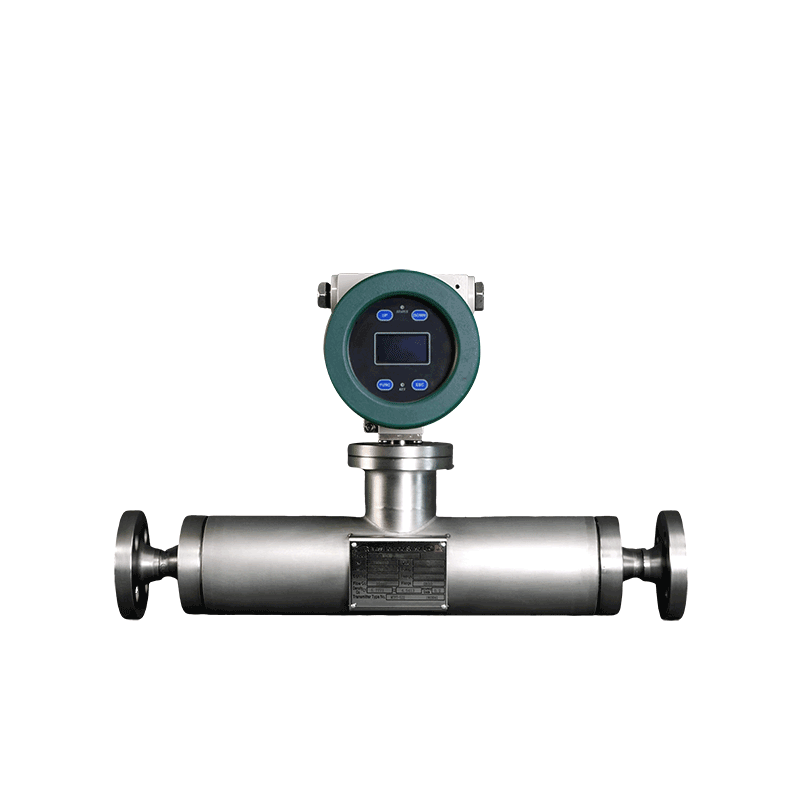
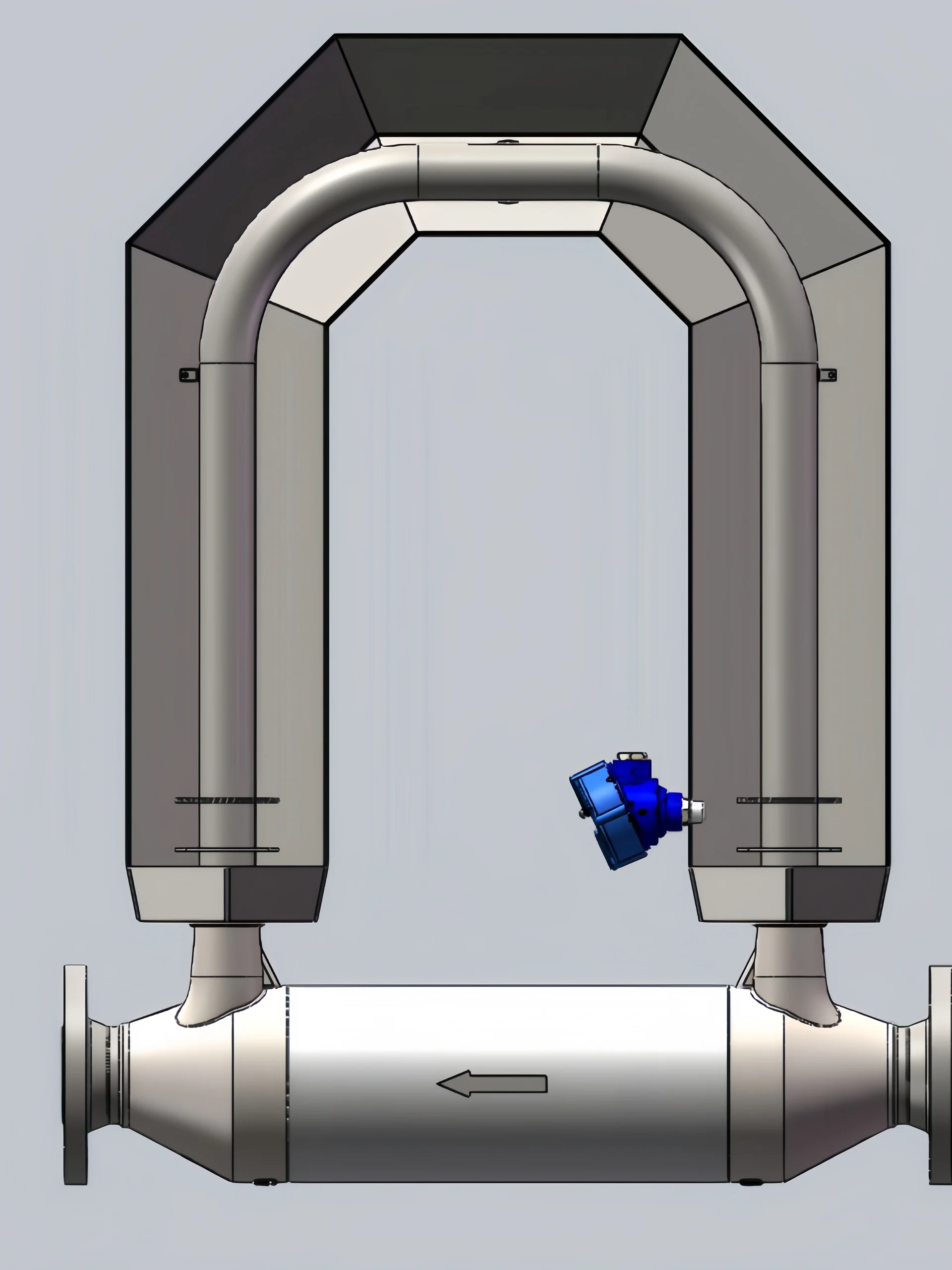
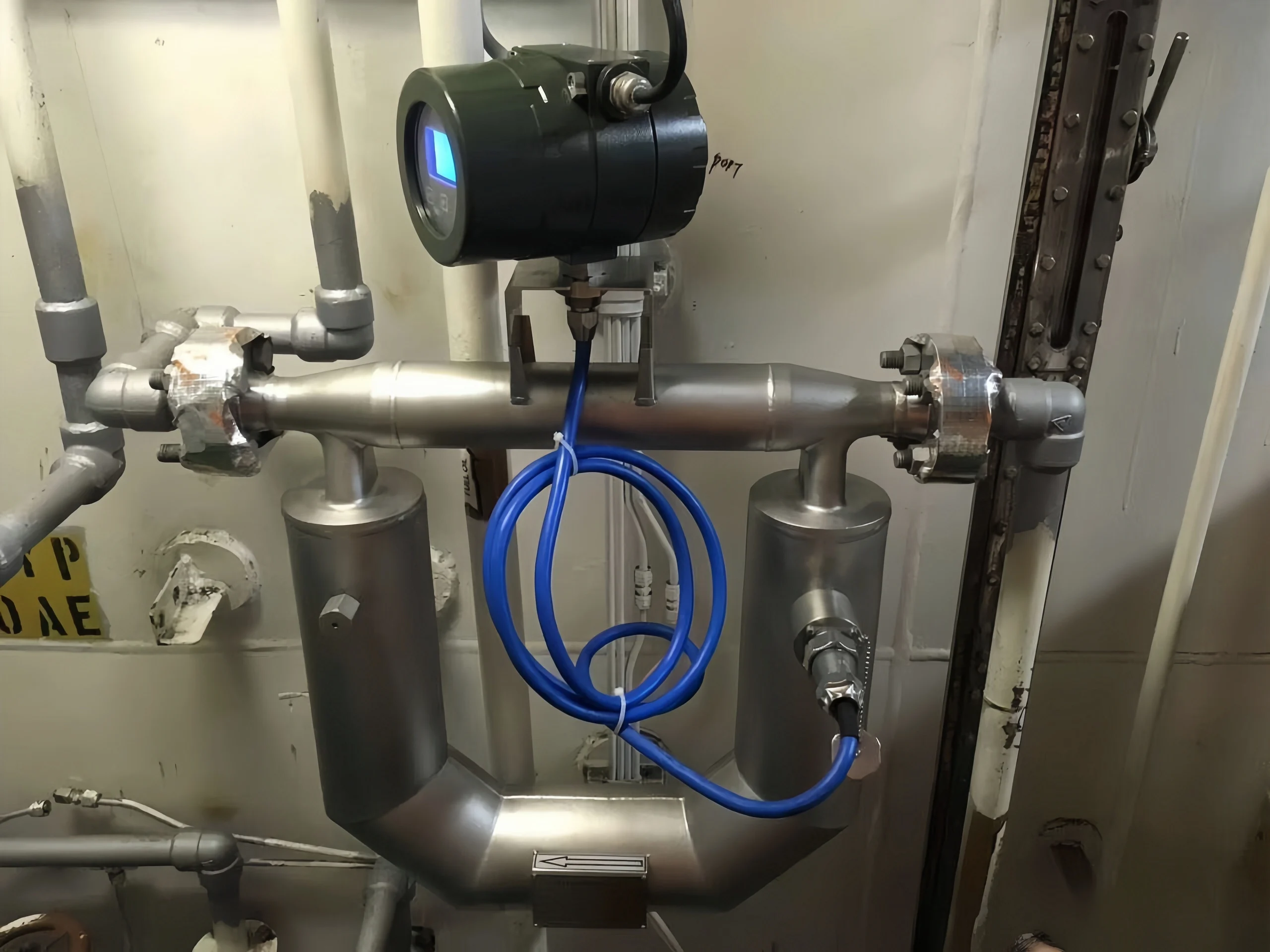
A Coriolis flow meter is a device that measures the mass flow of a fluid in a pipe using the Coriolis principle. It is proportional to the mass flow. A Coriolis Flow Meter consists of a transducer and a flow detection element.
Advantage:
1. A Coriolis flow meter can meet most industrial needs in terms of corrosion, dirt, explosion and wear resistance. It can measure oil, chemical media, paper black liquor, slurry, gas, solid particles, and high-viscosity objects.
2. There is no obstruction inside the pipe, and no moving parts; it is not easy to wear. It is easy to carry out cleaning, routine maintenance, and other operational tasks.
3. The inlet and outlet directions of the sensor tubes of different sizes can be adjusted according to the needs of the site. The import and export of straight pipe section configuration requirements are low.
4. A Coriolis flow meter can measure the flow of multi-phase fluids.
5. It can be synchronized to obtain the volume flow rate, temperature, density and other parameters. Less sensitive to common influences such as pressure, temperature, density, viscosity, and flow rate distribution.
Disadvantage:
1. Cannot measure low-density media and low-pressure gases.
2. Not vibration-resistant, more sensitive to vibration.
3. Expensive, mostly used in the measurement of demanding occasions.
4. Can not be used for larger pipe diameter measurement; the current maximum pipe diameter is DN150.
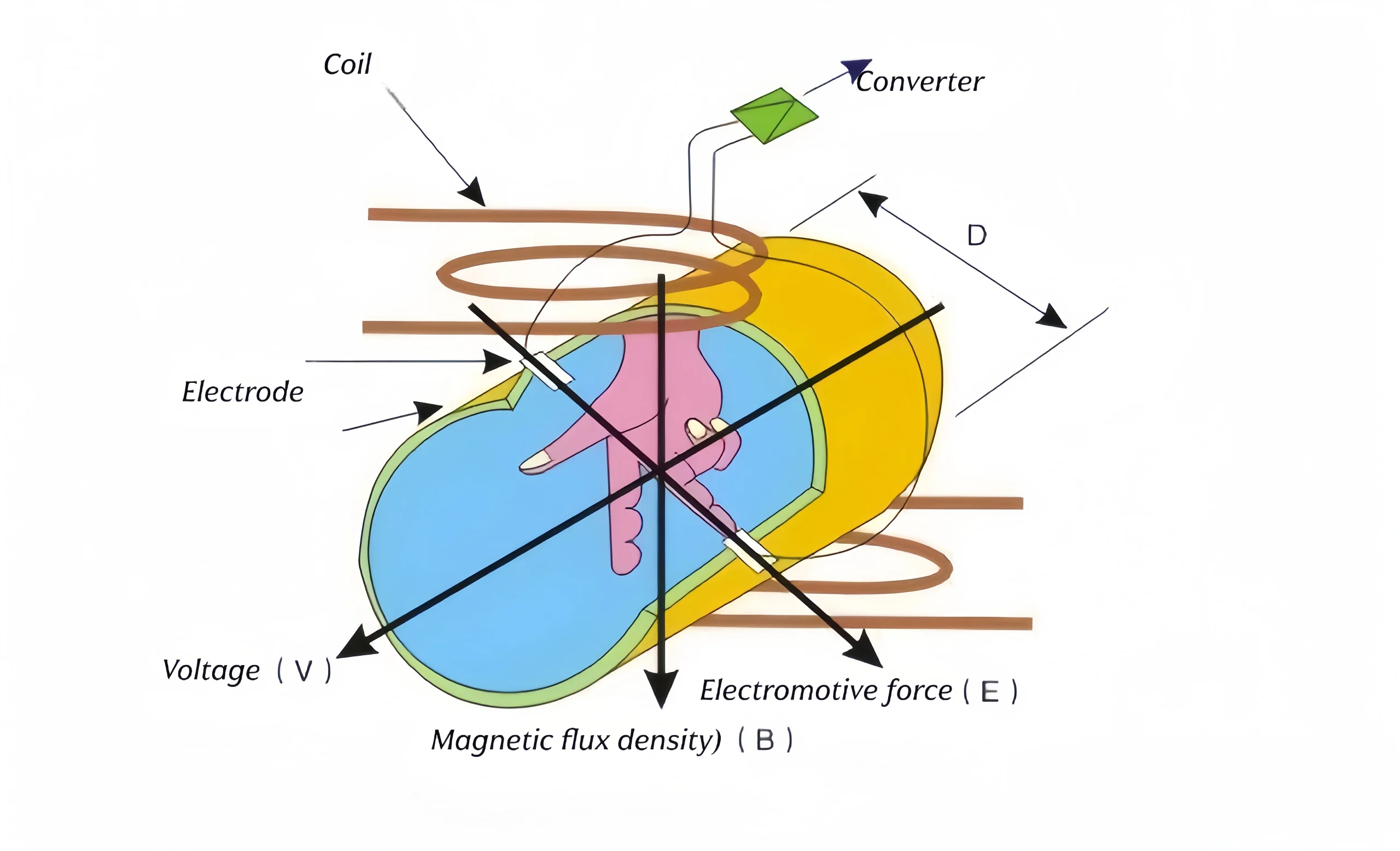
A magnetic flow meter uses Faraday’s law of electromagnetic induction and it mainly measures conductive liquid volume flow.
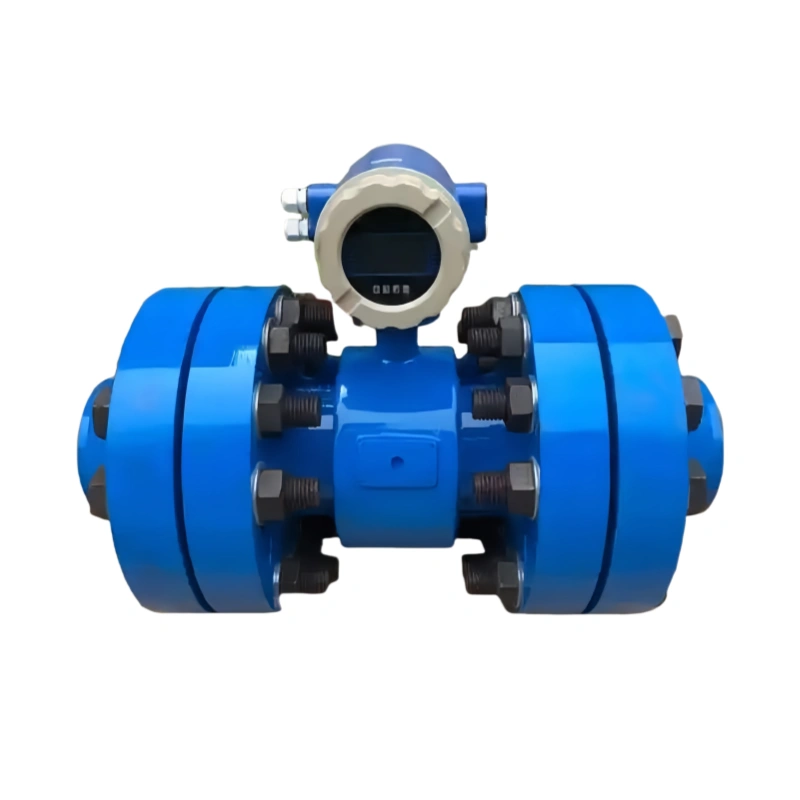
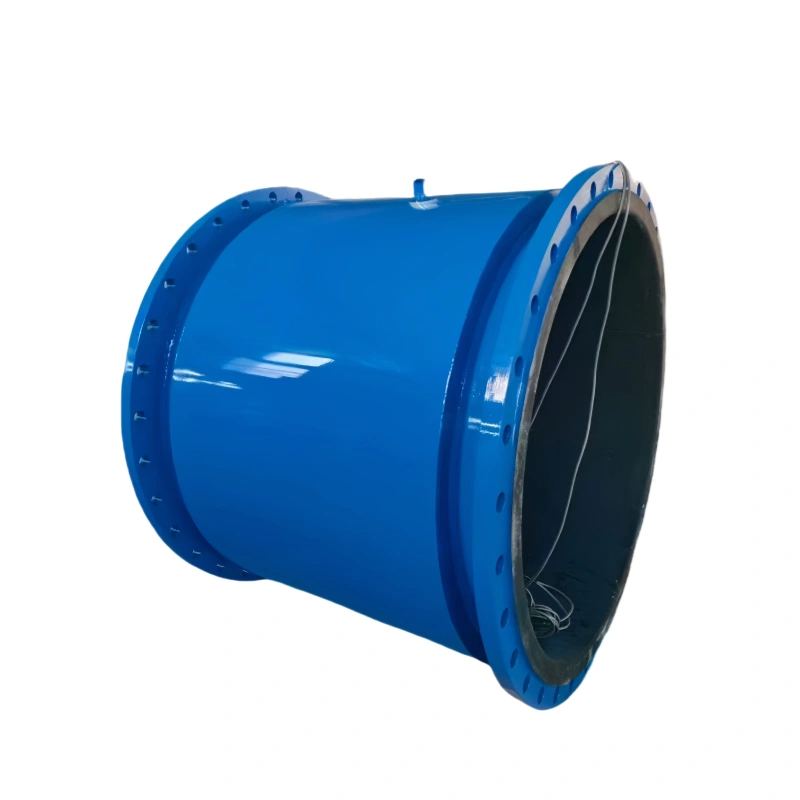
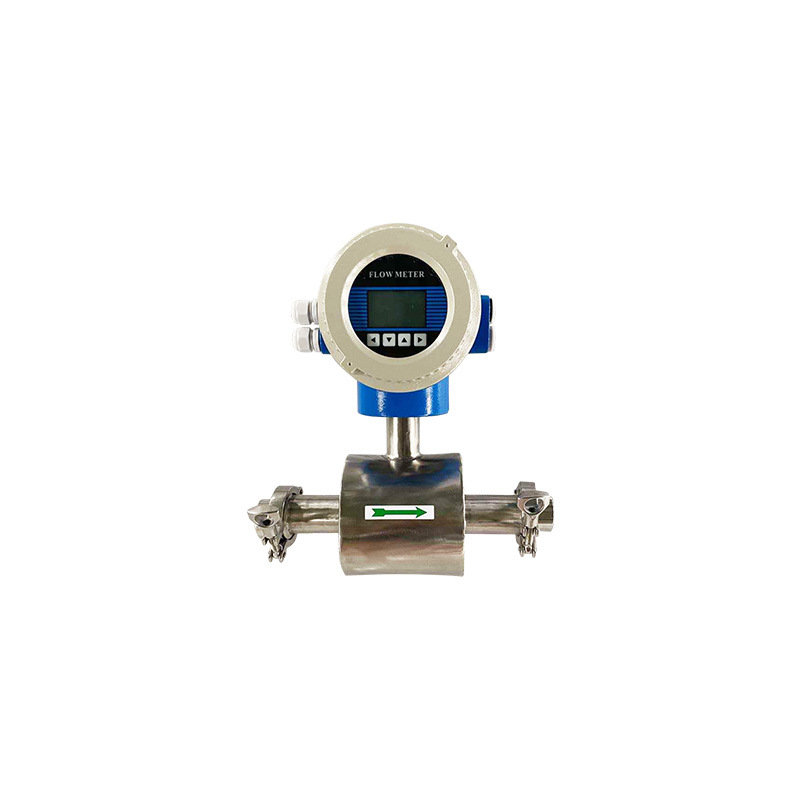
Large large-diameter magnetic flow meter is more often used in water supply and drainage projects. Small and medium diameter is commonly used in solid-liquid dual-phase and other difficult-to-measure fluids or high requirements of the place.
For example, the paper industry pulp liquid and black liquid, non-ferrous metallurgical industry, mineral slurry, coal slurry plant, chemical industry, the strong erosion of liquid and iron and steel industry blast furnace, wind mouth cooling water control and monitoring leakage, long interval pipeline coal hydraulic transmission of flow measurement and control. Small small-diameter magnetic flow meter is commonly used in the pharmaceutical industry, food industry, biological engineering and other places with health requirements.
Advantage:
1. A magnetic flow meter is suitable for measuring liquid-solid two-phase fluids containing solid particles or fibers. such as pulp, coal water slurry, slurry, mud and sewage.
2. A magnetic flow meter does not produce pressure loss due to the formation of the detection of flow. Instrument resistance is only a uniform length of pipe along the resistance. For the requirements of low resistance loss of a large diameter water supply pipeline is most suitable.
3. A magnetic flow meter to measure the volume flow. It is not subject to fluid density, viscosity, temperature, pressure and conductivity changes significantly.
4. Compared with other flow meters, the front straight pipe section requirements are lower.
5. The measurement range degree is large, usually 20:1 ~ 50:1. The optional flow range is wide. Full-scale liquid flow rate can be selected in the 0.5 ~ 10m / s.
6. The magnetic flow meter caliber range than other varieties of flow meters. It can measure positive and negative bidirectional flow, and can also measure pulsating flow.
7. A variety of lining materials can be used to measure aggressive fluids.
Disadvantage:
1. A magnetic flow meter can not measure the conductivity of the liquid that is very low, gas, steam and contains large bubbles of liquid.
2. A general magnetic flow meter can not be used for liquids above 200 ℃. Because of the limitations of lining materials and electrical insulation materials. At the same time, it can not be used for low-temperature media. Because the measuring tube outside the condensation or frost will damage the insulation.
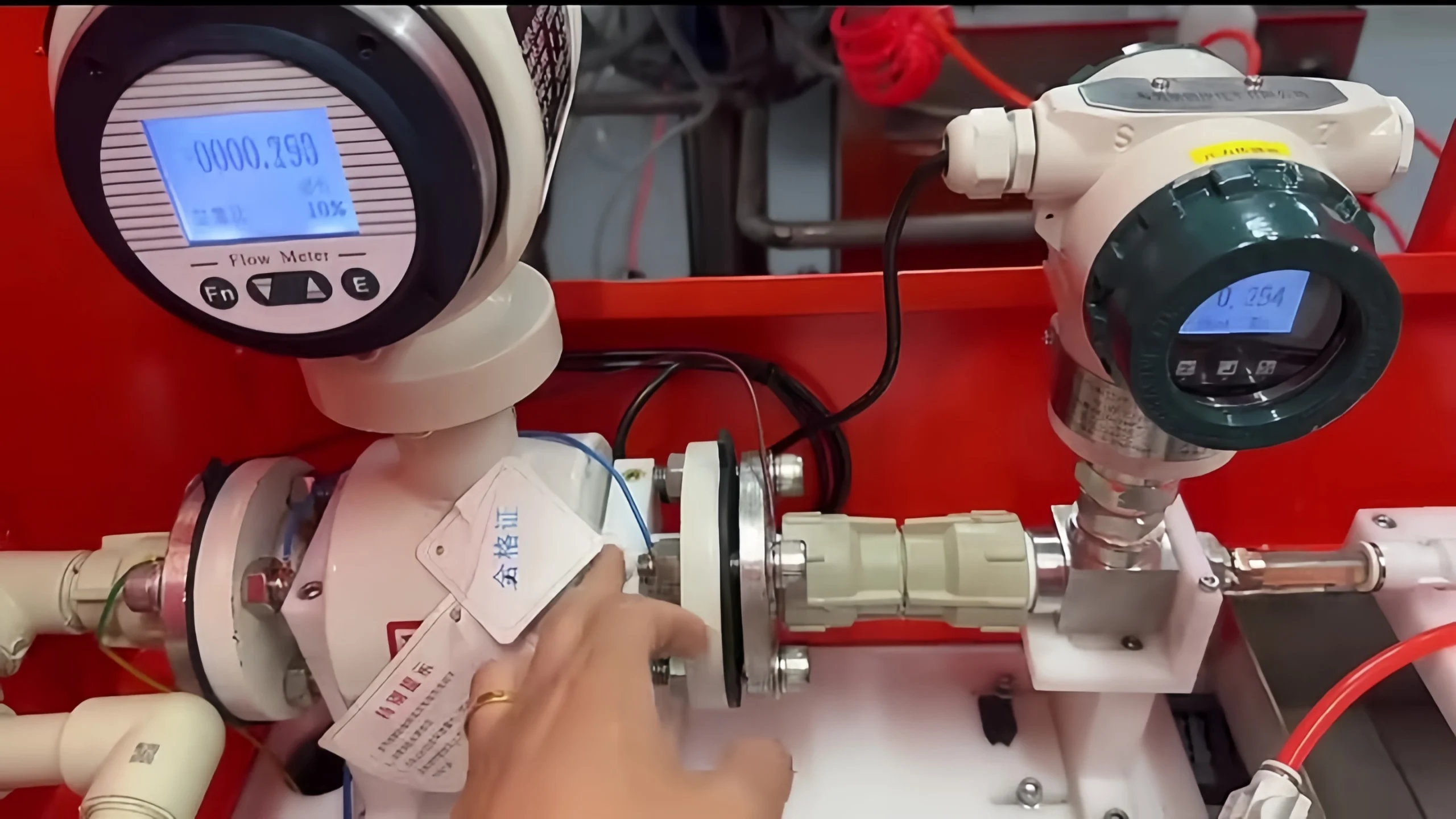
Based on Sino-Inst’s many years of experience in flow measurement, the main differences between Coriolis and Magnetic Flow Meters are as follows:
Different Measurement Principles
1. Electromagnetic flow meters operate based on Faraday’s law of electromagnetic induction: when a conductive liquid cuts through magnetic field lines, it generates an induced electromotive force, which is converted into the volumetric flow rate of the medium based on the magnitude of the electromotive force. These meters can only measure conductive fluids.
2. Coriolis flow meters rely on the Coriolis force effect. As the fluid flows through a vibrating measuring tube, a phase shift occurs, allowing the mass flow rate of the fluid to be measured directly. They are not limited by the medium’s electrical conductivity and can measure gases, liquids, and slurries.
Read More about: How Does a Magnetic Flow Meter Work?
Differences in Applicable Measurement Media
1. Electromagnetic flow meters are only suitable for conductive liquids, such as water, wastewater, acid and alkali solutions, and conductive slurries; They cannot measure non-conductive media such as oils, organic solvents, gases, or pure water.
2. Coriolis flow meters have no conductivity requirements and can measure various liquids, high-viscosity media, slurries, high-pressure gases, and multiphase mixed fluids; they are subject to certain usage restrictions only for media containing large particles of hard abrasives.
Directly Measured Parameters and Conversion Logic
1. Electromagnetic flow meters directly output volumetric flow rate. If mass flow rate is required, a separate density sensor must be installed; the conversion from volumetric flow rate to mass flow rate (via volume × density) is susceptible to fluctuations in temperature, pressure, and medium concentration.
2. Coriolis flow meters directly output mass flow rate and feature built-in density measurement capabilities. They can simultaneously acquire medium density and temperature data, enabling volumetric flow rate conversion without additional instruments. Data accuracy is not affected by changes in medium density under operating conditions.
Measurement Accuracy and Stability
1. Electromagnetic flow meters typically have an accuracy of 0.5%–1.0% FS, which is maintained only under full-pipe conditions with steady flow velocity and when the medium’s electrical conductivity meets the required standards; errors increase significantly under low flow velocity or non-full-pipe conditions.
2. High-precision models of Coriolis flow meters can achieve accuracy of 0.1%–0.2% FS, with uniform accuracy across the entire measurement range. Fluctuations in flow velocity and slight changes in medium density have virtually no effect on measurement results. These meters offer a higher metrological class and are suitable for trade settlement applications.
Pipeline Installation and Pressure Loss Characteristics
1. Electromagnetic flow meters have no throttling or obstructing components inside the measuring tube, allowing for smooth fluid flow and extremely low operational pressure loss. They are suitable for water supply, drainage, and wastewater treatment processes requiring large pipe diameters, high flow rates, and low pressure loss. Installation requires straight pipe sections upstream and downstream to ensure a stable fluid flow field.
2. Coriolis flow meters incorporate a vibrating measuring bend, resulting in significant pressure loss as the fluid flows through the pipe; while they allow for smaller pipe diameters at the same flow rate, procurement costs are extremely high for large-diameter applications. They require shorter straight pipe sections and do not necessitate long straight pipe runs upstream or downstream.
Operating Condition Limitations
1. Electromagnetic flow meters cannot be used in extreme high-temperature and high-pressure conditions; their upper limits for medium temperature and pressure are relatively low. The magnetic field is susceptible to strong external electromagnetic interference, so they must be installed away from equipment such as motors and variable frequency drives.
2. Coriolis flow meters offer greater resistance to high temperatures and pressures and excellent resistance to electromagnetic interference; however, external mechanical vibrations may slightly affect measurement accuracy, so vibration-damping supports must be installed during installation.
Suitability for Media Impurities and Wear
1. Lined electromagnetic flow meters can be equipped with rubber or PTFE linings, making them suitable for wastewater containing silt and fine particles. They offer excellent wear resistance and corrosion resistance and are widely used in municipal wastewater and chemical slurries.
2. Coriolis measuring tubes are typically made of metal; when the medium contains a large amount of hard, coarse particles, continuous abrasion against the tube walls will shorten the equipment’s service life, making them unsuitable for long-term measurement of highly abrasive slurries containing coarse particles.
Read More about: Turbine Flow Meter and Coriolis Mass Flow Meter-Difference and Selection
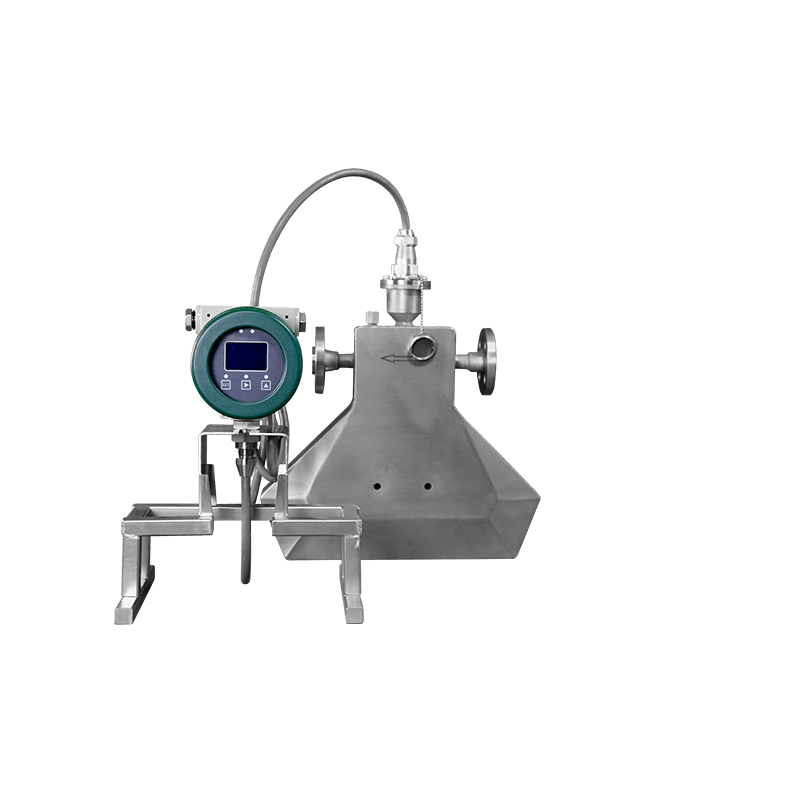
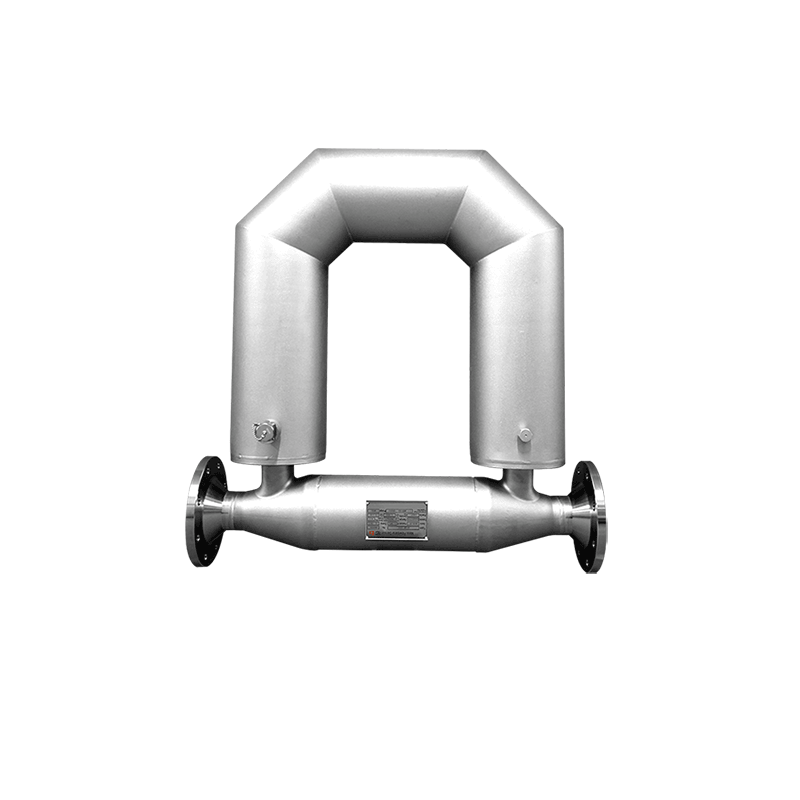
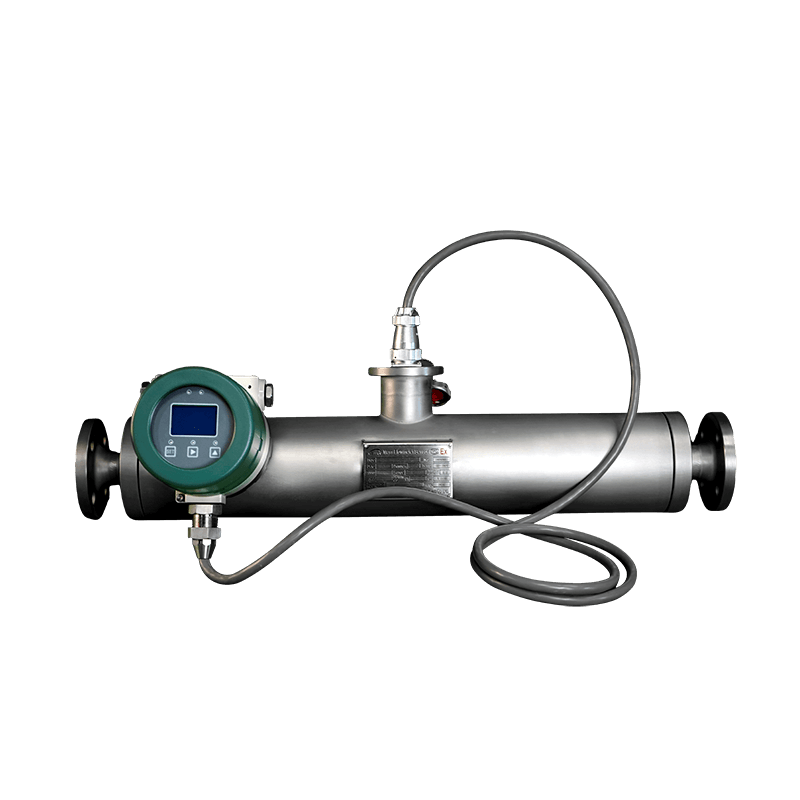
Selecting a Model Based on the Properties of the Fluid Being Measured
1. If the fluid is conductive (sewage, acidic or alkaline solutions, brine, conductive slurries, etc.) and only volumetric flow rate needs to be measured, electromagnetic flowmeters should be the first choice; If there are no conductivity requirements and the medium is insulating (oils, organic solvents, pure water, various gases), a Coriolis mass flowmeter must be selected.
2. If the medium contains a large amount of highly abrasive solid particles such as hard coarse sand or gravel, prioritize electromagnetic flowmeters for long-term continuous operation; pairing them with a wear-resistant lining can reduce wear. If the fluid contains only fine, soft particles and no hard abrasives, a Coriolis mass flowmeter may be selected.
3. For measuring gases, gas-liquid two-phase mixtures, or liquid-solid multiphase mixtures, electromagnetic flowmeters are completely unsuitable; Coriolis mass flowmeters should be selected directly.
Selecting a Model Based on Measurement Requirements (Mass/Volume)
1. If the site only needs to monitor volumetric flow rate, with no requirements for batching or trade metering, and the medium is conductive, select an electromagnetic flowmeter; if precise mass flow, online density measurement, precise batching, or trade settlement is required, a Coriolis flowmeter must be used.
2. If the medium’s density fluctuates frequently with temperature and pressure, resulting in significant errors when converting volume to mass, select a Coriolis flowmeter directly without installing additional density compensation instruments; if the medium’s density remains stable and only a rough mass reference is needed, an electromagnetic flowmeter paired with a density sensor can be used for conversion when measuring conductive fluids.
Select the meter based on measurement accuracy requirements
1. For general process monitoring, water supply and drainage, and wastewater process monitoring—where a measurement error of 0.5% to 1% is acceptable—electromagnetic flowmeters fully meet the accuracy requirements and offer better cost-effectiveness;
2. For precision dosing in chemical processing, pharmaceutical batching, petroleum product handover, and commercial trade metering—which require high-precision measurement of 0.1% to 0.2%—Coriolis flowmeters must be selected.
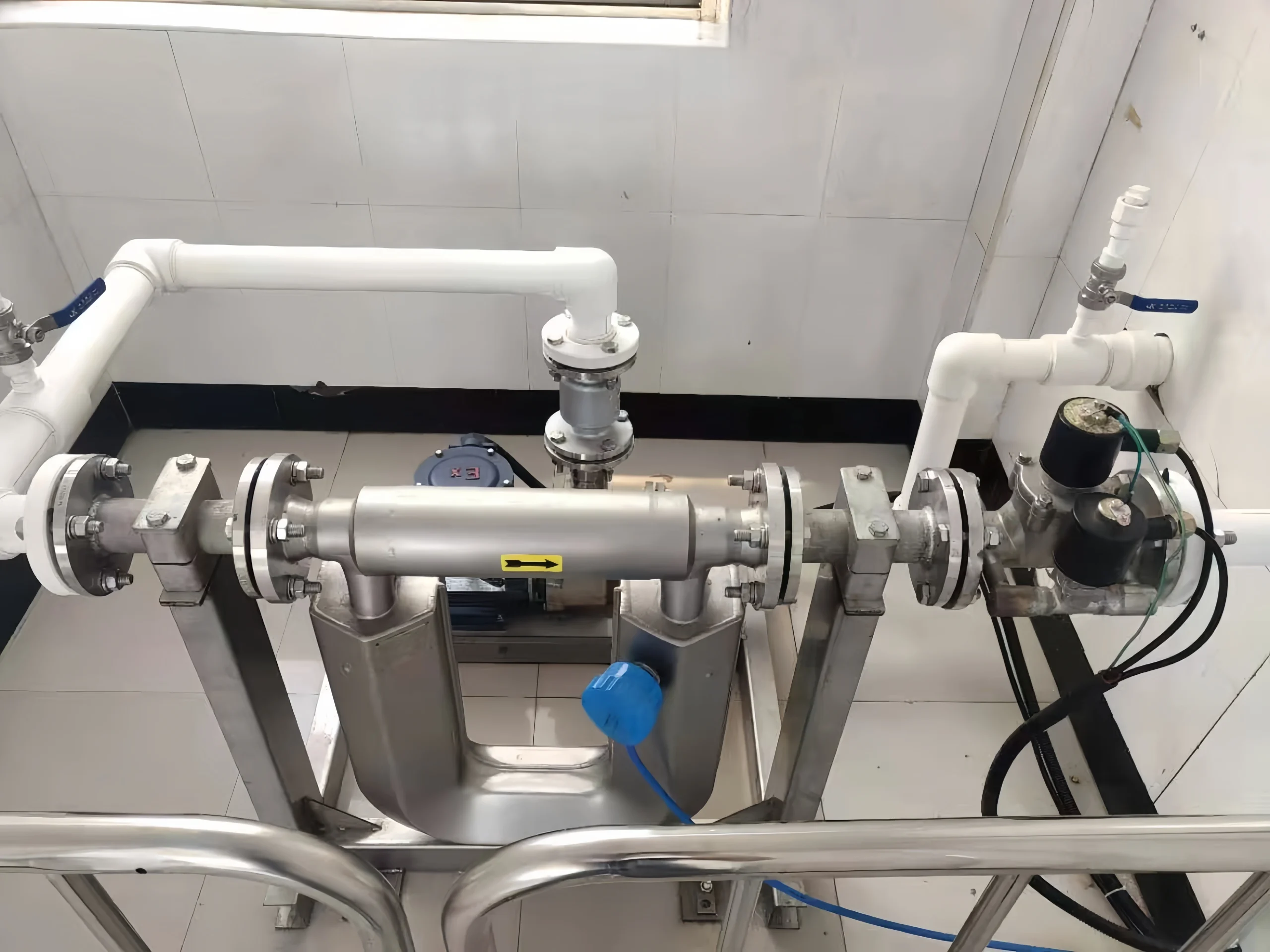
Selecting a Model Based on Pipe Diameter and Pressure Drop Requirements
1. For large-diameter pipes (DN200 and above) and high-flow conditions where low pressure drop in the pipeline and no increase in system energy consumption are required, electromagnetic flow meters are the preferred choice, as they have no throttling components and result in minimal pressure drop; large-diameter Coriolis flow meters are extremely expensive and cause greater pressure drop, making them uneconomical.
2. For small pipe diameters and small-to-medium flow rates where pressure loss is not a critical concern and high-precision measurement is required, select a Coriolis flow meter; Coriolis flow meters require shorter upstream and downstream straight pipe sections and are better suited for confined installation spaces.
Select the meter based on operating conditions such as temperature, pressure, and interference environment
1. In environments with strong electromagnetic interference—such as those caused by variable frequency drives or high-power motors—if the medium is conductive and accuracy requirements are moderate, electromagnetic flowmeters must be properly shielded and grounded; for stable measurements without the need to address electromagnetic interference, select Coriolis flowmeters.
2. In environments with significant pipeline vibration (e.g., air compressors or pumps installed in close proximity), exercise caution when selecting a Coriolis flowmeter, as additional vibration-damping mounts will be required; electromagnetic flowmeters are unaffected by pipeline vibration and provide more stable performance under such conditions.
3. In high-temperature, high-pressure fine chemical processing applications, Coriolis flowmeters offer a wider range of temperature and pressure tolerance; for conventional pipelines carrying water supply and drainage at normal temperature and pressure, as well as conductive chemical liquids, electromagnetic flowmeters are fully adequate.
Select the appropriate model based on budget, maintenance costs, and application scenarios
1. For routine monitoring of municipal wastewater, industrial recirculating water, and high-flow conductive media—where budgets are limited and post-installation maintenance is simple—select an electromagnetic flowmeter, as it offers low procurement and spare parts costs;
2. For metering high-value-added media in the food, pharmaceutical, fine chemical, and oil trading industries—where measurement accuracy is prioritized over equipment cost—select a Coriolis flowmeter.
3. For long-term conveyance of highly corrosive conductive liquids, electromagnetic flowmeters allow for corrosion protection through replaceable linings; corrosion-resistant modifications to the metal material of Coriolis measuring tubes are more costly, so electromagnetic flowmeters are preferred for corrosive conductive media.
Equipment Costs and Application Scenarios
1. Large-diameter electromagnetic flowmeters have low procurement and maintenance costs and are commonly used in industrial water supply and drainage, wastewater treatment, and process monitoring of conductive liquids in the chemical industry, with an emphasis on volumetric monitoring of process flows.
2. For the same diameter, Coriolis flowmeters are significantly more expensive than electromagnetic flowmeters and are primarily used in fine chemicals, food and pharmaceuticals, oil trading, and high-precision batching applications, as well as in trade settlement and precision feeding scenarios requiring accurate mass measurement.
Read More about: Magnetic Flow Meter Installation Guide and Magnetic Flow Meter Calibration and Maintenance Guide.