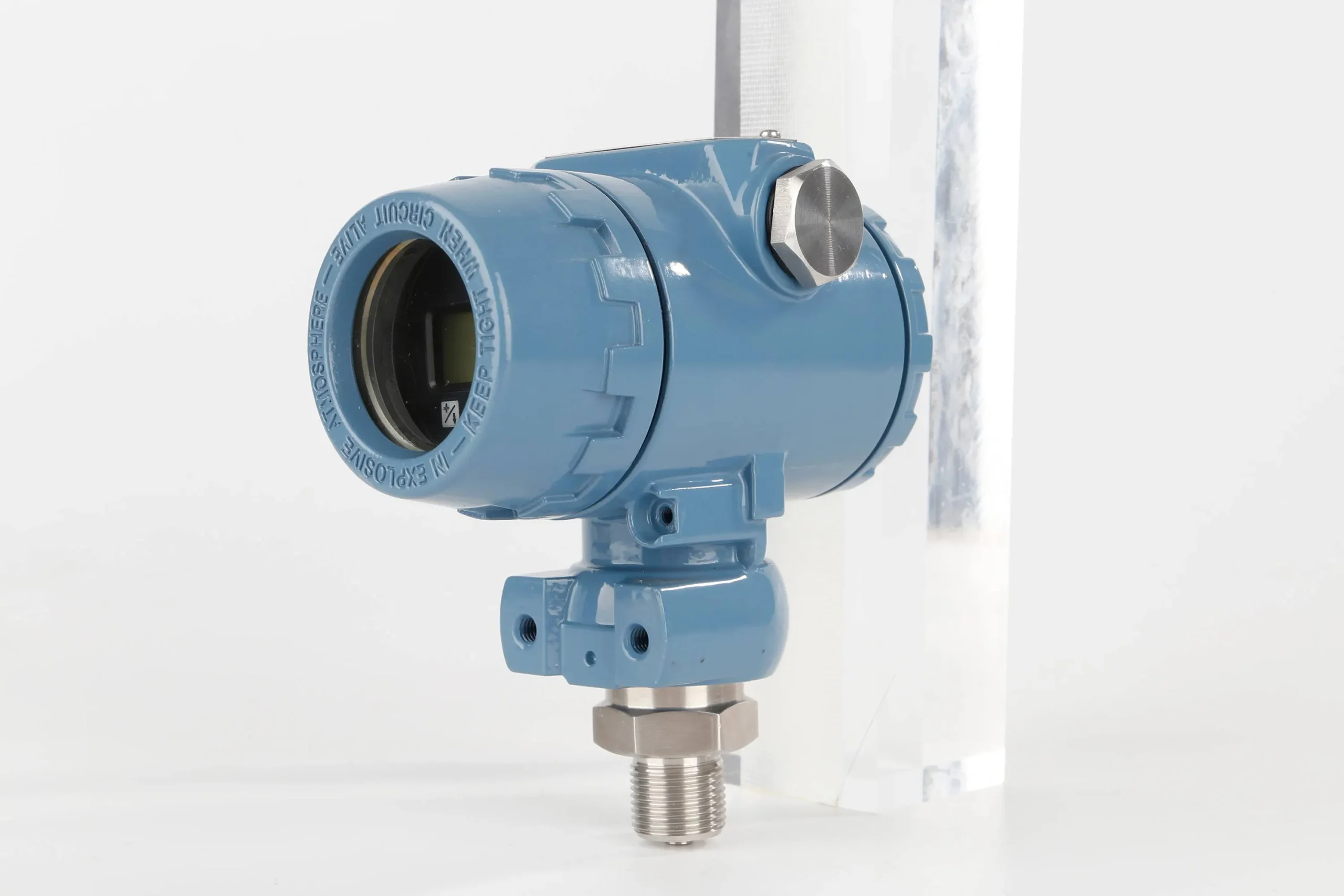
Capacitive level sensors determine the liquid level by measuring the capacitance between the probe and the tank wall. The dielectric constant of a liquid is higher than that of the air or vapor above it. As the liquid level rises, more of the probe is surrounded by liquid and capacitance increases; as the liquid level drops, capacitance decreases. By measuring these changes in capacitance, the liquid level height can be determined.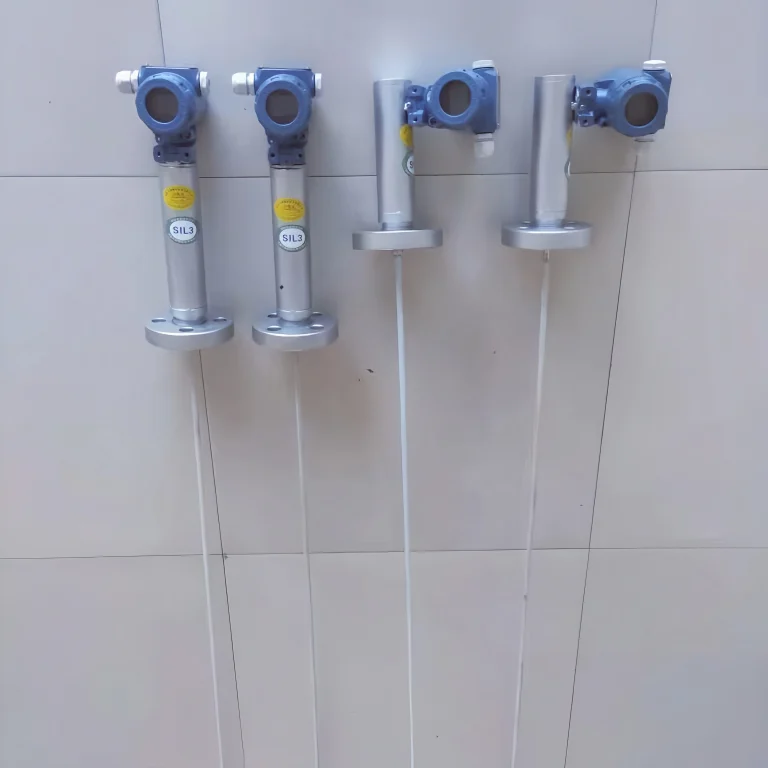
Our high-pressure capacitive level sensors can operate at pressures up to 32 MPa, while our cryogenic capacitive level sensors are suitable for liquid nitrogen environments as low as −196 °C. Of course, there are limitations: if the medium is viscous or conductive, it may adhere to the probe, causing measurement errors. This guide will explain their operating principles, the probe designs we offer, output options, and situations in which capacitive sensors should not be used.

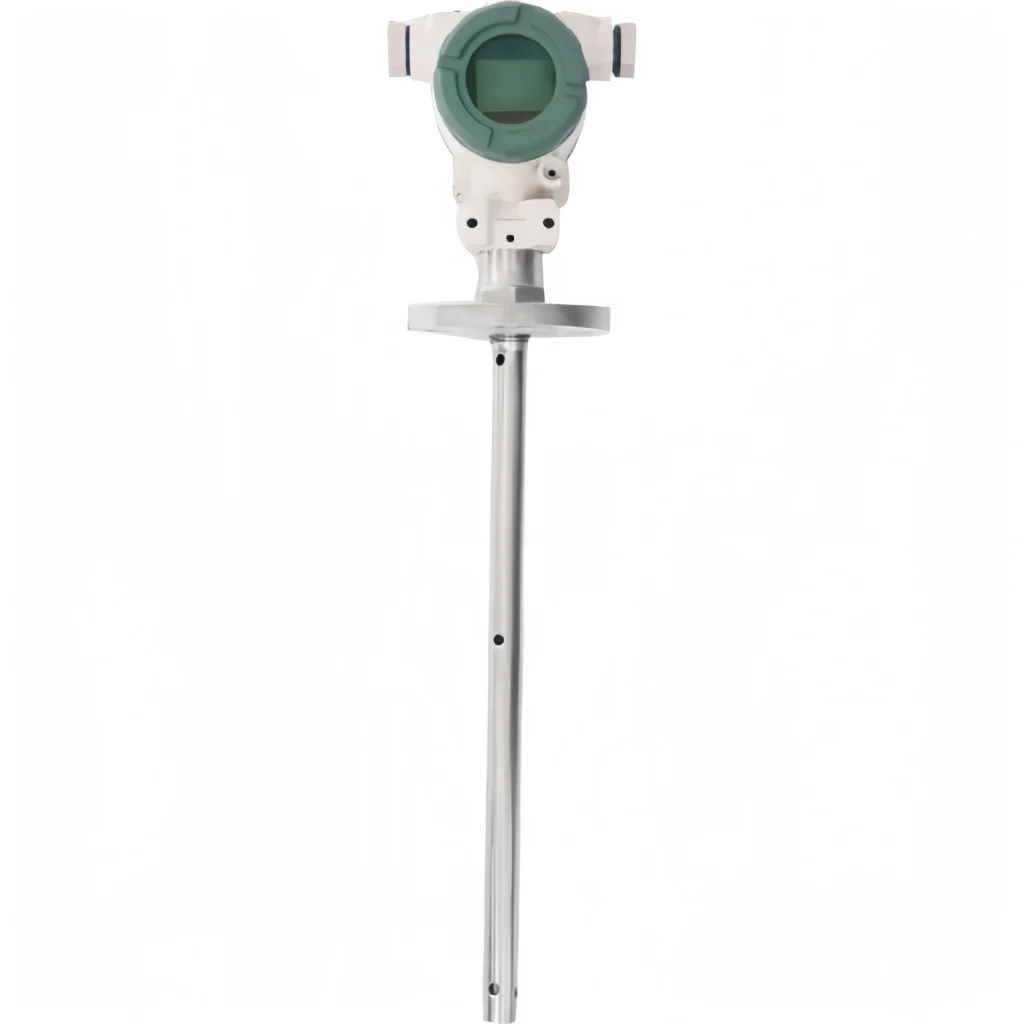

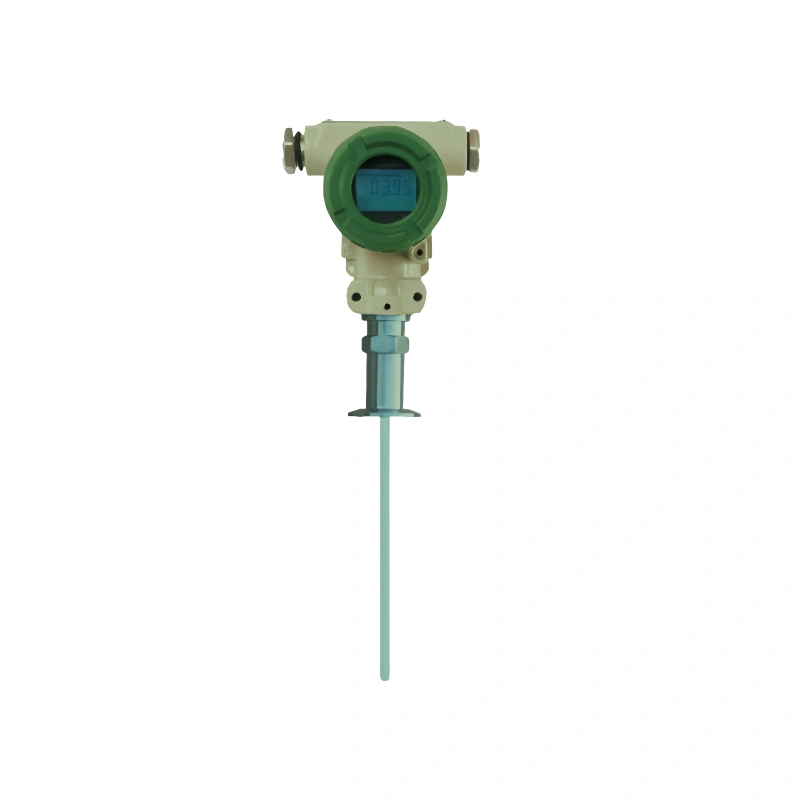
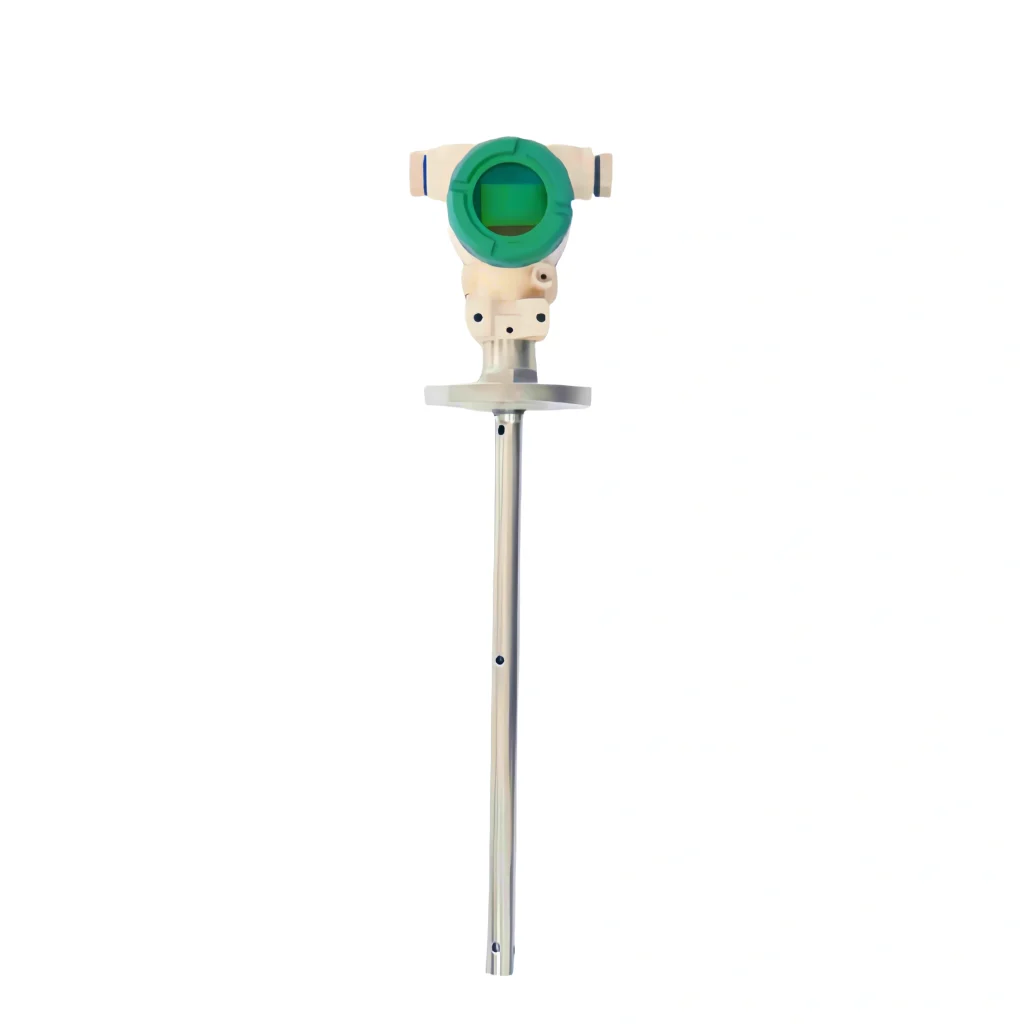

Capacitive level sensors use the principle that changes in liquid level affect the capacitance of a container. They can be used to measure the level of high-temperature, high-pressure, and highly corrosive media. Density and pressure do not affect the reading, but a viscous, conductive medium can leave a film on the probe. They offer high interference immunity and reliability.
Because the dielectric constant of the measured liquid differs from that above the liquid surface. The capacitance value (C = εS/4πkd) is proportional to the dielectric constant ε and the area S facing the electrodes. And it is inversely proportional to the distance d between the electrodes. For a rod probe in a metal tank or a coaxial tube, the geometry is cylindrical: C = 2πε₀εᵣL / ln(D/d), where L is the wetted probe length, D the tube or tank diameter and d the probe diameter. So capacitance rises linearly with level.

If the dielectric constant of the measured liquid is higher. The total dielectric constant between the two electrodes increases as the liquid level rises. Thereby increasing the capacitance. Conversely, as the liquid level falls, the capacitance decreases. Typical dielectric constants of common media are shown in Table 1 below.
Table 1. Typical dielectric constants of common media
| Medium | Typical εr (approx., 20 °C unless noted) |
|---|---|
| Water | 80 |
| Glycerin | 42 |
| Methanol | 33 |
| Ethanol | 24 |
| Acetone | 21 |
| Hydraulic / lube oil | 2.1–2.4 |
| Diesel | 2.1 |
| Gasoline | 2.0 |
| Liquid propane / LPG | 1.6–1.8 |
| Liquid nitrogen (−196 °C) | 1.43 |
| Air / vapor | 1.0 |
Values change with temperature and composition. For liquids below εr ≈ 2, use a coaxial probe and confirm the application with us.
The sensor and the container wall (made of conductive material) form a capacitor. When the sensor is in air, a small initial capacitance value, CA, is measured. As material is added to the container, the capacitance increases as the area of the sensor covered by the material increases. This capacitance value, CB, is measured. The change in capacitance, dC, equals CB – CA. The transmitter module converts this capacitance change into a signal. The signal is proportional to the liquid level.
The electronic calculation of the container capacitance value is based on the phase-selective measurement principle. During this process, the magnitude of the alternating current and the phase difference between the voltage and current are measured. Based on these two characteristic parameters, the reactive current is calculated. It is based on the dielectric capacitance. And the actual current is calculated based on the dielectric impedance.

Conductive deposits and condensation on the sensor act as additional dielectric impedance. Causes measurement errors and requires sensor adhesion compensation.
Probe selection by process conditions
| Probe design | Process temperature | Pressure | Typical media | Output |
|---|---|---|---|---|
| Coaxial capacitive level transmitter | −50 to 450 °C (probe) | −0.1 to 32 MPa | Low-εr liquids: oils, solvents, LPG | 4–20 mA, HART, RS485, CAN |
| High-pressure rod probe | −50 to 250 °C | −0.1 to 32 MPa | Conductive liquids in pressure vessels | 4–20 mA, HART, RS485 |
| Sanitary probe | −50 to 250 °C | −0.1 to 5 MPa | Food, beverage, pharma | 4–20 mA, HART, RS485 |
| Cryogenic probe | −196 to 80 °C | ≤1.6 MPa (custom higher) | Liquid nitrogen, LNG | 4–20 mA, 0–5 V, RS485, RS232 |
| Fuel / oil probe | −50 to 80 °C | −0.1 to 0.6 MPa | Diesel, hydraulic oil, lube oil | 4–20 mA, 0–5 V, 0–10 V, RS485, RS232 |
| Capacitance level switch | −20 to 80 °C (200 °C option) | Atmospheric (2 MPa option) | Point level in liquids and powders | SPDT microswitch 5 A / 250 VAC |
The four general designs are described below. Cryogenic, fuel/oil and switch versions are listed in the table above.
General-purpose Capacitive Level Sensor
It can operate at pressures below 0.6 MPa and 100°C. It is suitable for measuring the liquid level of conductive media. Such as reservoirs, sewage, baths, acid and alkali solutions, and low-pressure boilers.
High-Pressure Capacitive Liquid Level Sensor
Its probe is made of PTFE and its connectors are made of stainless steel. It can operate for long periods at 32 MPa and 100°C and exhibits strong corrosion resistance. It can measure conductive media at relatively low temperatures and high-pressure vessels.
Sanitary Capacitive Liquid Level Sensor
This product has a long-term operating pressure of up to 5 MPa. It is a specialized instrument customized for the food, pharmaceutical, beverage, brewing, and biological products industries. It utilizes standard sanitary stainless steel quick connectors and an integrated PTFE probe structure. Ensure a clean, seamless interface between the sensor and the media.
Coaxial Sheathed Capacitive Liquid Level Sensor
The sensor consists of a coaxial container. When liquid enters the container. The capacitance between the sensor housing and the sensing electrode changes. This capacitance change is converted by the circuit, precisely linearized, and temperature-compensated. And then outputs a 4-20 mA standard signal to the display instrument.
It is suitable for measuring various non-conductive liquids and has strong anti-interference capabilities. They are ideal for applications with large level fluctuations.
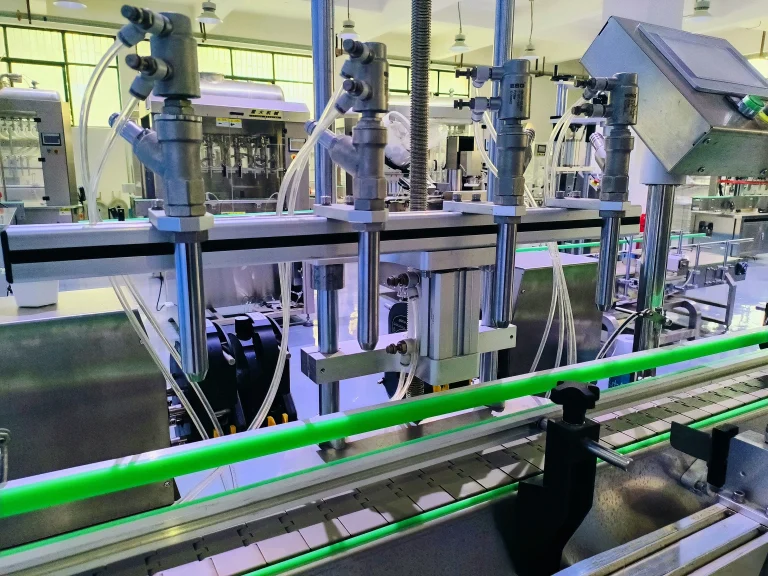
Sino-Inst’s level sensors offer customizable output signals. Based on the nature and form of the output signal, they can be categorized into several common types:
Analog Signal: An analog signal is a continuously varying signal whose value can take on any value within a certain range. Our continuous transmitters output 2-wire 4–20 mA, with HART as an option. Fuel and cryogenic models also offer 0–5 V or 0–10 V.
Digital Signal: A digital signal is a discrete signal whose value can take on a finite number of values. Our transmitters offer RS485. The coaxial version also offers CAN bus, and fuel and cryogenic models add RS232.
Switch Signal: Capacitance level switches give an SPDT microswitch contact rated 5 A / 250 VAC.
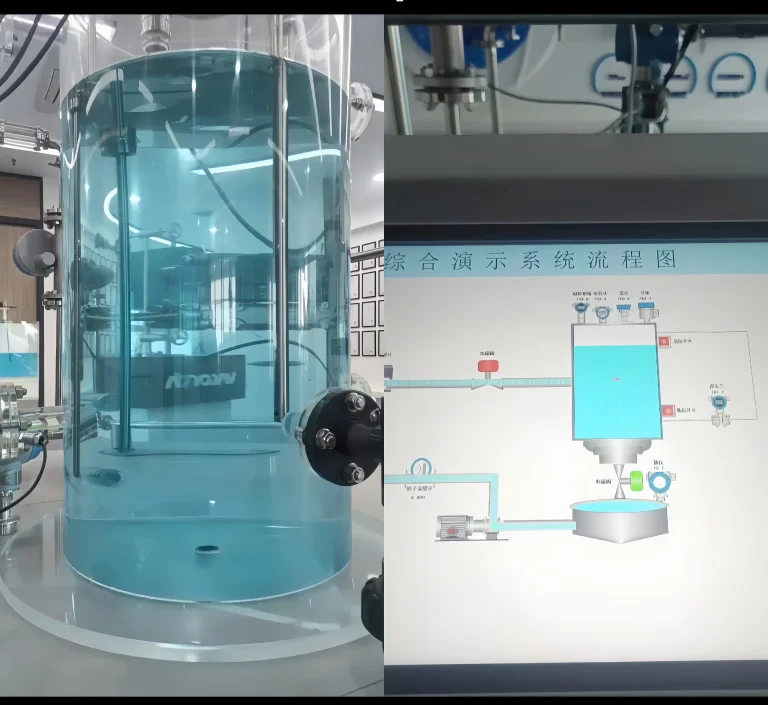
Capacitive Level Sensor Applications:
1. Continuous Level Detection
Level detection of viscous liquids or slurries. Conventional liquid level detection (water/water-based media/oil, etc.)
2. Interface detection (continuous/switchable) Oil-water interface detection.
3. Limit switch detection
- Limit level detection for adhesive liquids or slurries.
- Foam detection for conductive liquids.
- Conventional limit level detection (various solids/liquids).
Capacitive level sensor application industries
- Chemical plants: Detect the liquid level of chemical raw materials. Such as polyester, spandex, acids, and alkalis;
- Environmental protection: Detecting wastewater level;
- Boiler rooms: Detecting the liquid level of media in pressure vessels;
- Hydraulic machinery: Detecting lubricating oil level;
- Grain departments: Detecting edible oil level;
- Oil fields: Detecting finished oil level;
- Paint factories: Detecting paint level;
- Powder silos: Detecting materials in silos such as coal powder, cement, plastic pellets, grain, feed, and flour;
Field Examples
Pressurized liquid nitrogen tank, UK (R&D lab). A 50 L LN2 tank feeds a cryogenic supply line at about 1 bar abs and is cycled up to 10 bar abs. The lab needed continuous level over a 700 mm span with 4–20 mA. We supplied a cryogenic capacitive level sensor with a 950 mm, Ø12 mm probe and a G1/2 BSPP face-seal connection. Two details decided the design: the probe stayed at 12 mm, because a 9.52 mm rod would weaken the signal in a liquid with εr of only 1.43; and the top vent hole was checked against the full-fill line so it never sits below the liquid.
Application example – engine oil tank, Russia. An engine builder asked for a capacitive oil level sensor with thermal compensation: 0–345 mm span, oil at 0–100 °C, tank pressure −10/+30 mbar. Our proposal was a capacitive level transmitter with built-in temperature compensation and a 4–20 mA output calibrated to the 345 mm span. Oil has a low dielectric constant that drifts with temperature, so compensation matters more here than in water-based media.