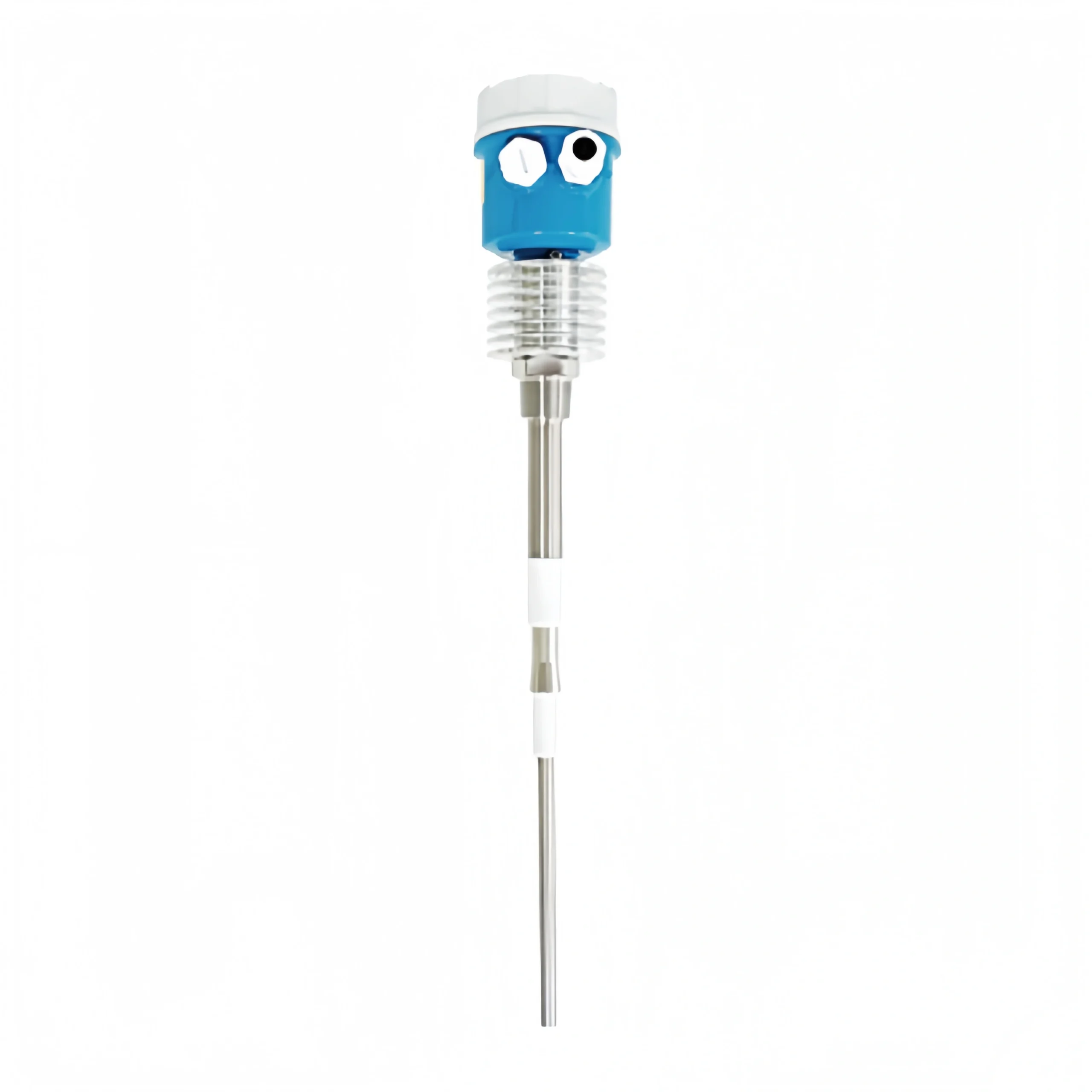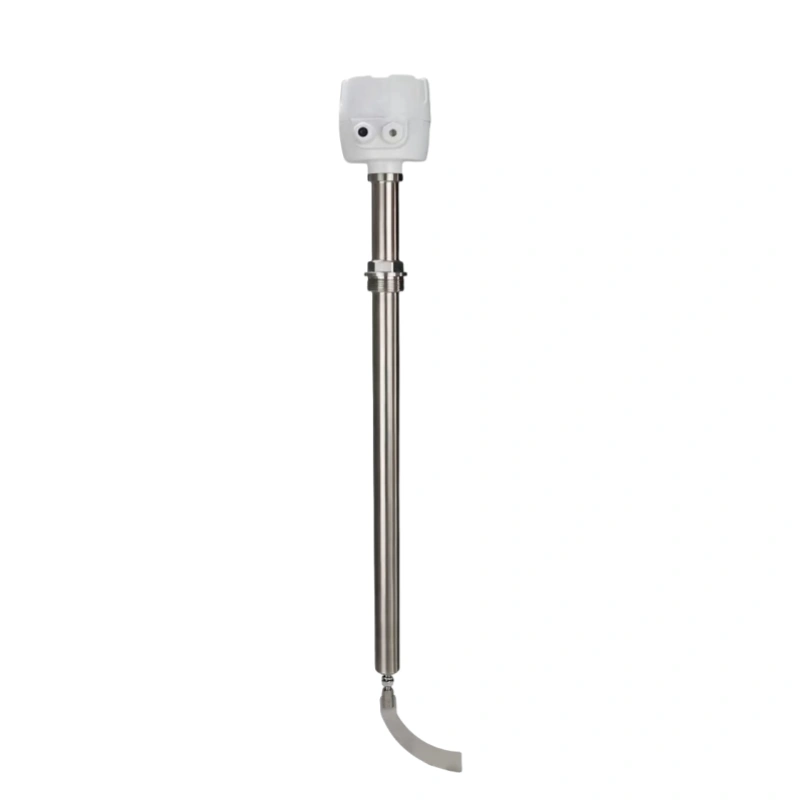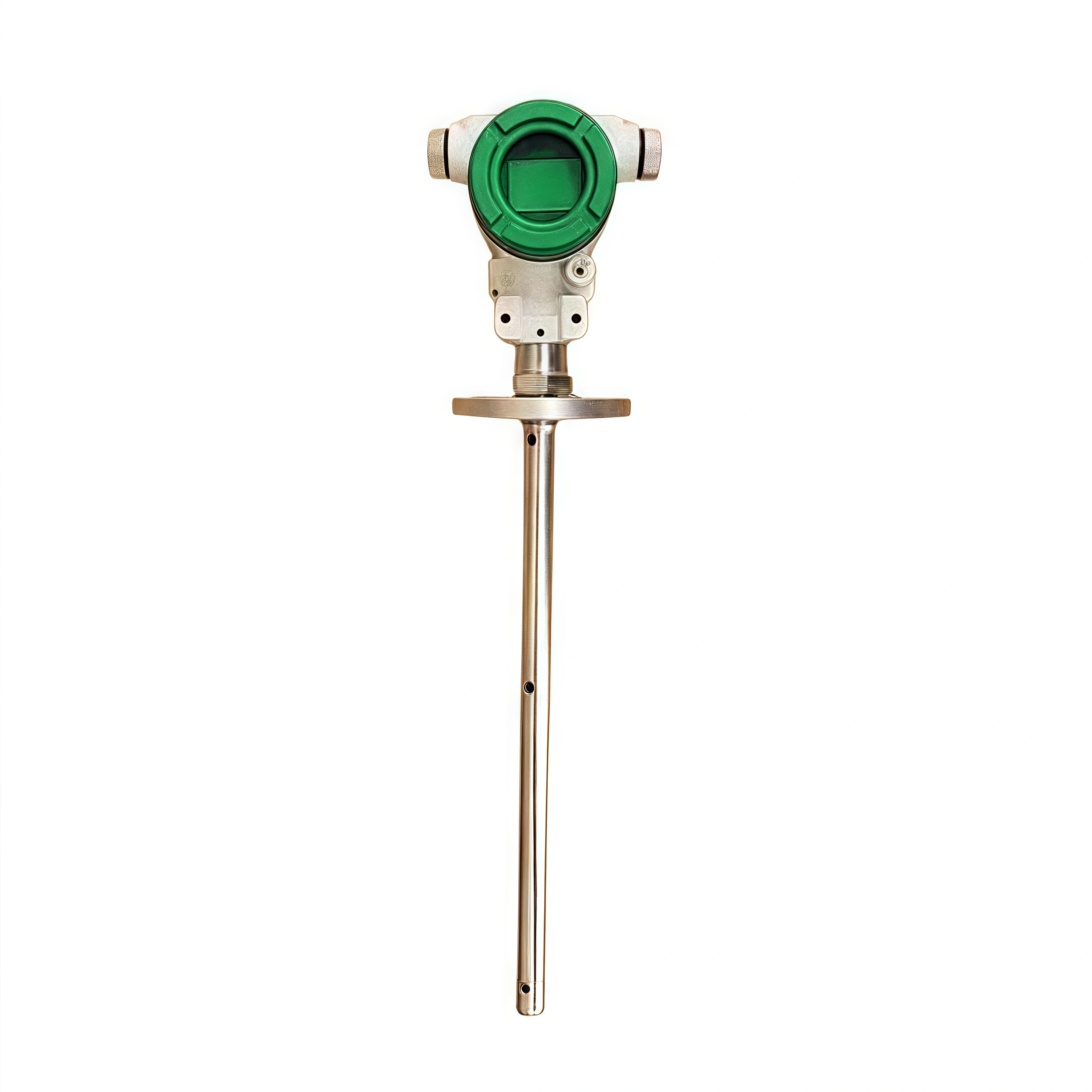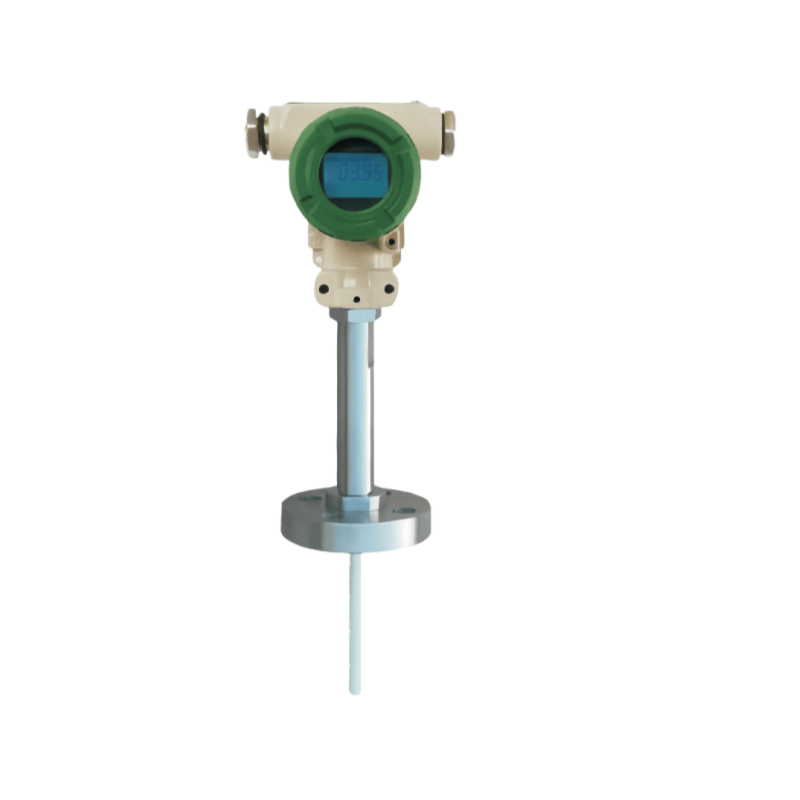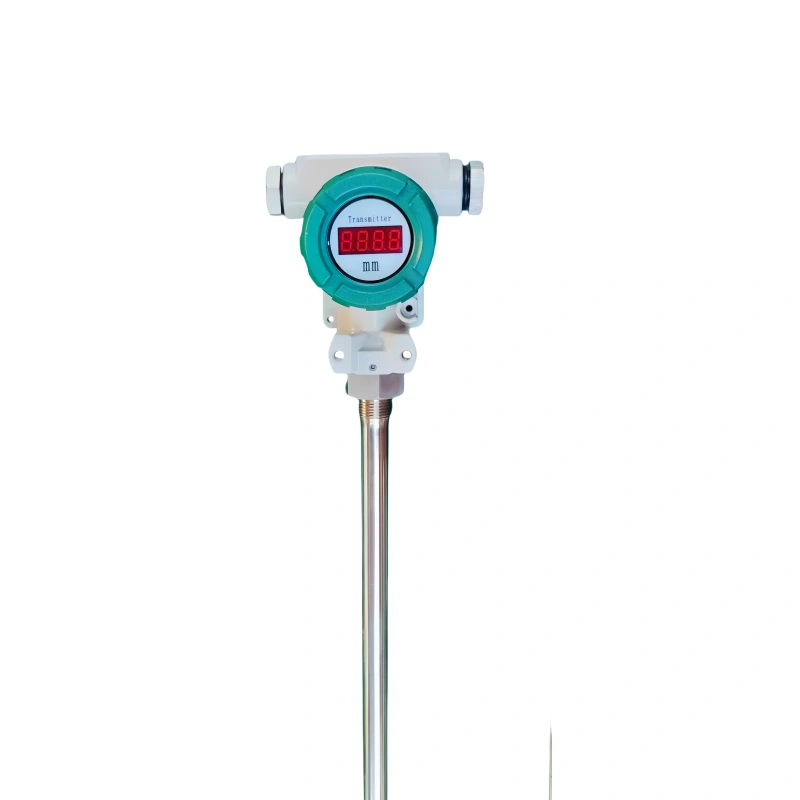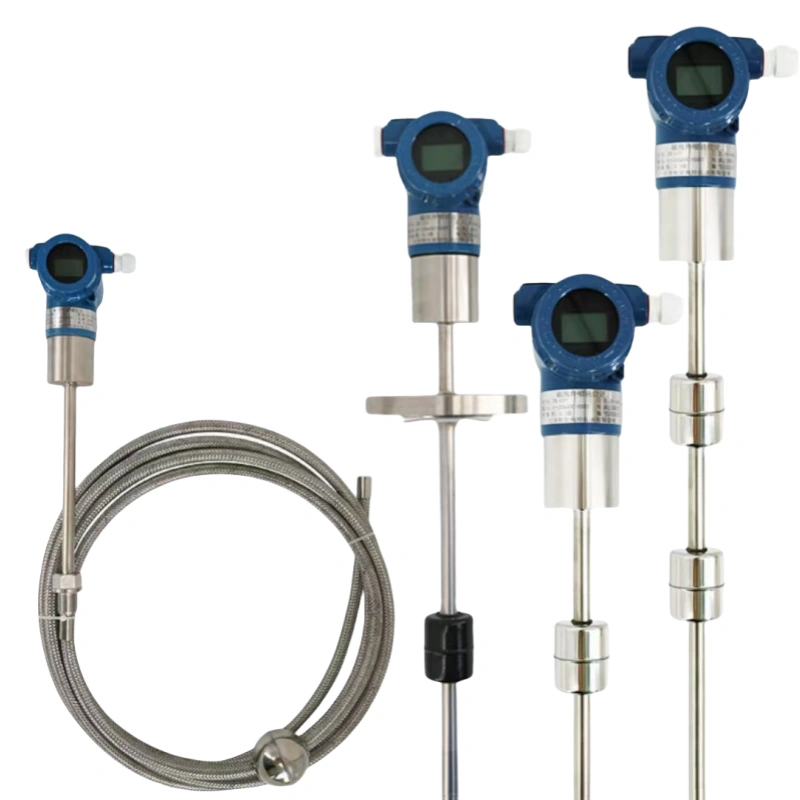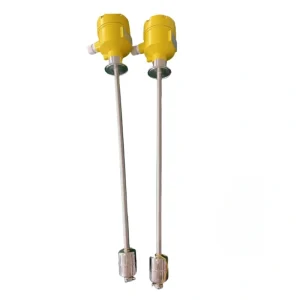
In industrial level detection, float level switches and capacitive level switches are the two mainstream solutions.
Based on different sensing mechanisms, they exhibit significant differences in terms of medium compatibility, operational stability, and maintenance characteristics. The following section compares their performance limits and key selection criteria.
What Is a Capacitive Level Switch?
A capacitive level switch is a widely used point-level detection device that can monitor the level of liquids, powders, and other media inside tanks.
It provides a switch signal for level alarms and for controlling the start and stop of pumps and valves, and it is applied across many industries, including chemicals, water treatment, and grain processing.
Working Principle of a Capacitive Level Switch
It operates based on the principle of capacitance change. The probe and the container wall form the two electrodes of a capacitor; air and the measured medium have different dielectric constants.
When the liquid level climbs up and touches the probe, the material sitting between the two electrodes switches from air to the medium itself, and that changes the capacitance. The circuit inside notices this shift and drives the switch to actuate.
As the level drops and the probe no longer touches the liquid, the capacitance goes back to normal and the switch resets. By watching these changes, the device can tell whether the liquid level has reached the detection point.
What Is a Float Level Switch?
A float level switch is a fairly simple device, but it does its job well: it detects and controls liquid levels in tanks and similar containers. When the level gets too high or too low, it can trigger an alarm by itself or start and stop pumps as needed.
Because of this, you’ll find it everywhere from water treatment plants to chemical processing facilities.
How Does a Float Level Switch Work?
It all comes down to buoyancy plus magnetic induction. The float carries a permanent magnet inside it, so it naturally follows the liquid level as it rises and falls.
Once the level hits the preset height, the float approaches the reed switch sitting inside the shaft, and the magnet’s field causes the contacts to close or open, sending out an on/off signal.
When the level drops again and the float moves away, the magnetic field fades, and the switch returns to its original position. That is how automatic level detection and control is achieved.
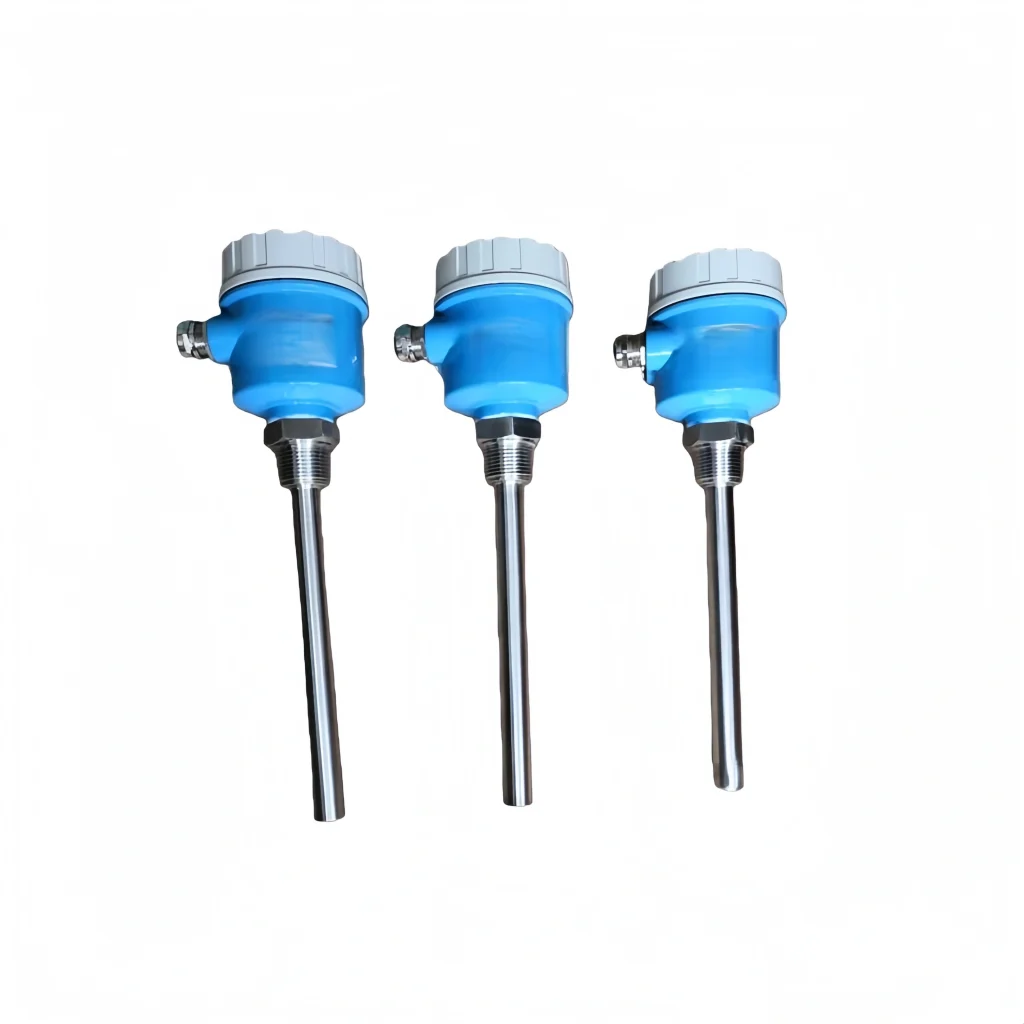
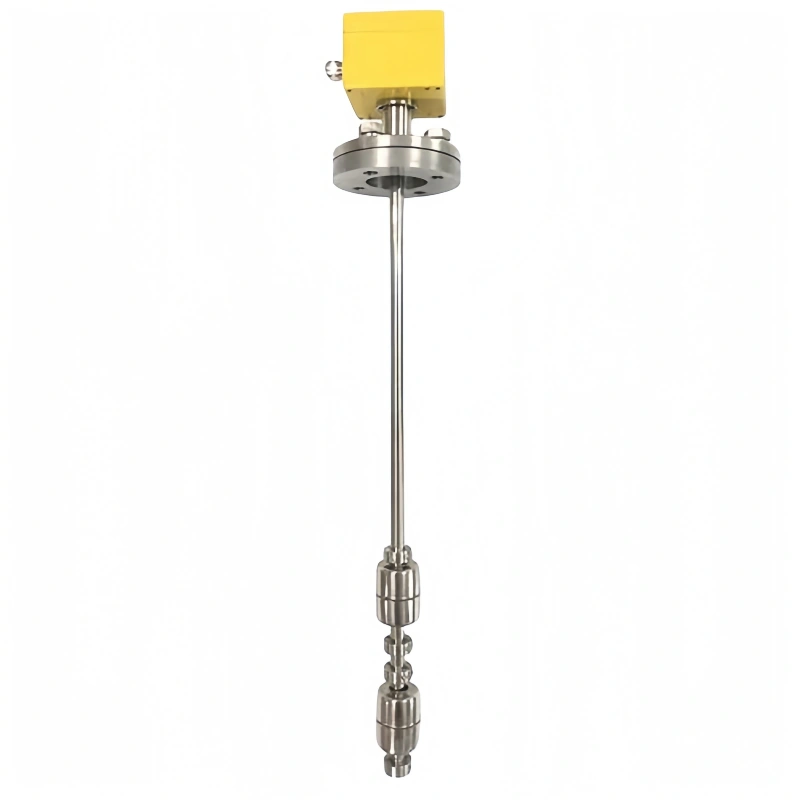
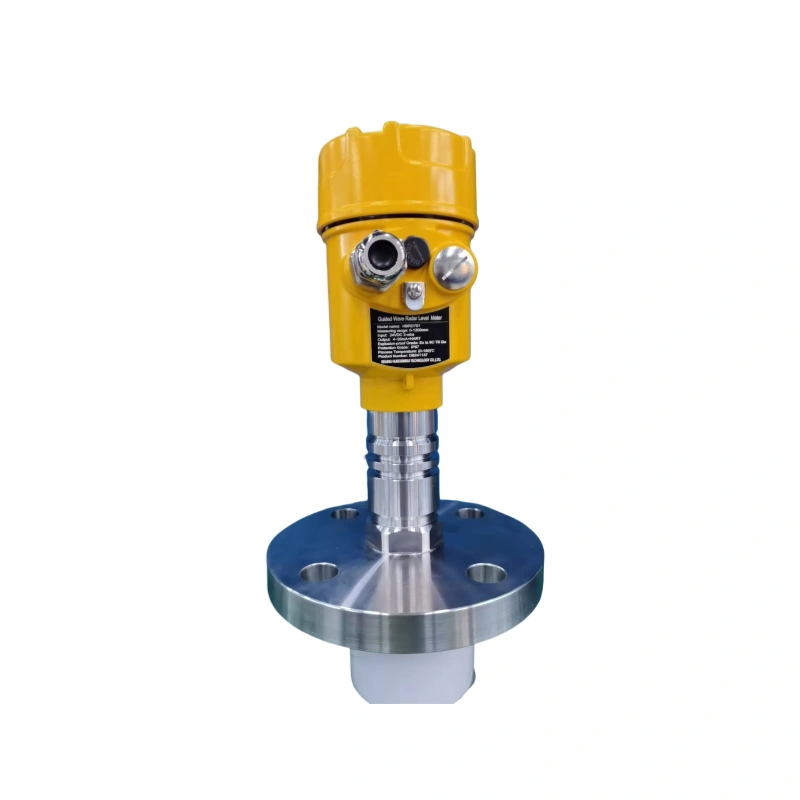
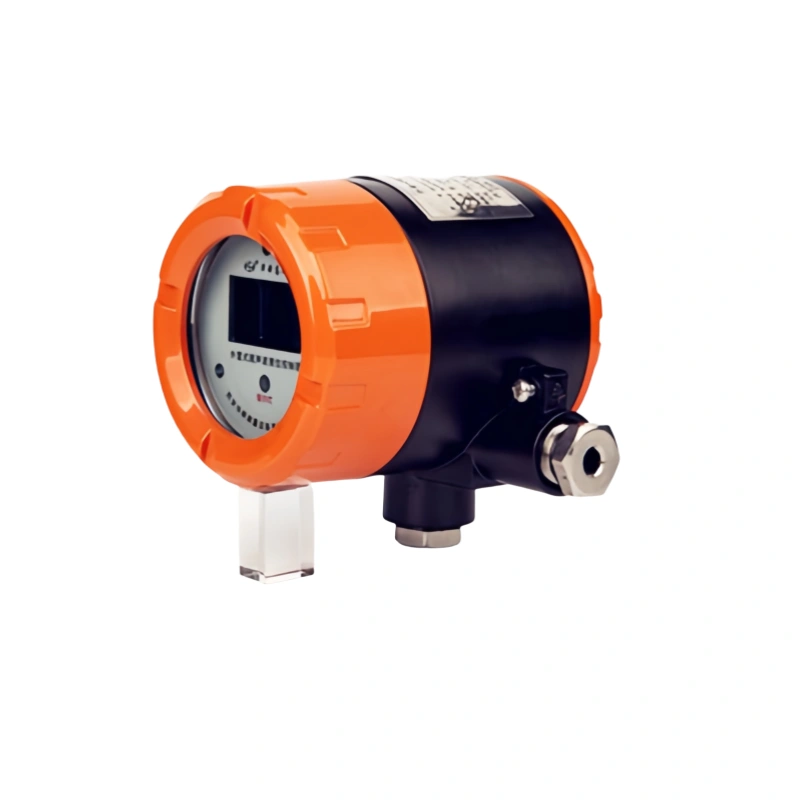
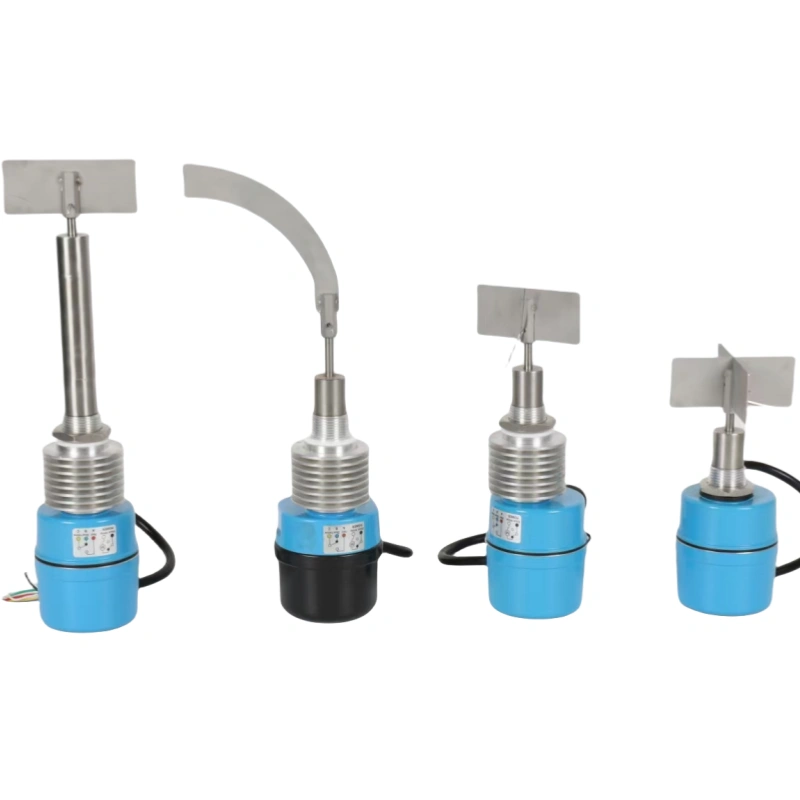
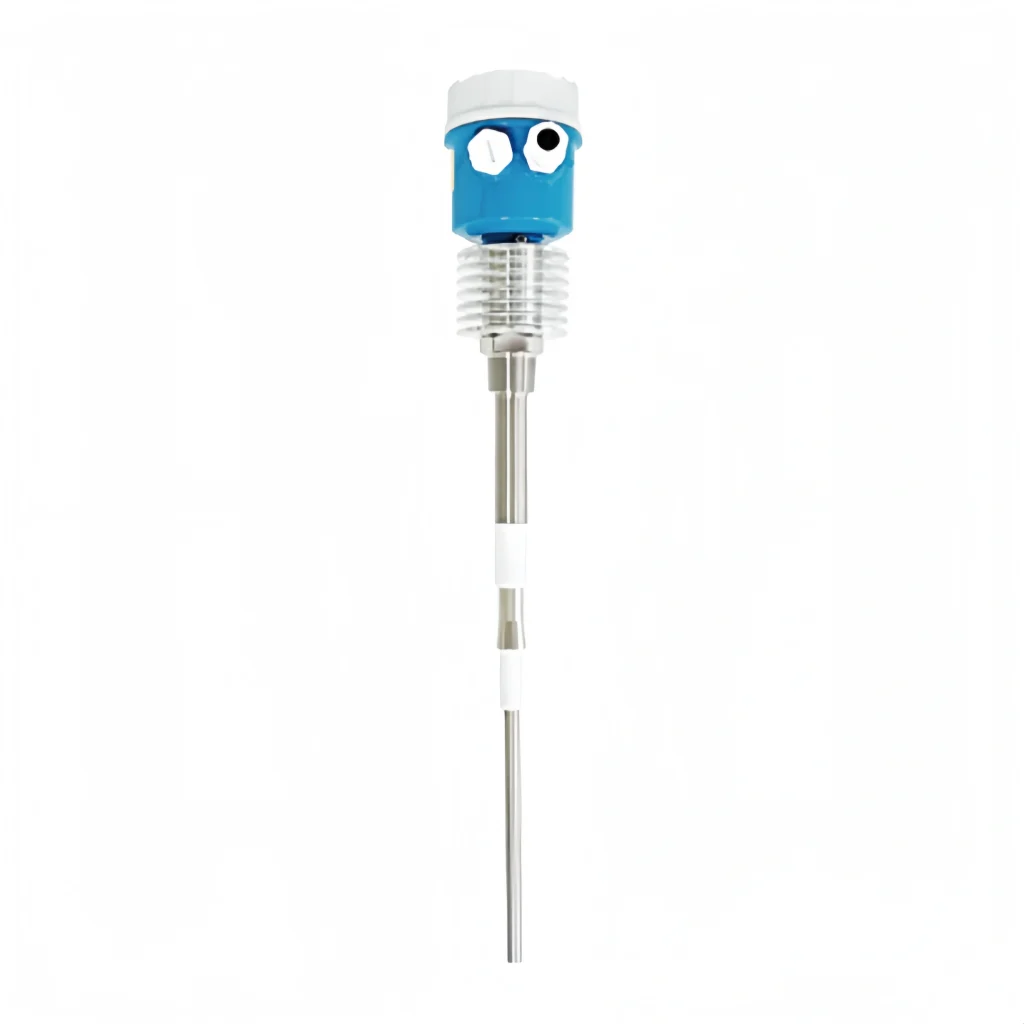
Float Level Switch vs. Capacitive Level Switch
1. Operating Principle
A float level switch relies on a float that rises and falls with the liquid level; an internal magnet triggers a reed switch, converting the liquid level position into a switch signal. This is a mechanical method of level detection.
A capacitive level switch forms a capacitor with the probe and the container wall; changes in the medium’s liquid level alter the capacitance. The circuit detects this change and outputs a switch signal. This is an electronic detection method with no moving parts.
2. Suitable Media
Float level switches work best with clean, free-flowing liquids of low viscosity, such as clean water and light oils. With viscous media or liquids carrying a large amount of solid impurities, the float tends to get stuck.
Capacitive level switches handle a wider range of media, including clean water, acid and alkali solutions, slurries, and materials containing a small amount of particles. However, they are not a good fit for highly adhesive conductive media, since scaling on the probe can lead to false triggers.
3. Installation and Structure
Float level switches offer a few installation choices, including side-mount and top-mount versions. Their structure is simple and easy to understand, though the movable float assembly does take up a certain amount of space inside the tank.
Capacitive level switches are generally fitted with rod-type or cable-type probes. Installation is not difficult, there are no moving parts inside the tank, and they work well in containers where space is limited.
4. Maintenance and Service Life
Float level switches contain mechanical moving parts, so after long periods of use the float may become stuck or the seal may start to leak. Regular inspection is therefore necessary.
Capacitive level switches do not suffer from mechanical wear and tend to last longer under normal operating conditions. Even so, material buildup or scaling on the probe surface can affect detection stability, so the probe needs to be cleaned from time to time.
5. Measurement Characteristics
Float level switches are typically used for single-point level alarms; a few models can provide multi-point switch outputs. They can only detect preset level points and cannot perform continuous measurement.
Capacitive level switches are also commonly used for point-level control; some models can output continuous signals and respond more quickly to changes in liquid level.
6. Operating Conditions
Float level switches are not resistant to high temperatures or high pressures, and the medium’s density must not be too low, as insufficient density will prevent the float from rising.
Capacitive level switches can handle some high-temperature and high-pressure operating conditions, but the dielectric constant of the medium must not be too low; when the dielectric constant is close to that of air, it becomes difficult to detect the liquid level.
7. Cost
Float level switches are inexpensive to purchase, and spare parts are easy to come by when something needs replacing.
Capacitive level switches cost more because their components are pricier. For the same number of set points, they usually come at a higher price than float switches.
Advantages of Float Level Switches
1. The design is simple and built to last, with little more than a float, a guide rod, and a reed switch inside. There are no complex transmission mechanisms to go wrong, so sticking is seldom an issue and the unit holds up well over time.
2. It is easy to install and maintain. The switch can be mounted either from the side or from the top, and on-site calibration is uncomplicated. If repairs are needed later, the unit comes apart and goes back together without much effort, which keeps maintenance costs down.
3. It works with a broad range of media, covering everything from water and oil to weak acids and alkalis. If corrosion is a concern, simply fitting a float made from a different material lets it handle those conditions too.
4. The output signal remains steady as time goes on. Driven by a magnetic field, the switch delivers a digital signal that connects directly to control systems such as PLCs and relays, taking care of level alarms and pump start/stop functions.
5. Low power consumption; as it functions solely as a contact make-and-break signal, it does not require a continuous power supply. Explosion-proof models can also be used in flammable and explosive environments such as the chemical and oil and gas industries.
6. Foam on the liquid or a bit of turbidity won’t get in the way. So long as the level can push the float up or pull it down, the switch triggers just as it should, which speaks to its strong resistance to interference.
7. The measurement points are flexible, several float switches can be mounted on a single guide rod to monitor the level at multiple points. This makes interlocked control of high and low liquid levels possible.
Advantages of Capacitive Liquid Level Switches
1. It works with a wide range of media. Both conductive and non-conductive liquids can be detected, and the level of powdered and granular solids can also be monitored. The colour or turbidity of the medium has no effect on the detection.
2. Since there are no moving mechanical parts, sticking and wear simply don’t come into play. The design is dependable, it lasts a long time, and it barely asks for any maintenance.
3. It reacts fast and picks up level changes with high sensitivity, so the switch signal goes out quickly whether the level is high or low.
4. You have room to choose how to install it—both side-mounted and top-mounted versions exist. The probe itself is plain in design and slips easily into all sorts of installation spaces, tanks and pipes included.
5. High temperatures and pressure don’t faze it. Some models are built for chemical and food processing use, and when the media are corrosive, you can opt for a corrosion-resistant probe.
6. Foam or vapour hardly bothers it at all. Even with a layer of foam sitting on the liquid surface, it still tells you the level status accurately.
7. The output is a digital signal that can be directly connected to control systems such as PLCs and relays; wiring is simple and commissioning is straightforward.
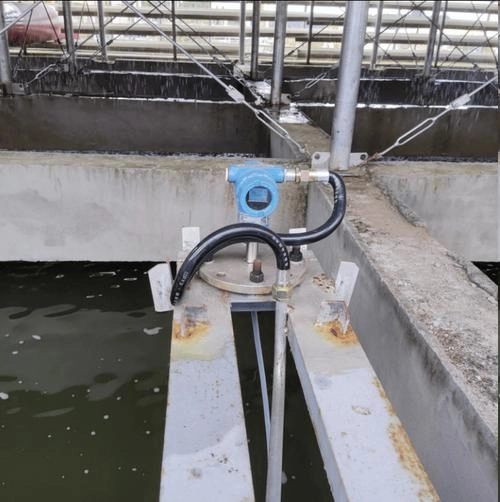
Practical Applications
Float Level Switch
- Water Supply, Drainage and Wastewater Treatment:Collection wells and equalisation tanks; monitoring high and low liquid levels; automatic start/stop of pumps; prevention of overflow and dry-running; liquid level alarms for stormwater drains and septic tanks.
- Chemical Industry: Storage tanks and reactors for acids, alkalis, oils and solvents; limit level monitoring; interlocking valves; high and low liquid level alarms; corrosion-resistant floats available as required.
- Food and Pharmaceuticals: In solution preparation tanks and purified water tanks, hygienic float switches take charge of water replenishment and ingredient dosing, keeping production in line with clean requirements.
- HVAC and Boilers:In expansion tanks, cooling water basins, and boiler feedwater tanks, they handle automatic water replenishment and raise low-water alarms, so water circulation stays stable.
- Oil and Gas and Construction Machinery:Various types of oil storage tanks, generator sets and water tanks on refuse collection vehicles; liquid level limit monitoring and low-level early warning.
- Power Stations, Metallurgy and Small-Scale Equipment:Demineralised water tanks, cooling water basins, water purifiers and cooling towers; simple liquid level signal acquisition, low-cost and easy to install.
Capacitive Level Switches
- Chemical Industry:Detection of acids, alkalis, solvents and viscous materials inside storage tanks and reactors; unaffected by the colour of the medium; suitable for corrosive environments; provides high and low level interlock alarms.
- Food and Pharmaceuticals: These switches watch over medicinal solutions, sauces, and similar media in mixing tanks and storage tanks. With no moving parts inside, there is little risk of material jamming, so they fit right into clean production settings.
- Powder Storage:Whether the silo holds flour, plastic pellets, or cement powder, these switches read the level without trouble. Solid materials can be measured directly—a job float switches just aren’t cut out for.
- Water Treatment: They keep track of wastewater and flocculant levels in sewage tanks and chemical tanks. Small amounts of foam do not bother them, and they provide level protection for chemical dosing systems.
- Industrial Equipment Applications:Suitable for oil storage tanks, plastic injection hoppers and packaging machinery; compact in design, compatible with both conductive and non-conductive media, and providing limit signals.
Selection Guide
1. Assessment of Medium Conditions:If the liquid is clean and flows freely, go with a float switch. If you are dealing with viscous media, slurries, or powders, a capacitive level switch is the better pick.
2. Maintenance conditions: When regular on-site maintenance is hard to arrange, capacitive switches should come first, since they suffer no mechanical wear. For clean water tanks where the budget is tight and operating conditions are simple, float switches are the more practical option.
3. Interference and environment:Where there is significant electromagnetic interference on site and the medium is non-conductive, give priority to float switches; for high-temperature, high-pressure applications or continuous, frequent operation, give priority to capacitive switches.
4. Unsuitable operating conditions:For wastewater containing large quantities of long fibres or entangled impurities, where the float is prone to jamming, float switches are not recommended; for media with an extremely low dielectric constant, standard capacitive level switches are not recommended.
5. Additional requirements: For explosion-proof, hygienic, food and pharmaceutical applications, both types have corresponding products; material, surface finish and certification requirements must be confirmed separately.
6. Installation space: Where space inside the tank is limited, capacitive probes are preferred; where there is sufficient installation clearance, float switches may be selected.
7. Response requirements: For applications requiring rapid level signals, select capacitive switches; for standard high/low level alarms, float switches are sufficient.
8. Density of the medium: As the density of the medium fluctuates significantly, choose the float carefully; changes in density have a lesser effect on capacitive switches.
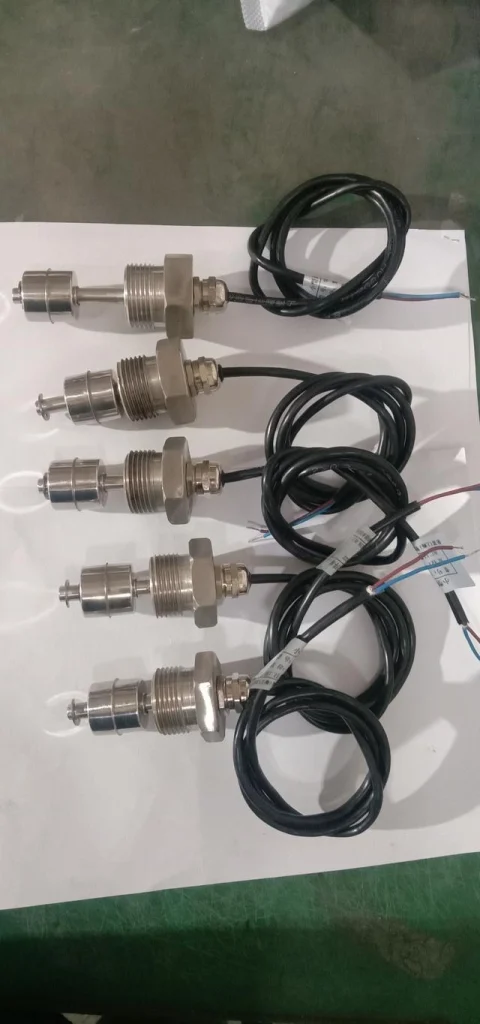
Float Level Sensors vs Capacitive Level Sensors
Float level sensors work through a float that actuates a reed switch to deliver an on/off signal. Their structure is simple and the cost is low, so they fit well with clean liquids; however, with viscous or impure media the float can easily get stuck, which is why they are mainly used for point-level alarms.
Capacitive level sensors, on the other hand, measure level by picking up changes in capacitance. Since they have no moving parts, they can handle viscous liquids and powdered materials while delivering better accuracy. The trade-off is that they are sensitive to media build-up and shifts in dielectric constant. Even so, they support both point-level and continuous measurement.
In summary, both float and capacitive level switches have their respective advantages for different operating conditions and can meet the vast majority of industrial point-level detection requirements.
Sion-Inst specialises in the field of level detection. In addition to these two mainstream switch types, we offer a comprehensive range of level detection products, including ultrasonic, radar, tuning fork, RF admittance and propeller-type sensors, suitable for a wide variety of complex operating conditions.
We can tailor highly adaptable and stable integrated level measurement and control solutions for our customers based on the specific medium, environment and installation requirements at the site.