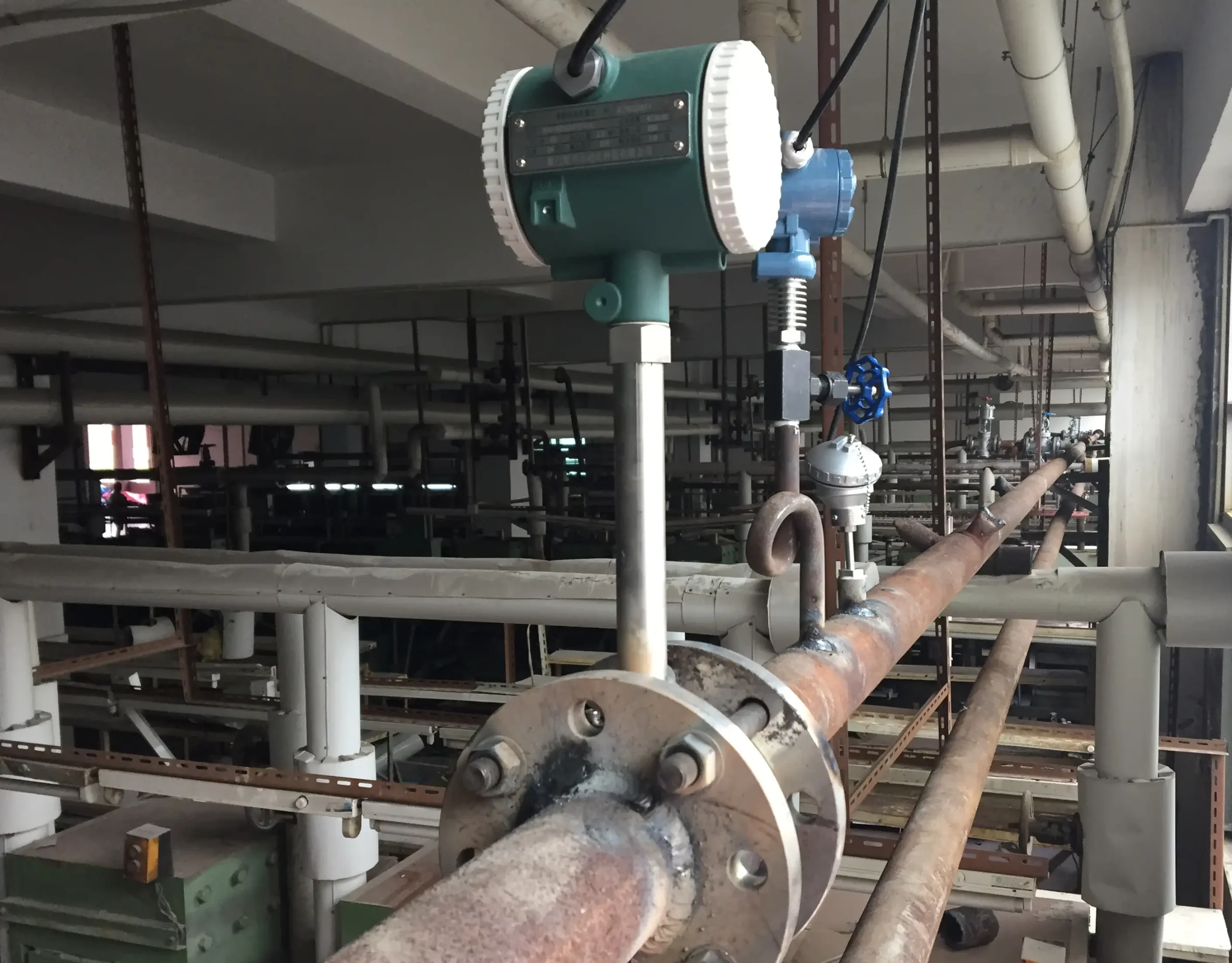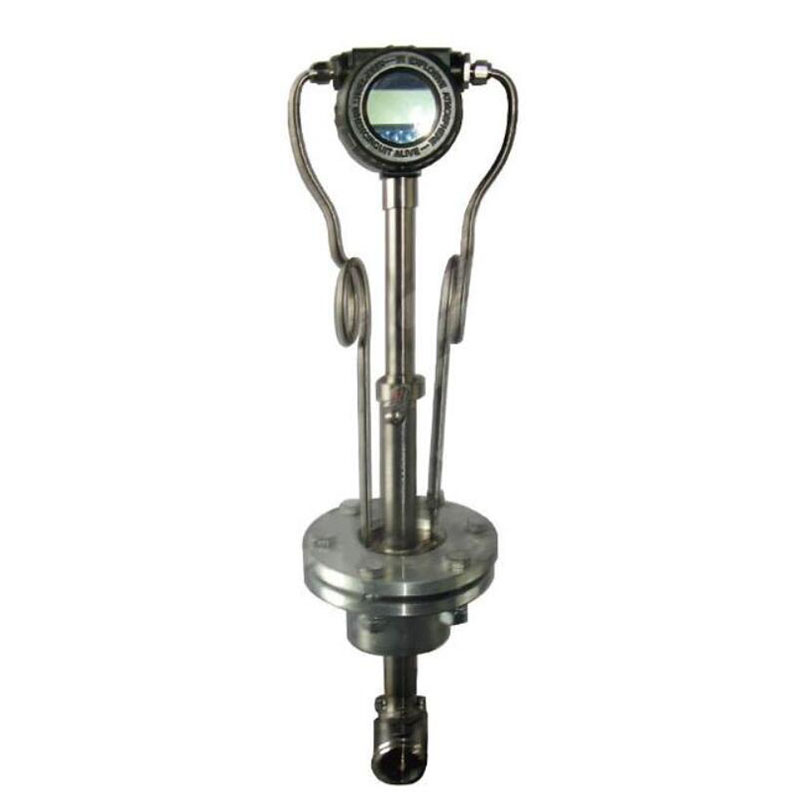
Argon, as an inert shielding gas, is widely used in welding, semiconductor manufacturing and high-temperature metallurgical processes; the precise measurement and control of its flow rate directly determine product quality and gas consumption costs.
This article analyses the medium compatibility characteristics of argon flow meters and the challenges associated with measuring low-pressure inert gases. By comparing different solutions, it provides a quantitative reference for selecting industrial argon supply systems.
Why Measure Argon Flow?
1. To stabilise process quality. When argon is used as a shielding gas, flow imbalances can cause workpieces to oxidise and develop defects; precise flow control ensures the quality of the finished product.
2. To cut down on gas costs.Argon doesn’t come cheap, so keeping tabs on the flow rate makes it easier to spot leaks and cut back on wasted gas.
3. Keeping the equipment safe.If the flow rate goes off, you can end up with pressure imbalances in the chamber or components getting fried from the heat; real-time monitoring helps head off equipment failures before they happen.
4. Staying on the right side of compliance and record-keeping.In sectors like semiconductors and metal processing, you’ve got to hang onto flow data to pass quality audits.
5. Tying into automated production lines.Flow meters send signals straight to the control systems, which then tweak the gas supply automatically to keep things running smoothly.
6. Getting reliable experimental results. When argon is used as a carrier gas, a steady flow rate keeps data errors at bay and makes sure experiments can be reproduced.
Common issues in argon flow monitoring
1. Measurement errors caused by temperature and pressure fluctuations.Argon compresses easily, so when pipeline pressure or ambient temperature shifts, the gas density moves with it. Skip the temperature and pressure compensation, and your flow readings will end up way off the mark.
2. Trouble picking up ultra-low flow rates and tiny leaks.Precision welding and semiconductor work often run argon at very low flow rates, and standard instruments simply don’t have the resolution for it. Small leaks in the pipework can go unnoticed for ages.
3. Pipework layout messing with flow stability.Elbows, valves, and reducers without proper straight runs upstream create swirl and turbulence in the gas stream, which throws off the flow meter’s accuracy.
4. Contaminants in the pipework throwing sensors out of whack.Dust and oil residue building up on the sensor probe shifts the zero point, so you end up having to shut down for cleaning and recalibration, breaking up continuous production.
5. Pressure swings in multi-branch networks distorting the readings. When several machines pull from the same gas line, starting or stopping one unit causes sudden pressure spikes and wild flow fluctuations, making it nearly impossible to pin down how much gas each unit is actually using.
6. Limited selection options for clean, high-temperature and high-pressure operating conditions. High-purity processes require the absence of secondary contamination, whilst high-temperature and high-pressure environments place stringent demands on the instrument’s environmental resistance, resulting in a limited range of suitable instruments.
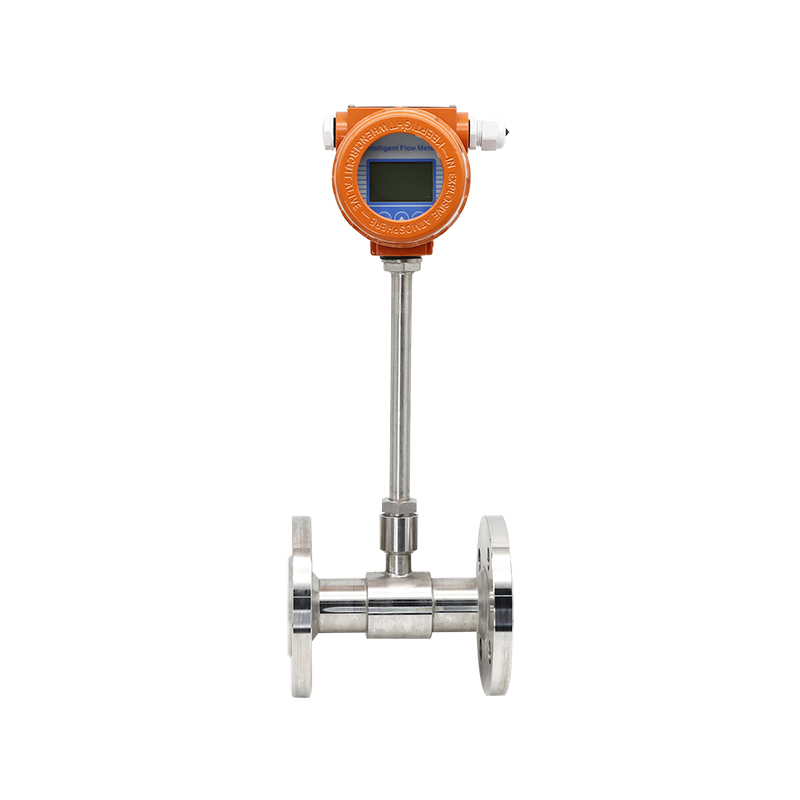
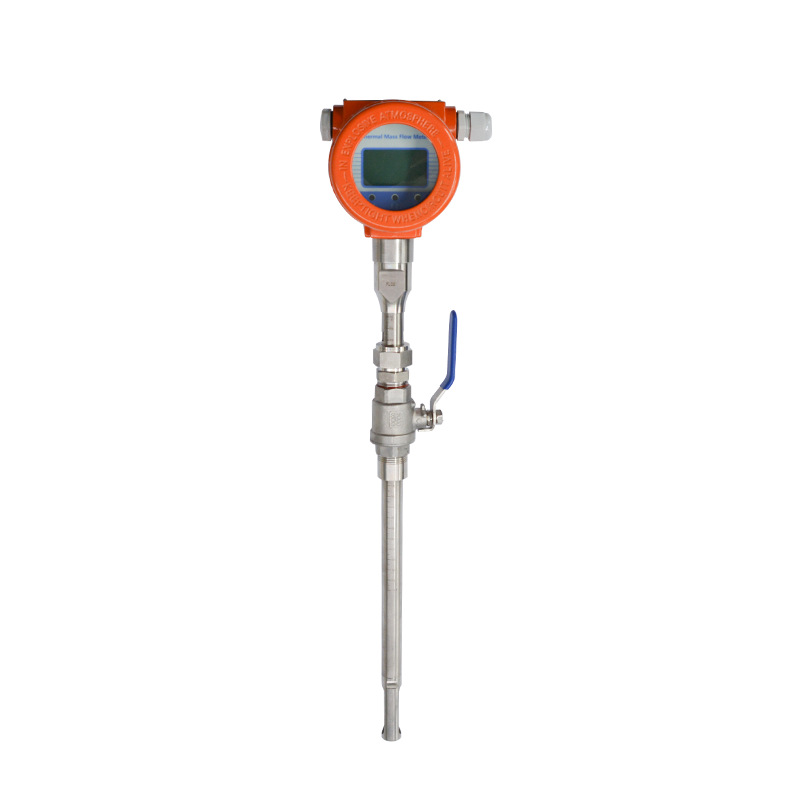
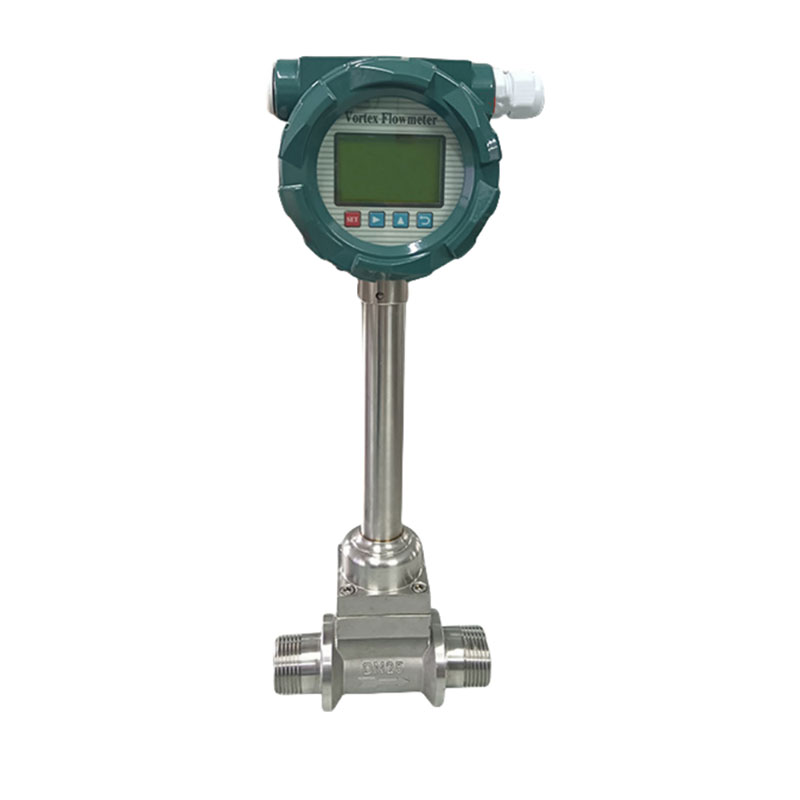
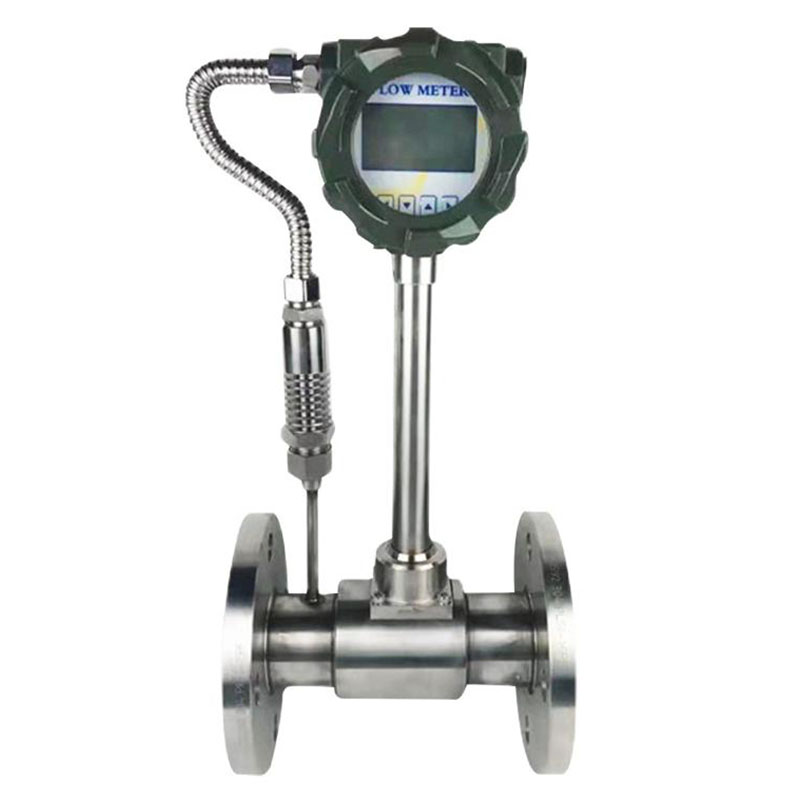
Argon Flow Meter
Thermal Mass Flow Meter
Principle of Operation
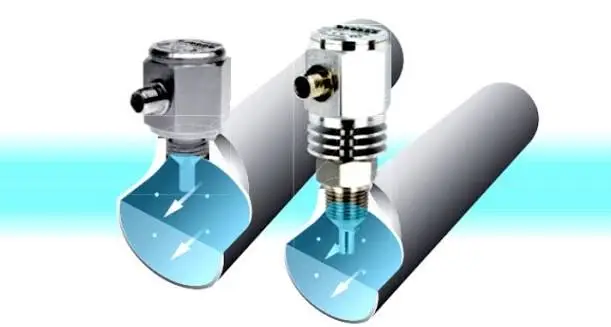
Based on the principle of heat conduction and dissipation in gases, the sensor incorporates two built-in platinum resistance temperature probes: one serves as a heating probe to maintain a constant temperature difference, whilst the other acts as a sensing probe to measure the temperature of the medium.
As the gas flows past the probes, it carries away heat; the greater the mass flow rate of the gas, the more heat is carried away. The system maintains a constant temperature difference by adjusting the heating power; this heating power is linearly proportional to the gas mass flow rate.
Following circuit processing, a standardised gas mass flow signal is output directly, unaffected by fluctuations in pressure or temperature, and can be used to directly measure volumetric flow rate under standard conditions.
Advantages
1. Direct measurement of fluid mass flow rate, with no need for temperature or pressure compensation; measurement data is accurate and stable.
2. No moving mechanical parts inside, so there’s nothing to wear out. That translates to a long service life and next to no maintenance costs.
3. Very wide turndown ratio, with enough sensitivity to catch low-flow argon. It can even pick up trace amounts of purge argon that other meters might miss.
4. Barely any pressure drop across the meter, so it hardly affects the pressure inside the argon line. Works fine on low-pressure gas supply systems.
5. Compact unit with no fussy orientation requirements. You can mount it in horizontal or vertical pipe runs without a problem.
6. Outputs multiple signal types including 4–20 mA and RS485/Modbus, so it slots straight into most industrial control setups.
Disadvantages
1. If the argon contains oil, dust or other impurities, these may adhere to the probe, causing zero-point drift; regular purging and cleaning are required
2. Sudden changes in medium or ambient temperature may cause minor measurement deviations for a short period
3. Not suitable for high-velocity, high-flow, high-pressure argon applications; the upper measurement limit for high-temperature argon is relatively low
4. Measurement errors increase in mixed-gas environments; suitable only for single, pure media
Vortex Flow Meter
Principle of Operation
A cylindrical vortex generator is installed inside the pipeline. When gas flows at a constant velocity past the generator, regular vortices are generated alternately on both sides downstream of the generator; the vortex separation frequency is directly proportional to the volumetric flow rate of the argon under operating conditions.
The probe detects the vortex vibration frequency signal, which is then amplified and converted to yield the volumetric flow rate under operating conditions; As vortex flowmeters measure only volumetric flow rate, temperature and pressure transmitters must be fitted to provide temperature and pressure compensation, thereby converting the reading to standard gas flow rate under standard conditions.
Advantages
1. Simple and robust construction; resistant to high temperatures and pressures; suitable for high-pressure, high-flow argon transport pipelines
2. No fragile moving parts inside, so it holds up way better against vibration than thermal-type flowmeters. That toughness pays off in rough industrial environments where other meters would take a beating.
3. The measurement range sits in a comfortable middle ground; it stays rock-solid for medium to high-flow argon, and the zero point barely drifts even after running for ages.
4. Suitable for both gases and liquids; switching between media in a single pipeline requires no replacement of the instrument body
5. Stable measurement accuracy with no zero-point drift issues; frequent calibration is not required during long-term operation
Disadvantages
1. Outputs only operating conditions volumetric flow rate; measuring argon requires the additional installation of temperature and pressure compensation devices, resulting in higher system costs
2. At low argon flow rates, the vortices just don’t form properly, so the meter gives up altogether at extremely low flows. The usable turndown ratio ends up being pretty tight.
3. There’s a hefty pressure drop as the gas pushes through the flow generator. On low-pressure argon lines, that can drag the supply pressure down to problematic levels.
4. Pipeline vibrations and pulsing argon flow tend to mess with the vortex signal, which shows up as erratic or inaccurate readings.
5. Installation is picky—you need a good stretch of straight pipe both upstream and downstream. In cramped spaces, that’s often a deal-breaker.
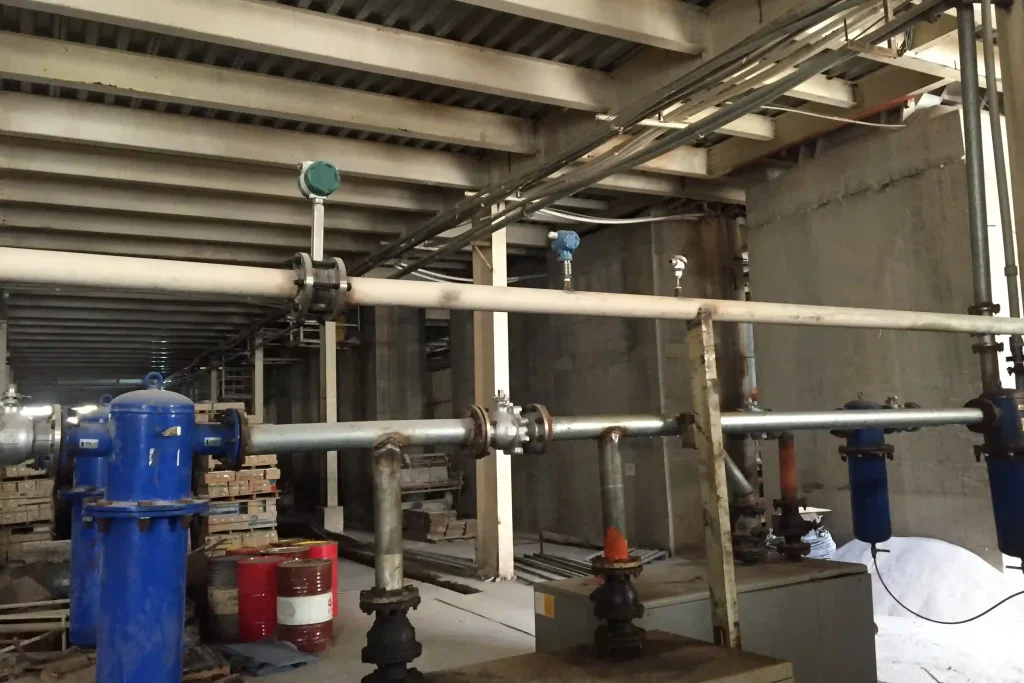
Practical Applications
1. Metal welding and fabrication
TIG welding relies on flowmeters to precisely control the argon shielding flow rate of 8–25 L/min, preventing weld oxidation or gas wastage. Gas consumption by the welding machine can be monitored, making it suitable for sheet metal and pressure vessel welding production.
2. Metallurgy and smelting
In steelmaking and the smelting of rare metals, argon is used to isolate the metal from air and prevent oxidation. Flow meters ensure a stable gas supply within the furnace, suitable for smelting furnaces of all sizes, and can trigger alarms in the event of flow abnormalities to protect the material inside the furnace.
3. Semiconductor and Photovoltaic Manufacturing
These operations lean on high-precision micro-flow meters to regulate high-purity argon during wafer etching and silicon wafer coating—without that tight control, processing accuracy falls apart. Metering gas use per machine makes it easy to track consumption, which is exactly what you need in cleanrooms where every step has to hit precision standards.
4. Vacuum Coating Industry
Coating glass, optical lenses, and photovoltaic panels needs argon to generate the plasma layer; flow meters hold the gas supply steady so the coating comes out even. Metering gas use per workstation also makes it easier to track energy consumption and keep the books straight.
5. Laboratory Testing Instruments
Mass spectrometers and spectrometers run argon as a carrier gas; compact flowmeters let you dial in tiny gas volumes to keep the detection baseline stable. That makes them a good match for the intermittent, low-flow setups you typically see in labs.
6. Cryogenic Equipment and Leak Detection
Argon fills cryogenic storage tanks for thermal insulation, with flowmeters keeping the fill volume in check. Argon also doubles as a tracer gas, pairing up with leak detectors to hunt down minute leaks in piping and aerospace components.
Selection Guide
By Flow Rate
1. For trace and low-flow argon jobs—think laboratory carrier gas, shielding gas on a single-point welding machine, or trace purging gas for vacuum furnaces—thermal mass flow meters are usually the way to go. These meters pick up on low-velocity gas really well, so you can measure tiny flow rates accurately without running into a dead zone at the bottom end.
2. For medium to high flow rates, site-wide centralized gas supply mains, metallurgical smelting operations, and large-scale production lines with centralized gas supply, a vortex flow meter is the better fit.
Vortex flow meters can withstand high-velocity media, are suitable for the continuous conveyance of high-flow-rate media through pipelines, and meet the total metering requirements of production lines with high gas consumption.
Based on metering requirements
1. Where direct reading of argon mass flow rate and standard-condition volume flow rate is required, and the installation of additional temperature and pressure compensation equipment is undesirable, thermal mass flow metres should be prioritised.
These instruments incorporate internal temperature and pressure compensation calculations, providing ready-to-use output data and simplifying the entire gas supply system.
2. Where only the volumetric flow rate under pipeline operating conditions needs to be measured, and there are already matching temperature and pressure transmitters on-site for unified compensation—particularly for large-pipeline projects with limited budgets—a vortex flow meter may be selected, paired with an external compensation module to convert the reading to standard flow.
Based on gas pressure and pipeline pressure loss
1. For low-pressure argon pipelines and precision equipment with strict restrictions on gas supply pressure loss, a thermal mass flow meter should be selected. The instrument features a non-restrictive internal design, resulting in extremely low pressure drop as the gas flows through, which does not affect the supply pressure to downstream equipment.
2. For medium- and high-pressure argon transport pipelines, gas filling lines and high-pressure gas supply systems in the metallurgical industry, select a vortex flow meter.
The vortex flow meter body has a higher pressure rating and is suitable for high-pressure media; it may be used as normal provided that downstream equipment has no strict requirements regarding pressure drop.
Based on the Cleanliness of the Medium
1. In applications where argon gas is highly pure and the piping is clean and free of oil and dust—such as in semiconductor facilities, laboratories, and precision welding scenarios—thermal mass flow meters can be used stably over the long term, with measurement accuracy that does not easily degrade.
2. For main plant pipelines that are full of impurities, dust, and oil, or lines that haven’t been cleaned in ages, vortex flow meters are usually the way to go. The vortex probes hold up better against contamination, don’t drift off zero as easily, and don’t need cleaning and maintenance nearly as often.
Based on On-Site Installation and Environmental Conditions
1. If you’re working in a tight space where you can’t run long straight pipe sections, or you need to mount the meter vertically or horizontally, go with a thermal mass flow meter. These meters only need short straight runs and fit well into cramped equipment layouts.
2. For pipelines that take a beating from vibration, or in high-vibration workshops common in heavy industry and metallurgy, vortex flow meters are the better pick. They don’t have thermosensitive probes, so they shrug off mechanical vibration and airflow pulsation much better, keeping the zero point steady over the long haul.
Just bear in mind that you still need decent straight pipe sections upstream and downstream when you install them—skimp on that and the measurement errors will shoot up.
By Operating Temperature
1. For room-temperature argon supply lines and indoor workstation setups, either meter type will do the job.
2. For high-temperature argon or hot exhaust lines coming off heat treatment furnaces, vortex flow meters are preferred. They handle the heat far better than thermal flow meters; in high-temperature environments, thermal probes tend to age from the heat and their accuracy drops off over time.
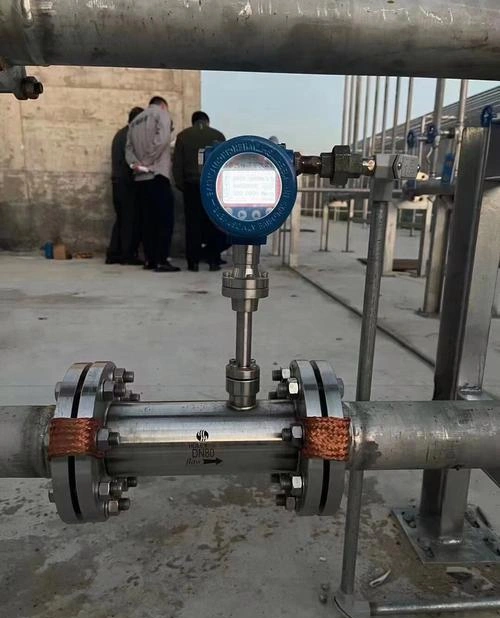
This article breaks down how thermal mass flow meters and vortex flow meters stack up for argon gas applications, giving you a solid reference point when it comes time to pick one for your operation.
Beyond thermal mass and vortex types, Sion-Inst carries the full lineup—electromagnetic, turbine, differential pressure, and ultrasonic meters—covering everything from various gases and liquids to high-pressure, low-pressure, clean, and nasty operating conditions.
We can put together a customized, end-to-end measurement and control solution based on what’s actually happening on your site, keeping your processes dialed in and stable while trimming gas costs. That gives companies the backing they need to keep production running compliant and efficient.