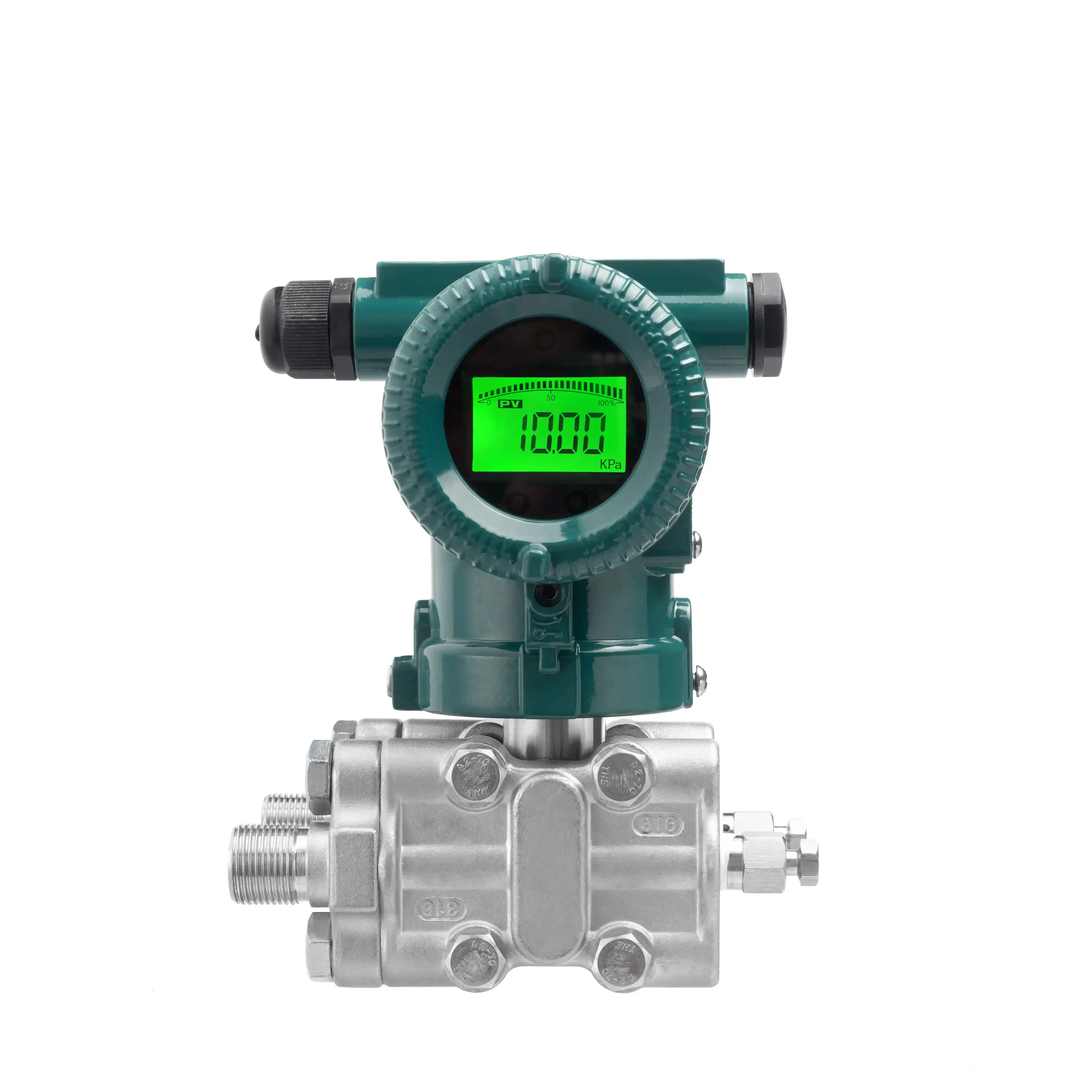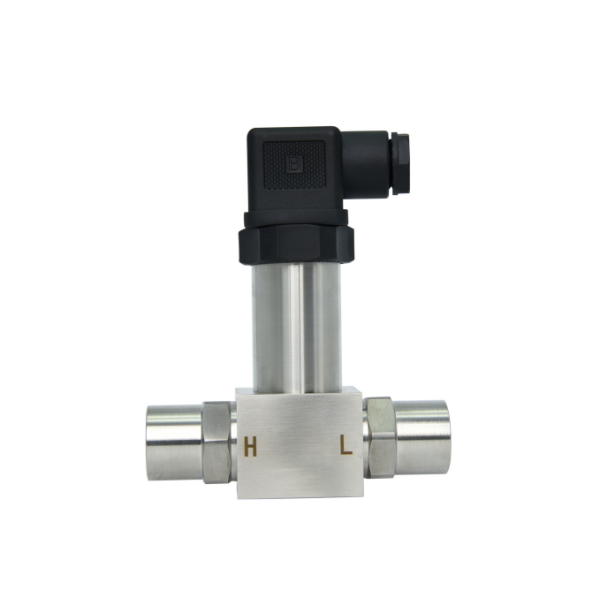
High temperature media can degrade the mechanical and electrical properties of standard differential pressure sensing units, thereby compromising the reliability of parameter acquisition under high-temperature operating conditions.
High temperature differential pressure transmitters utilise specialised filling media and remote diaphragm structures to achieve separate measurement of hot and cold zones, providing stable differential pressure signals for applications involving high-temperature steam, heat transfer oil and similar conditions. The following section outlines the key considerations for their design and selection.
What is a High Temperature Differential Pressure Transmitter?
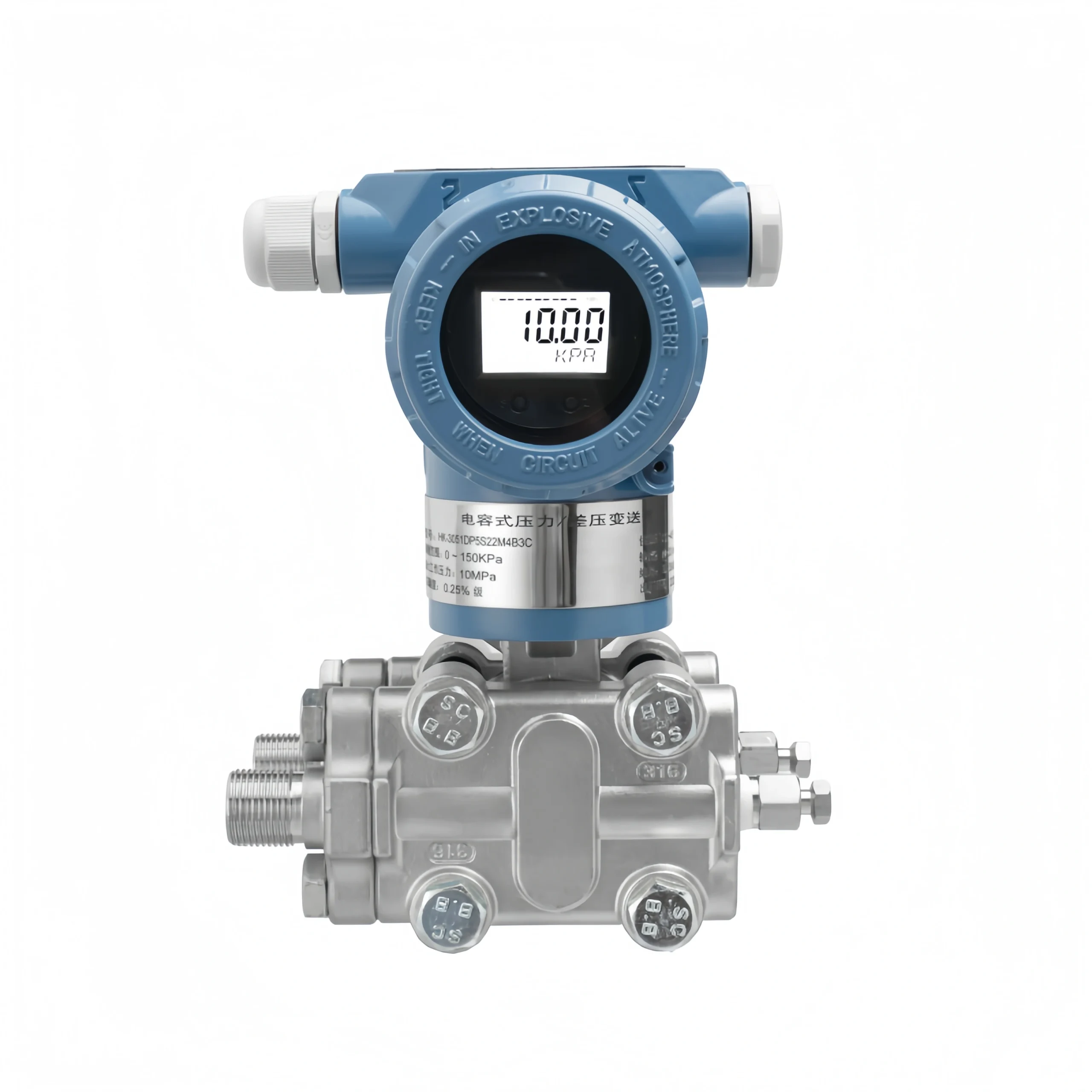
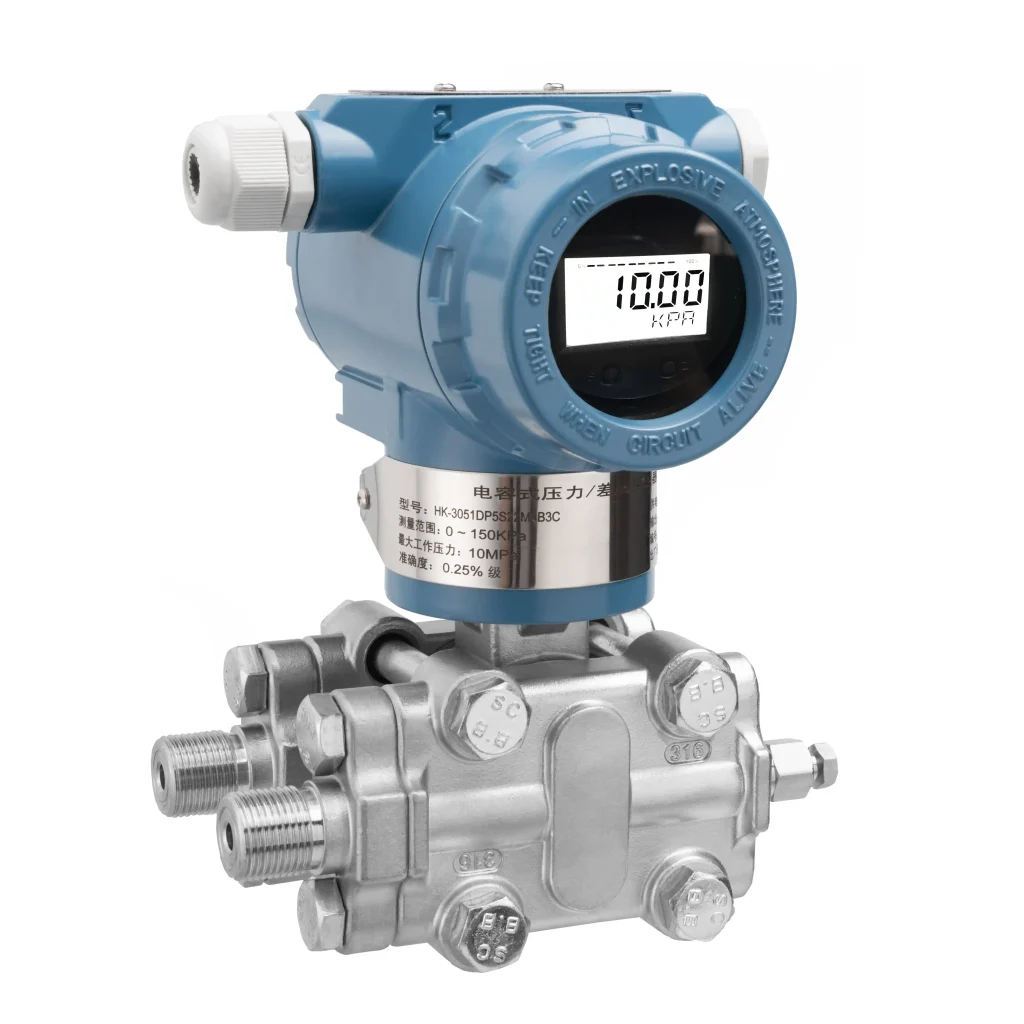
A high temperature differential pressure transmitter is a specialised differential pressure measurement instrument designed for high-temperature fluids, steam and similar operating conditions.
It utilises a remote diaphragm, high-temperature filling fluid and thermal insulation structures to isolate the high-temperature medium, preventing direct contact between the high temperature and the core sensing elements.
This enables the accurate acquisition of level, flow and differential pressure signals in high-temperature environments, whilst suppressing zero-point drift caused by high temperatures. It is widely used in measurement and control applications for high-temperature pipelines in thermal power generation, metallurgy and chemical industries.
Principle of Operation
High temperature differential pressure transmitters combine differential pressure detection with high-temperature isolation and transmission principles to perform process measurements. When a pressure differential is established across the process pipeline, the high- and low-pressure media exert pressure on the isolation diaphragms respectively.
The high-temperature medium does not come into direct contact with the internal precision sensing components; instead, the pressure is fully transmitted to the sensing element via a high-temperature-resistant isolation fluid.
Under the influence of the differential pressure, the sensing element undergoes minute deformation, converting the mechanical pressure signal into a faint electrical signal.
The internal circuitry amplifies the raw signal and performs linear correction and temperature compensation to eliminate measurement errors—such as zero-point drift and span shift—caused by high-temperature operating conditions. Following this processing, a standardised industrial signal is output.
The isolated transmission structure blocks heat from the high-temperature medium, preventing damage to the core sensing elements caused by high temperatures and ensuring the long-term stable operation of the device.
It is suitable for high-temperature production scenarios such as steam and high-temperature heat transfer oil, and can collect and convert differential pressure data in real time to enable continuous online monitoring of process flow, level and differential pressure parameters.
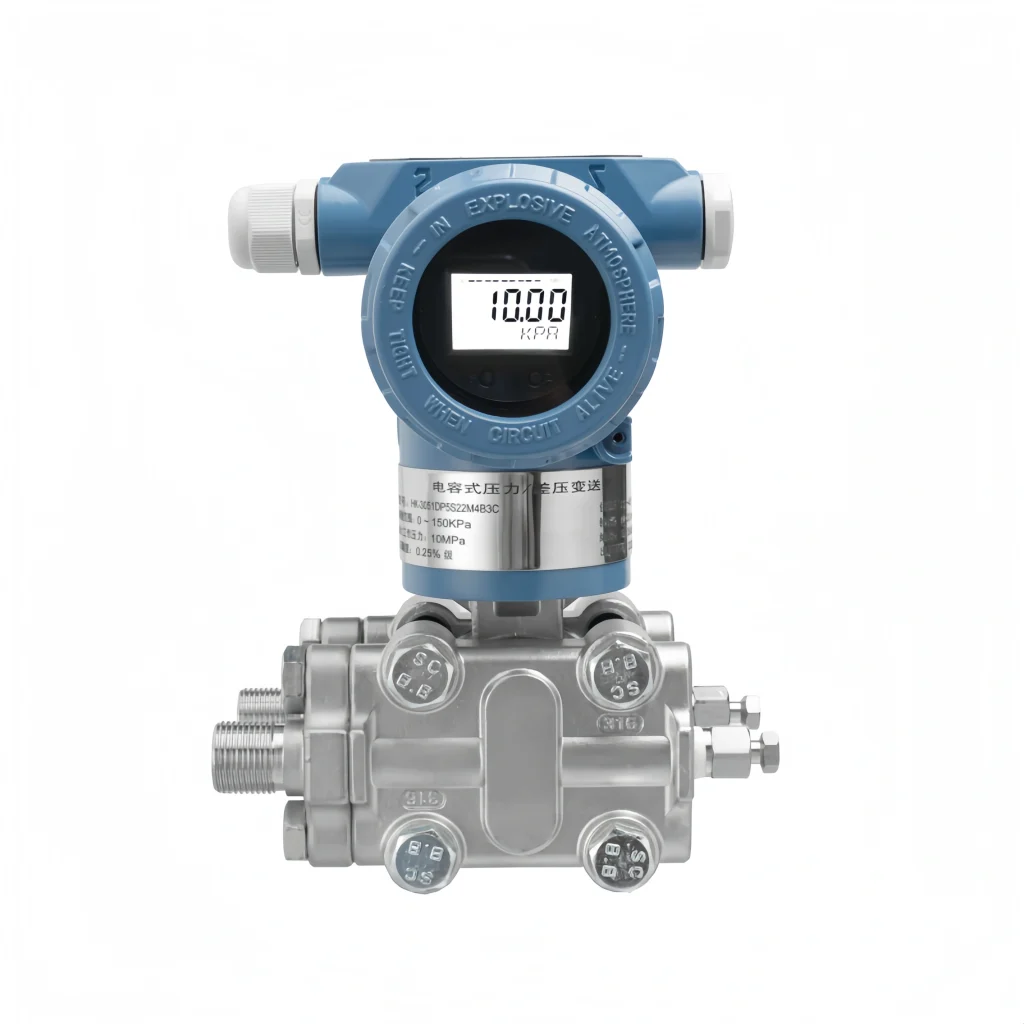
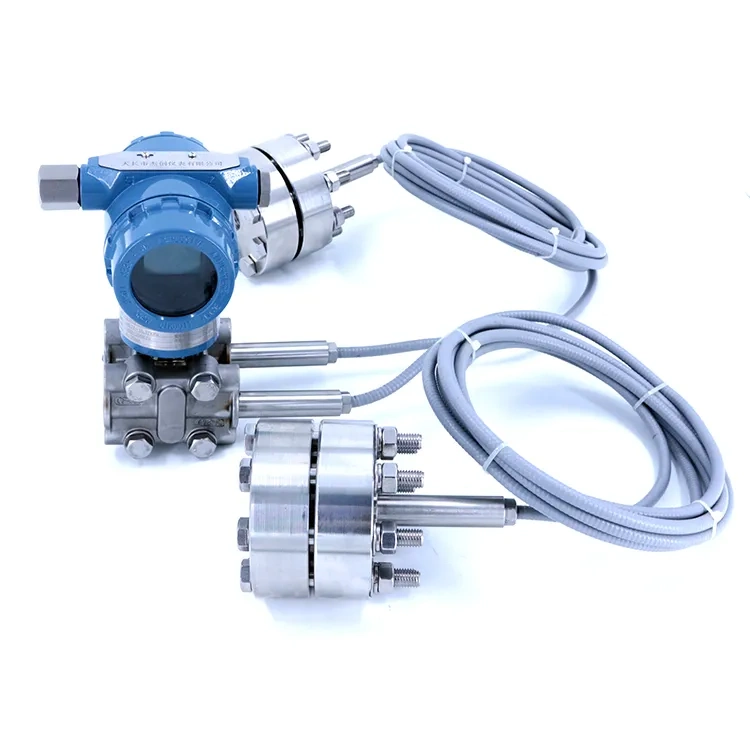
Structural Features
1. High-temperature-resistant isolation diaphragm and pressure-taking flange
Specialised metal diaphragms, resistant to high temperatures and corrosion, are paired with thickened high-temperature flanges. These are fitted with high-temperature-resistant sealing gaskets that come into direct contact with the high-temperature medium, isolating the instrument from the high-temperature material to prevent corrosion and leakage.
2. Extended heat-dissipating capillary tubes and high-temperature filling fluid
The extended capillary tubes form a heat-dissipation channel. Filled with specialised high-temperature-resistant silicone oil, they transmit only pressure whilst blocking heat conduction, thereby preventing high temperatures from being transferred to the instrument’s internal components.
3. Instrument Housing with Separate Hot and Cold Zones
The sensing chip and circuit board are housed independently within a low-temperature chamber. The casing is fitted with a thermal insulation layer, completely isolating it from the high-temperature medium flow path to protect electronic components from overheating.
4. Companion Cooling and Isolation Accessories
Can be used in conjunction with a condensation tank and heat dissipation coils. The condensation tank stores ambient-temperature liquid seal to block high-temperature vapour, whilst the heat dissipation coils rely on air convection to cool, further reducing the temperature of the medium entering the instrument.
Key Challenges in Differential Pressure Measurement under High-Temperature Conditions
1. Temperature Limitations of the Instrument Housing: The measuring diaphragm, sensor circuitry and filling fluid in ordinary differential pressure transmitters all have a ceiling on how hot they can get. If they touch high-temperature media directly, the filling fluid can boil off, the diaphragm ages and warps, and the circuitry burns out — so you end up with bad readings and a wrecked instrument.
2. Measurement errors caused by temperature differentials: Feeding hot media straight into the transmitter creates a temperature gap between the positive and negative pressure chambers, which throws in extra differential pressure from the heat alone. At the same time, the hot media makes the fluid inside the pressure tubes expand and vapourise, so pressure transmission gets unstable and you start seeing zero drift, jumping values, and lag in the readings.
3. Interference from complex process conditions: High-temperature jobs usually come with high pressure, fast flow, condensation, coking, dust and all sorts of junk — which tends to clog up the pressure tubes and cake the diaphragm. Running the instrument in these conditions for too long knocks the accuracy way down and wears the thing out a lot faster.
4. Significant safety hazards: Leaks of high-temperature media, thermal expansion and contraction of pressure-conducting tubes, and instrument failure due to high temperatures can easily lead to process media leaks and erroneous activation of equipment interlocks, thereby compromising production safety and stability.
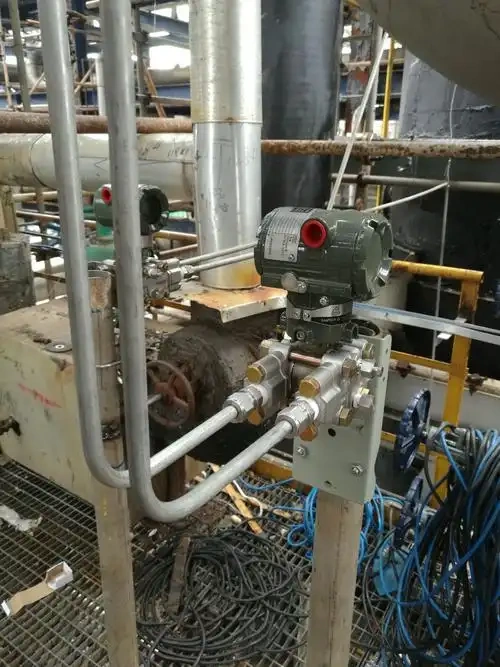
Practical Applications
1. Monitoring of Thermal Systems in Thermal Power Stations
High-temperature differential pressure transmitters are core instruments in power stations, designed for high-temperature operating conditions in boilers and steam turbines.
They monitor pressure differentials in steam pipelines to detect blockages, calculate water levels based on pressure differentials in steam drums to prevent risks of low or high water levels, and track pressure differentials in unit media to promptly identify circulation anomalies, thereby supporting the safe regulation of units.
2. Process Control in the Petrochemical Industry
Suitable for high-temperature environments such as cracking and distillation, these transmitters prevent the damage to standard instruments caused by high temperatures.
They monitor the differential pressure of media in heaters and cracking furnaces to provide early warnings of coking, blockages and leaks; they also utilise tower differential pressure to control liquid levels and material beds, stabilising distillation and reaction conditions and ensuring continuous production line operation.
3. Metallurgical and Steel Kiln System Monitoring
High-temperature and dust-resistant, suitable for the harsh environments of kilns. Monitors the pressure differential across hot blast stoves to regulate blast furnace air supply; detects flue gas differential pressure at the furnace top to assess the permeability of the charge column; monitors dust collector pressure differentials to identify filter element blockages; stabilises furnace conditions and meets environmental protection requirements.
4. Monitoring of Coal Chemical Gasification and Synthesis Systems
Designed for the high-temperature, high-pressure environments of gasification and synthesis, these systems monitor the pressure differentials of raw gas and synthesis gas to detect slagging in gasifiers and blockages in pipelines; they also monitor heat exchanger pressure differentials to stabilise medium conditions and ensure the continuous and safe operation of synthesis units.
5. Monitoring of Industrial High-Temperature Heating Networks
Suitable for high-temperature water and steam networks, monitoring the pressure differential between supply and return water to locate blockages, leaks and pressure imbalances; collecting heat exchanger pressure differential data to optimise heat exchange efficiency, stabilise heating temperatures, and balance system safety with energy efficiency.
6. Monitoring of Flue Gas Systems in Waste-to-Energy and Biomass Power Generation
Suitable for high-temperature, dust-laden flue gas, monitoring furnace pressure differential to maintain a stable negative pressure, preventing flame-out and incomplete combustion; It detects differential pressure in desulphurisation and dust removal systems to identify filter element blockages, ensuring stable flue gas treatment and compliance with emission standards.
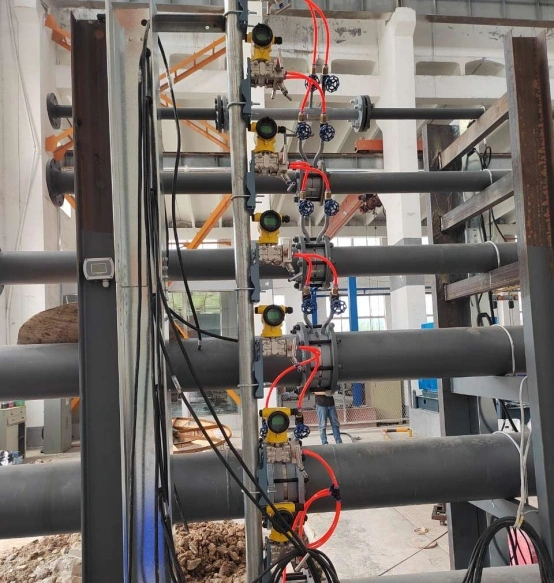
Advantages of Differential Pressure Transmitters in High-Temperature Measurements
1. Suitable for ultra-high-temperature media conditions;equipped with a condensation chamber, extended capillary tube and a high-temperature-resistant diaphragm structure, it isolates the high-temperature medium, preventing the internal filling fluid from vaporising and the sensor from being damaged by high temperatures, thereby significantly broadening the applicable temperature range for the medium.
2. Stable measurement accuracy: synchronised heat dissipation and thermal insulation structures on both the high- and low-pressure sides ensure balanced ambient temperatures in the pressure-conducting environments on both sides, reducing zero-point drift and additional liquid column errors caused by temperature differences, and ensuring good data repeatability during long-term high-temperature operation.
3. Resistant to blockages and suitable for complex high-temperature media;the high-temperature double-flange design eliminates slender pressure-conducting tubes, with the diaphragm in direct contact with the pressure-taking surface. This enables it to handle media prone to coking and fouling—such as high-temperature oil and gas, raw coal gas and dust-laden flue gas—thereby reducing faults caused by pipeline blockages.
4. The instrument handles a wide variety of operating conditions,including both high temperatures and high pressures. It works across the board — steam at thermal power plants, chemical cracking media, hot flue gas in metallurgy, steam in district heating networks — so you don’t have to keep swapping out specialised temperature and pressure gauges.
5. Lower operational and maintenance costs:the built-in thermal insulation and isolation design slows down high-temperature corrosion and ageing, which means longer gaps between maintenance visits; the condensate tank that comes with it is pretty straightforward — venting and draining are simple operations, so there’s less hands-on work for the maintenance team on site.
6. Reliable signal transmission:the circuitry stays thermally insulated even in hot environments, so radiant heat doesn’t mess with it; the stable 4–20 mA standard signal goes straight to control systems remotely, handling interlocking, regulation, and safety alarms without issue.7. Strong safety assurance: it keeps the instrument body from touching the hot medium directly, which heads off safety problems like faulty process interlocks or media leaks from overheating or instrument failure.
Mainstream Differential Pressure Measurement Solutions for High-Temperature Operating Conditions
1. Condenser Tank + Standard Differential Pressure Transmitter Measurement Solution:
This is the most common and cost-effective setup for high-temperature steam and hot gaseous media. Matching condenser tanks go on both the positive and negative pressure tapping points.
The tanks hold condensate at ambient temperature, which keeps the high-temperature process medium away from the pressure tubes and transmitter — so the instrument only ever sees room-temperature condensate. That completely removes any heat-related issues. The setup is simple, cheap to install, and easy to look after. It works well for hot gas conditions above 150°C where the pressure stays fairly steady.
2. Dual-flange high-temperature differential pressure transmitter solution:
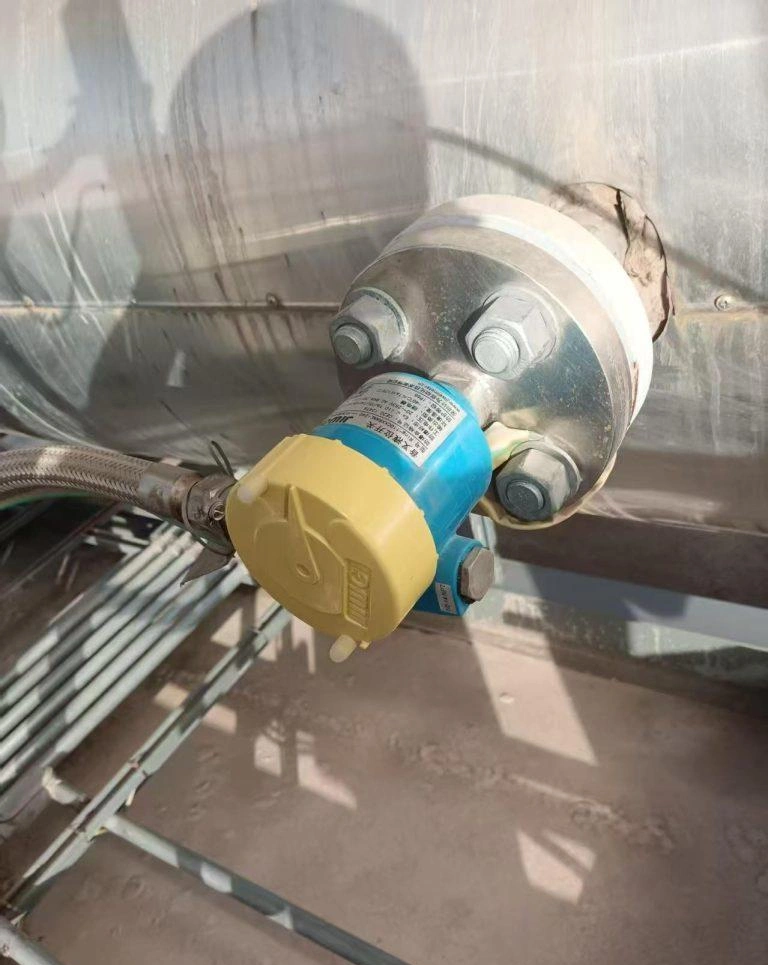
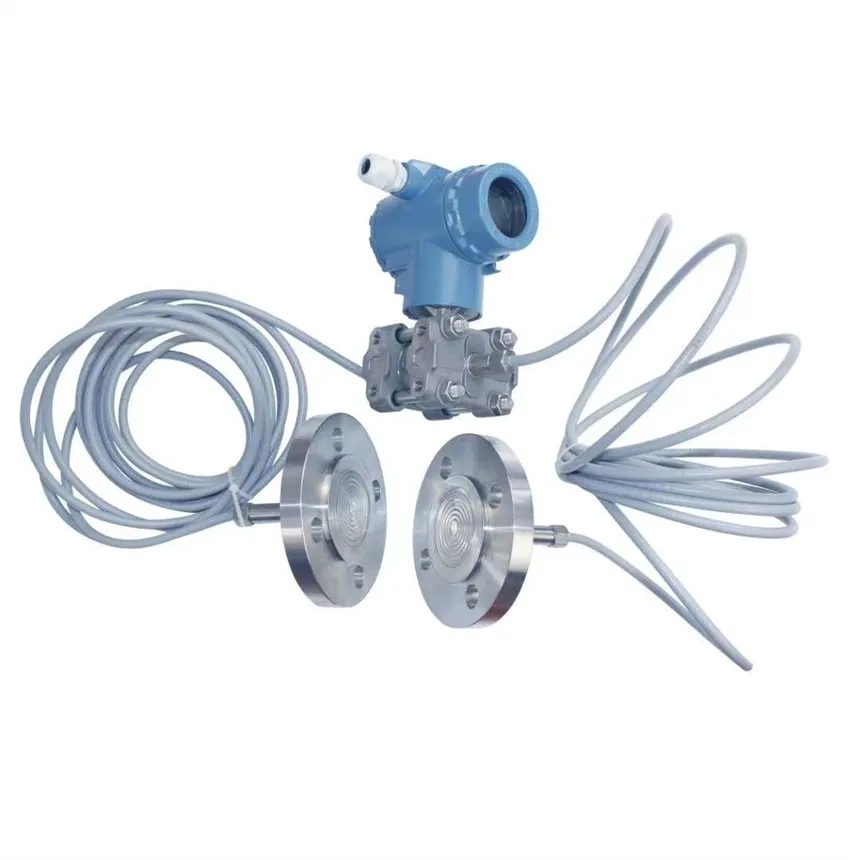
For hot liquids or situations where coking and blockages are a problem, go with a high-temperature dual-flange differential pressure transmitter. It uses extended capillary tubes and a special high-temperature fill fluid to bring the metal diaphragm right up against the process pipe’s pressure-taking surface.
No pressure-conducting tubes needed — the pressure signal travels straight through the diaphragm and capillaries. This arrangement handles hot media without trouble, solves blockage issues in the tubing, and gives you quick response times with solid stability.
3. Measurement Solution Using Heat-Dissipating Pressure Tubing:
For medium- and low-temperature operating conditions, extended heat-dissipating pressure tubing and the installation of heat-dissipating coils can be employed.
This utilises natural air convection to lower the medium temperature, with the medium only being fed into the instrument once it has cooled to within the transmitter’s tolerance range.
This solution is suitable for mild operating conditions with minimal temperature fluctuations; the modification is straightforward and does not require the replacement of specialised high-temperature instruments.
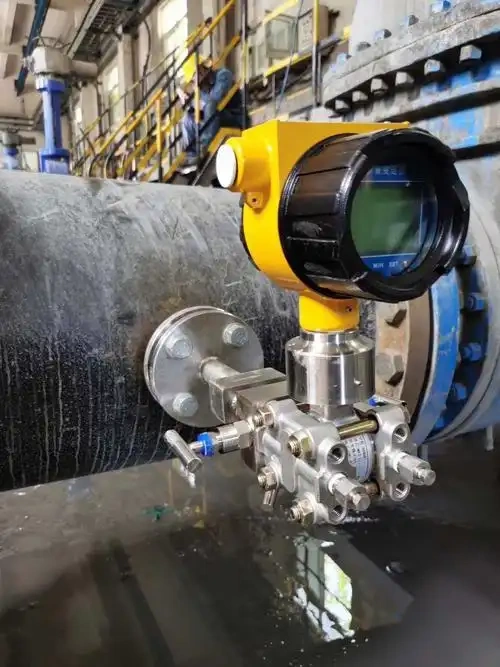
Sion-Inst offers a comprehensive range of high-temperature differential pressure transmitters, high-temperature pressure transmitters and various types of high-temperature flowmeters, covering high-temperature measurement and control applications across the entire spectrum of industries, including thermal power generation, chemical processing, metallurgy, district heating and waste-to-energy.
Drawing on proven high-temperature isolation technologies and integrated measurement solutions, the company provides a one-stop solution for flow, pressure, differential pressure and level measurement requirements under demanding operating conditions such as steam, thermal oil, high-temperature flue gas and raw coal gas.