The measurement accuracy of radar level transmitters is closely tied to the dielectric constant (εᵣ) of the medium. This constant describes how readily a material polarizes under an electric field, and it directly shapes the strength of microwave reflections and how the signals travel.
When εᵣ drops below a critical threshold—roughly 1.5 to 2.0—the echo signal weakens sharply, which can cause the measurement to fail or the error to grow. Getting the dielectric constant right is therefore the starting point for any dependable level detection.
What Is the Dielectric Constant
The dielectric constant is a measure of how much electrical energy a material can store when placed in an external electric field, and it is usually written as ε. It tells us how easily the molecules in a dielectric material line up or polarize when an electric field is applied: a higher dielectric constant means the material can store more energy, and the electric field moves through it more slowly.
In day-to-day use, people often work with relative permittivity (εᵣ). This is simply the material’s dielectric constant divided by the permittivity of free space (ε₀), and it carries no units. To give you an idea, a vacuum has a relative permittivity of 1, water sits at about 80, and most plastics and ceramics fall somewhere between 2 and 10. Permittivity isn’t just an important feature of dielectric materials; it’s also at the heart of microwave engineering, capacitor design and radar level gauging.
What Is a Radar Level Transmitter?
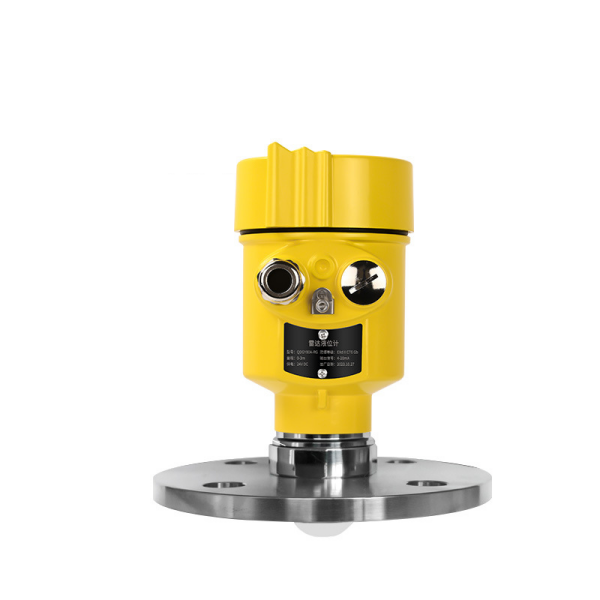
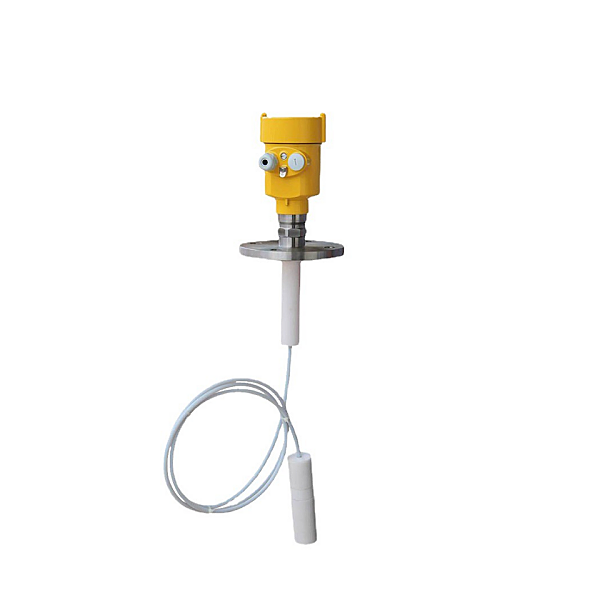
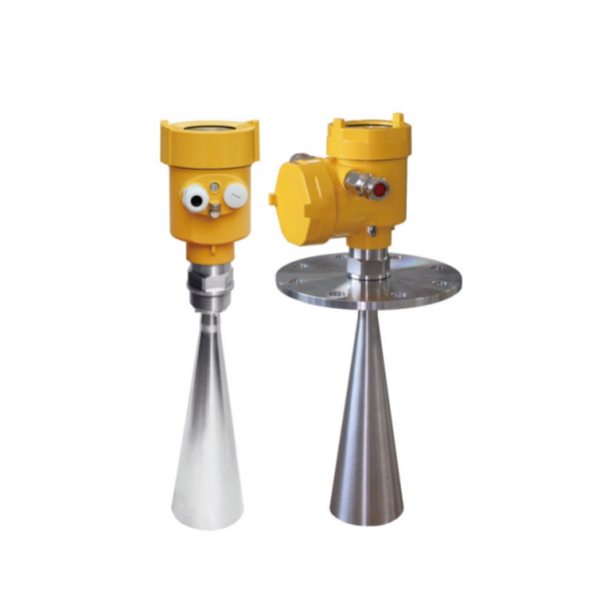
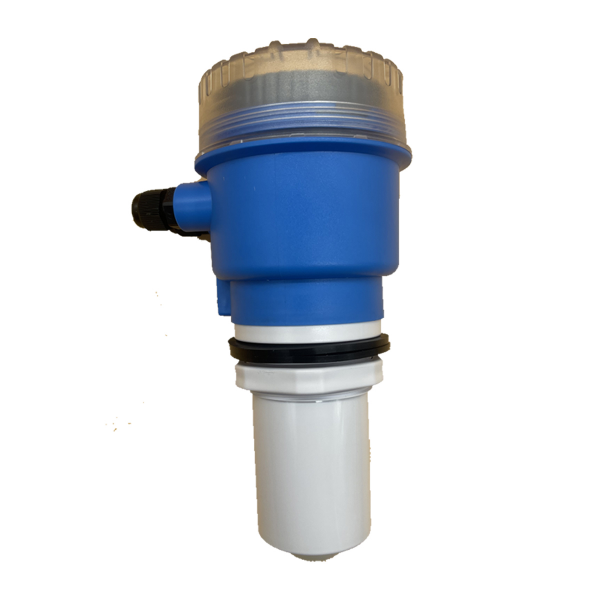
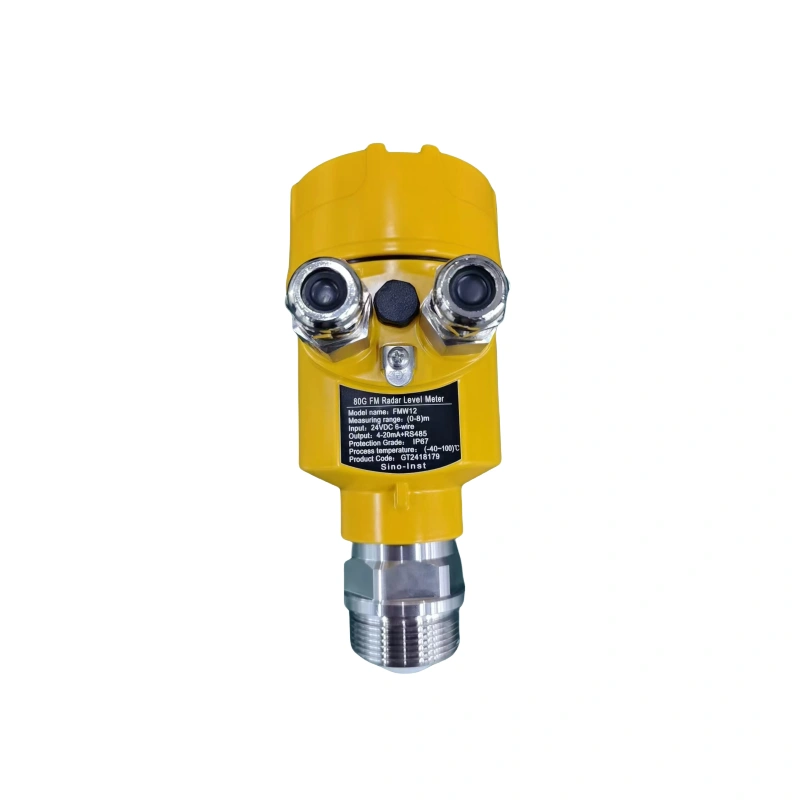
A radar level transmitter is a non-contact device that gauges the height of liquids or solids inside a tank or silo using microwave radar. It fires out high-frequency electromagnetic waves, catches the echoes that bounce off the material surface, and figures out the level from the round-trip time and the known speed of the waves. You will find these transmitters hard at work in petrochemical plants, water treatment facilities, grain elevators, and similar industrial settings.

Working Principle
The radar antenna inside the unit sends out high-frequency electromagnetic waves. These waves shoot straight down, cutting through air and similar media at a fixed speed until they hit the surface of the liquid or solid being measured.
When the waves strike that surface, they reflect back as an echo, retracing their path upward to the transmitter’s receiver.
A high-speed processor inside the transmitter pinpoints the gap between the moment the wave was sent and the moment the echo returned. By pairing that time with the known speed of the waves, the unit derives the real distance from its mounting point down to the surface.
The system then folds in preset values such as overall tank height and zero reference to convert that distance into the actual liquid level in real time.
Lastly, the computed level is turned into standard analog signals or digital communication formats and fed out to control systems and displays for on-site reading and remote oversight.
The Importance of Dielectric Constant in Radar Level Transmitters
Radar works by sending out electromagnetic waves which hit the surface of whatever it is you’re measuring and create a reflected echo. The dielectric constant of the medium basically determines how strong the reflected electromagnetic waves are, and it’s the key thing that lets radar measure distance accurately.
If the dielectric constant is higher, the medium can better reflect radar waves. This means clearer, more stable echo signals, higher measurement accuracy and less signal loss.
The lower the dielectric constant, the weaker the medium’s ability to reflect radar waves; most waves will penetrate the medium, producing weak echoes that are easily interfered with, leading to faults such as measurement jumps or no level display.
There are fixed differences in the dielectric constants of different materials. Radar instruments can distinguish material types based on these values while automatically adjusting the signal transmission power to adapt to various operating conditions.
Environmental interferences such as dust, steam, and mist do not alter the medium’s inherent dielectric constant. Compared to ultrasonic transmitters, radar instruments rely on dielectric constant characteristics to offer stronger resistance to environmental interference.
When measuring materials with low dielectric constants, high-frequency radar should be selected and the installation method optimized. Calibration of the measurement range and sensitivity parameters is performed based on the medium’s fundamental dielectric constant.
When we’re dealing with layered materials where the dielectric constants of each layer are different, radar can actually be used to accurately identify the interface between the layers. This then allows us to monitor the levels of stratified liquids with a high degree of precision.
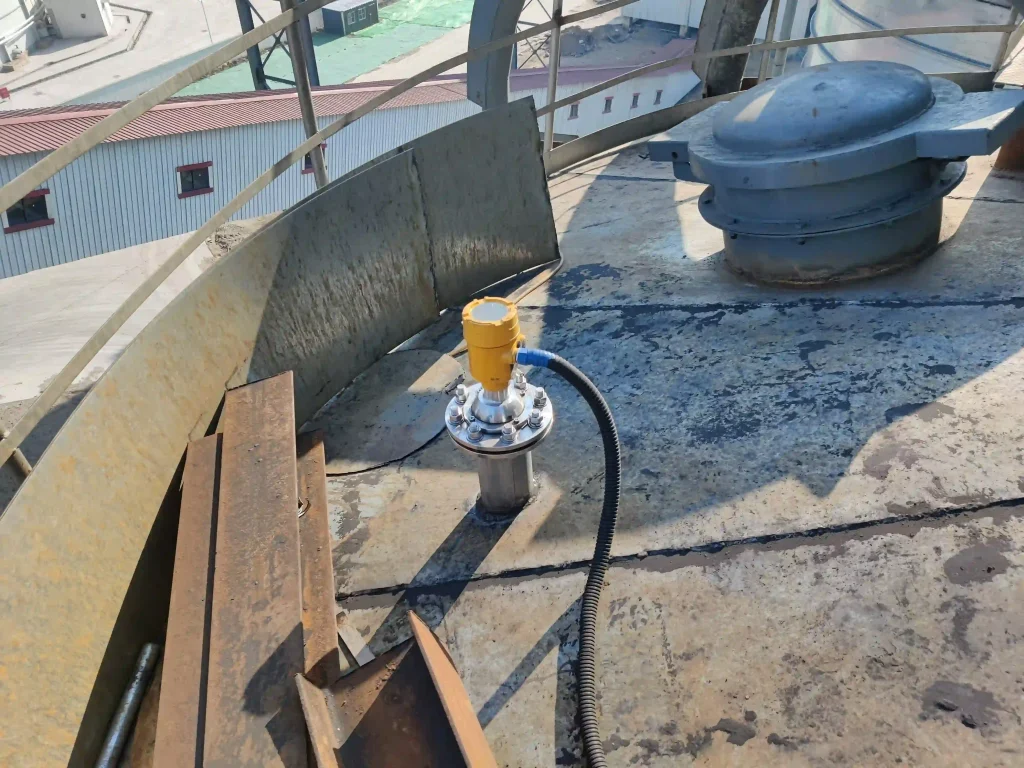
Dielectric Constants of Common Media
Water-based media: Pure water (εᵣ ≈ 80), wastewater (εᵣ ≈ 60–80), concentrated sulfuric acid (εᵣ ≈ 84), hydrochloric acid (εᵣ ≈ 80), and other aqueous solutions carry extremely high dielectric constants. These media give off strong radar reflections, so measurements come out clean and stable—they are about the easiest materials to handle.
Petroleum and petroleum products: Crude oil (εᵣ ≈ 2.0–4.5, climbing as water content rises), gasoline (εᵣ ≈ 2.0–2.3), diesel (εᵣ ≈ 2.1), heavy oil (εᵣ ≈ 2.5–4.0), lubricating oil (εᵣ ≈ 2.1–2.3), and similar hydrocarbon oils sit on the low side of the dielectric scale, so their reflections are comparatively weak.
Chemical solvents: Polar solvents such as methanol (εᵣ ≈ 33), ethanol (εᵣ ≈ 24), acetone (εᵣ ≈ 21), and ethylene glycol (εᵣ ≈ 37) fall in the moderately high range and measure well. Nonpolar aromatics like benzene (εᵣ ≈ 2.3), toluene (εᵣ ≈ 2.4), and xylene (εᵣ ≈ 2.3–2.5) throw back much weaker signals.
Liquefied gases: Liquefied petroleum gas (LPG) (εᵣ ≈ 1.6–1.9), liquefied natural gas (LNG) (εᵣ ≈ 1.7), liquid ammonia (εᵣ ≈ 15–25, shifting with temperature), and liquid chlorine (εᵣ ≈ 2.0) tend to have low dielectric constants, especially the liquid hydrocarbons. For these, 80 GHz high-frequency radar or guided-wave radar is usually needed to get dependable readings.
Food and beverages: Milk (εᵣ ≈ 70), fruit juice (εᵣ ≈ 60–80), beer (εᵣ ≈ 80), edible oils (εᵣ ≈ 3.0–3.2), and syrups (εᵣ ≈ 60) vary widely depending on how much water they hold. High-water-content liquids perform excellently under radar, whereas pure oils and fats reflect more poorly.
Solid materials: Cement (εᵣ ≈ 4–6), fly ash (εᵣ ≈ 4–8), grain (εᵣ ≈ 3–5, jumping up when damp), plastic pellets (εᵣ ≈ 2.0–3.5), coal (εᵣ ≈ 3–5), and ores (εᵣ ≈ 5–15). Bulk solids like these have dielectric constants that swing with moisture and packing density, and dust plus the angle of repose can complicate the measurement.
Special industrial media: Caustic soda (εᵣ ≈ 80), nitric acid (εᵣ ≈ 50–80, depending on concentration), hydrogen peroxide (εᵣ ≈ 80), and glycerin (εᵣ ≈ 47) are corrosive liquids with high dielectric constants, so radar handles them without trouble. On the flip side, low-dielectric media such as silicone oil (εᵣ ≈ 2.5–2.8) and heat-transfer oil (εᵣ ≈ 2.2–2.5) call for more careful model selection.
Factors Affecting the Dielectric Constant of a Medium
The dielectric constant matters a great deal in radar level measurement because it directly governs how radar waves bounce off a material’s surface, and that in turn decides how accurate the reading will be. Yet this constant is not set in stone; it shifts with environmental conditions and with the material’s own makeup.
Temperature ranks among the biggest influences. When temperature moves up or down, the material’s molecular structure changes, and so does its dielectric constant. In most cases, raising the temperature pushes the dielectric constant lower, which weakens radar reflection and makes it harder for the sensor to nail down an exact level.
Moisture content is another major player. Wet materials almost always carry a higher dielectric constant, and that stronger reflection usually translates into better measurement accuracy. This point hits home in the food and beverage sector, where moisture levels rise and fall throughout processing and storage.
Density matters too. Heavier, denser materials generally show higher dielectric constants and send back stronger radar echoes. In industrial settings, density is rarely uniform—think of bulk solids or slurries—so grasping how it varies is essential for picking the right sensor and keeping readings trustworthy.
By weighing how temperature, moisture, and density pull the dielectric constant in different directions, engineers can zero in on the radar level sensor that fits their process best, securing solid accuracy across a wide mix of materials and operating environments.
How to Select the Right Radar Level Transmitter Based on Dielectric Constant
Determine the range of the medium’s dielectric constant: First, measure or consult the dielectric constant of the medium being measured at the operating temperature. Media with high permittivity reflect strong signals, and any type of radar is suitable; media with medium permittivity require an assessment of specific operating conditions; media with low permittivity place the highest demands on sensor performance.
Selection for media with high permittivity: These materials reflect radar exceptionally well, so standard low- or medium-frequency pulse radars can deliver high accuracy across the entire span. Ordinary horn or rod antennas work fine, installation is fairly forgiving, and no extra signal boosting is needed.
Selection for media with medium dielectric constants: Go with high-frequency pulse radar or frequency-modulated continuous-wave (FMCW) radar. The tighter beam angle and sharper focus help keep wall echoes at bay. If steam, foam, or agitation are in the picture, pick a unit that packs solid echo-processing smarts and false-echo suppression.
Selection for low-dielectric-constant media: Echoes here are barely there, so you need high-frequency radar or guided-wave radar. An 80 GHz rig runs on short wavelengths with a compact antenna and a razor-thin beam, concentrating energy to grab those faint reflections. Guided-wave radar runs the microwaves down a rod or cable, creating a sharp impedance jump at the surface that still gives a clean reading even when εᵣ drops to 1.4.
Consider the impact of dielectric constant fluctuations: If temperature swings, moisture shifts, or composition changes are likely—think crude oil drying out or grain taking on humidity—choose a transmitter that can adapt its signal processing on the fly and keep plenty of gain headroom in reserve. That way a sudden dip in dielectric constant will not knock the measurement offline.
Special considerations for solid materials: With bulk solids like powders or granules, moisture and packing density move the dielectric constant around, and you also have to deal with angle of repose and dust buildup. An 80 GHz radar paired with a swivel flange lets you dial in the aiming angle, or you can run guided-wave radar to punch through the dust layer straight to the surface. For materials with very low dielectric constants and lousy flow, adding a reflector or sticking with a non-contact high-frequency setup may be the better call.
Comprehensive operating condition matching: Beyond dielectric constant, factor in the measuring range, tank geometry, process temperature and pressure, and any headaches from steam, foam, or stirring. Make sure the medium sits inside the manufacturer’s recommended envelope, and if there is any doubt, run an on-site echo curve test to confirm everything lines up.
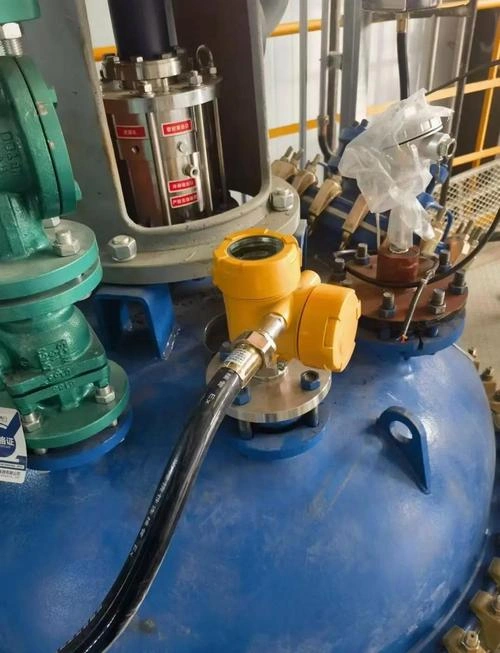
While the dielectric constant sits at the heart of radar level transmitter selection, no single technology can handle every situation.
As a professional supplier of level measurement solutions, we carry the full radar lineup—from standard pulse units through high-frequency and guided-wave models—and we also stock ultrasonic transmitters, hydrostatic transmitters, float switches, and a variety of other level switches. That mix lets us cover the full spread of permittivities, temperatures, pressures, and mounting constraints.
Whatever complexity your application throws at us, our engineering team can walk you through the whole journey, from picking the right product to keeping it running smoothly, all tailored to your actual needs. Reach out and we will put together a solution built specifically for you.