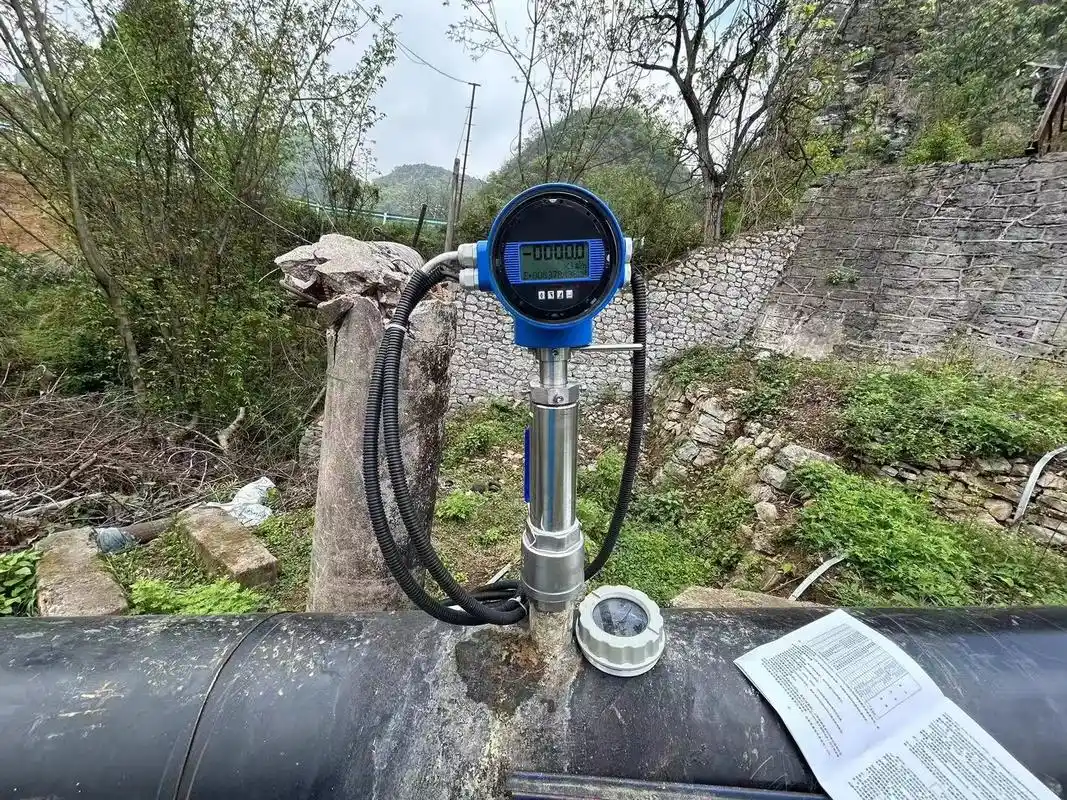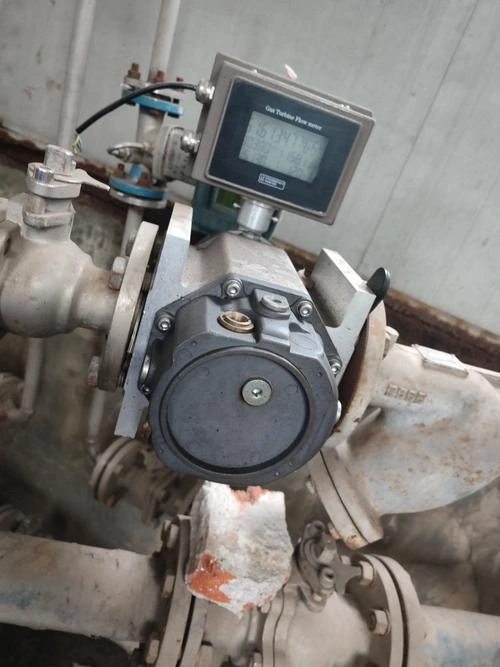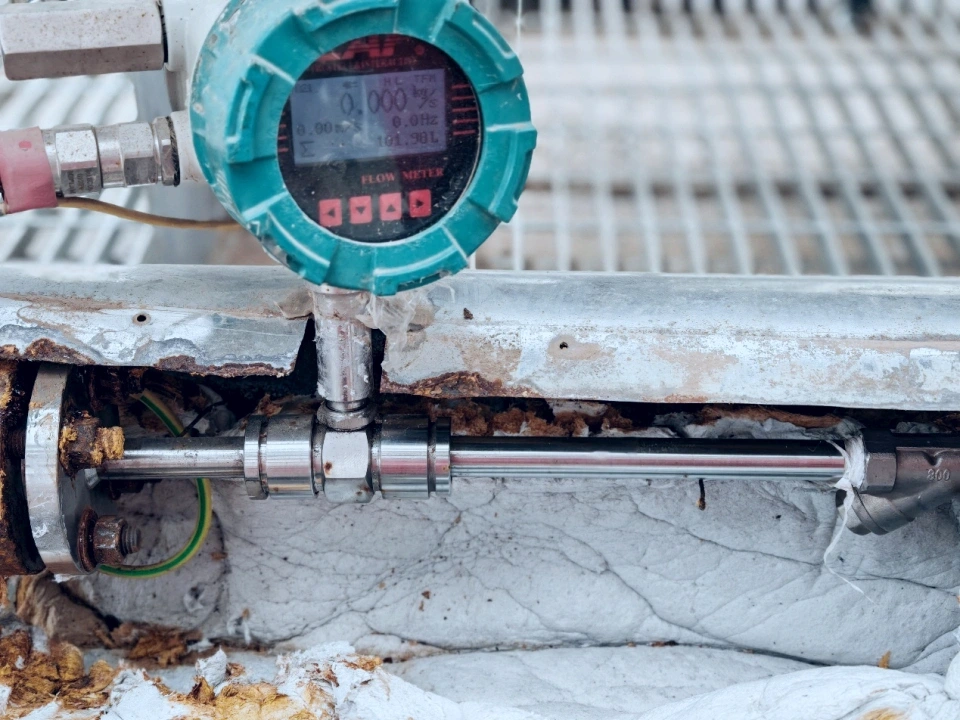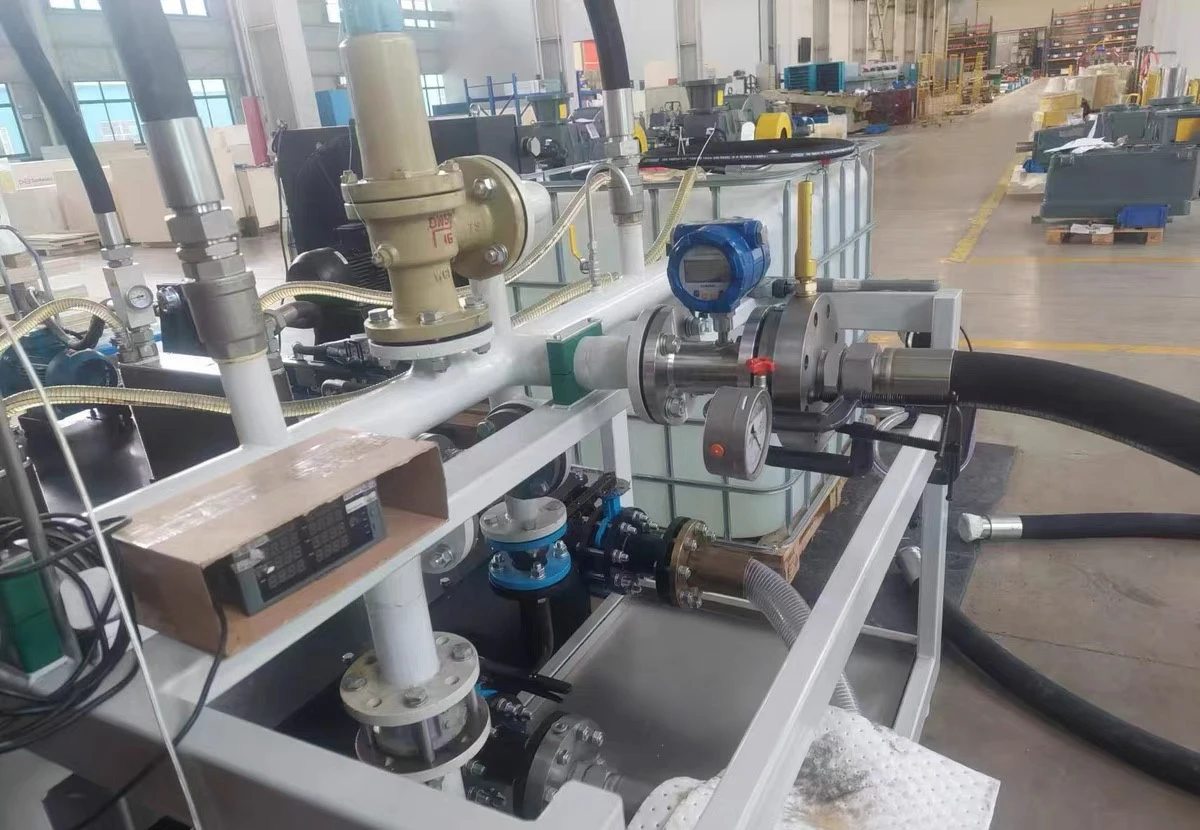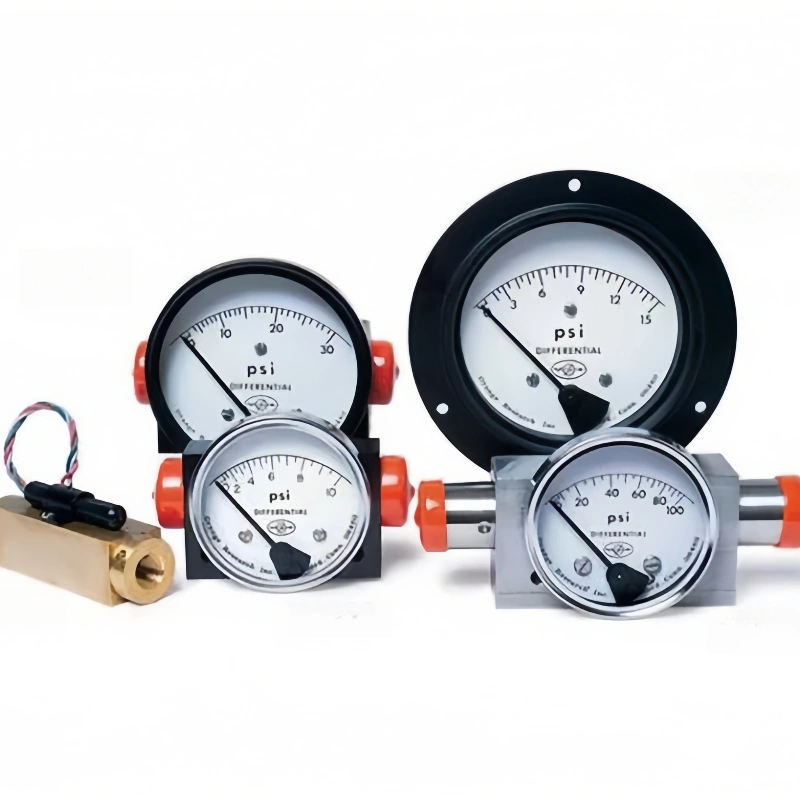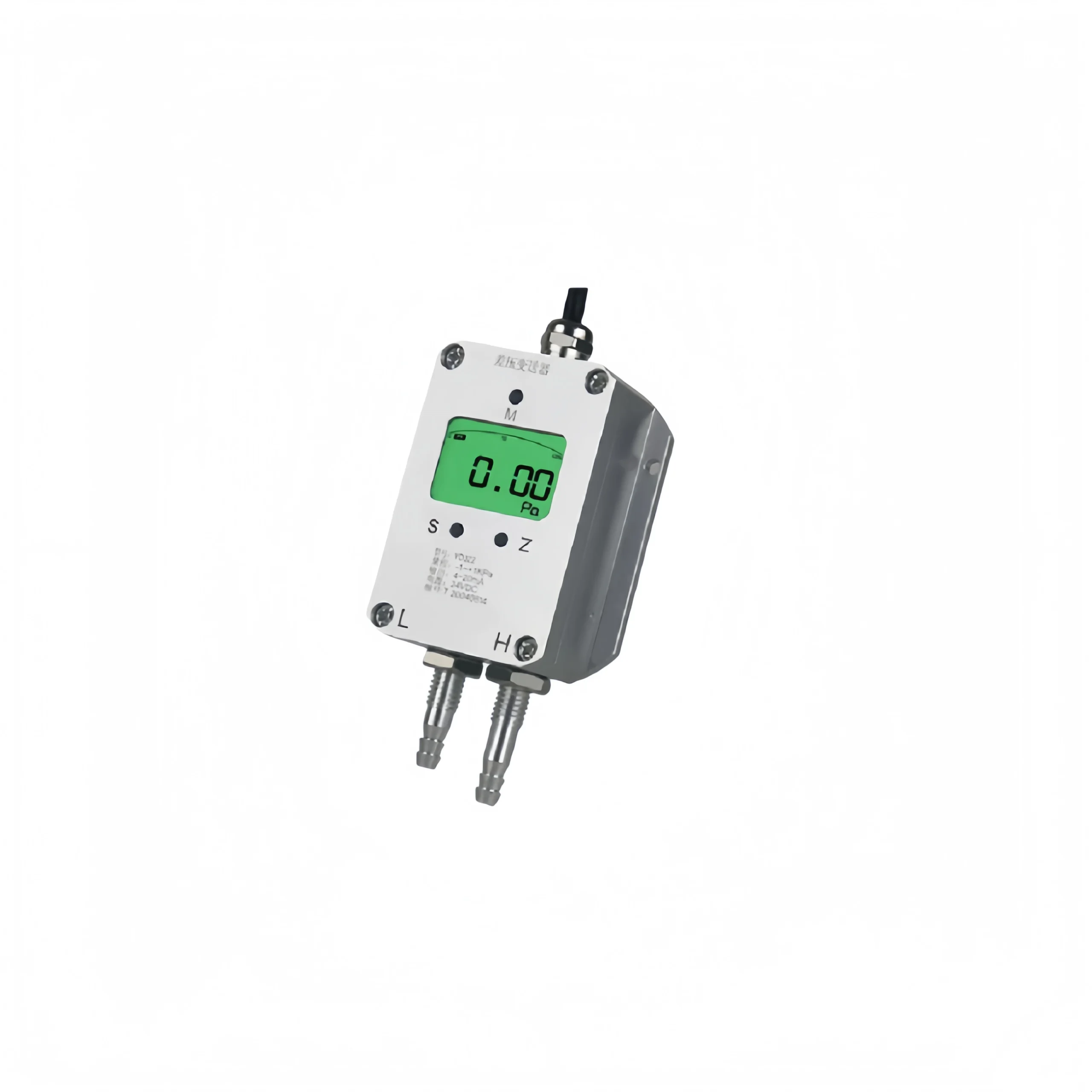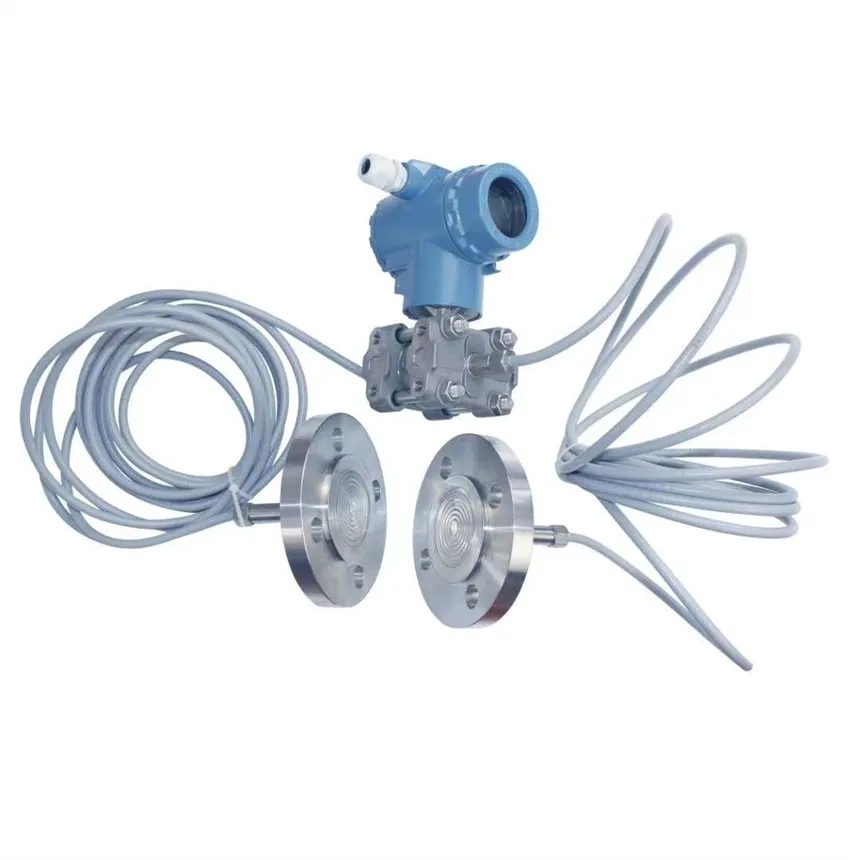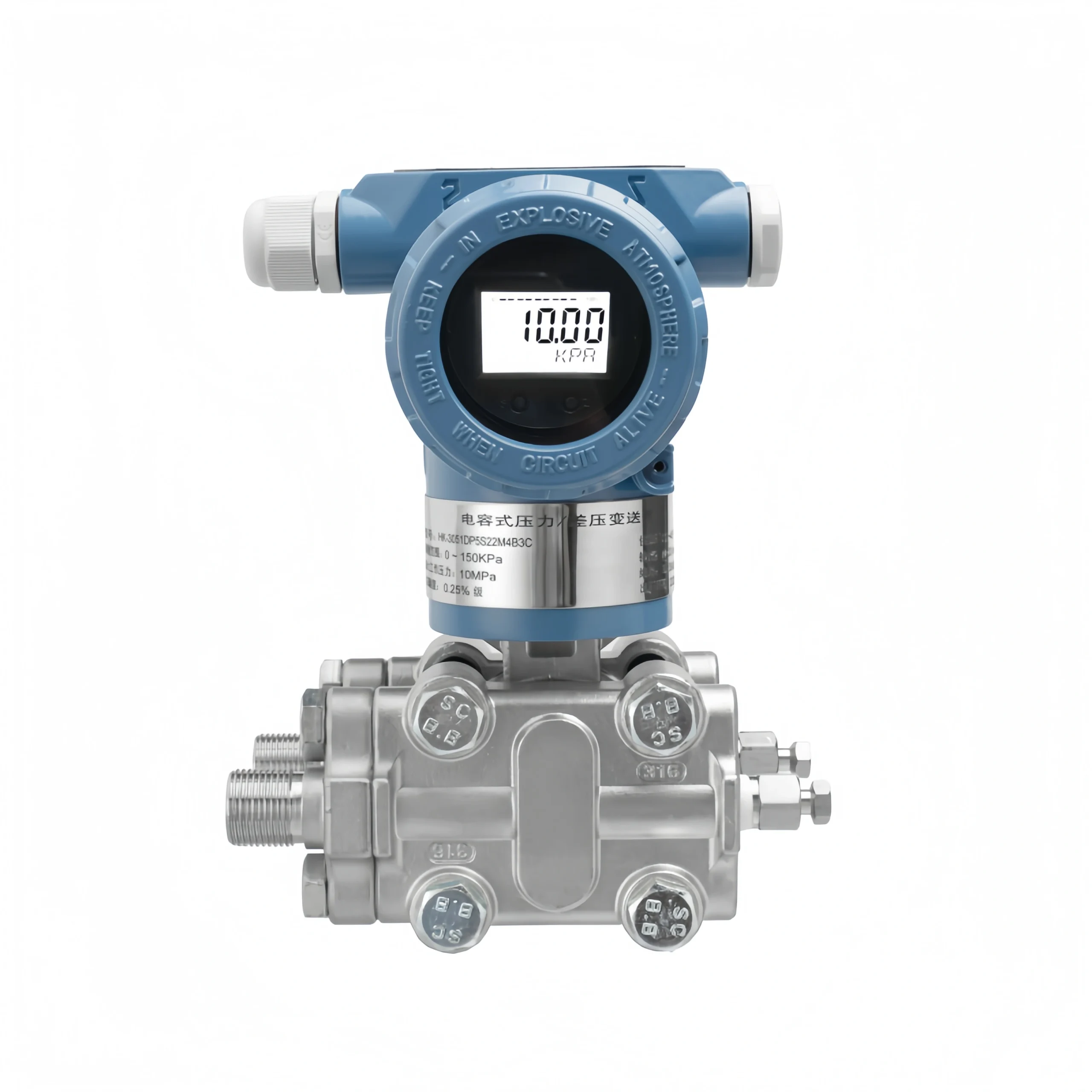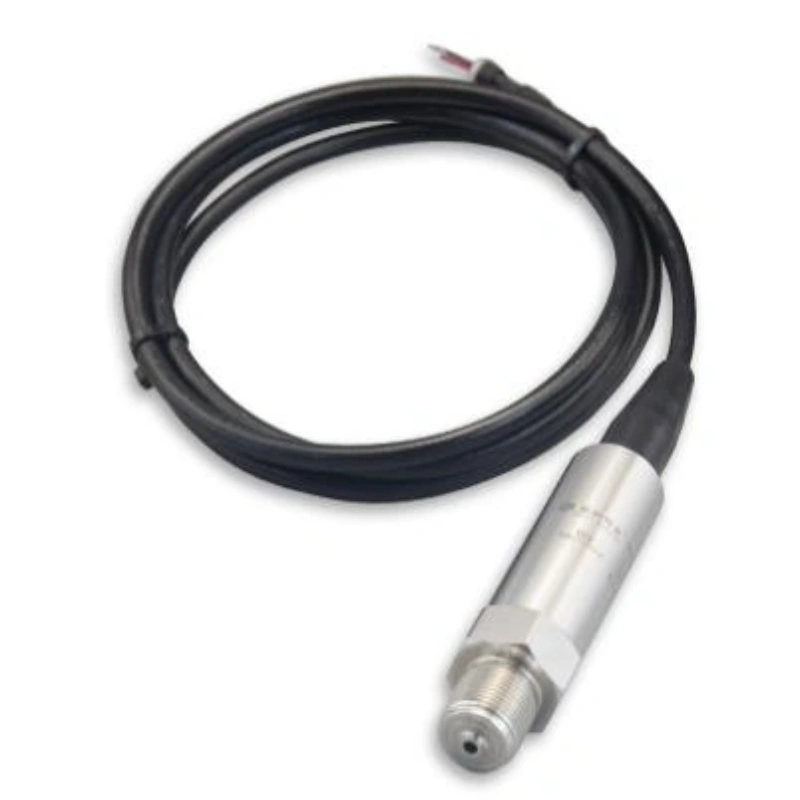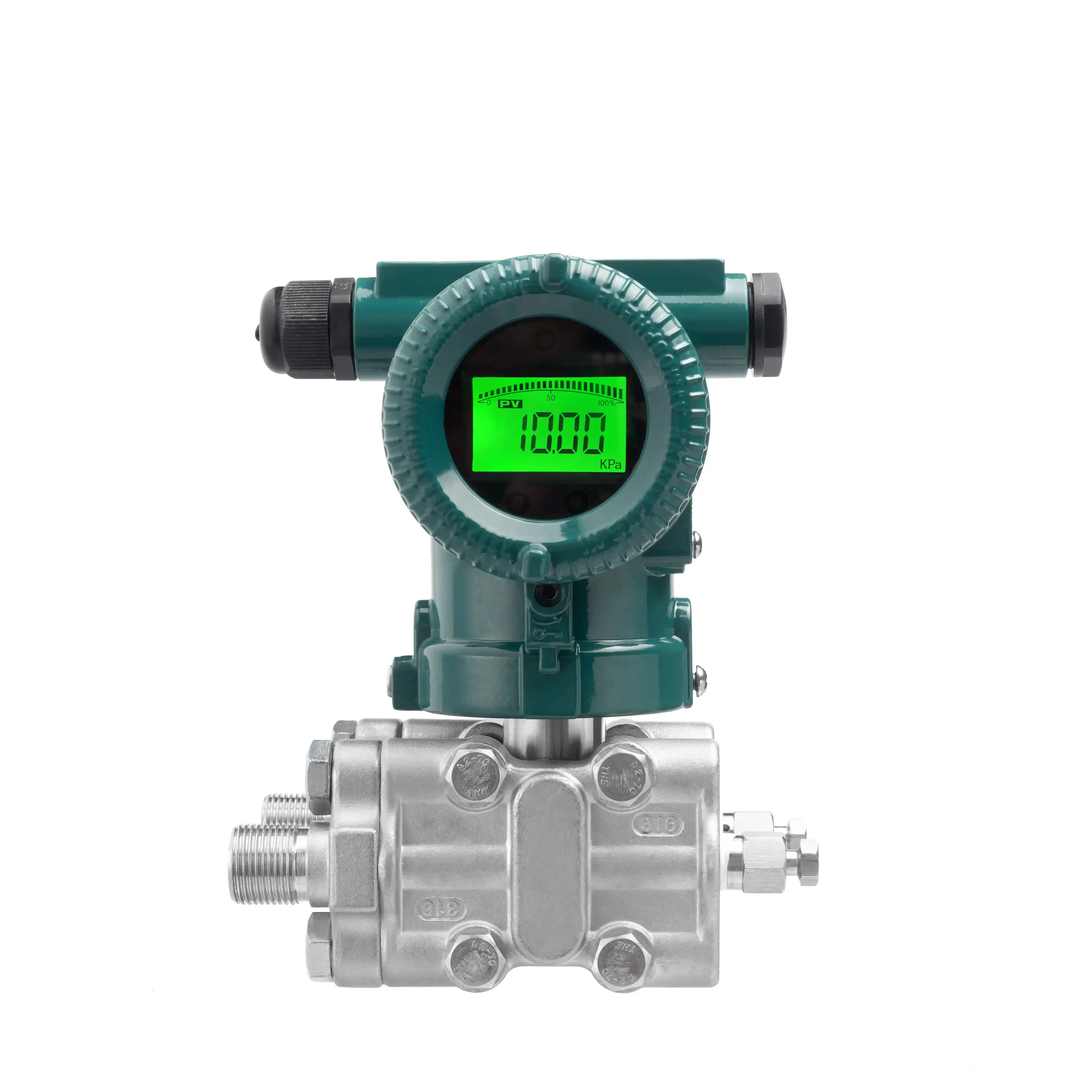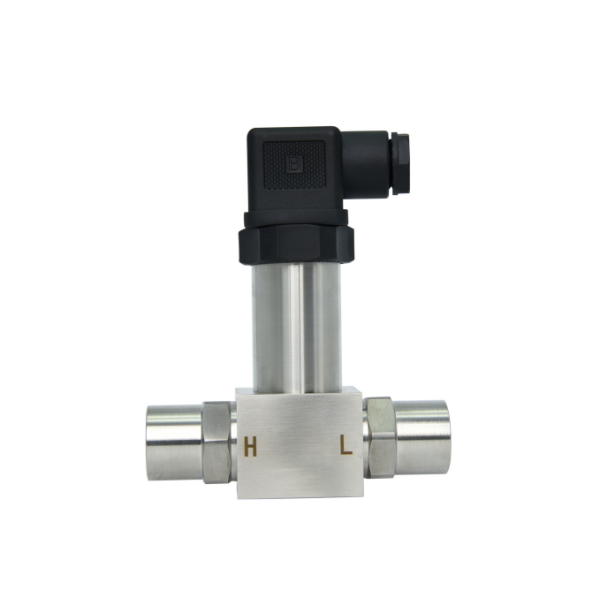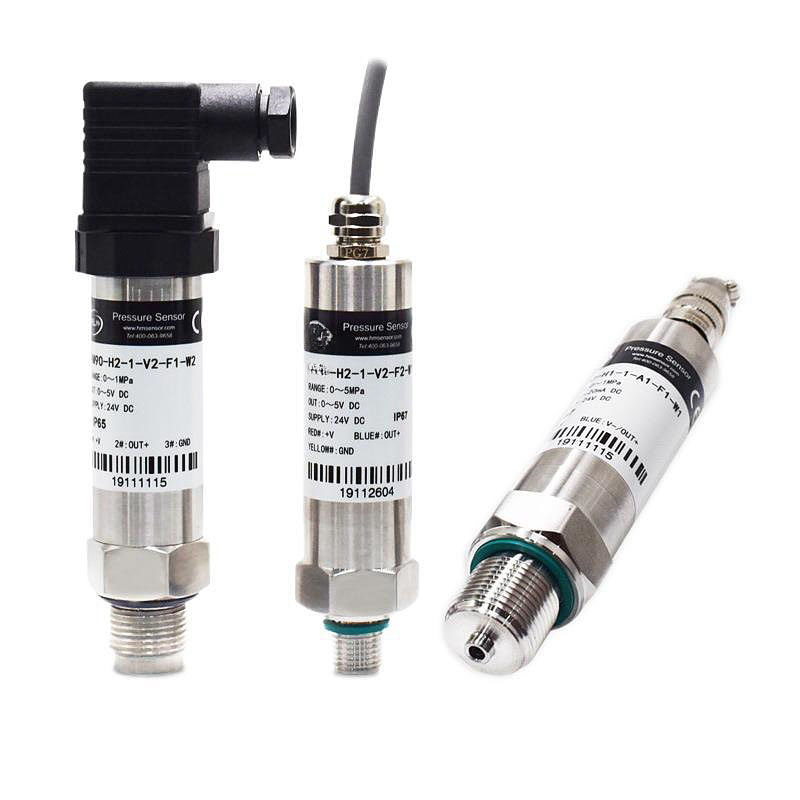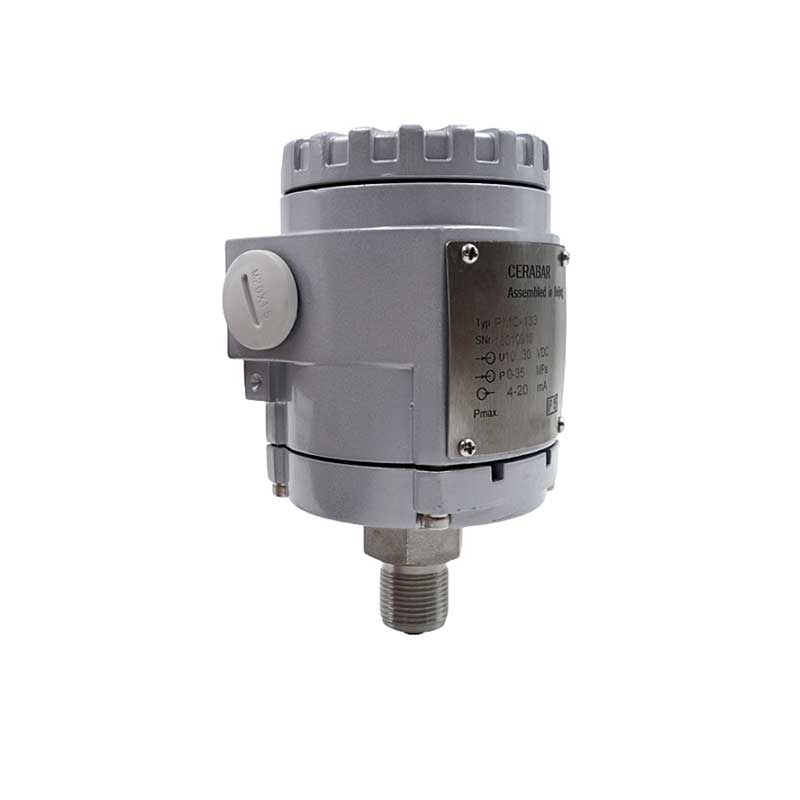
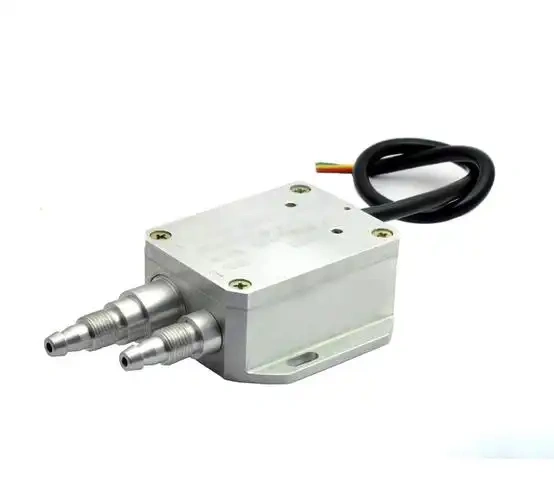
An air differential pressure transmitter is a specific instrument used to measure the difference in pressure between two sites of an air or inert gas system. Then it turns that information into an electrical signal that can be read by other equipment.
It can also talk to control systems for automatic regulation and fault alarms, when being watched. It is incredibly accurate and trustworthy. So it is the finest choice for monitoring pressure in machinery and buildings.
Principle of Operation
An air differential pressure transmitter operates by measuring the pressure difference between two points in a fluid. It typically consists of two pressure-sensing elements, a signal converter and an output interface. As the fluid flows through the two pressure measurement points, a pressure differential is created.
The pressure measurement components collect the two pressure signals in real time and transmit them to the signal conversion unit; the built-in piezoresistive sensor chip precisely processes and calculates the differential pressure signal, ultimately converting it into a stable industrial standard signal output, thereby achieving continuous and accurate measurement of the air pressure differential.
Structure of an Air Differential Pressure Transmitter
An air differential pressure transmitter consists of a measuring sensor section, a conversion and amplification section, a housing chamber, and an electrical connection section.
The core sensing unit primarily comprises an isolation diaphragm, a filling fluid, a measuring diaphragm and a mounting base. The two external air differential pressure streams act on the high- and low-pressure side isolation diaphragms respectively; the pressure is transmitted via the internal filling fluid to the central measuring diaphragm, causing the diaphragm to undergo a minute displacement proportional to the differential pressure value.
The conversion and amplification section comprises capacitive or resistive sensing elements, signal processing circuits, temperature compensation circuits and an amplification and transmission module.
This section converts the mechanical deformation of the diaphragm into a standard electrical signal and corrects measurement errors caused by ambient temperature through temperature compensation.
The external structure includes a protective housing, pressure ports, a balancing valve assembly and a sealing and mounting structure. These components protect the internal precision components whilst ensuring reliable connection of the air lines and enabling static balance calibration.
The electrical connection bit has terminal blocks, a sealed junction box and a protective cable connector. These are responsible for sending the processed standard analogue or digital signal to external systems.
The integrated structure incorporates pressure sensing, signal conversion, temperature compensation, mechanical protection and electrical output. This enables stable and precise detection and remote transmission of differential pressure in air media.
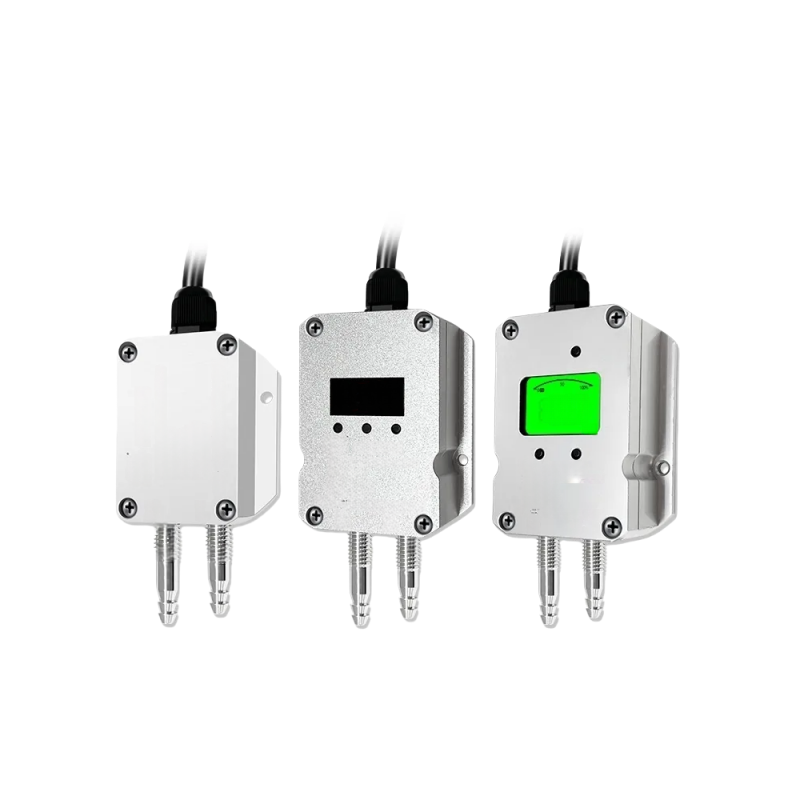
Advantages of Air Differential Pressure Transmitters
1. Outstanding industrial-grade durability: The gadget is designed for durability, with high-performance sensor chips that guard against stress, overload, vibration and corrosion. It can cope with harsh industrial settings, meaning your items will last longer and you will have to replace less equipment, saving you money.
2. High measurement accuracy: The product has a fairly good accuracy of +/- 0.5 % FS / +/- 1 % FS and can resolve down to 0.1 Pa . It can detect subtle changes in differential pressure, so you may depend on the measurement data for industrial production, environmental monitoring and other applications.
3. Strong Interference Resistance: It has a clever design for lightning protection and is very effective against radio frequency and electromagnetic interference. It also has surge protection and reverse polarity protection. It can efficiently resist various interference sources in complex industrial environments, ensuring reliable operation even in tough situations.
4. Flexible range adaptability: The usual measuring range is wide and covers the majority of normal needs. It also offers customising of unique range according to user requirements, and adapts to diverse measuring needs in different settings to boost practicality.
5. Excellent operational stability: It has advanced technology that adjusts for temperature changes, so the results are always accurate. It is also protected against radio frequency and electromagnetic interference, which further improves stability and reduces data errors and equipment failure.
6. Convenient and Efficient Installation and Use: The interface is simple and easy to use, so connecting it is straightforward. It works with digital displays and buttons, so you can control it easily and conveniently, and it has a variety of signal output options. This makes it easy to install and use, and reduces the cost of maintenance.
Can air differential pressure transmitters only measure air?
Air differential pressure transmitters are not limited to measuring air; it is simply that air is used as the medium for standard calibration and in typical operating conditions. The core measurement principle involves detecting the pressure difference between two points, and there is no absolute correlation with whether the medium is air.
Provided the medium has moderate flow properties, does not corrode the transmitter’s diaphragm or internal sensing components, and does not solidify, crystallise or block the pressure-sensing lines, it can be measured by an air differential pressure transmitter. The term ‘air differential pressure transmitter’ is commonly used to refer to typical applications rather than to imply that it is limited to measuring air alone.
Gases that can be measured by air differential pressure transmitters
Conventional dry inert gases: These include nitrogen, argon, helium, etc. Such gases are non-corrosive, have a pure composition, and are similar to air in terms of operating conditions; they can be measured directly using air differential pressure transmitters.
Common industrial combustible gases: Clean gaseous media such as natural gas, coalbed methane, propane and butane. Provided they are free from impurities and do not undergo condensation or crystallisation, they are suitable for differential pressure and flow measurement using air-type differential pressure transmitters.
Clean flue gas at ambient temperature: Boiler exhaust gases and hot flue gases that have undergone dust removal and purification, provided they are not highly corrosive and do not contain significant amounts of dust agglomerates, are suitable for monitoring pressure differentials in air ducts and flue ducts.
Common industrial process gases: Pure gaseous media such as compressed air, dry instrument air and carbon dioxide, which have stable physical and chemical properties and will not damage the sensor diaphragm, can be measured as normal.
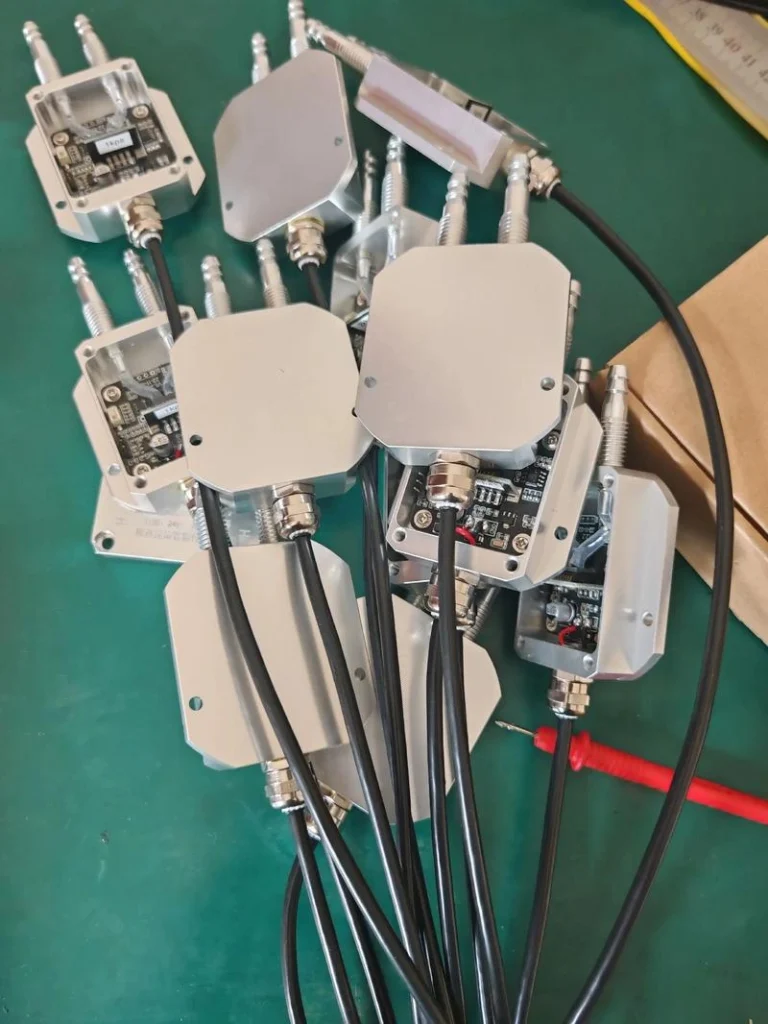
Air differential pressure transmitter vs standard pressure transmitter
Standard pressure transmitters are primarily used to measure single-point gauge pressure, absolute pressure or positive/negative pressure, and only detect the pressure value at a single measurement point relative to atmospheric pressure or vacuum; whereas air differential pressure transmitters are specifically designed to measure the pressure difference between two different measurement points, rather than the pressure at a single point.
The difference in applicable ranges is very clear: standard pressure transmitters have a wider range and are typically suited to medium- and high-pressure applications; air differential pressure transmitters, on the other hand, are designed for low pressure differentials and small ranges, specifically for low-pressure scenarios such as low-pressure air, duct air pressure and cleanroom pressure differentials.
What’s more, air pressure transmitters have been specially made to work well in low-pressure environments. This makes them more accurate, more sensitive and better at detecting small changes in air pressure. Standard pressure transmitters aren’t so good at detecting changes in the low-pressure range, which makes it hard to measure small changes in air pressure.
In terms of application suitability, normal pressure transmitters are predominantly used in water pipelines, steam systems, hydraulic and medium and high-pressure gas applications, whereas air differential pressure transmitters are well suited for monitoring low pressure air differential scenarios such as air conditioning ducts, fan air pressure, clean rooms, building ventilation and furnace negative pressure, providing a better match for the measurement requirements of ventilation and HVAC applications.
Practical Applications of Air Differential Pressure Transmitters
1. HVAC Systems: Monitor pressure variations between the internal and external environments and between clean and general regions in buildings and plant rooms. You have to control new air and exhaust air too. To keep temperature and pressure constant, and to keep contaminated air from backing up.
2. Cleanrooms: They monitor pressure differentials between compartments and buffer zones of cleanrooms in industries such as electronics and pharmaceuticals to control cleanliness and meet manufacturing process standards.
3. Ventilation, Smoke Extraction and Mine Tunnels: Keep an eye on the pressure differences between the front and rear sections of mine galleries and tunnels, and work with the fans to control the airflow, spread out harmful gases and make sure everything is safe and running smoothly.
4. Fan and Duct Monitoring: We install this on different types of ducts to detect pressure differentials before and after the ducts and filters. This helps us to assess fan operating conditions and filter clogging, and to provide maintenance alerts.
5. Negative Pressure Control in Industrial Premises: In places like chemical plants, laboratories and similar facilities, it’s important to keep the air pressure low in the workshops to stop harmful gases and dust from spreading out, which protects the people working there and the environment.
6. Boiler Systems: Keep an eye on the pressure differences in the boiler air ducts and combustion chambers, make sure the supply and exhaust air ratios are matching, get the most out of the combustion process and deal with any safety issues that might come up from pressure being too high or low.
7. Sealed Storage Spaces: The pressure differentials should be monitored inside and outside in facilities such as grain silos, archives and similar institutions. This is to ensure ventilation and airtightness are working properly, preventing damp and mildew and protecting the stored products.
Key Considerations for Selecting Air Differential Pressure Sensors
1. Confirm the measurement range: Select a model based on the real air pressure differential range, with a 20%–30% margin to prevent the long term full scale operation from influencing the accuracy. Select a low-differential pressure model for low-differential pressure applications. Select a broad-range model for applications where the difference between the high and low pressures is wide.
2. Define accuracy and stability requirements: Choose a standard accuracy grade for general ventilation and HVAC applications. Choose models with high precision, good temperature drift compensation and low long-term zero drift for stable data in labs, cleanrooms and industrial air supply applications.
3. Match the output signal type: Common options include 4–20 mA, 0–10 V and RS485 digital signals. If you need something for long-distance transmission and interference resistance, go for 4–20 mA. If you need it for integration with PLC configuration and remote communication, then RS485 is the way to go.
4. Adapt to operating environment conditions: Keep an eye on the operating temperature, humidity, and dust/moisture protection ratings. If you’re dealing with dust or damp air ducts, go for models with high protection ratings and corrosion-resistant housings. Steer clear of direct installation in environments with high temperatures, strong vibrations or strong electromagnetic interference.
5. Determine the installation method and structural layout: Select the probe length and interface according to the on-site cut-out size and the available installation area. This way you may ensure you have an appropriate pressure measuring method and avoid measurement errors caused by airflow disruptions.
6. Matching the medium and pressure rating: Standard models are fine for dry air, but if you’ve got air that’s a bit moist or dusty, you’ll need ones with anti-clogging and filtering features. Also, check the sensor’s pressure rating to stop it getting damaged by sudden pressure surges.
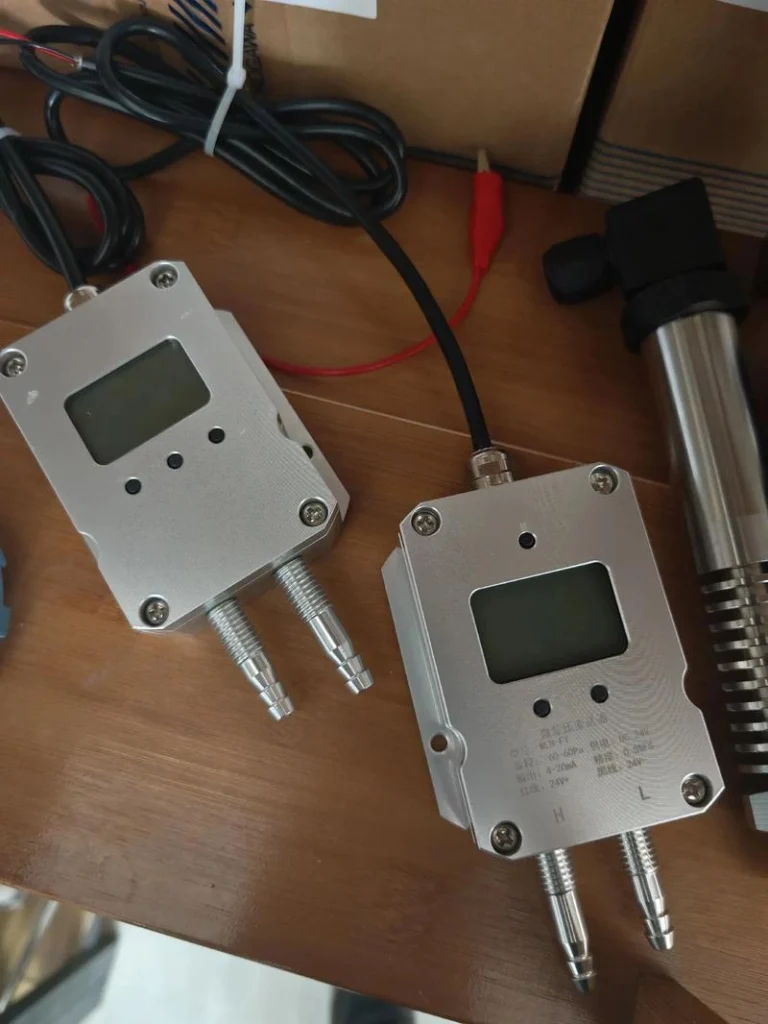
Sino-Inst makes air differential pressure transmitters that are both high-precision and high-stable, and they also offer a wide range of pressure sensors that are suitable for different operating conditions.
Whatever the pressure – medium to high or low – or whatever the environment, we’ve got you covered.
Here at Sino-Inst, we’re all about ‘Quality First, Customer First’ and we use professional products and services to help different industries keep an eye on things and control them efficiently. We’re excited to team up with you to create an efficient, stable and intelligent production and operations system.