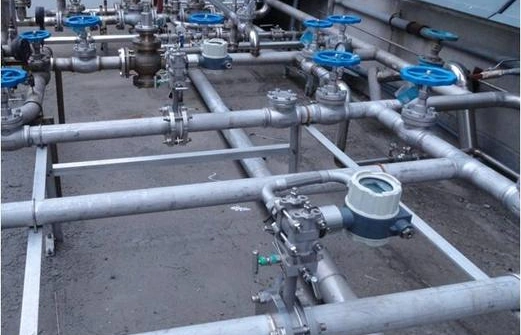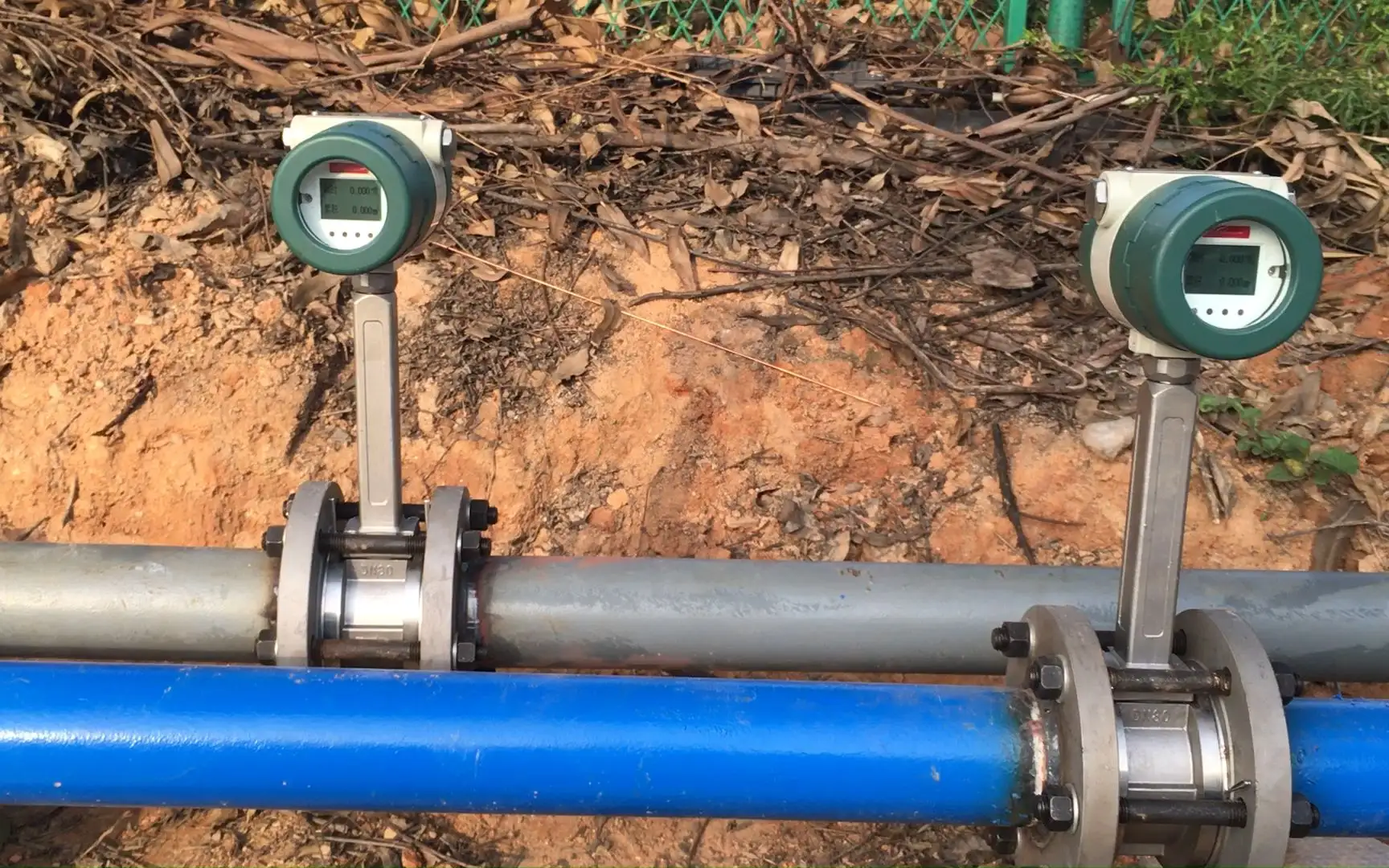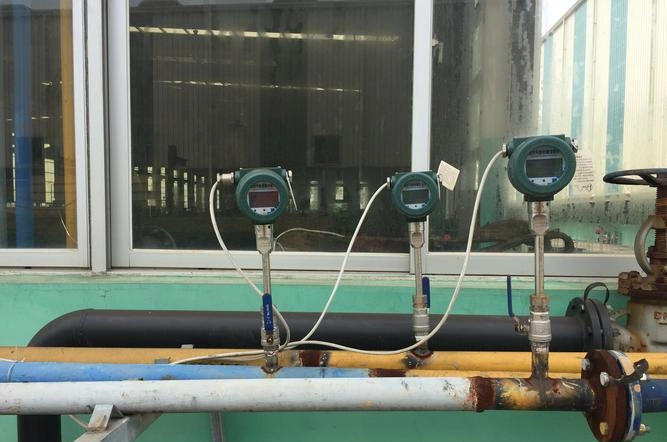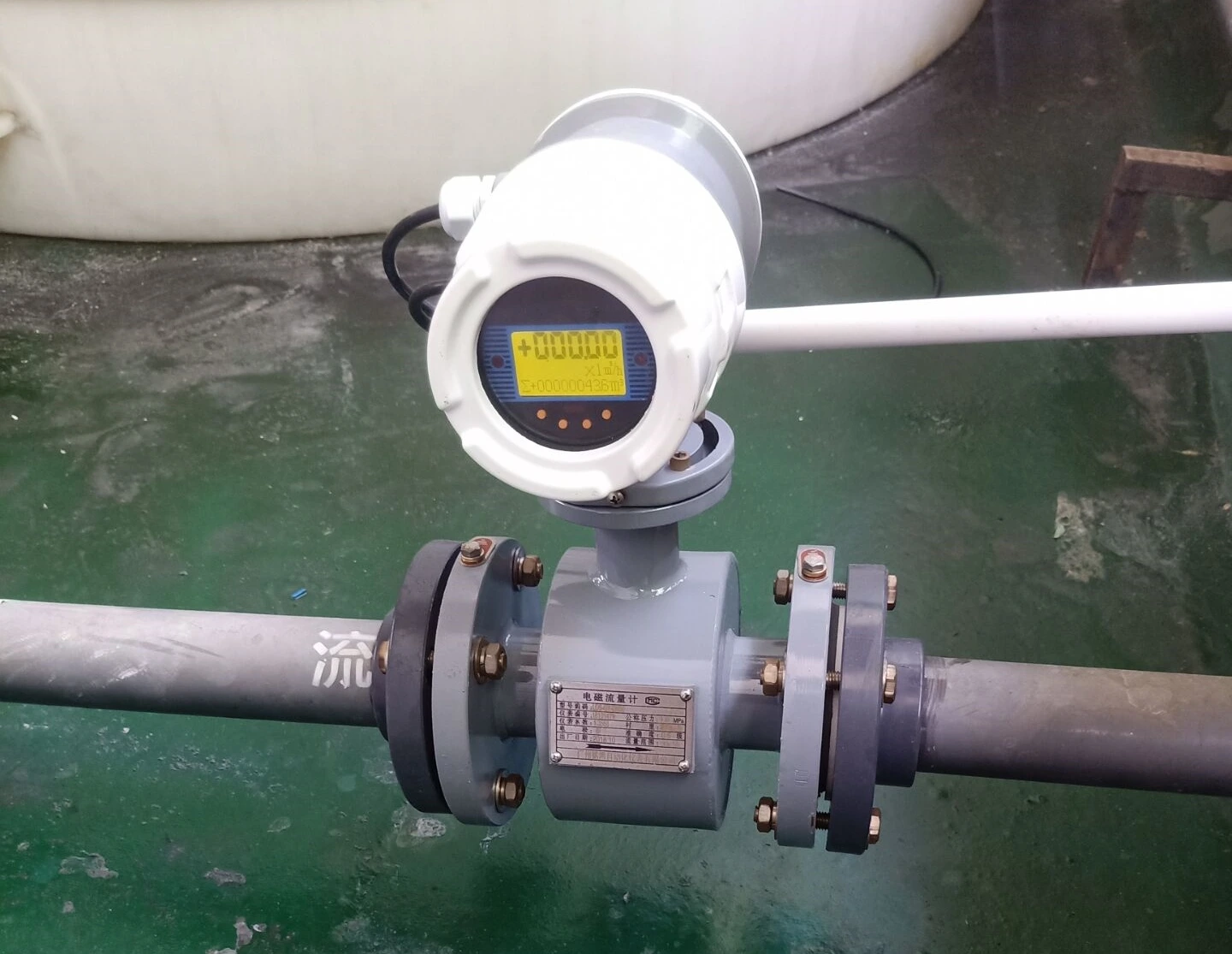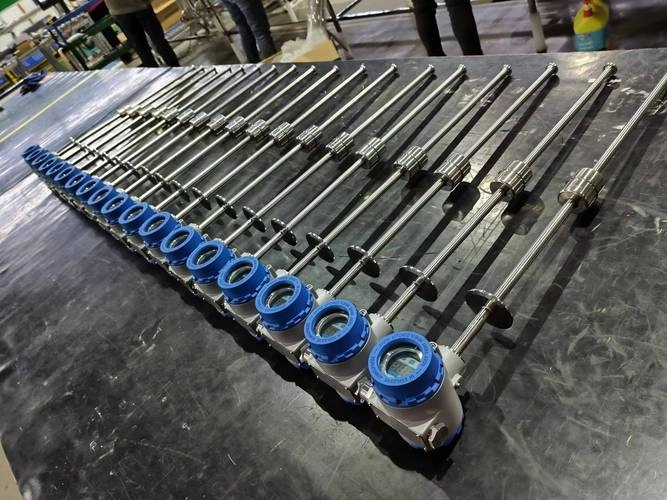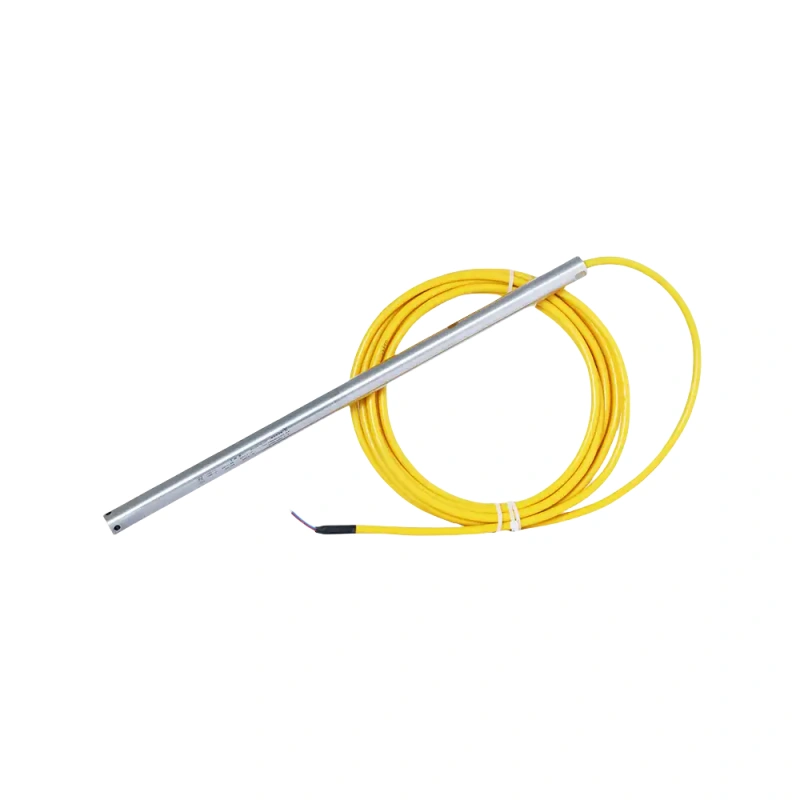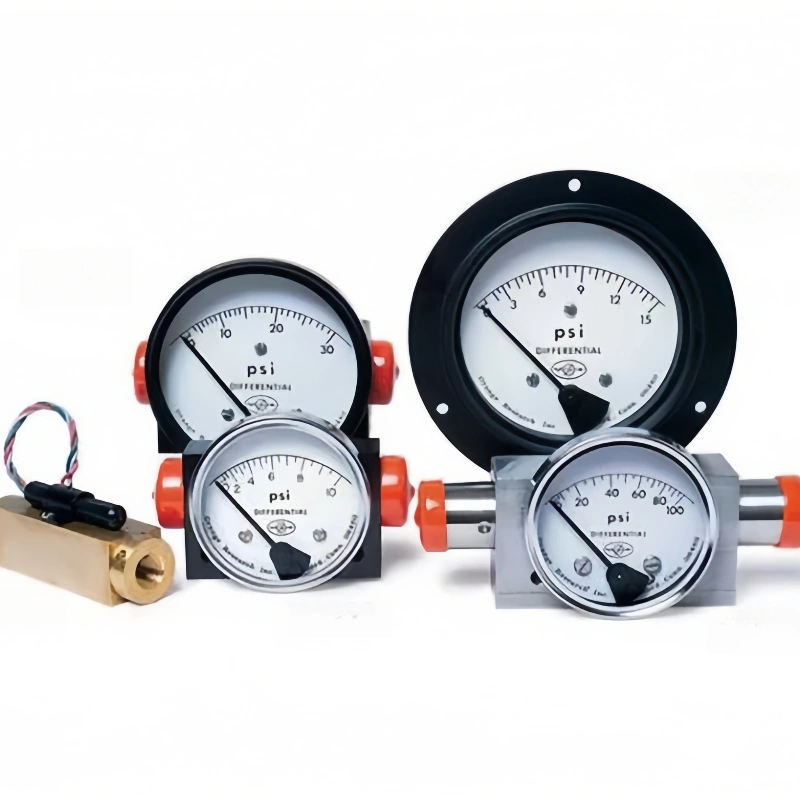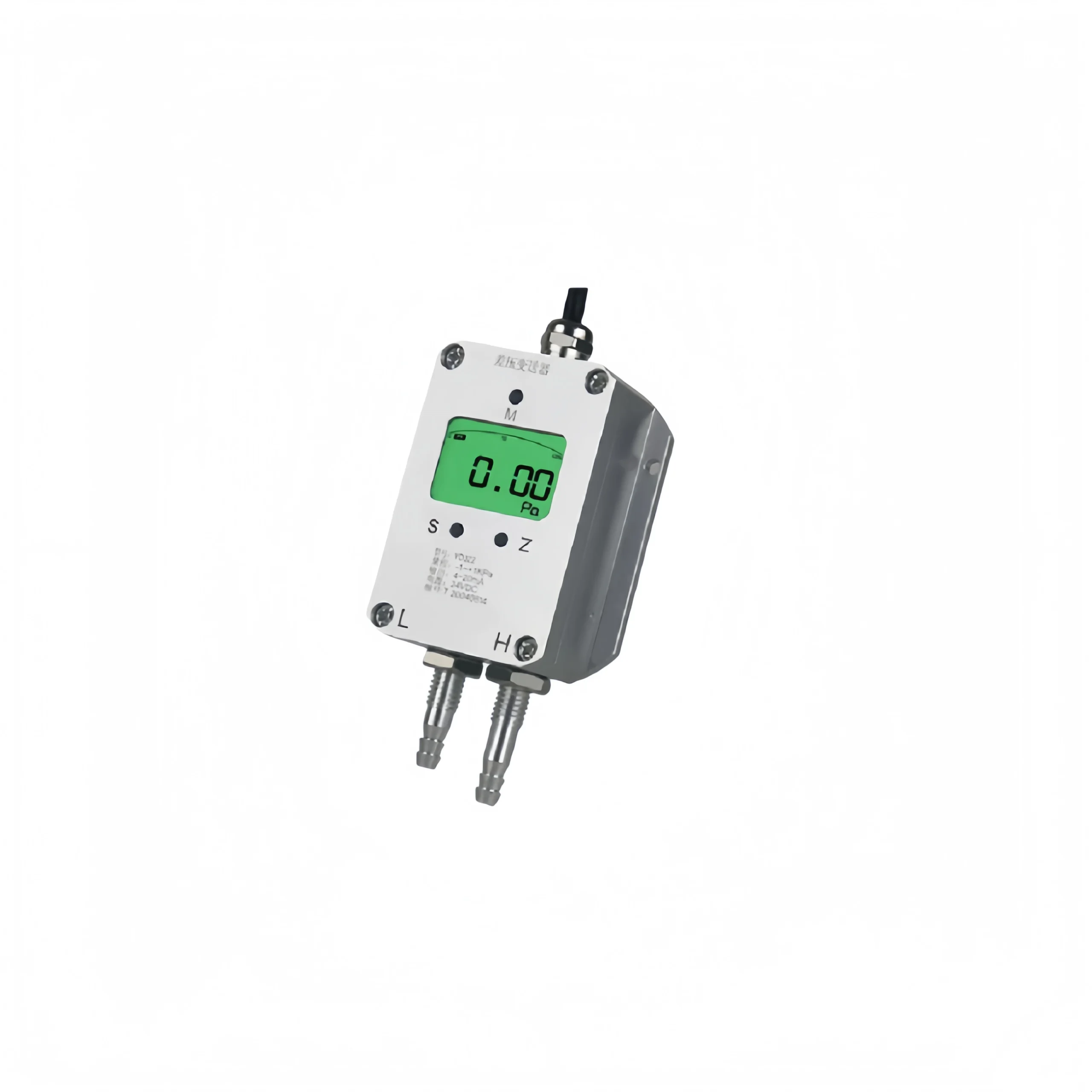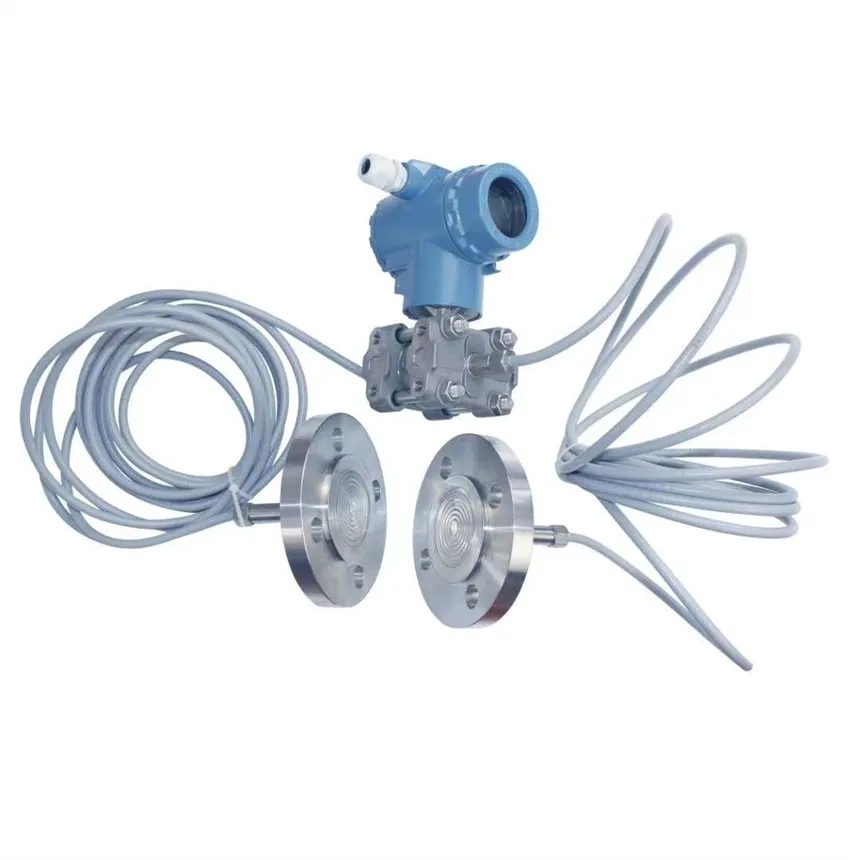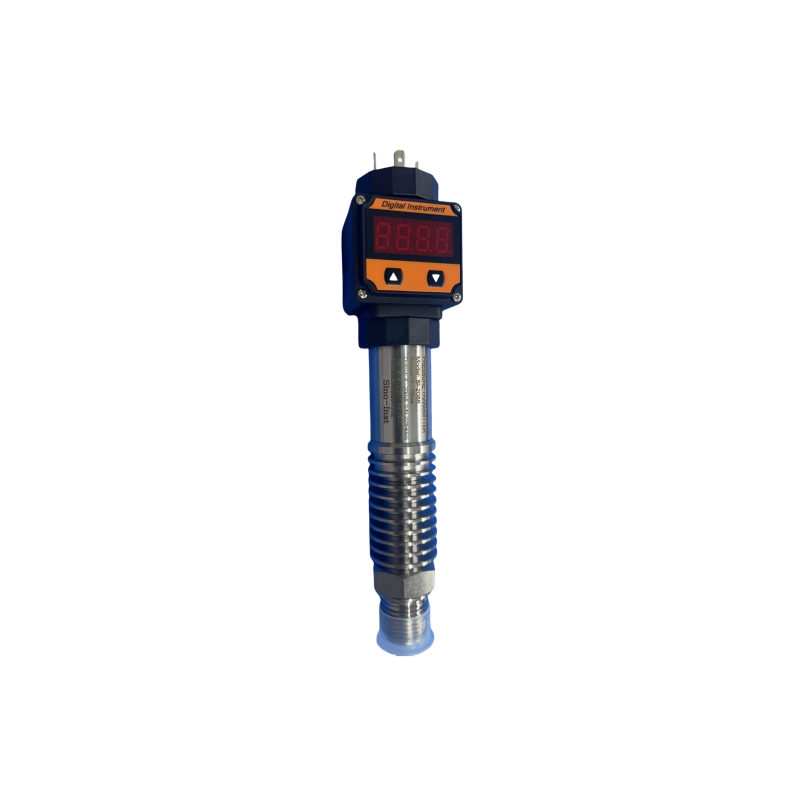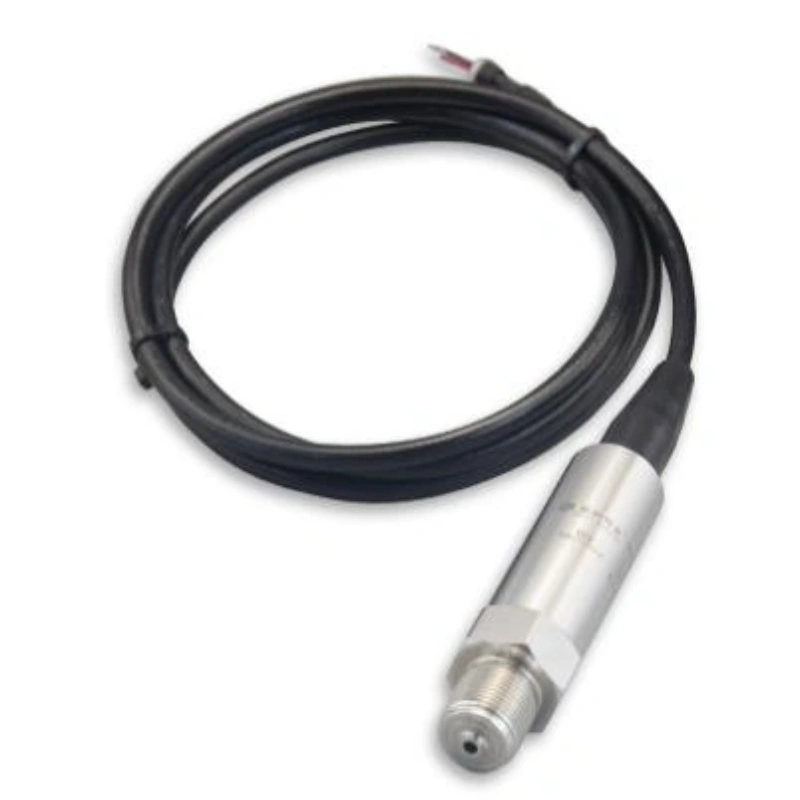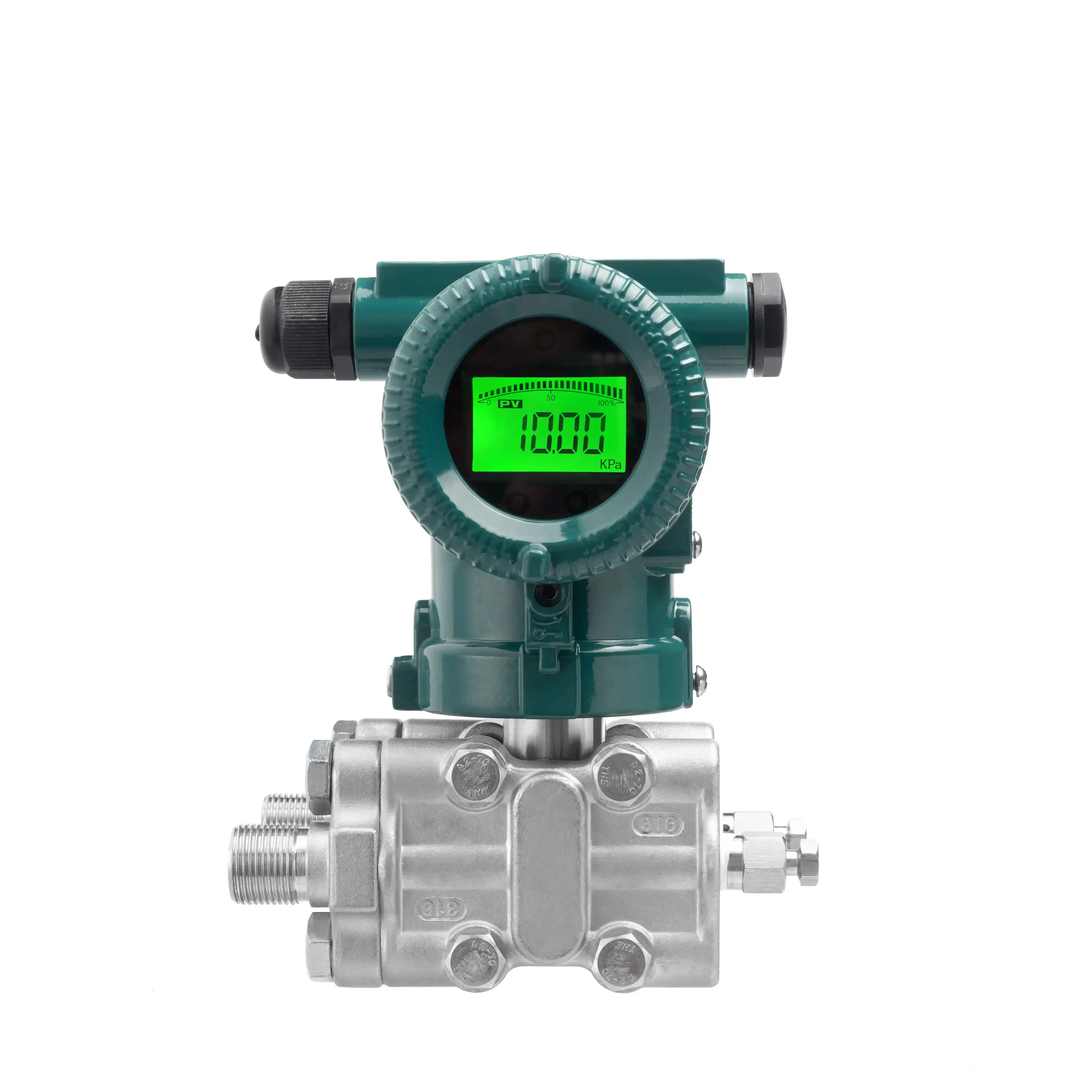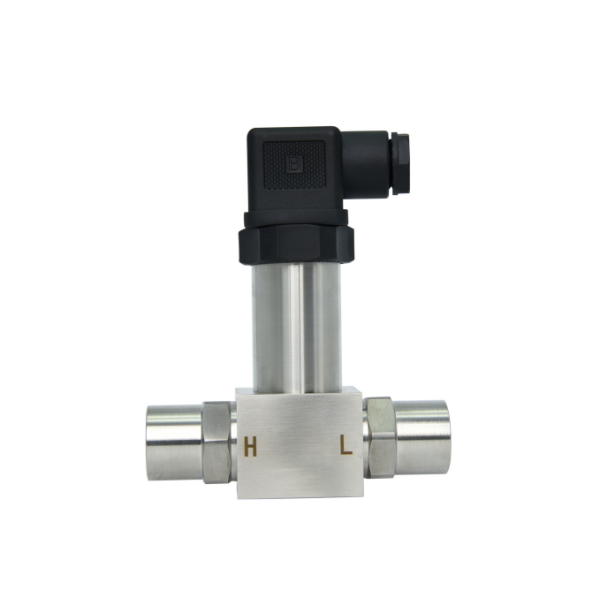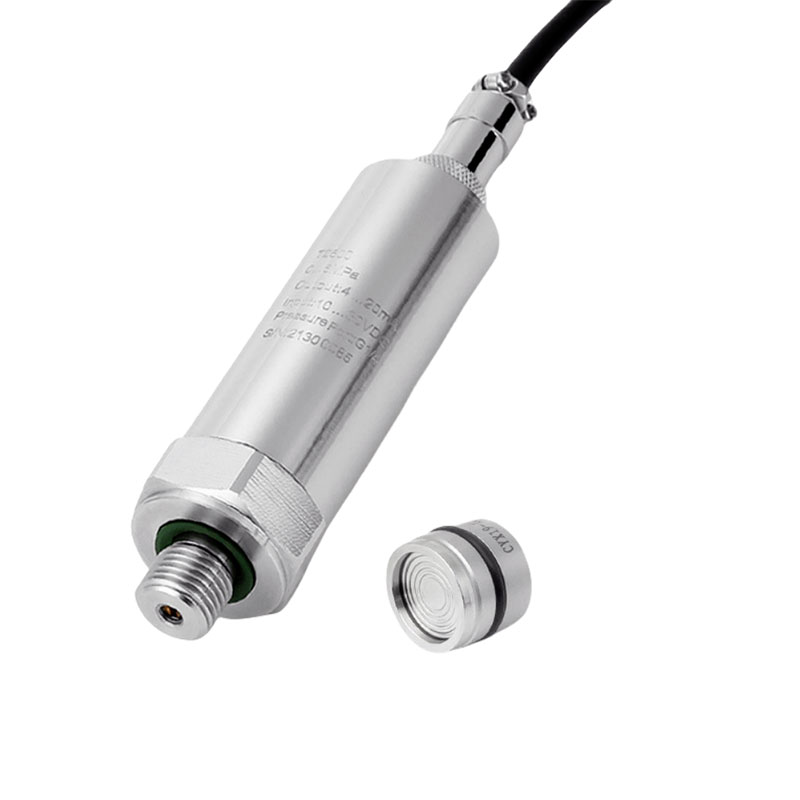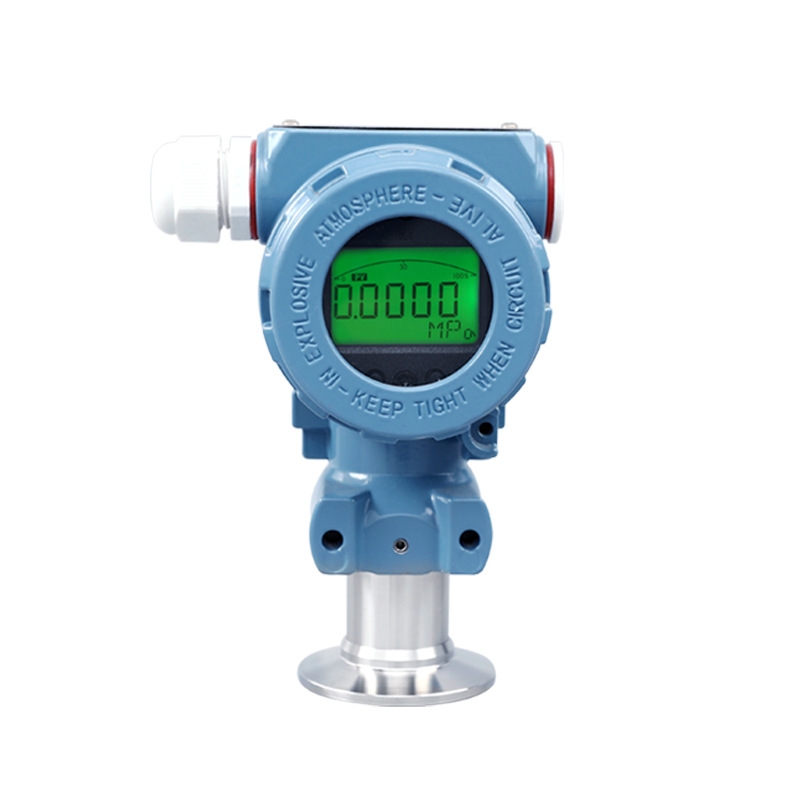
A differential pressure gauge is an instrument used to measure the difference in pressure between two points. They are used in many different industries, such as chemicals, oil, pharmaceuticals, and heating and cooling systems. Its main function is to monitor the pressure in equipment such as pipes and vessels in real time. The information it provides helps factories and laboratories to maintain their equipment.
Principle of Operation
Mechanical differential pressure gauges work on a purely mechanical principle, so they don’t need an external power supply. When you put pressure on from both the high- and low-pressure sides, you end up with a pressure difference inside that affects an elastic sensing element.
Internal pressure-sensing components, such as diaphragms, bellows and bellows chambers, change shape in response to differences in pressure. This creates tiny movements that are proportional to the size of the pressure difference. This is the most important step in converting the pressure signal into mAechanical movement.
The minute displacement caused by this deformation is amplified in terms of both angle and displacement by a transmission mechanism comprising a linkage, sector gears and a central gear. At the same time, a hairspring is used to eliminate gear backlash, ensuring smooth and precise rotation.
The pointer on the dial deflects as the rotor spins faster. The position of the pointer on the dial shows the real-time differential pressure value, making it easy to see the pressure on the spot.
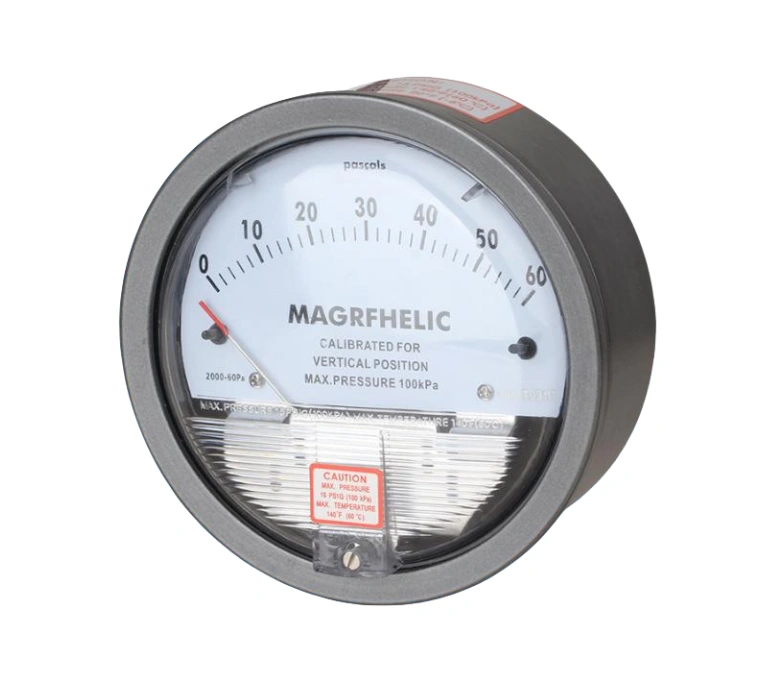
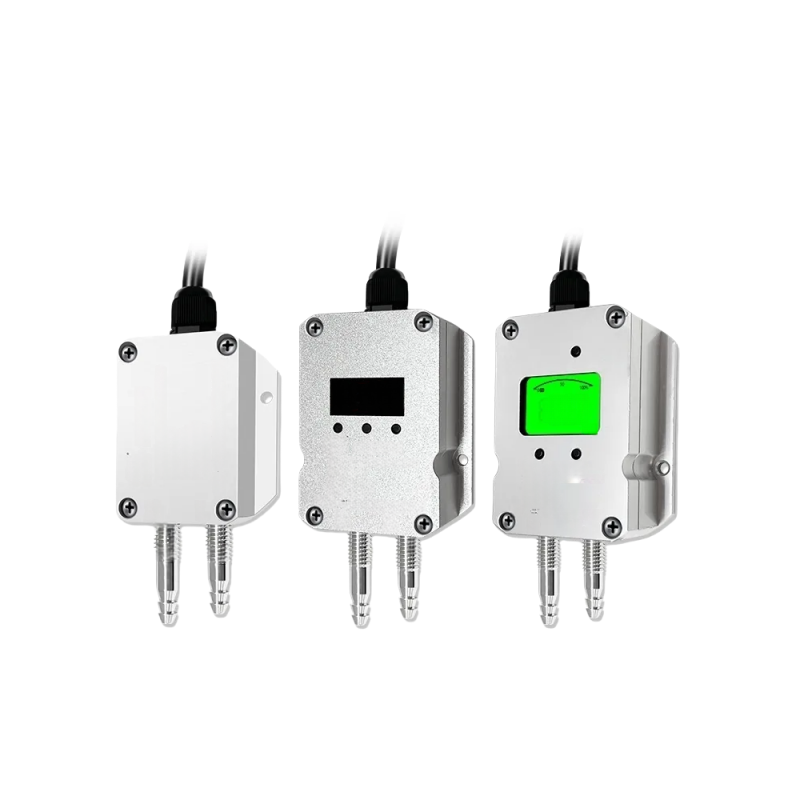
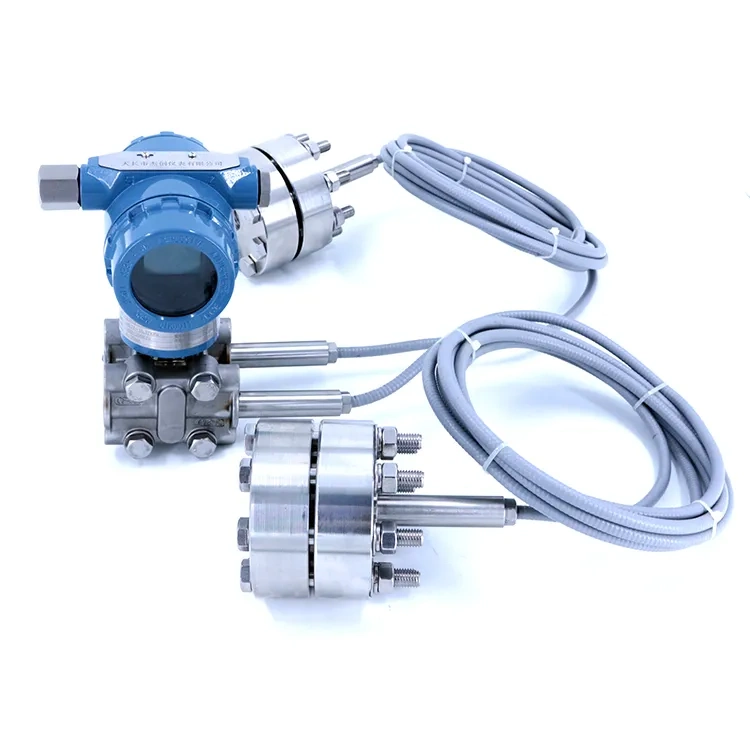
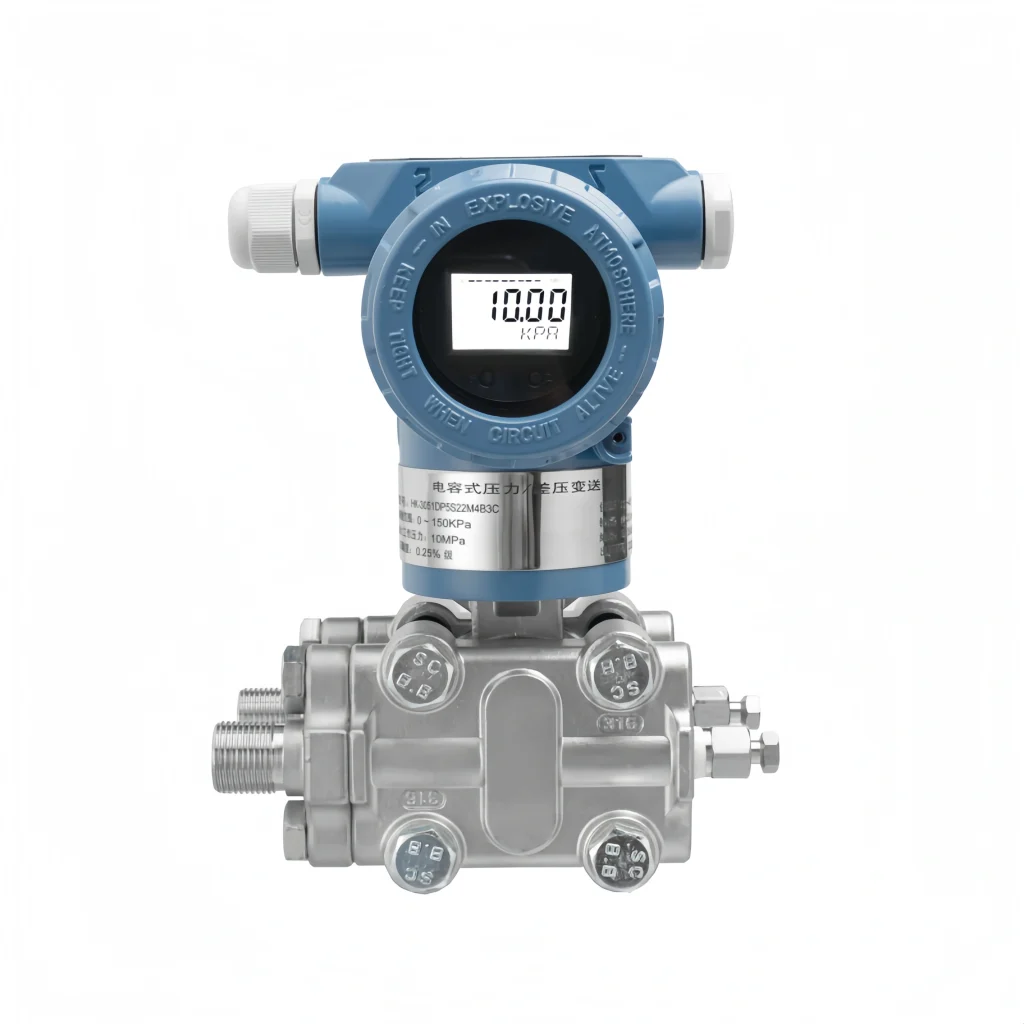
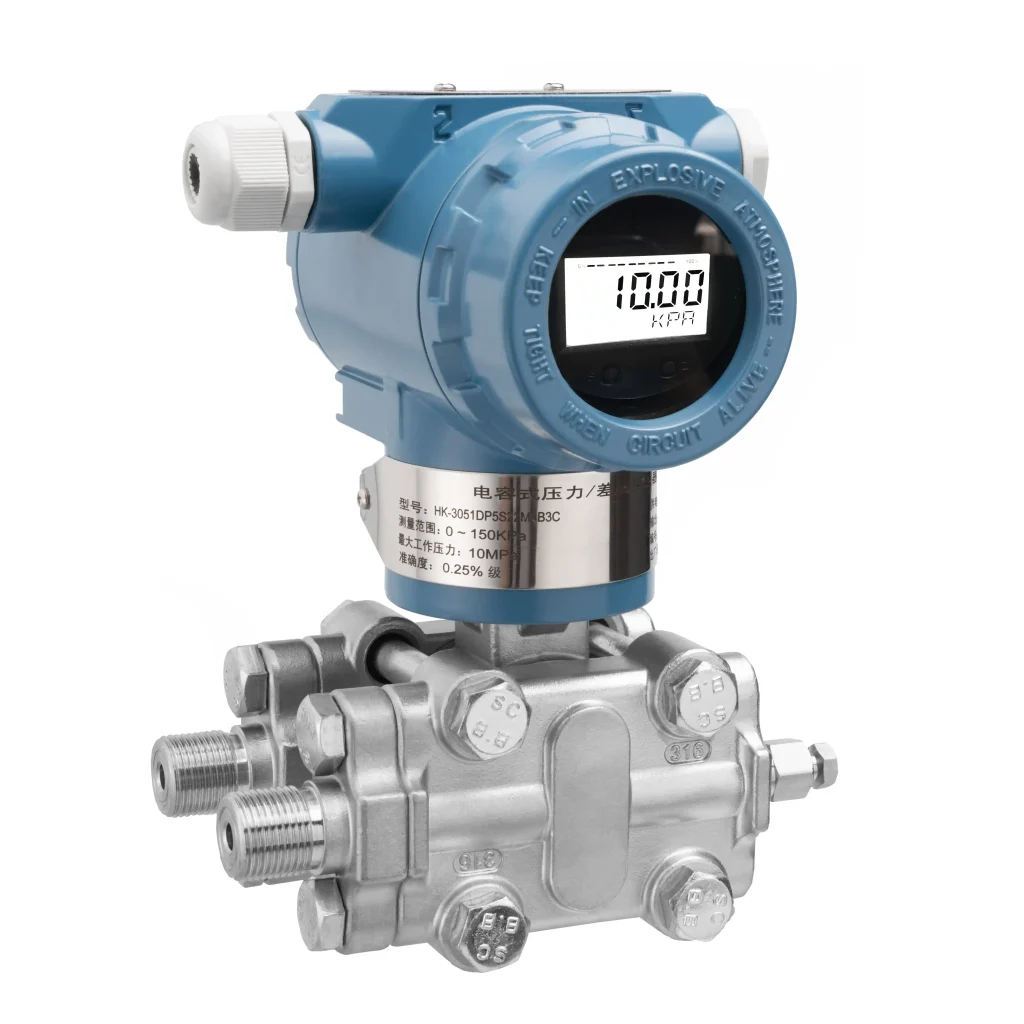
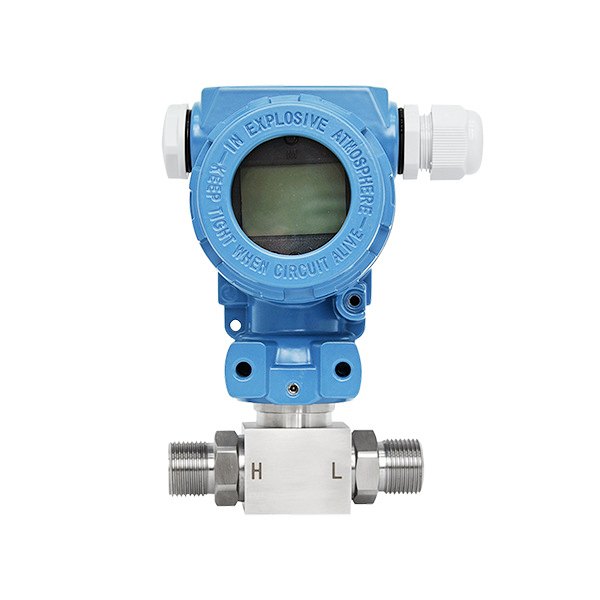
Key Advantages of Differential Pressure Gauges
The differential pressure gauge is a special tool that can measure the difference in pressure between two points. It has many benefits over regular pressure gauges and other similar tools in different industrial settings. These benefits come from its special design and how it works. They can be explained like this, thinking about how well it works, how well it can be used and how easy it is to use.
High measurement accuracy and robust reliability
The primary design objective of differential pressure gauges is to capture the pressure difference between two points. Their sensing elements—whether mechanical diaphragms or bellows, or electronic piezoresistive or capacitive sensors—are specifically optimised for ‘differential measurement’, effectively mitigating issues such as environmental interference and reference errors encountered in single-pressure measurement.
Mechanical differential pressure gauges can achieve an accuracy of ±0.5% FS, while electronic differential pressure transmitters can reach ±0.065% FS. This is perfect for difficult tasks like making sure processes are very accurate, dealing with the money side of things and doing tests in a lab. It makes sure your measurement data is stable and reliable, so you can make informed decisions.
Wide-ranging applications and strong adaptability
You don’t need to measure the pressure directly. All you have to do is measure the pressure difference between two points and you can work out all sorts of important things like the flow rate, the liquid level, pipe resistance and air velocity. Their apps are used in all sorts of areas, like industry, healthcare, construction and environmental protection.
Whatever you need to measure, whether it’s corrosive or viscous stuff, or whether it’s pressure control in cleanrooms or negative-pressure wards, pipeline monitoring in harsh outdoor environments, or precision testing in labs, our differential pressure gauges can handle it. They’re made from flexible materials, have a range of measurement and output options, and are way more versatile than standard pressure gauges.
Simple structure, low maintenance costs
Mechanical differential pressure gauges are built with only mechanical parts, so they’re pretty resistant to vibration and interference, making them less likely to fail. They can last for 5–10 years. Even though they contain electronic parts, electronic differential pressure gauges are completely sealed. This means they are fully protected from water and dust, and they are safe to use in dangerous places where there could be an explosion. This makes them perfect for use in complex industrial environments.
Also, to keep your differential pressure gauges in good nick, you just need to calibrate and clean them every now and then. It’s really straightforward to use, so you won’t need to hire a bunch of experts to maintain it. This means you’ll save a lot on maintenance costs and labour compared to other precision measuring instruments.
Versatile functionality
There are two main types of differential pressure gauge: mechanical and electronic. You can choose based on what you need. Mechanical gauges are easy to use and don’t need a power supply, which makes them perfect for simple monitoring. On the other hand, electronic gauges can send analogue (4–20 mA) and digital (like HART and Modbus) signals. This means they can be used to check processes remotely, connect to other systems, and automate processes. They also work well with industrial automation control systems.
Some of the higher-end models also have built-in alarm functions, which let you know right away if the pressure gets too high or low. This means that staff can respond quickly, which reduces safety risks and wear and tear on the equipment.
Flexible measurement and high safety
Differential pressure gauges work by measuring things indirectly, so you don’t need to touch the thing you’re measuring. This makes them perfect for dangerous environments involving corrosive, toxic, high-temperature or high-pressure media, so you don’t have to worry about your instruments getting damaged or your people getting hurt.
For instance, in the chemical industry, when measuring the liquid level in storage tanks containing corrosive media, the level is calculated indirectly by measuring the pressure difference between the tank bottom and the tank top.
This means you don’t have to put the sensor in the liquid, which keeps it safe and makes the instrument last longer. What’s more, differential pressure gauges are small and can be installed easily in tight spots in pipelines and equipment without messing up the normal running of the system.
Types of Differential Pressure Gauges
Bourdon Tube Differential Pressure Gauge
Two Bourdon tubes are used to measure the pressure values at two measurement points. In a dual-needle, dual-Bourdon tube differential pressure gauge, the two pointers on the dial display the pressure values of the two measurement points respectively, whilst the differential pressure value is displayed directly via an auxiliary dial.
Metal Diaphragm Differential Pressure Gauges
The pressures at the two measurement points are applied to opposite ends of the diaphragm. Under the action of the pressure, the diaphragm displaces, driving a push rod to rotate the movement, which in turn rotates the pointer to indicate the differential pressure. These are suitable for applications involving high static pressure and low differential pressure.
Rubber Diaphragm Differential Pressure Gauge
In a rubber diaphragm differential pressure gauge, the diaphragm is fixed to a magnet, whilst the pointer is fitted with a magnetic shaft. When the diaphragm displaces under pressure, the magnet on the diaphragm drives the magnetic shaft of the pointer, causing the pointer to rotate and indicate the differential pressure value.
Bellows Differential Pressure Gauge
The pressures from the two measurement points are fed into two bellows respectively. Under the action of the two pressure streams, the bellows undergo displacement, which, via a push rod, drives the movement to rotate, causing the pointer to rotate and indicate the differential pressure value.
Magnetic Piston Differential Pressure Gauge
The measuring element consists of a spring assembly and a piston made of magnetic material. The pointer is fitted with a magnetic shaft. When the magnetic piston is subjected to pressure and displaces, its inherent magnetism drives the rotation of the pointer’s magnetic shaft, causing the pointer to rotate and indicate the differential pressure value. The magnetic piston has two types of seals: O-rings and diaphragms. Differential pressure gauges using O-rings as seals are only suitable for measuring liquid media.
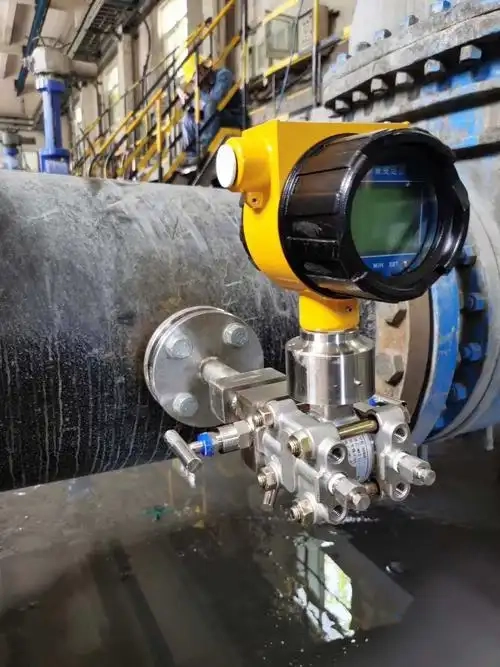
Gauge Pressure Gauges vs Absolute Pressure Gauges vs Differential Pressure Gauges
Different measurement references: Gauge pressure gauges use local atmospheric pressure as their reference zero point and measure the difference between the medium’s pressure and atmospheric pressure; absolute pressure gauges use absolute vacuum as their fixed zero point and directly measure the medium’s true total pressure; differential pressure gauges have no fixed reference point and merely measure the pressure difference between two different pressure points.
Differences in Numerical Characteristics: Gauge pressure gauges can show positive or negative numbers. A positive value means the pressure is higher than normal, while a negative value means there is a vacuum. You can always trust an absolute pressure gauge to show a positive value because negative pressure just isn’t a thing. A differential pressure gauge can show a positive or a negative value. The sign just shows the relative relationship between the pressures at the two measurement points.
Differences in Structure and Connections: Gauge pressure gauges have a single pressure connection, with the other side connected directly to the atmosphere. Absolute pressure gauges have a single port and are sealed to a vacuum reference chamber. Differential pressure gauges have two independent ports, one for high pressure and one for low pressure, which connect to the two pressure points to be measured.
Different applications: Gauge pressure gauges are the most commonly used instruments in industry. They are frequently employed for routine pressure monitoring in pipelines, storage tanks and hydraulic and pneumatic systems. Absolute pressure gauges are primarily used in scenarios that are unaffected by atmospheric pressure fluctuations, such as high vacuum, meteorological barometric pressure and vacuum packaging. Differential pressure gauges are frequently used for comparing pressures at two points. Examples of applications include flow measurement, liquid level monitoring, filter blockage detection and cleanroom air pressure control.
Varying susceptibility to environmental influences: The pressure readings on the gauge go up and down because of changes in the air pressure caused by height and the weather. However, pressure gauges are unaffected by changes in the air pressure around them, which makes the measurements more stable.
Practical Applications of Differential Pressure Gauges
Measuring Fluid Flow Rate in Conjunction with Throttling Devices
This is the most common use of differential pressure gauges. When throttling devices such as orifice plates, Venturi tubes or nozzles are installed in a pipeline, a pressure difference is created between the upstream and downstream sides as the fluid flows through. You can calculate the flow rate by measuring the pressure difference using a special tool. This method is used a lot to check the flow of water, steam, gases, oils and other fluids.
Level Measurement in Sealed Containers
When you can’t open a tank or pressure vessel to check the liquid level, you can use a special tool called a differential pressure gauge. This tool measures the difference between the pressure of the liquid at the bottom and the pressure of the vapor (liquid air) at the top. The pressure difference is directly linked to the liquid level, and is often used to monitor levels in chemical storage tanks, boiler drums and oil tanks.
Monitoring of filter and screen blockages
Differential pressure gauges are installed at the inlet and outlet of filters, filter cartridges and baghouse dust collectors. When it’s working normally, the pressure difference is small. But if the filter cartridge becomes blocked or very dirty, the pressure difference between the inlet and outlet gets much bigger. This lets you know if the filter cartridge needs to be cleaned or replaced. This application is commonly found in air compressor filters, water treatment filters and dust collection systems.
Air Pressure Control in Cleanrooms and HVAC Systems
Differential pressure gauges are used to monitor the pressure difference between the inside and outside of a room, or between different zones, in places such as cleanrooms, operating theatres, laboratories and data centres. This ensures that the pressure in clean areas is higher than in dirty areas, thereby preventing dust and other contaminants from entering. They are also used to control air pressure in ventilation ducts and adjust damper openings.
Monitoring of Furnace and Flue Negative Pressure and Differential Pressure
A differential pressure gauge is a tool that is used to check the pressure in boilers, incinerators and industrial kilns. It can tell you how much pressure is in the furnace and how much resistance there is in the flue. This makes sure that the air is always right for burning, and it stops the pressure from going too high or too low, which can cause air to escape. This safeguards the safe operation of the equipment.
Leak Detection in Pumps, Valves and Piping
By comparing changes in the differential pressure across equipment or piping, it is possible to determine whether a pump is operating normally, whether a valve is leaking internally, or whether a pipe is blocked or leaking. This is commonly used for equipment condition monitoring in chemical, petroleum, and water supply and drainage systems.
Differential Pressure Protection in Hydraulic and Pneumatic Systems
In hydraulic stations and pneumatic circuits, differential pressure gauges monitor the pressure in oil or air lines. If there is a problem with the pressure, alarms or interlocks are triggered to stop the equipment being damaged by clogged filters or abnormal pressure.
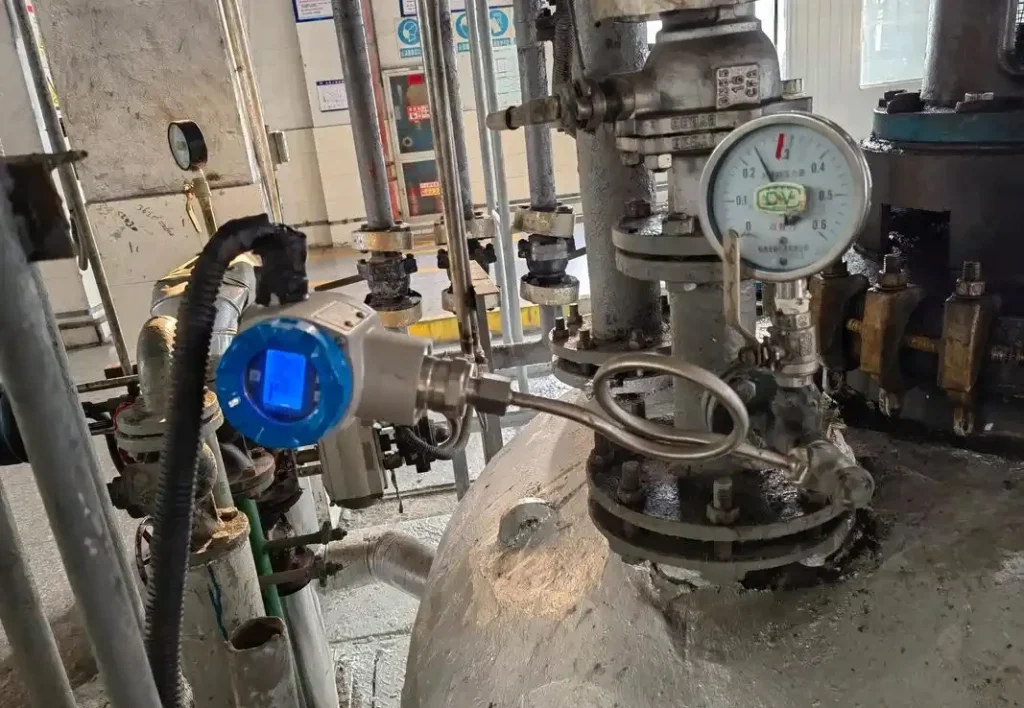
With their precise and reliable measurement performance and extensive adaptability to various applications, differential pressure gauges have become indispensable fundamental instruments in modern industrial automation and process control. Sino-Inst has long specialised in the field of pressure and level measurement. We not only supply a wide range of mechanical and electronic differential pressure gauges but also independently research, develop and manufacture a full range of measurement products, including differential pressure transmitters, pressure transmitters, flow meters and level gauges.
This enables us to provide a one-stop solution to meet the monitoring and control requirements of multiple industries, such as chemical, petroleum, pharmaceutical, HVAC and water treatment. With our proven technical solutions, consistent product quality and comprehensive technical support, we provide professional backing for the safe operation of users’ equipment, enhanced production efficiency and intelligent upgrades, helping enterprises achieve more efficient, safer and smarter process management.