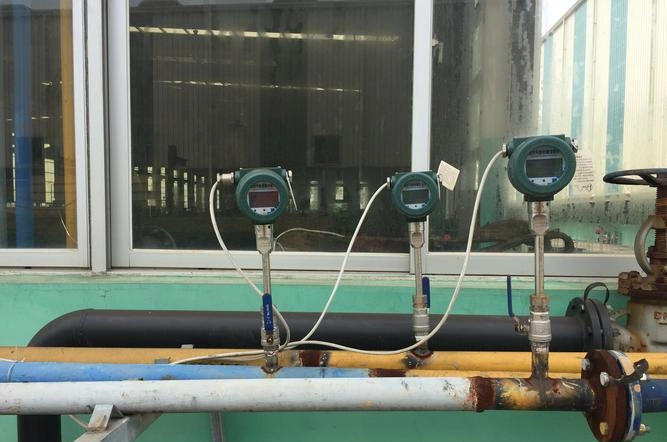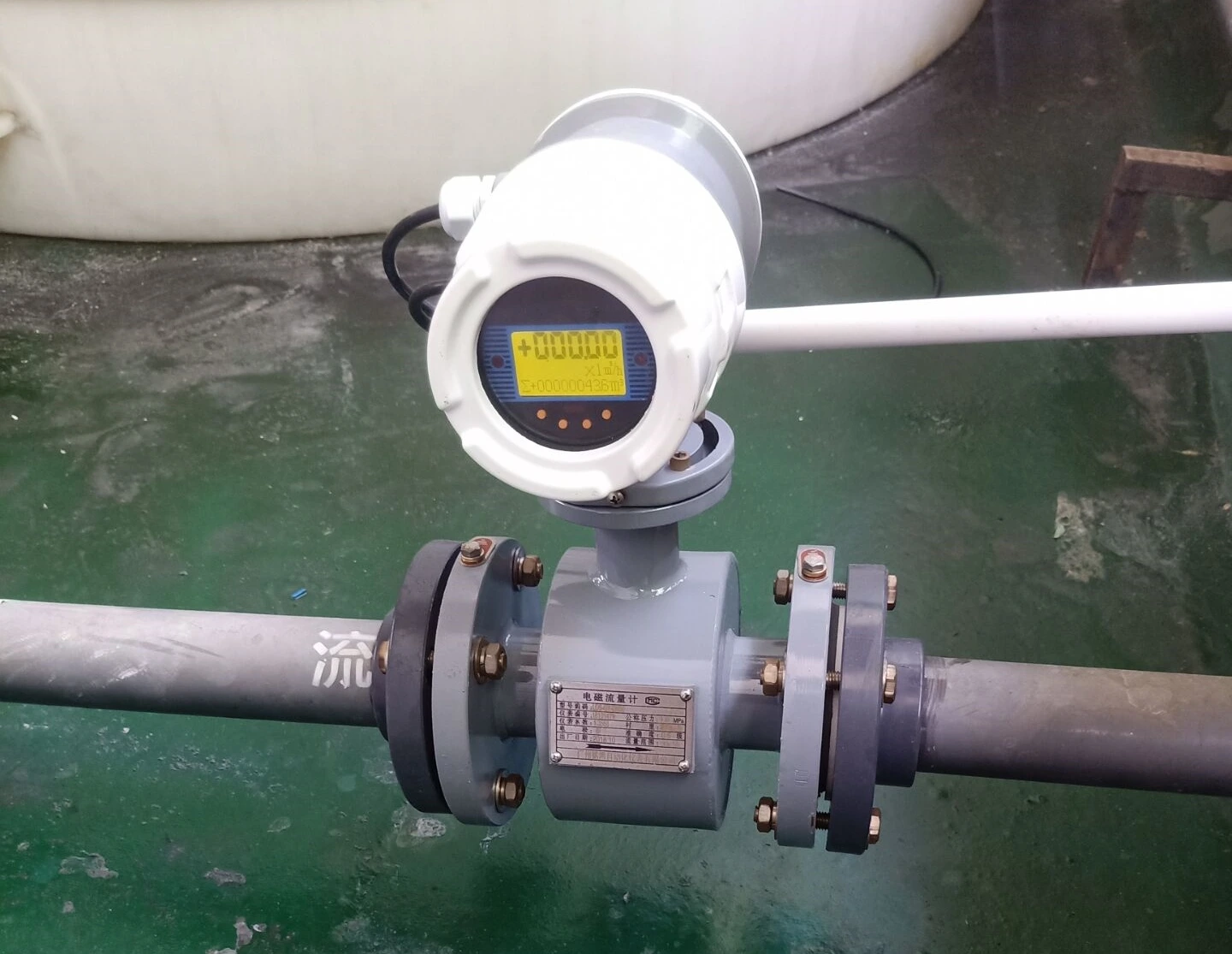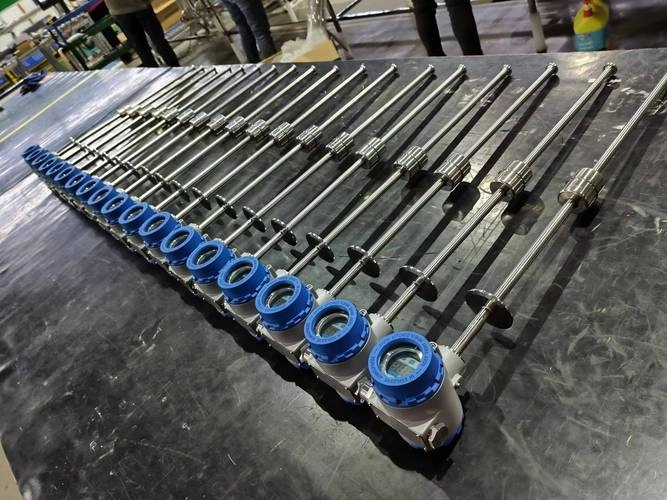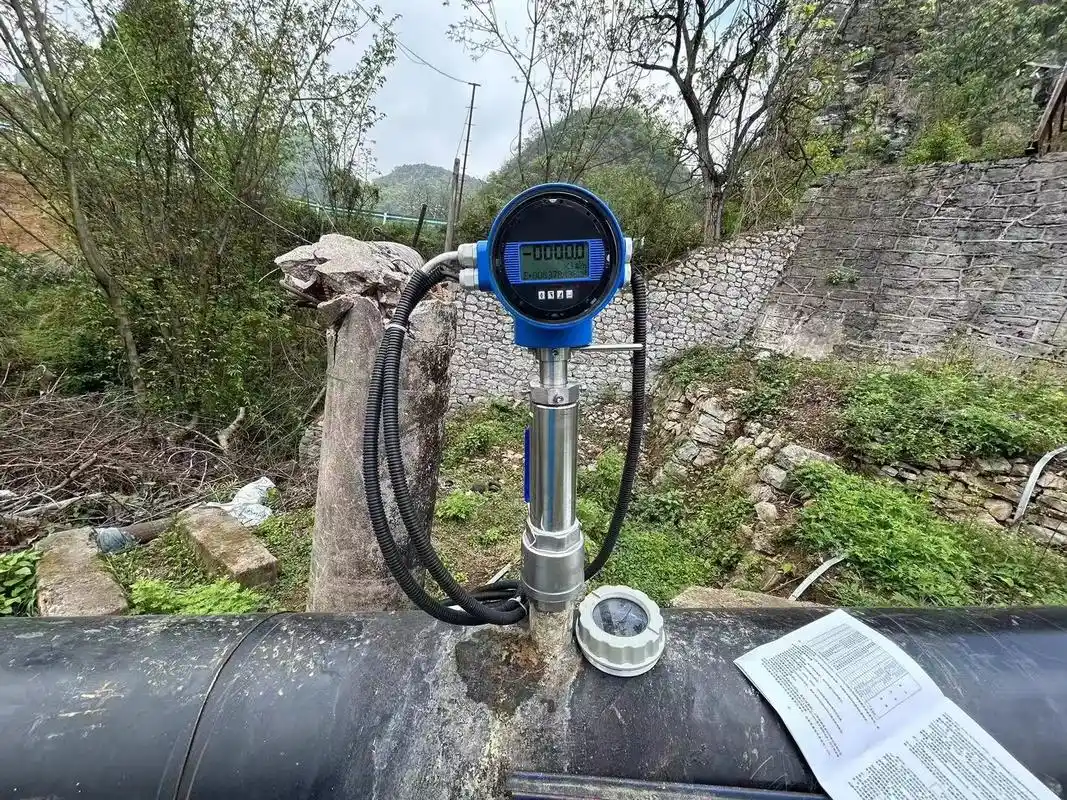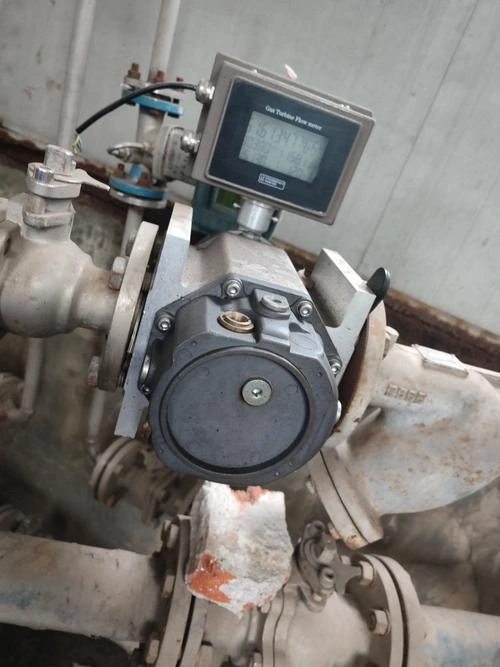
Differential pressure flow meters are a classic category of industrial process flow measurement instruments. They utilise the throttling effect to measure fluid flow and are widely suitable for gas, liquid and steam applications.
Different structural types exhibit significant differences in measurement performance and suitability for specific operating conditions; clarifying the characteristics of each type of instrument provides a theoretical basis for engineering selection.
What is a Differential Pressure Flow Meter?
Differential pressure flow meters work on the Bernoulli principle. Fluid passing through a throttling device inside the pipe encounters a local constriction; the stream speeds up, and static pressure falls accordingly.
The resulting pressure difference across the element — upstream versus downstream — is detected directly. From there, bringing in process data like fluid density, temperature, and operating pressure allows the meter to calculate the actual flow rate.
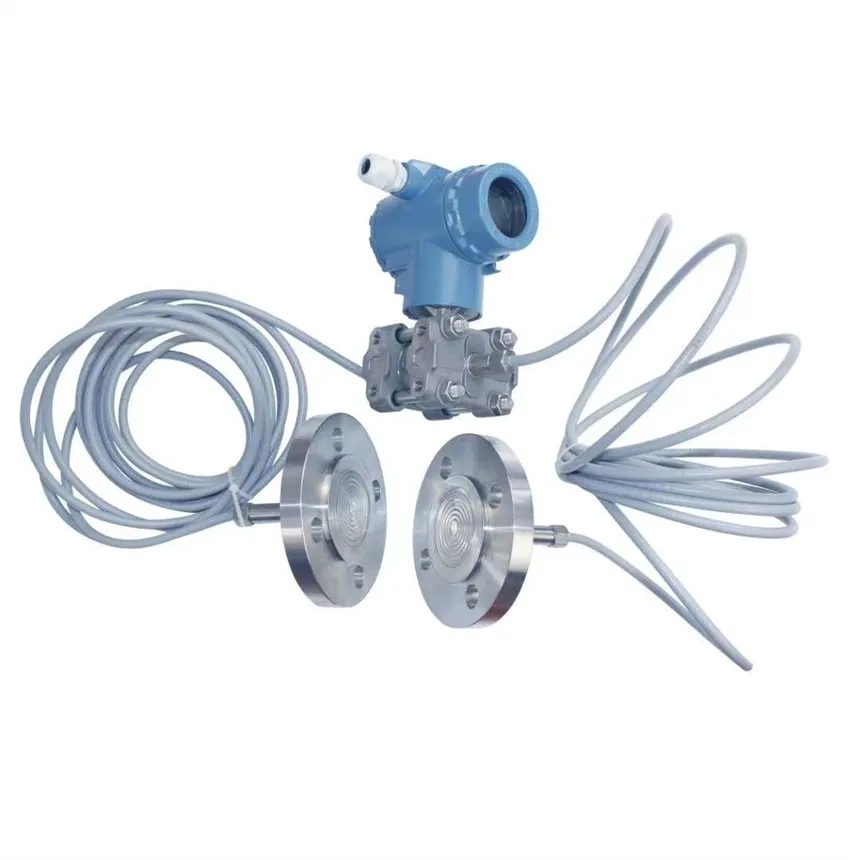
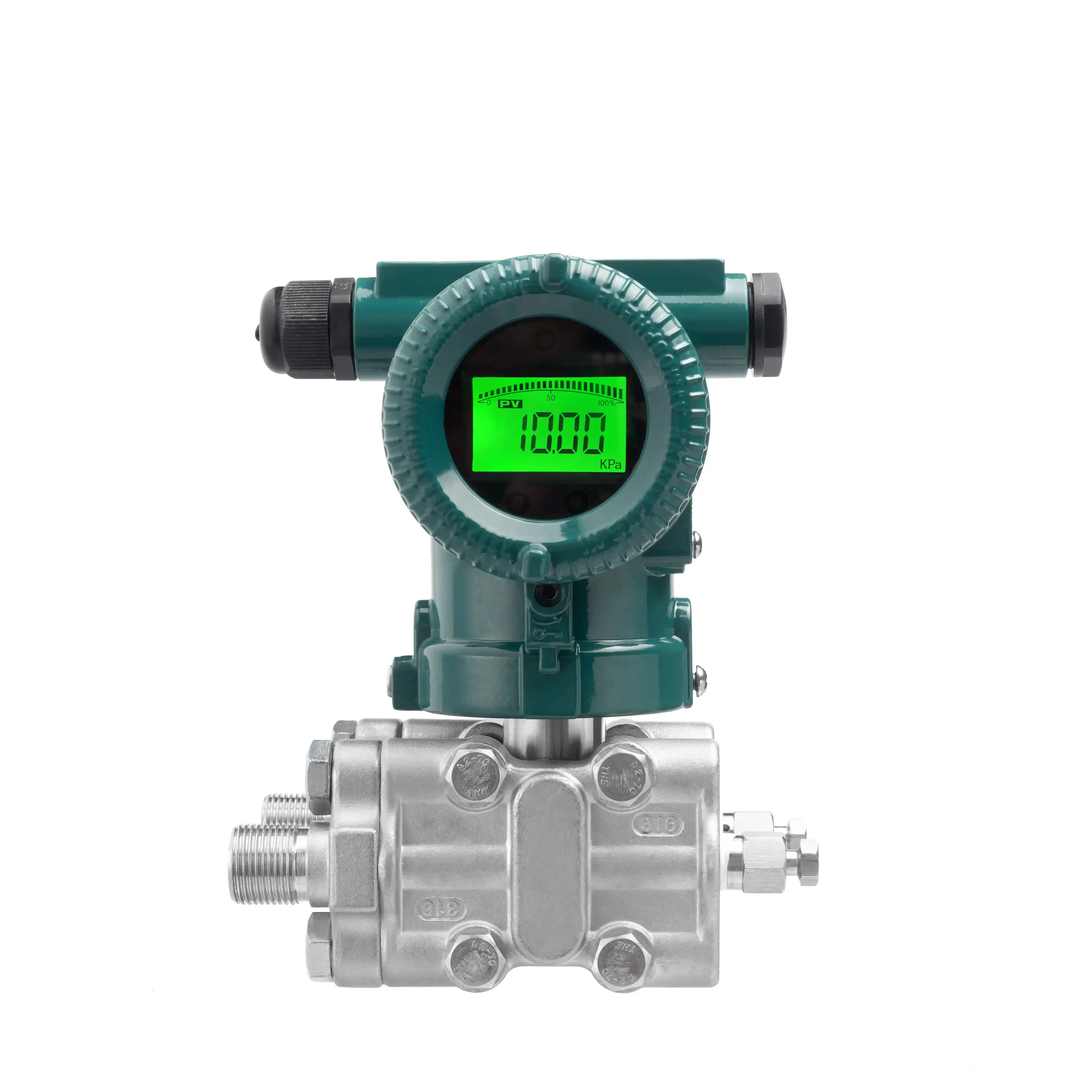
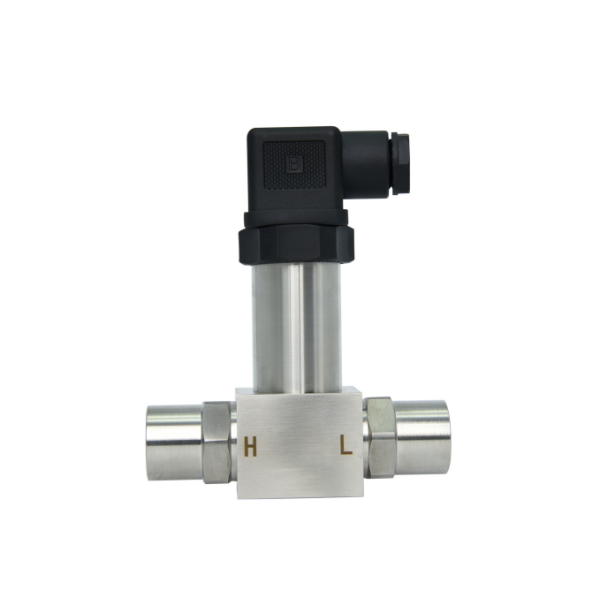
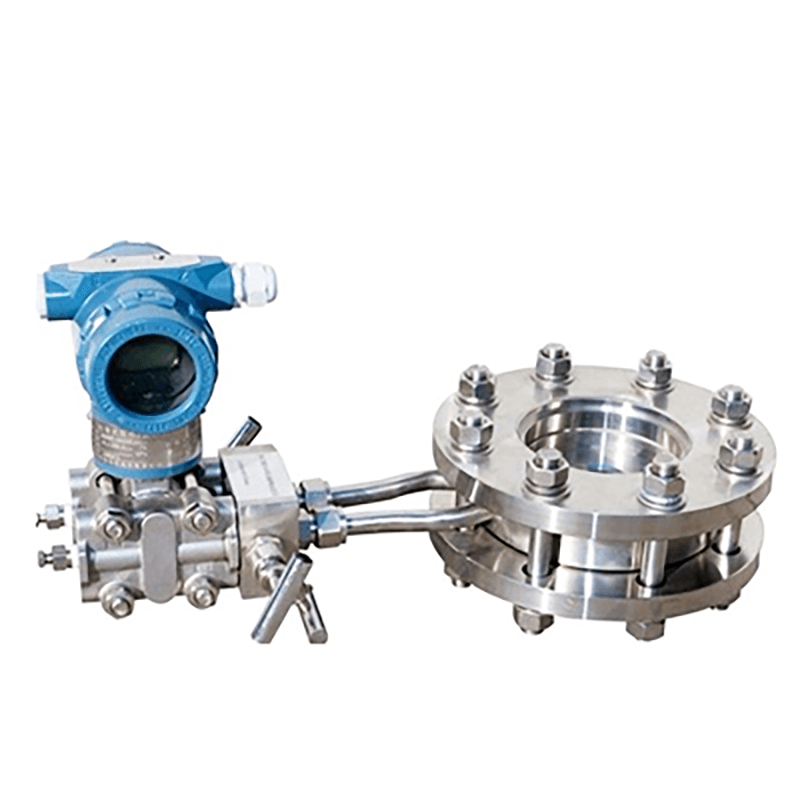
It generally comprises a throttling element, a differential pressure transmitter and a flow calculation unit. It is suitable for a variety of media, including gases, liquids and steam.
The technology is mature and has a wide range of applications; however, the measurement process results in a certain degree of pressure loss, and the measurement turndown ratio is relatively limited.
In some operating conditions, temperature and pressure compensation are required to ensure measurement accuracy.


Types of Differential Pressure Flow Meters
Rotameter
Principle of Operation
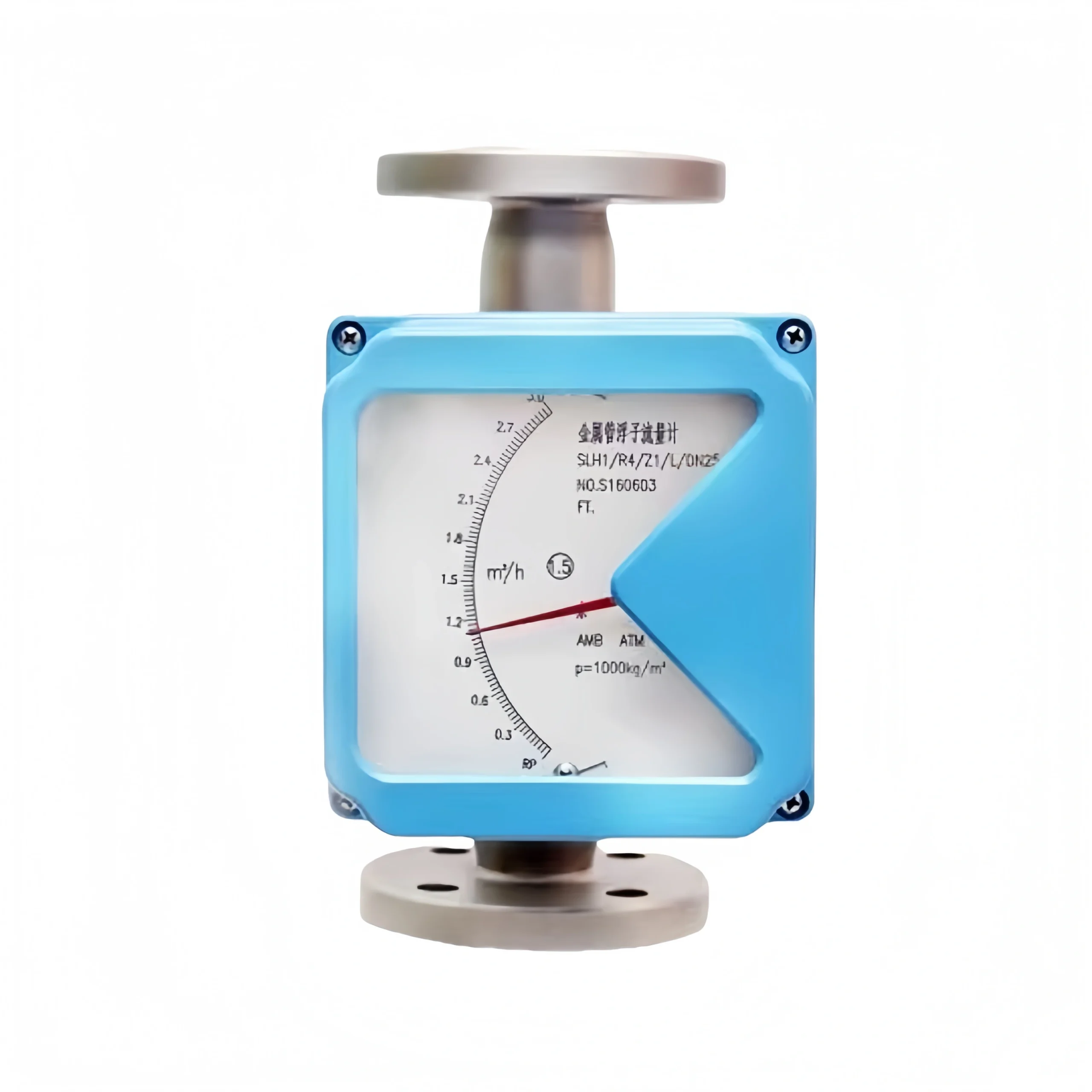
Rotameters are variable-area differential pressure flowmeters comprising a vertical conical tube and a floating rotor.
As the fluid flows from bottom to top, the rotor remains suspended in equilibrium under the combined effects of gravity, buoyancy and the impact force of the fluid.
Changes in flow rate alter the rotor’s suspension height and the flow area of the annular gap in the pipe; the instantaneous flow rate of the fluid can be detected via the corresponding change in differential pressure associated with the rotor’s height.
Advantages
Simple and reliable design: No complex transmission mechanisms; few components, low failure rate, long service life, simple installation and maintenance, and no routine maintenance required.
Excellent performance at low flow rates: Low differential pressure loss and minimal operational disturbances; stable measurement of low-velocity, low-flow media; outstanding accuracy at the lower end of the measurement range.
On-site visibility, no power supply required: Readings can be taken directly on site; no external power supply or secondary instruments are required, making it suitable for sites without power supply.
High cost-effectiveness: Low equipment procurement and operational costs, outstanding value for money, suitable for large-scale deployment in routine operating conditions.
Suitable media
Suitable for clean, particle-free, low-viscosity single-phase media, including gases such as air and nitrogen, as well as liquids such as clean water and light oils.
Not suitable for viscous, crystallising, solid-particle-containing or highly corrosive media, nor for high-temperature, high-pressure or high-flow-rate conditions.
Target-type Flow Meter
Principle of Operation
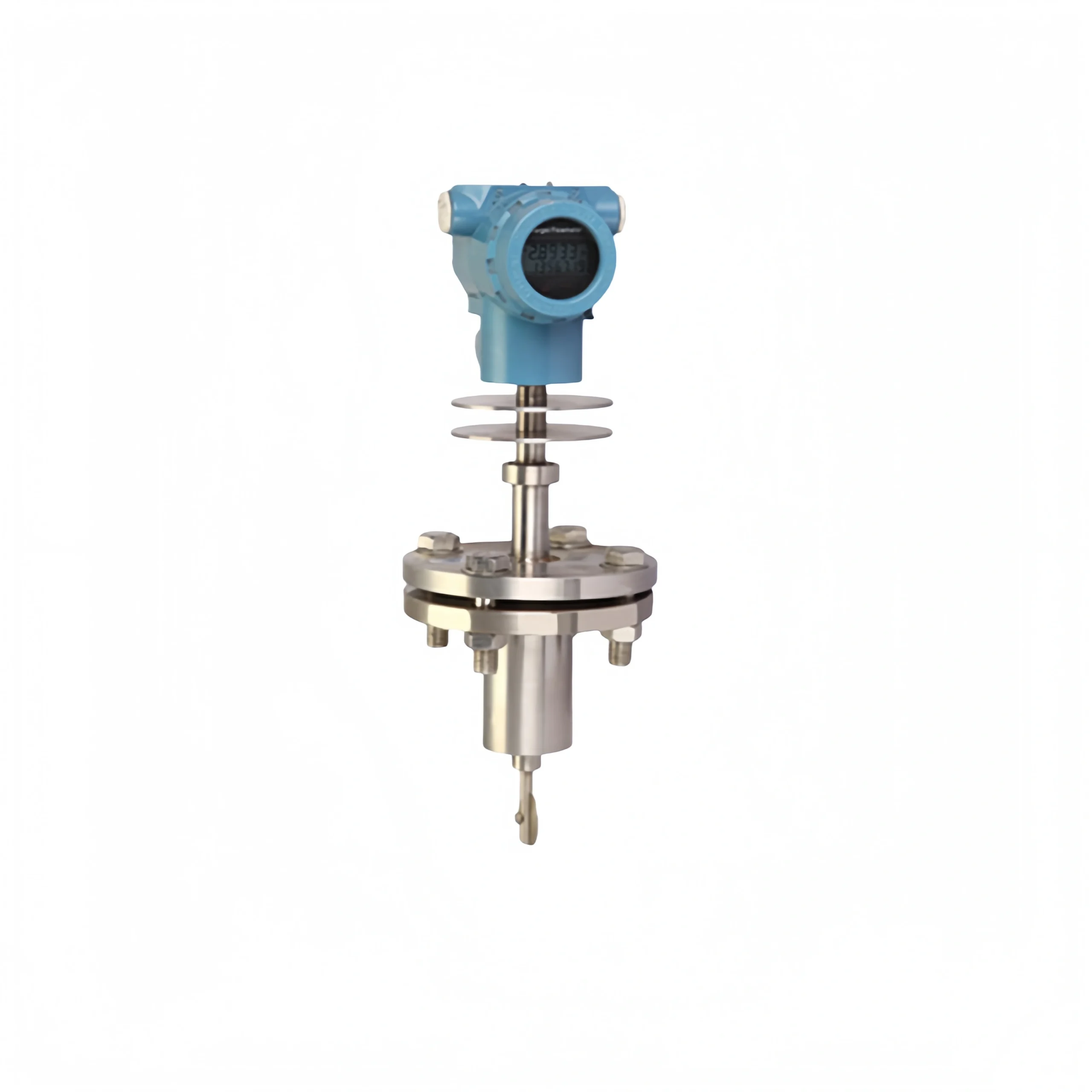
The target-type flow meter operates on the principle of fluid dynamic differential pressure.
A target plate is positioned at the centre of the pipeline; as the fluid impacts the target plate, it generates a thrust proportional to the flow velocity and flow rate.
The sensor turns this mechanical response into an electrical one. Once processed, that signal gives you the fluid’s volumetric and mass flow rates inside the pipe.
Advantages
Strong media adaptability: High-viscosity fluids, streams with fine particles, and even slightly contaminated media are all manageable; the device resists clogging and holds up in demanding, dirty environments.
Wide measurement range: It keeps measurement stable at high and low flow alike, and with a turndown ratio above 10:1, it handles wide flow swings without issue.
Excellent temperature and pressure resistance: Capable of long-term, stable operation in harsh industrial environments such as high temperatures, high pressures and negative pressures.
Easy installation and maintenance: Low requirements for straight pipe sections; can be dismantled and serviced whilst in operation without affecting the continuous operation of production lines.
Suitable media
Suitable for all types of conventional clean fluids; can also reliably measure high-viscosity media such as heavy oil and bitumen, as well as contaminated media containing dust and fine particles, industrial gases and steam.
Widely used in complex operating conditions such as petroleum, chemical, metallurgical and wastewater treatment industries.
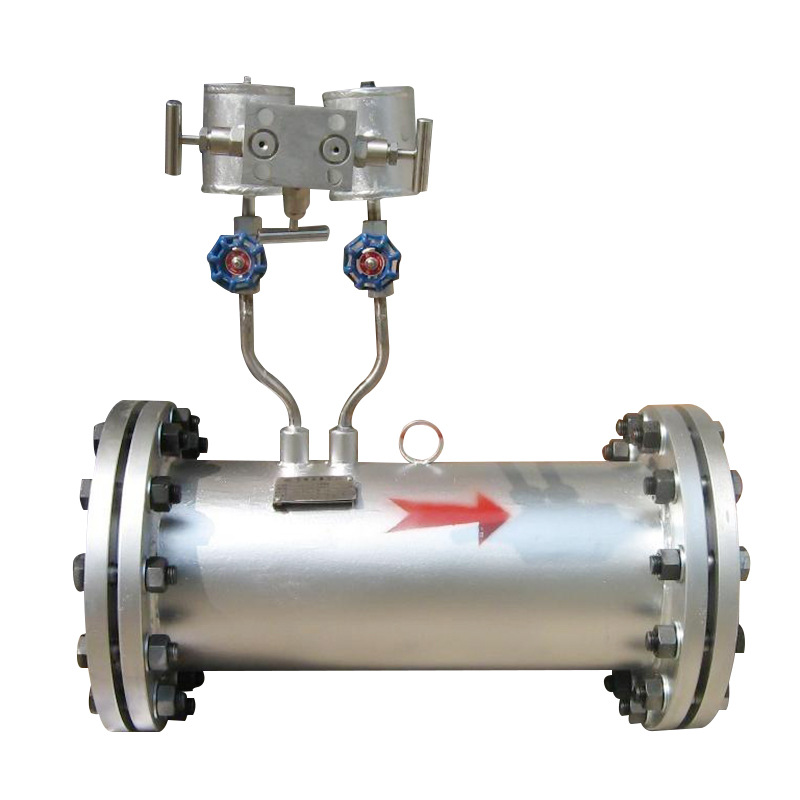
V-Cone Flow Meter
Principle of Operation
The V-Cone flow meter is a new type of differential pressure flow meter based on throttling. A conical throttling element at the centre of the pipe constricts the flow passage, increasing the fluid velocity and reducing the pressure, thereby creating a stable differential pressure across the cone.
Based on Bernoulli’s equation, and incorporating differential pressure, temperature and pressure compensation calculations, it can accurately calculate both instantaneous and cumulative fluid flow rates.
Advantages
Accurate and stable measurement: The throttling stays uniform and the flow field remains steady, so you get better accuracy and repeatability than you’d see with a conventional orifice plate. The data holds up reliably over extended runs.
High resistance to interference: You don’t need much straight pipe upstream, and it fits into tricky layouts — elbows, reducers, and the like — without losing its grip on the flow profile. It shrugs off disturbances that would throw off other meters.
Blockage and fouling resistance: The conical profile leaves nowhere for grit or dust to hang up, so buildup is rarely an issue. That makes it a solid choice for long-term service on dirty, particle-laden streams.
Low pressure drop and energy efficiency: Throttling losses are modest — the pressure drop across the device is well below what an orifice plate would impose — which translates to lower pumping costs and less energy wasted moving fluid down the line.
Suitable Media
It can measure various types of single-phase fluids, including gases, liquids and vapours, and is particularly well-suited to contaminated media, media containing particles and high-velocity media.
This includes coal gas, flue gas, sewage, heavy oil and various types of steam, and is commonly used in the power generation, metallurgy, chemical and gas industries.
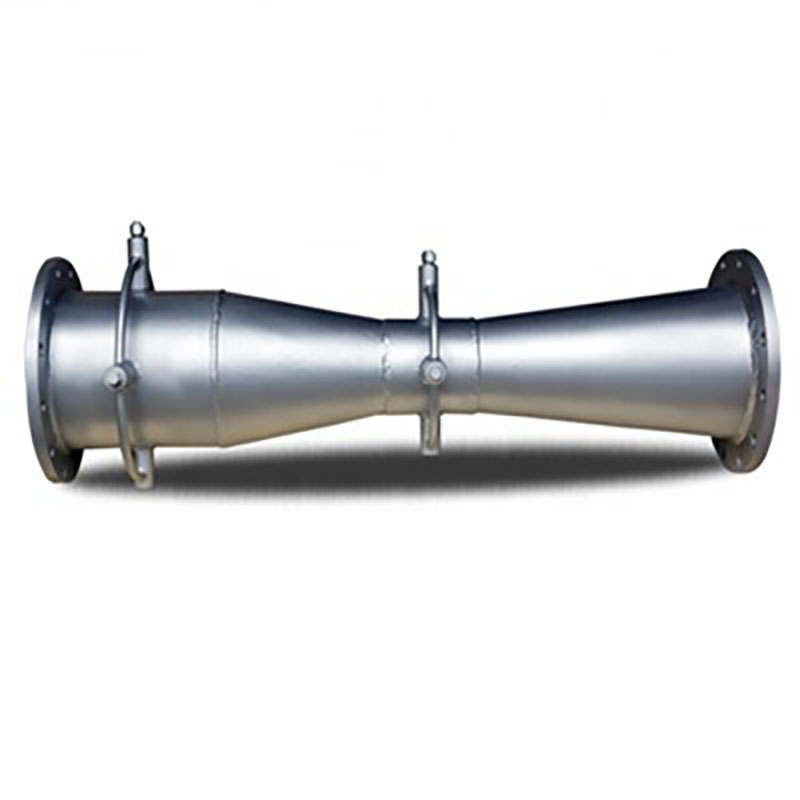
Venturi Flow Meter
Principle of Operation
The Venturi flow meter operates on the Bernoulli principle and consists of a contraction section, a throat section and a diffusion section.
As the fluid flows through the contraction section, its velocity increases and pressure decreases, creating a stable differential pressure between the inlet and the throat section.
The magnitude of this differential pressure corresponds to the flow rate; by measuring the differential pressure, the fluid flow rate can be calculated.
Advantages
Extremely low pressure loss: The structure narrows and widens gradually, so the fluid moves through smoothly without violent turbulence. Pressure drop stays minimal, and the energy savings are significant.
Resistant to blockages and stable operation: With smooth walls and no dead zones, impurities have nowhere to settle. The unit can run continuously for long stretches, and maintenance intervals can be stretched out accordingly.
High measurement accuracy: The flow field remains even and steady, which means differential pressure readings come out sharp. It easily satisfies the demands of routine high-precision flow monitoring.
Wear-resistant and durable: The monobloc body is inherently strong, and the inner surfaces hold up well against corrosion and erosion. In practice, the equipment simply lasts.
Suitable media
Suitable for clean, single-phase fluids with low impurity levels, such as clean water, light oils, compressed gases, natural gas and clean steam.
It is commonly used in conventional applications such as water supply and drainage, power generation and gas distribution, but is not suitable for highly viscous media or those containing large particulate impurities.
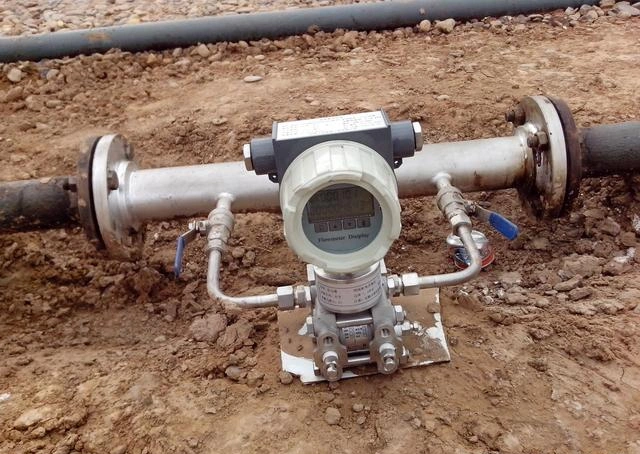
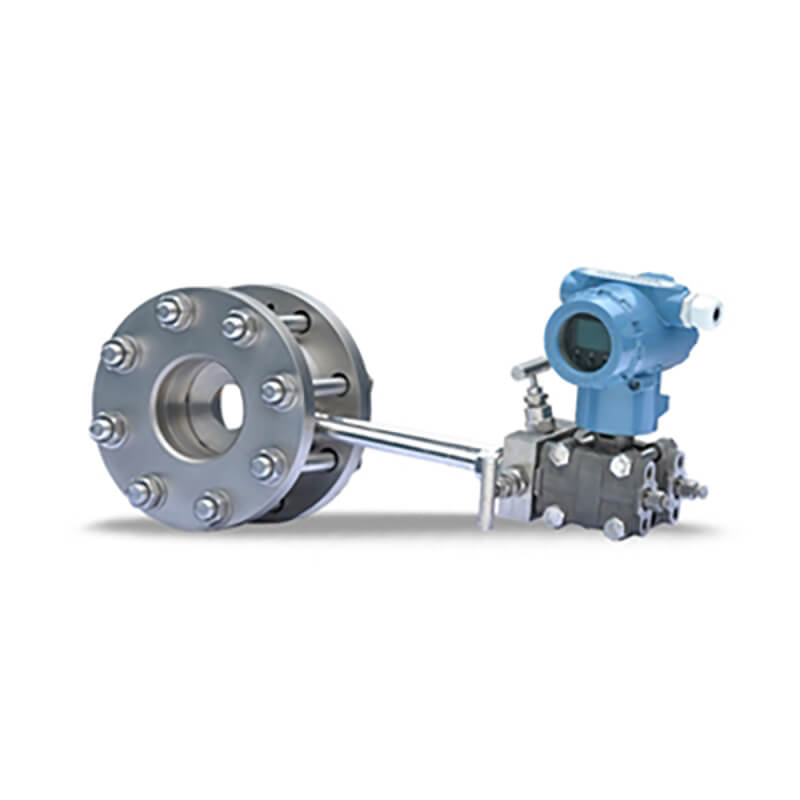
Orifice Plate Flow Meter
Principle of Operation
The orifice plate flow meter is a classic throttling differential pressure device.
When the fluid flows through the orifice plate within the pipeline, the flow path suddenly constricts, causing the flow velocity to increase and the static pressure to decrease, thereby creating a stable differential pressure between the upstream and downstream sides of the orifice plate.
The differential pressure has a fixed functional relationship with the flow rate; by capturing the signal via a differential pressure transmitter and performing compensation calculations, the fluid flow rate can be determined.
Advantages
Extremely versatile: Because the design is standard and universal, it drops into most ordinary pipeline setups without fuss, and it covers more industrial ground than just about any alternative.
Low cost: Buying, installing, and running it are all inexpensive; spare parts are interchangeable, so servicing is easy, which is why plants everywhere have adopted it.
Mature and reliable technology: The technology is long-proven and runs rock-steady. There is no zero drift to worry about, so it stays trustworthy over years of continuous duty.
Wide range of operating conditions: Suitable for standard temperature and pressure conditions; when combined with temperature and pressure compensation, it can accurately measure the flow of gases and steam.
Suitable media
Suitable for single-phase media such as clean water, light oils, air, natural gas, clean coal gas and various types of clean steam.
As orifice plates are prone to fouling and blockage, they are not suitable for contaminated media containing particles, viscous substances, or those prone to crystallisation or scaling.
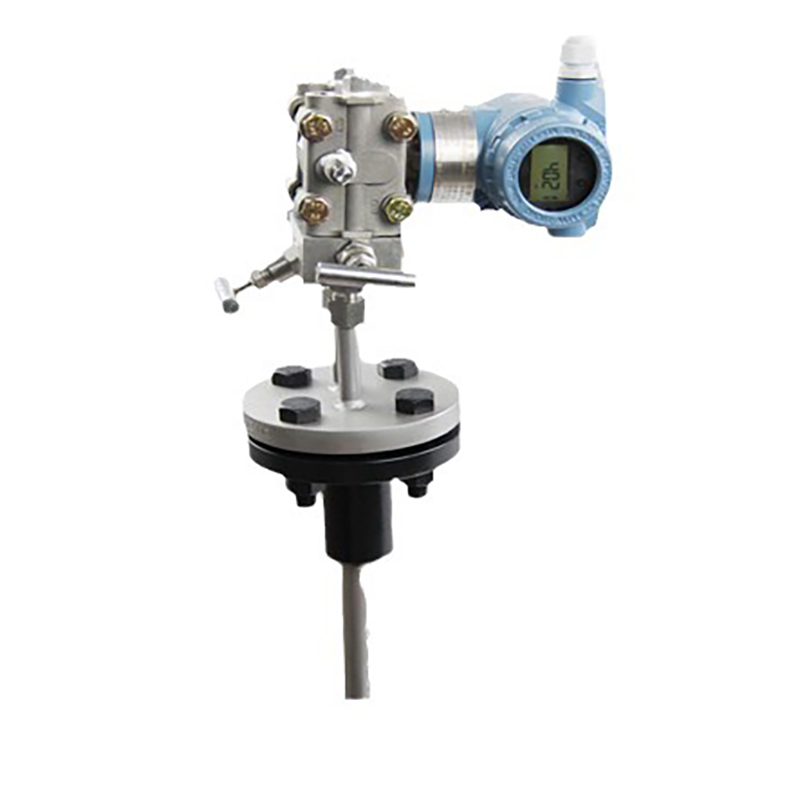
Annubar Flow Meter
Principle of Operation
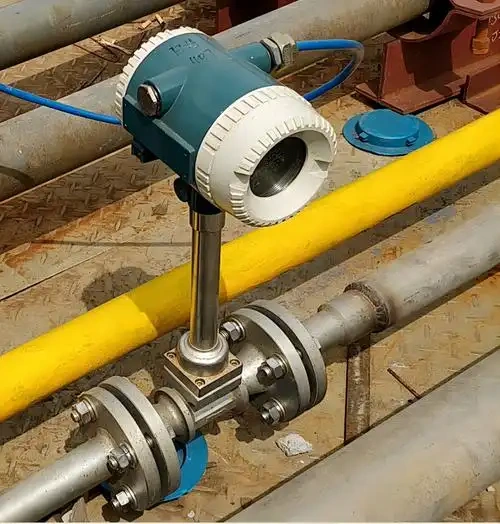
The Annubar flow meter is a differential pressure flow meter utilising an average velocity tube. It employs an insertable multi-orifice probe to measure total pressure on the upstream side and static pressure on the downstream side.
By taking pressure readings at multiple points, it determines the average dynamic pressure across the pipe cross-section and, using fluid dynamics equations, calculates the average fluid velocity and flow rate.
Advantages
High measurement accuracy: Rather than relying on a single point, it averages velocity readings taken across the full cross-section. That approach sidesteps the bias of single-point sampling and irons out errors that come from lopsided or distorted flow profiles.
Ultra-low pressure drop and energy efficiency: The insertion-style probe barely intrudes into the flow, so it doesn’t choke the stream. Pressure loss is a fraction of what you’d see with an orifice plate, and the savings on pumping energy add up over time.
Convenient operation and maintenance: It can be installed or pulled for service while the line remains pressurised and in service. No shutdowns, no pipe cutting—just keep production running.
Wide turndown ratio: A turndown ratio of up to 30:1 makes it suitable for operating conditions with significant flow fluctuations, whilst requiring minimal straight pipe runs.
Suitable media
Compatible with all types of gases, liquids and steam; particularly suitable for large-diameter, high-flow pipelines. It can measure media such as flue gas, coal gas, natural gas, circulating water, petroleum products and various types of steam.
It can withstand conditions with minor dust contamination and is widely used in the power generation, chemical and municipal pipeline network sectors.
Selection Guide
Selection based on medium compatibility:
Distinguish between liquid, gas and steam media; for media containing impurities or with high viscosity, select a clog-resistant pressure-tapping structure; for corrosive media, match with corrosion-resistant materials such as 316L or Hastelloy to prevent component damage from affecting measurements.
Confirmation of Operating Conditions:
Record the maximum, normal and minimum flow rates, as well as the operating temperature and pressure. The minimum flow rate should not be less than 30 per cent of the measurement range.
Exercise caution when using differential pressure flowmeters in applications with excessive flow fluctuations to avoid measurement errors exceeding permissible limits.
Selection of Throttling Devices:
Select standard orifice plates for clean media and low-cost applications; select erosion-resistant nozzles for high-temperature, high-velocity steam; select Venturi tubes for energy-saving applications and low pressure drop requirements; and select wedge-type throttling elements for dirty media containing impurities.
Piping and Installation Requirements:
Ensure full-bore flow through the pipework. Provide standard lengths of straight pipe upstream and downstream of the orifice.
Where the pipework and fittings are complex or space is limited, install flow straighteners to eliminate measurement errors caused by flow disturbances.
Differential Pressure Transmitter Selection:
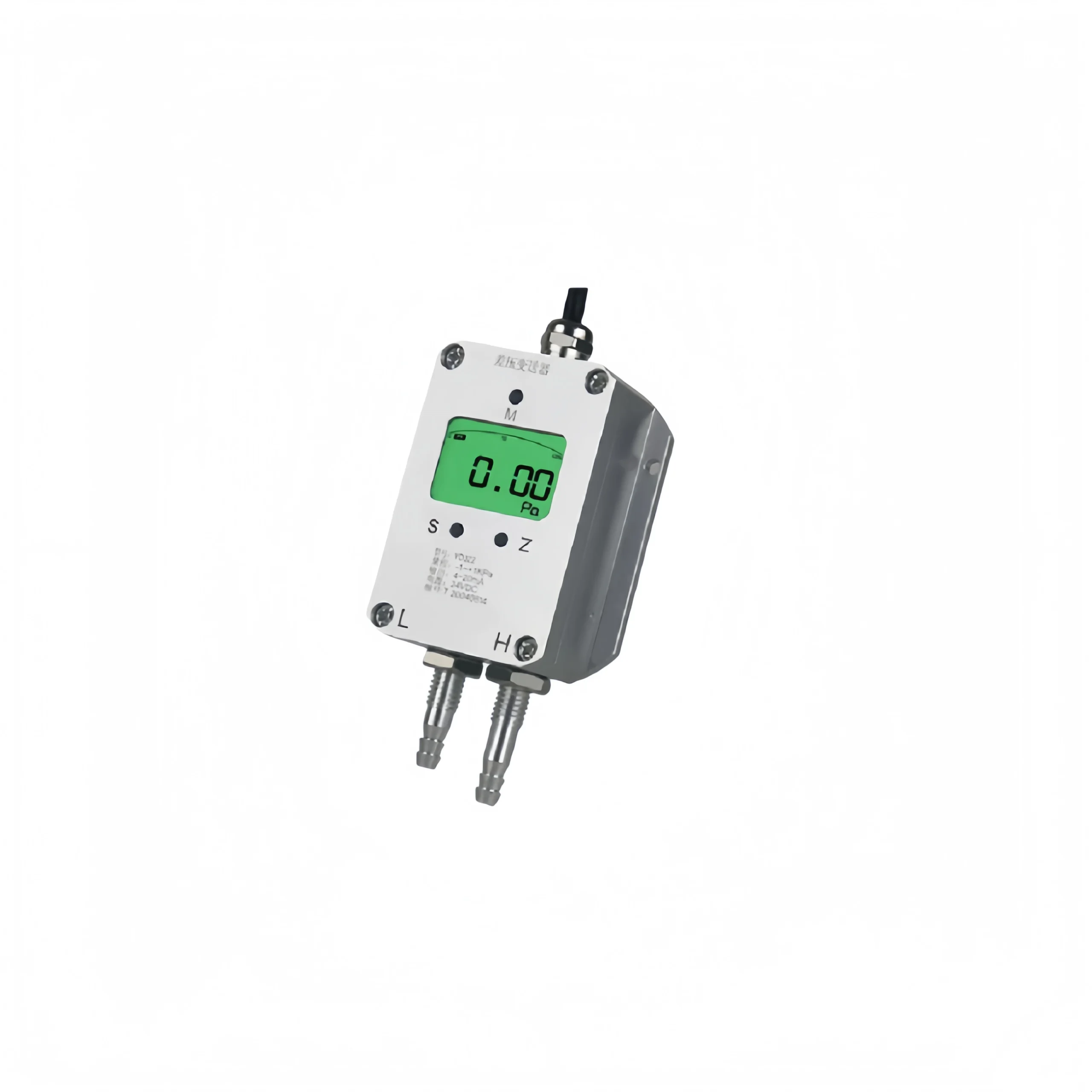
Match the transmitter range to the differential pressure value of the orifice, ensuring that normal flow rates fall within the mid-range of the measurement span.
For high-temperature, corrosive or explosion-proof applications, select appropriate accessories such as condensation chambers, isolation diaphragms and explosion-proof transmitters, and choose the communication output method as required.
Pressure Loss Assessment:
Orifice plates exhibit the highest pressure loss, whilst Venturi tubes have the lowest; in energy-sensitive applications or where the process permits a lower pressure drop, prioritise low-pressure-loss throttling devices to avoid impacting the operation of the piping system.
Accuracy Scenario Adaptation:
Conventional differential pressure flowmeters have an accuracy of ±1.0% to ±2.5% and are suitable only for process monitoring; for trade settlement applications, a complete, calibrated high-accuracy flow measurement system must be selected.
Site and Maintenance Considerations:
In confined maintenance spaces, select designs that are easy to assemble and disassemble; in vibrating environments, ensure the transmitter is properly damped; for contaminated media, plan for regular purging and maintenance in advance to prevent measurement drift caused by scaling or blockages.
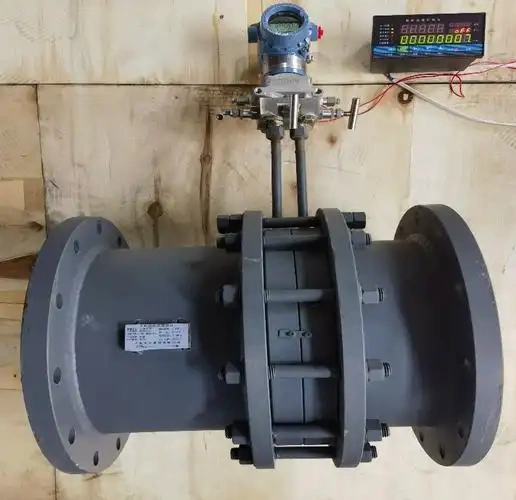
Differential pressure flowmeters remain a staple in industrial flow measurement. The technology is mature, the product line is extensive, and these units tolerate harsh conditions better than most. They handle gases, liquids and steam with the accuracy needed across chemicals, power generation, metallurgy and municipal utilities.
Sion-Inst builds on years of field experience to recommend configurations that match real site conditions, accuracy needs and budget limits. All equipment ships factory-calibrated to standard specifications, giving you reliable operation, manageable pressure loss and little routine maintenance.
A full technical support and after-sales network backs every installation, helping plants keep processes steady, trim energy and material waste, and maintain precise measurement and control.