Cryogenic liquid nitrogen storage systems impose stringent requirements on the reliability of real-time level monitoring, as extreme low temperatures and vapour mist can easily cause conventional sensor equipment to fail.
This article systematically reviews the operational characteristics of mainstream cryogenic level sensors, analyses their applicable operating conditions and performance limits, and provides a basis for the design of engineering-grade monitoring solutions.
Properties of Liquid Nitrogen
Liquid nitrogen is a liquid elemental form of nitrogen obtained by pressurising and cooling nitrogen gas to liquefy it. It has a boiling point of –196 °C at standard atmospheric pressure and vaporises rapidly at ambient temperature and pressure; it is commonly used as a cryogenic coolant in industry and cryogenic experiments.
1. Cryogenic Properties
With a boiling point of just –196 °C at standard atmospheric pressure, it can rapidly cool any object it comes into contact with, posing a high risk of frostbite; Storage containers must be specialised, thermally insulated vacuum tanks to isolate them from ambient heat.
2. Prone to Vapourisation and High Volume Expansion Ratio
At room temperature, liquid nitrogen rapidly vaporises into nitrogen gas; the volume expansion ratio between the liquid and gas states is approximately 1:696. Storage in enclosed spaces can lead to a build-up of pressure, so storage tanks must be equipped with pressure relief devices.
3. Colourless, odourless and chemically inert
Both the liquid and gaseous forms are colourless and odourless. They are chemically stable at room temperature, non-flammable and non-oxidising, and react almost not at all with metals or organic compounds.
4. Risk of asphyxiation due to oxygen deprivation
Extensive vapourisation displaces oxygen in the air, which can cause a sudden drop in oxygen levels in enclosed spaces, leading to asphyxiation. Work environments must be ventilated and oxygen concentrations monitored.
5. Cryogenic embrittlement effect
Contact with materials such as ordinary carbon steel, plastics and rubber causes their molecular structures to become brittle and crack; therefore, level sensors and piping must be made from special low-temperature-resistant alloys.
6. Slightly soluble in water, low viscosity
Liquid nitrogen has an extremely low viscosity; this can lead to the formation of vapour at the gas-liquid interface within tanks, which interferes with optical and radar-based level measurement systems and increases measurement errors.
Challenges in Liquid Nitrogen Level Measurement
1. Material selection is severely limited by ultra-low temperature conditions:
At atmospheric pressure, liquid nitrogen sits at –196°C. Regular metals, plastics, and rubber turn brittle and fracture under such cold, while standard sensor parts simply can’t survive in environments this frigid.
2. Heavy vapourisation creates a mist layer at the interface:
Liquid nitrogen boils off aggressively, and a persistent white fog of extreme cold keeps forming right where gas meets liquid. This fog blocks optical paths and scrambles radar signals, so level readings end up drifting and warping.
3. Massive vapourisation expansion keeps the liquid surface churning:
As nitrogen keeps boiling inside the tank, the liquid surface gets knocked around constantly. Those repeated oscillations wreck the stability of pretty much any level measurement approach, whether it touches the liquid or not.
4. The vapour space turns into a low-temperature, high-pressure zone:
Boiled-off nitrogen keeps the tank pressure bouncing around, and those pressure swings throw off how accurately differential pressure sensors can convert their readings.
6. The stuff itself is low-viscosity and won’t conduct electricity:
Since liquid nitrogen carries no current, capacitive and conductive level probes are out of the question. Its runny consistency also makes it prone to fake-looking liquid-vapour layers that aren’t really there.
7. Oxygen-deficient sealed tanks with safety restrictions:
Poor ventilation conditions in the storage tanks restrict sensor maintenance and installation through openings, whilst explosion-proof and pressure relief requirements must also be met.
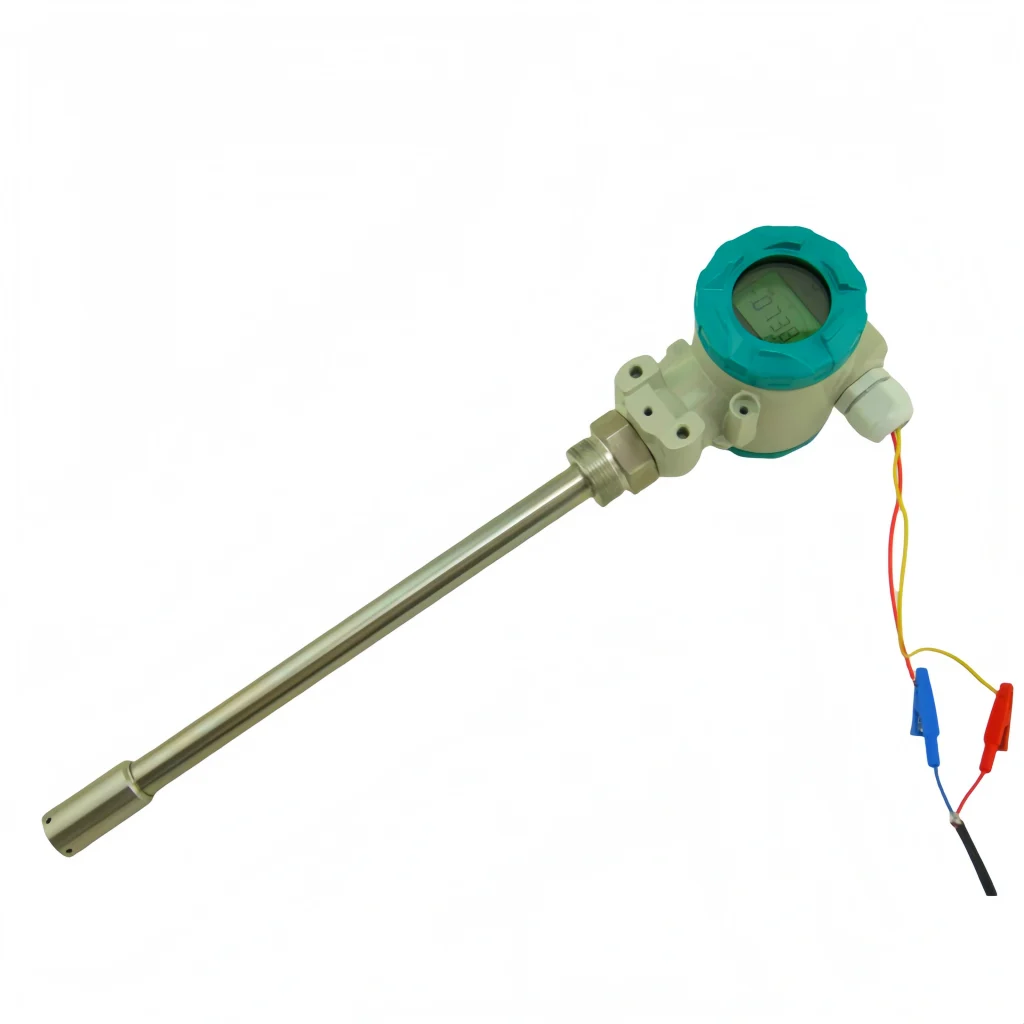
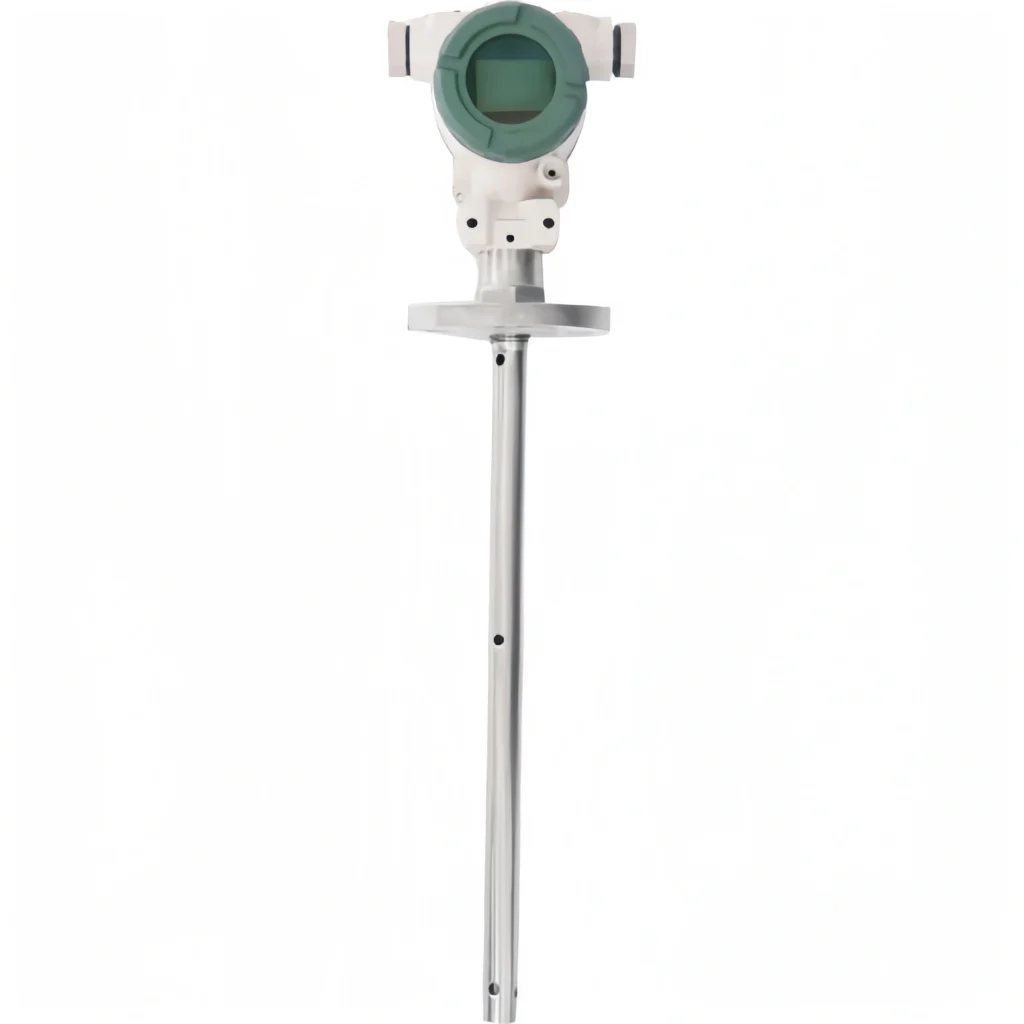
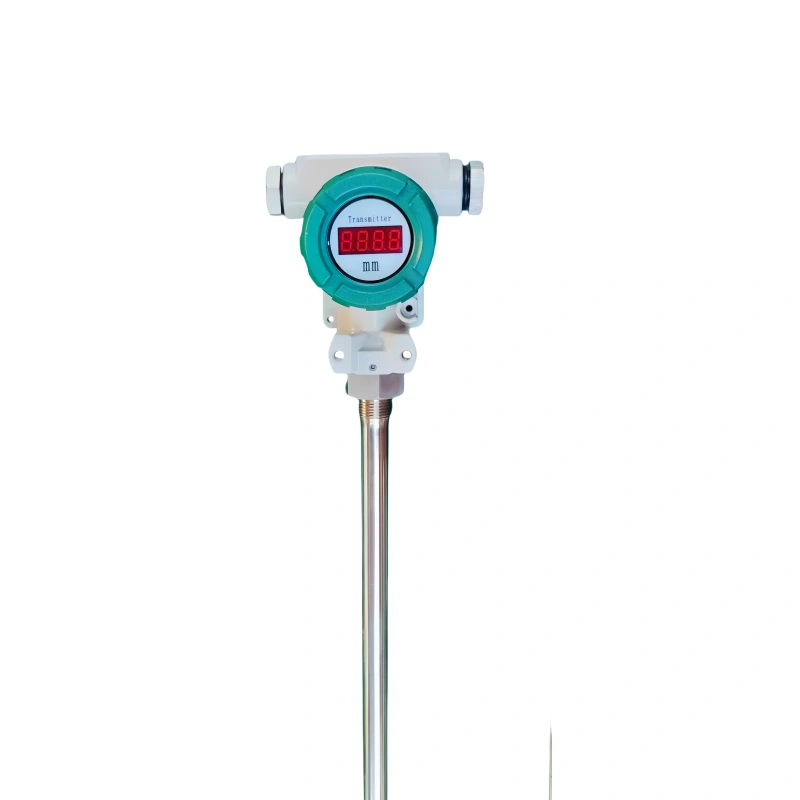
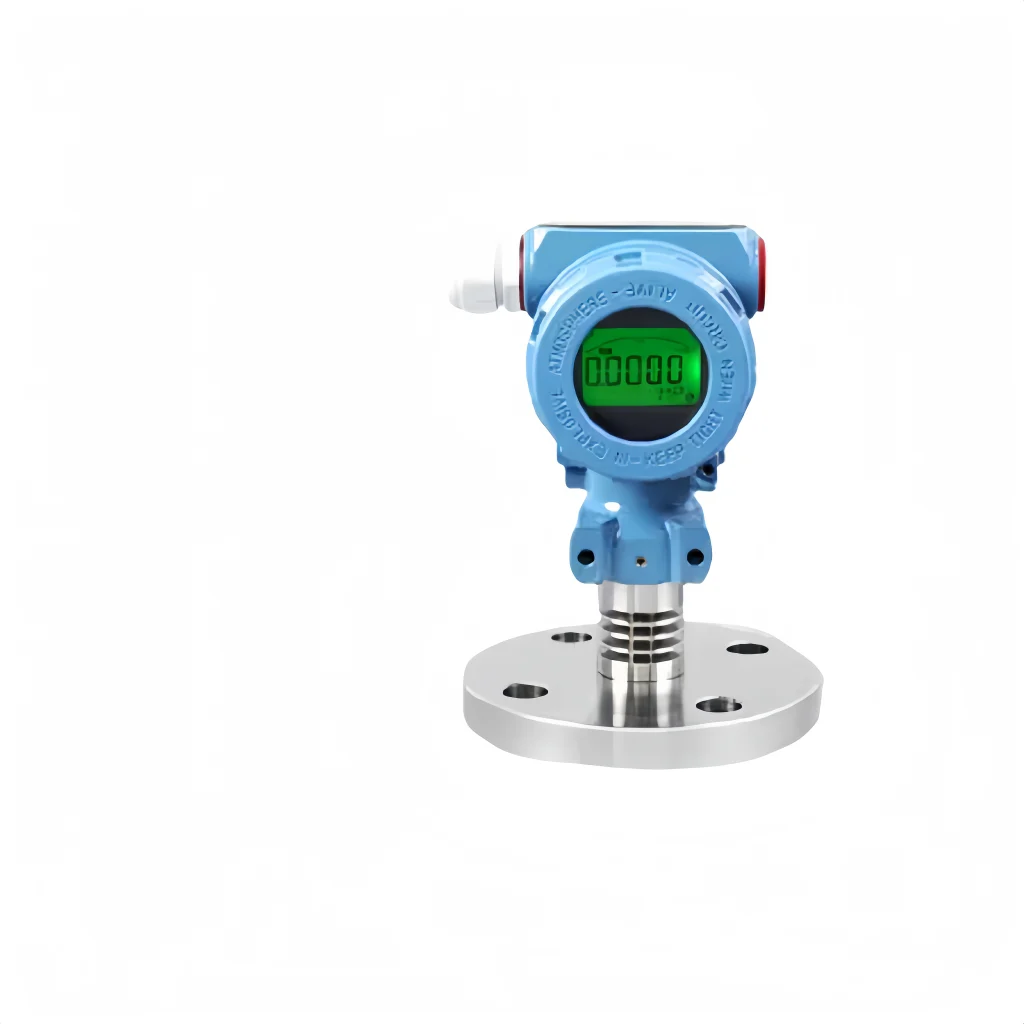
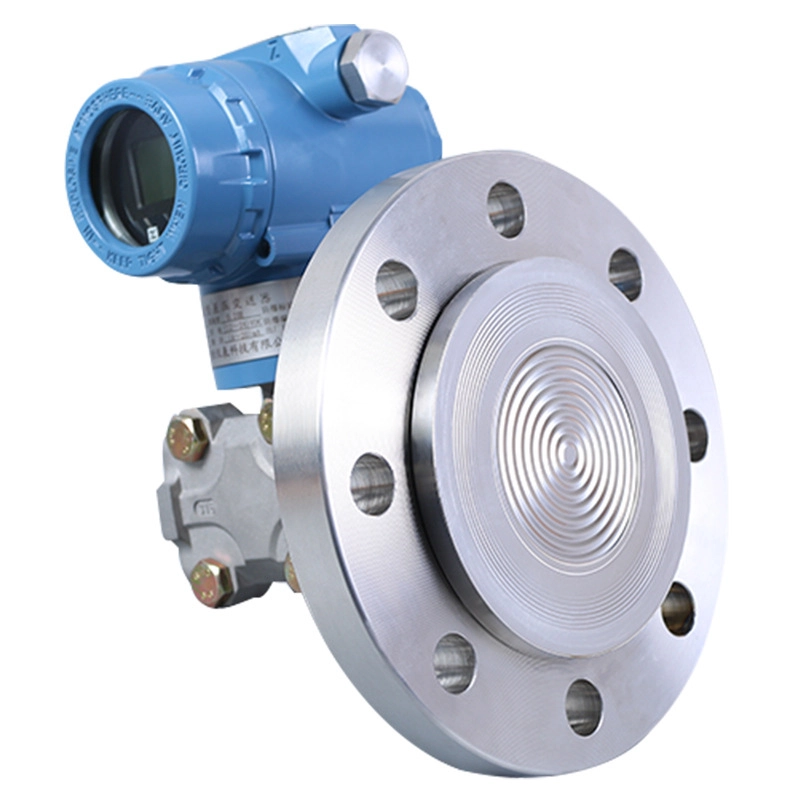
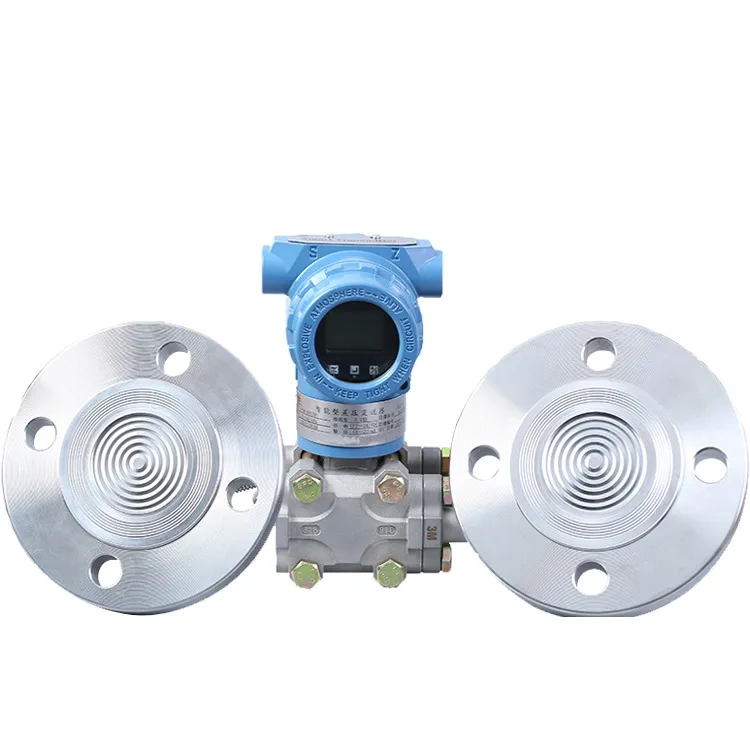
Liquid Nitrogen Level Sensors
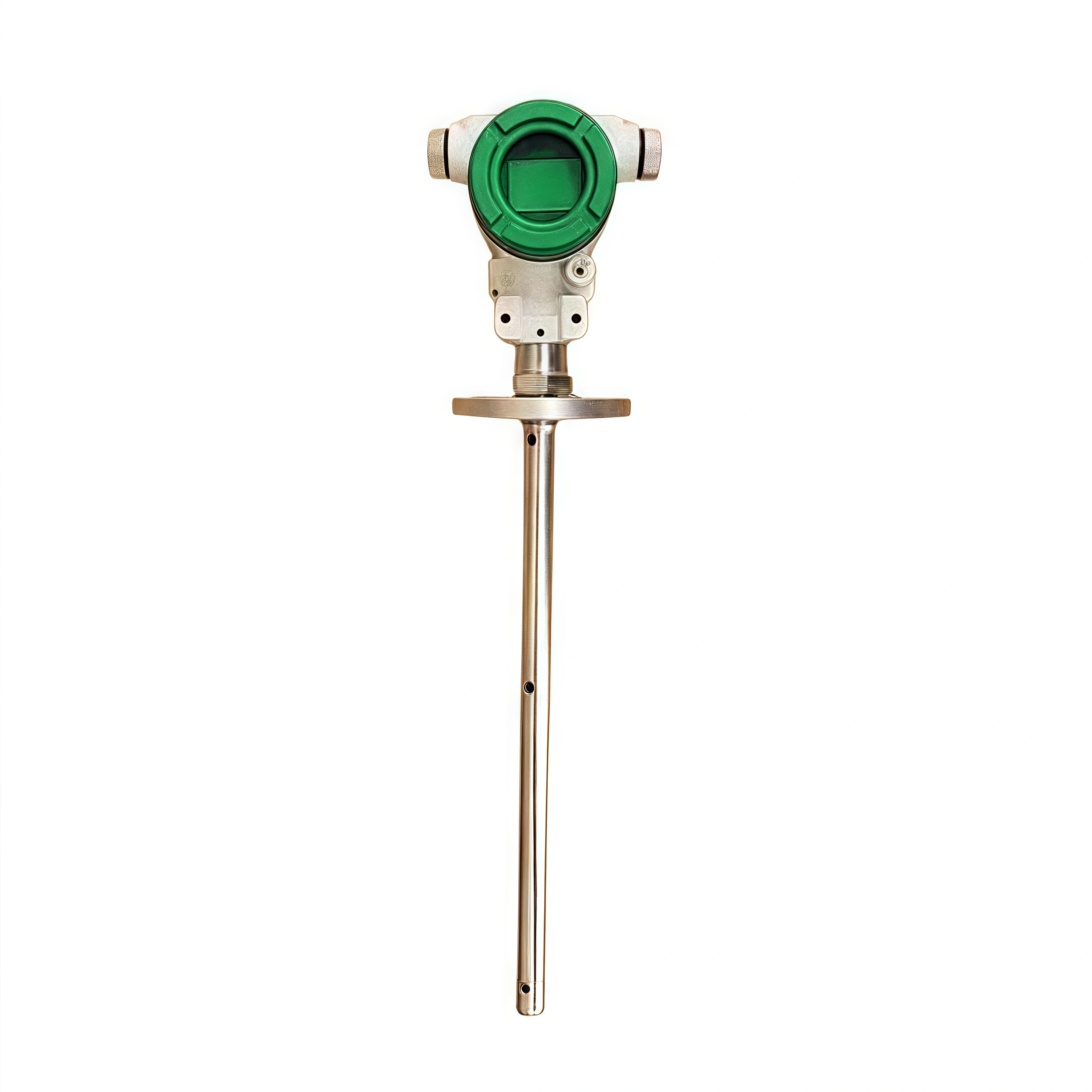
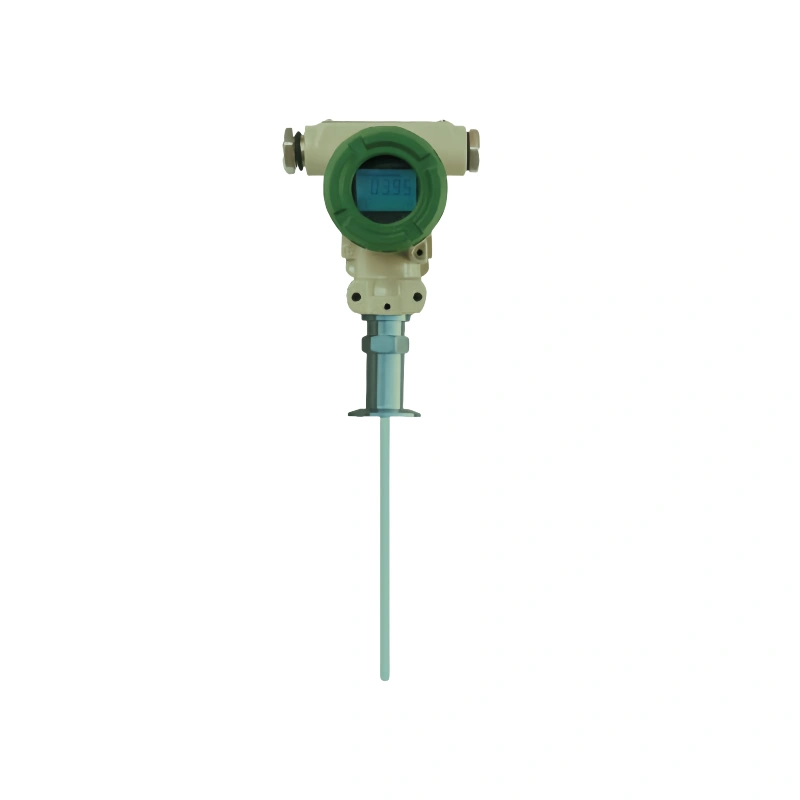
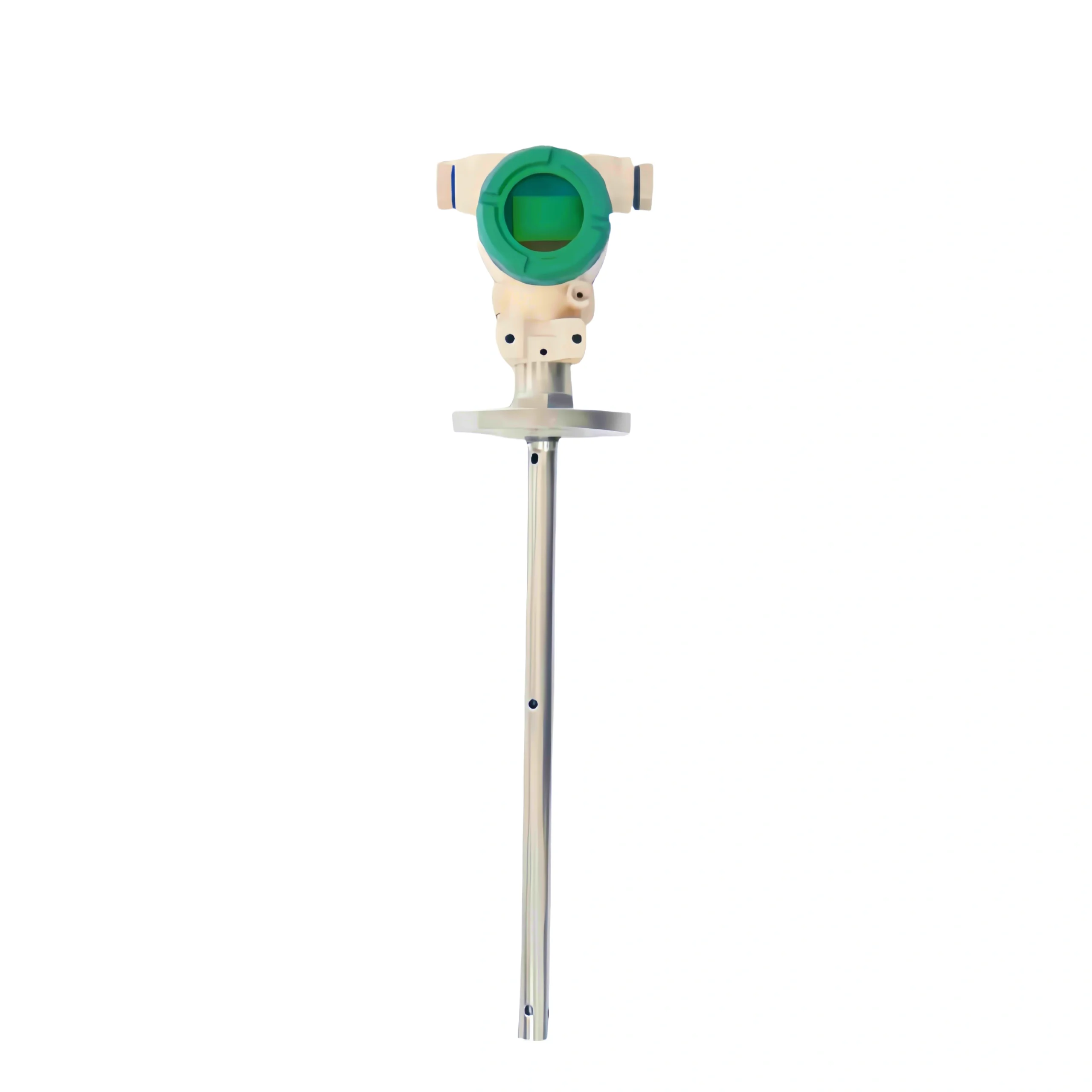
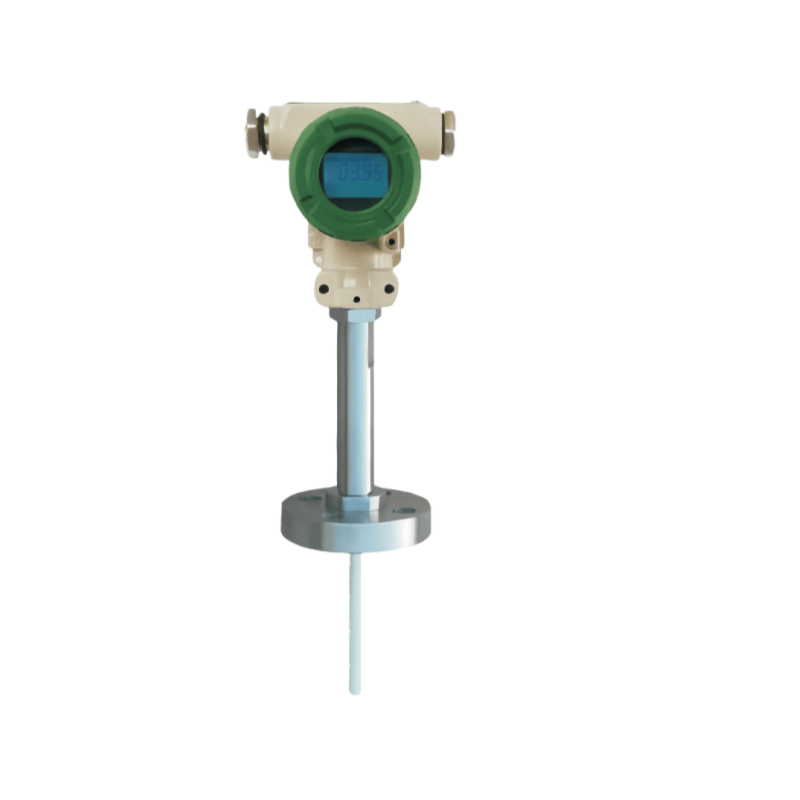
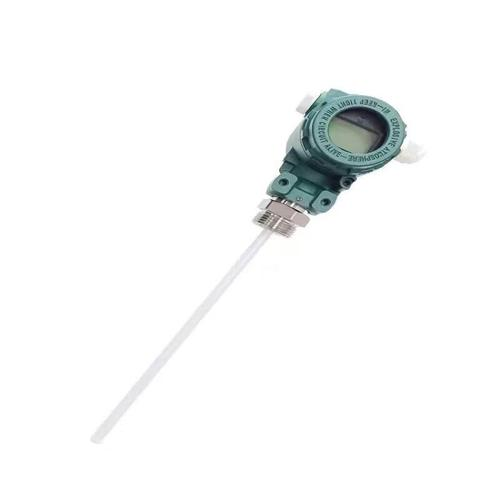
Liquid nitrogen level sensors are capacitive level transmitters designed to measure the level of cryogenic liquids.
Capacitive Level Sensors
Capacitive level sensors are level measurement instruments that utilise variations in the dielectric constant of the medium to alter capacitance, thereby converting this into liquid surface height; they are classified as contact-type continuous level transmitters.
They feature a simple structure with no moving mechanical parts and can measure liquids, powders and granular materials. Suitable for high-temperature, high-pressure, viscous and corrosive media, they are widely used in the chemical, water treatment, oil storage and food industries.
Basic Structure
Sensing electrode (electrode): a central metal measuring electrode;
Shielding layer: an intermediate insulating shield to eliminate interference from tank walls and material build-up;
Tank wall / auxiliary electrode: forms the other plate of the capacitor;
Transmitter circuit: detects changes in capacitance and converts them into standard 4–20 mA or RS485 signal outputs.
Principle of Operation
Capacitive level sensors utilise the difference in dielectric constants between different media to convert changes in liquid level into changes in capacitance, thereby detecting the liquid level.
The sensor probe and the tank wall form a capacitor; with the electrode dimensions and tank diameter fixed, the capacitance under stable operating conditions is determined solely by the length of the electrode immersed in the liquid and the dielectric constant of the medium.
When the liquid level in the tank is low, the space between the probe and the tank wall is filled with air; as air has an extremely low dielectric constant, the capacitance remains at its minimum reference value.
As the liquid level rises, the probe gets submerged in the liquid; since the liquid’s dielectric constant is way higher than air’s, the overall dielectric properties shift accordingly. The probe stays under longer and longer as the level keeps climbing, and the capacitance being picked up rises in a straight line along with it.
The transmitter circuit inside keeps grabbing that ever-changing capacitance signal. It runs it through a calibration routine to work out the actual liquid level, then spits it out as standard industrial signals—either 4–20 mA or RS485—for the automated control system to pick up. This way, real-time level data keeps flowing non-stop, keeping monitoring going and remote feedback coming through without a hitch.
Advantages for measuring liquid nitrogen
1. High resistance to ultra-low temperatures and excellent adaptability: the sensor probe utilises specialised low-temperature insulating encapsulation materials, enabling long-term stable operation in liquid nitrogen environments at –196 °C.
It features a wide temperature tolerance range and does not suffer from material brittleness or insulation failure in low-temperature conditions, making it suitable for various Dewar flasks and cryogenic liquid nitrogen storage tanks.
2. No mechanical moving parts: the device consists solely of electrodes and a transmitter circuit, with no structures prone to wear or freezing, such as float balls or connecting rods.
It is resistant to jamming and failure under the low-temperature conditions of liquid nitrogen and the vibrations caused by boiling, ensuring high operational stability and effectively reducing the workload of subsequent maintenance.
3. It offers high measurement accuracy and fast response times. By utilising the stable difference in dielectric constants between liquid nitrogen and gaseous nitrogen to achieve linear measurement, the measurement error is within ±1–2 mm, with a signal response time of less than 0.5 seconds.
It can accurately detect minute fluctuations in liquid level, meeting the high-precision monitoring requirements of laboratories and biological sample containers.
4. It handles continuous, real-time level monitoring and puts out standard 4–20 mA and RS485 signals, so hooking it up to PLCs and remote monitoring setups is straightforward. Pair that with high and low level alarms, and you’ve got fully automated monitoring plus smart control over liquid nitrogen tanks covered.
5. It’s got solid resistance to interference, shrugging off vibrations from filling and moving liquid nitrogen around, along with small pressure swings inside the tank. The capacitive detection signal doesn’t get thrown off by any of that noise, so the measurement data stays rock-steady with no drift. That makes it a good fit for sealed high-pressure liquid nitrogen tanks and mobile cryogenic containers alike.
6. The unit is small and installs without much hassle. The slim probe only needs a tiny mounting hole, so it doesn’t chew up the container’s insulation layer too badly. This keeps thermal bridge losses down and works well in cramped spaces like small Dewar flasks and miniature liquid nitrogen tanks where room is tight.
7. Stable compatibility with the medium: as liquid nitrogen is pure, non-viscous and free from conductive impurities, the dielectric difference between the liquid and vapour phases remains stable.
The device features a built-in self-calibration function that compensates for minor errors caused by frost formation and is unaffected by liquid nitrogen vapour or mist, outperforming ultrasonic and radar level transmitters.
8. Long service life: the probe is made of corrosion-resistant 316L stainless steel, and the accompanying insulating layer is freeze-resistant and age-resistant, ensuring a slow ageing rate under long-term cryogenic conditions. Compared to traditional level gauges such as float and magnetic flip-plate types, it offers a longer overall service life.
Practical Applications
Monitoring of medical and biological liquid nitrogen storage tanks
These sensors are mainly deployed in hospitals, biological labs, and stem cell banks to keep an eye on liquid nitrogen tank levels around the clock. They trigger low-level alerts to stop biological samples from going bad when nitrogen runs out, cut down on manual checks, and keep stored samples safe.
Cryogenic Equipment for Scientific Research
Used in universities and research institutes for superconductivity experiments, low-temperature physics, and materials testing. They track liquid levels in Dewar flasks and nitrogen storage tanks with decent accuracy, helping maintain a steady cryogenic environment and avoiding disrupted experiments or bad data from running low on nitrogen.
Industrial Cryogenic Cooling and Ultra-Low Temperature Processes
Applied in ultra-low temperature treatment for precision manufacturing, semiconductors, and aerospace parts. They watch industrial storage tank levels in real time, send out low-level warnings, and support automatic refilling so automated production lines keep running without hiccups.
Vehicle-Mounted Liquid Nitrogen Transport
Built for liquid nitrogen transport trucks and mobile tanks. Since there are no moving parts inside, these sensors hold up well against vibration and bumps, keeping level readings reliable even on rough roads. This helps avoid problems like overfilling, shortages, or leaks along the way.
Automated Liquid Nitrogen Supply Systems
Made for centralized liquid nitrogen supply stations and fully automated refilling setups in factories. They can hook up to PLC systems for real-time level tracking, automatic top-ups, and high/low-level interlocks, basically letting industrial nitrogen supply run without anyone standing by.
Food Freezing and Cryogenic Processing Equipment
Suitable for food liquid nitrogen flash-freezing and cryogenic preservation equipment, it reliably monitors the liquid level in storage tanks, ensuring uniform temperatures during the flash-freezing process. It is resistant to low temperatures and frost formation, and is suitable for continuous production in the food industry.
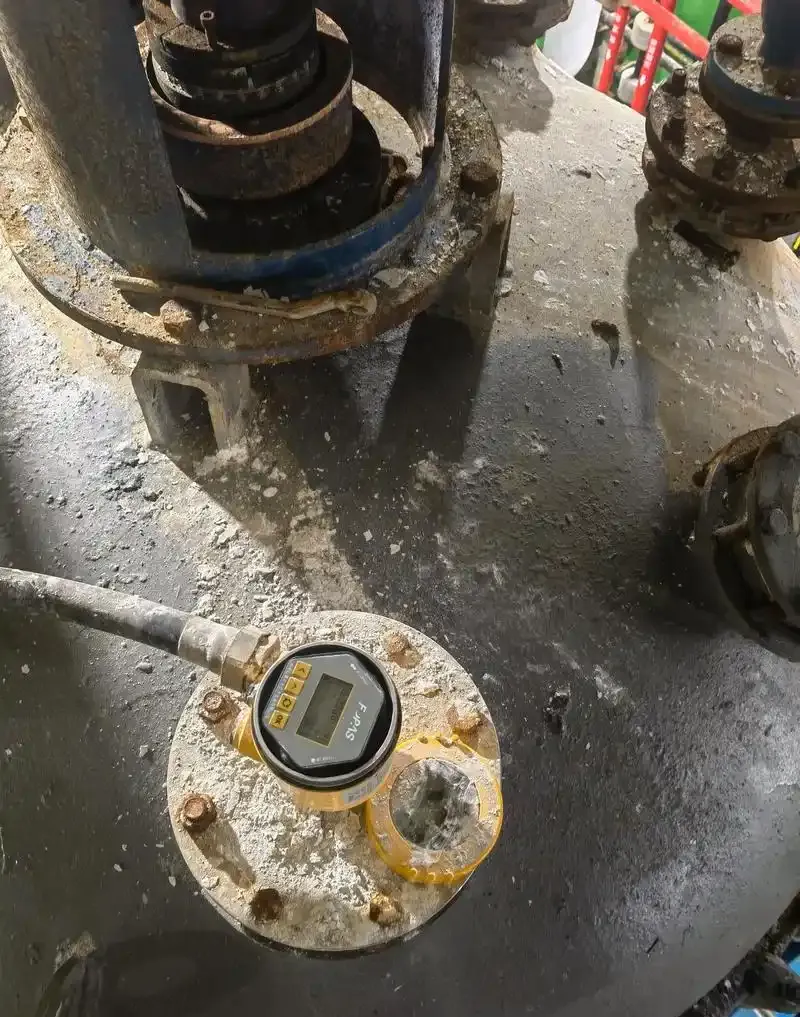
Other common cryogenic liquids
Liquid oxygen
The medium has a stable dielectric constant, is free from conductive impurities, and does not form deposits or clumps on tank walls at low temperatures. Capacitive sensors, which have no mechanical components and can withstand temperatures as low as –183 °C, are suitable for continuous level measurement in cryogenic storage tanks and are ideal for monitoring oxygen supply systems and aerospace cryogenic storage tanks.
Liquid argon
It is chemically inert, pure and non-corrosive, with a marked difference in dielectric constant between its gaseous and liquid states. It is not prone to frost formation that could interfere with measurements under cryogenic conditions, and is commonly used for liquid level detection in welding gas supply stations and laboratory cryogenic Dewar flasks.
Liquid Hydrogen
Temperatures as low as –253°C; the medium exhibits excellent insulating properties. Specialised cryogenic capacitive probes can withstand extremely low temperatures; with no moving parts, they will not freeze and jam, making them suitable for liquid hydrogen storage tank level monitoring in the new energy and aerospace sectors.
Liquid Carbon Dioxide
The medium is insulating under normal pressure at low temperatures, with low viscosity and no adhesion. The sensors are unaffected by minor frost formation on dry ice and are widely used in dry ice production equipment and cryogenic refrigerated storage tanks.
Liquefied Natural Gas (LNG)
Composed primarily of methane, it is an insulating liquid medium with a temperature of approximately –162°C. Capacitive measurement is unaffected by gas vapour or mist, enabling continuous monitoring of liquid levels in LNG storage tanks and vehicle cylinders, and is suitable for refuelling stations and storage and transport equipment.
Differential pressure (DP) level transmitters are the most widely used solution for cryogenic storage tanks. By measuring the static pressure of the liquid column to calculate the level, these devices feature a simple structure, no moving parts, mature technology and low cost, making them suitable for thermally insulated (vacuum jacket/pearlite) storage tanks.
Note that density compensation is required (as the density of the medium varies with temperature and pressure), and pressure-transmitting pipes must be protected against low-temperature blockages or vapourisation. The basic configuration for most industrial cryogenic storage tanks (including LOX, LNG and LH₂) is DP.
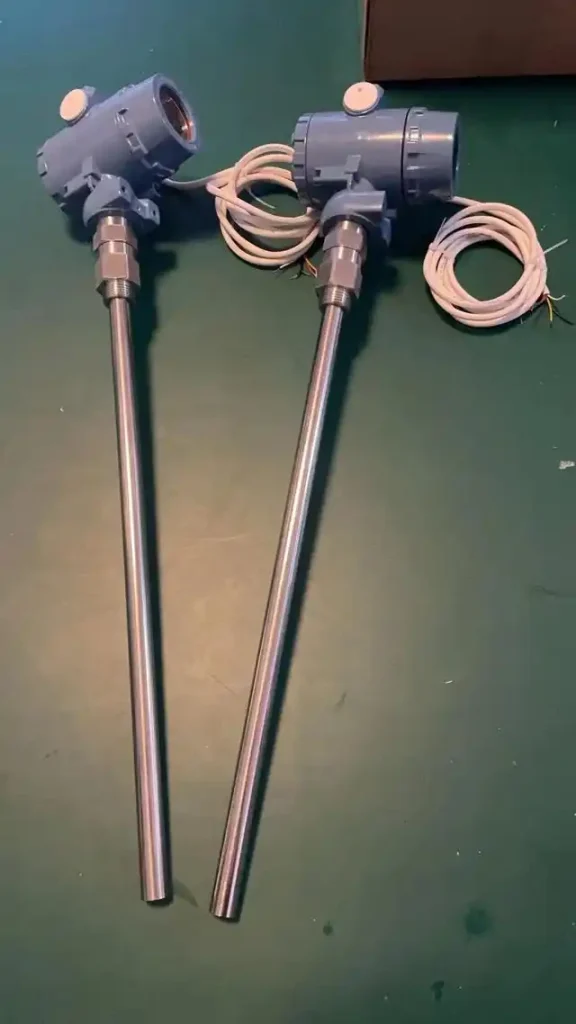
Drawing on its wealth of experience in mature sensor technology, Sion-Inst not only supplies capacitive level transmitters suitable for various cryogenic media—covering all scenarios for level monitoring, from Dewar flasks and fixed storage tanks to mobile on-board tanks—but also offers a comprehensive range of cryogenic flowmeters, including vortex, vortex, Coriolis and differential pressure types, capable of accurately measuring flow data throughout the entire process of cryogenic fluid transport, filling and replenishment.