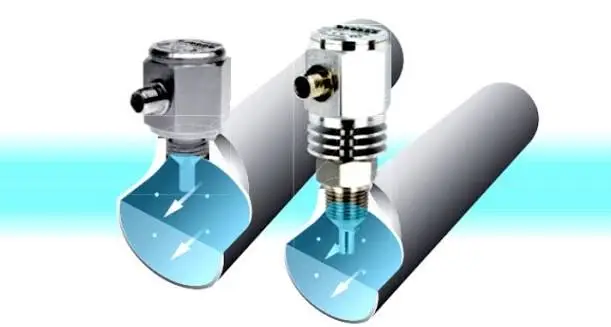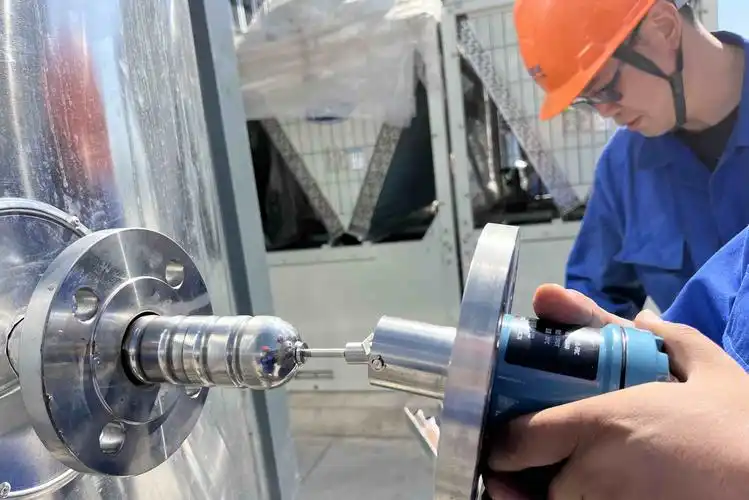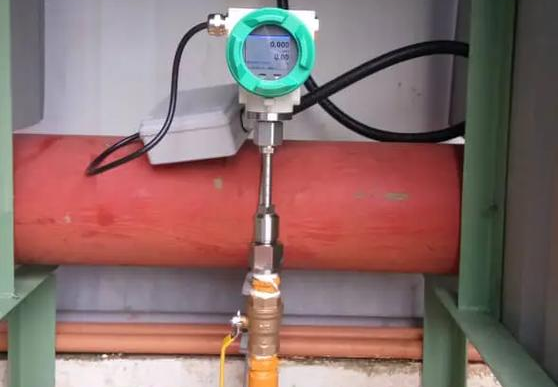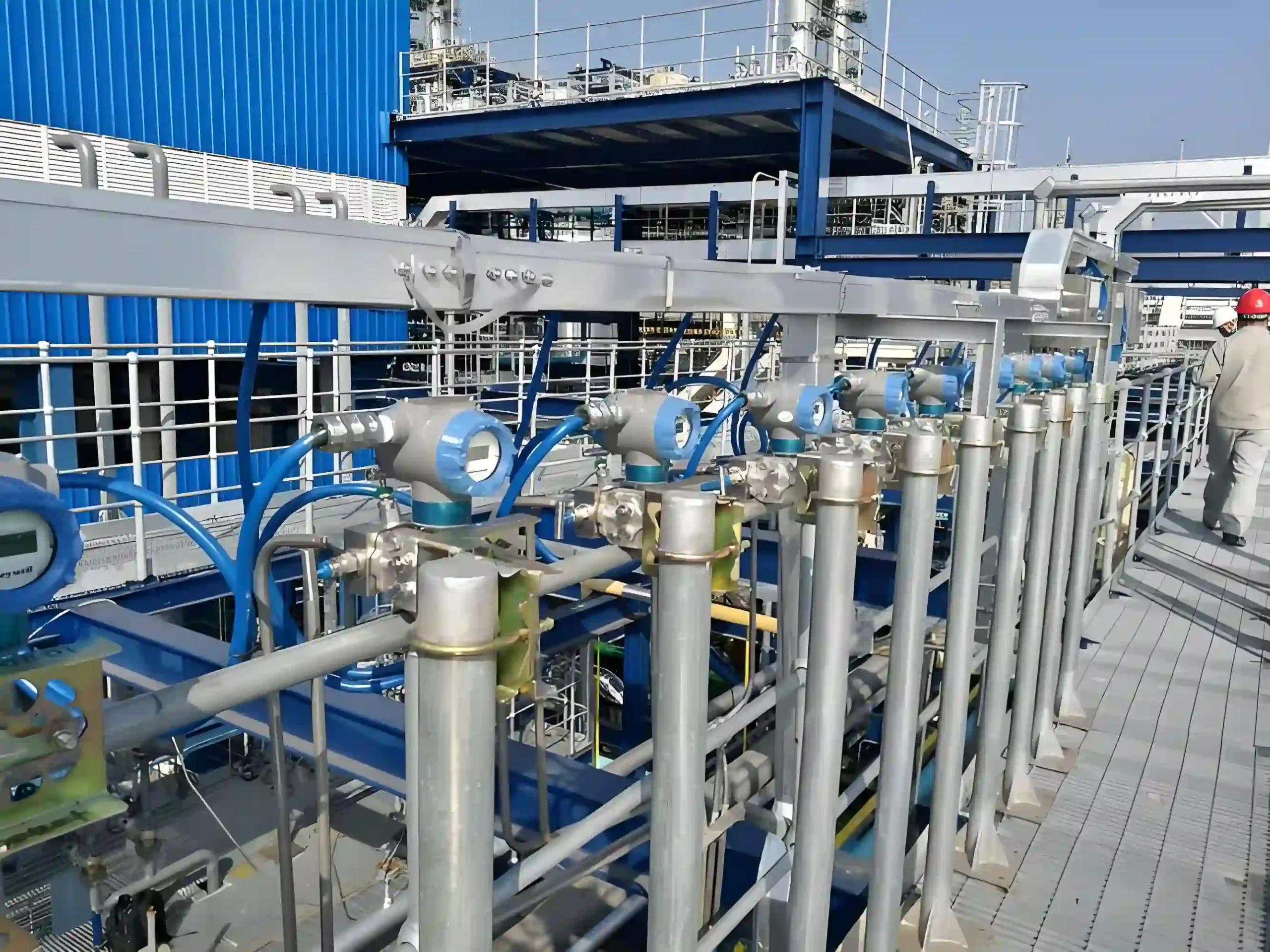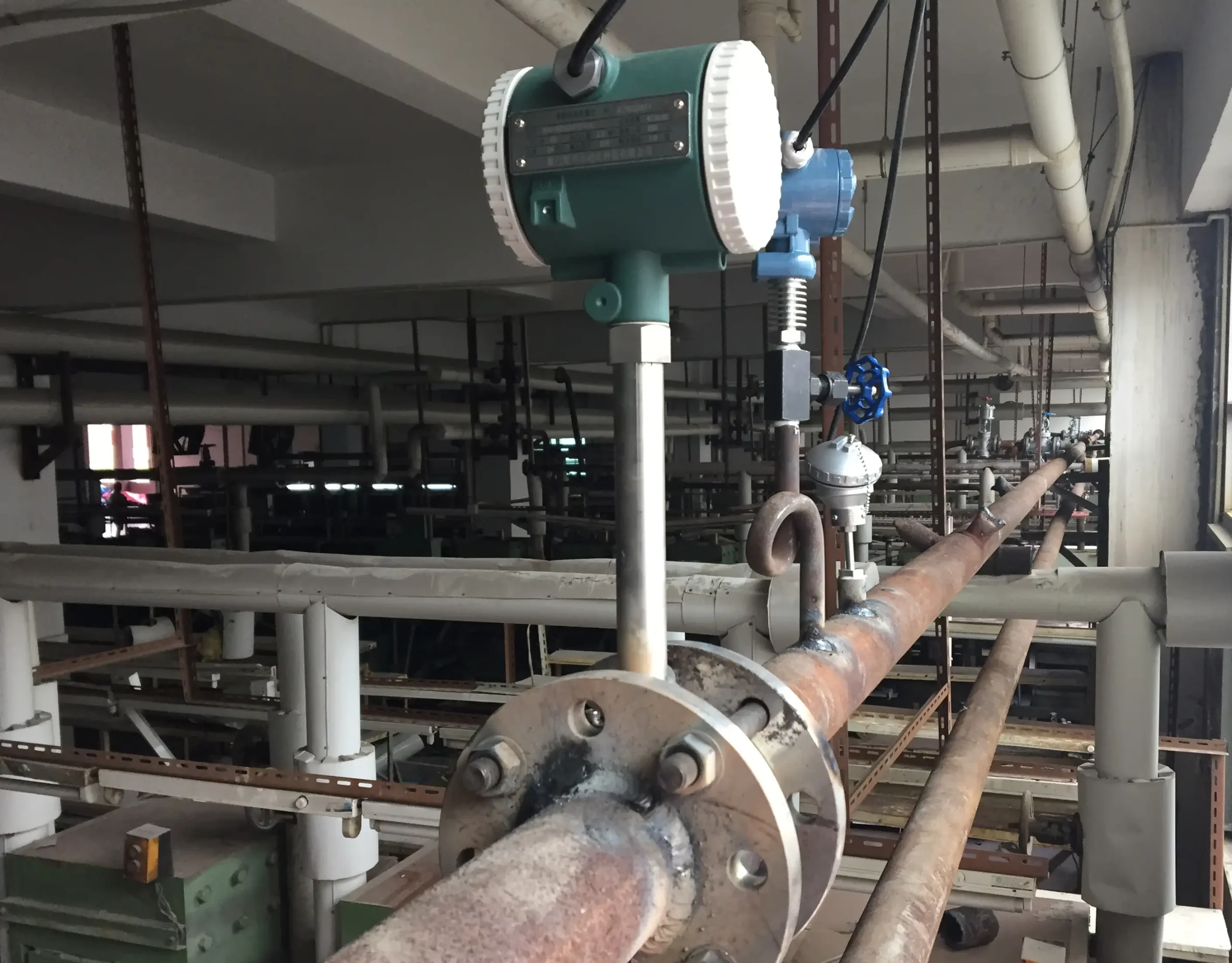
The hydrogen energy sector keeps growing, and getting temperature monitoring right is basic to keeping things running safely and smoothly. Hydrogen leaks through most materials easily and processes run across a huge temperature span, so normal temperature sensors just can’t hack it out there. Picking the right hydrogen temperature transmitter and making sure it’s dependable matters a lot—it’s what keeps storage safe and fuel cells working at full output.
Hydrogen
Hydrogen (H₂) is the lightest gaseous element on earth. It is a colorless, odorless gas with flammable and explosive characteristics. Boasting rich reserves, zero pollution during use and high calorific value, hydrogen is recognized as a premium renewable clean energy source.
Currently, it is widely applied in new energy systems, industrial smelting, chemical synthesis, hydrogen storage and transportation, and fuel cell industries, acting as a core energy medium for global low-carbon energy transformation.
Characteristics of Hydrogen
Low density and high permeability: As the lightest industrial gas, hydrogen has ultra-fine molecules with strong penetration capability. It leaks out through tiny gaps and worn seals without much trouble. That’s why temperature transmitters for hydrogen service need tight sealing and solid protection ratings—to keep hydrogen from seeping in and wrecking the internal electronics.
Excellent Thermal Conductivity and Rapid Temperature Response: Hydrogen transfers heat far more efficiently than air, bringing fast and frequent temperature fluctuations on site. In such working conditions, temperature transmitters must deliver fast response and high precision, so as to capture every subtle real-time temperature change.
High risk of flammability and explosiveness: Hydrogen has a broad explosion range and extremely low ignition energy. Even tiny electric sparks or local equipment overheating can trigger safety accidents. Thus, matched temperature transmitters need to adopt explosion-proof structure, low-power design and hotspot-free construction to meet strict safety standards.
Risk of hydrogen embrittlement and aging: Under high pressure and high temperature working conditions, hydrogen can induce metal embrittlement. This gradually weakens metal probes and shells, causing brittleness, cracking and aging. Transmitters adopting professional hydrogen embrittlement resistant and anti-corrosion materials are required to sustain long-term stable operation.
Non-corrosive at room temperature but highly diffusible: Normal temperature doesn’t cause dry hydrogen to corrode metal materials. But, as we all know, hydrogen spreads like wildfire and builds up easily in confined spaces, making it a real pain to work in. This means you need temperature transmitters that can keep a steady reading and be easily installed in the field.
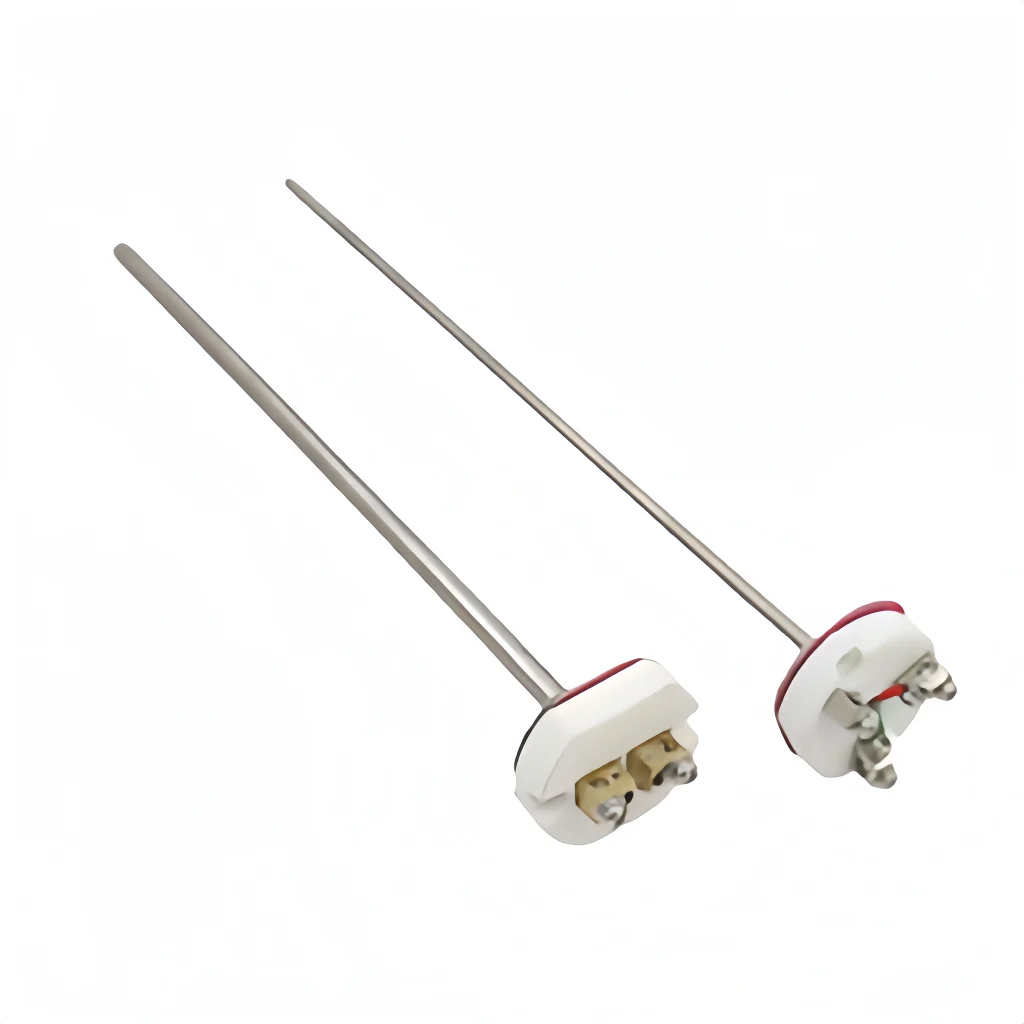
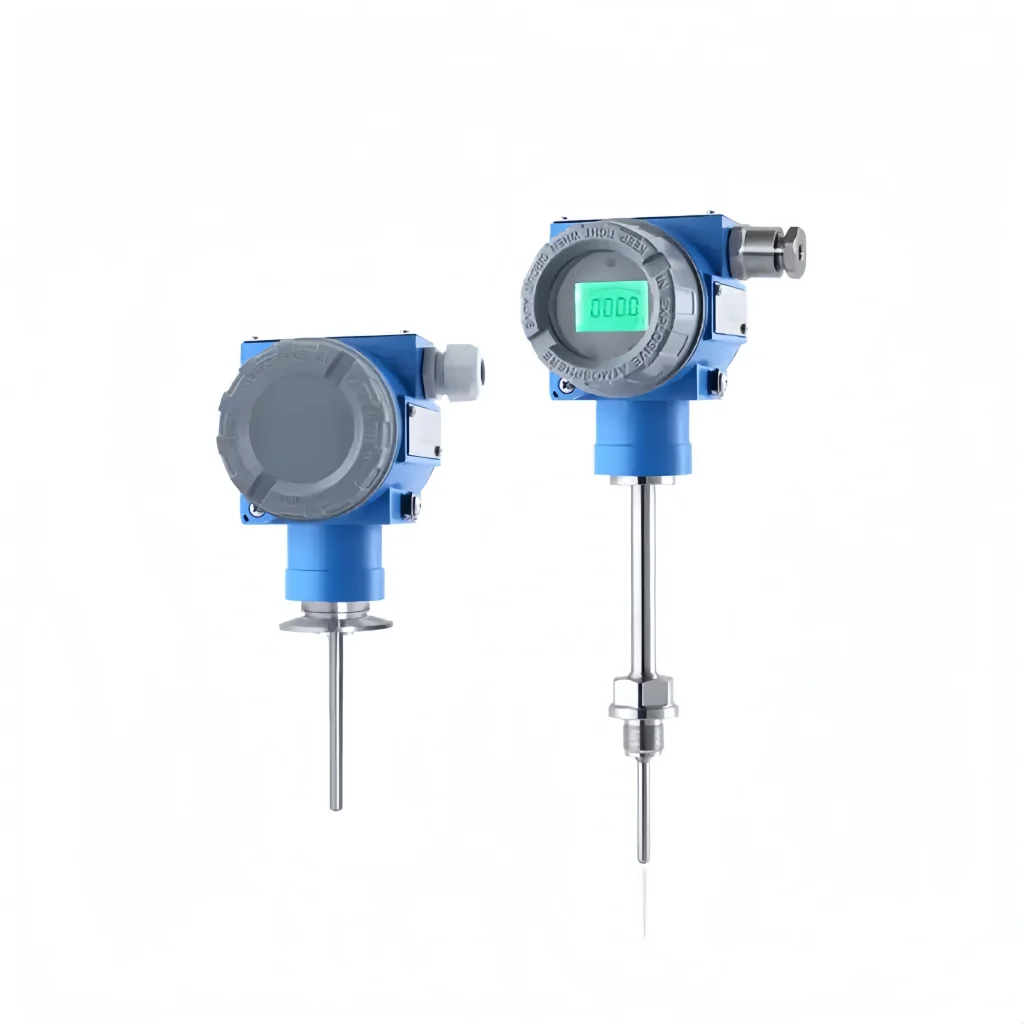
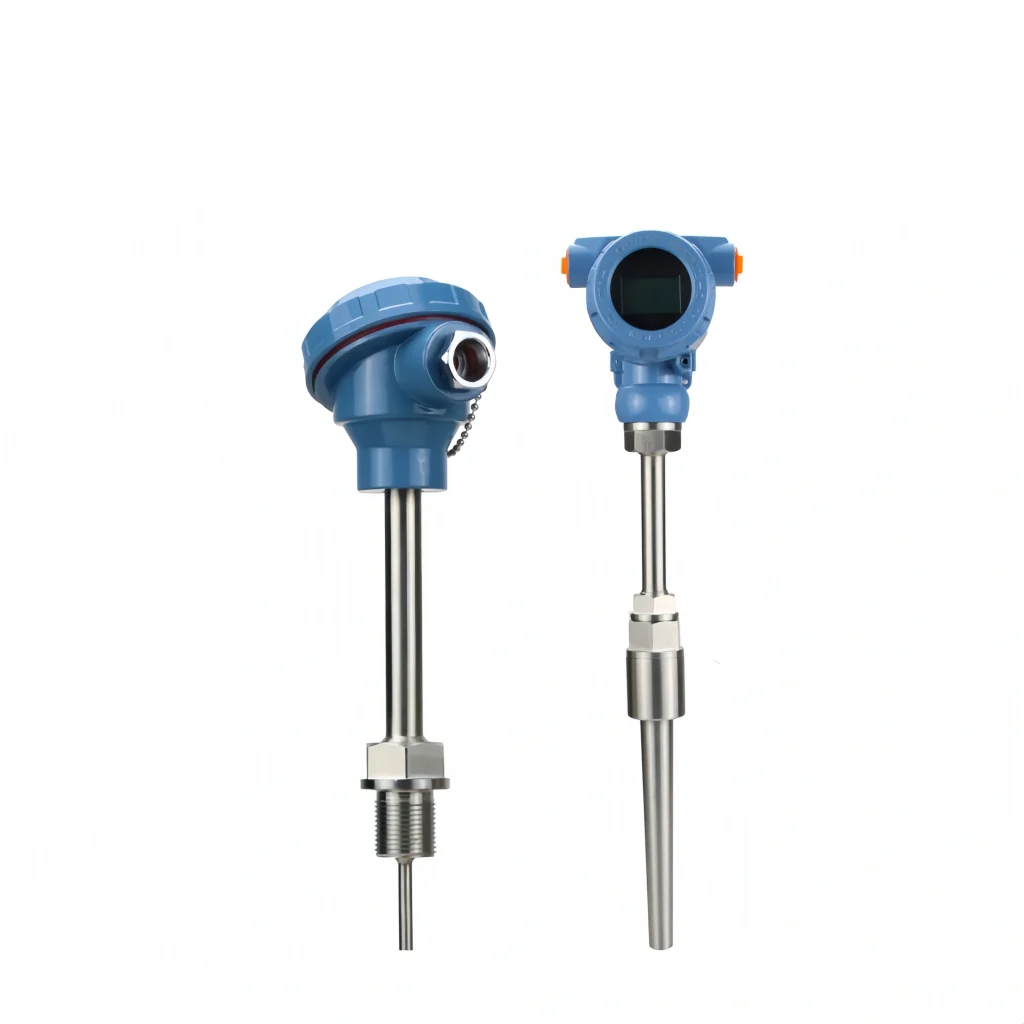
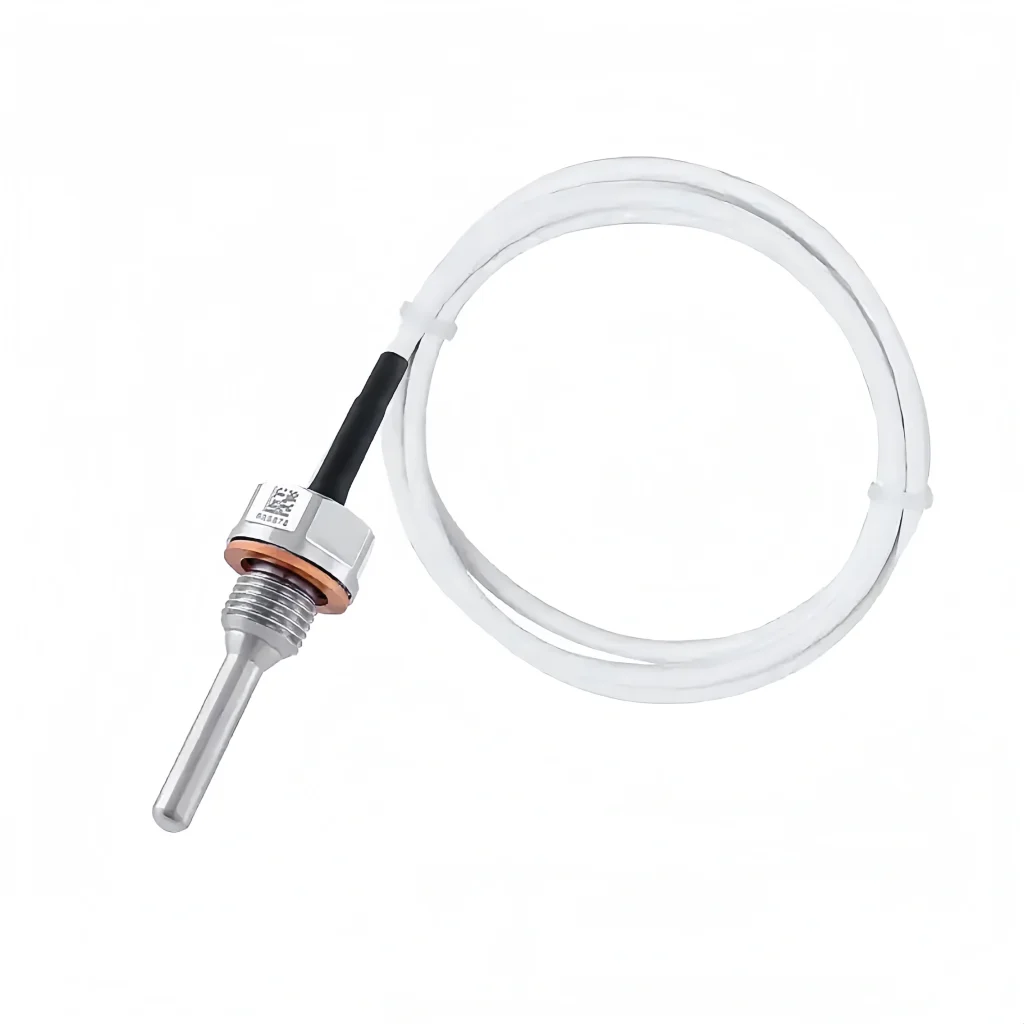
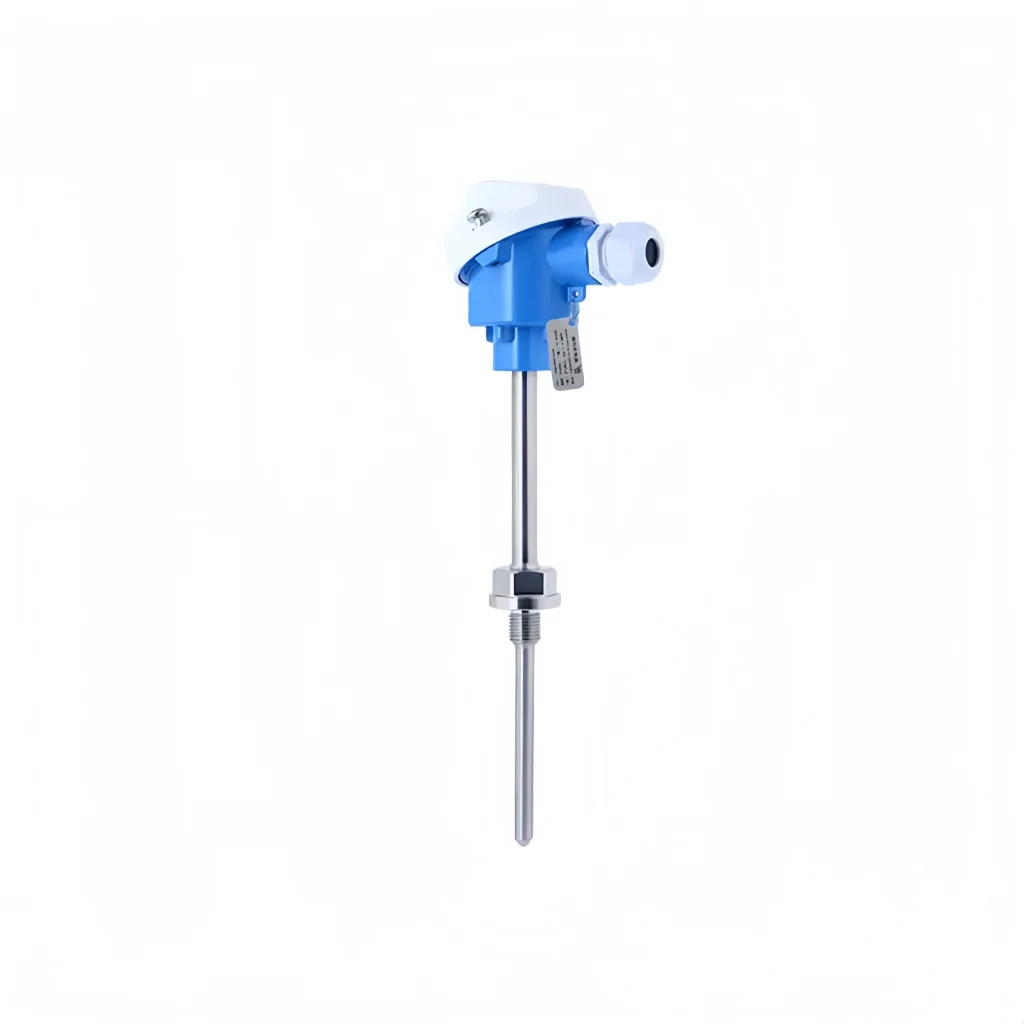
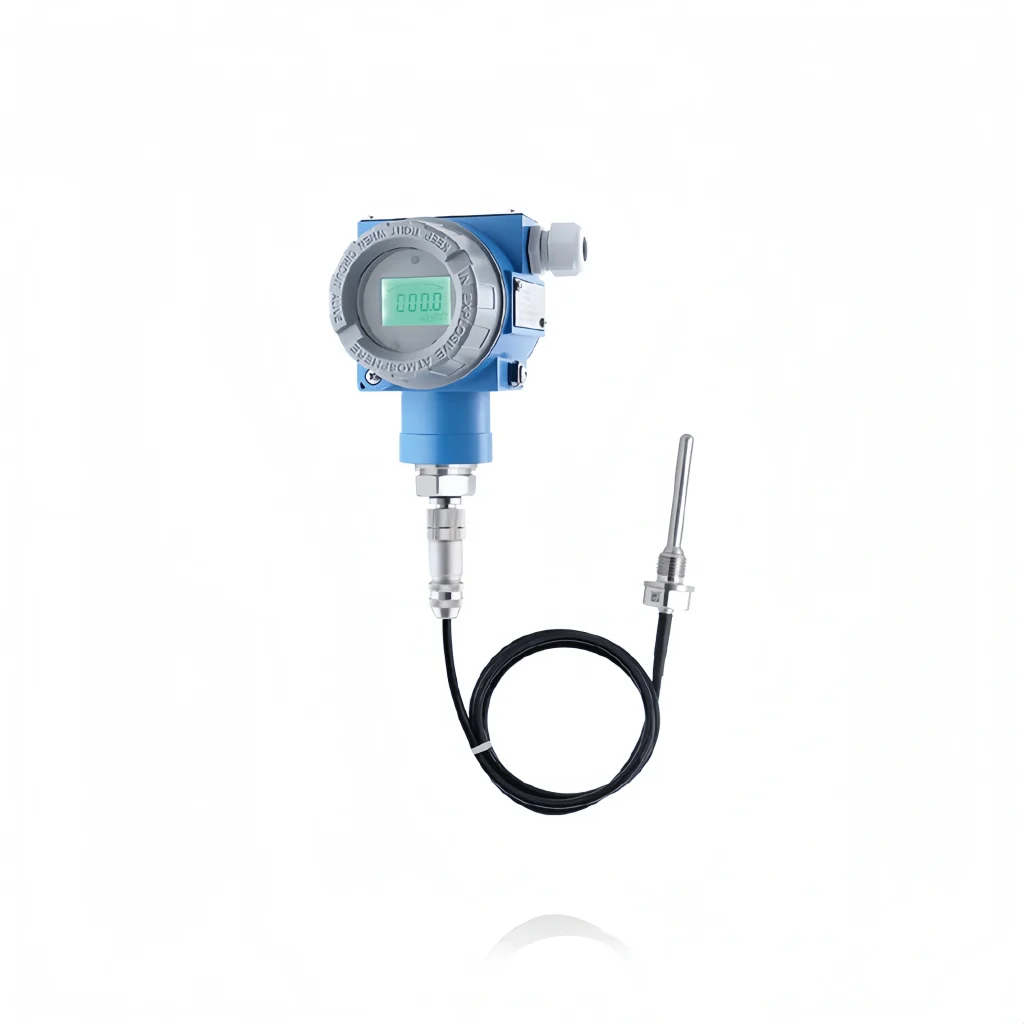
Hydrogen Temperature Transmitter
Resistance Temperature Detector (RTD)
PT100 and PT1000 platinum resistance sensors are the most common choices for hydrogen temperature detection. They work on a simple rule that metal resistance changes steadily along with temperature shifts.
When the platinum sensing probe touches flowing hydrogen, it quickly matches the medium temperature, which in turn brings regular changes to its internal resistance.
The built-in transmitter unit picks up these resistance changes and turns them into standard industry signals, so users can get accurate hydrogen temperature readings steadily.
Advantages
1. Great measuring accuracy and steady linear performance. It keeps tiny error values at normal and low temperature levels, and maintains a stable matching relation between temperature and resistance.It works well for regular temperature, low temperature and ultra-low temperature liquid hydrogen working scenes, and delivers accurate and trustworthy measured data all the time.
2. Stable performance for long-time field use.It hardly produces reading drift after continuous running. It can stand the influence of hydrogen reducing atmosphere well, and will not lose working performance when exposed to hydrogen surroundings, so it keeps consistent detection results.
3. Strong anti-corrosion ability and reliable safety performance.It can be fitted with protective sleeves made of 316L stainless steel or Monel alloy to defend against damage caused by hydrogen embrittlement. It can also be made into explosion-proof types, fully fitting in with safety rules for flammable and explosive hydrogen working sites.
4. Flexible and practical for various usage cases.It sends out stable output signals and supports uninterrupted on-site temperature tracking. It fits most commercial and industrial hydrogen temperature checking occasions, such as hydrogen delivery pipelines, hydrogen storage devices, fuel cell units and low-temperature hydrogen storage facilities.
Thermocouple
Type J Thermocouple
The Type J thermocouple is a thermoelectric temperature-sensing element consisting of a closed circuit formed by two conductors made of different materials: iron and constantan.
When the sensing end of the thermocouple comes into contact with the hydrogen medium and a temperature difference arises between it and the reference end, a thermoelectric potential is generated in the circuit.
The magnitude of this thermoelectric potential corresponds directly to the hydrogen temperature; by collecting and converting the thermoelectric potential values, the real-time temperature of the hydrogen can be accurately determined.
Advantages:
1. Wide temperature coverage and superior high-temperature stability:Designed to handle medium and high-temperature hydrogen process conditions, this thermocouple fills the high-temperature application gap of resistance temperature detectors.It fully satisfies the on-site temperature measurement demands for high-temperature hydrogen reactions, hydrogen production and other special industrial processes.
2. Excellent stability in hydrogen reducing atmospheres: This thermocouple holds steady consistently in hydrogen-rich reducing environments. It does not suffer component oxidation, parameter shift or performance degradation during long-term operation in pure hydrogen conditions, delivering much more reliable field performance than conventional K-type and E-type thermocouples.
3. Robust structure and quick thermal response: Featuring a solid, rugged build, it can withstand frequent on-site vibration and electromagnetic interference. The sensor tracks temperature changes rapidly and keeps consistent measuring accuracy even in tough, complex industrial working environments.
4. Outstanding practicability and cost efficiency: With affordable material costs and a long service lifespan, this thermocouple requires almost no routine maintenance. It serves as a highly cost-effective option for continuous temperature monitoring on industrial hydrogen equipment operating at high temperatures.
Type T Thermocouple
Type T thermocouples use copper and constantan as the two metal conductors that make up the sensing loop, working off the thermoelectric effect to take temperature readings. When the probe picks up a change in hydrogen gas temperature, a temperature gap forms between the hot end and the cold end, creating a steady thermoelectric potential in the circuit. The transmitter then converts and reads this potential signal to get an accurate real-time temperature of the hydrogen.
Advantages:
1. Excellent cryogenic measurement performance:This sensor is the ideal choice for ultra-low temperature hydrogen measurement. It maintains high precision and stable readings in cryogenic conditions with no low-temperature drift. It works reliably for liquid hydrogen, cryogenic hydrogen storage and other ultra-low-temperature hydrogen application scenarios.
2. Strong resistance to hydrogen embrittlement and corrosion: It runs steadily in both dry and moist hydrogen environments. With good oxidation resistance and reliable hydrogen embrittlement protection, it can adapt to various low-temperature hydrogen mediums and support long-term continuous field operation.
3. High sensitivity and stable linear output: The sensor responds quickly to subtle temperature changes and delivers thermoelectric signals with consistent linearity. It guarantees accurate measurement results and well-controlled errors, ensuring stable and credible temperature detection data.
4. Simple structure and durable service life: Adopting a solid and compact structural design, the thermocouple is not easy to be damaged. It keeps consistent working performance during long-term cryogenic operation, with extremely low failure rate and minimal daily maintenance costs.
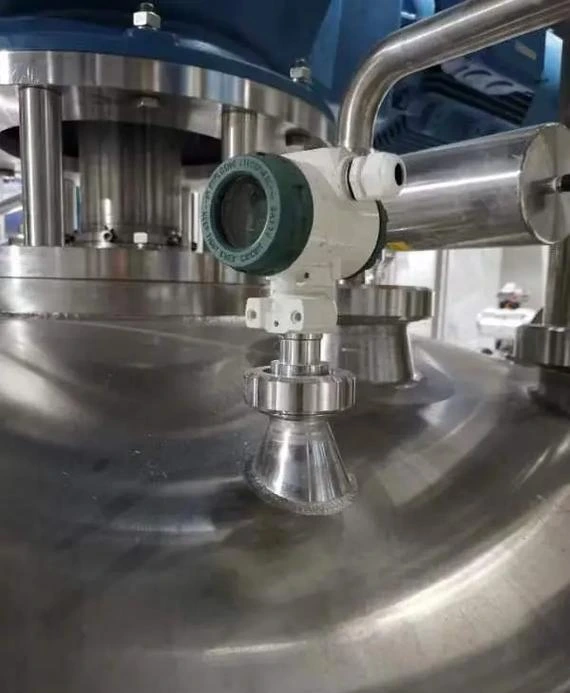
Practical Applications
Hydrogen Fuel Cell Sector
Temperature transmitters monitor the hydrogen inlet temperature and internal cavity operating temperature of fuel cells in real time. This precise temperature control keeps the electrochemical reaction environment steady, prevents efficiency drops caused by too much temperature variation, and gets rid of high-temperature risks in the gas circuit, making sure fuel cell systems can be used reliably and for longer.
Industrial Hydrogen Production Scenarios
Ideal for water electrolysis, methanol cracking and other mainstream hydrogen production lines, the sensors track medium temperature inside reaction kettles and delivery pipelines.
Working together with supporting temperature control equipment, they stabilize production parameters, maintain consistent hydrogen purity and output efficiency, and fully satisfy the temperature control demands of large-scale hydrogen production operations.
Hydrogen Storage and Transportation Industry
Deployed on high-pressure hydrogen cylinders, storage tanks and long-distance hydrogen conveying pipelines, the devices provide round-the-clock temperature collection for hydrogen media and storage environments.
They effectively prevent common operational risks including abnormal cryogenic liquefaction and high-pressure thermal expansion, securing safe and compliant operation across the whole hydrogen storage and transportation process.
Chemical Hydrogenation Process Conditions
In petroleum refining and fine chemical hydrogenation procedures, these sensors measure pipeline hydrogen temperature accurately, making sure the temperature stays within the range needed for chemical reactions.
This controlled temperature management improves the finished quality of hydrogenation synthesis products, while the explosion-proof structure fits well in enclosed and high-risk chemical production sites.
Laboratory Research and Hydrogen Energy Testing
These transmitters see a lot of use in hydrogen physical and chemical experiments, as well as hydrogen energy research and test equipment, and they do a solid job of collecting accurate temperature data in low-flow hydrogen environments.
The data transmission is stable and dependable, meeting the precision requirements for scientific experiments. They’re perfect for temperature monitoring, data logging and analysing experiments in a scientific setting.
Hydrogen Reduction Processes in Metallurgy and Smelting
In metal hydrogen reduction smelting processes, the sensors continuously monitor furnace hydrogen atmosphere temperature and help stabilize the optimal temperature range for smelting reactions. This assists efficient metal purification and processing, and reliably adapts to the harsh high-temperature working conditions of industrial metallurgy workshops.
General-Purpose Use in Explosion-Proof and High-Risk Gas Environments
Built with intrinsic safety explosion-proof design and specialized anti-hydrogen corrosion structure, these temperature transmitters are applicable to all confined and flammable hydrogen working zones.
They convert on-site temperature changes into standard industrial electrical signals, supporting seamless connection with PLC and DCS systems to realize remote centralized temperature monitoring and unified process control.
FAQ
What is Hydrogen Embrittlement?
Hydrogen embrittlement, also known as hydrogen-induced embrittlement, is a form of metal degradation specific to hydrogen-based operating conditions. Hydrogen molecules are extremely small; under conditions of high pressure, high temperature, and frequent temperature fluctuations, they break down into hydrogen atoms that penetrate the metal crystal lattice, thereby damaging the metal’s microstructure.
After absorbing hydrogen, metals become less ductile and more brittle. While no obvious damage may be apparent in the short term, long-term operation can lead to microcracks, spalling, cracking, or even fracture. This can easily wreck the sensor probe, blow out the seals, throw off the temperature readings, or cause hydrogen leaks—none of which you want on site.
That’s why hydrogen temperature transmitters need to be built from materials that can take the hydrogen without getting brittle, like 316L stainless or Monel alloy. That way the gear keeps running solid for the long haul.
Why K-type thermocouples are not recommended for hydrogen applications
Standard K-type thermocouples are not fit for hydrogen working conditions. Their nickel-chromium and nickel-silicon alloy materials are formulated to work in oxidizing environments, and cannot resist the strong reducing properties of hydrogen gas.
When operated in pure hydrogen environments, the internal alloy components will gradually precipitate and deteriorate. This causes zero drift, poor linearity and growing measurement deviation, which cannot meet the precise temperature control standards required for hydrogen production and operation processes.
Besides, hydrogen speeds up the aging and embrittlement of K-type thermocouple probes. Probes tend to crack or snap altogether after running for a while, which means more breakdowns and a shorter lifespan.
J-type thermocouples, on the other hand, hold up much better against reducing atmospheres and hydrogen corrosion, keeping their performance steady in hydrogen service. They are the ideal and professional choice for high-temperature temperature measurement in hydrogen industry scenarios.
Differences Between Resistance Thermometers and Thermocouples
Resistance thermometers and thermocouples are the two mainstream temperature measuring elements for hydrogen systems, and they differ greatly in working principle, practical performance and applicable working conditions.
Common PT100 and PT1000 resistance thermometers work by tracking the linear change of metal resistance values as temperature fluctuates. They deliver high measuring accuracy, stable performance and zero signal drift, working perfectly for low and medium temperature scenarios including liquid hydrogen storage, normal-pressure hydrogen storage and fuel cell systems. The only limitation is that they cannot adapt to high-temperature working environments.
By contrast, hydrogen dedicated J-type and T-type thermocouples adopt the thermoelectric effect for temperature detection. They support a much wider measuring range and deliver excellent high-temperature resistance and environmental adaptability. They are widely used in medium and high-temperature industrial scenarios such as high-temperature hydrogen preparation and hydrogen reduction smelting, which are not accessible for RTD sensors.
In short, RTD sensors focus on high-precision monitoring for low-temperature environments, while thermocouples are more suitable for wide-range and high-temperature industrial temperature measurement. The two types of sensors have their own advantages and complement each other in actual hydrogen temperature measurement systems.
With decades of practical experience in industrial temperature sensing technology, Sino-Inst delivers fully customized temperature measurement solutions for diverse field working conditions.
Beyond hydrogen-grade RTDs and Type T thermocouples, we also supply a full lineup of customizable thermocouple types, including standard K-type and S-type sensors. Our complete product portfolio covers integrated temperature sensors as well as intrinsically safe explosion-proof temperature transmitters for diversified industrial needs.
Our full-series temperature measurement devices are widely applicable to complex working scenarios in the chemical, metallurgical, new energy and other industrial fields. Our products come with solid explosion-proof ratings, measure accurately, stay stable over long runs, and hold up well against corrosion. You can mix and match them based on your actual temperature span, site conditions, and what your control system needs.