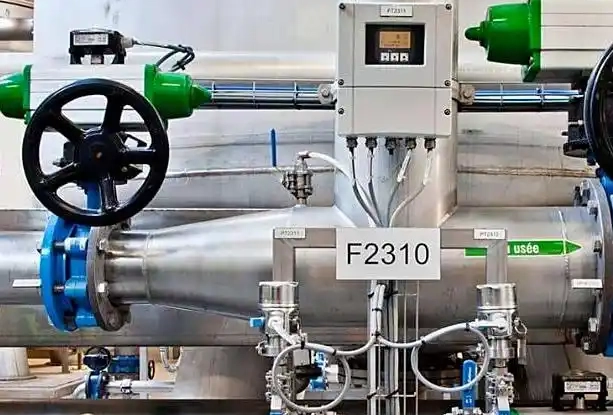
When it comes to measuring industrial fluids, thermal and Coriolis mass flow meters are the go-to solutions. Each one has its own specialties, depending on the application. They both measure mass flow, but they work in different ways, are more or less accurate, and are better for different things. So you need to choose the one that’s right for the job.
What is a Coriolis Mass Flow Meter?
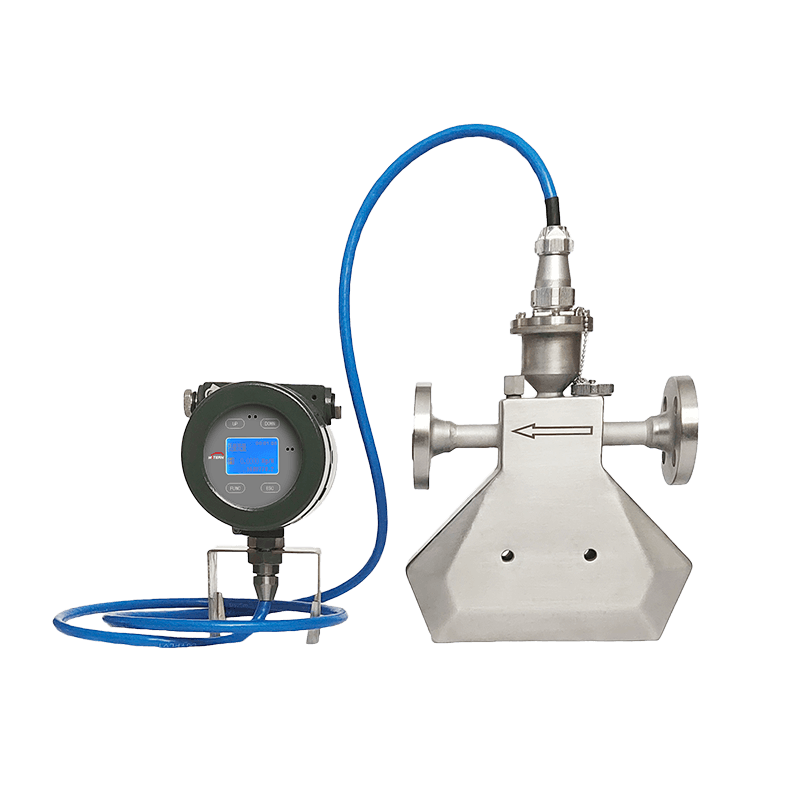
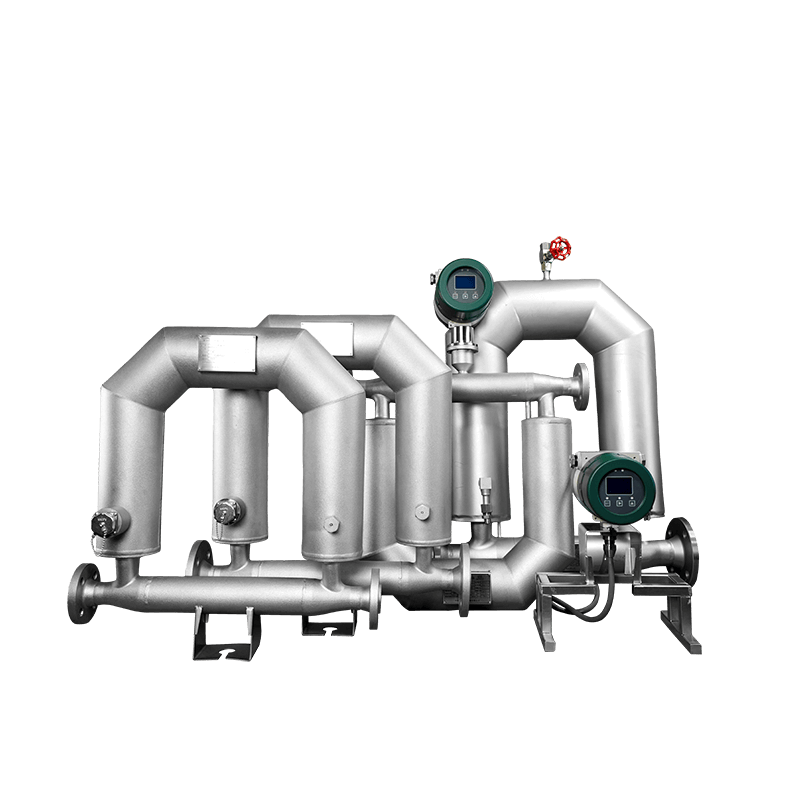
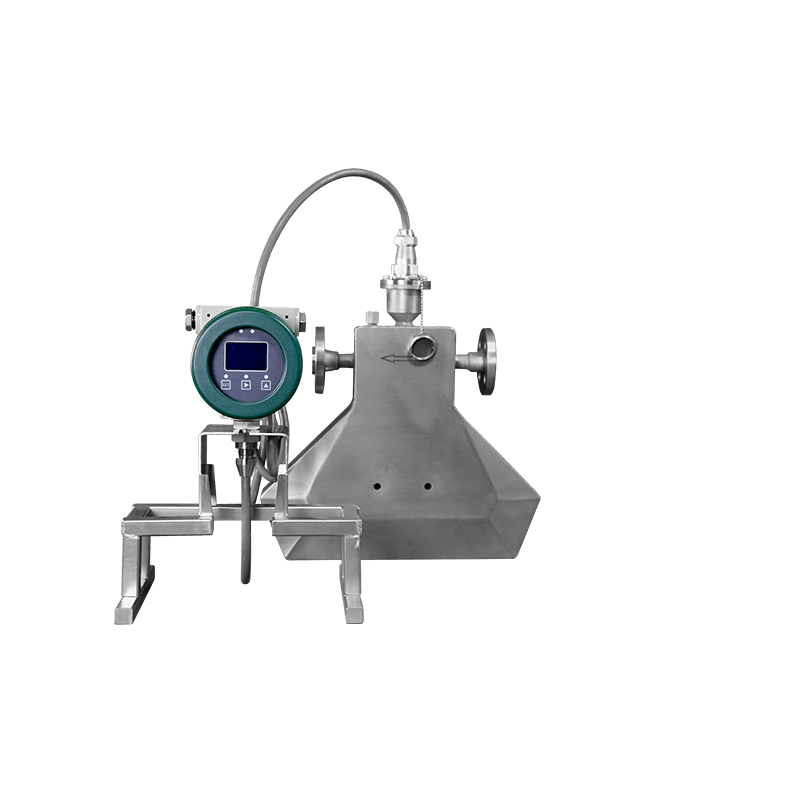
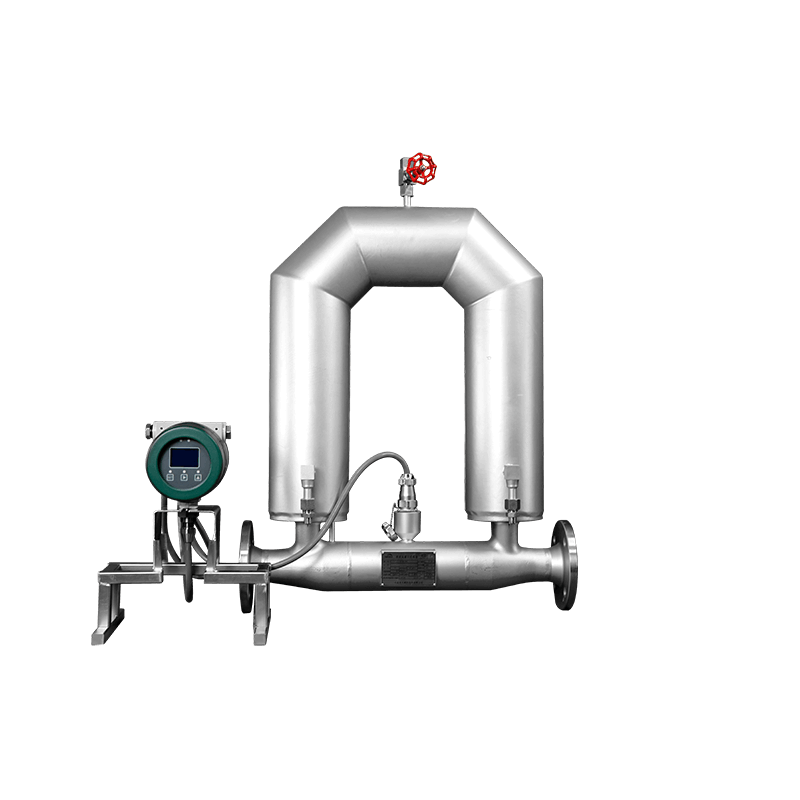
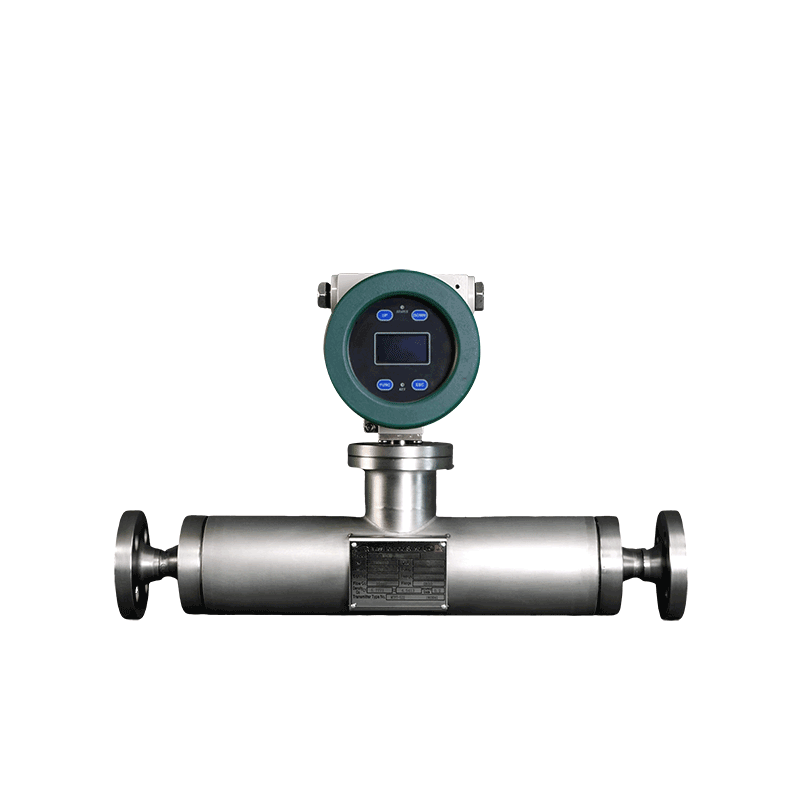
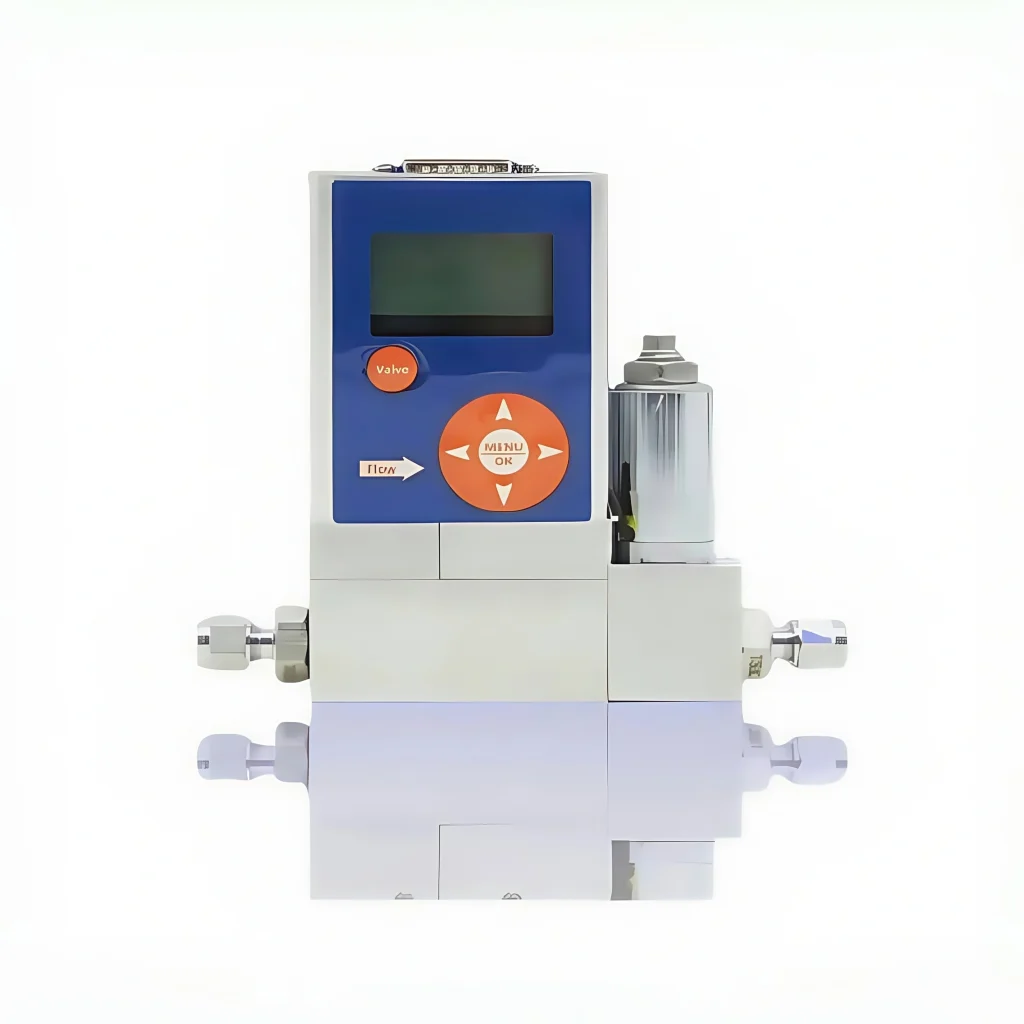
A Coriolis mass flow meter (commonly referred to as a Coriolis flow meter, or CMF) is a high-precision instrument that utilises the Coriolis effect to directly measure fluid mass flow.
It can get multiple parameters at the same time, like mass flow rate, volumetric flow rate, density and temperature, and it’s not affected by changes in physical properties like temperature, pressure and viscosity. It’s used a lot in petroleum, chemicals, food and pharmaceuticals.
Working Principle
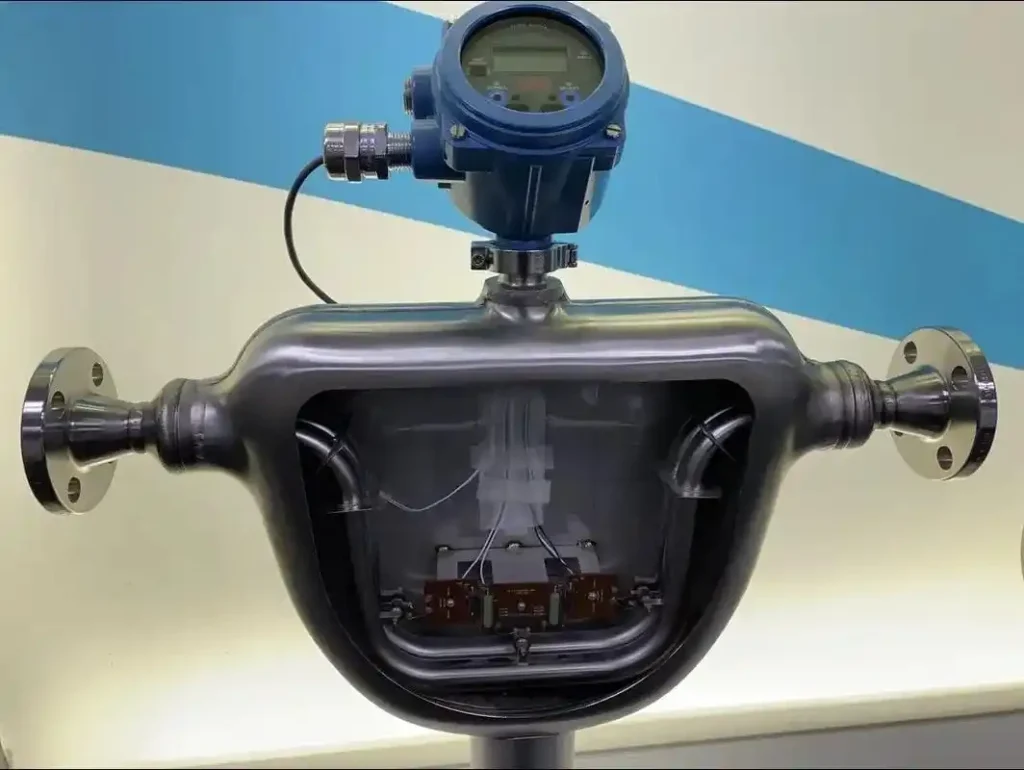
Its core working principle is based on the Coriolis force: a moving object in a rotating reference frame experiences an inertial force perpendicular to the direction of motion. The flowmeter uses electromagnetic drive to cause the measuring tube (commonly U-shaped, straight, or Ω-shaped) to vibrate slightly at its natural frequency, simulating the angular velocity of a rotating reference frame.
In the absence of fluid, the vibrations at the inlet and outlet of the measuring tube are synchronised and in phase. When fluid flows through the vibrating tube, the fluid particles generate a Coriolis force due to inertia, causing the vibrations at the inlet to lag and those at the outlet to lead, thereby creating a phase difference between the two ends that is proportional to the mass flow rate.
The instrument uses electromagnetic sensors at both ends to precisely detect the phase difference and vibration frequency; the transmitter processes the signal and directly outputs the mass flow rate. Furthermore, as the natural frequency of the measuring tube varies with fluid density, this can be used to calculate density; combined with a temperature sensor, this enables parameter compensation and multi-parameter measurement.
What is a Thermal Mass Flow Meter?
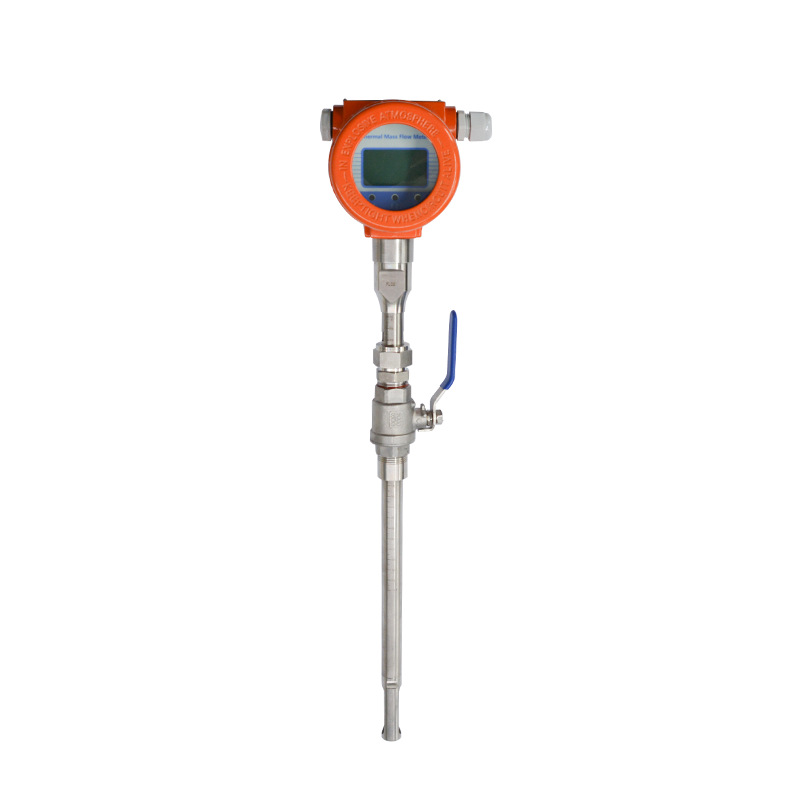
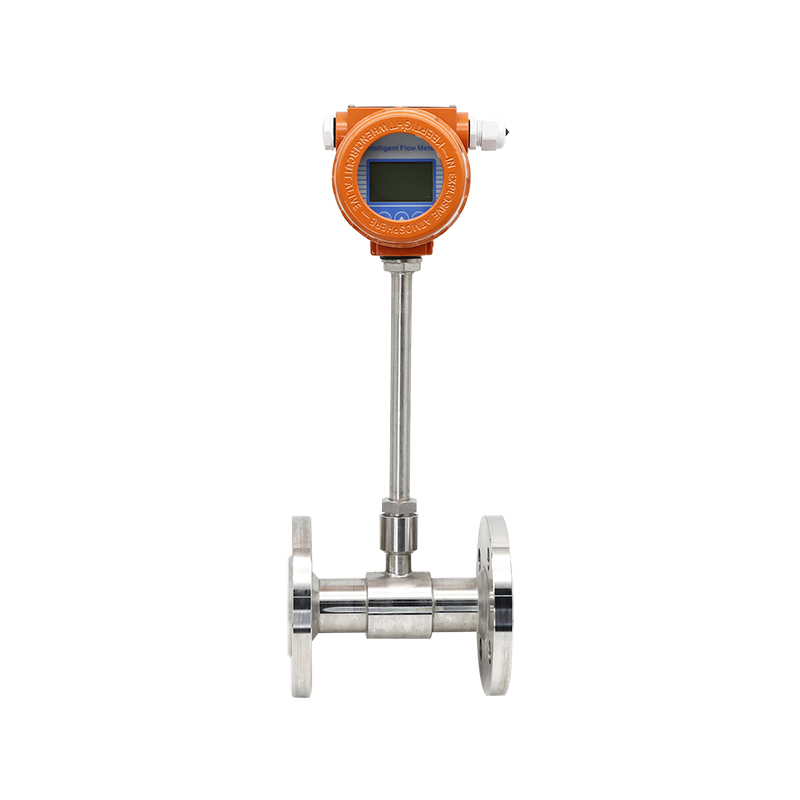
A thermal mass flow meter is a direct-reading mass flow instrument designed to measure gaseous media. It works out the flow rate based on the thermal conductivity of the fluid, so you don’t need any extra temperature or pressure conversion or compensation.
With a simple design, low pressure drop and a wide turndown ratio, it is suitable for the online measurement of various dry, clean gases such as compressed air, natural gas, nitrogen and oxygen, and is widely used in the metallurgy, environmental protection, energy and chemical industries.
Principle of Operation
Thermal mass flow meters operate on the principle of thermal diffusion. The instrument contains two sets of temperature probes: a measuring probe and a reference probe. The reference probe monitors the base temperature of the medium within the pipeline in real time to maintain a constant temperature, whilst the heating probe continuously provides constant-temperature heating to create a stable temperature difference between the two probes.
As the gas flows slowly over the probe surfaces, the gas stream carries away heat from the heating probe. The faster the gas moves and the more mass there is, the more heat is carried away each second. To keep a steady temperature difference between the two probes, the heating module has to replenish heat in real time.
If you collect the right data, like how much power is being used and how much heat is being produced, and then use that to work out the gas flow rate, that’s great. This measurement method is based directly on molecular mass heat exchange and is unaffected by pressure or temperature fluctuations, enabling precise and stable measurement of gas mass flow.
Key Differences
Accuracy and Repeatability
Coriolis mass flow meters offer excellent overall measurement performance, with measurement accuracy typically ranging from ±0.1% to ±0.2%. They demonstrate stable repeatability and minimal variation in error.
Based on the principle of direct mass measurement, they are unaffected by changes in medium temperature, pressure, viscosity or density, ensuring strong long-term measurement stability. They fully meet the high-precision measurement requirements of industrial trade settlement and precision batching.
Thermal mass flow meters are pretty accurate, usually between ±1% and ±2.5%, which is good enough for most routine monitoring jobs.
But because these instruments work based on the thermal conductivity of gases, they can be affected by changes in gas composition, humidity in the air, and the presence of impurities. This can lead to measurement errors when the conditions change, so they’re better suited for non-metrological process monitoring applications.
Turndown Ratio
Coriolis flowmeters usually have a turndown ratio of 1:50 to 1:200, which means they can be used for a wide range of flows. They can handle most of the common flow fluctuations you come across in industrial settings and perform well within the medium to high flow range.
Even when faced with short-term fluctuations in flow, measurement data does not exhibit significant deviation, making them suitable for production pipelines with substantial load fluctuations.
Thermal mass flowmeters feature an exceptionally wide turndown ratio, ranging from 1:100 to 1:1000, with their core advantage lying in the measurement of low flow rates and minute volumes.
They’re great for special applications like trace gases, low-flow gas make-up, and trace purge gases, where they’re way more sensitive than Coriolis flowmeters. That makes them the go-to for monitoring low-flow gases.
Compatible Media
Coriolis flowmeters offer exceptional media compatibility, covering liquids, gases and high-viscosity fluids. They can also reliably measure slurries containing fine particles, emulsions and two-phase gas-liquid mixtures.
Whether dealing with corrosive chemical media, oils, slurries or other complex media, they perform accurately, making them suitable for a wide range of industrial fluid applications.
Thermal mass flow meters have significant limitations regarding the media they can handle. They are primarily suited to dry, clean, single-component gases, such as nitrogen, compressed air, hydrogen, natural gas and inert gases.
They cannot measure liquid media of any kind; if the medium contains condensate, oil contamination, dust impurities or gases with unstable composition, this will directly damage the sensing probe, severely affecting measurement accuracy and the service life of the equipment.
Pressure Drop
Due to their inherent piping structure, traditional Coriolis flowmeters with a curved pipe configuration incur moderate pressure losses. Under high-flow, high-viscosity medium transport conditions, the pressure drop increases further, placing a certain load on downstream low-pressure piping networks.
Although straight-tube Coriolis flowmeters have undergone structural optimisation, they still exhibit some inherent pressure loss.
Thermal mass flowmeters exhibit extremely low overall pressure drop. Their insertion-type structure and straight-through pipeline design result in virtually no pressure loss in the pipeline.
They are particularly suitable for low-pressure gas supply systems, negative-pressure pipelines, and large-diameter gas transmission scenarios with strict restrictions on energy consumption and pressure loss, as they do not increase the operational load on the system.
Installation and Maintenance
Coriolis flowmeters have fairly strict installation requirements. The equipment is really sensitive to external mechanical vibrations and pipeline stresses, so when you’re installing it, you’ve got to make sure it’s away from things like pump bodies and motors that could cause vibrations. Also, make sure there’s enough space for the installation, and make sure you’ve got the orientation right.
The equipment doesn’t have any internal mechanical moving parts, so it rarely breaks down and doesn’t need much regular maintenance. When it’s used over a long period, only regular zero-point calibration is needed. But when you’re dealing with media that contains impurities, you’ve got to check the wear and tear on the inside pipeline walls regularly.
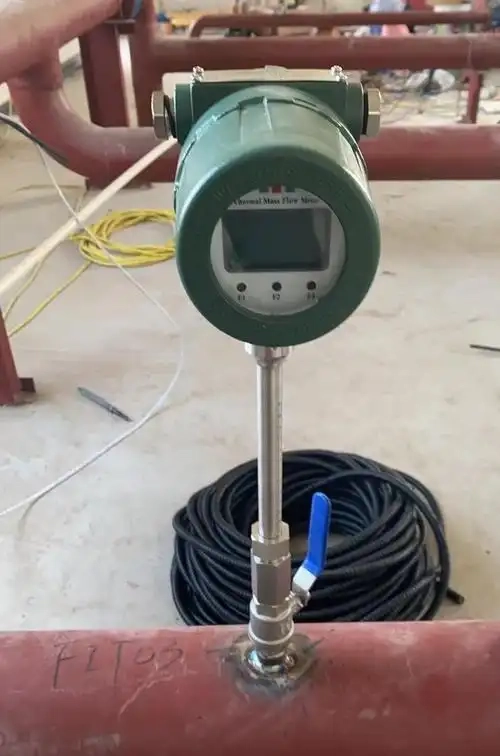
Thermal mass flow meters are easy to install. With insertion-type models, you can install or retrofit online without interrupting gas flow or disconnecting the pipeline, so you don’t need to make extensive pipeline modifications. All you need to do is make sure the probe is lined up with the direction the fluid is flowing in and choose a part of the pipeline where the flow speed is all right.
Routine maintenance is straightforward, primarily involving the periodic cleaning of dust, oil and grime from the probe surface; however, if the composition of the gas at the site fluctuates frequently, timely recalibration is required to ensure measurement accuracy.
Total Cost
The initial purchase cost of Coriolis flowmeters is relatively high; whilst small-diameter models offer reasonable value for money, equipment costs rise significantly as the diameter increases.
There are no substantial maintenance costs in the long term, requiring only routine calibration and servicing; overall operational and maintenance costs are moderate, and the long-term value is higher when used in precision measurement applications.
Thermal mass flow meters are usually pretty affordable, with a simple design and well-established manufacturing processes. Insertion-type models are especially good value for large-diameter gas measurement applications.
The equipment is highly durable, with straightforward maintenance procedures and low-cost spare parts, making both the initial investment and ongoing operating costs more economical. They are therefore well-suited for large-scale, routine gas monitoring projects.
Selection Recommendations
Measurement Accuracy and Metrological Class
Where high-precision applications are required on-site—such as trade settlement, raw material feeding, finished product dosing, or precise formulation blending—Coriolis mass flowmeters should be the preferred choice.
They measure mass flow straight away, are unaffected by changes in parameters like temperature and pressure, and are really accurate and long-lasting, which makes them perfect for precise measurement and compliant settlement.
If the application is limited to non-metering scenarios such as process monitoring, gas consumption statistics, or pipeline flow monitoring, where high accuracy is not required, a thermal mass flow meter is sufficient. This meets standard monitoring requirements and offers better value for money.
Medium Type
For liquids, high-viscosity fluids, oils, slurries, corrosive liquids, and gas-liquid two-phase mixtures, Coriolis flowmeters should be selected across the board. They offer strong medium compatibility and can adapt to the vast majority of complex liquid operating conditions.
For dry, clean, single-phase gases (such as nitrogen, compressed air, hydrogen, etc.), thermal mass flowmeters should be the preferred choice. It is specifically designed for gas measurement and must not be used for liquids, mixtures containing condensate, impurities, or gases with unstable composition.
Flow Rate and Range
Where operating conditions involve predominantly medium to high flow rates with significant fluctuations, and stable coverage of the standard load range is required, Coriolis flowmeters should be selected. They offer a moderate turndown ratio and provide stable, reliable measurements during fluctuations.
When we’re dealing with low flow rates, low flow velocities, or trace amounts of purge gas, or in large-diameter gas pipelines with low flow velocities, thermal mass flow meters are the go-to. They have an extremely wide turndown ratio and are super sensitive to low flow rates, making them the best choice for measuring small gas flows.
Pipeline Pressure and Pressure Drop Requirements
For low-pressure or negative-pressure systems, or gas pipelines subject to strict energy consumption controls where significant pressure drops are not permitted, thermal mass flow meters are recommended. Their simple structure and extremely low pressure loss do not increase the pipeline’s transport load.
Where there are no strict restrictions on pressure drop and the medium pressure is sufficient, Coriolis flowmeters may be selected. Their curved-tube design results in moderate pressure drop; pressure loss increases slightly under high-viscosity, high-flow conditions, making them suitable for high-pressure pipelines.
Installation Conditions and Site Environment
Where on-site piping is subject to significant vibration, space is limited, and retrofitting is challenging, Coriolis flowmeters should be selected with caution, as they are sensitive to vibration and pipe stress; they are best suited to new construction or standard retrofit projects with stable installation environments and well-organised piping.
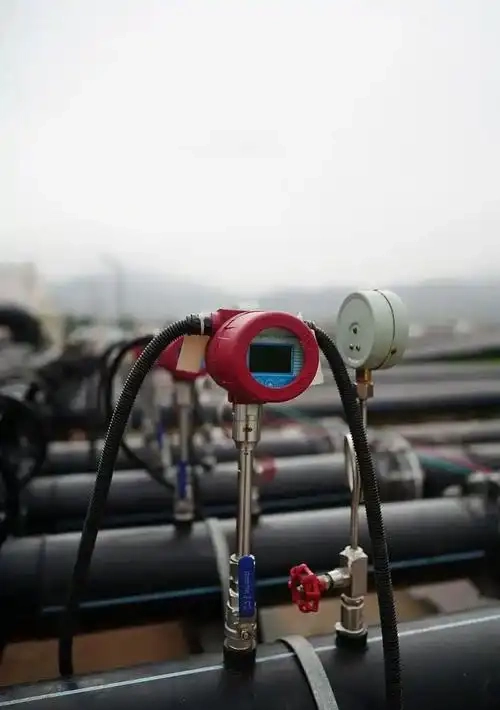
For the retrofitting of ageing pipelines, large-diameter installations, and scenarios requiring online installation without interrupting flow, thermal insertion-type mass flowmeters are the preferred choice. They offer flexible installation, minimal construction work, and simple maintenance, requiring only routine cleaning of the probe.
There is no absolute superiority between Coriolis mass flow meters and thermal mass flow meters; the key lies in matching the specific operational requirements. As a solutions provider specialising in industrial metering, Sion-Inst not only supplies reliable Coriolis and thermal mass flow meters but has also established a comprehensive supply system for all types of metering equipment.
This encompasses various flow measurement instruments, including vortex, turbine, electromagnetic and ultrasonic meters, whilst also supplying complementary products such as level gauges and temperature sensors. We provide comprehensive coverage for metering applications across multiple industries, including petroleum, chemicals, metallurgy, environmental protection, pharmaceuticals and food.