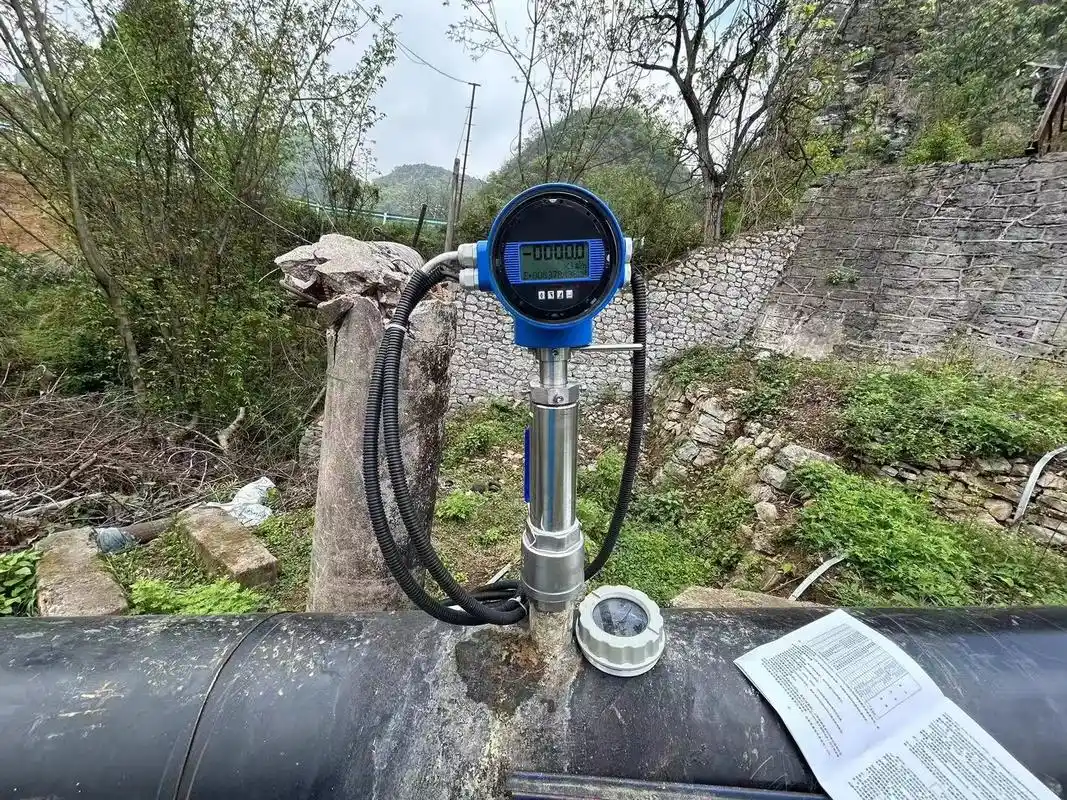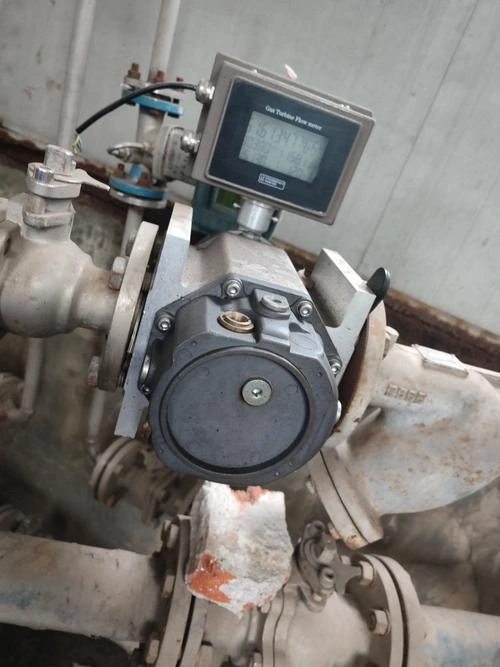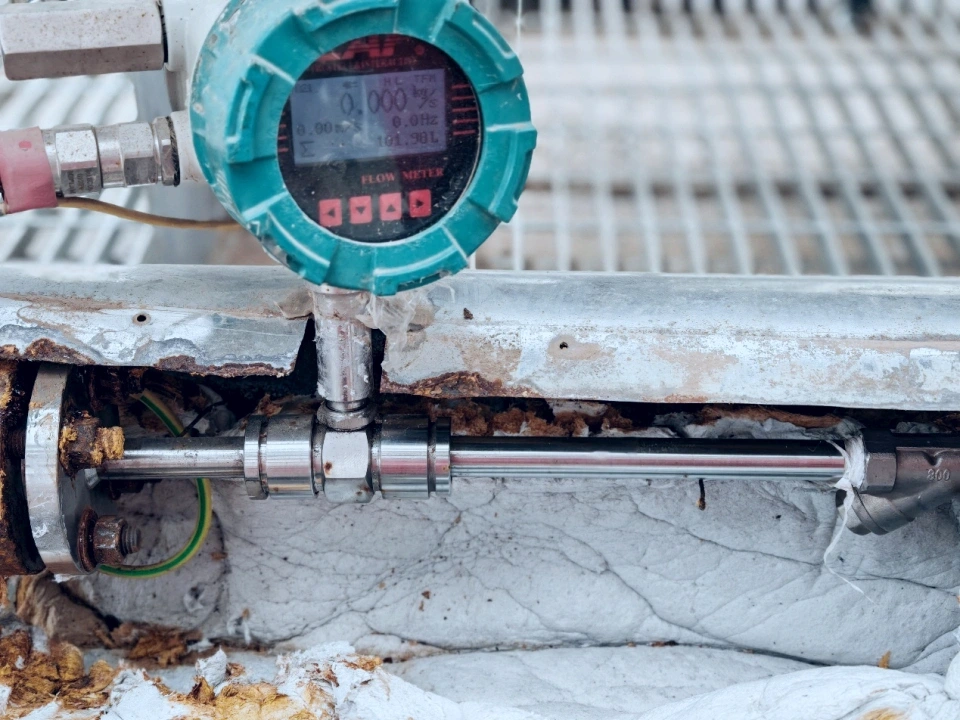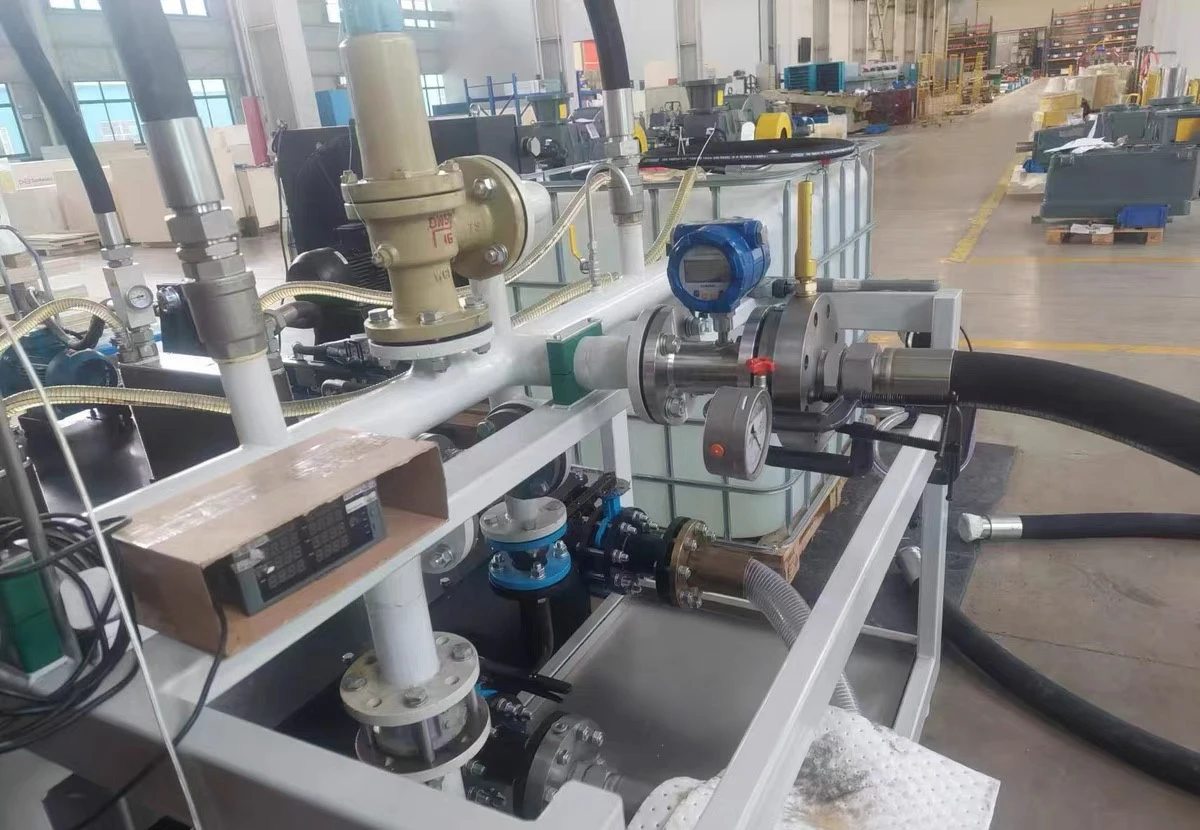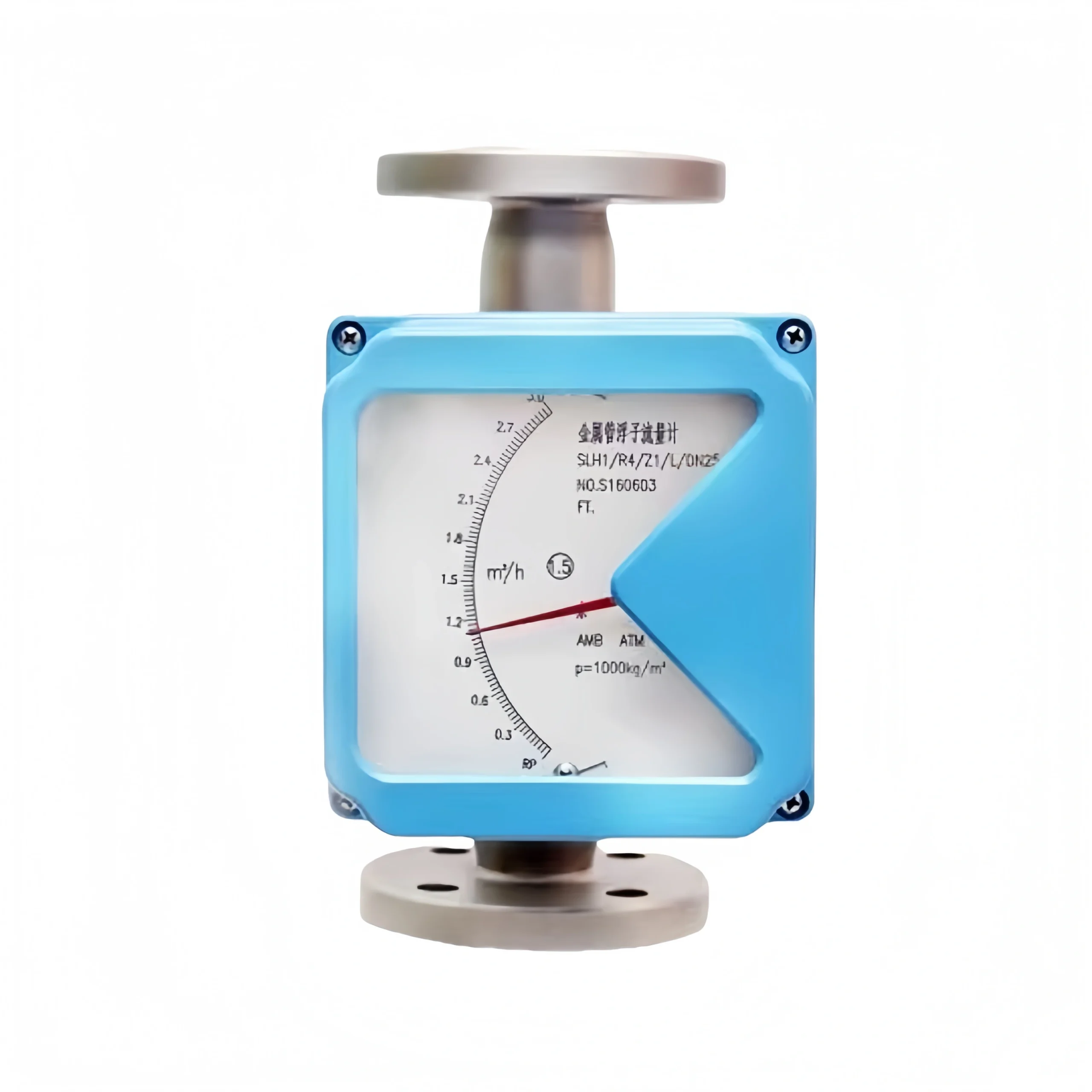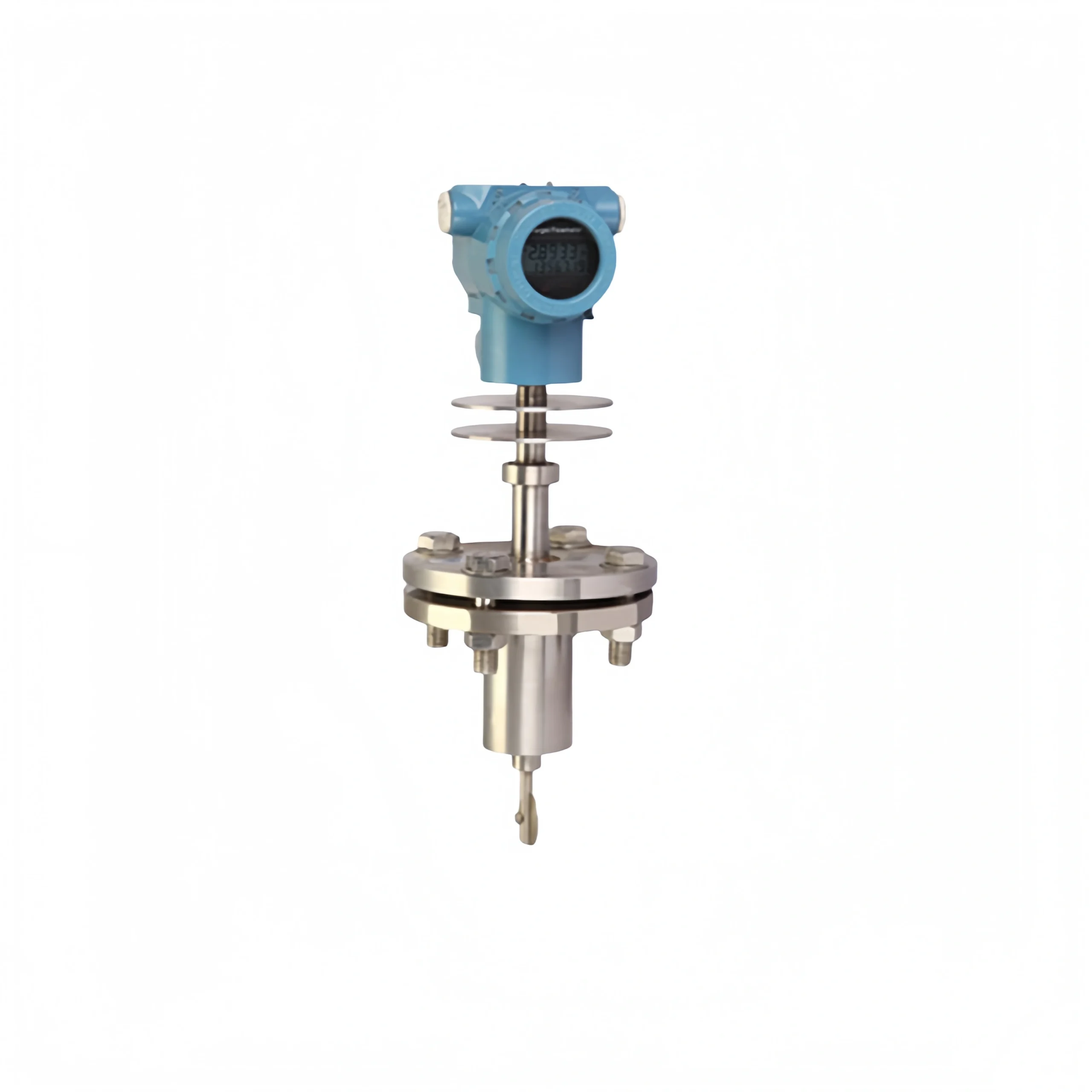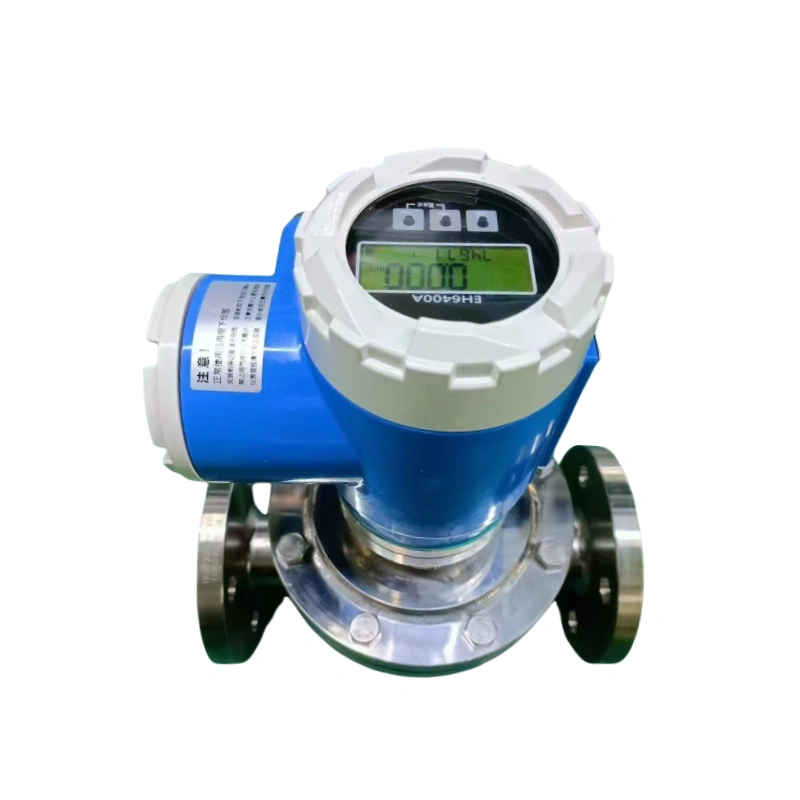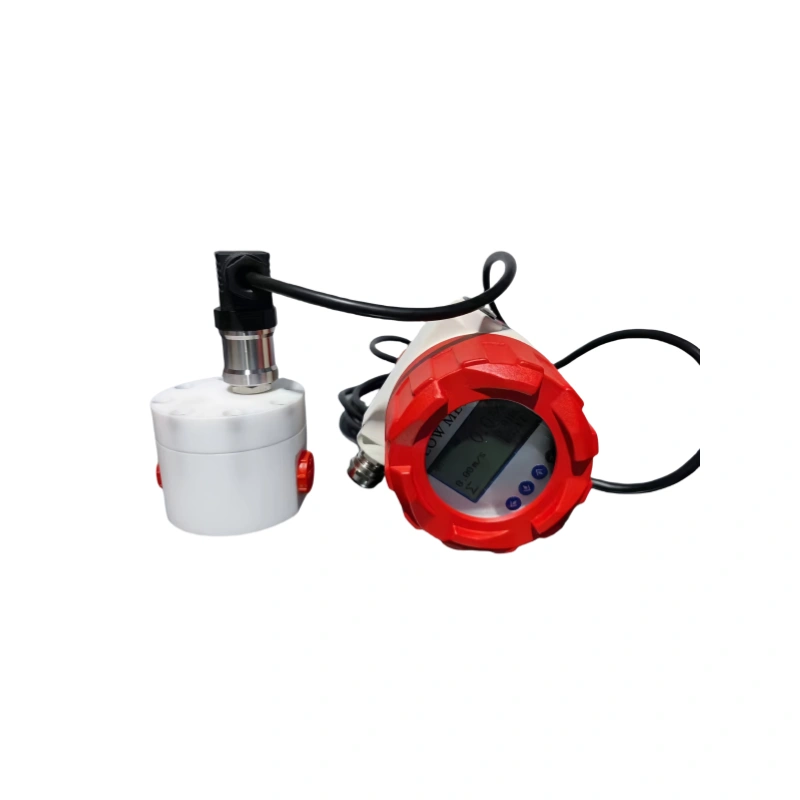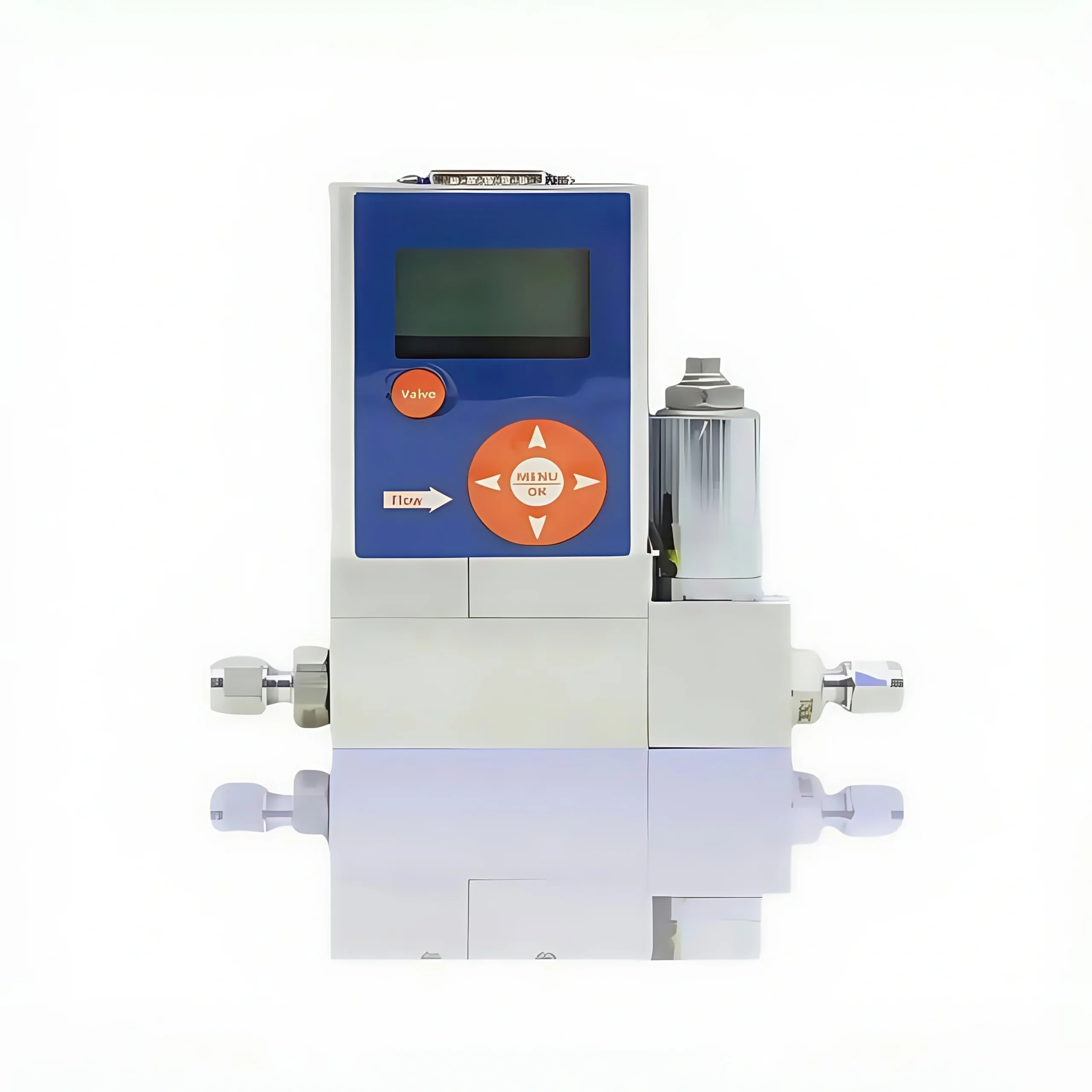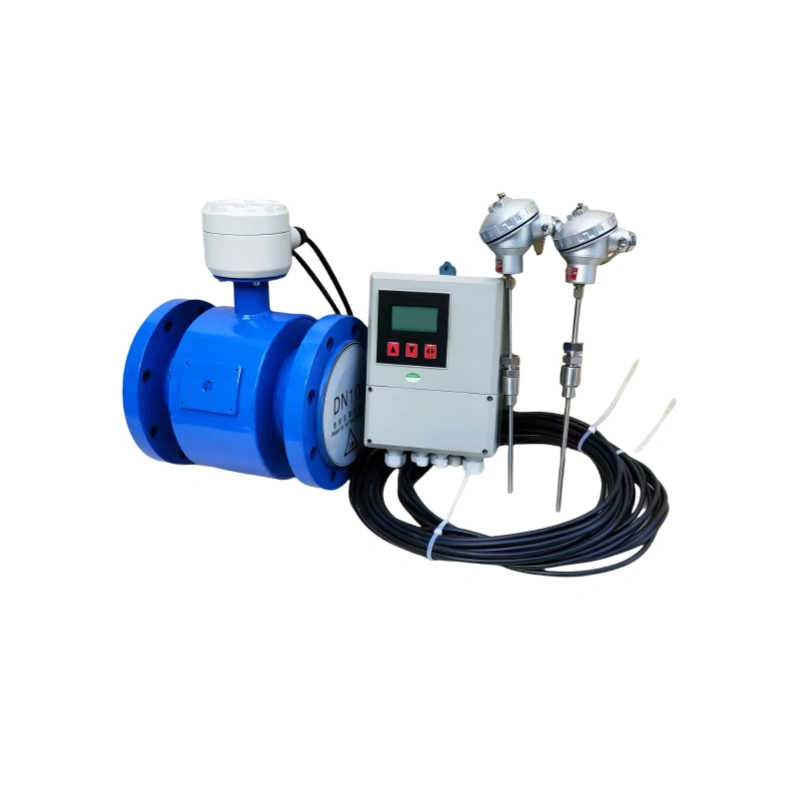
As a vital heat transfer medium in industrial production, thermal oil is widely used across various sectors, including chemical engineering, metallurgy and food processing. The accurate measurement of its flow parameters is a critical factor in ensuring the stability of production processes and improving energy efficiency. They are ideal for handling the high temperatures and viscosity of heat transfer oil. They play a crucial role in ensuring that production processes run smoothly and efficiently.
What is Heating Oil?
Heating oil, also known as an organic heat transfer fluid, is a specialised high-temperature oil used in industry for the indirect transfer of heat. The best thing about it is that it can transfer heat at temperatures over 200°C under normal pressure, which is why it’s used a lot in industries like chemicals, textiles and food processing where you need to be able to control the temperature really precisely.
Based on composition, they can be divided into two categories: mineral-based (refined from petroleum, low-cost and widely applicable) and synthetic (artificially synthesised, high-temperature resistant, capable of withstanding operating conditions above 400°C).
Properties of Heating Oil
The properties of heating oil directly affect measurement accuracy. Taking operating conditions into account, the main characteristics are as follows:
They also have high operating temperatures, which can vary a lot. Usually, they’re somewhere between 200 and 300°C, but synthetic types can go as high as 350 to 400°C. Temperature changes can alter key physical properties like density and viscosity, which can affect how accurate the measurement is.
Viscosity is temperature-sensitive: at low temperatures, viscosity is high and fluidity is poor; at high temperatures, viscosity decreases and fluidity increases, directly affecting the operation of flow meters.
Prolonged exposure to high temperatures promotes oxidation and coking, generating impurities such as gummy deposits. Furthermore, mechanical impurities and air bubbles may enter the system, interfering with signal acquisition.
Under atmospheric pressure, the medium exists primarily in the liquid phase, with physical properties such as density fluctuating linearly with temperature and pressure. It is non-corrosive, but coking deposits tend to adhere to instrumentation.
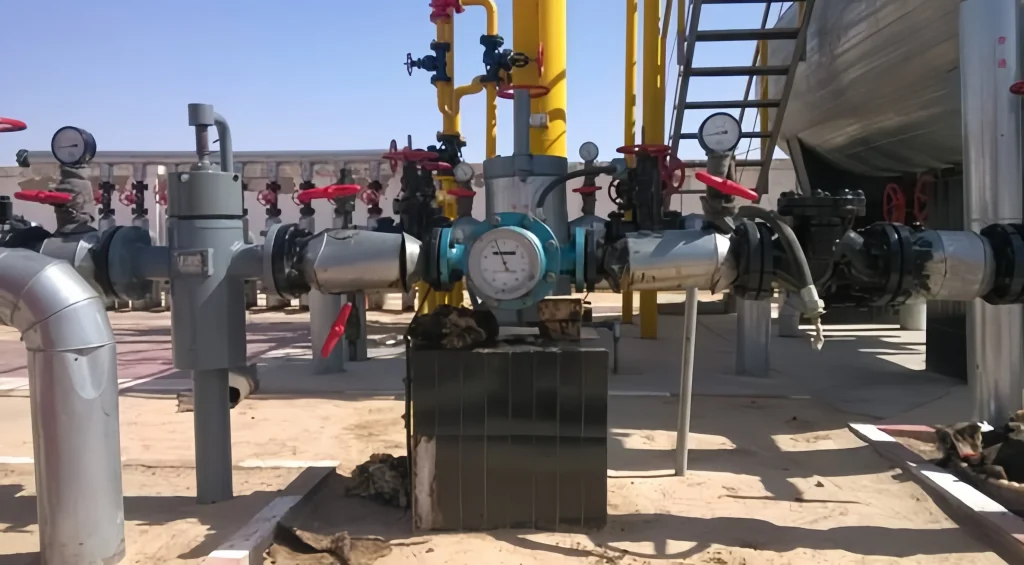
Challenges in Measuring Heating Oil
Due to the characteristics of heating oil and on-site operating conditions, flowmeter measurement presents the following challenges:
Heating oil usually operates at high temperatures, which often means that conventional flowmeters can’t handle it. This can easily lead to temperature drift in sensors, ageing and failure of seals, and damage to internal electronic components, which can directly affect the stable operation and service life of the instrument.
The physical properties of heating oil, such as density and viscosity, can vary significantly with temperature and pressure. Without a precise temperature and pressure compensation scheme, large measurement errors are likely to occur, making it difficult to meet the high-precision measurement requirements of production processes.
During high-temperature operation, heating oil is prone to forming coke deposits. Combined with impurities in the medium, these tend to adhere to the flow meter’s sensing components and the inner walls of the flow path, causing signal distortion and jamming of moving parts, which leads to measurement inaccuracies or even instrument failure.
When the system is starting up or shutting down, or when there’s a change in heat exchange conditions, there’s a good chance that a two-phase mixture of gas and liquid will form in the piping. This can lead to sudden jumps in flow readings and generate false flow data, which can really mess up the stability and reliability of the measurement.
Heating oil is also pretty unfriendly to conventional flowmeters like electromagnetic and vortex flowmeters because of its high temperature, high viscosity and susceptibility to coking. This means you can’t measure things properly, and it also makes it harder to choose the right models and make sure everything’s running smoothly on-site.
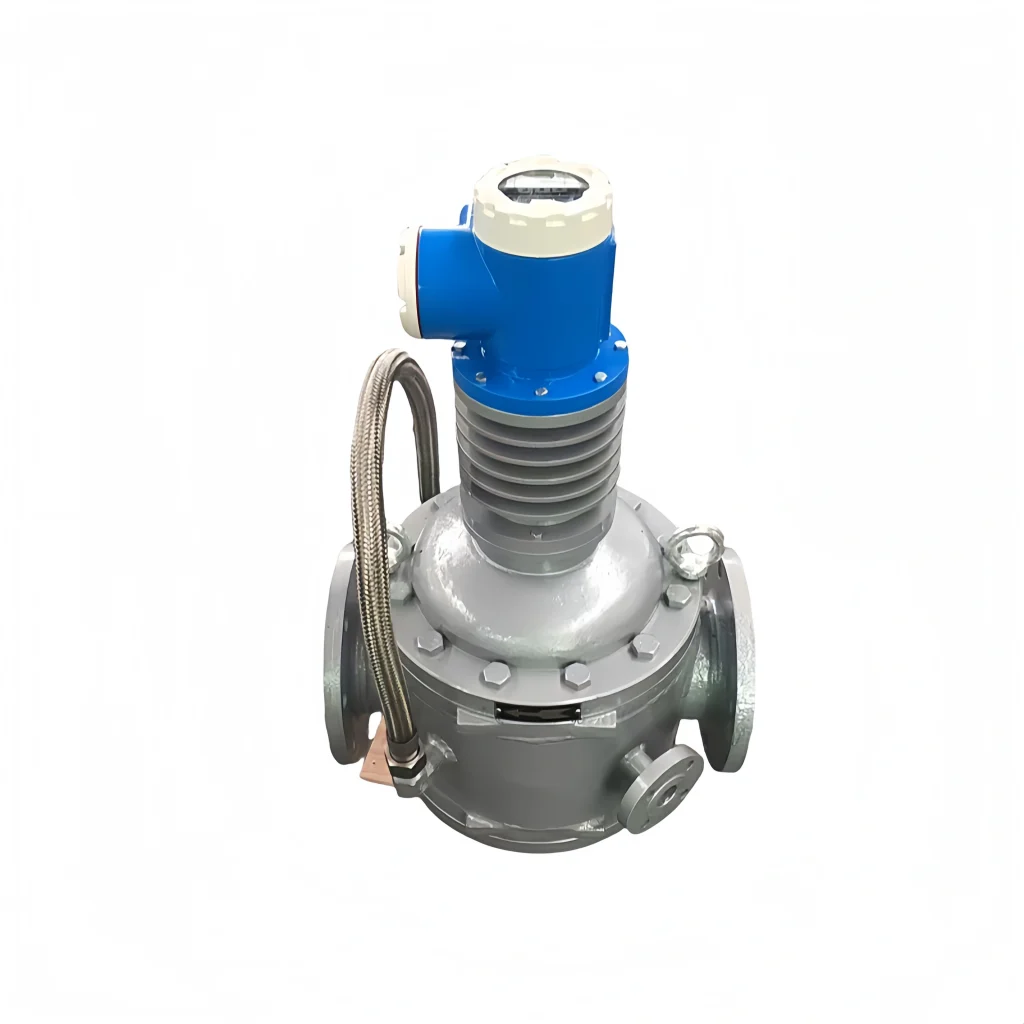
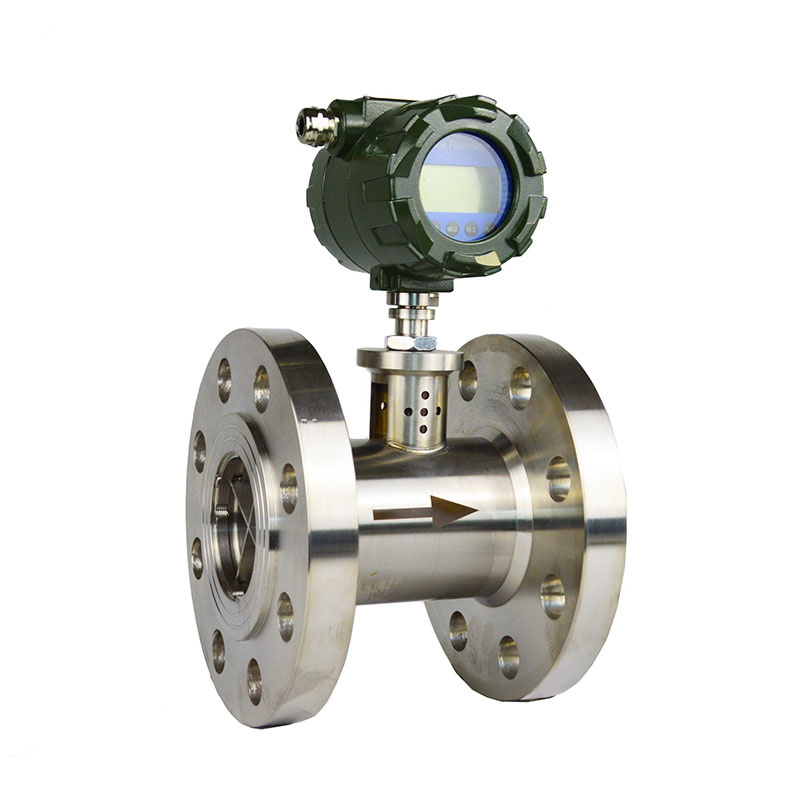
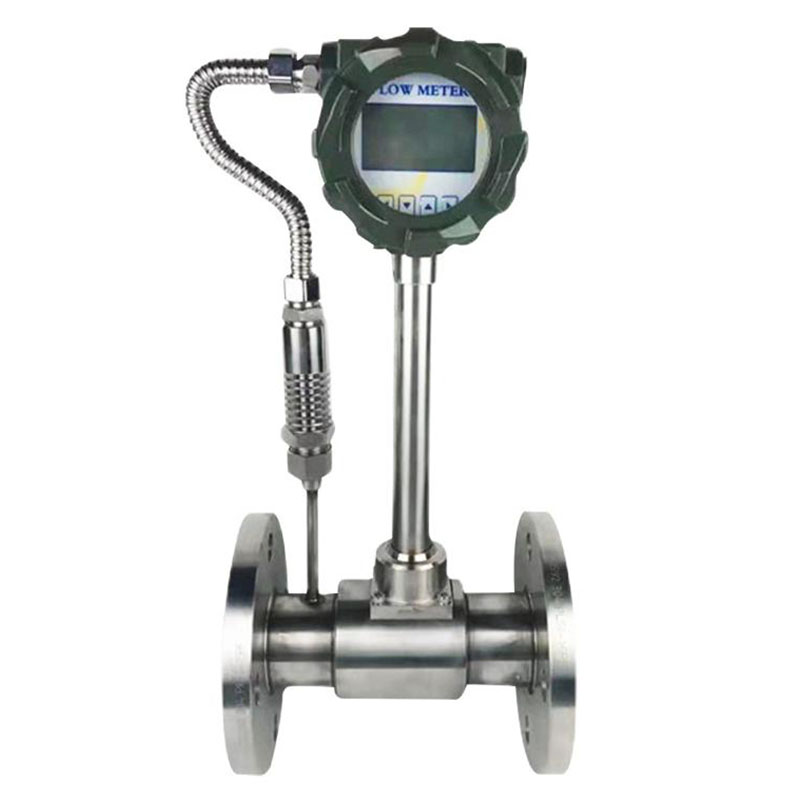
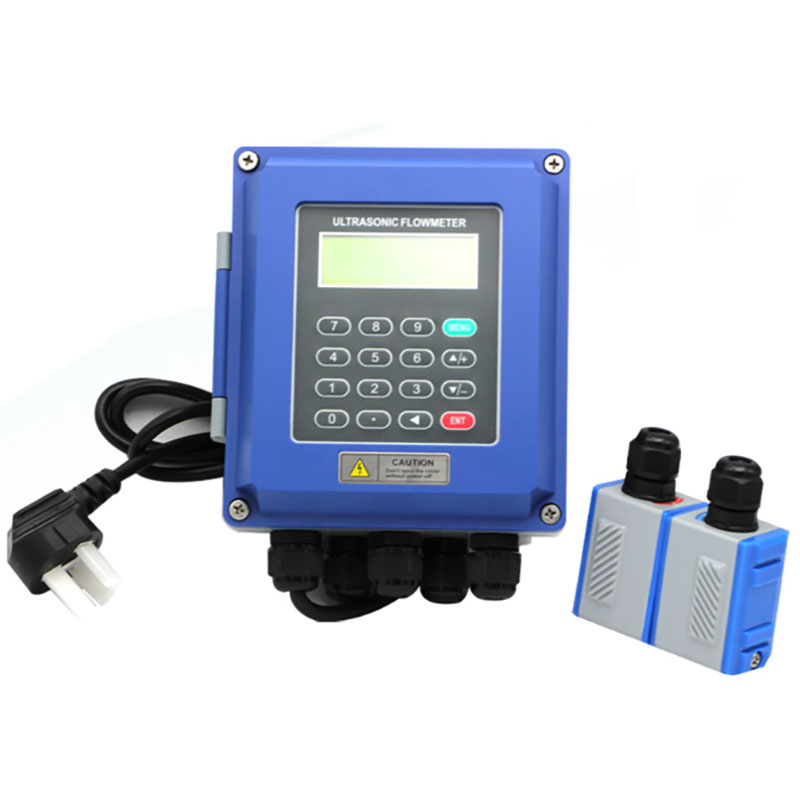
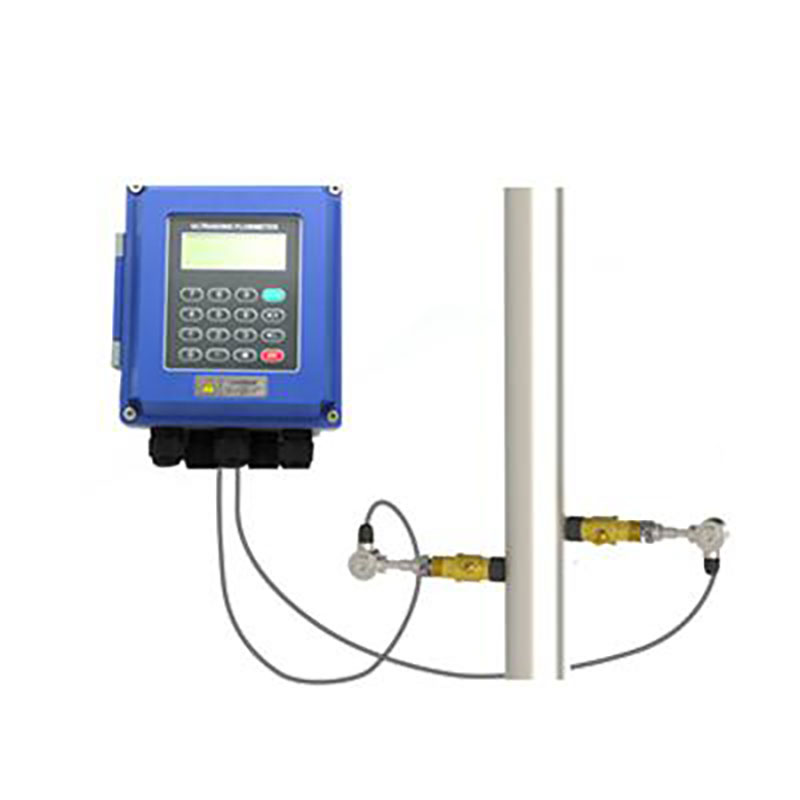
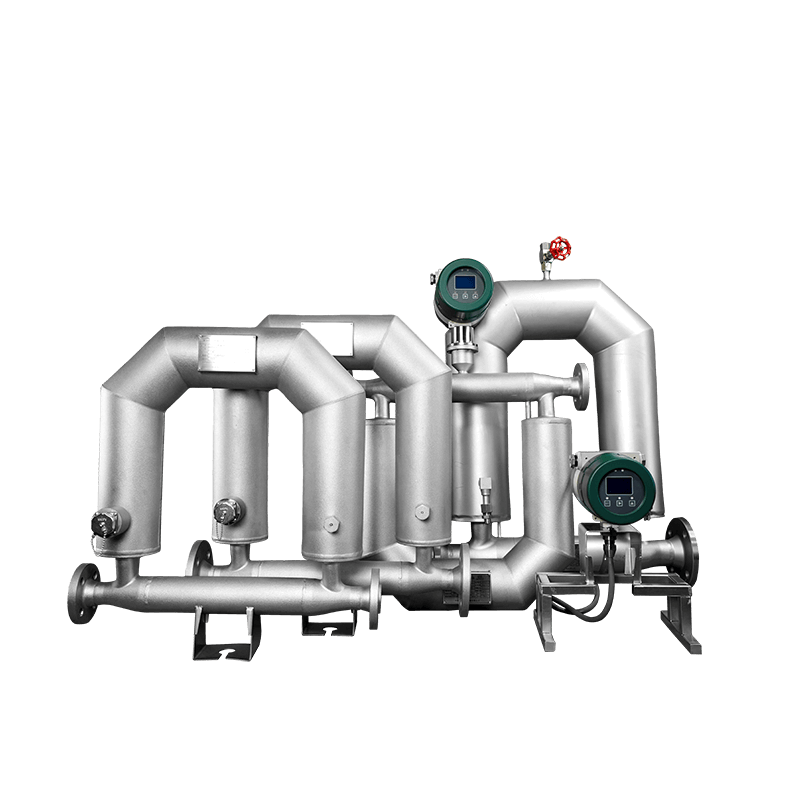
Flow meters suitable for measuring heating oil
Positive displacement flow meters
Principle of operation
Positive displacement flow meters use a precision measuring chamber to split the fluid into individual units of fixed volume, all the time. The pressure of the fluid causes the rotor or piston to move, discharging a set amount of fluid with each cycle. The total flow rate of the fluid can be determined by counting the number of cycles.
Advantages
`1. High measurement accuracy and excellent stability; unaffected by minor fluctuations in heating oil density or pressure, enabling precise measurement of volumetric flow rate. Particularly suitable for heating oil circulation systems requiring high measurement accuracy.
2. Strong adaptability to high-viscosity media. Even though the viscosity of heating oil changes a lot at different temperatures, positive displacement flow meters still work fine without getting too unreliable because of the oil’s thickness.
3. Low installation requirements; no need for long upstream or downstream straight pipe sections, and no reliance on ideal flow conditions. It can be installed directly even in compact heating oil piping layouts.
4. Thanks to its wide turndown ratio, it can handle both low-flow precision measurement and high-flow stable delivery in heating oil systems, making it extremely versatile.
5. It can also output a volumetric flow signal directly. The measurement principle is simple and reliable, and the data is easy to understand, making it easy to account for energy consumption and control the flow in heating oil systems.
Turbine Flow Meter
Working Principle
A turbine flow meter works by using the impact of a fluid on an impeller to make it rotate. The faster the impeller spins, the faster the water is flowing. A sensor detects the impeller’s rotational frequency and converts it into an electrical signal. This allows the instantaneous and cumulative flow rates of the fluid to be calculated.
Advantages
1. It responds quickly and is highly sensitive, so it can accurately measure the rate of heating oil flow. This makes it perfect for heating oil circulation systems that need to be monitored and regulated in real-time.
2. It’s got low pressure loss, and doesn’t really affect the circulation resistance of heating oil pipelines. It doesn’t increase system pump power consumption significantly, so it’s more energy-efficient.
3. High measurement accuracy and good repeatability; under conditions of stable heating oil flow and clean medium, it can maintain stable and reliable measurement performance over the long term.
4. It’s small and compact, so it’s easy to install, and it’s got clear and easy-to-use signal output, which makes it easy to integrate into control systems to keep an eye on heating oil flow automatically.
5. Wide measurement range, suitable for both low-flow measurement and stable high-flow delivery of heating oil, making it applicable to a broad range of operating conditions.
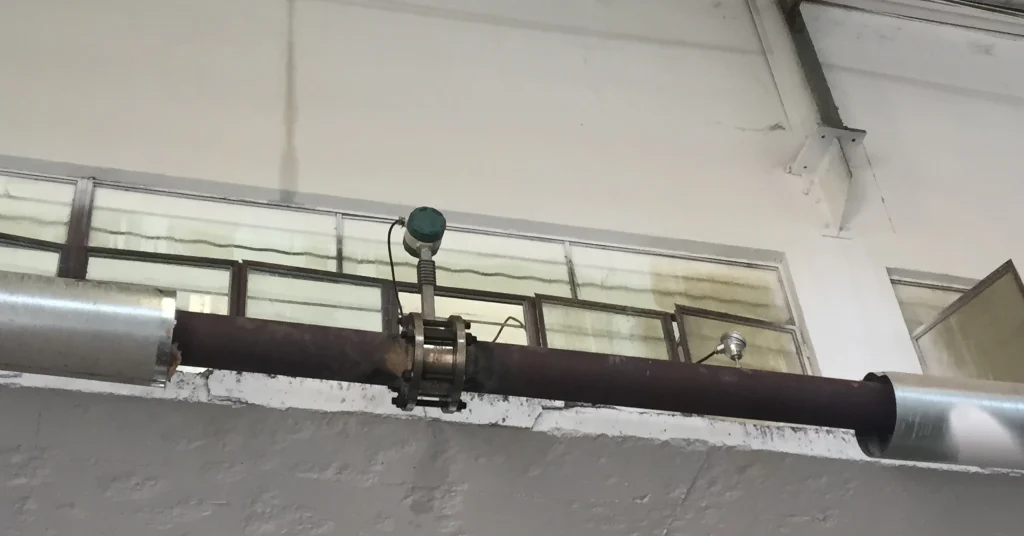
Vortex Flow Meter
Working Principle
A vortex flow meter uses the phenomenon whereby a fluid generates a regular series of vortices in its wake when it encounters an obstruction during flow. The number of these swirling motions in a second is directly related to the speed of the flowing liquid. A sensor can detect and calculate the vortex frequency. This then allows the flow rate to be determined.
Advantages
1. Simple structure with no moving parts; less prone to jamming by impurities in the heating oil, ensuring high operational reliability and a long service life.
2. Low pressure loss; minimal impact on the resistance of the heating oil circulation system, and no significant increase in pump load.
3. Good measurement accuracy and stability; suitable for conditions involving steady-flow heating oil, meeting daily metering and monitoring requirements.
4. Excellent high-temperature resistance, suitable for high-temperature heating oil circulation conditions, with a wide operating temperature range.
5. Low maintenance requirements and easy installation; no special conditions are required beyond a simple straight pipe run, making it suitable for long-term online monitoring of industrial heating oil pipelines.
Ultrasonic Flow Meter
Principle of Operation
An ultrasonic flow meter works by installing ultrasonic sensors on the outside or inside of the pipe wall. It calculates the fluid velocity by utilising the time difference or frequency difference in the propagation of ultrasonic waves through the fluid flowing in the same direction and in the opposite direction, and then converts this into flow rate based on the cross-sectional area of the pipe.
Advantages
1. It’s non-contact measurement, so there’s no need to worry about the sensors coming into contact with high-temperature heating oil. This means you don’t have to deal with medium corrosion and wear, making sure everything is safe and lasts longer.
2. The measurement process involves no pressure loss and does not increase the resistance of the heating oil circulation system, having virtually no impact on the existing pipeline conditions.
3. Installation is convenient and flexible; commissioning can be completed without cutting the pipe or halting production, making it suitable for continuous heating oil operation.
4. Measurements are not greatly affected by changes in the heating oil’s thickness, density or electrical conductivity. This makes them very adaptable to different temperatures and operating conditions.
5. The device has no moving parts on the inside, so it won’t get blocked or have any faults. It doesn’t need much regular maintenance, which makes it perfect for checking that heating oil is flowing steadily over time.
6. Suitable for heating oil pipelines of various diameters, with a wide measurement range; its advantages are particularly evident in the metering of large-diameter pipelines.
Coriolis Flow Meter
Principle of Operation
The Coriolis mass flow meter utilises the Coriolis effect generated when a fluid flows through a vibrating tube, causing the measuring tube to twist or undergo a phase shift. By detecting this vibrational phase shift, the fluid’s mass flow rate is directly obtained, whilst parameters such as density and temperature can also be measured simultaneously.
Advantages
1. It directly measures the mass flow rate of heat transfer oil, eliminating the need for volume conversion and ensuring high measurement accuracy and reliable data. This facilitates energy consumption accounting.
2. Measurement is unaffected by changes in heating oil temperature, pressure or viscosity, maintaining stability even in high-temperature circulation systems with fluctuating operating conditions.
3. It can measure things like density and temperature at the same time. This lets you check the quality of heating oil as it changes over time. You can also see if the oil has got older or worse.
4. High measurement accuracy and good repeatability make it suitable for scenarios requiring precise control with stringent heating oil metering requirements.
5. No upstream or downstream straight pipe sections are required, ensuring strong installation adaptability; it can operate normally even in heating oil pipelines with limited space.
6. Thanks to its reliable internal structure with no moving parts, it is resistant to blockages and ideal for long-term, stable operation in clean heating oil systems.
Practical Applications of Heating Oil Flow Meters
1. Chemical and petrochemical applications: This is used to measure the flow of heating oil in reactors, distillation units and furnaces so that you can be sure it’s working properly. When you add temperature compensation, it can handle thermal energy accounting, keep process temperatures stable, and provide data for energy consumption statistics and cost allocation.
2. Textile printing, dyeing and leather processing applications: They’re great for setting machines, drying lines and tanning equipment, and they keep an eye on the circulation volume and heat supply of heating oil as it happens. This makes the heating more efficient, uses less energy for each product and makes the product quality more consistent.
3. Food and pharmaceutical applications: This is used in baking tunnel ovens, drying equipment, and sanitary-grade heating systems to meet measurement requirements in clean, high-temperature environments. It allows for the precise control of heat transfer media during production processes, ensuring compliance with regulatory and quality control standards.
4. Building materials and new materials applications: This is used in baking tunnel ovens, drying equipment, and clean, high-temperature heating systems to meet measurement requirements. It lets you control how heat is transferred during production, making sure that the rules and quality standards are being followed.
5. Solar thermal power generation and district heating applications: They are used in solar thermal heating oil circuits and district heating networks. They ensure accurate measurement even when there is a lot of heat and pressure. This is really important for system dispatch and for settling thermal energy trade.
6. System safety and operation & maintenance applications: These meters check for problems, like blockages, pump failures or leaks. They also work with heating oil furnace control systems to regulate the circulation of oil and prevent overheating and coking. This extends the service life of the system.
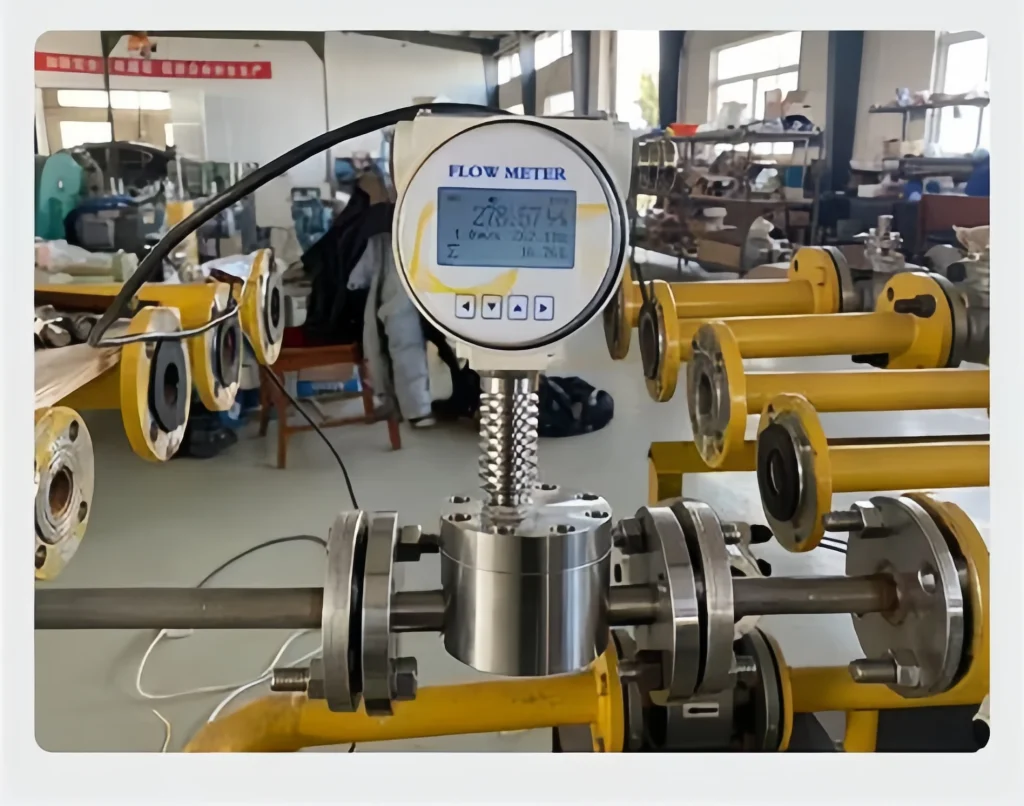
Key Considerations for Selecting Heating Oil Flow Meters
Prioritise selection based on temperature. The typical operating temperature range for heating oil is 200–350°C. As standard flow meters can’t handle high temperatures, it’s best to go for high-temperature models that can withstand temperatures above 350°C for longer, like high-temperature turbine flow meters, high-temperature oval gear flow meters, and Coriolis mass flow meters. This prevents failure of standard electromagnetic or vortex flow meters due to temperature exceeding their limits.
Selection should be based on viscosity and flow velocity. When the heating oil has a certain viscosity and the flow velocity is relatively low, positive-displacement oval gear flowmeters provide more stable measurement; for large-diameter systems with high flow velocities and moderate viscosity, high-temperature turbine flowmeters may be selected; where high accuracy is required, or for mass flow or heat measurement, Coriolis mass flowmeters are the optimal solution.
Taking into account pipe diameter and flow range, small-diameter, low-flow applications should prioritise oval gear or miniature turbine meters; for large-diameter, high-flow heating oil trunk networks, insertion-type turbine or Coriolis flow meters may be selected to ensure that typical operating flow rates fall within the instrument’s optimal measurement range, thereby avoiding measurement inaccuracies at low flow rates.
Consider installation and medium characteristics: as heating oil systems are typically closed-loop circuits operating under pressure, the nominal pressure rating must be matched, and a design resistant to coking and scaling should be selected. Where there are no straight pipe sections or significant vibration, volumetric or mass flow meters with low installation requirements should be prioritised.
Depending on control and metering requirements, pulse-output flowmeters may be selected for process monitoring alone; where heat metering, energy consumption statistics or remote transmission are required, intelligent heat flowmeters with temperature and pressure compensation and support for 4–20 mA or bus output should be chosen.
Balancing maintenance and cost considerations, high-temperature turbine or oval gear flowmeters are the preferred choice for conventional thermal oil circulation systems, as they offer high cost-effectiveness and simple maintenance; for high-precision measurement, trade settlement or complex operating conditions, Coriolis mass flowmeters may be selected, as they offer superior stability and service life.
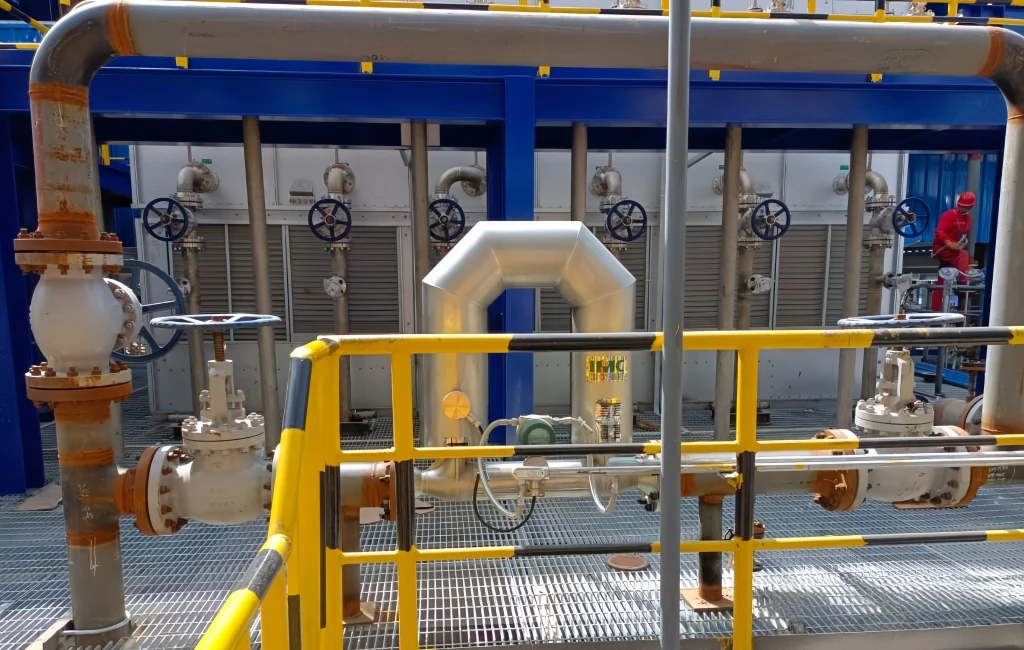
You can also consult with a knowledgeable supplier or engineer to help guide you through the selection process.
In summary, choosing the best oil flow meter for your application requires careful consideration of a variety of factors. Accurate heating oil flow measurement is essential to optimizing efficiency, controlling costs, and ensuring the smooth operation of machinery in industries such as manufacturing, oil and gas, power generation, and transportation.
Sino-Inst manufactures and supplies different types of heating oil flow meters. We provide customized solutions for users in various industries. If you encounter any difficulties, please contact us today to learn more about oil flow meters and find the perfect solution for your specific needs.