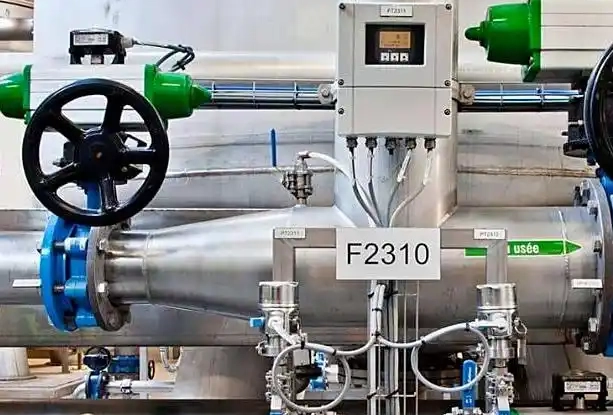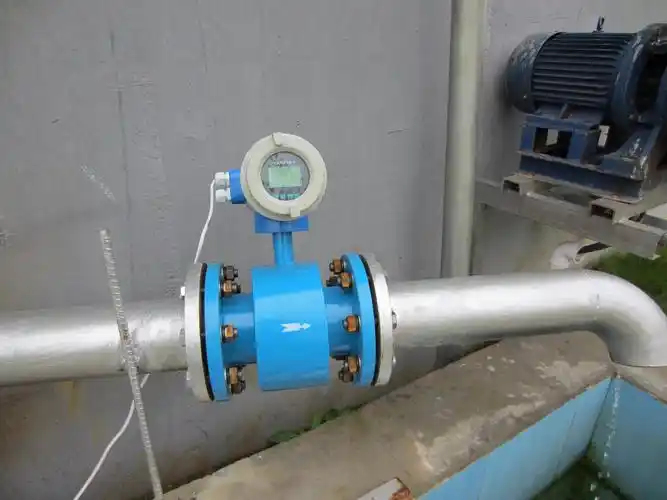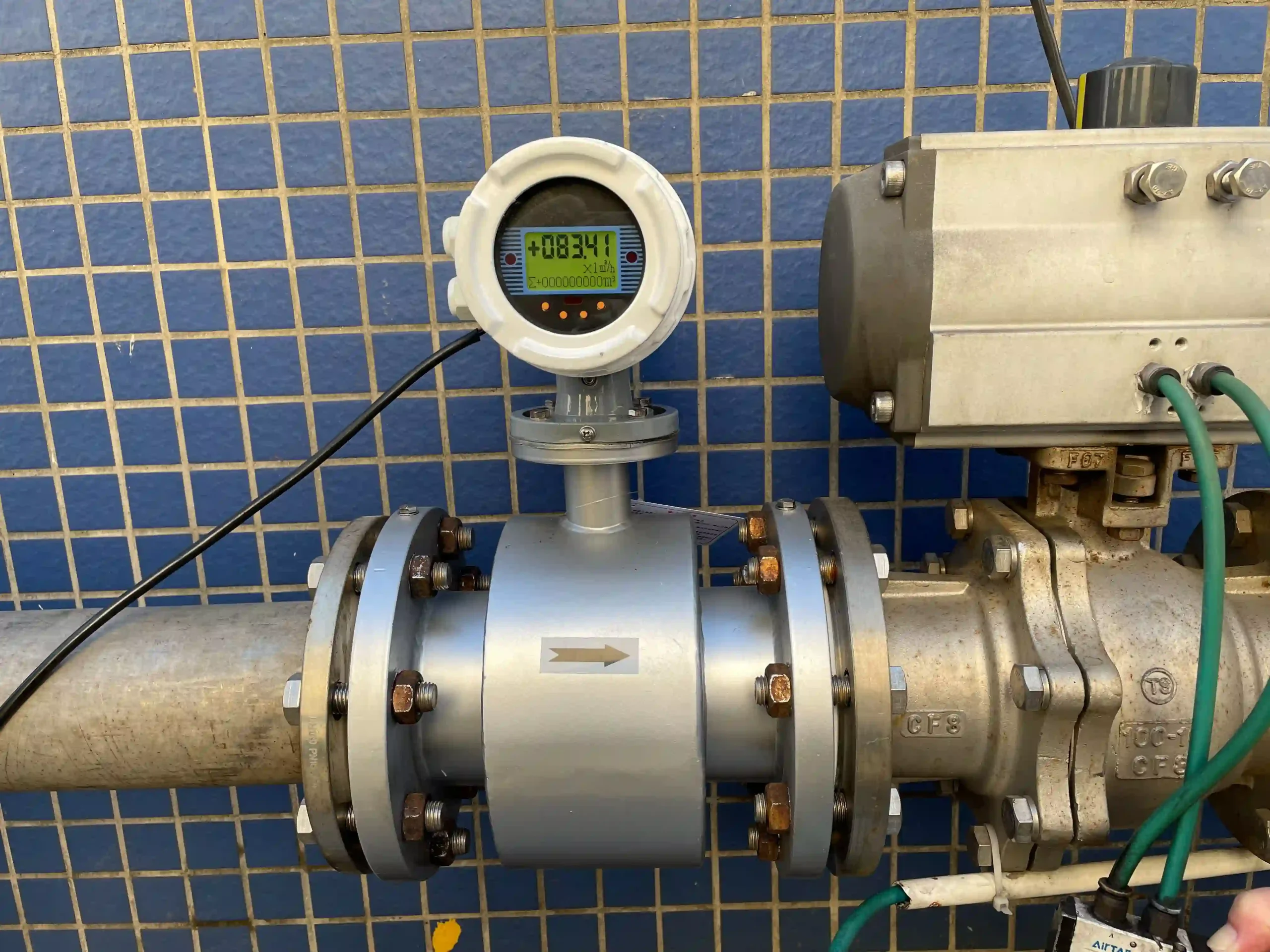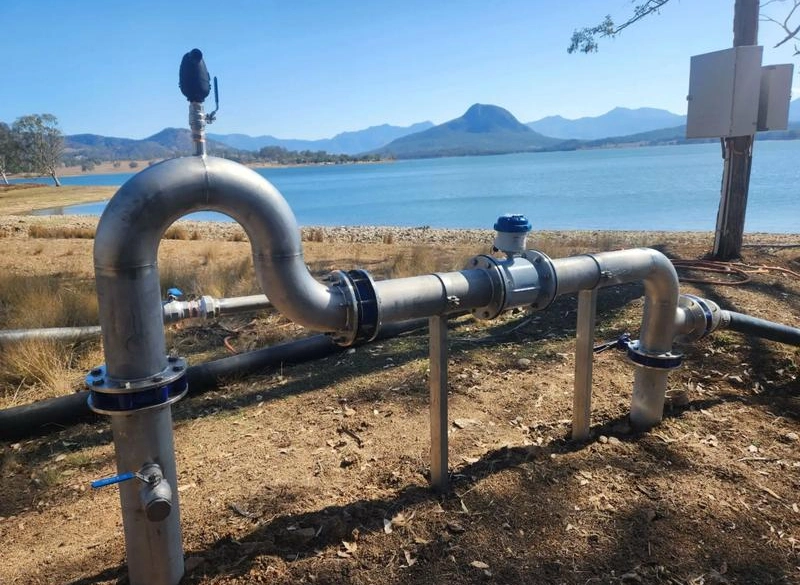
What is a vortex flow meter
Vortex flow meter is the only flowmeter that can measure all three-phase fluids (liquid, gas and steam). It is an ideal choice for measuring saturated steam and superheated steam in large facilities, which can improve steam production efficiency.
Vortex flowmeter is a new type of volumetric flowmeter developed based on the Karman vortex principle, which belongs to fluid vibration flowmeter. Using vortex sensor and single-chip microcomputer technology, both mass flow and volume flow can be calculated.
Therefore, the vortex flowmeter is widely used in the flow measurement of steam, gas, liquid, etc. It is used in industries such as petroleum, chemical, metallurgy, thermal power, textile, papermaking, electricity, environmental protection and municipal construction.
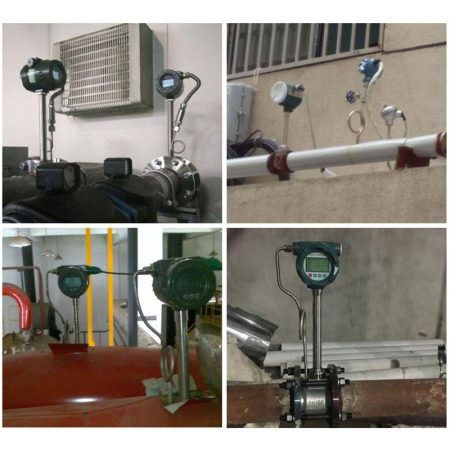
Vortex flow meter working principle
Von Kármán Effect
In fluid dynamics, a Kármán vortex (or a von Kármán vortex ) is a repeating pattern of swirling vortices, caused by a process known as vortex shedding, which is responsible for the unsteady separation of flow of a fluid around blunt bodies.
Vortex flow meters measure fluid velocity using a principle of operation referred to as the von Kármán effect, which states that when flow passes by a bluff body, a repeating pattern of swirling vortices is generated.
In a Vortex flow meter, an obstruction in the flow path, often referred to as a shedder bar, serves as the bluff body. The shedder bar causes process fluid to separate and form areas of alternating differential pressure known as vortices around the back side of the shedder bar.
What is vortex shedding?
Definition: Vortex shedding (also known as vortex detachment) is a fluid dynamics phenomenon in which, when a viscous fluid flows around a non-streamlined, blunt object, counter-rotating vortices are generated and detached alternately and periodically on both sides downstream of the object, forming the Karman vortex street.
Formation Process (using a cylinder as an example): As the fluid flows towards the cylinder, it splits and accelerates. The fluid near the wall slows due to viscosity, causing flow separation on the leeward side and forming a low-pressure recirculation zone. The separated shear layer curls and converges to generate a vortex; once a vortex detaches on one side, another is generated on the other, alternating to form a vortex street.
Core Principles: These primarily involve the Strouhal number and the Reynolds number. When the Strouhal number is constant, the vortex shedding frequency is directly proportional to the fluid velocity and can be calculated using the formula f = St · V/d. The Reynolds number determines the stability of the vortex street; a stable Karman vortex street forms when 150 < Re < 300, which constitutes the operating range of vortex flow meters.
How does a Vortex Flow Meter Work?
Vortex flowmeters use the principle of vortex shedding, where vortexes (or vortices) are alternately formed downstream of an object. The frequency of vortex shedding is proportional to the velocity of the liquid flowing through the flowmeter. And the Karman vortex principle, where a blunt body in a pipe creates vortices. The number of vortices is proportional to the volume flow in the pipe.
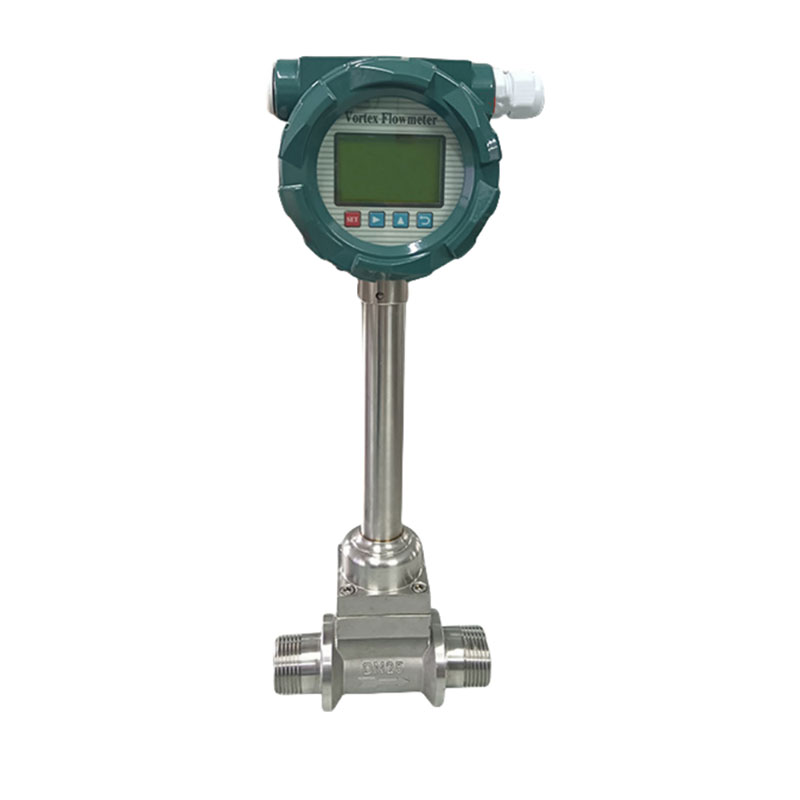
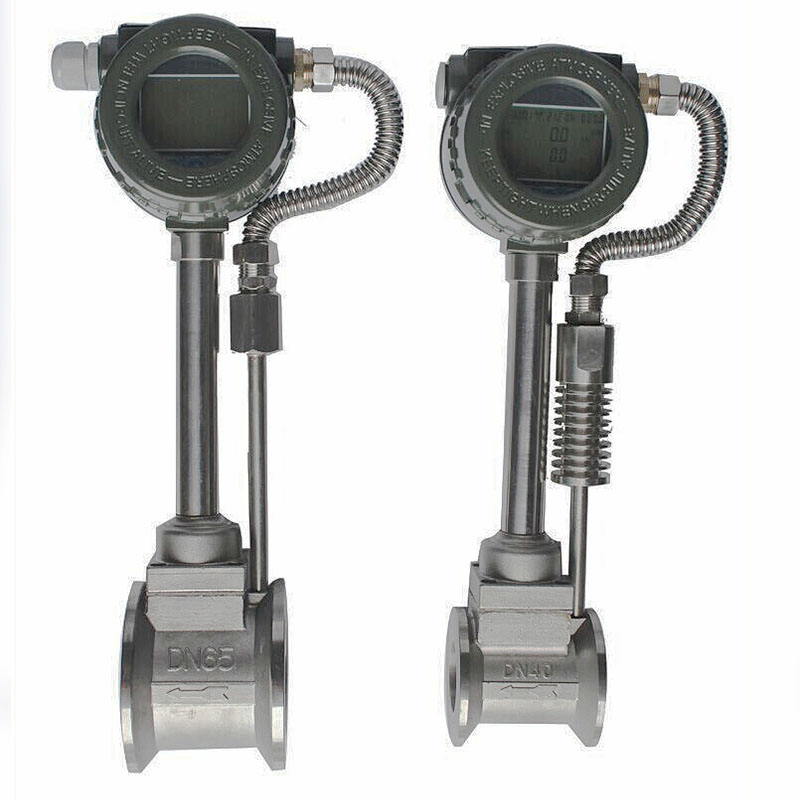
The vortex flowmeter measures volume flow based on the Karman vortex principle. The vortex flowmeter is composed of a vortex generator, a detection probe and corresponding electronic circuits.
A non-streamlined vortex generating body (blocking member) is provided in the fluid. Then two rows of regular vortices are alternately generated from both sides of the vortex generator, and this vortex becomes the Karman vortex . As shown below:
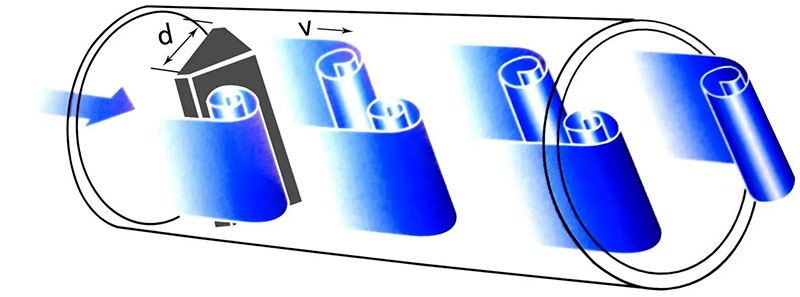
The vortex rows are arranged asymmetrically downstream of the vortex generator. Suppose the frequency of vortex generation is f, the average velocity of the incoming flow of the measured medium is V, the width of the flow-facing surface of the generating body is d, and the diameter of the surface body is D.
According to the Karman vortex principle, there is the following relationship:
f=StV/d
In the formula:
F – Karman vortex frequency generated on one side of the generating body.
St-Strohal number (dimensionless number) .
V-average flow velocity of fluid .
d-width of vortex generator
It can be seen that the instantaneous flow rate can be calculated by measuring the Karman vortex separation frequency. Among them, Strohal number (St) is a dimensionless unknown number. The following figure shows the relationship between Strohal number (St) and Reynolds number (Re).
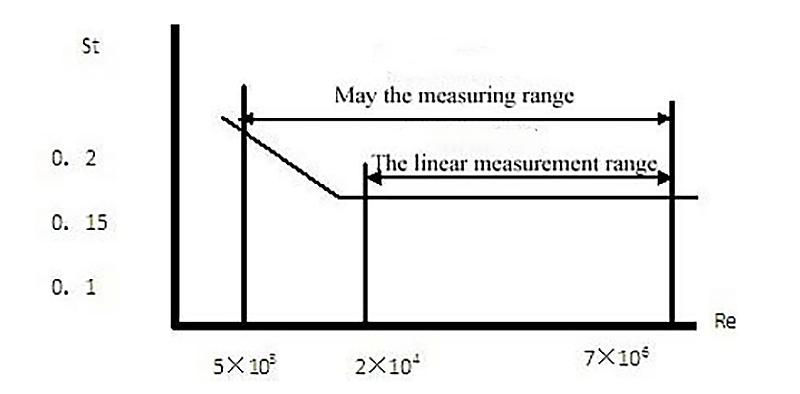
In the curve table, the straight part of St=0.17. The release frequency of vortex is proportional to the flow speed, which is the measurement range of the vortex flow sensor. As long as the frequency f is detected, the flow rate of the fluid in the tube can be found. The volumetric flow rate is determined from the flow velocity V. The ratio of the measured pulse number to the volume flow rate is called the instrument constant K.
K=N/Q(1/m³)
In the formula:
K=instrument constant (1/m³)
N=Number of pulses
Q=volume flow
Vortex flow meter advantages and disadvantages
Advantages
Vortex flowmeter has a wide measurement range, the adjustment ratio can generally reach 1:10, stable performance and long life.
Vortex flowmeter has no moving parts, simple and sturdy structure, high reliability, and very reliable long-term operation.
Vortex flowmeter can be installed at any angle, simple installation, convenient maintenance, and the pressure loss caused is very small.
Common signals of the vortex flowmeter are pulse or analog signals, the signal is stable, and the anti-interference ability is strong.
High precision and low maintenance.
The new appearance design, the body adopts precision casting technology, beautiful appearance, high temperature resistance and strong corrosion resistance.
Medium temperature | Normal temperature: -40~100℃ |
Material | Clamping type: 304 stainless steel, 316L, matching flange bolts and nuts: carbon steel, stainless steel; |
Disadvantages
Thas poor anti-vibration performance. External vibrations can cause measurement errors in the vortex flowmeter and may not even work properly.
The high flow velocity shock of the fluid causes vibrations in the vortex body, which reduces the measurement accuracy.
Cannot measure dirty media
Straight pipe requirements are high when mounting the vortex flow meter
Not suitable for low Reynolds number fluids measurements;
Low meter factor (compared to turbine flow meter);
It is not suitable for the pulsating flow.
Types of Vortex Flow Meters
Classified by the medium being measured, vortex flow meters can be divided into gas vortex flow meters, liquid vortex flow meters and steam vortex flow meters, each suited to different fluid conditions. Among these, steam vortex flow meters are commonly used for measuring the flow of saturated and superheated steam.
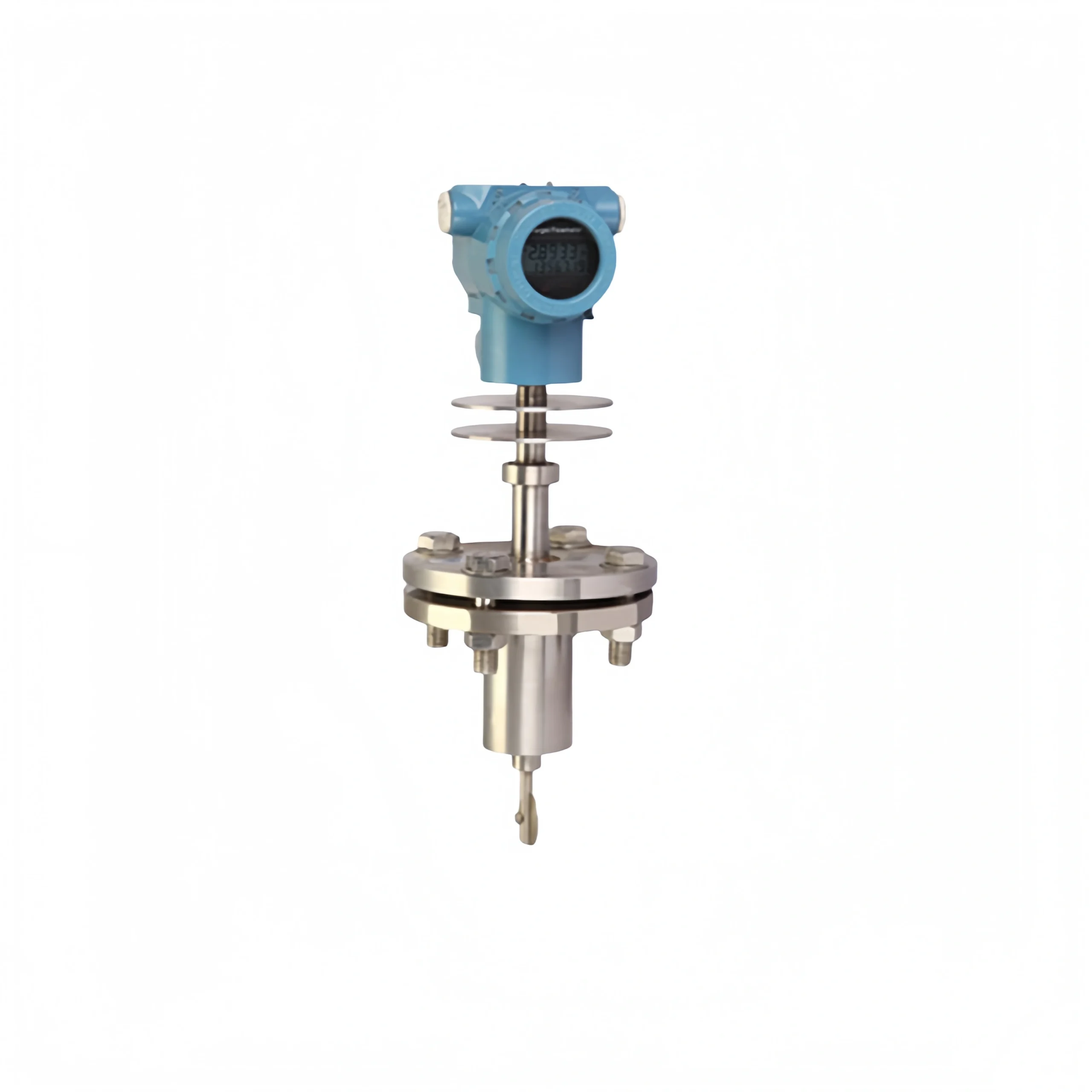
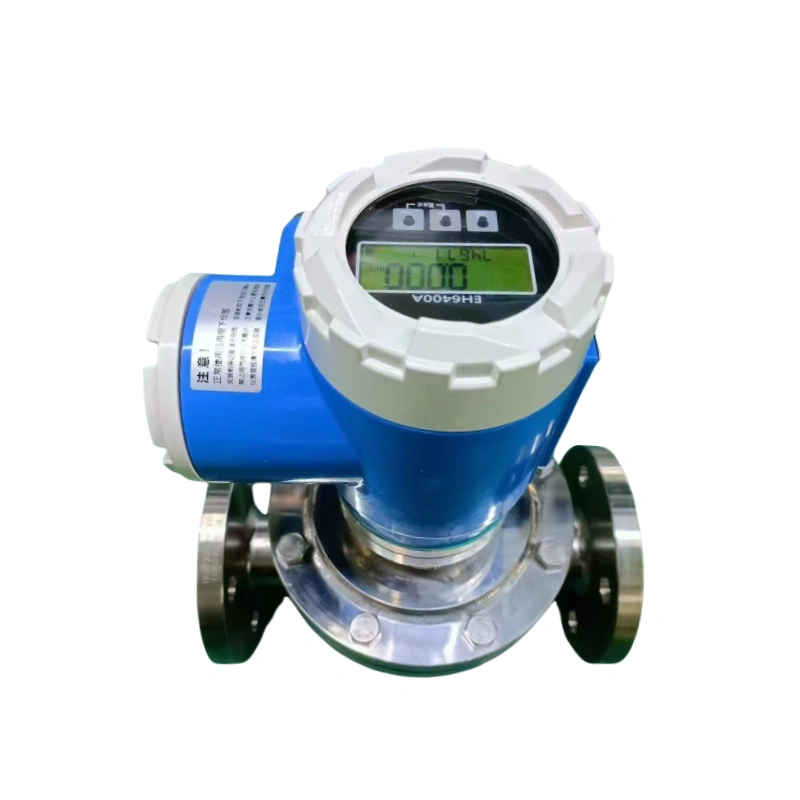
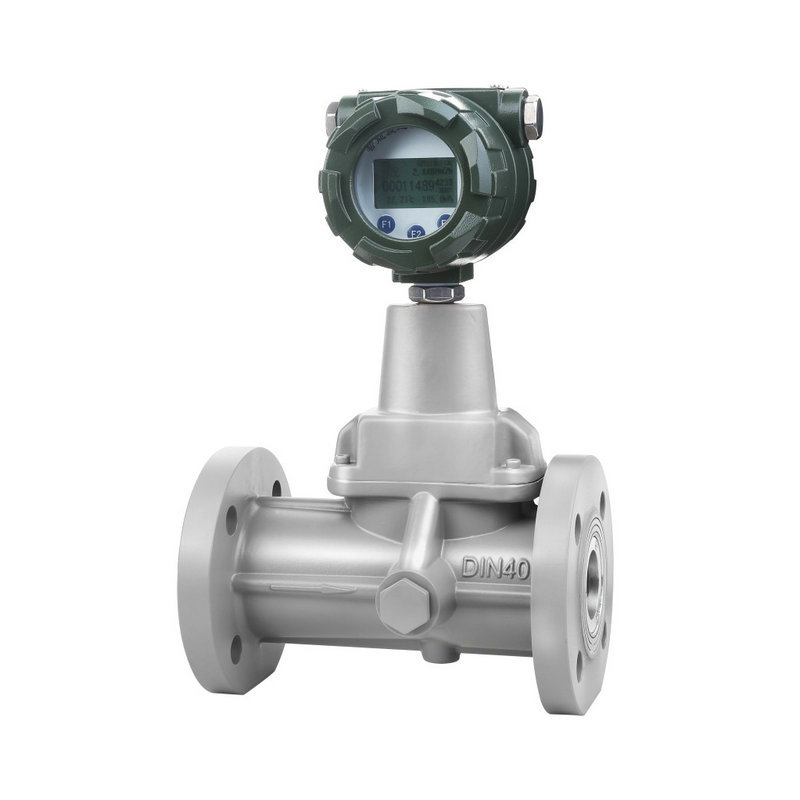
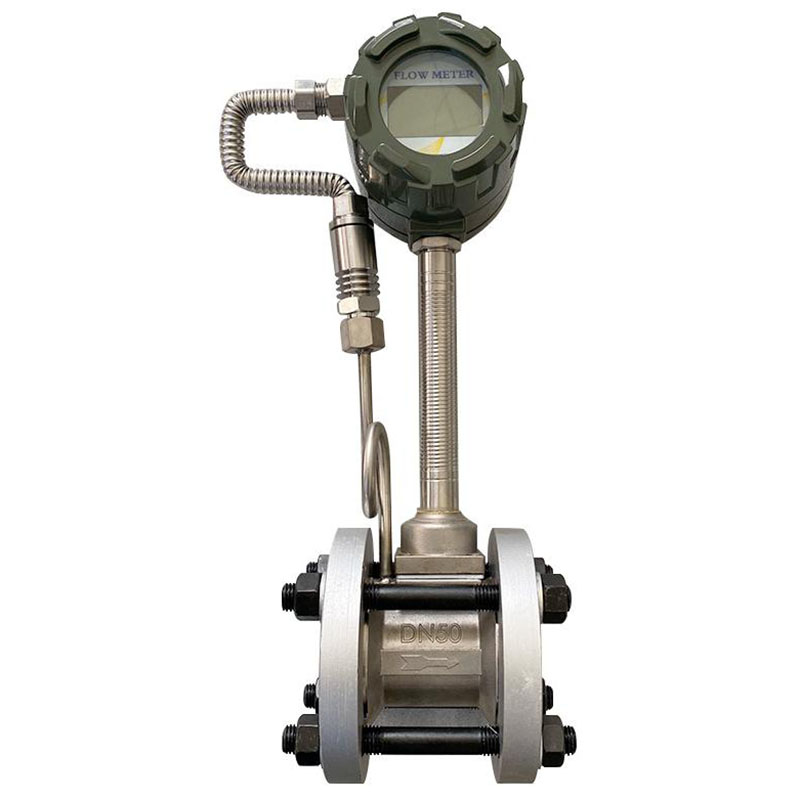
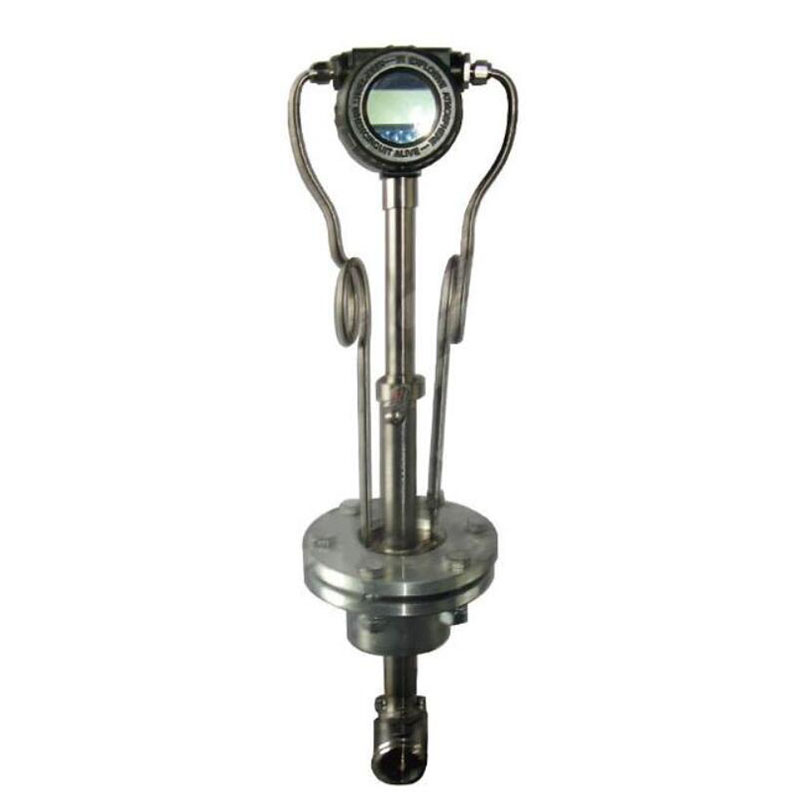
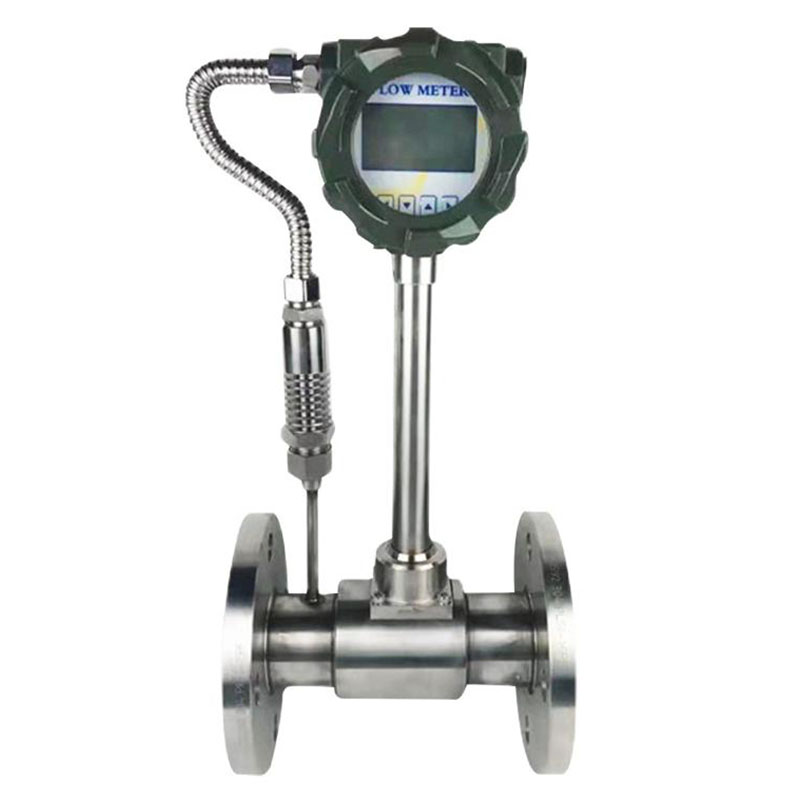
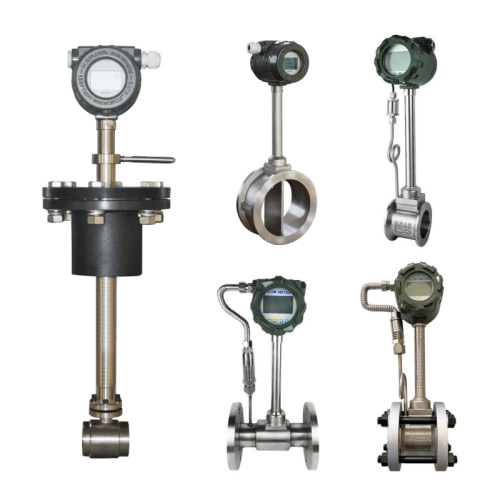
Classified by structural form and installation method, the main types include flanged, clamp-on, threaded and insertion vortex flow meters. Flanged models are suitable for standard piping conditions, clamp-on models offer convenient installation, whilst insertion models are frequently used for flow measurement in large-diameter pipes.
Applications of Vortex Flow Meters
Industrial Steam Measurement
Commonly used for measuring the flow of steam at boiler outlets, within plant steam networks, and for both saturated and superheated steam, these meters are widely applied in sectors such as chemicals, textiles, paper manufacturing and heating companies. They facilitate steam energy consumption billing and production process monitoring, and are one of the mainstream metering instruments in industrial heating systems.
Gas Flow Measurement
Primarily used for the metering of industrial gases such as compressed air, natural gas, nitrogen, oxygen, blast furnace gas and flue gas, covering sectors including mechanical manufacturing, electronics, metallurgy and food processing. It can be used for workshop gas consumption accounting, as well as for flow control in gas-fired boilers and combustion equipment.
Liquid Flow Measurement
Suitable for media such as water (tap water, circulating water, cooling water), diesel, petrol, thermal oil and various impurity-free chemical liquids, these meters are widely used in water supply and drainage projects, HVAC systems, hydraulic systems, petroleum refining and water treatment plants. They enable the tracking of liquid consumption and the monitoring of pipeline flow rates.
Energy Management and Energy Consumption Monitoring
Within enterprise energy management systems, vortex flow meters are used for the separate metering of water, gas and steam. They assist enterprises in compiling energy consumption data and analysing energy efficiency, meeting management requirements such as energy-saving retrofits, carbon accounting and energy audits. They are particularly suitable for energy consumption monitoring in industrial parks and public buildings.
Small and Medium-Sized Industrial Piping Applications
Due to their simple structure, low pressure drop, absence of moving parts and minimal maintenance requirements, they are widely used in standard industrial pipelines with diameters ranging from DN15 to DN300. They perform exceptionally well on production lines with stable operating conditions and high medium purity, such as flow monitoring on production lines in the food and beverage, light industry and building materials sectors.
High-Temperature and High-Pressure Conditions
Vortex flow meters designed to withstand high temperatures and pressures can be used in demanding conditions such as high-temperature thermal oil, high-temperature water and medium-to-high-pressure steam. They replace some traditional flow meters in the measurement of high-temperature and high-pressure fluids in thermal power plants, chemical plants and synthetic fibre production lines, ensuring long-term stable operation.
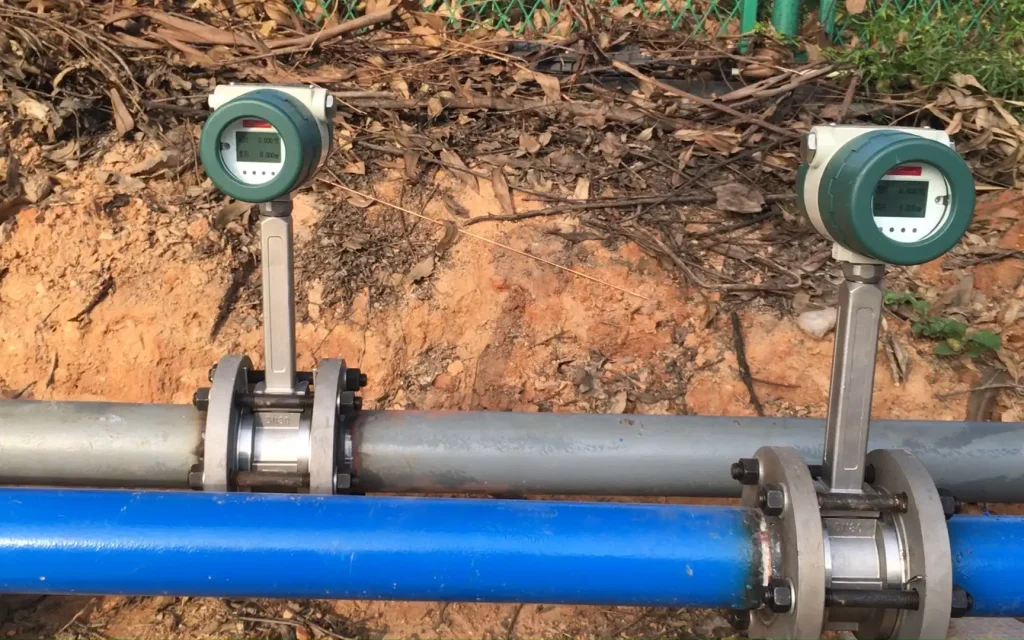
Vortex flow meter is mainly used for flow measurement of industrial pipeline medium fluid, such as gas, liquid, steam and other media. It is a relatively advanced and ideal flow meter.
We, Sino-Inst, supply a full range of vortex flowmeters. Including flange installation, clamp installation, insertion type, thread installation, etc.
If you need to purchase a vortex flowmeter or have any questions about the installation of the vortex flowmeter, please contact our engineers!