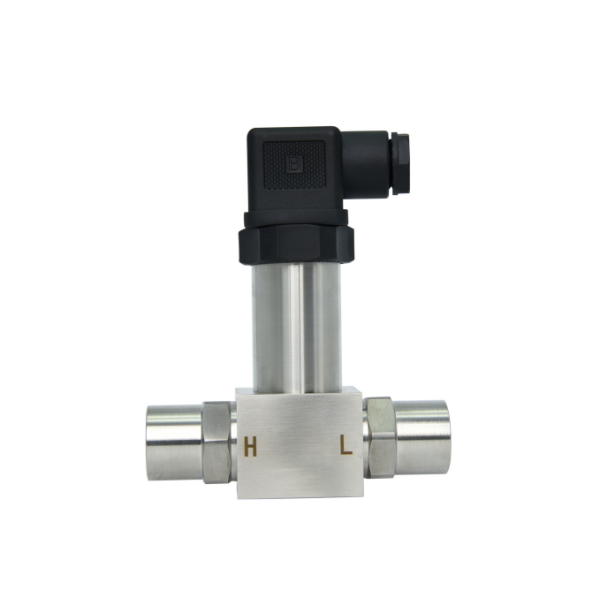
Capillary differential pressure transmitters utilise the principles of capillary transmission and pressure transfer to achieve precise measurement of differential pressure, level and flow in harsh operating conditions. Thanks to their isolated sealing design, they are suitable for corrosive, high-temperature and crystallising media, making them a core instrument in industrial automation process measurement and control.
What is a capillary differential pressure transmitter?
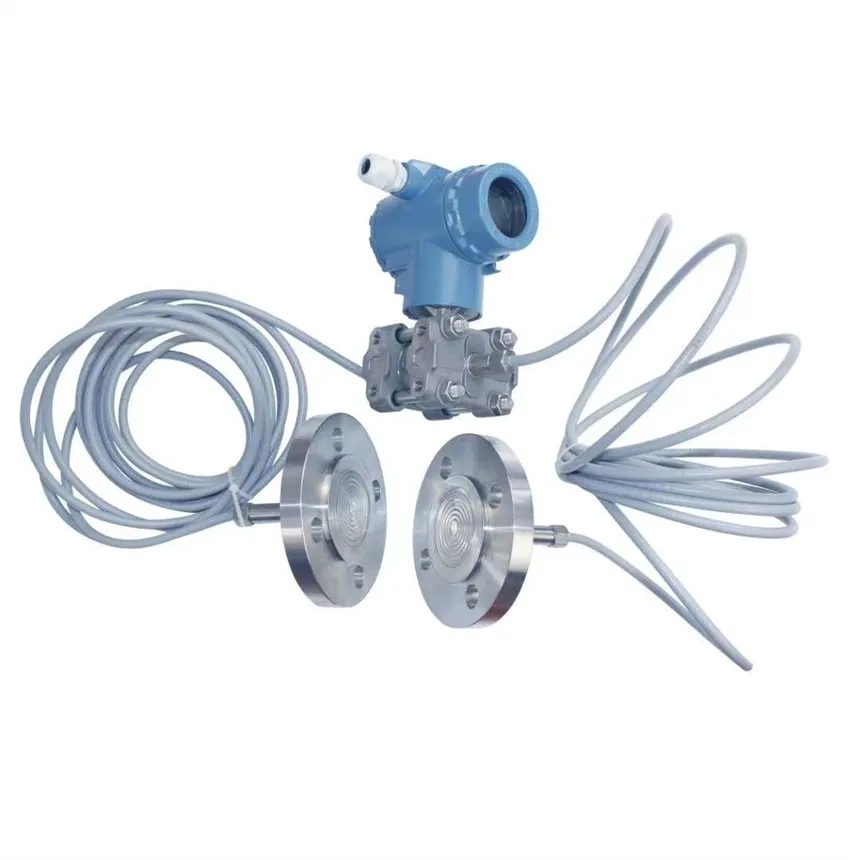
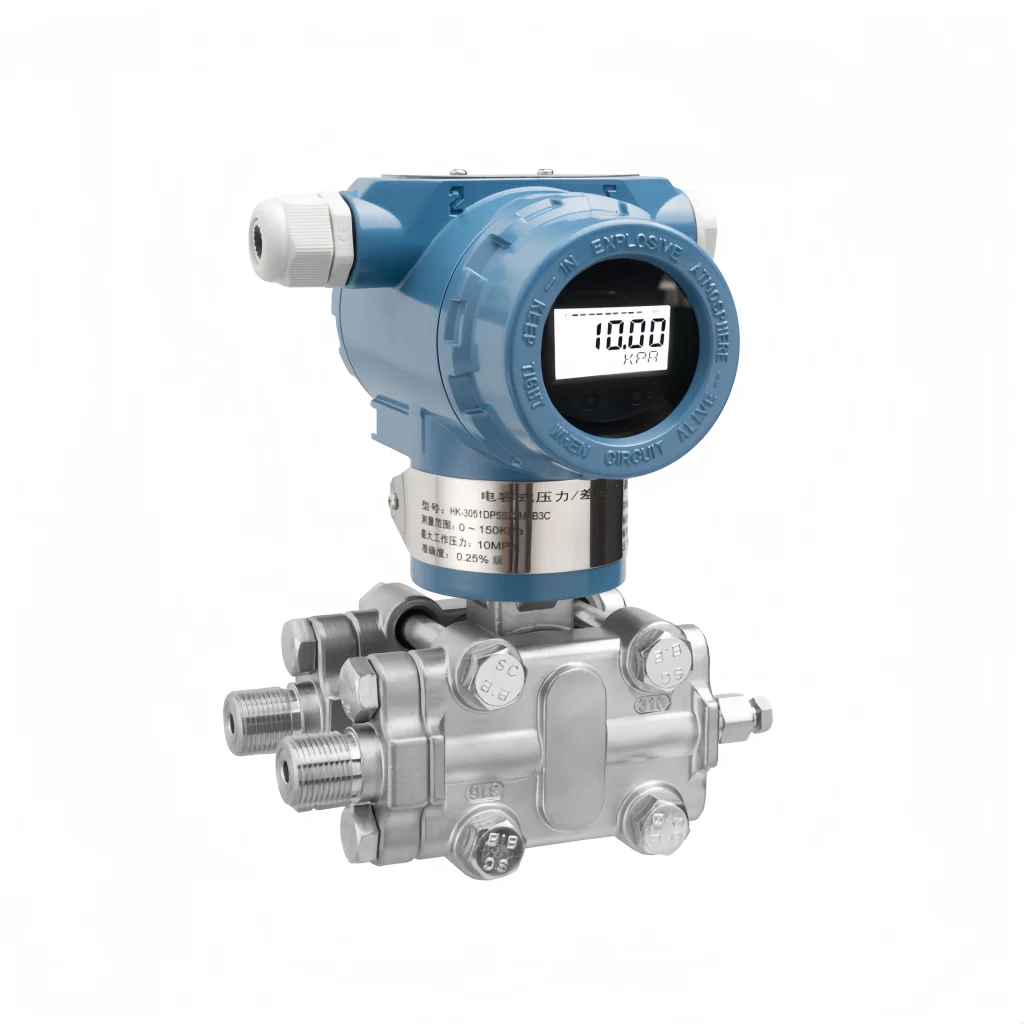
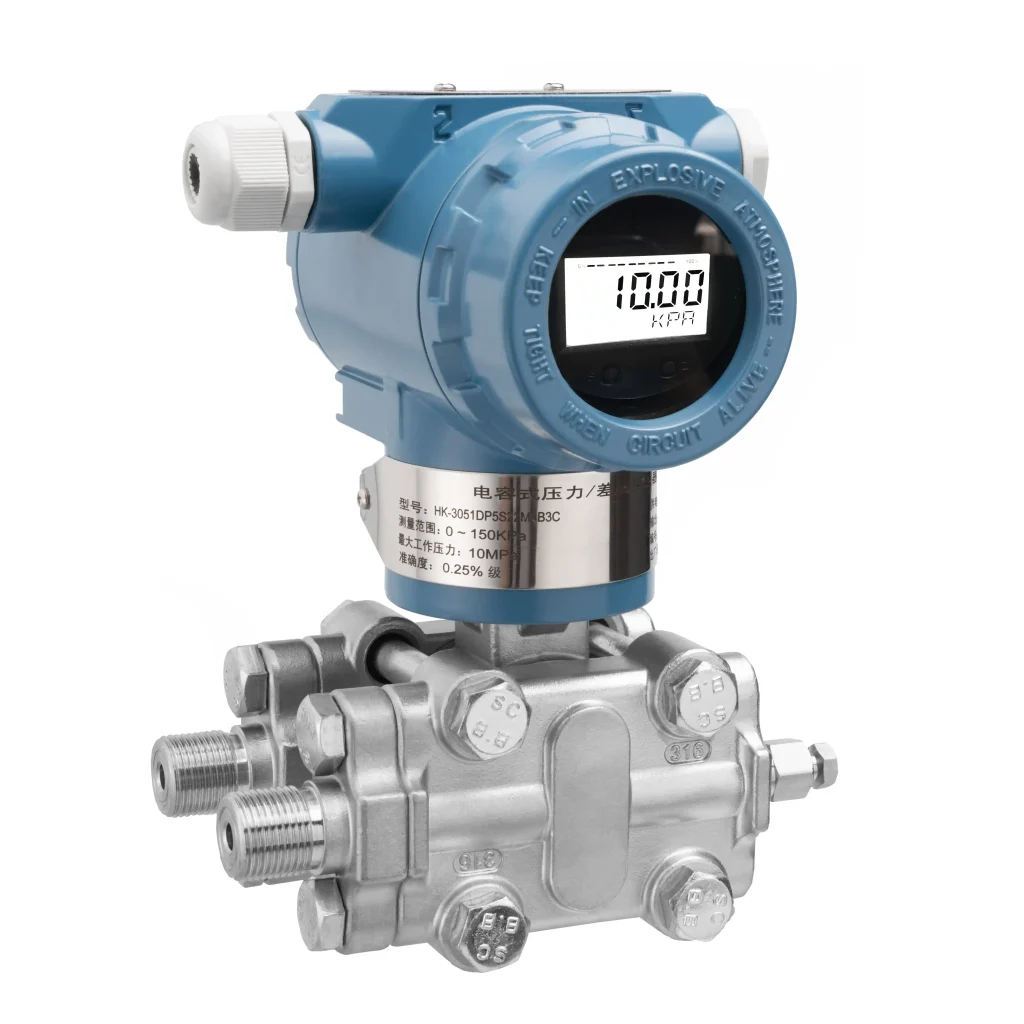
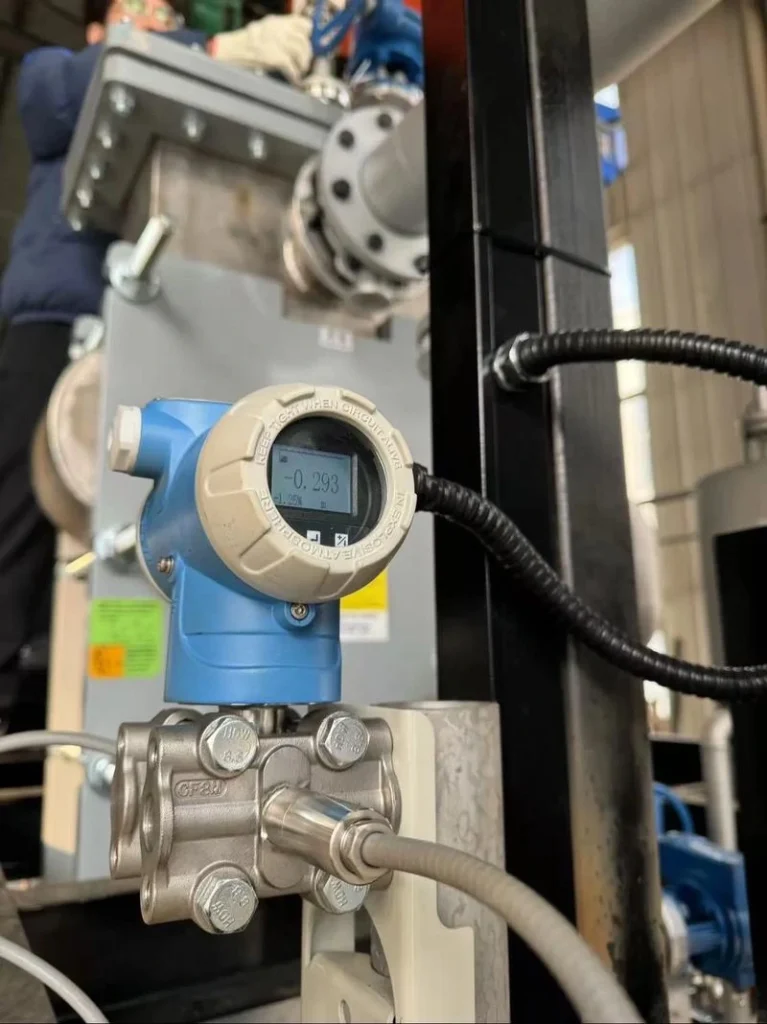
A capillary differential pressure transmitter is a differential pressure measurement instrument featuring a remote capillary tube and an isolation diaphragm. It utilises a filling fluid to accurately transmit the pressure of the on-site medium through the capillary tube to the transmitter’s sensing unit, converting the differential pressure signal into a standard electrical output.
This enables remote, isolated measurement of liquid level, interface level, differential pressure and pressure, and is suitable for complex industrial conditions such as high and low temperatures, highly corrosive environments and media prone to crystallisation.
Principle of Operation
A capillary differential pressure transmitter primarily consists of an isolation diaphragm, a capillary tube, silicone oil filling and a differential pressure sensing element. During operation, the pressure of the measured medium first acts upon the on-site isolation diaphragm.
The diaphragm deforms and compresses the sealed filling fluid inside; the pressure is then transmitted via the silicone oil within the capillary tube to the sensitive element in the transmitter body over long distances without loss.
The sensing element converts the received pressure differential into a weak electrical signal. After amplification, processing and temperature compensation by the internal circuitry, this is ultimately converted into a standard analogue or digital output signal.
This enables continuous and precise measurement of parameters such as liquid level, interface level and differential pressure. At the same time, the capillary tube’s remote transmission structure isolates the instrument from high-temperature, corrosive, viscous and crystallising media, ensuring the stable operation of the instrument body.
What is a capillary tube?
The capillary tube in a differential pressure transmitter is a slender, sealed tube that connects the transmitter’s measuring diaphragm to the remote isolation diaphragm; it is a core component of remote-type differential pressure transmitters.
The interior of the capillary tube is hollow and filled with a specialised sealing isolation fluid, ensuring a completely sealed system that is isolated from external media.
The function of the capillary tube
Its primary function is to transmit pressure. The pressure of the measured medium at the process end acts upon the remote isolation diaphragm; through the fluid within the capillary tube, this pressure is transmitted accurately and without loss to the sensing element inside the transmitter.
It enables long-distance pressure measurement, allowing the transmitter to be installed away from process pipelines subject to high temperatures, high pressure, corrosion, viscous fluids or substances prone to crystallisation, thereby preventing damage to the instrument caused by harsh operating conditions.
The outer layer is generally fitted with a protective sheath, offering resistance to high temperatures, bending and corrosion. It is suitable for industrial environments involving high or low temperatures and complex on-site conditions, ensuring stable pressure transmission free from external interference.
Advantages of Capillary Differential Pressure Transmitters
1. Stable Long-Distance Pressure Transmission
They’ve got a special tube and fluid that helps send pressure signals long distances, so you don’t need all that complicated piping on-site. The pressure transmission process is smooth and loss-free, ensuring consistent signal transmission. This makes it suitable for installations where the measurement point is located far from the instrument control room.
2. Strong Media Isolation and Protection
Through the use of isolation diaphragms and capillary tube sealing structures, the transmitter’s core components are completely isolated from the measured medium, whether it be high-temperature, low-temperature, highly corrosive, highly viscous, prone to crystallisation, or prone to solidification. This effectively prevents direct contact between the medium and the sensing components, thereby preventing instrument failure caused by corrosion, scaling or blockages, and significantly extending the service life.
3. Flexible and Convenient Installation Layout
Unrestricted by spatial constraints at measurement points or instrument installation locations, the transmitter can be flexibly positioned to avoid high-temperature heat sources, equipment subject to strong vibrations, narrow passageways, and high-risk operational areas. The instrument can be installed in a nearby locati0n convenient for commissioning, inspection and maintenance, resulting in a neat and orderly on-site piping layout and reduced installation complexity.
4. High Measurement Accuracy and Excellent Long-Term Stability
The instrument performs well in sealing and is not easily affected by things like changes in temperature, air pressure and vibrations. Zero-point drift and span drift are both really small, which means that the measurements are pretty accurate even when the equipment is used for a long time. This makes it possible to get consistent and reliable data on pressure, liquid level and interface level.
5. Minimal maintenance and low operational costs
It does away with all the regular maintenance tasks you have to do with traditional pressure-conducting pipes, like venting, draining, protecting against frost, insulation and preventing leaks. This means that you will experience fewer common problems, such as blocked pipes, leaks and cracks caused by freezing. There is no need to worry about regular recalibration or repairs, so labour costs for operation and maintenance, as well as part replacement, are much lower.
6. Wide range of operating conditions and high versatility
It is widely adaptable to complex operating conditions such as high-temperature steam, bitumen, crude oil, slurries, corrosive chemical media, as well as negative pressure, vacuum, and high or low differential pressure. It can be used for level, interface and density measurement, as well as for differential pressure and flow measurement, making it extremely versatile in industrial settings.
Disadvantages of Capillary Differential Pressure Transmitters
1. Significant influence of ambient temperature
The inside of the capillary tube is filled with an isolating fluid, and big changes in the temperature around it can cause the fluid to expand or contract, which can easily lead to zero-point drift and measurement errors. This effect is really noticeable when it’s cold, so you often need to adjust the temperature.
2. Capillary tubes are susceptible to damage from external forces
Capillary tubes have a small diameter and a delicate structure. During on-site installation and maintenance, they are easily bent, crushed, stretched or knocked. Any deformation or damage will result in leakage of the isolation fluid, directly causing the instrument to fail. Furthermore, repairs are difficult and often require the entire unit to be replaced.
3. Slow measurement response
Compared to direct-connection differential pressure sensors, the pressure readings are a little slower because they go through the isolation fluid in the capillary tube. This means they aren’t very good at measuring changes in pressure or liquid level.
4. Length limitations and stringent selection criteria
Capillary tubes cannot be made longer indefinitely; the longer the tube, the greater the temperature errors and signal lag. The type of filling fluid must also be chosen based on the working temperature and the properties of the medium. If the wrong type is chosen, problems like vapourization at high temperatures or solidification at low temperatures can happen.
5. Relatively higher cost
The overall cost of the unit, which incorporates a capillary tube, isolation diaphragm and specialised filling fluid sealing structure, is significantly higher than that of standard differential pressure transmitters; should damage occur, the costs of repair and replacement parts are also relatively high.
Applications of Capillary Differential Pressure Transmitters
1. Tank level measurement: Suitable for continuous level monitoring in atmospheric-pressure, sealed tanks. The capillary tube lets you send signals from a distance away from the tank body and is compatible with high-temperature, corrosive and viscous media, making it perfect for checking liquid levels in tanks that contain petroleum products, chemical solvents and wastewater.
2. Media Interface Measurement: It can find the points where two or more immiscible liquids meet, such as when oil and water mix or when chemical phases separate. It keeps the emitter out of hard conditions, correctly picks up differential pressure signals, and meets all the requirements for process control in oil storage tanks and reactors for phase separation.
3. High-Temperature Measurement:It is present in thermal oil systems, high-temperature reactors, and furnaces. The transmitter is safeguarded from high temperatures by the capillary tube, which also ensures that the pressure and differential pressure at the equipment’s inlets and outflows are measured accurately and consistently.
4. Measurement of Corrosive, Viscous and Crystallising Media:Utilising a diaphragm + capillary tube structure to isolate strong acids, strong alkalis, high-viscosity slurries and crystallising media from the instrument body, preventing corrosion and blockages. Suitable for chemical, paper and pharmaceutical applications.
5. Monitoring of negative pressure and vacuum systems: This is used in vacuum containers, negative pressure dust extraction systems, and negative pressure conveying conduits. It can measure differential pressure and vacuum levels very precisely. This provides data for process interlocks, variable frequency control, and system pressure stabilisation.
6. Pipeline flow measurement: When paired with orifice plates, Venturi tubes and other flow restrictors, fluid flow rates are calculated via differential pressure conversion. Suitable for long-distance installation scenarios, this is used for measuring the flow of steam, gas and industrial fluids.
7. Food, pharmaceutical and sanitary applications:Featuring a hygienic, dead-space-free design that is easy to clean and sterilise, these devices meet sanitary standards for in-tank pressure, level and differential pressure monitoring in pharmaceutical, food and brewing processes, as well as in mixing tanks.
8. HVAC and plumbing systems:Used for high-rise water supply, central air conditioning water circulation, and fire protection network differential pressure and level monitoring. They facilitate centralised wiring and installation, enabling network pressure stabilisation, automatic water replenishment and pressure balancing control.
Add Your Heading Text Here
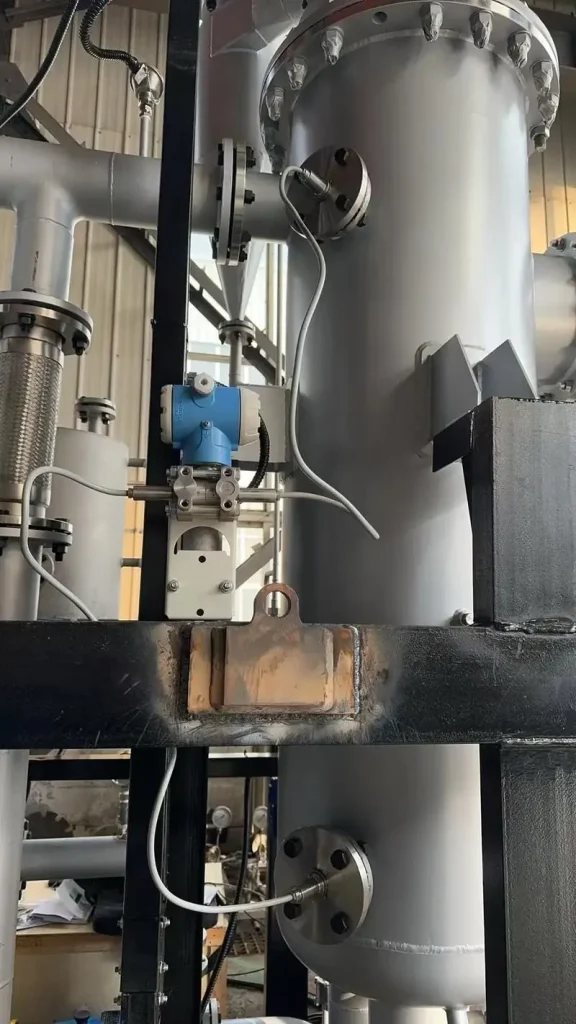
Proper installation of capillary differential pressure transmitters not only ensures measurement accuracy—preventing poor pressure transmission, condensation and leakage of the medium, and distortion of liquid level pressure signals—but also guarantees the real-time and accurate acquisition of process parameters.
It further enhances equipment operational stability, minimises capillary kinking and interference from temperature and mechanical vibrations, and eliminates zero-point drift and value fluctuations;
At the same time, it effectively protects the capillary tubes and isolation diaphragms from external pulling forces, corrosion and exposure to high temperatures, thereby extending the instrument’s service life and reducing the likelihood of repairs.
It also mitigates potential hazards such as pressure line blockages and medium leakage, preventing process system runaway and false alarms, ensuring production safety, and reducing the frequency of commissioning, calibration and maintenance. This shortens downtime, lowers operational and maintenance costs, and enhances overall production efficiency.
Installation Precautions:
1. To stop errors caused by height differences, the transmitter must be installed at the right height for the pressure sampling point, as per the process requirements. Make sure that the positive and negative pressure sides are at the right height for measuring liquid levels.
2. Do not bend, crush or stretch the tube too much. Make sure the bending radius is right to stop pressure from getting blocked and damaging the diaphragm.
3. To stop errors caused by height differences, the transmitter must be installed at the right height for the pressure sampling point, as per the process requirements. Make sure that the positive and negative pressure sides are at the right height for measuring liquid levels.
3. IJust make sure you install the diaphragm isolator either vertically or horizontally, as per the specs. You also need to make sure it’s nice and flush against the pipe wall, that it’s sealed securely (no leaks!), and that the gasket is suitable for the medium.
4. Capillary tubes must be secured using dedicated clamps and fitted with protective sleeves to prevent swaying, impact, abrasion and corrosion.
5. During installation, avoid welding or striking the instrument and capillary tubes; unauthorised disassembly of the diaphragm and sealing structures is strictly prohibited.
6. When working with media that can coagulate or at high or low temperatures, it is imperative to ensure that the capillary tube and diaphragm are both heated and insulated. This prevents the medium from cooling or solidifying, which could cause the pressure transmission system to malfunction.
7. Once you’ve finished the installation, it’s time for zero-point calibration and range verification. Don’t forget to check the seal integrity and signal stability, too. The instrument can only be put into service if there are no leaks and no signal drift.
FAQ
What is the difference between a DPS and a DPT?
A DPS (Differential Pressure Switch) is primarily used for pressure threshold detection. It outputs only a digital signal and is used solely for fixed-point over-limit alarms and process interlock control.
DPT stands for Differential Pressure Transmitter, which continuously converts differential pressure into standard analogue or digital signals, enabling full-range continuous measurement, real-time monitoring and remote transmission.
The main difference between the two lies in how they work and what they produce. While DPS only provides an on/off status at set pressure points, DPT can measure differential pressure continuously across the entire range, convert the signal and transmit it over long distances. This makes DPT better suited to monitoring industrial liquid processes in real time and controlling their level, flow and differential pressure in a closed loop.
Working Principle of Capillary Level Transmitters
A capillary level transmitter consists of a remote isolation diaphragm, a capillary tube, an internal filling fluid, and a differential pressure sensing unit. The pressure of the measured medium acts on the remote isolation diaphragm, causing it to deform; this pressure is transmitted without loss through the sealed filling fluid within the capillary tube to the transmitter’s sensing element.
The sensing module converts the differential pressure into a weak electrical signal. After amplification, processing and temperature compensation by the internal circuitry, a standard electrical signal is output, thereby enabling isolated, long-distance continuous measurement of liquid levels and interface levels.
At the same time, the capillary remote transmission structure isolates the transmitter body from high-temperature, corrosive, viscous and crystallising media, ensuring stable and accurate measurement even under harsh operating conditions.
The full Sino-Inst range offers standard, high-temperature, corrosion-resistant and explosion-proof, as well as hygienic differential pressure transmitters. These are suitable for complex operating conditions such as storage tanks, reactors, negative pressure in pipelines, and flow measurement applications, meeting the diverse and demanding measurement and control requirements of industrial sites.
Drawing on our extensive industry experience and comprehensive product range, we provide bespoke professional selection advice, customisation of capillary tube lengths and filling fluids, installation guidance, and full after-sales support tailored to the characteristics of the on-site medium, temperature and pressure conditions, and installation layout requirements. We deliver stable, durable, highly adaptable and cost-effective integrated industrial differential pressure and level measurement solutions.