As a core component that bridges the gap between physical pressure signals and processable electrical signals, the pressure transducer relies on the physical effects of its sensing element to perform signal conversion.
It is widely used across diverse fields such as aerospace, industrial automation and medical electronics; optimising its performance and advancing its technology holds significant academic and engineering value in driving the development of sensor technology towards miniaturisation, high precision and high reliability.
What is a pressure transducer?
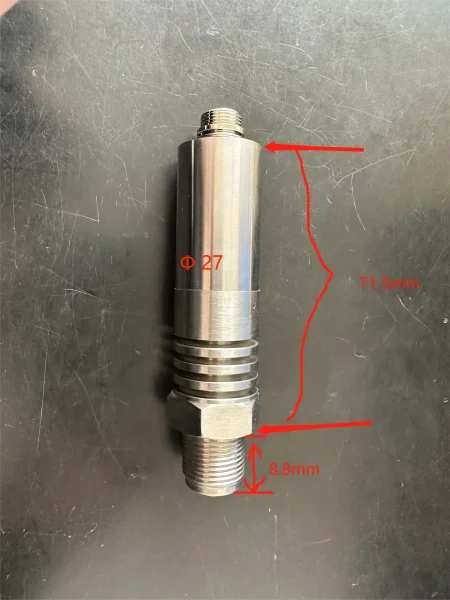
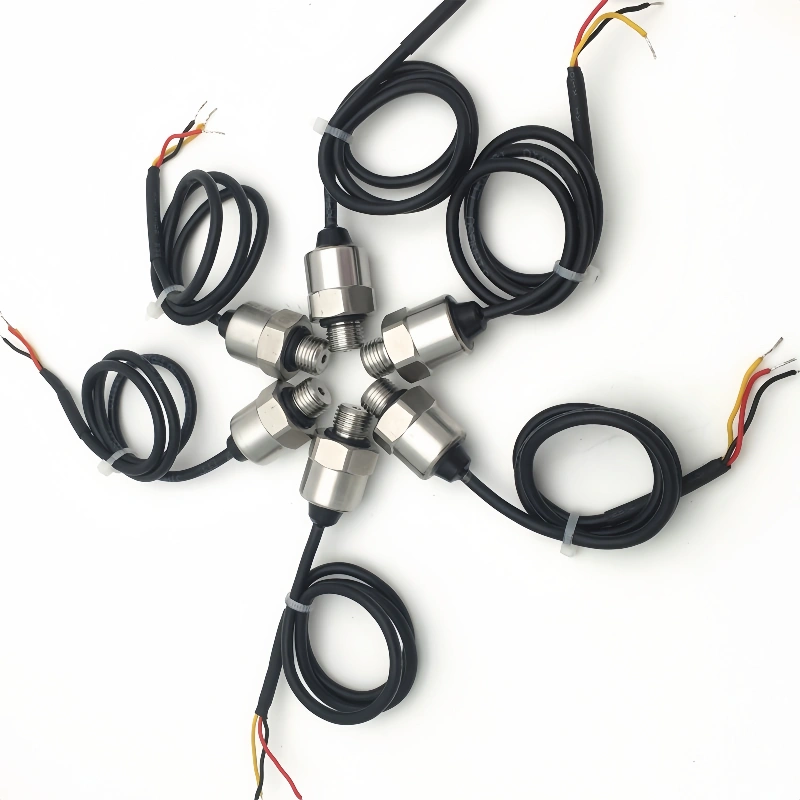
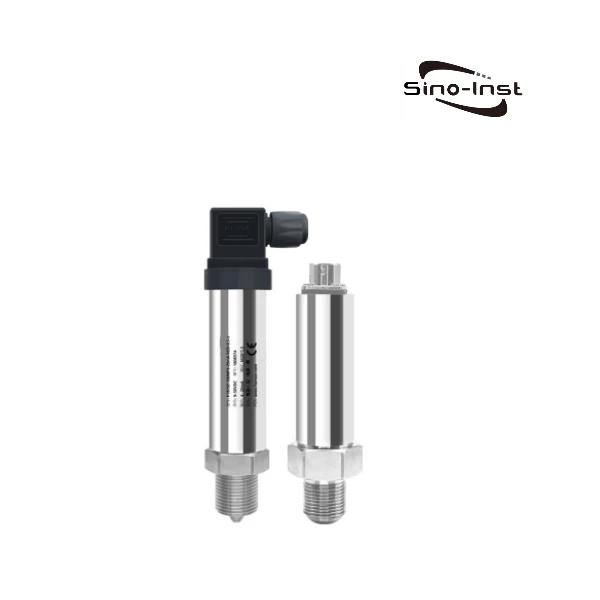
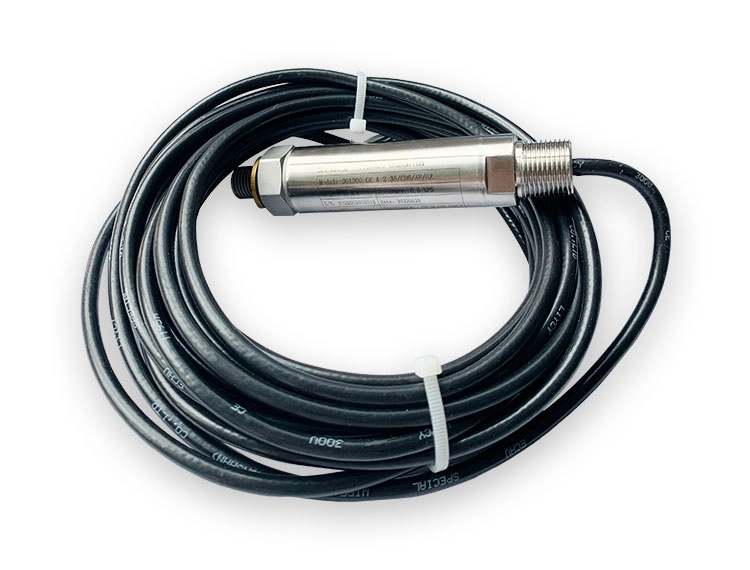
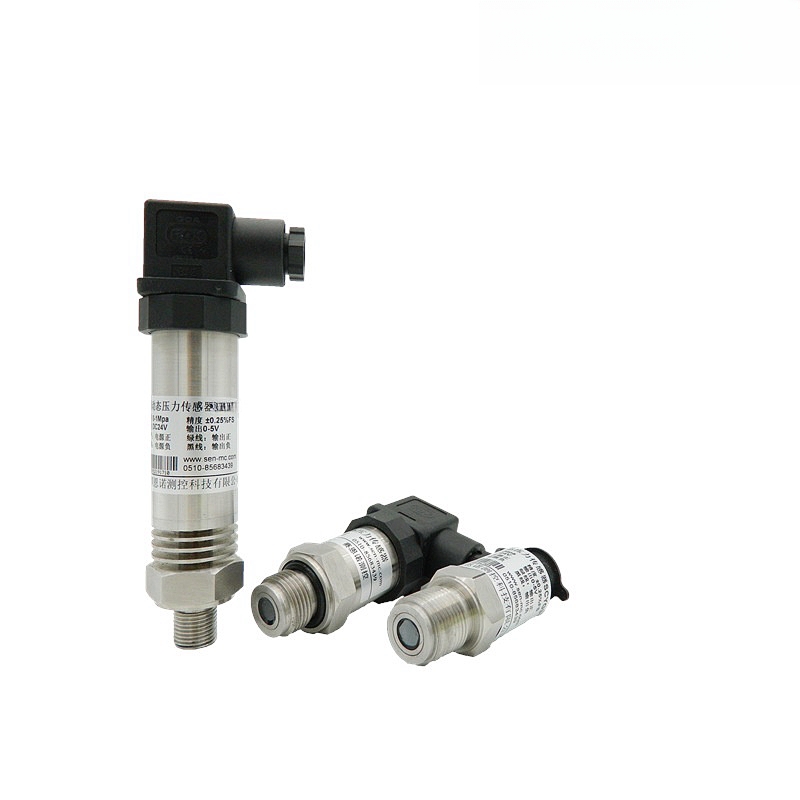
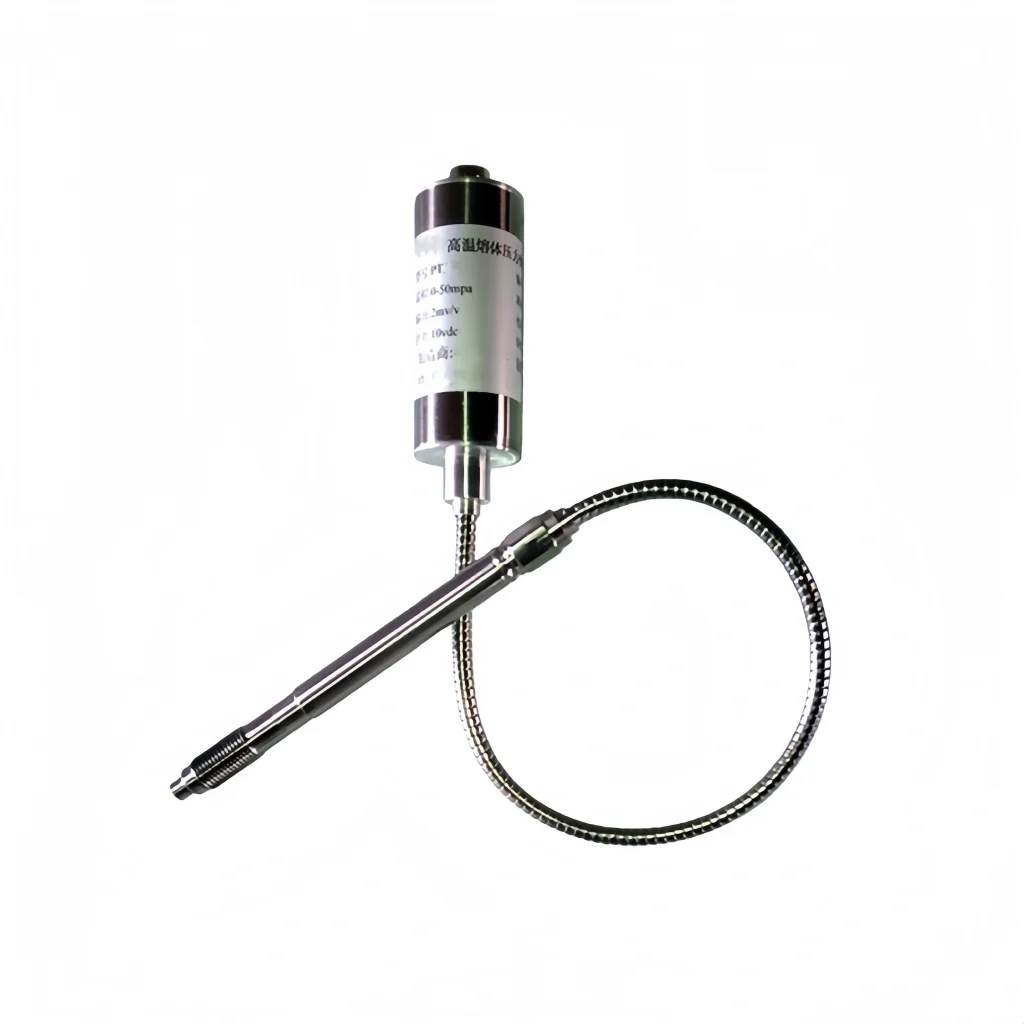
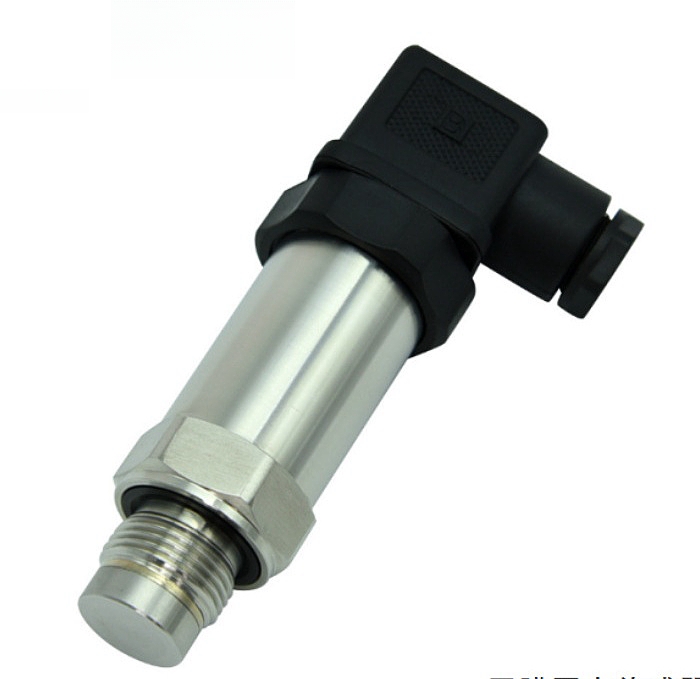
A pressure transducer, also known as a pressure sensor or pressure transmitter, is a device that converts pressure into an electrical signal. The device is used to measure and monitor the pressure of air, gas, or liquid flowing through an industrial system. It then converts it into a readable output, such as voltage or current, that can be used by a computer or other monitoring system. Pressure transducers are commonly used in industries such as vehicles, medical, off-road equipment, and automation.
How does a pressure transducer work?
The working principle of a pressure transducer is to convert the physical pressure applied to a sensitive element (such as a diaphragm) into an electrical signal. The sensor usually consists of a sensing element and an electronic circuit. When pressure is applied to the sensor, it causes physical deformation, which is then converted into a measurable electrical output, so that pressure changes in the system can be monitored.
The core component is a pressure sensitive element, usually a flexible diaphragm, which deforms when pressure is applied. This mechanical deformation generates an electrical signal, usually a voltage or current. This is then amplified and converted into a numerical value by the associated electronic circuit.
Applications of pressure transducers
Pressure transducers are widely used in many fields. The following are their main application areas:
Industrial Automation
Used for real-time pressure monitoring and closed-loop control in hydraulic and pneumatic systems, fluid pipelines, fans, pumps and other equipment, preventing overpressure failures and ensuring the stable and reliable operation of entire production lines.
Petrochemical and Energy Industries
Covering oil and gas extraction, long-distance pipelines, refining and petrochemical reactors, storage tanks, and hydrogen storage and transport applications, these devices monitor medium pressure in real time to enable safety alerts and process ratio adjustments, thereby eliminating leaks and high-pressure safety hazards.
Water Supply, Drainage and Municipal HVAC
Applied to urban water supply networks, pumping stations, reservoirs, wastewater treatment, central air conditioning and boiler heating systems. Monitors water pressure, air pressure and pipeline network pressure to achieve constant-pressure water supply, leakage detection and energy-efficient building automation.
Automotive, Transport and Construction Machinery
Suitable for vehicle tyre pressure, engine intake, braking and fuel systems, as well as excavators, cranes and mining hydraulic equipment. It accurately detects load and system pressure to provide overload protection, ensure driving safety and enable precise control of equipment operations.
Medical and Precision Instrumentation
The primary objective of span calibration is to ensure the temperature sensor provides accurate readings across its entire measurement range. Multi-point calibration eliminates span drift, ensuring that the output signal remains consistent with the monitored temperature.
Types of pressure transducers
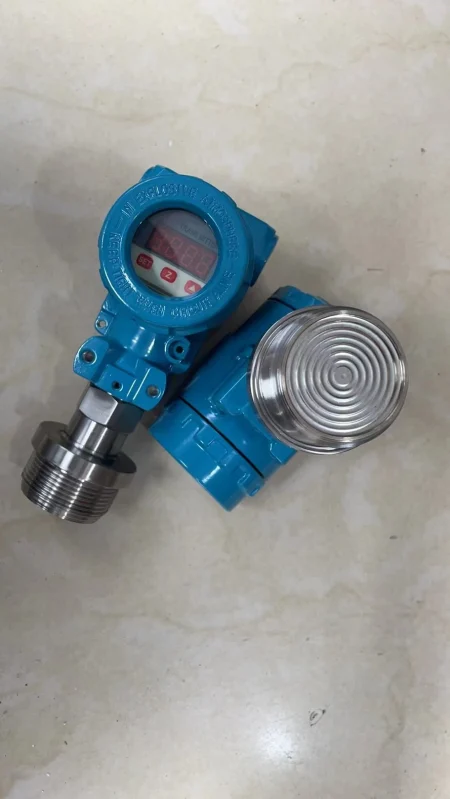
The main types of pressure transducers include the following:
1. Strain gauge pressure transducer
The working principle is that the metal strain gauge deforms under the action of external force to cause the resistance value to change. The advantages are simple structure and low price, but low sensitivity and hysteresis effect.
2. Capacitive pressure transducer
The pressure is measured by the change of the capacitance value caused by the change of the position of the capacitor plate. With the development of technology, its volume can be very small, but the input and output are usually nonlinear and need to be linearized.
3. Inductive pressure transducer
The pressure value is calculated by measuring the displacement change using the differential transformer principle. It is suitable for gauge pressure and differential pressure measurement, but the dynamic response performance is poor and is easily affected by acceleration and vibration.
4. Piezoelectric pressure transducer
The piezoelectric effect of piezoelectric materials is used to measure pressure. It has fast response speed and high sensitivity. It is often used for high-frequency pressure signal measurement.
5. Piezoresistive pressure transducer
The piezoresistive effect of semiconductor materials is used to measure pressure. It has high sensitivity and accuracy and is suitable for occasions requiring high-precision measurement.
Electrical output of pressure transducers
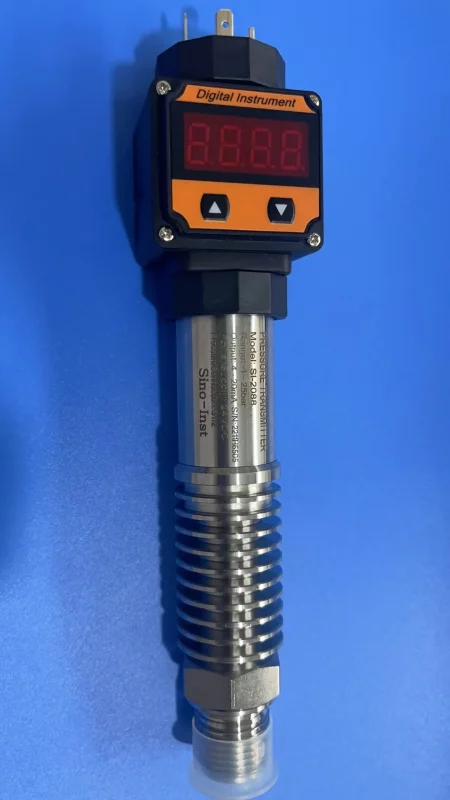
Pressure transducers typically output an electrical signal in the form of a voltage, usually in the range of 0-5V or 0-10V DC, and some models also provide current outputs, such as 4-20mA, depending on the specific design and application.
Pressure transducers generally have three types of electrical outputs: millivolts, amplified voltage, and 4- 20mA.
Millivolt (mV):
Considered the most economical choice, but produces a very low voltage output (approximately 30mV) that is proportional to the excitation voltage supplied to the sensor. The power supply can be either constant current or constant voltage. Accuracy is somewhat limited by the simple passive compensation circuits that are often used.
Amplified Voltage (V):
Provides a higher voltage output than millivolts, can provide a variety of amplified signals, typically in the range of 0-5V or 0-10V, and is less susceptible to noise due to internal signal conditioning.
Current (4-20mA):
Has excellent noise immunity, requires only two wires, and has the advantage that the signal is not degraded by very long wiring runs. Preferred for long cable runs in industrial environments, the current output remains relatively stable even if there is resistance in the wiring.
What is the difference between a pressure gauge and a pressure transducer?
A pressure gauge is a stand-alone indicator that converts the sensed process pressure into the mechanical movement of a pointer. A pressure transducer can combine the sensor element and power supply of the instrument together.
Essentially, a pressure gauge is used for simple local pressure readings, while a pressure transducer is used in complex monitoring and control systems. The main differences are:
| Difference | Pressure Gauge | Pressure Transducer |
| Output | Pressure gauges display pressure directly on a dial | Pressure transducers output an electrical signal |
| Accuracy | Pressure gauges typically provide less precise visual readings and lower accuracy | Pressure transducers provide greater accuracy and the ability to measure pressure in greater detail |
| Applications | Suitable for basic monitoring where visual readings are required | Pressure transducers are used in automated systems that require precise pressure data and integration with control systems. |
Is a pressure transducer the same as a pressure switch?
No, pressure transducers are not the same as pressure switches. Although they are both used to measure pressure, pressure transducers provide a continuous analog output signal representing the pressure level, while pressure switches simply activate or deactivate a circuit when the pressure reaches a specific set point.
Key Differences:
| Differences | Pressure Transducer | Pressure Switch |
| Output | Pressure transducers give a continuous electrical signal proportional to pressure | Pressure switches only give a binary signal (on or off). |
| Applications | Pressure transducers are used to monitor and control systems | Pressure switches are used to trigger actions, such as activating an alarm or shutting down a system when pressure reaches a critical level |
| Complexity | Pressure transducers are generally more complex than pressure switches | Pressure switches are generally simpler than pressure sensors |
Pressure transmitters vs differential pressure transmitters
Different measurement principles
Pressure transmitters primarily measure absolute or gauge pressure at a single point. They sense only the pressure value of the medium relative to the atmospheric pressure at that locati0n. Differential pressure transmitters, on the other hand, measure the pressure difference between two measurement points. They do this by comparing the pressures at the high- and low-pressure ends in order to determine the differential pressure value.
Different measurement targets
Pressure transmitter detects static pressure or medium pressure in a single piece of equipment or a single pipeline; differential pressure transmitter is mostly used in operating conditions where there is a pressure difference between two points, and can measure pressure differentials such as throttling pressure, liquid level pressure, and pipeline resistance pressure.
Different Interface Structures
Pressure transmitters generally have only a single pressure measurement interface; differential pressure transmitters have two interfaces—a high-pressure end and a low-pressure end—which are connected to the pressures at two different measurement points respectively.
Different Application Scenarios
Pressure transmitters are commonly used in routine applications such as monitoring water pressure and gas pressure in pipelines, atmospheric pressure inside tanks, and equipment body pressure; differential pressure transmitters are frequently used in scenarios such as flow meter integration, liquid level measurement in sealed vessels, filter clogging monitoring via differential pressure, and furnace negative pressure monitoring.
Differences in Function and Application
The primary function of a pressure transmitter is to display local pressure and transmit it remotely, while monitoring whether equipment is overpressurised or maintaining stable pressure. A differential pressure transmitter can indirectly calculate parameters such as flow rate, liquid level, density and pressure drop. This offers a wider range of applications and enables indirect measurement.
Differences in operating costs and selection criteria
Standard pressure transmitters have a simple structure and are more affordable, making them ideal for applications that only require single-point pressure monitoring. In contrast, differential pressure transmitters are more accurate and have a more complex structure, making them ideal for industrial precision control scenarios that require differential pressure measurement and the indirect measurement of process parameters.
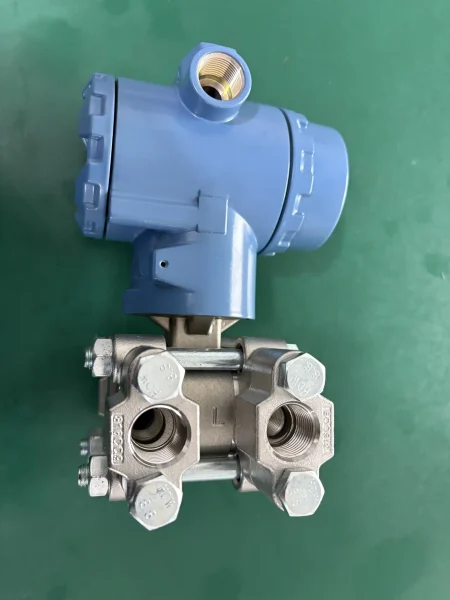
Pressure transducers are essential to industrial development and are used in many control and monitoring applications to monitor and control pressure in systems such as pipelines, hydraulics, and medical equipment. However, when the sensor is used in critical applications and harsh environments, the pressure sensor may require more frequent calibration.
If you have any questions about pressure transducers, or which pressure transducer is best for your testing needs, please feel free to contact an engineer at Sino-Inst. Understanding the working principle and choosing a good sensor will achieve good results.