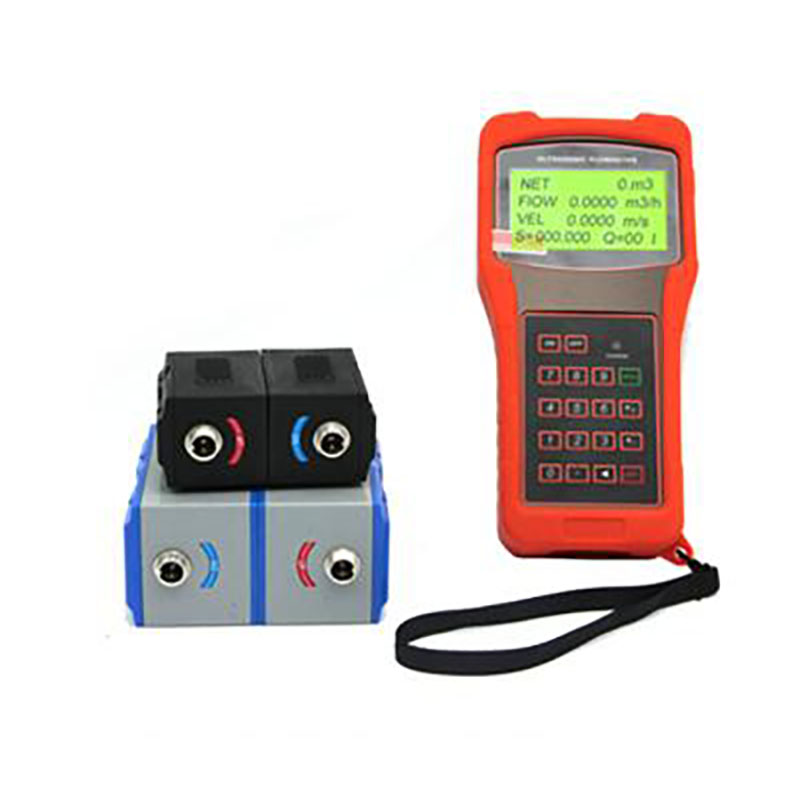
Types of Portable Ultrasonic Flow Meters | Transit-Tim vs. Doppler

Table of Contents

As a prime example of non-invasive flow measurement technology, portable ultrasonic flow meters have found increasingly widespread application in fields such as petrochemicals, water treatment, energy metering, and environmental monitoring due to their significant advantages, including easy installation, no pressure loss, and a wide range of applications.

They have become an important technical tool in modern industrial flow monitoring systems.

What is a Portable Ultrasonic Flow Meter?

Ultrasonic flow meters use ultrasound to determine the velocity of a fluid. The fluid flow rate is then measured, and the volumetric flow rate is calculated.

Portable ultrasonic flow meters non-contact instrument that measures fluid velocity and flow rate through ultrasonic time-of-flight principles. Its standout feature is the ability to be temporarily clamped onto the exterior of a pipe—no cutting required, no process shutdown needed—making flow measurement both quick and adaptable.

Portable ultrasonic flow meters are all controlled by microprocessors. To ensure high accuracy and reliability. They have short response times. Some models are also equipped with dust and splash-proof housings. Non-contact measurement is also possible. Clamp-on ultrasonic flow meters are usually used for flow measurement of pipeline liquids.


Working Principle of a Portable Ultrasonic Flow Meter

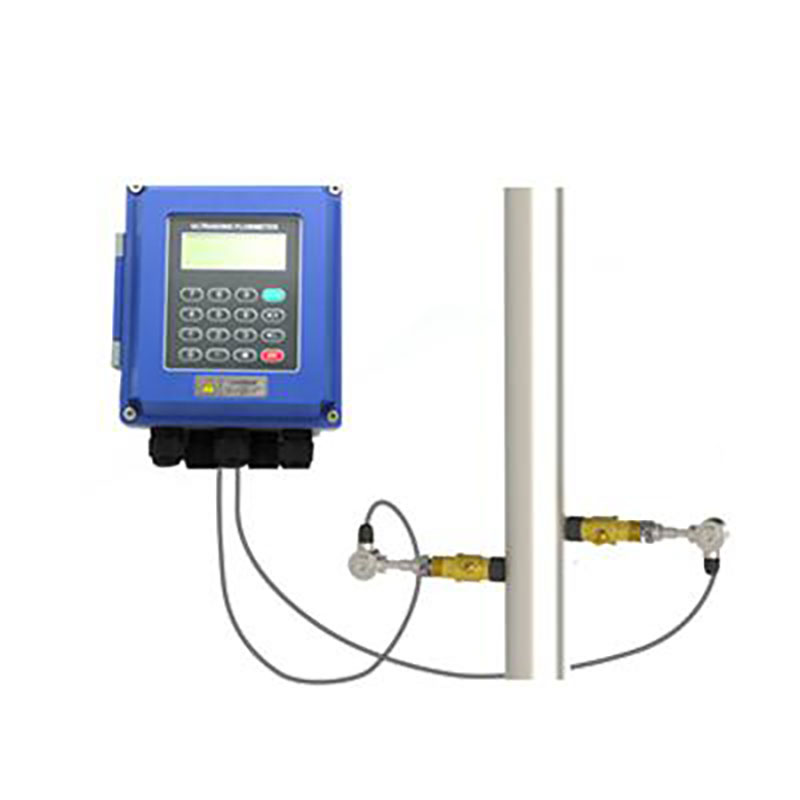
These meters use a clamp-on, non-contact setup—you just strap the probes to the outside of the pipe. They fire ultrasonic waves through the wall and into the flowing liquid, then read how those sound waves get pushed around by the movement. From there, the device figures out how fast the liquid is going and converts that into a flow rate. No cutting, no welding, no permanent install needed.

Time-of-Flight Principle

The meter sends ultrasonic pulses in both directions—downstream with the flow and upstream against it. Since the moving liquid speeds up the sound going one way and slows it down the other, a tiny time gap shows up between the two trips. The faster the liquid moves, the bigger that gap gets. The device measures this difference down to microseconds, plugs in the pipe size and material specs, and spits out the flow rate. It works best when the liquid is fairly clean—not loaded with bubbles or suspended junk.

Doppler Effect Principle

Here, the ultrasonic waves shoot into the fluid and bounce off whatever’s floating in it—particles, bubbles, that sort of thing. When the echoes come back, their frequency has shifted. The receiving probe catches these reflected signals, and the meter compares what went out with what came back. The size of that frequency shift lines up directly with how fast the stuff in the pipe is moving, so the device can work out the flow velocity from there. This method proves more effective for cloudy liquids, slurries, and other media carrying substantial suspended solids or entrained air.


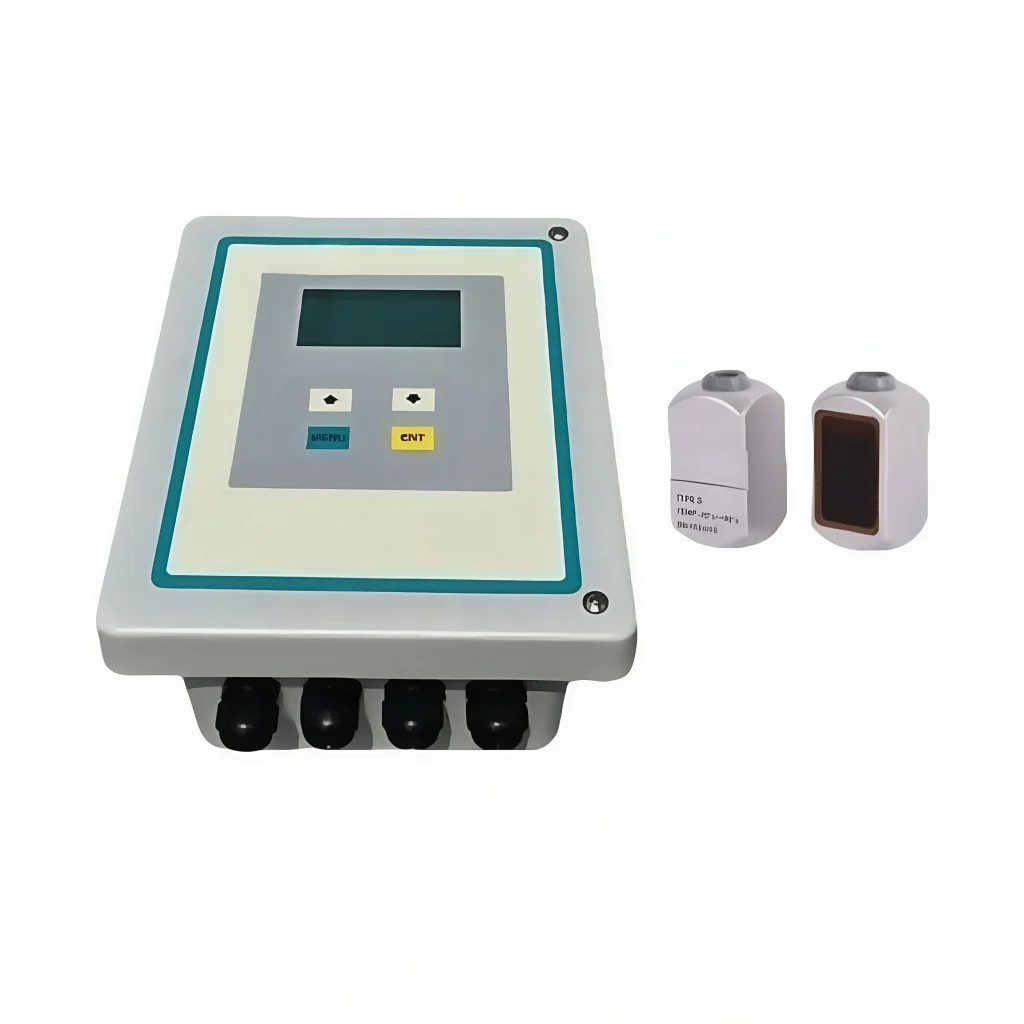
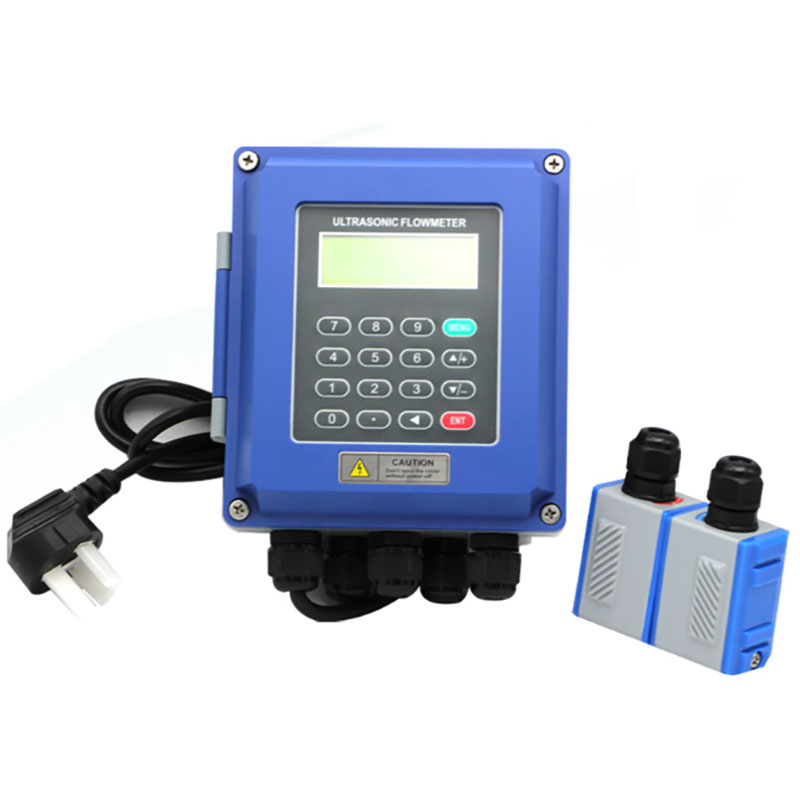
Doppler flow meter
Doppler Flow Meter- Clamp On
Ultrasonic heat meter explosion-proof host
Ultrasonic Heat Meters | Insert & Inline & Clamp-on Meters
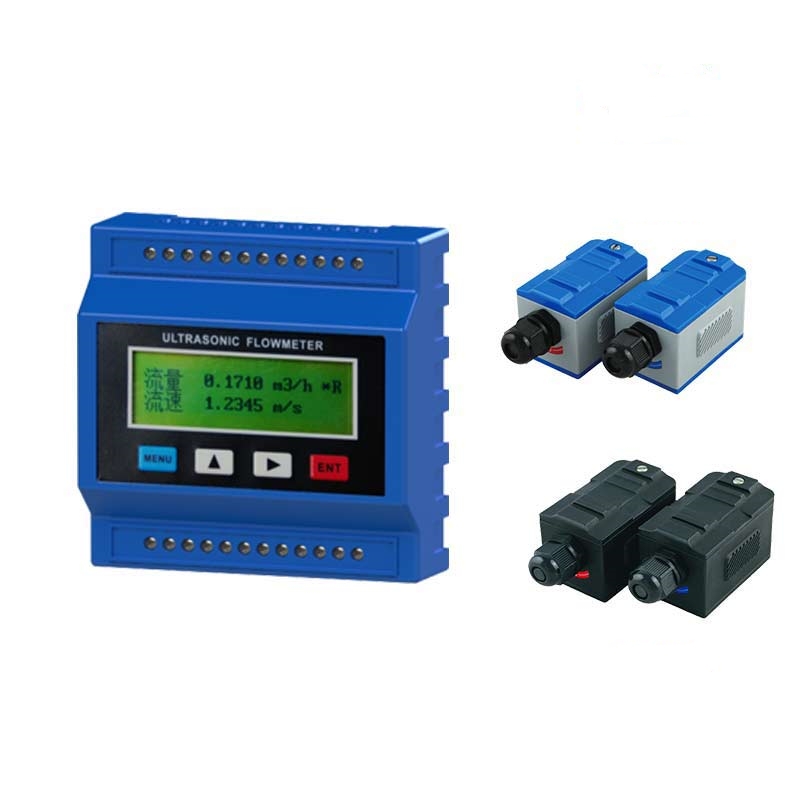
strap-on-flow-meter
Strap on Flow Meter | New Type Clamp-on Ultrasonic
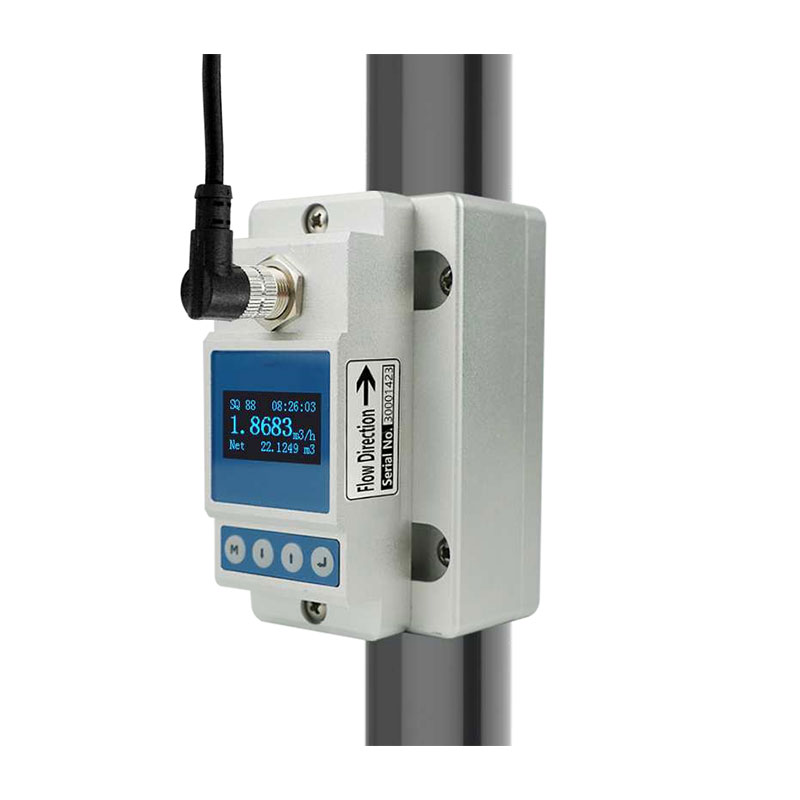
Clamp-on-Ultrasonic-Flow-Meter
Clamp-on Ultrasonic Flow Meter for Most Liquid Pipes
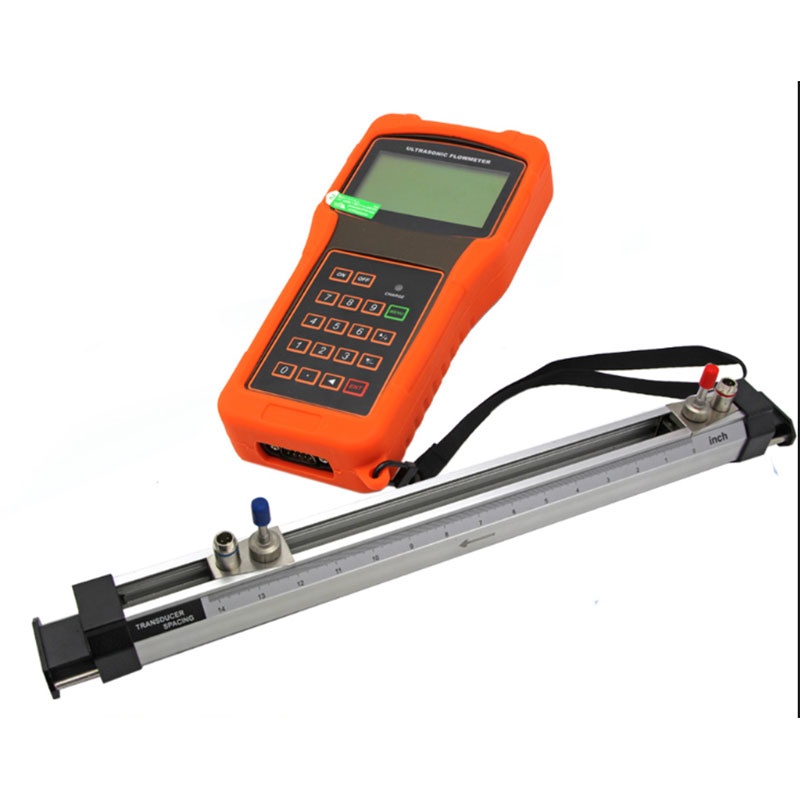
Handheld-ultrasonic-flow-meter-with-Bracket-mounted-sensor
Handheld Ultrasonic Flow Meter – Portable and Clamp On
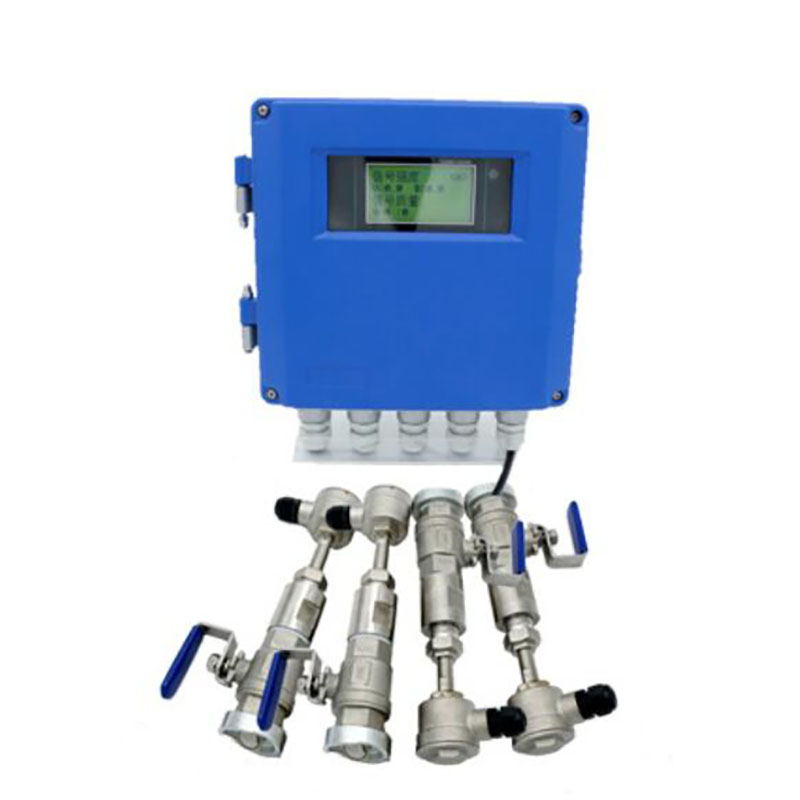
Dual-Multi Channel Ultrasonic Flow-heat Meter
Dual/Multi Channel Ultrasonic Flow Meter – More Stable

Advantages of Portable Ultrasonic Flow Meters

1. No need to cut pipes or do any construction work — installation is straightforward and you don’t have to shut down production or stop any machinery. Just clamp the transducers onto the outside of the pipe and you’re set. This saves a lot of time and labor on site.

2. Since the measurement is done from outside the pipe, there’s no contact with the fluid inside. That means zero pressure loss, no disruption to normal flow, and no risk of contamination. It works well for clean media and can handle fluids in tricky operating conditions too.

3. It works with pretty much any pipe material — metal, plastic, you name it — and handles various diameters without a problem. Whether it’s clean water, wastewater, or oil, the readings stay steady.

4. The unit is compact and light enough to carry around, so moving between measurement points is no hassle. It’s handy for things like doing rounds at multiple spots in a plant, taking temporary readings, or verifying flow rates on the spot.

5. There are no moving parts inside that can wear out, so you won’t run into blockages, corrosion, or damage from the medium. Day-to-day upkeep is just wiping down the probes, which keeps running costs low.

6. The data is reliable and the response is quick. You get real-time readings for instantaneous and cumulative flow, and the display is easy to read — so grabbing data in the field is fast.

7. It holds up well in tough environments, from extreme heat or cold to outdoor exposure and cramped spaces. It also handles outside interference well, making it a solid choice for industrial use.

8. You don’t need to change anything in your existing piping, and the whole production and transport process keeps running as usual. It’s ready to go for temporary monitoring, project handover checks, flow comparisons, and similar tasks.

Disadvantages of Portable Ultrasonic Flow Meters

1. Measurement conditions are limited. If the fluid is packed with bubbles or loaded with impurities, the sound waves don’t travel cleanly, and the readings get thrown off. Small-diameter pipes are another headache—errors tend to run higher there. Rust and scale on the outside of the pipe don’t help either; they can mess with the signal and drag down accuracy.

2. The scope of application is pretty narrow. These meters handle liquids fine, but that’s about it—they won’t work on gas or steam. And if you’re dealing with extreme heat or high pressure, don’t expect them to hold up reliably.

3. Limited application scenarios: They’re built for quick checks and short-term measurements, not for running around the clock. If you need stable, long-term online monitoring, you’ll still need fixed equipment—portable units can’t fill that gap.

4. Stringent environmental and operational requirements: Heavy vibrations in the pipeline or a lot of electromagnetic noise nearby will show up as jittery data. On top of that, if the installation is sloppy, the setup isn’t dialed in right, or the parameters are off, the error margins will climb even higher.

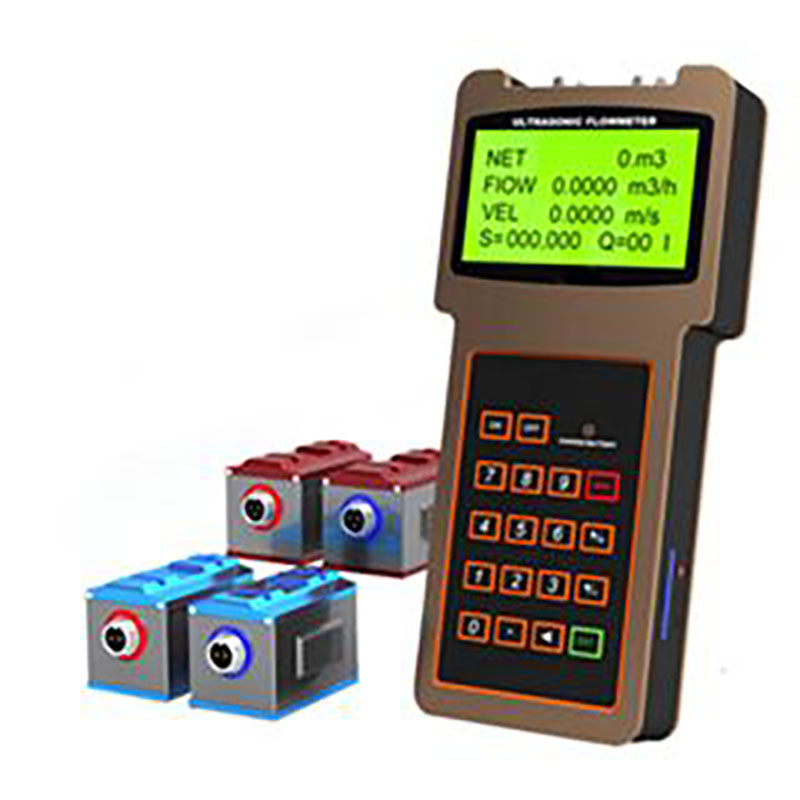
Portable handheld ultrasonic flowmeter

Applications of Portable Ultrasonic Flow Meters

Portable ultrasonic flow meters are widely used for flow measurement across multiple industries due to their non-contact measurement capability, no need to interrupt pipelines, ease of operation, and high mobility. Key applications include:

Industrial Production Monitoring: These meters work well in petroleum, chemicals, metallurgy, and power generation. You can use them for quick flow checks or routine calibration of pipeline media. They spot blockages and leaks without stopping production, so your equipment keeps running smoothly.

Municipal and Environmental Monitoring: For municipal work, they measure flow in drinking water and sewer lines, which helps with maintenance and upgrades. On the environmental side, they let you check wastewater discharge rates right on site—useful for inspections and managing treatment plant operations.

Water Resources and Agricultural Irrigation: You can measure flow in rivers, canals, and irrigation pipes without setting up permanent equipment. The data supports water allocation decisions, flood and drought management, and water-saving farming practices.

Energy Metering and Energy Efficiency Audits: In HVAC and district heating, the meters track cold and hot water flow to figure out building energy use and see how well energy-saving measures are working. This helps companies cut waste and lower energy bills.

Equipment Maintenance and Diagnostics: As an on-site maintenance tool, it compares and calibrates various flow meters, identifies issues such as pipe blockages and pump malfunctions, and minimizes downtime losses.

Research and Education: Used in fluid mechanics experiments and pipeline flow studies, it also serves as an educational tool to help students master the principles and operational methods of flow measurement.

Handheld Ultrasonic Flow Meter

Comparison of Time-of-Flight and Doppler Ultrasonic Flowmeters​

Measurement Principles

The time-of-flight method calculates flow velocity based on the time difference between the propagation of ultrasonic waves in the downstream and upstream directions, and converts this time difference into the flow rate of the medium.

The Doppler method utilizes the reflection of sound waves by suspended particles and bubbles in the fluid, and calculates flow rate based on the frequency shift generated by the reflected waves.

Suitable Media

The time-of-flight method is suitable for pure, contaminant-free media and can reliably measure clear water, pure water, light oils, and clean industrial fluids.

The Doppler method is only suitable for turbid fluids containing particles, bubbles, or suspended solids; common measurement media include wastewater, slurry, and impure industrial wastewater.

Measurement Accuracy

The time-of-flight method offers high measurement accuracy and strong stability, meeting the demands of high-standard applications such as precise metering and data calibration.

The Doppler method has lower accuracy and greater value fluctuations, making it suitable only for rough flow monitoring and unsuitable for precision metering.

Flow Velocity Measurement Range

The time-of-flight method performs exceptionally well at low flow rates, accurately capturing data even in slow-moving fluids.

The Doppler method has poor sensitivity to low flow rates, resulting in significantly larger measurement errors under low-flow conditions.

Field Operating Conditions

The time-of-flight method has minimal requirements for pipeline conditions; it functions normally as long as the inner pipe walls are clean and is minimally affected by external interference.

The Doppler method relies on reflective surfaces within the medium; if the medium contains too few impurities, it cannot properly acquire signals, leading to measurement failure.

Types of Ultrasonic Flow Meters

By Installation Method

Clamp-on models require no pipe cutting or drilling; they are installed by clamping directly onto the outer wall of the pipe. They are easy to install and remove, and can be repositioned for measurement at any time, making them ideal for temporary measurements and on-site inspections.

Insertion models need a hole drilled in the pipe to mount the probe. They give steadier readings and work best for long-term, fixed monitoring setups.

Pipe-section models come as a single, factory-calibrated unit with tight sealing. They’re a good fit for high-precision, fixed metering jobs.

Classified by Application Type

Portable models are small and light, easy to carry around and operate without much training. People tend to grab these when they need to move around a lot—field surveys, on-site calibration, checking pipelines at different spots.

Fixed models are built tough. They hold up well and can run non-stop for long periods. You’ll see them on industrial production lines and municipal pipeline networks where round-the-clock flow monitoring is a must.
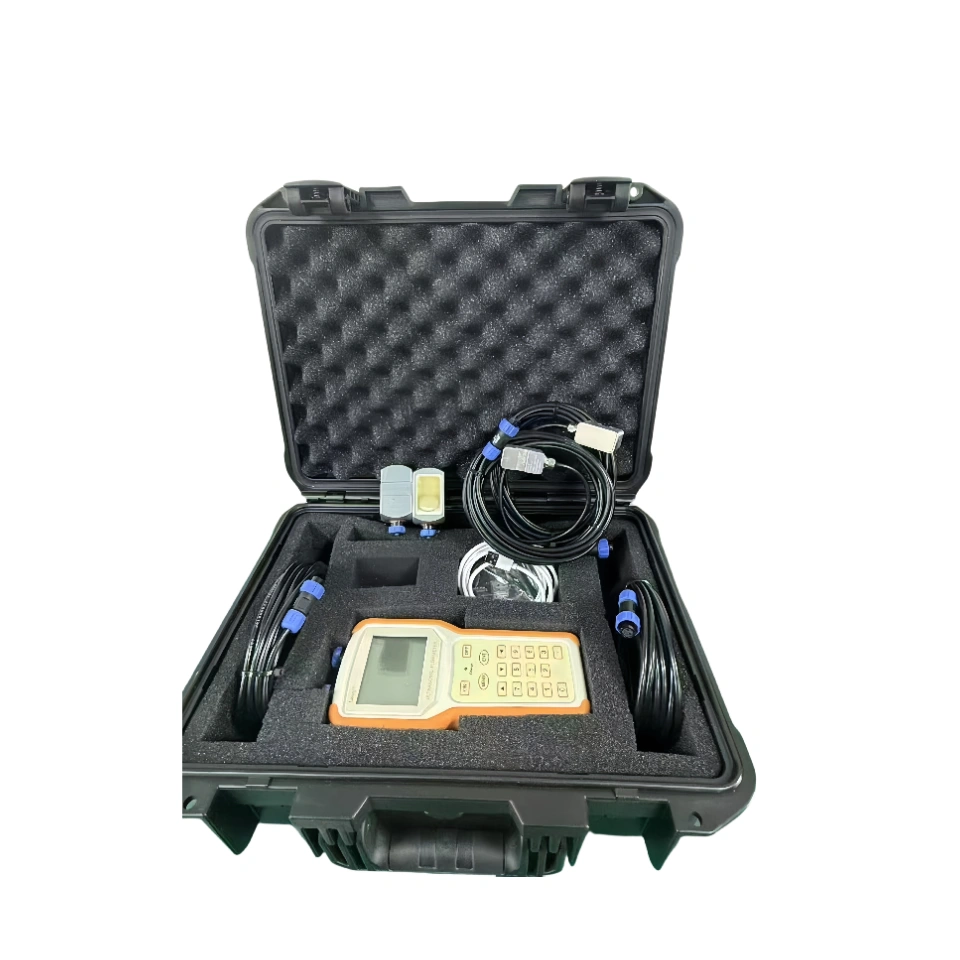
 

Classified by Number of Channels

Single-channel models keep things straightforward. Their structure is relatively simple, which keeps costs down, and they work well enough under standard conditions where the pipeline layout is clean and the flow pattern stays fairly consistent.

Multi-channel models step things up by using multiple probe arrays to gather data. This setup helps them correct for uneven flow patterns, so the readings come out more accurate. They’re typically picked for big-diameter pipes and jobs that need tight measurement precision.

Classification by Medium Compatibility

Ultrasonic flow meters split into two camps: liquid meters and gas meters. The key difference is probe frequency and how the signal gets sent through. Liquid meters handle fluids like water and oil. Gas meters are built for media such as natural gas and air.
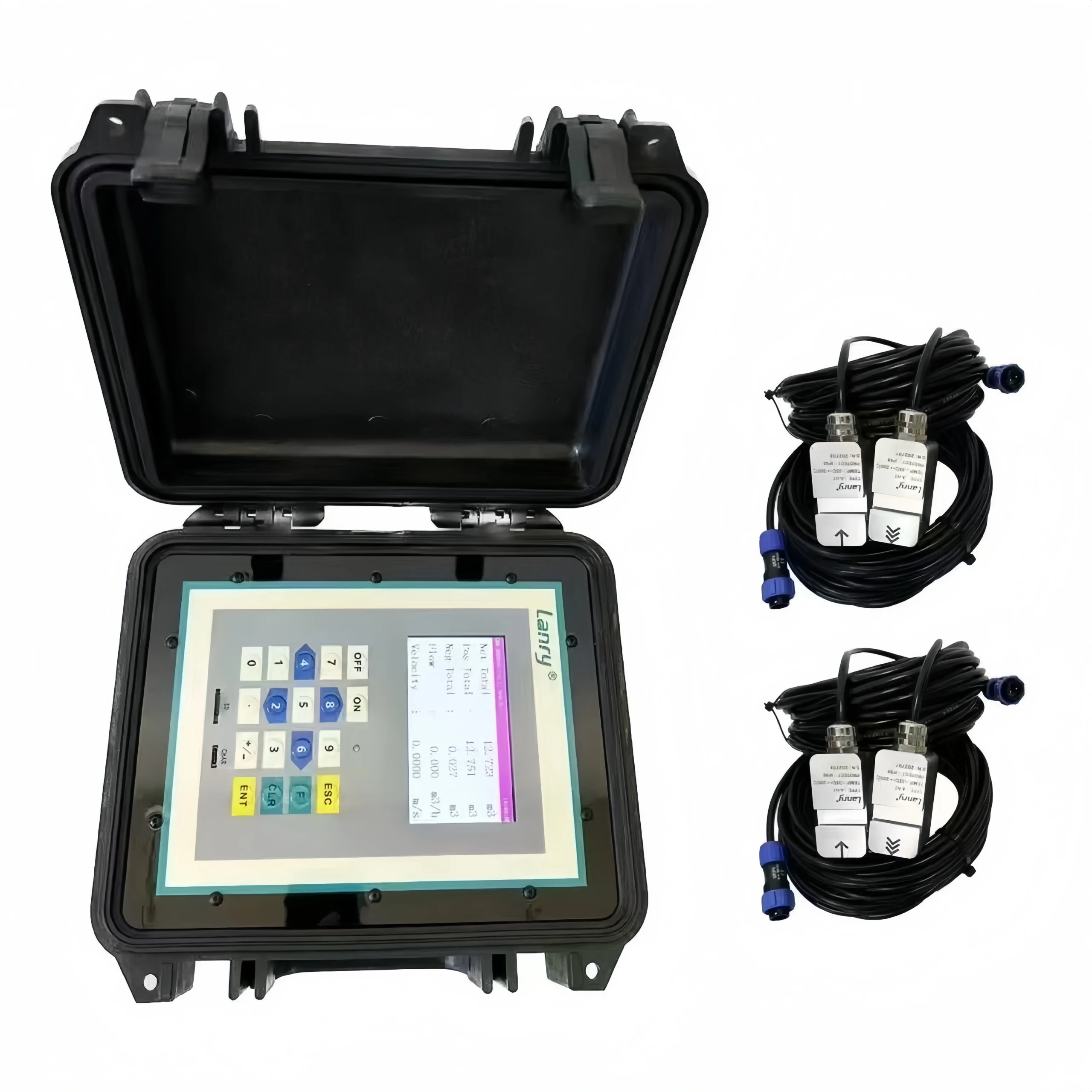
Portable Flow meter

  •  

How to Select the Right Ultrasonic Flow Meter

Determine the measurement medium: If you’re working with clean fluids—tap water, deionized water, light oil—a time-of-flight (TOF) meter is usually what you want.But if the fluid is murky, with sediment, suspended particles, air bubbles, or even raw sewage and slurry, you’ll want to go with a Doppler-type meter instead.

Define Measurement Accuracy Requirements: When the stakes are high—trade settlement, tracking energy usage, or calibration work where every decimal point matters—TOF meters generally deliver the precision you need. For quick checks in the field, rough estimates, or troubleshooting where “close enough” works, Doppler meters are perfectly adequate.

Application Scenarios and Installation Methods: Need something for short-term jobs, spot-checking out in the field, or measuring flow at several different points? A portable clamp-on unit makes that easy. If you’re setting up something permanent for round-the-clock monitoring, look at fixed clamp-on, insertion, or in-line styles. Can’t afford to shut the line down or cut into the pipe? Clamp-on is your friend. If drilling a couple of holes is an option, an insertion model might give you better stability.

Verify pipeline parameters: Check what the pipe is made of, how wide it is, and how thick the walls are—those factors affect how well the transducers can couple their signal through. Don’t forget to confirm the fluid temperature and the pressure the system runs at, so you don’t end up with a meter that’s rated for conditions milder than what you’ve got.

Consider flow velocity and flow conditions: When flow is running slow, TOF tends to give you steadier, more reliable numbers. If the line has a lot of bends, the flow is chaotic, or you’re working with a really large pipe, multi-channel models do a better job of sorting through the noise and keeping accuracy up.

Evaluate the on-site operating environment: Out in the open where it’s wet, dusty, or shaky from heavy machinery? Pick a unit with a solid IP rating that can take a beating. If you’re in a plant surrounded by motors, welders, or other gear throwing off electromagnetic noise, make sure the meter has decent shielding and anti-interference design built in.
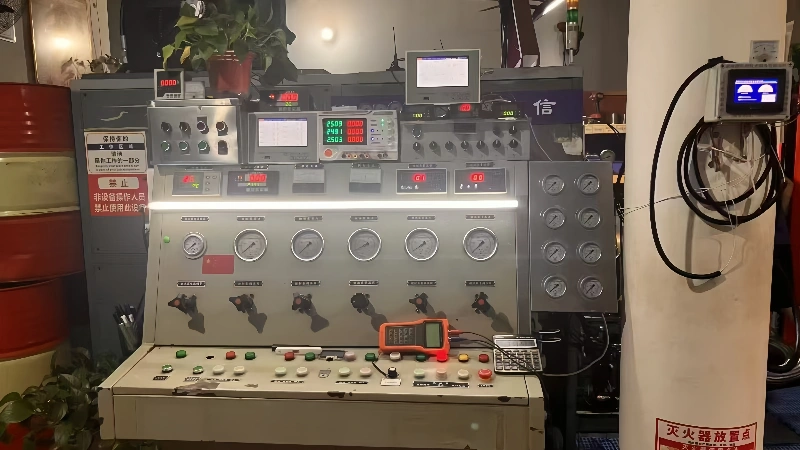

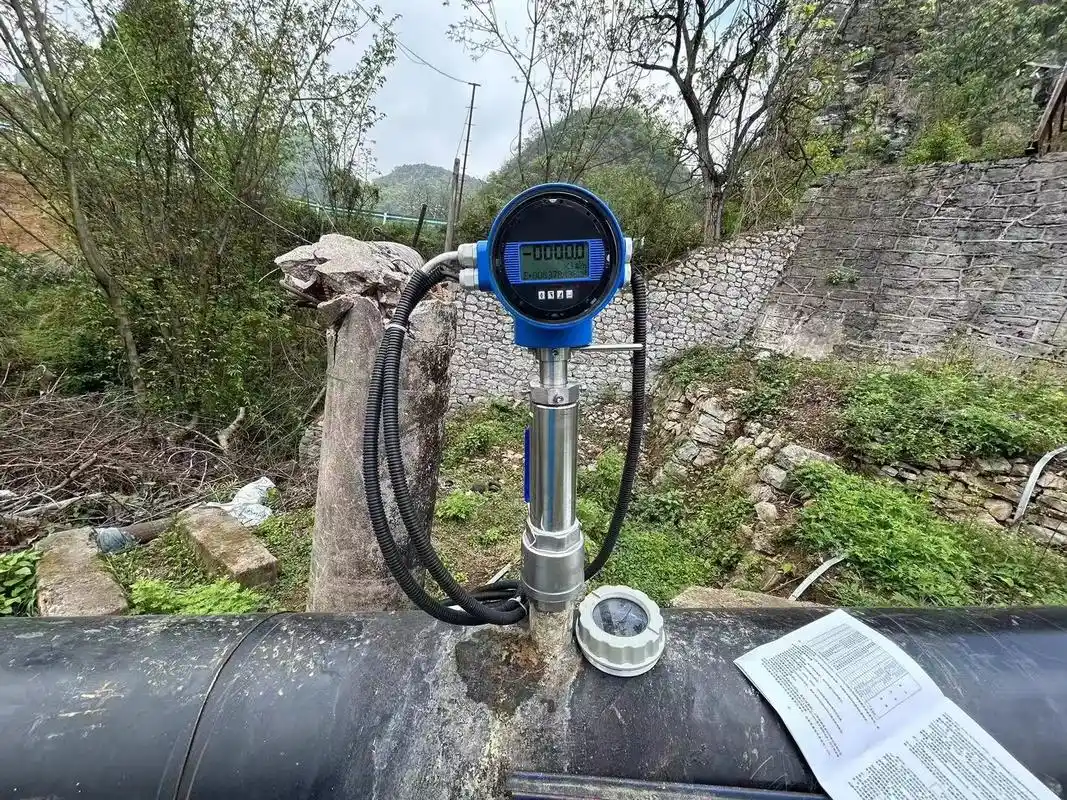
Portable Flow meters

Sino-Inst’s portable product line offers ultrasonic liquid clamp-on flow meters. They are used for the measurement of liquids. The portability of the meter allows the device to be moved to multiple measurement locations. This makes it easy to spot-check flow, verify flow meters, or temporarily install equipment. If you have any questions about portable flow meters and need a reliable flow meter solution, please contact our team.

Welcome To Share This Page:
Product Categories
Latest News
Get A Free Quote Now !
Contact Form Demo (#3)

Related Products

Related News

About Solid Powder Solid powder is a dry substance composed of many small particles that are tightly packed together. These

Scroll to Top

Get A Free Quote Now !

Contact Form Demo (#3)