Magnetostrictive and float level transmitters represent two established approaches to liquid level measurement in industrial process control, finding broad application across petrochemical operations, water treatment facilities, and energy storage and transport infrastructure.
This paper undertakes a systematic comparison of these transmitter types, examining measurement accuracy, environmental resilience, installation and maintenance requirements, and overall cost-effectiveness. The objective is to furnish engineering practitioners with a practical reference framework for equipment selection.
What is a Magnetostrictive Level Transmitter?
A magnetostrictive level transmitter is a high-precision, contact-type level measurement instrument widely used in the petroleum, chemical, water treatment and storage industries. It can accurately measure liquid levels within storage tanks and detect oil-water interfaces.
Working Principle
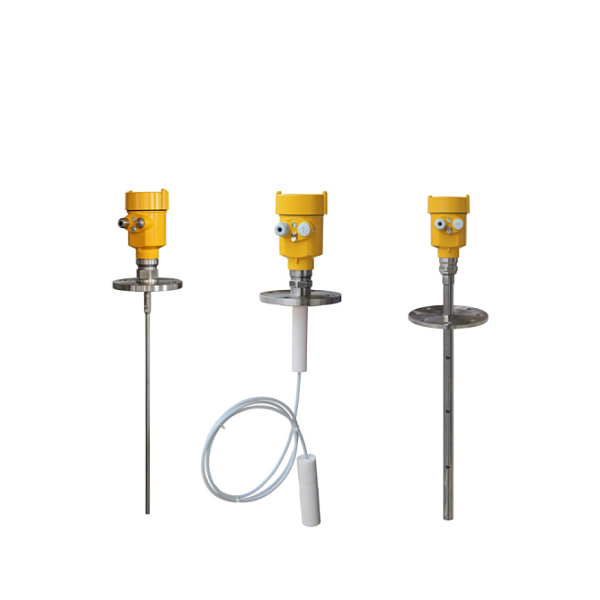
Magnetostrictive level transmitters utilise the magnetostrictive physical effect to measure liquid levels. The instrument’s head sends electrical pulses to the waveguide wire inside the measuring rod; as the pulses propagate, they generate a ring-shaped magnetic field around the waveguide wire.
The float, which rises and falls with the liquid level, contains a permanent magnetic ring that generates an axial magnetic field. When these two magnetic fields superimpose, the waveguide wire undergoes instantaneous micro-deformation, generating stress-induced ultrasonic waves that propagate towards the indicator head at a constant speed.
The circuitry in the indicator head records the exact time gap between firing the electrical pulse and picking up the returning ultrasonic wave. Since the speed of sound is fixed, it can work out the distance from the float to the indicator head, and from there get the liquid level.The unit can be set up with a dual-magnetic float, which lets it measure the boundary between two immiscible liquids at the same time.
What is a Float Level Transmitter?
A float level transmitter is a contact-type device that uses buoyancy to sense liquid levels. It is built simply and sees use in many places—sewage plants, storage tanks, and ordinary chemical handling among them.
Working Principle
The float level transmitter works on buoyancy and magnetic coupling. A float, made lighter than the liquid it sits on, rides the surface and moves with it. A permanent magnet inside the float sends a field through the guide rod wall to actuate reed switches or magnetoresistive sensors built into the rod.
The instrument’s electronics turn this magnetic field into an electrical signal matching the magnet’s position, and that gives the current liquid level. Because nothing touches directly throughout, the design stays simple and dependable, and it can put out either a level switch signal or a continuous measurement signal.
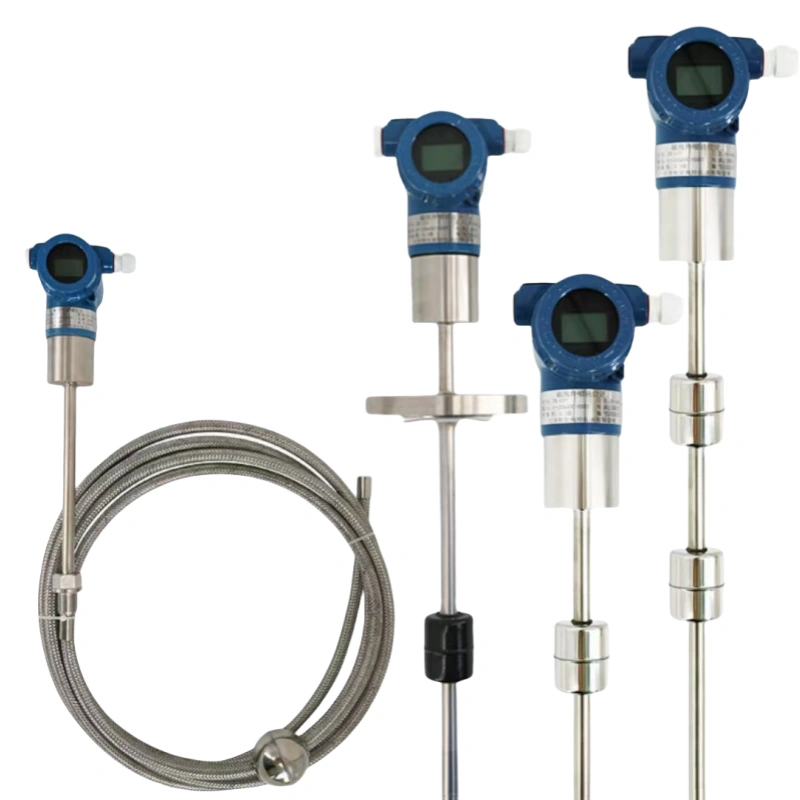
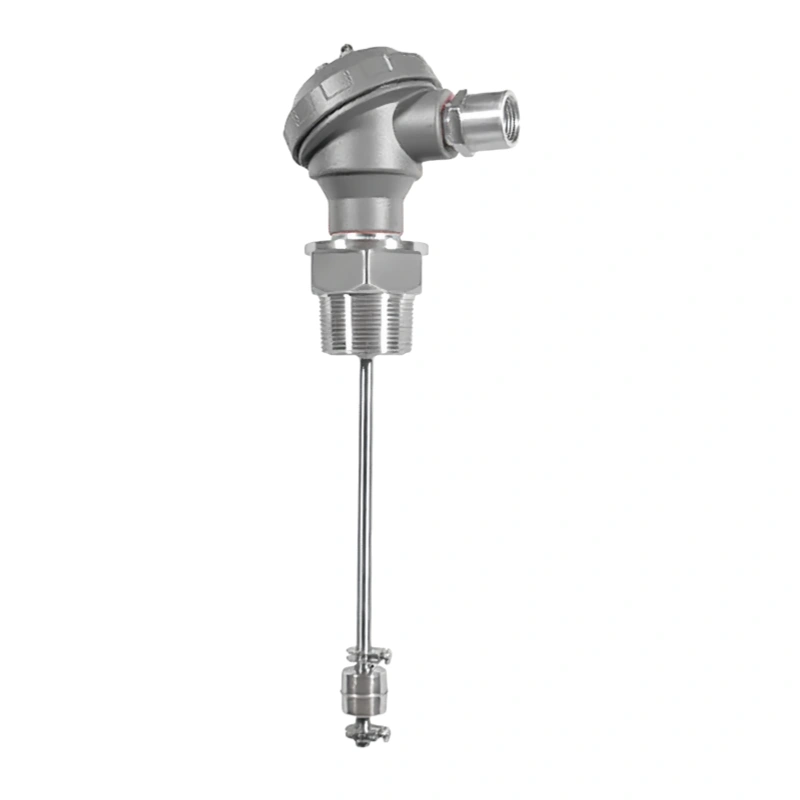
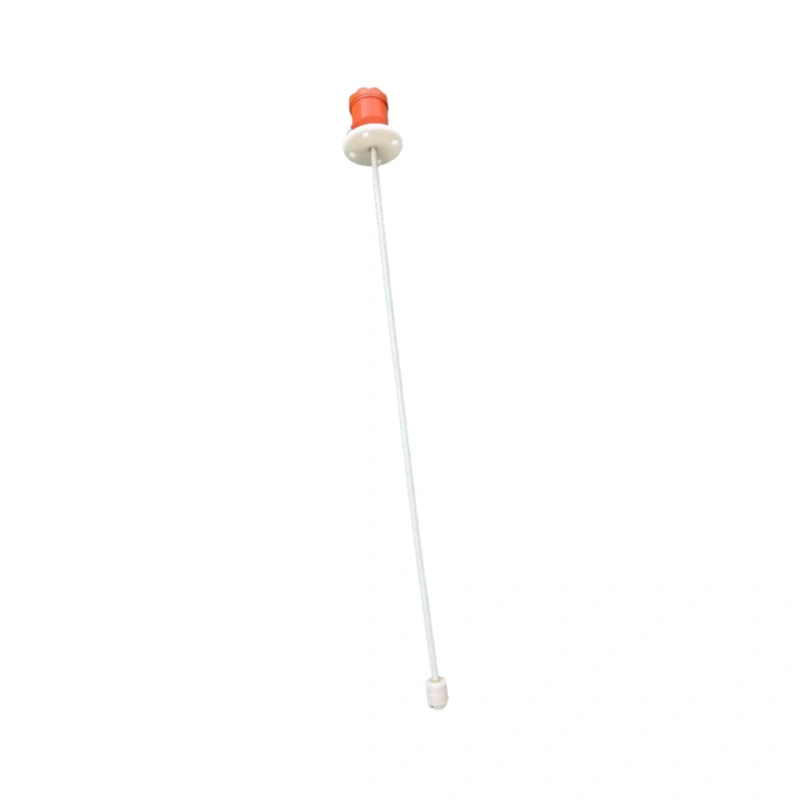
Differences between Magnetostrictive Level Transmitters and Float Level Transmitters
Measuring Principles
1. Magnetostrictive Level Transmitter: A magnetostrictive waveguide wire is housed within the probe rod. A float equipped with a magnetic ring moves up and down with the liquid level; the magnetic field of the float interacts with the excitation pulses from the probe rod to generate magnetostrictive torsional waves.The instrument calculates the precise liquid level value by measuring the wave propagation time and transmits the measurement data via electromagnetic signals.
2. Float level transmitter: A hollow float sits on the liquid surface and rises or falls with it, pushed by buoyancy. Through a connecting rod, magnetic coupling, or mechanical shaft, it physically shifts internal contacts or magnets to generate a level signal from this mechanical movement; the core mechanism is essentially a physical linkage.
Measurement Accuracy and Range
1. Magnetostrictive level transmitters are highly accurate, with typical errors running ±0.5 mm to ±1 mm. They cover a wide span, working reliably from 0.3 metres up to 20 metres, with linear response all the way through and no step deviations, which makes them a good match for applications that demand precision.
2. Conventional rod-and-float transmitters are less accurate, with errors usually falling between ±5 mm and ±20 mm; over longer spans the connecting rod tends to flex, which erodes accuracy further. Split-cable float gauges are unstable in this regard because cable weight and tangling introduce variability, so they are generally limited to rough measurements over short distances.
Differences in Structure and Installation
1. The magnetostrictive transmitter uses a single integrated probe with no external moving parts; the float merely travels along a smooth probe surface, sidestepping problems like seizing, wear, or sticking. It can be installed from the top or the side, and maintenance is infrequent—routine checks mostly involve wiping off any buildup on the probe.
2. Float level transmitters have their mechanical parts—rods, shafts, bearings—out in the open; these seize up or corrode when the fluid is thick or carries solids. Cable-type float gauges suffer from cable tangling and snagging, and their shaft bearings need greasing and regular attention, which adds to the maintenance load.
Signal Output and Functions
1. Magnetostrictive level transmitters can put out 4–20 mA analogue signals and RS485 digital signals. They can read liquid level and interface values at the same time, support remote communication and multi-parameter data upload, and tie into automated DCS systems for continuous real-time monitoring.
2. Conventional float level transmitters typically provide switch-type contact outputs, offering only high and low level alarm points; a few continuous-type float level gauges only support a basic 4–20 mA analogue signal, are unable to accurately measure the interface of stratified media such as oil and water, and have limited digital communication capabilities.
Suitable Media and Operating Conditions
1. Magnetostrictive level transmitters are suitable for clean water, oils, chemical solvents and low-viscosity liquids. The probe rod can be made from corrosion-resistant materials, making them suitable for closed storage tanks, high-pressure vessels and high-precision metering tanks; media containing small amounts of fine impurities are unlikely to affect measurement.
2. Float level transmitters are better suited to standard operating conditions with low requirements, such as clean water and wastewater; viscous or crystallising media can easily jam the float linkage.They are not pressure-resistant and are rarely selected for large pressure vessels, being used primarily for level alarms in atmospheric tanks and simple storage tanks.
Service Life and Cost
1. Magnetostrictive level transmitters have no mechanical friction loss; the core waveguide wire has a service life of several years, offering good long-term stability, but the unit purchase price is higher.
2. Float level transmitters are cheap to buy and their construction is uncomplicated, yet their mechanical parts wear down quickly from sustained friction and corrosion; repeated breakdowns can push up the hidden costs of replacement and upkeep.
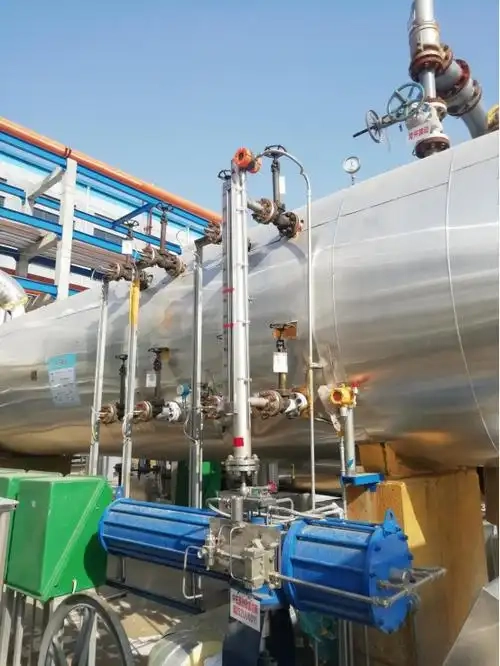
Advantages of Magnetostrictive Level Transmitters
1. High measurement accuracy: it picks up liquid level through magnetic coupling and waveguide pulse signals, so minor changes in medium density or temperature do not affect the reading. It gives millimetre-level precision and can output continuous, accurate level data, meeting the needs of exact metering and automated closed-loop control.
2. Broad media compatibility: the probe has no internal moving parts, so jamming and wear are not an issue. It deals with oils, sewage, chemical solvents, and viscous fluids, handling both high- and low-viscosity conditions.
3. Strong stability and long service life: with no friction points that could fail, signal drift remains low. Recalibration is rarely needed, breakdowns are uncommon, and this keeps maintenance and replacement costs under control.
4. Dual measurement capability: one unit can measure both liquid height and the interface between two media, providing two functions from a single instrument and reducing the number of devices and wiring runs on site.
5. Good signal compatibility: it supports 4–20 mA, RS485, HART, and other industrial protocols, so it can connect directly to PLCs, DCSs, and similar automation platforms, fitting a wide range of production setups.
6. Installation and upkeep are simple, with top-mounted, side-mounted, and other configurations available; removing or swapping the unit does not require draining the tank. Sealing is robust enough for pressurised vessels, and explosion-proof variants are available for hazardous areas.
7. The measurement dead zone is small, so level changes right at the top and bottom of the tank are picked up, enabling full-range measurement even in compact or narrow tanks.
8. Strong immunity to interference: the shielded waveguide structure lets it shrug off electromagnetic noise from motors and variable-frequency drives on the plant floor, keeping readings stable and accurate in electrically harsh surroundings.
Advantages of Float Level Transmitters
1. Cost-effective: next to pricier high-precision options like radar or magnetostrictive units, the transmitter and its fittings cost less, which works well for standard storage tanks on a tight budget where pinpoint accuracy is not critical.
2. Copes with high pressure and high temperature. The metal float and rod take a fair amount of heat and pressure, so they suit tough jobs in boilers, thermal oil tanks, and high-pressure reactors, with plenty of protection ratings to choose from.
3. Various signal outputs on offer. Direct-reading float transmitters let operators eyeball the level on site, while reed-switch or magnetic flip-plate versions throw out digital alarm signals, and 4–20 mA transmitters send remote readings—handling both local checks and automated control.
4. Wide media tolerance: floats are made from stainless steel, PP, PVC, PTFE, and other materials, so they fit most liquids—tap water, wastewater, oils, weak acids and alkalis—as long as the stuff is not too thick or full of large solids.
5. Flexible mounting: top, side, or bottom fitting all work. This covers tanks big or small, open vessels, and sealed pressure tanks; retrofits do not need major structural work.
6. Broad explosion-proof coverage. The design does not produce sparks by nature; explosion-proof models are good for storing flammables like petrol, alcohol, and hazardous chemicals, meeting chemical safety rules.
7. Light maintenance load: under normal, clean conditions the unit is robust and holds up over long runs. Upkeep is mostly a matter of cleaning off any fouling on the float from time to time; there are no involved calibration routines, so day-to-day operation and care are uncomplicated.
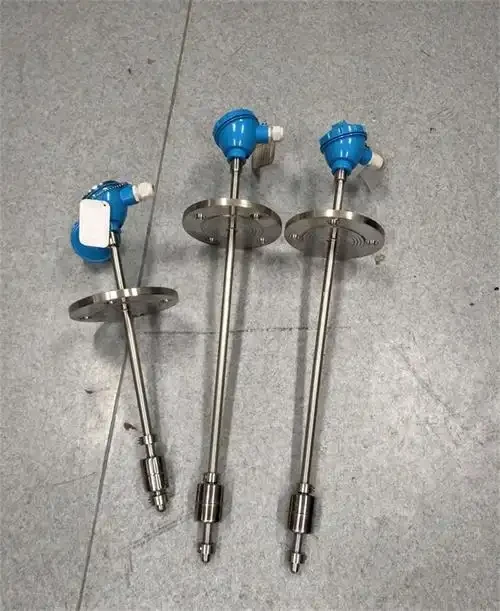
Selection Guide
I.I. Selection by Measurement Accuracy
Where continuous, high-precision measurement is needed—material blending operations, automated closed-loop control, and similar—magnetostrictive level transmitters are the better fit, giving millimetre-grade accuracy with stable signals that do not drift. For routine monitoring that only calls for local visual checks and high or low level switch alarms, a float-type transmitter is adequate.
Selection Based on Medium Conditions
For trickier fluids—viscous liquids, those with fine contaminants, oil-water mixtures, or corrosive substances—magnetostrictive transmitters are preferable, since they have no mechanical wear and can pick out interface levels.
For clean media such as potable water and ordinary oils, float-type transmitters offer better value. In severe high-temperature, high-pressure environments, metal float-type transmitters come out ahead, as they tolerate heat and pressure better than magnetostrictive units.
Selection Based on Automation Capabilities
For smart applications needing remote data transmission, tie-in with PLC or DCS systems, or simultaneous liquid level and interface measurement, magnetostrictive transmitters are the ones to choose, as they work with a wide spread of industrial signal types.
For applications involving on-site visual monitoring, simple level alarms, and no need for complex automation, magnetostrictive float level transmitters that require no power supply are sufficient.
Selection Based on Cost and O&M
For scenarios with sufficient budget requiring long-term, intelligent and precise monitoring, select a magnetostrictive level transmitter; although the purchase price is higher, it offers stability, is maintenance-free and has low operational costs.
For scenarios with limited budget requiring basic point monitoring, a float-type level transmitter is the preferred choice, as it has low purchase and installation costs and a simple structure.
Use magnetostrictive level transmitters for unmanned, sealed tanks that are hard to get to; float-type level transmitters suit ordinary equipment that staff can inspect on site at regular intervals.
Selection for Special Applications
For flammable, explosive, or hazardous chemical environments, both instrument types come in explosion-proof versions, so the choice depends on the specific job. In cramped tanks or situations needing full-range measurement over a short span, magnetostrictive transmitters with small blind zones are the better pick; float level transmitters are less suitable because they have built-in measurement blind zones.
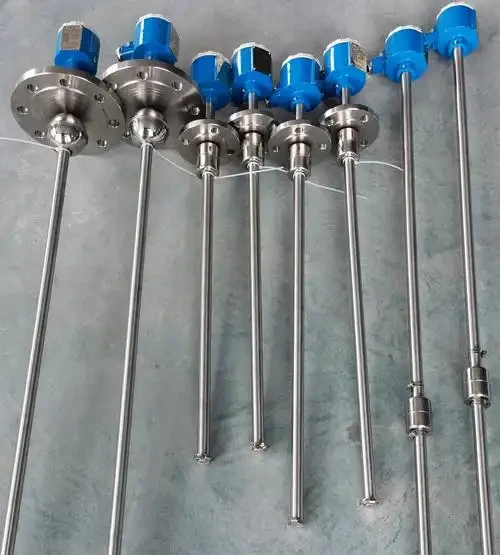
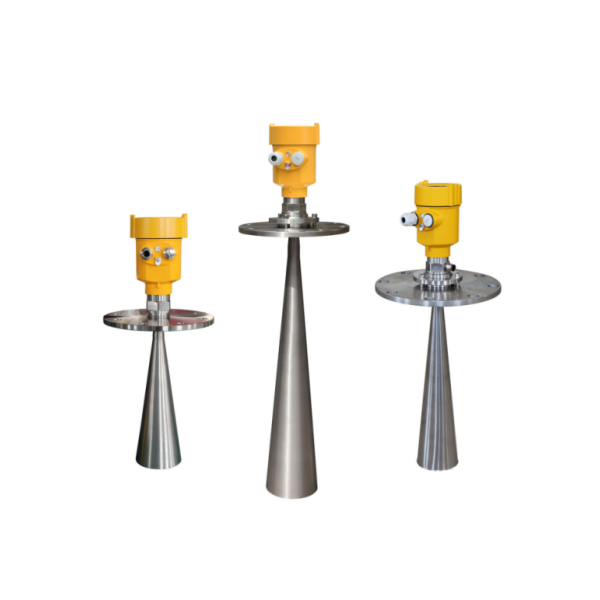
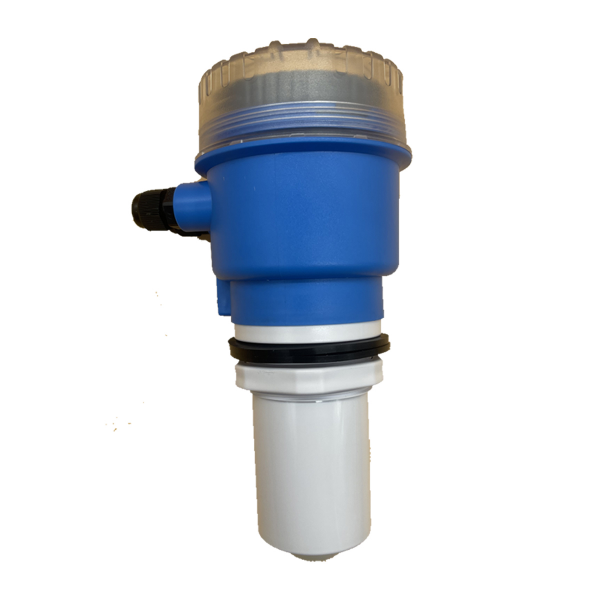
To meet the diverse requirements of on-site measurement scenarios, in addition to the two instruments mentioned above, Sino-Inst offers a full range of level measurement products, including ultrasonic level transmitters, radar level transmitters and hydrostatic level transmitters.
These cover both contact and non-contact measurement solutions and are suitable for complex operating conditions such as high temperature and pressure, severe corrosion, dusty environments, explosion-proof requirements and extremely wide measurement ranges.
Sino-Inst offers bespoke selection, equipment supply and comprehensive operation and maintenance services. Leveraging a comprehensive product portfolio and proven technology, we provide reliable assurance for the automation and stable operation of level monitoring across various industries.