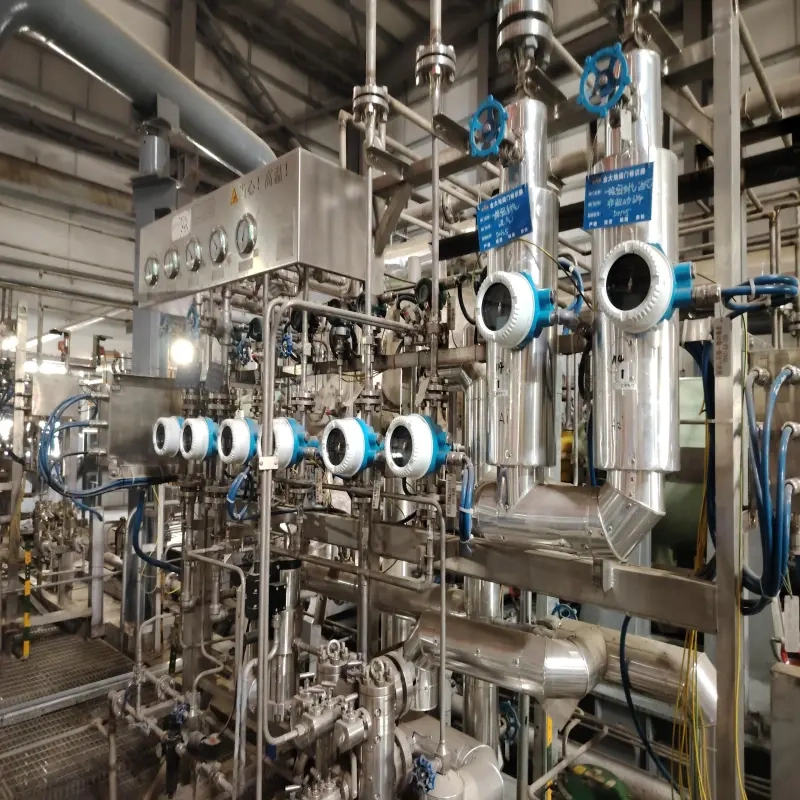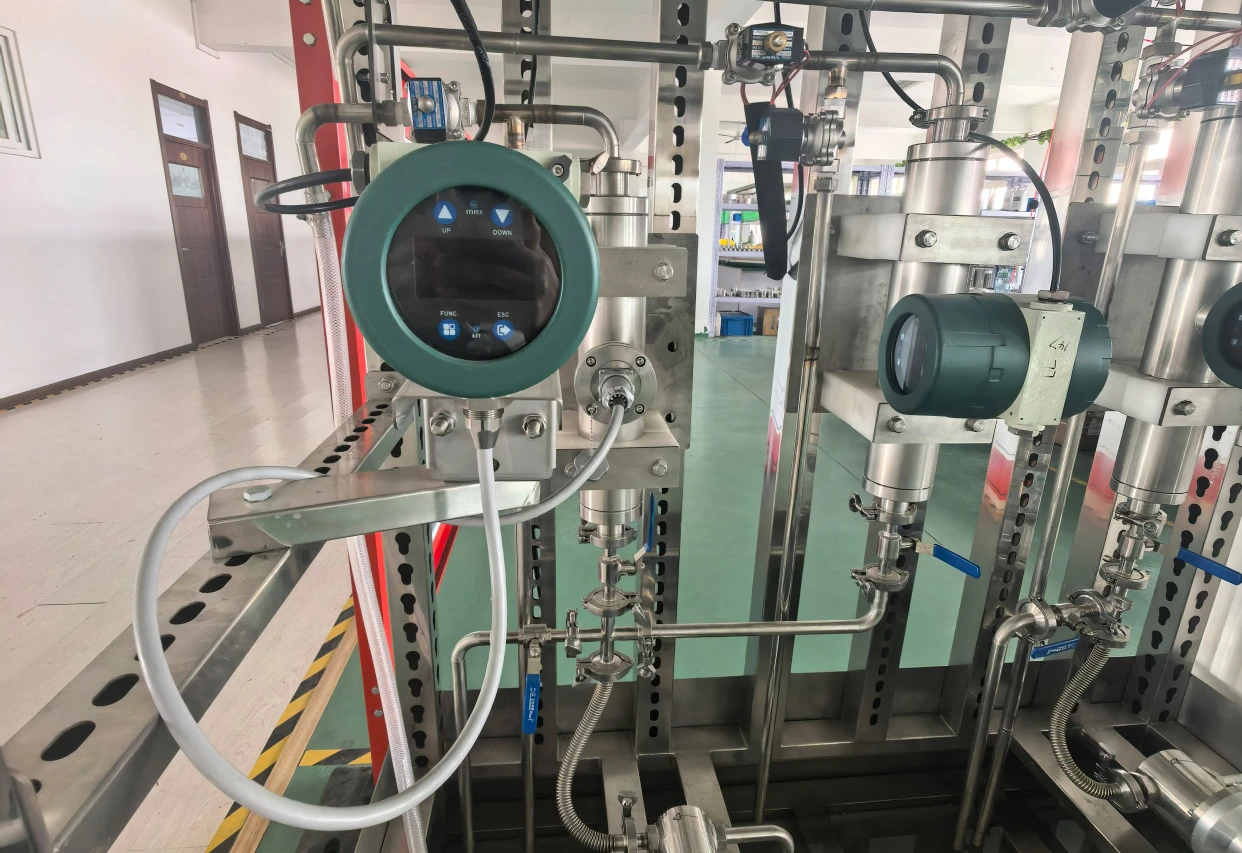
Water is something we all need in our day-to-day lives and you can find it everywhere. In areas like modern industrial production, environmental monitoring and supplying water to towns and cities, water flow meters are really important tools. The accuracy and stability of these meters directly impact how effectively we use water and protect the environment.
There are now many types of water flow meters available, and consequently, there are numerous methods for installing them. Depending on the specific operating environment, the medium being measured and the requirements, different installation methods must be employed.
Common Water Flow Meters
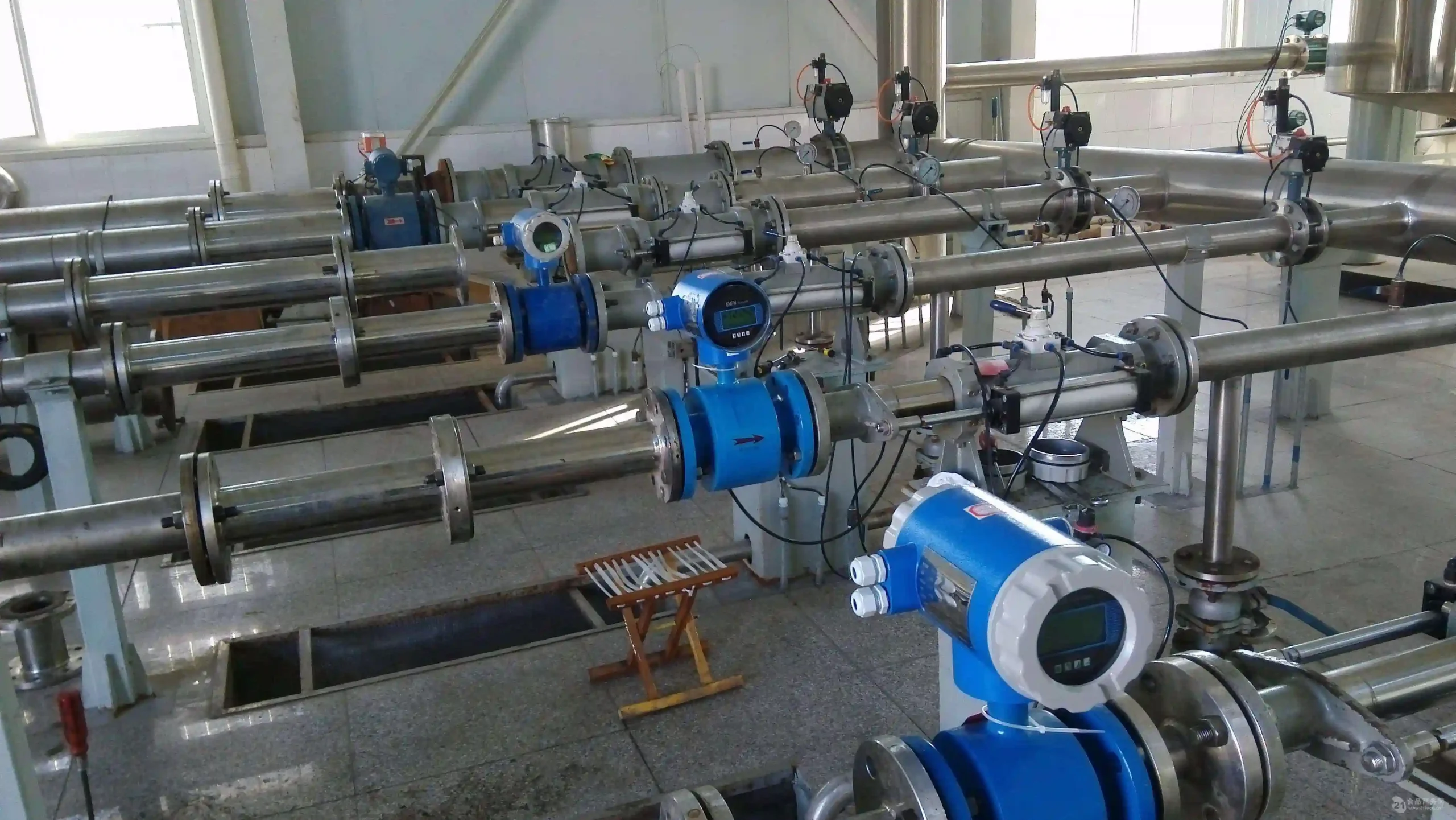
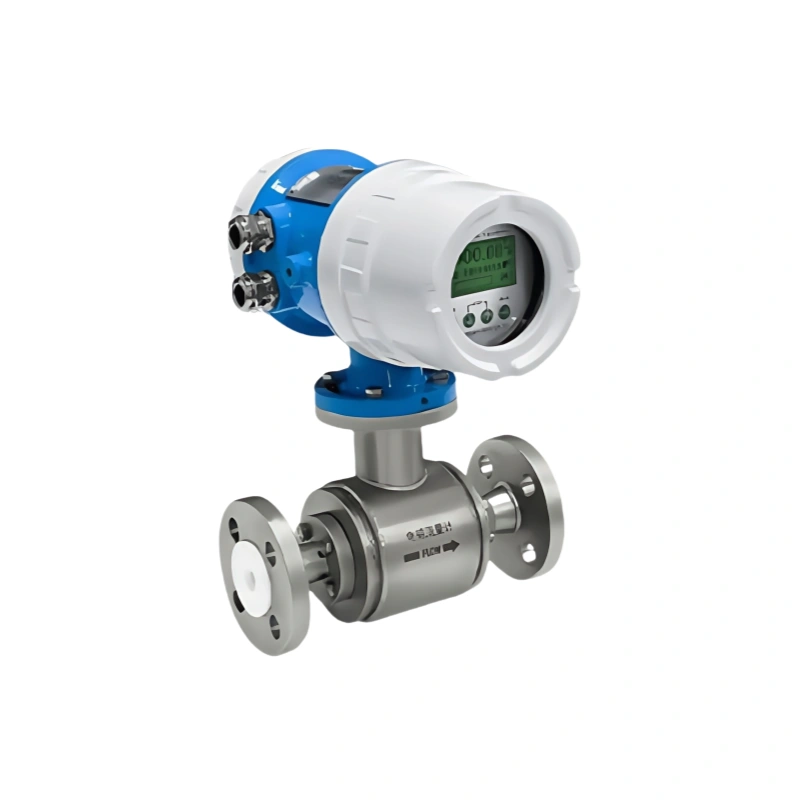
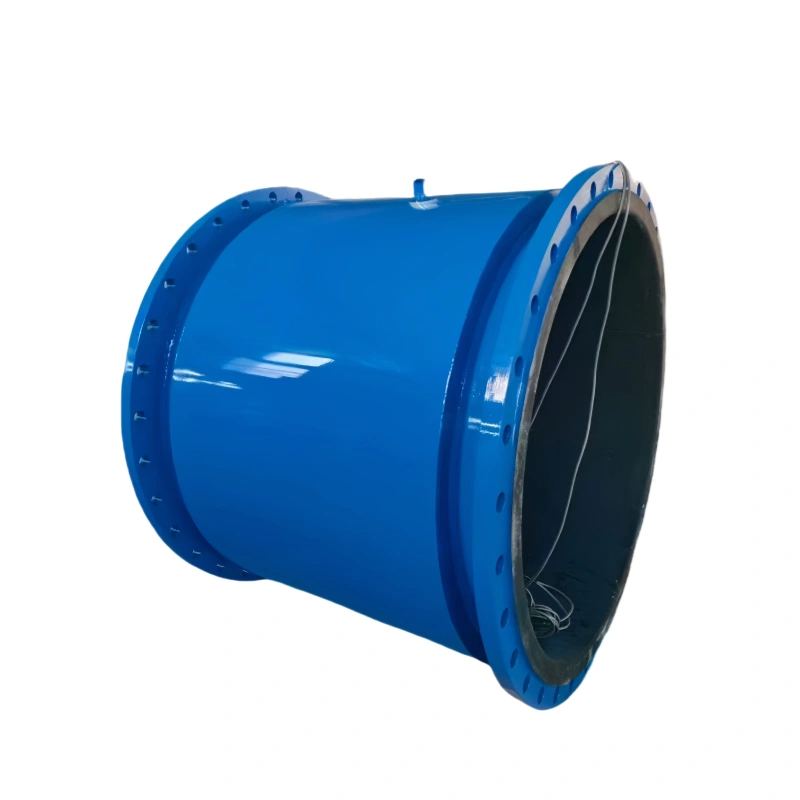
Electromagnetic Water Flow Meters
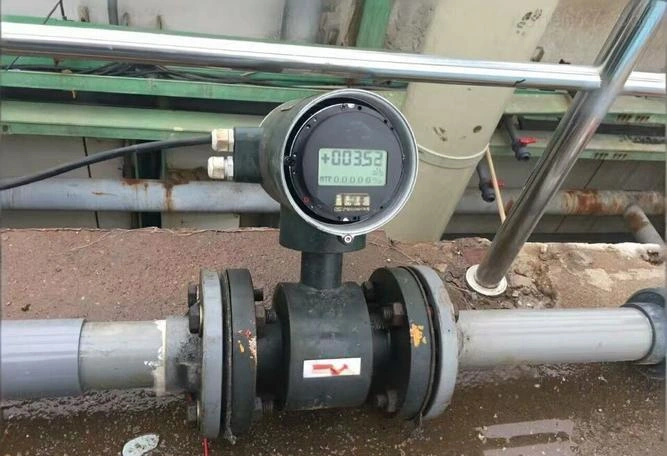
It’s a type of water flow meter based on Faraday’s law, and it can accurately measure water flow within pipes. It’s super precise and a breeze to install and maintain. By picking the right sensor linings and electrode materials, the meter can be made to be both wear-resistant and corrosion-resistant. Similar to other water flow meters, electromagnetic flow meters possess excellent characteristics such as interference resistance, high accuracy and self-diagnostic capabilities.
Based on their display configuration, they can be categorised as integrated or split-type models. They are commonly used in the wastewater treatment, tap water and industrial water sectors, where the electric field strength of conductive liquids needs to be measured; as water possesses sufficient conductivity to meet this requirement, electromagnetic flowmeters are the optimal choice for water flow measurement.
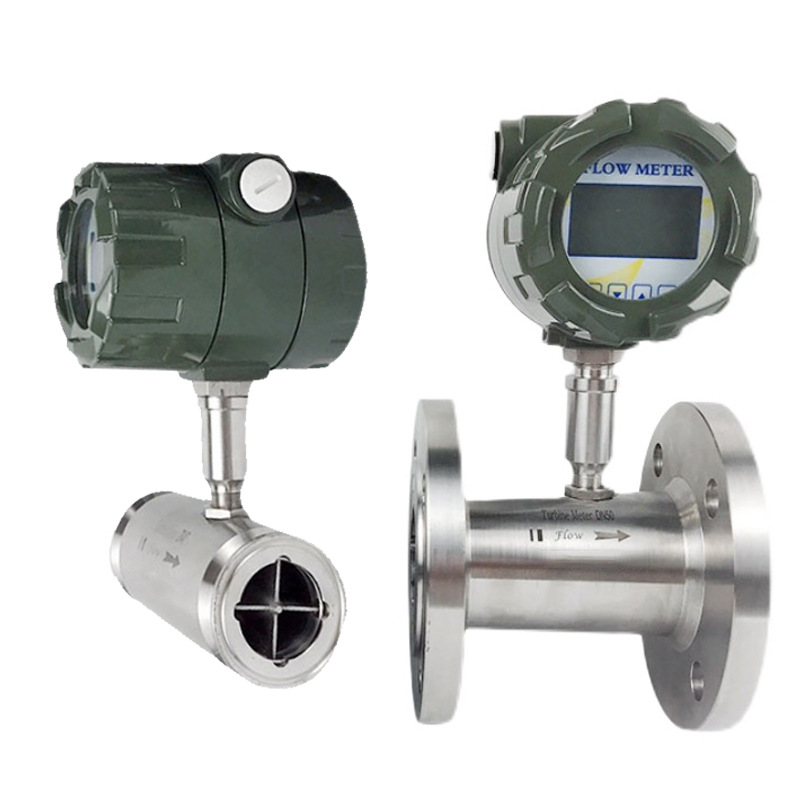
Turbine Water Flow Meters
Also used for measuring water flow in pipelines, turbine flow meters rely on the momentum generated by the water flow to drive the rotation of the turbine blades, thereby calculating the real-time flow rate according to a proportional coefficient. Turbine flow meters are also known as fire water flow meters and turbine flow meters (phonetic translation). They offer the advantages of high accuracy, good repeatability, compact structure, light weight and high flow capacity.
As a lightweight and convenient type of water flow meter, turbine flow meters are categorised into instruments for measuring gases and liquids depending on the medium being measured. They are widely used for measuring petroleum, natural gas, organic or inorganic liquids, coal gas and other media. They are commonly found at large crude oil transfer and collection stations, where they are typically used for trade settlement.
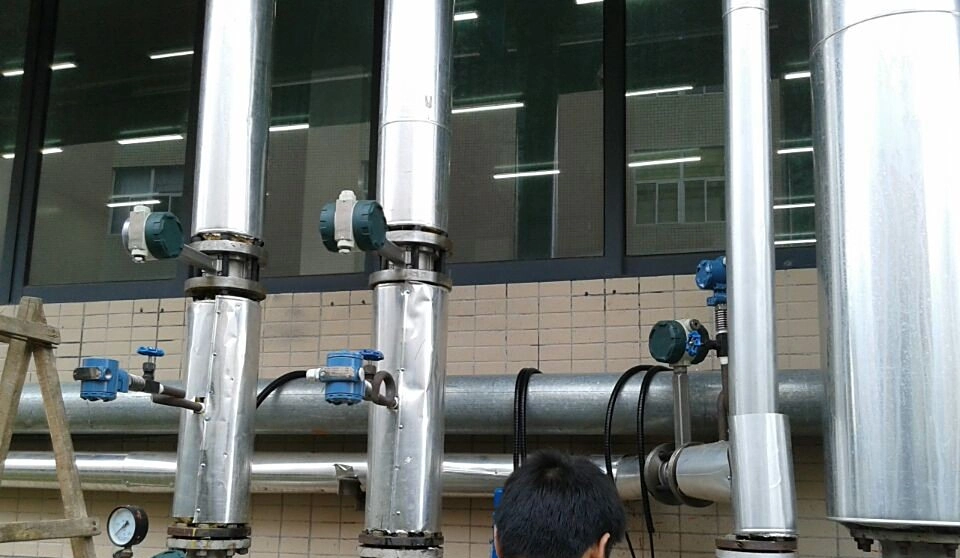
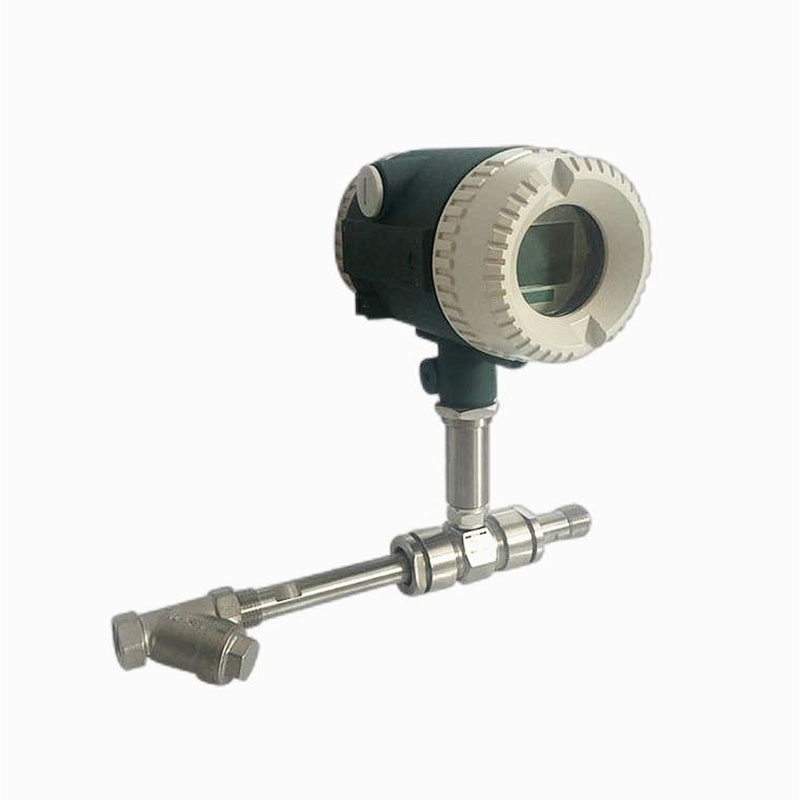
Vortex Flow Meters
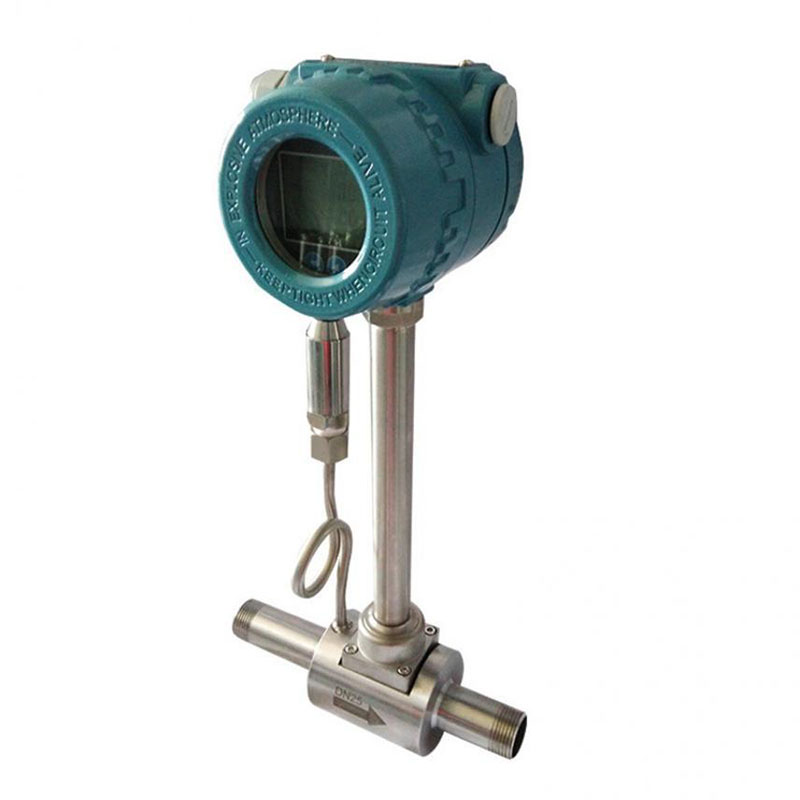
Vortex flow meters are a type of water flow meter used to measure fluids in industrial pipelines, such as gases, steam and liquids. In addition to the common advantages of strong anti-interference performance, good stability and accuracy, vortex flow meters also offer other benefits, such as a wide measurement range, advanced circuitry, low electrical resistance loss, and robust durability.
Ultrasonic Flow Meters
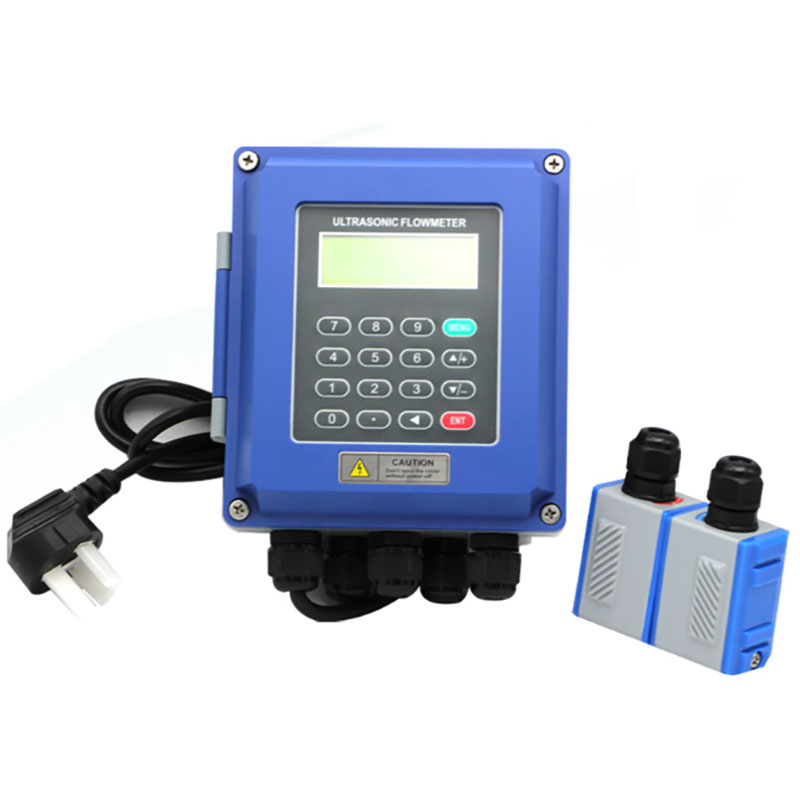
Ultrasonic flow meters are suitable for online calibration and routine monitoring of liquid flow rates in various industrial settings. They are characterised by simple operation, high measurement accuracy and long battery life. As ultrasonic waves propagate through a flowing fluid, they carry information about the fluid’s velocity. Consequently, the fluid’s velocity can be detected from the received ultrasonic waves and converted into flow rate.
Depending on the detection method, ultrasonic flowmeters can be classified into different types, including the time-of-flight method, the Doppler method, the beam-deflection method, the noise method and the correlation method.
Ultrasonic flowmeters are a type of non-contact instrument that has only come into widespread use in the last decade or so, following the rapid development of integrated circuit technology. They are suitable for measuring fluids that are difficult to access or observe, as well as large-diameter flow rates. When linked with a water level gauge, they can be used to measure the flow rate of open channels.
In addition to the above commonly used water flowmeters, there are other types of products such as oval gear flowmeters and wafer-type flowmeters. As a specialist flow meter supplier, Sion-Inst offers a comprehensive range of flow meters characterised by excellent accuracy and suitability for a wide variety of operating conditions, covering all the aforementioned types as well as customised products.
Each of these flowmeters has its own unique features and is suited to different scenarios. In practical applications, it is essential to select the appropriate model based on the specific operating conditions and measurement requirements in order to ensure accurate results.
Three Common Installation Methods for Water Flow Meters
Flange Connection Installation Method
Flange connection is the most common way to install in-line water flow meters. The basic idea is to use the standard flanges fitted to both ends of the flow meter to connect with matching flanges that are already on the pipeline. To achieve a sealed connection, tighten the bolts to ensure that the fluid flows steadily and without leakage through the flow meter’s sensing elements, thereby guaranteeing measurement accuracy.
When it comes to the key technical points of installation, it is crucial to ensure that the sealing surfaces of the flow meter and pipeline flanges are clean and undamaged, and that the sealing gaskets are made of a compatible material for the medium and operating pressure.
Make sure you tighten the bolts evenly and symmetrically, or you could end up with uneven stress on the flanges, which could mess up the seal. Also, make sure you install the flow meter so it’s going the same way as the fluid. And make sure there are enough straight bits of pipe on either side of where you’re installing it, so you can keep the turbulence to a minimum and get accurate measurements.
Flange Clamp-On Installation Method
The flange clamp-on installation method is designed for situations where the pipeline you want to measure doesn’t have any pre-installed flanges and can’t be connected directly using regular flange connections. The core structure involves fitting the water flow meter with specialised clamp-on flanges at both ends, which are then welded to the ends of the pipeline to be measured.
The flow meter body is then clamped between the two flanges and secured with bolts to achieve a sealed connection. Essentially, this method involves retrofitting a flangeless pipeline with flanges before proceeding with the flanged connection.
Two key points must be observed during installation:
Firstly, the welding quality of the clamp-on flanges. When you’re welding, make sure the flanges are at a right angle to the pipeline axis, and that the welds are full and free of slag and porosity. This will stop welding distortion causing misalignment of the flange sealing surfaces, which could lead to fluid leakage.
Secondly, you’ve got to make sure the flow meter is clamping accurately. For this, you need to check that the flow meter body is lined up with the pipeline axis, that the sealing surfaces of the clamping flanges and the flow meter flanges are touching each other, that the sealing gasket is laid flat, and that the bolts are tightened evenly. This is to stop the instrument vibrating because of uneven stress, which could mess up the measurement stability. Furthermore, after installation, a pressure test must be carried out on the welded joints to confirm there are no leaks before commissioning.
Pipe Welding Installation Method
Pipe welding installation is an integrated installation method. The basic idea is to weld the connection ports at both ends of the flow meter directly to the pipe ends, so long as neither the flow meter nor the pipe has flanges. This makes a single, joined-up unit between the flow meter and the pipe, allowing for smooth fluid flow. This way of installing it means you don’t need to use parts like flanges, gaskets and bolts, which makes it much cheaper, especially for large-diameter water flow meters.
Welded installation involves high technical requirements, with key considerations including:
So, first up is picking the right welding process. You’ve got to make sure the materials of the pipeline and the flow meter are up to scratch, so the welded joint is as strong as the pipeline body.
Next, you’ve got to keep an eye on the welding precision. Make sure the flow meter is lined up with the pipeline axis, the welded joint isn’t out of line or not fully fused, and the weld is tested to make sure it’s good.
Then, before you install it, you’ve got to prep the pipe ends and flow meter connection ports. Give them a good grind and rust removal to get rid of any surface oxidation layers and impurities, so you don’t end up with a lousy weld.
Lastly, after welding, you’ve got to let the welded joint cool naturally to room temperature before testing the pressure. Only once you’re sure there are no leaks or deformations can you switch the system on.
Detailed installation steps
1. Turn off the water supply:Before installing the water flow meter, ensure that the supply valve is closed to prevent water flow from interfering with or posing a hazard during the installation process.
2. Fit the connectors:Depending on the type of water flow meter and its installation requirements, connect it to the relevant pipework. Make sure the connectors are tightly secured to prevent leaks and loosening.
3. Install the water flow meter:Once you’ve got the fittings in place, just connect the water flow meter to them. It depends on how the meter’s designed and how it’s connected, but if it’s the kind of thing you can just tighten with a spanner, that’s great. Just use the right tool for the job.
4. Connect the cables:If the water flow meter has an electronic display, you’ll need to connect the relevant cables. Have a look at the meter’s instruction manual to see how to connect the cables to the right ports. When you’re hooking it up, just make sure you’ve got the polarity and insulation sorted.
5. Commissioning and testing: When you’ve finished installing it, just follow the water flow meter’s user manual to get it up and running. Switch on the water and check the display on the water flow meter to make sure it’s measuring flow properly and consistently.
6. Regular maintenance:The accuracy and stability of the water flow meter are closely linked to regular maintenance. Check the operational status of the water flow meter regularly, remove dust and foreign objects, and maintain optimal operating conditions.
FAQ
The following conditions must be met when using an electromagnetic flowmeter to measure water:
The water you are measuringmust have sufficient electrical conductivity. Standard electromagnetic flowmeters require a conductivity of at least 5 μS/cm. If you are dealing with water with low conductivity, such as pure or deionised water, you will need to use specialised low-conductivity models. It is not possible to measure non-conductive liquids.
The flow velocity of the water should be within a reasonable range; the standard recommendation is 0.5–5 m/s, with 1–3 m/s being optimal. If the flow velocity is too low, the signal will be weak and accuracy will be poor; if it is too high, it will accelerate wear on the lining and electrodes.
Installation must comply with straight pipe run requirements: the upstream straight pipe run must be no less than 5–10 times the pipe diameter, and the downstream straight pipe run no less than 2–5 times the pipe diameter. This ensures a stable flow field and prevents disturbances caused by bends, valves and similar components.
The measurement system needs to be properly earthed and located away from strong electromagnetic interference, like high-power motors and variable frequency drives, to stop interference signals messing up the measurements.
Selection of Flow Meters for Clean Water and Wastewater
Turbine flow meters are the go-to choice for clean media like clean water, pure water and cooling water because they’re super accurate and quick. They tick all the boxes for high-precision metering and stable monitoring.
If you’re dealing with media that’s got impurities in it or can get blocked easily, like sewage, wastewater and slurry, electromagnetic flowmeters are the way to go. They’re great for tough conditions because they’re easy to flow through and don’t get blocked or dirty.
If you can’t cut pipes on-site or can’t turn off the water supply for installation, you could use clamp-on ultrasonic flowmeters, as they’re easy to install and won’t affect normal pipeline operation.
Do water flow meters require regular calibration?
For applications with high accuracy requirements, such as trade settlement and metering audits, it is recommended to calibrate the meter once a year to ensure accurate and reliable measurement.
For general process monitoring applications, calibration once every 1–2 years is sufficient to meet routine production monitoring requirements.
If the flow meter starts showing dodgy readings, you need to calibrate it straight away to fix the problem and get it working properly again.
So, putting water flow meters in isn’t just about putting the unit together and fixing it in place. It’s a proper process that needs you to pick the right way to install it based on the type of meter and what you’re using it for, while making sure you follow the right steps and meet the main technical requirements. Strict adherence to standardised operating procedures not only maximises the metrological value of the equipment but also effectively reduces long-term operational and maintenance costs whilst mitigating metrological risks.
As a professional supplier of flow meter sensors, Sion-Inst consistently prioritises precision products and expert technical services, providing tailored flow measurement solutions for clients across various industries. These solutions encompass product selection, installation guidance, long-term operational and maintenance support, and calibration services, helping clients achieve efficient, accurate and compliant flow management.