Flue gas flow meters sit at the heart of online emission monitoring setups, and how accurately they measure — plus how well they stand up to corrosion — makes or breaks the trustworthiness of the data coming out.
This article walks through what you need to know about these meters from an engineering standpoint, looking at the main ways they work: thermal, differential pressure and ultrasonic methods.
Flue Gas
Flue gas is what you get when fuel burns — basically the gases thrown off by the chemical reaction between the combustible stuff in the fuel and oxygen.
The bulk of it is carbon dioxide, water vapour and nitrogen, but there’s also carbon monoxide, sulphur oxides, nitrogen oxides, plus bits of hydrocarbons that didn’t fully burn and fine particles floating around.
It’s not all gas either — solid stuff like fly ash and soot gets swept along too. Exactly how hot it is, what it’s made of and how fast it’s moving depends a lot on the fuel you’re using, how well the burner is running, what kind of kit you’ve got installed and how you’re operating it.
In industrial boilers, kilns, power plants and pretty much any combustion kit, flue gas is the main vehicle for moving energy around and keeping emissions under control.
So nailing the monitoring and measurement side of things really counts — it directly affects how efficiently you’re burning fuel, whether you’re staying within emission limits, and whether your equipment stays in one piece.
Challenges in Flue Gas Measurement
High-temperature and high-pressure environment: Flue gas is constantly exposed to high temperatures and fluctuating pressures, which puts serious demands on the heat resistance and structural strength of any measuring equipment. Ordinary sensors simply can’t hold up over the long term.
Complex composition and high corrosivity: Flue gas contains acidic gases like sulphur dioxide and nitrogen oxides, along with water vapour and particulate matter. These elements tend to corrode, scale and wear down measuring components, which throws off readings and can wreck the equipment entirely.
High Dust Content and Prone to Blockage: Flue gas carries loads of dust and fly ash. This stuff deposits readily on pressure tapping ports, sampling tubes and sensor surfaces, clogging equipment and messing with both the continuity and accuracy of measurements.
Unstable flow field: Gas flow inside the flue is all over the place — full of vortices, recirculation and alternating flow patterns. Things get even trickier at bends and diameter transitions, so picking a measurement point that actually represents the whole flow is no easy task.
Significant humidity fluctuations: Fuel moisture content and combustion conditions both affect how much water vapour ends up in the flue gas, and this content can swing quite a bit. That makes it harder to convert between flue gas density and flow rate properly, which only adds to the measurement errors.
Large pipe diameters and limited installation space: Industrial flue ducts are big and don’t always have enough straight pipe length to give you a clean flow field for velocity measurement. On top of that, there’s often barely enough room to install equipment, let alone maintain it.
Dynamic operating fluctuations: Load changes, start-ups, shutdowns and fuel switches are all part of normal operations, and every one of them nudges the flue gas flow rate, temperature and pressure in a different direction. The measurement system has to track all these shifts in real time, so it needs to react fast and cover a broad operating envelope without falling over.
Difficulties with calibration and verification: On-site conditions are messy, and taking the plant offline just to run a full-flow calibration is rarely practical, so opportunities for that kind of check are few and far between. Data can only be verified through comparison and indirect calculation, making it difficult to ensure the traceability and long-term stability of the equipment.
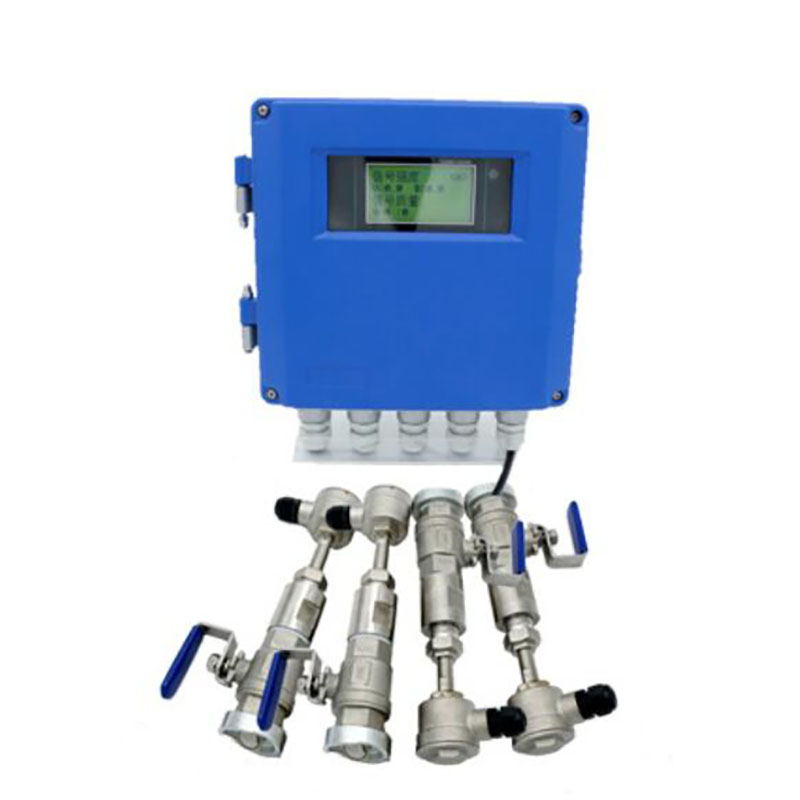
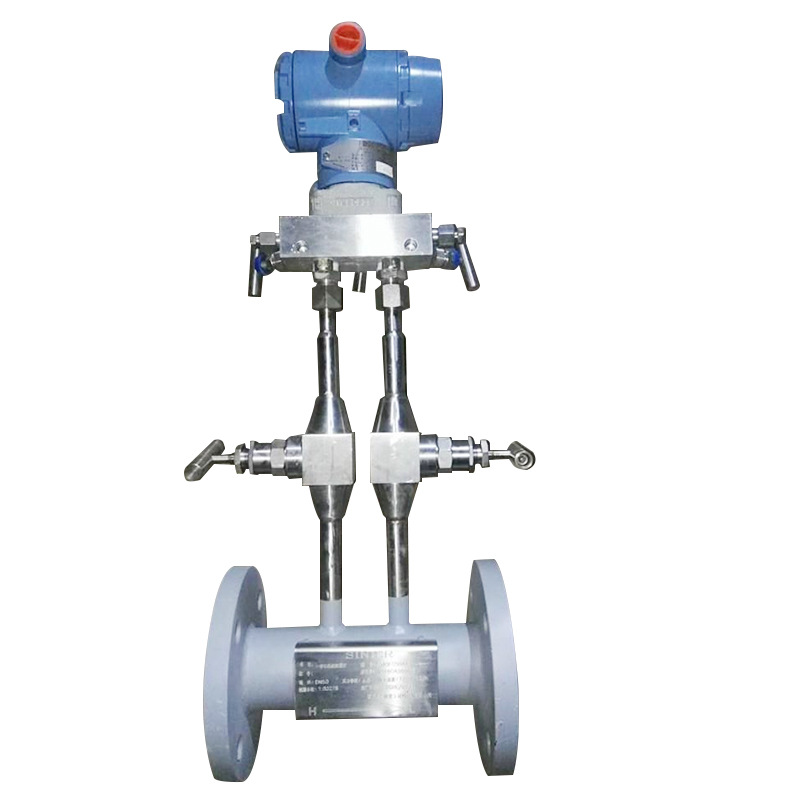
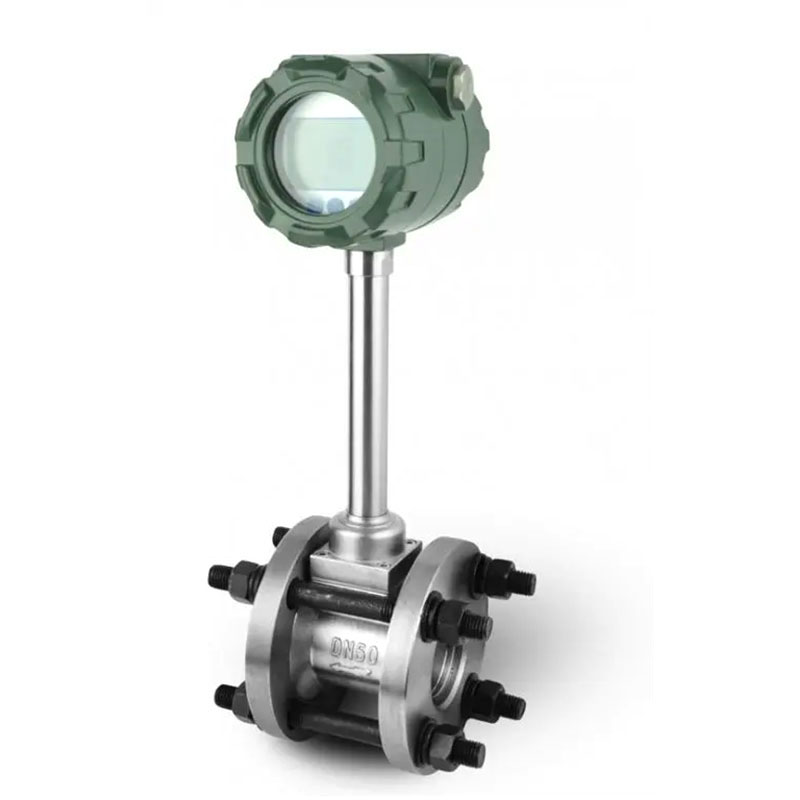
Flow meters for flue gas
Differential pressure flow meters
Principle of operation
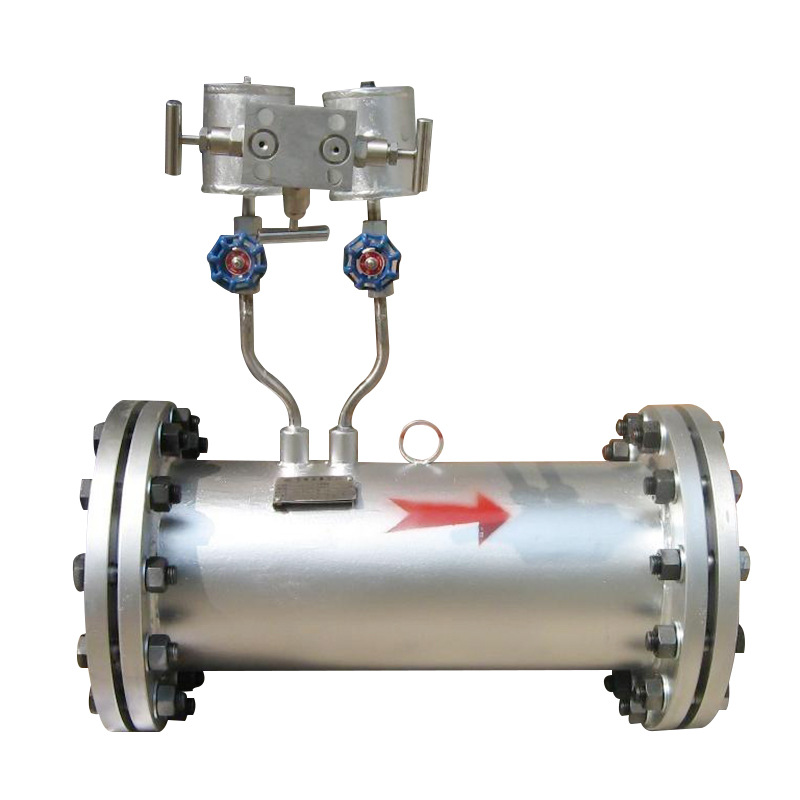
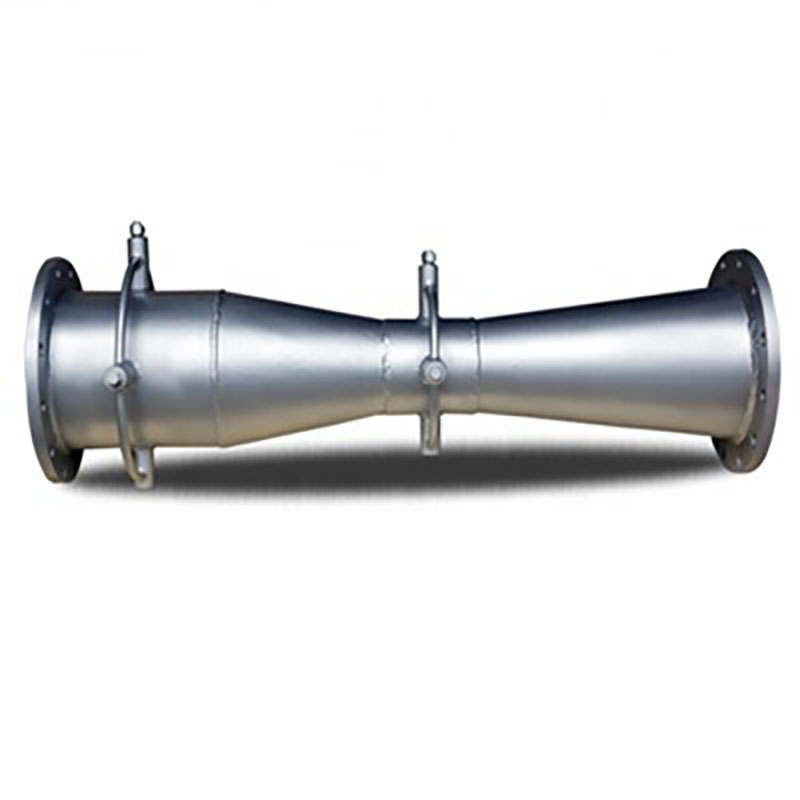
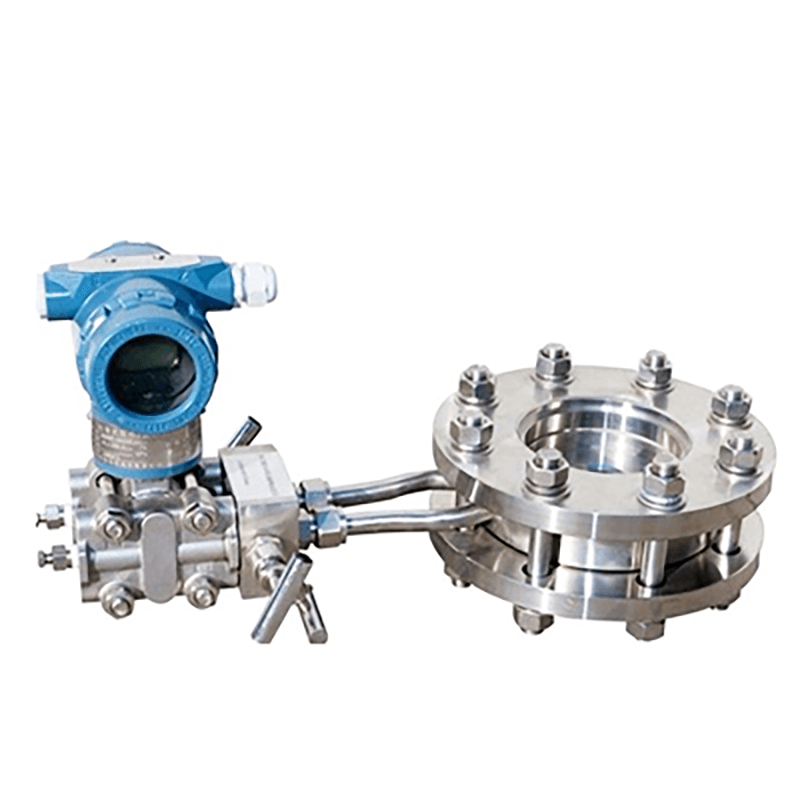
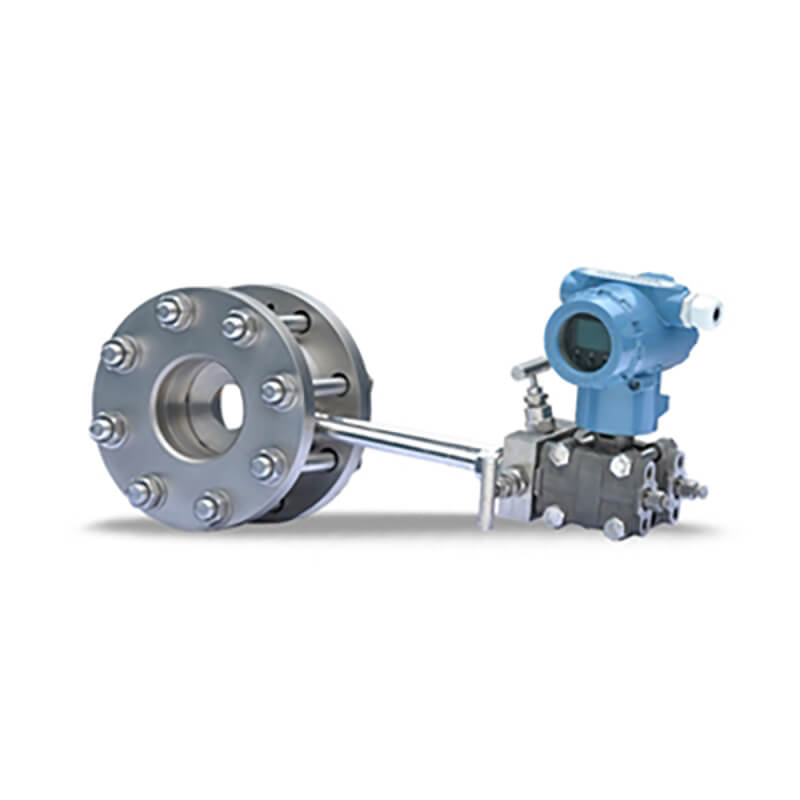
Differential pressure flow meters operate based on Bernoulli’s equation and the continuity equation. By installing throttling devices such as orifice plates or Venturi tubes in the flue gas duct, the cross-sectional area of the flue gas flow is reduced, the flow velocity increases and the static pressure decreases, creating a stable pressure difference upstream and downstream of the throttling element.
Under steady-state conditions, the pressure difference is proportional to the square of the flue gas flow rate. A differential pressure transmitter captures the pressure difference signal; following calculation and temperature-pressure compensation, both instantaneous and cumulative flue gas flow rates can be determined.
Advantages
Simple and reliable structure: With no moving parts, the throttling components are robust and durable, offering high mechanical stability. Suitable for harsh industrial flue gas conditions, they feature a long service life and require minimal maintenance.
Wide range of applications: Suitable for high-temperature, medium- and high-pressure, and large-diameter flue gas ducts; tolerant of small amounts of dust and impurities; highly versatile for various media; a commonly used measurement device for industrial flue gas.
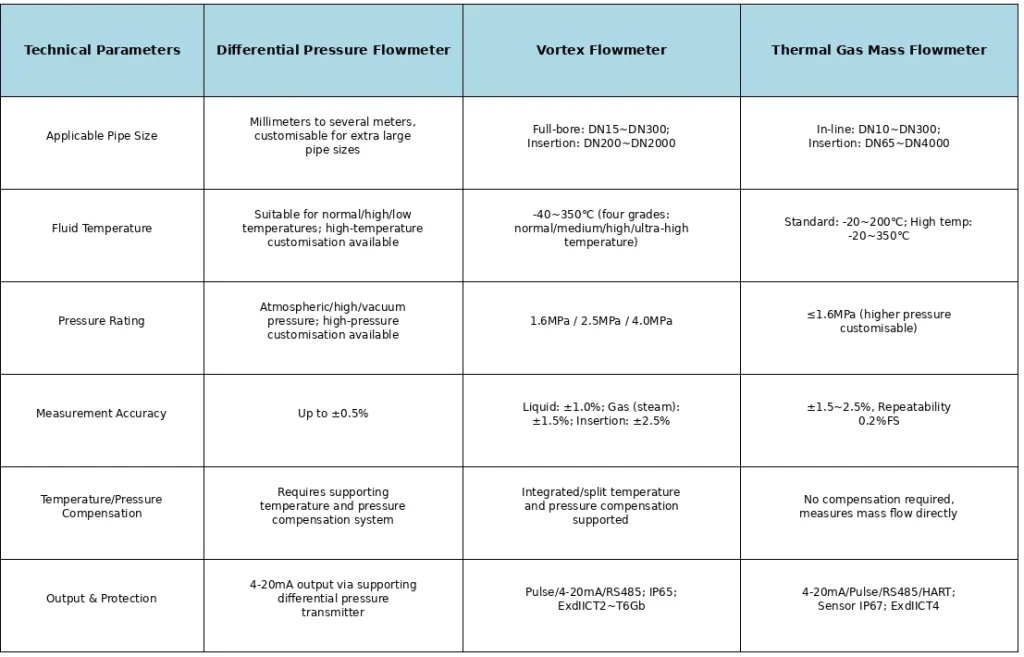
Sino-Inst differential pressure flowmeters cover pipe diameters ranging from a few millimetres to several metres, and can adapt to a variety of flue gas conditions including atmospheric pressure, high pressure, vacuum, ambient temperature, high temperature and low temperature.
Measurement accuracy can reach ±0.5%, and temperature and pressure compensation is supported to further enhance accuracy.
Technologically mature and cost-effective: These systems have been around for ages, and the industry standards are well settled. The equipment and parts don’t cost much, and you don’t need anything custom-built. Power stations, steelworks and chemical plants all use them extensively for flue gas monitoring.
Stable operation: They can take a bit of vibration and small temperature swings without issue. The zero point stays put over long runs, and they adapt well to whatever conditions you throw at them.
Sino-Inst offers a range of differential pressure flowmetres, including orifice plates, Venturi tubes, V-cones, Annubar (average velocity tubes) and target-type devices.
Standard throttling elements comply with international standards and can be put into service without the need for actual flow calibration; customisation is available for harsh flue gas conditions such as high temperature, high pressure and extra-large pipe diameters.
Both the throttling elements and differential pressure transmitters are manufactured in-house, effectively reducing procurement costs.
Disadvantages
High pressure loss: The throttling device causes permanent pressure loss in the gas flow, increasing the operational load on the fan and raising the energy consumption of the equipment.
Limited measurement accuracy: The flow measurement exhibits poor linearity, with accurate readings only in the mid-range; measurement errors are significant at low flow velocities and low flow rates.
Reliance on operating condition compensation: Measurement results are significantly affected by flue gas temperature, pressure and density; a temperature and pressure compensation system must be installed when operating conditions fluctuate, otherwise data deviations will be pronounced.
Prone to ash accumulation and blockage: High-dust and humid flue gas can easily cause ash accumulation and condensation in the orifice and pressure taps, requiring regular cleaning; otherwise, measurement accuracy will be compromised.
Thermal Flow Meter
Working Principle
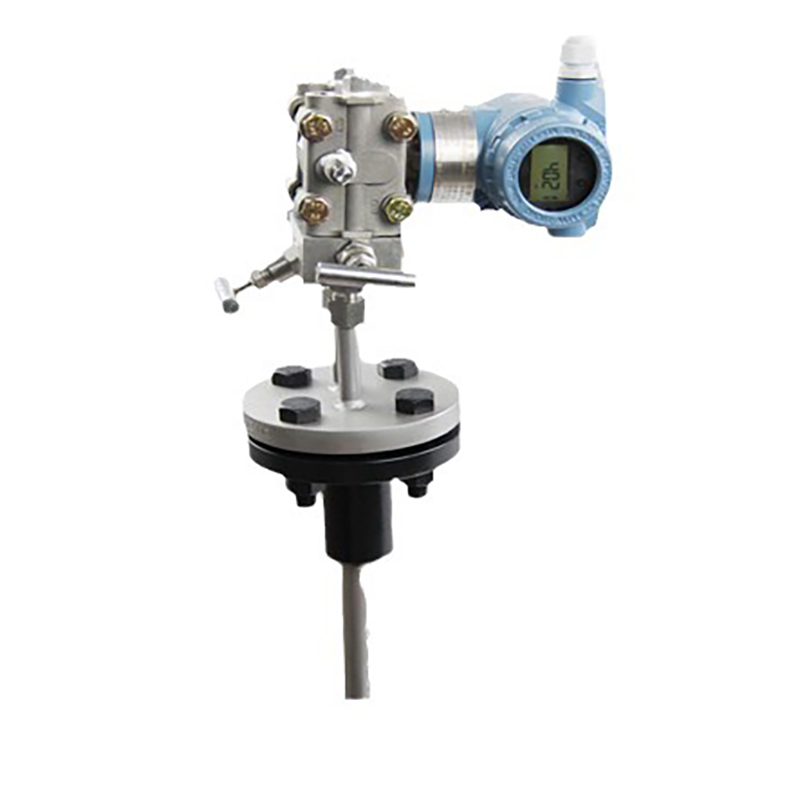
Thermal flow meters work on the principle of thermal diffusion. The device has two sensors — one that measures temperature and another that measures velocity. The velocity sensor gets heated continuously so it stays at a fixed temperature difference from the temperature sensor.
When flue gas flows past, it strips heat away from the velocity sensor. Faster flow means quicker heat loss, so the system has to pump in more heating power to keep up. This heating power scales linearly with the flue gas mass flow rate, which means you can work out the mass flow rate directly — no need to compensate for temperature or pressure.
Advantages
Direct measurement of mass flow rate: There’s no need to convert parameters — the flue gas mass flow rate comes out directly. That makes it well suited to operating conditions that keep changing, and it ticks the boxes for environmental protection metering and monitoring requirements.
Excellent low-flow performance: It starts up at low velocities and has a wide turndown ratio, so it can pick up flue gas micro-flows accurately. It also covers the full operating range from low load right up to full load without missing a beat.
Minimal pressure loss: The compact insertable probe barely gets in the way of gas flow, so resistance is negligible. You get virtually no pressure drop, and the fans don’t have to work any harder.
Convenient operation and maintenance: You can install or pull it out while the line is still running — no shutdown needed. That makes it a good fit for continuous industrial production where stopping the pipeline simply isn’t an option.
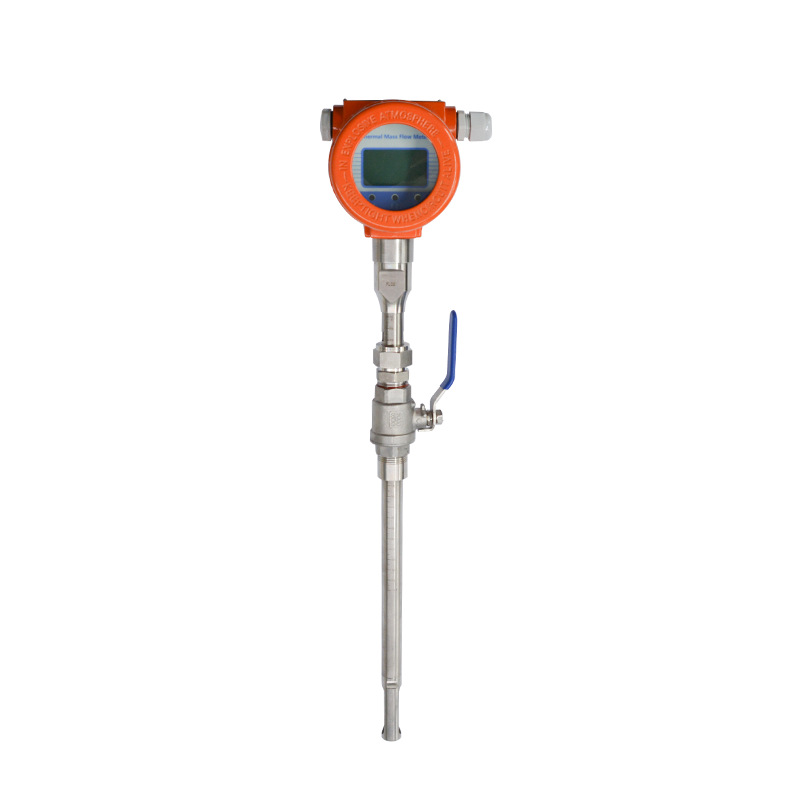
Sino-Inst thermal mass flowmeters are available in two configurations: in-line (DN10–DN300) and insertion (DN65–DN4000). Standard models operate at medium temperatures of –20 to 200°C, whilst high-temperature models handle –20 to 350°C; process pressure is ≤1.6 MPa (higher pressures available on request); flow velocity range is 0.1–100 Nm/s, with a wide turndown ratio.
Measurement accuracy: ±1.5–2.5%, repeatability: 0.2% FS, response time: ≤1 second; outputs 4–20 mA and pulse signals, supports RS485/HART communication; explosion-proof rating: ExdIICT4, sensor protection rating: IP67;
Sensor materials available in 316L, Hastelloy C and tantalum; the insertion-type design with ball valve allows for installation and maintenance without shutdown, and pressure loss in pipes of DN80 and above is negligible.
It has been successfully applied to the measurement of flue gas velocity in chimneys (CEMS), flue gas from calcining furnaces, combustion air in coal-fired boilers, as well as high-temperature flue gases such as blast furnace gas and coke oven gas.
Disadvantages
Susceptible to interference from impurities: Flue gas containing high levels of dust, moisture or oil can cause scaling and dust accumulation on the probe, impairing heat dissipation and leading to reduced measurement accuracy.
Limited high-temperature resistance: Standard models are not designed for high temperatures; high-temperature flue gas applications require the use of high-end models, resulting in significantly higher equipment costs.
(Sino-Inst high-temperature thermal mass flowmeters can handle medium temperatures of up to 350°C, making them suitable for most high-temperature flue gas applications.)
Poor resistance to turbulence: If the flow in the pipe is turbulent or there are eddies swirling about, heat doesn’t leave the probe evenly, and the readings start bouncing around.
Limited compatibility with different media: These meters are set up for a specific flue gas mix, so if the composition or humidity shifts markedly, you’ll need to recalibrate — otherwise the numbers can be way off.
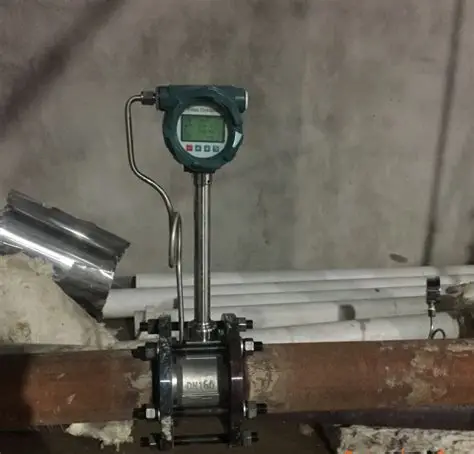
Ultrasonic Flow Meter
Working Principle
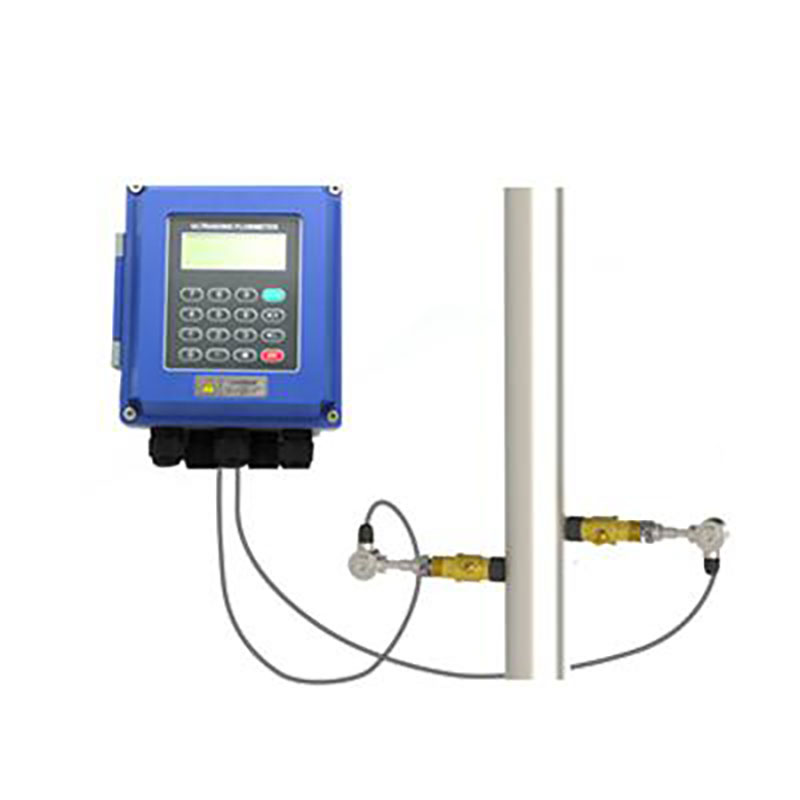
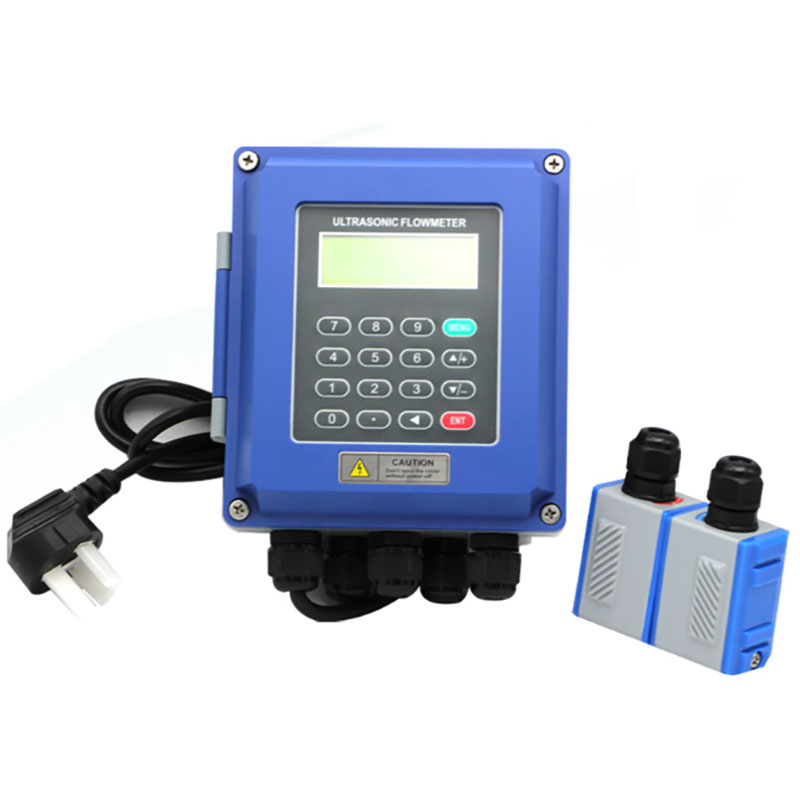
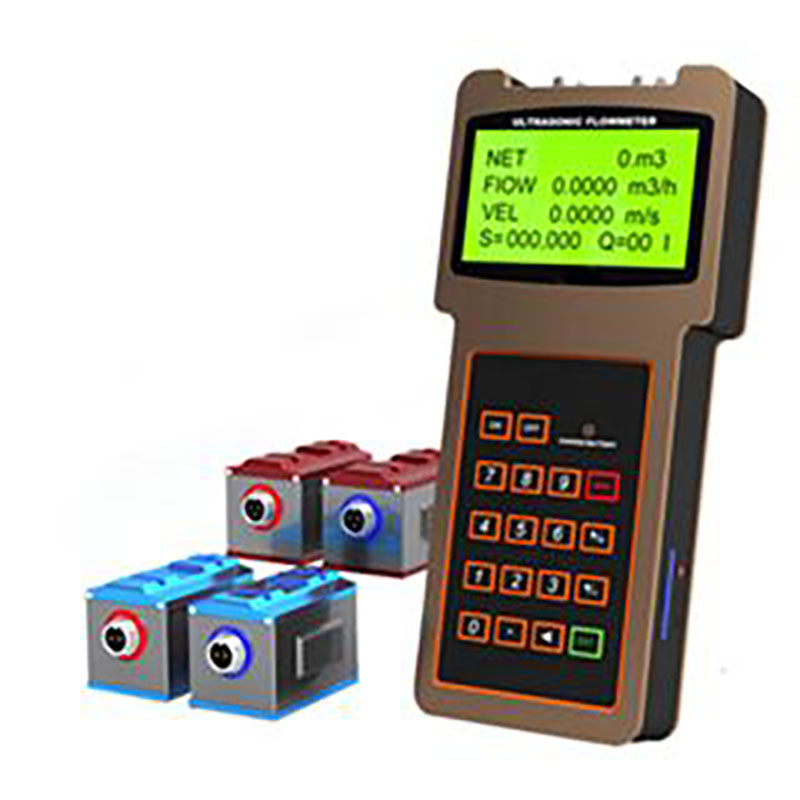
Ultrasonic flowmeters utilise the time-of-flight measurement principle. A pair of ultrasonic transducers is installed on the pipeline, alternately transmitting and receiving high-frequency ultrasonic waves.
The speed of the sound waves increases when travelling with the flow and decreases when travelling against it, creating a fixed time difference. The magnitude of this time difference is directly proportional to the flue gas velocity.
The device calculates the time difference and, combined with pipe diameter parameters, converts this into the volumetric flow rate of the flue gas. When paired with a temperature and pressure module, it can output flow rates under standard conditions.
Advantages
No pressure loss: The clamp-on design sits outside the pipe, so nothing gets in the way of the flow. That means zero pressure drop, and the existing flue gas flow pattern stays exactly as it was. It works particularly well on large-diameter pipelines running at low pressure.
High accuracy and stability: The measurement range is wide and the linearity is solid, so you get precise readings whether the flow is high or low. The zero point doesn’t drift over time, which keeps it within the tight tolerances that high-precision environmental monitoring demands.
High adaptability: No drilling required; installation possible without shutdown; compatible with various pipe materials; suitable for complex flue gas conditions involving large diameters, high temperatures and high pressures.
Long service life, maintenance-free: No moving parts; no contact with the medium; no risk of corrosion or wear; extremely low equipment failure rate.
Disadvantages
Significant impact from medium impurities: Flue gas with high dust or water mist content scatters and attenuates ultrasonic signals, leading to signal instability and reduced accuracy; in severe cases, measurement becomes impossible.
Stringent installation requirements: Sufficient straight pipe runs are required to ensure laminar flow; flow turbulence caused by fittings such as elbows and valves directly results in data distortion.
High cost: High-precision detection modules are expensive; compared to differential pressure and vortex flowmeters, they offer poor value for money in large-scale applications.
Vortex Flowmeter
Working Principle
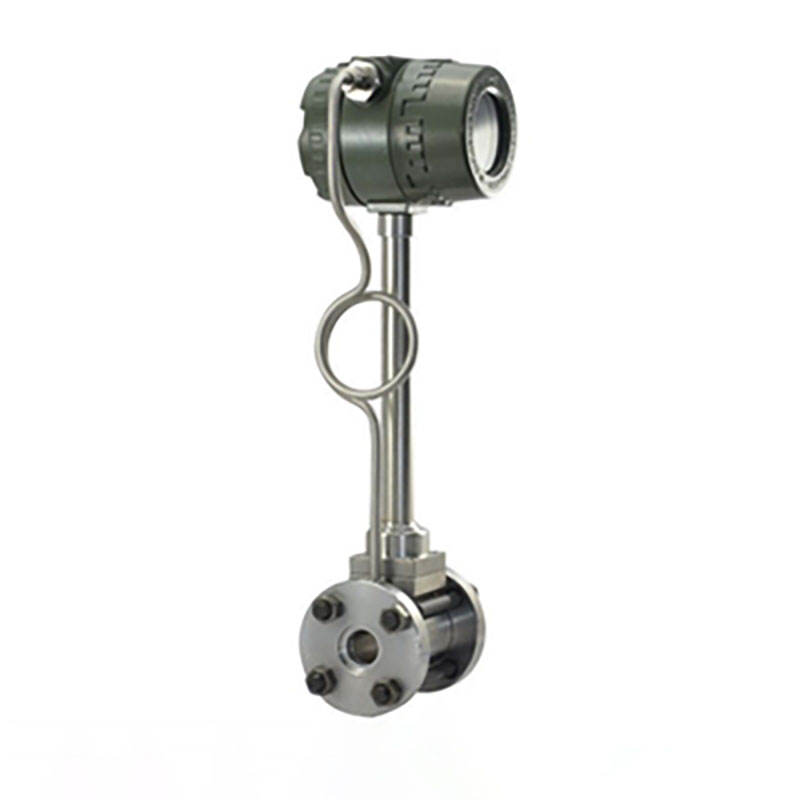
The vortex flowmeter operates on the Karman vortex street principle. A vortex generator is installed within the pipeline; when flue gas flows past at a constant velocity, it generates a regular, alternating pattern of vortices downstream of the generator.
Under stable operating conditions, the frequency of vortex generation is linearly proportional to the flue gas velocity and is unaffected by the temperature, pressure or density of the medium. The sensor captures the vibration frequency and converts it into velocity and volumetric flow rate; when paired with temperature and pressure sensors, it can output flow rate under standard conditions.
Advantages
Good linearity: Flow rate maps straight onto frequency, and the turndown ratio is wide. Accuracy stays consistent across the whole range, which helps keep things stable over long runs.
Reliable construction: There are no moving mechanical parts to wear out or age, so the device holds up well. It handles standard industrial flue gas conditions without fuss, and operation and maintenance are pretty straightforward.
Broad medium adaptability: It can measure dry flue gas and gas with a bit of dust in it. Temperature and pressure swings don’t throw it off, so you won’t find yourself calibrating it all the time.
Excellent value for money: Procurement and operational costs are lower than those of ultrasonic flowmeters, whilst measurement accuracy surpasses that of differential pressure types, making it suitable for most standard flue gas monitoring scenarios.
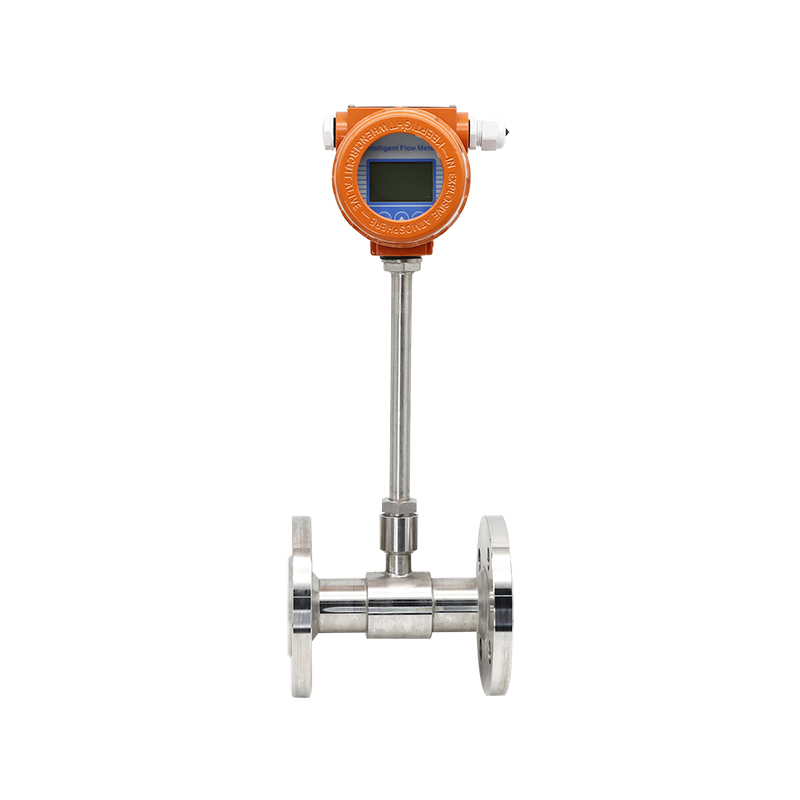
Sino-Inst vortex flowmeters are available in full-bore models with nominal diameters ranging from DN15 to DN300, and in insertion models extending from DN200 to DN2000, suitable for large-diameter flue ducts; medium temperatures are categorised into four ranges: ambient (-40 to 100°C), medium temperature (-40 to 250°C), high temperature (-40 to 320°C) and ultra-high temperature (-40 to 350°C);
Nominal pressures are 1.6 MPa, 2.5 MPa and 4.0 MPa; measurement accuracy is ±1.0% for liquids, ±1.5% for gases (steam) and ±2.5% for the insertion type; Supports integrated/separate temperature and pressure compensation, capable of outputting flow rate at standard conditions; body material: 304/316L stainless steel, protection rating: IP65, explosion-proof rating: ExdIICT2–T6Gb, supports pulse, 4–20 mA and RS485 signal outputs.
Disadvantages
Pressure loss: The built-in flow generator obstructs the gas flow, resulting in slight pressure loss; energy efficiency is inferior to that of thermal or ultrasonic flowmeters.
Susceptible to dust and water mist: Damp, high-dust or smoky environments can cause fouling of the flow generator and sensors, interfering with vortex detection and leading to data deviations or fluctuations.
Limited vibration resistance: Pipeline resonance and severe vibrations can interfere with signal acquisition, causing measurement errors; the instrument cannot operate normally under conditions of strong vibration.
Limitations in low-flow measurement: At low flow rates, vortex generation is chaotic and unstable, resulting in measurement blind spots; it is unable to detect very low flow rates.
Selection Guide
1. Flue gas conditions are complex, with the medium containing dust and water vapour and operating at high temperatures. When selecting a model, priority should be given to wear resistance, anti-blocking capabilities and temperature and pressure compensation, as these are essential prerequisites for ensuring measurement accuracy.
2. Vortex flow meters see broad use across many settings. Their design is straightforward—no moving parts to wear out—and they hold up well under high temperatures and pressures. For flue gas ducts running at medium to low flow rates with a fair amount of dust, they work just fine. Upkeep doesn’t cost much, which is why most people go with them for typical operating conditions.
(Sino-Inst vortex flowmeters have a maximum temperature rating of 350°C and a maximum nominal pressure of 4.0 MPa, with a measurement accuracy of ±1.5% for gases; the insertion type is suitable for large-diameter flue ducts up to DN2000.)
3. Differential pressure flowmeters are suitable for large-diameter flue gas ducts with high flow velocities. They offer a wide measurement range and operate stably in high-temperature flue gas ducts; however, the pressure-taking lines are prone to dust accumulation and blockages, requiring periodic maintenance with a purge system.
(Sino-Inst differential pressure flowmeters are compatible with pipe diameters ranging from a few millimetres to several metres; customisation is available for ultra-large diameters and high-temperature, high-pressure conditions, with an accuracy of up to ±0.5%.)
4. Thermal mass flowmeters require no temperature or pressure compensation and can measure mass flow directly. They are sensitive to low-velocity flue gas and are suitable for small-diameter, low-concentration dust applications; however, excessive dust can easily cause probe contamination.
(Sino-Inst insertion-type thermal mass flowmeters cover pipe diameters from DN65 to DN4000, with a minimum measurable flow velocity of 0.1 Nm/s. The high-temperature model withstands temperatures up to 350°C and requires no temperature or pressure compensation.)
5. When selecting a model, it is necessary to take into account the pipe diameter, flue gas temperature, pressure, dust content and installation space. For high-dust and humid flue gas, dust removal and anti-condensation accessories should be installed as a priority, whilst the installation locati0n must be determined strictly in accordance with regulations.
To facilitate selection, the following is a comparison of the key technical parameters of the three types of Sino-Inst flue gas flow meters:
Sino-Inst specialises in the field of industrial measurement and control sensors, offering a comprehensive range of industrial measurement and control equipment, including flow meters, level gauges and pressure sensors.
Our products cover the monitoring of various media, such as gases and liquids, and are widely suited to complex operating conditions across multiple industries, including chemicals, power generation, metallurgy and building materials.
Based on the specific on-site conditions and process requirements of our clients, we provide bespoke selection solutions, installation and commissioning services, as well as comprehensive after-sales maintenance and support throughout the entire lifecycle.
We offer a one-stop solution to industrial flow, pressure and level monitoring challenges, providing reliable assurance for safe production, process optimisation and regulatory compliance.