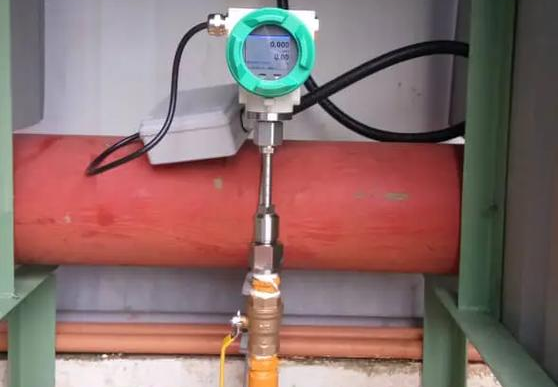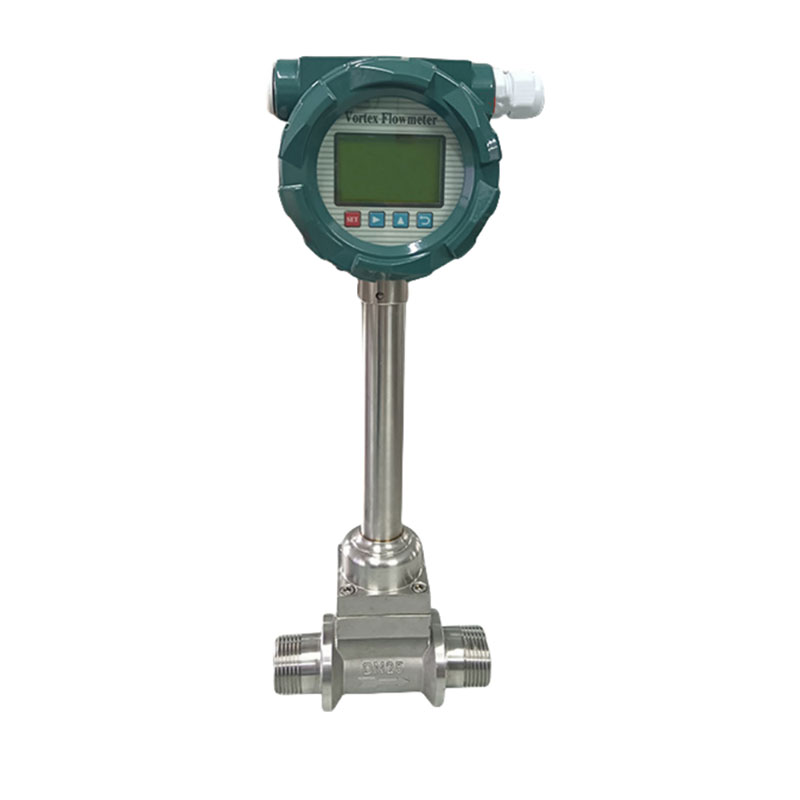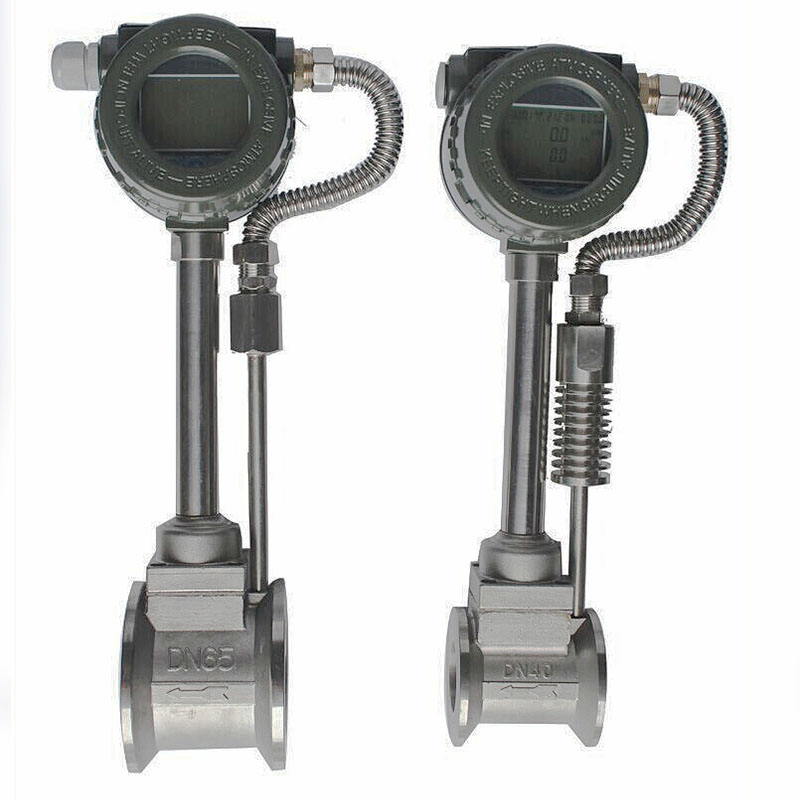
When it comes to measuring fluid, flow meters are pretty much essential. These flow meters are really popular because of how they work. You see them used a lot in loads of different situations. This article compares these two flow meters, looking at things like how they work, what they’re made of, how they measure, and when and how to use them. It should help users make the right choice.
Working Principle
Swirl Flow Meter:
A vortex generator consisting of a set of twisted blades is installed within the pipeline. As the fluid passes through, the vortex generator causes the pipeline to spin, creating vortices near the centreline. The vortex centre then rotates around the pipeline axis, moving forward with the fluid flow and expanding its rotational radius. This results in a swirling motion resembling a conical spiral.
At a point on the pipe wall downstream of the vortex generator, the fluid velocity experiences periodic variations whose frequency correlates with the fluid flow rate. Spotting this frequency gives us the flow velocity, and from that we can work out the flow rate. Flow meters that work on this principle are called vortex flow meters or swirl flow meters.
Vortex Flow Meter:
When a fluid passes around a cylindrical object, vortices form on both sides of the object facing away from the flow. The formation of a vortex on one side suppresses the vortex on the opposite side. When a vortex on one side gets big enough, it breaks away from the cylindrical object and moves with the fluid, creating a new vortex at its original position.
At the same time, the vortex that had been suppressed on the other side comes back to life and puts down the new one. This process happens on both sides of the cylindrical object, at a frequency that depends on how fast the fluid is moving. If you can pick up on this frequency, you can work out the flow velocity and get the flow rate.
As the alternately released vortices align in the trailing fluid like objects on either side of a road, this phenomenon is termed vortex street. Flow meters operating on this principle are known as vortex flow meters or Karman vortex flow meters.
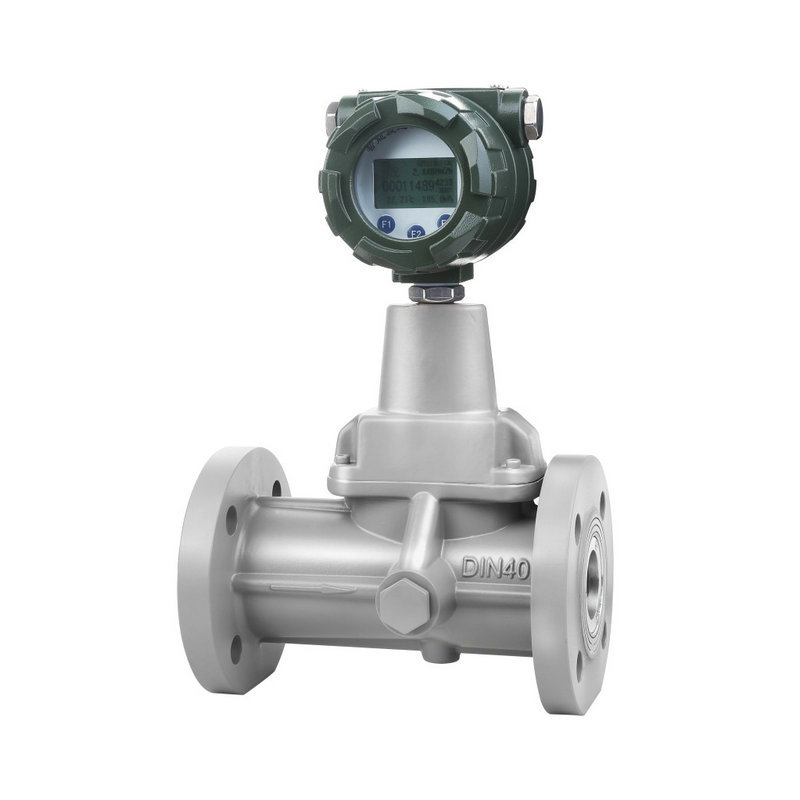
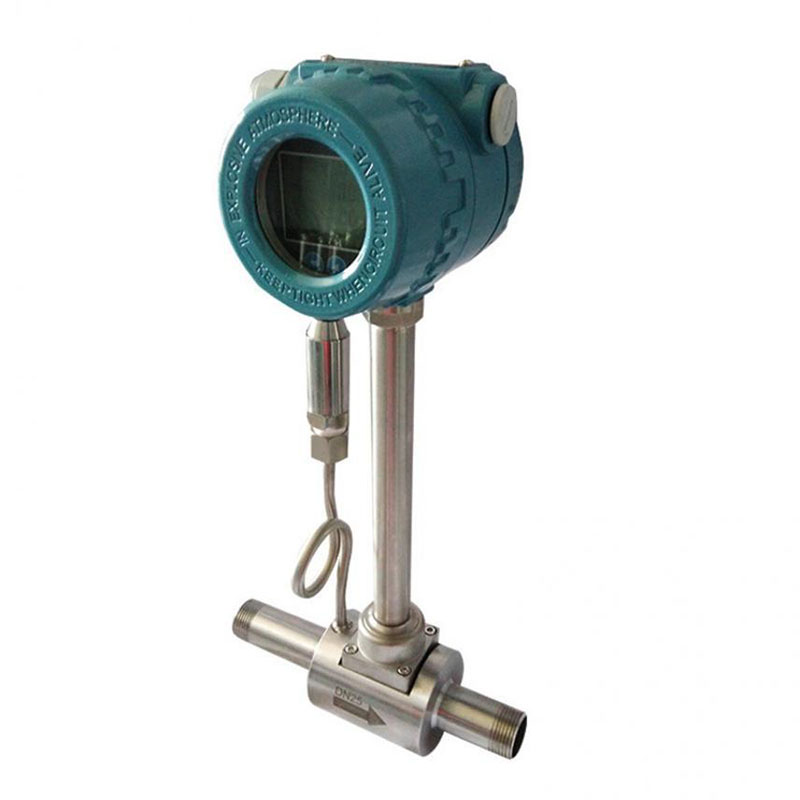
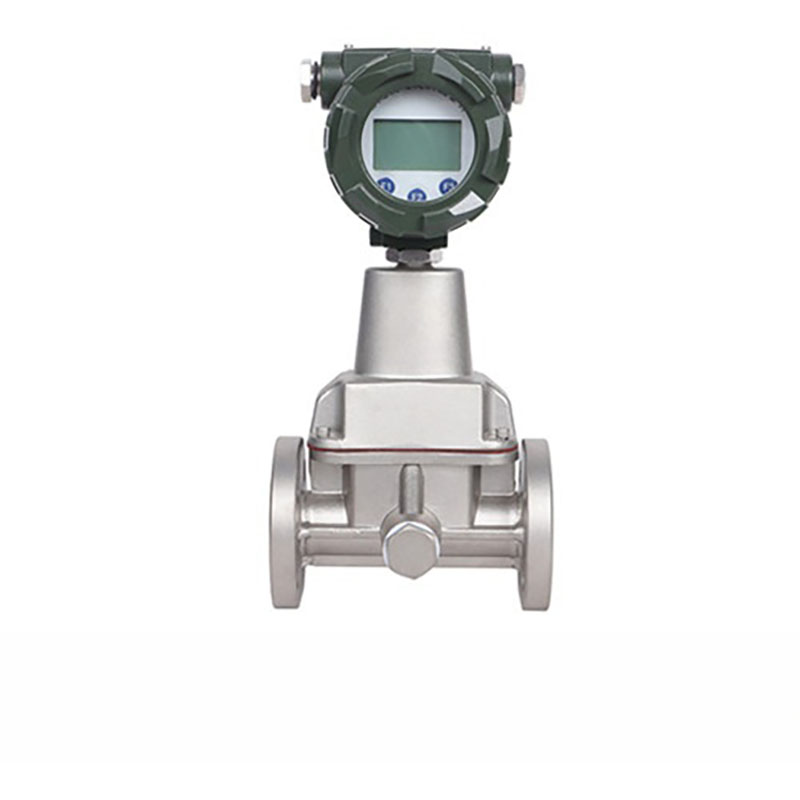
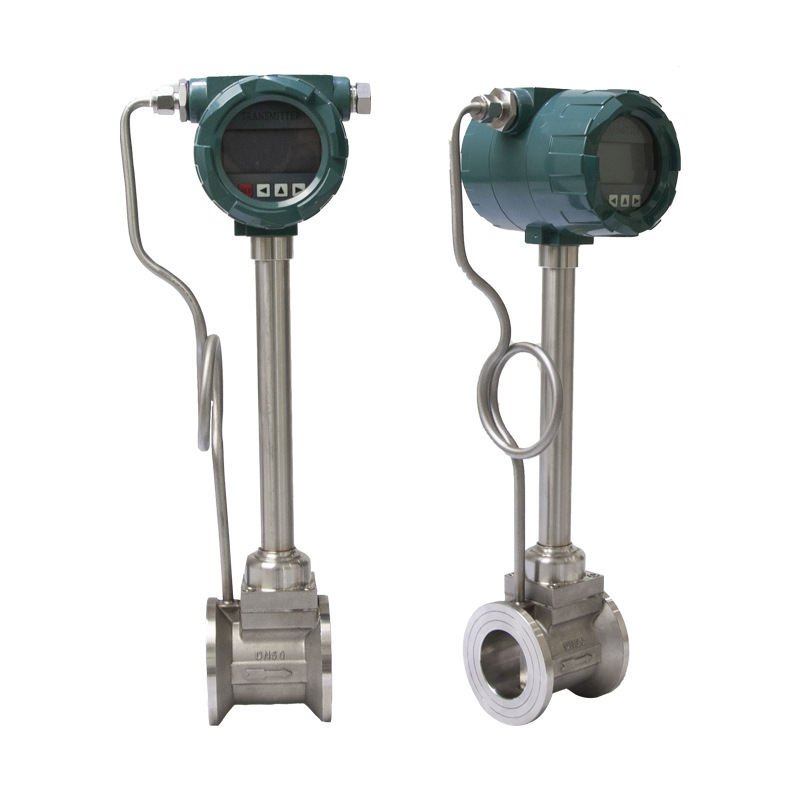
Structural Characteristics and Distinctions
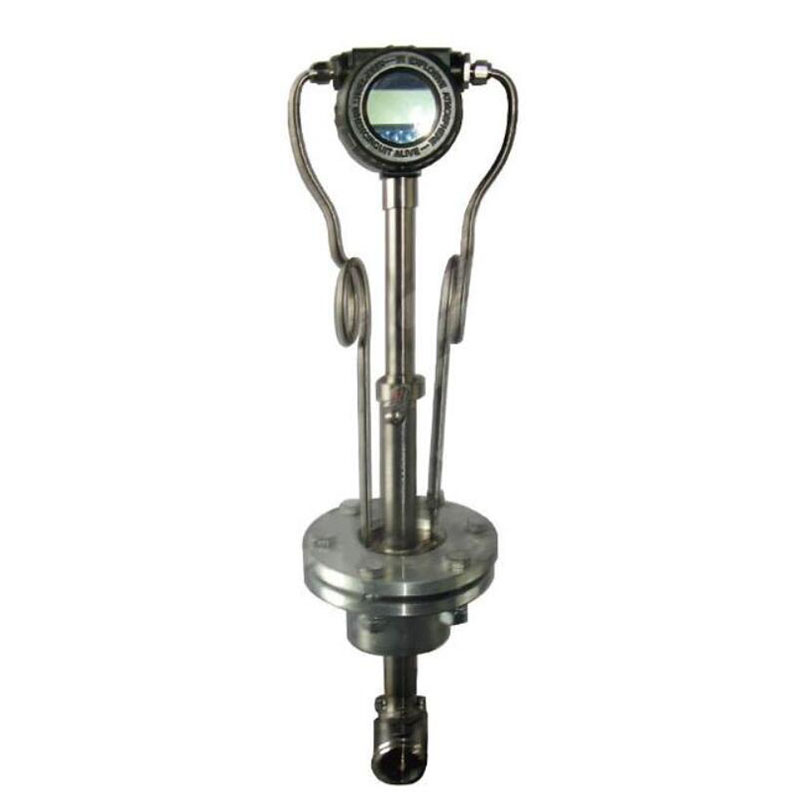
Structure of Swirl Flow Meters
1. Relatively complex construction, with the core comprising the body (Venturi contraction-expansion type), helical guide vanes (swirl-inducing component), vortex expansion section, detection sensor, and flow stabilisation structure, resulting in higher manufacturing costs.
2. The flow channel employs a Venturi contraction-expansion configuration. The way the thing works is by using these spiral vanes, which force the fluid to rotate, thereby creating a vortex. This constitutes a forced vortex + precession detection structural design, resulting in significant pressure loss.
3. The sensor’s main job is to detect the frequency of vortex core precession. It’s designed to be really flexible, so it works well with small diameters and low-velocity gases. It can handle slightly contaminated media and doesn’t demand much when it comes to straight pipe installation sections.
4. Structural limitations are pronounced, permitting only gas media measurement; incapable of measuring liquids or vapour. Internal vortex components are susceptible to pipeline vibration, exhibiting poor vibration resistance.
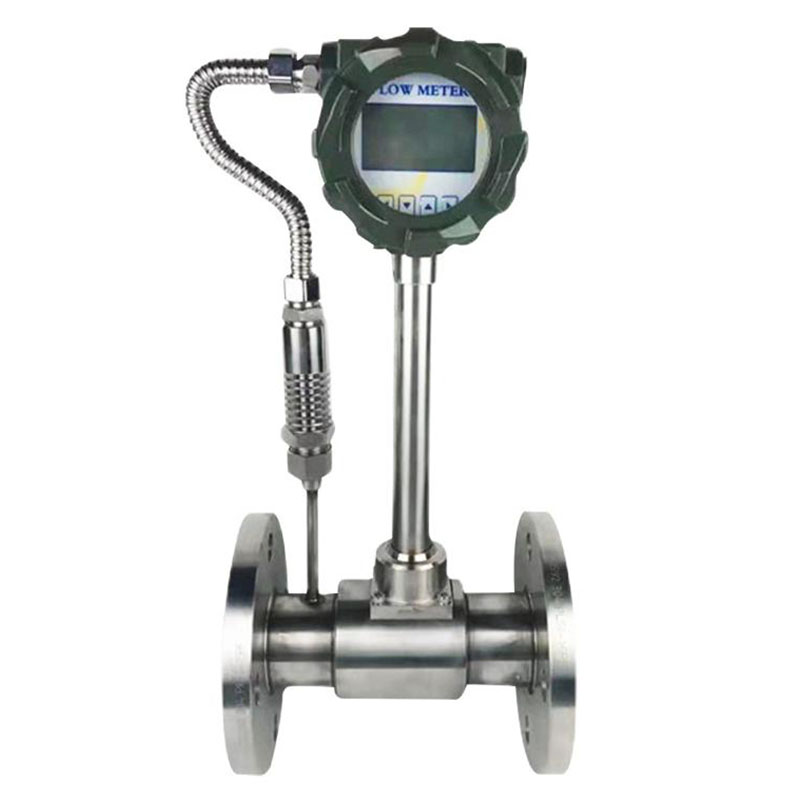
Vortex Flow Meter Structure
1. The overall structure is simple and robust. It is made up of four main parts: the body, the vortex generator, the detection sensor and the converter. There are no moving parts, so it’s really reliable and doesn’t need much maintenance. Plus, it won’t get blocked or seize up.
2. It has a straight-through flow path design with no blades to create vortices. Fluid naturally generates regular vortices when passing through vortex generators, such as triangular or trapezoidal prisms, without altering the direction of flow. This results in minimal pressure loss and low flow resistance.
3. Suitable for high-temperature, high-pressure, and corrosive conditions. Sensors (piezoelectric, capacitive, etc.) primarily detect vortex shedding frequency. Its design makes it suitable for measuring a range of materials, including gases, liquids, and steam.
4. There are some notable structural limitations: It doesn’t have an optimised flow straightening design, so you’ll need a pipe run that’s strictly straight. The low-level vortexes that are produced when the flow rate is low can sometimes mess up your measurements.
Structural Differences Between the Two
1. Differences in swirling components: Vortex flowmeters lack swirling blades and instead rely on vortex generators to produce naturally shed vortices. In contrast, swirl flowmeters feature helical guide vanes that forcibly induce fluid rotation in order to form vortex nuclei.
2. Differences in flow path design: Vortex flowmeters feature a straight circular pipe flow path with low flow resistance, whereas swirl flowmeters employ a Venturi contraction-expansion flow path, resulting in high flow resistance and significant pressure loss.
3. Differences in structural complexity: Vortex flow meters have a simple structure with no moving parts, facilitating easy maintenance; swirl flow meters have a complex structure incorporating multiple components such as swirl and stabilisation elements, making maintenance slightly more challenging.
4. Differences in suitable media: The straight-through design of the vortex street supports gases, liquids and steam universally, whereas the forced swirling structure of the swirl vortex is only suitable for gas measurement and cannot accommodate liquids or steam.
5. Differences in Installation and Performance Correlation: Vortex flowmeters need long straight pipe sections, but they can handle vibrations well. They need fewer straight pipe sections, but they’re less resistant to vibration, so they’re better for measuring low-flow gas.
Performance Differences
1. Applicable Medium Properties
Vortex flow meters are really versatile and can measure gases, liquids and steam all at the same time. They’re really versatile and can be used for all sorts of things.
Swirl flow meters are only for gases and you wouldn’t use them for liquids or steam. They’re specialised gas flow meters.
2. Measurement Range and Low Flow Rate Performance
Just so you know, swirl flow meters are only for gases, not liquids or steam. They’re specialised gas flow meters.
3. Pressure Loss Performance
Vortex flow meters feature straight flow paths and simple structures, resulting in minimal pressure loss and low impact on pipeline system energy consumption.
Swirl flow meters have a higher pressure loss because of their internal forced swirl and venturi structure, so they’re better for gas applications that don’t mind pressure drop.
4. Straight Pipe Section Requirements
Vortex flow meters need long straight sections to stabilise the flow field, otherwise they’re not very accurate.
Swirl flow meters have special internal structures that stabilise the flow. The great thing about this is that you won’t need as many straight pipe sections, which is ideal for confined spaces.
5. Vibration Resistance
Vortex flow meters are built to last, with no moving parts, so they can resist vibrations and are great for industrial use.
Swirl flow meters work by detecting vortex core precession, but they’re pretty sensitive to vibrations in the pipeline, which can mess up the measurements.
6. Measurement Accuracy and Stability
Vortex flow meters are super accurate and really reliable, especially when it comes to liquids and steam.
Swirl flowmeters are pretty accurate when it comes to clean gases and high-pressure gases, but they can be a bit more sensitive to medium conditions and vibration.
7. Adaptability to Medium Cleanliness
The internal vortex generator of vortex flowmeters can get contaminated by impurities, meaning you need to keep the medium cleaner.
Swirl flowmeters have a design that makes them less likely to get blocked, which makes them better for gases that contain a little dust or impurities.
Applicable Scenarios
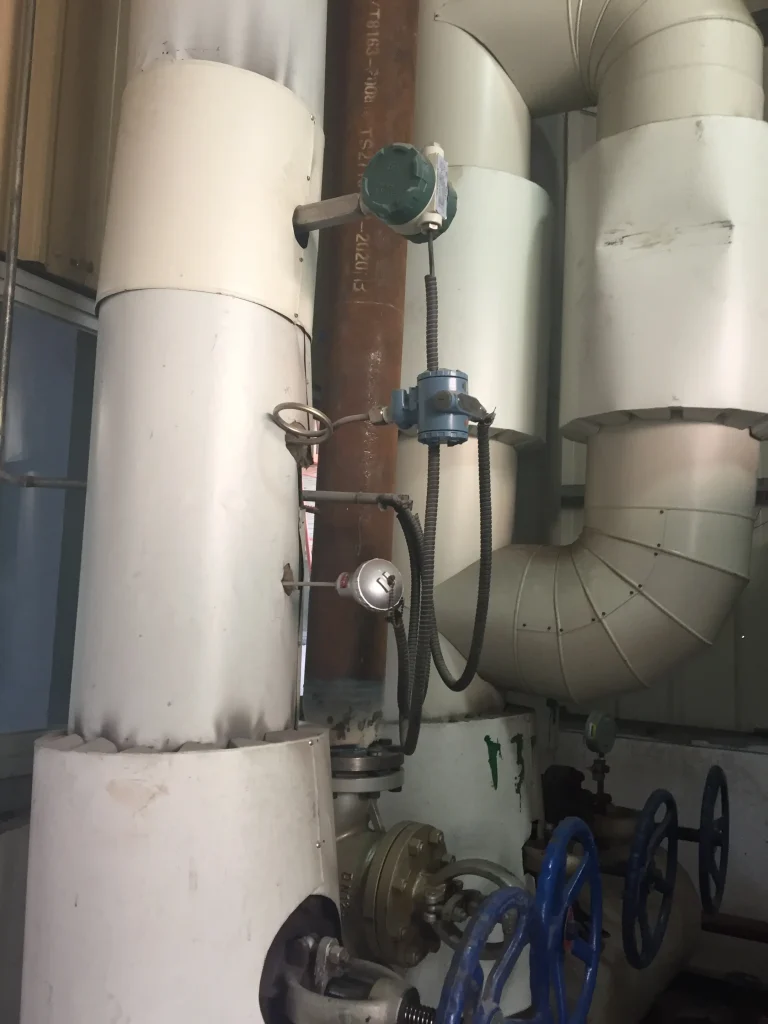
Applicable Scenarios for Vortex Flow Meters
1. Vortex flow meters are really versatile and can be used with all kinds of media. They’re perfect for measuring flow in gases, liquids, and steam. They’re some of the most widely used flow meter types in industrial settings.
2. Particularly suited for metering saturated and superheated steam, they dominate applications requiring stable steam consumption measurement in heating networks, power plants, chemical processing, textiles, papermaking, and similar industries.
3. Optimised for medium to large diameter pipelines, delivering stable measurements and reliable accuracy in DN25 and larger pipe sizes. They fulfil metering requirements for most conventional industrial production lines and utility systems.
4. It’s ideal for applications requiring precise pressure loss control and reduced energy consumption and transport loads. It is ideal for long-distance transport and can be used for extended periods without needing to be switched off. It is also perfect for fieldwork where energy costs are a concern.
5. Applicable in industrial environments with relatively high pipeline vibration. Its robust construction, absence of moving parts, and superior interference resistance ensure long-term stable measurement in complex conditions.
6. It’s great for measuring clean, impurity-free, and particle-free stuff like industrial pure water, light oil, solvents, compressed air, nitrogen, and oxygen, and it’ll stop you from getting blockages or wear and tear.
Application Scenarios for Swirl Flow Meters
1. The flow meter is specifically designed for gases, providing precise measurement of natural gas, town gas, compressed air, biogas, flare gas, and similar gases. It is not suitable for liquids or steam media.
2. It’s perfect for small-bore, low-velocity, and low-flow gas applications. It’s got some pretty cool features that make it stand out from vortex flow meters, especially when you’re dealing with a lot of flow variations and low flow rates.
3. Suitable for installations with limited space or insufficient straight pipe runs. Its integrated swirl and flow-stabilising structures reduce requirements for upstream/downstream straight pipe sections, significantly minimising pipeline modification work.
4. It’s used a lot in critical applications that need really accurate and stable gas measurement, like in natural gas trade metering, gas pressure regulation stations, CNG filling stations, and boiler gas metering.
5. It’s great for gas media with a bit of dust or impurities, and it’s got flow path structures that are less likely to get blocked. It also performs well in gases that are only moderately contaminated.
6. Ideal for gas systems where pressure loss is less critical than low-flow performance, installation convenience, and site adaptability, maintaining reliable operation under complex installation conditions.
When choosing between vortex and swirl flow meters, it’s really important to think about things like the fluid’s properties, the flow range, and the environment it’ll be used in. If the measured fluid conditions are relatively stable with high flow rates, the vortex flow meter is a great choice. On the other hand, if the environment is complex, the flow rates are low or the fluid properties vary a lot, the swirl flow meter may give more reliable measurement results.t
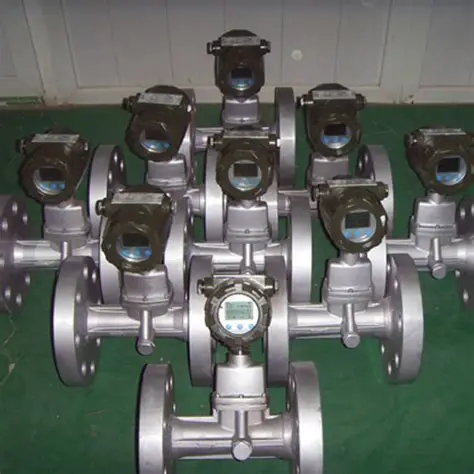
The above outlines the core differences and applicable scenarios for vortex flow meters versus swirl flow meters. In practical operating conditions, selecting the appropriate flow meter type ensures measurement accuracy while enhancing system stability and reducing operational costs.
Should you require guidance regarding the selection, installation, or bespoke solutions for vortex flow meters or swirl flow meters in gas, steam, or liquid metering applications, please do not hesitate to contact us. Sion-Inst delivers professional and reliable flow measurement solutions.
We’re excited to team up with more clients, boost industrial production with our specialised flow instrumentation, and create lasting value together.