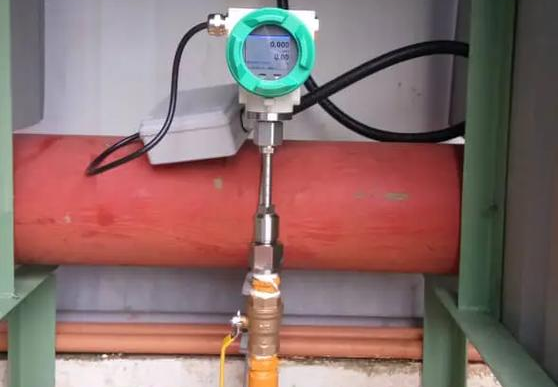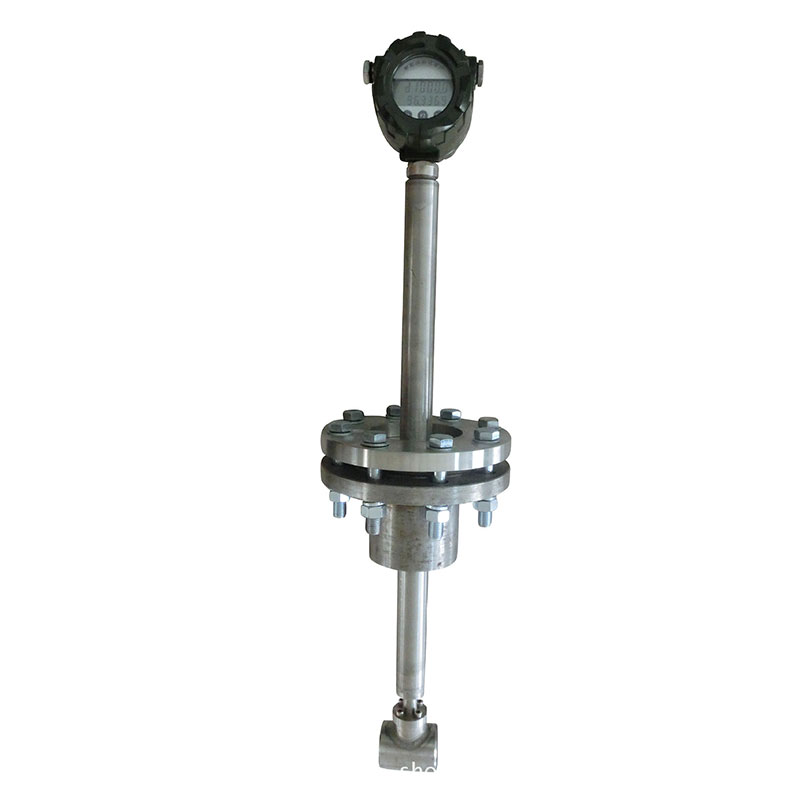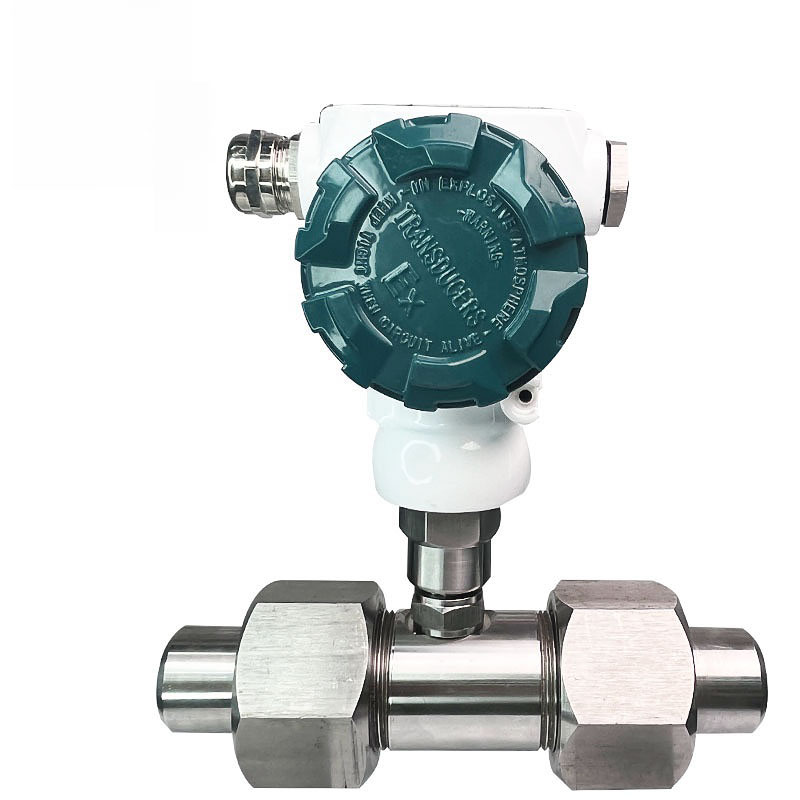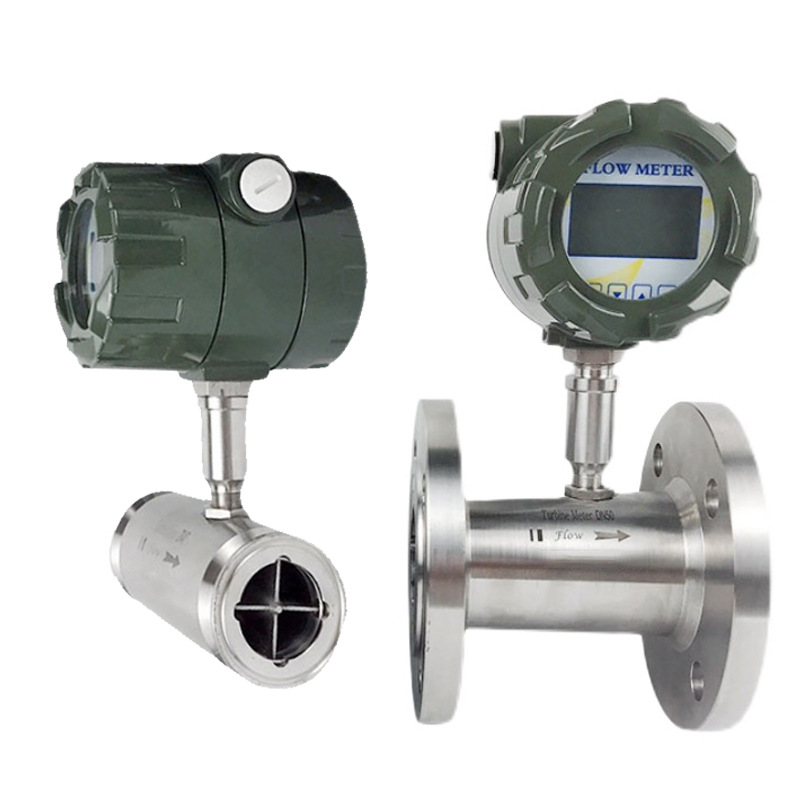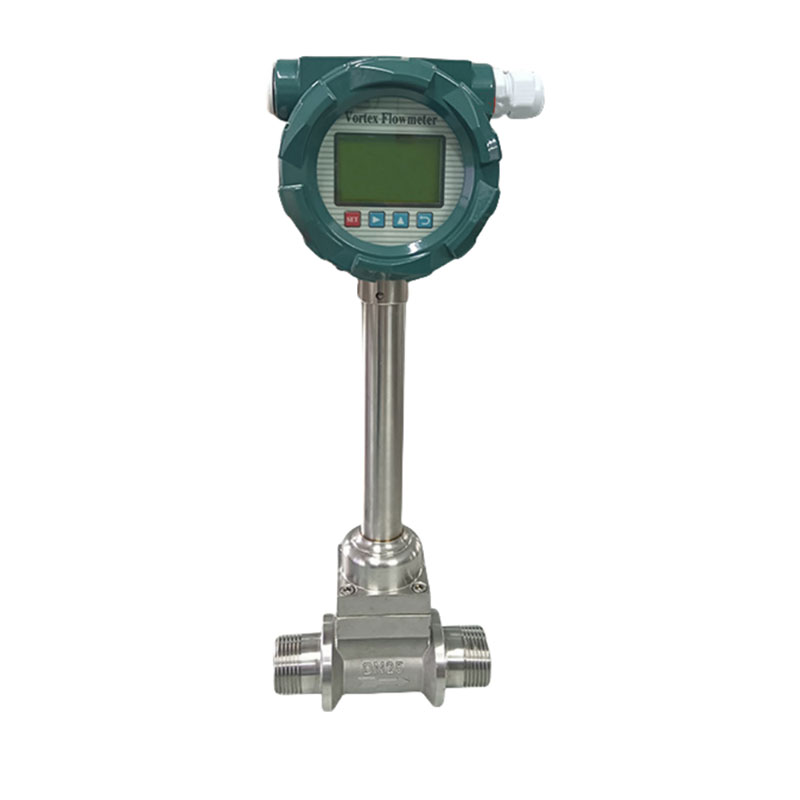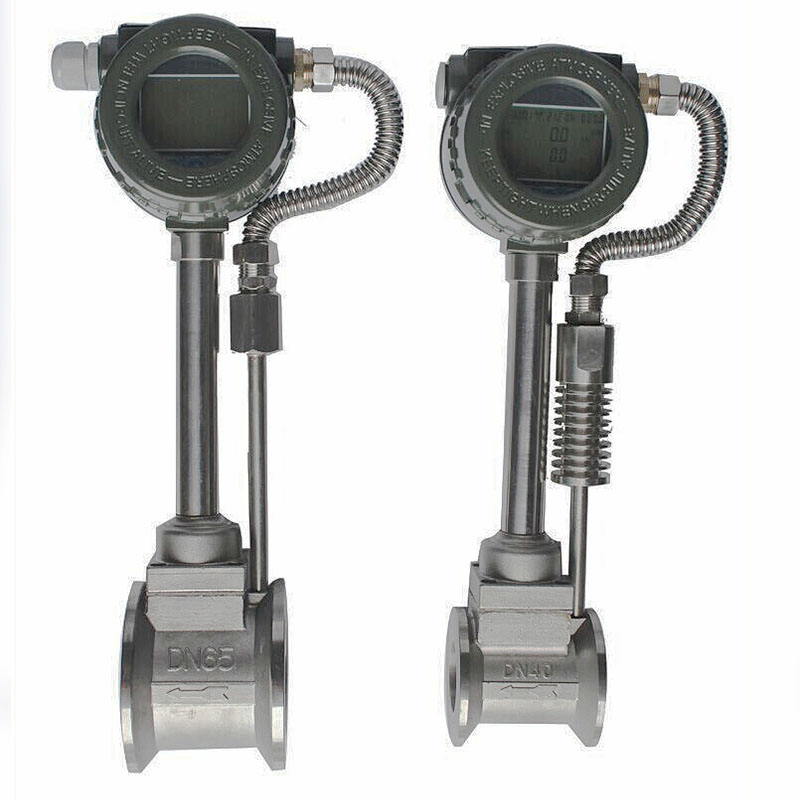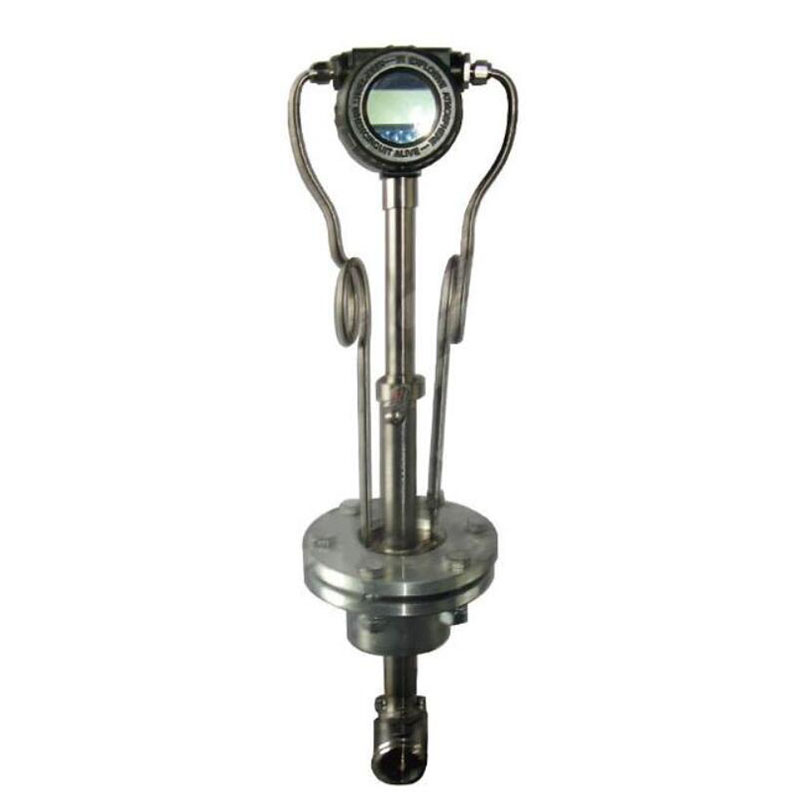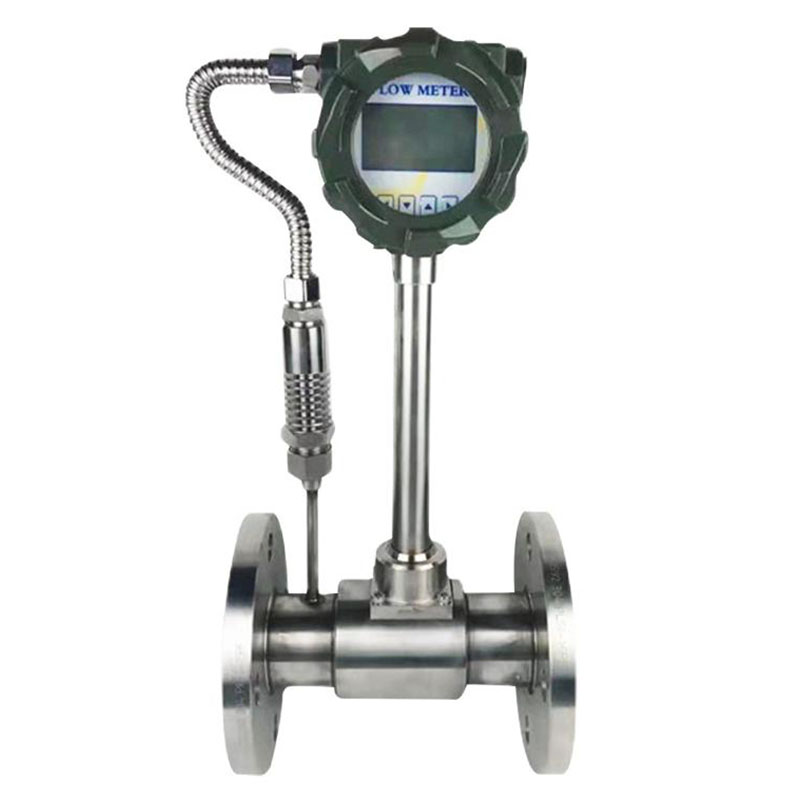
The natural gas industry is growing all the time, so more and more people need instruments to measure natural gas. Of these, swirl flow meters and turbine flow meters are the most popular for measuring natural gas. You can use both swirl and turbine flowmeters to measure gases, but there are some key differences between them. These differences are things like how they work, which gases they can handle, how accurate they are and how easy they are to install and maintain.
Turbine flow meters are characterised by high accuracy, rapid response, and stringent cleanliness requirements, making them suitable for high-precision measurement and trade settlement of clean media. Swirl flowmeters, with their advantages of no moving parts, low maintenance, and minimal straight pipe requirements, are better suited for gas conditions containing trace impurities and scenarios with limited space.
Structural Differences
1. Core Working Component Differences:
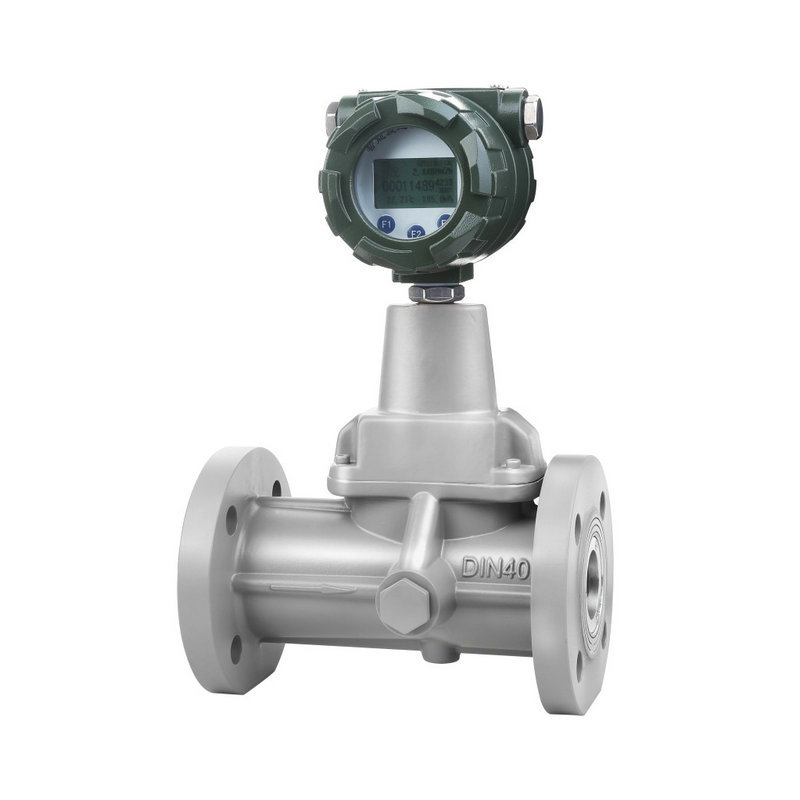
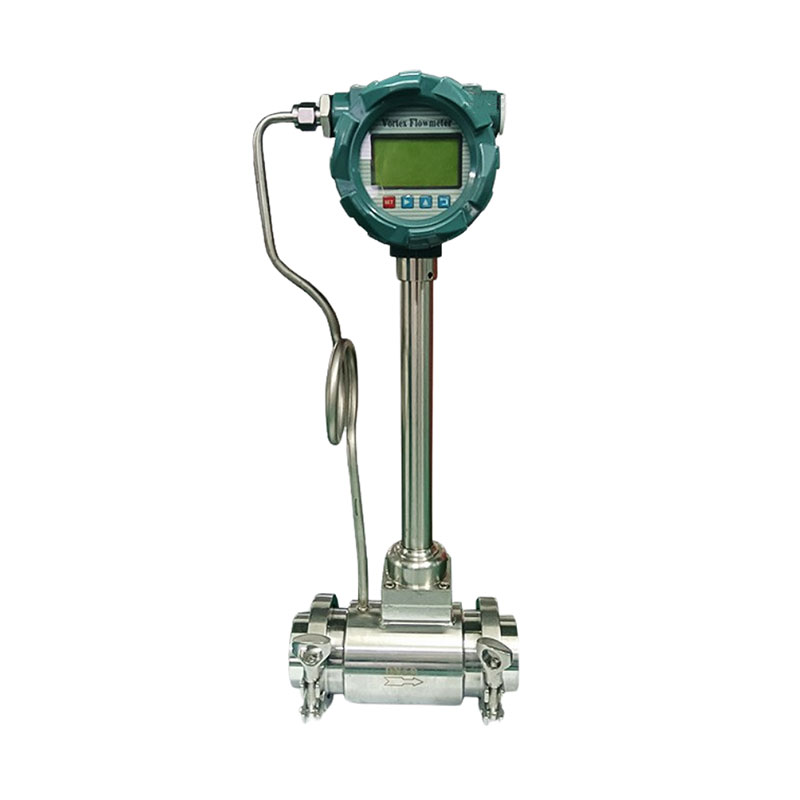
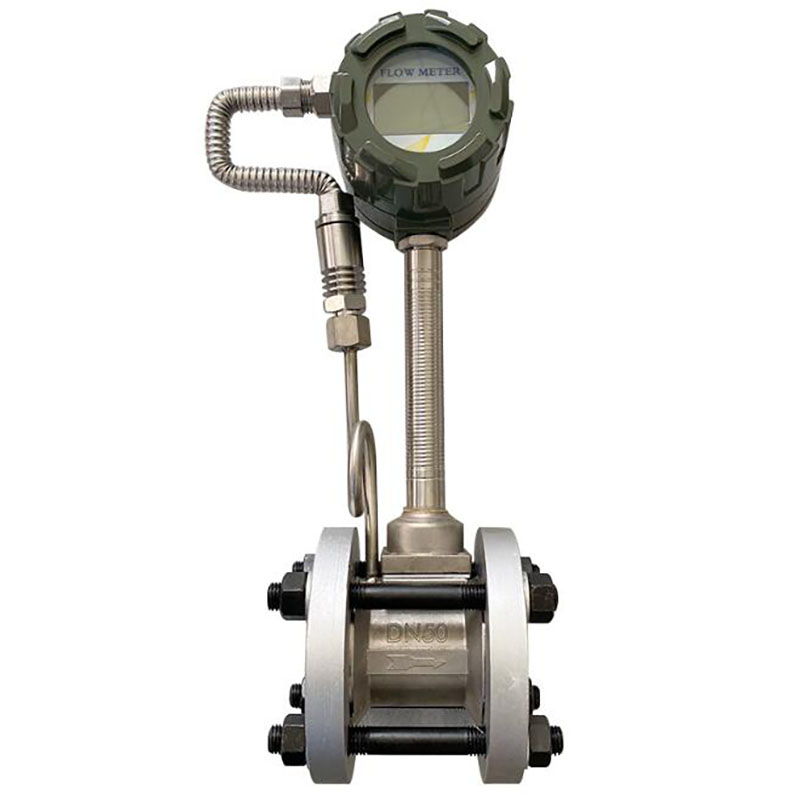
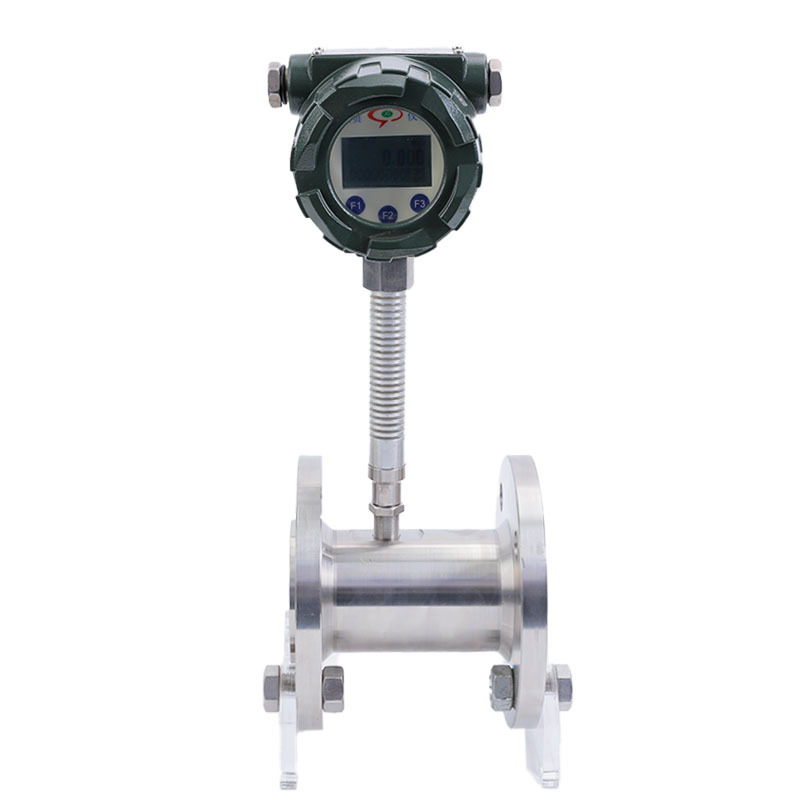
The swirl flowmeter has no moving parts. It is made up of static guide vanes, a vortex generator and a detection sensor at its core. These fixed structures guide the fluid to create swirling vortices, eliminating the need for mechanical rotation or wear components.
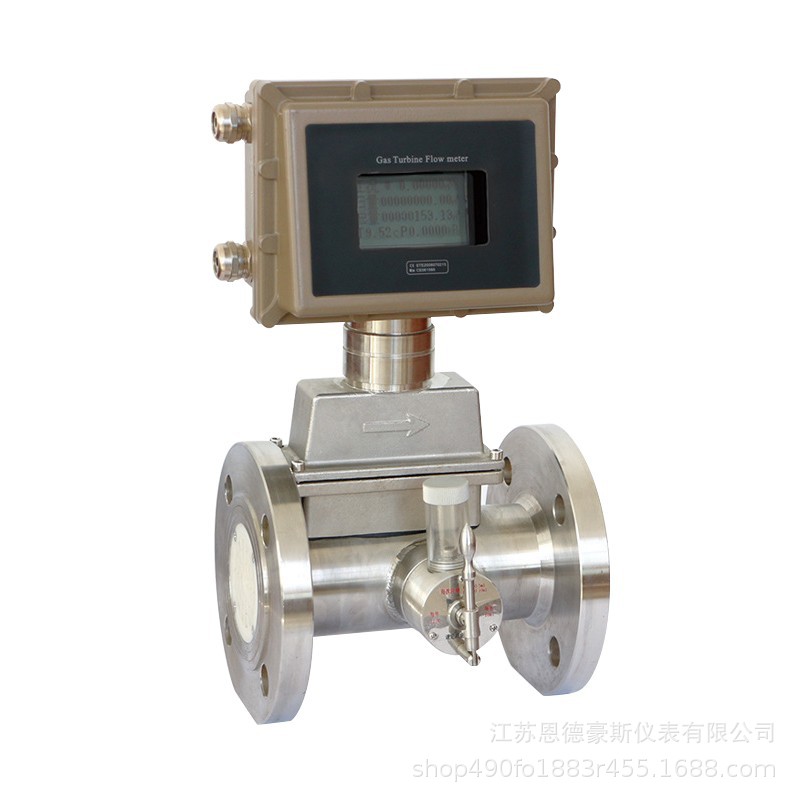
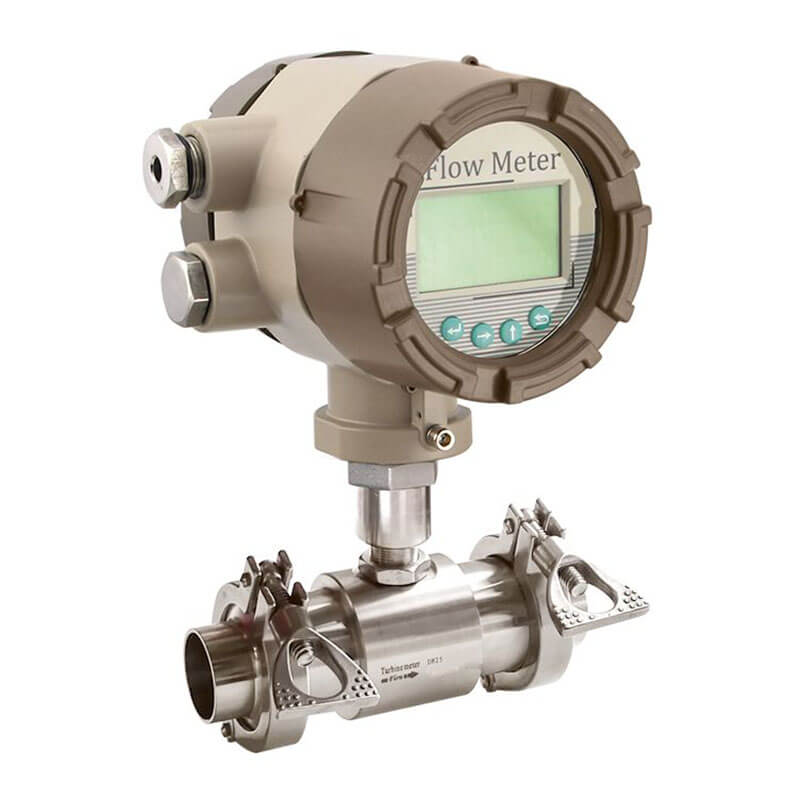
Gas turbine flowmeters have distinct moving components. Their core structure includes an impeller, bearings, a shaft assembly and a signal detector. The gas hitting the impeller makes the shaft assembly rotate, and this converts rotational speed into flow measurement. The impeller and bearings make up the core moving assembly.
2. Differences in internal structural complexity:
The way swirl flowmeters are put together is pretty straightforward, with no complicated moving parts. It just needs the guide vanes and vortex generator to be installed precisely, to make sure the structure stays stable.
Gas turbine flowmeters have more complex internal mechanisms, so it’s crucial to get the clearance matching between the turbine, bearings and shaft assembly just right to make sure the turbine rotates smoothly without any problems. This demands higher component machining accuracy to prevent measurement inaccuracies caused by wear or misalignment.
3. There are also differences in auxiliary structures:
You don’t need to add any extra protective structures to swirl flowmeters, just the basic casing encapsulation will do. They can handle media with impurities without needing any pre-filters. Gas turbine flowmeters, possessing moving components, require pre-filters (to prevent particles or fibres from wearing bearings or jamming impellers). Certain applications also demand shock-absorbing structures to mitigate pipeline vibration impacts on impeller rotational stability.
Differences in Operating Principles
Operating Principle of the Swirl Flow Meter
The swirl flowmeter is a flow measurement instrument based on the Karman vortex street effect. Gas entering the swirl flowmeter first passes through a spiral vortex generator, where it is forced to rotate and accelerate, forming a vortex with a vortex core at its centre.
Upon entering the expansion section, the accelerated vortex decelerates sharply, causing pressure to rise and inducing reverse flow. Under the influence of this reverse flow, the vortex core spirals around the flow meter’s central axis. By measuring the vortex precession frequency f via a sensing element, the flow rate Q can be derived.
Working Principle of Gas Turbine Flow Meters
Gas entering the turbine flowmeter is accelerated by a guide vane. This accelerated gas impinges upon the turbine blades via the inlet passage. The gas thrust causes the turbine to rotate within the flow path.
Basically, the faster the gas is moving through the turbine, the faster the turbine will rotate. You can get the rotational frequency of the turbine (f) using mechanical or electromagnetic induction methods, and this will tell you the gas flow rate (Q) through the flowmeter.
Measurement Differences
With ongoing development, demand for gas measurement instruments continues to grow. Among these, swirl flow meters and gas turbine flow meters have found widespread application in gas measurement. While these two flow meters share similar application scenarios, their primary distinctions lie in the following aspects:
1. Turbine flow meters exhibit lower pressure loss, making them suitable for gas metering in low-pressure transmission scenarios. The swirl flowmeter incurs slightly greater pressure loss, which may occasionally pose challenges for gas metering in low-pressure transmission scenarios.
2. Gas turbine flowmeters demand higher gas purity, being suited to clean, dry gases; swirl flowmeters offer multiple material options and can measure special corrosive gases such as chlorine, making them applicable to a broader range of media.
3. Gas turbine flowmeters are pretty accurate and consistent, which makes them great for high-precision measurement and trade settlement. Swirl flowmeters are pretty stable, but they’re a bit less accurate than turbine flowmeters.
4. Turbine flowmeters provide good repeatability and are the preferred choice for trade settlement. Swirl flowmeters have average repeatability.
5. Gas turbine flowmeters produce high-frequency signals with strong resolution. Basically, swirl flowmeters produce low-frequency signals, but these drop off as the pipe gets bigger. This can lead to poor signal resolution and potential measurement errors.
6. Gas turbine flowmeters have a wide turndown ratio, typically 40:1 to 20:1, which covers a broad measurement range and is great for applications with significant flow variations. When you’re measuring natural gas, flow variations are usually pretty significant, so turbine flowmeters are a great choice. Swirl flowmeters have a moderate turndown ratio (usually about 15:1 to 10:1) and a narrower measurement range. This makes them better suited to gas applications where the flow is not too variable.
7. When it comes to vibration resistance, gas turbine flowmeters are pretty tough, but they can still be affected by some pretty intense vibrations. Swirl flowmeters use dual detection and intelligent vibration suppression technology, which effectively stops interference from vibrations and pressure changes. This makes them much more resistant to interference.
8. Gas turbine flowmeters have parts like bearings that wear out easily, so they need to be regularly maintained when used for long periods. On the other hand, swirl flowmeters don’t have any mechanical wear, are resistant to corrosion, last longer, and you don’t need to do any special maintenance when used over a long time.
Differences in Practical Applications
Typical Application Scenarios for Gas Turbine Flow Meters
Gas turbine flow meters are better for measuring gas accurately, with clean media and when you need to be really precise. They’re mostly used in gas trade settlement, standard metrology, high-purity gases, and dynamic operating conditions. They are commonly employed in natural gas trade metering at gate stations and long-distance pipelines, as well as for measuring high-purity industrial gases such as compressed air, nitrogen, and oxygen.
They are also suitable for scenarios requiring rapid response and high-precision dynamic gas measurement in aerospace applications, such as fuel supply systems and gas turbine engine test benches. They also provide accurate measurements for cryogenic specialty gases, including those resulting from LNG or liquid nitrogen vaporisation.
Typical Application Scenarios for Swirl Flowmeters
Primarily designed for gas measurement, swirl flowmeters suit industrial process metering where field conditions are standard and long-term maintenance-free operation is required. They are commonly employed for gas metering in industrial boilers, kilns, and burners; monitoring energy consumption of utility gases like compressed air, nitrogen, and oxygen in factories; and measuring gases containing minor impurities such as biogas and blast furnace gas.
Their low straight pipe run requirements and absence of moving parts make them particularly suitable for industrial sites with limited installation space, challenging maintenance access, or where long-term stability and minimal upkeep are desired, as well as for retrofitting ageing pipeline networks.
Differences in Application Scenarios
Gas turbine flowmeters are perfect for measuring high-precision gas, clean gas media, gas trade settlement and specialised gas applications. Swirl flowmeters are great for general industrial gases, process monitoring, and they can adapt to the environment really well. They also don’t need any maintenance, which is handy. The first one is all about making sure the gas measurement is spot on, while the second one is more about stability, durability, and being able to adapt on the spot.
Selection Recommendations
Select based on measurement accuracy and application
Gas turbine flow meters offer high accuracy and excellent repeatability, making them suitable for trade settlement, metering handover, and high-precision measurement scenarios. Swirl flowmeters provide moderate accuracy and are commonly used for industrial process control and general energy consumption monitoring; they are unsuitable for high-precision trade settlement.
Selection Based on Medium Characteristics and Purity
Gas turbine flowmeters are great for clean, low-viscosity, single-phase liquids or gases, like light oils, pure water, and high-purity gases. They’re sensitive to impurities and prone to clogging and wear. Swirl flowmeters are designed mainly for measuring gas, and they can handle trace impurities. They’re great for natural gas, compressed air, biogas and blast furnace gas.
Selection based on installation conditions and space
Gas turbine flowmeters have some pretty strict straight pipe requirements, usually needing ≥15D upstream and ≥5D downstream, so they’re great for spaces that are wide enough. Swirl flowmeters don’t need as much straight pipe as other types, usually just ≥5D upstream and ≥2D downstream, which makes them better for tight spots and smaller networks.
Selection based on maintenance and reliability
Gas turbine flow meters have moving parts like impellers and bearings, so they need regular maintenance, calibration, and replacement of wear parts. Swirl flowmeters are solidly built, so they’re reliable and long-lasting, and they don’t need much maintenance. This makes them perfect for use over long periods without someone being there to monitor them.
Comprehensive Selection Conclusions For clean operating conditions requiring high accuracy, metering for billing purposes, and where maintenance facilities are available, turbine flow meters are the preferred choice. For applications primarily involving gas measurement, with standard site conditions, limited installation space, and a focus on long-term stability with minimal maintenance, vortex flow meters are the preferred choice.
FAQ
What is the accuracy of swirl flowmeter, and can it be used for trade settlement?
The swirl flowmeter is an industrial process-grade metering instrument with standard accuracy reaching ±1.0% FS or ±1.5% FS. It offers excellent stability and repeatability, meeting requirements for internal process control, energy consumption statistics, and utility monitoring within enterprises.
However, due to limitations in accuracy class, long-term stability, and metrological traceability requirements, they cannot meet the mandatory measurement standards for trade settlements. Consequently, they are not recommended for external trade settlement scenarios involving natural gas, fuel gas, or similar applications.
Does long-term use require maintenance?
They’re basically maintenance-free, as long as you use them properly. They have no moving parts inside! Periodic checks are required only for pipeline leaks, filter blockages, and probe contamination. Unlike turbine flowmeters, you don’t have to replace the bearings or clean the impeller all the time, so it’s way cheaper to maintain.
Are there installation orientation requirements?
Both horizontal and vertical installation is permissible. It’s best to mount it horizontally for the best and most stable measurements. When you’re doing a vertical installation, you need to make sure you direct the gas flow from the bottom to the top. This way, you’ll get full pipe flow and you won’t have any interference from liquid accumulation or sedimentation when you’re measuring.
We’re here to help your business grow by offering top-notch sensing solutions and making sure your production lines are safe and sound. Sion-Inst is all about industrial measurement and control. We make sure things are done properly by using technology and we do our best to keep our promises to our clients by offering great service.
We focus on what industrial businesses need to help them save money, work better, improve quality, use resources more efficiently, and achieve high-quality growth that benefits everyone.