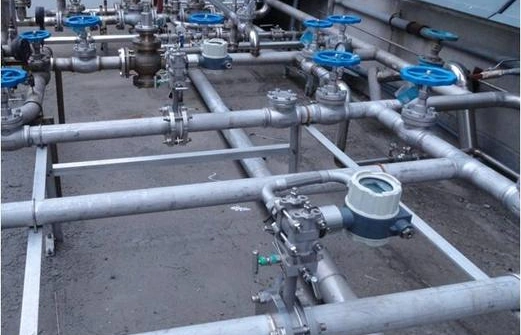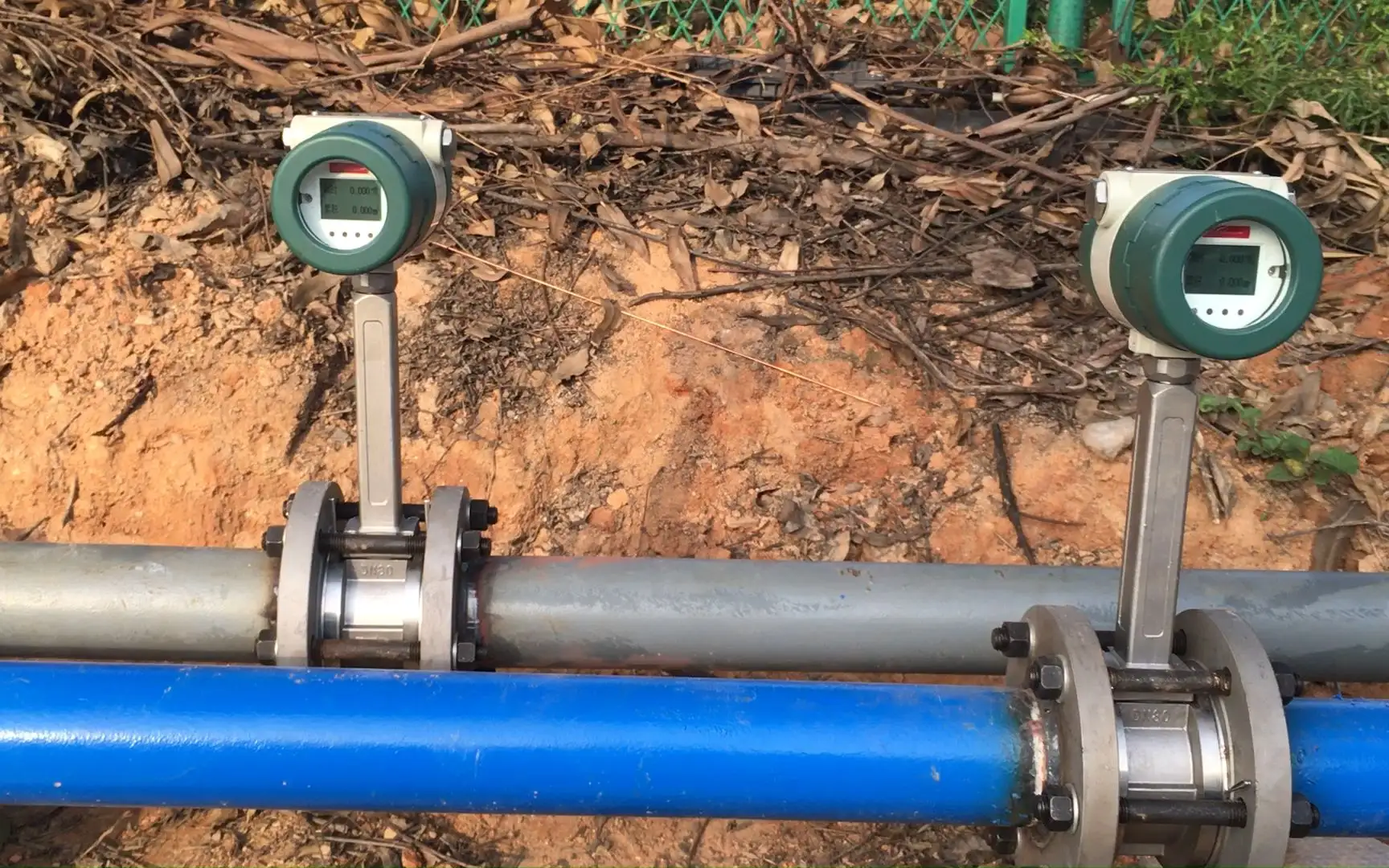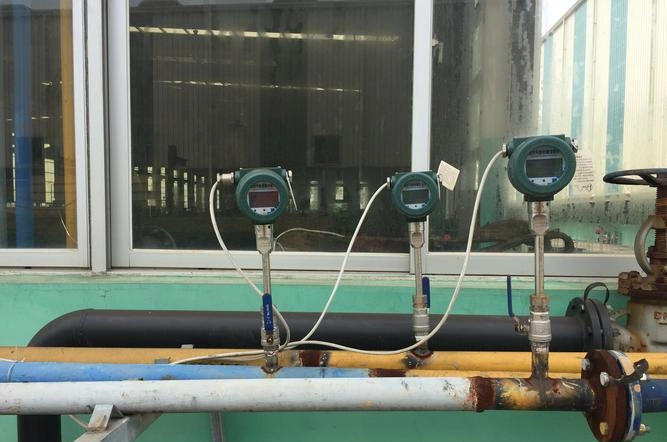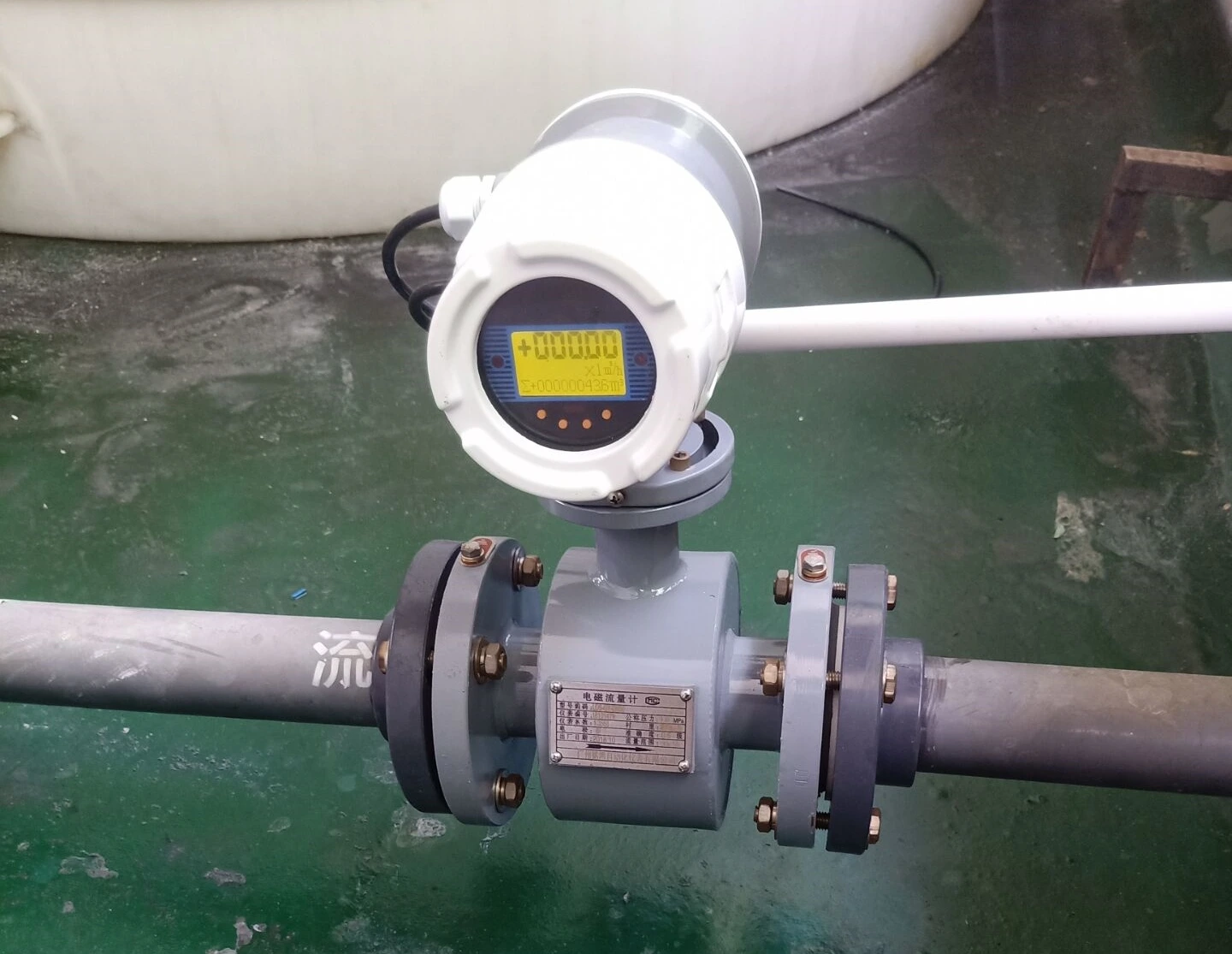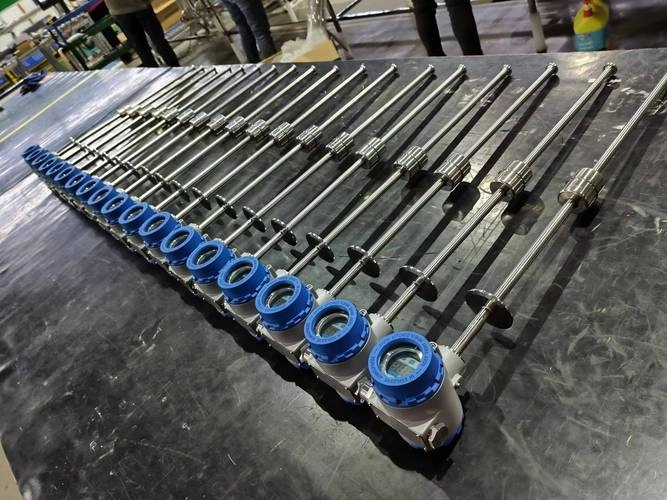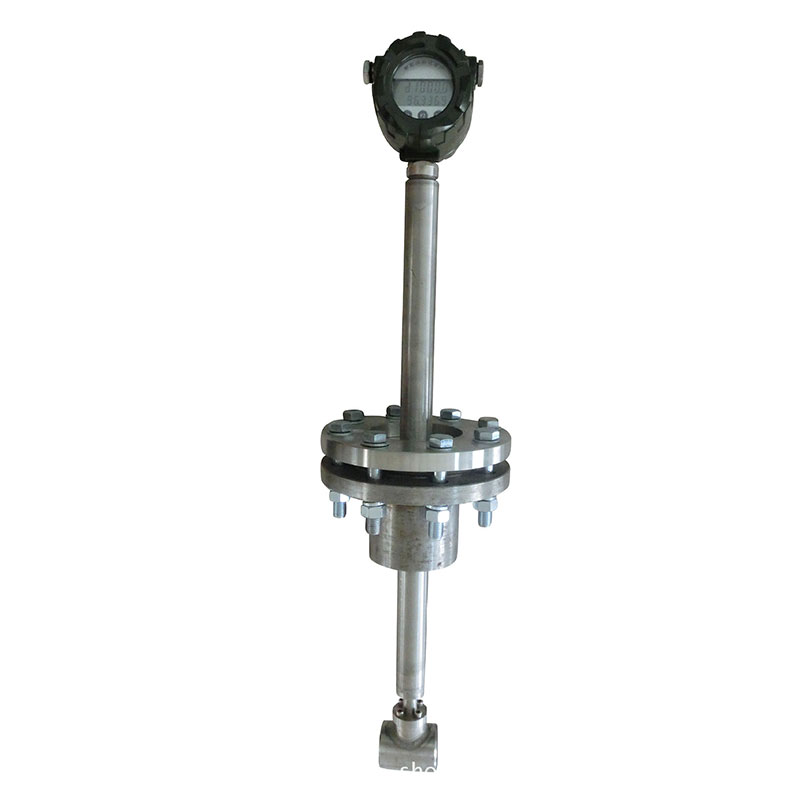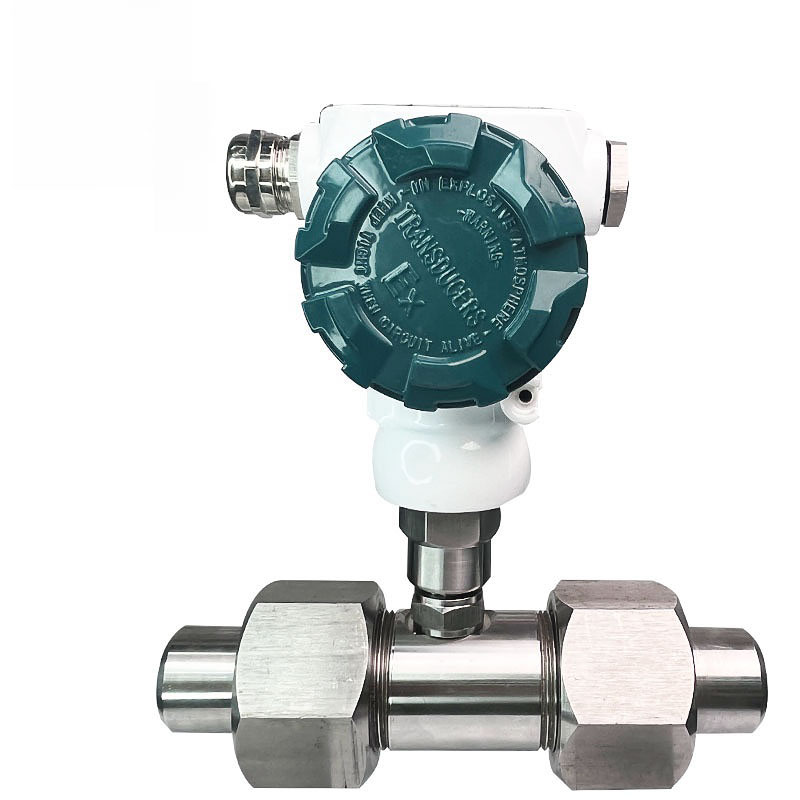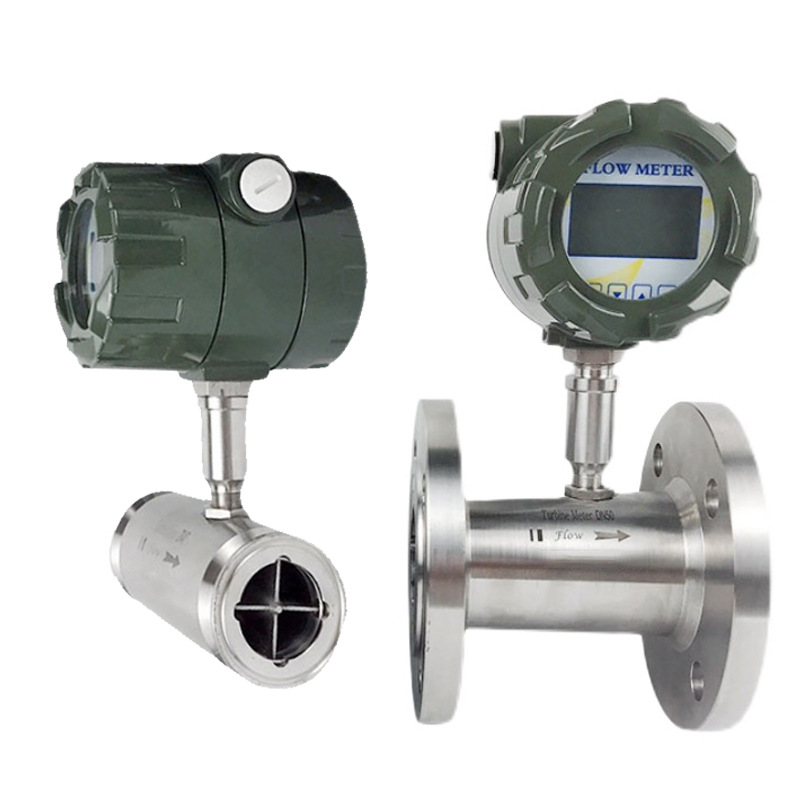
In urban gas transmission and distribution, industrial boilers, kilns, CNG filling stations, and trade transfer scenarios, the precise measurement of natural gas directly impacts energy consumption accounting, cost control, and trade fairness. As one of the most accurate and stable velocity-type flow meters, gas turbine flow meters have become the mainstream choice for natural gas measurement.
Working Principle
The operating principle of a turbine flowmeter for natural gas is identical to that of a standard turbine flowmeter. The fluid being measured impinges upon the turbine blades, causing the turbine to rotate. The rotational speed of the turbine is directly proportional to the average velocity of the fluid. Via a magnetoelectric conversion device, the turbine’s rotational speed is converted into electrical pulse signals of corresponding frequency. These signals are amplified and transmitted to the display instrument, thereby yielding both the instantaneous flow rate and cumulative flow of the fluid.
Characteristics of Natural Gas
Natural gas is a mixture of gases, mostly methane. The way it looks, the stuff it’s made of, and how it flows are all key factors in picking the right flow meter, how to measure it, how to install it, and the safety standards. These characteristics also necessitate that gas turbine flow meters incorporate temperature and pressure compensation, explosion-proof design, and pre-filtration.
1. It’s really compressible, and its density changes a lot with temperature and pressure.
Natural gas is a typical compressible gas, which means its volume and density change a lot with temperature and pressure. More pressure and less temperature means the gas gets smaller and more dense. Less pressure and more temperature means the gas gets bigger and less dense.
2. Low viscosity and high fluidity, with sensitivity to pressure loss
Natural gas exhibits extremely low viscosity and excellent flow characteristics, rendering it highly sensitive to pressure losses in pipelines and instrumentation. Excessive pressure loss directly impacts supply pressure and reduces transmission efficiency, necessitating the prioritisation of low-pressure-loss instrumentation.
3. Generally clean, but prone to containing condensate and trace impurities
Natural gas is pretty clean most of the time, but there’s always a chance of some dust, rust, oil, water vapour, or light hydrocarbons if it’s transported over long distances or pressure is regulated. These impurities cause problems like bearing wear, impeller jamming and signal interference, so you need to install filters and gas-liquid separators upstream of metering equipment.
4. Flammable and explosive, classified as a high-risk combustible medium
Natural gas is a flammable and explosive gas, and it can ignite easily. Leaks can easily cause safety problems. So, instruments used in the field must be explosion-proof (Exd II CT4/CT6), and installation, wiring, and maintenance must follow gas safety rules exactly.
5. Stable composition with low corrosivity
Natural gas primarily consists of methane (over 90%), with minor components including ethane, propane, nitrogen, and carbon dioxide. It exhibits no significant overall corrosivity, making conventional stainless steel or aluminium alloy materials suitable. Only in sulphur- or moisture-containing conditions should minor corrosion and condensation issues be monitored.
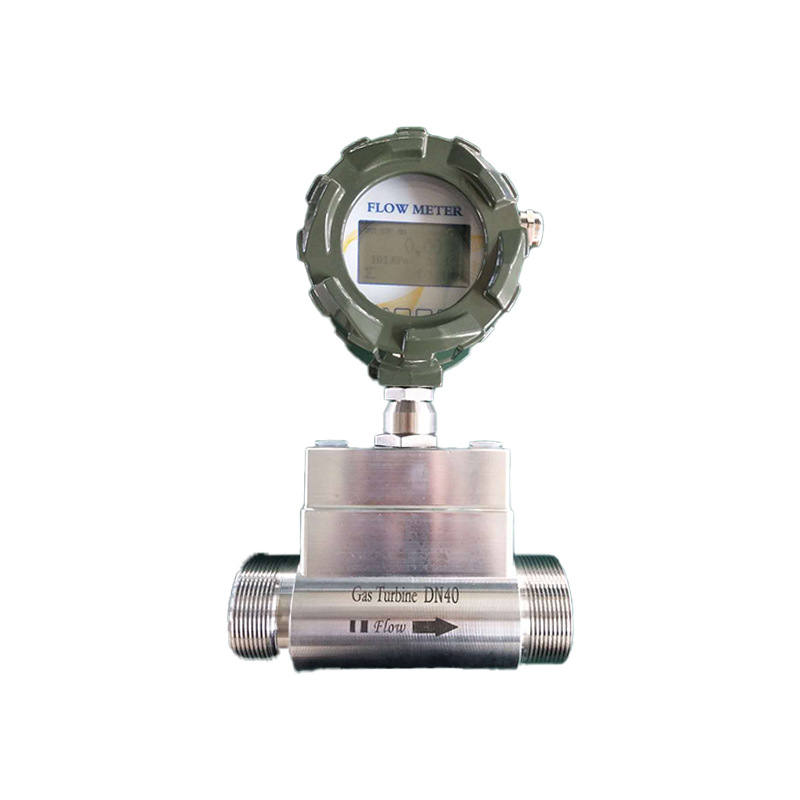
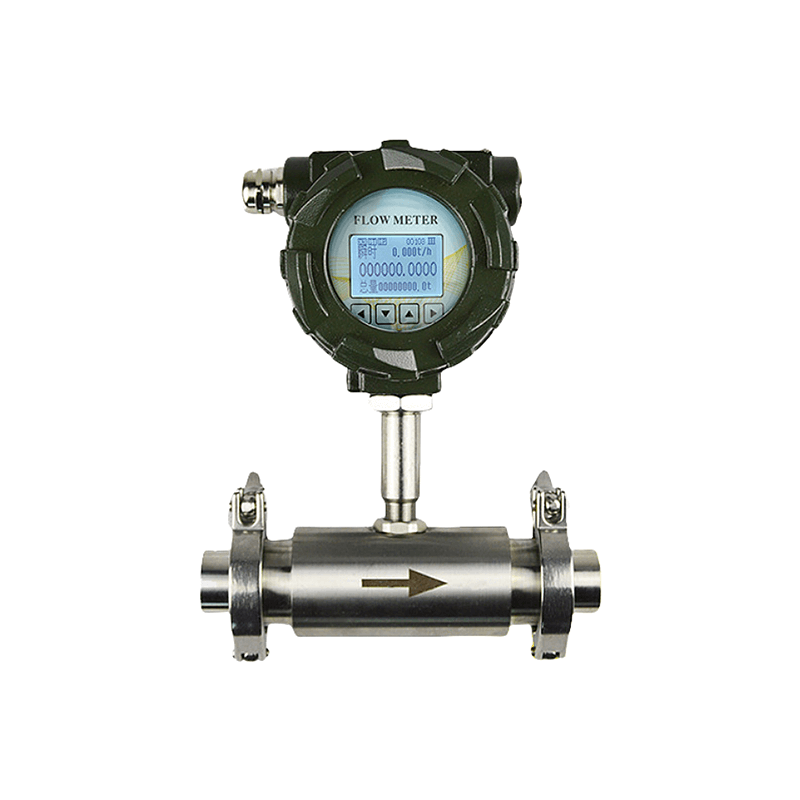
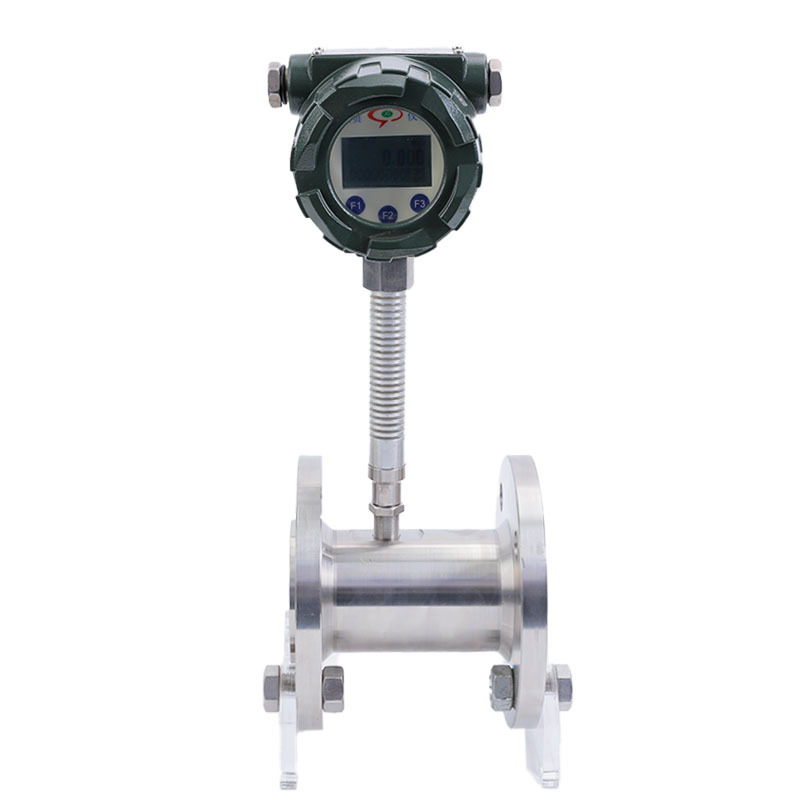
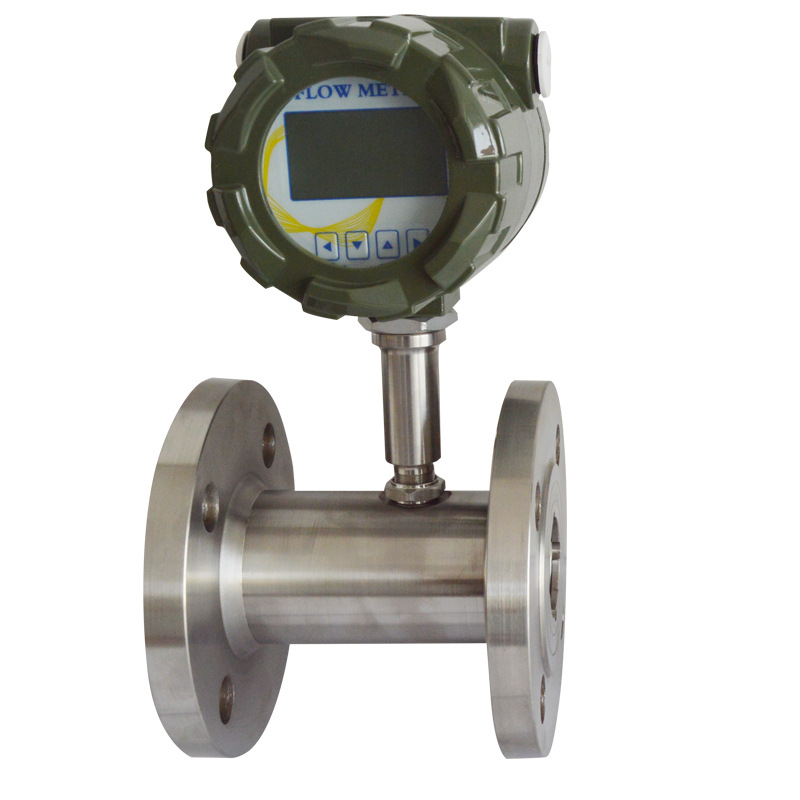
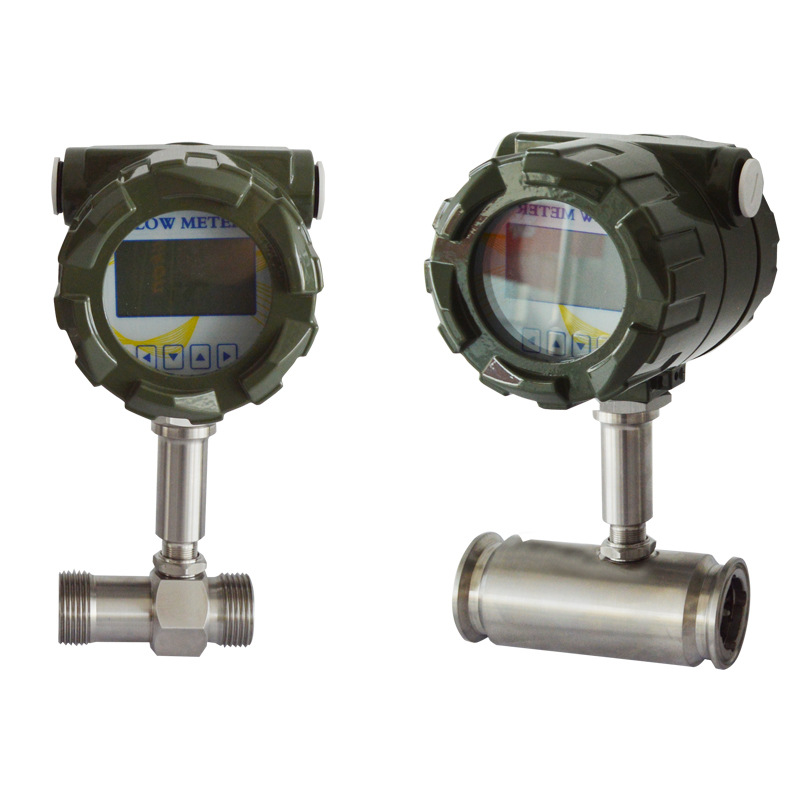
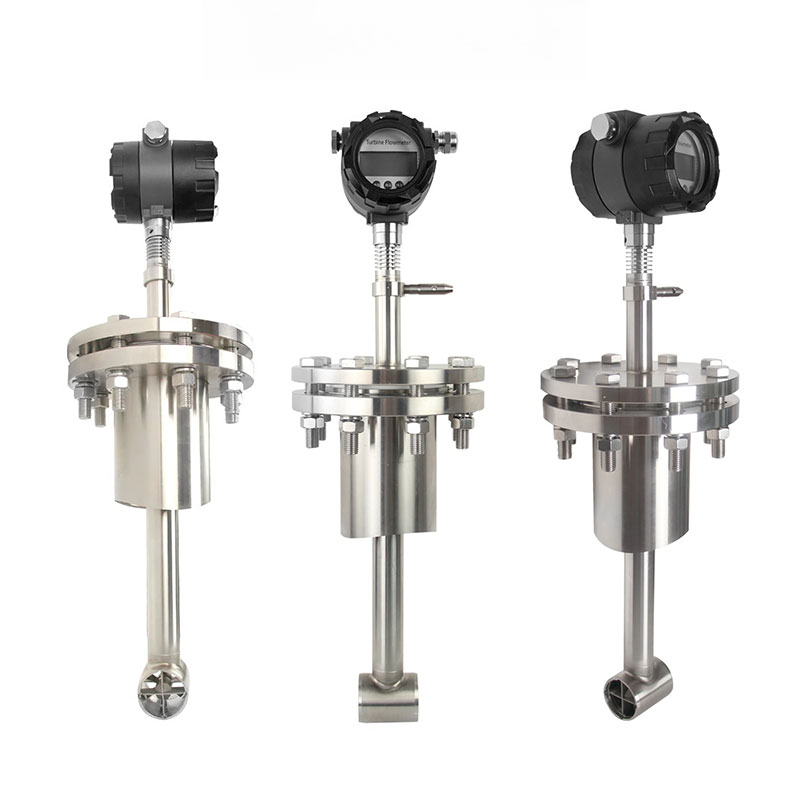
Why are turbine flow meters the preferred choice for natural gas measurement?
1. High Accuracy
Gas turbine flow meters are high-precision instruments that typically offer accuracy of ±0.5% to ±1.0%. High-accuracy models achieve an accuracy of ±0.2% R. They are much more accurate than vortex flow meters, rotary flow meters and similar devices, with repeatable measurements of ≤±0.1%. The speed of their rotor is closely related to the speed of the flow. Combined with high-precision sensors and intelligent signal processing, they can accurately measure very small flow rates. As legal metering instruments for natural gas trade settlement, they are widely used in billing scenarios for gas companies and industrial users.
2. Integrated design with temperature and pressure compensation
As a typical compressible gas, natural gas exhibits significant variations in volume and density with fluctuations in temperature and pressure (following the ideal gas equation). Direct measurement of volumetric flow under operating conditions holds no practical metrological significance and fails to meet uniformity requirements for trade settlement.
Gas turbine flow meters typically integrate high-precision temperature and pressure sensors to achieve automatic integrated temperature-pressure compensation. This automatically converts the volumetric flow rate under operating conditions to the standardised flow rate under standard conditions, effectively mitigating measurement deviations caused by fluctuations in ambient temperature and pipeline network pressure.
3. Low Pressure Loss, High Stability
During long-distance transmission and distribution of natural gas, as well as continuous industrial gas supply, the pressure loss incurred by the instrument directly impacts supply efficiency and energy consumption costs. Gas turbine flow meters have a special design that makes them very efficient. They have smooth flow channels and are very compact. They usually lose less than 0.02 MPa of pressure (when they’re working normally), which is much less than throttling-type meters like orifice plates or nozzles. This keeps pipeline pressure high without needing extra booster equipment, which means less energy is used to transmit gas.
4. This product has an explosion-proof rating, making it ideal for high-risk environments.
Natural gas is classified as a Class II flammable and explosive gas, so strict explosion-proof requirements apply to the instruments used to measure it on-site. Gas turbine flow meters come with a flameproof Exd II CT4/CT6 enclosure as standard, giving them an IP65/IP67 protection rating. This effectively isolates external electrical sparks and high temperatures, preventing safety hazards caused by internal circuit failures.
5. Wide Rangeability and Rapid Response
Natural gas consumption tends to go up and down a lot at different times, so meters need to be able to adapt to this and respond quickly. Gas turbine flowmeters can achieve a range of 1:10 to 1:20, with some high-precision models reaching 1:30. This makes sure you’ve always got good coverage, no matter how many devices you’ve got going. Also, they’re really quick at tracking changes in flow, with a response time of less than 100 milliseconds, so you always have accurate real-time data. This eliminates measurement errors caused by response delays, making them suitable for scenarios with significant gas load variations.
6. Robust Construction, Extended Service Life, and Low Operational Costs
Natural gas metering instruments are often installed in tricky places like outdoor pipelines and underground pressure regulation stations, where it’s hard to do maintenance. So, it’s really important that the instruments are reliable and last a long time. The core component of the gas turbine flowmeter—the turbine rotor—is manufactured from lightweight, high-strength alloys (aluminium or titanium alloys), offering advantages of wear resistance, corrosion resistance, and light weight.
This reduces fluid resistance and ensures rotational stability. Bearings utilise wear-resistant materials such as ceramic or tungsten carbide, featuring an extremely low coefficient of friction and slow wear rate. Under clean medium conditions, the normal service life can reach 5 to 8 years. Furthermore, the instrument features a simple structure with few wear-prone components. Routine maintenance involves only periodic filter cleaning and bearing wear inspection, eliminating the need for complex disassembly. This significantly reduces operational costs and minimises downtime losses.
Application of Turbine Flow Meters in the Natural Gas Sector
Natural Gas Trade Metering: As statutory metering instruments, these are primarily employed for trade settlement between gas companies and industrial users or residential end-consumers. Their scope encompasses metering at city gate stations, industrial gas consumption points, and long-distance pipeline transfer stations.
Urban Gas Network Transmission and Distribution Measurement: You’ll find these meters in main pipelines, branch lines, and pressure regulating stations within urban gas networks. They’re used for flow monitoring, load regulation, leak detection, and energy consumption accounting.
Industrial Natural Gas Process Metering: Tailored for chemical, metallurgical, and ceramic industries, it enables process metering and energy consumption control for gas-consuming equipment like boilers and kilns. Leveraging rapid response, wide turndown ratio, and explosion-proof/wear-resistant properties, it swiftly tracks industrial gas load variations. It’s perfect for dangerous workshop environments and can be used 24/7, helping businesses to keep track of energy usage and come up with the best ways to use gas.
CNG/LNG Terminal Metering: Covers terminal scenarios including CNG filling stations and LNG vaporisation stations. Used for metering fuel nozzles, measuring storage cylinder filling/discharging, and metering post-vaporisation natural gas supply at terminals.
Natural Gas Long-Distance Pipeline Metering: Applied at metering stations and booster stations within long-distance natural gas pipelines. Used for metering distribution flow rates, monitoring pipeline loads, and conducting transfer accounting.
FAQ
Must natural gas turbine flow meters incorporate temperature and pressure compensation?
Natural gas is a quintessential compressible gas whose density and volume fluctuate significantly with temperature and pressure. Measuring only the volumetric flow rate under operating conditions fails to reflect actual gas consumption. Therefore, temperature and pressure compensation must be configured for trade settlement and precise energy consumption accounting. The instrument employs built-in high-precision temperature and pressure sensors to continuously gather operating parameters.
Utilising the gas state equation, it automatically converts the operating flow rate to a standardised flow rate under standard conditions. This ensures metrological data is consistent, traceable, and compliant with national standards and trade settlement requirements. Instruments without compensation can only output operating flow rates, rendering the data unsuitable for settlement and precise accounting purposes.
Can natural gas containing impurities or condensate be measured using a turbine flowmeter?
Direct use is not permissible; a precision filter and gas-liquid separator must be installed upstream of the instrument. Natural gas turbine flowmeters incorporate precision moving components such as high-accuracy impellers and ceramic or tungsten carbide bearings. Dust and rust in the medium will rapidly wear down bearings and blades, while oil contamination, hydrocarbon condensate, and water vapour can cause impeller jamming and impaired rotation. This not only significantly reduces measurement accuracy but also shortens instrument lifespan or causes direct damage. Pre-treatment units effectively filter solid impurities and separate liquid components, ensuring the gas entering the meter is clean and dry. They are essential for stable measurement and instrument protection.
What straight pipe requirements apply to turbine flowmeters?
Gas media (particularly natural gas) impose stricter straight pipe requirements. Typically, upstream straight pipe must be ≥15D and downstream ≥5D (where D is the pipe’s internal diameter). For liquids, upstream ≥10D and downstream ≥5D are generally required. If upstream sections are immediately adjacent to pipe fittings such as elbows, tees, valves, reducers, or compressors, this can cause fluid deflection, swirling, and flow field distortion. This disrupts the linear relationship between turbine speed and flow velocity, leading to significantly increased measurement errors. Where on-site conditions cannot meet straight pipe requirements, flow straighteners must be installed to stabilise the flow field and ensure measurement accuracy.
What does turbine flowmeter calibration primarily verify?
It calibrates flow indication error, measurement repeatability, and the instrument coefficient K value to ensure accurate correspondence between pulse signals and actual flow. For intelligent models with temperature and pressure compensation used in natural gas applications, it also synchronously calibrates the indication accuracy of temperature and pressure sensors while validating the accuracy of standard condition flow conversion algorithms.
Sion-Inst turbine flow meters are designed for real-world use, with a focus on making sure they last, the seals are reliable, and they can’t be interfered with. This design makes routine inspections, disassembly/calibration, and unexpected failures a thing of the past, ensuring continuous, reliable operation even under complex conditions. They also offer practical support and advice after you’ve bought it, so you can install it easily, worry less about running it and rest assured that you’ll always be able to get the maintenance you need.