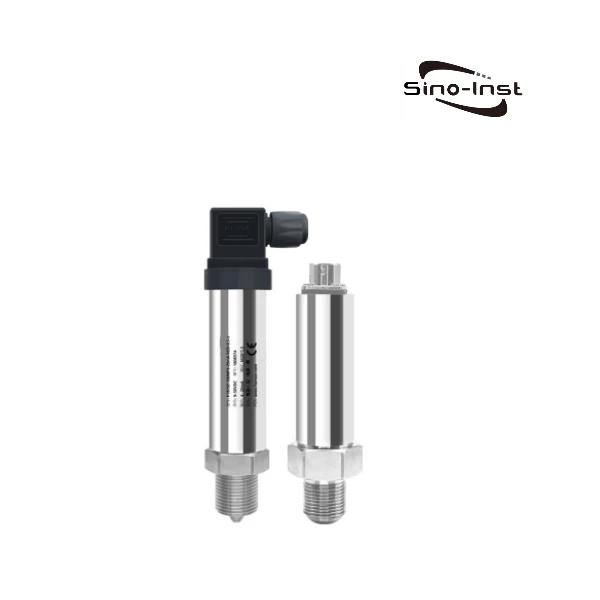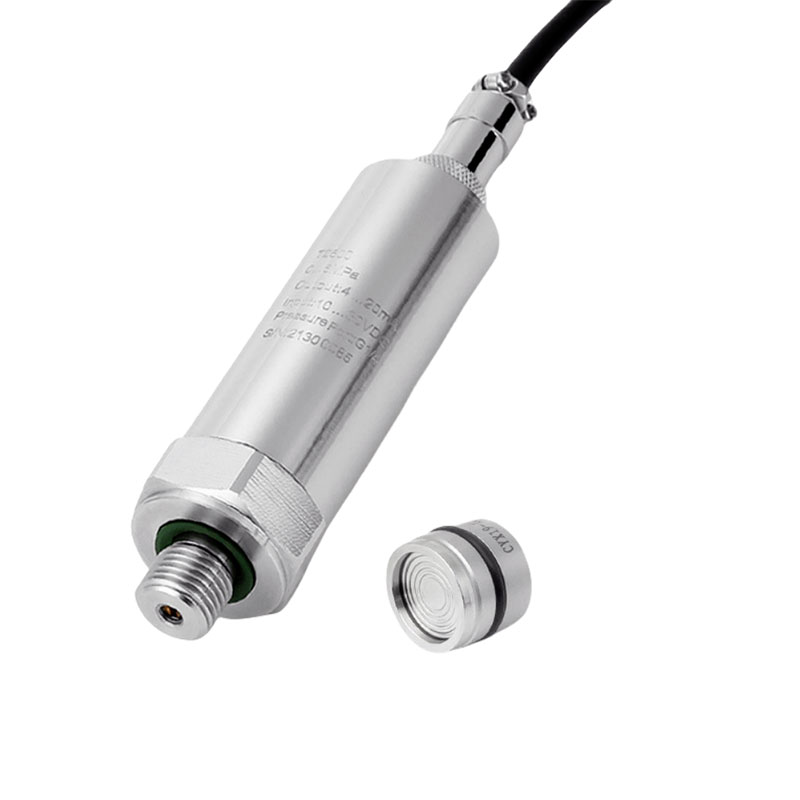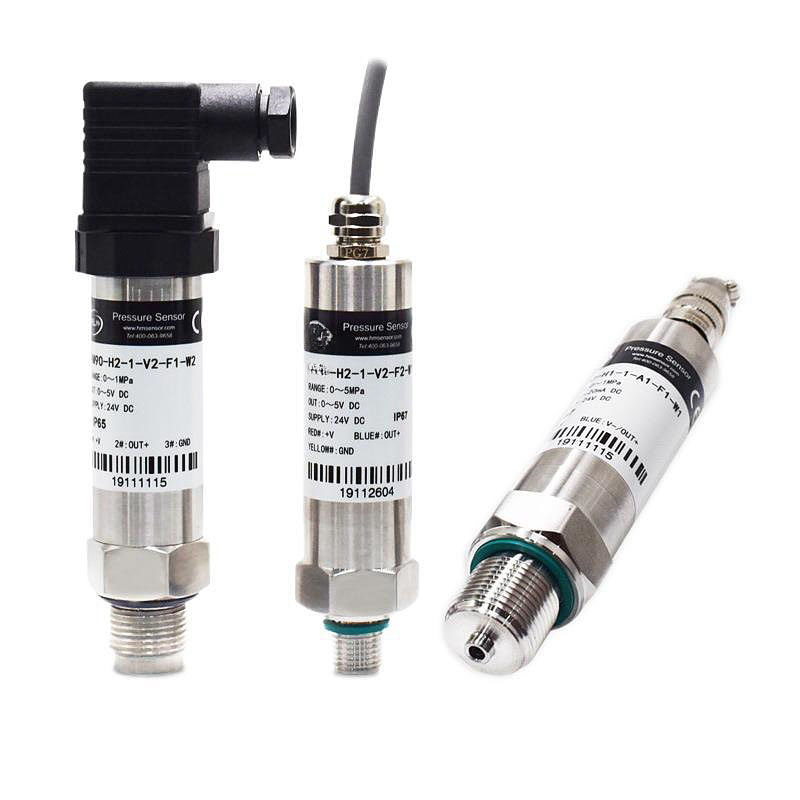
Capacitive pressure transducers are devices that measure pressure by detecting changes in the capacitance of an electrical capacitor. They are very accurate, sensitive, and do not use much power.They also measure very well and can measure a wide range of things.
These transducers are used in many different industries, like aerospace, car manufacturing, medical equipment, and environmental monitoring.
Structure of Capacitive Pressure Transducers
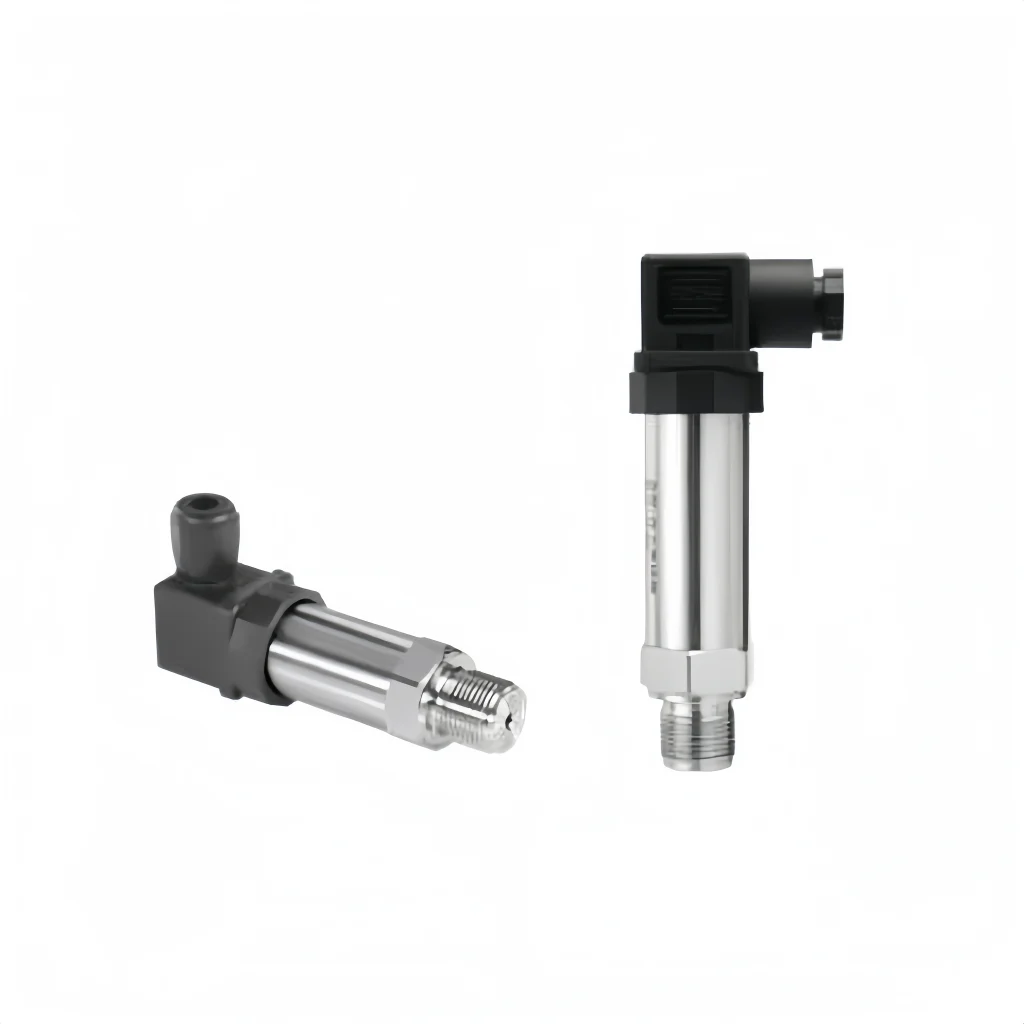
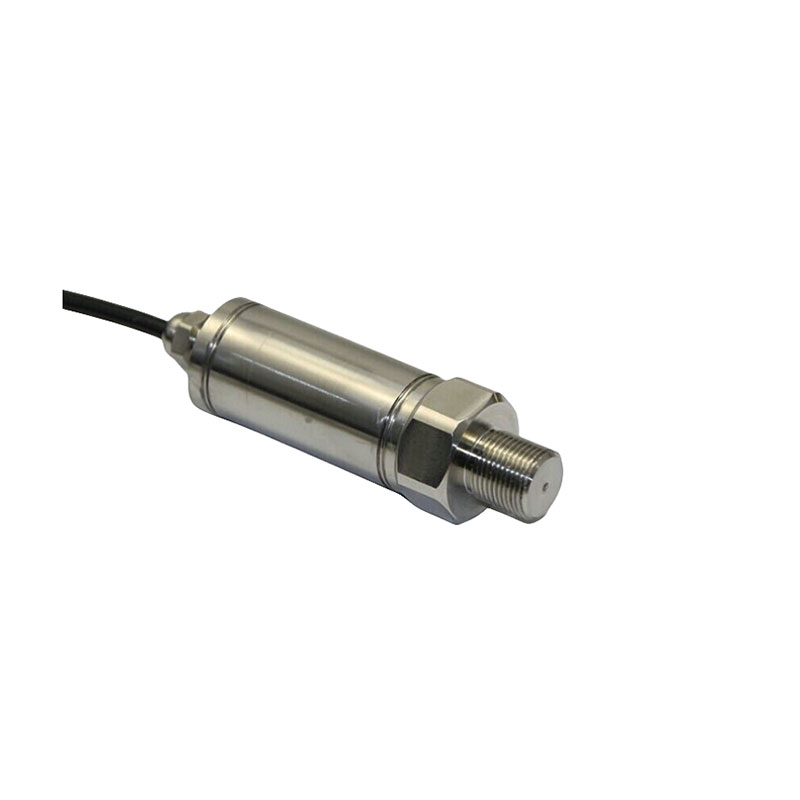
The structure of a capacitive pressure transducer typically comprises the following principal components: It’s made up of a pressure-sensitive diaphragm, a fixed electrode, an insulating layer and a measurement circuit.The pressure-sensitive diaphragm is usually made from a metallic or silicon material, and it can deform when there’s external pressure on it.
The fixed electrode is positioned under the diaphragm, with both parts separated by the insulating layer.When pressure is applied to the sensing diaphragm, it moves, changing the distance between the diaphragm and the fixed electrode.
This change in distance causes a variation in capacitance. The measuring circuit is responsible for converting this capacitance change into a standard electrical signal output.
Working Principle of Capacitive Pressure Transducers
Initial State: When no pressure is applied, the capacitance of the capacitor is determined by the initial distance and the electrode area.
Pressure Application: When pressure is applied to the transducer, the movable electrode moves closer to the fixed electrode, which means there’s less space between the two electrodes.
Capacitance Change: As the distance gets smaller, the capacitance gets bigger.This is because the capacitance goes down as the distance goes up, so when the distance changes, so does the capacitance.
Signal processing: After undergoing amplification, filtering, and analogue-to-digital conversion, the signal can be read by a microcontroller or computer, thereby determining the applied pressure.
What are the Types of Capacitive Pressure Transducers?
Capacitive pressure transducers are a type of transducer based on the capacitance principle, capable of measuring the pressure of gases or liquids.Owing to their high sensitivity, low noise, and wide linear range, they find extensive application in industrial automation, aerospace, and medical fields.Capacitive pressure transducers encompass several distinct types, with several common classifications outlined below.
Classified by Capacitive Principle:
1.Ceramic Capacitive Pressure Transducer
The ceramic capacitive pressure transducer utilises ceramic material as its sensing element.It typically comprises two parallel ceramic diaphragms; when pressure between these diaphragms changes, the distance between them alters, thereby inducing a capacitance variation.Advantages include high sensitivity, excellent stability, and low temperature coefficient.Disadvantages encompass relatively slow response times and susceptibility to interference from gases and liquids.
2.Silicon Capacitive Pressure Transducer
The silicon capacitive pressure transducer is a type of pressure transducer utilising single-crystal silicon as its sensing element.It typically comprises two single-crystal silicon diaphragms; when external pressure acts upon the diaphragms, deformation occurs, thereby inducing a change in capacitance.Advantages of this transducer include high sensitivity, excellent stability, and a broad linear range. Disadvantages include relatively high cost and susceptibility to interference from temperature and humidity.
3.Polymer Capacitive Pressure Transducer
A polymer capacitive pressure transducer is a type of pressure transducer that uses polymer materials to sense pressure.It normally has two polymer diaphragms; when external pressure acts on the diaphragms, they deform, which changes the capacitance.
The advantages of this transducer are high sensitivity, a fast response time, and resistance to corrosion.Its disadvantages are relatively poor stability and susceptibility to interference from temperature and humidity.
By Type of Pressure Measured:
1.Absolute Pressure Transducer
This type of transducer senses absolute pressure, using complete vacuum as its reference.The pressure of the medium being measured is compared with the reference pressure of a sealed chamber that is always equal to the absolute vacuum.The pressure measured by absolute pressure transducers is unaffected by atmospheric pressure.They are suitable for applications requiring high pressure accuracy, such as low-pressure measurement in vacuum distillation columns.
2.Gauge Pressure Transducer
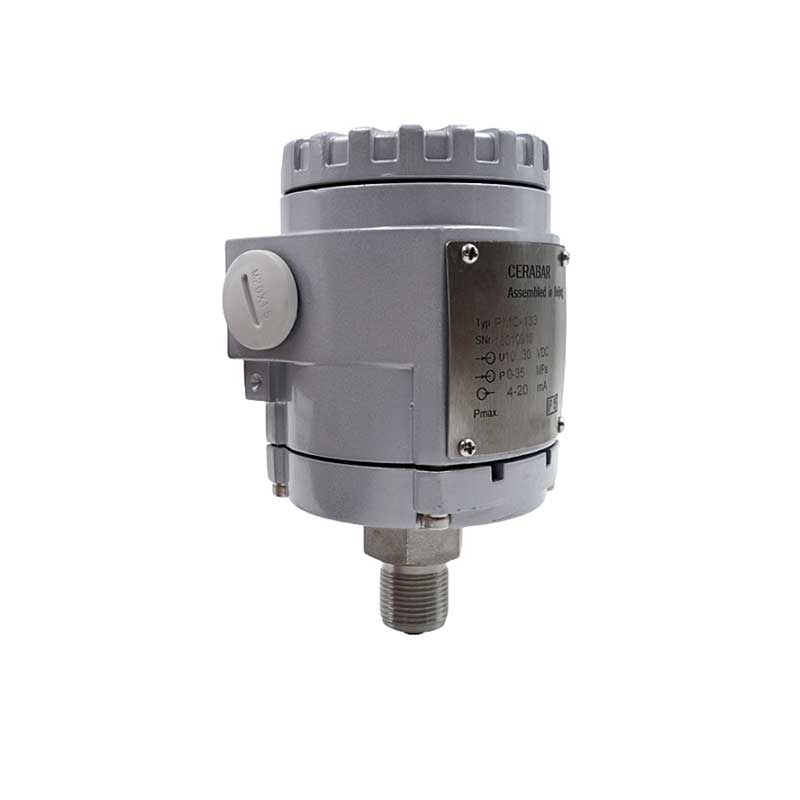
Unlike absolute pressure transducers, this type measures gauge pressure, using atmospheric pressure as the reference baseline.The vent port of a gauge pressure transducer is typically exposed to atmospheric pressure. They are commonly employed in process industries to measure the pressure of liquids, gases, and steam.
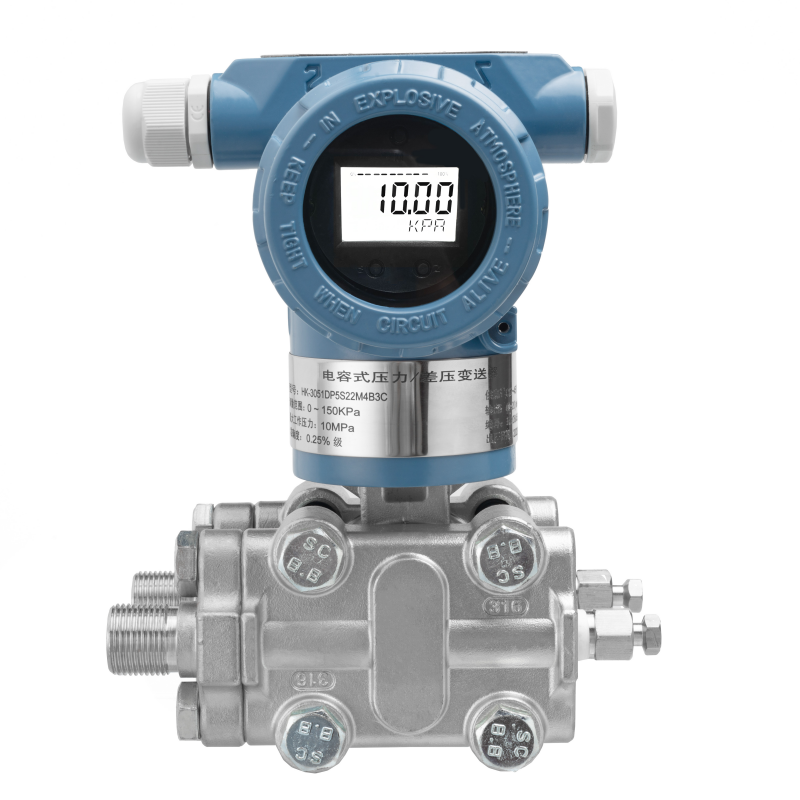
3.Differential Pressure Transducer
The differential pressure transducer measures the difference between two pressures, comparing the pressure on the high-pressure side with that on the low-pressure side.It can be employed for both flow measurement and level measurement:
Flow measurement application: By measuring the pressure differential between the upstream and downstream sides of a pipe constriction (as the primary measuring element), flow rate can be subsequently calculated.
4.Multivariable Pressure Transducers
These transducers can be employed to measure two or more process variables simultaneously.Beyond pressure and temperature, multivariable pressure transducers can also measure volumetric flow and calculate mass flow accordingly.They are currently primarily used for measuring steam and gas flow rates.
Classified by Measured Medium and Diaphragm/Process Connection Method:
1.Standard Type (General Purpose):
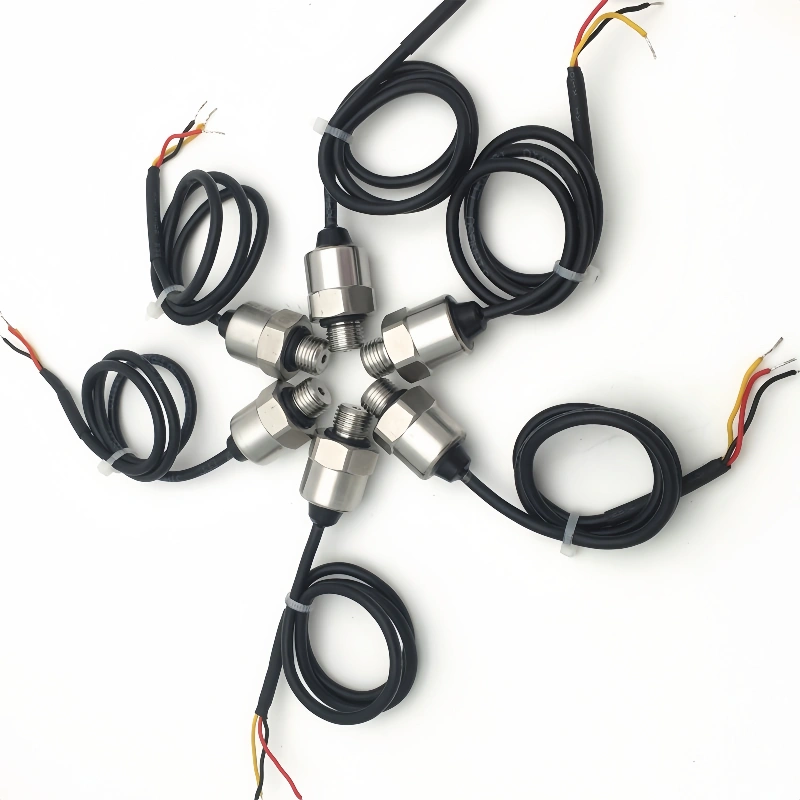
Suitable for clean gases or liquids that are non-viscous, non-crystallising, non-strongly corrosive, and not prone to crystallisation.Process connections include threaded (e.g.G1/2‘, NPT 1/2’) or flanged (ANSI/DIN) types.
2.Flanged/Insertion Level transducers:
Single-flange pressure/level transducer: Features an integrated flange for measuring liquid level or pressure in pressure vessels or open containers.
Twin-flange differential pressure level transducer: Features two flanges, transmitting pressure to the transducer body via capillary tubes and filling fluid.
Particularly suitable for closed vessel level measurement, viscous, crystallising, high-temperature, or highly corrosive media.
Insertion flange level transducer: Flange with long or short rod, probe inserted into the vessel to measure liquid level.
3.Sanitary/Food & Pharmaceutical Grade:
Features flush diaphragms (dead-space-free design) with process connections compliant to sanitary standards (e.g., SMS, DIN 11851, Dairy Clamp, ASME BPE).Constructed from 316L stainless steel or gold-plated diaphragms, facilitating easy cleaning for food, beverage, and pharmaceutical applications.
4.Corrosion-Resistant Type:
Incorporates corrosion-resistant alloy diaphragms (e.g., Hastelloy, Monel, tantalum), wetted parts, or fully wetted materials for highly corrosive media.
5.Flush Diaphragm Type:
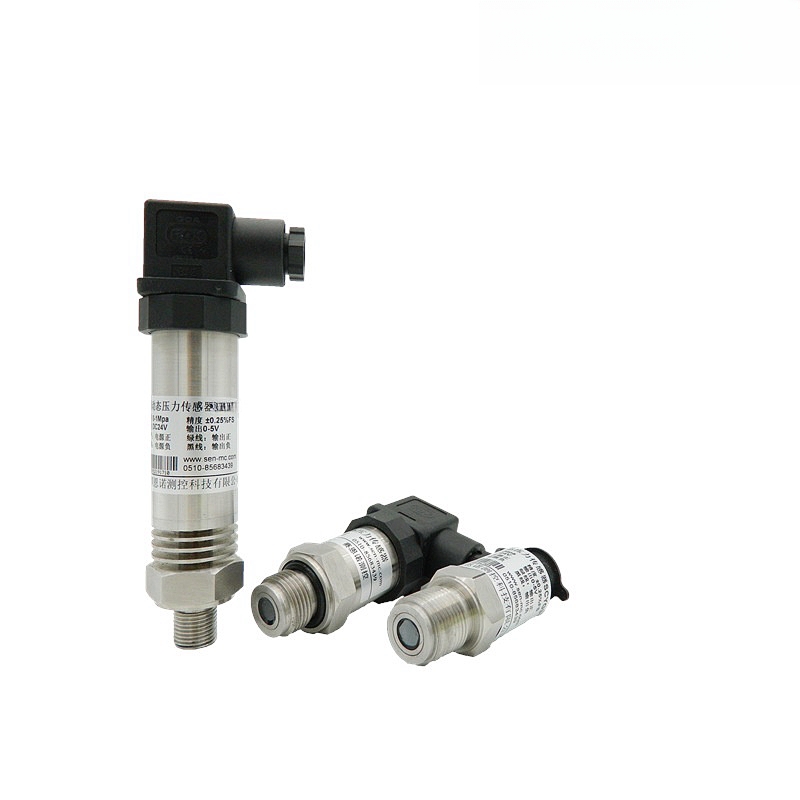
The measuring diaphragm is mounted flush with the process flange or threaded end face, preventing media accumulation before the diaphragm.Suitable for viscous, solid-particle-laden, or crystallisation-prone slurry media.
Signal Output of Capacitive Pressure Transducers
Analogue Output Types:
Two-wire 4-20mA DC + HART: The most prevalent standard signal format in industry.Enables digital communication and configuration via superimposed HART signals. HART protocol is virtually standard.
(Older) 4-20mA without HART: Gradually being superseded.
0-10V DC, 0-5V DC, 1-5V DC: Employed in certain applications.
Digital Signal Output Type:
Fieldbus Type: Such as FOUNDATION Fieldbus (FF) and PROFIBUS PA, which directly output pure digital signals to the fieldbus network.
Ethernet Type: Supports industrial Ethernet protocols.
Wireless Type: Equipped with a wireless module, supporting WirelessHART or other wireless protocols for data transmission.
Advantages and Disadvantages of Capacitive Pressure Transducers
Advantages
High sensitivity: Capacitance variation is highly responsive to distance (d), making it particularly suitable for measuring minute pressure changes (low pressure or differential pressure).
Low power consumption: Only a minimal excitation current is required to detect capacitance changes.
Excellent stability: The mechanical structure is relatively simple with no moving parts (limited to diaphragm deformation), exhibiting low temperature drift (when properly compensated through design).
Good Linearity and Resolution: Within a defined range of diaphragm deformation, capacitance variation exhibits near-linear correlation with pressure changes.
Strong Overpressure Resistance: When pressure exceeds the rated range, the diaphragm typically contacts the fixed electrode or base, limiting further deformation and reducing susceptibility to complete failure (relative to piezoresistive transducers).
Capable of Measuring Multiple Pressure Types: Through structural design, suitable for measuring gauge pressure, absolute pressure, and differential pressure.
Moderate response frequency: Great for measuring pressure in all sorts of industrial applications.
Good resistance to electromagnetic interference: Capacitance is relatively unaffected by electromagnetic fields (though shielding is required).
Disadvantages
Output non-linearity: Theoretical capacitance is inversely related to distance (1/d), so optimising the structure (e.g. centrally domed diaphragms), linearising the electronic circuit or using digital correction is needed to achieve satisfactory linear output.
Sensitivity to parasitic capacitance: Stray capacitance from transducer leads, external connections, etc., may interfere with minute effective capacitance variations, requiring shielding and specialised drive circuits (e.g., drive cable technology).
Complex circuitry requirements: Dedicated precision circuitry is required to measure minute capacitance variations, increasing complexity.
Temperature effects: The dielectric constant ε and diaphragm elastic modulus vary with temperature, affecting performance and typically necessitating internal temperature compensation.
High installation demands: The diaphragm must maintain good contact with the medium being measured, and solid particles must not damage the diaphragm.Installation stresses may also impact accuracy (particularly in small-range transducers).
Piezoresistive Pressure transducers VS Capacitive Pressure Transducers
Piezoresistive pressure transducers and capacitive pressure transducers are two common types of pressure transducers, differing in their operating principles and performance characteristics.
Piezoresistive transducers detect pressure changes by monitoring changes in resistance. When pressure is applied, the internal resistance value changes. Measuring this change determines the pressure magnitude.Capacitive transducers, on the other hand, detect pressure through alterations in capacitance.When pressure is applied, it changes the capacitance.
The magnitude of this change can be measured in order to ascertain the pressure level.With regard to accuracy and sensitivity, piezoresistive transducers generally demonstrate superior performance, thus enabling precise measurement of even minute pressure variations.
By contrast, capacitive transducers offer lower accuracy and sensitivity, making them suitable for measuring broader pressure ranges.Response speed constitutes another critical characteristic.
Piezoresistive transducers feature rapid response times, facilitating real-time monitoring of pressure changes and rendering them appropriate for applications requiring immediate feedback.Capacitive transducers, however, exhibit slower response speeds and are unsuitable for pressure measurement scenarios demanding real-time detection.
As a specialist manufacturer deeply rooted in transducer technology, Sino-Inst has developed comprehensive solutions spanning multiple product series including pressure transducers and liquid level transducers, built upon years of technical expertise and continuous innovation.
Our products are widely deployed across critical sectors such as construction machinery, industrial automation, and petrochemicals, enabling clients to achieve intelligent upgrades through exceptional stability and high-precision performance.
Looking ahead, we shall maintain our focus on technological breakthroughs and product optimisation.We are committed to creating lasting value for every client through more reliable sensing technologies and a more professional service system, working together to drive high-quality industrial development.