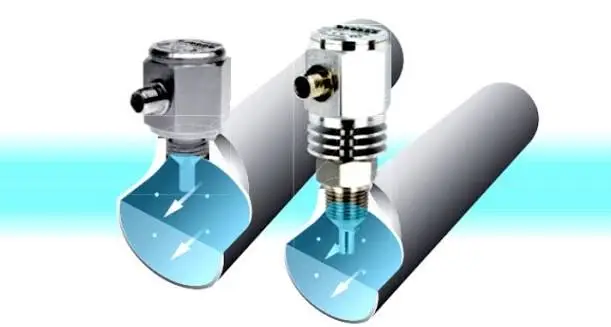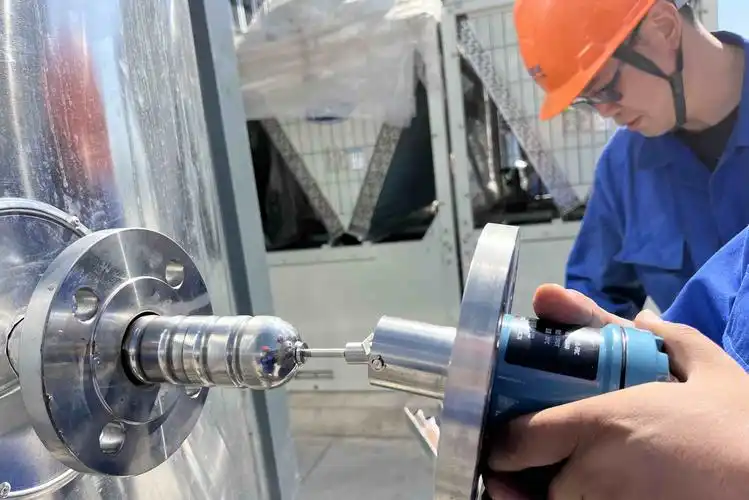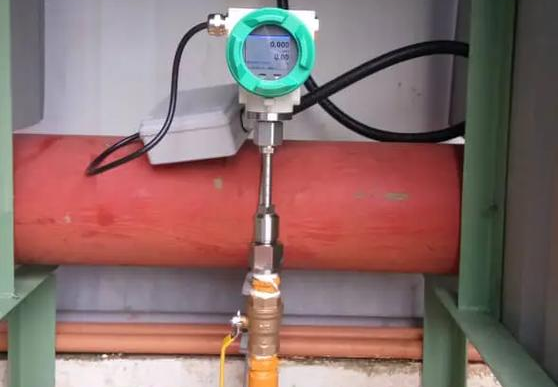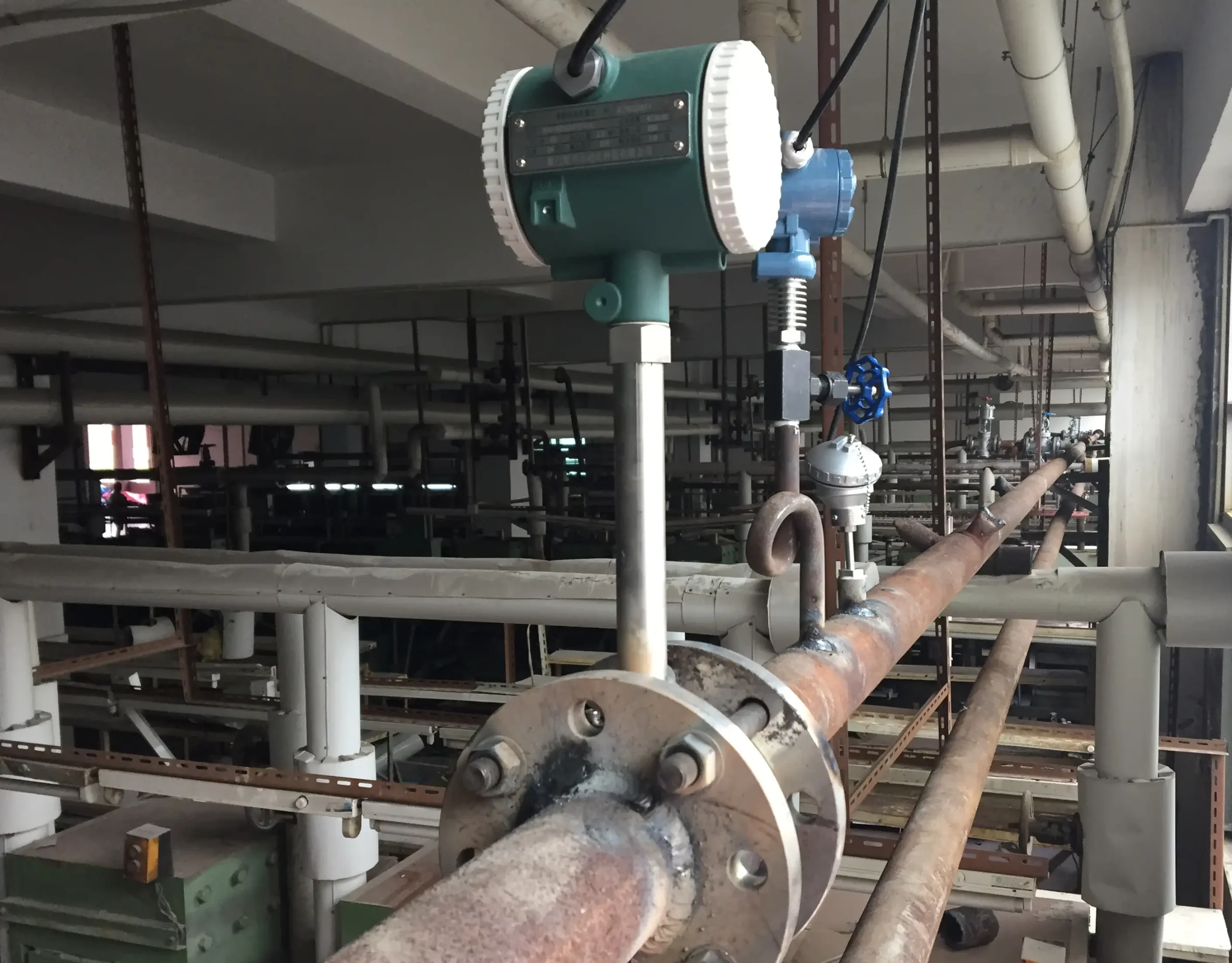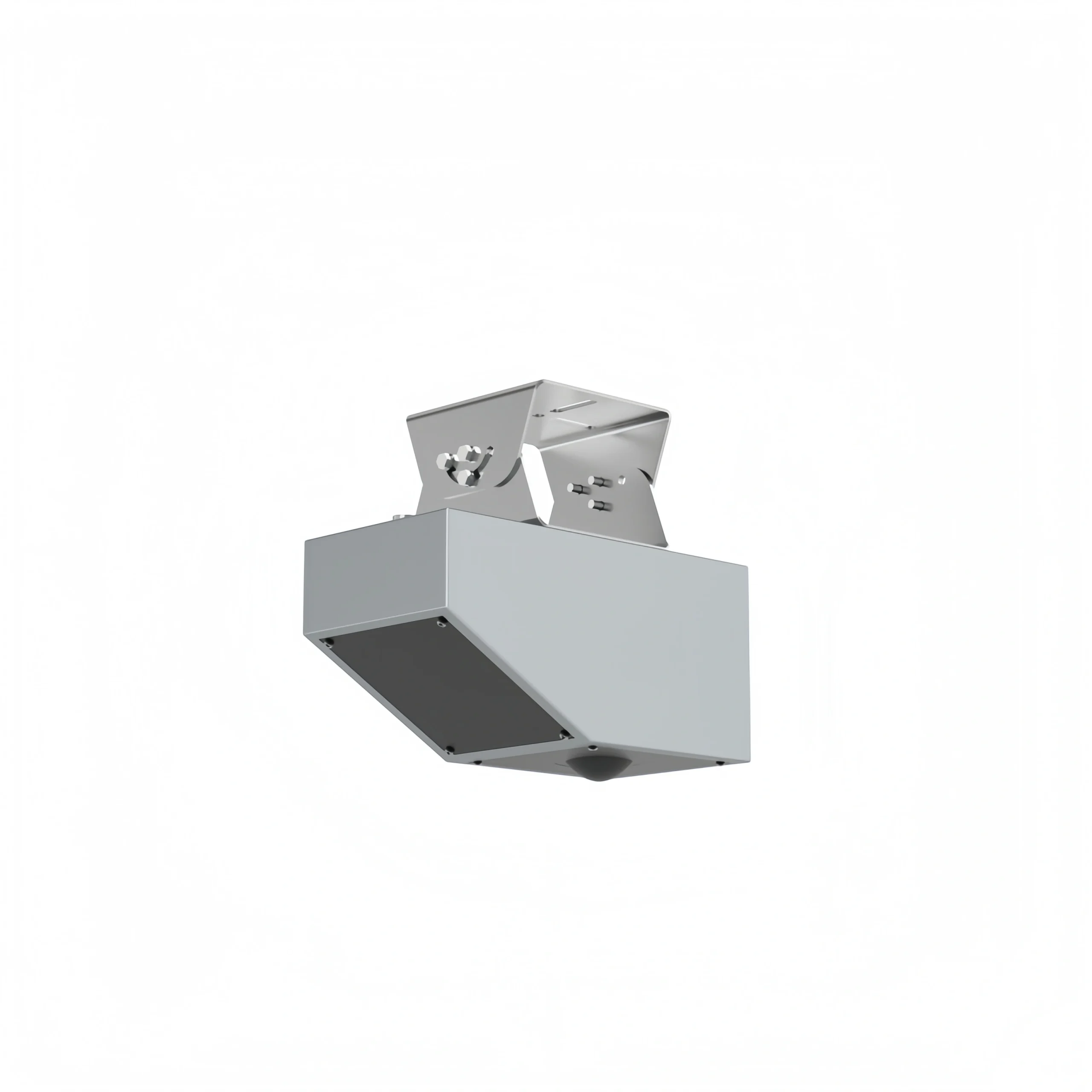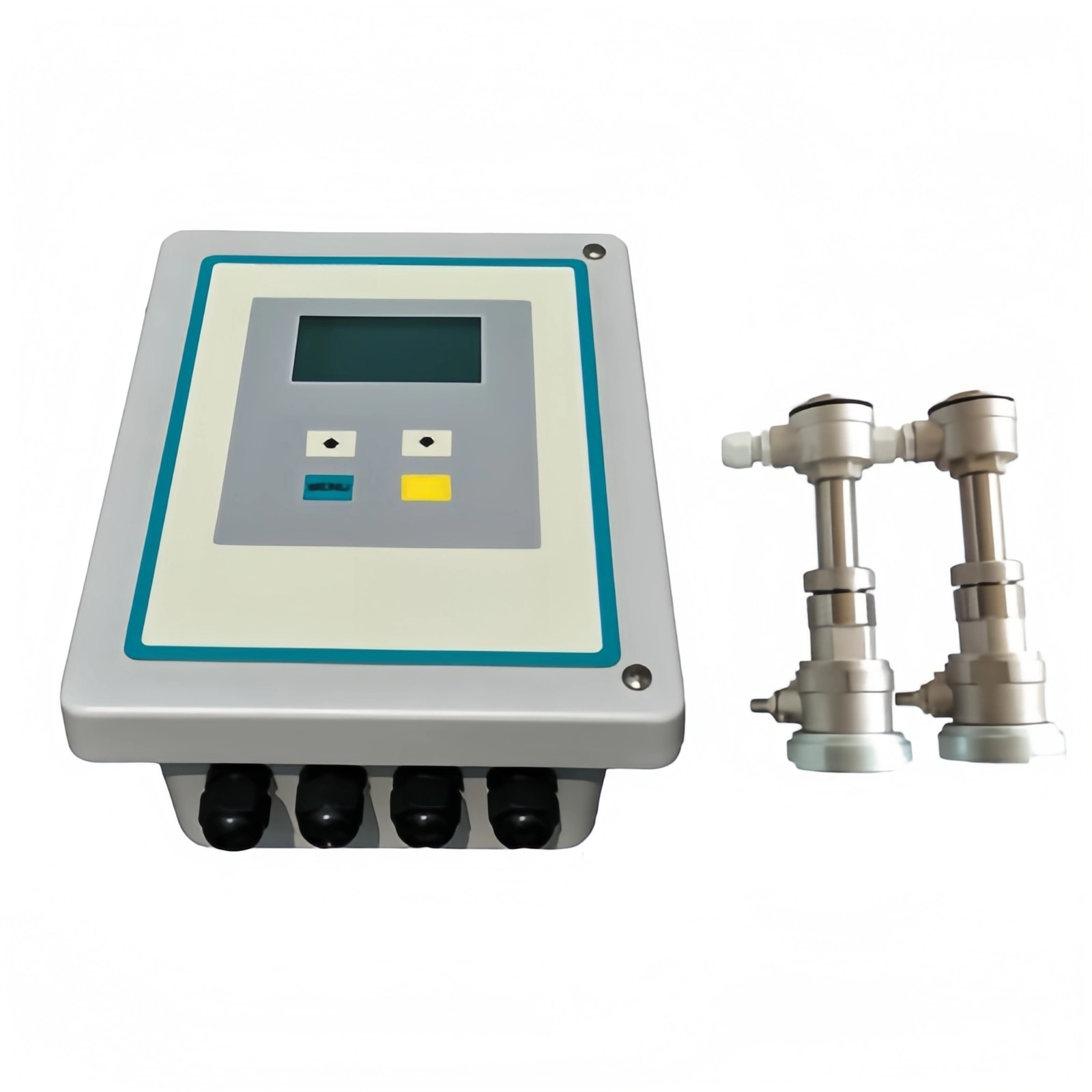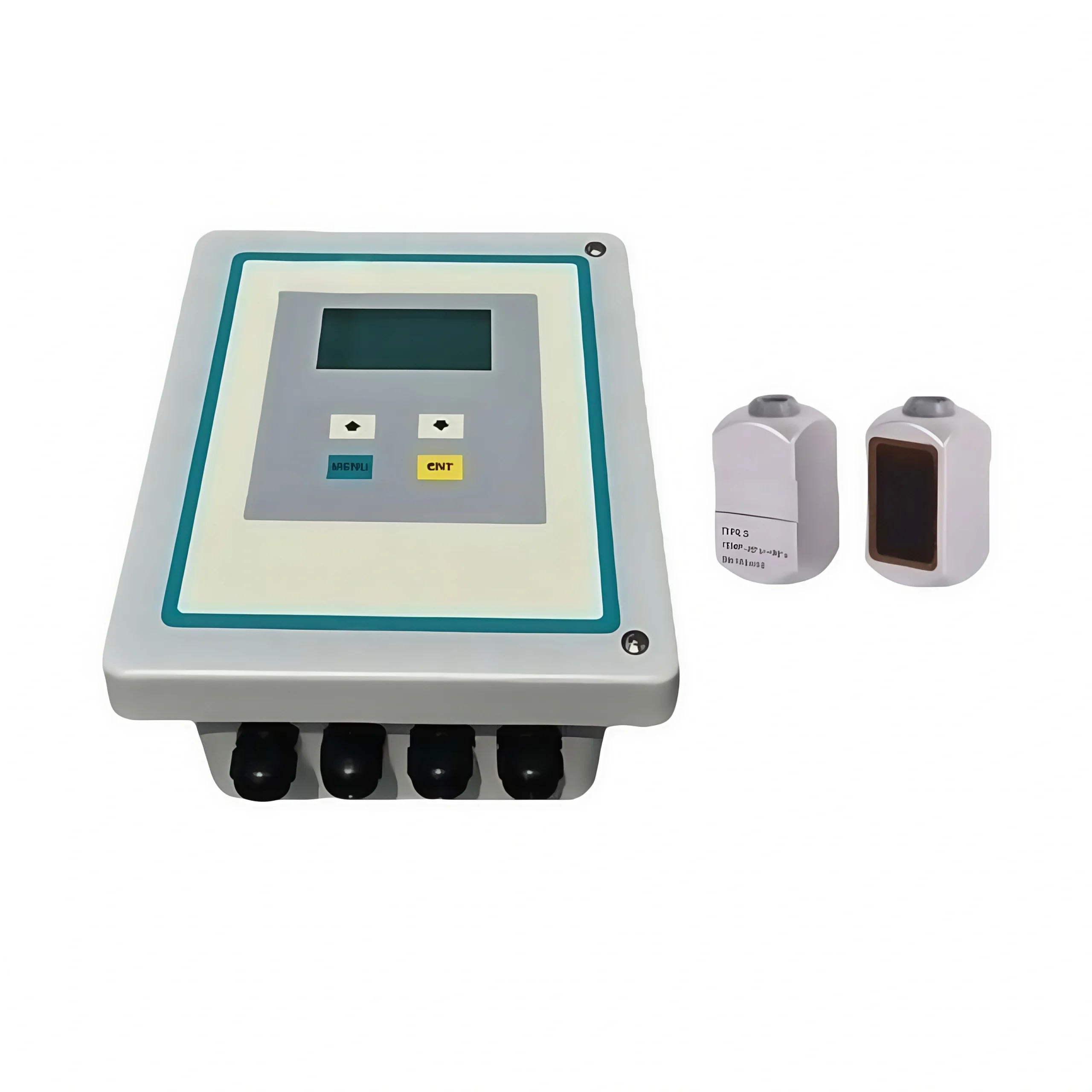
In the field of pipeline network flow monitoring, traditional insertion-type and in-line flow meters require pipe-cutting work, which can easily lead to water loss and downtime-related losses.
Non invasive water flow meters utilise the principle of time-of-flight measurement from the pipe wall to achieve contactless measurement; they do not require any damage to the pipeline and are suitable for retrofitting both new and existing water supply pipelines, providing a new technological approach for low-cost flow data collection in smart water management and industrial water recycling.
What is a non invasive water flow meter?
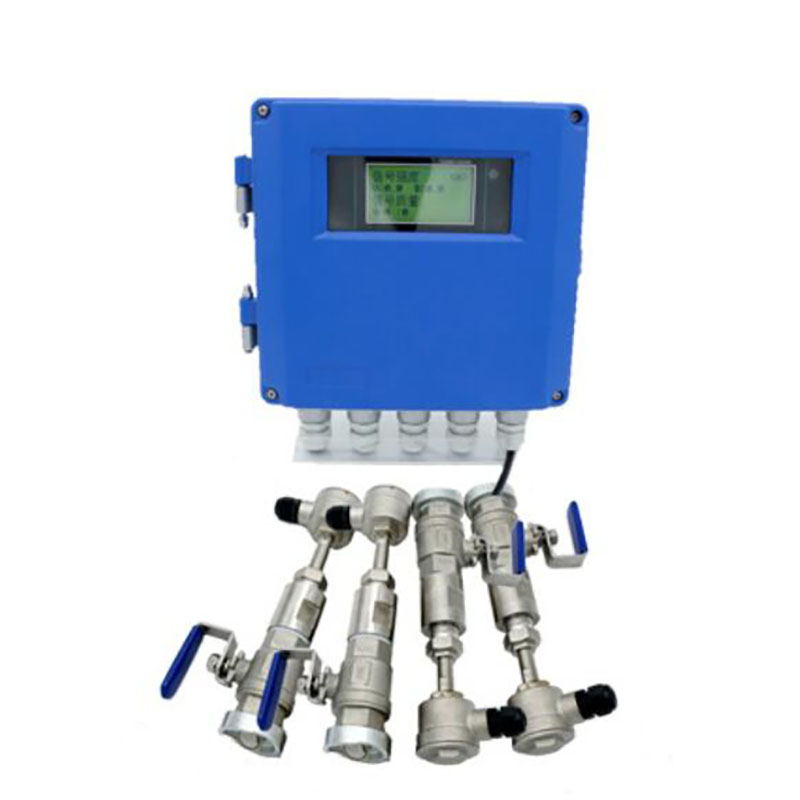
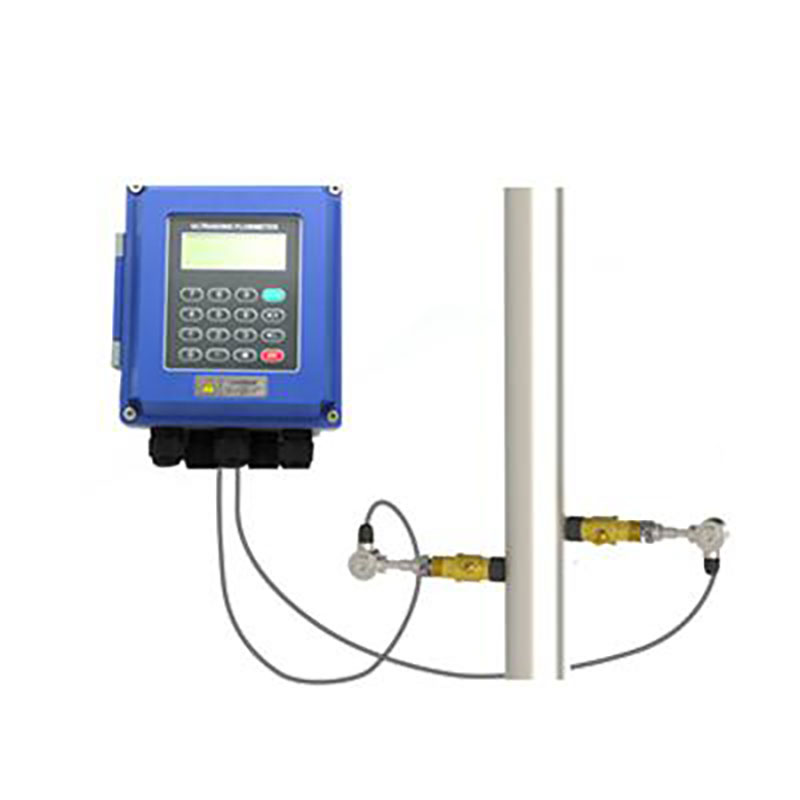
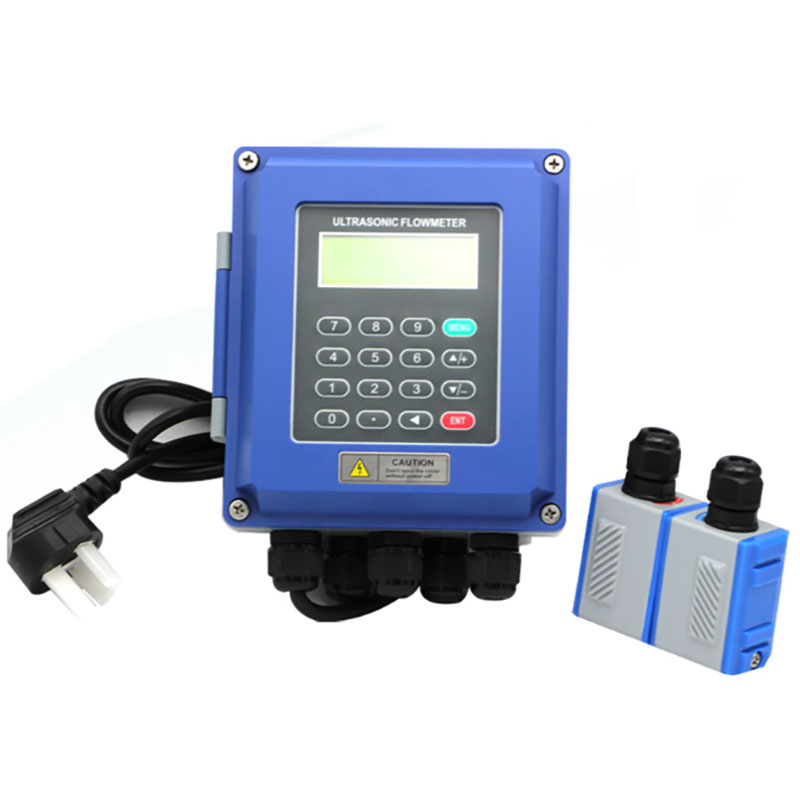
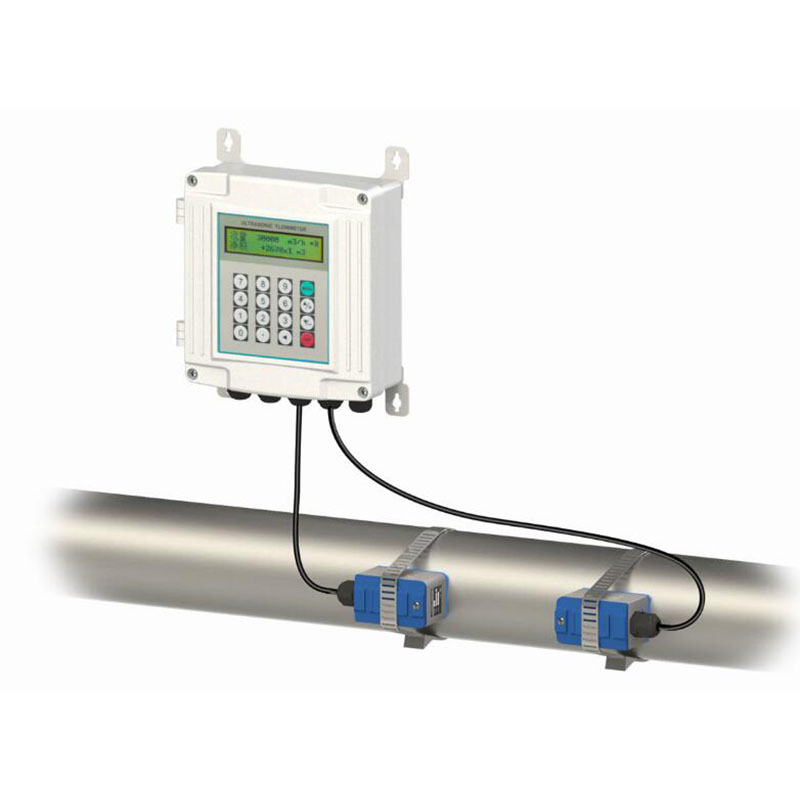
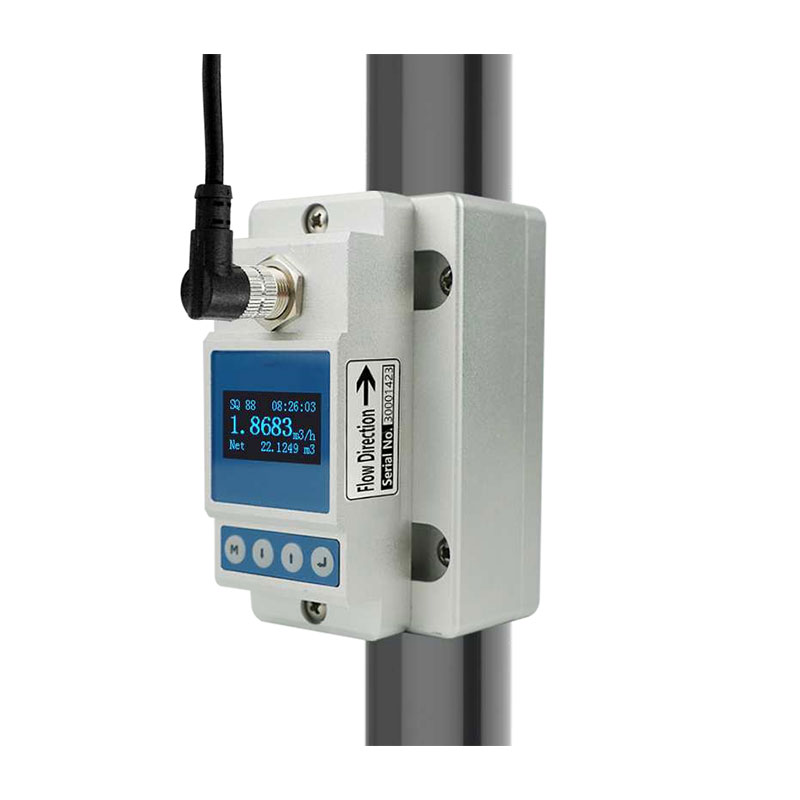
A non intrusive water flow meter is a flow measurement device that requires no cutting or modification of water supply pipes, nor the installation of any measuring components inside the pipe. The sensing components are simply attached to the outer wall of the pipe and do not come into contact with the water inside the pipe at any stage.
Installation of this device requires no water shutdown and does not damage the original pipe structure; during operation, it causes no loss of water pressure in the pipe and is not subject to issues such as probe corrosion or blockages caused by the medium. The device is easy to install and remove, and has low long-term maintenance costs.
Working Principle of Non Intrusive Water Flow Meters
Time-of-Flight Principle:
The external probes of a non intrusive flow meter are attached to the outer wall of the pipe and emit ultrasonic signals in both the downstream and upstream directions.
The downstream sound wave travels faster and takes less time, while the upstream sound wave moves slightly slower and takes longer; the greater the flow velocity, the more obvious the time gap between the two sound waves becomes.
The device picks up on this time gap, and by factoring in the pipe diameter settings, it works out the water flow speed and the real-time flow rate.
Doppler Principle:
This approach works best for water that has a small amount of air bubbles or fine particles in it. When the ultrasonic waves sent out by the probe hit moving particles or bubbles in the water, they bounce back; as the water moves along, these reflected waves show a steady shift in frequency. The device measures how big this frequency shift is, which tells you the flow speed, and from there it figures out the flow rate of the water inside the pipe.
Whether it’s using time-of-flight or Doppler detection, once the device gets a solid read on the flow velocity, it runs the numbers through its built-in algorithms to figure out the instantaneous flow rate, factoring in the pipe’s fixed cross-sectional area. Meanwhile, it keeps gathering data non-stop, adding it all up to work out the total water usage over time, which wraps up the full flow measurement process.
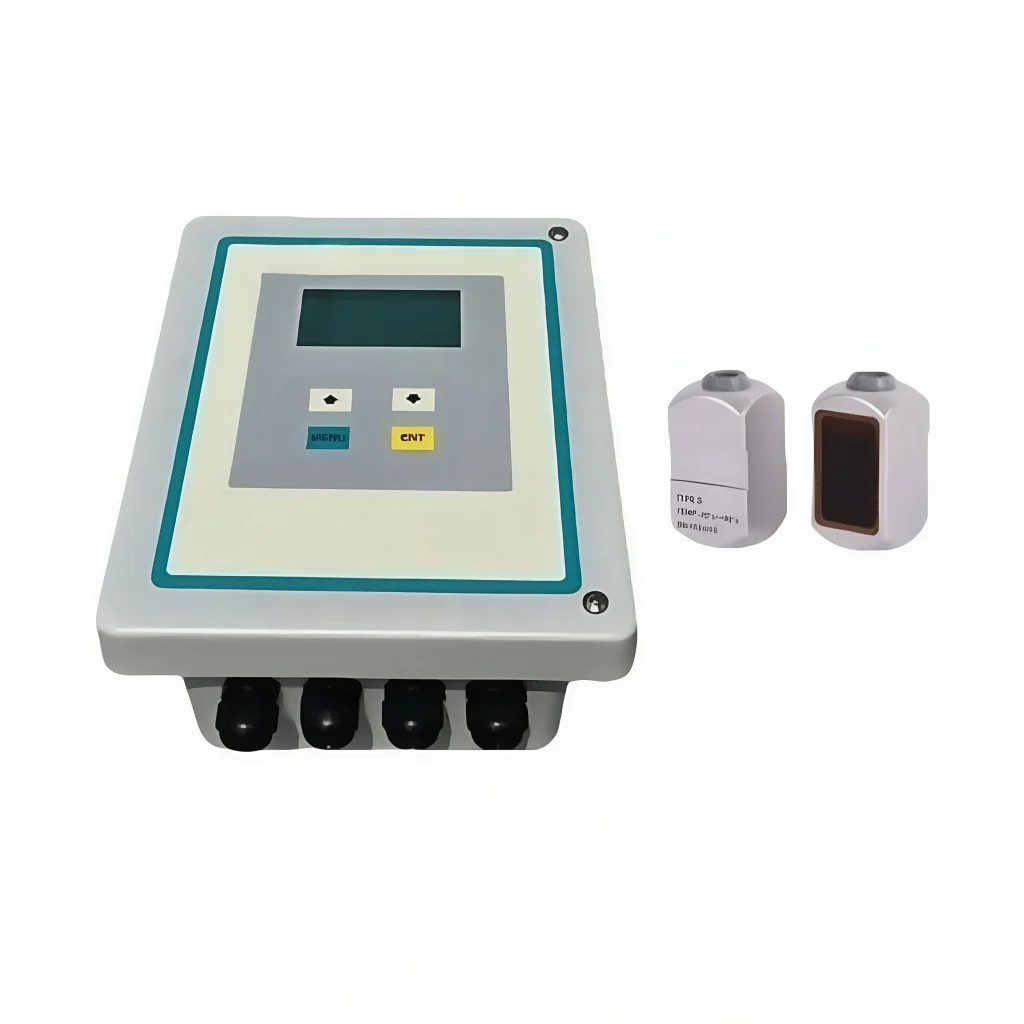
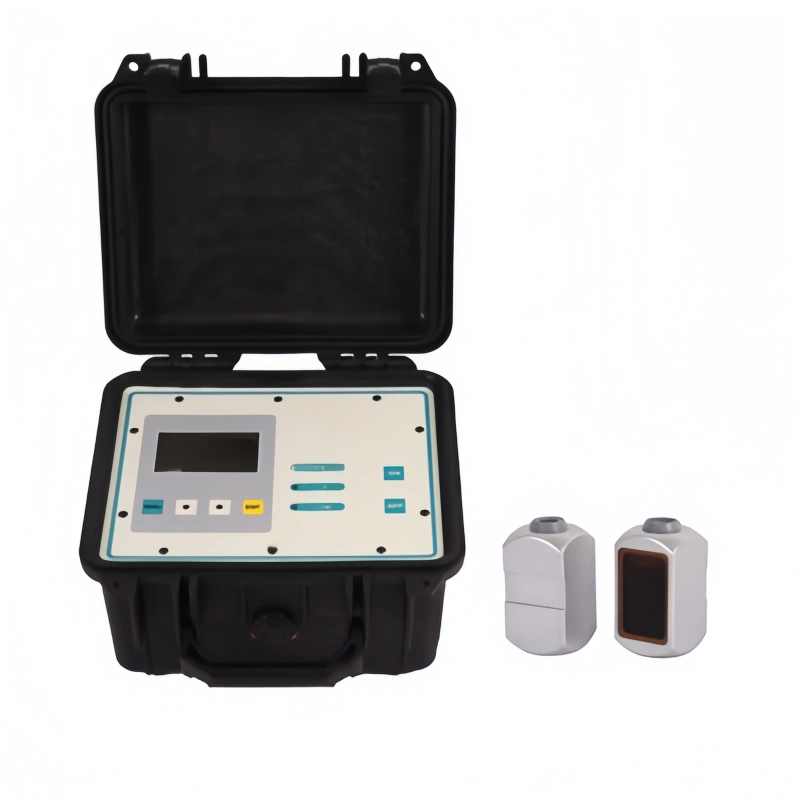
Advantages of non intrusive flow meters for measuring water flow
1. Non-destructive installation:
The device straps onto the outside of the pipe, so there’s no cutting, drilling, or tampering with the existing water supply system. You don’t need to shut off the water for maintenance either.
This leaves the pipework pretty much as-is, dodging the damage and leak risks that come with messing around inside the pipes, and it works fine whether you’re dealing with old systems already running or new pipework that hasn’t been touched yet.
2. No pressure loss:
The measuring components sit right against the outer wall of the pipe along their full length; they don’t poke into the pipe interior, don’t block water flow, and don’t change the pipe’s cross-sectional area.
So there’s no drop in water pressure, and the pipe’s original water conveyance efficiency and the circulation system’s day-to-day operation carry on exactly as before.
3. Wide range of water quality compatibility:
Since the equipment stays on the outside of the pipe, it never has to put up with corrosion, scaling, or blockages from whatever’s inside. The measuring parts stay protected from damage, even with sewage or water carrying grit and impurities.
It copes with pretty much any water type you throw at it—clean water, industrial recirculating water, municipal sewage—so it covers a lot of ground in terms of applications.
4. Low operational and maintenance costs:
Fitting and removing the thing is dead simple, and you don’t need to call in a specialist plumber. No routine shutdowns for maintenance, and no headaches with parts wearing thin, ageing out, or gumming up on the inside.
That cuts down a lot on how often you need to service it and what you spend to keep it running, saving both time and hassle while keeping things stable over the long haul.
5. Water Quality Safety:
As no internal measuring components come into contact with the water, there is no risk of water contamination. It fully meets the stringent hygiene requirements for drinking water, purified water and water used in the food industry.
6. High Versatility:
It doesn’t matter what the pipe is made of—this thing works with all the usual water supply materials, whether that’s steel, plastic, or cast iron. It also adjusts to different pipe sizes and flow rates, and if you ever need to reconfigure your piping, you can just take it off and use it somewhere else.
Practical Applications of Non Intrusive Water Flow Meters
Municipal Water Supply:
It comes in handy for keeping tabs on flow and breaking down metering by zone across city water networks, residential branch lines, and secondary pumping setups.
You don’t need to cut into any pipes or turn off the water, so everyday supply keeps running without a hitch. It does a solid job of tracking how much water gets used and spotting leaks in the network, which helps with conservation efforts and pulling together the data you need.
Industrial Production:
These meters see a lot of use in factories for measuring circulating cooling water, process water, and wastewater lines. They don’t mess with pipeline pressure or throw off production conditions, and the stuff floating in the water doesn’t bother them either.
They give you a dependable way to track how much water the operation is going through, which makes it easier to pull together energy use stats and keep on top of equipment maintenance.
Heating, Ventilation and Air Conditioning (HVAC):
Suitable for monitoring heating and cooling circulation water in central air-conditioning systems for buildings, shopping centres and office blocks. With no pressure loss and no alteration to system operating conditions, they can monitor water circulation flow in real time, optimise air-conditioning operational efficiency and enable energy-saving control and management.
Sewage Treatment:
Used for measuring flow rates in the influent and effluent streams, as well as in process pipelines at sewage treatment works. The external probe does not come into contact with the sewage, thereby preventing corrosion and blockages, and enables long-term, stable measurement of sewage discharge volumes to meet the operational monitoring requirements of sewage treatment.
Agricultural Irrigation:
This unit keeps tabs on water moving through irrigation lines and transport canals. Since it mounts on the outside, the existing irrigation setup stays untouched, and it handles large-bore transport pipes without a problem.
Operators get exact numbers on how much irrigation water is being drawn, which gives them solid data to work with when planning water-efficient farm schedules.
Food and Pharmaceutical Industries:
It takes flow readings for drinking water and process cleaning pipelines. Because the meter never comes into contact with the water inside, there’s zero risk of secondary contamination. The design meets strict sanitation standards, giving you precise flow measurements while keeping water purity fully intact.
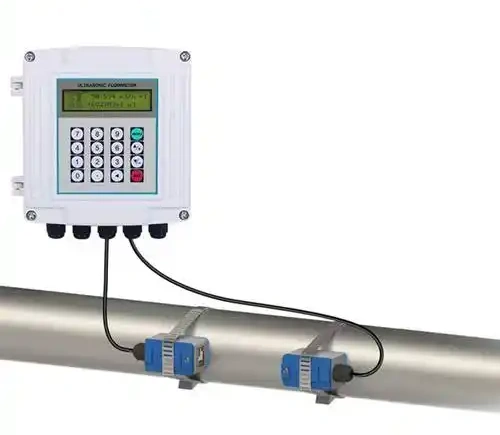
Installation of Non Intrusive Flow Meters
1. Preliminary Verification and Site Survey:
Before you put anything in place, double-check that the equipment model matches what’s actually on site. That means confirming the pipe diameter, material, wall thickness, and what the medium’s running at in terms of temperature and pressure, plus measuring the actual outside diameter of the pipe itself.
Take a look at the inner wall too—make sure there’s no heavy scaling, corrosion, or lining coming loose. At the same time, scope out what’s upstream and downstream of where you’re thinking of installing, keeping clear of valves, elbows, pump housings, and anything else that might throw off the readings.
You’ll also want to make sure there’s enough straight pipe on either side to hit the measurement requirements.
2. Selection of Installation Points and Straight Pipe Sections:
Stick to the straight pipe rules: under normal conditions, you need at least 10 pipe diameters of straight run upstream and 5 downstream. If the line has resistance components in it—like valves or fittings—bump that upstream section up to 15 to 30 diameters. Go for spots where the fluid is fully submerged, with no air bubbles and no sediment buildup.
On horizontal pipes, aim for the middle to upper sections, steering clear of the air pocket at the top and the sludge layer at the bottom. On vertical runs, make sure the flow is going bottom to top, so you don’t end up with empty or partially filled pipe conditions.
3. Pipeline Surface Pre-treatment:
Strip off any insulation, paint, oil, and rust from the outside of the pipe where you’re planning to install. Hit it with sandpaper until the wall is reasonably flat and smooth, knocking down weld bumps and any rough spots.
Once you’ve sanded it, wipe away the dust and any water marks so the surface stays dry and clean. That way the ultrasonic signals can get through the pipe wall properly, and you won’t have debris messing with the accuracy.
4. Sensor Installation and Alignment:
Spread a specialised coupling agent evenly over the sensor probe surfaces, making sure there aren’t any air bubbles or gaps trapped in there. Pick the right mounting setup—V-method, Z-method, or W-method—based on the pipe diameter.
Work out the exact spacing between the two sensors from the manual and mark it off carefully. Press the probes firmly against the pipe wall so there’s no gap or edge lifting, then lock them down tight with the proper clamps and cable ties so they don’t shift around once everything’s running.
5. Wiring, Cabling and Power-up Commissioning:
Tell the transmitter and receiver sensor cables apart and hook them up to the right terminals on the host unit. Get the power and communication lines connected too, and run the cables clear of anything pumping out strong electromagnetic noise—power cables, variable frequency drives, that sort of thing.
Make sure the waterproofing is up to scratch and leave a bit of slack in the cables so nothing gets pulled tight. Once you’ve powered it up, punch in the operating parameters like pipe diameter, wall thickness, and the sound velocity of whatever’s flowing through. Check the signal strength and signal-to-noise ratio, then nudge the probes around until the signal settles down and hits the mark.
6. Calibration, Commissioning and Protective Inspections:
Let the medium run through the pipe and watch the flow rate readings. If they’re not jumping around all over the place and the data holds steady, you’re good to go. Slap some waterproofing and sun protection on the sensors, and tidy up and secure the cables while you’re at it.
When you do your routine checks, keep an eye on whether the clamps are still tight, how the coupling agent is holding up, and whether the cables are in one piece. Every so often, re-check the signal accuracy to make sure the gear keeps running solid over the long haul.
FAQ
Which types of water pipes can this water flow meter be installed on?
This non intrusive water flow meter is compatible with common water supply pipes such as carbon steel, stainless steel, PVC, PE and cast iron, with pipe diameters ranging from DN15 to DN6000. It is suitable for various metering applications, including municipal, domestic and industrial recirculating water systems.
As the device relies on ultrasonic waves to penetrate the pipe wall for measurement, certain requirements apply to the pipe condition: the inner wall must be free from heavy limescale, silt accumulation, lining detachment or hollow spots; the outer wall must be smooth, as dents, deformations or protruding welds in the pipe wall may interfere with the ultrasonic signal, causing data fluctuations, measurement inaccuracies or even signal loss.
What are the requirements for straight pipe sections during installation?
To prevent turbulent flow and vortices from affecting measurement accuracy, the device has specified installation standards for straight pipe sections. Under normal operating conditions, the upstream straight pipe section must be ≥10 times the pipe diameter, and the downstream section ≥5 times the pipe diameter.
If there are flow-disrupting components such as elbows, pumps or valves upstream, the upstream straight pipe section must be extended to 15–30 times the pipe diameter.
The installation point should preferably be in the middle to upper section of a horizontal pipe, avoiding areas prone to air pockets and sediment build-up; for vertical pipes, installation must ensure that water flows from bottom to top. Reverse or intermittent flow must be avoided to ensure measurement stability.
Will bubbles or sediment in the water affect the measurement?
The equipment is equipped with basic interference resistance; small amounts of fine sediment or impurities in the water will not affect the measurement. However, large quantities of continuous bubbles or severe gas-liquid mixing can scatter and block the ultrasonic waves, leading to signal attenuation, flow rate fluctuations and measurement inaccuracies.
Long-term conveyance of highly turbid water containing high levels of silt can lead to sediment and scale build-up on the pipe walls, which weakens ultrasonic penetration and causes measurement errors. Under such operating conditions, impurities on the pipe walls must be cleaned regularly to ensure measurement accuracy.
What are the different sensor mounting methods, and how should one choose?
Sensors are available in three mounting configurations: V, Z and W, which can be selected according to the pipeline conditions.
The W method is your go-to for small-diameter, thin-walled pipes—it keeps the signal acquisition steady and reliable.
The V method works well for standard medium-diameter pipes. It’s easy enough to put in place, gives you solid accuracy, and handles most everyday conditions without a fuss.
The Z method is the one to pick for large-diameter, thick-walled pipes. Since the signal punches straight through the wall, it gets enough penetration to make up for the signal loss you’d otherwise get from those heavier walls.
When you’re installing, work out the probe spacing carefully from what the manual says, so the signal gets through and back without any issues.
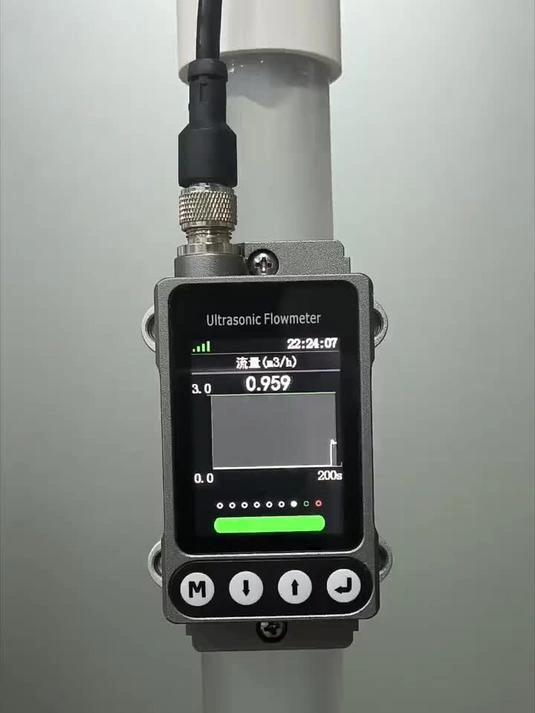
Leveraging core advantages such as non-destructive installation, high-precision measurement and low operational and maintenance costs, the Sion-Inst non-intrusive water flow meter effectively resolves numerous pain points associated with traditional flow monitoring equipment, making it fully adaptable to a wide range of industry scenarios including municipal water supply, industrial manufacturing, HVAC and environmental protection.
With many years of expertise in the field of sensor monitoring, we can provide customised flow monitoring solutions based on the on-site pipeline conditions, water quality and metering requirements of our clients.
Through stable and reliable product performance, coupled with hassle-free installation and maintenance services, we assist clients across various industries in achieving accurate water metering, efficient energy consumption management and refined pipeline network management, thereby empowering the digital transformation of smart water management and industrial energy conservation.